
加载中...
共找到 16,771 条相关资讯

The chairman-designate on where the central bank has gone wrong and what independence means.


Kevin Warsh, President Donald Trump's pick to head the Federal Reserve, has earned over $1 million since 2020 as a member of the board of e-commerce company Coupang , now at the center of trade tensions between the U.S. and South Korea.

Gold was the top U.S. export for the second consecutive month – the only two months in at least the last 20 years, according to U.S. Census Bureau data released one day prior to its steep drop in price.

President Trump named his nomination for Fed Chair as Kevin Warsh on the final trading day of January. Marley Kayden and Sam Vadas talk about the pick and the market reaction that followed.

Thoma Bravo is exploring a sale of Imprivata, a digital identity software provider for the healthcare industry, according to three people familiar with the matter.

Rep. Bryan Steil, R-Wis., discusses President Donald Trump's Federal Reserve chair nominee Kevin Warsh and the deadline for a government shutdown on 'Making Money.

President Trump announced Kevin Warsh as his nominee to succeed Jerome H. Powell as chair of the Federal Reserve.

Loretta Mester, Fmr. Cleveland Fed President, joins 'Closing Bell Overtime' with reaction to Pres.

A double-whammy selloff of tech stocks and metals shook markets on Friday.

SpaceX generated about $8 billion in profit on $15 billion to $16 billion of revenue last year, two people familiar with the company's results said, providing fresh insight into the financial health of Elon Musk's space company that is expected to go public later this year.

Federal Reserve Governor Stephen Miran says he thinks Kevin Warsh is a "fantastic pick" to lead the central bank.
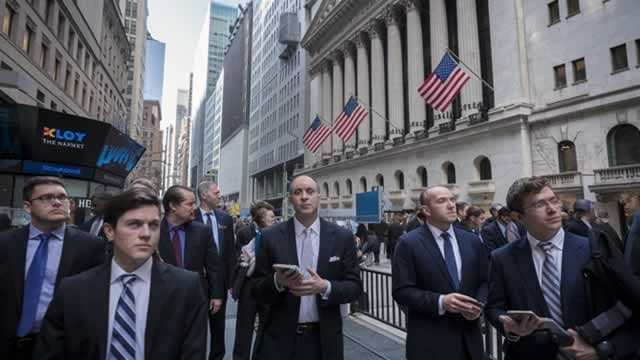
Business leaders praised Trump's nomination of Kevin Warsh as Federal Reserve chairman, citing his extensive experience and proven crisis management expertise.
Julia Coronado, founder and president of Macropolicy Perspectives, says President Trump's Fed chair pick Kevin Warsh understands the challenges of forging consensus at the central bank. Coronado speaks on "Bloomberg Open Interest.

Sen. Elizabeth Warren discusses President Trump's nomination for a new chair of the Federal Reserve, Kevin Warsh, and its potential impact on Fed independence.

Comprehensive cross-platform coverage of the U.S. market close on Bloomberg Television, Bloomberg Radio, and YouTube with Romaine Bostick, Katie Greifeld, Carol Massar and Tim Stenovec. -------- More on Bloomberg Television and Markets Like this video?

Brett Matsumoto, the next chief, has worked as an economist at the BLS since 2015.

CNBC's Steve Liesman and former Fed Vice Chairman Roger Ferguson join 'Closing Bell' to discuss Warsh's nomination to lead the Federal Reserve.

The ‘experts' predicted market crashes, massive inflation and recession. They were all wrong.

January 2026 delivered strong equity gains, with U.S. small/mid-caps and ex-US stocks outperforming, while bonds remained flat and bitcoin lagged. Resource sectors led early, but Financials underperformed post-earnings, signaling potential sector rotation to monitor in Q1.
Kentaro Asakura: Ladies and gentlemen, thank you very much for your patience. Now we would like to start FY 2025 Third Quarter Financial Results Presentation. I am from Corporate Communications. My name is Asakura. I will be facilitating today's session. In this presentation, we are going to use Japanese and English. We have simultaneous interpretation service available. [Operator Instructions] We have uploaded Japanese and English presentation material in IR library on our corporate website. Whenever necessary, please feel free to download the material. Today's presenters are Mr. Ogawa, Senior Executive Officer, CFO; Mr. Abe, Head of R&D Division; and Mr. Ken Keller, Head of Global Oncology Business. Now Ogawa and Abe are going to take you through the financial results for the third quarter FY 2025, and then we are going to open the floor for the Q&A. Today's session will be recorded. I would like to ask for your cooperation. Now Ogawa-san, please. Koji Ogawa: This is Ogawa. Thank you for participating in Daiichi Sankyo's earnings briefing today despite your busy schedule. Now I will explain the consolidated financial results for the third quarter of fiscal year 2025 announced at 15:00 today based on the materials. Please look at Slide 3. The content I will discuss today is as follows. Fiscal year 2025 third quarter consolidated financial results, business update, research and development update. The research and development update will be explained by Abe, Head of R&D Unit. We will take your questions at the end. Please look at Slide 4. These are the highlights of the current earnings. Our flagship products, the anticancer agents, ENHERTU and DATROWAY continued to grow steadily and revenue increased significantly. The cost of sales ratio improved compared to the second quarter and core operating profit increased by 8.8% year-on-year. No additional major temporary expenses were incurred in the third quarter. There are no changes to the fiscal year 2025 consolidated earnings forecast from the October announcement. Please note that as reference information, the latest sales forecast for each product are listed in the supplementary earnings materials. Although there are some movements in individual products, there is no change in total revenue from the October announcement. Please look at Slide 5. This slide shows an overview of the fiscal year 2025 third quarter consolidated financial results. The revenue was JPY 1,533.5 billion, an increase of JPY 165.9 billion or 12.1% year-on-year. Cost of sales increased by JPY 13.8 billion year-on-year. SG&A expenses increased by JPY 93.7 billion, and R&D expenses increased by JPY 38.1 billion. As a result, core operating profit was JPY 249.2 billion, an increase of JPY 20.2 billion or 8.8% year-on-year. Operating profit, including temporary income and expenses, was JPY 233.8 billion, a decrease of JPY 14.5 billion or 5.9% year-on-year and profit attributable to owners of the company was JPY 217.4 billion, an increase of JPY 8.8 billion or 4.2% year-on-year. Regarding actual exchange rates, the dollar was JPY 148.75, yen appreciation of JPY 3.81 compared to the same period last year and the euro was JPY 171.84, yen depreciation of JPY 7.02 compared to the same period last year. Please look at Slide 6. From here, I will explain the factors for increases and decreases compared to the same period last year. Revenue increased by JPY 165.9 billion year-on-year, and I will explain the breakdown by business unit. First, for the Japan business unit and others. Sales of DATROWAY, Belsomra for the treatment of insomnia and Lixiana, direct oral anticoagulant and Tarlige, the pain treatment drug increased. On the other hand, sales of Inavir, influenza treatment drug decreased. And unrealized profit on inventory of Daiichi Sankyo Espha was recorded as realized profit in the previous period, resulting in a revenue increase of JPY 10.7 billion. The actual increase or decrease in the vaccine business, which is affected by seasonal demand after provision for returns was an increase of JPY 300 million. Next, I will explain the overseas business units. Here, the foreign exchange impact is excluded. Oncology business increased by JPY 113.3 billion due to growth in sales of ENHERTU and contribution of at DATROWAY sales. American region decreased by JPY 24.3 billion due to the impact of generic entry for the iron deficiency anemia treatment, Venofer, and the impact of price competition for Injectafer. EU Specialty business increased by JPY 13.6 billion due to growth in sales of Nilemdo/Nustendi for the treatment of hypercholesterolemia. ASCA business, responsible for Asia and Latin America increased by JPY 35 billion as ENHERTU grew mainly in China and Brazil. Contract upfront payments and development sales milestones related to partnerships with AstraZeneca and U.S. Merck in the third quarter resulted in an increase of JPY 20.9 billion. We received development milestone income from AstraZeneca associated with approval for first-line treatment of HER2-positive breast cancer in the U.S. for DESTINY-Breast09 and received a second upfront payment from U.S. Merck for R-DXd, which were recorded as sales revenue. The foreign exchange impact on revenue decrease was JPY 3.3 billion overall. Slide 7 shows the factors for increase and decrease in core operating profit. I will explain the JPY 20.2 billion increase by item. As explained earlier, revenue increased by JPY 165.9 billion, including a foreign exchange impact decrease of JPY 3.3 billion. Next, regarding the cost of sales and expenses. Excluding the foreign exchange impact, Cost of sales increased by JPY 12.4 billion due to increased revenue and the recording of inventory valuation losses for ENHERTU and others in the second quarter. SG&A expenses increased by JPY 100.3 billion, mainly due to an increase in profit sharing with AstraZeneca. R&D expenses increased by JPY 42.6 billion due to increased R&D investment associated with development progress of 5DXd ADCs. The expense decrease due to foreign exchange impact was JPY 9.7 billion in total and the actual increase in core operating profit, excluding the ForEx impact was JPY 13.8 billion. Next, on Slide 8, I will explain the profit attributable to owners of the company. As explained earlier, core operating profit increased by JPY 20.2 billion, including the impact of ForEx. Regarding the temporary revenue and expenses, again, as explained at the second quarter briefing in late October, same period last year included temporary income from the sale of shares in Daiichi Sankyo Espha. However, this year, we don't have such impact. Although there were incomes related to litigation with former shareholders of Ranbaxy, overall income decreased. Furthermore, there was a JPY 34.7 billion negative impact due to CMO compensation fee associated with the change in the launch timing of HER3-DXd as well as write-down of inventories of DATROWAY and HER3-DXd. Financial income and expenses contributed positively to earnings by JPY 9.5 billion, mainly due to improved FX gains and losses. Income taxes and so on decreased by JPY 13.9 billion, reflecting lower pretax income and the lower effective tax rate compared to the same period last year. As a result, profit attributable to owners of the company increased by JPY 8.8 billion year-on-year to JPY 217.4 billion. Next is business update. Please turn to Slide 10. This slide shows the sales performance of ENHERTU. Global product sales for the third quarter of FY 2025 increased by JPY 102.4 billion year-on-year to JPY 506.8 billion. New patient share remains #1 in all major countries and regions for existing indications such as breast cancer, gastric cancer and lung cancer. Regarding the new indications, we've started promotion for first-line treatment of HER2-positive breast cancer in the U.S. last December, driving growth in new patient share. In China, we've initiated promotion for hormone-positive HER2 low or ultra-low chemo-naive breast cancer patients in December, followed by promotion for second-line treatment of HER2-positive gastric cancer in January. The NCCN guideline has seen new additions and updates for multiple cancer types. First, ENHERTU has been newly added as a Category 1 recommendation for adjuvant therapy in HER2-positive breast cancer with high recurrence risk. For HER2-positive metastatic breast cancer, HER2 monotherapy was already recommended as first-line therapy based on data from the DESTINY-Breast03 trial, a second-line trial, which demonstrated extremely high efficacy. Additionally, based on data from the DESTINY-Breast09 trial, combination therapy with pertuzumab has been newly added with a category 2A recommendation. For HER2-positive uterine cancer, in addition to existing recommendations for endometrial cancer, ENHERTU has been newly listed with a Category 2A recommendation for endometrial carcinosarcoma. For HER2-positive esophageal and gastric cancers, the recommendation level has been elevated from Category 2A to category 1. ENHERTU is already listed in the NCCN guidelines for numerous cancer types and is recommended for use. We'll continue to generate data to pursue further new listings and category updates. Next, I will explain the sales status of DATROWAY. Please refer to Slide 11. Global product sales for the third quarter fiscal 2025 reached JPY 31.6 billion, representing 83.8% of the October forecast. In addition to steady market penetration for the breast cancer indication in Japan and in the U.S., the lung cancer indication rapidly gained market traction in the U.S., significantly increasing the number of new patients. Globally, prescriptions were issued to over 3,000 cumulative patients, approximately 1.5x more than the end of the previous quarter. Sales growth significantly exceeded expectations in both the U.S. and Japan with lung cancer indication, particularly driving sales in the U.S. Given these circumstances, we've updated our full year forecast to JPY 47 billion, up by JPY 9.2 billion from the October forecast. For both breast cancer and lung cancer, prescriptions have expanded beyond the projections. This is primarily due to much higher-than-expected unmet needs, especially in the third line and later, leading to prescriptions for more patients than expected. Additionally, awareness among health care professionals regarding AE management such as stomatitis and dry eye, an area where we have focused on since the launch has increased and experience is being accumulated. Furthermore, DATROWAY has seen new additions and updates in the NCCN guidelines. For triple-negative breast cancer, it's been newly added as a Category 2A recommendation for first-line treatment. For EGFR mutated NSCLC, recommended EGFR mutation coverage has been expanded from the existing category to existing, widening the opportunity for DATROWAY to make further contribution. We'll continue to pursue further market penetration in existing sales regions and expand into new countries and regions while advancing efforts to obtain new indications. We are committed to delivering ENHERTU and DATROWAY to as many patients as possible who need these medications. Slide 12 shows an update on Seagen U.S. patent dispute related to our ADC. Last December, the U.S. Court of Appeals for the Federal Circuit issued a ruling reversing the District Court's decision that ordered us to pay damages and royalties to Seagen, finding that Seagen's U.S. patent was invalid. The court issued a ruling affirming the U.S. Patent and Trademark Office decision that Seagen's U.S. patent is invalid, dismissing Seagen's appeal. We highly value this ruling by the court. Slide 13 is information about the briefing session. On April 8, Japan time, we will hold the sixth 5-year business plan briefing. Once details are finalized, we will inform you. From here, this is the R&D update. I will hand it over to Abe, Head of R&D. Yuki Abe: Thank you. This is Abe. I will talk about the R&D update. First, I will explain about 5DXd ADCs. Next slide, please. In December last year, ENHERTU in combination therapy with pertuzumab obtained approval for the first-line treatment of the patients with HER2-positive unresectable or metastatic breast cancer in the U.S. As you know, this indication based on the DB09 study was approved under breakthrough therapy designation, priority review and real-time oncology review program. Regulatory filings have also been accepted in Japan, China and Europe. And through Project Orbis, multiple regulatory authorities are proceeding with reviews. Next, please. I will talk about the final analysis results of the DESTINY-Breast03 study presented at the San Antonio Breast Cancer Symposium in December last year. This is a Phase III study that compared and verified the efficacy and safety of ENHERTU and T-DM1 for second-line treatment of HER2-positive breast cancer. As you can see in ENHERTU group, the median OS was 56.4 months and estimated 5-year survival rate was 48.1%, showing long-term significant efficacy compared to the T-DM1 group's median OS of 42.7 months and estimated 5-year survival rate of 36.9%. In addition, no new safety findings were observed through long-term follow-up. And the incidence rate of ILD adjudicated to be drug related in the ENHERTU group was 17.5% with no Grade 4 or 5 ILD observed. This indication has already been approved and launched in many countries and regions, including Japan, the U.S. and Europe. But these results reconfirmed ENHERTU's consistent sustained efficacy and long-term safety and substantiated its contribution to improving survival. Next, please. This slide summarizes updates toward expanding indications for ENHERTU. ENHERTU is making steady progress in expanding indications in various countries and regions centered around breast cancer. And in December last year, based on the results of DB05 for post neoadjuvant therapy for HER2-positive breast cancer with high recurrence risk, it received breakthrough therapy designation in the U.S. Also in December, based on the results of DB06, approval was obtained in China for the indication of chemotherapy naive hormone receptor positive and HER2 low or HER2 ultra low breast cancer. And this month, based on the results of DG04, approval was obtained in China for the indication of second and later line treatments for HER2-positive gastric cancer. Previously, in China, third-line treatment for HER2-positive gastric cancer had conditional approval. But with this approval, full approval has been obtained for second and later-line treatment. Next, please. This slide shows the progress of each ENHERTU study. Aiming to contribute to more HER2-expressing cancers, we started DESTINY-Lung06 in October last year, targeting first-line treatment of HER2 overexpressing non-squamous NSCLC. And in December last year, we started the randomized phase of DESTINY-Ovarian01 targeting first-line maintenance therapy for HER2-expressing ovarian cancer and DESTINY-Endometrial-02 evaluating adjuvant therapy for HER2-expressing endometrial cancer. Next slide, please. From here, this is the progress of DATROWAY. Data from the TROPION-Breast02 trial targeting TNBC not eligible for PD-1, PD-L1 inhibitor treatment was presented at ESMO in October last year. Based on this data, filings for approval were submitted in Europe and China and were accepted in December last year. Procedures toward filing are also progressing in other countries and regions. For TNBC, as shown in the table on the left, in addition to the TB02, 3 Phase III studies are ongoing in early stage and recurrent metastatic stage. Next, please. This slide introduces new Phase III trial. The TROPION-Lung17 trial compares DATROWAY monotherapy with docetaxel in patients with non-squamous NSCLC in second line or later setting. Building on insights from prior studies such as TROPION-Lung01, we target at patients with TROP-2 NMR biomarker positive. This trial aims to expand the treatment opportunity for DATROWAY monotherapy in NSCLC. Next slide. This slide introduces the latest status of the ongoing DATROWAY trials. The first is the TROPION-Lung07 trial, which targets first-line treatment for non-squamous NSCLC with PD-L1 expression below 50%. This trial had not previously applied the TROP-2 NMR biomarker, but following a protocol amendment, PFS and OS in the TROP-2 NMR-positive population were newly added as primary endpoint. The second is the TROPION-Lung12 study. This is an adjuvant therapy trial for Stage 1 NSCLC with ctDNA positive or high-risk pathological features evaluating combination therapy with rilvegostomig. Regarding this trial, due to complexity of study operation, we've decided to discontinue patient recruitment. No new safety concerns were identified, and there is no impact on other DATROWAY trials. Next slide, please. From here onward, I would like to talk about the progress of next wave. For EZHARMIA, we are preparing a Phase I trial combining darolutamide with EZHARMIA for metastasic CRPC. Regarding DS-9606, a modified PBD ADC targeting Claudin 6, we've decided to discontinue its in-house development following a strategic portfolio review. Meanwhile, DS-3610, a STING agonist ADC introduced at last year's Science and Technology Day commenced its first in-human trial in November last year. This slide shows that EZHARMIA received Prime Minister's award. EZHARMIA was approved in Japan 2022 for the treatment of relapsed/refractory adult T-cell leukemia lymphoma and in 2024 for relapsed or refractory peripheral T-cell lymphoma. Japan was the first in the world to obtain approval. This time, in combination of health care -- in recognition of health care contribution through establishing a new cancer therapy targeting EZH1/2 epigenetic regulation, we've received the Prime Minister's award at the 8th Japan Medical Research and Development Awards following Enhertu's award at the 6th ceremony. We are extremely pleased that the drug independently developed by Daiichi Sankyo is contributing to patients' treatment and that its achievement has been recognized by the society. Finally, news flow from now onward. Regarding upcoming regulatory decisions, we anticipate review results for DESTINY-Breast11 trial from the U.S. FDA in the first half of next fiscal year. As for the upcoming key data readouts, for the DESTINY-Lung04 trial of ENHERTU for the first-line therapy of HER2-mutated NSCLC, data is expected in the first half of next fiscal year. For the TROPION-Lung07 and Lung08 trials of DATROWAY for first line of NSCLC, data is expected in the second half of next fiscal year. Furthermore, AVANZAR trial data is now expected in the second half of calendar year 2026. Additionally, data from TROPION-Lung 15 trial, which targets EGFR mutated NSCLC after osimertinib is still expected in the next fiscal year as previously planned. Slide 29 and onwards are appendix. Please take a look at those slides later. That's all from myself. Operator: [Operator Instructions] The first question is from Yamaguchi-san, Citigroup. The sound is back now to the translation line. Sorry, we missed the question from Yamaguchi-san. Unknown Executive: Well, regarding 9606, we stated that our in-house development will be discontinued. As we proceeded in our development, we had the result. And regarding mPBD itself, its utility was confirmed. Hidemaru Yamaguchi: And then how should we do moving forward? Unknown Executive: We may have an option taking partnership with other companies who may be interested in out-licensing of this asset, but in-house development will be discontinued. Therefore, regarding mPBD technology, its usefulness has been confirmed. Therefore, the subsequent researches are ongoing. Therefore, changing the targets, the clinical programs will continue. That is our policy. Hidemaru Yamaguchi: So I'm sorry. But including the competition, for clothing -- regarding 9606, given the strategic value, you decided not to do it on your own. Is that right? Unknown Executive: In giant cell tumor, we had a positive result. So there is a room of making more development in that area. But given the portfolio perspective, we decided not to continue the in-house development in this field. I see. Hidemaru Yamaguchi: Another question is ENHERTU marketing. First, starting from December, promotion started. And I'm sure if it's already appearing quantitatively in the numbers, but what is your feeling in the market, DB09 marketing promotional activities, how effective the activities are producing the results? Unknown Executive: Thank you for your question. Regarding DB09 current status, Ken Keller is going to give you a comment, please. Joseph Kenneth Keller: Yes. Thank you very much for the question. So DESTINY-Breast09, which is the first-line HER2-positive metastatic breast cancer indication, it's been launched in the U.S. The team is now educating our oncology customers in the U.S. The data, as you know, is really outstanding. It's being received very, very well. I would expect the adoption to be very, very quick. At this point, the oncology community knows ENHERTU very well. They're comfortable with it. And with this data, I think they will embrace it very quickly. Hidemaru Yamaguchi: Do you have some sense of penetration rate as of today or it's too early to say? Joseph Kenneth Keller: It is too early to say what it is. We just launched it really just a little while ago. And so we'll be able to provide you with more information in about a quarter from now. Operator: Next question is from Daiwa Securities, Hashiguchi-san. Kazuaki Hashiguchi: This is Hashiguchi speaking. My first question is related to ENHERTU Japan, your sales situation. So this time, you have made a downward revision of your forecast slightly compared to the original forecast, what's going -- what is going differently? What is the background for you to take your forecast downward? Can you explain about the reason and the background for that? Unknown Executive: Yes, I would like to make one comment first, and then I would like to ask Ken Keller to make some additional comments. In Europe, we are seeing some adjustment. When we look at the quarter-on-quarter situation in Europe, there has been a change to the ERP system. As a result, we had to do some shipment in the second quarter, and that was affecting the quarterly sales. But I would like to ask Ken Keller to comment on the situation in Europe and sales from a full year sales perspective. Joseph Kenneth Keller: Thank you very much. When we look at ENHERTU in Europe, we're in a situation where all of the countries have launched the HER2-positive second-line metastatic breast cancer indication. And the market share, the penetration has already achieved a very, very high level. And so we see continued growth in that setting. But now as we look forward, we're going to see substantial growth in Europe as the different countries obtain access for the HER2-low indication. We've got the HER2-low indication in most countries in Europe, but now we're working through the typical reimbursement approval. As these occur, you'll see an acceleration of growth in Europe. Kazuaki Hashiguchi: For Japan, what's the situation in Japan? Unknown Executive: Yes. Let me respond to that question regarding Japan. Last year, in April, we had seen some impact. NHI drug price revision just before -- just before the start timing in April, we had seen some last minute on demand and that impact still lingered. Overall, ENHERTU future growth trajectory in Japan remains unchanged. Kazuaki Hashiguchi: Next, DATROWAY NSCLC Phase III trial progress, that's what I would like to understand. Avanzar study was changed from the first half to the second half in terms of the timing. And for TL07, your disclosure was always saying that FY 2026, but AstraZeneca is saying first half of the calendar year. And in your fiscal year, latter half, you've made a timing change to the latter half of your fiscal year. And what is the reason behind this timing change? Unknown Executive: Thank you very much, Mr. Hashiguchi. First, regarding AVANZAR, enrollment has been complete. And with the event -- with the incidence of event, we understand that there has been change made, and that's all we know. And for TL07, 08, we've disclosed second half of this fiscal year. So it's still being in line with our initial plan. Kazuaki Hashiguchi: Regarding 07, primary endpoint was added this time. And so when you get the overall primary endpoint data, I guess you are going to make a disclosure. Is that the case? Or if you collect -- can collect the data on already set endpoint, are you going to disclose those endpoints first or like all of them altogether? Unknown Executive: Thank you very much for your question. Regarding 07, NMR biomarker has been added to primary endpoint, as we have explained. And next year, second half, the PFS data is expected to be disclosed. So whenever we have event, we are going to make a disclosure. And as we have experienced at AVANZAR, when event becomes long or takes longer, then the timing of the disclosure may come later. But when that happens, we are going to communicate to you. This time it's protocol amendment, with regard to that, we've had a lot of sufficient discussion. And what's more important here is that is that we are going to get the positive study results. So we do our best, and we continue this study. Operator: Next question is Sakai-san from UBS. Fumiyoshi Sakai: This is Sakai, UBS. My first question is about the follow-up question of TL-07. There are 4 primary endpoints now. Is that right? And then what is the hierarchy of the statistical analysis? And how should we consider the alpha? And TL-08 and 10, don't you have to change their primary endpoints? Unknown Executive: Thank you for your questions. Whether or not in total, there are 4 endpoints in ITT and NMR positive population, PFS and OS will be evaluated as primary endpoints. And as a result, how we will be leading to the filing, we will consider risks and benefits, taking a look at the study results and make a strategy for filing. Therefore, at this point in time, which is going to be included or not, I may have to expect that anything is not yet definite. Therefore, I'd like to reserve my comment this time. But based upon data, we will proceed our filing. Fumiyoshi Sakai: What about 08 and 07. Unknown Executive: regarding TL-08, we are also having discussion. And we are currently considering to include NMR as of today. And if we decide and add to this change, then we will also let you know. Concerning TL10, we don't have any idea at the moment to make such an aggressive change. Fumiyoshi Sakai: Second question is the inventory write-down on the balance sheet. I think it was towards the end of the year, and it increased remarkably. What are the items contributed to that increase? And like the past case, don't we have to worry about any potential write-off of inventories? Unknown Executive: Thank you for your question. At this point in time, there is no potential impairment we anticipate. So that's one point. And for ENHERTU and DATROWAY, overall, they are accelerating the growth globally. And especially the stock takings are accumulating in the U.S. for the purpose of growth, and that is affecting most. Operator: Next question is from BofA Securities, Mamegano-san. Koichi Mamegano: I am Mamegano from BofA Securities. I would like to make one clarification on IDX. Phase III trial received a clinical hold, but I heard that this clinical study was reconvened -- recommenced. Is that the case? And for this, I think it was a trial to support the filing. And can you tell me like whether you've made -- you've submitted the filing already or not? Unknown Executive: Yes. Thank you very much for your question. And sorry that we've concerned you I-DXd, we've received a partial clinical hold, and it's been lifted already. However, I would like to explain the current situation. ED8-Lung-02 study shows ILD series serious, may have ILD serious cases and our R&D team came to realize that and we stopped the patient recruitment, and we made a report to the FDA. And then FDA has issued partial clinical hold and that's been already disclosed -- sorry, that's been already lifted. But in a meantime, ourselves and Merck decided to have a more strict risk management for ILD. So ILD high-risk patients are now excluded from the trial, and we have more strict inclusion criteria. Independent data monitoring data is looking at the safety and efficacy data more frequently. And on top of that, participating investigators and clinical site staff are receiving additional education and updated training amendment of protocol, ILD symptoms and ILD management are now more thoroughly implemented with those partial clinical hold has been lifted. Koichi Mamegano: And for ED801 study submission. What is the impact on the filing? Unknown Executive: There is no impact on such filing. So we are having a discussion with the regulatory authorities in different countries and regions. And we stick to the original time line. That's all. Koichi Mamegano: One more question. You're going to announce MTP, midterm business plan in April. And that's -- with regard to DATROWAY, I'm sure this is a growth driver for you. But now you have a AVANZA trial. And in the second half, you're going to have top line result. And in midterm business plan, DATROWAY's assumption. How should we expect DATROWAY's assumption to be laid out in the MTP? Unknown Executive: Thank you very much for your question. Well, we would like to make a detailed presentation on MTP when we make announcement. So I can't make a detailed comment at this point of time. But DATROWAY study result such as AVANZA study result and the others will make a big difference in coming 5 years business. So when we make announcement of MTP, we will explain about the assumptions and the scenario on which MTPs being formulated. We would like to offer you as much explanation as possible. Operator: Next question is from Ueda-San, Goldman Sachs Securities. Akinori Ueda: This is Ueda, Goldman Sachs. I have a question about clinical trials of DATROWAY. This time, TROPION-Lung07, which biomarkers were used. As a result, enrollment increased in terms of number of patients and the data affect to the data announcement timing? Or do you think that you still need to review all those? And also for 08 study, biomarker usage is now under review. And if you decide to use it, then should we anticipate that the timing of announcement will be changing. Unknown Executive: Thank you for your question. Regarding the timing, this time, the enrolled patients numbers have been increased and already we completed enrollment. Therefore, there is no delay anticipated. It's already complete. But as we experienced with AVANZAR, if any events happen and causing any delay, we will let you know. So for the enrollment of the patients compared to the original plan, we added on NMR, and we have already completed the enrollment. Did I answer to your question? Akinori Ueda: Yes. And it's the same situation for 08? Unknown Executive: Regarding 08, as of today, I'm sorry, I cannot comment in details, but a similar strategy is taken to move forward. Akinori Ueda: I understood. My second question is about ENHERTU indication expansion impact. First, in the first-line treatment, as you expand the indication more, I think the sales will be accelerated. And already in the U.S. DB09 positive results has been disclosed. And as a result, do you see already some positive impact in the clinical practice? Or can we expect more acceleration of the sales expansion? And DB05 and 11, those approvals are also expected. And number of patients seems to be big. But given the number of cycles of treatment, I may consider 09 contribution may be big or if actual the target population expands and if the clinical practices are conducted more efficiently, then there will be also a major contribution expected from 11's result. Which way do you consider? Unknown Executive: For this question, Ken Keller will answer to your question. Joseph Kenneth Keller: So if I heard the question correctly -- we're already seeing some spontaneous use in DESTINY-Breast09, from almost the moment when that data became public. So we are seeing people adopting it and using it already, even though commercially, we've launched this just a little while ago. As we project out to the early-stage breast cancer settings of DESTINY-Breast11 and 05, in these early settings, the goal is cure. And both of these studies provide standard of care changing new data. And I expect them and everything we're hearing from the community is that they will -- it will be embraced very, very quickly. Did that answer your question? Operator: Next question is from JPMorgan Securities, Mr. Wakao, please. Seiji Wakao: This is Wakao from JPMorgan. My first question is as follows. This time, you didn't have a temporary expense. But wasn't there any special factor? And then for the CMO compensation fee, I thought that there is something which is still under negotiation. What's the status right now? Unknown Executive: Temporary expense that we disclosed. And on top of that, is there anything else? The answer is no. And going forward, with regard to the CMO compensation fee, we did -- if we scrutinize the situation and when something comes up, we are going to disclose. But at this point of time, we don't -- we haven't identified any outstanding remaining compensation fee that we need to pay to CMO. Seiji Wakao: When are we going to see the conclusion of this? Unknown Executive: We are having an ongoing discussion with CMO and we cannot determine when is the expected timing of the conclusion of this negotiation. Seiji Wakao: TL-07 and 08, you are now adding NMR marker -- biomarker. And can you explain about the background why you've decided to do so? I understand that you are trying to improve the probability of success. But if you are confident in the result of Dato, I don't think it was necessary, but what's the reason behind? Unknown Executive: Thank you very much for your question. We've had a lot of internal discussion on that. And at one point of time, we thought that this biomarker is not necessary. But pembrolizumab and Dato-DXd, as we have experienced in breast cancer, these 2 are good match. And for lung cancer -- in lung cancer, patients are hetero as based on our experience. So NMR biomarker in lung cancer is very critical. That's one of the reasons. And although you haven't asked this, but TL-17 NMR biomarker study is going to take place. So in the area of lung cancer, with the existence of biomarker, we can offer better benefit to the patients. And in 07, 08, by using biomarker, we can enhance the probability of success. That's why we've decided to add biomarker in the protocol. Seiji Wakao: So I understand that you've discussed with FDA on this. And for NMR-positive population, if you meet endpoint, I would understand that you can successfully make submission and of course, depending on the data, but I think you can get the approval from FDA. Unknown Executive: Yes, we've consulted with FDA before we amended protocol. And it all depends on how good our clinical trial result is. MTP is to be announced in April. The other day, in the JPMorgan Healthcare Conference, CEO mentioned regarding the profit outlook into 5 years. So in 5 years from now, you have a sales milestone for ENHERTU, and you have cliff with Lixiana. So the profit somewhat may decline. However, if things go well, you can make some growth. Seiji Wakao: And I think that's the outline of the message of you. But can you explain about that once again? Unknown Executive: Well, with regard to the next MTP to be announced in April, I am very sorry, but we cannot offer you any detailed comment because we are having an ongoing discussion to formulate MTP. Lixiana, LOE, Injectafers being impacted by generic, you understand those things quite well. Those would be the downside factor, negative factors. So with 5 ADC growth, we are hoping to catch up or compensate those decline as much as possible. And that's all I can tell you for now, but we are still committed to improve profitability and that's the baseline for the next MTP. Operator: Next question is Muraoka-san, Morgan Stanley MUFG Securities. Shinichiro Muraoka: I'm Muraoka from Morgan Stanley. I have a follow-up question about Wakao-san's conference-related item. I'd like to understand the wording exactly. Did you say decline or a slight decline? And I think it depends on how much inclusion you assumed. And if you included Dato conservatively, is it a decline or slight decline? Could you share that part once again with us? Unknown Executive: In terms of wording, the word we used is slight decline. And overcoming the factors against the profit, we will be putting ourselves back on track for growth. And in that context, this wording was used. But how much -- I'm sorry, we cannot talk about it specifically. But at any rate, there would be some directions, negative direction putting us downside, but we would like to recover from that as much as possible and all those measures will be incorporated in our 5-year business plan. So if it is a slight decline, then I think naturally thinking you should be able to achieve a V-shaped recovery after that. Shinichiro Muraoka: Another question is smuggling point, are you going to make acquisition by the time of next 5-year business plan? And how many deals at what the scale? Unknown Executive: Well, excuse me, what you're asking about is to acquire external assets? Shinichiro Muraoka: Yes, yes. Unknown Executive: At this point in time, we don't have anything that we can talk about. But again, in our 5-year business plan, we look at our pipeline, especially in early-stage pipelines, if there are anything which we can expect working as a complementary, we would like to pursue toward the growth during the 5-year business plan and beyond, we'd like to explore externally any good candidates of assets. So that strategy is unchanged. And before the announcement of April, the announcement of the 5-year business plan, nothing is now moving at the moment in this regard. Shinichiro Muraoka: And just one more point. Well, actually, your stock price went down much, but it came back quite quickly. Did you conduct a buyback, share buyback? It is a sharp decline and recovery. So I think probably in the next week, you will disclose whether you conducted the share buyback or not. But could you comment regarding share buyback, as we have been talking about it. Unknown Executive: We will take into the stock price and others, and we make a comprehensive review and make a decision. And so far, on a monthly basis, we have the timely disclosure in the first operating day. And on that timing, we will continue disclosing the information. Operator: Next question is from Bernstein, Sogi-san. Miki Sogi: Regarding TL-07 and TL-08, I have question. NMR biomarker is now added in the primary endpoint. And I think this is a good news. Regarding this, I have 2 questions. Regarding 07, 08, it was a combination with KEYTRUDA and you use NMR and then this will increase the probability of success. And I think it will have a big commercial impact because you can combine with standard of care KEYTRUDA. 07, 08, for those 2 studies, I think you are done with the patient recruitment. And within 12 months, the result will be presented. So you have come to this end. Now you're making amendment. But you've got the kind of like consensus from the FDA. Does that mean that FDA understands the significance of NMR as a biomarker? Unknown Executive: Thank you very much. In terms of the marketability, I would like to ask Ken Keller to make some comment. And I would like to respond to your second part of your question, whether -- how FDA sees the significance of NMR. Well, this relates to the discussion of contents of FDA, so I can't make any comment. But by including biomarker, our intention is to improve the probability of success of this trial. That was the main intention, and please allow me to repeat that point once again. And depending on the result, study result, we will consult with FDA and figure out how we want to do with the filing. Joseph Kenneth Keller: And the question in terms of adding in and working with the standard of care, you are absolutely correct. KEYTRUDA is clearly the market leader, and we've got a number of first-line non-small cell lung cancer studies with KEYTRUDA. And also, to remind you, we've got the AVANZAR study with Imfinzi which is AstraZeneca's I/O drug. So we feel that whatever the preference is of that specific oncologist, we're adding DATROWAY in a way that is very convenient, and it should lead to very quick confidence in our drug adding to whatever they prefer. Miki Sogi: Next, regarding MTP, regarding health care conference hosted by JPMorgan. I know you're announcing MTP in April, so you can't talk much about it now, but slight decline, as you say, with regard to profit, It's not margin. Are you talking about absolute amount? Is that correct, not margin? And also when the profit declines, the driver behind is, I guess, the aggressive R&D cost assumption. So in your case, 5 ADC has many trials and you have partners. So with regard to the R&D cost, I would assume that with AstraZeneca, Merck, you've already, I guess, made alignment on the cost. And I don't think you alone cannot make adjustment or changes by yourself, correct? Unknown Executive: With regard to the future R&D spending, splitting R&D cost between us and the partner has been determined. So we stick to that. Which study is to be dealt by who. This is different in different trial. And when we've made agreement and then we just stick to the cost split structure we've predetermined with the partner. During the MTP period, how are we going to control R&D cost? I think that's what you wanted to understand. So to that end, we have trials where we work with partners, and we have development that we take care of all by ourselves. So in coming 5 years, what are going to be -- which projects are we going to prioritize. That project prioritization and the resource allocation needs to be well managed. Miki Sogi: Okay. I have a follow-up question. In next 3 years -- well, in next 3 years, not 5 years, am I correct to understand that you've already had a lot of discussion with your partners as to what kind of trials are going to take place for what product. Unknown Executive: Yes, depending on the product, we are in a different stage. And for each product, we have formulated joint team. So rest assured, we have sufficient discussion going on between us and our partner through the joint team. And we stick to the priority that we decide on. Operator: The last question is from Tony Ren from Macquarie. Tony Ren: So I want to go back to your Claudin 6 ADC, the decision to discontinue DS-9606. My question is about the construct of the modified PBD construct. You mentioned its clinical utility has by now been established. Can I confirm that the decision -- because I also noticed your peer company, Chugai also discontinued a Claudin 6 T cell engager in October. Can I confirm that it might be an issue with the target of Claudin 6. Can you also give us any sense about the toxicity of the modified PBD construct? So that's my first question. Unknown Executive: Thank you for your question. Regarding mPBD. In terms of technology, yes, we confirmed that technology utility, as I mentioned earlier. And the reason we selected Claudin 6, there are several reasons. Therefore, we expected in this asset, but there are things that turned out as it's expected or unexpected. And in terms of science contents, we'll be discussing it in some medical conferences. So allow me not to touch upon those. But in terms of utility in the giant cell tumors, if we can confirm the efficacy, then technology-wise, it should be very good. And for that point, we could confirm. And also side effect was manageable as well. Therefore, amongst the difficult challenging technology with PBD, we believe that our technology utility level is high. And talking about the Claudin 6 in, giant cell tumors, can't it be developed for this particular type of tumor. Well, I think it is possible. Therefore, any companies interested in this may consider development, including in-licensing. But what about the business viabilities or in terms of portfolio. Well, given our business portfolio overall, we decided to discontinue. That is the background reason. Did I answer to your question? Tony Ren: Yes. Yes, answered very well. I was mostly concerned about the toxicity. My second and the last question is about your CapEx plan. So Nikkei Asia reported that you guys were considering spending JPY 300, that is close to USD 2 billion on CapEx, right, in 4 different countries, Germany, Japan, U.S. and China. This obviously feels pretty big in relation to the JPY 800 billion in CapEx you guys already disclosed in the last 5-year plan. Can I confirm that this JPY 300 billion is in addition to above and beyond the JPY 800 billion already committed? Unknown Executive: Thank you for your question about our CapEx. Well, it is not a new additional investment. So what we announced is as we have been explaining so far within the range that we have been already talking about, this spending will be incurred. Therefore, there is nothing new, nothing additional to the CapEx that we have already announced. Tony Ren: Okay. So it is part of the JPY 800 billion already announced? Unknown Executive: Yes. Sorry. I'm not familiar with the articles detailed content. But yes, your understanding is correct. Operator: Thank you very much. So with that, we would like to conclude today's earnings call. Thank you for your participation today.
