
加载中...
共找到 16,790 条相关资讯

Asking for a Trend anchor, Josh Lipton breaks down the latest market news for February 2, 2026. Stocks rose to start February trading while bitcoin and gold remained volatile.


Kevin Warsh's Fed Chair appointment triggered a sharp sell-off in gold and silver, but the underlying dollar debasement trend remains intact. Persistent US fiscal deficits and rising debt/GDP ratios continue to undermine long-term dollar credibility, supporting the debasement trade.
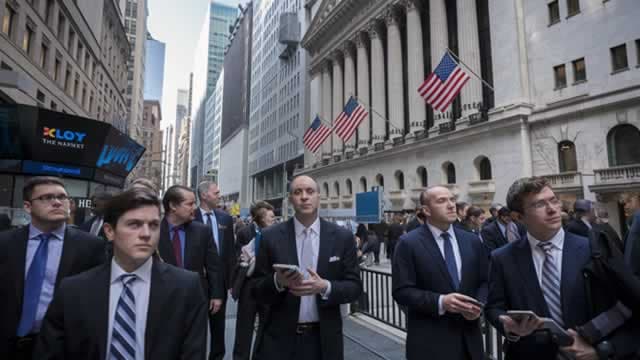
Kevin Warsh's nomination as Fed Chair introduces significant uncertainty and removes the perceived 'Fed put' for risk markets. Recent sharp declines in gold, silver, and Bitcoin signal unhealthy market dynamics and heightened volatility across asset classes.
The merger puts the billionaire entrepreneur's rocket and artificial-intelligence companies under one roof.

The Dow industrials gained 1.1%, boosted by a strong U.S. manufacturing report. Gold ended 1.9% lower, while silver is down 33% over the past two sessions.

Elon Musk plans to merge SpaceX with xAI, according to people familiar with the matter. The combined company would have a valuation of $1.25 trillion according to sources.

Elon Musk's SpaceX reportedly combining with xAI ahead of potential IPO
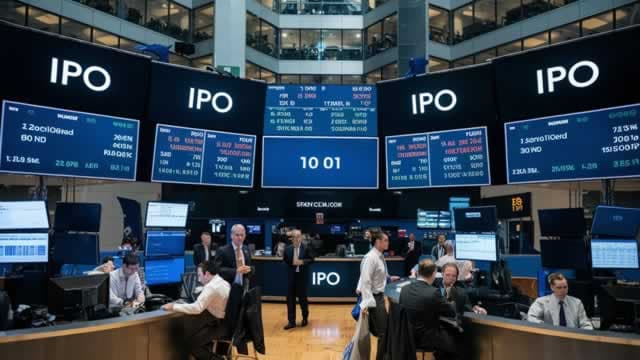
Elon Musk plans to merge SpaceX with xAI ahead of its IPO, with a combined valuation of $1.25 trillion, Bloomberg News reported on Monday, citing people familiar with the matter.

AI investing doesn't have to mean paying triple-digit multiples. These five value-oriented stocks offer exposure to the AI boom through power, infrastructure, and legacy industries.
Operator: Greetings. Welcome to IDW Media Holdings Fourth Quarter and Full Fiscal Year 2025 Conference Call. [Operator Instructions] Davidi Jonas, CEO; and Andrew DeBaker, CFO, will be available to answer questions and provide company insight. Please note, this conference is being recorded. Before we begin, I'd like to read you the company's abbreviated safe harbor statement. I'd like to remind you that statements made during this conference call concerning future revenues, results from operations, financial position, markets, economic conditions, product releases, partnerships and any other statement that may be construed as a prediction of future performance or events are forward-looking statements, which may involve known and unknown risks and uncertainties and other factors, which may cause actual results to differ materially from those expressed or implied by such statements. Non-GAAP results will also be discussed on the call. The company believes the presentation of non-GAAP information provides useful supplementary data concerning the company's ongoing operations and is provided for informational purposes only. Operator: [Operator Instructions] We have a question coming from Jeff Silver with Corrado Financial Group. Jeff Silver: Can you hear me now? Operator: Yes, you're coming through, Jeff. Jeff Silver: Sorry, sounds like Verizon commercial, I guess. It seems as though you have more activity now as you enter into 2026 than you had in quite some time, Davidi, probably since you assumed the leadership of the company. Maybe, first of all, I'd like to just get a sense of whether you could confirm that. And then more specifically, thinking about the TV and film projects, my understanding is there are sort of half a dozen of them that are -- that you're working on. Can you talk about how these will be funded/financed? I mean, are you taking on the risk of production on your balance sheet? I mean I know a while back that was the case prior to you sort of taking the management role. And then I think the sort of the asset-light model was really the preferred model. Maybe you can talk a little bit about that -- those 2 things. David Jonas: Sure. I mean IDW has had a number of projects that have been in the, we'll call it, development phase for a number of years, different projects that have been optioned for TV and for film. So I wouldn't -- not that I take credit for any of it because it really is more of the creators in our team. But certainly, the ones that predated me, I can't take any credit for. But in terms of any of those projects that we've optioned and that we're hoping to advance to the next stages in development and hopefully production, IDW is acting in the projects that are active. IDW is acting as a non-writing executive producer where we provide value to the production by being part of the -- not being a financier, but being more of a producer, participating in creative development, working with -- we know the material incredibly well. So being a resource to work with the creators, work with the writers, put together the writing team together with the creator of the book, make sure that there's a cross-pollination of ideas. So we bring value as a creative partner, but we don't have the sufficient resources nor the expertise. And historically, I'd say also don't have the barometer of success to demonstrate that it would be wise for us at this time to take on the financial risk of participating in the financial investment in those projects, reserve the right for the possibility to do that in the future if we see an opportunity that we think justifies it. We feel that we have the right people in place to drive that. But at this moment, we're just going to continue acting as -- I think you had used the word, sounds like asset-light. So I think we'll continue to be asset-light and continue to act as a non-writing executive producer on those projects. Jeff Silver: Just, I guess, a general question in terms of in terms of strategy going forward. I mean the -- when you assume the CEO role, I guess the first order of business was to really stabilize the company and that took a few quarters. I guess the question I have is sort of the -- as you look forward in terms of organic and inorganic growth, what can you tell or share with shareholders about whether or not or to what extent you're focusing more on growth at this stage, growing the business than, I would say, sort of a status quo. I mean, are you looking at potential acquisitions? Or again, the initial question I had was sort of is the pace of content creation growing? Just sort of a sense of whether or not the sort of long-term shareholders is looking at a situation where maybe the company begins to grow meaningfully over the, I'll call it, short intermediate-term period of time? David Jonas: Sure. I mean I think that there's -- I'd differentiate between -- I don't want to say quality because that feels like a subjective measure and might not be fair to creative partners. But that's probably the easiest phraseology to use to differentiate between quantity and quality of growth. I mean the growth that I'm most interested in is growth that creates value for long-term shareholders. And so in terms of growth, I wouldn't necessarily say we're expecting major growth in revenue or top line or bottom-line profitability. Like that's -- I do think that we'll achieve growth in those areas, too. I just don't think that it can -- that there's much we can do outside of just getting lucky and being in the right place at the right time and having a hit book, which we'd love for that to happen, but it's not really nothing we can plan for. So I think we'll see modest growth in terms of profitability. And I think you'll -- what you've probably have seen for IDW in the last number of years, there is a decrease in revenue, but an increase in profitability and effective spending, effective management. The growth that we're looking for and that you'll see are things that create value for shareholders, for instance, creating new imprints. So -- and new imprints where specifically we're focused on generating internally generated content where IDW will have pretty much for the first time, company-owned content. So we're working with creative partners, creative partners who are working with us have meaningful upside potential and royalties to earn. And so we want our partners to benefit alongside. But in terms of the ownership of that IP, the ownership will reside 100% with IDW. Are those projects likely to succeed? And their new stories being told. They don't yet have an audience. We're really seeding from the ground up, but they're excellent stories. They're compelling enough to pass the sniff test of our internal team who thankfully have been doing this for combined probably hundreds of years and have excellent storytelling intuition. And so we'll be creating crime stories, hero stories, new horror stories. So I'd say it's not so much that we're going to be doing more, which I think was sort of what you may have seen from IDW 5, 6 years ago, 4, 5 years ago, where the idea was we're going to do a lot more content. And there was a lot more spending and I think something of a spending spree to go out and create a lot of that content. But it was a little bit of a spray and pray method, at least from my observation. I think what we're trying to do is be much more thoughtful and preemptive in terms of what stories we want to tell, what genres we want to focus on and wanting to have as much upside potential for IDW and to think about these stories, not just in terms of is it a good story? Is it a cool story, but how would it function as a franchise? How would it work to create long-term value for us to be able to continue to service the fan audience. So those, I think, are the types of strategic approaches that we're looking at. It's hard for me to say that shareholders can expect some great delivery on this investment. It's nascent, and it's -- I'd say we don't have a history to build upon in terms of demonstrating success with internally generated IP and creating new imprints. But I personally think it's probably one of the most exciting things that we've done since I started at IDW, something I wanted to do pretty much from day 1. Just publishing is a slow cycle. It takes time to generate ideas, takes time to contract talent. But I'm very excited to see those imprints come to -- that some of those are going to start to come out in our fiscal '26. I don't know if we'll see immediately the effects of it, but those are some of the investments that I think we'll be making that hopefully will build meaningful long-term shareholder value. Jeff Silver: Just the last question as is sort of the obligatory question on AI. I mean, given the rapidity which -- just the speed of adoption and the use for use of AI and the models, large language models of creating content of all kinds. And Disney had their call this morning, and they have got their deal with OpenAI on their characters. I mean, can you talk a little bit about whether or not this is something that you're looking at as a potential positive factor? Or do you see it as a threat? How engaged is the team with what's going on in the AI space? David Jonas: I'm not sure. I mean in terms of the team, I don't think -- I don't -- I wouldn't say that AI is wide to be used in IDW. I'd say -- I have to ask every single person who works at IDW if they use it. There's no mandate to use it. There's no preclusion from using it. We trust our staff to effectively manage their workload. My expectation is that very few people are using it in any sort of creative way, if at all. I think AI is a tool like any other tool and that I think there will be use cases that might make sense and there will be use cases that don't make sense. I think for a creative industry; it's particularly a conversation and that requires even more reflection because we're dealing with human creativity. I think if we decided that we were going to put out AI-generated material, I think that would probably not be well received because this is such a creative-driven industry, and it's an industry where there's a real relationship between fans and creators. And I think there's an expectation of relationship between fans and creators, and we honor that. So I think bringing AI into that -- as an intermediary in that relationship is a potentially dangerous consideration. So I think that it's -- I think this will be a conversation for a long time to come in the industry at large. I don't see any immediate areas where IDW would plan to employ AI in any sort of commercial or creative way. So I guess that if people want to use it for task management or anything like that, certainly up to individuals to use technology as they see fit. But I just think that our team is not -- doesn't see it as being of creative benefit. And if anything, I think our team sees it as potentially being detrimental to the relationship between the creators and the fans and detrimental to creators even before it gets to the fans because it could undermine the work that they bring because then there's just a bot that's trying to mimic what they do. But like you can't recreate the Mona Lisa. You can try to aggregate and create something that's like it. But part of what makes art special is the human touch. And we're a creative company. We create art. We create stories and we do it with people. And I think that's going to continue to be how IDW tells stories. Operator: [Operator Instructions] We have reached the end of the question-and-answer session. This concludes today's conference, and you may disconnect your lines at this time. Thank you for your participation.

Abdulkarim Abdulrazak: [Audio Gap] this restructure, we believe will be instrumental in Spenda's success. And without this restructure, just we don't think that the plan we have would have come to fruition. So it was very important that this happened and it has, and it's all showing now the hard work we've been putting in recently. And as you'll see shortly from Corrie and throughout this presentation, massive changes were made on an operational level as well. So you'll notice that Corrie has spearheaded this huge shift in Spenda's operations compared to how it was before, all within a few month period and all without negatively affecting the business. So I just wanted to kind of give a shout out there because I don't know if -- I talked to a lot of shareholders, and I myself as a shareholder for a long time prior to this. So I'm in the same boat as most of you or all of you really. And I just thought we really need to recognize the amount of work Corrie has put in and also hasn't taken additional salary compared to her previous as well, worth noting. So you'll notice operational changes have happened already on a huge scale. Board changes have happened on a huge scale recently as well. So everyone is now aligned. And now the business is almost complete to fully tackle the plans that we have. But as Corrie said, we weren't just waiting for this to happen. I've already got everything in order sales and marketing-wise. But I'll let Corrie continue, and we'll get into that a little later. Thanks, Corrie. Corrie Hassan: Thanks, Karim. Sorry, for some reason, there's a big delay, which I'll try to change the slide, not sure why. Abdulkarim Abdulrazak: Corrie, while you're doing that, I might just add a line in quickly. So just on the Board level as well, as Corrie mentioned, the Board is a lot more involved than before. So that may not be the norm for a lot of investors when they look at a Board, but we believe this is what was required. So myself, and as you can see here, James, which Corrie will introduce in a moment, but we will be pretty closely involved, each one of us adding value in our own way. And between us, we form this perfect combination of skills. So anyway, back to you, Corrie. Corrie Hassan: Thank you. Yes, Spenda has also welcomed James Matthews, you would have seen this morning, to the Board. So James is a tech, marketing and growth-focused business leader. He's got a huge history of success in scaling businesses. So we're actually really delighted that James has joined the Spenda team. His skill set is perfect for where we are right now, and I'm looking forward to working closely with him, particularly around bringing a real level of innovation around the marketing area. So in the last quarterly, I presented the new business strategy and how we were pivoting. I'll just do a quick recap on some of those changes. So there are 6 key focus areas. So simplifying the business. It was a fairly complex business, very difficult to understand or sort of get your arms around. So it needed simplification. We needed to really focus on the products that we commercialize quickly and only and have that narrow focus, which we've done. We needed a strong sales and marketing strategy, and we were resizing the business with the correct cost base and correct structure, stabilizing the product, ready to scale from February and then managing all of those changes without impacting revenue. That was the goal. So taking the staff from 90 at one point to 50, from 13 products to 3, ensuring that the business moved quickly to an execution-focused environment was really critical. So making sure everyone was aligned on the product vision so that we could execute on those deliveries quickly, laser focusing on that recurring revenue, having the right leadership team, so highly motivated, believing in the future and moving forward, which we have and then implementing a sensible cost base to support the business. I introduced our 3-pillar product strategy, so Spenda Retail. That product needed commercializing and scaling with existing capability. So we removed the road map, which was quite extensive and focused on stabilizing the core product offering and working with our cornerstone customer, Carpet Court, to establish a rollout plan across stores. We also needed to identify the next 2 or 3 cohorts because this product is not just about Carpet. It's actually been built so that it will suit a number of cohorts, and that's a big part of what Karim has been doing in the background. So I'm working really closely at the moment with the Carpet Court team, actually overseeing that piece myself. So we've got quite a tight process in terms of which stores we're targeting and how we roll those out. So that I can see it now starting to come to life, which is exciting, and you'll start to see those retail stores increasing month-on-month. Spenda Pay, that was rework. So it's really a 3-play strategy, I suppose, focused on the SME market. So it's a different type of customer. We're focusing in on their small- to medium-sized businesses, which really wasn't a specific focus before. So the 3 play is, one, a product where any business can use their credit card to pay supplies to endpoints. So that broadens our customer scope means that we can go for any customer in any industry. The app is also where our new lending product will be utilized. And again, that broadens the customer scope to any customer. And then thirdly (sic) [ secondly ], rolling in a SWIFT statement for Capricorn. So by rolling that functionality in, it means that those Capricorn members actually have a significant uplift in their feature set. And so they'll pay the same SaaS fee, but have additional features. So I believe that, that's the way to really scale that SWIFT statement customer base. And then third product, Spenda Ledger. So this product really has just been focused on APG as a customer since the Limepay acquisition. And that project now has successfully been completed and has moved into a Business-as-Usual scenario. So we needed to just enhance some of the dashboarding and reporting and get that ready to relaunch so that we can then start focusing on acquiring new marketplace customers in that product. We already have a number of marketplace customers there, not just Spenda Ledger. So it's really just making sure we've got the sales and marketing strategy to start to scale that product separately as well. So how did we do for the quarter? So for our Payments Volume, we saw continued growth. So it came in at $227 million compared to $204 million for the first quarter. We expect this trend to continue across the next financial year month-on-month. As we acquire new customers in all of our products, there's going to be a key element of Payments across all products as well. So any new product growth will also scale into our Payments increase volume. So the goal was to increase cash receipts with reoccurring revenue and not any sort of one-off lumpy receipts. So this ensures consistency and strength in the business, and it doesn't derail the business with large projects that do not really fit, I guess, with the Spenda road map. So quarter 2 was a healthy increase of 33% from quarter 1. Abdulkarim Abdulrazak: Sorry, Corrie, if I could jump in there for a second. It's also worth noting, guys, that the positive quarter numbers-wise and volume-wise happened at the same time as the huge cost-cutting exercise or exercises that Corrie underwent. So it's worth just keeping that at the back of your mind. Corrie Hassan: Thanks, Karim. The slides keep taking their time to click over, so sorry. Okay. So if I just do a quick dip into the targets that I set, we are ahead, which is really pleasing to see. These are just a flavor of the December targets we set. So revenue, $2.4 billion, we came in at $2.8 billion. Total payment flow was expected of $208 million, $227 million. SME funding, which is our new lending product. Because we're in the pilot phase, we knew kind of where that was going to sit because we haven't yet opened that up, which we are about to do. So we had anticipated growth of sort of 9%, and we've come in at 33%. So I was really happy with those results. And then moving through to quarterly operational update to give you a flavor of what we've been doing operationally. I'm just waiting for my slide to change. Sorry, everyone. Here we go. So keeping in mind, we didn't really have any sales team in place at all before. And really, we were focused -- it's just really our previous CEO who covered the sales side of things. We were really starting from scratch on that side. So we are moving very fast in that area at the moment. One of the key areas was obviously tight cost management. There was a large cost base in the business initially. So that was a very key focus. The first quarter, we saved $171,000 a month. And the last quarter, that increased to $320,000, and I want to continue to increase that quarter-on-quarter. We've revisited all the costs in the business. So obviously, staff was an immediate action that needed an overhaul, but everything else has been looked at, office rent, suppliers, subscriptions, audit fees, everything. So I'm used to running, I guess, a business keeping a very tight cost base, and that is something that I'm going to continue to do and will be a focus for me. We reduced our average burn by about 21%. So we also managed to continue to grow our revenue streams. And we just really want that, I guess, differential to shrink as quickly as possible. Taking a dive into products. We simplified the narrative for each product so articulating what we do and what each product does is actually easy. That sounds a very basic thing, but it was quite tricky, to be honest, before. When you've got 13 products, it's really hard to clearly articulate what you do and where you're heading. So we did that. We are really on track for this product. We've stabilized the tech, focused on strengthening the existing capability. And as I mentioned, I've been working really closely on the Carpet Court rollout, and I'm already seeing traction starting to come through there, which is great. And Spenda Ledger, again, we're on track to relaunch this product shortly. Again, it was focused just on APG, so we needed to do a little bit of work there, which we've done. So our revenue lines with APG will continue to grow. So yes, they are a cornerstone customer in that product. However, there will be many customers coming through here now. So APG, as they grow, we grow because our revenue is based on a clip of the transactions going through. We'll also increase lending income because APG as a lender, we will get a clip of the lending transactions as they go through. And we'll also be building extra features for APG as well. So there will be an ongoing monthly commitment in terms of monthly revenue. So a significant amount of time has been focused on the sales and marketing structure. So ensuring that we can get going as quickly as possible. And this is really Karim's area. Actually, I might pass to you, Karim, is that okay, just to give a little bit of an update as to what you've been working on? Abdulkarim Abdulrazak: Yes, sure. Thanks for that, Corrie. Yes. So just on the points that you can see there on the slide, I'll use them as a bit of a guide to kind of touch on each thing. So noting what Corrie mentioned before, we didn't have an existing sales team at Spenda. And that, I believe, was the case for quite a while. There was no designated sales team or person. So for me, that presents a pretty exciting opportunity if you want to look at it that way, where we have an existing base of, say, the $11 million revenue. As a shareholder, you could look at that and say, well, that was achieved largely with no sales team. I know what a lot of you might be thinking, and I get it, but you have to look at it as -- it's a positive thing because right now, with the sales team and with clarity on what we're actually selling, what could we achieve? Well, right now, if a salesperson come on board and had a clear idea of each of the 3 products that they're selling as opposed to before, even if we had a salesperson, what on earth are we actually selling? And how do you articulate that when you've got over a dozen products that some of them weren't exactly ready to be sold in reality. So as Corrie mentioned before, this is why you'll see things like Spenda Pay being relaunched again next month. A lot of you are wondering, wasn't that already there? Or is it just rebranded, but what have you actually changed? Well, that's a thing. It wasn't entirely fit to scale rapidly and to everyone, every Tom, Dick and Harry. So we want the products to be scalable across many different verticals, different markets and not custom built for just anyone. And it goes back to the project work that Corrie mentioned before, which take time and don't allow us to just scale to thousands of customers. It really just gets you the 1 or 2 big invoices for that quarter. So we'll still be doing those things, too, if it's available and easy to do, but it's not going to derail us from the plan. We don't want to do anything that's going to derail us. We need to stay on track, and this is the problem that we've had in the past, right? So sales function established. That's me at the moment now, which I'm doing. We are looking for a salesperson to come on board to assist us in -- assist me in particular, in selling. Now targeted customer management -- engagement, sorry. So we're essentially looking for businesses that we can sign up without having to do a 1-year build for or customization. We're looking for businesses that operate, for instance, a very similar vertical to Carpet Court that I've been looking into is window furnishings. They operate very similar, but it's not exactly the same, and they would be able to use our product pretty much out of the box. So that's been a vertical that I've been looking into the last few weeks. And we've done a few demos and people have been pretty positive about those demos where 90-plus percent of Spenda Retail, what Carpet Court is using essentially, would be fit for purpose for them. So that's pretty cool. And I believe that there are other verticals that we could target that way. So -- and that's already happening. It's not that it's going to happen. We've done the demos. People are positive and things are moving. So Spenda is in a position now where it's actually at the best position, I think. As I've been a shareholder for the last 6 years, I don't think it's been in a better position in that regard in terms of it's ready to kind of scale. Whereas before, no matter how much we might have heard that it was ready, it really wasn't. And that's what Corrie has been working so hard on, and we need to acknowledge. And I was one of those people. I jumped on board with a different mindset. And when I saw what Corrie was doing, I realized, okay, wait a minute, there's stuff we need to change, yes, but Corrie is doing what's needed and really what was needed a long time ago. So the sales narrative is now simplified, and that is largely due to Corrie's work, simplifying each of the 3 products and saying, okay, these are the ones that are ready. These are the ones they're strong technology. They have pretty cool features that a lot of businesses would love. And it makes it easier for a salesperson than like me to come on board and sell this product. So 50% of the work was already done from Corrie on that end. And now the rest is really crafting up the narrative. And this is where James Matthews, our new Board member that we've announced today, really comes and adds value here. So James has basically the entire life as a marketing expert, and that's exactly what we need right now. But obviously, having that person in-house, adding that value, which you normally have to pay lots of money for is very beneficial. I mean, he's got other strengths as well, but this is kind of what we need right now from him, so today after this webinar, and developing a story and a narrative for each product for us to put out there to make it easier to scale. So just on growth plans. So Spenda Pay launching next month, for example, don't misunderstand and think that it's the same product. It's not a brand new one, but it's not the same exactly as well. It is -- features have been added to enhance it to make it -- we want to make it that the 135 customers that are utilizing our Spenda Pay, you could say, the previous Spenda Pay version, we want it to be that we'd be able to accumulate those types of customers in a much shorter period of time. We don't want it to be that it takes so long to recruit people because the product is great to have, but not a need. We want the product to be a need and people to look at it and think, we don't need convincing, we want to use this product. And that's exactly what's going to hopefully happen in February for Spenda Pay. Corrie, did you want to take over here, Spenda Pay? Corrie Hassan: Yes. So as Karim mentioned, we've got a few different stages as we roll through this product, but converting existing SWIFT statement users onto their Spenda Pay is the very first step and getting them using the system. They'll be using AP to actually pay their suppliers and earn points, which is a big thing for them as well as being able to have the SWIFT statement capability. So I believe that, that really is going to bolster us forward quite quickly with the SME membership of Capricorn. And then as I mentioned, our lending piece is in here as well. So those customers that want to utilize lending will be using Spenda Pay. So those 2 combined will be the early uptakers of the product. And then we're going to scale it out more generally from there. So the sales and marketing play looks a little different for that product. It's probably more of a digital acquisition, but also a broker play, laying the foundations of those marketing materials -- those broker marketing materials as well for this last quarter has been key and then making sure that we're ready to scale quickly in February or probably the end of February, beginning of March as soon as the product is ready to go. So that's on track. It's -- yes, it's -- this was for me, I was worried that this may delay because there was quite a bit of work to do here, but we're on track. The team have really focused in on it, and they're smashing through the features, and it's coming together really nicely. So we're on target. And yes, we'll be ready to scale. So path to success, this is what I presented in quarter 1. I guess, just looking at 4 quarters, what those 4 quarters look like, and we're firmly on track. The next quarter is really heavily focused on sales and marketing because we'll have -- we fixed the product. We've got the right people in the right roles. Everything is stable. We're honing in on the 3 products that we need to commercialize. Everyone is accountable for their own area. They know what they're doing. Everyone is pulling in the same direction. Spenda Pay builds will be out at the end of Feb as planned. And yes, we're good to go. So I think the next couple of quarters really are about being consistent and just moving forward, consistently focusing on sales and marketing, onboarding new customers and scaling as quickly as we can. And that's where the whole business will be leaning in to do that. This is how we really build that shareholder value through the consistent execution of this strategy, which is delivering growth in repeatable and scalable income. So I'll just touch on this. Okay. So having, I guess, a credible AI plan has been a focus of our CTO and CPO. We already have some AI capability in our current product suite, but I really just wanted to make sure we've got a clear strategy on where we're heading so that we can stay ahead of the curve and keep innovating in the space. We've started to plan the rollout of a dual interface AI architecture. And we need to be able to, I guess, innovate in the space, but it needs to be in a very sensible and structured way because we are quite heavily regulated in the payment space. So we do need to be careful. So you can see our positioning statement there is, we do not let AI move money. We let AI help us decide how money should move. And that gives, I guess, sets a tone or gives you a flavor of how we see Spenda's evolution here. So you'll start to see a lot of this come to life throughout our products as the year rolls out. And that actually brings me to the end of the presentation. Abdulkarim Abdulrazak: Sorry, can I jump in for a second there on the AI front? Corrie Hassan: Yes, of course. Abdulkarim Abdulrazak: So just to reiterate once again because I found -- I myself as a shareholder was not as aware of this as I probably should have been or thought I was. So with AI and Spenda, I mean, our system already incorporates AI and a lot of the features actually work off the back of AI with the invoicing components and a lot of that, which is already available to be used and is being used now. So whilst we're looking to evolve and continue to stay up to date with the world and artificial intelligence, we do already have that. So we're not -- I wouldn't say we're behind or anything like that. So don't misunderstand and think that this is something we want to do later, and we're just going to be behind the world. We're aware, and yes, that's not the case. Corrie Hassan: No, we're evolving at the same pace as the world, I suppose. There's so much we can do around risk and managing payment and fraud and dispute risk in all of our products. So it will be exciting to see how that does come to life. Thanks, Karim. Unknown Executive: Thanks, Corrie. Okay. So it's now time for questions. As mentioned before, we had a great number of pre-submitted questions. So we're going to go through those questions first. And then if we have time, get to some of the questions that have come in via the chat function. So the first question was with $1.5 million cash at quarter end, $360,000 monthly burn and $2.5 million R&D refund expected in Q3, how should investors think about cash runway over the next 12 months? Corrie Hassan: I mean our focus is to get cash flow positive as soon as possible. That is my laser focus. So I'm just going to continue to take costs down, manage them really tightly and scale revenue as quickly as possible, and we're really confident in the plan. So... Unknown Executive: Okay. Next question. As higher-margin payments and lending products scale, how should investors think about margin expansion over the next few quarters? Corrie Hassan: So my main focus around revenue is to have a really healthy mix of SaaS, lending and payments together because those 3 really are the magic combination into having a really good GP and obviously increased profitability. So I think that will change and be very healthy as we scale all of our products as planned. Unknown Executive: SWIFT statement has around 135 paying customers. What are the main blockers to faster uptake inside Capricorn? Corrie Hassan: I don't think there'll be any main blockers once we roll out Spenda Pay. We have ramped up slower than expected. But when we did our sort of market research around that, it was the stores didn't really want to pay -- or the members, sorry, didn't want to pay that amount per month just for the reconciliation piece or they felt like Capricorn should have been paying that. So by adding these extra features, they're still paying the same. I think the big thing there is being able to pay Capricorn and getting Capricorn points, which is a real attractive feature to those members. So I think those -- I don't think there'll be any blockers. I think it's really about then how we scale as quickly as possible from there. I have no doubt that, that will start to take shape from March onwards. Unknown Executive: Great. How much of FY '26 growth is expected from existing customers' increasing usage versus new customer wins? Corrie Hassan: Both, I'd say. So we will continue to work closely with all our Cornerstone customers and grow with them. But our strategy ultimately is to have a really healthy spread of customers across all products. That's a healthy business in, I guess, any vertical, making sure you're not over reliant on any customer and that you have a really good spread of customers as well as a good spread of income mix. So yes, I think we'll be doing both. Unknown Executive: One investor has asked, I'm very confused by your recent quarterly. You have stated that you've simplified your products. How are they more simple? Have you just put them into different buckets and restricted the number of customers to one per bucket? Corrie Hassan: No. I don't think that's what's happened. Retail, we have simplified the offering. We've just really made that current feature set more robust and scalable and taken it straight to market. I guess Spenda Pay itself, it's a really -- really, it's a new product, and it's giving us a new customer base in the SME space, same with lending as well. So there's a large number of SMEs in Australia, and that product enables us to engage with that market and scale with that market as well as our larger customers. And then I guess, Spenda Ledger, we've just refocused on growing those marketplace customers there. We already have customers -- if I try to remember, the marketplace customers, we've got like travel businesses. We've got party stores. We've got retail cloth stores. We've got a large variety of different cohorts in there already. So we can -- yes, so there's a big scale up for each product with different cohorts and customers. Unknown Executive: APG Pay processed about $50 million in Q2 and a master services agreement is expected. How does revenue scale as volume grows? Corrie Hassan: So with APG Pay, we get a cut of the travel. And to be honest, they've got a really gun sales team. I've got no doubt that they're going to scale really quickly. So we'll just get, I guess, a higher percentage -- not a higher percentage, but a higher dollar value of income as they grow. So we'll grow with them. The lending, they are our lender. So again, we'll be getting a clip of the lending as we scale that lending out together. So we're working together as a partnership to get that product right to take it to market. And then thirdly, we'll continue to build out their road map as well, build in extra features. So there'll be some reoccurring income monthly as well. Unknown Executive: What milestones should investors watch to judge the success of the APG partnership? Corrie Hassan: Just growth, growth in the travel space, growth in the lending product. So we just -- as those 2 products grow, then our revenue grows with it. I think there's a lot of opportunity here, and I expect to see quite a lot of growth. The partnership that we have with APG is really unique, and we work really well together as 2 separate businesses as a team. So yes, I am foreseeing quite a bit of success there. Unknown Executive: So beyond APG and Capricorn, what verticals look most attractive for Spenda ledger? Corrie Hassan: Spenda Ledger has a number of verticals already in there. So it really does work in any vertical where there's a marketplace. Karim, maybe you could give a couple of examples of different industries you're working with for Spenda Ledger. Abdulkarim Abdulrazak: Yes. Yes, I'll jump in here as well because there is some work that's been happening over the last few weeks as well with Spenda Ledger and that has its own sort of verticals separate to Spenda Retail and what you think with Carpet Court, for example. So with Spenda Ledger, for example, I'm just going to give a couple of examples. Don't take me on this and remember it next quarter, but an example of a vertical we're looking into, and this is where the new Director, James Matthews, is going to be helping as well from his background in sports. So sports is an opportunity for us, which no one has really looked at before here. It's not really the type of industry that's always up-to-date with the times either. So James and I both have some sports backgrounds, but James was an executive in national sporting bodies. So hopefully, once he starts to communicate more with shareholders, you'll start to hear a lot of this. But ticketing, for example, right now, a lot of them would use the likes of Stripe. And I'm going to jump into this a little bit, Corrie, if you don't mind, just with Stripe because I see a couple of questions similar to this. So of course, we can't exactly just take over and dominate a business like that. So what we do is we be smart and focus on the areas where we have what you could call low-hanging fruit, meaning businesses that we don't have to put a huge amount of effort into to get on board. Now we are -- obviously, there's some stuff that I probably don't want to go into too much because we're a public business, and we still have competitors that we don't want to just [indiscernible] out everything that we want to do. But for shareholders to know, we have a few things that give us an edge on Stripe Connect, which, again, I haven't been here for years. So I'm not here just saying that just to make everyone happy. I only jumped on board 8 weeks ago, and I was angrier than all of you put together. So I'm telling you that there is a few things that we have an edge on. So without just kind of talking too much about it, there's an opportunity, ticketing, sport and any marketplace business similar to what Corrie has mentioned would be a suitable business for Spenda Ledger. And again, this is separate to Spenda Pay, separate to Spenda Retail. So it's almost like its own little business where you could just have a business, which is basically just a ledger product and you could do well. So the 3 products are actually plenty. It's not as little as you'd imagine. We had 13. Now we have 3. Geez, is that enough or whatever. It's actually quite a robust suite of products, and they do complement each other. And yes -- so the verticals in sport is something that we're looking into right now. Just to give you an example of the kind of the work that we're doing, education businesses is another one. So we talk to businesses similar to education businesses, for example, that sell courses online to universities or governments, et cetera, or training academies. So those types of businesses where you've got to go on their website and you pay for a course on their website, they'd have to have some sort of payment gateway there, which obviously they don't own and wouldn't have built themselves. It'd be either Stripe or similar or Spenda, Spenda Ledger, which we're hoping is going to be the case moving forward in Australia and New Zealand a lot. So yes, there are some verticals that we're looking into. And just remember, no one was doing this before. We had no sales team. So the proof will be once we actually accomplish it, and we're working on it now. Once a salesperson comes on board, we'd expect them to be sitting in front of these places. But in time, we'd like to continue to share more about progress with sales and verticals. And we'd love for shareholders to contribute and give us ideas. We're happy with all of that. But there is a pipeline, and we're not just kind of guessing and throwing the dart wherever. We're trying to be a bit more targeted. So we don't want things to take very, very long. We're mindful that we need to execute and the patience levels of most people has kind of run out for Spenda, and we're mindful of that. So we're trying to execute as fast as we can with, again, that word, low-hanging fruits, that phrase. So anyway, sorry, Rich, continue. Unknown Executive: Thanks, Karim. Okay. So you achieved about $3.85 million annualized cost savings. Are these structural savings? Corrie Hassan: Yes. Yes. So these are obviously staff reduction, rent. So both the Sydney and Perth office. For example, we were stuck in a 5-year lease with Perth. It took us a little time to negotiate out of that. So we'll be moving offices there next month. And then we're going to have a break from office space for a few months on either side, and then we will look at something smaller and more economical moving forward after that. Subscriptions, audit costs, platform costs, so Azure and Google, we're trying to look at have ways of reducing those costs because they are always big costs for a business like ours. And yes, we're [indiscernible] with a couple of partners. So yes, there's a lot of initiatives underway. Abdulkarim Abdulrazak: The R&D as well was a pretty big cost saving as well, our R&D agent. Corrie Hassan: Yes. Yes. So -- and actually, Karim has been pretty helpful there as he's got some really good contacts in some of those spaces. So it was really easy to then do a supply comparison quickly in terms of like-for-like costing. So yes, very quickly, we were able to focus on those areas and address some costs there. So yes, absolutely, they are very much so structural savings. Unknown Executive: Okay. So should investors expect reinvestment as sales and marketing activity increases? Corrie Hassan: So yes, the sales and margin structure has already been considered in the budget. But yes, of course, we're going to be focusing really heavily there. So that will be a key area of investment. I'd say probably not additional investment, more repurposed investment from ongoing cost savings. There's not going to be a massive outlay in that area. Unknown Executive: How do you balance product speed while keeping operating costs tight? Corrie Hassan: Honestly, we're finding we're actually moving faster than we ever have done as a business. So I guess just getting that right structure, the right level of communication, clear accountability for each person in the business, the right meetings to be had, making sure everyone is sort of communicating well. All of those things have come together quite quickly. And yes, everyone is moving in the right direction. So that hasn't been a challenge. In fact, it's been easier, I'd say. Unknown Executive: Now that you are permanent CEO after the stabilization phase, what 2 strategic decisions matter most for shareholder value over the next 18 months? Corrie Hassan: So managing capital debt and dilution, obviously, those are the real key focuses, and we need to balance those well with growing the business. So as a team, we're obviously managing all of those things together to try to get the best outcome for all shareholders. Unknown Executive: This may have been addressed at the start, but why did Mr. De Souza resign? Corrie Hassan: Really just a shift in direction. Yes. And like I said at the beginning, making sure we've got the right people in the right areas of sales and marketing expertise to take us forward into the next era. So Francis obviously recognized that, that wasn't his area of expertise so resigned to support that. Unknown Executive: And do you have any plans to add -- I think this question has largely been answered. I'll ask it anyway. So do you have any plans to add sales personnel that can grow the business? Corrie Hassan: Yes. So we're just currently looking for one salesperson. We haven't got a firm plan to take on a whole team or anything like that at this point in time. So we'll get one salesperson working alongside Karim for some time and see how that works and what we need to do from there. But we definitely need a focused salesperson alongside Karim for now. Unknown Executive: Instead of just focusing on franchises, what about younger influencer, social media side potential being made aware of a Spenda and what it can offer to them? Or are we just locked into a slow risk-averse small business model? Is Spenda too far under the radar? Corrie Hassan: Okay. Well, we are definitely not just focusing on those customers. We're spraying the net far and wide with our marketing plan and with our product suite. But I think with the addition of James, he's a real innovator in marketing. So he's definitely going to bring an edge to what we're going to be doing in the future. Whether that looks like, I don't know, social media influencers, possibly. But yes, putting together that plan and what that looks like with James is going to be the key to getting that working really well. Unknown Executive: Is Spenda still working with eBev and Lessn? Corrie Hassan: Yes. So Lessn is a Spenda Ledger customer still. So yes, we work -- still working with Lessn. eBev is a lending customer. So they were primarily just -- we're not doing anything else with eBev at the moment. It doesn't really fit with our new strategy, but they are still a customer of Spenda. Unknown Executive: Okay. So just moving on to some of the live questions that we got through. So what large projects did you do previously that didn't fit the business? Corrie Hassan: That didn't what sorry? Unknown Executive: That didn't fit the business. So was there any projects that you did previously that were done under previous management that weren't a fit for the products that you were developing? Corrie Hassan: Well, there were some large projects with Capricorn for previously and with a couple of other customers. They don't fit with the road map that we have now for our product suite that we have now. So -- and some of them were really big projects, which are good projects, bringing in a good amount of income. But when that happens, you do -- I guess, don't focus on your road map as a business. You kind of lose focus and just jump into a project. And some of them are quite big, so pretty much a big chunk of the business we're working on them. So rather than sort of label what all of those were, there were quite a few that maybe worked well for the business at the time, but didn't leave the product where it needed to be to stabilize the business in itself. Unknown Executive: Yes. So you've reduced staff from 90 to 50 and products from 13 to 3. Has there been any risks that have come with this reset? Corrie Hassan: Risk, I guess, not risk that wasn't there before. I think it just strengthens our position. The risk was being able to, suppose, maintain that recurring revenue or that revenue for the December quarter because really, there was so much change to manage that there was a risk that we wouldn't be able to deliver on those numbers. But that came good. So that was pleasing. I guess reducing staff numbers and obviously, you're dealing with a number of staff and morale -- managing that change and bringing people along on the journey, you worry that you may lose a few key staff members along the way, which we did a couple here and there, unfortunately. But I think we've navigated that risk well, and I think we're in a good position. Unknown Executive: So the December revenue and payment flow targets were beaten. What product drove most of this? Corrie Hassan: It's across product. There is a chunk in Spenda Ledger. So there's the marketing -- the marketplace revenue. And obviously, we're already working with Carpet Court across a couple of other products as well. So it's a combination of those. Unknown Executive: Okay. Ledger targets marketplaces, fintechs and large corporates, which segment is a priority? Corrie Hassan: Marketplaces now and then because there are some changes that we need to make to really take it to the fintech level. Not much, but we need to build that -- well, that -- sorry, that is already built into the road map. So marketplaces and then expand further into the fintech sector. Unknown Executive: And how important is white labeling in winning these deals? Abdulkarim Abdulrazak: Corrie, I can jump in here, if you like. Corrie Hassan: Yes. No, you go here. Abdulkarim Abdulrazak: Yes. So just on the white labeling, so it's not the white labeling on its own that becomes the enticing factor to win over a customer in Spenda Ledger. It's the combination of, as an example, being cheaper, offering surcharge capabilities or profit share capabilities and being able to compromise on the deal that we provide that customer rather than being a straight up, this is the deal sort of thing, and that's it. In addition to that, Australian Support Services, which you don't actually get with a lot of the others and white labeling combined with that, keeping in mind that we're fully white label. So it's not just a white label, but you still kind of have our branding on there. So businesses who care about that would obviously -- they would choose us for that. But it's part of a bit of a pack of enticing factors for people to jump on to Spenda Ledger. But our service is another aspect as well. And it's probably a conversation for another time, but people that have worked with competitors of ours in the Spenda Ledger place area will know that you're not treated like -- yes, you're not treated like their favorite customer because they're so big, but we have the opportunity to provide that sort of service. So we actually have a bit of a package of things to entice people to jump on board even if they are using another system. Unknown Executive: Okay. The next question is, are the APG fees lending income or payment income? And is there a minimum fee? Corrie Hassan: Minimum fee. So there's a percentage of travel income agreed contractually. There's not a minimum fee, but yes, it's a percentage of all transactions go. And I don't actually think there needs to be a minimum fee because I know they're going to grow from here. So I think we're pretty safe there. And the lending -- we're just finalizing what that -- actually, I forget we're ASX sometimes, sorry. There will be a cliff of the lending income, but we need to agree what that is. Unknown Executive: Yes. A few months ago, SWIFT statement was promoted regularly in Spark's magazine often in prominent placement. With revamp into Spenda Pay, do you plan to use Spark again as a key channel for Capricorn members? Or will the promotions shift to different acquisition channels and tactics? Corrie Hassan: We probably will, yes. And we will look at different acquisition channels as well. We'll do both simultaneously. So we need to grow the Capricorn membership usage, the lending component for SMEs and then general SMEs as well. There's 3 buckets. So the marketing activity will spread across those 3 buckets as to how best to reach those cohorts. Unknown Executive: And how is Capricorn supporting the rollout and development of Spenda Pay, both from product input and member adoption? Corrie Hassan: So we have a regular meeting with Capricorn around that. So they're supporting -- we're a preferred supplier for that product. So they'll be involved in helping to promote that moving forward, same as before. Unknown Executive: And we've just got time for a couple more questions before we end the session. So I appreciate everyone's time. Are you competing with the likes of pay.com? Abdulkarim Abdulrazak: I'll just jump in here, Corrie. So guys, pay.com.au is something that I've been looking at for a while. And even prior to joining the Board, I was wondering why we weren't competing with them actively because Spenda Pay and the capability that we will have next month, and we kind of already mostly have is, yes, a competitor of pay.com.au. But when you look at the scale and what they've been able to do with just a fraction of what we offer, again, it just presents an opportunity. So yes, that's correct. We are sort of competing with them, but not Spenda because it's one part of Spenda that competes with them. But we are looking to compete, yes. Unknown Executive: Can you give us an idea of what your ideal customer looks like in each of the 3 products? Corrie Hassan: So retail... Abdulkarim Abdulrazak: No, no, you go. We'll do this. We'll talk together. I'm sure. Corrie Hassan: Retail. Abdulkarim Abdulrazak: So for Spenda Retail, there's -- so anything that operates very similar to Carpet Court would be -- if I'm going to mention a name, for example, like, let's say, a Beaumont Tiles, very similar sort of method of operating from A to Z, getting a quote involves measuring, someone coming out on site, picking colors, picking designs. Our Spenda Retail product, the web version as well as the app that comes with it for contractors to view when they go and install, all of those sorts of things apply basically out of the box to, for example, Beaumont Tiles. Now at the same time, there are lots of other businesses, anything that's similar where you've got a phone call lead comes in and you've got to provide a quote with someone going out to measure and then the whole process down to reconciliation with 0 and installation, all of that happens through our system. And again, there's not -- for someone to achieve something like what we've got for Spenda Retail, so Carpet Court, for example, but a business like that would have to go and spend millions on their own to build their own system, which they would have to maintain forever. And I've been involved in businesses like that, and you've got hire an IT person or 2 full time to manage that for you and debug and add customization. So it does make sense for a business to just use us. There is a pretty easy pitch there. Again, we just need to do it. So an example for Spenda Retail would be that. Corrie, feel free to jump in whenever you like. I'll probably just do Spenda Ledger before you touch on Spenda Pay. So Spenda Ledger would be a marketplace, for example, like Airtasker or Carsales, these sorts of companies where online, you can make payments, they take payments, et cetera. We could be that product that they have in the back end facilitating those payments. So any marketplace business like that would work perfect or even, for example, I'm not sure if many of you guys have heard of certain food suppliers like -- the food suppliers where different cafes might jump on a website and have an account where they purchase from various different food suppliers and businesses, your bakeries, your coffee beans, your meats, all on one website where you go on and you purchase. That is a marketplace, and there's lots of payments going back and forth within that marketplace, and they're going to different cohorts. But that -- you could say the oracle, that middle -- that marketplace, our customer would be that one, say, that website, that place, that business that, say, the Carsales that we provide our technology to. And then we get the benefit of all those transactions that take place. Corrie Hassan: And yes, Spenda Pay, really, that's any vertical. So it's an SME-focused app for any customer in that space. So it would be anybody who's got suppliers to pay in Australia. So there will be a plan to take that overseas at some point in terms of making those payments overseas. We're looking at that now as part of our strategy moving forward. But we do have some capability for Hong Kong and Singapore at the moment around the payments space, but we'll be looking to expand that as part of our plan. But not right now because we've got quite a lot here that we need to commercialize on before we start to scale further from there. Unknown Executive: Okay. We've now run over time, so I appreciate everyone hanging on. And I know we'll be looking to do more of these and more engagement to both the market and shareholders going forward. But any closing comments, Corrie and Karim? Corrie Hassan: No, just that you'll see a lot more from us in terms of communication. Certainly, with James on board, he will help to sort of craft that communication with our investors and with our customers. So yes, trying to just make sure we keep in touch and keep you updated a bit better. That's certainly something that we're focused on doing. So thank you for your support, and thank you for joining today.
Abdulkarim Abdulrazak: [Audio Gap] this restructure, we believe will be instrumental in Spenda's success. And without this restructure, just we don't think that the plan we have would have come to fruition. So it was very important that this happened and it has, and it's all showing now the hard work we've been putting in recently. And as you'll see shortly from Corrie and throughout this presentation, massive changes were made on an operational level as well. So you'll notice that Corrie has spearheaded this huge shift in Spenda's operations compared to how it was before, all within a few month period and all without negatively affecting the business. So I just wanted to kind of give a shout out there because I don't know if -- I talked to a lot of shareholders, and I myself as a shareholder for a long time prior to this. So I'm in the same boat as most of you or all of you really. And I just thought we really need to recognize the amount of work Corrie has put in and also hasn't taken additional salary compared to her previous as well, worth noting. So you'll notice operational changes have happened already on a huge scale. Board changes have happened on a huge scale recently as well. So everyone is now aligned. And now the business is almost complete to fully tackle the plans that we have. But as Corrie said, we weren't just waiting for this to happen. I've already got everything in order sales and marketing-wise. But I'll let Corrie continue, and we'll get into that a little later. Thanks, Corrie. Corrie Hassan: Thanks, Karim. Sorry, for some reason, there's a big delay, which I'll try to change the slide, not sure why. Abdulkarim Abdulrazak: Corrie, while you're doing that, I might just add a line in quickly. So just on the Board level as well, as Corrie mentioned, the Board is a lot more involved than before. So that may not be the norm for a lot of investors when they look at a Board, but we believe this is what was required. So myself, and as you can see here, James, which Corrie will introduce in a moment, but we will be pretty closely involved, each one of us adding value in our own way. And between us, we form this perfect combination of skills. So anyway, back to you, Corrie. Corrie Hassan: Thank you. Yes, Spenda has also welcomed James Matthews, you would have seen this morning, to the Board. So James is a tech, marketing and growth-focused business leader. He's got a huge history of success in scaling businesses. So we're actually really delighted that James has joined the Spenda team. His skill set is perfect for where we are right now, and I'm looking forward to working closely with him, particularly around bringing a real level of innovation around the marketing area. So in the last quarterly, I presented the new business strategy and how we were pivoting. I'll just do a quick recap on some of those changes. So there are 6 key focus areas. So simplifying the business. It was a fairly complex business, very difficult to understand or sort of get your arms around. So it needed simplification. We needed to really focus on the products that we commercialize quickly and only and have that narrow focus, which we've done. We needed a strong sales and marketing strategy, and we were resizing the business with the correct cost base and correct structure, stabilizing the product, ready to scale from February and then managing all of those changes without impacting revenue. That was the goal. So taking the staff from 90 at one point to 50, from 13 products to 3, ensuring that the business moved quickly to an execution-focused environment was really critical. So making sure everyone was aligned on the product vision so that we could execute on those deliveries quickly, laser focusing on that recurring revenue, having the right leadership team, so highly motivated, believing in the future and moving forward, which we have and then implementing a sensible cost base to support the business. I introduced our 3-pillar product strategy, so Spenda Retail. That product needed commercializing and scaling with existing capability. So we removed the road map, which was quite extensive and focused on stabilizing the core product offering and working with our cornerstone customer, Carpet Court, to establish a rollout plan across stores. We also needed to identify the next 2 or 3 cohorts because this product is not just about Carpet. It's actually been built so that it will suit a number of cohorts, and that's a big part of what Karim has been doing in the background. So I'm working really closely at the moment with the Carpet Court team, actually overseeing that piece myself. So we've got quite a tight process in terms of which stores we're targeting and how we roll those out. So that I can see it now starting to come to life, which is exciting, and you'll start to see those retail stores increasing month-on-month. Spenda Pay, that was rework. So it's really a 3-play strategy, I suppose, focused on the SME market. So it's a different type of customer. We're focusing in on their small- to medium-sized businesses, which really wasn't a specific focus before. So the 3 play is, one, a product where any business can use their credit card to pay supplies to endpoints. So that broadens our customer scope means that we can go for any customer in any industry. The app is also where our new lending product will be utilized. And again, that broadens the customer scope to any customer. And then thirdly (sic) [ secondly ], rolling in a SWIFT statement for Capricorn. So by rolling that functionality in, it means that those Capricorn members actually have a significant uplift in their feature set. And so they'll pay the same SaaS fee, but have additional features. So I believe that, that's the way to really scale that SWIFT statement customer base. And then third product, Spenda Ledger. So this product really has just been focused on APG as a customer since the Limepay acquisition. And that project now has successfully been completed and has moved into a Business-as-Usual scenario. So we needed to just enhance some of the dashboarding and reporting and get that ready to relaunch so that we can then start focusing on acquiring new marketplace customers in that product. We already have a number of marketplace customers there, not just Spenda Ledger. So it's really just making sure we've got the sales and marketing strategy to start to scale that product separately as well. So how did we do for the quarter? So for our Payments Volume, we saw continued growth. So it came in at $227 million compared to $204 million for the first quarter. We expect this trend to continue across the next financial year month-on-month. As we acquire new customers in all of our products, there's going to be a key element of Payments across all products as well. So any new product growth will also scale into our Payments increase volume. So the goal was to increase cash receipts with reoccurring revenue and not any sort of one-off lumpy receipts. So this ensures consistency and strength in the business, and it doesn't derail the business with large projects that do not really fit, I guess, with the Spenda road map. So quarter 2 was a healthy increase of 33% from quarter 1. Abdulkarim Abdulrazak: Sorry, Corrie, if I could jump in there for a second. It's also worth noting, guys, that the positive quarter numbers-wise and volume-wise happened at the same time as the huge cost-cutting exercise or exercises that Corrie underwent. So it's worth just keeping that at the back of your mind. Corrie Hassan: Thanks, Karim. The slides keep taking their time to click over, so sorry. Okay. So if I just do a quick dip into the targets that I set, we are ahead, which is really pleasing to see. These are just a flavor of the December targets we set. So revenue, $2.4 billion, we came in at $2.8 billion. Total payment flow was expected of $208 million, $227 million. SME funding, which is our new lending product. Because we're in the pilot phase, we knew kind of where that was going to sit because we haven't yet opened that up, which we are about to do. So we had anticipated growth of sort of 9%, and we've come in at 33%. So I was really happy with those results. And then moving through to quarterly operational update to give you a flavor of what we've been doing operationally. I'm just waiting for my slide to change. Sorry, everyone. Here we go. So keeping in mind, we didn't really have any sales team in place at all before. And really, we were focused -- it's just really our previous CEO who covered the sales side of things. We were really starting from scratch on that side. So we are moving very fast in that area at the moment. One of the key areas was obviously tight cost management. There was a large cost base in the business initially. So that was a very key focus. The first quarter, we saved $171,000 a month. And the last quarter, that increased to $320,000, and I want to continue to increase that quarter-on-quarter. We've revisited all the costs in the business. So obviously, staff was an immediate action that needed an overhaul, but everything else has been looked at, office rent, suppliers, subscriptions, audit fees, everything. So I'm used to running, I guess, a business keeping a very tight cost base, and that is something that I'm going to continue to do and will be a focus for me. We reduced our average burn by about 21%. So we also managed to continue to grow our revenue streams. And we just really want that, I guess, differential to shrink as quickly as possible. Taking a dive into products. We simplified the narrative for each product so articulating what we do and what each product does is actually easy. That sounds a very basic thing, but it was quite tricky, to be honest, before. When you've got 13 products, it's really hard to clearly articulate what you do and where you're heading. So we did that. We are really on track for this product. We've stabilized the tech, focused on strengthening the existing capability. And as I mentioned, I've been working really closely on the Carpet Court rollout, and I'm already seeing traction starting to come through there, which is great. And Spenda Ledger, again, we're on track to relaunch this product shortly. Again, it was focused just on APG, so we needed to do a little bit of work there, which we've done. So our revenue lines with APG will continue to grow. So yes, they are a cornerstone customer in that product. However, there will be many customers coming through here now. So APG, as they grow, we grow because our revenue is based on a clip of the transactions going through. We'll also increase lending income because APG as a lender, we will get a clip of the lending transactions as they go through. And we'll also be building extra features for APG as well. So there will be an ongoing monthly commitment in terms of monthly revenue. So a significant amount of time has been focused on the sales and marketing structure. So ensuring that we can get going as quickly as possible. And this is really Karim's area. Actually, I might pass to you, Karim, is that okay, just to give a little bit of an update as to what you've been working on? Abdulkarim Abdulrazak: Yes, sure. Thanks for that, Corrie. Yes. So just on the points that you can see there on the slide, I'll use them as a bit of a guide to kind of touch on each thing. So noting what Corrie mentioned before, we didn't have an existing sales team at Spenda. And that, I believe, was the case for quite a while. There was no designated sales team or person. So for me, that presents a pretty exciting opportunity if you want to look at it that way, where we have an existing base of, say, the $11 million revenue. As a shareholder, you could look at that and say, well, that was achieved largely with no sales team. I know what a lot of you might be thinking, and I get it, but you have to look at it as -- it's a positive thing because right now, with the sales team and with clarity on what we're actually selling, what could we achieve? Well, right now, if a salesperson come on board and had a clear idea of each of the 3 products that they're selling as opposed to before, even if we had a salesperson, what on earth are we actually selling? And how do you articulate that when you've got over a dozen products that some of them weren't exactly ready to be sold in reality. So as Corrie mentioned before, this is why you'll see things like Spenda Pay being relaunched again next month. A lot of you are wondering, wasn't that already there? Or is it just rebranded, but what have you actually changed? Well, that's a thing. It wasn't entirely fit to scale rapidly and to everyone, every Tom, Dick and Harry. So we want the products to be scalable across many different verticals, different markets and not custom built for just anyone. And it goes back to the project work that Corrie mentioned before, which take time and don't allow us to just scale to thousands of customers. It really just gets you the 1 or 2 big invoices for that quarter. So we'll still be doing those things, too, if it's available and easy to do, but it's not going to derail us from the plan. We don't want to do anything that's going to derail us. We need to stay on track, and this is the problem that we've had in the past, right? So sales function established. That's me at the moment now, which I'm doing. We are looking for a salesperson to come on board to assist us in -- assist me in particular, in selling. Now targeted customer management -- engagement, sorry. So we're essentially looking for businesses that we can sign up without having to do a 1-year build for or customization. We're looking for businesses that operate, for instance, a very similar vertical to Carpet Court that I've been looking into is window furnishings. They operate very similar, but it's not exactly the same, and they would be able to use our product pretty much out of the box. So that's been a vertical that I've been looking into the last few weeks. And we've done a few demos and people have been pretty positive about those demos where 90-plus percent of Spenda Retail, what Carpet Court is using essentially, would be fit for purpose for them. So that's pretty cool. And I believe that there are other verticals that we could target that way. So -- and that's already happening. It's not that it's going to happen. We've done the demos. People are positive and things are moving. So Spenda is in a position now where it's actually at the best position, I think. As I've been a shareholder for the last 6 years, I don't think it's been in a better position in that regard in terms of it's ready to kind of scale. Whereas before, no matter how much we might have heard that it was ready, it really wasn't. And that's what Corrie has been working so hard on, and we need to acknowledge. And I was one of those people. I jumped on board with a different mindset. And when I saw what Corrie was doing, I realized, okay, wait a minute, there's stuff we need to change, yes, but Corrie is doing what's needed and really what was needed a long time ago. So the sales narrative is now simplified, and that is largely due to Corrie's work, simplifying each of the 3 products and saying, okay, these are the ones that are ready. These are the ones they're strong technology. They have pretty cool features that a lot of businesses would love. And it makes it easier for a salesperson than like me to come on board and sell this product. So 50% of the work was already done from Corrie on that end. And now the rest is really crafting up the narrative. And this is where James Matthews, our new Board member that we've announced today, really comes and adds value here. So James has basically the entire life as a marketing expert, and that's exactly what we need right now. But obviously, having that person in-house, adding that value, which you normally have to pay lots of money for is very beneficial. I mean, he's got other strengths as well, but this is kind of what we need right now from him, so today after this webinar, and developing a story and a narrative for each product for us to put out there to make it easier to scale. So just on growth plans. So Spenda Pay launching next month, for example, don't misunderstand and think that it's the same product. It's not a brand new one, but it's not the same exactly as well. It is -- features have been added to enhance it to make it -- we want to make it that the 135 customers that are utilizing our Spenda Pay, you could say, the previous Spenda Pay version, we want it to be that we'd be able to accumulate those types of customers in a much shorter period of time. We don't want it to be that it takes so long to recruit people because the product is great to have, but not a need. We want the product to be a need and people to look at it and think, we don't need convincing, we want to use this product. And that's exactly what's going to hopefully happen in February for Spenda Pay. Corrie, did you want to take over here, Spenda Pay? Corrie Hassan: Yes. So as Karim mentioned, we've got a few different stages as we roll through this product, but converting existing SWIFT statement users onto their Spenda Pay is the very first step and getting them using the system. They'll be using AP to actually pay their suppliers and earn points, which is a big thing for them as well as being able to have the SWIFT statement capability. So I believe that, that really is going to bolster us forward quite quickly with the SME membership of Capricorn. And then as I mentioned, our lending piece is in here as well. So those customers that want to utilize lending will be using Spenda Pay. So those 2 combined will be the early uptakers of the product. And then we're going to scale it out more generally from there. So the sales and marketing play looks a little different for that product. It's probably more of a digital acquisition, but also a broker play, laying the foundations of those marketing materials -- those broker marketing materials as well for this last quarter has been key and then making sure that we're ready to scale quickly in February or probably the end of February, beginning of March as soon as the product is ready to go. So that's on track. It's -- yes, it's -- this was for me, I was worried that this may delay because there was quite a bit of work to do here, but we're on track. The team have really focused in on it, and they're smashing through the features, and it's coming together really nicely. So we're on target. And yes, we'll be ready to scale. So path to success, this is what I presented in quarter 1. I guess, just looking at 4 quarters, what those 4 quarters look like, and we're firmly on track. The next quarter is really heavily focused on sales and marketing because we'll have -- we fixed the product. We've got the right people in the right roles. Everything is stable. We're honing in on the 3 products that we need to commercialize. Everyone is accountable for their own area. They know what they're doing. Everyone is pulling in the same direction. Spenda Pay builds will be out at the end of Feb as planned. And yes, we're good to go. So I think the next couple of quarters really are about being consistent and just moving forward, consistently focusing on sales and marketing, onboarding new customers and scaling as quickly as we can. And that's where the whole business will be leaning in to do that. This is how we really build that shareholder value through the consistent execution of this strategy, which is delivering growth in repeatable and scalable income. So I'll just touch on this. Okay. So having, I guess, a credible AI plan has been a focus of our CTO and CPO. We already have some AI capability in our current product suite, but I really just wanted to make sure we've got a clear strategy on where we're heading so that we can stay ahead of the curve and keep innovating in the space. We've started to plan the rollout of a dual interface AI architecture. And we need to be able to, I guess, innovate in the space, but it needs to be in a very sensible and structured way because we are quite heavily regulated in the payment space. So we do need to be careful. So you can see our positioning statement there is, we do not let AI move money. We let AI help us decide how money should move. And that gives, I guess, sets a tone or gives you a flavor of how we see Spenda's evolution here. So you'll start to see a lot of this come to life throughout our products as the year rolls out. And that actually brings me to the end of the presentation. Abdulkarim Abdulrazak: Sorry, can I jump in for a second there on the AI front? Corrie Hassan: Yes, of course. Abdulkarim Abdulrazak: So just to reiterate once again because I found -- I myself as a shareholder was not as aware of this as I probably should have been or thought I was. So with AI and Spenda, I mean, our system already incorporates AI and a lot of the features actually work off the back of AI with the invoicing components and a lot of that, which is already available to be used and is being used now. So whilst we're looking to evolve and continue to stay up to date with the world and artificial intelligence, we do already have that. So we're not -- I wouldn't say we're behind or anything like that. So don't misunderstand and think that this is something we want to do later, and we're just going to be behind the world. We're aware, and yes, that's not the case. Corrie Hassan: No, we're evolving at the same pace as the world, I suppose. There's so much we can do around risk and managing payment and fraud and dispute risk in all of our products. So it will be exciting to see how that does come to life. Thanks, Karim. Unknown Executive: Thanks, Corrie. Okay. So it's now time for questions. As mentioned before, we had a great number of pre-submitted questions. So we're going to go through those questions first. And then if we have time, get to some of the questions that have come in via the chat function. So the first question was with $1.5 million cash at quarter end, $360,000 monthly burn and $2.5 million R&D refund expected in Q3, how should investors think about cash runway over the next 12 months? Corrie Hassan: I mean our focus is to get cash flow positive as soon as possible. That is my laser focus. So I'm just going to continue to take costs down, manage them really tightly and scale revenue as quickly as possible, and we're really confident in the plan. So... Unknown Executive: Okay. Next question. As higher-margin payments and lending products scale, how should investors think about margin expansion over the next few quarters? Corrie Hassan: So my main focus around revenue is to have a really healthy mix of SaaS, lending and payments together because those 3 really are the magic combination into having a really good GP and obviously increased profitability. So I think that will change and be very healthy as we scale all of our products as planned. Unknown Executive: SWIFT statement has around 135 paying customers. What are the main blockers to faster uptake inside Capricorn? Corrie Hassan: I don't think there'll be any main blockers once we roll out Spenda Pay. We have ramped up slower than expected. But when we did our sort of market research around that, it was the stores didn't really want to pay -- or the members, sorry, didn't want to pay that amount per month just for the reconciliation piece or they felt like Capricorn should have been paying that. So by adding these extra features, they're still paying the same. I think the big thing there is being able to pay Capricorn and getting Capricorn points, which is a real attractive feature to those members. So I think those -- I don't think there'll be any blockers. I think it's really about then how we scale as quickly as possible from there. I have no doubt that, that will start to take shape from March onwards. Unknown Executive: Great. How much of FY '26 growth is expected from existing customers' increasing usage versus new customer wins? Corrie Hassan: Both, I'd say. So we will continue to work closely with all our Cornerstone customers and grow with them. But our strategy ultimately is to have a really healthy spread of customers across all products. That's a healthy business in, I guess, any vertical, making sure you're not over reliant on any customer and that you have a really good spread of customers as well as a good spread of income mix. So yes, I think we'll be doing both. Unknown Executive: One investor has asked, I'm very confused by your recent quarterly. You have stated that you've simplified your products. How are they more simple? Have you just put them into different buckets and restricted the number of customers to one per bucket? Corrie Hassan: No. I don't think that's what's happened. Retail, we have simplified the offering. We've just really made that current feature set more robust and scalable and taken it straight to market. I guess Spenda Pay itself, it's a really -- really, it's a new product, and it's giving us a new customer base in the SME space, same with lending as well. So there's a large number of SMEs in Australia, and that product enables us to engage with that market and scale with that market as well as our larger customers. And then I guess, Spenda Ledger, we've just refocused on growing those marketplace customers there. We already have customers -- if I try to remember, the marketplace customers, we've got like travel businesses. We've got party stores. We've got retail cloth stores. We've got a large variety of different cohorts in there already. So we can -- yes, so there's a big scale up for each product with different cohorts and customers. Unknown Executive: APG Pay processed about $50 million in Q2 and a master services agreement is expected. How does revenue scale as volume grows? Corrie Hassan: So with APG Pay, we get a cut of the travel. And to be honest, they've got a really gun sales team. I've got no doubt that they're going to scale really quickly. So we'll just get, I guess, a higher percentage -- not a higher percentage, but a higher dollar value of income as they grow. So we'll grow with them. The lending, they are our lender. So again, we'll be getting a clip of the lending as we scale that lending out together. So we're working together as a partnership to get that product right to take it to market. And then thirdly, we'll continue to build out their road map as well, build in extra features. So there'll be some reoccurring income monthly as well. Unknown Executive: What milestones should investors watch to judge the success of the APG partnership? Corrie Hassan: Just growth, growth in the travel space, growth in the lending product. So we just -- as those 2 products grow, then our revenue grows with it. I think there's a lot of opportunity here, and I expect to see quite a lot of growth. The partnership that we have with APG is really unique, and we work really well together as 2 separate businesses as a team. So yes, I am foreseeing quite a bit of success there. Unknown Executive: So beyond APG and Capricorn, what verticals look most attractive for Spenda ledger? Corrie Hassan: Spenda Ledger has a number of verticals already in there. So it really does work in any vertical where there's a marketplace. Karim, maybe you could give a couple of examples of different industries you're working with for Spenda Ledger. Abdulkarim Abdulrazak: Yes. Yes, I'll jump in here as well because there is some work that's been happening over the last few weeks as well with Spenda Ledger and that has its own sort of verticals separate to Spenda Retail and what you think with Carpet Court, for example. So with Spenda Ledger, for example, I'm just going to give a couple of examples. Don't take me on this and remember it next quarter, but an example of a vertical we're looking into, and this is where the new Director, James Matthews, is going to be helping as well from his background in sports. So sports is an opportunity for us, which no one has really looked at before here. It's not really the type of industry that's always up-to-date with the times either. So James and I both have some sports backgrounds, but James was an executive in national sporting bodies. So hopefully, once he starts to communicate more with shareholders, you'll start to hear a lot of this. But ticketing, for example, right now, a lot of them would use the likes of Stripe. And I'm going to jump into this a little bit, Corrie, if you don't mind, just with Stripe because I see a couple of questions similar to this. So of course, we can't exactly just take over and dominate a business like that. So what we do is we be smart and focus on the areas where we have what you could call low-hanging fruit, meaning businesses that we don't have to put a huge amount of effort into to get on board. Now we are -- obviously, there's some stuff that I probably don't want to go into too much because we're a public business, and we still have competitors that we don't want to just [indiscernible] out everything that we want to do. But for shareholders to know, we have a few things that give us an edge on Stripe Connect, which, again, I haven't been here for years. So I'm not here just saying that just to make everyone happy. I only jumped on board 8 weeks ago, and I was angrier than all of you put together. So I'm telling you that there is a few things that we have an edge on. So without just kind of talking too much about it, there's an opportunity, ticketing, sport and any marketplace business similar to what Corrie has mentioned would be a suitable business for Spenda Ledger. And again, this is separate to Spenda Pay, separate to Spenda Retail. So it's almost like its own little business where you could just have a business, which is basically just a ledger product and you could do well. So the 3 products are actually plenty. It's not as little as you'd imagine. We had 13. Now we have 3. Geez, is that enough or whatever. It's actually quite a robust suite of products, and they do complement each other. And yes -- so the verticals in sport is something that we're looking into right now. Just to give you an example of the kind of the work that we're doing, education businesses is another one. So we talk to businesses similar to education businesses, for example, that sell courses online to universities or governments, et cetera, or training academies. So those types of businesses where you've got to go on their website and you pay for a course on their website, they'd have to have some sort of payment gateway there, which obviously they don't own and wouldn't have built themselves. It'd be either Stripe or similar or Spenda, Spenda Ledger, which we're hoping is going to be the case moving forward in Australia and New Zealand a lot. So yes, there are some verticals that we're looking into. And just remember, no one was doing this before. We had no sales team. So the proof will be once we actually accomplish it, and we're working on it now. Once a salesperson comes on board, we'd expect them to be sitting in front of these places. But in time, we'd like to continue to share more about progress with sales and verticals. And we'd love for shareholders to contribute and give us ideas. We're happy with all of that. But there is a pipeline, and we're not just kind of guessing and throwing the dart wherever. We're trying to be a bit more targeted. So we don't want things to take very, very long. We're mindful that we need to execute and the patience levels of most people has kind of run out for Spenda, and we're mindful of that. So we're trying to execute as fast as we can with, again, that word, low-hanging fruits, that phrase. So anyway, sorry, Rich, continue. Unknown Executive: Thanks, Karim. Okay. So you achieved about $3.85 million annualized cost savings. Are these structural savings? Corrie Hassan: Yes. Yes. So these are obviously staff reduction, rent. So both the Sydney and Perth office. For example, we were stuck in a 5-year lease with Perth. It took us a little time to negotiate out of that. So we'll be moving offices there next month. And then we're going to have a break from office space for a few months on either side, and then we will look at something smaller and more economical moving forward after that. Subscriptions, audit costs, platform costs, so Azure and Google, we're trying to look at have ways of reducing those costs because they are always big costs for a business like ours. And yes, we're [indiscernible] with a couple of partners. So yes, there's a lot of initiatives underway. Abdulkarim Abdulrazak: The R&D as well was a pretty big cost saving as well, our R&D agent. Corrie Hassan: Yes. Yes. So -- and actually, Karim has been pretty helpful there as he's got some really good contacts in some of those spaces. So it was really easy to then do a supply comparison quickly in terms of like-for-like costing. So yes, very quickly, we were able to focus on those areas and address some costs there. So yes, absolutely, they are very much so structural savings. Unknown Executive: Okay. So should investors expect reinvestment as sales and marketing activity increases? Corrie Hassan: So yes, the sales and margin structure has already been considered in the budget. But yes, of course, we're going to be focusing really heavily there. So that will be a key area of investment. I'd say probably not additional investment, more repurposed investment from ongoing cost savings. There's not going to be a massive outlay in that area. Unknown Executive: How do you balance product speed while keeping operating costs tight? Corrie Hassan: Honestly, we're finding we're actually moving faster than we ever have done as a business. So I guess just getting that right structure, the right level of communication, clear accountability for each person in the business, the right meetings to be had, making sure everyone is sort of communicating well. All of those things have come together quite quickly. And yes, everyone is moving in the right direction. So that hasn't been a challenge. In fact, it's been easier, I'd say. Unknown Executive: Now that you are permanent CEO after the stabilization phase, what 2 strategic decisions matter most for shareholder value over the next 18 months? Corrie Hassan: So managing capital debt and dilution, obviously, those are the real key focuses, and we need to balance those well with growing the business. So as a team, we're obviously managing all of those things together to try to get the best outcome for all shareholders. Unknown Executive: This may have been addressed at the start, but why did Mr. De Souza resign? Corrie Hassan: Really just a shift in direction. Yes. And like I said at the beginning, making sure we've got the right people in the right areas of sales and marketing expertise to take us forward into the next era. So Francis obviously recognized that, that wasn't his area of expertise so resigned to support that. Unknown Executive: And do you have any plans to add -- I think this question has largely been answered. I'll ask it anyway. So do you have any plans to add sales personnel that can grow the business? Corrie Hassan: Yes. So we're just currently looking for one salesperson. We haven't got a firm plan to take on a whole team or anything like that at this point in time. So we'll get one salesperson working alongside Karim for some time and see how that works and what we need to do from there. But we definitely need a focused salesperson alongside Karim for now. Unknown Executive: Instead of just focusing on franchises, what about younger influencer, social media side potential being made aware of a Spenda and what it can offer to them? Or are we just locked into a slow risk-averse small business model? Is Spenda too far under the radar? Corrie Hassan: Okay. Well, we are definitely not just focusing on those customers. We're spraying the net far and wide with our marketing plan and with our product suite. But I think with the addition of James, he's a real innovator in marketing. So he's definitely going to bring an edge to what we're going to be doing in the future. Whether that looks like, I don't know, social media influencers, possibly. But yes, putting together that plan and what that looks like with James is going to be the key to getting that working really well. Unknown Executive: Is Spenda still working with eBev and Lessn? Corrie Hassan: Yes. So Lessn is a Spenda Ledger customer still. So yes, we work -- still working with Lessn. eBev is a lending customer. So they were primarily just -- we're not doing anything else with eBev at the moment. It doesn't really fit with our new strategy, but they are still a customer of Spenda. Unknown Executive: Okay. So just moving on to some of the live questions that we got through. So what large projects did you do previously that didn't fit the business? Corrie Hassan: That didn't what sorry? Unknown Executive: That didn't fit the business. So was there any projects that you did previously that were done under previous management that weren't a fit for the products that you were developing? Corrie Hassan: Well, there were some large projects with Capricorn for previously and with a couple of other customers. They don't fit with the road map that we have now for our product suite that we have now. So -- and some of them were really big projects, which are good projects, bringing in a good amount of income. But when that happens, you do -- I guess, don't focus on your road map as a business. You kind of lose focus and just jump into a project. And some of them are quite big, so pretty much a big chunk of the business we're working on them. So rather than sort of label what all of those were, there were quite a few that maybe worked well for the business at the time, but didn't leave the product where it needed to be to stabilize the business in itself. Unknown Executive: Yes. So you've reduced staff from 90 to 50 and products from 13 to 3. Has there been any risks that have come with this reset? Corrie Hassan: Risk, I guess, not risk that wasn't there before. I think it just strengthens our position. The risk was being able to, suppose, maintain that recurring revenue or that revenue for the December quarter because really, there was so much change to manage that there was a risk that we wouldn't be able to deliver on those numbers. But that came good. So that was pleasing. I guess reducing staff numbers and obviously, you're dealing with a number of staff and morale -- managing that change and bringing people along on the journey, you worry that you may lose a few key staff members along the way, which we did a couple here and there, unfortunately. But I think we've navigated that risk well, and I think we're in a good position. Unknown Executive: So the December revenue and payment flow targets were beaten. What product drove most of this? Corrie Hassan: It's across product. There is a chunk in Spenda Ledger. So there's the marketing -- the marketplace revenue. And obviously, we're already working with Carpet Court across a couple of other products as well. So it's a combination of those. Unknown Executive: Okay. Ledger targets marketplaces, fintechs and large corporates, which segment is a priority? Corrie Hassan: Marketplaces now and then because there are some changes that we need to make to really take it to the fintech level. Not much, but we need to build that -- well, that -- sorry, that is already built into the road map. So marketplaces and then expand further into the fintech sector. Unknown Executive: And how important is white labeling in winning these deals? Abdulkarim Abdulrazak: Corrie, I can jump in here, if you like. Corrie Hassan: Yes. No, you go here. Abdulkarim Abdulrazak: Yes. So just on the white labeling, so it's not the white labeling on its own that becomes the enticing factor to win over a customer in Spenda Ledger. It's the combination of, as an example, being cheaper, offering surcharge capabilities or profit share capabilities and being able to compromise on the deal that we provide that customer rather than being a straight up, this is the deal sort of thing, and that's it. In addition to that, Australian Support Services, which you don't actually get with a lot of the others and white labeling combined with that, keeping in mind that we're fully white label. So it's not just a white label, but you still kind of have our branding on there. So businesses who care about that would obviously -- they would choose us for that. But it's part of a bit of a pack of enticing factors for people to jump on to Spenda Ledger. But our service is another aspect as well. And it's probably a conversation for another time, but people that have worked with competitors of ours in the Spenda Ledger place area will know that you're not treated like -- yes, you're not treated like their favorite customer because they're so big, but we have the opportunity to provide that sort of service. So we actually have a bit of a package of things to entice people to jump on board even if they are using another system. Unknown Executive: Okay. The next question is, are the APG fees lending income or payment income? And is there a minimum fee? Corrie Hassan: Minimum fee. So there's a percentage of travel income agreed contractually. There's not a minimum fee, but yes, it's a percentage of all transactions go. And I don't actually think there needs to be a minimum fee because I know they're going to grow from here. So I think we're pretty safe there. And the lending -- we're just finalizing what that -- actually, I forget we're ASX sometimes, sorry. There will be a cliff of the lending income, but we need to agree what that is. Unknown Executive: Yes. A few months ago, SWIFT statement was promoted regularly in Spark's magazine often in prominent placement. With revamp into Spenda Pay, do you plan to use Spark again as a key channel for Capricorn members? Or will the promotions shift to different acquisition channels and tactics? Corrie Hassan: We probably will, yes. And we will look at different acquisition channels as well. We'll do both simultaneously. So we need to grow the Capricorn membership usage, the lending component for SMEs and then general SMEs as well. There's 3 buckets. So the marketing activity will spread across those 3 buckets as to how best to reach those cohorts. Unknown Executive: And how is Capricorn supporting the rollout and development of Spenda Pay, both from product input and member adoption? Corrie Hassan: So we have a regular meeting with Capricorn around that. So they're supporting -- we're a preferred supplier for that product. So they'll be involved in helping to promote that moving forward, same as before. Unknown Executive: And we've just got time for a couple more questions before we end the session. So I appreciate everyone's time. Are you competing with the likes of pay.com? Abdulkarim Abdulrazak: I'll just jump in here, Corrie. So guys, pay.com.au is something that I've been looking at for a while. And even prior to joining the Board, I was wondering why we weren't competing with them actively because Spenda Pay and the capability that we will have next month, and we kind of already mostly have is, yes, a competitor of pay.com.au. But when you look at the scale and what they've been able to do with just a fraction of what we offer, again, it just presents an opportunity. So yes, that's correct. We are sort of competing with them, but not Spenda because it's one part of Spenda that competes with them. But we are looking to compete, yes. Unknown Executive: Can you give us an idea of what your ideal customer looks like in each of the 3 products? Corrie Hassan: So retail... Abdulkarim Abdulrazak: No, no, you go. We'll do this. We'll talk together. I'm sure. Corrie Hassan: Retail. Abdulkarim Abdulrazak: So for Spenda Retail, there's -- so anything that operates very similar to Carpet Court would be -- if I'm going to mention a name, for example, like, let's say, a Beaumont Tiles, very similar sort of method of operating from A to Z, getting a quote involves measuring, someone coming out on site, picking colors, picking designs. Our Spenda Retail product, the web version as well as the app that comes with it for contractors to view when they go and install, all of those sorts of things apply basically out of the box to, for example, Beaumont Tiles. Now at the same time, there are lots of other businesses, anything that's similar where you've got a phone call lead comes in and you've got to provide a quote with someone going out to measure and then the whole process down to reconciliation with 0 and installation, all of that happens through our system. And again, there's not -- for someone to achieve something like what we've got for Spenda Retail, so Carpet Court, for example, but a business like that would have to go and spend millions on their own to build their own system, which they would have to maintain forever. And I've been involved in businesses like that, and you've got hire an IT person or 2 full time to manage that for you and debug and add customization. So it does make sense for a business to just use us. There is a pretty easy pitch there. Again, we just need to do it. So an example for Spenda Retail would be that. Corrie, feel free to jump in whenever you like. I'll probably just do Spenda Ledger before you touch on Spenda Pay. So Spenda Ledger would be a marketplace, for example, like Airtasker or Carsales, these sorts of companies where online, you can make payments, they take payments, et cetera. We could be that product that they have in the back end facilitating those payments. So any marketplace business like that would work perfect or even, for example, I'm not sure if many of you guys have heard of certain food suppliers like -- the food suppliers where different cafes might jump on a website and have an account where they purchase from various different food suppliers and businesses, your bakeries, your coffee beans, your meats, all on one website where you go on and you purchase. That is a marketplace, and there's lots of payments going back and forth within that marketplace, and they're going to different cohorts. But that -- you could say the oracle, that middle -- that marketplace, our customer would be that one, say, that website, that place, that business that, say, the Carsales that we provide our technology to. And then we get the benefit of all those transactions that take place. Corrie Hassan: And yes, Spenda Pay, really, that's any vertical. So it's an SME-focused app for any customer in that space. So it would be anybody who's got suppliers to pay in Australia. So there will be a plan to take that overseas at some point in terms of making those payments overseas. We're looking at that now as part of our strategy moving forward. But we do have some capability for Hong Kong and Singapore at the moment around the payments space, but we'll be looking to expand that as part of our plan. But not right now because we've got quite a lot here that we need to commercialize on before we start to scale further from there. Unknown Executive: Okay. We've now run over time, so I appreciate everyone hanging on. And I know we'll be looking to do more of these and more engagement to both the market and shareholders going forward. But any closing comments, Corrie and Karim? Corrie Hassan: No, just that you'll see a lot more from us in terms of communication. Certainly, with James on board, he will help to sort of craft that communication with our investors and with our customers. So yes, trying to just make sure we keep in touch and keep you updated a bit better. That's certainly something that we're focused on doing. So thank you for your support, and thank you for joining today.
Operator: Good afternoon. Welcome to Fabrinet's Financial Results Conference Call for 2026. At this time, all participants are in a listen-only mode. Instructions on how to participate will be provided at that time. As a reminder, today's call is being recorded. I would now like to turn the call over to your host, Garo Toomajanian, VP of Investor Relations. Please go ahead. Garo Toomajanian: Thank you, operator, and good afternoon, everyone. Thank you for joining us on today's conference call to discuss Fabrinet's financial and operating results for 2026, which ended December 26, 2025. With me on the call today are Seamus Grady, Chairman and Chief Executive Officer, and Csaba Sverha, Chief Financial Officer. This call is being webcast, and a replay will be available on the section of our website located at investor.fabrinet.com. During this call, we will present both GAAP and non-GAAP financial measures. Please refer to the Investors section of our website for important information, including our earnings press release and investor presentation, which include our GAAP to non-GAAP reconciliation, as well as additional details of our revenue breakdown. In addition, today's discussion will contain forward-looking statements about the future financial performance of the company. Forward-looking statements are subject to risks and uncertainties that could cause actual results to differ materially from management's current expectations. These statements reflect our opinions only as of the date of this presentation, and we undertake no obligation to revise them in light of new information or future events except as required by law. For a description of the risk factors that may affect our results, please refer to our recent SEC filings, in particular the section captioned Risk Factors in our Form 10-Q filed on November 4, 2025. We will begin the call with remarks from Seamus and Csaba, followed by time for questions. I would now like to turn the call over to Fabrinet's Chairman and CEO, Seamus Grady. Seamus Grady: Thank you, Garo. Good afternoon, everyone, and thanks for joining our call today. We had an excellent second quarter. Revenue and earnings significantly exceeded our guidance ranges, with multiple large key strategic programs across our business all contributing to our strong performance. Second quarter revenue was $1.13 billion, a new record for the company, which represented growth of 36% from a year ago and is the fastest year-over-year growth we have achieved since our IPO over fifteen years ago. Our remarkable top-line performance also represents 16% growth from the prior quarter. Non-GAAP EPS also set a new record at $3.36 per share, exceeding our guidance range despite stronger FX headwinds in the quarter. Looking at our performance in greater detail, optical communications revenue grew 29% from a year ago and 11% from the prior quarter. Telecom revenue reached a new record, increasing 59% from last year and 17% from Q1. Within telecom, DCI revenue grew 42% from a year ago and 3% from Q1, as strong longer-term growth trends remain firmly intact. Datacom revenue grew 2% sequentially, while the year-over-year decline narrowed to 7% as demand continues to strengthen. In non-optical communications, we delivered a very strong performance, with revenue surging 61% from a year ago and up 30% from last quarter, as high-performance computing revenues soared to $86 million in the quarter. We expect this strong sequential growth to continue in the near term, particularly as our second and third fully automated production lines get qualified. Automotive revenue grew 12% from a year ago but was down slightly from Q1 as anticipated, while industrial laser revenue demonstrated respectable growth of 10% from a year ago and 4% from last quarter. We are confident that the same growth drivers that contributed to our success in Q2 will extend into Q3. This includes growth in all major areas of our business, with the possible exception of automotive. We are experiencing sustained telecom demand, including strong DCI module growth, ongoing datacom momentum, and continued growth in HPC as our business ramps. In addition, we continue to aggressively pursue new opportunities across all areas of our business. As our business scales, we remain focused on execution as well as strategic capacity expansion. Construction of Building 10, which will be a 2 million square foot facility, is still on track for completion at the end of 2026. We are making progress on completing about 250,000 square feet of that by the middle of the calendar year. At the same time, we are creating additional manufacturing space at our Pinehurst campus, converting office space into manufacturing space and relocating those offices into a new building on that campus. With this capacity expansion, we are well prepared to continue supporting our anticipated growth in 2026 and beyond. In summary, we delivered an impressive second quarter performance with numerous significant customer programs contributing to our outstanding results. We are well positioned to extend our track record of profitable growth and to meet the increasing level of demand we are experiencing in the third quarter and beyond. I will now turn the call over to Csaba for more financial details on our second quarter results and our outlook for the third quarter. Csaba Sverha: Thank you, Seamus, and good afternoon, everyone. We are extremely pleased with our performance in 2026. Revenue exceeded our guidance range, reaching a record $1.13 billion, up 36% from a year ago and 16% from Q1. Strong execution produced non-GAAP EPS that also exceeded our guidance range at $3.36, which includes the negative impact of a $3 million or 9¢ per share FX revaluation loss. Turning to revenue performance by market, in the second quarter, optical communications revenue was $833 million, up a strong 29% from a year ago and 11% from Q1. Within optical communications, telecom revenue grew to a record $554 million, surging 59% from a year ago and 17% from Q1. Revenue from data center interconnect, or DCI modules, was $142 million. DCI module revenue delivered another strong year-over-year performance, increasing 42% and growing 3% from the first quarter. Datacom revenue was $278 million. While revenue declined 7% year-over-year, it increased 2% sequentially, and trends appear favorable for continued sequential growth. Turning to non-optical communications, revenue in this category was $300 million, up a sharp 61% from a year ago and 30% from Q1. This exceptional growth was primarily driven by high-performance computing products, which contributed $86 million to revenue in the quarter, compared with $15 million in Q1, the first quarter in which we broke out this category. We are confident that our first HPC program will continue to grow rapidly and is on track to be fully ramped over the next two quarters. Automotive revenue of $117 million was up 12% from a year ago but was slightly down sequentially as anticipated. Industrial laser revenue grew 10% year-over-year and increased 4% sequentially, contributing $41 million to the non-optical communications category. As I discuss the details of our P&L, all expense and profitability metrics will be presented on a non-GAAP basis unless otherwise noted. Gross margin in the second quarter was 12.4%, a 10 basis point improvement from Q1 and consistent with a year ago, despite foreign exchange headwinds. At the same time, a modest increase in operating expenses combined with strong top-line growth continued to drive operating leverage. Operating margin reached 10.9% in the second quarter, up 30 basis points from both Q1 and a year ago. Interest income was $9 million and was partially offset by a $3 million foreign exchange revaluation loss. The effective GAAP tax rate for the quarter was 5.9%. As a result, net income was $122 million or $3.36 per diluted share. Turning to our balance sheet, we ended the second quarter with cash and short-term investments of $961 million, down $7 million from the end of Q1. Operating cash flow for the quarter was $46 million. Capital expenditures of $52 million continued to run above maintenance CapEx levels, reflecting construction of Building 10 and capacity enhancements at our Pinehurst campus. As a result, free cash flow was an outflow of $5 million for the quarter. Turning to our share repurchase program, during the second quarter, we repurchased just over 12,000 shares at an average price of $387 per share, for a total cash outlay of $5 million. At the end of the second quarter, $169 million remained available under the program. Turning to our Q3 guidance, we are confident that the very strong growth trends we have been seeing across our business will continue in the third quarter. We expect revenue to grow sequentially in telecom, datacom, and HPC, while anticipating another modest sequential decline in automotive revenue. We expect total revenue to be in the range of $1.15 billion and $1.2 billion, representing approximately 35% year-over-year growth at the midpoint. While we anticipate that FX headwinds will persist in Q3, we expect to offset that pressure through continued strong operating leverage. As a result, we expect non-GAAP EPS to be in the range of $3.45 to $3.60, representing approximately 40% year-over-year growth at the midpoint. In summary, we delivered an excellent second quarter, with strong momentum across multiple areas of our business. We are well positioned to extend our track record of success into the third quarter. Operator, we are now ready to open the call for questions. Operator: Thank you so much. And as a reminder, to ask a question, simply press 11 to get in the queue and wait for your name to be announced. To withdraw yourself, press 11 again. Our first question comes from Samik Chatterjee with JPMorgan. Please go ahead. Samik Chatterjee: Hi. Thanks for taking my questions. And maybe, Seamus, starting with you, you had a pretty strong ramp with the customer. But maybe if you can sort of share your thoughts in terms of where you are with the ramp with that customer. Really, I think you have talked about a second and third production line. I mean, what does the fully ramped volume look like relative to the $86 million plus sort of level you did this quarter? Are you sort of halfway relative to the full ramp, or are you sort of only one-third in because you are adding two more production lines? If you can just share your thoughts in terms of what the full ramp looks like and when to expect that full ramp? And I have a follow-up. Thank you. Seamus Grady: Hi, Samik. Thank you. Yes, we are a little more than halfway, I would say. Maybe a little bit more than halfway. We expect the revenue from our current HPC program to be north of about $150 million when it is fully ramped. We are currently running on two fully automated production lines. We had one line, we got a second production line qualified, and we are in the process of qualifying additional lines. Once we are able to achieve that and get the lines around, we will be well on our way to that run rate, which we expect to achieve over the next couple of quarters. After that, we believe there are a couple of growth paths for us in HPC. Given our one-stop-shop kind of value proposition and competitive cost structure, we are pursuing other HPC customers, of course, as our relationship with AWS is not exclusive, but the timelines for these can be fairly long. Meanwhile, if we can exceed our initial customer's expectations for cost, quality, and deliveries, we may be able to earn a larger piece of our current program because we are currently a second source in that program. So no matter how you look at it, we are very excited to see our high-performance computing business rapidly becoming a pretty meaningful revenue and growth driver. Samik Chatterjee: Got it. Got it. Okay. And then maybe I wanted to ask you about a couple of opportunities as well. I mean, one of your big customers is now closer to commercializing CPO in more large volume. Any more clarity that you have on that front as to what your role in co-packaged optics is going to be and what maybe the content opportunity on that front is going to be? There is a lot of excitement in the optical space around OCS products as well, optical circuit switches. Do you see that as an incremental opportunity? Any customer engagement on that front as well? Thank you. Thanks for taking my questions. Seamus Grady: No problem. Yeah. So for us, co-packaged optics is really an evolution from silicon photonics and the precision photonics packaging capabilities we have developed over many years. We have and will continue to invest heavily and work closely with our customers to align our capabilities with their roadmaps. For many years, co-packaged optics has been just on the horizon, but right now, it is much more real than it has ever been, and we are in an excellent position to benefit from that. We believe we are far ahead of most of our competitors in the space in making this technology a reality, and we are already seeing some CPO revenue, although the amounts are relatively small right now. We are working on co-packaged optics programs with three different customers. It is not just one customer, Samik. It is three different customers. The specific timings on when the revenue would become more material depend on our customers' roadmaps and schedules, but we are very excited about CPO. Again, we do not really want to speak on our customers' behalf, but rest assured, we are quite excited that we have several products that we are working on or projects with our customers. As for the second question, as with other customers, we would expect to see the impact in line with or slightly ahead of our customers' production schedule. On optical circuit switching, we are engaged on a number of fronts, and again, it is a completely new product category. We are quite excited about it and looking forward. Nothing, again, nothing to announce, but it really will depend on our customers' ramp schedules, which we are working on a couple of projects in that space, and we are quite excited about OCS as a technology. We think it has a significant role to play in the future. Samik Chatterjee: Okay. Great. Thank you. Thanks for taking my questions. Operator: Thank you. Our next question is from Karl Ackerman with BNP Paribas. Please proceed. Karl Ackerman: Yes. Good afternoon, gentlemen. Two questions for me, please. First off, do you remain supply constrained on datacom transceivers? Because I would have thought that you might be maybe improving datacom mix as large capacity comes online. I guess as you address that question, could you speak to the growth opportunities you see within that segment across high scale and across merchant transceiver OEMs? Any update on that would be helpful. Another follow-up, please. Seamus Grady: Yeah. Thanks, Karl. So, yeah, we have been, as you say, constrained in our datacom, particularly on the leading-edge products at 200 gig per lane, both 800 gig and 1.6. Demand continues to outstrip supply, and we continue to ship significant volumes to our main customer, but of course, could ship more if we had more components. We did get approval for a second source for the EML for the laser, which has been the main cause of the constraints. So we were able to get a second source. Our customer was able to approve a second source for the laser during the quarter, and that should benefit us this quarter and in future quarters. So we are making good progress there. We have always felt that that supply constraint will resolve itself, and we are starting to see that resolution come through now. The mix between 800 gig and 1.6 at that 200 gig per lane node, it is really not that relevant to us. We do not mind which the customer orders. We are happy to ship what they need from us. So, again, good progress, and we are making good progress there. As regards other potential growth drivers in the datacom space, again, we have several projects that we are working on, both with hyperscale direct and with other potential product companies who need our services. So several projects that we are working on, several we are nothing to announce yet, but several that we are working on. Again, both hyperscale direct and other, let us say, merchant transceiver manufacturers. Karl Ackerman: Got it. Very helpful. Perhaps if I could talk about telecom development, you know, over the $80 million sequential increase, was that evenly split between Satcom and the core telecom or optical line system business? Just trying to get a relative mix of Satcom business there. And then as you addressed that, do you believe that your Satcom business opportunity could be similar to your high-performance computing opportunities over time? Thank you. Seamus Grady: I mean, as you call it, the satellite communications business has been growing steadily for us. It has been a meaningful contributor for a while. We have not really broken it out separately. A lot of the growth in the quarter was more on the DCI, I think. DCI has been very strong for us. We have a number of customers there, and really, mostly 400 ZR and 800 ZR modules. That business has been growing very nicely for us. So we, again, we are very optimistic, as I say, about telecom generally, both from a satellite communications point of view and the DCI point of view. And also, you know, to complete network systems or network system business continue to grow as well. So really solid growth, I think, on all fronts in our telecom business. Karl Ackerman: Thank you. Operator: Thank you so much. Our next question comes from the line of Christopher Rolland with Susquehanna. Hi, guys. Thanks so much for the question. I guess my first one is around CPO switches as opposed to scale-up. Are you hearing about increased desire for CPO switches? Is this perhaps upsiding your capacity plans? And just generally your outlook for CPO switches versus, you know, the typical transceiver setup, how do you think this might move over time? Seamus Grady: Yeah. I mean, we are involved in the CPO, let us say, supply chain. We are in the ecosystem there. We have not actually talked about exactly what we are doing, but certainly, CPO switches and a number of the products that our customers are working on are very exciting for us. We have not really, like I said, we have not really talked about the switch, the CPO switch opportunities in detail. But, yeah, certainly something we are excited about. But I really would not want to go much deeper than that at this point, Christopher. Christopher Rolland: Understood. Perhaps as a follow-up, DCI seemed a little bit disappointing versus at least our model. And then non-DCI under telecom has some upside. If you could perhaps address the, at least the DCI portion, what is going on there? Is that also laser and supply-based? Or is there, is that a pure demand dynamic? Seamus Grady: No. It is, you know, the demand remains very strong. You know, we can continue to see great momentum in our DCI module business. We grew 59% year-over-year. And we have all of the market-leading customers in the space. We do believe the long-term demand is durable, and as we work with the customers on the next generation, 800 ZR products, which are yet to ramp, like any leading-edge, leading technology products, there are always going to be constraints here and there. So, you know, with new products and leading technology products, it is not always straight. You know, all the components have to line up. The designs have to work. Everything has to go perfectly. But the demand remains very strong. Telecom revenue growth was particularly strong as we started to ramp, you know, Sienna's new system program as well as other new program wins that we are particularly excited about. But we are still in the early part of those. Specifically on DCI, you know, we broke out our DCI revenue. We talked, we want to be clear that in reporting our DCI revenue, it is for coherent telecom modules that we have high confidence are being used in data center interconnect applications. And these include both, you know, 400 and 800 ZR modules and their variants, as well as some embedded coherent line card modules as well. So our DCI revenue does not include telecom systems. That is our pure DCI coherent module business. But overall, I think we remain very optimistic about DCI. There will always be puts and takes. It will not always grow in a straight line, again, as I said, when you are dealing with leading-edge products, there are always going to be challenges here and there, but nothing we are concerned about. The demand remains very robust. Christopher Rolland: Thanks, Seamus. Operator: Thank you. Our next question comes from the line of George Notter with Wolfe Research. Please proceed. George Notter: Hi, guys. Thanks very much. I just wanted to kind of lean in on new customer opportunities on the telecom side of the business. Like, I think you are kind of suggesting that you are working with other customers. Are these, like, OEM customers that are in the marketplace and shifting existing business from other manufacturers to Fabrinet, or are these new product categories? I guess I am just trying to understand, you know, what you guys are looking at in terms of new opportunity. And, you know, I noticed from Nokia's earnings call, they talked about expanding their optical manufacturing capacity. I am just wondering if you guys are involved in that. Thanks a lot. Seamus Grady: Yeah. I think, you know, we are very excited about, obviously, not just the strength in the business, but also the new opportunities. It is a really good pipeline we have that we are looking at that is in front of us. And we are always pursuing new opportunities, both with potential new customers as well as existing customers. The kinds of opportunities that we have talked about and continue to pursue include things like, you know, the datacom opportunities we have talked about, you know, including producing transceivers directly for hyperscalers and also building transceivers for merchant vendors. And on the telecom opportunities, it would include additional systems wins and further penetrating existing customers and also, you know, new customers or maybe new to Fabrinet customers. So we have had some success. We think we have a winning formula where we are able to deliver, we believe, superior technology, excellent delivery quality, responsiveness at a lower cost because we do not margin stack, and we also do not have our own products, which is very important to our customers. We are a pure contract manufacturer, and we do not have any of our own products. And that is actually a positive for many of our customers. They do not want us to have our own products. So, you know, overall, we have several new opportunities there that we are pursuing, George, including existing customers and some new customers that we are trying to win. They take time, though. You can go and take time. We also have additional high-performance compute customers that we are pursuing and additional CPO. So several growth drivers that we are working on right now. George Notter: Great. And then you mentioned potential transceiver designs for hyperscalers and other merchant vendors. I guess at one point, I kind of thought that was maybe a number of quarters away, but I am just curious, like, programs like that, assuming you guys have success, is that a quarter away, multiple quarters away, multiple years away? Like, what do you think the timeline would look like? Thanks. Seamus Grady: I would say, you know, we are quarters away. I do not think it is years away. I think it is quarters away. We have been working on it for well over a year, probably eighteen months at this stage. And we are, I would say, quarters away rather than years away, George, from that turning into meaningful revenue. George Notter: Got it. Super. Thanks very much. Operator: Thank you. One moment for our next question. It comes from the line of Steven Fox with Fox Advisors. Please proceed. Steven Fox: Hi. Good afternoon. I guess I had two questions. First of all, on the hyperscale business, the ramp is obviously substantial. You mentioned that maybe improving from a second source position was possible. From the outside looking in, it looks like it is ramping very well. Like, you do not see any sort of in margins or anything like that. Can you just give a little bit more color on your chances of doing that? And also, I thought there was potentially a second program with that customer that was going to ramp. Can you just comment on that as well? And then I had a follow-up. Seamus Grady: Yeah. So I will take the second question first. So the second program, there are multiple programs. I mean, there are no programs excluded from what we are working on. We are working on current products and also new products. So we are ramping multiple products. You know, our chances of growing the business further, like I said in my previous answer, we have two lines, two production lines fully qualified and additional lines being qualified. We are a little bit more than halfway into the ramp to capacity on those production lines. We have ample capacity, and we can build more products. Our chances of growing the business more than that level, you know, we are reasonably confident, but we have to execute. It is really a case of earning the business by doing an excellent job for the customer. Excellent job. Excellent delivery quality. Responsiveness, etcetera, at very competitive cost. So we enjoy the competition. The existing supplier is a very good supplier with a long relationship with the customer. But, you know, we are confident that we can continue to grow that business. Because the business is very strong, and we are performing very well. So both things we think are in our favor. Steven Fox: Great. That is helpful. And then just as a follow-up, just on the dollar-bot currency issue. So 9¢ drag in the quarter you just reported. Any help on how the EPS drag looks this quarter versus maybe ninety days ago? Very much. Csaba Sverha: Hi, Steve. This is Csaba. Yeah. Indeed, the exchange rate environment has been favorable for the last several quarters. So we called out about $3 million drag in the last quarter, and below the line. And also on gross margins, we have been seeing unfavorable headwinds. So based on our hedging program that we have in place, we continue to expect about the same impact going into the third quarter, from an exchange perspective. Obviously, we are not forecasting anything on the revaluation and below the line, but we do anticipate about 20 to 30 basis point headwind in the gross margin. Nevertheless, obviously, we have been able to deliver slight improvement on gross margin even last quarter. As well as, we drive continuous operating leverage. So we are hopeful that we will be able to offset most of the exchange rate headwinds in operating leverage by keeping our OpEx in check. And as we grow the top line, we should see continued operating leverage on operating income. But we do not put any guides for exchange rate other than the color that based on the hedging program we have in place, we do anticipate similar headwinds in the gross margin as in the prior quarter. Steven Fox: Great. That is very helpful. Thank you. Seamus Grady: You are welcome. Operator: Thank you. Our next question comes from the line of Mike Genovese with Rosenblatt Securities. Please proceed. Mike Genovese: Great. Thanks, and congrats on the record results. Maybe my first question is more of a comment, but I think if you counted that Sienna business where that stuff was going in DCI, you would find the vast majority of your telecom growth was driven by DCI and that you had a huge sequential DCI quarter. But that is just, like, kind of a segmenting thing. Any thoughts on that? Seamus Grady: Yeah. I think that is pretty accurate. You know, DCI has been very, very strong for us. The growth is not just DCI, but it is predominantly DCI. It has been very good, and it continues to grow. And the demand looks to be very durable. And it is not just Sienna, it is across multiple customers. Mike Genovese: Yep. Now can you give any details on the data center side or 800 and 1.6 mix, whether in terms of, like, what the mix is or what the trends are, is one growing faster than the other? Anything you could tell us about that? Seamus Grady: Not particularly. You know? I mean, it is predominantly, you know, 200 gig per lane. Almost all 200 gig per lane. 1.6 terabits, and 800 gig. The exact mix between the two, we do not really, you know, I will not say we do not care, but we do not put a huge amount of thought into it because it really is the decision that our customer makes and that our customers' customers make. The exact, you know, puts and takes as to why the customers would want 800 gig, 200 gig per lane versus 1.6 200 gig per lane. It is not really something we are involved in. But we are producing, you know, everything we can with the components we have, and the demand remains very robust. But the mix again, the mix between 1.6 and 800 gig, we do not put too much emphasis on. Because it is not that important to us. They are both produced on the same production line. And very similar products. Mike Genovese: Yeah. I guess just a final question. In datacom, I mean, when you understand you are projecting sequential growth through this quarter. You usually do not guide more than another, but would you continue, you know, more than one quarter of sequential growth and kind of how many in datacom do you foresee, do you have visibility to? Seamus Grady: Well, you know, we have pretty good visibility, I would say our visibility right now, it is certainly the furthest that I have in my experience, I think we have more visibility now than we have ever had. Like you say, we guide one quarter at a time, but we are very optimistic. You know, we are adding capacity as Csaba mentioned in his remarks, we are converting significant, you know, office space and warehousing space into manufacturing space at our Pinehurst campus. We are accelerating the build-out of our 2 million square foot Building 10. In our Chonburi campus, we have 250,000 square feet completed by the middle of the year by June. And then the balance of that 2 million square feet would be ready by probably early 2026, January, February 2026. So, you know, and there are other ways to expand the capacity that we are looking at. We will probably talk about it in our next earnings call, but there are a number of activities we have underway that should help us to add additional capacity. So, you know, we are pretty excited, Mike, about the demand we have in front of us. It is a very exciting time, I would say, when you look at what is going on with our customers and what they need from Fabrinet. It is a good place to be right now. We are pretty excited about it. Mike Genovese: Okay. Thanks very much. Appreciate it. Seamus Grady: Thank you, Mike. Operator: Our next question comes from Ryan Koontz with Needham. Please proceed. Ryan Koontz: Great. Thanks. Appreciate the updated milestones on Building 10. I wonder if you can share a little more color about where you are in that process, you know, what kind of shape the facility is in in terms of construction and where you are really in the procurement of all the materials you need as well as, you know, customers to outfit the building and what that process looks like over the balance of 2026. Thank you. Seamus Grady: We are well underway. I was there a few weeks ago. We are well underway. The building is a phenomenal building, and it will be a real showcase when it is finished. You know, 2 million square feet. It is a lot of factory. It is a big factory. But we are well underway. You know, we have had no delays or anything like that with the availability of the material to build the factory going very, very well. And we will have about, like I say, about 250,000 square feet finished and ready to move into by June. So that is well ahead of the completion schedule for the full factory. Then the balance of the factory will complete as we go throughout the year. And I think we will probably take possession of the balance of the factory in, like, January 2027. So it is going very well. You know, the customer demand to consume the factory, you know, again, we do not ask our customers to make a hard commitment. We have to have capacity in place ahead of demand. That is why we are, you know, moving so fast with this. We see, you know, strong demand and strengthening demand from our customers. So, you know, we will put the factory up, then the customers, we are optimistic, I would say, Ryan, about our ability to fill the factory. You know, when we built Building 8, it was 550,000 square feet. We filled it pretty quickly. Building 9 was 1 million square feet, and that is, you know, almost full. So, you know, we are pretty optimistic about Building 10. We also have room for Building 11 and Building 12 on the same campus. So, lots of runway in terms of capacity in front of us. Ryan Koontz: Really helpful. Appreciate the color. Seamus Grady: Thank you. No problem. Operator: Thank you. Our next question comes from Tim Savageaux with Northland Capital Markets. Please proceed. Tim Savageaux: Hey, good afternoon and congrats on the results for me as well. Couple of questions. First, just on, I guess, continuing on the capacity front. So as you look to add that 250,000 square feet, I guess at this point where we are standing right now, and I do not know if this is a reference to transceivers being quarters away. Or do you have an idea about where that capacity is going, I guess, since it is coming online pretty soon? Any color on, you know, what drove that pull-in, and if there are any particular projects that are driving that? And as a quick aside to that, still on capacity, I wonder if you might be able to size the kind of Pinehurst repurposing in the context of the 250k that you are adding, I assume it is smaller, but anything you can give us there, it is, you know, you look like you are adding, what, $300 million in annual revenue capacity plus Pinehurst. So just wondering if we have any more visibility on where that is going. Thanks. Seamus Grady: Yeah. So I will let Csaba cover the Pinehurst capacity addition in a moment. Yeah. Chonburi, we are, as you said, pulling in 250,000 square feet. That is six, eight months ahead of the original schedule. There are several customers, Tim. You know, we would not want to quantify them all here, but it is really, you know, several drivers. Again, our telecom business is very strong. And it is not just DCI. It is DCI, but it is not just DCI. There is also some additional new business and new customer wins that we are working on in the telecom space. Datacom, it is, you know, growth with our main customer, but also we are, you know, we are confident in our ability to win other new datacom customers. Both merchants and also hyperscale direct. You know, our business overall, Tim, is just very strong. Our demand profile we have from our customers is very strong. For us, it is a relatively easy decision to add this capacity because the way we add this capacity, our balance sheet is very strong. As you know, we have a very strong balance sheet. Able to build these buildings and add this capacity with zero debt. The downside risk for us is very small. As we build Building 10, you know, it will be, I do not know, about $130 million of CapEx. Csaba can correct me if I am wrong on that, but $130 million of CapEx. This will add, you know, $2 billion, sorry, 2 million square feet and capacity for an additional, depends on the mix, but we said 2.5 in the past is probably a little bit north of that at the moment given the mix that we are looking at. So the upside opportunity is huge. It is the, if you like, the operating profit that we can generate from that business. The downside risk is very small. The downside risk for us of building a factory that does not get consumed as quickly as we would like is probably 15 basis points. Something like that on a full-year basis. So 15 basis points gross margin headwind. So the downside risk is tiny because of the strong balance sheets we have, the way we are able to build these in a very efficient way with no debt. Downside risk is very small. The upside opportunity is huge. So it is a relatively easy decision for us to add this capacity. Coupled with that, you know, our ROIC is about 40%. So, really, the best return for us is to add capacity, fill that capacity, you know, with new business that is able to generate, you know, outsized margins for our industry and also outsized returns. So it is a relatively straightforward decision for us, Tim. Tim Savageaux: Great. Thanks. If I could follow-up. Sure. And you mentioned strength across the business demand-wise, sounds like that has not really changed as you have gone through the quarter and into the New Year here. But given where you are guiding the sharpness of that HPC ramp, well, say you expect telecom to grow, it seems like only slightly on a sequential basis. And relative to very strong results you just put up here in the quarter. And I guess I am, am I first, am I reading that right? And second, you know, do you attribute that to anything in particular, seasonality of customers or anything else? If indeed I am kind of working through the segments properly. Thanks. Seamus Grady: I am sorry, Tim. I did not understand the question. Are you interpreting what correctly? I missed the question. Tim Savageaux: Just your segment guidance. Basically, I am saying with HPC likely up another big chunk in the quarter, while you are talking about telecom and datacom growth, it seems like much slower sequential growth than you saw in December in terms of what you are forecasting in March. Seamus Grady: Okay. I see. I see. Accurate, and why would that be? I guess would be the question. Csaba Sverha: I think I will let Csaba add a little bit of color, but I think our HPC growth, you know, it is not in a straight line because we are dealing with some new products that do not always grow. That growth is a little bit lumpy, I would say. So HPC will not necessarily grow in a straight line. Looks like a nice straight line, really, we only have two data points, two quarters of revenue, and everyone knows, two data points is not a trend, so we have to wait until we have a little bit more HPC experience under our belt. Then maybe I will let Csaba talk about telecom and datacom and also the question you had about the capacity additions in Pinehurst. Csaba Sverha: So, Tim, hi. So let me give you some pointers on the guidance. So as we mentioned, all the segments we anticipate to grow with the exception of automotive. So HPC, we had a nice bump of about $71 million sequentially last quarter. So that is not going to grow in that space. But we do anticipate double-digit growth in that area. Within telecom, we anticipate that the DCI is going to grow faster than we have seen in the past quarter. So that strength continues into our third quarter. And we also anticipate datacom to grow. So that is the color that we can provide at this stage. And automotive will probably be down in a similar way as it has been in the prior quarter. With regards to Pinehurst Campus, to answer your prior question, so we are able to create about 120,000 square feet of space or convert offices and warehouse space into manufacturing space. A couple of years back, we were able to acquire an adjacent piece of land, which is in a zone that we are able to build office buildings on that land, but we are not able to build a factory. So we were able to cover some of the office and manufacturing space in the campus. So that adds up to about 120,000 square feet, which if you do the math again, it is highly dependent on mix. That should give us over $150 million revenue upside opportunity. Again, this is subject to mix. So overall, and again, in terms of customer requirements for additional space, obviously, Pinehurst is prime from that perspective because a lot of our legacy customers are there, and they would like to have more space in Pinehurst. So hence, we are doing the best we can to accommodate all those requirements. Tim Savageaux: Great. And just very quick. And is the Pinehurst edition, is that on the same timeline as the Building 10 pull-in midyear? Or is that kind of happening now? Or Csaba Sverha: Yes. It is happening now. Seamus does not have an office anymore in the campus, so we used to joke when he comes next time to Pinehurst, he will no longer have an office. So it is happening pretty directly. Tim Savageaux: Thanks very much. Seamus Grady: Thank you. Operator: Thank you so much. And this will end our Q&A session, and I will pass it back to Seamus for closing comments. Seamus Grady: Thank you for joining our call today. We are very pleased with our excellent second quarter performance and with continued momentum across our business. We are optimistic that we can deliver a very strong third quarter as we expand on our strong market position. We look forward to speaking with you in the future and to seeing those of you who will be attending the Susquehanna Conference later this month and the OFC Conference in Los Angeles next month. Thanks again, and goodbye. Operator: And with that, we conclude our conference. Thank you all for participating. You may now disconnect.
Operator: Greetings. Welcome to Alliance Resource Partners Fourth Quarter 2025 Earnings Conference Call. At this time, all participants will be in listen-only mode. A question and answer session will follow the formal presentation. Please note this conference is being recorded. At this time, I'd like to turn the conference over to Cary Marshall, Senior Vice President and Chief Financial Officer. Thank you, Cary. You may now begin. Cary Marshall: Thank you, operator. Good morning, and welcome, everyone. Earlier today, Alliance Resource Partners released its fourth quarter 2025 financial and operating results, and we will now discuss those results as well as our perspective on current market conditions and outlook for 2026. Following our prepared remarks, we will open the call to answer your questions. Before beginning, a reminder that some of our remarks today may include forward-looking statements subject to a variety of risks, uncertainties, and assumptions contained in our filings from time to time with the Securities and Exchange Commission and are also reflected in this morning's press release. While these forward-looking statements are based on information currently available to us, if one or more of these risks or uncertainties materialize, or our underlying assumptions prove incorrect, actual results may vary materially from those we projected or expected. In providing these remarks, the partnership has no obligation to publicly update or revise any forward-looking statement, whether as a result of new information, future events, or otherwise, unless required by law to do so. Finally, we will also be discussing certain non-GAAP financial measures. Definitions and reconciliations of the differences between these non-GAAP financial measures and the most directly comparable GAAP financial measures are contained at the end of ARLP's press release, which has been posted on our website and furnished to the SEC on Form 8-Ks. With the required preliminaries out of the way, I will begin with a review of our fourth quarter 2025 results, discuss our 2026 guidance, then turn the call over to Joe Craft, our Chairman, President, and Chief Executive Officer, for his comments. For the 2025, which we refer to as the 2025 quarter, adjusted EBITDA was $191.1 million, up 54.1% from the 2024, which we refer to as the 2024 quarter, and up 2.8% compared to the 2025, which we refer to as the sequential quarter. Our net income attributable to ARLP in the 2025 quarter was $82.7 million, or 64¢ per unit, as compared to $16.3 million, or 12¢ per unit, in the 2024 quarter. This was the result of lower operating expenses, lower impairment charges, and higher investment income, including $20 million in investment income in the 2025 quarter, of which $17.5 million was related to our share of an increase in the fair value of a coal-fired power plant indirectly owned and operated by an equity method investee. This helped offset a $15.4 million decrease in the fair value of our digital assets. Total revenues were $535.5 million in the 2025 quarter, compared to $590.1 million in the 2024 quarter. This year-over-year decline was driven primarily by lower coal sales and transportation revenues, partially offset by record oil and gas royalty volume. Compared to the sequential quarter, total revenue decreased 6.3% due to lower coal sales volumes and prices. Average coal sales price per ton for the 2025 quarter was $57.57, a 4% decrease versus the 2024 quarter and a 2.1% decrease sequentially. As noted during prior calls, higher-priced legacy coal contracts entered into during the 2022 energy crisis continue to roll off and are being replaced at coal pricing levels assumed in our 2026 guidance ranges. Total coal production in the 2025 quarter was 8.2 million tons, compared to 6.9 million tons in the 2024 quarter. Wholesale volumes were 8.1 million tons, down from 8.4 and 8.7 million tons compared to the 2024 and sequential quarters. Segment adjusted EBITDA expense per ton sold for our coal operations was $40.24 per ton in the 2025 quarter, a decrease of 16.31.8% versus the 2024 and sequential quarters. In the Illinois Basin, coal sales volumes were 6.5 million tons in the 2025 quarter, down approximately 2% compared to both the 2024 and sequential quarters, primarily due to timing of committed deliveries. I would like to highlight the outstanding performance at our Hamilton Mining Complex, where we achieved record production volumes and saleable yield during the 2025 full year. Segment adjusted EBITDA expense per ton in the Illinois Basin decreased 14.4% compared to the 2024 quarter, due primarily to increased production at Hamilton resulting from fewer longwall move days and improved recoveries. Compared to the sequential quarter, Illinois Basin expense per ton decreased 3.8%. In our Appalachia region, coal sales volumes were 1.7 million tons in the 2025 quarter, down from 1.8 and 2.1 million tons in the 2024 and sequential quarters, respectively. This decrease was caused primarily by timing of committed sales at our Metiqui mine and Tunnel Ridge volumes that were impacted by December longwall jump necessitated by a block of support pole needed to be left beneath four gas pipelines. Segment adjusted EBITDA expense per ton decreased 17.5% versus the 2024 quarter, due primarily to increased production at our MC Mining and Metiqui operations and higher recoveries at Tunnel Ridge. Compared to the sequential quarter, segment adjusted EBITDA expense increased 9.7% primarily due to lower production and recoveries across the region. As I mentioned earlier at Metiki, a series of outages at a key customer's plant negatively impacted our shipments in the 2025 quarter. We have recently been informed that the plan expects additional outages during 2026, and they are not in a position to commit to purchase any additional tons from Metiki for the foreseeable future. Metiki depends on this customer purchasing a minimum of 1 million tons per year, and with no clear alternative customer to absorb production, issuing Warren Act notices became unavoidable. Metiqui expects to fulfill its existing contractual commitments, which are scheduled to conclude in March 2026, primarily from existing inventory. For the 2025 full year, segment adjusted EBITDA less capital expenditures at Metiqui was approximately $3.5 million. The anticipated impact of reduced sales volumes at Metiki is reflected in our 2026 guidance. Additionally, the partnership will evaluate any potential impairment related to this decision during the 2026. ARLP ended the 2025 quarter with 1.1 million tons of coal inventory, representing an increase of 0.4 and 0.1 million tons compared to the 2024 quarter and sequential quarter, respectively. In the 2025 quarter, Hamilton continued to produce record levels, accelerating the completion of District 3, which we felt was necessary due to deterioration in the active leader entries. This will result in an extended longwall move that started last week while the first longwall panel in District 4 awaits completion scheduled for May 2026. Our royalty segments delivered strong results during the 2025 quarter. Total revenue was $56.8 million, up 17.2% year over year due to higher coal royalty tons, higher revenue per ton sold, and record oil and gas BOE volumes, which helped offset lower benchmark oil prices. For the full year 2025, our oil and gas royalty segment achieved another record year of volumes on a BOE basis. In the 2025 quarter, BOE volumes increased 20.2% year over year and 10% sequentially, resulting in segment adjusted EBITDA of $30 million. As discussed last quarter, a high royalty interest multi-well development add in the Permian Delaware Basin was awaiting completion. Those wells were brought online during the 2025 quarter, and we are now benefiting from flush production from those recent completions. Additionally, acquisition activity picked up in the 2025 quarter, and we completed $14.4 million of oil and gas minerals acquisitions. Segment adjusted EBITDA for our Coal Royalty segment increased to $14.6 million in the 2025 quarter compared to $10.5 million in the 2024 quarter due to higher royalty tons sold primarily from Tunnel Ridge. Turning now to our strong balance sheet as well as our cash flows. As of 12/31/2025, our total on net leverage ratios improved to 0.66 and 0.56x debt to trailing twelve months adjusted EBITDA. Total liquidity was $518.5 million, which included $71.2 million of cash and cash equivalents on hand. Additionally, we held 592 Bitcoins valued at $51.8 million at year end. For the 2025 quarter, after $44.8 million in capital expenditures, Alliance generated free cash flow of $93.8 million. We reported distributable cash flow of $100.1 million, and based on our 60¢ per unit quarterly cash distribution, this represented us paying out 77.7% of the distributable cash flow and resulting in a distribution coverage ratio of 1.29 times. Looking now to our initial 2026 guidance detailed in this morning's release. There are a few notable areas that I would like to highlight. We anticipate ARLP's overall coal sales volumes for 2026 to increase, be in the range of 33.75 to 35.25 million tons. This guidance assumes the impact of reduced coal sales volumes at our Metiqui mine and still represents an increase in sales volumes of 0.75 to 2.25 million tons across the Illinois Basin and at Tunnel Ridge versus 2025. Demand fundamentals continue to strengthen, supported by higher natural gas prices and low growth from data centers and US manufacturing driving increased demand for our coal supply. Contracting activity has been robust, with over 93% of expected volumes in 2026 already committed and priced at the midpoint of our guidance. This is materially better than where we were twelve months ago. In total, we anticipate 2026 full year average realized coal pricing to be approximately 3% to 6% below fourth quarter 2025 levels. In the Illinois Basin, we anticipate 2026 sales pricing to be in the range of $50 to $52 per ton as compared to $52.09 in 2025 and $66 to $71 per ton for 2026 in Appalachia as compared to $81.99 per ton in 2025, which included a larger mix of higher-priced Metiqui tons. On the cost side, we expect full year segment EBITDA expense per ton to be in a range of $33 to $35 per ton in the Illinois Basin as compared to $34.71 per ton in 2025 and $49 to $53 per ton in Appalachia for 2026 as compared to $63.82 in 2025, which included a larger mix of higher-cost Metiqui tons. On a quarterly basis for 2026, it is reasonable to assume first quarter 2026 segment adjusted EBITDA expense per ton to be 6% to 10% higher than the 2025 quarter, as a result of the extended longwall outage in the Illinois Basin at our Hamilton mine. Across our mining portfolio, particularly at Riverview and Tunnel Ridge, we expect an improvement in segment adjusted EBITDA expense per ton in 2026 and the same for Hamilton in 2026, supporting our efforts to preserve operating margins, continued cost discipline, and operational execution. In our oil and gas royalty segment, we expect volumes of 1.5 to 1.6 million barrels of oil, 6.3 to 6.7 million CF of natural gas, and 825 to 875,000 barrels of natural gas liquid. Segment adjusted EBITDA expense is expected to be approximately 14% of oil and gas royalty revenues. We remain committed to investing in our oil and gas royalties business and will continue to pursue disciplined growth in this segment in 2026. Cary Marshall: Additionally, at the midpoint of our 2026 guidance, coal royalty tons sold are expected to be 6 million tons higher or 25% above 2025 level, reflecting higher volumes at our Hamilton and Tunnel Ridge mine. And finally, we're expecting 2026 capital expenditures to be $280 to $300 million, and for distribution coverage purposes, estimated maintenance capital per ton produced has been updated and is assumed to be $7.23 per ton produced in 2026 versus $7.28 per ton produced in 2025. And with that, I will turn the call over to Joe for comments on the market and his outlook for ARLP. Joseph Craft: Thank you, Cary, and good morning, everyone. Thank you for joining the call today. Alliance delivered solid performance during the fourth quarter and full year 2025, highlighted by resilient coal generation across our core markets, consistent operating performance from our Illinois Basin mines, and tightening fundamentals throughout US power markets. As Cary mentioned, we closed out the year with strong contracting activity. As we move into 2026, we have committed and priced more than 93% of our projected 2026 sales tons as reflected at the midpoint of our guidance range. Utilities are increasingly opting for longer-term agreements to lock in volume with reliable suppliers like Alliance as we enter a period of favorable supply-demand dynamics. Customers are prioritizing reliability, and we believe this reflects a growing recognition that future supply will not be as flexible or abundant as in price cycles. Before turning to the broader market, I do want to briefly discuss a few areas as I reflect on 2025. First, Illinois Basin delivered a stellar quarter and year, supported by robust customer demand and continued execution of our plan to enhance mine productivity and cost performance, solidifying our positioning as the premier mining operator in the basin. Hamilton set a new record for full-year clean tons in 2025. Segment adjusted EBITDA expense per ton in the region improved 14.4% quarter over quarter and 8.2% year over year, driven by meaningful cost reductions at both Hamilton and Warrior. In Appalachia, we endured a number of challenges in 2025, including recent events that led to last week's difficult decision to issue a warrant notice at Metiki. At the same time, the strategic importance of Tunnel Ridge in the region continues to grow, and I am confident in our team's ability to improve execution and drive continued improvement in 2026. While Tunnel Ridge represented approximately 73% of Appalachia sales tons in 2025, it generated over 98% of the region's cash flow in 2025, underscoring its materiality and long-term value. Finally, in our oil and gas royalty segment, as Cary mentioned earlier, we acquired $14.4 million of additional mineral interest during 2025. While lower oil pricing has sidelined many sellers and reduced the number of marketed acquisition opportunities, we remain committed to disciplined investment. Our focus is on proactively sourcing off-market bilateral opportunities and strengthening our targeted ground game efforts to expand our pipeline of attractive acquisition opportunities. Shifting to the macro. As we entered 2026, natural gas prices had softened in early January from the fourth quarter due to milder than normal weather. However, that softness proved short-lived. By mid-January, a nationwide Arctic blast delivered some of the coldest temperatures in years across the Midwest, Mid-Atlantic, and Northeast, followed immediately by a winter storm fern. These events pushed electricity demand to record winter levels as natural gas deliverability tightened and renewable output remained limited during the hours when generation was needed most. Wood Mackenzie reported that natural gas freeze-offs reached a single-day record high of 17 billion cubic feet on January 25, and regional hub pricing reached $100 for natural gas, proving once again that reliability goes hand in hand with affordability. By the way, our initial guidance we have referenced today did not factor in this Arctic blast, which weather experts are expecting will continue into mid-February if not longer. During the most stressed periods over the past couple of weeks, coal-fired generation once again served as the backbone of reliability. A January 25 article in the Wall Street Journal highlighted that coal supplied 40% of MISO's generation and 24% of PJM's generation during the winter event, playing a critical stabilizing role across the Midwest and Mid-Atlantic. These developments mirrored exactly what NERC highlighted in its 2025, 2026 winter reliability assessment, that resources appear adequate under normal conditions can quickly become insufficient during widespread extreme cold, especially when fuel deliverability constraints emerge. Load growth remains one of the significant long-term forces shaping US power markets. Across PJM, MISO, and SERC, operators continue to project the strongest multiyear demand growth in decades, driven by a rapidly expanding data center, AI computing loads, and industrial development. These fundamentals are showing up most clearly in PJM's auction capacity markets. In December 2025, the base residual auction for 2027, 2028 delivery years cleared at the FERC-approved cap across all areas, but PJM still fell approximately 6.5 gigawatts short of its reliability targets as the temporary price caps limited how much capacity the market could attract. This follows two consecutive auctions with similarly elevated outcomes, underscoring that PJM's accredited capacity challenge is structural. Since then, FERC has begun evaluating reforms intended to curb volatility, better balance affordability and reliability, and support the construction of new generation. Though the ultimate direction and timeline of these reforms remain uncertain, these market developments reinforce what we have consistently communicated: fuel-secure dispatchable generation remains indispensable, and coal's value to our nation's grid is increasingly being recognized by customers, energy markets, and regulators. From a policy and planning perspective, these conditions underscore why a balanced resource mix that includes coal remains essential as the grid navigates rapid change to ensure the United States can win the global AI race. I want to acknowledge the Trump administration's foresight in supporting policies to preserve coal units and recognize their contribution to grid reliability. From the first day President Trump was sworn into office one year ago, he understood the importance of preserving all existing base load generating units in order to protect our national security interest. Every day since, the Energy Dominance Council has worked tirelessly on this objective with particular focus on affordability, reliability, and preserving the existing coal fleet as well as providing a regulatory framework that allows the operating lives of these plants to be extended. Fortunately, their leadership is making a difference. According to America's power, utilities in 19 states have reversed or delayed more than 31,000 megawatts of coal retirements based on low growth or reliability concerns, reinforcing that policy is becoming increasingly aligned with real-world grid reliability needs. As we look to 2026 and beyond, we remain committed to a disciplined capital allocation framework by investing in high return across our core operations and royalty platforms, returning capital to unitholders, all while maintaining a strong balance sheet. We believe this balanced approach positions Alliance to capitalize on strategic growth opportunities while maintaining financial flexibility in a rapidly evolving energy landscape. I want to thank our employees for their outstanding performance throughout the year. We look forward to building on this momentum. That concludes our prepared comments, and I'll now ask the operator to open the call for questions. Operator: Thank you. We'll now be conducting a question and answer session. If you like to ask a question at this time, please press 1 on your telephone keypad, and a confirmation tone will indicate your line is in the question queue. You may press 2 if you'd like to remove your question from the queue. For participants who are using speaker equipment, it may be necessary to pick up your handset before pressing the star keys. One moment, please, while we poll for our first question. Thank you. Thank you. And the first question is from the line of Nathan Martin with Benchmark Company. Please proceed with your question. Nathan Martin: Morning. Thanks, operator. Good morning, Joe. Good morning, Cary. Joseph Craft: Morning, Nate. Morning. Nathan Martin: You know, as you guys said in your prepared remarks, more than 93% committed in price for '26 basically at the midpoint of guidance. With such a large chunk price, you know, what does it take to get you to the high or low end of your price per ton guidance? I guess, in other words, in what portion of your tons is still exposed to the market and could either go up or down, you know, depending on how things progress from here? Joseph Craft: Thanks. Yeah. So I think that most of our tons that are remaining to be sold are in the Illinois Basin. We do have a little bit at MC Mining, where we got about 200,000 tons to sell. But most is in the Illinois Basin, primarily Gibson South and Hamilton. We do believe that we're well positioned. I think that one thing that we have to factor in is that some of the tons that we have committed in those basins include optionality for our customers. So even though the price has increased this quarter, because of the Arctic air that we've seen and now the natural gas price is rising like they have, there should be some upside that allows for the Illinois Basin pricing to potentially end up towards the end, you know, at the high end of the range, if not exceeded a little bit. But that really depends on how our customers flex up. Contracts that we have just basically assumed in our contracted position that those are at their base levels and doesn't factor in their optionality. And I, you know, I don't know exactly precisely how that trends, but I do believe it's safe to assume that as we look at the markets right now that we would be at the high end of the range on Illinois Basin. And Appalachia, we just don't have that many tons to sell. Tunnel Ridge is basically route. MC, like I said, it's 200,000. And have seen an uptick in the export markets, which is positive for MC, but that hasn't materialized yet. We did book some tons just recently. We're anticipating that price may go a little higher. So we feel pretty good there, but we just don't have that many tons there to really influence what that price is gonna be for our price ranges for Appalachia. So I'd say they will probably come in at the midpoint level. Nathan Martin: And so that was very helpful. I appreciate that. Maybe a little bit bigger picture. If coal thermal coal demand specifically continued to be supported, utilities look, you know, more and more to contract for longer duration, as you mentioned, in your prepared remarks, what would it take for Alliance to increase production? I guess, you know, where are you guys kinda capped today? And what could you increase into with, you know, approximately how much investment? Joseph Craft: I think, right now, we do not plan to add any units. So the one area where we could add units is at Riverview. We could add a unit there. But we're not anticipating doing that. And I think that if there's any incremental demand that we could potentially just work a little bit more overtime on the weekends and things of that nature. But I think our primary growth is just being improved productivity. We're very focused on improving our productivity and specifically in Illinois Basin. We're encouraged by some of the investments we've made in our equipment. You know, we had the joint development agreement with Infinitum where we're converting some of our shuttle cars to the technology utilizing Infinitum motor. And that's proving to be a very attractive improvement in our productivity, and we're rolling that out with new, you know, our shuttle car rebuilds. So we do think that there could be an opportunity, things continue to progress on the trend line that they are, that we could show a little higher production in the Illinois Basin, our continuous miner operations. As we focus on productivity improvements, but we're not adding or planning to add any additional capital to increase with units and things of that nature. If a customer wants to come and lock up tons for a longer term, we would consider that. But at this moment, there's no plans to do so. Nathan Martin: Okay. Got it. Thank you for that. And then maybe one final more modeling question maybe for Cary. Equity method investments benefited from that $17.5 million in income from your previous investment at the Gavin coal-fired power plant. Cary, any thoughts on how to model that going forward? Is it just gonna be lumpy? And then maybe any updates on other potential investment opportunities like that that you guys see in the marketplace today? Thank you. Cary Marshall: Yeah. Sure. Sure, Nate. On that, I think when you look at that equity investment income, you know, I think, yeah, taking out the part associated with the increase in the fair value of the equity method investment, you know, is fair to do. I think as you look at it on a going forward basis, you know, we were at $17 million here. You know, I think a lower run rate on that, you know, more along the lines of, you know, $3 million or so per quarter is probably a fair number to take a look at here from a modeling perspective going forward, Nate. As far as looking at other opportunities, we are evaluating other opportunities to invest in existing coal-fired generation. So that is on our radar, and it would be great if we could find more opportunities that deliver the results that the Gavin plant has afforded us. It's been a very good investment. Nathan Martin: Okay. Great. I'll leave it on. Appreciate the time, Joe, and best of luck. Joseph Craft: Thank you, Nate. Operator: Our next question is from the line of Matthew Key with Tx Capital. Please proceed with your questions. Matthew Key: I wanted to talk, ask a little bit about expected sales cadence in 2026. Obviously, Metiqui expects to come offline in March 2026. And I think you mentioned that you'll have some catch-up sales and longwall moves as well. Just at a high level, how should we be thinking about cadence and quarterly sales as we go through this year? Cary Marshall: I think when you look at the quarterly sales, first quarter is gonna be the lowest level for us throughout the year. So first quarter will be, you know, on the low end. I would, you know, anticipate probably somewhere in the neighborhood of slight growth from where we were in the fourth quarter. You know, maybe 1% to 2% in terms of total sales growth for the quarter. You know, second quarter should be a little bit better. We do have the extended longwall move that I mentioned at Hamilton going on, you know, really throughout the first quarter. There is a longwall move scheduled for Tunnel Ridge in the second quarter, early on in the second quarter. So you should gradually get better in the second quarter. And then the last half of the year, we don't have any longwall moves. So those longwalls will be running full out at that particular point in time. So back half of the year, volumes will be the best volumes on a quarterly basis, you know, as we look quarterly throughout the year. Matthew Key: Got it. That's helpful color. And in regards to export sales for 2026, I see there's roughly 1.7 million tons committed. How do you expect export sales to compare to 2025 levels? And what type of net are you currently seeing in that market? Joseph Craft: Yeah. I think going forward, right now, the only exposure we would have to the export market will be the MC mining tons. I mentioned the 200,000 tons. So there's not much that we're looking at export. We're, as always, you know, we're primarily focused on our domestic customers, and we do believe with the demand they're going to have that they're going to need all of the production that we have that's available. We do have the ability at Gibson to ship into that export market. But currently, we see the domestic market as having higher netbacks. The only shipments we have are based on what we've had contracted that we're really targeting in 2026. Those were based on prices that we entered into a year ago. So the actual netbacks that we're looking at right now, I can't give you a number because we're not actively looking at that market other than at MC, where the netbacks have been around $83, I think, or $85 for the small tonnage that we did book this month. Matthew Key: Got it. That's helpful. Thank you for your time, and best of luck moving forward. Joseph Craft: Thank you, Matt. Operator: Our next question is from the line of Mark Bickman with Noble Capital Markets. Proceed with your questions. Mark Bickman: Good morning. You know, it's interesting this morning, the EIA had kind of a report out on the monthly wholesale electricity prices and just like, for example, in the Mid-Atlantic and the Midwest, regions that total generation increased 3% or 49 billion kilowatt hours. The natural gas declined while coal generation increased by 49 billion kilowatt hours. And so it looks like you saw pretty healthy increases in coal in the Midwest, the Mid-Atlantic, Central, and even in the Southeast to some extent. And I was just kinda curious, you know, is it still kind of a horse race between the spark spread and the dark spread, or have we reached a point where, you know, for utilities, the reliability, you know, the deliverability is more important? Joseph Craft: Well, during this winter storm, it was definitely the reliability. There were freeze-offs. There were a lot of, you know, utilities that were curtailing some of our customers, but the coal plants were running flat out. For numerous reasons that, you know, coal does have an advantage in winter storms, you know, because we have storage on-site, and I think that, you know, the freeze-off did play a role in that. I think as far as February, as I indicated earlier, you know, with the February pricing, we continue to believe that coal burns are gonna be strong in February. We are seeing March gas be very volatile. Gas prices have jumped 50¢ a day over the last week. So it's hard to predict exactly where that's gonna go. But there was significant draw over the last week of natural gas in the regions where we market. So we believe that both demand for data centers and the winter that we have, we're in good position relative to coal and gas demand for 2026, at least through the first half of the year. And then we'll focus on the next half when we start anticipating what the weather demands and the energy demand or the actual demand for electricity is in the second half of the year. But I think we're in very good shape from a coal perspective to see that the demand in 2026, and as we mentioned there, we do believe that supply is pretty limited. I mean, supply increase is limited, so that should bode well on supply-demand balance as far as pricing as we roll into the mid-year and start thinking about pricing for '27 going forward. Mark Bickman: Yeah. I would think so. I may be looking at this wrong, but I was just kinda curious, you know, the guidance on the total sales tons for coal versus the royalty tons sold. I mean, there was a bigger delta between the, say, the 2025 guidance and the 2026 guidance, you know, between those two segments. What was driving that? Cary Marshall: So when we're looking at '26, you were kind of, I think you were for '26 for royalty tons, you're 30 to 30.8. I think 25 guidance is 23.5 to 24.5. So that's a pretty big delta, whereas the total sales tons, you know, was 32.5 to 33.25 last year. Now it's 33.75 and 35.25. Joseph Craft: Yeah. I think, Mark, I think what the biggest delta is in there in terms of coal royalty tons and the increase that you're seeing is the movement over at Tunnel Ridge into the new district. Is leading to higher coal royalty volumes associated with that new district. So that new district does have, we do lease those, Tunnel Ridge does lease those from our coal royalty division there. And then additionally, we've got higher volumes projected coming from our Hamilton operation as well. And so those are the two primary differences that are leading to the increase in the guidance range. The largest of which is gonna be at Tunnel Ridge. Really, all of the Tunnel Ridge volumes now that we will be selling will flow into our coal royalties area. That was based on an acquisition we did a couple of years ago. Mark Bickman: Okay. No. That's very helpful. Thank you very much. Joseph Craft: Thank you, Mark. Operator: Thank you. The next question is from the line of Michael Matheson with Sidoti and Company. Please proceed with your questions. Michael Matheson: Good morning, you guys, and congratulations on all the visibility for coal over the past few weeks. Joseph Craft: Thank you. Michael Matheson: Coming to my questions, you referred briefly to 2027 pricing. With demand increasing the way it's been, are you seeing firmer pricing? And could you put any color behind that? Joseph Craft: Well, the tons that we contracted, you know, this year over this last quarter, I think we did contract 1.5 million tons in 2027. And that tonnage did price a little bit higher than the high end of our range. That we've got right in the right at the high end of the range for 2026. It was a little higher than what our fourth quarter sales prices were. Going in the out years, we had one contract that actually was a five-year contract. So we are seeing increases on a yearly basis. For that contract, we had two other contracts that were three years, you know, '26, '27, '28 time frame. So those prices mostly they were all in the Illinois Basin. And they were priced at the high end of our 2026 range. In '27, and then they got a little higher than that in '28 going forward. So that again, as I've mentioned in our guidance, we really didn't reflect what we saw with the Arctic weather and the higher gas prices. So if we were to contract today, those prices would be higher. Now how long that sustains itself is totally dependent on energy demand and, you know, what gas prices do going forward. Michael Matheson: Well, in trying to look at longer-term demand factors, inventory of coal held at power plants was significantly down in 2025. Big burn-off already here in Q1 2026. Do you see inventories at this level just kind of making where you were last year almost a trough in pricing and we should look at just higher pricing going forward for the new normal? Joseph Craft: I think so. I think that, again, the supply is limited. I don't think we're gonna see supply growth. We're actually seeing some mines that will deplete over the next three years. I don't believe that those companies are gonna recap to try to maintain that volume. So I do see supply pretty flat to trending down for the domestic Eastern markets. And I believe the demand's gonna go up. We've seen the extra capacity these coal units have available based off the coal burn we've seen in January. And as demand goes up for data centers and those data centers are completed, I expect that our energy demand for coal for data centers will, in fact, go up. So that should put us in a favorable supply-demand perspective. That would support higher pricing. Michael Matheson: Well, great. That's very helpful. So thank you and good luck in coming quarters. Joseph Craft: Thank you. Thank you. Operator: At this time, we've reached the end of our question and answer session. I hand the call back to Cary for closing comments. Cary Marshall: Thank you, operator. To everyone on the call, we appreciate your time this morning and also your continued support and interest in Alliance. Our next call to discuss our first quarter 2026 and operating results is currently expected to occur in April. We hope everyone will join us again at that time. This concludes our call for the day. Operator: Ladies and gentlemen, thank you for your participation. This does conclude today's teleconference. You may disconnect your lines at this time, and have a wonderful day.
Ana Soro: Good afternoon. I'm Ana Soro from Palantir Technologies Inc.'s finance team, and I'd like to welcome you to our fourth quarter 2025 earnings call. We'll be discussing the results announced in our press release issued after the market close and posted on our Investor Relations website. During the call, we will make statements regarding our business that may be considered forward-looking within applicable securities laws, including statements regarding our first quarter and fiscal 2026 results, management's expectations for our future financial and operational performance, and other statements regarding our plans, prospects, and expectations. These statements are not promises or guarantees and are subject to risks and uncertainties, which could cause them to differ materially from actual results. Information concerning those risks is available in our earnings press release distributed after the market closed today and in our SEC filings. We undertake no obligation to update forward-looking statements except as required by law. Further, during the course of today's call, we will refer to certain adjusted financial measures. These non-GAAP financial measures should be considered in addition to, not as a substitute for, or in isolation from GAAP measures. Additional information about these non-GAAP measures, including reconciliation of non-GAAP to comparable GAAP measures, is included in our press release and investor presentation provided today. Our press release, investor presentation, and other earnings materials are available on our Investor Relations website at investors.palantir.com. Over the course of the call, we will refer to various growth rates when discussing our business. These rates reflect year-over-year comparisons unless otherwise stated. Joining me on today's call are Alexander Karp, Chief Executive Officer; Shyam Sankar, Chief Technology Officer; David Glazer, Chief Financial Officer; and Ryan Taylor, Chief Revenue Officer and Chief Legal Officer. I'll now turn it over to Ryan Taylor to start the call. Ryan Taylor: Our fourth quarter results are nothing short of historic, capping off a monumental year for our business. In Q4, overall revenue surged 70% year over year, our highest growth rate as a public company, propelled by the relentless momentum of our US business, which now commands 77% of our total revenue, up 93% year over year and 22% sequentially. Our rule of 40 score reached new heights at 127, up 46 points year over year and 13 points quarter over quarter, proving that hyper-growth and exceptional profitability aren't mutually exclusive, but rather the inevitable outcome of Palantir Technologies Inc. delivering transformational impact at scale. We closed our highest TCV quarter ever at $4.3 billion, and fourth-quarter trailing twelve-month revenue from our top 20 customers increased 45% year over year to $94 million per customer, a testament to our customer's conviction. Our customers aren't tentatively trying AI; they're committing to it at scale with Palantir Technologies Inc. as the driving force. The rapid advancement of AI models is continuing to drive the commoditization of cognition. The next step is for the market to differentiate between those who are supplying the commoditization of cognition and those who are scaling the leverage made possible by it. We are the only enterprise software company that made a conscious choice to focus exclusively on the latter, delivering real-world value for our customers by maximally leveraging these models in production. Palantir Technologies Inc. is an n of one. This is what makes a Rule of 127 possible. This is why customers who've crossed the chasm with Palantir Technologies Inc., the AI haves, are defining the future of their industries while those still on the other side, the AI have-nots, are fighting for survival in the present. As Johnson Controls noted about our work together, "It is really incredible to see that you can transform a 140-year-old company with the power of AI." I'm seeing this play out across our customer base. We are moving customers from AI adopters to AI-native enterprises, transforming execution into exponential advantage. This is summed up best by an executive at Thomas Kavanaugh Construction who noted, "We've gone all in so much so that every other software must justify its existence. And so far, they haven't been able to. 97% of our employees use Foundry every day. Foundry is our operating system." And he continued, "The ontology is the secret weapon. Nothing else comes close. And not only are we getting rid of third-party software, we've replaced their functionality and then beaten them to new features all within the year because of the ontology." Our US commercial business grew 137% year over year and 28% sequentially, defying conventional enterprise software dynamics. Building on the blistering pace of a 121% year-over-year in Q3 and 93% year-over-year growth in Q2. This isn't just growth; it's compounding acceleration. AIP continues to fundamentally transform how quickly our customers realize value, collapsing the time from initial engagement to transformational impact. Lear noted at our recent DevCon conference their experience starting with 100 users and four use cases and growing to 16,000 users and 280 use cases. We're seeing the effects across our entire customer base. Existing customers are expanding faster and larger. For example, a utility company expanded from $7 million ACV in Q1 2025 to $31 million ACV by year-end, while an energy company expanded from $4 million ACV in Q1 2025 to over $20 million ACV by year-end, driven by value generated from new use cases. In addition, new customers are starting with substantial initial deals. A healthcare company completed two boot camps with us last summer and signed a $96 million deal with us before the end of the year. An engineering services company saw a series of demos in the fall then signed an $80 million deal before year-end. Speed to production and transformational scale is no longer optional; it's existential. Palantir Technologies Inc. remains the only platform delivering that speed at enterprise scale. This revolution isn't limited to just companies. It extends to countries, with the US leading the way. Our US government business grew 66% year over year and 17% sequentially, driven by our mission impact across the Department of Defense, as well as accelerating momentum in civil agencies. The US Navy awarded Palantir Technologies Inc. a contract worth up to $448 million to modernize the shipbuilding supply chain and accelerate delivery of naval vessels. This engagement exemplifies how Palantir Technologies Inc.'s supply chain expertise, honed across commercial and defense customers, is now being deployed to solve some of the most strategically important challenges facing our nation, including rebuilding its maritime industrial base. The strength of our US government results reflects a fundamental reality. In an era of intensifying global threats and budgetary pressure, the government is turning to software that actually works as speed, precision, and decision advantage are paramount. We're entering 2026 with extremely strong footing. Everything we've built over two decades is converging into this moment, and we're charging into the year with unmatched conviction as the defining enterprise software company of this generation. I'll now turn it over to Shyam Sankar. Shyam Sankar: Thanks, Ryan. Our focus with AIP continues to be enterprise autonomy, our normative view of the value of AI in the enterprise. Hivemind now lets the AI develop novel solutions to emergent challenges and to identify hidden opportunities. And the rest of AIP enables you to turn those ideas into an implemented reality. Closed-loop evolution of the business with AI is possible because of AIP and ontology. The Hive Mind framework is being applied to broader problem sets. We used Hivemind to generate a bespoke AIP demo for a specific customer based only on their website and other public information. The company CTO was blown away by how good the demo fit their internal challenges even though it was only based on information in the public domain. Hive Mind is just that good. We're going to continue to invest in closing the loop between Hive Mind's output and the autonomous execution of these ideas at our customers. AIFD continues to delight. AIFD is now capable of powering complex SAP ERP migrations from ECC to S/4. Years of work now done in as little as two weeks. And we are generalizing AIFD's to do this for a broader and broader set of problems at our customers. AIFD and OSDK have unleashed pro-code builders in our platforms. We serve over 1 billion API gateway requests a week, from applications built by our customers on top of AIP with OSDK. Maven usage is at all-time highs, supporting simultaneous real-world events across combatant commands in the Joint Force. MAVEN will continue to be rolled out to all combatant commands and many more networks over the rest of this government fiscal year. But Maven is also pushing to the edge. We completed a live-fire exercise with Maven coordinating with UAV assets through our new Maven Edge agent called MAGE, enabling the declarative statement of mission intent and fully onboard planning reaction to emergent battlefield realities, and execution. AIP is becoming the default builder platform in the Department of War. Uniform service members, primes, federally funded research and development centers, all in Maven, Vantage, Envision, WarpCore, and more, all building. Not just consuming AI applications. We're seeing green suitors and blue suitors building their own agent swarms, to transform how they fight. As with any good revolution, the innovation is coming from the edge, not the program offices. It's the E-4 in Hawaii, the E-8 in South Carolina. These are the folks pathfinding how AI is transforming the joint force. With every code commit they make. Gotham's new suite of integrated capabilities, Platform Run Foundry, met their moment. KIros for integrated planning and sync matrices, NexSys for dynamic command relationships and unit task hierarchies. And Workbench to automate collections, fires, and battle damage assessment. These aren't three standalone capabilities. There are three new dimensions of the prism that turn battlefield complexity into lethality. They all work together building on each other. Warp speed continued to build momentum across American industry. Ship OS was the most significant development in Q4, rolling out warp speed to accelerate submarine production and sustainment across shipbuilders, shipyards, and critical suppliers. At one shipbuilder, we took planning from 160 hours of effort to ten minutes. At a shipyard, we took material review from weeks to less than an hour. But most exciting to me is proving what we always believed to be true, that AI will create jobs. This is Jevan's paradox in action. By reducing the deadweight loss of time spent planning and the availability of materials, one of our customers was able to add a third shift. Because now there was more work waiting to be done that was shovel-ready and executable. We've been so impressed with the latent talent in the submarine industrial base that we're launching an American tech fellowship exclusively for them later this month. This will be an eight-week course to upskill users at suppliers and shipyards so they can build their own AI applications, unleashing the profound domain expertise to accelerate the delivery of one of our military's most important capabilities. Other warp speed wins: one customer making a mature weapon system at full rate production was able to improve root cause analysis coverage from less than 20% to over 99% in less than a week. On the other end, a different customer making a brand new weapon system that is still constantly changing designs was able to see a 40x improvement in throughput with a production system that scales with the design velocity rather than breaking under it. With that, I'll turn it over to David Glazer to talk us through the numbers. David Glazer: Thanks, Shyam. We had an exceptional fourth quarter with our rule of 40 score increasing 13 points quarter over quarter to 127. In the fourth quarter, we generated our highest ever reported revenue growth rate of 70% year over year, exceeding the high end of our prior guidance by over 900 points and representing a 3,400 basis point increase compared to the growth rate in Q4 of last year. Full year 2025 revenue grew 56% year over year. On the strength of our 2025 results, we're guiding the full year 2026 revenue of $7.19 billion at the midpoint, representing 61% growth year over year. We reached another billion-dollar milestone in the quarter, with revenue from our US business surpassing a billion dollars for the first time. Accelerating demand for AIP continues to drive the outperformance in our US business overall, which grew 93% year over year and 22% sequentially in the fourth quarter. Our US commercial business grew 137% year over year and 28% sequentially. And our US government business grew 66% year over year and 17% sequentially. We delivered these outstanding top-line results with expanding profitability. In the fourth quarter, we generated $798 million in adjusted operating income representing a 57% margin and exceeding our prior guidance by 500 basis points. Full year 2025 adjusted operating income was $2.3 billion, representing a margin of 50% and expansion of 1,100 basis points compared to 2024. We generated $2.3 billion in adjusted free cash flow for the full year, representing a 51% margin and 82% growth year over year. Turning to our global top-line results. Fourth quarter revenue grew 70% year over year and 19% sequentially to $1.407 billion. Full year revenue grew 56% year over year to $4.475 billion. Fourth quarter US revenue grew 93% year over year and 22% sequentially to $1.076 billion. Full year US revenue grew 75% year over year, to $3.32 billion. Shyam Sankar: Excluding the impact of revenue from strategic commercial contracts, David Glazer: fourth quarter revenue grew 72% year over year and 19% sequentially, and full year revenue grew 59% year over year. We closed our highest ever quarter of TCV bookings at $4.3 billion, up 138% year over year. This eclipses our prior highest quarter of TCV bookings just last quarter by over $1.5 billion. Customer count grew 34% year over year and 5% sequentially to 954 customers. Revenue from our largest customers continues to expand. Fourth quarter trailing twelve-month revenue from our top 20 customers increased 45% year over year to $94 million per customer. Now moving to our commercial segment. Fourth quarter commercial revenue grew 82% year over year and 23% sequentially, to $677 million. Full year commercial revenue grew 60% year over year to $2.073 billion. Excluding the impact from strategic commercial contracts, fourth quarter commercial revenue grew 86% year over year and 24% sequentially, and full year commercial revenue grew 65% year over year. We closed $2.6 billion in commercial TCV bookings in the fourth quarter, representing 161% growth year over year and 83% sequentially. AIP continues to drive existing customer expansions and new customer conversions in the US. Fourth quarter US commercial revenue grew 137% year over year and 28% sequentially to $507 million. Full year US commercial revenue grew 109% year over year to $1.465 billion. Shyam Sankar: Excluding revenue from strategic commercial contracts, David Glazer: fourth quarter US commercial revenue grew 142% year over year and 28% sequentially, and full year US commercial revenue grew 113% year over year. In the fourth quarter, we closed $1.3 billion of US commercial TCV bookings, representing growth of 67% year over year. In 2025, we closed $4.3 billion of US commercial TCV bookings, a 161% increase from last year, highlighting the accelerating demand for AI production use cases. Total remaining deal value in our US commercial business grew 145% year over year and 21% sequentially. Our US commercial customer count grew to 571 customers, reflecting growth of 49% year over year and 8% sequentially. Fourth quarter international commercial revenue grew 8% year over year and 12% sequentially to $171 million. Full year international commercial revenue grew 2% year over year to $608 million. In the fourth quarter, we closed $1.3 billion of international commercial TCV bookings, driven by long-term renewals that we signed with several longstanding international commercial customers. Revenue from strategic commercial contracts was $2.1 million for the quarter, representing 0.1% of overall revenue. We anticipate first quarter 2026 revenue from these contracts to be between $1 million and $3 million compared to $5.1 million in 2025. We anticipate 2026 revenue from these contracts to be less than $7 million or less than 0.1% of full-year revenue. Shifting to our Government segment. Fourth quarter government revenue grew 60% year over year and 15% sequentially to $730 million. Full year government revenue grew 53% year over year to $2.402 billion. Fourth quarter US government revenue grew 66% year over year and 17% sequentially to $570 million. Full year US government revenue grew 55% year over year to $1.855 billion. This growth was driven by continued execution in existing programs and new awards reflecting the growing demand for AI in our government software offerings. Fourth quarter international government revenue grew 43% year over year and 9% sequentially to $160 million, bolstered primarily by our continued work in the UK. Full year international government revenue grew 47% year over year to $547 million. We closed our highest ever quarter of TCV bookings of $4.3 billion, up 138% year over year and 54% sequentially. On a dollar-weighted duration basis, TCV bookings grew 166% year over year. Net dollar retention was 139%, an increase of 500 basis points from last quarter. The increase was driven both by expansions at existing customers and new customers acquired in Q4 of last year as we see the effect of the AI revolution. As net dollar retention does not include revenue from new customers that were acquired in the past twelve months, it does not yet fully capture the acceleration and velocity of our US business over the past year. We ended the fourth quarter with $11.2 billion in total remaining deal value, an increase of 105% year over year, 29% sequentially, and $4.2 billion in remaining performance obligations, an increase of 144% year over year and 62% sequentially. In the fourth quarter, we signed a few significant long-term renewals with longstanding international customers, which provide a tailwind to RPO growth. As a reminder, RPO is primarily comprised of our commercial business, as it does not take into account contracts with an initial term of less than twelve months and contractual obligations that fall beyond termination for convenience clauses, both of which are common in most of our government business. Turning to margin and expense. Adjusted gross margin, which excludes stock-based compensation expense, was 86% for the quarter and 84% for the full year. Adjusted income from operations, which excludes stock-based compensation expense and related employer payroll taxes, was $798 million in the fourth quarter, representing an adjusted operating margin of 57%. Full year adjusted income from operations was $2.254 billion, representing a 50% margin. Q4 adjusted expense was $608 million, up 5% sequentially and 34% year over year, primarily driven by our continued investment in AIP and elite technical hiring. Full year adjusted expenses were $2.221 billion, up 28% year over year. We continue to expect expenses to increase in 2026 as we remain committed to investing in the product pipeline and the most elite technical talent, all while delivering on our goals of sustained GAAP profitability. Fourth quarter GAAP operating income was $575 million, representing a 41% margin. Full year GAAP operating income was $1.414 billion, representing a 32% margin. Fourth quarter GAAP net income was $609 million, representing a 43% margin. Full year GAAP net income was $1.625 billion, representing a 36% margin. Fourth quarter stock-based compensation expense was $196 million, and equity-related employer payroll tax expense was $27 million. Full year stock-based compensation expense was $684 million, and equity-related employer payroll tax expense was $156 million. Fourth quarter GAAP earnings per share was $0.24, and full year GAAP earnings per share was $0.63. Fourth quarter adjusted earnings per share was $0.25, and full year adjusted earnings per share was $0.75. Additionally, our combined revenue growth and adjusted operating margin accelerated to 127% in the fourth quarter, a 13-point increase to our Rule of 40 score from the prior quarter and our tenth consecutive quarter of an expanding Rule of 40 score. Our full year Rule of 40 score was 106%. With our 2026 revenue and adjusted operating income guidance, we're guiding to a Rule of 40 score of 118% for the full year. Turning to our cash flow. In the fourth quarter, we generated $777 million in cash from operations and $791 million in adjusted free cash flow, representing margins of 55% and 56%, respectively. For the full year, we generated $2.13 billion in cash from operations and $2.27 billion in adjusted free cash flow, representing margins of 48% and 51%, respectively. We ended the quarter with $7.2 billion in cash, cash equivalents, and short-term US treasury securities. Now turning to our outlook. For Q1 2026, we expect revenue of between $1.532 billion and $1.536 billion and adjusted income from operations of between $870 million and $874 million. For full year 2026, we expect revenue of between $7.182 billion and $7.198 billion, US commercial revenue in excess of $3.144 billion, representing a growth rate of at least 115%, adjusted income from operations of between $4.126 billion and $4.142 billion, adjusted free cash flow of between $3.925 billion and $4.125 billion, and GAAP operating income and net income in each quarter of this year. With that, I'll turn it over to Alexander Karp for a few remarks, then Ana Soro will kick off the Q&A. Alexander Karp: Well, welcome to our earnings call celebrating one of the truly iconic performances in the history of corporate performance or technology. Just to underscore some of the numbers that David Glazer read in a kind of dry form, which is very hard to do. This company grew 93% in the US. We had an aggregate growth of 70%. Yes, that's a 70 handle. Have a rule of 127, and we are guiding to 61% growth this year. Now those results would be stellar, unusual, and sublime for a company that was in a much earlier stage of its development. But we have been doing this for quite a while, and you just cannot expect a company like ours to perform at anything like this level. At the beginning of last year, we were guiding to roughly in the 30%, which would be a stellar performance for a company. At the end of the year, we grew our company almost 20% in one quarter. If you were a company sitting in Continental Europe or in Canada, or in any other similarly situated country, and you grew your whole company 20% and you had a rule of 50, you would be one of the premier companies in your nation, if not in your continent. And we also did this while supporting in a critical manner some of the most interesting, intricate, unusual operations that the US government has been involved in, many of which we can't comment on. Were the highlight of last year and were highly motivating to all of us at Palantir Technologies Inc. And so this really just raises the question, what do bombastic numbers like this mean? Because, you know, if you're growing a company like ours at 40%, you would then say somehow this is tethered to a broader category is doing well. With a rule of 127, 70% aggregate growth, 93% growth in the US, you really have to look at this, and the numbers speak volumes that we are an n of one category of our own. We are doing things unlike any other company has done, which is, of course, been confounding to people over the years because they said we were a services company when we're doing FTEs. They said that our products were somehow merely software. In fact, their implementation or orchestration machines. And no one would be able to generate this kind of revenue while having an anemic and declining Salesforce. And this obviously has import for the world. And what does it mean for the world? Well, it means that the first of all, that the way in which we view value is obviously no longer relevant, that the bottom of the stack somehow is where the value is lessened in the top of the stack where we impregnate the world with AI, with ontology and FDA, and tribal knowledge is represented at this table, is actually where the value is created. And that value is so large and so disproportionate that you can create a company that seemingly is exploding in terms of growth and quality of growth. It also means the rift we've been saying for years that it's chips and ontology, meaning investing purely in commodity products, LLMs that are not orchestrated, of course, it not only ruins the unit economics of your business, but it also provides the market with a very distorted view of what value creation would mean because obviously, if you're making revenue with no of making profit because the cost of it is so high, that's not valuable. And, obviously, you're producing something that is the same thing everyone else is producing, it's obviously of de minimis or no value. So we've inverted the stack. We've proven that the investment in what we've done is with small numbers can have disproportional impact both on top and bottom line. And we've also seen, unfortunately, that there's a real hesitance to adopt these kind of products in the West outside of America, and the two places leading here are China and America. And what we're seeing in America is so widely divergent. And so the non-adopters, the have-nots, are hoping for a catch-up function. These numbers are a breakout function. With these numbers, you have broken through to a new category. It is not the category the basket of category of AI is actually meaningless. It's the basket of category of performant value creation with the tools we have at hand of which AI is crucial. And to believe you can go and build companies without this is supremely dangerous. And we're gonna see over the next year companies that adopt things that actually work we know Ontology, FDA. Orchestration is explosive and revolutionary. And, obviously, companies cannot be expected to perform at this level. Businesses truly historic. But how do you even perform at half this level? Is going to be a real question for tech companies and a real question for countries. Can we produce companies that are producing what we produce in a quarter in a year? And one of the things we've got to figure out in the West is how do we do this? And this is putting enormous political pressure on our institutions because, obviously, political leaders struggle with how do I provide value when there's a disproportionate have and have not. Now in the Palantir Technologies Inc. version, the haves are the workers and the people that know how to actually use these products. And even the ground truth of this is so far away from what people intuitively believe. It's actually not the capitalist against the workers. It's the capitalist and the workers. But that's very confounding to political leaders. And it's confounding to structures that don't know how to adopt this and cultures that are not producing these kind of products. Last not least, these numbers are extraordinary because they're fully organic. They're not just organic because we don't do acquisitions. We don't do acquisitions because we are a thick dense culture. Which means you'd have to fit in. Ryan Taylor: And we have the perfect excuse now of not being able to do them because no one has numbers like this it would reduce our numbers to do acquisitions. But they're also fully organic in the sense that we have no intertwined economics. Palantir Technologies Inc. has direct relationships Alexander Karp: with our clients in defense, intel, and commercial clients. We are not co-investing. We are not investing in commodity products. The numbers are pure. The purity of the Palantir Technologies Inc. enterprise and the courage of the enterprise. Ryan Taylor: We have lots of debates internally about what we should do, how we should do it, and but from the beginning, we have stuck to our very strong values of expanding what we believe is the noble side of the West which means being lethal on the front end, meaning outside against adversaries if necessary. Hopefully, adversaries do not want to mess with us. And on the inside, meaning domestic institutions intelligence institutions, essentially taking an incatenation of the Fourth Amendment which is completely represented by our pipelining, foundry, and impregnating institutions with it so that every institution that uses our product is doing it within conformity of the law and the ethics of America and, hopefully, a logical extension of those around the world. Thank you. Ana Soro: Thanks, Alex. We'll now turn to questions from our shareholders before opening up the call. We received a question from Jeff Jay who asks, how are you thinking about your international business? Do you anticipate reacceleration in the near future, for instance, due to European rearmament? Alexander Karp: Well, Ryan Taylor: Shyam Sankar and Ryan Taylor should comment on this. But one of the big difficulties outside of American Cleaning and Allies is and, again, as these numbers show, it's not how much you spend, it's with whom. So we we're currently first of all, Palantir Technologies Inc. is in a unique position where we really don't have the bandwidth to do anything that's difficult outside of America. So and as this learning curve goes on, it's more and more difficult to help people understand how to implement these things. And the demand in the US is so great. But the core issue for our allies is going to be can we get to a point where there's a clear recognition that you're going to have to buy products that are much, much more advanced than what is being built domestically. And that's complicated for them because they tend to want to buy products from themselves. But if you just go back to a wider frame, is this institution load-bearing? Is the purchasing structure of a European country actually allowed to bear the load of buying the best product? Can they understand the delta in a way that allows them to make a decision that might go against the narrow economics Shyam Sankar: of their own country. And I think Alexander Karp: unfortunately, what you see is you see in the Arab and non-Arab Middle East, so Arab countries in Israel, you see adoption, you see wide-scale adoption in China, and you see lack of adoption in Canada, Northern Europe, and in Europe in general. Shyam Sankar: And Alexander Karp: and then but the real difficulty for the world is, you know, Shyam Sankar: if Palantir Technologies Inc. is gonna bear a lot of the weight of this work, we are scaling. I mean, Shyam Sankar should talk about this, but, like, the demands on our product in the US government in defense and civil are extraordinary. So how do you in fact even justify moving into something that's more complicated? It's a real issue, and but the issue ends up being their issue more than our issue. I think one of the things you're gonna see in Northern Europe, Canada, and other places is a real pressure to move to the left and right politically. Very far because the way you deal with this when you don't have an answer to a question, you come up with ideologies that make no sense, and you try to implement them. And then that's the pressure they're gonna have. The pressure we're gonna have as a company, as a country is how do we actually service the demand at the unyielding level of quality that we demand from ourselves? And, you know, the bar at Palantir Technologies Inc. is not where the best. It's that it's gotta be magical. Alexander Karp: We're not in the business of delivering the best products. We're in the business of delivering magically projects that are magical on the frontline. And we unfortunately, can't talk about some of that, but we've seen that in the last year. Magical implementations that have actually changed how people view US deterrence. Obviously, the primary heroes here are the warfighters, but the implementation orchestration, which Shyam Sankar and many, many people at Palantir Technologies Inc. have spent tireless nights working on, has actually changed what people are able to do. If you have any questions about this, you can actually go if you speak or read French, go into the French newspapers. One of the countries that has the clearest idea of the problem is France. But don't really know how to solve it because the solution involves buying American products, particularly Challenger. Shyam Sankar: Nothing to add to that. That's great. Ana Soro: Alex. Our next question is from Mariana Perez Mora with Bank of America. Mariana, please turn on your camera, and then you'll receive a prompt to unmute your line. Mariana Perez Mora: Good afternoon, everyone. You hear me? Alexander Karp: So two questions as usual. One in the commercial side, the other one on defense. On the commercial side, the markets have already decided that 2026 is the show me story for AI. Have you seen that in the customers or software partners? Like, you talk about this think you call it hesitancy, but, like, over time, you have talked about, like, this resistance from some corporates to implement AI the way you thought it was the right way. Have you seen a change on that dynamic? The other one is related to ship OS. Shipbuilding has not been the only thing that the Pentagon has struggled to ramp up. There is a major effort to reindustrialize the US. Especially the military-related stuff that, like, is there an opportunity to have, like, I don't know, an ammo OS or a missile OS and, like, where else we could see that? Applied. Ryan Taylor: So I would say our whole commercial go-to-market strategy is showing and actually delivering value impact to our customers directly as quickly as possible. That's why we're seeing the stories of customers that are starting at larger sizes and expanding more quickly. We closed, you know, in our overall business, we closed 61 deals over $10 million. That's because of the impact we're delivering to customers, and the customers are I'm having a lot of those conversations with those customers, and they're all it's all because we're showing them what we can do with the software, and we're showing impact. And we're the only one that's delivering that leverage impact from the models with the ontology, with the FD, with our products in those organizations. In the again, here, would you'd have to disambiguate Alexander Karp: America from all other markets. In the American market, we have inbounds where people have already seen proof points at other companies. Not on one use case. So it'll be like migration of this kind of product underwriting, Ryan Taylor: a myriad of use cases. And the conversation two years ago was much more, I've heard you're kind of this weird thing that might be able to make it work. In general, the conversation now is, I've heard you made this work. I don't understand where you fit into a slot. The reality of Palantir Technologies Inc. is we're not a one-slot company. So it's like if you wanna view us what people know us for is it will work, and it'll work really well, and it'll be very quick. And then but a lot of our customers come now with, I know it'll work. What do I need to do to make this accelerate? And then on the end where it's, like, not as positive, it might be, you know, I don't quite understand how this would work or why this would work. But there's a lot less of that and quite frankly, we're in a much better position to shape who we work with than we've ever been. And part of what we're doing, quite frankly, is shaping who we work with. Because you know, like, Ryan Taylor is sitting on one of the more interesting deployments, both technically and commercially. And the person running that deployment on their end, de facto, is the CEO. And they're very far in the weeds. And it's like and they're like they've reshaped their org to absorb our product. And, like, we've never had anything like it's the same thing. Shyam Sankar should talk about this in the DOD, but it's not One of the unusual things that, unfortunately, we can't talk about is also just how much we can shape what's going on under the hood, including, like, Alexander Karp: how do you orchestrate something in a defense or civilian context? Now it's not that we're the deciders, but it is the first time that you know, we can help shape the footprint against which we or against which we execute. Not in all cases, but for the first time in many. And what we need to get done this year is to expand that. It's much more density of client base than volume. We're into transforming large institutions and then making a lot of money with them. It's very counterintuitive. But because of that, they see very deep alignment. And they're willing to listen to us when we say, yeah. We know that won't work. Like, in the past, we had to show them it won't work. A lot of our conversations look. We know this won't work. Everyone thinks this work. This is some BS that companies tell you. Never gonna work. If you want the event planning and the steak dinner, you can have that. And quite frankly, some companies are like, yeah. We have some part of our company that's not real. We'll use some other company that does event planning and steak dinners for that. And then we're part of the real part of the business. Shyam Sankar: On defense and reindustrialization, obviously, something we've been talking about for the better part of two or three years now. It's something we're very focused on. It starts in defense, but I think it goes to pharmaceuticals. It goes to chain reaction where we're helping build data centers. There's so much activity there that we're uniquely positioned to go after. But Shyam's being overly modest. Alexander Karp: Shyam's phone rings off the hook all day. And what they want from him is how do I do this same thing across government? That's literally what's happening. And that's what it is. Strip OS, of course, we're starting with Shyam Sankar: the sub fleet, but people are asking us to help with all sorts of different weapon systems, fighters, bombers, surface vessels, drones, weapons themselves, munitions. And it's a big area for us that spans not only the production of the weapon but also sustainment of them. And if you think about lethality, the ability to deliver combat power you need an integrated ability to do this from the factory floor to the foxhole. And Maven is a huge investment that has changed how we fight across the joint force. On the Foxhole side and what we're doing that ChipOS is really the kernel of and is powered by warp speed is how we're going to reinvigorate the factory floor and provide an integrated view to the Pentagon through this. Ana Soro: Thank you. Our next question is from Dan Ives with Wedbush. Dan, please turn on your camera, and then you'll receive a prompt to unmute your line. Go ahead. Dan Ives: Yeah. So great to see you again. And that might look Alexander Karp: obviously, a phenomenal quarter. My question is, does it feel like you're getting more and more of the budgets on the commercial as well as even on the government defense side? When you go in, to do x, and all of a sudden, instead, you're doing y. Is that starting to happen now? You're just getting a bigger and bigger piece of these budgets when Palantir Technologies Inc. comes in? David Glazer: Well, Alexander Karp: if you look at you look at our numbers very closely, what you will see is inexplicable growth in revenue. But not inexplicable growth in customers. And it's inexplicable growth in revenue because customers that are serious are putting a lot of their most important problems in our hands. And then the value creation, we're downstream from that. But the value creation is so large. Ryan Taylor: So it's both you know, it's not just that you get more problems. It's that you Alexander Karp: solve them in a way that is determinative for the business. And then they pay you a lot more. Ryan Taylor: And then there's also just this consensus, right or wrong, that the alternatives to us are not great. You know? It's like know, I'm constantly before these calls, I get 50 texts. Could you please be more modest? And it's an issue. But we struggle. We all struggle with something. But the thing is, I think the true answers to this it's not like I don't understand this false modesty of, like, the customers we work with know that we know things other people don't. And we've been sticking to the way we do things for a long time. And now AI has just put gasoline on all this tribal knowledge we have in our products. And Alexander Karp: I would say, you know and then we're much better at actually, I wouldn't say being modest, but saying, you may be a Ryan Taylor: customer or a country that's not getting this right now. Alexander Karp: Like Western Europe. I'm very pro-Western Europe. I've been admonishing Germany in German. To, like, wake up because I care, not for commercial reasons. But the reality is most people there are not they're not ready. So it's like, we're very we're in a position to say, yes. You understand what we can do. And may this is how it would work. The best examples are in all the stuff Shyam Sankar is doing and other people are doing in government. Cannot be talked about. But the initial discussions are like, well, how would you shape the problem? No one's you know, it's like, that's what people want from us. Because, like, our weapon software is in every combat situation I'm aware of. Now maybe the more people with higher clearances are aware of some things we're not involved in. So and people say, well, this should not have worked, it did. And then on the commercial side, which is think, of a great interest to investors, I mean, that's why we have you know, these why we have a rule of 127. That's why we're growing 93% in the US. That's why our guidance is at 61%. It was at 31% last year. Beginning of the year or something like that. So it's like it's because we have a very tethered and deep and dense proximate relationship with the leaders in almost every field of industry. And last, adjacent to your question, but it's like, and these relationships are not circular pay relationships in any way. It's like we are we provide value. I tell I mean, not that it comes up for much, but I used to tell people all the time, we're just imagine we're a Swiss company but know, we have to pay us a little bit. Like, we deliver a high-value product. We don't want any BS about getting paid. We're not gonna give you any BS about why our product didn't work. And offer you a steak dinner or event planning event. We're gonna deliver and then we get paid. And, like, and we got paid last year. Ryan Taylor: A lot. Alexander Karp: $1.27, 70, 93. Those are my favorite numbers. Ana Soro: Thank you, Alex. As always, we have a lot of individuals on the line. Is there anything you'd like to say before we end the call? Alexander Karp: You know, when we are thinking about what we're building, we are building these things. With our internal culture, our defense clients, partners, and with great thought to people who put their own money into Palantir Technologies Inc. And it's just a very important part of why we continue to perform and what motivates a lot of us here and definitely me. And I hope that you are having a great time when you run into professional analysts who thought we would never be free cash flow positive, we'd never be profitable, we'd never have a two handle a three handle, a four handle, a five handle, and now a seven handle. On our aggregate growth and the rule of 40 with some Ryan Taylor: unattainable category although 127 is unattainable by everyone besides us. So I hope you're enjoying the ride. Alexander Karp: There's always ups and downs, and there are ups and downs for all of us. We've been doing this for a long time. And but we're having fun tonight. I hope you are too. And, yeah, congratulations. Ana Soro: Thank you. That concludes Q&A for today's call.
Operator: Welcome to the Rambus Fourth Quarter and Fiscal 2025 Earnings Conference Call. At this time, all participants are in listen-only mode. At the conclusion of our prepared remarks, we will conduct a question and answer session. If you would like to ask a question, you may press star 1 on your touch-tone phone at any time. If anyone should require assistance during the conference, please press star 0 at any time. As a reminder, this conference call is being recorded. I would now like to turn the conference over to Desmond Lynch, Chief Financial Officer. You may begin your conference. Desmond Lynch: Thank you, operator, and welcome to the Rambus Fourth Quarter and Fiscal Year 2025 Results Conference Call. I am Desmond Lynch, Chief Financial Officer at Rambus, and on the call with me today is Luc Seraphin, our CEO. The press release for the results that we will be discussing today has been filed with the SEC on Form 8-Ks. We are webcasting this call along with the slides that we will reference during portions of today's call. A replay of this call can be accessed on our website beginning today at 5 PM Pacific time. Our discussion today will contain forward-looking statements, including our expectations regarding projected financial results, financial prospects, market growth, demand for our solutions, other market factors, including reflections of the geopolitical and macroeconomic environment, and the effects of ASC 606 and reported revenue amongst other items. These statements are subject to risks and uncertainties that may be discussed during this call and are more fully described in the documents we file with the SEC, including our 8-Ks, 10-Qs, and 10-Ks. These forward-looking statements may differ materially from our actual results, and we are under no obligation to update these statements. In an effort to provide greater clarity in the financials, we are using both GAAP and non-GAAP financial presentations in both our press release and on this call. A reconciliation of these non-GAAP financials to the most directly comparable GAAP measures has been included in our press release, in our slide presentation, and on our website at rambus.com on the Investor Relations page under Financial Releases. In addition, we will continue to provide operational metrics such as licensing billings to give our investors better insight into our operational performance. Desmond Lynch: The order of our call today will be as follows: Luc will start with an overview of the business, I will discuss our financial results, and then we will end with Q&A. I'll now turn the call over to Luc to provide an overview of the quarter. Luc? Luc Seraphin: Thank you, Des. Good afternoon, everyone, and thank you for joining us. 2025 was an excellent year for Rambus. We closed with a strong Q4, with record revenue and earnings. Our financial success is a testament to both our strategy and execution as we continue to deliver products and technologies that accelerate memory, compute, and connectivity advancements in rapidly growing markets. Our diversified portfolio remains a core strength for the company, and each of our businesses contributed meaningfully to our results as we delivered a new annual high in cash from operations. This positions us well to continue to invest strategically in our product roadmap, expand our market opportunity, and drive long-term growth. Before I go into detail on our business results, let me take a moment to discuss the important market and technology trends influencing our strategy and highlight several of our key accomplishments in 2025. Both AI and traditional server markets remained strong throughout the year, driven by the accelerating need for significantly higher compute and memory performance. As workloads become more complex and diverse, and inference rapidly expands across applications, including agentic and physical AI, the demands placed on memory subsystems continue to intensify. This environment drove further adoption of DDR5 as well as other high-performance memory and interconnect technologies, where Rambus' signal and power integrity expertise are foundational. The accelerated pace of innovation continued across the industry, with customers increasingly operating on one-year product cadences to stay ahead of demand for greater performance. This dynamic amplified the need for cutting-edge merchant and custom solutions, where our advanced technology portfolio enables accelerated design cycles for our customers. Against this backdrop, Rambus had a number of achievements that fueled our performance in 2025 and strengthened our position across key markets as we move into 2026. We furthered our leadership in DDR5 with increased market share in RCDs, reflecting both the depth of our expertise and the continued trust of our customers. Our power management chips made meaningful progress with growing adoption of our DDR5 PMICs contributing to revenue growth. We extended our reach in high-performance and AI PCs through the introduction of our complete client chipset. With this addition, Rambus offers a comprehensive chipset portfolio that supports all JEDEC standard DDR5 and LPDDR5 modules across server and client systems. With that, we offer customers greater assurance of interoperability and reliable performance at scale. And finally, in addition to these chip milestones, we saw increasing design wins and customer engagement led by our latest generation HBM4, GDDR7, and PCIe7 digital IP, as well as our broad range of security IP to safeguard data transmission and storage. Turning now to our quarterly business results. Chip capped off the year with a strong Q4 performance delivering product revenue of $97 million. This brought us to a new annual record of $348 million, which was up 41% year over year. Desmond Lynch: This achievement reflects our continued product leadership and ongoing market share gains in DDR5 RCDs. In addition, customer adoption of new products continues to progress with growing revenue contributions and volume shipments underway. For silicon IP, we are strategically focused on delivering industry-leading solutions that empower the next wave of AI hardware. The increasing pace and diversity of AI chip designs, including custom silicon for hyperscalers, is driving design wins for high-speed memory interconnect and security IP. With market leadership and expertise across multiple generations of HBM, GDDR, and PCIe, as well as our best-in-class security solutions, our IP is a critical enabler of the performance required by AI workloads. We see strong traction across our portfolio of cutting-edge solutions. In particular, there's growing demand for our interface and security IP solutions as we see the increased need to move and secure data in scale-up and scale-out scenarios. Luc Seraphin: Looking ahead, the ongoing expansion of AI and the transformation of the data center continue to reshape memory and interconnect requirements. AI training and inference at scale are driving increased demand for bandwidth, capacity, and power-efficient performance. The expansion of agentic AI is catalyzing traditional CPU-based server demand and continues to drive the need for more DIMMs per system, higher-speed interfaces, and sophisticated power management. Our product and IP sit at the core of this transition, enabling the massive compute infrastructure required for increasingly complex and diverse AI models. In addition, the rise of purpose-built systems and increasingly heterogeneous compute is accelerating the adoption of new memory architectures, higher data rates, and advanced security solutions. All of these trends play directly to Rambus' strengths, open opportunities to broaden our leadership across next-generation platforms, and reinforce the long-term tailwinds for our businesses. Rambus is well-positioned to capitalize on these trends, and in 2026, we expect to grow faster than the market. Luc Seraphin: Now, as reflected in our Q1 outlook, we experienced a one-time supply chain issue that will affect product revenue for Q1. The issue is being resolved in collaboration with our supply chain partners, and we expect our product business to return to strong growth in the second quarter. Fueled by market share gains and the continued ramp of new products, I am confident in our long-term trajectory for 2026 and beyond. As always, I want to thank our customers, partners, and employees for their continued support. With that, I'll turn the call over to Des to walk through the financials. Des, thank you, Luc. Desmond Lynch: I'd like to begin with a summary of our financial results for the fourth quarter and for the full year 2025 on Slide three. We delivered strong financial results in both the fourth quarter and full year 2025 as we continue to execute in our long-term growth strategy. Full-year revenue and earnings per share reached record levels, driven by a 41% increase in product revenue to $348 million due to DDR5 market share gains and new product contributions. In 2025, we generated a company record $360 million in cash from operations, which was up 56% from 2024. An established track record of generating cash enables us to invest in initiatives that fuel our long-term growth. Let me now provide you a summary of our non-GAAP income statement on Slide five. Revenue for the fourth quarter was $190.2 million, which is above our expectations. Royalty revenue was $71.7 million, but licensing billings were $71.5 million. Product revenue was $96.8 million as we delivered another quarter of record product revenue. This represents 32% year-over-year growth driven by continued strength in DDR5 products and ramping new product contributions. For the full year, we delivered $347.8 million in product revenue, which was a new annual record for the company. Contract and other revenue was $21.8 million, consisting predominantly of Silicon IP. As a reminder, only a portion of our silicon IP revenue is reflected in contract and other revenue, and the remaining portion is reported in royalty revenue as well as in licensing billings. Total operating costs, including the cost of goods sold for the quarter, were $103.2 million. Operating expenses of $64.9 million were in line with our expectations and flat compared to Q3. Interest and other income for the fourth quarter was $6.4 million. Using an assumed flat tax rate of 20% for non-GAAP pretax income, non-GAAP net income for the quarter was $74.7 million. Now let me turn to the balance sheet details on Slide six. We ended the quarter with cash, cash equivalents, and marketable securities totaling $761.8 million, up from Q3, primarily driven by record cash from operations of $99.8 million. Fourth-quarter capital expenditures were $8.6 million, with depreciation expense at $8.4 million. Free cash flow in the quarter was $91.2 million, and for the full year, we delivered $320.9 million or a 45% free cash flow margin. Let me now review our non-GAAP outlook for the first quarter on Slide seven. As a reminder, the forward-looking guidance reflects our best estimate at this time, and our actual results could differ materially from what I'm about to review. In addition to the non-GAAP financial outlook under ASC 606, we also provide information on licensing billings, which is an operational metric that reflects amounts invoiced to our licensing customers during the period adjusted for certain differences. We expect revenue in the first quarter to be between $172 million and $108 million. We expect royalty revenue to be between $61 million and $67 million and licensing billings between $66 million and $72 million. As Luc mentioned earlier, our Q1 product revenue is impacted by a supply chain issue, which has been resolved, and we expect resumption of growth from the second quarter onwards. We expect Q1 non-GAAP total operating costs, which includes COGS, to be between $104 million and $100 million. We expect Q1 capital expenditures to be approximately $13 million. Non-GAAP operating results for the first quarter are expected to be between a profit of $68 million and $78 million. For non-GAAP interest and other income and expense, we expect $6 million of interest income. We expect our pro forma tax rate for 2026 will be 16%, driven by tax legislation changes last year. We expect non-GAAP tax expenses to be between 11.8% and $13.4 million in Q1. We expect Q1 share count to be 110 million diluted shares outstanding. Overall, we anticipate the Q1 non-GAAP earnings per share range between $0.56 and $0.64. Let me finish with a summary on slide eight. In closing, I am pleased with our excellent 2025 financial performance and the continued progress we are making against our strategic goals. We delivered record top-line revenue growth resulting in record profitability and cash generation. Our diversified portfolio continues to be a core strength for the company. First, patented licensing continues to deliver consistent results. Also, our silicon IP portfolio is well-positioned to address the accelerating demand for AI solutions. In addition, our product business continues to drive our growth with strong leadership and market share gains in our core RCD business, which is complemented by our expanding new product contributions. Luc Seraphin: Overall, we are well-positioned to drive long-term shareholder value. Before I open up the call to Q&A, I would like to thank our employees for their continued teamwork and execution. With that, I'll turn the call back to our operator to begin Q&A. Could we ask our first question? Operator: Thank you. The first question comes from Kevin Cassidy with Rosenblatt. You may proceed. Kevin Cassidy: Congratulations on the great results. But, of course, the questions will be around the supply chain issue. I understand you resolved the issue. Will there be catch-up on meaning, can in the second quarter, can you make up for that revenue loss in the first quarter? Or is that just loss to market share that on competitor picking up the business? Luc Seraphin: Thank you, Kevin. Let me maybe take a few minutes to explain what the supply issue is. That we understand the dynamics in the market. So in Q4, we, as we said, we identified the back-end manufacturing issue with one of our OSATs. We have identified the root cause of that issue. We have implemented all the corrective actions in collaboration with our supply chain partners. And before I go into the detail, note that the issue was affecting an extremely low number of parts, which made the identification of the root cause a bit difficult because it was hard to reproduce. But we have identified the root cause. We've put the measures in place. And in reality, what we've done is we've done two things. The first thing we've done is once the root cause was identified and the corrective actions were in place, we did actually pull forward fresh material from inventory that was originally staged for Q1 to meet our Q4 customer demand. So that's the first thing we did. We accelerated fresh material once these measures were in place because our customer demand remained very strong in Q4. The second thing we did is despite the very, very low PPMs that we observed, and because quality is paramount, out of an abundance of precaution, we actually quarantined all potential impact production material. And now we are retesting these materials with enhanced screens in place. So these measures have put additional strain on capacity, a tighter supply environment, and that impacts Q1, as we said. But the issue was identified in Q4. We accelerated material through after we put the measures in place. We are screening parts that were potentially tainted, and that's what's creating that issue in Q1. So that issue is behind us. And the lower Q1 product revenue does not change the trajectory of the business. We expect the business to return to strong growth in Q2, and the product revenue for 2026 remains on track to grow faster than the market. And that's how I would qualify the issue, Dave. I don't know whether you want to add anything to this. Desmond Lynch: No. I think you summarized it well, Luc. The issue in Q1 is behind us, and we're expecting strong recovery both in Q2 and also for the full year. And as you said, we do expect the business to grow faster than the market for the year. So we're very well positioned from here. Kevin Cassidy: Okay. Great. Thanks for that detailed explanation. You know, maybe a more difficult question, but can you quantify what the revenue would have been? Desmond Lynch: Hi, Kevin. It's Des. You know, what I would say is that the impact would probably have been around a low double-digit million impact in what's already a seasonally soft quarter for the business. So that's how I would sort of quantify the sort of Q1 revenue impact from there. As Luc mentioned, we will build inventory by the end of Q1. We'll be in a position to return to strong growth in Q2 from there. But I would say quantification probably in the low double million impact is what I would say, Kevin. Kevin Cassidy: Okay. Great. Thank you for that help. Luc Seraphin: Thanks, Kevin. Thank you. Operator: The following comes from Kevin Garrigan with Jefferies. You may proceed. Kevin Garrigan: Yeah. Hey, guys. Thanks for taking my question. Hey, can you just talk about how your RCD market share finished for 2025? Luc Seraphin: Yes. Thanks, Kevin. So, you know, we believe that we ended up the year in the mid-40% share for DDR5. We put the market between 24-25, grew mid-single digit. But the portion of DDR5 became more important. DDR4 continues to decrease in terms of share. So, in 2024, we were in the early forties for DDR5. In 2025, we believe we are in the mid-forties on DDR5. We're in a market where DDR5 dominates even more. And I think as we said in the prepared remarks, we expect to continue to grow faster than the market in 2026 despite the glitch we had in Q1. Kevin Garrigan: Perfect. I appreciate that color. And then just as a follow-up, so there's a lot going on with, you know, the Intel Diamond Rapids platform and, you know, even the AMD Venice platform. So just kind of wondering if the timeline and opportunity that you're expecting on the MRDIMM front hasn't changed at all. Luc Seraphin: Thanks, Kevin. No. It hasn't. We are monitoring the rollout of these platforms as every generation has been the same dynamic. The rollout of our products mostly depends on the rollout of the platforms on Intel and AMD. So, we expect our MRDIMM to ramp towards the very end of the year at this point in time. But we will modulate that based on how the platforms roll out from both Intel and AMD. I think that's nothing new. This has happened in every generation in the past. We are readying our products. We are working with the ecosystem to make sure that we are ready. But, eventually, that will depend on when those platforms roll out. As far as we're concerned, we are ready. Kevin Garrigan: Perfect. I appreciate the color, and congrats on the results. Luc Seraphin: Thank you. Thank you. Operator: The next question comes from Aaron Rakers with Wells Fargo. You may proceed. Aaron Rakers: Yeah. Thanks for taking the questions. I've got a couple if I can as well. I guess first of all, going back to the supply chain issue, I can appreciate, you know, the issues have been rectified. I know Luc, you've referenced a couple of times growing faster than the market. So, you know, I guess the question I have is how do you define the growth rate of the market? We've seen a lot of data points where server demand looks like it might be as much as mid-teens, maybe even high teens in some of the commentary recently. So I'm curious if you can just kind of contextualize what you think the market growth rate is in 2026, underpinning your expectation of growing faster than that. Luc Seraphin: Yes. Thanks, Aaron. We see a wide range of numbers for the market growth. Typically, as you know, there are many variables going into this. One of the bases is really the market for servers. The marketing analysts have a range for market servers. Gartner is at 8%. We hear from other sources that this could be, as you said, double-digit growth. But we want to stay prudent with the view of the server growth. Because we believe the demand is here, but I think some people tend to underestimate the impact of potential shortages, especially on the memory side. So, we tend to align with Gartner's view with 8% market growth for the servers. So we certainly exceed that. But you have other things happening. The number of channels increasing, the introduction of new platforms. In our case, we also are introducing our new products. We're going to be higher than that. But the basis we use is mid to high single-digit growth for the server market. That's our basis. Aaron Rakers: Okay. That's very helpful. And then sticking with that, when we talk about your companionship opportunities, I think last quarter, you talked about the PMIC being, I want to say, with mid-single-digit to your total product revenue. Can you unpack that a little bit? How fast is that growing? What's the expectation for this year? Desmond Lynch: Hi, Aaron. It's Des here. We are really pleased with the program and traction that our new products continue to make in the market. Our new products have grown from low single-digit contribution in 2025 to upper single digits in Q4, which was in line with our expectations. If we look ahead to Q1, I do expect the strong traction really to continue where I do expect new products will continue to grow to about double-digit contribution of total product revenue. We have traction across all of our products, but I would say that in terms of revenue contribution, PMIC remains the largest contributor there. Our customers continue to place value and importance on the interplay between RCD and PMIC. As we look ahead into 2026 with the continued rollout of new products, I would say that our new products are very well positioned within the market to continue to grow and take market share. Aaron Rakers: Thank you, guys. Luc Seraphin: Thanks, Aaron. Thank you. Operator: Thank you. The next question comes from Bastian Falcon with Susquehanna. You may proceed. Bastian Falcon: Hi. Yes. Thank you for taking my question. I guess one question that I have is revisiting the average of the DIMMs per CPU expected in 2027, and you mentioned it previously, given the cost of memory and the shortage, has this changed your expectations of having channels being populated with DIMMs per CPU? Luc Seraphin: Thanks, Bastian, for your question. The DIMM's CPU dynamic is a complex one. Typically, what happens is people who want very high bandwidth, like in AI-type of applications, tend to use fewer DIMMs per channel so that they can make the best use of this bandwidth. People who are in need of more capacity tend to populate more DIMMs on their channels. And then you combine this with the respective growth of standard applications with AI applications. So we continue to see, on average, the number of DIMMs per channel growing, but it's a bit difficult to really put a number on it. I think the memory situation is a broader situation than the number of DIMMs per channel. Thank God memory is booming these days. There's a dynamic between HBM and standard DDR, for example, and with the standard DDRs, there's a dynamic between the different speeds of these DDRs. So I think, overall, we believe that the market is going to be constrained. But, again, trying to put a number on how the supply constraints on the memory side are going to impact the number of DIMMs per channel is something that is quite difficult to figure out. Bastian Falcon: Right. That's very helpful. And I have a follow-up. In terms of RCD contribution, what are your expectations of the DDR5 Gen 3 RCD contribution relative to the Gen 1 and 2 in 2026 given the supply chain issue that you've encountered with your RCDs? That will be impacting Q1? Luc Seraphin: Yeah. That's a good question. Thank you. But for what we saw is, in Q4, Gen 2 was predominant. This is what we were expecting, and Gen 3 was starting to ramp. It was growing in Q4 compared to Q3. When we look at 2026, our view is that Gen 3 will continue to grow and will probably be the predominant version of DDR5 throughout the year. Gen 4 will contribute somehow, but because this is on a different type of core, it will have more limited adoption. The big next step is going to be Gen 5. And Gen 5, as we said earlier, is going to depend on the introduction of the next generation platforms from Intel and AMD. So in summary, we continue to see Gen 2, Gen 3. And the mix between Gen 2 and Gen 3 is changing. Gen 3 is growing. And our expectation at this point in time is that Gen 3 is going to be dominant in 2026. Bastian Falcon: Thank you very much. Luc Seraphin: Thank you. Operator: Thank you. The next question comes from Gary Mobley with Loop Capital. You may proceed. Gary Mobley: Hey, guys. Thanks for taking my question. I had a multipart follow-up question about the supply chain issue. First, do you see any reputational harm from this with your customer base? Did it impact the companionship business more than the RCD business? And I guess, logically, we should assume a sharp revenue recovery in Q2? It sounds like Q1 revenue would have been about $99 to $100 million, which is described as seasonally weak. And, therefore, if you're going to recover that revenue and gain share in the year, presumably, Q2 revenue would have been up sequentially from that. So can your supply chain recover to that degree that quickly? To get back to the $100 million plus per quarter in product revenue? Luc Seraphin: Thank you, Gary, for your questions. I'll start with your initial questions and let Des comment on the numbers. Your first question is about the reputational risk. No. There's no reputational risk. Actually, when we identified that issue, we had all hands on deck. And we worked in close collaboration with our suppliers and our customers. And I think it's really, really important. We've said over and over again over the last few years that quality management is really, really important. We had a real-life example here where we identified an issue quickly. We had a very thorough quality process in place with our customers. And we're back on track. The only issue that is left for Q1 is the fact that we need to replenish our supply chain and make the best use of our testing capacity as we are also retesting all parts. But the reputation has not been damaged. We've been able to identify the problem, fix the problem, and put actions in place quite quickly. The second question was about whether it affected the RCD or the other chips. It only affected the RCD, and actually, the companion chips were not affected at all. On the numbers, maybe, Des, you want to comment. Desmond Lynch: Hi, Gary. It's Des. In terms of the inventory, I do expect that the inventory will be replenished by the end of Q1. And we'll be able to grow the inventory to a level which will be able to support our Q2 2026 demand and going forward from there. So again, as Luc talked about, the issue has been contained. We are continuing to replenish our inventory as we go throughout Q1. And that will put us in a good position ending Q1 for meeting customers' demand for Q2 going forward. Gary Mobley: Got it. To follow-up, I want to ask about MRDIMM. Based on what you're seeing in timing of shipments and Diamond Rapid shipments and sort of queuing the memory ecosystem around those two server processor launches. You still see revenue contribution, I guess, material revenue contribution from MRDIMM by the end of the calendar year. Luc Seraphin: You know, as we said earlier, we are monitoring the rollout of these platforms. And we are continuing activities around MRDIMM. As we said on earlier calls, we see the initial contribution towards the end of the year. That's the very initial contribution of these platforms is going to be towards the very end of the year. And the main contribution is happening in 2027. Gary Mobley: Alright. Thank you. Luc Seraphin: Thanks, Gary. Operator: Thank you. The following comes from Tristan Gerra with Baird. You may proceed. Tristan Gerra: Hi. Good afternoon. It looks like you started to be a little bit more bullish on your market share prospect in RCD. With companionship to ramping, is that the reason why we're now seeing market share today? It looks like it's above what your expectation was a year ago. And, you know, mid-40s? And what would be kind of the upside that you think you could get to by end this year or even next year? Luc Seraphin: Thanks, Tristan. I'll make the first comment about the market share. When we talk about being in the mid-forties, it's for DDR5 RCDs. So these market share gains year over year are really referring to the RCD chip. And this is the result of the increased design win footprint we were able to secure from generation to generation. From DDR4 to DDR5, we had a much higher footprint at every generation of DDR5, we increased our design wins. That translates into our market share for the RCD chip. So when we mentioned that in 2025, our market share was in the mid-forties, that's on the DDR5 RCD. And the DDR5 overall generation is still early in its cycle, so there's still room to gain share in the mid-forties now. We always said we could be between forty and fifty. We're still chasing more share on the DDR5 RCD chip. The companion chips are an addition to this, and they're ramping steadily, slowly, as Des explained, into the market as the qualifications take place. But this is going to be additional revenue to the RCD revenue. Tristan Gerra: Yeah. And I was just wondering if the fact that you have companionship, does that help your RCD share or is that completely separate? I sense that perhaps you saw some cross-selling opportunities or benefits that will go beyond just the additional TAM of the companionship? And then also my follow-up question is if there's any update on the potential ZOKAAN-two opportunity, whether it's in the current BlackRock platform or the upcoming for you to potentially participate? Luc Seraphin: Yes. I'll answer first on the companionship, the TAM. One way to look at it, as you rightly say, is to add the TAMs. Is there a connection between the two? There's an indirect impact. As the speeds on the DIMMs continue to increase, it is more and more important for our customers to get their chips from the same supplier for interoperability reasons. These systems are very, very complex. If we have all chips in-house, we can do a lot of system testing before shipping those parts to our customers. So that puts us in a favorable position. So there's a positive indirect impact on our ability to grow our clinic for in particular, but also the other companionship. As the speeds on the RCD continue to increase. So that's the answer on that. On the SOCAM, we continue to monitor the dynamic there on the SOCAM. There's definitely an SPD opportunity on the SOCAM for us. We're talking about next generations and how these next generations can evolve in particular. In this field of power management that could open all the opportunities in the future. But I would say this, as we said in the prepared remarks, our strategy is to have solutions for every JEDEC standard module, whether it's on the client side or whether it's on the data center side. We will continue to monitor what's happening with SOCAT. On SOCAM two, we have an opportunity for the SPD hub. As the evolution of SOCAM continues and new chips are being defined, we're going to be part of that definition, and we'll continue to develop chips to support that market. Tristan Gerra: Great. Thank you very much. Luc Seraphin: Thank you, Tristan. Operator: Next question comes from Sebastian Najee with William Blair. You may proceed. Sebastian Najee: Yes. Thank you for taking the question. Could you maybe remind us how much of your product business today is not related to the server market? You mentioned some early success in the client market. And as we think about 2026, does rising memory cost maybe create some friction in this part of the market for Rambus? Luc Seraphin: The client market remains minimal for us at this point in time for a couple of reasons. One is the adoption of the CKD chips or the equivalent of the clock chip into the client space really is limited to the very, very high-end parts of that client space. So the contribution is minimal in terms of numbers. Our goal is still to get 20% share in the long run for that. But these platforms have to ramp in the market. Their contribution is still going to be minimal even in 2026 for clients. So the vast majority of the business is in the data center space. This being said, in the long run, the power management and the clock are going to be very, very important in the client space as well. It's important for us to position ourselves there. To have solutions for all platforms. That's why we are doing this. In terms of the client space? And your second question was... Sebastian Najee: No. That was my first question. My second question is on the IP side of the business, if I can. So, you know, Rambus has benefited a lot from the explosion in the number of ASICs that are being designed. Have many companies attempting to design their own XPUs. You've also seen an accelerated cadence of new chip releases. As we go into 2026, are you seeing any signs of a slowdown in some of these new chip design starts? Or that could start to impact your IP business? Desmond Lynch: Well, I can start, and maybe you can add on. We were very pleased with how our Silicon IP business performed in 2025. It performed in line with the expectations. And the portfolio is really well-positioned to address the demand for AI solutions from there. If you look at our portfolio with a leading-edge portfolio with critical IP solutions in the high-speed memory interconnect and security IP, which is tailored towards the AI workloads from there. And our expectation is that that would continue to grow in 2026, in line with our long-term growth expectations from there. So very bullish on our overall portfolio and outlook for the IP business. Sebastian Najee: Great. Thank you. Operator: The following is a follow-up from Kevin Cassidy with Rosenblatt. You may proceed. Kevin Cassidy: Yeah. Thanks for taking my follow-up. And maybe along those lines, the custom, Luc, I think you had mentioned custom hardware, and I wonder if you give us a little more details on that. How many customers can you support and what would be the timing of that? Luc Seraphin: Yes. When we say custom hardware, there are a lot of people who are developing their own chips for their AI infrastructure or their server infrastructure. Typically, accelerators, chips that are dedicated to inference, these kinds of things. So every time they do develop those types of chips, they have a potential need for HBM at high speed, PCIe at high speed, or security solutions, so GDDR sometimes. So as you know, we position our portfolio to be at the high end of those standards. So we typically talk to the people who work at the high end of those systems. We can support a large number of customers because we have a limited portfolio in terms of the scope. We focus on PCIe, CXL, HBM, GDDR, and security IP. So we have a laser-focused portfolio that addresses potentially a large number of customers who are working on the leading edge of those technologies. That's really what's driving the business for us as opposed to potentially other IP suppliers that have a much broader portfolio. We narrow our portfolio for the needs of people who develop chips for the data center. And most of these chips are either their own processors. Some people develop their own processors as opposed to buying merchant processors. All the types of applications are accelerated to improve the performance of their systems. Kevin Cassidy: Okay. Great. Thank you. Operator: We have another follow-up from Aaron Rakers with Wells Fargo. You may proceed. Aaron Rakers: Yeah. Thanks for taking the follow-up question. I guess the first one is, Luc, you mentioned like there is risk in terms of memory supply and availability. I'm curious, as you look back at this last quarter or coming out of the last quarter and these first couple of weeks of this first quarter, have you seen any signs of memory constraints impacting your customers' ability to fulfill demand? Or any how would you characterize inventory levels that you're seeing at some of your major customers? Any thoughts on that would be great. Luc Seraphin: Yeah. Sure. We are in a small ecosystem, as you know. And when we talk to our customers and partners, we hear those comments. And one of the common themes that we hear is that the demand for servers is solid. There's a refresh cycle that is not over. There's also agentic AI and all the inference applications that drive demand. But what we hear from the same customers is that they're going to be constrained by supply. And we hear this directly from our customers, and this is why when we look at the market potential for us, we tend to be prudent because we are aware of these comments from our customers in terms of supply. So that's what the basis of our comments is. We see on the supply side, we also see lengthening lead times. It's nothing to do with the memory guys. There's also on the supply side, lead times continue to increase. And that's why we believe in 2026, the demand is solid. But we're going to be more constrained by supply than we're going to be by demand. Aaron Rakers: Yeah. That's helpful. And then, Des, real quickly on the gross margin line, I want to make sure I'm clear. Given the supply chain issues, you don't expect any kind of gross margin, any kind of inventory provisions or anything of that nature. And I guess what I'm trying to get at is the product gross margin looks like it's still hovering in that plus 60% range. Is that still the expectation that we stay in that low 50% range here as we look forward? Desmond Lynch: Hi. Yeah. That would be the right expectation going forward. If you look at the full year of 2025, gross margins were around 61.5%, which was in line with 2024's performance and consistent with our long-term model of 60% to 65%. I think what you will see is that we have a strong track record of delivering gross margins in line with these targets. And that would be my expectation. If you really look where we've been operating in the last three years, we've been in a tight range of 61 to 63%. And I think that would be a fair way to think about the business in 2026 from a gross margin perspective. We'll continue to be disciplined in our approach to pricing. And as always, we'll continue to drive manufacturing cost savings going forward, which enables us to drive to the gross margins within the range I mentioned earlier. Aaron Rakers: Perfect. Thanks, Des. Luc Seraphin: Thanks, Aaron. Operator: Thank you. At this time, there are no further questions. This concludes the question and answer session. I would now like to turn the conference back over to the company. Luc Seraphin: Thank you, everyone, who has joined us today for your interest and time. And we look forward to speaking with you again soon. Have a great day. Thank you. Operator: Thank you. This now concludes today's conference.
Operator: Ladies and gentlemen, thank you for standing by. Welcome to the Woodward Incorporated First Quarter Fiscal Year 2026 Earnings Call. At this time, I would like to inform you that this call is being recorded for rebroadcast and that all participants are in a listen-only mode. Following the presentation, you are invited to participate in a question and answer session. Joining us today from the company are Charles P. Blankenship, Chairman and Chief Executive Officer, William F. Lacey, Chief Financial Officer, and Daniel Provaznik, Director of Investor Relations. I would now like to turn the call over to Daniel Provaznik. Daniel Provaznik: I'd like to welcome all of you to Woodward's first quarter fiscal year 2026 earnings call. In today's call, Charles P. Blankenship will comment on our strategies and related markets, William F. Lacey will then discuss our financial results as outlined in our earnings release. At the end of our presentation, we will take questions. For those who have not seen today's earnings release, you can find it on our website at woodward.com. We have included some presentation materials to go along with today's call, that are also accessible on our website. A webcast of this call will be available on our website for one year. All references to years in this call are references to the company's fiscal year unless otherwise stated. I would like to highlight our cautionary statement as shown on slide two of the presentation materials. As always, elements of this presentation are forward-looking, including our guidance, and are based on our current outlook and assumptions for the global economy, and our businesses more specifically. Those elements can and do frequently change. Our forward-looking statements are subject to a number of risks and uncertainties surrounding those elements, including the risks we identify in our filings with the SEC. These statements are made as of today, we do not intend to update them except as required by law. In addition, we are providing certain US GAAP and non-US GAAP financial measures. We direct your attention to the reconciliations of non-US GAAP financial measures, which are included in today's slide presentation and our earnings release. We believe this additional financial information will help in understanding our results. Now I'll turn the call over to Charles P. Blankenship. Charles P. Blankenship: Thank you, Daniel. And good afternoon to all who are joining our first quarter 2026 earnings call. I'm pleased to report that 2026 is off to an exceptional start for Woodward. Robust demand across both our aerospace and industrial segments, combined with disciplined execution by our teams, drove outperformance in the first quarter. I want to start by thanking Woodward members around the world for accepting the challenge of increasing output in response to rising demand across all our end markets and continuing to improve our operations. These collective efforts resulted in a standout first quarter for 2026. In this first quarter, Woodward grew 29% year over year, and earnings per share increased 54%. We also achieved strong cash generation compared to historical first quarters. I'm also grateful for our customers' continued trust and collaboration to stabilize and optimize demand signals so we can take a disciplined approach to capacity increases in our factories and with our suppliers. This is an industry-wide opportunity to move from the supply chain crisis we've been embroiled in to precision alignment that results in stable inventory levels and predictable component availability. While we are not where we want to be on every product line, we have a good vision for the path forward. As we continue to work through the supply chain alignment with our customers and suppliers, we anticipate that inventory turns will not improve as much as we would like in 2026. Inventory efficiency is a priority, and we are investing substantial resources in process improvement and control. But the impact of these efforts is likely to be felt in late calendar 2026 or even early 2027. In aerospace, demand growth in commercial and defense OEM aligned to our expectations, while commercial services exceeded our forecast. Commercial services activity was robust across narrow-body, wide-body, and regional platforms. LEAP, GTF, and legacy narrow-body repair volume was up year over year and relatively flat compared to 2025. Also, like the previous quarter, we experienced elevated spare LRU provisioning orders and we were able to execute and deliver these orders to customers. Very strong execution by our aerospace team enabled us to capture growth profitably with a 420 basis point segment margin increase. Industrial also continued on its positive trajectory with robust growth across power generation, transportation, and oil and gas. Price as well as operational improvements and volume leverage translated into a 410 basis point margin expansion for industrial. These combined results build on the momentum of a strong 2025 performance and reflect outstanding work across the company. So what's ahead for the rest of 2026? We continue to expand our services capacity to address increasing demand and improve turnaround times for our customers. This includes our Prestwick, Scotland facility, where we are in the planning phase to add square footage and optimize the layout to reduce turn times while supporting growth at this well-positioned Woodward MRO center. In Rockford, we are commissioning additional test stands and optimizing the layout for improved flow based on kaizen events and benchmarking exercises our team conducted. We are working with industry-leading MRO providers to deliver Woodward license support offerings which will give our customers more choice and additional capacity to address the growth. In our industrial segment, we recently announced an important strategic decision to wind down our China on-highway product line. As we've discussed in the past, the China on-highway market has provided us limited order visibility and overall performance has been inconsistent from a revenue and profitability standpoint. We have been evaluating strategic options for this business for quite some time. The decision to wind down by the end of this fiscal year supports our long-term growth strategy for Woodward's industrial segment. Throughout the year, we expect to see continued benefits from our focus on operational excellence. This includes further stabilizing our end-to-end supply chain to improve on-time delivery, increase inventory turns eventually, and increased resilience to better serve our customers. Our near-term strategic priorities are clear. First, we will meet OEM demand growth. Whether that is rate breaks for airplane and engine OEMs in aerospace or data center-related power generation demanding increases for industrial controls and components. Second, we will provide world-class service to deliver on the promise of repair and overhaul of our Woodward product installed base. Whether that is aerospace legacy, LEAP GTF, or industrial gas turbine systems. Last but not least, we are shifting our R&D focus from baseline technology development to customer value demonstration on selected technologies to position Woodward for increased content on next single-aisle platforms. From a capital allocation standpoint, our ongoing organic growth and strong balance sheet provide us with flexibility to evaluate potential inorganic opportunities that are a strategic fit with the right risk-adjusted returns while investing in ourselves and returning cash to shareholders. Given the strength of our first-quarter performance and our outlook across our markets, we are confident in raising our full-year sales and earnings guidance, which William F. Lacey will outline in his section after sharing more detailed financial information regarding our first-quarter performance. Over to you, Bill. William F. Lacey: Thank you, Chip, and good evening, everyone. As a reminder, all references to years are references to the company's fiscal year unless otherwise stated. And all comparisons are year over year unless otherwise stated. As Chip mentioned, we had a very strong start to 2026. Net sales in 2026 were $996 million, an increase of 29% reflecting strong demand and consistent execution. We achieved earnings per share in 2026 of $2.17 compared to $1.42 in adjusted earnings per share of $1.35. There were no adjustments in 2026. We generated $70 million of free cash flow in the first quarter. First-quarter performance exceeded our expectations, primarily driven by strong aerospace commercial services and higher China on-highway revenue in our industrial segment. Importantly, we did not experience the typical seasonal drop-off in demand and we maintained steady production levels despite fewer working days in the quarter. At the segment level, aerospace segment sales for 2026 were $635 million compared to $494 million, an increase of 29%. The substantial year-over-year growth was primarily driven by commercial services sales which increased 15%. This reflects higher volumes to support sustained high utilization of legacy aircraft as well as increased LEAP and GTF activity. In addition, we experienced significantly higher spare LRU volume during the quarter primarily for China. This appears to have been driven by a customer under-provisioning rather than a pull-forward of demand, and these are short-cycle orders often placed in the field within the same quarter. We don't expect the same level of commercial services growth going forward as comps get more difficult. And we are not forecasting spare LRU sales at the level that we experienced in the last couple of quarters. In line with our expectation, airframe production rates increased and commercial OEM sales were up 22% as destocking began to taper off. Defense OEM sales increased 23% primarily driven by new JDAM pricing, which took effect last quarter. Overall, we continue to see strong demand for our defense program. First-quarter aerospace segment earnings were $148 million or 23.4% of segment sales compared to $95 million or 19.2% of segment sales. So a 420 basis point improvement reflects solid price realization primarily driven by the new JDAM pricing. Higher volumes, and favorable mix, primarily due to strong commercial services growth in the quarter. Partially offset by strategic investments in manufacturing capabilities and inflation. Industrial segment sales for the first quarter were $362 million, up 30% from $279 million. Core industrial sales which excluded the impact of China on-highway, increased 22% in the quarter with broad-based growth across our end markets, price, and FX. Marine transportation sales increased 38% driven primarily by increases in services, and shipyard output. Oil and gas sales increased 28% as volume growth was driven by greater midstream gas investment. Power generation sales increased 7% which included the impact of the combustion business divestiture in the prior year. Excluding the impact of the divestiture, which averaged approximately $15 million of quarterly sales, power generation sales grew in the mid-twenties on a percentage basis. In line with the broader power generation market. China on-highway sales were $32 million in the quarter, higher than we planned, further demonstrating the visibility challenge and significance of quarter-to-quarter volatility of this business. Industrial segment earnings for 2026 were $67 million or 18.5% of segment sales compared to $40 million or 14.4% of segment sales. Within our core industrial business, margins expanded 200 basis points to 17.3% of core industrial sales driven by higher sales volume, strong price realization, and favorable mix, partially offset by inflation. Significant progress on our operational excellence pillar enabled us to increase output to meet strong customer demand and achieve improved operating leverage. The China on-highway business added an additional 210 basis points of margin growth. As Chip mentioned in his comments, we announced that after a multiyear evaluation of strategic alternatives, including potential divestiture, we made the decision to wind down the China on-highway business by the end of the fiscal year. This business often drove quarterly volatility within our industrial segment. It has been an inconsistent contributor to our overall financial results and operates in a highly unpredictable environment. This decision further aligns the industrial portfolio with our long-term growth strategy in priority end markets: marine transportation, power generation, and oil and gas. We do not expect a significant long-term impact on our financial performance. However, we will incur certain costs associated with the wind down, which will be adjusted out of our future results. The remaining operational activity for this business year will continue to be reported in our industrial results during the wind-down period. Nonsegment expenses were $37 million for 2026 compared to $22 million. Adjusted nonsegment expenses in 2025 were $28 million. There were no adjustments to nonsegment expenses in 2026. At the consolidated Woodward level, net cash provided by operating activities for fiscal 2026 was $114 million compared to $35 million, largely driven by higher net earnings. Capital expenditures were $44 million for fiscal 2026. We expect capital spending to meaningfully increase over the remaining three quarters due primarily to the Spartanburg facility build-out, as well as other ongoing automation projects. We generated strong free cash flow of $70 million in the first quarter compared to $1 million driven primarily by higher earnings related to the outperformance in the quarter. As of December 31, 2026, debt leverage was 1.2 times EBITDA. We are allocating capital according to our priorities: supporting organic growth, selectively pursuing strategic M&A opportunities, and returning capital to shareholders through dividends and share repurchase. We continue to prioritize organic growth through ongoing automation investment and the construction of our new Spartanburg, South Carolina facility. We are always evaluating selective returns-driven M&A opportunities, and our strong balance sheet provides the flexibility to move decisively as compelling opportunities emerge. Our fiscal 2026 guidance still assumes returning between $650 million and $700 million through dividends and share repurchases. Turning to our 2026 guidance. Based on our strong start to the year, we are raising our 2026 guidance for sales and earnings and reaffirming the other elements of our full-year guidance. We are layering in the first-quarter outperformance while keeping changes to the remaining quarter minus. For fiscal 2026, we now expect the following: Aerospace sales growth to be between 15-20%, with margins holding between 22-23%. Industrial sales growth to be between 11-14%, with margin increasing to be between 16-17%. We are raising both Woodward level sales and EPS guidance. We now expect consolidated sales growth to be between 14-18%, and EPS to be between $8.20 and $8.60. Free cash flow is still expected to be between $303 million and $150 billion. As Chip mentioned earlier, we expect to continue to maintain higher levels of inventory than we anticipated as we prioritize new customer demand while we strive for better alignment for the end-to-end supply chain. All other aspects of our guidance remain unchanged. This concludes our comments on the business and results for 2026. Operator: We are now ready to open the call to questions. Operator: Thank you. And the question and answer session will begin at this time. If you are using a speakerphone, please pick up the handset before pressing any numbers. Should you have a question, please press 1 on your touch-tone phone. If you wish to withdraw your question, press 1 a second time. Your question will be taken in the order it is received. And please stand by for your first question. Our first question comes from the line of Scott Mikus with Melius Research. Your line is open. Scott Mikus: Good evening, Chip and Bill. Very nice results. Quick question on the commercial aftermarket sales. Normally, we would see a sequential decline due to the fewer working days. Another very strong quarter for LRU sales. But given that price increases are usually more pronounced in your second quarter, for the $245 million of commercial aftermarket sales, in the first quarter be the low point for the year? I don't think it's gonna be the low point, Scott. It's hard to see exact numbers from here. We don't anticipate the same amount of spare LRU shipping. So, certainly, that'll knock the peak of that revenue off. But we do have modeled increasing repair and spare parts sales. We think that the market demand is strong. In some ways, our turn times may be somewhat limiting in our ability to fulfill all that demand. So we are investing in capacity to drive those turn times down, provide even better customer service. So I think it's hard to say whether that's really gonna be the peak. There's plenty of opportunity to grow. Scott Mikus: Okay. And then presumably in the aero guide, there's some conservatism regarding Boeing and Airbus' production rates. If Boeing and Airbus do hit their production rates, could that drive more upside through higher initial provisioning sales? Your aftermarket? That's one of the reasons why I hesitated a little bit on the answer on the revenue for the services side. We don't see new tail logos in the horizon, which can drive some of that increased provisioning volume. So we think that over the long period, getting those higher output rates will drive more spare LRUs. But not necessarily in the near term. Over time, that does correlate pretty well. But as we don't see any new logos in the near future, we don't see that as a 2026 opportunity. Alright. Thanks for taking As far as Yeah. As far as the volume goes, you know, I would say that the challenge to our volume on the low side would be softer demand from the OEMs not quite hitting the rates. And the opportunities on the earnings side is from having more spare LRUs that we have in the forecast or more repair volume than we have in the forecast. That's kinda how I characterize the arrow looking forward. Alright. Thank you. Welcome. Operator: And our next question comes from the line of Scott Deuschle with Deutsche Bank. Your line is open. Scott Deuschle: Hey. Good evening. Bill, just to be clear, was the 5% increase in the aerospace sales outlook primarily an increase in the aftermarket? Or was it more broad? William F. Lacey: Yeah. It was the first quarter driven Scott. So given that that was big mainly driven by commercial services, that is a fair conclusion. Okay. Then why does the margin guidance for aerospace not benefit from the higher aftermarket mix and operating leverage that's implied in what you just said? Yeah. So it does as you see, it did flow through In Q1. In the remaining year, we are remaining portion of the year, we are seeing increased OEM sales And with that increased OEM sales, that mix will temper the margin rate. Going forward. Okay. That's clear. And then, Chip, can you walk through the driver behind the growth acceleration? In oil and gas and marine transportation this quarter? It looks like around 30% growth in both of them. So curious if you can unpack that and talk to the outlook from here. On the oil and gas, I think we said a few times, it can be a little bit lumpy in terms of the order profile for that end market. It's both OEM and services driven. Quite a bit of the oil and gas midstream and application for us is gas turbine related. Sometimes it's the overhaul of the valves and components that we supply and other times, we can participate with OEM partner or independently for a control systems upgrade for a unit or a series of units at an end customer. And it's that activity that drove most of the growth this quarter. As far as marine transportation, that is marine transportation. It's kinda the same thing where the shipyards are full and expanding and having year over year growth. In their outputs. So there's some new unit impact to the growth. But as well, the high utilization of the fleet that has Woodward fuel injection and control systems and pumps in it is seeing quite a bit of overhaul activity and service activity that uses our spare parts. Scott Deuschle: Thank you. You're welcome. Operator: And our next question comes from the line of Noah Poponak with Goldman Sachs. Your line is open. Noah Poponak: Hey, good afternoon. Good evening, guys. William F. Lacey: Afternoon. Noah. Think you're Noah Poponak: Should we interpret the total company full-year guidance revision as you left the remaining nine months of the year, the same as the prior plan roughly, that the upside to the full year is basically the upside to the Just one q? No. That is yes. That's correct. Okay. And so I guess the follow-up to that is, does that make sense? William F. Lacey: What was all of the upside in one queue things that you see as you know, they were nice to see in the quarter, but they don't sustain as upside drivers to your prior plan? Yeah. I let me figure take a shot at it. I do think it makes sense in the rest of the year we did put in the additional growth related to the build rates that we think we are that are there. The services growth, And so that is all in the total year guide. The part which Chip mentioned is the Sperry LRUs, potential upside there, which may or may not come, that is not something that we put in, and that's what was one of the larger drivers of our Q1 outperformance along with the China on-highway increase we do not see that happening going forward. So with that, Noah, we do think that the remaining of the year guidance makes sense. Chip, I know if you have Charles P. Blankenship: I guess I'd also characterize it in terms of risks and opportunities maybe, Bill. That we recognized almost zero risks in the first quarter in all opportunities came through. And as we look at the rest of the year, we feel like we have a balanced view of things that could take us a little bit higher within the guide, which is the airframe and OEM demand remains strong. All the power gen demand comes through. These somewhat lumpy oil and gas maybe stays high. I mean, these are things that would drive us to the top side of the guide. And then there's things that could get in the way of that. You know, we still have some supplier challenges in terms of meeting all of the demand. So if our hard capacity constraints in our factories have been limiting our ability to respond to all this demand and the timing that it comes through. So I think that, you know, a few suppliers could get in the way and knock down our ability to hit the very highest part of the guide. And then, you know, some of our customers could have problems with other suppliers and they could reduce their demand to us. So a lot of things can still happen in the nine months coming along. The supply chain is not as smooth as we'd like it to be. At our customers or with our suppliers. So I think there's plenty of room in the guide to manage those risks and opportunities. Noah Poponak: Okay. That makes sense. I appreciate that detail. And then could you could you quantify is it possible to quantify for us either in absolute dollars or points of growth or any way what the leap in GTF contribution to the aftermarket was and what the spare the initial spares LRU contribution to the aftermarket was. Charles P. Blankenship: I don't think we're gonna be quantifying that for you, but just to mean, when you think about a spare LRU, it's a high dollar revenue item and a good profitability item. Whereas repairs are a good percentage profitability, but nowhere near the kind of top-level dollar. So we like the repair business. It just doesn't have that it doesn't have as much of a weight per unit turned or anywhere near as a spare LRU. So, you know, we like the year-over-year growth. That we saw from the LEAP GTF. It's still tracking to the plans that we've forecast. The legacy narrow-body units are still coming in strong, stronger than we would have predicted. A couple of years ago. I really like the growth that we saw year over year, and both wide-body and regional. Which says that our portfolio is really playing well across all of those different platforms in commercial aerospace. Noah Poponak: So, Chip, it sounds like, you know, the LRUs can be chunky. Fifty fifty is a big number. We're not gonna model 50 for the rest of the year, but also sounds like it wasn't it wasn't the case that all the upside in the quarter was the LRU. It sounds like you saw it in maybe in the LEAP GTF plan as well and also in the legacy aircraft and engine? Charles P. Blankenship: Yeah. The wide-body in the regional was probably a little bit more than we would have we would've forecast, so that was robust. Delete GTF and narrow-body, we're starting to get we have a pretty good beat on that, and that was kinda in line with what we expected from a go standpoint. Noah Poponak: Okay. Alright. Thanks a lot. You're welcome. Operator: And our next question comes from the line of Sheila Kahyaoglu with Jefferies. Your line is open. Kyle: Hi, guys. Congrats on the great quarter. This is Kyle on for Sheila. Thanks, Kyle. Hey, Kyle. On the LEAP GTF mix, I know you also said legacy body was up year on year and also flat relative to the fourth quarter. Obviously, counter-seasonal from what we would expect. Can you sort of just pick apart whether that was, you know, you, catching up on past dues? Was it just really volume unlock of the factories and, ultimately, how we should think about that? Cadence as we go through the quarter? Yeah. I'll agree that it was, you know, counter-seasonal to the past, but I think, you know, what we've been working on, you know, really hard over the past couple of years is consistent output. And as we've been getting consistent inputs to the system, and bringing our turn times, you know, down some, we've achieved that benefit. And so, you know, we didn't have a big jump across the goal line at the end of Q4 to sort of make the year. We just had steady output the last week of the year. We had steady output the first week of the year. And we've been working really hard to streamline the input process, the induction when a customer sends us a unit for repair or overhaul. And, you know, all these operational factors helped us maintain a steady performance operationally. And that shows too in the financials. Kyle: K. That's helpful. And then just one follow on on the LRUs. And I think it was Bill's commentary, you mentioned you guys have more confidence that this was prior under-provisioning rather than pull forward related to tariffs, say, in the prior year? Can you just kind of give us an update on why the kinda shift in signaling there and what you're seeing out of that customer base? Thanks, guys. Charles P. Blankenship: Sure. And I think the way I characterize it is there was an open window for trade really was what I think. And the concern that that window might close is my hypothesis for why that activity was so strong in recent quarters. Our team took a look at calculating all of the units in the field and doing the percentages and the statistical analysis for the recommendations we put out for the spares provisioning levels, and our team determined that those customers were a little bit behind the curve. In provisioning. And so that's kinda how we come up with that conclusion. Operator: And our next question comes from the line of Gavin Parsons with UBS Financial. Your line is open. Gavin Parsons: Hey. Thanks, guys. Good afternoon. Howdy. Hey, Kevin. You mind breaking down for us the growth rates by the aerospace subsegments? Assumed for the year? Yeah. I think we talked about that last quarter that I didn't do a very good job at that the year before. My hypotheses did not come to fruition. So I retired that process with last year. Look. See strong demand in OEM, both defense and commercial, We see reasonably good demand on top of very hard comps coming up on the commercial services. And then defense services is kind of, you know, flattish. We're on the right programs in defense. It's just the MRO for us isn't growing very fast in defense. And well, that's as much color as I'd put on it at this time, if that's okay, Gavin. Gavin Parsons: Understood. Appreciate that. And you mentioned to some extent turn times limiting growth, but, you know, you've been investing hiring working on productivity. You know, at some point, are you capacity constrained here, or are the productivity initiatives starting to show through? So we're reaching our part of our capacity plan where we're adding on to our Prestwick facility in Scotland. I kinda characterize that as a well-positioned facility, not just from a technical standpoint, but it's in an aerospace park that has a great workforce reputation and pipeline. It's right across the fence line from GE's Cal facility. So we're in a really good neighborhood there. We're gonna be almost 50% to doubling that facility when we add on to it. We're still in the planning phase, but it's a pretty mature part of the planning phase. So we're pushing forward to do that. We've put a couple of test cells in there on LEAP so far. And we're putting more test cells into our Rockford facility. So have enough space in Rockford, but we need more space in Prestwick. And as far as the Woodward facility build-out, that's what we have in our plans for our own in-house service footprint. And we're partnering with some external MRO providers to give some more choice and some more capacity to customers. So that's up and coming. How does that agreement work in terms of revenue and margin contribution? So it's just like you might imagine for an independent provider that is going that we're gonna provide technical support and materials and repair support to that MRO provider. So they'll contract with a customer or they may have a fleet they're already managing. And then we'll provide them spare parts and kits and documentation and technical support. Great. Gavin Parsons: Thank you. You're welcome. Operator: And our next question comes from the line of Peter Skibitski with Alembic Global. Your line is open. Peter Skibitski: Hey. Good evening, guys. And I think you guys usually disclose this in the queue, but how is pricing this quarter in terms of relative to your 5% expectation for the full year? I imagine maybe with the LRUs, it was above the expectation. William F. Lacey: Yeah, Pete. This quarter, we saw at the Woodward level. Price come in about 8%. So slightly higher than our 5%, which we would expect it to be slightly higher as the price compare gets harder as you go through the year. Having said that, it was still a little bit higher than we thought. So we're actually revising that 5% total year peak to be closer to 7%. And we would expect Aero will contribute a little bit more to that than industrial, but industrial is still contributing nicely. Peter Skibitski: Okay. I appreciate that. And then maybe one for Chip here. Hey, Chip. When you guys say you're investing in commercial aftermarket capacity, how about you have a sense or how much of your installed base you know, on a percentage basis, you're serving right now in the aftermarket? And then if you have a goal on that front I don't know. It sounds like maybe you feel like you're missing out on some sales that you could get because of the quick turn nature of the aftermarket. Maybe there's some, I don't know, PMA or somebody else is taking sales that you think are rightfully yours. So I was just wondering if you can illuminate that. Charles P. Blankenship: Yeah. So on LEAP GTF, we feel like we're missing out. We're just delaying both our revenue recognition and our customers' ready for install spare status. That's what's behind the turn time approach. We're not concerned about losing market share on that activity. At the moment, we've been expanding the capacity with the intent to be right on line with what the demand is externally. So we understand, you know, where that demand is, We've got a pretty good prediction for removal rates. And we're trying to stay ahead of that. You know, we may have gotten a little bit behind on stand capacity, which is one of our constraints. And so we're eager to have one or two of those commissioning here in the next couple of months in our Rockford facility, which should alleviate some of that work in process that we have. And improve turn times. So it's not necessarily a market share-driven decision. We're just trying to stay ahead of the growth that we're predicting. Peter Skibitski: Great. Thank you. Welcome. Operator: And our next question comes from the line of Louis Raffetto with Wolfe Research. Your line is open. Louis Raffetto: Hey. Good evening, guys. Hey, Louis. Maybe just talk to the free cash flow. So, obviously, you didn't raise it. I think you were kind of implying that a few things were maybe a little bit worse than you expected. So just can you help me walk through that again? William F. Lacey: Yeah. So Louis, that's right. The would imply that from the earnings gain that we had that we would have, you know, roughly maybe $40 million of free cash flow that would fall through as a result of that. As we've gotten into the year, and looked at sort of the supply chain, and meeting our customer demand, we felt that it was best to probably keep our working capital level a little higher mainly through inventory. And as a result of that, where we are today we thought it best to hold our free cash flow guide to where it is. I think we understand why we're doing it. We're working through things. But we want to make sure we see that efficiency before we pull the inventory down to make sure that we can meet that customer output. Louis Raffetto: Okay. Great. Thank you. And then maybe just back to the question on the licensing. How are you thinking about balancing, expanding your capacity with extending these licenses? Charles P. Blankenship: Yeah. So, you know, when we even started the LEAP GTF program, you know, in our mind, we were looking at the size of the fleet that was going to be in service and say, does Woodward really wanna invest in brick and mortar and all the equipment to service that entire fleet? Or do we wanna let some others, you know, bear those investments? And then the other thing is in many in some cases, it's sort of a win-win because some of our customers would prefer to do that work on-site to support either their array of customers or their own airline, let's say. And so for us, that's a win-win proposition where our materials, our work scopes, our technical approach gets utilized and somebody else does the wrench turning and the customer support. I think it's a pretty efficient way to think about it where we're angling to do a significant amount of the work ourselves, but yet share in a percentage of it. Louis Raffetto: Great. Appreciate it. Welcome. Operator: And our next question comes from the line of Gautam Khanna with TD Cowen. Your line is open. Gautam Khanna: Yeah. Thanks. Good morning or afternoon, I should say. Good afternoon, guys. I was curious just in terms of, you know, bookings, if you will, in the quarter and since the quarter's end, have you seen any I'm just we're trying to all assess whether the guidance is conservative. For the next nine months. Is there anything that slows down in the March quarter? And maybe if you could just talk to broader visibility at both segments over the next six months, call it. Charles P. Blankenship: Yeah. The easiest way to characterize the Gautam in terms of orders is that we have plenty of orders. To achieve the high end of the guide. It's really a question of can we and our supply chain deliver that much output continuing to work on our constraints and improve our efficiency and thereby gain some capacity. But also our suppliers delivering on time to support that. It's a delicate dance right now. You know, we maintain a forward deployment at a number of suppliers. We still have suppliers on risk watch and, you know, behind on deliveries and holding up That's another reason why we have, you know, more inventory than we want is because in some cases, we're missing one or two parts to accomplish some key deliveries to customers. And so, really, it's a question of our ability and our supply chain to deliver And in some cases, we're actually counting we're actually at the mercy of other supply chains to our customers who are a customer that we have a min-max kind of delivery arrangement with. They may hold us off. For a while while they let their supply chain catch up. So you know, in terms of being conservative, guess the way I would say is we're managing the risks and opportunities and calling it as well as we can see it from today. But the orders are strong, and the orders support the high end of our guide. Gautam Khanna: Okay. That's very helpful. I'm also wondering if you could comment on how the profitability of the commercial aerospace OE business has trended over the last call it, year or so. Now that you're getting efficiencies and ramping rates? How does that compare to the segment average margin at Aero? Charles P. Blankenship: Well, it's considerably below the blended margin obviously. But, you know, the opportunity for us to improve there is really at least twofold. One is if our customers can consistently remain at the higher rates, and achieve the rate breaks that are in this year's plan obviously, we'll get volume leverage. Which is good. And then if we can get our supply chain aligned in such a way that we can build more efficiently, that we're clear to build the entire week, all week, and we can run the schedule that we wanted to run at the start of the week. All of that will flow through in terms of waste reduction and impact our financials favorably. So it's really those two things that we need to come to fruition to keep improving our OE margins on the commercial side. Gautam Khanna: Is there any way you can give us a dimension for how it is? Is it a 10% business? Is it a 5% margin business today? Charles P. Blankenship: We have a variety of margins depending on which application it is and what type of product it is and, you know, we like to think about overall business life cycle margin And that's what it's about is getting this installed base out in the field so we can service it. That's probably all we'll say about that. Gautam Khanna: Thank you. You're welcome. Operator: And our next question comes from the line of Alexandra Mandery with Truist Securities. Your line is open. Alexandra Mandery: Hi. This is Alexandra Mandry on for Michael Ciarmoli with Truist Securities. Thanks for taking my question. I was wondering if you could size the China On Highway cost for the divestiture and will there be any revenue spillover into FY '27 our expectation is still around $60 million for FY '26, kind of similar to 2025 results? William F. Lacey: Yeah. So as it relates to the wind-down cost, we're expecting somewhere between $20 and $25 million of costs related to the restructuring. A lot of that will be related to people cost. And that would be cash. There might be some expense related to dealing with some canceling contracts and some lingering inventory. So that's kind of on the cost side. The sales for what do I see? The 2027. I do not believe that we will have revenue that leaks over into 2027. And we currently believe that our $60 million is still correct even with the wind-down. Alexandra Mandery: Okay. Great. And then you mentioned you're on the right defense programs. The defense aftermarket appears to be lagging behind defense OEM. Can you provide any additional color there Or are there other opportunities on the horizon that you guys are looking at? Charles P. Blankenship: I guess the way I'd characterize our defense services is it's in some product lines, it's relatively steady. But in a number of product lines, we get a batch of work in from the customer repair depots. And we have batches of spare parts orders for the work that's being done in the repair depots. And so some product lines are steady, and then some are kind of lumpy. So you can see some quarters we have single to double digits growth and others quarters where were flat to down. And it's hard to give you much more characterization than that because our visibility into that customer order pattern is somewhat limited. We are working hard to try to get some more stable demand and some private-public partnership kind of operation. Opportunities So we're off working the pipeline but it's a little early to say that we'll have a better handle on that order stream anytime soon. Alexandra Mandery: Great. And I just had one last one. Recently, the commander of the air combat command commented that the hypothetical $150 billion 2027 package would be spent on spare parts. To give aircraft ability a boost. How would you see this playing out, and what impact could you see for Woodward? Charles P. Blankenship: Well, it's hard to say how that would work for Woodward because we don't have visibility into the current inventory that's already out there to know whether there would be a gap for our hardware or not. That would need to be fulfilled. But that's something that if they're serious about that priority, I assume they'll start interrogating suppliers for capacity to deliver. And that might be our first indication that that could be an opportunity for Woodward. Alexandra Mandery: Great. Thank you. You're welcome. Operator: Mr. Blankenship, there are no further questions at this time. I will now turn the conference back over to you. Charles P. Blankenship: Alright. I'd just like to thank everyone for joining us on the first quarter call. Look forward to talking with you next time. Operator: And ladies and gentlemen, that concludes our conference call today. A rebroadcast will be available on the company's website, www.woodward.com for one year. We thank you for your participation in today's conference call, and you may now disconnect.
Operator: Well, good day, everyone, and welcome to the Kforce Q4 2025 Earnings Call. Just a reminder that today's call is being recorded. I would now like to hand the call over to Mr. Joe Liberatore. Please go ahead, sir. Joseph J. Liberatore: Afternoon, and thank you for your time today. This call contains certain statements that are forward-looking or based upon current assumptions and expectations and are subject to risk and uncertainties. Actual results may vary materially from the factors listed in Kforce's public filing and other reports and filings with the SEC. We cannot undertake any duty to update any forward-looking statements. You can find additional information about our results in our earnings release and our SEC filings. In addition, we have published our prepared remarks within the Investor Relations portion of our site. We are pleased to have delivered fourth-quarter revenues that exceeded our expectations or reflective of the continued build of momentum that we discussed in our last earnings call. The sequential Flex revenue growth that we delivered in our technology business represents the highest sequential billing day growth since 2022. This momentum appears to be carrying over into the first quarter as January results suggest that 2026 is our best start since 2022. These trends are suggestive of the strength in our client portfolio, the criticality of the work that we are doing, and the resilience of our people. We also believe that our trends are evidence that clients may increasingly pursue a flexible talent model as a means to complete critical projects in this uncertain macro landscape and the growing belief that returns that we will be generating from continuing AI investments may take longer to realize and may be more specific in nature to unique business problems rather than an overarching solution to all technology challenges. I am very proud of our team's accomplishment in driving our business forward and making the necessary adjustments to maintain high levels of performance. To that end, our results for the fourth quarter reflect certain charges related to the refinement of our internal headcount and organizational structure that further align the current revenue levels and position us well to execute in 2026 and beyond. We also took certain actions to streamline other areas of our operating costs which Jeff Hackman will cover in more detail in his remarks, along with the expected benefits. We have made tremendous progress in 2025 with our strategic initiatives. Including the advancement of the implementation of Workday as our future state enterprise cloud application for HCM and Financials, the evolution of our offshore delivery capabilities in India, and the further integration of all of the firm's capabilities across the full spectrum of our service offerings is one Kforce. Each of these initiatives is transformational in nature and will be a meaningful contributor to us meeting our long-term financial objectives. 2025 marked the third consecutive year of revenue declines for Kforce and the broader technology services sector. The latest economic data continues to suggest a persistently weak and largely frozen labor market marked by prolonged stagnation of job gains coming off the post-pandemic peak. And companies' protective reaction to the great resignation. That being said, our historical experience is that companies typically turn to flexible talent solutions as an initial step prior to making core hires while they assess the durability of the macroeconomic conditions. We are optimistic that our recent operating trends are suggestive of a more typical cyclicality. The debates continue on the relative impact of AI on the technology services sector revenue trends versus the impact of economic uncertainty and a soft labor market. Regardless, this uncertainty may intensify the use of flexible talent companies prioritize agility until they gain clear insight into how these technologies, and at what pace they will reshape their overall business and talent strategies. We have witnessed transformative shifts before. Such as migration of the mainframe to distribute the processing, the emergence of the Internet, the mobile revolution, and the move to cloud computing. The emergence of the Internet likely most closely aligns with AI. Unlike other secular technology shifts, the Internet and AI directly impact operating models, and broadly touch virtually all white-collar roles in some manner. The Internet secular shift followed a typical investment and integration cycle pattern where we had initial exuberance massive infrastructure investment, premature abandonment of legacy systems, realization of integration and modernization needs, a return to balanced strategic investment, and finally, workforce transformation and skill shortage. We believe generative AI and its offshoots into agentic AI and cognitive AI is in the early innings of the evolution and may just be starting to mirror this historical pattern. Which is in past cycles been an opportunity for Kforce and the broader technology sector. Securing the right talent, organizing the right teams, and launching focused enterprise-level initiatives is essential for organizations to successfully adopt and maximize these new tools to remain competitive. Our strong position should allow us to increase client share, and expand into new clients continuing our track record of gaining market share and the solid foundation that drives lasting value for our shareholders. Our domestically focused organic growth strategy continues to serve us well, minimizing distractions enabling our people to fully concentrate on partnering with clients to solve their most critical business challenges. Before I conclude, I want to express my appreciation for the exceptional people who make up the Kforce team. I am proud of the performance, resilience, and commitment demonstrated across the organization. It is a privilege to work alongside such a talented and dedicated group. Their passion and contributions place us in a strong strategic position and I am confident in our direction and enthusiastic about the opportunities ahead. Dave Kelly, our chief operating officer, will now give greater insight into our performance and recent operating trends. Jeff Hackman, Kforce's chief financial officer, will then provide additional detail on our financial results as well as our future financial expectations. Dave? David M. Kelly: Thank you, Joe. Total revenues of $332 million surpassed our expectations and represented a 3% overall sequential improvement per billing day in the fourth quarter. Flex revenues in our technology and F&A businesses grew sequentially 35.7%, respectively, on a billing day basis in the fourth quarter. As we enter 2025, we began to see signs of improvement across much of our portfolio. The second half momentum punctuated by our Q4 sequential growth and the strong start to 2026 puts us in a position where our Q1 guidance contemplates year-over-year revenue growth on the high end and only a slight revenue decline on the low end. Although many clients continue to take a measured approach to technology investments as they await greater evidence suggesting a sustained period of economic stability, they continue to prioritize mission-critical initiatives that require high-end talent to execute as well as investments in areas such as data and digital, that are critical for the realization of their AI strategies. Our recent momentum and operating trends suggest to us that clients may be reaching a point where they can no longer wait to execute their long-term roadmap of critical technology needs and are looking to begin addressing the significant backlog of initiatives. The improvements in our business spanned many industries as evidenced by sequential growth in eight of our top 10 industries. We continue to fuel further organic investments in our consulting solutions business in response to increasing client demand for cost-effective access to highly skilled talent. This evolution positions us to deliver greater value through flexible delivery structures and differentiated expertise. Our consulting-led offerings have continued to contribute positively to the overall results in our technology business, which is further supported by a robust pipeline of qualified opportunities. The integrated approach we have taken in delivering a seamless client experience through a variety of engagement models across various technologies and skill sets is rather uncommon across our industry and has been a key driver of our success. It also has enabled us to slightly enhance our margin profile against a challenging macro backdrop and maintain stability in our average bill rates. Whereas many companies have siloed their staff augmentation and consulting businesses, our integrated approach leverages our deep long-standing client relationships as the bedrock to greatly enhance the seamlessness of the client experience and ease the buying decision. The expansion of solutions-based engagement underscores our adaptability and commitment to meeting evolving client needs and evolving our brand in the marketplace. Our consulting solutions business has continued to organically grow over the last three years. An increasingly important aspect of providing cost-effective solutions is our ability to source highly skilled talent from outside The United States. Our development center in Pune, when combined with robust US sales and delivery capabilities and a high-quality vendor network, enables us to comprehensively address client needs through a multi-shore delivery model. We began to see an acceleration in demand for this offering over the last few months, which is an encouraging sign as we head into 2026. The average bill rate in our technology business has remained steady at $90 per hour over the past three years even amid macroeconomic uncertainty. The growing mix of consulting-oriented engagements, which typically command higher bill rates and deliver stronger margin profiles and wage inflation and technology skill sets is offsetting the pressure on our average bill rates. From a greater mix of consultants in nearshore and offshore locations. Demand across our core practices, data and AI, digital, application engineering, and cloud continue to be robust. And our pipeline of consulting-led opportunities is expanding. These disciplines are essential foundational pillars for the development and deployment of AI tools, and we expect companies will increasingly require access to specialized talent to achieve their objectives, creating significant opportunities for our firm. Our ability to provide flexible talent whether through traditional staff augmentation and consulting-oriented engagements, positions Kforce to capitalize on growing investments in AI including data modernization and readiness initiatives. While continuing to support core technology areas that remain active. Our core strength lies in delivering quality at scale and adapting to evolving skill demands. By providing cost-effective access to the very best professionals on a nearly real-time basis who can solve complex technological challenges we ensure our services remain indispensable even as broader industry trends fluctuate. As technology has advanced over the decades, we have consistently evolved alongside it reinforcing our role as a trusted partner in driving clients' technological progress. and carrying into early Q1, Looking ahead to Q1, with momentum and new engagement building throughout Q4, we anticipate a seasonal sequential billing day decrease in our technology business in the low single digits. Flex revenues in our FA business declined 2.4% year over year but saw a 5.7% sequential growth in the fourth quarter. This marks the third consecutive quarter of sequential billing day growth. After declines over the past several years as we have transformed that business and further focused our efforts organizationally. Our average bill rate of approximately $53 per hour notably improved year over year and is reflective of the higher skilled areas we are pursuing. As to our first quarter expectations, despite an expected seasonal sequential billing day decline in the mid-single digits, we expect F&A to be up in the mid to high single digits on a year-over-year basis. For the first time since 2021. I want to express my appreciation to our teams for their persistence in driving positive momentum. In our FA business. Over the last several years, we have made responsible adjustments to align headcount levels with revenue levels and productivity expectations. Today, we announced further refinements. Taking these actions is always difficult, we have aligned our support infrastructure to current revenue levels and continue to prioritize the most productive associates while making targeted investments to ensure we are well-positioned to capitalize on accelerating market demand. Despite these reductions, we believe we have sufficient capacity to absorb increased demand without adding significant resources. Particularly as we enable AI solutions to gain greater efficiency. We remain committed to investing in our consulting solutions business as well as our other strategic initiatives that we believe will drive long-term growth both revenues and profitability. The actions taken provide additional confidence in continuing these investments while allowing the firm to maintain its previously stated profitability objectives. We are energized by the opportunities ahead and are confident in our ability to continue delivering exceptional results and sustaining the recent momentum. Our success reflects the deep trust and partnership we share with our clients candidates, and consultants. Relationships that continue to drive our growth. Innovation. I will now turn the call over to Jeff Hackman, Kforce's chief financial officer. Thank you, Dave. In my commentary, I will discuss certain non-GAAP items. The non-GAAP financial measures provided should not be considered as a substitute for or superior to the measures of financial performance prepared in accordance with GAAP. They are included as additional clarifying items to aid investors in further understanding the impact of certain costs on our financial results. Our press release provides the reconciliation of differences between GAAP and non-GAAP financial measures. Revenues for fiscal 2025 of approximately $1.33 billion decreased roughly 5% year over year. GAAP earnings per share of $1.96 included fourth-quarter 2025 charges of $0.13 related to refinements in our organizational structure, and certain other costs that further streamline our operating costs. Net of the related tax effects. Adjusted earnings per share for fiscal 'twenty-five of $2.09 declined approximately 22% year over year. Fourth-quarter revenue of $332 million exceeded our expectations and GAAP earnings per share was $0.30 Adjusted earnings per share of $0.43 fell below the midpoint of our range of guidance due to higher healthcare costs and performance-based compensation given higher levels of financial performance. Overall gross margins of 27.2%, were down 50 basis points sequentially due to a decrease in flex margins principally due to higher healthcare costs normal seasonal declines around the holidays, and a lower mix of direct hire revenues. On a year-over-year basis, gross margins grew 20 basis points, as improvements in Flex margins more than offset a lower direct hire mix. Our teams have done a nice job working effectively with our clients to recognize the value of our services from a pricing standpoint. Notably, flex margins in our technology business increased 40 basis points year over year due to improved bill pay spreads and declined 40 basis points sequentially due to higher healthcare costs, and normal seasonal declines around the holidays. The higher healthcare costs experienced in the fourth quarter were on the heels of the third where healthcare costs were significantly lower than we anticipated. For the full year, healthcare costs were essentially as expected though the interquarter timing of cost is difficult to predict. We continue to refine our program through our annual renewal process to mitigate significant cost escalation and do not expect any meaningful negative impact on margins in 2026. As we look forward to Q1, we expect overall Flex margins to decline as a result of normal seasonal payroll tax resets but for spreads to be relatively stable with fourth-quarter levels. We expect the seasonal payroll tax resets to impact flex margins by 60 basis points in our technology business and 120 basis points in our FA business. Overall SG&A expense as a percentage of revenue on a GAAP basis was 24.2%. As adjusted for the previously mentioned charges SG&A expense as a percentage of revenue of 23.2% increased 120 basis points year over year primarily driven by deleverage from the lower revenue and gross profit levels. We have made appropriate adjustments to headcount levels refinements in our organizational structure, and made decisions in the fourth quarter to further reduce certain other operating costs. With that said, going forward, we expect to continue to make targeted investments in our sales and solutions capabilities, while maintaining investments in advancing key enterprise initiatives while impacting near-term SG&A is expected to create operating leverage and are critical to our long-term strategy. As we have stated on prior calls, we anticipate beginning to realize benefits from our Workday more significantly in 2027 post-go-live. Our operating margin on a GAAP basis was 2.6%, and as adjusted for the charges, operating margin was 3.6%. Our effective tax rate in the fourth quarter was 33.6% and slightly exceeded our expectations due to true-ups in certain federal income tax deductions. During the quarter, we remained active in returning capital to our shareholders with $14.1 million in capital being returned through dividends of $6.7 million and share repurchases of approximately $7.4 million. We continue to maintain a strong balance sheet with conservative leverage relative to trailing twelve-month EBITDA. Looking ahead, we expect to continue to return any excess cash generated beyond our capital requirements and quarterly dividend program to be directed towards share repurchases. While maintaining reasonably stable debt levels. Our dividend remains an important driver for returning capital to shareholders the level of which leaves ample room for continued share repurchases. Our board of directors recently approved an increase to our dividend which marks the seventh consecutive year of increases. We continue to maintain significant capacity under our credit facility. Operating cash flows were $19.7 million and our return on equity remains at approximately 30%. The first quarter has sixty-three billing days, which is one additional day than 2025. But the same as 2025. We expect Q1 revenues to be in the range of $324 million to $332 million and earnings per share to be between $0.37 and $0.45. The effective income tax rate for the first quarter is expected to be 29% which is higher than usual due to lower expected income tax credits and higher nondeductible compensation. While there may be some volatility in certain quarters in 2026, we expect that the effective tax rate for 2026 also could approximate 29%. Our guidance assumes a stable operating environment and excludes the potential impact of any unusual or nonrecurring items. As a result of the refinements in our headcount and organizational structure, along with other decisions to reduce our operating costs, we expect the annualized benefit from these actions to be approximately $7 million or roughly $0.30 per share. Our guidance for the first quarter contemplates a partial benefit from these actions given the timing of the events that was more muted in our guidance because of greater performance-based compensation given our recent operating trends, the higher effective income tax rate, and certain other nonrecurring investments we are making in 2026. Given the actions taken, we expect to improve operating margins in 2026 even without improvement in revenue trends. Which if trends accelerate, provides additional operating leverage. We remain confident in our strategic position and our ability to deliver above-market results while continuing to invest in initiatives that drive long-term growth and support our profitability objective. Of achieving approximately 8% operating margin when annual revenues return to $1.7 billion which is more than 100 basis points higher than when that level was achieved in 2022. On behalf of our entire management team, I want to extend our sincere appreciation to our teams for their outstanding efforts. We would now like to turn the call over for questions. Operator: Thank you, sir. And, everyone, if you have a question today, please press 1 on your telephone keypad. We'll take the first question from Mark Marcon from Baird. I'm wondering if, Joe, perhaps if you could elaborate a little bit in terms of some of your opening remarks. I mean, it's clearly very encouraging. You know, to see sequential improvement in terms of the revenue per billing day and how widespread it was. And then you mentioned in your remarks you know, that perhaps there's a growing belief that returns will be generated from continuing AI but it may take longer, and it may be more specific. Can you elaborate a little bit on that in terms of what you're hearing from clients and also what you're hearing in terms of the pent-up demand that has basically you know, all the projects that have basically been delayed as companies try to ascertain what the macro future is as well as AI and what that could end up meaning you as the year unfolds? Joseph J. Liberatore: Yes. Thank you, Mark. Yes, I guess where I would start is when we look at performance, going back to, I think it was in August 2025, and I know you follow this American Staffing Association Index, tracks changes in temporary and contract employment. That turned positive after three years of being negative. Probably no coincidence. That's when we started to see our sequential improvements. And we continue to see that through the end of the year with momentum here into 2026 being really our best start since 2022. I think to really touch upon some of the other comments I made, you know, every day, there's more articles, interviews, white papers referencing we're clearly in the reality stage. And we're hearing from clients really moving more to that rebalancing of investment stages that I mentioned in my opening comments. Let's face reality. AI is real. It's here to stay. However, reality that we're hearing that's setting in is the pacing complexity of executing corporate AI initiatives is compared to what I'll call more simplistic consumer AI. That's really what's been surfacing. There are a couple of good things that have hit the press here in January. One, Gartner put out a really nice piece. I don't know if you saw it. It's called dispel the fear of AI. Displacing Jobs. That write-up really touched upon humans plus AI, output AI. And that AI being leveraged by the humans were really become the more dominant operating model. And they even specifically in that, reference the impact on software engineers. And then I think it was I think it was on January 21, a really good article that Wall Street Journal put out CEOs say AI is making work more efficient. Employees tell a very different story. I think this gets to the heart of the question that you ask, and the article really talks about the disconnect. Of what if employees are experiencing in terms of trust, the amount of rework, accuracy, and actually the amount of time they're picking up in comparison to where CEOs and it's almost cascades from CEO to senior managers. In terms of, the disconnect with, the employees of what they're experiencing. And what we're hearing from clients is a lot of that also has to do with the change management aspect. So even when there is a successful AI technology deployed, you know, 70, 75% of success is attributed to, change management. And there's just there's a lot of socialization that has yet to happen. And we are in the early stages. Of what I'll call the behavioral changes, which are really the primary obstacles. So I guess the way that I would summarize that I think you know, the one cycle, and I know Michael talks to you a lot about this, you know, when we talk about the cyclicality of contract persons, FTE of where we are in the cycle, you know? Is that gonna be exaggerated? Because now the concern of I don't wanna hire people, because of AI and maybe just displacing it. Is that gonna create more demand for flexible work models? Time's gonna tell on that. Likewise, I think only time's gonna tell if AI is gonna follow that same similar five-cycle pattern that we experienced during the Internet. We are seeing it, and we are hearing it from our clients. But, you know, we're still in the early stages of all that. David M. Kelly: So maybe, Joe, maybe amplify one other point that you made early on in think maybe to Mark's question about general demand. AI is only part of it for us. Right? So you mentioned what happened in the ASA stats turning positive in August. A lot of that and what we have seen in our business, and we alluded to it in our prepared remarks, relates to more of our traditional staff augmentation business. There are a lot of critical initiatives. They're not AI-focused. But also have been greenlighted recently. So it is a combination of things. This is not an AI on, AI off thing. Right? This is just a general need for high-skilled technology talent or things that are critical to our to for businesses to continue to invest. So I think you can't disassociate that, some of the revenue trends that we've seen as well. Great. And can you talk a little bit about what you ended up seeing from clients just in terms of kind of the end-of-year dynamics? It sounds like you know, some of your clients ended up keeping more of their consultants on staff instead of reducing them towards the end of the year and that you're starting out at a better point here in the first quarter, if I'm correct on that. And then what that ends up pretending for the balance of the year as we kind of go through the normal seasonality? Yeah. Actually, actually, the momentum going into the holidays was the strongest that we've seen probably going back to the back end of 2021. Meaning know, clients desiring, to take client visits, to evaluate submittals of applicants, to interview applicants, ultimately resulting in, you know, closed deals. We saw that bouncing right up to the holidays, whereas these past three years, we things pretty much once Thanksgiving, things really lightened up. So major difference on that front. And then moving into the beginning of the year, correct. You know, we're at this point in time, at a higher jump-off point. The best that we've seen going back to 2022 as well. In terms of a jump-off and actually better than we were in 2022. So, yes, they held on to more of the consultants. One of the other things we observed is they converted less of our consultants as well. So conversions were down, which means, you know, the desire to keep those people on from a flexible standpoint versus committing from an FTE standpoint. Also was a significant shift that we saw this cycle. So where we are right now, I mean, if these trends were to continue, then where it leads us is we get back to our pre-holiday highs earlier in this quarter, which, you know, historically, you know, you get there by March. If the pace were to continue, we could get there a little bit early. We're gives us great momentum going into Q2 and really sets up the remainder of the year. Mark Steven Marcon: That's great. And then just on the margin side, it looks like things are holding up. It sounds like from your comments on in the prepared remarks, it's basically due to the increase in terms of the consulting that that's kind of offsetting a little bit on the traditional staff aug. Is that right? And then with the margins being up, year over year despite the healthcare costs, how should we think about the Tech Flex gross margins over the balance of the year? Based on what you're currently Mark, good question. I think you partly answered, you know, the mix dynamic there, and no doubt, as you look at our margins, in our technology business, the health, if you look at it from that perspective on a year-over-year basis, of course, the higher skilled areas that we're playing in, of course, are continuing to see some level of wage inflation that obviously then as we work to, you know, pass that on to clients. Would result in an average bill rate improvement. And from a margin perspective, they've been working effectively, from that standpoint, to pass those on. The mix that we're driving in our consulting solutions group which continues to grow from an overall mix standpoint. That continues to benefit us both from an average bill rate and in addition to that. To the overall flex margin line. So I really think, Mark, we started seeing some slight spread improvement starting you know, in the second quarter of this past year of 2025. I mentioned in my prepared remarks that our teams have done a really nice job there working to you know, be much more disciplined with the conversations that we're having, with clients. That's been evident to us. We've done some training and put some incentives in place in that regard. So really proud of what our teams are doing from a pure pricing standpoint. And certainly from a mix perspective to your question, Mark, that certainly is benefiting us both from a stability in bill rate, and some slight improvements that we've had in spread. As to your question on going forward, we obviously have the payroll tax resets in the first quarter. That's very traditional, as you well know. But aside from that, expect stability in spreads moving into the first quarter. With a potential opportunity for us to see some continued mix benefit as we move through 2026. But overall, very pleased and encouraged with the trends there, Mark. Great. Last one for me, and then I'll jump back in the queue. Just can you talk a little bit about what the software write-off was for in terms of that $2.2 million and in terms of the guide, are you anticipating any sort of possibility of any other restructurings? Or do you think the table's pretty well set now? No. I think, Mark, to answer the last one first, I think that table is pretty well set. Certainly not anticipating any additional actions in the first quarter, certainly not from a write-off perspective. And then as we communicated on the call, we made some refinements in our organizational structure as well. Part of that 13¢ that we recognized the fourth quarter was certainly related to severance. So it was about one-third of that. The overall write-off of the asset was something that we had implemented many years ago and just frankly haven't gotten the value that we expected out of this. And made the decision to discontinue using that in the fourth quarter. But nothing that's critical to the operation or the business, Mark, moving forward. Yeah. So the only thing I would add to Jeff's comment as it relates to your question about expectations in the future, actually, the thought process and the timing of this action was a result of what we believe is a bit more stability and bit better visibility. And so refining things today with an expectation that things are stable, and we are optimistic in improving was the driver here. So maybe a bit contrarian if you might think about what you see other companies do, but this is a result for us. Of a positive expectation of what the future holds, at least in the near term. Perfect. Thank you. Operator: The next question comes from Trevor Romeo from William Blair. Trevor Romeo: Afternoon. Thanks. Thanks a lot for taking the questions. I guess maybe wanted to do one follow-up on kind of the demand confidence environment. I think in Joe's remarks, talked about clients not being able to wait anymore execute on some of their technology projects. And I think the, you know, pent-up backlog of IT projects has been there for a while. So I guess when you think about the more visits, more interviews, know, willingness to have conversations you're seeing now, what is it about the environment right now that's kind of you know, making clients unable to wait any longer at this point? Qualitatively. Joseph J. Liberatore: Trevor, it's a great question. And I think, again, it ties back to those five stages that I mentioned in my opening comments. You know, reality is set in. And organizations that had started experimenting and playing with AI realize how much work they have ahead of them. So, ultimately, know, what we're seeing is that modernization and the digital aspects and the data aspects are really, what's turned up. In fact, you know, our data practice and our digital practice are on a percentage basis, our fastest-growing practices. So think many organizations got the wake-up call as they started to go down these paths. With experimenting with AI. Just how much foundational work they need to do to really be prepared to maximize the opportunity and leverage. And, you know, modernization in these phases this isn't something that's gonna happen overnight. I mean, these are, you know, multiyear endeavors. In fact, we've also heard more conversation at the client front of upgrades happening with ERP, oriented systems. And I think that's organizations now that had not migrated to the cloud looking to get to the cloud. So, again, that they are prepared for when they can start leveraging AI that they have the foundation set up to be able to do so. David M. Kelly: So just to think about that translation into our business. Right? So we talk about our consulting business. Right? So those data and digital backlogs that we're seeing in terms of demand for talent continue to increase at double-digit rates, right, on a percentage basis. So that's part of the reason why Joe's earlier comments about the companies and the work that they need to do will manifest in a positive environment for our business and for the foreseeable future. Mhmm. Trevor Romeo: Guys. That's really helpful. I guess maybe to quickly follow-up on that. Do you see the sequential momentum that you're seeing now as more of a I guess, of an increase of aggregate spending by clients on IT projects, or is it more of a shifting around of their priorities that you guys are starting to benefit? From? Joseph J. Liberatore: Yeah. I think it's really more of a shifting around of priorities and diverting dollars in given areas. Into laying this foundation. Because they get benefits from the foundation even before they start to, you know, potentially leverage AI down the road. So it's definitely more that. And I would say in combination with that, what we're also hearing from our clients is you know, they're tapped out internally, meaning their workforce has basically migrated to a level where, you know, they're doing everything they can internally, and they don't have the capacity to be assuming some of these initiatives as they're coming on. So we've been picking up some of that work because well. Both from a staff augmentation standpoint and from a solution standpoint. Trevor Romeo: Okay. Very helpful. And then maybe just one more would be I think you also talked about an acceleration in demand for the India development center the last few months. So would just love any more color on what's driving that. Maybe any you know, examples of wins you've had recently or anything you can kinda share on that solution would be great. David M. Kelly: Yeah. So just as a reminder, so that business that we set up is meant to provide support for our domestic project work, right? So there is, as we stated in the past, a continuing demand, obviously, for a more blended model because cost, obviously, something that's really important. The ability to access highly skilled talent at very attractive rates in India is something very important. So this is tying into everything that we're doing. Right? So we mentioned the data and digital work. Right? That is part of it. Right? Any type of consulting-related engagements at in particular, large companies are the type of engagements that they'll be looking for that type of support. Additionally, obviously, given its cost-effectiveness, some of the demand that we're seeing also in our traditional staff augmentation business. So it really plays to both sides of our, I mean, of our value propositions for our clients. So pretty broadly. Pretty broadly. Trevor Romeo: Okay. Thank you, guys. I appreciate it. David M. Kelly: Thank you. Thank you, Trevor. Operator: Next up is Toby Summer from Truist Securities. Tyler Barishaw: Hi. This is Tyler Barishaw on for Toby. On the tech bill rates, those rates tech bill rates have been remaining stable for about three years. Can you maybe discuss some strategies you're pursuing to raise those bill rates this year? David M. Kelly: Well, good question. So stable is right for actually, for three-plus years now. So we obviously don't make markets per se. Right? So part of the reason why those bill rates are stable is the fact that there is still a scarcity of highly skilled talent in the marketplace. And so our clients recognize that. We pass through those pay rates in the and with a reasonable margin in them. And so, therefore, it is really, in many respects, a market-driven opportunity as we think about our staff augmentation business. From a project perspective, obviously, we're delivering a, I think, a very valuable project delivery method for many of our clients. And we price appropriately there. That still is a model that is very attractive relative to maybe some of the other higher-end consulting businesses that we see. So it actually gives us an opportunity to be attractively pricing for our clients, and make a reasonable margin. So again, it's a competitive marketplace. So we're always looking for those opportunities, but it's about delivering the right talent. And the right solutions that that's gonna provide the opportunity to provide you know, price opportunities for Yeah. And I think the only thing, just to tag on to Dave's comments, had mentioned earlier that our consulting solutions mix has been continuing to, you know, grow on a year-over-year basis. That certainly is going to help from an average bill rate perspective. And, of course, the higher skilled areas that we play in That that also, I think, would be a help when you think about average bill rates. Dave mentioned the acceleration that we've seen in our in the operation the number of consultants on assignment that we have nearshore and offshore also on a year-over-year basis, has grown significantly. That would tend to put pressure on your average bill rate. So you have a little bit of a netting effect as you look at the overall average bill rate in our technology business being stable. Which we take to be an encouraging sign as you look over the last three years, especially against a difficult macro environment, against revenue declines, that have been fairly persistent in the industry to have a stable average bill rate And in addition to that, seeing stability, if not some slight improvement, as you look at our flex margin profile as well. Tyler Barishaw: Got it. And then just on operating margins, you mentioned you expect those can improve in 2020 even without revenue trends materially improving. Can you maybe just us some guidelines for how much you think those can improve in 2026? David M. Kelly: Yeah. I think part of that is going to depend upon what the assumption is from a top-line perspective. But of course, we continue to drive the right mix of business as we look into 2026. So you look at flex margins improved, as I mentioned, in the back half of this year. So that gives us a little bit of year-over-year help from that perspective. Of course, we're continuing to get ourselves more cost-efficient. We had mentioned some of the actions that we took in the fourth quarter to refine our headcount, our organizational structure, and a few other areas. That's gonna give ourselves, you know, a bit of leverage on a year-over-year basis as well. I think I'd mentioned in my commentary even if revenues were to be flat for the full year, that we would expect some operating margin improvement in 'twenty-six. Versus 2025. The only other thing I would say, and Jeff started with saying, revenue trajectory is really important. So he alluded to the fact, or I or maybe I did, that we've got significant capacity in our model. Right? So as productivity improves, the cost to drive revenue goes down. So just as all has always been the case, when revenue starts to improve in this business, you generate pretty significant operating leverage. So yes, the actions that we've taken and the careful management of cost is gonna help us. But we really built this model for the long term for sizable productivity improvements and a really strong fixed infrastructure that's gonna drive significant leverage as revenues increase. Tyler Barishaw: Makes sense. Thank you. David M. Kelly: Thank you. Operator: The next question comes from Kartik Mehta from Northcoast Research. Kartik Mehta: Hey. Good afternoon. Jeff, maybe a know this is gonna be a hard question to answer, but any perspective you can give great. If the trends kinda continue the way are, you anticipate we've kinda turned the corner and we should see positive revenue growth kinda year over year going forward for the rest of 2026. David M. Kelly: Yeah. Kartik, we like difficult questions, so thank you for that. You know, we had mentioned think it was in Dave's commentary and maybe in Joe's as well, as you look at our first-quarter guidance on the low end of the expectation, it contemplates a slight decline on a year-over-year basis? And when you look at the high end of our expectation, it suggests some year-over-year growth. So look at the midpoint, it's effectively flat. It's down very slightly. In Q1, of course, the acceleration that Joe had mentioned in the first quarter that we typically see heading into the second quarter. We've seen sequential growth in the second quarter over the last couple of years. So it's certainly, Kartik, as we think about 2026, provided that the macro you know, stays relatively intact with no adverse change, the momentum we've built through the fourth quarter, the better start that we've had, to January which is factoring into our guidance for the first quarter. It certainly could get you to the point where you could see some year-over-year growth. And I think, Joe, you mentioned that, you know, this is the best start since 2022, and I realized 2022 was a lifetime ago. Right now, it seems like but, you know, if you compare kind of cancel rates or order entry, or size of the pipeline? Whatever metrics you think are most relevant how would you compare that to where we are today? Joseph J. Liberatore: Yeah. I think well, the way you know, I always look at the front-end indicators are probably the best indicators of what's to come. I think our client visits in Q1 so far are the highest levels that I can recall maybe in our firm history. So that tells you that, you know, clients are wanting to meet with our individuals. To begin scoping work. And understanding demand. So that's probably one of the more optimistic know, what I'll call it, front-end indicators that we see. Likewise, you know, usually, when we come into a beginning of the year, things are a little bit slower and there's a lull to build. We saw things hit the ground running, from day one. I mean, in certain of our operating units, they jump right back to, pre-holiday, peak levels. Which, you know, again, we haven't seen that since the beginning of 2022. And, you know, 2022, it's interesting. Right? Because as we started to move to that mid part of 2022, that's when we saw enterprise clients start to slow things down. And then as we move through the back end and then in '23, that's when things got much more challenging. So, you know, we are hearing very positive things from our people. As I go around the horn and talk to all of our different regions and different individuals in operating units and some of our top-performing salespeople. Clients are wanting conversations. Order flow also jumped right back to where it was pre-holiday, which usually, again, you know, takes the better part of January to pick up. So very positive on those front-end indicators. Thank you. Appreciate the color. Sure. Kartik Mehta: Thanks, Harvey. As a reminder, everyone, if you have a question today, it is Operator: star one on your telephone keypad. We'll go next to Josh Chan from UBS. Josh Chan: Just two quick ones from me, I think. I think, Jeff, you mentioned margin expansion in '26. It sounds like it's a maybe both a gross margin and an SG&A driven expansion. Could you just confirm that? Because I think in Q1, it seems like you're still guiding to some SG&A, headwind on a revenue percentage of revenue basis. David M. Kelly: Yeah. I no. I think, Josh, I think it is a bit of a combination from, you know, top-line gross margins and in addition to SG&A leverage that we would expect in 2026. Couple dynamics that I did put in my prepared remarks. The tax rate assumption that we've made for the first quarter is 29%. I also mentioned in my prepared remarks that that's the rate that we expect for the full year. Normally, you see about 26% That's what we had for all of 2025. The drivers to that, Josh, are we had a couple of tax credits one of which was referred to as a work opportunity tax credit that we had expected. Might be extended. That was not extended moving into 2026, so that has a bit of an impact on the tax rate. In addition to that, our research and development tax credits are informed by the level of spend on our workday implementation. They incentivize you to spend more year over year, so that's expected to be down a bit. Then we've got some nondeductible compensation that's also driving our tax rate up. So that is part of the dynamic that you could be seeing from a compression perspective. In addition to that, Josh, I had mentioned that you know, some of the actions that we took had a more muted effect. We are continuing to make investments in the business. In the first quarter, we're making some investments in the business that I don't expect that I do not expect to continue moving into the second quarter, so we should get the full benefit of the annual benefit associated with our realignment of headcount. In addition to the abatement of some of the investments that we're making in the first quarter moving into Q2. Josh Chan: Great. That's great color. And then I guess, you know, based on your view of the cycle and where we are, either what's a reasonable path for the direct hire business from here? I know that that usually lags, but know, what's your view for that in '26? Joseph J. Liberatore: Yeah. It's an interesting question because one of the things that we've been noticing is you know, small to mid businesses, which is where we do a lot of our direct hire business, they've been they've actually become more active. And I think it's because they've had so many years of running so lean, from a staff standpoint. That they're having to backfill, or add to their staff to prepare. So that's what we're seeing there. You know, when we talk about, the conversions that I mentioned earlier, those conversions that we usually see, which are predominantly on our tech side of our business, that's usually in the, what I'll call, the Fortune 1,000. Which are actually down. So I would say from a small to midsize, I'm pretty optimistic in terms of the direct hire from a large enterprise. They've actually slowed their direct hire here over the course of let's just say, the better part of the second half of last year as we head into this year. Josh Chan: Great. Thanks, Joe, and thanks all for the color. David M. Kelly: Sure. Thanks, Josh. Operator: And everyone, at this time, there are no further questions. Like to hand the conference back Mr. Joe Liberatore for any additional or closing remarks. Joseph J. Liberatore: Thank you for your interest and support in Kforce. I'd like to express my gratitude to every Kforcer for your efforts and to our consultants and clients for your trust and faith in partnering. With Kforce and allowing us the privilege of serving you. And we look forward to talking with you again after the first quarter of 2026. Operator: Again, everyone, that does conclude today's conference. We would like to thank you all for your participation today. You may now disconnect.
Operator: Greetings. Welcome to Simon Property Group's Fourth Quarter 2025 Earnings Conference Call. At this time, all participants are in a listen-only mode. If anyone should require operator assistance during the conference, please note this conference is being recorded. I will now turn the conference over to Thomas Ward, Senior Vice President of Investor Relations. Thank you. You may begin. Thomas Ward: Thank you, Vaughn, and thank you all for joining us this evening. Presenting on today's call are David Simon, Chairman, Chief Executive Officer, and President; Eli Simon, Chief Operating Officer; and Brian McDade, Chief Financial Officer. A quick reminder that statements made during this call may be deemed forward-looking statements within the meaning of the Safe Harbor and Private Securities Litigation Reform Act of 1995. Actual results may differ materially due to a variety of risks, uncertainties, and other factors. We refer you to today's press release and our SEC filings for a detailed discussion of the risk factors relating to those forward-looking statements. Please note that this call includes information that may be accurate only as of today's date. Reconciliations of non-GAAP financial measures to the most directly comparable GAAP measures are included within the press release and the supplemental information in today's Form 8-K filing. Both the press release and the supplemental information are available on our IR website at investors.simon.com. Our conference call this evening will be limited to one hour. For those who would like to participate in the question and answer session, we ask that you please respect the request to limit yourself to one question. And please introduce David Simon. David Simon: Good evening. We delivered strong financial and operational results in the fourth quarter, capping another impressive year for our company. We achieved excellent leasing performance, acquired $2 billion in high-quality retail properties, completed more than 20 major redevelopment projects, and opened a new premium outlet in Indonesia. We reported record real estate funds from operation of $4.8 billion, or $12.73 per share. Our results reflect solid fundamentals, strong occupancy, accelerating shopper traffic growth, healthy and growing retail sales, and positive supply and demand dynamics, all driving improvement in our cash flow. We returned approximately $3.5 billion in cash to our shareholders through common stock repurchases and record cash dividends. In our yearly tally, we have now paid approximately $48 billion in cash to shareholders in dividends over our history as a public company. With that, I'm now going to turn it over to Eli, who will discuss our leasing and investment activities. And then Brian will cover our fourth quarter results and our outlook for next year in more detail. Eli Simon: Thank you. During 2025, we acquired The Mall, two well-known luxury outlet centers in Italy, our partner's interest in Brickies Brickell City Center, a premier mixed-use property in Miami's rapidly growing central business district, the remaining 12% interest in Calvin Realty Group we had not previously owned, and Phillips Place, a high productivity, open-air retail center in Charlotte, a market we know well with significant upside from remerchandising and densification. These deals enhance the quality of our portfolio. We look forward to deploying our leasing and property management expertise along with our strong balance sheet to pursue new growth and value creation opportunities across these properties. Retailer demand remains strong across our portfolio. We signed more than 1,300 leases totaling over 4.4 million square feet during the quarter, and over 4,600 leases for more than 17 million square feet for the year. Approximately 30% of our annual volume was new deals, reflecting continued strong demand across our portfolio. Now turning to development. We completed more than 20 significant redevelopment projects in 2025, including retail and experiential additions at South Dell Center, Stanford Shopping Center, King Of Prussia, and The Forum Shops at Caesars. In mixed-use editions, including hotel and residential and Northgate Station and Lakeline Mall, respectively. In 2026, notable retail and mixed-use projects scheduled to come online include Brea Mall, Northgate Station first phase of residential, and open-air expansion with restaurants and retail at the shops in Mission Viejo, Briarwood Mall with the new Harvest Market Dick's Sporting Goods, and Residential, and Tacoma Mall New Village shops and restaurants. We also expect to begin construction on exciting new projects including anchor redevelopments at Fashion Law at Keystone and Town Center at Boca Raton, expansions at Toronto, Desert Hills, and Woodbury Common Preamela progressing. And Sagefield, our new open-air retail and mixed-use development in Nashville. We also plan to enhance the merchandise mix and invest in meaningful capital upgrades at former TRG assets, including the mall at Green Hills, International Plaza, and Cherry Creek Shopping Center. At year-end, our share of the net cost of developments across all platforms totaled approximately $1.5 billion with a blended yield of 9%. Approximately 45% of net cost are for mixed-use projects. Our pipeline of new development and redevelopment opportunities continues to grow and now exceeds $4 billion. I will now turn it over to Brian, who will walk through our fourth quarter results. Brian McDade: Thank you, Eli. Real estate FFO was $3.49 per share in the fourth quarter compared to $3.35 in the prior year, a 4.2% growth. Domestic and international operations both performed well, contributing $0.26 of growth, driven by a higher lease income across the business. As anticipated, lower interest income and higher interest expense combined were a seventh and drag out. Domestic property NOI growth was strong and increased 4.8% year over year for the quarter and 4.4% for the year. Portfolio NOI includes our international properties at constant currency, grew 5.1% for the quarter and 4.7% for the year. Malls and premium outlets ended the year at 96.4% occupancy, and the mills ended at 99.2%. The addition of the TRD assets reduced occupancy by 20 basis points for malls and premium outlets and 30 basis points for the mills. We expect to drive higher occupancy at these assets as we on our leasing strategy. Average base minimum rents increased 4.7% year over year the malls and the premium outlets. The TRG properties contributed approximately 250 basis points to this growth. Retailer sales per square foot for the mall and the premium outlets were $799 per square foot for the year. The SPG only portfolio was up 2% year over year. Importantly, total sales volumes grew approximately 4% in the important fourth quarter and 3% for the full year. Occupancy cost at the end of the year was 12.7%. Turning to the balance sheet. During 2025, we completed approximately $9 billion in financing activities, including a dual tranche US senior notes offering that totaled $1.5 billion and a combined average term of 7.8 years and a weighted average coupon rate of 1.77%. And completed also completed £7 billion of secured loan refinancing and extensions in the year. Subsequent to year-end, we concluded the $800 million offering of five-year no a spread of 65 basis points to our five-year treasury. We used the proceeds to repay $800 million of notice that matured on 01/15/2026. Our A-rated balance sheet provides an advantage with more than $9 billion of liquidity at year-end and a net debt to EBITDA measure of 5.0 times. During 2025, we paid more than $3.2 billion in common stock dividends and repurchased over 1.2 million shares for approximately $227 million. Subsequent to year-end, we repurchased an additional 273,000 shares for $50 million. And today, we announced our dividend of $2.20 per share for the first quarter. A year-over-year increase of $0.10 or 4.8%. The dividend is payable on March 31. Turning to our 2026 guidance. We expect real estate FFOs of $13 to $13.25 per share with a midpoint of $13.13. The guidance range assumes domestic property NOI growth of at least 3% and higher net interest expense of 25 to 30¢ per share versus 2025. Reflecting current market interest rate and Thank you. We will now open it up for questions. Operator: Thank you. We will now be conducting a question and answer session. As a reminder, we ask that you please limit yourselves to one question. If you would like to ask a question, please press 1 on your telephone keypad. A confirmation tone will indicate your line is in the question queue. You may press 2 if you would like to remove your question from the queue. Before pressing the star keys. Our first question comes from Caitlin Burrows with Goldman Sachs. You may proceed with your question. Caitlin Burrows: Maybe on the leasing side, you mentioned that 30% of lease signing flash year were on new leases. So could you give some detail on what rents you're getting on new leases and renewal leases and how your pipeline today and depth of demand compares to a year ago, I guess, keeping in mind the TRG deal and now the portfolio is larger? Brian McDade: Caitlin, this is Brian. Look, I think what we would say is that, certainly 30% is a good run rate for releasing. We disclosed the new rents on our leases, which are $55 per square foot. We would expect that to continue into 2026. And then just from the pipeline perspective, you know, year to date, our pipeline is up about 15% over last year, and that's really broad-based across all categories. So, you know, no change in tenant demand. If anything, it's increasing. Caitlin Burrows: Thanks. Operator: Our next question comes from Samir Khanal with Bank of America. You may proceed with your question. Samir Khanal: Good evening, everybody. I guess, David or Eli, you know, you, going back to November, you launched the Simon Plus loyalty program. Just is there any early observations you can share about the program? I mean, you know, as it relates to maybe the impact on traffic or retailer sales, maybe, Eli, anything would be helpful from that end. Thanks. Eli Simon: Yeah. Sure. So it's early days that we've been very pleased adoption. From both a customer perspective, but also getting brand excited about it. And so we're still in the membership acquisition phase. Increasing engagement, you know, we had a great holiday activation. They got a lot of organic buzz, you know, which was exciting and I think helped increase traffic a bit. And so as we go into '26, it's more of the same continue to focus on getting new rewards, new retailers, then also partnering with other loyalty programs that are outside of our space as well, working on launching that in the beginning part of the year. So again, early days, but we are very pleased with where we are so far. Operator: The next question comes from the line Michael Griffin with Evercore ISI. Please proceed with your question. Michael Griffin: Great. Thanks. Appreciate all the color so far. Just wondering if you can give some insights maybe into your thoughts around tenant credit or bad debt as it looks at the year ahead. I know there's been some news recently around retailer bankruptcies, but just maybe give us a sense where your head is at from expectations from a tenant credit perspective? Is it better or worse, the same than last year? Anything about that would be helpful. Thank you. David Simon: Sure. Yeah. Look. I think the tariffs are clearly having an effect on retailers. So it is definitely putting more pressure on them. And it's not the big guys. I think I mentioned to you this on our last call. I mean, it's really it's really it's you put Costco and Walmart and, of course, Amazon aside. And then you have the rest of us. Okay? And the rest of us are feeling the pinch. And so it's something that when we had our call last year, obviously, we weren't dealing with. We retailers dealt with it successfully this year, but it kinda you know, the full impact will really be 26 because it was implemented, you know, who knows, in April, I guess. We're still waiting for the Supreme Court to rule. Which could be a know, a small victory for you know, our clients. But but no one really really knows. I know what you know, poly market where the odds are. Actually, that'd be an interesting time while we're wobbling here, you can find out what polymarket says about the Supreme Court. So, you know, they have to deal with it, and it's you know, we see it from Catalyst. Point of view, and I mean, it's gonna take a couple of $100 million of EBITDA away from Catalyst to pay the government. I mean, if you cut through it all. Because I think Catalyst rightfully so is very focused on doing the best they can not to pass it on to consumer. So it is a real issue. And, you know, the retailers that we speak to are managing it the best they can. But know, it is it is a headwind. And long story short, it it probably put more pressure on retailers than should be and it's gonna end up hurting the small guys. So we're a little more cautious. You know, we gave you our range. That was you know, frankly, you know, we didn't we didn't have some bankruptcies in there. That surfaced at the '26. That we felt comfortable enough with to keep the range know, we do our budgets. We finish basically you know, mid-December. So that budget was essentially fixed. We didn't back off it because what Eli mentioned to you you know, the retail demand. But they'll probably be a little bit more. And I would say most of it it you know, if I had to cut to the chase, is tariff. Pressure. Which is unfortunate. I hope that answers your question. Michael Griffin: Yep. Appreciate it. Operator: The next question comes from the line of Michael Goldsmith with UBS. You may proceed with your question. Michael Goldsmith: Good afternoon. Thanks a lot for taking my question. We heard a lot about and redevelopment from Eli. So maybe we can you frame how much incremental NOI or FFO we should expect this year from projects stabilizing either late in 2025 or in 2026? Thanks. Brian McDade: Hi, Michael. It's Brian. I think you should expect about a $30 million contribution '26 from projects that are gonna be complete. Michael Goldsmith: Great. Thank you very much. Operator: The next question comes from the line of Alexander Goldfarb with Piper Sandler. You may proceed with your question. Alexander Goldfarb: Hey. Good evening. Good evening out there. Good morning. David, Holy Mark. Hey. Hold on. Holy Mark. Says 25 to 32% in favor of policy survivors. Okay. If it does, it's gonna be an interesting opinion. David, just going to your point on the question on the guidance set in December, even though that was ahead of Saxon, Eddie Bauer, but you still feel pretty good. You know, as you look at the business, you guys have know, there's there's Simon Bread Ventures. There's parking revenue. I mean, there's all these other ancillary revenue sources. So is your view that as, you know, presumably the economy grows all these other revenue levers that you guys have will, you know, kick in and be more than sufficient to offset whatever potential tariff disruption that you outlined? Or how are you thinking about that? Because on one hand, the tariff thing sounds like there's going to be more ripple effects this year as the full year is felt. But the same token, if, you know, presuming the economy accelerates, you guys have more revenue levers that should come into play and help drive earnings up. David Simon: Yeah. Listen. I agree you know, a thousand percent review thesis. We are seeing the most important thing is traffic's up, sales are up, the retailers that don't make it, even though I could sit here and blame tariff. You know, they were not highly productive retailers. And given that you know, it's our view that we can replace it with more productive retailers or higher rents. And you know, take take know, what's going on with sex. As a as a simple example. We have you know, a number of office stores and it'll be like the forever 21. Even though we don't have all of Forever 21 leased, we are already way ahead of the income for that and we have upside of you know, another 20, 30 boxes to lease. So Saks Fifth You know? Total was paying us around 18,000,000. You know, We think half the portfolio will pay us 30 And Eli Shakin said that remember the numbers. Right? So and then we'll and those are deals that we feel highly confident on. Then we have the other boxes that will generate it. So you know, we're not you know, we're not replacing you know, or replacing the you know, off fifth in the sets. The productivity and the rents. Are just so cheap that you know, there there's a tremendous amount of upside. And, you know, it takes time. Right? But and most of that will all be back end weighted because your GOB sales and I will be done. Who knows? In the spring sometime, you know, we get the space back. You know, Maybe there's a few that we can get in the fourth quarter. But most of it will show up in '27. So so the media sales tenant demand, traffic, It's all moving. In the right direction. And and I I like you. I mean, we're bullish on the economy. It's just, you know, that the tariffs are you know, it's never gonna be all all systems go. We still see it a little bit on the sales. We had a good bounce back on the border. The North border Canadians are really pissed off. So they're not going anywhere. In The US. So we're seeing kind of the the North border a little weaker than the South corner. We also interestingly and that's all a little bit of sales disruption in certain markets where there you know, a lot of ice activity. Which was interesting. But, again, tariffs are you know, a headwind. But there's a lot of positives aspects of what's going on. And most importantly, we're making the properties better. You know, the Simon Plus you know, we'll we'll see some benefits. You know, in '26. And know, the the you know, as a as an example, Alex, we just opened Chanel in both town center. Off to a really good start. And, you know, that's you know, to make that kinda you know, with that kind of retailer who's the best of the very best, you know, is just creates so much momentum elsewhere. So in that sense, you know, we're we're very bullish. Alexander Goldfarb: Thank you. Operator: Sure. The next question comes from the line of Craig Mailman Citi. Craig Mailman: Hey, everyone. Just to follow-up on the on the leasing, you know, the pace of leasing has been pretty consistent here and strong. I'm just kind of curious The the tenor of the conversations maybe as you're talking to retailers and you know, their demand and appetite to go into class a and what they're willing to pay for that versus maybe what a same tenant or or you know, vertical would be willing to pay for a space in class b? Just kinda curious what the appetite looks like there. And the pricing for that. David Simon: Yeah. Well, we don't I mean, pricing is is it's just so space market asset driven. It's a there's you know, hopefully, AI will will solve it for us so we don't have to you know, negotiate. It'll just say, here is the rent that the tenant and the landlord should agree on. Then we can you know? I know what we do, but you know, we can we can use that. So it it it I can't really tell you. I mean, obviously, AE assets have you know, higher demand. But we're making a lot of progress in the b's And, you know, we don't really talk about pricing power. We we really talk about you know, you can't force a deal. So it's you know, the tenant has to agree We have to agree. And know, it's a negotiation. And I would say how many leases did we do? Last year, guys? 40. 4,600? 4,600. No. No. No, buddy. Square feet. 17,000,000. 17,000,000. So strangely enough, we figured out how to make deals on 17,000,000 square feet. Okay? So it's it's more of an art. And the science may be maybe AI can make it more of a science. But, you know, and again, it's not pricing power. It's just know, what's the right deal for both of us. Craig Mailman: I I I mean, I I guess, is it getting easier to lease class b versus maybe twelve months ago? Any any sense? David Simon: I I think that's I think that's the case. Safe safe statement. And, again, it you you you know, a class if you looked at Seth know, if you looked at Southdale, Mall, a year or two years ago. You would say, this was you know, a c ad. Okay? And now we've made it an a. So know, part of our job is to enhance the quality and we're we don't discriminate on what we're trying to achieve. We're trying to achieve is make if if it's in Midland, Texas, by the way, hope you watch Land Man because that's in okay. So now that you've been to Odessa and Midland, which, of course, I have been a few times. You know, you really it's really know, you really get the feel for it. But our job is to make Midland Texas. Which does used to have a lot of volatility oil price. Less so today. But to make that the best it can be at the same time, trying to make sure that's the best it can be. And that's one of the hallmarks of our company in that we can do that. And it just takes a lot of focus lot of a lot of energy to do that. But it's at the same time we can build an outlet like we did in in you know, in in Indonesia. Right? Mean, very few companies can build in Indonesia and then build a new outlet in Oklahoma. Okay? So you know, that's just what we're about. Craig Mailman: Great. Thank you. Operator: The next question comes from the line of Greg McGinnis with Scotiabank. Please proceed with your question. Greg McGinnis: Hey, everyone. So normally, this question doesn't fall so deep into the question queue, but I think someone needs to ask. So Brian, how should we think about the factors that could drive Simon to the higher or lower end of the FFO per share guidance range, especially considering that you're already absorbing some additional bankruptcies versus the December budgeting process? Brian McDade: Greg, I think the way to think about it is very similar to how, you know, we we run our business. We start community and very conservatively build from year. I think we touched upon a variety of of the potential inputs would drive the outperformance. Certainly, ancillary businesses, our leasing business, sales, we you know, certainly, we've done Yeah. I I would just sales to me could be you know, significant upside You know, we we because you probably know we budget ourselves flattish and so if we get 3% growth, you know, I would hope to be our, asset. And to me, yeah, we'll have bankruptcies You know, we'll have you know, tenants will be delayed. That kind of stuff. But you know, if if we get the tenant sales growth that we hope to get, you know, then we'll we'll do better. And I would I don't you know, anticipate doing worse than our age. Greg McGinnis: Okay. Thank you. Operator: Thanks, sir. The next question comes from the line of Vince Tibone with Green Street. You may proceed with your question. Vince Tibone: Hi. Good evening. I got one more on guidance. Can you just discuss the level of domestic property NOI guidance included in '26 FFO? And then also, if you could just help quantify '25 was a bigger acquisition year than know, the recent past? Like, how much did '25 completed acquisitions benefit or contribute to domestic property or NOI in '26? Brian McDade: We're projecting 3% comp NOI growth. You know, the deals you know, Talman really is a 27 story. Because of you'll see an announcement from us tomorrow or the next day on some transformations of three properties that now that we've you know, got our hands on. We also have the integration, which is a 26 story. So it's you know, we obviously issued the units as well. We have them quarterized that, which is our intent. People made fun of that name, but that's a legit use of the word. So so we really done much of that yet. And we'll be prudent about that. That's not really in the guidance. So and the other deals you know, helped a few sets. But they're they're all early days. Vince Tibone: No. That that's really awesome color. Couple couple were pretty small. But you know, all all over time will contribute to our growth. Vince Tibone: No. That makes sense. That's really helpful. If I can maybe squip in a quick follow-up. Think, Brian, you mentioned earlier I think, 30,000,000 of NOI coming online from redevelopment this year. Is that a net figure, like adjusting for any NOI that's going be taken offline like, some of the Todman projects you just discussed? Or should we model, you know, more NOI coming offline than the than the 30? You follow me. Brian McDade: It wasn't a debt number. No. It's it was it was basically our deliveries the expected yield. There's some timing elements to it. As well. Yeah. Most of what we're most of what we're doing you know, again, is back end weighted. So that's just a that's just a you know, let's verify that number, but that's just a more back end weighted and not the full you know, n NIL, NIY. That initial yield to those properties. Those redevelopments. Again, you know, give you examples. Ann opening best case fourth quarter, right, Best case fourth quarter. Mission, best case fourth quarter. I can go down the slide. But most of all of that, is very, very limited back end weighted, Q4 openings. Vince Tibone: Your Okay. Thank you. Operator: Okay. Thank you. The next question comes from the line of Floris van Dijkum with Ladenburg. Floris van Dijkum: Hey. Thanks, guys. So quarter rise, I guess, is an appropriate term. So I guess that's another three million of shares that you could be buying back. It sounds like. Which which obviously would would be accretive. My question is more on your as I usually ask about your ethanol pipeline. And how that is progressing and how do you see that trending throughout '26 and into, you know, at as you sign your your 17,000,000 of of leases, If you can maybe Brian, if you can give a little commentary around that. What percentage of that s and o pipeline is is is luxury versus your traditional retailers? Brian McDade: Floris, it's Brian. So at year-end, we were about 2.1% of S and O. Is consistent with the prior several years in 12/31. As you know, we we know we opened in the fourth quarter, vast majority of retailers. Then the momentum builds throughout the balance of the year. So you would expect that number to go up. Second, third, and fourth quarter. Yeah. I think it's good that that number you know, the way I would look at it is it's good that that number is staying almost stable. Because that means we're replacing tenants or or filling vacant space. And it's not going down. So you know, there's positive churn in there. Which, you know, which is good. Floris van Dijkum: So let me just make sure I understand. So 210 basis points of S and O is what what it was at year-end. What what percentage of that is is is luxury tenants? If you can give a little bit more color on that. Brian McDade: Yeah. We we don't get into that. But, you know, it's not it's not happening. Right? You know, they're they're very selective. They're very focused. But, you know, we we're we don't really you know, it's that it's not anywhere near the majority. It's it's well less than half. But it's not it's not the size. It's the quality. So that's how you have to look you know, at you could add know, South Wales is a great example. Southvale set again, is probably a million four square feet, million three. Huge number. It's got all sorts of funky basement and a third level space. Put all that aside. What what transforms Southfield? Was essentially 70,000 square feet. Of high-end leasing. So it's the it's the quality, not the quantity. So that's what we should focus on. It's not you know, oh, they're gonna do 500,000 square feet of luxury. It's you know, if she can add 20, 30, 40,000, in the right markets, it makes a real difference. And that's that's what you should look out for, not the actual amount. Of the of the of the, you know, representative. Floris van Dijkum: And and David is that's very helpful, by the way. Thank you. But is are there any more South Wales expected, in the pipeline? David Simon: Oh, yeah. Oh, yeah. Eli's gonna announce something tomorrow or the next tomorrow? Maybe? Tomorrow? I haven't proved it yet. Eli Simon: Yeah. We we think we definitely think there's more to do. Floris van Dijkum: Thanks. Operator: Thank you. Next question comes from the line of Omotayo Okusanya with Deutsche Bank. You may proceed with your question. Omotayo Okusanya: Hi. Yes. Good evening, everyone. Just curious about deal flow. Dollars 2,000,000,000 of of of activity in 2025 was pretty good. Just curious as you're looking globally what you're seeing out there and we should kind of be thinking about that in '26. Eli Simon: Yeah. I mean, listen. We we always always look, but we have a very high bar. Right? The way the best way to think about it is it has to be something that is brand accretive to our portfolio. It's something that we can add our expertise, whether it's leasing, intensification, know, property management's running better, has to be at the right price. And so last year, we were, you know, able to find a few of those transactions that were very excited about, and are off to a good start. And know, if there are more of those, great. And if not, you know, we'll continue to reinvest into our existing portfolio, which we're earning great yields. And obviously had a, you know, a big and growing shadow pipeline behind that. David Simon: Yeah. I I think you know, with our new development in South Nashville. And all the redevelopment mixed-use pipeline. The bar to buy something. For us is is you know, is you know, you don't have to be an Olympic high jumper. But you gotta you gotta have more hops in the ward. Okay? So you know, and and why I'm why I'm saying this is because we are really excited about our redevelopment pipeline. And it's not a capital question. It's just you know, it's a you know, we're we're we're long gone. Take you know, take you know, I just pops into my head. But take Boca. As an example. You know, we we finally you know, we won the litigation. We were able to buy the building. From Seritage. And that development in itself could be $500,000,000. And you know, that's just one example that pops in in in my head about you know, we have the same thing, and Fashion Galway in San Diego. You know? Taking the building and know, creating know, mixed-use and more retail. Space. So you know, that and and then know, we've got the new development in Nashville, which could be $500,000,000. So what, Gary? Extension of Woodbury, Extension Of Toronto, Desert Hills? Desert Hills. So you know, these these things you know, are very exciting to us. And so know, we gotta we gotta be we have to have similar excitement if we buy something. And that similar excitement has to then be grounded by what Eli said, which is you know, does it fit with our portfolio? We add value? You know, what's what's you know, you know, what's the game plan? And I'll take one that we bought in You know? Now that we've taken over leasing, we got a lot of great stuff in the works there. And an asset that you know, ten years from now will be worth 3 to $4,000,000,000. Omotayo Okusanya: Gotcha. Thank you. Operator: Thank you. The next question comes from the line of Linda Tsai with Jefferies. Please proceed with your question. Linda Tsai: For taking my question. Just a follow-up on the redevelopments. When you engage in them, are you relocating retailers within your existing property or drawing new retailers into the market. Or taking share from other assets in the area. David Simon: We're we are breaking most of the time. We always relocate some existing retailers in the existing building. But most of the time, we're bringing new entrants into the market. Linda Tsai: Thank you. And then just on occupancy, for 26 versus twenty-five, how are you thinking about that, and does it vary at all across different formats, premium outlets, malls, mills? Brian McDade: Linda, we we do expect that there is some upward opportunity in our occupancy for the year across the platforms. Linda Tsai: Thank you. Operator: The next question comes from the line of Mike Mueller with JPMorgan. Please proceed with your question. Mike Mueller: Yeah. Hi. Can you talk a little bit about the institutional appetite for higher productivity malls? For example, are your JV partners looking to invest more with you? Or are we more likely to see you buy them out? David Simon: It's it's really you know, we don't have a lot, to be honest. So and what I've noticed is really it's really partner by partner. So and a lot of it depends on how long they've held the asset what's going on, you know, in your, you know, in real estate investments, etcetera. So I it's hard for me to say it's really one way or another. There's not a there's not a rush to get out. And I would say, it was not a rush to get in. And if I had to make it if I had to make it simplistic statement, which very confident at, Right? Because, you know, simple assignment. Right? It's kinda more status quo. Mike Mueller: Got it. Okay. Thank you. David Simon: Sure. Thank you, Michael. Operator: The next question comes from the line of Haendel St. Juste with Mizuho Securities. You may proceed with your question. Haendel St. Juste: Hey. Good evening. Thanks for taking my question. I wanted to ask about luxury. I was hoping you could talk a little bit more about what seeing and hearing from luxury shoppers and tenants. The upper-end consumer has clearly been resilient but looks like some of the luxury brands, LVMH, in particular, might be signaling a bit more caution for luxury this year. Some of that obviously tied to tariffs Chinese spending. So I guess I'm curious, what's your view and expectation leasing demand and sales productivity from that tenant category for this year? Thanks. David Simon: Sure. I would say again, it's so dependent upon the company. And then within the company, the brand. There's some that are growing, There's some that are still making deals, but a little more cautious. And then there's some that are you know, slightly pulling back. The good news is that the you know, what they have all discovered in over the last decade or so is The US is a lot bigger market. You know, than than they ever thought it could be. So in the long run, we're all bearing very much dedicated to be an important player here. Their wholesale business you know, is obviously affected by what's going on with SAS Global. And that could inure to our benefit, potentially, It might not. So I think as they look at you know, their positioning, you know, that that there's certainly going to have an opinion on that. And you know, we're and we're optimistic that you know, they'll continue to you know, do business with SACS slash Lehman and you know, that will reorg and you know, live a better life with a better balance sheet. I'd say, generally, it's steady as she goes. You know? So I'm growing. Some peeling the onion, and a lot of them know, just you know, stable and know, the great thing about these brands because they they make long-term decisions. They really invest in in the brand, and they're really invest in the stores. And you know, they don't they do it over a you know, almost a little bit like us. They do it over a little bit longer horizon. Than quarter to quarter and year to year. And we really like being aligned with those kind of you know, high-quality retailers. Haendel St. Juste: Thank you for the the color. David Simon: Sure. Operator: The next question comes from the line of Juan Sanabria with BMO Capital Markets. May proceed with your question. Juan Sanabria: Hi. Good afternoon. I just first a quick follow-up. I think you mentioned that pipeline, the leasing pipeline was 15% year over year. So just curious if that number was benefiting from I mean, if so, what the kinda apples to apples number is. But then just the broader question is just on these anchor boxes. How should we think about the potential capital investments for Bax and Niemens as those come back to you over time? And and kind of what you think the, like, the top let's say, most likely uses are for those boxes across the portfolio. David Simon: Well, yeah, the the 15% is like for like, essentially. Because remember, we literally just took over Calvin Mason two days ago, it feels like. Right? So but that's that's like for like. I mentioned earlier the upside that we see in all fifth. So you know, we'll see we'll see it positive impact from both the tenant mix and the cash flow you know, over time. And then the other I don't think we're gonna have that dramatic of an impact but it's early days here. And then if we get boxes back you know, we'll do what we've been doing. With you know, dealing with all the Sears vacancies. The boxes we got back from Kenya, and they filed. I mean, you know, the one thing we're very capable of is reimagining the real estate in the boxes. And at the end of the day, you know, gives us the opportunity to you know, to to redo the real estate, which is kinda what started with South Bend. Or how big is South Bend? You know, I only have two hundred and many properties do I have now? Two hundred fifty-four? I only have 254, but somehow I remember it's out though. Right? Okay. So Southdale is an example. That whole redevelopment was spurred by and I believe it or not, Kurt Kurzberg, going out of business. So and then we got the penny box. Back, and that's where we put lifetime in. So you know, there's lifetime deals to do. House of Sports deals to do. There's mixed-use to do. There's you know, outdoor additions to do. It really runs the spectrum. And you know, I'm we'll see where it goes. I mean, we don't know yet, so it's early days. My guess is we'll have a a better feel for when when we next pay for it. Juan Sanabria: Thank you. David Simon: Sure. Operator: The next question comes from the line of Rich Hightower with Barclays. You may proceed with your question. Rich Hightower: Hi. Good evening, guys. Thanks for taking the question. Just a small clarifying question on DACs and then a separate question from that, if I may. Think it was reported that Simon's got $100,000,000 investment in that entity as well. And so just help us understand what happens to that and how how that investment might in some way control the outcome to to whatever extent. And then my second question is just updated thoughts if you have any on the exchangeable euro debt that comes due later this year and the potentiality of of putting Klepierre shares to the debt holders there, what the math looks like there? Thank you. David Simon: Sure. So let me answer the second first. We have gotten some redemption notices, and we've been issuing shares. Brian, what's the total number? 1,500,000.0 shares. So we've issued 1,500,000.0 shares to satisfy the bond. When we get it put. So you know, that's what's happened. That's factual. Your first question is we did a transaction with Saks Global as part of their funding for buying Neiman Marcus. Now as part of that, we decided we weren't just gonna make that investment. Unless we got you know, compensated for it. So in case it blew up, we would be home. And so we got the right to terminate two leases. We got two buildings. And very importantly, and I'm sure you're familiar with RIAs, But throughout our whole entire portfolio with Sacks and Neiman and all fifth. We got the right to to build what we want so we don't have to go get their approval. In addition, we got the right to take that investment and convert it into a company that's being run by Authentic Brands Group. That owns the IT not ecommerce, not stores. But owns the IP for Saks, Neiman, Bergdorf. So at the end of the day, you know, we felt like we made a a good trade. With that said, we've written off our investment at the end of the fourth quarter. So but, again, we got the right to build. Which can keep you from doing what you want at RAA's for years and years. We've got two buildings. We got the right to terminate two leases. If they were monetary default, which they are. And then the upside is we own the IP. So we're in my personal belief, we're ahead of the game. But we went ahead and rolled off our investment. Rich Hightower: Very helpful. Thank you. David Simon: Yeah. Good question, and thanks for asking. Operator: Our last question comes from Ronald Kamdem with Morgan Stanley. You may proceed with your question. Ronald Kamdem: Hey. I just had a a quick one putting some of the stuff that came up in the call earlier. Just going back to the domestic property NOI assumptions, for this year versus last year, just talking through the occupancy, the releasing spreads, the bad debt, just putting it all together, how it compares versus last year would be helpful. Thank you. Brian McDade: Raj, it's Brian. I think if you look, we've now said at least three domestic NOI for about four years and about four. You know, ultimately, it's going to be all of the things that we've talked about on this call that we're drive the performance of the domestic domestic store NOI. Above where we have guided to. Ultimately, it's gonna be the, you know, upside from occupancy, upside from leasing, and variety of other parts of the business that you've had this year in the past several years. Ronald Kamdem: Right. That's it for me. Thank you. Brian McDade: Thank you, Ron. David Simon: Alright. Thank you, everybody. Sorry. Go Very good questions. And we will talk to you soon. And Brian and Tom always welcome your thoughts and insight. Thank you. Operator: Ladies and gentlemen, thank you for your participation. This concludes today's conference. You may disconnect your lines and have a wonderful day.
Operator: Good day, ladies and gentlemen. Gigi: And welcome to the Fourth Quarter 2025 Hess Midstream Conference Call. My name is Gigi, and I will be your operator for today. At this time, all participants are in a listen-only mode. After the speakers' presentation, there will be a question and answer session. To ask a question during the session, you will need to press star 11 on your telephone. You will then hear an automated message advising your hand is raised. To withdraw your question, please press star 11 again. Please be advised that today's conference is being recorded for replay purposes. I would now like to turn the conference over to Jennifer Gordon, Vice President of Investor Relations. Please proceed. Jennifer Gordon: Thank you, Gigi. Good morning, everyone, and thank you for participating in our fourth quarter earnings conference call. Our earnings release was issued this morning and appears on our website www.hessmidstream.com. Today's conference call contains projections and other forward-looking statements within the meaning of the federal securities laws. These statements are subject to known and unknown risks and uncertainties that may cause actual results to differ from those expressed or implied in such statements. These risks include those set forth in the risk factors section of Hess Midstream's filings with the SEC. Also, on today's conference call, we may discuss certain GAAP financial measures. A reconciliation of the differences between these non-GAAP financial measures and the most directly comparable GAAP financial measures can be found in the earnings release. With me today are Jonathan Stein, Chief Executive Officer, and Mike Chadwick, Chief Financial Officer. I'll now turn the call over to Jonathan Stein. Jonathan Stein: Thanks, Jennifer. Welcome everyone to our fourth quarter 2025 earnings call. Today, I will review our 2025 performance, our 2026 and long-term guidance issued in December, and then I'll hand the call over to Mike to review our financial performance for the fourth quarter and guidance. In 2025, we continued our record of strong performance execution, completing our multiyear projects on time and on budget, and strategically growing our gas gathering and compression system. With the system now substantially built, our projected capital spending will be significantly lower. In 2026, we expect to spend approximately $150 million, a 40% reduction in capital spending relative to 2025. We expect our capital spend to decrease even further in 2027 and 2028 to less than $75 million per year. This lower capital highlights our ability to leverage our historical investments to drive significant free cash flow generation that supports our unique combination of shareholder return and balance sheet strength through a combination of targeted 5% distribution per Class A share growth through 2028, potential incremental share repurchases, and debt repayment. Now turning to Hess Midstream results. Fourth quarter volumes were generally flat year over year, but down relative to the third quarter due to severe weather through the month of December. Gas processing volumes averaged 444 million cubic feet per day. Crude terminaling volumes averaged 122,000 barrels of oil per day, and water gathering volumes averaged 124,000 barrels of water per day. For full year 2025, Hess Midstream's gas processing volumes averaged 445 million cubic feet per day. Crude terminaling volumes averaged 129,000 barrels of oil per day, and water gathering volumes averaged 131,000 barrels of water per day, resulting in full year adjusted EBITDA of $1.238 billion. Looking forward, for 2026, we expect lower volumes across our systems as severe winter weather has continued through January and into February, together with normal contingencies for the rest of the winter period. On a full-year basis, we are reiterating the volume guidance that we gave in December for the full year of 2026 and expect growth in volumes across our systems through the rest of the year consistent with historical seasonal volume expectations. With revenues that are approximately 95% protected by MVCs on a full-year basis, we anticipate net income and adjusted EBITDA to be higher through the rest of 2026 relative to our first quarter guidance. Looking beyond 2026, leveraging our historical investment in infrastructure and consistent with Chevron's optimized development program for the 5% annualized net income and adjusted EBITDA growth and approximately 10% annualized adjusted free cash flow growth through 2028 that is supported by gas volume growth, contracted annual inflation tariff rate adjustments, and lower operating and capital spend. In summary, with adjusted EBITDA growth and a moderating capital program, we expect significant adjusted free cash flow generation in 2026 of $850 to $900 million, reflecting 12% growth over 2025 at the midpoint, followed by annualized growth of approximately 10% through 2028, which we expect to use for incremental shareholder return and debt repayment above and beyond our 5% targeted distribution growth that can be delivered even at already set MVC levels. With that, I'll hand the call over to Mike to review our financial performance for the fourth quarter and guidance. Michael Chadwick: Thanks, Jonathan, and good morning, everyone. Today, I will summarize our financial highlights for 2025, provide details on our first quarter financial guidance and outlook through 2028, which we issued in December. For 2025, we delivered strong results with full-year net income of approximately $685 million and adjusted EBITDA of $1.238 billion. This adjusted EBITDA represents a growth of approximately 9% from 2024. For the fourth quarter, net income was $168 million, compared to approximately $176 million in the third quarter. Adjusted EBITDA for the fourth quarter was $309 million, compared with approximately $321 million in the third quarter. The decrease is primarily due to lower revenues caused by severe winter weather followed by a slow recovery through December, as well as lower interruptible third-party volumes and annual maintenance at LM4. Total revenues, excluding pass-through revenues, decreased by approximately $19 million, resulting in segment revenue changes as follows: Gathering revenues decreased by approximately $11 million, processing revenues decreased by approximately $6 million, and terminaling revenues decreased by approximately $2 million. Total cost and expenses, excluding depreciation and amortization, pass-through costs, and net of our proportional share of LM4 earnings, decreased by approximately $7 million, primarily from lower allocations under our omnibus and employee secondment agreements, lower seasonal maintenance activity, partially offset by higher processing fees, resulting in adjusted EBITDA for the fourth quarter of $309 million. Our gross adjusted EBITDA margin for the fourth quarter was maintained at approximately 83%, above our 75% target, highlighting our continued strong operating leverage. Fourth quarter capital expenditures were approximately $47 million, marking lower fourth quarter activity as well as the completion of our compression build-out. Net interest, excluding amortization of deferred finance costs, was approximately $54 million, resulting in adjusted free cash flow of approximately $208 million. We had a drawn balance of $338 million on our revolving credit facility at year-end. For 2026, we expect net income to be approximately $150 million to $160 million and adjusted EBITDA to be approximately $295 million to $305 million, including the impact of severe winter weather that continued through January and the potential for additional winter weather events through the quarter. We expect adjusted free cash flow in 2026 to increase relative to 2025 as capital expenditures in the first quarter are projected to be lower than the fourth quarter. Turning to our rates for 2026 and beyond, the majority of our systems that represent approximately 85% of our revenues are fixed fee with rates increasing each year based on an inflation escalator capped at 3%. For our terminaling systems, water gathering systems, and a gas gathering subsystem that represents approximately 15% of our revenues, we continue to reset our rates through our annual rate redetermination process through 2033. In general, tariff rates across most of our systems are higher in 2026 than 2025 rates. For the full year 2026, we continue to expect net income of between $650 million and $700 million and adjusted EBITDA of between $1.225 billion and $1.275 billion in 2026, approximately flat at the midpoint compared with 2025. As Jonathan mentioned, approximately 95% of our revenues are covered by minimum volume commitments in 2026. We continue to target a gross adjusted EBITDA margin of approximately 75% in 2026, with total expected capital expenditures of approximately $150 million. We expect to generate adjusted free cash flow of between $850 million and $900 million and excess adjusted free cash flow of approximately $210 million after fully funding our targeted 5% annual distribution growth, which we expect to use for incremental shareholder returns and debt repayment. Looking beyond 2026, we have visible drivers, including gas volume growth, that continue to make up 75% of our revenues, inflation escalators, and lower capital spend, that support the guidance we issued through 2028 that results in annualized adjusted free cash flow growth of approximately 10% through 2028 from 2026 levels, generating approximately a billion dollars of financial flexibility to continue return of capital to shareholders and pay down debt. This concludes my remarks. We'll be happy to answer any questions. I'll now turn the call over to the operator. Operator: Thank you. And wait for your name to be announced. To withdraw your question, please press 11 again. Our first question comes from the line of Doug Irwin from Citi. Douglas Irwin: Hey, good morning. Thanks for the question. I'm just trying to start maybe with the balance sheet. You've made a few mentions here of debt repayment, maybe taking more of a priority this year. Historically, I know you've pointed to about three times being the optimal level for Hess Midstream. Just curious, is that still the right way to think about it? Or are you maybe targeting a lower level today? And if so, could you maybe just provide some more commentary around maybe what drove that decision and then how that might impact capital allocation decisions here moving forward. Michael Chadwick: Can I take that one, Jonathan? So we plan to use a portion of our future free cash flow after distributions to pay down debt as the guidance in December indicated. And the conservative financial strategy we're following there is consistent with our volume profile and Chevron's target of 200,000 barrels of oil per day plateau production in the Bakken. So we'll still have a balanced strategy. So that includes the incremental return of capital beyond our 5% annual distribution growth and balance sheet strength. So in terms of our three times leverage, we will expect to naturally delever below the three times in the next few years. Our EBITDA will grow, we won't be increasing the absolute level of debt. So with some portion of our free cash flow after distributions being used for debt repayment, we expect to delever below this level of three. As we said in our December guidance release, we're also funding incremental shareholder returns for free cash flow after distributions, rather than leverage buybacks. And so it's just a bit more of a conservative approach that we're following that is in line with our profile and Chevron's target of 200,000 barrels of oil per day plateau. Having said that, we've got significant free cash flow that we see being generated that'll enable both the pay down of debt and further distributions back to shareholders. Don't know, Jonathan, if you want to add anything there. Jonathan Stein: Nope. That was great. Understood. Thanks for that. And then a follow-up maybe just on the third-party outlook. We've heard commentary from at least one big player in the Bakken talking about scaling back activity in the current crude environment. Just curious what you see is the impact to Hess Midstream there, if at all. And if you could maybe just provide a bit more commentary around what you're hearing from third-party customers in general? And then I guess tying on to that, I know you mentioned the 200,000 barrel oil equivalent day from Chevron, which they've kind of stood by. I guess, is there an environment where that outlook might be at risk in your view based on the discussions you've had with them? Sure. Michael Chadwick: Okay. So on the third party, really no change to our outlook there. So expecting 10% on average across oil and gas. Of course, you know, quarter to quarter, that could have, you know, some variability. You know, if you go back to the third quarter of last year, we had probably higher. We did have higher third parties as there was maintenance on northern border, and we're able to provide additional optionality for third parties to able to do additional routes, alternative routes to get to northern border. As well as optionally for other takeaway. So from time to time, it may feel a bit more. Time to time, a little bit less. But on average, we expect to continue to see 10% third party as part of our volumes and no change to that going forward. In terms of the 200,000, I mean, no change there. You just heard Chevron recently just Friday on their call, reiterating the 200,000 above a day target with continued optimization program. And I think it's important to highlight the guidance that we've given out in terms of the volume guidance and the EBITDA growth to 2028. As well as reduced capital spending with that supports our free cash flow growth over this period is also consistent, you know, with that plan. So no change there expected, and we're continuing to, you know, work with Chevron to work through the optimized and optimize our volumes as well. Understood. Thanks for the time. Operator: Thank you. One moment for our next question. Our next question comes from the line of Jeremy Tonet from JPMorgan Securities LLC. Elias Jossen: Hey. Good morning, everyone. This is Eli on for Jeremy. Wanted to get a sense of growth drivers further out in the forecast horizon. In that 2028 time frame, how much of the outlook is based on cost cutting and how does that contribute to the growth outlook? Jonathan Stein: Sure. Let me just start and say that, you know, as we look forward, right, as I just mentioned, the plan that we've given out, the guidance, which includes the EBITDA growth and net income growth as well as our free cash flow growth, is consistent with the plan that Chevron laid out. You know, that growth in terms of EBITDA is really driven by inflation escalators, a bit of growth in gas as well. And then the free cash flow growth is also increasing even more than that as a result of reduced capital as we go from our, you know, complete the infrastructure build-out and move to even a lower capital level going forward. So down to $150 million this year, 40% lower than $75 million in 2027-2028. So those are really the drivers of the growth. And I think, you know, I think it's important as we think about this long term and the business line going forward for Hess Midstream. We've gone through a period here of transition and gone through a period here of integration with Chevron. And while, you know, many things have changed as we've optimized our plan together with Chevron, I think it's also important to highlight take a moment just to highlight the unique combination of elements that's still a part of our plan. That includes significant free cash flow generation, leveraging the historical spend with significantly lower capital that I just talked about that driving that 10% free cash flow growth through 2028. We have distributions that have continued to target to go at 5% per share annually. Fully funded by free cash flow, and able to achieve that growth even at MVC level. And we have significant free cash flow distribution free cash flow after distribution that supports, as Mike said, both incremental shareholder returns and balance sheet strength. And all of this is consistent, as we said, with Chevron's development plan that targets 200,000 BOE per day with continuing opportunities for our optimization as well as 95% MVC revenue protection this year in 2026. And 90% MVC revenue protection 2027. So, you know, we've talked a lot about changes as a result of transition. But I think it's important to highlight that we continue to have the element of visibility and consistency, the shareholder returns, and balance sheet strength. That have been and continue to be the hallmark of Hess Midstream and really a differentiator in the strategy. So when we talk about the long term for Hess Midstream, while things have changed, it's really a lot more of the same unique combination that has always been our hallmark. Elias Jossen: Got it. That's great color. Thanks. And then maybe just to pick up on some of the remarks you made about CapEx just there. How low could we see CapEx actually be flexed? I think you've given some parameters around it, but just get a sense of, you know, how low that could get. Thanks. Michael Chadwick: Yeah. Sure. So in the first quarter, you know, we're expecting CapEx, as I said in my remarks, to be lower than the fourth quarter. And, you know, we've guided $150 million for 2026 and $25 million of that is for completing the compression and gathering pipeline build-out. Then we've got about another $125 million for the gathering systems and well connects and maintenance. Guided that in 2027 and 2028, we expect to be about $75 million, if not lower, and, you know, this is a trend that is following the reset that we said earlier about 2026. Following the rigs coming down from four to three from Chevron, and, you know, it's consistent with that plan. Jonathan, I don't know if you want to add any further color on that. Jonathan Stein: Yeah. The one thing I would just add is, you know, there's been a lot of discussion, obviously, we're as we've kind of gotten to the end here of our big build-out, you know, we really spent years building out our gathering and compression system. And just a couple of things to highlight. First is our ability now to go to this lower CapEx level really leveraging the historic investment. First is a function of the partnership that we have, the tight integration that we have with Chevron that historically with Hess and now with Chevron, that allows us it has allowed us to optimize our upstream and midstream investments so we don't overbuild and overinvest. And that's the result of that is one of the best EBITDA build multiples in the sector. The second thing I would say is that as Chevron talked about the development plan and optimizing the plan, that is also driving, of course, lower CapEx for us. And you know, one of the things just as an example, you know, as you heard Chevron talk about having increasing percentage of longer laterals. So if you think about that from our point of view, longer laterals, you know, not only make the wells more economic, so significantly increasing the breakeven, but also, in general, produce the same volume but with less wells reducing our well connect capital requirement. So also, a very positive effect there. So all that means that, you know, we can really continue to see this downtrend. This year, we have a little bit left to do in terms of pipeline. Build out at $150 million, still 40% less than last year. And then we're moving down to a much lower level at that less than $75 million on an ongoing basis as we really just have ongoing capital going forward to support the system and drive the significant free cash flow that comes out of this business model. Elias Jossen: Great. Thanks for all the color. I'll leave it there. Operator: Thank you. One moment for our next question. Our next question comes from the line of John Mackay from Goldman Sachs and Company. John Mackay: I think a lot of them have been answered. I want to just zoom in a little bit more on the weather piece. Is there any way you can kind of give us a snapshot of what you're seeing on the ground right now? Particularly, are you seeing, you know, some of the issues we've seen in past years with power down, etcetera? Or once the weather to improve a little bit or once the temperatures start to improve a little bit, should we start to see production coming back online? Maybe just frame it for us relative to maybe some prior years. Jonathan Stein: Sure. Yeah. I don't think this is yeah. You think back a few years ago where we had, you know, the significant power, you know, power lines down across the state, and, you know, that really went on for, you know, the first half of the year. We're really just seeing, you know, significantly extreme cold weather, you know, some snow, but really the cold, which has an impact on our system across the board. And so particularly on the gas side. So you know, that, I think, as we do start to see improving weather, certainly, that would be helpful, and that, you allows more activity to occur and also just to begin the recovery in terms of getting more production online and getting our making our system optimizing it back again. So we do still have in our, as we mentioned, contingencies, you know, in the I'd say the weather has continued certainly all through the month of January and a bit here into February, just getting started. You know, we have continued contingencies in our in our forecast. In our guidance, you know, for the rest of the winter. But, certainly, you know, as we come out of the winter, certainly, as we talked about, we expect to see increasing volumes seasonally as we get into the second and third quarter. I don't know, Mike, you want to just talk about the rest of the year? Michael Chadwick: Yeah. I think we, you know, as Jonathan said in his opening remarks that we're gonna see this the first half of the year's volumes lower than the second half. So there'll be a pickup in the second half of the year. One thing I'd highlight, though, is, obviously, we're at 95% coverage with our MVCs. So there's a floor. You know, production were to be lower, we've got 95% covered with MVCs, and that translates into 2027 as well at 90%, you know, before getting to 80% in 2028. So there's good protection for a many downside. Know, in terms of phasing, as Jonathan's described, you know, first quarter, we've been, you know, hit by the weather, and we'll be recovering from that. Second and third quarters are typically better months, and we'll get more production from that. And then the fourth quarter, we typically dial in some conservatism, because we start getting back into winter weather again and the OpEx again there as well. Will have an element of reduced and that's just phasing, seasonal phasing. John Mackay: That's great. Appreciate all the color. Super quick second one for me. Just following up on Doug's question. Apologies if I missed it. But do you guys have a kind of longer-term leverage target in mind now specifically? Or is it just a, hey. We expect to kind of, you know, put some more cash towards that over time and delever as EBITDA grows. Just trying to think if you have a new target. Yeah. Michael Chadwick: Yeah. I think what we're planning to do over the next three years with our free cash flow after distributions is just use that to both strengthen the balance sheet by delivering by paying down debt, and including that as of our fundamental, you know, incremental shareholder returns. So it's not a designed level that we want to get to. It's just gonna naturally occur that as EBITDA starts to build a backup, as we don't increase the absolute level of debt, and as we include some free cash flow towards paying down debt, our 3%, you know, our three times leverage is naturally gonna delever. But there's no specific target we're gonna get to. One of the key things that Jonathan's highlighted, obviously, is the free cash flow that we expect to generate over the next three years. And that's gonna be substantial in the context of being able to fund not only our growth of 5% on distributions within the MVCs, but also to pay down debt and also provide shareholder returns, you know, over the next few years supported by our strong MVC position. John Mackay: Alright. Got it. Thank you for the time. Appreciate it. Operator: Thank you. At this time, there are no further questions. This concludes today's conference call. Thank you for participating. You may now disconnect.