
加载中...
共找到 17,707 条相关资讯
As expectations of a “liquidity expansion stall” harden into consensus, markets are shifting from broad beta to sharp "cross-sectional dispersion" and "hotspot trading". With “liquidity expansion stall” becoming a working consensus, pricing power tends to migrate away from macro beta and towards relative winners and losers.

Kevin Hincks says there's a lot to watch when it comes to economic data on this shortened holiday week. Keep an eye out for anything, from Tuesday's delayed retail sales print, to Friday's GDP report.
CNBC's Steve Liesman and Chicago Fed President Austan Goolsbee join 'Squawk Box' to discuss the state of the economy, the Fed's inflation fight, interest rate outlook, his thoughts on Fed chair nominee Kevin Warsh, and more.

Over the past several years, buying the S&P 500 and Nasdaq has proven to be an extremely effective strategy. However, a massive rotation is quietly unfolding beneath the surface of the indexes.
Consumer price pressures in Canada eased slightly in the first month of the year as prices at the pump fell sharply.

Jack Janasiewicz says the market is no longer willing to give a "free pass" to Mag 7 companies and others spending on AI capex buildouts, adding the market is rewarding winners and punishing losers. Jack points to the rotation in to "old economy" sectors like Staples as a way to get out of the AI trade, but he's hesitant to say the markets are in a late cycle of the bull market.

Scott Bauer (@ProsperTradingAcademy) kicks off Tuesday's coverage with his eyes on a few potential market-moving events this week. First, he's watching developments on the U.S./Iran talks as they continue, particularly the impact on the energy commodity space.
Tariffs have not derailed the economic expansion, as AI-driven capital spending has offset manufacturing headwinds. Companies are absorbing most tariff costs, but consumers still face higher prices, with household tariff costs projected to rise to $1,300 in 2026.

US stock futures were in the red on Tuesday, with Wall Street reopening after the long weekend with investors still grappling with the recent pullback in technology shares. Losses are expected to be led by the tech-heavy Nasdaq, where futures were down 0.8%, the S&P 500 down 0.4% and Dow Jones down 0.2%.

Many of the top-performing AI stocks last year have retreated. But there are bright spots.

Despite ongoing carnage affecting companies with exposure to AI technology development costs, the S&P 500 managed to eke out a small gain in the trading week ending on Friday, 13 February, 2026. The index closed out the week at 6,836.17, down 96.13 points, or 1.39%, from the preceding week.

I see a powerful convergence of industrial recovery, maturing AI, and broad-based economic growth, making this my favorite market setup since 2011. My portfolio is heavily tilted toward cyclicals—industrials, energy, housing, and transportation—capitalizing on a full-blown industrial renaissance and AI-driven CapEx cycle.
Artificial-spending concerns and bubble risks are making overseas stocks more attractive, says a BofA survey.

U.S. stocks settled mixed on Friday, with the Nasdaq Composite falling around 50 points during the session following the release of the inflation report.
At least 20 federal suits filed against companies like Kalshi and Polymarket as lawmakers call it ‘loophole' for gambling
CNBC's Becky Quick reports on the 5 things to know on February 17, 2026.

More inflation data coming as signs suggest soft landing, shipping giant to buy U.S.-listed ZIM in $4.2 billion deal, and more news to start your day.
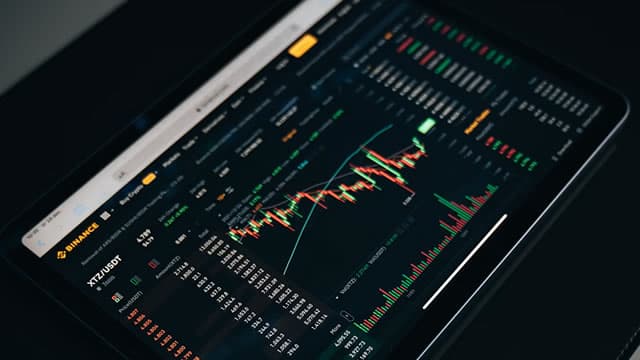
The most oversold stocks in the energy sector presents an opportunity to buy into undervalued companies.
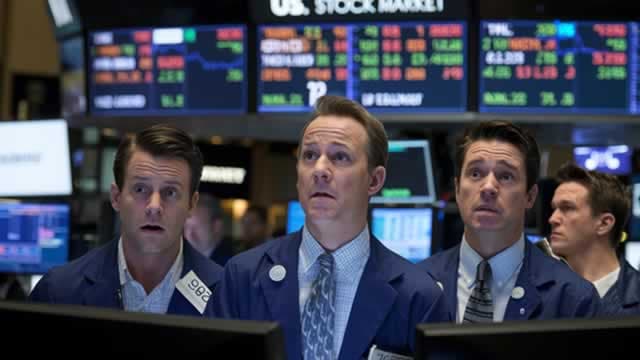
The style box analysis confirms the relative outperformance of value versus growth across the market caps. The question is how long does it last, and just how much “alpha” can value generate versus growth, given its long period of underperformance.

Kevin Warsh, nominated to lead the Federal Reserve, may want a smaller central bank balance sheet, but he's unlikely to get it absent major tinkering with the financial system, and even then, it might not be possible.