
加载中...
共找到 16,645 条相关资讯

In May 2024, Blackstone led a $7.5 billion private debt facility to CoreWeave, the AI cloud company, secured against Nvidia chips and customer contracts. It was at the time among the largest private credit deals ever signed.

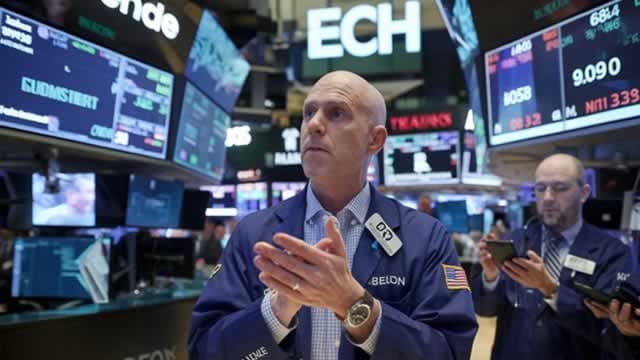
CNBC's Jim Cramer said the data center and artificial intelligence boom is spreading to every corner of the market. Cramer referenced Nvidia CEO Jensen Huang's framework that describes the AI economy as a "five-layer cake".

The SEC proposed allowing publicly traded companies to switch from quarterly to semiannual reporting using a new Form 10-S, offering more regulatory flexibility.

Momentum and growth had something to say about the shift to value/quality investing in April. The two factors dominated last month, accounting for a total return of 19.3% in the S&P 500 Momentum index and 16% in the S&P 500 Pure Growth index based on data from S&P Global.

"There's a lot of attractive opportunity to invest," Pimco CEO Emmanuel Roman says while discussing data center financing and the company's debt deal pipeline at the Milken Institute Global Conference in Beverly Hills, California. -------- More on Bloomberg Television and Markets Like this video?

A troubling fiscal picture for the U.S. government should give bargain-hunters pause.

Intel soared 13%, while oil slipped on hopes for easing Mideast tensions.

US stocks closed higher on Tuesday, with all three major indexes advancing as easing oil prices and a strong earnings backdrop lifted investor sentiment despite ongoing geopolitical tensions in the Middle East. The Dow Jones Industrial Average rose 356 points, or 0.7%, while the S&P 500 gained 0.8% after hitting an all-time intraday high.

Christina Minnis, Goldman Sachs global head of the Alternatives Origination Group, discusses the transformative impact of AI on both private and public markets during an interview at the Milken Institute Global Conference in Beverly Hills, California.

Zed Francis breaks down what's driving the ongoing rally in semiconductor stocks, highlighting the contrast between less cyclical leaders like Nvidia (NVDA) and more volatile memory names. He explains how rising market confidence is extending earnings "cliffs," driving sharp gains while emphasizing the importance of volatility trends across the sector.

Markets are being reshaped by artificial intelligence. Geographic power is shifting.

Aluminum prices have soared since the U.S.-Iran war began. Ford, Molson Coors and many other companies are grappling with the cost pressures.
Operator: Greetings, and welcome to the Enpro First Quarter 2026 Earnings Conference Call. [Operator Instructions] Please note, this conference is being recorded. I will now turn the conference over to James Gentile, Vice President, Investor Relations. Thank you. You may begin. James Gentile: Thanks, Jessie, and good morning, everyone. Thank you for joining us today as we review Enpro's first quarter 2026 earnings results and discuss our improved outlook for 2026. I'll remind you that this call is being webcast at enpro.com, where you can find the presentation that accompanies the call. With me today is Eric Vaillancourt, our President and Chief Executive Officer; and Joe Bruderek, Executive Vice President and Chief Financial Officer. During this morning's call, we will reference a number of non-GAAP financial measures. Tables reconciling the historical non-GAAP measures to the comparable GAAP measures are included in the appendix to the presentation materials. Also, a friendly reminder that we will be making statements on this call, including our current perspectives for full year 2026 guidance that are not historical facts and that are considered forward-looking in nature. These statements involve a number of risks and uncertainties, including those described in our filings with the SEC. We do not undertake any obligation to update these forward-looking statements. It is now my pleasure to turn the call over to Eric Vaillancourt, our President and Chief Executive Officer. Eric? Eric Vaillancourt: Thanks, James, and good morning, everyone. Thank you for your interest in Enpro, as we discuss our first quarter results, provide an update on strategic initiatives and share our current views for the balance of 2026. Before we discuss our results for the first quarter, I would like to recognize our 4,000 colleagues across the company who are accelerating their personal and professional growth, while contributing to Enpro's strategic and financial successes. Momentum and excitement is showing up throughout the organization. And we are off to a strong start in the second year of Enpro 3.0. We are energized to continue providing critical products and solutions to our customers, while driving significant enterprise value creation, by unlocking compounding strength of our portfolio. Our leading market positions, committed colleagues and strong balance sheet support the continued execution of our multiyear value creation strategy. After my update, I will turn the call over to Joe for a more detailed discussion of our results and drivers of our increased guidance for 2026. Now on to the highlights for the first quarter. We started 2026 off on the front foot with reported sales up nearly 11% year-over-year. Improving demand in semiconductor markets drove sales in the Advanced Surface Technologies segment up over 11%. Additionally, the contributions from the 2 businesses that we acquired in the fourth quarter, AlpHa Measurement Solutions and drove Sealing Technologies sales up 10.8%. Total company adjusted EBITDA increased nearly 13% to over $76 million at a margin over 25% for the first quarter. We are pleased with these results, especially as we continue to invest in growth opportunities across the company at high-margin return thresholds, while accelerating investments in the development and growth of our colleagues. Throughout our organization, teams are excited to drive our 3.0 strategy forward. Our early progress shows the benefits we expect to unlock as we move into this phase of our strategy. We are confident that our proven excellent execution will allow us to continue to succeed in a variety of macroeconomic backdrops. In AST, positive trends across the segment's portfolio of products and solutions are translating into strong performance. The slope of the demand curve has steepened with order patterns accelerating during the first quarter ahead of our expectations at the start of the year. For us, execution is top of mind. And we began building inventory during the first quarter to ensure that we can effectively deliver for our customers and proactively manage potential capacity, supply chain and labor constraints as demand increases. We are already seeing the investments we made in AST during the downturn begin to bear fruit in the early stages of the recovery cycle. We expect these investments will position us well to capture opportunities from the acceleration of semiconductor capital equipment spending for the balance of the year and beyond. We also believe that, our vertical integration model is a key differentiator for Enpro in the next phase of the semiconductor industry growth, as many of our new business wins are using more of our solutions to drive value for our customers, enhancing our specified position in critical in-chamber tools, including gas dispersion and wafer handling applications. In addition, hard work to qualify and earn processor record designations solidifies our position in leading-edge precision cleaning solutions, a business that is currently strong and accelerating. Our capacity expansion in Taiwan, California and Arizona, both executed and ongoing, position us to participate in the rapid expansion of leading-edge chip production, capacity supporting advanced computing and artificial intelligence. In Sealing Technologies, segment revenue of 10.8% was primarily driven by the first full quarter contribution from the acquisitions of AlpHa and Overlook completed in the fourth quarter of 2025, recovering nuclear solutions sales and currency tailwinds. Commercial vehicle sales were down year-over-year, below our expectations as demand remains slow, although we're cautiously optimistic that we are nearing the bottom in commercial vehicle markets. Aerospace sales in Sealing were flat year-over-year, reflecting a difficult year-over-year comparison in commercial aerospace, which was partially offset by continued acceleration in demand for products supporting space applications. Total Sealing segment orders were up double digits during the first quarter. Sealing Technologies segment profitability remained strong at 32.5% with disciplined execution helping to offset continued growth investments, softness in commercial vehicle sales and tepid general industrial demand internationally. Aftermarket sales represented 60% of Sealing segment revenue in the quarter. Integration is going well at AlpHa and Overlook. And we are making the appropriate investments to fully integrate these businesses into Enpro and unlock additional growth opportunities. Our new colleagues are already finding ways to leverage Enpro network, including our sourcing, supply chain capabilities and operational expertise while delivering strong top line growth during the first quarter. Additionally, AMI, which we acquired in January 2024, continues to perform above plan. We expect the Sealing Technologies segment to continue to deliver continued best-in-class performance. Our growth priorities underpinning the Enpro 3.0 strategy remain unchanged and will guide our performance through 2030. Over the long term, we are positioned to generate mid to high single-digit organic top-line growth with strong profitability and returns complemented by capability expanding acquisitions that meet our rigorous strategic and financial criteria. We are targeting mid-single-digit organic growth in Sealing Technologies. While at AST, we are targeting at least high single-digit organic growth, with both segments capable of generating 30% adjusted segment EBITDA margins plus or minus 250 basis points through 2030. Our cash flows allow us to maintain our strong balance sheet with a net leverage ratio currently at 1.9x after taking into account the fourth quarter acquisitions of AlpHa and Overlook. Our first capital allocation priority is to reinvest in the business and our people, while pursuing select strategic acquisitions that expand our leading-edge capabilities and meet our stringent criteria, without the use of excess leverage to drive growth in line or above Enpro 3.0 goals. We are excited to deliver on our promises and continue to execute our strategic plan. Life is good at Enpro and the future is bright. Joe? Joe Bruderek: Thank you, Eric, and good morning, everyone. Enpro started 2026 with strong results and consistent execution despite a dynamic macroeconomic environment. For the first quarter, sales of $303 million increased nearly 11%, supported by strong year-on-year revenue growth at AST of over 11%. The contributions from the recent acquisitions and steady overall performance in the Sealing Technologies segment. First quarter adjusted EBITDA of $76.4 million increased nearly 13% compared to the prior year period. Total company adjusted EBITDA margin of 25.2% expanded by 40 basis points year-over-year, driven by consistent performance in the Sealing Technologies segment and a nearly 20% increase in AST segment EBITDA, which includes expenses tied to growth investments, both executed and ongoing. Corporate expenses of $13.7 million in the first quarter of 2026 increased from $11.3 million a year ago, primarily driven by higher incentive compensation accruals and $1.2 million in restructuring costs. Adjusted diluted earnings per share of $2.14 increased 13%, largely driven by the factors behind adjusted EBITDA growth year-over-year. Moving to a discussion of segment performance. Sealing Technologies sales increased 10.8% to $199 million. Growth was driven by the contributions from the AlpHa and Overlook acquisitions, a recovery in Nuclear solutions sales from the choppiness experienced last year, strength in compositional analysis applications, as well as strategic pricing actions. These gains more than offset soft commercial vehicle demand and slower general industrial sales internationally. Foreign currency translation was also a tailwind. North American general industrial, aerospace and food and biopharma sales were firm throughout the quarter. For the first quarter, adjusted segment EBITDA increased over 10%, driven by favorable mix, strategic pricing initiatives, contributions from AlpHa and Overlook and foreign exchange tailwinds, partially offset by lower commercial vehicle volumes and investment in growth initiatives. Adjusted segment EBITDA margin was 32.5% and remained above 30% for the ninth consecutive quarter. Turning now to Advanced Surface Technologies. Sales for the first quarter were up over 11% and orders during the quarter hit a clear inflection point. Demand for precision cleaning solutions tied to advanced node chip production is accelerating. In addition, our outlook for semiconductor capital equipment spending has improved. And we built inventory of key products during the first quarter to prepare for the expected increase in demand. For the first quarter, adjusted segment EBITDA increased 18.5% versus the prior year period. Adjusted segment EBITDA margin expanded 140 basis points to 23.3%. Operating leverage on higher sales growth and higher production volumes, as well as favorable mix were offset in part by $2 million of increased expenses tied to growth initiatives. Our #1 priority is to serve our customers and remain agile as we enter this period of unprecedented demand for our semiconductor products and solutions. Moving to the balance sheet and cash flow. Our balance sheet remains strong. And we have ample financial flexibility to execute on our long-term organic growth initiatives and consider select acquisitions that align with our strategic priorities and deliver attractive returns. We generated strong free cash flow in the first quarter, more than doubling from last year to $26.5 million, while capital expenditures increased nearly 40% to $13.1 million, largely supporting growth and efficiency projects. During the first quarter, we repaid $50 million in revolving debt, bringing our leverage ratio to 1.9x trailing 12-month adjusted EBITDA. We expect to continue generating strong free cash flow in 2026 with an unchanged capital expenditure budget of around $50 million this year as we continue to invest in the company at solid margin and return thresholds. Finally, our strong balance sheet and cash generation provide us with ample liquidity to make these investments, while continuing to return capital to shareholders. In the first quarter, we paid a $0.32 per share quarterly dividend totaling $6.9 million. We also have an outstanding $50 million share repurchase authorization. Moving now to our increased guidance. We are raising our total year 2026 guidance issued in mid-February and now expect total Enpro sales to increase in the 10% to 14% range, up from 8% to 12%. Adjusted EBITDA in the range of $315 million to $330 million, up from $305 million to $320 million previously and adjusted diluted earnings per share to range from $8.85 to $9.50, up from $8.50 to $9.20. The normalized tax rate used to calculate adjusted diluted earnings per share remains at 25% and fully diluted shares outstanding are 21.3 million. In Sealing Technologies, shorter cycle order patterns remain solid as we enter our seasonally strong second quarter. As Eric mentioned, we are seeing double-digit order growth year-on-year despite a slightly softer commercial vehicle outlook than previously expected. And we expect mid-single-digit revenue growth, excluding the contributions from AlpHa and Overlook in the Sealing Technologies segment for the year. We are encouraged by positive order momentum in domestic general industrial, aerospace, food and biopharma and compositional analysis, as well as smaller but improving pockets of earned growth in areas such as communications and data center infrastructure. We expect these elements to support improved sequential sales performance in Sealing Technologies into the second quarter while not factoring in any recovery in commercial vehicle markets in our improved guidance ranges. Finally, we expect Sealing segment profitability to remain towards the high end of our long-term target range of 30%, plus or minus 250 basis points for the year. In the Advanced Surface Technologies segment, we are seeing significant order momentum with strong acceleration in Precision cleaning solutions and critical in-chamber tools. New platforms and capacity expansions that we have invested in will begin to generate revenue in the second half of 2026, with ramp schedules dependent on underlying volume into 2027 and beyond. At this time, we expect AST revenue growth in the mid-teens range year-over-year, with segment profitability improving to a run rate close to 25% by the end of 2026 as capacity and supply chains aligned to meet elevated demand levels. Thank you for your time today. I will now turn the call back to Eric for closing comments. Eric Vaillancourt: Thank you, Joe. We are excited to demonstrate our strength and agility as we continue to accelerate our personal and profitable growth in the second year of Enpro 3.0. Thank you all for your interest in Enpro. We'll now welcome your questions. Operator: [Operator Instructions] Our first question is coming from the line of Jeff Hammond with KeyBanc Capital Markets. Mitchell Moore: This is Mitch Moore on for Jeff. Obviously, just really nice margin progression sequentially for AST. Could you help us just unpack a little bit how that inventory investment helped margins in AST? And then separately, just could you help us understand the margin trajectory kind of through the balance of the year? Is it kind of a linear progression to that 25% you talked about? Joe Bruderek: Yes. Thanks, Mitch. As you noted, we did see progression from the low 20%s to 23% and change for the first quarter. The inventory build, which is really important as we head into significant demand in the second quarter and more specifically for the back half of the year, contributed about 150 basis points to the margin increase in the first quarter. We also saw Precision cleaning continue to be very strong, tied to advanced node precision cleaning work, both in Taiwan and the U.S., which helped margins. And we're also seeing a little bit of leverage on the revenue growth. We expect to continue to build inventory a little bit in the second quarter. It might be a little bit less than we had in the first quarter. And then revenue increasing to offset any lower inventory build potentially in the second quarter. So margins relatively similar in the second quarter and then seeing incrementally throughout the second half, pointing towards that roughly 25% run rate that we expect to exit the year at. Mitchell Moore: Great. That's helpful. And then maybe just the Sealing. I think orders were up double digits in the quarter. Could you just expand on the order activity you saw there, where you're seeing it, if it's concentrated or more broad-based? And then if you could just talk a little bit about your confidence in Sealing kind of picking up through the remainder of the year with a little bit slower start here. Eric Vaillancourt: Very confident in Sealing picking up throughout the year. Our order rate is very strong, exiting the first quarter and building throughout the quarter. So very positive on the year. I don't have any concerns there. Very strong in North America, space, aerospace in general. General industrial in the U.S. is still pretty strong. Only area of weakness really is general industrial and a little bit in Europe, a little bit in Asia. But it still doesn't have any meaningful impact to our overall results. Operator: Our next question is coming from the line of Steve Ferazani with Sidoti & Company. Steve Ferazani: Appreciate the detail on the presentation. Eric, I understand commercial vehicles still being weak. Obviously, we've seen 3 or 4 quarters -- 3 or 4 months of much stronger Class 8 truck orders, obviously, coming off of a significant trough. When would you start seeing that? And do you -- is that built in at all that CV comes back at all in the second half? Eric Vaillancourt: It's not built into our projections at all, as we said in the script. Although, I am cautiously optimistic that it does start to pick up in the second half of the year. Keep in mind, the reason for the acceleration in truck orders is really to avoid the extra cost dilution enhancements in the trucks. And so right now, people are prioritizing trucks versus trailers. But that demand will normalize over time to roughly -- if you look over a 20-year cycle, it's about 250,000 units a year, we're somewhere 170,000 to 180,000 now. So I expect next -- at the end of this year, beginning of next year, somewhere in that time frame, you'll start to see some momentum build. I mean, the ratio between trucks and trailers really doesn't change much. We expect to have about 1.1 trailers per truck. So you would expect that to come back. And our aftermarket business remains very strong. Steve Ferazani: Got it. How are you feeling about the 2 acquisitions now with the quarter under your belt? I know that with Overlook, they had made some pretty significant capacity additions prior to the acquisition. In terms of those 2 businesses, do they require significant investments to grow moving forward? How do you feel about them? Eric Vaillancourt: Very, very strong. Very excited about them going forward. They don't require significant investments. Overlook, they made a pretty significant investment and moved into a new building or did move into a new building in the first quarter. But that was already ongoing before we closed on the business. So it really, it was just a move at this point. And so most of the upfitting that already done and their backlog and their performance is really impressive. AlpHa continues to go well. And so we're still excited about those businesses going forward. Joe Bruderek: And I'll just add, Eric, the integrations are going well. I think the teams are joining our functional support, we're helping where we can there. We're already seeing some supply chain opportunities. In addition, we're making some smaller investments. But investments in their commercial organizations to help expand growth opportunities and enter a few new markets and new customers. So we expect that's an area that we can add value and help them grow over time. Steve Ferazani: And I think you mentioned in the script that AMI since the acquisition was 2024, I believe, continues to outperform in general. How are you thinking about that compositional analysis market? Eric Vaillancourt: Love the space. We just would like to do more. And we continue to have a very active pipeline and we continue to look for the right opportunities to meet all of our criteria that are exciting. And there's several opportunities in our pipeline exciting and the more and more opportunities seem like to come to the market. So there's more momentum in that space. Joe Bruderek: Overall, if you take into consideration the compositional analysis growth perspective. We're looking for a kind of minimum high single-digit organic top-line growth moving forward with incremental investments to expand end market positions and commercial expertise. Steve Ferazani: Got it. That's helpful. Just if I get one more in, in terms of where you are with the various qualifying processes to meet advanced node production. Is there a lot more to go there? Eric Vaillancourt: I don't think it ever stops. So I start by saying that. So no, Arizona is getting fully qualified now. I don't know how much longer -- it shouldn't be long at all. But at the same time, there's new investments in Taiwan that are just starting. There's new customers that are starting as well. So I don't think it ever ends, 2-nanometer is going to start to ramp at some point in the next little bit and then you're already trying to qualify 1.4. So it's -- I don't it stops. I think of that as continued investment. Operator: [Operator Instructions] Our next question is coming from the line of Ian Zaffino with Oppenheimer & Company. Isaac Sellhausen: This is Isaac Sellhausen on for Ian. Just on the updated guidance, if you could unpack a little bit more on what has changed with regards to the outlook for the AST business. Maybe if you could parse out the demand drivers between cleaning and coating and the semi cap side. It sounds like visibility is a bit better in capital equipment. Joe Bruderek: Yes, we're clearly seeing increased order momentum and longer lead times. And demand is inflecting significantly sooner and higher than we expected coming into the year from an AST's perspective. And it's coming from both. It's coming from precision cleaning and semiconductor capital equipment in really all geographies. So our increased guidance is pretty much all driven by AST. Our teams are rallying around meeting the higher demand, working with our customers and the entire supply chain and all of our partners to kind of meet the overall industry demand. The outlook is really bright for the rest of the year. The second half is firming up where when we had the call in February, we talked about we saw orders for the second half and really starting in the end of the second quarter. Well, the second quarter is filling in nicely. We're seeing some of that demand come a little sooner into the second quarter. And the second half is clearly going to be significantly increased over the first half in the magnitude of double-digit increase second half versus the first half. And the industry is all talking about rallying to meet this higher demand and out through the end of '26 and really into '27. So there's tremendous optimism. And we expect to participate and even outperform what the market expects. Isaac Sellhausen: Okay. Great. And then just as a follow-up on the margin outlook for both businesses, obviously, it sounds like you guys are managing any kind of inflationary pressures just fine. But is there anything to call out maybe on the cost side with regards to whether it's fuel or equipment. But yes, that would be helpful. Joe Bruderek: No, there really isn't anything that's going to be meaningful from the supply side or cost side. Like I said, we do a very good job in general. Operator: We have no further questions at this time. So I would like to turn the floor back over to James Gentile for closing comments. James Gentile: Thank you, everyone. We're seeing strong momentum across Enpro and look forward to updating all of you when we report second quarter results in early August. Have a great rest of your day. Operator: Thank you. Ladies and gentlemen, this does conclude today's teleconference. We thank you for your participation. And you may disconnect your lines at this time.

Operator: Welcome to the MPLX First Quarter 2026 Earnings Call. My name is Julie, and I will be your operator for today's call. [Operator Instructions] Please note that this conference is being recorded. I will now turn the call over to Kristina Kazarian. Kristina, you may begin. Kristina Kazarian: Welcome to MPLX's First Quarter 2026 Earnings Conference Call. The slides that accompany this call can be found on our website at mplx.com under the Investor tab. Joining me on the call today are Maryann Mannen, President and CEO; Chris Hagedorn, CFO; and other members of the executive team. We invite you to read the safe harbor statements on Slide 2. We will be making forward-looking statements today. Actual results may differ. Factors that could cause actual results to differ are included there as well as in our filings with the SEC. With that, I will turn the call over to Maryann. Maryann Mannen: Thanks, Kristina. Good morning, and thank you for joining our call. MPLX delivered over $1.7 billion of adjusted EBITDA, which enabled a return of over $1.1 billion to our unitholders. 2026 is a year of execution with multiple investments expected to transition from construction to operations and EBITDA generation. With Secretariat I coming online in April, Harmon Creek III in the third quarter and the Titan gas treating complex reaching over 400 million cubic feet per day of treating capacity in the fourth quarter. This gives us confidence that year-over-year growth in 2026 will exceed that of 2025. The underlying fundamentals in natural gas and NGLs remain strong. We see strategic opportunity to support increasing demand for these commodities. As an example, in the Delaware Basin of the Permian we treated over 150 million cubic feet per day of our committed producer sour gas at our recently acquired Titan facility. Our third acid gas injection well in the Delaware Basin is expected to be completed in the third quarter. The expansion of the Titan complex is on schedule. Downstream, the 200 million cubic feet per day Secretariat I processing plant has entered service. Last quarter, we announced our intention to further expand our gas processing footprint with Secretariat II, an additional 300 million cubic feet per day of capacity expected online in the second half of 2028. Once in service, our total processing capacity in the basin will reach approximately 1.7 billion cubic feet per day. These investments meaningfully strengthen our position in the Delaware Basin, supporting activity in the low-cost sour gas windows and extending the competitiveness of our broader value chain. The Blackcomb natural gas pipeline continues to progress as planned, and is expected to enter service in the fourth quarter. Demand for firm takeaway capacity is driving expansions on several long-haul natural gas pipelines. Volume commitments from top-tier shippers underscore the competitiveness of our footprint as well as the long-term durability of our natural gas system. Within NGL, the expansion of the BANGL pipeline to 300,000 barrels per day is expected online in the fourth quarter, providing critical takeaway capacity as in-basin NGL volumes grow. Construction across our Gulf Coast fractionation and export facilities continues to advance on time and on budget. Our fully integrated NGL value chain provides high confidence in the volumes, utilization and durability of cash flows these assets will generate for years to come. Against the backdrop of ongoing geopolitical uncertainty, the strategic importance of U.S. energy infrastructure has never been clearer. Global demand for secure, reliable energy continues to grow, and the international customers are increasingly more dependent on the United States as a preferred supplier. MPLX is exceptionally well positioned to capitalize on this opportunity. Our joint venture LPG Export Terminal is favorably located along the Gulf Coast, providing meaningful, competitive and logistical advantages. In the Marcellus, construction of Harmon Creek III remains on track for a third quarter in-service date increasing our total processing capacity to 8.1 billion cubic feet per day in the Northeast. This project, along with our associated gathering and compression expansions enhances our ability to meet producer needs in liquids-rich areas and supports long-term throughput growth. Beyond 2026, the opportunity set for natural gas and NGLs remains robust. We are deploying 90% of our $2.4 billion organic growth capital plan toward these opportunities which will drive continued mid-single-digit growth. Now let me turn the call over to Chris to discuss our operational and financial results for the quarter. Carl Hagedorn: Thanks, Maryann. Slide 8 outlines the first quarter operational and financial performance highlights for our Crude Oil and Products Logistics segment. Segment adjusted EBITDA increased $14 million when compared to the first quarter of 2025. The increase was primarily driven by higher rates across the business units, partially offset by lower crude pipeline throughputs. Pipeline volumes decreased 4% year-over-year, primarily due to Marathon's refining turnaround and maintenance activities in the Midwest and Gulf Coast regions. Terminal volumes also decreased 4% year-over-year, primarily due to less favorable market dynamics and refining industry turnaround activity in the first quarter. Moving on to Slide 9. Segment adjusted EBITDA decreased $42 million compared to the first quarter of 2025. 2025 included a onetime $37 million benefit associated with the customer agreement. The decrease was primarily driven by a $45 million impact from divestiture of our noncore gathering and processing assets in 2025, lower natural gas liquids prices and higher operating expenses. These factors offset growth from equity affiliates and increased volumes inclusive of acquisitions. Excluding the impacts of our noncore Rockies divestiture, gathering volumes were up 10% year-over-year due to production growth in the Utica and Permian, including acquisitions. Processing volumes increased 2% year-over-year, primarily due to increased production in the Marcellus and the Permian. Marcellus processing utilization was 94% for the quarter, demonstrating the need for incremental capacity as Harmon Creek III is positioned to come online on a just-in-time basis in the third quarter. Total fractionation volumes decreased 3% year-over-year, primarily due to lower ethane recovery in the Marcellus as a result of elevated regional gas prices in the first quarter. Winter Storm Fern in January impacted crude oil and natural gas production volumes resulting in a roughly $13 million headwind to our first quarter results. We would like to extend our gratitude to our teams in the field whose round-the-clock efforts for continuous safe and reliable operations at our MPLX assets during the storm. Thank you to our team. Across our business for every $0.05 change in weighted average NGL price, MPLX expects approximately a $20 million annual impact to segment adjusted EBITDA. During the first quarter, to manage this exposure, MPLX executed an economic hedge on 80% of this risk and recognized the negative mark-to-market of $56 million during the quarter. This impact will offset -- be offset by physical gains over the course of 2026. As a reminder, the first quarter is typically our lowest quarter for project-related expenses. While we expect these expenses in 2026 will be flat versus the prior year, we anticipate a sequential increase of $50 million in the second quarter, reflecting the seasonality of this project-related work. Now let me hand it back to Maryann for some concluding thoughts. Maryann Mannen: Thanks, Chris. MPLX has a proven history of executing on our commitments and delivering consistent financial performance. Through disciplined capital deployment and optimization of our integrated value chains, we have sustained strong EBITDA growth and maintained a robust return profile. This track record supports our confidence in our ability to continue creating value for unitholders through both organic project execution and reliable capital returns. Our long-term strategy is straightforward, and we are executing with discipline, operate safely and reliably, grow through high-return investments, optimize our integrated value chains and to maintain a strong financial foundation. The actions we have taken to position MPLX over the last several years are delivering strong results. The strength of our base business continues to deliver steady durable growth. As we progress through 2026, we expect the investments we are making to provide a clear path to continued mid-single-digit growth, and we continue to evaluate both organic and inorganic opportunities to drive income generation. With this momentum, we remain confident in our outlook and committed to creating exceptional value for our unitholders. Now let me turn the call over to Kristina. Kristina Kazarian: Thanks, Maryann. As we open the call for your questions, as a courtesy to all participants, we ask that you limit yourself to one question and a follow-up. If time permits, we will reprompt for additional questions. With that, operator, we are ready for questions today. Operator: [Operator Instructions] Our first question comes from John Mackay with Goldman Sachs. John Mackay: Look, in the back half of last year, you were talking about considerably higher EBITDA growth for '26 over '25. First quarter was flattish. I understand some of the moving pieces you guys gave on the cost side. And then you've walked us through the project ramp timelines. But could you spend a little bit more time walking us through how we should think about the EBITDA ramp through the year and kind of getting to that maybe above mid-single-digit target you laid out last call? Maryann Mannen: And you're correct. And as we were talking about in 2025, we continue to see growth '25, '26, if you let me to look at it first on an annual basis, '25 to '26 growth rate to be stronger than we saw '24 to '25. And as you well said, that growth for us is more back half weighted for 2026 than front half weighted. If you look at it over a 3-year period, our mid-single-digit growth has trended right around that 7.5% range. So I mentioned in a couple of my opening remarks there, Secretariat I now in service. And so obviously, we'll see that EBITDA strength coming online throughout the back half of this year. We typically see a 9- to 12-month ramp. We could see that in a little more narrower window as we look at Secretariat I. I also talked about Harmon Creek III. That project remains on track to enter service in the third quarter. I think you know this. It's a 300 million cubic feet per day gas processing plant. It also includes construction of a second 40,000 barrel a day de-eth, and it gives total Northeast gas processing and fractionation capacity to a total of 8.1 Bcf a day and 800,000 barrels a day, respectively, when that project comes online. A few other projects, as you know, will lean in. So the back half of the year, we expect to be stronger clearly than the first half of the year. And we see good line of sight to that, which also continues to give us confidence, frankly, in our 12.5% distribution increase. As you know, we've been talking about that for 2026 as well and 2027. And again, we remain confident in these projects delivering a little bit longer term. As you know, we've got our fractionation '28, '29 coming online and the export dock. That project remains well on track, on budget, as you've heard me say as well. So back half weighted, remain confident, we still expect '26 to be a stronger growth than 2025. Let me pause there, John. John Mackay: That's clear. Second question for me is just given the disruptions we've seen in the Middle East. We've seen a kind of higher call for U.S. hydrocarbon exports. Could you just kind of remind us your asset position there, kind of what you've been seeing on the commercial side? Maybe if you can walk through LOOP, Mount Airy and then, I guess, any incremental comments on the NGL dock under construction would be great. Maryann Mannen: Yes. I'll pass that to Shawn. He can give you some insights on the export dock as well. Shawn Lyon: John, this is Shawn. Thanks for the question. As we look at what's going on in the market dynamics right now and we look at our asset base, Mount Airy is a great example. We're located strategically right next to Garyville, and based on some of the market things going on, I think MPC and others will continue to lean into that. So we anticipate that asset utilization will be increasing some. And then also, as you look -- you talked about LOOP. MPLX has a share of LOOP there. We've seen Venezuelan crude come in. And obviously, some imports and exports are increasing across that asset base there. And as Maryann mentioned on the, I'll say, the export dock and fractionator complex on the Gulf Coast. We're excited as we continue to stay on track for in-service date of '28 and '29. Again, we're excited that those -- our facilities, our assets are going to be full as we go in service date there. Operator: Our next question comes from Burke Sansiviero with Wolfe Research. Burke Sansiviero: So distribution coverage has been 1.3x over the past 2 quarters. Can you just provide a little bit more color on your confidence in growing the distribution by 12.5% for another 2 years and staying above the -- at or above the 1.3x threshold, seems to imply that cash flows also need to grow 12.5% from here? Maryann Mannen: Yes, certainly. So when we think about our 12.5% distribution growth both for this year 2026 and 2027, we've set financial metrics for that and one of which is, as you stated, that our coverage doesn't fall below 1.3x. So that is our commitment. We look at that, obviously, on an annual basis, of course. But you're absolutely correct. Cash flows would be supportive of that, and we continue to see our ability to do that for '26 and '27. Burke Sansiviero: And buybacks have been somewhat programmatic over the past year at $100 million a quarter cadence. Can you just talk to why buybacks went down in Q1 to $50 million? And are you looking to retain more cash from here? Maryann Mannen: Certainly. So -- what I would say is there really no change in our overall capital allocation strategy. We continue to see opportunities to put capital to work and, therefore, have modified our share buyback program. I want to pass it to Chris because I know he's got a few things that he wants to share as well. Carl Hagedorn: Yes. Thanks, [ Keith ]. And I'll say, as Maryann stated, again, no change to our capital allocation methodology or strategy. Distributions will continue to be that primary tool to return capital to unitholders with the unit repurchases really being that more flexible method of returning capital. But what I would also say is we continue to believe that MPLX units trade at a discount. We think this type of a program at this level reflects that belief. Operator: [Operator Instructions] Our next question comes from Manav Gupta with UBS. Manav Gupta: I have two questions. I'm going to ask them right upfront. So first, can we get an update on the Titan sour complex, what you're seeing in that area? Is the producer activity increasing with higher crude prices in that particular area? And second, I wanted to talk to you about -- a little bit about the local gas markets in Texas. There are more pipelines coming to Agua Dulce, including yours, but then you also have some pipelines like Traverse and Bay Runner, which can move gas out of Agua Dulce and help with these opportunities where local prices are depressed. So could you talk about the local gas Texas markets and how MPLX can benefit from the dislocation in prices in various hubs? Maryann Mannen: So in general, first, let me share with you sort of overall progress on Titan. First and foremost, as I mentioned, we were successful in the first quarter treating over 150 million cubic feet per day in the first quarter. As a matter of fact, March was actually -- we saw our absolute strongest performance in the month of March. And no change in our expectations for the completion of Titan II by the end of this year, 2026. So that we will have full run rate EBITDA as we outlined when we talked about the opportunity for Northwind. So we expect that expansion from 150 million to over 400 million cubic feet per day of sour gas treating capacity to be available and consistent. We're seeing a lot of interest from our producers, producer customers in that space, particularly as they are moving their production into that region. I'm going to first pass it to Greg to give you some incremental color on the customers. And then to respond to your question around all of the Texas opportunities as we see all that pipeline, I'm going to ask then Dave to answer your question on that. Thanks, Manav. Gregory Floerke: Manav, this is Greg. Just a little bit more color on the Titan system. We have been focused daily and weekly on integrated -- integrating that system, increasing reliability, bringing on more volume. We really continue to be excited about the number of rigs that are operating up in the -- this portion of Lea County in the Delaware Basin and the associated gas that comes with it. CO2, H2S, sour gas that needs treating. So the demand is definitely there, as Maryann said. In terms of the projects, the scaling this is our other big focus, and that includes Titan II. We recently brought on a new sour gas treater on the north end of the system that we call Pelham. It's a compressor station as well. That is operating well. And Titan and the multiple pipeline projects that are associated with increasing -- doubling our capacity at Titan. And our fourth AGI well are all in construction and on schedule for fourth quarter completion. David Heppner: So Manav, this is Dave. And maybe I'll touch on -- I'll build on a little bit what Greg talked about and touch on the gas markets and dig a little deeper in our overall Permian wellhead-to-water nat gas strategy because I think I'll try to bring all the pieces of the puzzle together for you. So first of all, let me reaffirm a little bit that generally, MPLX is a fee-based business, and we're not taking on the commodity risks within the nat gas markets in the U.S. Gulf Coast. With that said, when we think about our strategy, maybe think it in about 5 major components. So Greg touched on the first one. In-basin gathering, processing and treating. From there long-haul egress pipelines, and I'll talk about those in a minute. And then connectivity between markets. And then the next is connectivity into demand centers, specifically LNG, but also potentially data centers and power. And then finally is giving our shipper customers optionality and flexibility to all those markets. So -- when you think about the long-haul pipelines, you mentioned Agua Dulce. So from the basin in Agua Dulce, of course, we have Whistler already moving 2.5 Bcf a day, and we have Blackcomb coming in service in the third quarter of this year. And then when you think about the long hauls into the Katy market, of course, we have Matterhorn currently flowing 2.5 Bcf a day, similar to Whistler. And we have Eiger coming online in 2028 in the second half of 2028. So those are those 4 main headers, both into Agua Dulce and Katy, which gives our customers that flexibility to those markets. But I think the other piece of the puzzle is Traverse, which is the bidirectional pipe between those two markets, which allows that flexibility. So that's that connectivity between markets. And then you think about you getting it to the end demand centers, specifically LNG and the high growth -- rapid growth in the LNG market. So of course, we got ADCC going into Corpus Christi, and we have the Bay Runner I and II go into NextDecade, specifically down in Brownsville, those last ones. So when we think about all that, that's really how we're trying to build out -- have been building out and continue to build out our nat gas strategy. With all that said, we also believe that there is the need for incremental egress pipelines out of the basin. So as we look forward, we think and believe that MPLX can continue to play a very active role in supporting those value chain solutions that -- and our strategies necessary to address all that incremental demand in those market opportunities. So hopefully, that gives you a little bit of color on how we're thinking about it. Kristina Kazarian: All right. Thank you. Operator? Operator: I am showing no additional questions. I will turn the call back to Kristina. Kristina Kazarian: Thank you. Thank you for your interest in MPLX. Should you have more questions or would you like clarifications on topics discussed this morning, please contact us. Our team will be available to take your calls. Thank you for joining us today. Operator: Thank you for your participation. Participants, you may disconnect at this time.
Operator: Good afternoon, and welcome to PennyMac Financial Services, Inc.'s First Quarter 2026 Earnings Call. Additional earnings materials, including presentation slides that will be referred to in this call as well as an Excel file with supplemental information are available on PennyMac Financial's website at pfsi.pennymac.com. Before we begin, let me remind you that this call may contain forward-looking statements that are subject to certain risks identified on Slide 2 of the earnings presentation that could cause the company's actual results to differ materially as well as non-GAAP measures that have been reconciled to their GAAP equivalent in the earnings materials. Now I'd like to introduce David Spector, PennyMac Financial's Chairman and Chief Executive Officer; and Dan Perotti, PennyMac Financial's Chief Financial Officer. David Spector: Thank you, operator. Good afternoon, and thank you to everyone for participating in our first quarter 2026 earnings call. As shown on Slide 3, PennyMac Financial generated net income of $82 million in the first quarter or $1.53 in earnings per diluted share or an 8% annualized return on equity. Excluding the impact of valuation-related changes and transaction expenses related to our acquisition of Cenlar's subservicing business, adjusted EPS was $2.19 per diluted share or an 11% annualized adjusted return on equity. As Dan will expand upon, we continue to optimize our hedging strategies to converge GAAP and adjusted ROEs. While our adjusted return on equity this quarter remained below our longer-term expectations, we remain intensely focused on maximizing returns on invested capital over the near and long term. I am also optimistic regarding the underlying trends in our business, particularly higher recapture rates in consumer direct channel, coupled with increasing revenue per loan. In addition to these positive trends, I will also address initiatives we currently have underway later in this call. Our optimism is most evident in the production segment, where we are strategically growing in areas that will optimize returns on capital in what remains a dynamic and fragmented market. Specifically in the correspondent channel, we are leveraging our leadership position to exercise rigorous pricing discipline on the related MSRs while driving an increase in margins across various products. This pricing discipline, combined with continued growth in our consumer and broker direct channels led to production segment generating its highest level of pretax income in nearly 5 years. In addition, we have 3 distinct production channels: correspondent, broker direct and consumer direct, all of which are operating at significant scale. This diversified platform provides us with multiple complementary avenues for sustainable growth and a unique ability to shift our focus and resources to the channel that offers the most attractive risk-adjusted returns. Turning to Slide 4. Let's review a few additional business updates. During the quarter, we repurchased 560,000 shares or 1% of our outstanding stock for $50 million at a weighted average price of $89.28 per share as we saw tremendous value in the stock at these price levels. I am also pleased to report that we remain on track to close the acquisition of Cenlar's subservicing business in the second half of the year. Our teams are collaborating effectively to ensure a seamless integration of Cenlar's subservicing business into our operations. As outlined in our investor update presentation in February, once fully integrated, we expect strong returns from this acquisition, and we are excited about the increase in scale and diversification that this transaction will provide. Turning to our consumer direct origination channel. The deployment of Vesta has been complete for new loan originations and has begun to drive operating efficiencies through the introduction of AI agents and the resulting reduction in previously manual tasks. On recapture, I am also pleased with the meaningful progress we have already achieved with consumer direct origination volumes up meaningfully from recent periods and conventional first lien refinance recapture rates up 5 percentage points from the prior quarter to 22%. This momentum has continued into the second quarter with conventional first lien refinance recapture rates running near 30% in the month of April. Turning to Slide 6. Our mortgage banking operating pretax income was $190 million for the quarter, up from $173 million in the fourth quarter. As we look ahead, we expect adjusted ROEs to remain near current levels in the second quarter before increasing to the low to mid-teens in the second half of 2026 as we realize the benefits of technology and efficiency enhancements. As just mentioned, we have lowered our ROE guidance from the mid- to high teens to low to mid-teens in the second half of the year due to 2 main factors. First, we have decided to meaningfully accelerate our technology investments to drive significant operational efficiencies in both production and servicing. And second, we expect less origination demand with interest rates at current levels. Over the medium to long term, we continue to expect PFSI to achieve ROEs in the high teens to low 20% range, which we expect to achieve through the realization of these technology investments and increasing scale. On Slide 7, we highlight the future opportunity within our consumer direct channel when rates do decline as well as our first lien refinance recapture rates over the 5 most recent quarters. As of March 31, we serviced a combined $320 billion in UPB of loans with note rates above 5%, of which more than half had note rates above 6%. As you can see on the charts in the middle of the page, government refinance originations from our portfolio in the consumer direct channel are nearly double first quarter 2025 loans and our first lien refinance recapture rates remain strong in the 50% range. We are seeing even more success in conventional loans, where volumes are up more than fivefold from levels reported in the first quarter of 2025, driven by the previously noted improvement in first lien recapture rates to 22% from 17% in the prior quarter. And as I mentioned earlier, in April, we achieved conventional first lien refinance recapture rates of nearly 30%. We also completed the transition to Vesta, our new consumer direct loan origination system during the first quarter, and we are in the process of working through the pipeline of loans originated on the old system, which we expect to have completed in the second quarter. This new system has already substantially improved the customer experience. I am very pleased with these initial results and expect to realize material benefits of our new platform in the second half of this year. The early success we are seeing is a direct byproduct of our ability to reduce cost per loan and the days to close as well as leverage real-time data to engage borrowers more effectively. We have also started the successful release of AI agents within our fulfillment process across multiple products. We are rapidly moving towards a model with exceptionally low manual intervention and in some cases, we will have removed human touch points entirely, thereby improving the customer experience, further increasing recapture rates and driving higher operating margins. Furthermore, we are focused on the implementation of additional specific tech-enabled solutions, ranging from AI-driven lead prioritization to enhanced digital self-service. Turning to Slide 8. You can see how our state-of-the-art technology platform is driving significant operating leverage and superior unit economics across the entire enterprise. By combining our technology foundation with our scale advantages, we are driving unit costs to historic lows. As noted on the chart, our direct expenses within the consumer direct channel dropped 26% compared to 2022 levels. Similarly, in our servicing segment, our operating expenses as a percentage of total servicing UPB have dropped 24% to 4.5 basis points as we continued to enhance workforce productivity and automate complex tasks through the deployment of sophisticated technology. In our corporate and other segment, we are clearly achieving more results. By leaning into a unified technology foundation, we have reduced compensation as a percentage of adjusted revenue to 3.7% from 6.5% in 2022, a decrease of 44%. While these results are compelling, we are in a new stage of transformation and AI implementation with significant runway ahead to further optimize our platform, reduce unit costs and capture additional economies of scale. By combining our pricing and capital allocation disciplines with a best-in-class technology infrastructure that is already delivering record low unit costs, we are building a more resilient and profitable enterprise. We have the team, the technology and the scale necessary to drive toward our long-term target of high teens to low 20% ROEs. I will now turn it over to Dan, who will review the drivers of PFSI's first quarter financial performance. Daniel Perotti: Thank you, David. PFSI reported net income of $82 million in the first quarter or $1.53 in earnings per share for an annualized ROE of 8%. Adjusted net income was $118 million or $2.19 in adjusted earnings per share for an annualized adjusted ROE of 11%. The $0.66 difference between our GAAP and adjusted EPS was driven by 2 items. First, $44 million of fair value declines on MSRs net of hedges and costs. This includes principal-only stripped MBS valuation-related accretion changes and provision for losses on active loans. And second, $3 million of expenses related to our acquisition of Cenlar. PFSI's Board of Directors declared a first quarter common share dividend of $0.30 per share. And as David mentioned, we repurchased 560,000 shares of common stock for $50 million. On Slides 10 and 11, beginning with our production segment, pretax income was $134 million, more than double from the same quarter a year ago and up 5% from the prior quarter. As David mentioned, the increase from the prior quarter was driven primarily by strong execution in consumer and broker direct, which combined represented 75% of PFSI's account revenues. Total acquisition and origination volumes were $37 billion in unpaid principal balance, down 12% from the prior quarter. Of this, $34 billion was for PFSI's own accounts and $3 billion was fee-based fulfillment activity for PMT. Total lock volumes were $44 billion in UPB, down 4% from the prior quarter. PennyMac maintained its leading position in correspondent lending. Correspondent acquisitions were $24 billion in the first quarter, down 20% from the prior quarter. While our platform continues to drive profitable and sustainable growth, we are refining our production mix to better withstand market volatility and maximize the long-term value of our servicing portfolio. Correspondent channel margins were 28 basis points, up from 25 basis points in the prior quarter due to a shift in mix towards higher-margin government loans given the increased levels of competition from the GSE cash window, combined with a meaningful increase in average revenue per loan. Under its fulfillment agreement, PMT retains the right to purchase all nongovernment correspondent loan production from PFSI. In the first quarter, PMT purchased 18% of total conventional conforming correspondent production and 100% of nonconforming correspondent production, both percentages essentially unchanged from the prior quarter. In broker direct, we continued to see momentum as we position PennyMac as a strong alternative to channel leaders. Originations were up 3% and locks were up 26% from the prior quarter. The number of brokers approved to do business with us continues to grow, up 12% from the same time a year ago, reflecting the growing number of brokers who are increasingly leveraging our distinct value proposition. The revenue contribution from broker direct was up from the prior quarter due to higher volumes. Though margins were down slightly, revenue per loan increased, reflecting an increase in our average loan balances. Additionally, we recently launched the non-QM product within our broker direct channel and are already seeing strong initial take-up and positive traction from our broker partners as they leverage our expanded product suite. Lots of non-QM loans in our broker channel were $151 million in UPB during the first quarter, and momentum continued in April with $157 million in UPB of blocks. In consumer direct, volumes were up with originations up 15% and locked up 24% from the prior quarter, driving revenue contribution 30% higher than in the prior quarter. While margins were down slightly, revenue per loan increased sequentially across our conventional jumbo and closed-end second products, indicating higher average loan balances for those loan types. Post-lock activities across the channels contributed $13 million to pretax income, down from $34 million in the prior quarter, which benefited from strong secondary market execution relative to initial pricing. Production expenses net of loan origination expense increased 11% from the prior quarter due to higher volumes in direct lending. Turning to servicing on Slides 12 and 13. Our total servicing portfolio UPB ended the quarter at $720 billion, down only 2% from the prior quarter end despite runoff in MSR sales, which were largely mitigated by additions from new production. The servicing segment recorded pretax income of $13 million. Excluding valuation-related changes, pretax income was $57 million or 3.1 basis points of average servicing portfolio UPB, up from $45 million or 2.5 basis points in the prior quarter. Earnings from custodial balances were down from the prior quarter, primarily due to lower short-term interest rates. Though realized prepayment fees increased slightly from the prior quarter, realization of MSR cash flows was down 7% due to the expectation of lower prepayment fees in future periods resulting from portfolio burnout. Operating expenses remained low at 4.5 basis points of average servicing portfolio UPB or $81 million in the quarter. EBO revenue increased due to higher initiation of modifications and redelivery margins as a result of lower rates in the beginning of the quarter. Including the provision for losses on active loans, the fair value of PFSI's MSR increased by $177 million. An increase of $201 million was due to changes in market interest rates and was partially offset by $24 million in declines from other model and performance-related impacts. Hedge fair value losses, including principal-only stripped MBS valuation-related accretion changes and hedge costs were $221 million. As we talked about last quarter, we increased our hedge ratio to near 100% to proactively manage prepayment risk. While agency MBS spread volatility and tightening of the primary/secondary spread drove a net fair value decline this quarter, our positioning reflects our disciplined approach to maintaining book value stability across a volatile interest rate environment. Corporate and other items recorded a pretax loss of $42 million, up from $30 million in the prior quarter, primarily driven by $9 million in marketing activations related to the Olympic and Paralympic Winter Games, which are not expected to recur in upcoming quarters as well as $3 million of transaction expenses related to our acquisition of Cenlar's subservicing business. The prior quarter also included reduced expenses related to technology accruals. PFSI recorded a provision for tax expense of $22 million, resulting in an effective tax rate of 21.4%. Total debt to equity at quarter end was 4x and nonfunding debt to equity at the end of the quarter was 1.7x. The increase in total leverage was driven by higher direct lending production and the increase in nonfunding leverage was driven by higher interest rates, which drove increased utilization for our MSR credit facilities in addition to share repurchases. We expect these leverage ratios to remain near these levels as interest rates remain at current levels. Finally, we ended the quarter with $4.2 billion of total liquidity, which includes cash and amounts available to draw on facilities where we have collateral pledged. We'll now open it up for questions. Operator? Operator: I would like to remind everyone we will only take questions related to PennyMac Financial Services, Inc. or PFSI. [Operator Instructions] Our first question comes from the line of Doug Harter with BTIG. Douglas Harter: Hoping you could talk about any impact the volatility had on revenue margins in the quarter whether it was increased hedging costs or less effective execution. David Spector: Congrats on the new role. Douglas Harter: Thank you, David. David Spector: So on the production side, I am really encouraged by what I saw take place in the first quarter. On the correspondent side, we saw margins up quarter-over-quarter from the fourth quarter, and we're seeing a continuation of that as we start the second quarter. In GPO, we're seeing margins currently holding near to the levels we saw in the first quarter. They're actually up a bit, and they're up from the fourth quarter. In our consumer direct channel we're seeing a consistent margin story there, while the mix is going to -- the mix in the second quarter will probably warrant a higher margin of course. But I'll tell you that just the focus that we're seeing in the company in driving up the revenue per loan is really showing in our results that we saw in Q1. It's going to continue to be a focus of the company. On the hedge side, Dan, do you want to answer on the hedge side? Daniel Perotti: Sure. With respect to hedging, as we talked about in the call there was a fair amount of interest rate volatility during the first quarter as you saw in terms of the results and how we laid it out. We think we navigated that volatility well overall with respect to our rate impacts, fairly minimal impact, just $7 million difference between the MSR and hedge versus our rate impacts. Hedge costs, we did see as a little bit elevated, particularly related to the increase in volatility toward the end of the quarter, drove up our hedge costs in March, and that contributed the majority of the hedge costs that we saw, the $14 million in hedge costs that we saw during the quarter. But overall, pleased with our results and our navigation through what was a fairly volatile period in terms of interest rates during Q1. Operator: Your next question comes from Kyle Joseph with Stephens. Kyle Joseph: I guess, yes, as it pertains to hedging, I'd start, and I did hear the operator's warning, but just pending the acquisition how are you thinking about balancing hedging with how the business looks on a pro forma basis? Like, any changes we should expect there? Daniel Perotti: No real changes expected to our hedging strategy as we get through the acquisition. Just to refresh, the business that we're acquiring from Cenlar, their subservicing business is not the MSRs. They have -- it's really a fee-for-service business and so equity light. They don't have any MSRs in particular to speak of. And so our overall strategy in terms of hedging the MSR, we expect to be consistent with how we've operated to date and not really change with respect to the additional subservicing business that we're bringing on. Kyle Joseph: Got it. And then just to follow up, just been getting more and more questions on the Homebuyers Privacy Protection Act and how you're thinking about any potential changes to position the business to best address that? David Spector: Are you referring to the trigger leads, Kyle? Kyle Joseph: Yes. Exactly. Yes. David Spector: Yes. It's really early. The law went into effect on March 5, and we're just starting to see loans come through that funded that locked at or after that date. We'll have a much better look through in the second quarter. But from the little that we've seen, it's generally positive. Operator: Your next question comes from the line of Bose George with [ KBW ]. Bose George: Actually, just in terms of your guidance, it looks like you removed the high teens part of the guidance. Now it seems like it's the mid-teens. Is that a reflection of the smaller -- the mortgage market that's expected this year with the move up in rates? David Spector: We are -- I will tell you, I've not removed the high teens from the long-term ROE guidance of this company. We believe we're a high teens to low 20% ROE company. In the short to medium term, there's really 2 factors that led us to just kind of slow down the return to the historic levels that we've seen. One is the technology spend, and we are investing across -- both across our production channel and our servicing channel. On the production side we've deployed our new technology into our consumer direct channel. And now we are very busy introducing and implementing AI agents to help reduce not only the cost to fulfill, but also to continue to grow the efficiencies that we're seeing on Vesta for our sales associates. And so based on the early results that we're seeing from both, we feel it's incumbent upon us to really move quickly to take humans out of the loop and to be able to close loans faster and cheaper. And so that's going to lead to just growing scale within our consumer direct platform. Similarly based on the results we're seeing in our consumer direct channel, we are moving quickly to move our broker direct channel onto the same platform. There's work that needs to be done to be able to build a broker portal that is very similar in experience and feel to the portal that our brokers experience today. And so that work will be done in the second and third quarters. We expect to see the first broker loans coming on at the end of the year with the full migration taking place in 2027. But the exciting part about the move in broker is that the work we're doing on AI agents for our consumer direct channel are very relevant for our broker partners. And so I feel it's incumbent upon us to deliver the same experience for our brokers that we're seeing within our consumer direct channel. Similarly, on the consumer direct channel, we're doing work to create a human-out-of-the-loop mortgage origination process that I'm excited about that I'm hopeful -- not hopeful, I know we'll see in the second half of this year. And then we're always looking to reduce costs in our correspondent channel and our shared service groups. But other than the technology shared service groups, the cost -- the technology costs with those are pretty minimal with what I'm seeing out of Gemini and Claude and the add-ins that they have to Excel, there's a lot of great work being done around the organization. On the servicing side, there's similar work we're doing to drive down the cost to service., okay? And we have a long term -- not long term, a medium-term goal to bring that cost down to $55 a loan a year. It's what we call the drive to $55. And we believe we can get there in 24 to 36 months. And so the benefit there is not only to our own servicing portfolio, but as we add capacity and scale to our servicing platform, we're going to get the benefits with the Cenlar loans. And so it's just -- it's a lot of good exciting investment that I expect is going to really deliver returns starting in the second half of this year, but into '27 and '28. And I feel it's incumbent upon us to make these investments to continue to retain our competitive advantage in the industry and hopefully widen the moat. On the origination side, I think to the point you raised there the Fannie MBA average for 2026 is at $2.3 trillion. But given where we're seeing rates today and given where it looks like they're going to be for the future, I suspect and I believe they will be lower. And so that will lead to lower production volumes. Some of that will be offset by lower amortization on the portfolio. But I think given the results we're seeing out of our production units, when rates do decline, I expect to see very good recapture coming out of our consumer direct channel. I expect to see broker direct continue to grow share while growing revenues. And in our correspondent channel, they had a great first quarter. And when you consider with the GSEs being more aggressive through the cash window and conventional, they really did a nice job at increasing margins, increasing revenue per loan, maintaining the leadership in the correspondent channel and I would expect that to continue for 2026. Bose George: Okay. Great. That's great color. And just a quick follow-up. The mix in the -- the product mix, just given what you noted in terms of the GSEs continuing to be competitive, do you feel like the mix is going to be similar where there's -- you're leaning more into the broker and direct-to-consumer? David Spector: I think, look, we lean into all 3 channels, but we do so to do it profitably, okay? We -- I often tell people around here since 2023, we, as an industry, have underexecuted to our cost of capital. And we, as an industry, have to make our cost of capital. We have to do what we need to do to increase margins, increase our returns and to do so without being concerned about market share or being concerned about what the GSEs are doing. Obviously, market share leads to scale and it's something -- is a byproduct of our leadership position. But I think that suffice it to say that what we're seeing in broker direct and consumer direct and with that representing 75% of our loan production in Q1, I would expect to see something similar in Q2 for sure, and then we'll see what happens after that. Operator: Your next question comes from the line of Mark DeVries with Deutsche Bank. Mark DeVries: David, I was wondering if you could help us understand on that revised ROE guidance for the end of the year, kind of the high teens going down to the maybe low to mid-teens. How much of that is that pulling forward of the investment in technology versus just kind of the smaller market size? David Spector: I would say it's about 2/3 technology, 1/3 smaller origination market. I think that the returns we're seeing from the investment are really compelling. And so I think that to wait to invest one versus the other, I don't think -- it doesn't warrant waiting given the returns. And so I think that we feel very strongly and convicted that we want -- that we're going to make the investment. And I think, as I said, we'll see tech at near peak levels. And believe me, starting in the second half of this year, we're going to see the returns from this spend as well as the decline of technology spend over the following 12 to 18 months. I know many people say tech spend doesn't go down, but we reduced our tech spend from '22 to '24, and we will reduce it here as we deploy the finite amount of AI agents that we need to in our production and servicing divisions. Mark DeVries: Okay. That's helpful context. And that may help answer the second part of my question. But when I just look back to -- excluding the last 2 quarters, the annualized operating ROE had been kind of more like the mid- to high teens, and we're kind of guiding even in the back half of the year to kind of below that. Is that -- is kind of -- despite the market size, it probably wasn't any bigger then than what we're projecting now. Is this just kind of a -- given this -- maybe this investment imperative in tech, we're looking at some intermediate term lower ROEs as you make these kind of essential investments with hopefully a much more significant longer-term payoffs? David Spector: I think that's right. Look, I'm always going to present to you what we think is the base case. Everyone on this call knows me well enough that if we can deliver the results faster, we're going to, and you'll see the results sooner. But I think it's going to be, as I said, in the second half of '26, we'll begin to see the results. And I think we will get into that mid- to high teens in the back half -- I'm sorry, the mid-teens in the back half of the year. But I just think that we want to be very enthusiastic about the technology investments that we're making here. They're very meaningful. And that's something that we want to see implemented, given the fact that we work in a competitive environment and others are doing similar. I think we're ahead of most, if not all of them. And I think it's something that we want to continue to maintain our competitive advantage. Operator: Your next question comes from Don Fandetti with Wells Fargo. Donald Fandetti: Yes, David, I guess you talked a lot about the ROE and tech investments. I mean, if you look at the industry, there are some large players, a lot of investment going on. Like, what gives you the confidence that this is sort of a 4-quarter kind of situation? Why not take that longer-term ROE down? And I guess this incremental spend, it sounds like it's more offensive. I guess you've had some good improvement, looking at the conventional loan, consumer direct recapture up to almost 30%. Like, is this offensive or defensive type incremental investment? David Spector: I believe it's offensive, Don. And I'll tell you, where we get our confidence from is first, if you just started servicing and what we've done with our servicing technology and driving down our cost to service to industry-leading lows, and I'm not talking by a few dollars here, I'm talking by a lot, and our ability to be able to serve our customers and be able to react to market anomalies. And what we've done in servicing gives me great confidence that we have the culture to be able to identify what the business opportunities and needs are and the technology leadership to be able to deliver those on a low-cost basis. Similarly, with AI, what we're seeing is a lot of ability for our business leaders to take ownership and control of developing and building and implementing the AI agents. And they have a staff in place that requires augmentation by moving people out of technology into the business units to build those agents. Now over time, the demand for the agents and the other AI tools is going to lessen. But I believe our business leaders who are -- who have been very tech-focused since we started the company understand what needs to be done. And so that's a factor in my decision-making here. And then finally, with what I'm seeing on Vesta in the platform and the way it's built and the ease to which we can deploy the agents into our workflow is very meaningful. And that's work that is -- that has to be done by the team here as well. And so I just -- I generally believe that we're at a point in the market where we have to go on offense. And we're going to do it as we always do. We're rows and columns folks. We're going to do it responsibly. We're watching the investment. But as I said, I believe we're at or near peak levels. And given with what I'm seeing in the revenue per loan increasing, gives me great confidence in terms of our ability to pay for some of it. But also what I really expect to see in terms of the cost reduction is going to be very meaningful. Operator: Your next question comes from the line of Trevor Cranston with Citizens JMP. Trevor Cranston: A bit of a follow-up on that last question. When you think about companies across the industry investing pretty aggressively in AI and new tech with the goal of making it cheaper to originate loans and faster, how do you guys think about the long-term impact of that in terms of -- do you think that ends up resulting in companies just sort of structurally competing down gain on sale margins to a lower level than they've been historically? I'm curious kind of how you guys think about that dynamic when you think about kind of the long-term ROE guidance for the company. David Spector: Look, I think that we have to compete based on cost to originate and ultimately on price, especially in our consumer direct channel. I think on broker direct I think that if you look at what's taken place in the marketplace and you look at the Q1 results we didn't see the perhaps margin expansion that others may have expected to see. But at the same time, I think that we're investing in AI because we believe here at the company that to increase the profitability and to consistently get to ROEs above 20%, we have to be the low-cost provider. And to be the low-cost provider, we have to make the investments in technology to reduce the cost to originate and also to reduce the days to close. And as an industry, we haven't seen as much movement on that as well. And so I just think that we're going to be competing on -- whether you want to call it gain on sale margins or net margins, we're going to be competing on profitability. But that profitability is going to be more heavily weighted to what the cost is to produce the mortgage and how quickly can you close the loan, especially on the refinance. And so that's where I see really the industry headed. And I think we're just in a really unique position to be able to be a first mover on this, just given the fact that we have scale in all 3 channels, and we can quickly deploy technologies we created and to see meaningful results. Operator: [Operator Instructions] Our next question comes from Shanna Qiu with Barclays. Gengxuan Qiu: Leverage is at 1.7x, which I think is above historical target of 1.5x. I know you mentioned that your ROE guide is somewhat predicated on the 2/3 technology and 1/3 smaller market. How should we think about where you guys would let leverage run to as you're making these investments if we do perhaps see a smaller market than you currently are anticipating? Daniel Perotti: Overall, we're very focused on leverage. As going back historically, we've maintained our leverage at very responsible levels. And the 1.7x, as you mentioned, is a bit above our historical target or historical run rate. We -- as we talked about in the earnings deck, we do expect to maintain our leverage at these levels. We are very focused on maintaining prudent levels of leverage in the business and we do have the ability to adjust and reallocate our capital in order to maintain our leverage ratios as we've shown in the past few quarters around optimizing our MSR portfolio and selling certain portfolios to ensure that we stay within leverage bound. And so despite the increases or the -- our -- what we projected for leverage or what we put out as our projection for leverage at the 1.7x contemplates the increase or the elevated technology spend that David went through. And it's also contemplating the lower levels of activity with the smaller market. So it contemplates both of those factors already. But it is an element in our capital structure and maintaining prudent levels of leverage is something that we are very focused on and will continue to maintain in the business. David Spector: I'm focused on this every day. And I think we're at the -- I know we're at the upper bounds of where we're comfortable running the company. And so we're going to do what we need to do to try to get that down more towards the historic levels that we've seen in the company. Gengxuan Qiu: Great. And then just a follow-up on the accounting. Can you comment on kind of what drove the changes in the breakout of the principal-only stripped MBS valuation related to accretion? I don't believe that was in prior quarters. So any comments on that? Daniel Perotti: Sure. That -- we did make a change there or shift some of that geography, and that really relates to the placement of some of the impacts to accounting from the principal-only bonds versus changes in value during the period. So not to get too far into the details, but a piece of the principal-only bonds change in value is captured in the changes in cash flows relating to interest rates is captured in interest income with changes in accretion. If you look in our 10-Q for this quarter, which was released this afternoon, you can see there was actually a negative impact to interest income due to basically changes in projected cash flows and sort of a reversal of the accretion. Those changes in accretion relating to future projected cash flows and the projected life of the bonds, we really view as being associated with changes in fair value during the period due to changes in interest rates, which obviously is also what impacts MSR fair value. The change is typically, if you look at the past couple of quarters that are presented there on Page 13 of the earnings deck has typically been fairly small. But given the change in the volatility of interest rates during the quarter, and some of the sell-off, it was a bit larger this quarter, and we thought that it made sense and was more appropriate to present associated with changes in fair value of the MSR as opposed to -- and it is noncash and based on future expected projected cash flows as opposed to in the pretax income, excluding the valuation-related changes. And so we've made that change for this period and going back historically. Operator: We have no further questions at this time. I'll now turn it back to David Spector for closing remarks. David Spector: Well, I want to thank everyone for joining us on the call today, and thank you for taking the time to ask your thoughtful questions. If you have any follow-up questions, I can make myself available, IR is available, and I look forward to ongoing results and good discussions taking place. Thank you very much. Operator: That concludes today's call. You may now disconnect.
Operator: Good day, everyone, and welcome to the Lumentum Holdings Third Quarter Fiscal Year 2026 Earnings Call. [Operator Instructions] Please also note, today's event is being recorded for replay purposes. [Operator Instructions] At this time, I would like to turn the conference call over to Kathy Ta, Vice President of Investor Relations. Ms. Ta, please go ahead. Kathryn Ta: Thank you, Melissa, and welcome to Lumentum's Third Quarter Fiscal Year 2026 Earnings Call. This is Kathy Ta, Lumentum's Vice President of Investor Relations. Joining me today are Michael Hurlston, President and Chief Executive Officer; Wajid Ali, Executive Vice President and Chief Financial Officer; and Wupen Yuen, President, Global Business Units. Today's call will include forward-looking statements, including, without limitation, statements regarding our future operating results, strategies, trends and expectations for our products and technologies that are being made under the safe harbor of the Securities Litigation Reform Act of 1995. These statements are subject to risks and uncertainties that could cause actual results to differ materially from our current expectations, particularly the risks set forth in our SEC filings under Risk Factors and elsewhere. We encourage you to review our most recent filings with the SEC, particularly the risk factors described in our 10-Q for the fiscal quarter ended December 27, 2025, and in our most recent 10-Q for the fiscal quarter ended March 28, 2026, to be filed by Lumentum with the SEC. The forward-looking statements provided during this call are based on Lumentum's reasonable beliefs and expectations as of today. Lumentum undertakes no obligation to update or revise these statements, except as required by applicable law. Please also note that unless otherwise stated, all financial results and projections discussed in this call are non-GAAP. Non-GAAP financials have inherent limitations and are not to be considered in isolation from or as a substitute for or superior to financials prepared in accordance with GAAP. You can find a reconciliation between non-GAAP and GAAP measures and information about our use of non-GAAP measures and factors that could impact our financial results in our press release and our filings with the SEC. Lumentum's press release with the fiscal third quarter results and accompanying supplemental slides are available on our website at www.lumentum.com under the Investors section. We encourage you to review these materials carefully. With that, I'll turn the call over to Michael. Michael E. Hurlston: Thank you, Kathy, and good afternoon, everyone. Lumentum delivered an exceptional third quarter with revenue growing 90% year-over-year to a record $808 million. Top line growth was primarily driven by our transceiver business and laser chips. While revenue growth was impressive, our non-GAAP operating margin was more so, expanding by over 2,100 basis points year-over-year, fueled by a rich product mix and strong operating leverage. The margin expansion was primarily driven by our industry-leading scale-out portfolio, but another part of the story was our broad array of scale-across products. As hyperscalers exhaust the power and space limits of individual data center buildings, they are shifting to distributed architectures that link compute domains across disparate geographies. These scale-across networks require high-bandwidth synchronization across multiple data centers. To enable this, we provide critical hardware components that provide high-density optical interconnects while meeting aggressive power and performance targets. Our pump lasers allow scale-across architectures to amplify the light signal over 4, 8 or 16 fiber pairs simultaneously. Complementing this, our narrow linewidth laser assemblies provide the precision required for 1.6T speeds and a higher order modulation, all within highly compact pluggable form factors. To manage all this traffic, our wavelength selectable switches or WSS function as the optical traffic cops. WSS keeps traffic in the optical domain bypassing the latency of electrical buffers while enabling the high port counts essential for massive fiber routing between data center buildings. Looking forward, our emerging multi-rail technology will be vital for the increased parallelism required by the massive fiber counts and scale-across networks. While we have spent the last few calls detailing our revenue growth drivers, it is important to outline the considerable role the scale-across portfolio will play in our ability to expand gross and operating margins. As we look forward, we expect this part of our business to grow appreciably and the supply-demand imbalance likely improve profitability at the same time. Now let's look closer at the metrics that define our third quarter, starting with the components product category. Components revenue for the quarter was $533 million, reflecting a 20% sequential increase and 77% year-over-year growth. Shipments of our narrow linewidth laser assemblies grew for the ninth consecutive quarter, rising over 120% year-over-year, while pump laser shipments grew 80% year-over-year. These components remain effectively sold out for the foreseeable future, and we are actively working to secure long-term agreements that will help offset anticipated capital expenditures. Turning to laser chips. We achieved another quarterly company record in EML shipments, led by 100-gig lane speeds. 200-gig EML revenue more than doubled sequentially. We continue to ship CW lasers to 800-gig transceiver manufacturers, and starting in fiscal Q3, we began supplying CW lasers for internal use in our cloud transceiver business. Our wafer capacity -- wafer fab capacity in Japan remains at a premium and is fully allocated to meet surging customer demand. We shipped twice the number of laser chips as we did in the same quarter last year, and we are on track to achieve more than 50% growth in EML units by the December quarter of 2026 as compared to the December quarter of 2025. Our ultra-high-power laser chip manufacturing ramp for CPO applications is also proceeding according to plan. We achieved sequential growth this quarter and are on schedule to both deliver meaningful revenue in our December quarter and fulfill the multi-hundred million dollar purchase order slated for the first half of calendar year 2027. In addition, our development work continues with multiple CPO customers through collaborations that leverage our laser chip technologies within a pluggable turnkey ELS module solution. In mid-March, we announced our acquisition of a fifth indium phosphide fab in Greensboro, North Carolina, which provides the capacity needed for years of future growth. At our grand opening ceremony held just days ago, we highlighted our commitment to U.S. manufacturing and the significant job creation we expect to generate in the state. We onboarded the plant's team and plans to convert the facility from gallium arsenide to indium phosphide are well underway. Another positive note is that we expect to take advantage of a significant number of the tools that already exist in our Greensboro site. Now I'll move to our systems product category. Systems revenue reached $275 million, representing a 24% sequential and 121% year-over-year increase. Cloud transceivers accounted for the lion's share of this growth, increasing over 40% sequentially as we successfully leverage our expanded manufacturing footprint in Thailand. In addition, we are poised to ramp 1.6T-speed transceiver shipments in fiscal Q4 with a portion of this volume leveraging our own CW lasers. We are improving transceiver profitability through better yields and lower scrap rates. Despite these gains, supply constraints on critical components keep our shipments well below customer demand. In OCS, the multiyear, multibillion-dollar purchase agreement we recently announced ensures sustained long-term growth. Our OCS ramp is largely on track, although our pace and slope are gated by the supply chain. We are experiencing considerable tightness in this product area due largely to the significant step-up in requested output. On the other hand, the number of new opportunities we are seeing for optical switches is putting tension on our road map, and we are having to make choices across the company in order to service them. Rounding out our systems business, performance industrial lasers and cable access remains muted. Industrial lasers were approximately flat sequentially, while cable access shipments declined on quarter due to customer and timing factors. Looking ahead to Q4, we expect to set another quarterly revenue record. We anticipate that over half of the sequential growth will stem from our components business. The remainder will be driven by the continued ramp of our systems portfolio, primarily through high-speed transceivers and additional contributions from OCS. Our current numbers and guidance reflect continued success in EML lasers and our scale-across components. We are seeing improved performance in our cloud modules business, which has grown significantly across the last few quarters. In addition, while we're seeing initial contributions from both scale-out CPO and OCS, they are still relatively modest. Furthermore, our largest single growth driver, scale-up CPO is still very much in its infancy. Taken together, this gives us confidence that we are very much on track to reach our $2 billion quarterly revenue goal as we articulated at our OFC event. Now I'll hand the call over to Wajid. Wajid Ali: Thank you, Michael. Third quarter revenue of $808.4 million was above the midpoint of our guidance range and non-GAAP EPS of $2.37 was above our prior expectation range, demonstrating the leverage of our business model. GAAP gross margin for the third quarter was 44.2%. GAAP operating margin was 21.6%. GAAP net income was $144.2 million and GAAP net income per share was $1.50. Turning to our non-GAAP results. Third quarter gross margin was 47.9%, which was up 540 basis points sequentially and up 1,270 basis points year-on-year due to better manufacturing utilization across the majority of our product lines, increased pricing on select products and favorable product mix. The improvement in product mix was primarily driven by growth in data center laser chips. Third quarter non-GAAP operating margin was 32.2%, which was up 700 basis points sequentially and up 2,140 basis points year-on-year, primarily driven by revenue growth in components products. While continuing to invest in critical R&D programs serving cloud and AI customers, we have maintained the rigorous cost controls necessary to optimize our business model. Third quarter non-GAAP operating profit was $260.7 million, and adjusted EBITDA was $293.5 million. Third quarter non-GAAP operating expenses totaled $126.2 million or 15.6% of revenue, an increase of $11.3 million from the second quarter and an increase of $22.8 million from the same quarter last year in support of expanding cloud opportunities. Q3 non-GAAP SG&A expense was $47.8 million. Non-GAAP R&D expense was $78.4 million. Interest and other income was $9.6 million on a non-GAAP basis. Third quarter non-GAAP net income was $225.7 million and non-GAAP net income per share was $2.37. Our diluted weighted shares for the third quarter was 95.2 million on a non-GAAP basis. Turning to the balance sheet. During the third quarter, our cash and short-term investments increased by $2.02 billion to $3.17 billion, with the increase primarily driven by NVIDIA's direct investment in Lumentum. Our inventory levels increased by [ $62 million ] sequentially to support the expected growth in our cloud and AI-related revenue. In Q3, we spent $125 million in CapEx, primarily focused on manufacturing capacity to support cloud and AI customers. Turning to revenue details. Components revenue of $533.3 million increased 20% sequentially in Q3 and 77% year-on-year. Systems revenue of $275.1 million increased 24% sequentially in Q3 and 121% year-on-year. Now let me move to our guidance for the fourth quarter of fiscal '26, which is on a non-GAAP basis and is based on our assumptions as of today. We anticipate net revenue for the fourth quarter of fiscal year '26 to be in the range of $960 million to $1.01 billion. The $985 million midpoint would represent another new all-time quarterly revenue record for Lumentum. We project fourth quarter non-GAAP operating margin to be in the range of 35% to 36% and diluted net income per share to be in the range of $2.85 to $3.05. Our non-GAAP EPS guidance is based on a non-GAAP annual effective tax rate of 16.5%. These projections also assume shares used for non-GAAP diluted earnings of approximately 102 million shares. With that, I'll turn the call back to Kathy to start the Q&A session. Kathy? Kathryn Ta: Thank you, Wajid. [Operator Instructions] Now let's begin the Q&A session. Operator: We will now begin the question and answer session. [Operator Instructions] Your first question comes from the line of Samik Chatterjee with JPMorgan. Our next question comes from the line of Ryan Koontz with Needham & Co. Ryan Koontz: Can you hear me? Michael E. Hurlston: Yes, we can. Kathryn Ta: Yes. Ryan Koontz: We do. Great. Maybe let's start with your strength in EMLs and laser supply. Clearly, demand is not a concern here, and you guys have just done an incredible job of executing. What are the dynamics both on the supply side as well as your ability to ramp production? Maybe give some color on kind of where you are in meeting demand, what the gap looks like as well as what are some of the puts and takes that you're battling with on a quarter-to-quarter basis? Michael E. Hurlston: Ryan, thanks for the question. Look, I think we're still chasing behind relative to demand. We are steadily increasing supply. I think we just gave the benchmark that we'd expect our supply line to increase 50% on year, meaning as measured from December quarter to December quarter. So we're actually stepping up our supply in a pretty significant way. That being said, as we've said kind of over and over again, we continue to lag demand. The supply-demand imbalance is probably even higher than we reported in our last call, somewhere greater than 30%. I think last time we gave a metric of 25% to 30%. We still seem to be behind significantly. We had conversations today with customers, significant customers looking to really up their demand and get output from us, and we simply can't service that. So we are stepping up. We're doing everything we can to step that up. I think you know that story pretty well, but we continue to lag demand. Ryan Koontz: And is that largely in your own control -- sorry, Michael, but largely in your own control in terms of executing against that and getting the equipment you need? Or do you have input that is a big challenge? Michael E. Hurlston: Yes. Right now, it's largely within our own control. So some of these, for example, substrate shortages that's been reported out, I think you know our story better than most, and that is that we've executed some long-term agreements that we feel leave us in pretty good shape on substrates. That being said, I mean, the number of lasers that we're going to have to output, for example, in 2027 is really a massive step-up just given the scale-out and scale-up demands that we're seeing in that time frame. So it's -- certainly, near term, it's mostly on us. I think as we head into 2027, we're going to continue to have to work the substrates. I think we have that mostly under control. But we've got a lot of work to do to sort of catch up to demand at this point. Ryan Koontz: That's great. And maybe on the scale-across part, you really highlighted that as, I think, something that's a market opportunity that's probably less appreciated with Lumentum. Obviously, you've got the kind of the components there among lasers, and you talked about the multi-rail opportunity. Can you expand on that in terms of where you fit in that supply chain in that value chain? And then how big you size that opportunity as it moves to multi-rail application densification? Michael E. Hurlston: Yes. Look, it's a significant opportunity. I think we chose this call to talk about it because I think it's a significant contributor to our margin enhancement. So we focus very much on sort of the 4 main growth drivers. I think you know those well, the transceiver business, OCS, optical scale-out, optical scale up. We spent less time, I think, on our scale-across components, and they are actually big, big contributors to the gross margin line. As we look out right now, we are probably more constrained in this area than even EMLs, particularly on things like pump lasers, narrow linewidth lasers for sure. And both of those are going into the coherent subassemblies that drive a lot of this scale-across activity, the synchronization and high bandwidth that we mentioned in the prepared remarks. Multi-rail increases that content, right, because you've got more pumps that need to go into those. We are focused right now on ramping our pump capacity. We expect to make pretty appreciable step-ups. And at the right time, we'll give you some color around that. But those numbers are going up from an output perspective, actually to a much greater degree than even our EML output. We would expect to output a lot more of these here in the near term because there's a little bit less constraint on the fab that puts these out. So we have a little more ability to inflect that line. Wupen, any more on the sort of the multi-rail and how you think about it? Wupen Yuen: Yes. So a couple of things, right? So first of all, the pump lasers actually goes into the optical amplifiers, right, at the -- we call it in-line amplifiers at the sites. And that's where a lot of the traffic and then the density has to really increase, right, to get the traffic through. So that's one big area of growth. And frankly, the multi-rail opportunities are huge. And then with all the expansion plans that Michael talked about just now, our view actually is that the multi-rail could be even bigger than that. So we don't yet have a full quantification. We'll share that when we are more ready, but we believe there's a huge opportunity for [ Lumentum ] to grow our business and gross margins. Operator: Our next question comes from the line of Samik Chatterjee with JPMorgan. Samik Chatterjee: Can you hear me now? Kathryn Ta: We can hear you now. Michael E. Hurlston: Sounds like you figured out the mute button, good, good. Samik Chatterjee: Still learning, Michael. So maybe on OCS, I know you mentioned sort of multiple customers that you're still working with and you had the customer announcement at OFC. Can you just talk about sort of where maybe the engagements are in terms of how close you are to finalizing additional sort of award wins on the OCS front? And do you see some of the wins being sizable compared to what you announced at OFC. How should we think about the additional wins that you can sort of lock in? And how should we size them relative to the win that you announced at OFC? And I have a follow-up. Michael E. Hurlston: Yes. I mean I think, look, we continue to work with the 3 customers that we've been talking to. Two of those 3 are making up the majority of the volume, as we've been saying. I think that we are really making progress now on sort of additional wins. I think it's too early to call when we would be able to talk to those. But I would say that they're quite sizable. We really are, as I said in the remarks, working the road map to add differentiation, different port counts, different configurations to service these multiple opportunities. And these multiple opportunities are substantial. They're on the order of what we've talked to relative to this backlog that we're seeing for 2027. So it is our biggest area. Wupen and the engineering teams are working aggressively to drive those new designs. Samik Chatterjee: Got it. Okay. Great. And for my follow-up, maybe I can ask you on the revenue guide a bit. You did deliver when I look quarter-over-quarter, like a $140 million increase, and you're expecting that to accelerate as you get into the June quarter, which is in the backdrop of sort of the supply constraints that you're also dealing with. So maybe if you can just sort of highlight which are the areas you see accelerating compared to the March quarter itself as you go into June? And where are the supply constraints maybe impacting you more than others, if you can sort of highlight that? Michael E. Hurlston: Yes. I think in the guide is contemplated, obviously, the sort of the basic business, meaning EMLs, we'd expect to go up. We'd expect the scale-across components to go up. We continue to increment OCS, so that will go up. But really, the big story is transceivers, right? That is going to be quite strong. And I think it's impressive to note that as you and I have talked about, our margins there are relatively challenged, but we expect to see margin improvement in the face of a growing transceiver business. So I think that's important to highlight. As we go into the back half of the year, that's when you're going to start seeing much bigger contributions from OCS. In the fourth calendar quarter, you're going to see more contributions from the scale-out CPO. So there's a lot of things that begin to layer in. But specific to your question on the guide, I think the big headline is going to be transceivers. We appear to be ahead on 1.6T. We seem to be executing relatively well. I think Wupen and the team have done a really, really good job turning around our designs. Our constraint is going to be on transceivers. So we are -- we could ship quite a bit more in the guide, actually quite a bit more this quarter in the quarter we just completed, certainly quite a bit more in the guide have we not the supply constraints that we see. And as we detailed, there's electrical components are driving that. The laser diodes are in that mix, right, which is necessitating the switch to our internal laser diodes. So there's quite a few things that are contributing there. But the main headline is we're undershipping demand there quite significantly. Operator: The next question comes from the line of Vijay Rakesh with Mizuho. Vijay Rakesh: Just a question on -- a question back to the pump laser side on scale-across. Just wondering, given that demand pickup, obviously, it looks like those will be pretty high-power lasers as well. Just wondering what is the mix of demand you're seeing going to scale-across? And does that imply given the significant pickup in demand with that and 1.6T that you continue to see this supply-demand imbalance of 30% as you go through into next year as well? I have a follow-up. Michael E. Hurlston: Yes, Vijay, I mean, a couple of things I'd say. One, the constraints on lasers pumps are probably the biggest that we are -- it's somewhat unanticipated. I mean we haven't talked to you about this in the last couple of quarters, but it's somewhat unanticipated. It's hit us relatively suddenly. And I don't even -- I don't think we've given a number of the supply-demand imbalance, but it's certainly greater than that 30% number. We are significantly undershipping demand. And we're having to make choices as to who we support. We're trying to be as fair and reasonable as possible, but we are having to make choices as to how we allocate our pump demand. That being said, I think we're trying to ramp capacity here quickly. We have a plan to ramp capacity over the next 4 quarters. That's coming out of our local facility here in the United States, our Rose Orchard facility. And we think we have room there to build some significant capacity. And we're obviously spending a lot of money on CapEx to try to enable that as Wajid highlighted. So hopefully, that caught the gist of your question, Vijay. Vijay Rakesh: Yes, sure. And just a quick follow-up, too. Back on the OCS side, obviously, it looks like Google is now talking the v8 inference rack with 1152 TPUs and the training rack with like 130,000 TPUs. Does that drive your OCS -- should drive a pretty nice uptick there back to like the 300-radix or the 500-radix OCS racks into next year, right? And it looks like even Anthropic now announcing a massive potential, not Anthropic, but it looks like there's some information, et cetera, noting Anthropic could do $200 billion with Google, positive for you guys. But just wondering how you're looking at OCS into '27, '28. Michael E. Hurlston: Yes. Look, I mean, we're not sort of commenting on specific customers and specific customer architectures. Based on what we know, I would say that Google is obviously doing very, very well in the market. I would say that Google is driving a lot of demand on our business, right? They're certainly one of our largest customers, and we benefited greatly from that relationship. As we know it, as we understand it, the sort of the difference in v7 and v8 in terms of OCS pull is a little bit. It's incremental. It's not that big, but we would expect, as you are correctly saying, that they are doing [Audio Gap] look, hopefully, we can get engaged. I think it would drive significant upside for us just given the expansion of our business as they look at v8. Operator: The next question comes from the line of Meta Marshall with Morgan Stanley. Meta Marshall: Maybe a couple of questions. Just on -- expecting to supply some of the CW lasers into the transceivers into the next quarter. Just any kind of further commentary there on just the path and progression of kind of the in-sourcing of your own lasers into that piece of the transceiver portfolio? And then maybe just as a follow-up, just any kind of disclosure we could have in terms of, obviously, a great step-up in the gross margins, just on kind of like rough mix of pricing, yield, mix and kind of the contributions there? Michael E. Hurlston: Yes. I mean, I would say, Meta, maybe to the second question on mix, it's sort of all of the above. I think the headline has been better factory absorption. I mean that helps I think our mix, and we made some big decisions here throughout the last year to drop certain product lines that are not margin beneficial. So we really worked on the portfolio to a great degree. And I think that's helped considerably. And then, of course, there is price increases. Obviously, pricing with this kind of supply-demand imbalance is something that we consider. It's something that where we see biggest area of constraints, we have applied and we continue to think about applying. We think there's continued room, right? Gross margin is something that as a management team, we have focused on tremendously. And look, I think people who followed my history know that gross margin is super, super important. And although we're trailing what we've done in our previous instantiations, I do think there's a lot of room for improvement on the gross margin line. Relative to the in-sourcing of the lasers, that's something that's driven by margin, right? But we are forced to do that probably faster than -- and that forecast oscillated, as you know. I mean, you followed our story extremely closely. We had initially forecasted sometime in calendar Q2, we'd be introducing the lasers, and we backed off just seeing so much tension on the EML line. But now we've seen a little bit of tension in our own supply line externally to get lasers from the external market, CW lasers. And as such, now we've allocated more of our fab capacity to CW lasers. I think in our mix, roughly, as we think about it in this -- in the guide, it would be about 20% of our modules would have our own CW lasers. It's still minority, but we'd expect to step that up through time and see some of the associated margin benefit as a result. Operator: The next question comes from the line of Papa Sylla with Citi. Papa Sylla: Congrats on the very strong results. Michael, I guess one a little bit longer-term question kind of on the CPO scale-up opportunity. It seems like even at kind of you mentioned kind of the longer-term target and most of it may be more ultra-high power lasers. But at a high level, it seems like there is also a real opportunity into becoming more kind of vertical and doing some more ELS [Technical Difficulty]. Michael E. Hurlston: Papa, I don't know -- hopefully, it's not us, but at least your line seems to be cutting out a bit. I didn't catch the last part of your question. Sorry for that. Papa Sylla: Sorry about that. Yes, I was just asking on just the opportunity around the kind of CPO kind of market. Most of it, it seems like you are mostly around the ultra-high power lasers looking into maybe the second half of the year in 2027. I'm just curious on the opportunity around kind of being more vertically integrated as well, kind of providing more ELS type of product. I'm curious if you are also getting engagement from the same customers you are providing ultra-high power lasers opportunities. Michael E. Hurlston: Yes. Great question, Papa. And of course, I continue to thank you for following the company. Look, I think that on ELS, we definitely have a very significant opportunity. And it's -- we have not -- we only talked about opportunity there. I think we're getting ever closer to being able to convert and start thinking about that as part of our numbers. As we've outlined on previous calls, what I would say with ELS, in particular, is the non-primary customer engagements are largely driven by ELS. Simply, the engineering teams there are less familiar with optics, although, frankly, everybody is becoming a lot more conversed on optics. But our currency to engage those customers, at least initially, will be the ELS, and so again, we've not really talked about as yet any significant wins there. I feel that's just around the corner, quite frankly, and it's something that at the right time, we'll be able to articulate more deeply. But in particular, as we expand the CPO horizon, we are going to need that vertical integration strategy that you asked in your question. Papa Sylla: Got it. That's very helpful. And for my follow-up, it might be for you, again, Michael, as well. On the kind of supply front kind of EML capacity, it seems like across the board demand continues to be very strong despite kind of the very strong effort you're making on raising supply. But we are also hearing kind of a lot of competitors also providing very large growth numbers. I'm just curious on the risk of oversupply, if any, I guess, where would you put that risk? Is it still very low at this point? Michael E. Hurlston: I mean I feel it's low. We are engaging all sorts of transceiver customers right now. Wupen's team is out doing that actually as we speak. I just got a report in this morning from our sales leader. And the discussion is very much around extending the long-term agreements that we already have. So if there was an expectation from our customers that they see an oversupply of any kind of laser, whether it be EML or CW laser, I just think there'd be a lot more reticence to engage in the kind of conversations we're having. So yes, we're hearing the same things. I mean we know that all -- everybody is trying to add supply, but the reality on the ground now seems to be quite a bit different. We definitely have some pricing flexibility, which would indicate that, that supply-demand imbalance isn't going to be solved for a while, and we certainly are engaging and extending some of these long-term agreements that we currently have. Operator: The next question comes from the line of Ruben Roy with Stifel. Sahej Singh: This is Sahej Singh on for Ruben Roy. Maybe just, Michael, tagging on to the LTAs that you're mentioning there. Even on the scale-across portfolio, you sort of outlined that pump lasers, narrow linewidth lasers, WSS, these are not only supply constrained, but real margin levers for you guys distinct from the 4 growth levers and 9th consecutive quarter of narrow linewidth at, I think you said 120% year-on-year and pump lasers at 80%. That's impressive and you're still describing this as sort of an unanticipated bump up. And so you're talking about these LTAs. Maybe we can dive a little deeper there. You mentioned that the long-term agreements being negotiated are helping in some sense to offset CapEx. And I think that was with scale-across, but it sounds like more broadly. So could you maybe give us a sense of the structure? Are these prepayment style commitments maybe similar in maybe spirit, I would say, to the NVIDIA agreement? Or are they take-or-pay capacity reservations? Or are they volume commitments tied to ASP floors? How should we be thinking about the CapEx whether build, buy, offshore, these agreements are effectively underwriting? I'll stop there, and I have one other. Michael E. Hurlston: Yes. Look, I mean, it's all of the above. We're in active discussions right now on our pump lasers. And again, we have sort of a finite amount of capacity, and we're being asked to put on considerably more. And so we are talking to the major customers around trying to help, right, and put some skin in the game around the CapEx that we're going to try to lay out, one, that can entail prepayment, that can entail take-or-pay, that can entail price increases. And Wupen's team is in active negotiation with all of the scale-across suppliers on how that looks. And again, as I say, we're -- we have some really big customers and important historical customers of ours involved in that, and we want to treat them, obviously, as fairly as we can. But it's really coming down to how these discussions play out as to how I think Wupen and his team think about the allocation. Sahej Singh: Understood. And for the second, as I read through the print, the beat was really a margin beat and system sales, as you mentioned, was a driver and seems to be so. And this is happening all while sort of the capacity story is happening and new programs are ramping. And then as we look to the next quarter, I think the margin story kind of gets a little washed out with the diluted shares jumping up. So maybe could you help frame the waterfall dynamics on margins right now? I mean you set out the targets that you did during OFC. And I think this sort of ties into, I believe Meta asked a question around this as well. But the waterfall dynamics maybe more across a matrix of product mix and the program ramps within those segments, how CapEx is dragging on that, again, on the build buy offshore sort of dynamic? And then maybe also on the volume versus ASP conversation that is becoming more and more prevalent amid the supply constraint. Michael E. Hurlston: Yes. Look, I mean, as we said, there are many, many contributing factors to our margin improvement. I think we had a big step-up. It's an area of focus for us. I think we're going to continue to work the margin line. It obviously comes from mix, and we keep making mix decisions every single day allocated to the most margin-rich parts of the portfolio. It comes from factory utilization, right? We've historically been underutilized, and we're just now getting our utilization up to where it needs to be. As we've outlined, we have some of our fabs that are still underutilized, some of the -- for example, our fab in the United Kingdom that now Wupen has put products in that we expect to see in margin-contributing output from them and fixing some of the underutilization. And then as we said, there is some price dynamics that are working in our favor. So we think there's a lot of room on the margin line. We gave a long-term target. We feel very comfortable with that. I think there's room from here to continue to really step up margin. We've been surprised to a certain extent by how quickly we've been able to move up that margin line. And again, people that know my history know that we had 30% type moves in my last company. So it's not a total surprise that you'd be seeing this kind of step-up on the margin line. Operator: The next question comes from the line of Christopher Rolland with Susquehanna. Christopher Rolland: And Michael, I am familiar with the margin focus you have. My question is actually, I think in your prepared remarks, you might have also mentioned some constraints around OCS. So I guess, first of all, I wanted to dig a little bit more into that, but also at OFC, there were some Chinese competitors showing off some OCS boxes. I was wondering if you could speak to competition there, whether you think it's viable or whether you think the kind of MEMS market might be yours for quite some time. Michael E. Hurlston: Yes, Chris. I appreciate that. Look, one, my colleague to the right, Wajid Ali, is personally responsible for getting the supply chain right on OCS. We've assigned that to one of the most important people in the company. It's a challenge. Look, I mean, it's a big step up, right? We've gone in many instances, really from 0 to a significant number very, very quickly. We think we have things under control. We've outlined this sort of $400 million that we can ship in the back half of the year. We think we have that under control. As we look at 2027, that number continues to step up. We think we have that under control, but we are definitely on a tight rope on this product line, right? It's probably our biggest ramp now, honestly, pump lasers, CPO, all of these things are keeping us awake. The big 3 ramps are these pumps, right, OCS and the high-powered lasers. So we've got a lot of work on our hands and the biggest single tight rope that we're watching probably is OCS. I think relative to competition, we feel pretty good about our position. We really do. I think we feel like we're in a very, very strong position. That's not going to last forever, right? We know that. But I think certainly, in the next year, it's hard for me to imagine anybody is going to be able to ship one of these very innovative solutions. We are also not standing still. We are working on cost reducing. We are working on some innovative solutions in our OCS, which increases the complexity of the decisions that I was outlining relative to what Wupen is facing, right? Because we've got a lot of new customer demands coming on. And meanwhile, we are trying to focus on new architectures that would keep us in a leading position with MEMS, right? We do believe that, that's the right technology for us long term, but we do believe that there's cost we can take out simplification we can make to continue to compete with these very innovative solutions. Christopher Rolland: Excellent. And I do know you have your hands full with those 3 very large opportunities. But are there some more adjacencies for you guys to pursue? I think at OFC, you talked about maybe full module design and assembly. I don't know if this would involve silicon photonics chips, PICs, EICs, et cetera. Are there any other adjacencies or components that you may be able to absorb or organically create that you can bring into the organization as you look forward? Michael E. Hurlston: Look, there's a ton of stuff that goes into these transceivers or into a CPO-based solution that today we don't ship, right, PICs, photodiodes, right, laser drivers. There's a ton of stuff to your point. And we're looking at all of these areas. I mean I think we have road maps that contemplate all sorts of different things around our strength in lasers. And I think there is quite a bit more that we can do around that. A previous question asked, and I'd say, again, on ELS, which is a vertically integrated module that your question sort of led to, we believe that there's significant opportunity there, right? We think that we can integrate up and take more of the dollars by generating a vertically integrated ELS. And I think as we engage on CPO, we're finding that to be a more convincing and shorter path to market than is just supplying lasers. Operator: The next question comes from the line of Vivek Arya with Bank of America Securities. Michael Mani: This is Michael Mani on for Vivek Arya. My first question is on the transceiver business. Number one, how large would it have been if you had been able to address all the demand that you saw in the quarter? Or if you could peg that number relative to the 30% overall imbalance for the entire company? And then on 1.6T specifically, you talked about how the margin structure is still a bit challenged and it's a work in progress. But as we move into 1.6T, what we're hearing from many of the suppliers in the ecosystem is that the margins are just significantly better, maybe led by pricing. So to what extent does that transition that's happening in the next quarter or 2 help your margin structure for transceivers? Michael E. Hurlston: Yes. I mean on the first one, I don't think that we've given a figure of merit around our own transceiver imbalance. It was significant. I mean we had a lot of demand that was placed on us, and we simply weren't able to ship due to -- largely due to supply constraints. The 30% number that I gave is on our EMLs, right? So it's a supply imbalance. It's not relative to our whole business, it's on that particular line of business. I would say here, the supply-demand imbalance on our own transceivers was somewhere in that ZIP code, but it was definitely appreciable, although I don't know that we've calculated that. I think the second part of your question. What was the second part was... Michael Mani: 1.6T. Michael E. Hurlston: No doubt, right? The margins are definitely better. I would say that, too. When I said the margins are challenging, our transceiver business, as we've outlined over and over again, is definitely a challenge for us on the margin line. I think we are underperforming peers. We have room to grow. We're getting better. I think we are -- we've certainly gotten the lead in terms of design. And now in terms of margin, I think we're improving. We still trail. That being said, to your point, 1.6T is definitely better. Structurally from a margin standpoint is definitely better than 800-gig. So there's definitely -- we will see step-up in our margin line. We have room as a unique Lumentum entity to do better, and we will do better. Michael Mani: And for my follow-up, on OCS specifically, you said you're still constrained, maybe that's more due to your current output right now relative to demand. How do you think about engaging with more contract manufacturers? I know you mentioned that OFC, but where are you in that process, maybe not just for OCS, but for other product areas as well? And then within OCS specifically, how do you think given the demand you're seeing from multiple customers, maybe multiple different applications and multiple types of products between medium radix, high radix products, how do you think about prioritizing all those different sources of demand, right, for applications based on your own competitiveness or share? Michael E. Hurlston: Yes. Look, I'm going to answer the first part of it, right, just in the interest of time to get some more questions. I think one of the levers we do have is contract manufacturing. We have historically in-sourced everything. And we found that working with good contract manufacturers, of which there are several, we can actually improve our margins. So as we have started to shift and we're early in those innings, back to a contract manufacturing base, we would actually expect to see improvement in our margins. The margins that we pay to those contract manufacturers are more than offset by the efficiency and cost benefit that they can drive on common components. So that ends up being a lever for us. Kathryn Ta: Melissa, I think we have time for one more question. Operator: Our last question comes from the line of Ananda Baruah with Loop Capital. Ananda Baruah: I guess I have to say, apologies if this has already been asked, hopefully, it hasn't been. But Michael, you announced, I think it was last week, the opening of the Greensboro -- new Greensboro facility that you recently purchased. And I think it was also in the press release that, that capacity was new. And I think it -- as a clarification, is it also incremental to the revenue projections that you gave at OFC, so could you clarify that? And then also, what's a good way to think about the capacity potential coming out of Greensboro? Appreciate that. Michael E. Hurlston: Yes. I mean, look, that is not in our numbers, right? It is very, very significant. I think what we've said is that we are -- we will have a massive supply-demand imbalance on CPO. It's going to be very, very significant. We've seen multibillion-dollar orders that we've characterized on previous calls come in mostly on scale-out. We expect to scale-up to be significantly more than that in terms of revenue opportunity. I think it's going to be somewhere greater than $5 billion of incremental revenue that we can add if we execute properly. Now what I would say is the Greensboro fab is not going to come online until 2028. So we sort of set expectation that sort of in the early 2028 line start to be adding that incremental revenue. So we're still 6 or so quarters away from seeing significant contribution from Greensboro. Operator: I will now turn the call back to Kathy for closing remarks. Kathryn Ta: Thank you, Melissa. That is all the time we have for questions, and we look forward to connecting with you at upcoming investor conferences and meetings throughout this next quarter. And with that, I'd like to thank you for joining us today. Operator: This concludes today's call. Thank you for attending. You may now disconnect.
Operator: Good morning, and welcome to the OPENLANE Inc. First Quarter 2026 Earnings Call. [Operator Instructions] Please note that this event is being recorded. I would now like to turn the conference over to Bill Wright. Please go ahead, sir. William Wright: Thank you, operator. Good morning, everyone. Welcome to OPENLANE's First Quarter 2026 Earnings Call. With me today are Peter Kelly, CEO of OPENLANE; and Brad Herring, EVP and CFO of OPENLANE. Our remarks today include forward-looking statements within the meaning of the Private Securities Litigation Reform Act of 1995. Such forward-looking statements involve risks and uncertainties that may cause our actual results or performance to differ materially from such statements. Factors that may cause such differences include those discussed in our press release issued today and in our SEC filings. Certain non-GAAP financial measures as defined under SEC rules will be discussed on this call. Reconciliations of GAAP to non-GAAP measures are provided in our earnings materials and available in the Investor Relations section of our website. Please note that all financial and operational metrics presented during this call are on a year-over-year basis, otherwise specifically noted. With that, I'll turn the call over to Peter. Peter Kelly: Thank you, Bill, and thank you, everyone, for joining the call today. I'm very pleased to report on OPENLANE's strong first quarter results and to provide you with an update on our strategy and our outlook. I'll begin with a few opening remarks, and then Brad will walk you through our financial and operational performance and our increased guidance for 2026. But before I turn to our results, I'd like to highlight that this week marks the 3-year anniversary of our rebrand to OPENLANE. As I stated at our March investor events, the rebrand was never about a new name or logo, it was about forging an entirely new company founded on a single purpose, which is to make wholesale easy so our customers can be more successful. Over the past 3 years, our investments, strategy and execution have delivered on that commitment and reinforced several key pillars of differentiation for OPENLANE, including the leading commercial off-lease solution that connects thousands of franchise dealers into our marketplace. a dealer business that is outpacing the industry and capturing meaningful market share, a high-performing finance business that is synergistic with our marketplace, an accelerating network effect of new buyers, sellers, listings and transactions and a winning culture and team that I consider to be the very best in the industry. The performance and outcomes OPENLANE is delivering are the direct result of the strategy we began executing 3 years ago. And I believe our first quarter results are further evidence to OPENLANE's strength and differentiation in the market. During the first quarter, we continued to build on OPENLANE's positive momentum, growing consolidated revenue by 15% and delivering adjusted EBITDA of $97 million, a 17% increase. We also generated $160 million in cash flow from operations. These results were led by strong performance in the marketplace business with both commercial and dealer customers and solid contributions from our finance business. In the Marketplace segment, we grew overall vehicles sold by 19%, increased gross merchandise value by 32% to $9.1 billion and delivered $52 million in adjusted EBITDA, representing a 39% increase. In our dealer-to-dealer business, we grew vehicles sold by 13%, with similar geographic dynamics to those experienced in Q4 of 2025. In the United States, OPENLANE dealer-to-dealer transactions continue to accelerate with growth in the upper 20% range. This represents a significant outperformance of the industry and a meaningful gain in market share. Our go-to-market strategy in the U.S. is working and OPENLANE's unique inventory, technology advantage and superior customer experience are expanding our dealer network and compounding our growth in transactions. In Canada, we were pleased to see some improvement in the macroeconomic and automotive retail environment. And while Canadian dealer unit sales declined versus a strong prior year comp, we did see sequential improvement over Q4 of 2025. On the commercial vehicle side, the 25% increase in vehicles sold was driven in large part by the onboarding of our latest private label customer. Even excluding that step function increase, commercial vehicle sales grew by 6% during the quarter. This reinforces that the inflection of off-lease supply has officially begun, and we expect to see year-on-year growth in off-lease volumes throughout the remainder of 2026 and beyond. Moving to our Finance segment. AFC also had a good quarter, growing average receivables managed, holding the loan loss rate to 1.6% and generating $45 million in adjusted EBITDA. Now we do believe the industry experienced a strong spring market driven by higher-than-normal tax refunds and constrained supply paired with high consumer demand, which led to high conversion rates and appreciating asset values. That said, there is no question that OPENLANE's digital operating model is resonating in the market, and I am highly encouraged by the output of our investments and our focused execution. So now let me turn to our strategy and outlook. As I mentioned at the start of the call, our strategy is delivering results, and we remain committed to advancing our three strategic priorities. First, delivering the best marketplace, expanding our depth and breadth with more buyers and more sellers and offering the most diverse commercial and dealer inventory available. Second, delivering the best technology, innovative products and services that help our customers make informed decisions and achieve better outcomes. And third, delivering the best customer experience, keeping our marketplace fast, fair and transparent, making it easy for customers to transact and making OPENLANE the most preferred marketplace. And I'll touch on each of these in a little more detail. First, in terms of offering the best marketplace, we continue to make significant gains and drove another quarter of double-digit increases in new buyers, sellers and unique vehicles listed, each of which were up over 20% in the United States. Customer anticipation for the off-lease recovery is also driving more franchise dealers from our private label programs into OPENLANE's open sale. During the quarter, we nearly doubled the number of commercial vehicles sold in this higher-margin channel versus the prior year. And on the independent dealer side, AFC new dealer registrations also increased during the quarter, each of which also presents a new dealer opportunity for OPENLANE. At the end of Q1, approximately 54% of all AFC dealers were registered with OPENLANE. From a best technology perspective, we extended our technology advantage in the first quarter with our public release of OPENLANE Intelligence. OPENLANE Intelligence unifies our human and AI-enhanced capabilities to deliver actionable insights that improve customer decision-making. We see AI as a true enabler and accelerator of our digital solutions. And during the quarter, we released several new offerings and features that leverage our AI expertise and deep data resources. In Canada, we launched our new MyLot inventory management solution. Initial interest has exceeded our expectations with hundreds of early sign-ups, and we are optimistic about the potential of this subscription-based SaaS offering. Across the U.S. and Canada, we also released our new predictive pricing feature, the only technology in the industry that provides dealers with a forward-looking 30-day, 60-day, 90-day view into the anticipated value of every dealer vehicle offered on OPENLANE. And finally, in terms of providing the best customer experience, we are also leveraging our human and AI capabilities to streamline and enhance the customer experience, improve the consistency, accuracy and speed of arbitrations and to help address dealer inquiries as quickly as possible. At the end of Q1, our transactional NPS scores across all geographies sits squarely in the excellent range with our U.S. seller NPS achieving the highest scores, indicating exceptional customer loyalty and brand satisfaction. So as we look into the remainder of 2026, while we cannot count on an industry environment as strong as Q1, there is still a lot of opportunity for OPENLANE. We are continuing to build momentum, and I'm very optimistic about our ability to execute our strategy with precision. As our 2025 go-to-market investments in dealer-to-dealer continue to ramp up towards full productivity, we remain focused on increasing market share and wallet share. As stated earlier, we expect off-lease supply to scale up throughout the year, and OPENLANE will be a primary beneficiary of this cyclical recovery. Our Canadian business is leveraging its strong market position to introduce new revenue-generating products and services. Used vehicle values significantly appreciated in Q1 and remained strong. This is a positive for the marketplace and for AFC, though any sharp decline in used vehicle values could lead to a higher risk environment for floor plan financers. And while no industry is immune to geopolitical or macroeconomic events, we have not seen a material industry impact from fuel prices, new and used vehicle affordability, chip production or any other external factors that we monitor. So just to summarize, OPENLANE remains well positioned to capture the opportunities ahead, and we're executing a strategy that is delivering results, winning customers and outpacing the industry. Because of that, I believe the key elements of our value proposition for investors remain very compelling. OPENLANE is a highly scalable digital marketplace leader focused on making wholesale easy for automotive dealers, manufacturers and commercial sellers. There is a large addressable market for our services, and OPENLANE is uniquely well positioned with commercial customers and franchise and independent dealers. Our customer surveys and third-party research indicate we are the most preferred pure-play digital marketplace in the industry. Our technology advantage is a competitive differentiator. Our floor plan finance business, AFC, is a high-performing business that is synergistic with the marketplace. We generate significant cash flow and have a strong balance sheet. And we believe our business has the capability to deliver meaningful growth, profitability and cash generation over the next several years. So with that, I will now turn the call over to Brad. Bradley Herring: Thanks, Peter. Good morning to everyone for joining us today. On behalf of our management team and all of our employees, we are very proud to report a record quarter for OPENLANE. For the quarter, we transacted more GMV, sold more vehicles, generated more revenue and produced more adjusted EBITDA than any quarter in our company's history as a digital marketplace. These results would not be possible without the tireless commitment and stellar execution of our nearly 5,000 employees that work every day to make wholesale easy for our customers. Before we dive into the financial results, I'd like to thank all of our investors and sell-side analysts that came to visit us in Fort Lauderdale for our Investor Day on March 3. During my remarks and Q&A today, I may reference selected slides we reviewed during our presentation. These slides can be found on the Investor Relations section of our website. Moving on to actual results. We reported total revenues of $528 million, which represents growth of 15%. Revenue growth in the quarter was exclusively driven by the results in the Marketplace segment, which I'll dive into more shortly. Consolidated adjusted EBITDA for the quarter was $97 million, which represents an increase of 17%. I'll talk more about our adjusted EBITDA results within the discussions about each business segment. Consistent with previous quarters, we will be discussing adjusted free cash flow metrics on a rolling 12-month basis due to the inherent volatility in our quarterly cash flow numbers. For the trailing 12 months, our adjusted free cash flow totaled $259 million, representing an adjusted free cash flow conversion rate of 75%. The 75% conversion rate is slightly above our expected range of 65% to 70% and reflects the strong cash generation of both our marketplace and financing businesses. As you may have heard, on March 26, the Canadian Parliament enacted a bill repealing the digital service tax or DST. This action resulted in a $17.3 million reduction to our marketplace cost of services. $15.9 million of the reduction represents prior period expenses that have been removed from our current quarter adjusted EBITDA calculation, while the remaining $1.4 million is reflected as an in-quarter expense savings. Moving to the performance of our business segments, I'll start with the marketplace. In Q1, we transacted GMV totaling $9.1 billion, which represents growth of 32%. GMV growth in the dealer category was 20%, representing a 13% increase in vehicles sold and a 6% increase in average vehicle values. In the commercial category, the GMV growth of 38% was made up of a 25% increase in vehicles sold with an 11% increase in average values. Auction and related revenues were $242 million, which reflects growth of 22%. The primary driver of this growth was in the U.S. dealer category, where we saw a 38% increase in auction and related fees driven mostly by the strong vehicle sold performance that Peter mentioned earlier. In addition to the growth in vehicles sold, U.S. dealer GMV growth also included a 22% increase in average vehicle values, driven by a higher mix of sales from our large dealer group customers and an overall increase in wholesale auto prices. Exclusively due to the significant increase in average vehicle values, yields for the U.S. dealer business declined approximately 60 basis points from the 680 basis point to 700 basis point baseline range that we provided in our Investor Day materials. On a per vehicle sold basis, revenue generation in U.S. dealer improved by high single digits. Complementing our performance in the U.S. dealer business, auction and related fees in our U.S. commercial business were up 42%. GMV in the U.S. commercial business was up approximately 46% due largely to the successful launch of a returning private label customer as well as improvement in the lease return waterfall. Yields in the U.S. commercial business remained largely consistent with the baseline that we reviewed at Investor Day. SaaS and other revenues in the quarter were $68 million, which is up 1% due to increases in our subscription-based revenue streams. Rounding out the revenues in the Marketplace segment, our purchased vehicle sales grew 31% to $112 million. The variance was driven by the increase in U.S. vehicles sold as well as an increase in the average vehicle values in both U.S. and Europe. Adjusted EBITDA for the Marketplace segment was $52 million, which results in an adjusted EBITDA margin of 12%. That represents growth of 39% in adjusted EBITDA and 160 basis points of expansion in adjusted EBITDA margin. The year-over-year expansion in adjusted EBITDA margin was driven by the structural scaling effects of our digital platform and a higher mix of revenues coming from our U.S. commercial business that comes with an accretive variable contribution. In our Finance segment, the average outstanding receivables managed in the quarter was $2.4 billion, which is up 3%. Growth here was driven by a 3% increase in the average vehicle values, offset by a 1% decrease in transaction counts. Net yield for the quarter was 13.6%, which is down 30 basis points. The decrease was primarily attributable to a decrease in transaction fee yields driven by slightly lower transaction counts and increasing loan values. The Q1 provision for credit losses was 1.6%, which is consistent with our results from last quarter and 7 basis points higher than the same quarter last year. While recent performance has hovered in the mid-1% range, we continue to reiterate our targeted range of 1.5% to 2.0% for credit losses. The combination of the changes in the portfolio balance, the net yield and the loss provisions are an adjusted EBITDA for the Finance segment of $45 million, which was down 1%. With respect to capital considerations, I'll refer investors to Page 75 of the Investor Day deck where we laid out our objectives for capital deployment. To summarize that message, our first and foremost priority is to fund the organic growth of our business. That will be followed by share repurchases and finally, debt repayment. In addition to our investments in go-to-market, we repurchased 964,000 shares in the first quarter at an average price of $27.20. This represents the retirement of approximately 0.7% of our fully diluted share count that includes the assumed conversion of the remaining preferred shares. As we also mentioned in our Investor Day, we are considering debt repayment options, although investors should not expect to see any material paydowns to start until later in 2026 or early 2027. From a liquidity perspective, we ended the quarter with an unrestricted cash balance of $180 million and capacity of over $400 million on our existing revolver facilities. Moving along to our guidance. We are raising our full year expectations for adjusted EBITDA from a range of $350 million to $370 million to a range of $365 million to $385 million. The entire increase is coming from our Marketplace segment and is driven mostly by strong performances in both our U.S. dealer and U.S. commercial businesses. This revision also reflects the full year impact of the repeal of the Canadian DST that I mentioned earlier. Countering the strong performance in the marketplace, we remain cautious around downstream impact of evolving and volatile macro conditions. Sustained increases in fuel prices, the impact of rising auto prices on consumer affordability and subsequent impact on our customers and the automotive supply chain challenges are all front of mind as we look into the back half of 2026. With respect to our Finance segment, we maintain our previous guided position as the volatility and macro trends are largely offsetting the decreased likelihood of any rate cuts in 2026. To summarize, we're very pleased with our quarterly results and are proud to increase our full year 2026 projections. Our revised outlook represents strong momentum in both the dealer and commercial elements of our Marketplace segment, while at the same time reflecting on some potential challenges. We are also proud of our prudent balance between growth and risk management in our Finance segment. With that, I'll turn it over to the operator for questions. Operator: [Operator Instructions] The first question that we have comes from Bob Labick of CJS Securities. Bob Labick: Congratulations on a great start to 2026. Sure. So obviously, really strong performance on commercial volumes, and you mentioned the returning off-lease customer there. Can you tell us, was there a full impact from that customer? Meaning did you have it for the full quarter? Or do you get a little incremental benefit in Q2 as well? Just trying to figure out the kind of run rate from that and the impact kind of going forward? Peter Kelly: Yes, Bob, it launched mid-January. So it's pretty much a full quarter. But I guess, if you're doing precisely, there was an extra 2 weeks that wasn't live, but it was live for 11 weeks of the 13 weeks. Bob Labick: Okay. Great. And then kind of sticking with commercial, lots of EVs coming off lease and there's pretty significant negative equity on that side. How are they behaving in the OPENLANE auctions, EVs in general? And then similarly, how are the ICE vehicles that may still have a little bit of equity behaving? Just give us a sense as we see this divergence of off-lease coming on more EVs probably this year and more ICE next year? Peter Kelly: Yes. Thanks, Bob. Let me tackle it. I'll start with just the commercial overall, and then I'll go into the EV piece of it, if that's okay. Bob Labick: Right. Peter Kelly: So listen, really good quarter from commercial. As I said, 25% growth, a lot of growth in GMV as well. With a strong spring market, used vehicle values did go up about 7% by the end of the quarter relative to January 1. So GMV was strong. The new customer also had a premium vehicle portfolio that contributed to EV. But in addition to the sort of volume increase, we also saw an improved mix relative to a year ago. So relatively fewer payoffs across the portfolio, although payoffs remain abnormally high, but they've come down a little bit in percentage terms. And corresponding to that, an increase in sort of non-grounding and open sales, which are higher revenue, higher-margin transactions for us. So we saw an improved mix through the commercial funnel. I'm talking generally here, EV and ICE combined, okay? So listen, a lot of encouraging signs there. And again, feel really good about the setup for commercial vehicles through the balance of this year and into next year and beyond. Going specifically into EVs, yes, we certainly saw an increase in EV volumes in the first quarter. The good news is they're performing very well. Conversion rate for EVs is comparable to that for ICE vehicles. It varies a little bit by portfolio, which indicates certain sellers are adopting different strategies in terms of how to remarket them. But overall, conversion rates on EVs in our marketplace is very strong. If anything, we're seeing because of the equity situation on EVs, which is more negative, as you know, we're seeing even fewer payoffs, so almost no payoffs. So those cars are flowing deeper in the funnel. So relatively higher conversion of EVs in the nongrounding and open channels, which from a margin perspective is very good for us. So we're seeing good performance with EVs. Obviously, in the quarter as well, we saw the stuff in the Persian Gulf and oil prices, that has probably boosted EV demand at the retail level a bit. So if anything, I would say that demand has strengthened late in March and into April as well. So good positive momentum on EVs. And I think the real question is the seller has to be prepared to sort of acknowledge what the value of the car is in the marketplace as opposed to what is the residual value that they might have written on a contract 2 years or 3 years ago. But absent that, I feel really good about it. And as we're looking to the future, and again, I'll say this comment is more general. as commercial volumes are generally picking up, our commercial sellers are getting more and more interested in, okay, what techniques and plans can we put in place to maximize conversion and improve outcomes in the digital channel because it is such a fast channel. It's a low expense channel, but also a high price realization channel. So we're having very constructive discussions with many of our customers running pilots and various programs to drive adoption and drive conversion of the vehicles. Operator: The next question we have comes from Craig Kennison of Baird. Craig Kennison: I wanted to go to Slide 11, if I could, and just ask you, Brad, if you could just help us understand the yield dynamic in Q1, why it dropped and what the mix issues are that impacted that? Bradley Herring: Yes, perfect. This is Brad. I'll take that. So yes, if you look at the yield, you're talking about on the commercial side where the yield drop. So it's a mix issue. If you think about -- when we talked about at Investor Day, we talked about the different yield setup for commercial across the different geographies, and we mentioned that the U.S. range was certainly lower than Canada and Europe. So if you look at the mix in the commercial space, last year, first quarter, U.S. made up about 71-ish percent of the GMV that flew through the commercial space. Q1 of this year with the ramp-up of the new customer we talked about as well as kind of the increase just from the lease returns, now that number is north of 75%, 76%. So that's a mix issue that drove that yield down from a 1.59% to 1.43%. The yields across the different categories are relatively stable. So that means it's purely mix across the geographies that's driving that. Craig Kennison: And while I have you, Brad, could you just help us understand the full year implications of the repeal of the digital service tax? Bradley Herring: Yes. The full year impact on an annual basis is $5.5 million to $6 million. It's about $1.4 million in the first quarter is what I disclosed. That's a relatively steady run rate across the different quarters. It will kind of vary a bit with volumes. But if you use a $5.5 million to $6 million impact number for the full year, you'll be in line. Craig Kennison: And are there any offsets to that, like charges or fees you may have charged to offset that, that would also go away? Bradley Herring: No, that will just -- that will be the only impacting item. Operator: The next question we have comes from Jeff Lick of Stephens Inc. Jeffrey Lick: Congrats on a great quarter. Peter, I was wondering, as it relates to the U.S. dealer-to-dealer, you said it was in the upper 20 range, which implies a little bit of a sequential improvement from Q4, which was in the 20-ish up 20%. The market was actually down a little more in Q1 than Q4, which kind of implies your spread to market is widening. I was wondering if you could elaborate on any of that? And then does the lease return business kind of have a halo effect like some kind of symbiotic effect, synergistic effect that's helping drive that? If you could elaborate, that would be great? Peter Kelly: Yes. Jeff, I appreciate that. Listen, we were very pleased with the dealer performance in Q1. in aggregate, dealer volumes grew year-on-year by a higher number than in Q4, and that was driven by the U.S. where the year-on-year growth, as I said, increased to the upper 20s. And as you point out, that was an acceleration. So we feel really good about that. We don't have a full industry picture yet, but we do know that dealer volumes of physical declined a little in the first quarter. So it definitely looks like OPENLANE had a strong performance in terms of market share and share gains based on those results. So we feel pleased about that. It also looks like an increased portion of the industry volumes move towards digital, largely driven by our volume increase, right, based on the data we have at least right now. So listen, we feel really good about that. I think it's driven in large part by the things I've talked about on many calls, our focus on the value proposition that digital offers our customers, the speed, the ease, the access to a broader network of buyers, ultimately better outcomes for sellers and for buyers, the convenience, the peace of mind, the ability to search for vehicles and purchase vehicles without leaving your dealershipments and all those types of benefits. So we're very focused on that. Obviously, we've made go-to-market investments as well, Jeff, that continue to help drive those results. To the specific question on lease, does improving commercial volumes create a halo effect? I think it probably does. I think dealers are aware that lease volumes are going up and OPENLANE is well positioned to benefit from that. And if dealers want to get access to those units, then doing business with OPENLANE would be a wise choice. So I think we're seeing franchise dealer registrations have improved. Our ability to convert dealers from private label buyers across into our open sale have improved. So I think there is some of that for sure. I think the other thing, Jeff, is there's just a network effect, right? There's a network effect in any marketplace as that you add more buyers, your marketplace becomes more valuable for every seller on the marketplace. And as you add more sellers, more inventory, it becomes more valuable to every buyer in the marketplace. So I think there's a compounding benefit that takes place over the longer term on that dimension as well, and I think we're benefiting from that. So listen, very pleased with the results. I did also say in my remarks, it was a strong spring market. Tax refunds were relatively high. Inventory remained relatively scarce. So there was a lot of demand, conversion rates were up. I would not forecast an upper 20s growth rate for the full year in the U.S., candidly. But obviously, we're going to drive our traction in the marketplace as strongly as aggressively as we can. Jeffrey Lick: And then just a quick follow-up on commercial. Did you say in your prepared remarks, commercial was up 24.6%, call it, 25% that ex the new customer, commercial would have been up 6%, implying that the new customer was 19%? Peter Kelly: Yes. That's -- well, yes, that's what I said. Commercial is up 25-ish, excluding the new customer, up 6%. So the new customer was a pretty significant step function. And maybe one comment on that. With this new customer, we're essentially handling all of their transactions, including all payoffs. And that's not always the case. In fact, I would say the majority of our customers, that's not the case. We do it for a number of others, but we do it for this one. So this customer, we're kind of indifferent to -- we're not indifferent from an economic standpoint because the economics are different. But from a transaction count standpoint, all those transactions get processed through our platform. So it was a pretty significant volume impact, but it had some -- as Brad alluded to, some mix impact because we got a bunch of payoffs and lower revenue transactions as part of that. But still, it's very good. And by the way, all of those transactions, whether it's a payoff or not, it brings a dealer to our platform to do a transaction. And that's always going to be a good thing because that's sort of a touch point where they then can launch into other parts of our services. Jeffrey Lick: And was Q1 disproportionately high because maybe there was some bottleneck units from Q4 that flow into Q1? Or will this type of similar impact flow through for the next three quarters? Peter Kelly: It's hard to say. I don't think there was a bottlenecking, Jeff. But every customer has different quarterly profiles of their maturities based on the lease programs that they ran 2 years, 3 years ago, the incentives that they ran 2 years, 3 years ago. So it will ebb and flow, but I don't think there was a bottlenecking. So I would expect a solid positive volume impact from this customer through the rest of this year. Jeffrey Lick: And I would assume, given that this is a luxury customer, most -- a greater portion of luxury leases happen in Q4, so Q4 could be even bigger? Peter Kelly: I hadn't thought of that. It's possible. I wouldn't know. I don't know at this moment. Operator: The next question we have comes from John Babcock of Barclays. John Babcock: I guess just to quickly follow up on that last one. So it sounds like that mix impact is going to continue through the year just because of this new customer. Is that fair to say? Peter Kelly: I'd say there's a whole bunch of different things going on in the mix, and Brad touched on them. If I could kind of summarize, I'd say we're seeing -- because of the new customer, obviously, a volume impact and that customer, we're handling a lot of payoffs there. So that tends to sort of have sort of, I'll say, a somewhat negative impact on yield. Offsetting that, we're seeing cars flow deeper in the funnel, more into the nongrounding dealer and open. That has a positive impact on mix. And then we're seeing our U.S. private label volumes increase relative to all of our other commercial volumes. So there's a lot of puts and takes in there that are driving that, John. Brad, do you want to comment? Bradley Herring: Yes, John, just to add on to that. I mentioned in my comments that the yields in the U.S. commercial were flat. But to kind of peel back Peter's comment a little bit, this new customer certainly was dilutive to that. It's a higher end, higher GMV per sale transaction at a lower yield because of that mix, a little bit more concentrated at the top of the funnel related to those payoffs that we're processing. On the other side of that, you actually saw some pretty substantial yield improvement on the non-new customers as those transactions have now flowed deeper into the waterfall. So what that netted out to was a yield that was essentially around flat from what we talked about at Investor Day, but it does have those two moving components embedded in it. John Babcock: Okay. That's very helpful. And now as we think about the off-lease volumes for the year, I was just kind of curious because it seems like demand is probably going to be pretty strong for those, especially with affordability challenges, and it seems like people are more willing now to take on used vehicles than pay the higher prices for new. Are there any concerns that those off-lease volumes will stay more with the grounding dealer? Or is there any reason to think that, that will happen? Or is that not necessarily a fair assumption? Peter Kelly: It's a good question, John. I think One thing we saw in Q1 was used vehicle values went up in value. Used vehicles went up in value, right, because of the supply-demand situation you talked about. What that does is that essentially increases the equity that consumers have in their off-lease volumes. So to some extent, that could delay a little bit or could impact the sort of consumer payoff percentage, and that's something we've talked about in the past. So there's a lot of sort of give and take here. But I think fundamentally, what do we know is true? Maturities coming off lease, those are going up, okay? They're going up in the second quarter and accelerating into the third and fourth. We have seen consumer payoffs come down a little bit. They were down a little bit Q1 versus Q1 of last year. So there's more cars flowing our way, and then those cars are flowing deeper in the funnel. But market conditions do drive those things, John. And I don't know if I can predict with precision all of the puts and takes on that. But I think fundamentally, I feel very optimistic and very positive about the setup for commercial, both for the balance of this year, but also looking further out into '27 and '28. John Babcock: Okay. Very helpful. And then just last question, if you don't mind. I was just kind of curious, I mean, dealer volumes were quite strong in the first quarter. Are you able to provide any sort of sense or do you have any sense as to how those volumes have done so far in 2Q? It seems like 1Q was generally a pretty good quarter overall, at least for the used market. It seems like that market was pretty tight, but just curious to what you're seeing? Peter Kelly: Yes. Well, listen, in our industry, there's normally a spring market, we call it -- that's what we call it a spring market driven by the tax refund season. The spring market usually kind of loses a bit of steam around mid-April, and there tends to be a little bit of a fallback, but not a massive one. You could look at previous year's results to see how the quarters trend. I would say this year kind of is exhibiting sort of a similar pattern to the normal seasonal pattern, nothing abnormal. And that I'd say it's still, in my view, continues to be a pretty robust market in terms of used car demand versus supply. Operator: [Operator Instructions] The next question we have comes from Gary Prestopino of Barrington Research. Gary Prestopino: Peter, I just had a question. You said your open sales in commercial doubled in the quarter, which means things are flowing down the funnel. But given that we've just seen this turn in lease returns, were you surprised at that magnitude of what's coming outside of the franchise dealers buying these cars? And what does that indicate? Does that indicate that the franchise dealers have solid used vehicle inventory and more of this is going to flow down to the independent dealers? Peter Kelly: Yes. Good question, Gary. I wasn't massively surprised by the doubling. I was expecting high growth, 50% to 100%, somewhere in that range. It's growing off a fairly small number. So there's that impact as well. But nonetheless, it was a strong year-on-year increase as we have seen for at least a few quarters in that commercial open transaction piece. Just because they sell an open, doesn't mean they sell to an independent dealer. I want to be clear about that. Like if there's a -- let's say, for example, a Ford vehicle coming through the Ford private label, well, a Honda dealer can't buy that on the Ford private label. If a Honda dealer want to buy, they've got to wait until it gets to the open sale because they don't have access to the private label. So even though they're selling in the open, there's still a high percentage of franchise dealers buying them in that channel. They're just buying them across brand. You have the large used car retail operations, buying them there too as well as independent dealers. So it's a mix of all three customer groups that represent the buyers there. So no, I think generally, listen, pleased with how it's going. We're working with many of our commercial sellers to improve their performance and drive further conversion in the open sale channel because sellers increasingly see it as very strategic to them. It's kind of their last chance to sell the car before they start incurring significant downstream expenses for moving the vehicle, waiting a number of extra weeks before they sell the car, all that sort of stuff. So we're having very productive discussions and strategies that are helping drive that performance, and we're going to be doing more and more of that in the quarters to come. Operator: The next question we have comes from Rajat Gupta of JPMorgan. Rajat Gupta: Just to follow a couple of clarifications after that. Could you quantify the open sales units that you're seeing in commercial? Any unit number or percentage number you could throw out for the quarter? Peter Kelly: Yes. We don't comment on that number, Rajat. I would say our open sale in the U.S. skews heavily towards dealer, but commercial is an increasing percentage over time. And if I look at our year-on-year growth in the open sale in the U.S., again, we said dealer grew high 20s. Commercial grew approximately double. So from that, we can determine commercial, obviously, was a bigger percentage in Q1 this year than a year ago. But we don't release that exact number. Rajat Gupta: Understood. And just on the guidance, given the strong first quarter, if you assume normal seasonality, it would imply somewhere above the upper end of the new range. I'm curious if -- and especially in light of the off-lease picking up later this year. I'm curious, is there any conservatism baked in, in the second half with regard to new car sales or anything around the macro? Is it not right to assume normal seasonality? Just making sure we're looking at this correctly. Any color would be helpful. Peter Kelly: Yes, let me comment sort of high level, then Brad can comment on maybe specifics and then let me move. Again, listen, very pleased with Q1, a strong quarter with traction kind of across the board. But as I mentioned in our remarks, there was a strong spring market in Q1. I would say a stronger spring market this Q1 than in any of the last 2 years or 3 years for sure. And that was reflected -- that was driven, I'd say, by high tax refunds and generally inventory being somewhat constrained. It was reflected in used vehicle price appreciation and high conversion rates. So one judgment is how are those going to trend going forward? Is there going to be an above-average correction from that? I haven't seen it yet, right? But that possibility would exist. And then the other thing we're mindful of is just the geopolitical and macroeconomic impacts out there, high oil prices, potential impacts from those in the markets in which we operate. Again, I can't say we've seen any material impact from that yet, except that we're seeing increased interest in EVs. But we're one quarter in, three quarters left. I didn't want to get too far out in front of our skis on what the remaining quarters could be. I'd also say, particularly in U.S. dealers, as we get into the second half of this year, we do see tougher comps on the B2B side. We're going to be lapping some bigger quarters that we had in the second half of last year. So again, I would expect some deceleration in our dealer-to-dealer growth rate in those quarters. So anyway, we've kind of reflected all of those to the best of our judgment. I would say, notwithstanding any of that, I think there's a ton of opportunity out there for OPENLANE. I'm very pleased with how our customers are responding to our offering and the feedback we're getting and the growth in the customer base. So I really feel good about the strategy we're executing and the opportunities that offers not just for the next three quarters, but for the long term. Brad, do you want to comment? Bradley Herring: Yes. I think that's a really good summary, Peter. I think the only thing I would add, look, as the quarters play out, if things change and our view of the remaining quarters of the year changes, we'll certainly be updating that in our next quarterly discussion. Operator: The next question we have comes from John Healy of Northcoast Research. John Healy: Peter, I just wanted to ask just about the relationship between lease returns and wholesale sellout. So if we're thinking about this, I think we've all kind of penciled in a growth rate based on lease returns. But how should that lease return number impact the timing through your P&L? And let's just say, hypothetically, in a quarter, off-lease grows 25% or something like that in terms of returns. Is that going to be spread out over multiple quarters? So perhaps the volume that you guys move through your platform might be elongated. I'm just trying to think about the how we should kind of think about the returns to market and dealers and then the actual flow-through to your business in terms of a processing standpoint to make sure you get the most value for your remarketing partners. Peter Kelly: Yes. John, I guess, first of all, I'll say the equation to sort of determine what volume we actually get it is very, very complex. I don't know that it really exists because there's obviously different customers in there. They have different portfolios. Sometimes a customer will execute what's called a pull ahead. I've got these leases coming off 6 months from now, but my retail market share looks a bit weaker. I'm going to try and pull these leases ahead and get those customers to buy a new in-brand vehicle now to get my market share up on the new car side. So we see that. We also see the opposite of that, lease extensions. I've got too many cars coming back. I don't want that many. I'm going to try and push some of these out and extend those leases. So there's all these things that can happen. But I guess the net-net is, I do look at the maturity forecast in aggregate, how many leases were written 3 years ago. That's the best barometer I actually have of how many leases will be returned. And generally, John, I'd say, if anything, they tend to come back a month or 2 early. So leases that you expect to come in Q3 can sometimes come in a month or 2 or maybe 3 months ahead of that. And I generally assess that the consumer that's kind of said, okay, I know my lease is up, but I've made a decision on what the new car is that I want, and I just want to pull the trigger and get that done now. So I guess, take what does all that mean? I expect -- if we look at that maturity curve, I believe off-lease volumes in the back half of this year are up around 20% to 25%. So I'm expecting that kind of volume growth in our off-lease volumes, not without the addition of a new customer, okay? So that's the kind of math I'm looking at, and it's obviously fairly robust. But I guess we'll see what happens. John Healy: Great. That's helpful. And I just wanted to ask about the AFC business. Obviously, you guys are seeing a nice bounce in the auction business. But AFC loans kind of originated in the quarter, pretty anemic growth the last few quarters. Curious if you think that gets better? And is there a desire to really grow that business? Or are you just kind of happy keeping it about the same size that it is right now? Because I would just think with the activity and the attractiveness and the network effect in your business that you talked about on the dealer car side, I'm kind of perplexed why would it also take place on the AFC side? Peter Kelly: Yes. Well, John, listen, I think, first of all, AFC is a great, great business. It's a category leader in the space, an industry leader in terms of its risk management and loan loss rate. strong return on assets, return on equity and strong EBITDA and cash flow generation for our company. So it really is a great business. It's also synergistic with the marketplace, and it is helping us drive some of the marketplace results that we've talked about on multiple calls and we talked about at our Investor Day. So I feel really, really pleased about AFC and the performance that it's delivering and the AFC team. I'll also say we don't chase growth for growth's sake. We have a somewhat conservative view. We like managing within a risk band that we've talked about 1.5% to 2%. There's obviously a lot of customers you could take that are outside of that band, but we generally try to avoid that. We like to manage it more conservatively. But that said, it is growing. We are growing the customer base on AFC. And we're seeing something interesting start to play out now, started in the first quarter, and I think we'll see it through the balance of the year. It's not maybe yet showing up in the results. But we've been driving can we get more of these AFC dealers to register on OPENLANE? Well, so that's been successful. But now we're also seeing there's a whole bunch of independent dealers on OPENLANE that haven't registered in AFC. But they see on OPENLANE, there's an AFC floor plan that they could potentially utilize if they go register. So we're seeing that sort of cross-pollination flow back the other way. So again, I think there's growth opportunity there. It absolutely is going to be more modest. We're going to manage that business for risk, but it is a great business, and it's very synergistic in helping drive our overall results. Brad, do you want to comment? Bradley Herring: Yes. I'll just add to that, John. We've talked about it. I think at Investor Day, we've always kind of seen AFC as really a low single-digit grower for those reasons. It's about staying in that risk band that we're very comfortable with and extracting the value that AFC provides some within the AFC vertical of a segment report, but also the value that manifests itself in the marketplace. And I think that's the part. When we think about the growth in AFC, we combine those two as opposed to just looking at the segment results of AFC independently. Operator: We have a follow-up question from Rajat Gupta. Rajat Gupta: [Technical Difficulty] commercial [Technical Difficulty]. You just mentioned on the previous question that you expect 20% growth in your off-lease plus the new customer. And it looks like the new customer was 20% of units analyzing that would be like 20% plus. So am I reading that correctly, the 25% plus 20% for your commercial U.S. business this year? Peter Kelly: Rajat, I guess what I said is I think the growth in maturities is a good number to take in our underlying customer base. And I believe in the back half of this year, that is in the 20-ish percent level, maybe a bit higher. So I would expect that kind of volume in our non-new customer. And then we got the new customer in addition to that. I'm not saying that new customer is going to be 20% every quarter. They have a portfolio that has its own seasonality to it, and I don't have that in front of me right now. I will say that our initial results from that new customer in volume terms exceeded our expectations. I don't know that they'll continue to exceed our expectations every single quarter, but we were surprised by the volume they had in Q1. Bradley Herring: And also keep in mind, Rajat, that new customer was a step function in January, so that will not recur -- that element of growth will not recur to that same degree in Q1 of '27, of course. Rajat Gupta: For sure. And then just a quick question. We heard from some of your larger public customers that there are some luxury OEMs that have dialed up early lease terminations to manage captive finance losses. I'm curious if that is something you've observed? Has that benefited with just like incremental off-lease inventory recently? Just curious to get your thoughts there and how we should think about implications for OPENLANE? Peter Kelly: Yes. Well, again, that's an example, as I was saying on just a question a few moments ago. Captive finance companies can put these types of programs in place from time to time. You don't really get a lot of sort of advanced warning as to when they might happen. But early terms, that's kind of a pull-ahead program. I'm not aware of that having had a specific benefit on our volumes. But that said, the new customer we launched does have a premium portfolio and those volumes are quite strong in the first quarter. So maybe there was some aspect of a pull ahead in that or an early term offer within that. It's possible, Rajat. Operator: At this stage, that was our final question. I will now hand back to management for any closing remarks. Please go ahead. Peter Kelly: Well, thanks again, everybody, for your time this morning. We really appreciate your interest in our company and your questions here this morning. Listen, very pleased with the quarter that we had and continue to be focused on our strategy and our purpose of making wholesale easy so our customers can be more successful. I'm looking forward to reconnecting with you all in 90 days where we can talk about our second quarter results. Thank you all very much. Operator: Thank you. Ladies and gentlemen, that then concludes today's conference. Thank you for joining us. You may now disconnect your lines.
Operator: Greetings, and welcome to Palladyne AI First Quarter 2026 Earnings Conference Call. [Operator Instructions] As a reminder, this conference is being recorded. It is now my pleasure to introduce your host, Brian Siegel with Hayden IR. Thank you. Please go ahead. Brian Siegel: Good morning, and welcome to Palladyne AI's First Quarter 2026 Earnings Conference Call. Joining me on the call today are Ben Wolff, President and Chief Executive Officer; and Trevor Thatcher, Chief Financial Officer. Earlier this morning, Palladyne issued a press release announcing financial results for the first quarter ended March 31, 2026, along with updated commentary regarding backlog and reiterated its 2026 revenue guidance. A copy of that release, along with the accompanying financial tables, is available on the IR section of Palladyne AI's website. Today's call will include prepared remarks from Ben and Trevor, followed by a question-and-answer session. During the call, management will make forward-looking statements within the meanings of the federal securities laws. These statements include, but are not limited to, statements regarding Palladyne's 2026 revenue guidance, expected backlog conversion, anticipated quarterly operating cash usage, product development milestones, commercialization timelines, defense program activity, potential customer adoption, market opportunities and future strategic positioning across aerospace, land and maritime domains. Forward-looking statements are based on current expectations, assumptions and beliefs and involve risks and uncertainties that could cause actual results to differ materially from those expressed or implied. These risks and uncertainties include, among others, Palladyne AI's ability to execute on development programs, convert backlog into revenue, scale production, manage operating expenses, integrate acquired businesses, secure additional contracts, maintain liquidity and navigate evolving defense and commercial market conditions. These and other risk factors are described in detail in Palladyne AI's filings with the Securities and Exchange Commission, including its annual report on Form 10-K and subsequent filings. Palladyne undertakes no obligation to update any forward-looking statements, except as required by law. In addition, during this call, management will reference certain non-GAAP financial measures. In general, management will adjust for acquisition and other transaction-related expenses, stock-based compensation expense, noncash warrant income or expense that are marked to market quarterly based on changes in the company's stock price, expenses related to the change in contingent consideration liabilities associated with closed acquisitions and any tax impact these items may cause. A reconciliation of these non-GAAP measures to the most directly comparable GAAP measures is included in this morning's press release. With that, I'll turn the call over to Ben. Benjamin Wolff: Thank you, Brian, and good morning, everyone. I want to cover 3 things this morning. First, I'll walk you through the first quarter's results. Second, I'll discuss what we accomplished operationally across the business in Q1. And third, I'll talk about what's on deck because the opportunity in front of us is larger and more concrete than it has ever been. Our revenue for the first quarter increased 107% year-over-year to $3.5 million, which was in line with our internal expectations. Having said that, revenue for the quarter could have been even better were it not for the federal government shutdown, which temporarily delayed program activity across several of our defense contracts. That work was not canceled and the contracts remain in place. The work simply shifted in timing, and it remains in backlog. I want to be clear about this because I know it will come up when we get to questions. The shutdown created a revenue timing issue, but not a demand issue. In short, the business performed as we internally expected. With respect to backlog, we entered Q1 with approximately $13.5 million, recognized $3.5 million in revenue during the quarter and exited with approximately $17 million. So we added approximately $7 million in new contract awards during the quarter, net of revenue recognized. That is a meaningful bookings number, and it gives you a sense of the activity level that doesn't show up in our reported revenues. That backlog provides us with good visibility into the revenue ramp ahead, and we are reiterating our full year 2026 revenue guidance of $24 million to $27 million, which implies approximately 357% to 415% growth compared to 2025. We expect revenue to grow sequentially each quarter with the growth rate accelerating in the second half of the year as backlog converts and new contracts are awarded. Our operating cash usage for the quarter came in modestly above our guided range of $8 million to $9 million on average per quarter. This was driven largely by 3 things. First, we began building inventory for BRAIN flight computer production for existing customers. That inventory build is not a cost issue, it is a working capital investment tied to near-term revenue, and we expect it to convert as we fulfill those orders. Second, we accelerated some hiring based on the strength of new opportunities we saw in the first quarter. And finally, we incurred costs in our manufacturing business to develop and produce first articles for some of our more recent contracts, but have not yet transitioned to full rate production in large part due to the government shutdown. Again, this is simply a timing issue. We expect quarterly cash usage to tend -- to trend toward and remain within the previously guided range as revenue and margins ramp through the remainder of the year. Liquidity as of March 31 was $43.7 million, and we believe we remain well positioned to execute our 2026 plan. Before I get into the operational highlights, I want to spend a few minutes on a topic that I think provides important context for everything else I'm going to say. There remains a lot of confusion in our industry about what our technology actually does and how it is different from what other companies are offering. I published 2 white papers with my co-Founder, Denis Garagic, during the quarter, specifically to address that confusion, and I want to walk you through the core ideas. The first paper is about what we call Decentralized Embodied Collaborative Autonomy, or DECA for short. The central point of that paper is pretty straightforward. Most software platforms that people associate with modern artificial intelligence lives in massive centralized data centers. They are optimized for thinking, analyzing data, recognizing patterns, generating language, supporting human decision-making, and they are very good at that. The challenge is that machines operating dynamic real-world physical environments cannot rely on that kind of centralized cloud-based intelligence. A drone can't wait for a round-trip comms link to a data center. A robot on a factory floor needs to react in fractions of a second. A missile system operating in a communications denied environment has to be self-sufficient. Nature actually solved this problem a long time ago. Think about how human intelligence works. At any moment, the human body is generating an enormous amount of sensory data from sight, sound, touch and our other sensors. Almost none of that ever reaches conscious thought. The vast majority of it is filtered, processed and acted upon locally, automatically by fast systems that operate far below the level of conscious reasoning. You don't think about how to keep your balance when you walk. You do not reason through catching a falling object. Those things happen automatically, locally in real time. And that architecture works because it has to work that way. There is no other way. The physics does not allow for anything else in a world where reaction time and energy efficiency are constrained. Our technology is modeled on that same biological principle. Intelligence lives on the machine. Perception is filtered locally, not centrally. Decisions are made predictively rather than reactively. Machines collaborate through decentralized interactions rather than waiting for instructions from a centralized controller. That is the essence of DECA, and that is what we have built into our products. The second paper applied to the SAE automotive autonomy framework developed by the auto industry for self-driving cars and applying that to drone autonomy and swarming. For reasons we did this -- the reasons we did this is that there is enormous confusion in the market about what autonomy and swarming actually mean. We recognize that all software is not the same. It has different purposes, uses, capabilities and compute requirements. Similarly, not all autonomy is the same and not all swarming is the same, but the same basic words are used to describe a myriad of different capabilities. We are changing that narrative. The paper walks through a clear taxonomy from basic remote control all the way up to what we call Oracle-Class Wolf Pack Swarming, which is decentralized, predictive, collaborative autonomy where the swarm is not just reacting to what it observes in the moment, but participating -- but anticipating what is likely to happen, positioning assets and allocating sensing resources in advance of events rather than in response to them. As far as I know, we are unique in having developed this capability, and we are actively working to bring it into the commercialized version of SwarmOS. Our current SwarmOS product already operates at the Wolf Pack Swarming level, which is genuinely different and more capable than what anyone else in this space is offering, regardless of how they describe their systems. Oracle-Class is the next step, and we are further along toward it than any competitor we are aware of. I encourage investors to read both papers. They are on our website. They're not long, and I think they will give you a much clearer framework for understanding what we are building and why we believe it is different and highly valuable. Now let me walk you through what actually happened in the business during the quarter. The most significant operational milestone of the quarter was a demonstration of true heterogeneous autonomous swarming. We flew Gremlin-X, our reusable mini bomber UAV platform, that was previously known as Project Banshee, running our IntelliSwarm product in a coordinated test swarm alongside multiple Red Cat platforms also running our SwarmOS autonomy software. I want to explain why this is different from what you typically hear described as drone swarming because the distinction matters a great deal. A lot of what's called swarming in our industry is really preprogrammed flight coordination, where the only function that happens automatically is collision avoidance. This is akin to lane-changing sensors on a modern car. Otherwise, the drone follows a script. If you have seen drone light shows, that is a form of swarming, but every drone knows exactly where it is supposed to be at every moment because someone programmed it that way in advance. If something unexpected happens, the system does not know what to do. What we demonstrated in Q1 is fundamentally different. Each drone running SwarmOS was perceiving its environment independently, reasoning independently about what to do, acting on its own judgment within the mission parameters and collaborating with other platforms in real time. There was no script, there was no centralized controller calling plays. It is the distributed adaptive intelligence that the Department of War says we need, but many thought was 5 to 10 years away at best. It is resilient in ways that preprogrammed systems simply are not, particularly in contested and communications degraded environments. What makes that kind of distributed autonomous operation deployable at scale is the hardware underneath it. During the quarter, we progressed the development of our BRAIN flight computer variants, including a scaled-down version of the commercialized X2 variant called FC1. BRAIN is the hardware that when combined with SwarmOS forms IntelliSwarm, a product deployable at scale across autonomous platforms. We recently received a $500,000 first order from a defense tech company for the BRAIN X2. Next, we expanded the Draganfly partnership during the quarter by conducting a lab simulation of SwarmOS running on Draganfly's commercial defense platform. The next step is to integrate SwarmOS into their drones and run flight tests. Q1 was also the quarter we established a real presence in the space domain through 2 separate engagements. Through our HANGTIME award with the U.S. Air Force Research Lab, or AFRL, we will integrate SwarmOS with a space-based satellite sensor grid, enabling UAVs to develop even better situational awareness. This is the first planned integration of our collaborative autonomy platform with space-based assets, demonstrating that our AI can leverage data from all domains, air, land, sea and space, to improve mission effectiveness. Separately, we secured a contract with Portal Space Systems to support development of next-generation maneuverable spacecraft platforms, providing navigation, guidance, spacecraft modeling, embedded software and avionics support. Portal is building spacecraft designed to reposition across orbits on compressed timelines with minimal ground intervention, a class of problem well suited to our edge native architecture. Looking ahead, we see opportunities to expand the partnership to include Palladyne's autonomy capabilities. Through Palladyne Aerospace and Defense, we secured a contract with a major U.S. defense prime contractor to deliver a mission-critical propulsion subsystem for an existing U.S. missile system program, and we expect that contract to contribute nearly $1 million in revenue this year. This is a validation of our precision manufacturing capabilities and continues to expand our footprint in long life cycle defense programs. This contract is an example of the government shutdown impacting our first quarter revenue as we are still waiting for the evaluation of our first article. On the industrial autonomy side of our business, we are in active deployment with our first IQ 2.0 customer with the initial robot system integration currently underway. This is a non-contact surface treatment application, and it is a use case where IQ's combination of teleoperation and simplified path planning addresses a real industrial problem that no robot manufacturer or AI company currently solves with an off-the-shelf product. The customers' operations offer what I would describe as a potential land-and-expand opportunity. The initial deployment is one robot. As the customer builds confidence in the system and experiences all that it can do, the natural progression is to add more robots and expand use cases. We think that is going to be the typical adoption pattern for IQ, and is -- it is consistent with how enterprise automation technology tends to scale in industrial environments. Matt Muta transitioned from the Board to an operating role during this past quarter, joining us as President of Commercial and Industrial. Matt has real experience building and scaling enterprise technology businesses and his focus will be on converting the IT pipeline into customers. We also received a new patent during the quarter supporting advanced swarming and decentralized autonomy architectures, and we filed 2 new patent applications related to our AI software products and technologies. Our intellectual property portfolio is growing alongside our product portfolio, which is important for the long-term defensibility of what we are building. Next, I want to spend a few minutes on the broader context because the environment we are operating in has changed significantly, and I think it is worth being explicit about what that means for us. The Department of War is committing an unprecedented amount of resources to autonomous systems, collaborative swarming, counter-UAS, long-range precision fires, hypersonics and missile defense. These are not abstract priorities, they are specific trackable programs and budget lines that we are actively engaged with. The Defense Innovation Unit has seen its budget grow substantially and its funding programs, specifically around multi-domain collaborative autonomy. PAE Fires, the Army's portfolio acquisition executive responsible for artillery, missile defense and sensor systems, oversees a set of programs spanning long-range precision weapons, hypersonic weapons, integrated air and missile defense and counter UAS, each of which represents a potential opportunity for our product and service lines. And Golden Dome, the administration's flagship missile defense initiative, is one of the largest single defense investment priorities in a generation. We are pursuing opportunities across these and other programs and budget lines for SwarmOS, BRAIN, IntelliSwarm, Gremlin-X, SwarmStrike and our engineering services and research and development groups, including the Mark XL program. I want to be honest about this, we are a relatively small company pursuing very large programs, and not every pursuit is going to result in a win, but the alignment between what the Department of War is prioritizing and what we have actually built has never been stronger, and this is the environment in which we are operating. One of the most meaningful near-term proof points for what I just described is our invitation to participate in Northern Strike 26-2. Northern Strike is a premier Department of War joint exercise hosted August 2 through August 14 at the National All-Domain Warfighting Center at Camp Grayling, Michigan, which was designed as the drone dominance -- which was designated as the drone dominance range in the recently enacted National Defense Authorization Act. It is a joint national training capability accredited exercise involving more than 9,000 participants operating across contested multi-domain environments. It serves as one of the most demanding operational validation environments available to emerging defense technology companies as well as a recognized gateway to operational programs of record. We will be demonstrating SwarmOS on 4 distinct UAV platforms from 4 different OEMs, including our own Gremlin-X, with each drone collaborating autonomously and managed by a single operator, by a single ATAC interface. The exercise will validate cross-platform swarm collaboration across multiple UAV classes and manufacturers, decentralized decision-making that is resilient to denied or degraded communications, real-time mission adaptation across dynamic conditions and significantly reduced operator burden relative to conventional approaches. For us, Northern Strike is also a direct engagement with military end users and acquisition stakeholders who influence programs of record, which is exactly where we need to demonstrate this technology. I also want to highlight something that happened just after quarter end, but that directly reflects the work we did throughout Q1 and before. GuideTech was selected as one of only 14 companies invited to participate in the AFRL Relentless Wolfpack Industry Day hosted by the Air Force in collaboration with the Doolittle Institute on April 28 and 29. We were the only company in that group that most people would describe as a small cap. Our inclusion reflects the maturity of what we have actually built. GuideTech's submission combines SwarmStrike, our internally developed low-cost cruise missile, with SwarmOS to deliver a networked collaborative autonomous weapon solution. We are targeting a cost of less than $150,000 per swarm strike, which means you can put 10 of them in the air for the price of a single conventional cruise missile and then network them through SwarmOS to combine the effects on targets simultaneously. That cost per effect argument is precisely what the Department of War is focused on right now. SwarmStrike has completed its initial flight test, and we are actively advancing the program through multiple government channels. Separately, and I want to be clear, this is a distinct development, a different defense prime participating in the same relentless Wolfpack cohort independently chose to incorporate SwarmOS into their own submission. They evaluated the platform on its merits and built it into their own hardware solution. We didn't arrange that. That is the beginning of the platform adoption story we have been working toward where SwarmOS becomes the autonomy layer that other companies build on, not just a product we sell directly. Taken together, Northern Strike and Relentless Wolfpack are not isolated events. They are evidence of something broader. The strategy is working. The products are being validated in real operational and acquisition context, and the market is beginning to recognize what we have built. That is what I want investors to take away from everything I have described today. Let me close by putting all of this in context of where we are in the progression. On our Q4 call, I described our strategy as crawl, walk and run progression, not as separate strategies, but as stages of maturation. I want to come back to that framework because I think it is the right lens for understanding Q1 and what comes after it. 2026 is the crawl year, as I said before. Crawl is about proving that the integrated model actually works at scale, converting backlog into revenue, executing live demos and trials and advancing development stage assets towards defined milestones. Our wins in the first quarter achieved all of these objectives, $7 million in new contract awards, a successful swarm demonstration across multiple platforms from different manufacturers, 2 new space engagements, active deployment of our first Commercial IQ customer, 2 white papers that established our intellectual framework on the public record, a Northern Strike invitation, a key patent issuance and 2 new patent applications. That is a lot of activity that progresses us towards our objectives. In 2027, we will walk. Walk is when proof becomes repeatable. We expect broader SwarmOS and IntelliSwarm integrations, more IQ wins, more BRAIN wins and expanded defense programs with multiple product-based revenue streams running concurrently. That is when growth starts to become more systemic and less dependent on individual contract timing. And then we run. Run is where the full vision becomes operational across aerospace and eventually land and sea, where IntelliSwarm enables larger and more complex distributed systems, where the autonomy and propulsion architectures we are developing today start to converge and where the revenue is systemic rather than episodic. In conclusion, we know what we are building. We know why it is different, and we believe the work we are doing in 2026 is laying the foundation for everything that follows. With that, I will turn it over to Trevor. Trevor Thatcher: Thanks, Ben. I'll focus on our first quarter results, liquidity position and capital outlook. Revenue from the first quarter of 2026 increased 107% to $3.5 million. compared to $1.7 million last year. The increase was due to the inclusion of post-acquisition revenues from the acquired companies. Within that $3.5 million, product revenue, which today is mainly derived from our manufacturing business, was $1.7 million. Engineering services revenue, which includes GuideTech, was $1.8 million. We did not recognize meaningful product development contract revenue this quarter, but we expect this will pick up beginning in the second quarter as awarded business turns into signed contracts as we execute on recently signed contracts and as our existing contracts get extended through contract options. This quarter represents the first full quarter of revenue flowing from the businesses acquired in November of 2025. Cost of revenue for the quarter was $2.5 million compared to $0.4 million in the prior year period. Consolidated gross margin for the quarter was approximately 30%, which reflects the current revenue mix. Product margins in our manufacturing business were compressed by low capacity utilization and first article costs. As utilization improves and revenue ramps, we expect manufacturing product margins to improve accordingly. Our software products, when they begin generating meaningful revenue, are expected to carry the highest margins in the portfolio, in line with typical software margin costs. The 30% consolidated figure is not representative of where we expect to be as revenue ramps and mix evolves. Research and development expense was $3.9 million compared to $2.9 million last year, reflecting continued investment in autonomy software, avionics and product development programs from both Palladyne and the acquired companies. As we've discussed in prior quarters, we are investing in Gremlin-X and SwarmStrike development, the former of which was a major focus during the quarter. We expect continued investment over the next couple of quarters to bring that platform closer to commercialization. General and administrative expense was $6.9 million compared to $4.2 million in the prior year period. This increase reflects the incremental scope of G&A and overhead functions from the acquired businesses as well as select hiring to drive and support growth. Sales and marketing expense was $1.9 million compared to $1.2 million last year, reflecting expanded marketing programs and business development efforts. Operating loss for the quarter was $11.9 million compared to $6.9 million in the prior year period. GAAP net loss for the first quarter was $12.6 million or $0.28 per share. On a non-GAAP basis, net loss for the first quarter was $10.2 million or $0.23 per share. The primary differences between GAAP and non-GAAP results were a $1 million noncash loss related to change in fair value of warrant liabilities this quarter, driven largely by the change in the price of our common stock and public warrants. In the year ago quarter, we saw a $29.2 million noncash gain from warrant liabilities, $1.2 million of stock-based compensation expense and $150,000 loss related to change in our contingent consideration liability. We believe excluding these items provides a clearer view of our underlying operating performance and cash usage. Turning to liquidity. As of March 31, we had $43.7 million in cash, cash equivalents and marketable securities. During the quarter, we incurred minimal CapEx and used approximately $10.2 million in operating cash, partially offset by $6.5 million in net proceeds from our ATM program. Backlog as of quarter end was $17 million, up from $13.5 million at the end of 2025, reflecting gross additions of $7 million, offset by this quarter's recognized revenue of $3.5 million. Ben has already announced that we are reiterating our full year 2026 revenue guidance of $24 million to $27 million. This outlook reflects the contribution of the businesses acquired in November, and we continue to expect organic growth across each part of the company on a full year comparable basis. We also continue to expect total CapEx and OpEx cash burn for the year to be in the range of $32 million to $36 million or approximately $8 million to $9 million per quarter on average for the remainder of the year. The increase from our 2025 run rate reflects ongoing OpEx investments in SwarmOS and IQ, bringing acquired programs to operational readiness and the incremental headcount costs I mentioned earlier. This also includes CapEx for our manufacturing business and the acquisition of several third-party drones to validate SwarmOS's collaborative swarming capabilities on new platforms. Based on our liquidity position and expected backlog conversion, we believe we are well positioned to execute our 2026 plan. Operator, we're now ready to take questions. Operator: [Operator Instructions] Our first question is coming from Michael Latimore of Northland Capital Markets. Mike Latimore: Congrats on the start to the year here. So Ben, I think you mentioned -- I just want to clarify that a defense prime is integrated to ROS. I want to just clarify that you said that? And if so, can you elaborate a little bit? Are you exclusive? Is this related to UAVs or is it multi-domain? Any particular end programs you're dealing with? Benjamin Wolff: So they have not actually done the integration yet. What I said was -- and the key takeaway is that on a major defense program where they are trying to become the prime on a contract award, they have included our autonomy software as an important element of that submission. So we would -- if they wind up winning that contract, we would wind up being a subcontractor to that prime. It does relate to machines that are flying as opposed to something that's in space or in -- on the sea or on land. So it is an aeronautical type of application. Mike Latimore: Okay. Interesting. Okay. And then maybe talk a little bit about just your manufacturing operations. What is the capacity utilization now? Where might that go by year-end? Benjamin Wolff: So right now, we think that we are roughly stated around 30% of our total utilization capability. So we have a lot of excess capacity that is not going to be able to produce significant more revenues and increase our margins. As Trevor referenced, we don't have to do a lot more in terms of additional investment to be able to drive a lot more revenue through those production facilities. Mike Latimore: Great. And then just last on gross margin. It sound -- sort of sounds like you feel like gross margin probably improves by year-end? Or is that the takeaway? Benjamin Wolff: No question. When you have these new start-up defense contracts where we're producing -- expecting to produce large volumes of particular components for aircraft and missile systems, one of the important milestones to unlock go-forward revenue is to produce a first article that gets evaluated for tolerance and precision, et cetera, and we have to get the government to approve that first article so then we can open up the gates on the high-volume manufacturing. That has been delayed on some of our key contracts. So when you look at our margins, as Trevor referenced, we have all of the costs incurred to develop that first article, but none of the revenue that associates with it. So when you look at our overall margins across manufacturing, it looks depressed this quarter because of that investment in getting to first article. Operator: The next question is coming from Greg Konrad of Jefferies. Greg Konrad: Maybe just to go back to a couple of things that you talked about. Just on the SwarmOS, I mean, you talked about that being on 4 platforms and kind of laid out the crawl walk scenario for the next 2 years. Can you maybe talk about just kind of next steps? And if you can just remind us on when you think about like autonomy software, like what is the monetization? How do you get paid and how we think about that kind of going forward? Benjamin Wolff: Sure. So we have -- I'm really delighted with the progress that we've had. When you and I have talked before, we've talked about the fact that our primary goal for '26 is to get different customers within the Pentagon to be able to understand that this technology exists that it works, that it's not just on PowerPoint and how differentiated it is from everything else that people talk about in terms of swarming and autonomy. I think we're hitting all the marks on that. And frankly, we're doing it even earlier in the year than I had expected us to do. So I think we're seeing great traction. We're actually out on an exercise right now, where we are operating in a real battlefield environment. And soldiers are telling us that this should be the standard platform going forward for collaborative autonomy and swarming. So we're getting great feedback. It's going really well. In terms of what our business model looks like, our expectation and what we've talked with government customers about is that our software will cost the government about 10% of the overall UAV platform cost. So if we're talking about $40,000 drone, our cost will be $4,000. If we're talking about $1 million drone, the cost for our software will be $100,000. And if you're talking about a $4,000 drone, the cost will be $400. That makes sense to the government, and it makes sense to us because when we talk about these larger, more exquisite drones that cost more, they have more sensor capabilities on them. They have longer duration in the air. They are far more capable. And the more capable the platform, the more value and utility our software brings to the battlefield. So it is really a value pricing proposition. It is a onetime upfront license fee. Most drones aren't expected to survive in the battlefield for longer than 1 year. So this is almost like a razor blade business in that we're continually selling more software on more drones. They get used, they get expended and the government buys more of them. Greg Konrad: And then just on the full year guidance, I mean, you called out some of the issues, including the government shutdown in Q1 and kind of how you expect that to ramp through the year. Thinking about like backlog and what's maybe not in backlog with expected awards, I mean, how do you think about visibility into year-end and some of the expected awards? How much is competitive versus just follow-ons and just kind of how you think about visibility for the rest of the year? Benjamin Wolff: So when you take a look at the $7 million of new contracts in the first quarter, obviously, if we just did that every quarter and if all of the revenue was coming in on kind of a very scheduled basis, 4 quarters' time $7 million, you've got $28 million. We believe that every quarter will increase and that -- consistent with our internal plan, we knew first quarter was going to be lower. We expect second quarter to be larger than first and so on and so forth throughout the rest of the year as we continue to build the business. And we executed on Trevor Thatcher: all 3 aspects of the business, the software side, the manufacturing side, the engineering services side and the drone hardware side included in that. So we believe that with what we have in backlog and with the go-gets that we have that are in the pipeline, we are highly confident at this point with where we -- with being able to hit that $24 million to $27 million guidance. Greg Konrad: And then maybe just last one for me. I mean you called out the award with Portal. How are you thinking about the space opportunity in general? I mean, how is that emerging and just kind of how you're thinking about that going forward? Benjamin Wolff: I think volume in space is going to be far more limited than what we look at terrestrially. But there's obviously much larger dollars on individual discrete efforts going into it. And so I think it is a very potentially large opportunity set for us, potentially lucrative. But to be candid, it is an area that we see as kind of a growth opportunity for us, but not something that we're putting anywhere near the kind of investment of effort and resources into the way we are on kind of terrestrial UAV efforts. So we are taking those opportunity sets and pursuing them on a more discrete basis. I'd say that's more of a rifle-shot approach, whereas what we're doing with trying to get our software anywhere and everywhere that it can be relevant on UAV, that's more of a scatter gun or a shotgun approach. In both cases, I think we're applying the appropriate amount of resources to realize the opportunity. I think space can be big. I think it will be longer duration to get too big than it is near term the way we are with terrestrial drones. Operator: Our next question is coming from Max Michaelis of Lake Street Capital Partners. Maxwell Michaelis: First one, I just want to go back to Draganfly. So you guys finished up a few successful flight simulations in the quarter. I think you mentioned you're going to be moving on to live flight tests. Kind of help us out with sort of a timeline, what it looks like in 2026, when you guys are going to start these flight tests and kind of when this becomes more of a -- I guess, not meaningful partnership, but when does this start to kind of turn into some revenue? Benjamin Wolff: So we're expecting to have some of our demonstrations on the Draganfly platform, I think, starting in this current quarter, in the second quarter. Certainly, I know we've got some plan for the third quarter where we're actually out with the government customers. I mean you know the drill with the defense contract. You have to show them that it works, that it exists. They then decide to go allocate dollars towards it, you negotiate a contract and you get an award. So I can't give you a prediction on when this becomes -- when that specific partnership results in revenue for us and Draganfly. But what I can tell you is our partnership with them is very important because they are one of the core platforms that we've identified has a unique capability set that with our software on it can show increased value to the government customer. So it's an important partnership for us, and we expect to be getting that integration done in this quarter, the second quarter and doing demonstrations for the government as soon as that integration is done. Maxwell Michaelis: Okay. And then last one for me. I don't think anybody has touched on sort of the commercial side of business with the IQ 2.0. I mean you talked about this customer that you're actively deploying with. I mean I'm assuming this initial deployment, you have a few systems in there, but does this customer have sort of the capacity to bring on -- to become a meaningful customer sometime in the future? Benjamin Wolff: So the important thing about this customer is, yes, to answer your question, they have the ability to scale to more machines with our software on it once they become delighted with what they see from the first installation. More importantly is this is the first time that we've had an active partnership with systems integrator, an indirect channel partner, if you will, and I mentioned on our prior call last quarter that one of the things we needed to figure out was how we create an attractive economic value proposition, both for ourselves, for our end customer, but also for the systems integrator because there -- as you know, there are some 1,800 systems integrators and maybe even more at this point across the United States. Getting them to be out selling for us was kind of a holy grail moment for us, and that happened in the first quarter. So we've got this partnership now with the first systems integrator. We've got several other discussions underway where we've been able to figure out how we talk about this product and the economic opportunity associated with it in a way that works for both the systems integrator and for us and the end customer. So the reason that's important is systems integrators obviously deal with a lot of different customers, and they can be an indirect channel to get our message out there more broadly. So that's what we're really excited about. Yes, the first deployment is going very well. I mentioned in my prepared remarks that it is about surface preparation. So think about doing things like sand blasting, sanding, grinding, those kinds of applications, even paint application on surfaces. Those are all the kinds of jobs that have historically required a human to do the job because of the variability associated with that kind of task. And we're showing the end user and the systems integrator how it can be done now with a robot on an automated basis using our IQ 2.0 software. Operator: The next question is coming from Brian Kinstlinger of Alliance Global Partners. Brian Kinstlinger: Can you quantify how much revenue was delayed due to the government shutdown? How would you characterize the procurement environment now? And then can you quantify TCV or bids outstanding in pipeline? Benjamin Wolff: So, I can't quantify what was the amount associated with the delay because it's frankly difficult, Brian, to know had we gotten first articles approved, how much would have actually been taken based -- in the quarter based on when that approval had happened. So I can't really quantify that. Again, I'll tell you, reiterate that even with the government shutdown, we actually achieved what our internal projections called for. And so I'd ask you to take that plus the guidance that we've given and assume we're going to ramp over the remaining 3 quarters to achieve what we expect to achieve. In terms of the pipeline, I can't quantify pipeline. I mean we obviously have internal numbers, but I don't want to throw that out there. The thing that we feel very solid about is backlog, which means it's contractually committed. I don't want to speculate beyond what's contractually committed. Brian Kinstlinger: Well, in one of the prior questions, you talked about needing something like $7 million of bookings per quarter. Maybe talk about what the sales cycle generally you're seeing right now? Is it months? Is it things you've been bidding on for a very long time? Just kind of help us understand what that sales cycle looks like? Benjamin Wolff: Yes, sure. So on the software side, we're seeing stuff that we had expected was a 12- to 18-month sales cycle, and we're seeing things now coming in, in less than 6 weeks. That might be an anomaly. It might just be the particular circumstances of those handful of different engagements that we've had. But we've landed some things that frankly surprised us with how quickly they came in. There are some other opportunities that we've been picking away at for 12 months now, and they still haven't come to fruition. I think the thing that is encouraging to me, though, without kind of changing my own expectations about the sales cycle is that we are definitely, particularly on the defense side, seeing money come in faster than what we -- or at least contracts come in faster than what we would have expected 3, 4 months ago. So I think it's very bullish. It doesn't have to take as long as it has historically taken. And stay tuned. We'll hopefully be announcing some additional contract wins that have come in faster than what we would have expected. Brian Kinstlinger: Great. Can you provide an update on the Red Cat partnership testing and integration? I think last quarter, it sounded like you were very close to signing a production agreement, but we didn't hear anything about that this -- on this call? I think I didn't. Benjamin Wolff: So -- Yes. So we have a solid partnership with them. We have -- I think we inked the new expanded partnership agreement, and we are out doing demonstrations with their drones. In some instances, Brian, those demonstrations are being done jointly with the Red Cat team. In other cases, we take their drones out and we are demonstrating our software on their drones and their team isn't necessarily needed to be there. So -- but the Red Cat drones are kind of a cornerstone of the demonstrations that we're doing for government customers. Sometimes, as I said, it's in collaboration and sometimes it's just we've been invited to something and we go do it. Brian Kinstlinger: So just to be clear, the economics are in place and the contracts in place for... Benjamin Wolff: Yes. Brian Kinstlinger: That determines your piece of the Red Cat sale and you can go-to-market now? Benjamin Wolff: That's correct. Brian Kinstlinger: Okay. Lastly, can you tell us how many shares did you sell in the ATM in the first quarter? It looks like you sold -- you raised $6.5 million. What was the average price of that? Or what were the shares? Benjamin Wolff: Trevor, do you have that information? Trevor Thatcher: Yes. We sold just under 890,000 shares. So if you do the math, it ends up being about $7.35 a share. Operator: [Operator Instructions] We're showing no additional phone questions at this time. Brian Siegel: We've got some questions from online. First one, there have been numerous expanded contracts with Air Force and other Department of War initiatives. These have been smaller scale thus far. How is the company positioning at this time to ramp production if a large purchase order is received? Benjamin Wolff: So yes, I think that the correct way to characterize the contracts that we're seeing with DoD both directly and through primes is they start small and then we do everything we can to try and expand them. The key is getting those first contracts inked and demonstrating what we can do and then having it grow from there. The question about ability to scale, I'll take that in 2 different parts. One is on the software side. Software is easy to scale. We've got the code. The product is locked, and it's just about pushing software onto whatever hardware platform is being used, and we can do that quickly. So there's a lot of opportunity to scale the software side. Responding to the manufacturing side of the business, I think in response to a question I was asked earlier, we're only at about 30% capacity on our manufacturing facilities. So there's a lot of room to scale there. And we rely on a lot of automation and advanced technologies in that business. So it does not require a lot of ramp-up of human personnel to be able to leverage that capacity that we have, that isn't being used at this moment. So I think we've got a ton of capacity without additional costs that gets incurred to be able to ramp up revenues significantly. So we feel like we're in very good shape on that front. Brian Siegel: Next question for IQ 2.0, can you help us understand what's behind the customer and the land-and-expand opportunity? And then in general, how many qualified opportunities or kind of what does the pipeline sit at today for this product? And how are some of those conversations progressing? Benjamin Wolff: So the -- I think I mentioned before that the surface prepped use case is what this first customer and the systems integrator is focused on. There are -- there is a massive amount of market need for automating that kind of task, whether you're talking about stripping corrosion or paint off of a part, whether you're talking about applying new surface treatment to the part to be ready for delivery to an end customer, whether it's painting or other types of prep. This is historically an area that has been very labor-intensive. And what we're seeing is that, that is a greenfield opportunity for automation, and just a tremendous amount of interest and therefore, demand in what we're doing. The pipeline, not backlog, but pipeline is filled with dozens of conversations that we are having. But again, we believe that on the IQ side of our house, historically, it has been a 12- to 18-month sales process. If you want to say historically, that's what we've historically thought it would be. The one that we're deploying now, I think, came together in about 8 weeks. So that's on the short side. But if our 12- to 18-month expectation is correct, and we just launched IQ 2.0 at the beginning of this year, we got some ground to cover. So our expectations are modest for '26. That's part of the crawl, walk, run approach that we've talked about. But we could be pleasantly surprised. I hope we're pleasantly surprised, and we'll see more like this first one that come in, in shorter than the 12- to 18-month time frame. Brian Siegel: Next question, and this kind of relates more to some of the things you said in the white papers. Recently, there was a Bloomberg article stating that Google is dropping out of the $100 million Pentagon prize challenge to create tech for voice controlled autonomous drone swarms. The article says OpenAI, Palantir and xAI are still competing. There's no mention of Palladyne for SwarmOS. Does this mean others have equally as good swarming technology and don't have to use Palladyne? Or should we be expecting some future growth as those companies need our SwarmOS? Benjamin Wolff: Yes, I think it's the latter. So let's break this down. The ability to give voice commands to a drone, while that certainly is easier than using joysticks, it is still a one soldier to one drone operating environment, and there's nothing collaborative about it between drones and there's nothing swarming about it. It certainly makes giving direction and manually managing multiple drones easier if you can just have a soldier say, do X, Y or Z without having to have your fingers and thumbs on joysticks and controllers. But that is -- that's like a Band-Aid on the problem. And so the great part about that program is the Pentagon is saying, "Hey, we want to put money and resources into trying to make this ease of operation a real focus of ours." They want to lighten the cognitive load on the operator. That's all great tailwinds for us because we have the ultimate solution to that. It's not about -- I mean, whether you're typing in a command or giving a verbal command, there's certainly some efficiency there. But that's just like the -- that's step one. We're at step 5 or 10 already where we are able to very, very easily with a very small amount of input, get a whole swarm of drones working collaboratively to achieve an objective or a mission. So I think back to the question, we are the endpoint that, that program ultimately wants to get to, and they're kind of looking at stop-gap measures. So that's very exciting to us. Brian Siegel: So that concludes the question-and-answer session from online. Operator, we can close out. Operator: Thank you. Ladies and gentlemen, this brings us to the end of today's teleconference. We would like to thank you for your participation and interest in Palladyne AI. You may disconnect your lines or log off the webcast at this time, and enjoy the rest of your day.
Operator: Good day, and thank you for standing by. Welcome to the Neuronetics First Quarter 2026 Financial and Operating Results Call. [Operator Instructions] Please be advised that today's conference is being recorded. I would now like to hand the conference over to your first speaker today. Mark Klausner: Good morning, and thank you for joining us for the Neuronetics First Quarter 2026 Conference Call. Joining me on today's call is Neuronetics' President and Chief Executive Officer, Dan Reuvers. Before we begin, I would like to caution listeners that certain information discussed by management during this conference call will include forward-looking statements covered under the safe harbor provisions of the Private Securities Litigation Reform Act of 1995, including statements related to our business, strategy, financial and revenue guidance and other operational issues and metrics. Actual results can differ materially from those stated or implied by these forward-looking statements due to risks and uncertainties associated with the company's business. For a discussion of risks and uncertainties associated with Neuronetics' business, I encourage you to review the company's filings with the Securities and Exchange Commission, including the company's annual report on Form 10-K, which was filed in March and the company's quarterly report on Form 10-Q for the quarter ended March 31, 2026. The company disclaims any obligation to update any forward-looking statements made during the course of this call, except as required by law. During the call, we'll also discuss certain information on a non-GAAP basis, including EBITDA and adjusted EBITDA. Management believes that non-GAAP financial information taken in conjunction with U.S. GAAP financial measures provides useful information for both management and investors by excluding certain noncash and other expenses that are not indicative of trends in our operating results. Reconciliations between U.S. GAAP and non-GAAP results are presented in the tables accompanying our press release, which can be viewed on our website. With that, it's my pleasure to turn the call over to Neuronetics' President and Chief Executive Officer, Dan Reuvers. Daniel Reuvers: Thanks, Mark, and welcome, everyone, to our first quarter 2026 earnings call. I'll begin by sharing some perspectives on my background and why I joined the company, discuss some early observations, and then I'll walk through the key drivers of our performance in the quarter. Then I'll walk through our quarterly financial results in greater detail, and I'll conclude with my perspective on the rest of 2026 before opening the line for questions. This is my first earnings call as CEO of Neuronetics, and I'm pleased to be here. I've spent about 35 years in the med tech industry, and most of my career has been in businesses where patient impact, execution and operational rigor drive the outcome. Most recently, I served as CEO of Tactile Medical, where we grew revenue from $187 million to approximately $300 million. During that time, we expanded patient reach, grew gross margins, delivered record earnings and cash flow generation. Before that, I spent 12 years with Integra LifeScience, where I led the $1 billion Codman Neurosurgery division. And earlier in my career, I held leadership roles at several other med tech companies. There were a couple of things that drew me to this role. First, our mission to renew lives by restoring hope for patients and their families is one that I'm passionate about. It's amazing how many people have reached out to me since taking the role, sharing their stories of how they or someone they knew have either suffered from depression or better yet benefited from one of our therapies. Second, I think my background gives me a great perspective on how to move this business forward. My experience in the device space will allow me to come up to speed on the NeuroStar business quickly. And it's notable that Tactile was vertically integrated, meaning we designed, manufactured and sold our therapy solutions, but also directly build third-party payers, an experience I expect to draw on as we continue to improve efficiency within our Greenbrook clinics. Since stepping into the role, I've spent the bulk of the last month on a listening tour. I've been on the road with our field team, inside our clinics and meeting with customers. I've also engaged with shareholders, analysts and others, helping me shape my understanding of the business. My approach has been deliberate and comprehensive, intended to allow me to fully understand this business before making decisions about where to lean in, where to adjust and how we maximize the value of what we have. With that said, what I've seen in my first few weeks has reinforced my conviction in the underlying opportunity that exists for us. First, on the NeuroStar side, I see a clear opportunity to broaden how we go to market and reach customer segments where we've not historically been positioned to compete. I'll talk more about that in a moment. Second, with the Greenbrook clinics, workflows are key to optimizing profitability in our clinics, not only ensuring that patients have an efficient path to initiate their treatment and gain relief, but also to minimize operational handoffs. Revenue cycle management is also an area where I've spent time in my previous role. And what I've seen inside our clinic operations tells me there is more opportunity ahead. Lastly, we have a talented team that's focused and executing. And I've been genuinely impressed with the quality of the people and the conviction toward our mission across the organization. Now before I walk through the quarter, I'd like to briefly address 2 items. First, on our recently announced CFO transition. Steve Fansteel departed earlier this month to pursue an opportunity outside Neuronetics. We've initiated a comprehensive search to identify his successor. We appreciate Steve's contributions during his time at Neuronetics, and we'll provide updates as the search progresses. Ultimately, this allows me to select a partner that I'm confident, can help me lead our next chapter. Second, I want to share some perspective on the comments made by certain shareholders about our business. While we believe that the integrated NeuroStar and Greenbrook businesses provide us with a strong foundation to grow from, we respect some shareholders' views that the separation of the business could potentially unlock shareholder value. The Board and I are aligned on operating this business with discipline and on making decisions that create long-term value for our shareholders. I assure you that I'm evaluating this business with an open mind, and I appreciate everyone's patience as I work through my process. With that context, let me share a bit more about our performance in the quarter. Our Q1 results were largely in line with expectations, and we're making progress on the commercial and operational priorities already in motion. Starting with the NeuroStar business. During the quarter, we shipped 34 systems, up 10% year-over-year. We continue to support our installed base with the most comprehensive training and clinical resources in the category. We're also modernizing how we deliver that support with more virtual, on-demand and real-time engagement tools that provide customers with choices on how they want to be supported. We're piloting an expanded set of commercial models for NeuroStar. Customers exist with a range of needs. And while we have a history of providing unparalleled ongoing support to our customers, we also know that not all customer's needs are the same. So expanding our go-to-market menu is a priority. I'm convinced that we can compete on a broader horizon by listening to customers and responding in kind. Early feedback has been positive, and I'll have more to share in August. Now a few comments on Greenbrook. Clinic revenue grew 15% in the quarter. Growth in the quarter was driven by continued strength in SPRAVATO with treatment growth year-over-year and expansion of buy-and-bill. On the TMS side, within our clinics, volumes were modestly below prior year levels in the quarter, which we attribute in part to weather disruption across portions of our footprint during the first 2 months of the quarter. We saw patient flow normalize as the quarter progressed, and we expect to return to more typical volume trends as we move into the second quarter. Within our clinic operations more broadly, the focus remains on workflow and revenue cycle management. The team has made real progress on collections and operational efficiency, and we see continued runway. We've also leveled our marketing investment across the year rather than front-loading it, which we believe is the right cadence for the business. We acted during the quarter to better align our cost structure. These steps are expected to deliver annualized savings of approximately $2.5 million to $3 million with net savings beginning in the third quarter. Profitability and cash are top priorities and will be a focus of mine going forward. Taken together, the quarter reflects a business that's executing on the priorities already in motion while we lay the groundwork for our next phase of growth. With that, I'll walk through the financial results in greater detail. Unless otherwise noted, all performance comparisons are being made to the first quarter of 2026 versus the first quarter of 2025. Total revenue in the first quarter was $34.5 million, an increase of 8% compared to revenue of $32 million in the first quarter of 2025. The increase in revenue was primarily driven by higher U.S. clinic revenue. Total revenue from our NeuroStar business, inclusive of our system revenue as well as treatment session revenue was $12.9 million in the first quarter of 2026. This represents a decrease of 3% versus the prior year. U.S. NeuroStar system revenue was $3.2 million, an increase of 13% on a year-over-year basis, and we shipped 34 systems in the quarter, an increase of approximately 10% versus the prior year. U.S. treatment session revenue was $9.1 million, a decrease of 5%, while system treatment utilization increased 3.5%. This was offset primarily by a reduction in customer inventory levels. U.S. clinic revenue was $21.5 million, a 15% increase year-over-year. The results were driven by continued strong SPRAVATO growth and overall pricing improvement. Gross margin was 46.9% in the first quarter of 2026 compared to 49.2% in the prior year quarter. The decrease in gross margin is a result of revenue mix with clinic revenues representing a higher portion of our overall revenues. We also saw some negative impact from the increase in SPRAVATO buy-and-bill from Q1 of last year when we were still launching that offering. Operating expenses during the quarter were $25.1 million, a decrease of $1.6 million or approximately 6% compared to $26.8 million in the first quarter of 2025. The decrease is primarily attributable to savings in SG&A expenses, where we have driven and will continue to drive efficiencies. Net loss for the quarter was $10.8 million or $0.16 per share as compared to a net loss of $12.7 million or $0.21 per share in the prior year. First quarter 2026 adjusted EBITDA was negative $6.6 million as compared to negative $8.6 million in the prior year, an improvement of $2 million. Moving to the balance sheet and cash flow. As of March 31, total cash was $19 million, consisting of cash and cash equivalents and restricted cash as compared to $34.1 million as of December 31. Cash used by operations in the first quarter was $9.4 million. This compares to an operating cash use of $17 million in Q1 of 2025, an improvement of $7.6 million versus the prior Q1. As previously disclosed, in March 2026, we amended our debt agreement with Perceptive Advisors, which reduces our outstanding debt obligation and interest expense. Under the amendment, we made a one-time principal payment of $5 million to Perceptive Advisors, along with adjustments to the existing debt covenants. Now turning to guidance, which remains unchanged. We continue to expect total revenue between $160 million and $166 million, gross margins to be between 47% and 49%, operating expenses in the range of $100 million to $105 million, inclusive of approximately $8.5 million of noncash stock-based compensation. Cash flow from operations between negative $13 million and negative $17 million. As a reminder, our operating cash flow is projected to improve beginning in the second quarter and then sequentially through the remainder of the year, with operating cash flow being flat to positive during the second half of the year. And in the second quarter, we expect to see mid-single-digit growth. As we look ahead to the remainder of 2026, our priorities are clear. We're focused on disciplined execution, sharpening how we go to market and continuing to drive the business towards being cash flow positive. The pilots we have underway in the NeuroStar side of the business are designed to expand our reach and within our clinic operations, we'll continue to focus on workflow, collections and operational efficiency. We expect these benefits to continue building throughout the year. Looking further out, I want to briefly touch on COMPASS Pathways pending psilocybin therapy. The regulatory process is Compasses to navigate, but the Trump administration's recent executive order prioritizing such submissions is certainly encouraging. If approved, we believe Greenbrook is among a very small number of providers genuinely equipped to deliver it. The protocol requires certified settings, trained clinical staff and a proven back-office infrastructure for benefits investigation and prior authorization, all of which we already have in place through our SPRAVATO operations. While we will be prepared to execute if the product is approved, similar to SPRAVATO, we'd expect the revenue ramp to be measured in the first year of launch, but the narrow pool of providers capable of delivering this therapy represents a durable advantage for our business. As I mentioned earlier, my approach in these first few weeks has been deliberate. I'm committed to making decisions that balance the interest of our patients, physicians, colleagues and shareholders. And I expect to be able to share an even more grounded view of where we're headed when we report next quarter. I want to thank the Neuronetics team for the work they've put in this quarter and for the welcome they've given me. I look forward to updating you all on our progress in August. And with that, I'll open the call for questions. Operator? Operator: [Operator Instructions] Our first question comes from the line of Bill Plovanic from Canaccord Genuity. William Plovanic: So 3 questions for you, Dan, if I could. One is just clarity on the performance in the Greenbrook sites. I just want to make sure I heard that the -- was it the treatment revenue and number of treatments was down year-over-year, backing out the SPRAVATO. I just want to get -- to make sure I heard that correctly. Daniel Reuvers: Yes. Overall, we were pleased with the Greenbrook performance. We were up double digits, as we said, about 15%. The TMS volumes were off a little bit, Bill. And we think that, that was related to a couple of things. One, weather, which we -- pretty concentration up here in the Northeast. And then we were a little lumpy in our ad spend as we exited last year. So smoothing that this year, I think, is going to bring that more in line with consistency. But we also saw better performance in March than we did in January and February. So it was -- we don't think that, that was a trend as much as an event. On the SPRAVATO side, we saw growth in both the buy-and-bill and the A&O segments, double digit in both segments. And yes, buy-and-bill was up as a mix compared to Q1 of last year. But I think it's worth noting that we've also seen that kind of equilibrate over the last couple of quarters as far as mix between that and A&O. William Plovanic: Okay. Great. And then just secondly, one of the biggest challenges new executives face when they come into a company is just making sure to keep the team intact and turnover. And I just wanted to see if you could provide any color on what you've seen thus far. I know it's only been 45 days, but just kind of what you're seeing across the organization thus far. Daniel Reuvers: Yes. It's -- first of all, I've been really impressed with how much the mission permeates through the company. People are really connected with the impact that we're making on patient's lives. I mentioned in my opening comments that I was on -- I've been on a listening tour for the first month for the most part. And that gave me an opportunity to go out and spend time with folks in the field as well as having spent a good amount of time in the office. So I've met with a lot of people, have been trying to connect as best I can with things like podcasts and town halls. And so far, I've been pleased with, as I said, kind of where people's attitudes are. I think there's an anxious enthusiasm to think about how we might do things different, how we might continue to find ways to get better. So overall, I would say, quite good. And I don't -- I haven't seen anything as far as turnover spikes or anything that would have, I would say, raised an eyebrow for me. William Plovanic: Okay. I think just the last question is really elephant in the room. I mean you addressed it, but I just wanted to hit home on it. Just you ended the quarter with $19 million of cash, $13 million unrestricted. It sounds like given the guidance that would tell us you'll use $4 million to $8 million of that during the full year. I would expect most of that would be in the second quarter given the guidance that the back half would be positive. I just -- any thoughts, comments? Is that enough to get you through with working capital? And just how are you thinking about that today? Daniel Reuvers: Yes. I mean we're always evaluating the balance sheet. But I think as we shared at the midpoint of $15 million of burn for the full year, the math would lead you to $14 million at year end. So -- and you're also right in that our assumptions are that we would be flat to positive in the second half of the year. So based on the current plan, we feel like we've got sufficient headroom in the balance sheet to get us -- to take us through the year. Operator: Our next question comes from Adam Maeder of Piper Sandler. Adam Maeder: Congrats on the new role and look forward to working with you again. Two for me, one kind of housekeeping question and one bigger picture question. Just on the housekeeping item, weather. It sounded like there was an impact to TMS volumes at Greenbrook clinics. I was hoping you could kind of quantify that for us. Is it also reasonable to assume that your stand-alone NeuroStar business also saw some headwind from weather? And how do we think about how quickly these patients can potentially kind of be -- their sessions can be recaptured? And then I had a follow-up. Daniel Reuvers: Yes. I'm not going to quantify on the Greenbrook side, Adam, but we did see -- we do think that there was some of the impact there, particularly because we saw more of the weakness in January and February than we did in March. It's also worth noting on the NeuroStar side that TMS patients are coming in every single day. So trying to manage a schedule around weather is more difficult than SPRAVATO patients that are coming in more episodically and have a lot more latitude in scheduling. So I think that was one of the reasons that we saw the impact within Greenbrook. On the NeuroStar side, we think that we saw some of the same kind of impact from weather. But that said, from a total utilization standpoint, we were actually up low single digits on absolute utilization within our NeuroStar business as far as treatment sessions were concerned. We saw a little softness in the revenue [ rec ] just because we had a little bit of customer inventory on hand that folks are working through. But overall, I would say the business held up quite well in spite of the weather. Adam Maeder: Okay. Fantastic. And then for my follow-up, Dan, in the press release, you talked about significant value in the business that's yet to be fully realized. You also have a large shareholder who issued a letter last month for -- asking for a strategic review and potentially a sale of the TMS business. And you touched on it in the prepared remarks. I think I heard you're evaluating the business with an open mind. I guess I was hoping you could share a little bit more color here on your early learnings and thoughts as you think about kind of the broader makeup of Neuronetics. And one question that I sometimes get from investors is the NeuroStar business, the stand-alone business, why can't that business grow faster given the size of the total addressable market? And what are the plans to kind of catalyze that business? And sorry for the multipart question. Daniel Reuvers: Yes. Yes, no problem. So first, as it relates to the shareholder letter that we saw. As I said in my opening remarks, I mean, I really have been on a listening tour, and I've had outreach to that shareholder along with others just to make sure that I'm hearing some of their thoughts and concerns. I think there's some frustration there. And quite frankly, I appreciate it. I think that what I'm still trying to do is really look at the business through a variety of different lenses, and I'm pretty pragmatic about it. I mean I'm not wed to a predetermined conclusion, but I'm also not inclined to be impetuous and make sure that I look at the business overall. I think as it relates to what can we do to continue to demonstrate strength and growth, which under any outcome scenario adds long-term value for shareholders, it's looking at the NeuroStar business, I do think that we probably under punched our weight here lately. The opportunity to expand our go-to-market menu is one of the things that I believe is going to be a helpful catalyst for us. And we're still in pilot phases on that, Adam. But ultimately, we have taken an approach that has conveyed what I would call unparalleled support to our TMS customers. I don't think any other competitor out there comes even close to the kind of support we provide to our customers. But that said, not all customer's needs are the same. So I think it's important for us to expand our menu and allow customers to kind of establish which parts of value they want and make sure that we've got kind of a broader girth of go-to-market menus that they can select from. So we're in the midst of doing some pilots right now. I think we'll have a lot more clarity over the next couple of months, but it includes making sure that we're looking at incentive comp that it's aligned with our direction, that we have an opportunity to revisit our funnel and make sure that we've slotted those in the right spaces. So more work to do, but I think that as we continue to really reevaluate our go-to-market and with an open mind look at how we can make sure that we're matching the right level of support to that, which the customer wants to pay for. I think that's a ratio that I expect will bear some fruit. Operator: Our final question comes from the line of Danny Stauder of Citizens JMP. Daniel Stauder: Just my first one, following up on kind of the TMS question. But Dan, I wanted to ask about the commercial strategy for TMS. We know there was a realignment of the capital sales team and system sales have been strong the last 2 quarters. But as you sit here in the early days of your tenure, just broadly, how do you think about the balance between focusing on driving utilization per site versus expanding the installed base? Are there any potential strategic changes here? Or how do you think about that balance? Daniel Reuvers: I think continuing to drive utilization is an important one because whether we're on a sessions model or otherwise, it's what's the underlying creation of demand and the more utilization our customers continue to find more patients they can help. One way or another, that's going to lead to an expansion of our business. So I think we're going to continue to look to how we can expand our socket placement or placement of new capital units. I think that's one of the places where we've probably slipped a bit and focusing on new placements and expansion of capital and making sure that it's our unit that resides in those clinics. Whether regardless, I guess, of what economic model is in place, we just want to make sure that we're demonstrating the most value across the competitive landscape. And I think that between the support we provide with our account managers in the field with benefits investigation, our co-marketing, training, service, the cloud-based TrakStar utility that we've got, I just don't think anybody can compare there. And we're going to, as I said, continue to work through a couple of pilots. But the things that got us there, I think, will continue to be durable areas of value and how we structure that, I think, is some of the things that we're still titrating a bit. Daniel Stauder: Great. Appreciate that. And then just one on the Compass collaboration. Obviously, the recent update from the administration is good news. But I just want to get a sense of how meaningful this could be? Obviously, Compass is already pretty far along in terms of the approval process, but do you feel this recent update could be more important on the reimbursement pathways? I know that's been a focal point for eventual contribution. So just any thoughts you have there would be appreciated. Daniel Reuvers: Yes. Well, first of all, I think that the whole Compass opportunity and psychedelics at large represent a big opportunity for us given our footprint and our infrastructure. I was really excited in my first month to see the Trump executive order leaning into the FDA process on some of these. So I think that it probably adds or it shortens the fuse. How much? I don't know, but it probably shortens the fuse on the path to approval, which I think is encouraging for all of us that are in this space. I'm not sure how much it impacts reimbursement. I think that's probably a separate track, but certainly, the pursuit of that in tandem on Compass' behalf, all of those things sort of point to faster than slower. And as we get into 2027, we'll certainly look forward to being able to try and better quantify what we think that means to us. I think if you look at the SPRAVATO rollout from the early days, as much enthusiasm as there was, it's a bit measured in its early adoption. But I think that the momentum is certainly moving in the right direction on this one. Daniel Stauder: Great. I appreciate that. And just one last one for me. I just wanted to ask on some of the TMS coverage expansion to include nurse practitioners. I was just curious, high level, if there have been any incremental conversations with accounts on this topic? Have you seen that customers are waiting for this, maybe somewhat higher demand? Just anything more on how this could impact utilization and how you think it will play out in '26 and beyond, would be great. Daniel Reuvers: Yes. So that's the reference to the UHC and the Optum coverage policy change where nurse practice can now be eligible to deliver TMS versus licensed psychiatrists. I think it's a good move. We've got a lot of really quality nurse caregivers out there. I don't know that they were waiting for it as much because maybe they didn't -- sometimes you never know if it's ever coming, but there are 35 million covered lives in the 26 states that will be affected. And I think what it will allow us to do or has allowed us to do is go revisit some of those clinics that are managed by nurse practs where TMS just wasn't a viable option because of the reimbursement limitations. So I think it probably added a number of accounts to our target list, but still early days since we're, I think, a month in. Operator: This concludes the question-and-answer session. I would now like to turn it back to Dan Reuvers for closing remarks. Daniel Reuvers: Yes. I just wanted to thank all of our employees for a hard-fought quarter as they all are as we continue to try and restore hope to patients and their families. And I wanted to thank our shareholders for their support, and I look forward to sharing an update on our progress when we have an opportunity to share the results of our second quarter. Thank you. Operator: Thank you for your participation in today's conference. This does conclude the program. You may now disconnect.
Operator: Good day, everyone, and welcome to today's AdaptHealth First Quarter 2026 Earnings Release. Today's speakers will be Suzanne Foster, Chief Executive Officer of AdaptHealth; and Jason Clemens, Chief Financial Officer of AdaptHealth. Before we begin, I would like to remind everyone that statements included in this conference call and in the press release issued today may constitute forward-looking statements within the meaning of the Private Securities Litigation Reform Act. These statements include, but are not limited to, comments regarding financial results for 2026 and beyond. Actual results could differ materially from those projected in forward-looking statements because of a number of risk factors and uncertainties, which are discussed at length in the company's annual and quarterly SEC filings. AdaptHealth Corp. has no obligation to update the information provided on this call to reflect such subsequent events. Additionally, on this morning's call, the company will reference certain financial measures such as EBITDA, adjusted EBITDA, adjusted EBITDA margin, organic growth and free cash flow, all of which are non-GAAP financial measures. You can find more information about these non-GAAP measures in the presentation materials accompanying today's call, which are posted on the company's website. This morning's call is being recorded, and a replay of the call will be available later today. I am now pleased to introduce the Chief Executive Officer of AdaptHealth, Suzanne Foster. Suzanne Foster: Good morning, everyone. Thank you for joining us today. The opening months of 2026 has set the stage for what will be a defining year for AdaptHealth. We made significant progress in three areas this past quarter. First, we successfully completed the transition of hundreds of thousands of active patients to our platform under our new capitated agreement. The second highlight of the quarter was the progress we are making on infrastructure investments as our AI-enabled initiatives and patient-facing digital platform reached meaningful milestones, and we are beginning to drive improvement in our operating metrics. And third, in April, we refinanced our credit facility with improved terms, further strengthening our balance sheet and providing financial and strategic flexibility. Starting with our new capitated agreement, we navigated through one of the most ambitious operational undertakings by completing the largest patient transition in the history of home medical equipment. No HME company had ever taken on a capitated contract of this scale from an incumbent. Over the past couple of months, we established 35 de novo locations and are now the exclusive HME provider for more than 10 million new members. We had planned to work through this transition over the first a result of completing this transition on a more aggressive time line and delivering strong performance across our legacy business, we delivered revenue significantly ahead of our guidance with solid organic growth across all four segments. Regarding the contract, covered membership count, revenue per member, utilization and product costs are all meeting our expectations. However, we maintained heavier-than-planed labor costs to ensure a responsible transition. In the first quarter, that amounted to $12 million of elevated labor expense, of which $8 million was variable labor to accelerate the transition, and that should normalize by the end of the second quarter. The $4 million of elevated wages and benefits that will decline as we rightsize and operating -- rightsize to the operating model and to meet the service requirements. Given that this is a 5-year contract with a potentially longer horizon, the extra implementation spend was the right decision for the relationship and the patients. As for Q1 financial results, first quarter revenue of $819.8 million grew 5.4% versus the prior year quarter and exceeded the midpoint of our guidance range by approximately $22 million. On an organic basis, adjusting for the impact of acquisitions and dispositions, we delivered 9.1% year-over-year growth. Of that, about 500 basis points came from the new capitated contract. The other 400 basis points came from the base business with each of our four segments delivering positive organic growth in the quarter. Sleep Health net revenue of $358.5 million grew 13.3% versus the prior year and PAP new starts set another new record. We anticipate that as accumulating evidence highlights the significance of sleep in overall health, there will be corresponding increase in demand for therapies aimed at improving sleep quality. Currently, up to 80% of individuals with obstructive sleep apnea are undiagnosed. However, patient awareness is rising, driven by expanded access to home sleep studies, the development of wearable devices for early detection of obstructive sleep apnea and the integration of dual therapies. As more patients experience the advantages of sleep therapy, our commitment remains on focusing -- remains focused on delivering high-quality care and supporting treatment adherence to fully capture the health benefits. Despite a very mild flu season, Respiratory Health net revenue of $178.1 million grew 7.6% versus the prior year and oxygen new starts grew 12.8%. Diabetes Health net revenue of $142.2 million grew 2.4% versus the prior year. Our investments in talent, process improvement and technology over the past year have taken hold. We had particularly strong results from resupply, further demonstrating that our centralized resupply team is performing well and providing quality and timely care to these patients. Wellness at Home net revenue of $141 million declined 10.3% on a reported basis, reflecting $35.8 million of disposed revenue from noncore assets exited during 2025. Over the past 2 years, we have carefully pruned our portfolio to product categories that support growth in our Sleep and Respiratory Health segments. After adjusting for these dispositions, Wellness at Home delivered 11% organic growth. In Q1, capitated net revenue made up 9.2% of the total consolidated net revenue. Capitated membership increased 7x year-over-year to about $15 million. Adjusted EBITDA of $121.2 million fell short of guidance, driven by the previously mentioned labor and benefit costs. While labor costs will keep decreasing post transition, we started a cost containment initiative to stay on track. As a result, we are comfortable raising our full year net revenue projections and maintaining our full year 2026 guidance for adjusted EBITDA and free cash flow. Stepping back from the quarter, I want to spend a few minutes on the playbook we are following because the industry dynamics at work right now are among the most favorable we have seen for a company of our scale. The business we have built over the past several years is well aligned to these dynamics, which leaves us well positioned to grow in the coming years. Interest in capitated arrangements among payers is increasing as a way to align incentives and lower health care costs, a trend we anticipate will persist. Securing and implementing these agreements is complex, demanding nationwide coverage, strong clinical practices, robust technology and operational expertise. We possess these strengths, which the market acknowledges. Our discussions regarding new capitated deals remain active and promising, and we are optimistic about announcing additional partnerships soon. The regulatory environment is evolving in ways that benefit scaled compliant operators. The government is actively working to root out fraud and abuse in home medical equipment, and we think that effort is long overdue and unambiguously what is needed for patients, for the Medicare program and for the broader health care ecosystem. The many legitimate hard-working home medical equipment companies that serve millions of patients managing chronic conditions at home deserve to operate in an industry with a reputation be fitting this critical mission. So we applaud the government's efforts, and we see an opportunity and frankly, a responsibility to be a constructive partner as it pursues these aims. The direction of travel here is clear. Greater scrutiny and clearer standards will, over time, separate operators who have made those investments in the systems, process and clinical infrastructure that proper compliance requires. We have made these investments, and we are committed to helping lead the industry toward that standard. Our balance sheet following the refinancing of our credit facility gives us the flexibility to pursue tuck-in acquisitions from a position of strength where it makes sense in attractive geographies for assets that expand our access to patients focused on our core Sleep and Respiratory Health segments. These must be at returns that soundly meet or exceed our thresholds. The last two years reflect that discipline. We have deployed capital selectively, and we have terminated as many deal processes in due diligence as we have closed. Technology is creating a real separation. We have invested in our patient-facing and operational platforms, and those investments are improving the patient experience and time to therapy. Our conversational AI platform has moved beyond pilot and in Q1 is handling live calls across sleep scheduling, our contact center and resupply use cases. Scheduling that was entirely manual a year ago is now 25% touchless. Order conversion times have shortened materially, a meaningful improvement in the experience for referring providers and patients alike. Our patient portal, MyApp crossed 412,000 users in Q1. These capabilities matter more as volume scales. In summary, our focus for the rest of 2026 is to manage patient growth and control costs. We aim for sustainable, profitable organic growth while maintaining excellent service for over 4.5 million patients. With that, let me turn it over to Jason to review the financials. Jason Clemens: Thank you, Suzanne, and thanks to everyone for joining our call today. I'll cover our first quarter 2026 financial results, followed by our balance sheet, capital allocation and outlook. For Q1 2026, net revenue of $819.8 million increased 5.4% versus the prior year quarter. Organic growth was 9.1% for that same period with broad-based growth across all four segments. Capitated revenue of $74.9 million outperformed our expectations as we met go-live dates for our new agreement faster than we originally anticipated. Covered membership count, revenue per member, utilization and product costs were all in line with our expectations. First quarter adjusted EBITDA was $121.2 million, representing an adjusted EBITDA margin of 14.8% and coming in about $7 million lower than guidance. Although it required additional labor to start the capitated contract sooner, the elevated labor cost is already declining, and we expect to return to baseline in the next few months. First quarter cash flow from operations of $93.7 million was essentially flat versus the prior year quarter. First quarter free cash flow of negative $27.5 million was in line with our expectations and driven by capital expenditures of $121.2 million, reflecting patient equipment start-up purchases to stock inventory in support of the new capitated contract. As we move into steady-state operations with the capitated arrangement, we expect CapEx to normalize and free cash flow to improve in the back half of the year. Turning to the balance sheet. We ended the quarter with unrestricted cash of approximately $48 million. Net debt stood at approximately $1.84 billion, and our consolidated net leverage ratio was 3.0x from 2.75x in the fourth quarter of 2025. The increase reflects the $100 million we drew on our revolving credit facility to acquire certain assets from a provider of home medical equipment to support our new capitated arrangement for a total consideration of $84.7 million. We intend to pay down the balance on our revolver in the coming quarters and remain committed to achieving our target of 2.5x net leverage. In April, we completed a $1.1 billion refinancing of our senior secured credit facility, consisting of a $325 million Term Loan A, a $325 million delayed draw term loan and a $450 million revolving credit facility, all maturing in April 2031. The new facility extends our term loan maturity, lowers our weighted average cost of debt and provides incremental operating flexibility with expanded capacity on the revolving credit facility. It also provides committed capital through the delayed draw facility that we intend to use to redeem our 2028 notes following the call premium expiration in August 2026. The favorable pricing reflects the recent credit upgrades we received from both S&P and Moody's as well as our commitment to further delevering. Our capital allocation priorities remain unchanged, investing to accelerate organic growth, reducing leverage and pursuing disciplined tuck-in acquisitions. Subsequent to the end of the quarter, we completed the disposition of our remaining custom rehab assets, a small but consistent step in concentrating our portfolio around Sleep, Respiratory and the related product categories that support growth in our core. Turning to guidance. We are raising our full year net revenue projection by $10 million to $3.45 billion to $3.52 billion. This reflects the first quarter revenue outperformance, offset by the revenue of the custom rehab disposition. Given the steps we are taking to moderate labor costs related to the capitated arrangement, we are maintaining our full year guidance for adjusted EBITDA of $680 million to $730 million and free cash flow of $175 million to $225 million. For the second quarter of 2026, we expect net revenue of $840 million to $860 million and an adjusted EBITDA margin of approximately 19%. We expect free cash flow to be modest as we incur elevated CapEx to support the new contract. With that, I'd like to pass the call back to Suzanne for closing remarks. Suzanne Foster: Thank you. This really has been a monumental quarter for us. Our team went to extraordinary lengths to complete the largest patient transition in the history of this industry and over an incredibly short period of time. So I want to close by saying thank you to all the adapters that worked nights, weekends, overtime, whatever they needed to do to stand up our new capitated partnership. And a special thank you to all the adapters who ensured that our base business continued to perform. This was truly a team effort. The progress we made this quarter is just another proof point that this team has what it takes to achieve our aspiration of becoming the most trusted and reliable partner in home health care, the one patients depend on and physicians choose first. That brings me to the end of our prepared remarks. Operator, please open the call for questions. Operator: [Operator Instructions] We'll take our first question from Pito Chickering with Deutsche Bank. Pito Chickering: On the organic revenue side, are you realizing all the revenues from the capitated arrangements, the 9.1%? Or should we assume acceleration in 2Q from those levels? And also, any color on what organic revenue growth would be, excluding the capitated arrangements? Just trying to figure out sort of what core growth is after all the capitated arrangements are fully realized. Jason Clemens: Sure, Peter. This is Jason. So on the organic split, a little over 4% growth in the core business ex capitation, ex the new contract. And to your question on Q2, we do expect acceleration specifically of capitated revenue. That is where we are providing the raise of net revenue for the full year. So we do expect that we're -- we'll be assuming an entire quarter of capitated revenue growth from this new contract in the second quarter that we will accelerate organic growth. Pito Chickering: Okay. And then you talked about the $8 million of variable labor from the acceleration and the $4 million of rightsizing. There's just a lot more sort of moving parts, and it's been a little challenging in 4Q and 1Q to sort of model EBITDA. So can you give us some color on how EBITDA should ramp 2Q and then ramp into 3Q and 4Q just because of all these moving parts around these costs? Jason Clemens: Sure. Thanks, Pito. So in our Q2 guidance, we are projecting $840 million to $860 million of revenue at an adjusted EBITDA margin of approximately 19%. So that translates to a little over $160 million of EBITDA for the second quarter. The reason for the big ramp is really twofold. Firstly, we will have an entire quarter of revenue from the new capitated arrangement, very different from Q1, where we had portions of that revenue as the staggered start dates rolled out. And so that revenue is going to come in at a very high margin as the fixed costs are already in the P&L as we enter Q2. The second component is really around putting controls around the labor spend. Certainly, as we were exiting March, we had a surge in variable pay. So incentive pay bonuses, contract labor and as such to support the transition. That came with a lot of call volume as patients were moving from the incumbent provider over to Adapt and a lot of questions about how to continue to access their care and how to work with AdaptHealth going forward. So as that volume settles down as we're moving into Q2, we do expect to get some of this cost out that we referenced in Q1, and we expect to get all of it out at the time of Q3. Operator: Our next question comes from Kevin Caliendo with UBS. Kevin Caliendo: I just want to make sure I understand. So you said you missed Q1 EBITDA by roughly $7 million, but you also said that labor expenses are moderating. Is there anything else improving in the underlying EBITDA outlook ex contract onboarding? Meaning whether it's mix, you cited some AI initiatives. Just trying to understand if those are helping the underlying trends as we see the ramp over the course of the year or if it's just simply the onboarding stuff? Jason Clemens: Well, it's certainly the onboarding, Kevin. Secondly, as we get in Q2, we typically see a little over 1 point of improved collections and therefore, lower reserves on our revenue. So that number alone is about $10 million, and that all drops to the bottom line as a pure collections and rate on the revenue side of things. The AI that we referenced this morning, Suzanne may expand on a little more. It's important to see that we're moving out of pilot phase and first starting go-lives as we were exiting the first quarter. So that's going to take some time to scale over the course of the year and into '27. But maybe Suzanne wants to add some color on one specific. Suzanne Foster: The technology that we're deploying has been -- the goal has been to improve the patient experience and time to therapy. Now obviously, referencing things like going scheduling 25% touchless does come with some benefit. We have been reinvesting that back into the business where we have gaps. And so I've been out there saying that any financial benefit from implementation of technology will be back half of the year, but really more of a 2027 story because we've needed to make some investments in the rest of the business as we rightsize places that we're underinvested in. Kevin Caliendo: That's helpful. Can I ask a quick follow-up? Have you seen any changes to sleep apnea coverage amongst payers? Is that -- did anything hit in 1Q that was different? Suzanne Foster: No, that's all consistent. Sleep apnea has enjoyed a stable quarter. Nothing on the horizon that we see in terms of changes at this point. Operator: We will take our next question from Ben Hendrix with RBC Capital Markets. Michael Murray: This is Michael Murray on for Ben. With the capitated contracts expected to reach 20% EBITDA margin at full ramp and the base business continuing to improve, what's the right way to think about Adapt's steady-state EBITDA margin over the next 2 to 3 years? Is there a path to low 20% on a sustained basis? Jason Clemens: Yes, sure. This is Jason. I guess I'd start with our expectations for 2026. At the midpoint of our guidance, we're showing just a touch over 20% for our adjusted EBITDA margin. And as we get into 2027, a couple of key items to note. Firstly, in the first quarter, of course, we'll have a full quarter of capitated revenue versus the first quarter of 2026. And the lab -- the variable labor that we discussed and some of the fixed costs that we saw in the first quarter, we expect at that point that we'll have pulled that back out of the P&L, thus increasing margin profile as we get into '27 and beyond. Suzanne Foster: And I think just adding on to that, how we think about it is assuming a fairly stable fee-for-service reimbursement landscape, coupled with increased capitated revenue over the next couple of years, driving additional census and the underlying operational improvements, including the technology I referenced, those things over the next 12 months really into 2027 will allow us to hold that EBITDA slightly improvement as we move forward. Michael Murray: That's helpful. And then do you have any update on the pipeline or timing of potential new capitated arrangements? Are you seeing any acceleration in inbound interest? Suzanne Foster: Yes, sure. Well, like I said, we're very positive about the movement of our pipeline. It's moving through. And you should expect that we'll be coming out with an announcement soon on that. Operator: We will move next with Brian Tanquilut with Jefferies. Brian Tanquilut: Maybe I'll ask first on the de novo. I think you mentioned that expansion with the de novos is well ahead of guidance. So just curious what you can share with us in terms of what operational milestones kind of like allowed this acceleration during the quarter? Jason Clemens: Yes, you're talking top line, right, Brian? Brian Tanquilut: Yes, yes. Jason Clemens: Yes. So this capitated arrangement came in multiple stages or phases as we stand here today, all phases are complete, but they were staggered. And so they were back half weighted to the first quarter. That's really why we're seeing the raise of revenue, particularly in the second quarter as we'll experience the entire quarter with that full revenue flowing. So at this point, the contract is fully operational across all 8 states. And as Suzanne said, 35 new locations in support of that business. And so we're very pleased to report the successful delivery, and we're looking forward to moving forward. Suzanne Foster: And the milestones that we focused on, remember, this is a three-way transition. And so all three parties had to be ready. And given that the other two parties were ready, we had to step up and make sure that we accelerated our go-live. And so getting those new -- getting all the new employees in place A lot of the labor that was in one region or allocated to one phase of go-live, we had to repeat very quickly. So we couldn't -- they were not done onboarding in the first phase, and we couldn't use them for the second phase. So we had duplication in onboarding based on the region. That's why we say we're confident that will be coming out because there's not only is there a lot of labor, but there's duplication. Brian Tanquilut: Okay. That makes sense. And then maybe, Jason, just thinking of free cash flow here. I think you said in the prepared remarks, it's in line with expectations, but also you mentioned some of the asset purchases slipped into Q1. So just curious how we should be thinking about the makeup of free cash flow for the quarter and how we should be thinking about the cadence of it for the rest of the year? Jason Clemens: Sure, Brian. So for the first quarter, we came right in line. We had guided negative $20 million to negative $40 million. And so at negative $27.5 million, we were pleased with the cash flow performance despite the additional cost on the P&L. I'd say as we get into Q2, we are signaling a step-up in CapEx for the second quarter versus where we were 90 days ago. Again, that's to support the capitated arrangement and just ensuring that we've got all inventory locations stocked and fully ready for all new patient volumes that are coming in. So that's going to steer the second quarter down from what we were originally thinking. We still think we'll be positive for the second quarter, but it will likely be modest. As we get through that normalization of CapEx, we're very confident that the third and fourth quarter will both be very strong in the neighborhood of $100 million in each. Operator: We will move next with Richard Close with Canaccord Genuity. Richard Close: Congratulations. Just maybe hitting on potential new capitated business going forward. Obviously, a large portion of this most recent agreement was relatively new territory for you. So as you think about potential announcements of new business this year, next year, how are you thinking about the level of investment that that's going to require for any potential new wins? Jason Clemens: Richard, on the investment side, we do see elevated CapEx, particularly as we're starting up the arrangement. Now the reason for that is if that business is taken or won from an incumbent provider, of course, there's patients that are still on service. So there's a CapEx requirement typically to start up the arrangement. And then there's an ongoing CapEx commitment that is priced right in line with our standard CapEx, so call it, 11% to 12% of revenue is what to expect for ongoing operations for those businesses, but it does require some start-up CapEx to get into the new market. Suzanne Foster: And let me address the part about how and where we're looking at this. So this, the one we referred to today, our new agreement was primarily in a geography new to us. which we knew we had to make investment to set up the fixed cost, the locations, et cetera. And obviously, long term, right now, those new locations are only servicing our new strategic partner. And over time, as we stabilize, it will give us a footprint to expand upon, of course. With the pipeline that we have in place and now with this new footprint, there's very little area where we don't already have existing locations with teams that know how to do this business. For example, when we took on the first phase of this new capitated agreement, it was on the East Coast where we have a dense grouping of locations. And really without a blip, we were able to onboard that effectively. And so as we consider new capitated agreements, we're looking at where do we have locations or can we buy locations to pick up operations. And we expect that it will be a much different and obviously a much smoother than opening up 35 de novo locations to service hundreds of thousands of patients on day 1. Richard Close: Okay. That's helpful. And then just on diabetes, obviously, progress there. Can you talk how you're thinking about diabetes business as we progress through the rest of the year? Any updates would be helpful. Suzanne Foster: Sure. So we're super happy with the team, positive growth. As I mentioned, I can't applaud them enough for digging in. All of the improvement has been on execution. We're not seeing anything different in the marketplace. There's -- it's pretty much the same in terms of pharmacy and med benefit, referral patterns, all of that. So the improvement that the team has made over the last year has been the internal focus on us doing the best job possible. I have said that diabetes is -- in the past, I said, first, we got to fix it, which to check the mark. And two, we're always looking at do the -- what in our portfolio is strategically fitting for AdaptHealth, and we'll continue to review diabetes for a strategic fit as we do all our portfolio. Operator: And this concludes our Q&A session as well as our conference call. We appreciate your time and participation. You may now disconnect.