
加载中...
共找到 17,842 条相关资讯
Panelists Jason Chaffetz and Jason Miller discuss whether President Donald Trump has delivered on his economic promises, the upcoming State of the Union speech and more on ‘The Bottom Line.' #fox #media #breakingnews #us #usa #new #news #breaking #foxbusiness #thebottomline #trump #donaldtrump #economy #inflation #affordability #jobs #taxes #election #midterms #politics #political #politicalnews #government #whitehouse #congress #stateoftheunion #jasonchaffetz #jasonmiller #economicpolicy #campaign


Google, Apple and xAI are among companies that have sought to defend their sensitive information from employees accused of stealing it.

China trade with U.S. midsize businesses plummeted 20% as Trump tariffs hit 37.4%, forcing companies to shift suppliers to Southeast Asia and beyond.

San Francisco Federal Reserve President Mary Daly said that monetary policy is “in a good place” and that officials at the central bank have been assessing what effect artificial intelligence will have on the economy.

Steno Research founder and CEO Andreas Steno discusses the debate over Big Tech spending on 'Making Money.'
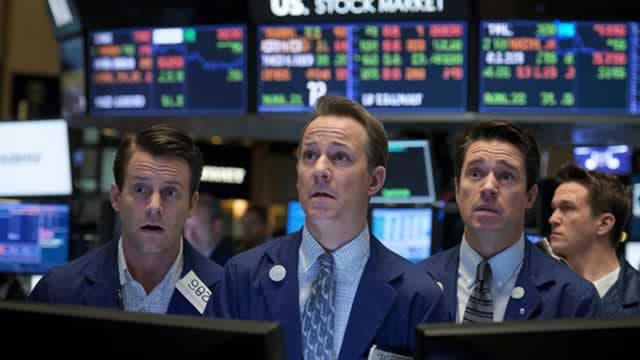
The S&P 500 continues to see resistance at a key level amid U.S.-Iran tensions. The Supreme Court's decision on the Trump tariffs looms.

Blerina Uruci, Chief US Economist at T. Rowe Price, discusses mixed signals in January inflation data and the US trade deficit.

Beyond today's stock movers, Marley Kayden and Sam Vadas turn to the broader market perspective by discussing the narrowing trade deficit and the continuing rotation out of tech.
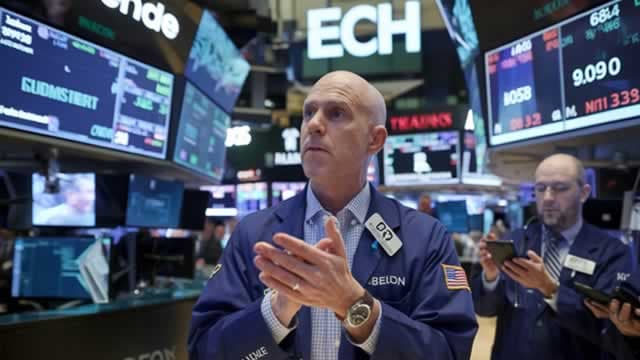
The Dow falls more than 260 points, and oil prices surge.
Kathmere Capital Management CIO Nick Ryder and Amplify ETFs CEO and founder Christian Magoon dive into how clients and investors are positioning amid the recent downside volatility and how they're weighing the weakness. Ryder also cautions investors who choose to invest on income alone.

Regret selling a stock or asset too early? That's something that happens to billionaires, too.

The central bank's preferred inflation gauge is expected to show prices rose faster in December.
Anita Addorisio: Good morning, and welcome to Lifestyle Communities investor analyst conference call. My name is Anita Addorisio, Company Secretary of Lifestyle and moderator for this call. This webinar will be recorded for the benefit of those who are unable to attend today, and the webcast will be available upon request. Please be advised our conference call will strictly be limited to 1 hour. Due to the number of attendees, we will endeavor to address as many questions as possible during this time. We encourage you to contact the company via the Investor Center available on the company's website should you have any queries following today's update. Our presenters today are our Chief Executive Officer, Henry Ruiz; and Chief Financial Officer, Angela Farbridge-Currie, who will provide an update on the FY '26 half year results as released to the market this morning. Also joining us today is Clare Lewis, Investor Relations. This will be followed by a Q&A session, for which I'll now outline the procedure as presented on your screen. [Operator Instructions] Please note that questions received function, which are of a similar nature will be grouped and answered at the appropriate time. I now invite our CEO, Henry for his presentation. Over to you, Henry. Henry Ruiz: Thanks very much, Anita, and good morning, everyone. Thank you for joining us for our FY '26 half year results. I'm joined today by Angela Farbridge-Currie, our CFO; and Clare Lewis from Investor Relations. Moving to our purpose. Our company purpose is to reimagine a Way to Live for independent downsizers. We develop and manage architecturally designed low-maintenance homes together with resort style communities that allow downsizers to free up equity from their previous home and live the life they want. Moving to a business snapshot of our results. Our first half results are summarized at a high level on this slide and show we are strongly executing against our plan to get strong to grow stronger when the property cycle turns. The first half reflects a business that is operating with discipline and focus through a challenging market. We delivered statutory profit of $15.8 million, generated positive operating cash flow of $41.2 million and continued to materially strengthen the balance sheet, reducing net debt to $323.6 million, down from a peak of $490 million in May. Importantly, we're seeing early momentum as our refreshed Way to Live strategy embeds. New home sales improved materially, recording double-digit growth in sales with 110 new home sales and 128 new home settlements. Our annuity income stream continues to grow with 4,256 homes under management, recording $25.3 million of gross rental income, up 11.9% and customer satisfaction is trending positively. We have also enhanced our attractiveness to new prospects by introducing choice on when to pay the management fee, upfront or when they sell. And we have a healthy portfolio and pipeline of over 5,700 homes. At the same time, we have remained deliberately cautious, selling through built inventory, rightsizing the land bank, and restructuring our debt facilities to provide longer tenure and flexibility. At the 31st of December, the fair value of our investment properties was $898.1 million. While the Victorian property market remains challenged and the timing of the VCAT appeal decision is uncertain, our focus is clear: Supporting our homeowners, protecting cash flow, and positioning the business to emerge stronger as conditions normalize. With that context, I will walk you through our results before handing to Angela for the financial detail. Moving to our results snapshot. So going a little deeper on our results, you can see we have had a pleasing market response to the launch of our Way to Live brand campaign, which has landed well with new prospects and our existing homeowners. Net sales from new homes improved materially from the prior period, up 12% from the second half of FY '25, 110 versus 98; and a market improvement from this period last year, up 168%, 110 versus 41. New home settlements were lower than the first half of FY '25, 128 versus 137, driven by lower sales rates over the last 18 months and the lapse period between sales and settlement timing, as almost all of our customers need to sell their pre-existing homes before moving in. Annuity revenue from rental income continued to grow to $26.7 million, driven by new home settlements and inflation-linked rental increases. That said, the total annuity revenue was slightly down on the previous period due to the deferred management fee not being collected on contracts impacted by the VCAT decision, which remains under appeal. Following the settlement of planned land sales and ongoing inventory realization, we are pleased to report a further reduction in our net debt balance, down from $460.5 million at June 2025 to $323.6 million at December, as I just highlighted. Our operating profit after tax was $16.1 million, reflecting a period of transition as lower new home settlements from earlier sales cycles flow through. Margins were compressed as we intentionally sold through built inventory and deferred management fee revenue was impacted by the VCAT decision, alongside interest costs associated with the land bank. Closing out this half, we opened 2 new impressive club houses at our Ridgelea and St. Leonards -- The Shores communities. Moving to the property market. The Victorian property market has shown signs of improvement this half, however, still lags national trends and continues to face into some headwinds into the second half. As you can see from the figures on the right, sourced from Cotality, the value of dwellings in Melbourne increased 0.8% over the quarter and 4.8% over the December 12-month period, placing it at the lower end of capital-city growth. The pace of growth in home values lost some staying through the end of 2025 and into the early months of 2026. The slowdown aligns with the dent in consumer confidence in December as inflation tracked higher and given the RBA's posture towards monetary policy. Total listing volumes in Melbourne were down 12.6% from December 2024. And as recently as the past few weekends, option clearance rates are still in the low 60s. Moving to a business update and strategy recap. So with that property market context, as I mentioned at the opening, our company purpose is to reimagine a Way to Live for independent downsizers. It's brought to life through 3 strategic pillars. The first is to be the go-to-choice for downsizers, committed to mastering both sides of the sales process, the inquiry to appointment journey, and supporting homeowners through the process of selling their existing properties. The second pillar is to be renowned for the homeowner experience in our communities by investing prudently in high-quality amenities, digitally enhancing our communication methods, and a consistent experience that empowers homeowners and strengthens referral advocacy across our communities. We refer to our third pillar is powering our growth engine, by embedding capital discipline, market-led product and pricing strategies, refinement of our home designs to ensure product market fit with the aim of agility across cycles and sustainable financial returns. Now translating our operating pillars to value refers to how we create value for shareholders and our homeowners through 4 key operating pillars that work in tandem in a virtuous cycle. We refer to these pillars as Way to Live, Way to Grow, Way to Build, and Way to Operate, and I'll take them one by one. Way to Live refers to our focus on delivering a truly outstanding homeowner experience while doing it more efficiently with the goal of improving our operating margins to drive value to our annuity book. Way to Grow refers to the sales and marketing engine that ultimately drives the company's settlement rate. We are aiming to grow our net sales levels over the coming years as the property market strengthens. Way to Build refers to us reengineering the development process to deliver quality homes and community amenities that help enable efficient capital recycling at a sale price of 80% to 90% of the median of the catchment area with the aim of enabling the company to sustainably grow. And Way to Operate refers to our focus being market and homeowner centered and managing our corporate overheads commensurate with the longer-term growth ambitions of the business. The subsequent updates from this presentation are organized into these operating pillars. Moving to Way to Live, the homeowner experience. As part of our homeowner-centered operating philosophy, we continue to work in closer partnership with our homeowners. We use data-driven insights to inform prioritization, community action plans, and decision-making. We've introduced consistent communication frameworks and elevated our transparency. Key trends, as you can see on the right, indicate we are on the right path with strengthened trust indicators and the shift to more scalable and positive engagement from homeowners. Overall, customer satisfaction continues to improve from each 6-month survey period, improving from 75.7 as at March 2024 to 78 at September 2025. Moving to Way to Grow, the deferred management fee model for existing homeowners. In July 2025, we changed our deferred management fee to be consistent with the findings of the VCAT ruling handed down on the 7th of July 2025. For new homeowners entering into a residential site agreement with Lifestyle Communities, the deferred management fee is now calculated on the homeowners' purchase price. As previously announced, we will offer all existing homeowners the choice to move to a deferred management fee calculated on purchase price once the appeal of the VCAT decision has been determined irrespective of the outcome. The key advantages of offering the new deferred management fee model to all existing homeowners after the VCAT appeal enables homeowners to be in a position to make a fully informed decision. We anticipate this offer will generate substantial goodwill and sentiment amongst the homeowner community. Any goodwill generated is anticipated to contribute to homeowner satisfaction and harmony and protect and strengthen a strong sales referral rate. This approach assists with our continued strengthening of the Lifestyle Communities brand and reputation. Whilst reducing potential litigation and regulatory risk that may be associated with offering the new deferred management fee model prior to the outcome of the appeal. As a reminder, on the VCAT case, Justice Woodward decided on 2 key elements as follows: one, the Residential Tenancies Act does not prohibit a deferred management fee. Two, the deferred management fee must be an amount capable of being accurately calculated as at the date of entry into the residential site agreement. Justice Woodward consider that because the original deferred management fee clause was calculated as a percentage of the homeowners sale price, which is unknown at the time of entry into the agreement, it is therefore unable to be calculated as an exact amount and therefore, void. This is the key point that is under appeal. That said, to reiterate, we will offer all existing homeowners the choice to move to a deferred management fee calculated on purchase price once the appeal of the VCAT decision has been determined, irrespective of the outcome. As set out in our FY '25 results presentation, if 100% of existing homeowners as at the 30th of June 2025 were to move to this new model, the estimated potential adjustment to the carrying value of the deferred management fee component of investment properties would be up to $117 million. Lifestyle Communities also advises it has received a notice of listing from the Court of Appeal, the Supreme Court of Victoria. The applications for leave to appeal and the appeals, if leave is granted relating to the orders made by President Woodward in VCAT will be heard by the Court of Appeal on Tuesday, 23rd of June 2026. The court will then deliver its decision in due course. So just to repeat, the date for the case to be heard will be on Tuesday, the 23rd of June 2026. The court will then deliver its decision in due course. Moving to Way to Grow, the introduction of choice and expanding our market opportunity. To recap, for new homeowners entering into a residential site agreement with Lifestyle Communities, the management fee is now calculated on the homeowners' purchase price. Further to that, new homeowners can now choose when to pay the management fee upfront or when they sell. Lifestyle Communities aims to have a best-in-market model, providing choice to customers to either free up cash now and pay later or buy with no exit fee. Buyers can choose when to pay their management fee either 10% upfront or up to 20% when they sell. Soft launch took place in December 2025, with full rollout now in market. And to date, we have had 5 upfront management fee contracts signed with the first settlement having already taken place. I will hand over to Angela to talk to our Way to Build and development pipeline. Thanks, Angela. Angela Farbridge-Currie: Thank you, Henry, and good morning, everyone. In relation to our development pipeline, during the period, we completed the settlement of the 4 land sales previously announced as part of our strategy to right size the land bank and carry 4 to 5 years of supply. Following the divestments, we retain a well-balanced portfolio that supports the next phase of the development pipeline as existing projects complete. Our portfolio and pipeline now sits at 5,750 homes with around 4,250 currently occupied and a further 1,500 homes remaining in the pipeline. In the graph to the top right-hand side of this page, you can see that 756 of these homes remain in developing communities and a further 738 homes remain to be developed from the retained land bank. As we deliver the pipeline, we will continue to be market-led in our pricing strategy, which will impact development margins in future periods as we follow the cycle and work through the existing projects. However, as we've previously noted, the ongoing drivers of demand for the sector remain and continue to intensify. We have an aging population in need of downsizing solutions against the backdrop of housing undersupply with additional pressure being felt due to lack of affordability. The delivery of our pipeline and future projects plays an important part in addressing each of these issues. Moving to an update on our debt facility restructure. As we previously announced, we've taken proactive steps to restructure our debt facilities, rightsizing down from $571 million to $375 million. The new facilities became effective in January 2026, and simplify the financing structure, following a reduction in the lending syndicate from 4 to 2 lenders, while providing longer tenor with no ICR covenant until the 30 June 2028 reporting period. The new facilities are provided by PGIM Inc., one of the world's largest pension funds and a provider of long-term debt and one of our existing lenders, National Australia Bank. While the balance sheet has delevered since the May 2025 peak, the transaction provides ongoing funding flexibility as the business navigates the recovery in the Victorian property market. Under the revised facilities, during the ICR relief period, a review event will occur if the number of new home settlements at each reporting period fall below certain thresholds, which for FY '26 is 185. The loan-to-value ratio was also varied down to be less than 55% during the covenant relief period and steps back up to less than 65% from the June 2028 reporting period. Due to the longer tenor of the PGIM facility, the weighted average cost of debt is expected to increase. However, this is expected in part to be offset by a reduction in unutilized facility fees due to the lower facility limits. Our new facilities have been supported by 2 high-quality lenders in NAB and PGIM. We value their support and their commitment and thank the exiting financiers for their support in the Lifestyle communities journey. Henry Ruiz: So moving to our business performance in to new home sales. We observed sales volumes continuing to rebuild throughout the first half with 2 quarters of sequential growth, as you can see on the slide. Our recovery in sales has delivered double-digit year-on-year improvement in the first half with total net sales of $110 million for the period. Pleasingly, the conversion rate from face-to-face appointment to sale has also improved from a historical run rate of approximately 22% to now being circa 26%. We have maintained a continued focus on site activations to drive more prospects to visit and experience the communities for themselves. As we look further ahead to the second half, with short-term economic uncertainty, we have observed some consumers are beginning to show some hesitation in committing to listing their current properties for sale, signaling a softening in market sentiment. Moving to resales performance. Our established resales area has observed the strongest level of resales in recent periods with 98 sales. We play an important role in helping our existing homeowners sell their properties when the time comes for them to sell out of one of our communities. Lifestyle Communities resale approach utilizes a dedicated in-house resales team and a unified approach across both new and established sales. It is an empowered sales process where homeowners are in control of the asking price and the home presentation. Notwithstanding that a great bulk of these 98 sales did not create a deferred management fee revenue event following the VCAT decision, it does bring the next turn of the new management fee into play with new homeowners creating value. The number of homes on market has decreased from 56 at the 30th of June 2025 to 50 at 31st of December 2025, which represents approximately 1.2% of the portfolio, consistent with historical run rates. Moving to our inventory optimization. As we highlighted earlier, one of our key strategic initiatives is to reduce excess inventory levels in line with our optimal range. The team has been laser-focused on selling completed homes with some targeted adjustments to our pricing to meet the market. We have also paced our build rates to match sale order rates to minimize further inventory buildup. Since the 30th of June 2025, we are pleased to report we have realized a circa 30% reduction in unsold inventory. As at the 31st of December 2025, we are carrying 180 unsold completed homes, down from 257 reported in June 2025. As at the 31st of December, there are 9 unsold homes currently under construction compared with the 12 that were under construction in June 2025. In addition to the above, $31.2 million of completed homes are sold and awaiting settlement. Looking ahead to the second half of FY '26, the team will continue to drive this strategic initiative. Moving to our annuity income stream. Ultimately, our strategy is to sustainably grow the annuity income generated from the number of homes under management, and these are indexed at the greater of CPI or 3.5% per annum. For the first half of this financial year, total annuity revenue was $26.7 million, which includes gross rental income of $25.3 million, up 11.9% from the first half of FY '25. This growth does not include deferred management fees related to the VCAT impacted contracts, while the appeal is ongoing. As a reminder, for all new customers, the upfront management fee is 10% of the purchase price or a deferred management fee, which increases at 4% per year capped at 20% of the purchase price. Average tenure of established settlements during the first half of FY '26 was circa 7 years. I will now hand over to Angela, to talk through our financial results. Thanks, Angela. Angela Farbridge-Currie: Thanks, Henry. Turning to the income statement. As Henry noted, we reported an underlying profit -- operating profit after tax of $16.1 million prior to statutory accounting adjustments. The operating profit is down by approximately 28% from the prior half year, impacted by lower new home settlements and development margins, which I will touch on shortly. The operating profit has also been impacted by lower DMF revenue following the VCAT decision and a greater portion of interest costs expensed this half year relating to the land bank, which as per accounting standards are not capitalized until the development works commence. The operating business continues to grow with site rental revenue increasing 11.9% from the prior corresponding period, supported by an increase in homes under management and annual rent increases, which were effective 1 July. Development margins were lower this half year at 11% due to targeted price adjustments to meet the market. However, they are tracking in line with the second half of FY '25. Lower margins are expected to continue for a period of time as we work through the inventory position and recovery of the Victorian property market. With regards to costs, you'll note that there's been an increase in sales and marketing costs from the second half of FY '25, which is driven by the launch of our Way to Live brand campaign. Corporate overheads saw modest growth of 2.5% from the prior corresponding period contained to inflationary levels. We'd like to draw your attention to the statutory adjustments at the bottom of the table, which are comprised of fair value adjustments on investment properties and some final adjustments recognized relating to land sales. We've provided a full reconciliation of these items on Page 34. In relation to fair value adjustments to 31 December, we have recorded an operating fair value uplift attributed to settlements and rent increases of $21.3 million. These are shown as Categories 1 and 2 in the table to the left of the page. In relation to Category 2, uplift at settlement, I would like to highlight that the adjustment of $11.2 million was lower than prior periods due to the reduced DMF values per home of $18,000 versus $64,000 in the prior period following the VCAT decision. The reduced DMF value per home reflects the impact of the VCAT decision on existing contracts and each site rolling on to DMF on entry price at the next turnover event. You will note in Category 4 at the bottom section of the table that there have been fair value adjustments relating to VCAT proceedings of $5.2 million. This represents the fair value of contracts that are not impacted by the VCAT decision and the value has been recognized on the basis that these amounts can be charged. And finally, in Category 5, there's been a further $3.3 million of adjustments relating to land sales, in particular, residential lots at the St. Leonards development, which were contracted for sale in the period. Moving to the balance sheet. As Henry mentioned, the focus on selling through built stock has resulted in a 30% reduction in the number of unsold homes in the system from 30 June and in turn, a reduction in the carrying value of inventories on the balance sheet. We expect further reduction in the carrying value of inventories in the coming period. Staying with assets, both assets and investment properties have reduced following the completion of the land sales, noting that the reduction in investment properties is due to the sale of Ocean Grove 2, but is offset by the fair value increases for the period. These land sales in conjunction with working capital realization flow through to a reduction in borrowings with the debt balance decreasing to $353 million at 31 December and net debt of $323 million once cash balances are taken into account. Debt levels are expected to reduce further over the balance of the financial year as inventory continues to reduce. Turning to the cash flow. Despite the lower level of settlements in the period, we are pleased to report positive operating cash flows of $41.2 million, up from negative $12.9 million in the first half of FY '25. The improvement is a result of a reduction in development expenditure, which reflects both disciplined management of build rates and our developments in progress passing the peak development spend phase. More specifically, in the first half of FY '25, infrastructure works by way of clubhouse builds were ongoing at Phillip Island, Riverfield, Ridgelea and St. Leonards - The Shores in addition to civil works at Ocean Grove 2. In comparison, infrastructure works for this half mainly related to the tail end of Ridgelea and St. Leonards - The Shores Clubhouse builds, which welcomed homeowners in October 2025. The bottom section of the cash flow provides a reconciliation from operating cash flows to statutory cash flows. You can see that $102 million of cash flows were received from the land sales in the period with a flow-through to repayment of borrowings, which totaled $110 million for the period. Looking ahead, we anticipate full year positive operating cash flows as projects continue their capital recovery phase, which is expected to flow through to a further reduction in borrowings. I will now hand back to Henry, who will take you through the outlook for the second half of the year. Henry Ruiz: Thanks, Angela. So we continue to execute in FY '26 against a clear plan with the right team in place. We are focused on getting strong and positioning the business for the next development cycle. Disciplined execution is well underway against our refreshed strategy. Our enhanced marketing approach and refreshed brand position has launched and is already bearing fruit. We are maturing our sales approach to focus on both sides of the market, helping prospects purchase a home in one of our communities and assisting them to sell their existing home efficiently. Our balance sheet deleveraging is well progressed, and we have restructured and rightsized our financing arrangements with longer tenor and flexibility. We continue to sell through built stock and have rightsized our land bank. And while the VCAT decision timing remains unknown, we are focused on our homeowners, continuing to drive satisfaction with more work to be done. Just to recap, our new home settlements pipeline status as at the 16th of February 2026, we have completed 163 new home settlements. We have 202 total contracts on hand and of the 202 contracts on hand, 98 relate to homes that are expected to be available for settlement in FY '26. Of these 98 contracts available for settlement in FY '26, 28 customers have unconditional contracts on their current homes and are booked to settle prior to the 30th of June. 49 customers are actively marketing their own homes for sale and have not firmed up a booking date as yet. And 21 customers have placed deposits and are yet to list their homes for sale. In the second half, shareholders can expect to see further deleveraging of the balance sheet and full year positive operating cash flow as we continue to target inventory reduction and knowing that our communities in progress have passed their peak development spend phase. As we highlighted, communities in progress contain sufficient supply. So no new project launches are planned in this financial year, subject to market conditions. We will continue to be market-led in our development and sales approach. Due to the lag between sales and settlements, lower prior period sales rates will flow through to future settlement numbers. Despite some near-term market headwinds, the fundamental drivers of demand for independent downsizer living options remain strong, including an aging population, decreasing affordability and the availability of suitable properties. As we continue to mature our platform as one of the longest-serving land lease operators in this country, we are well positioned to realize the long-standing potential. Thanks for listening, and I will now hand back to Anita for any questions. Anita Addorisio: We now welcome your questions, and we'll commence by addressing verbal questions before taking written questions. [Operator Instructions] So first up, we do have Murray Connellan from Moelis Australia. Murray Connellan: I was hoping you could give us a little bit more color on sales rates at the moment. It looks like if we -- if we look at the update that you guys put out at your AGM on the 19th of November, there have been, if my math is right, about 32 net sales in the last 3 months. That's obviously, going to be affected by the Christmas period, though, so probably not necessarily reflective of a proper sort of monthly sales rate. Could you just give us a little bit more context around level of inquiry at the moment, how that's changed over the course of the last 6 months and where we are today? And then how -- I guess what that pipeline looks like, please? Henry Ruiz: Sure. Thanks, Murray. Look, I think if you reflect on our typical December-January period, there's obviously seasonality in that, and it tends to be a lower inquiry and sales period. I think what we have seen is that's been magnified somewhat with some of the uncertainty around the economy. Inquiry rates are holding up well, like we are still booking appointments, but people making a decision is really the point of inflection. We're also seeing a slight skew towards properties that are established at slightly lower price points. So that's what we can see at the moment. We're trying to control what we can. And so we're continuing to drive hard around, like we said, targeted price adjustments for stock that is on the ground and continuing with our marketing campaign that we know is bearing fruit, but the consumer confidence piece is something that we have a watch on. Murray Connellan: Then just touching on your pricing strategy as well. You've obviously been in a sort of strategic mindset that is quite strongly focused on reducing that working capital balance, reducing those inventory numbers. Do you think you might be in a position to start being a little bit more margin focused again as we look ahead and I guess, noting that the balance sheet is in much better shape? Or would you still be focused on, I guess, getting those inventory numbers lower and closer to targets and I guess, more of a focus on working capital still rather than margin? Angela Farbridge-Currie: Yes. Thanks, Murray. You are right. We will remain focused as we move forward with that strategic initiative of continuing to focus on a reduction in the inventory balance, and that will continue to see us work on meeting the market with regards to the pricing, to continue with that targeted price adjustment strategy to cycle through that inventory and recover the working capital. Henry Ruiz: Then moving a little bit further out as we start to build -- we're going to be data-driven. So I mean we've got very good insights now around what is selling well in terms of property type configuration and price based on location. So you can imagine that is what we will start to build towards that will improve margin. And the other thing we said strategically is that as the market improves, we will follow the market up. So we will, yes, reflect the market both in its down cycle, but we're looking forward to the up cycle as well. Murray Connellan: Has the way that you build and the -- I guess, the cost inputs changed materially in the last year? Angela Farbridge-Currie: Not materially in the last year. Obviously, the bit of a heat has come out of the construction pricing, but we are probably facing into a cycle where, particularly in Victoria for a period of time, our construction costs might outpace the cost of house growth prices. Anita Addorisio: We have a question from Connor Eldridge. Connor, can you please advise who you represent? Connor Eldridge: It's Connor from Bell Potter here. If I'm right, I'll go ahead with my question. I was just curious around the comment you made around the trading conditions down in Victoria, particularly the comment just around that you're seeing recent signs of softening. I was wondering if you can just expand on that a bit more and if that's, I guess, the rate hike causing that or what in particular are you referencing there? Henry Ruiz: Yes. Look, I think it's a confluence of a number of things and not to overstate that comment, but it's really just around our demographic and prospects coming through are probably -- if you look across the market and people considering selling and if this is the right time for them to sell, are probably the most cautious as a demographic. The second part is it's the one opportunity for them to crystallize almost lifetime of work value. So as they look around and see that properties are staying on market for longer and maybe not achieving the prices that they were hoping for, that just gives them a moment for pause. But like I said, the level of interest in moving into the community stays high, the key consideration for them is, can I unlock enough equity as part of the transaction, which we know, and that's why we've got the deferred management fee model is very attractive to prospects coming into our communities. Connor Eldridge: Yes. Great. Maybe just one more for me. Just, I guess, in light of the current environment and conditions on the ground, is there a, I guess, a metric that we should be thinking about in terms of like your, I guess, target level of completed unsold inventory moving forward? Angela Farbridge-Currie: You'll see in the deck, we talk about our optimal inventory levels and seeking to maintain around 15 to 20 homes per site. Now that will obviously vary depending on the stage of a community's life cycle. So -- and you'll also see based on current inventory levels that there is some further work to go. While there's been good progress made to bring those inventory levels down towards our more optimal level, there is further work to go to reach those targets. Anita Addorisio: Next, we have [ Miriam Prichard ] from UBS on the line. Unknown Analyst: Can you quantify the level of discounting that is currently being offered to clear inventory to optimal levels? Angela Farbridge-Currie: Yes. Thanks, Miriam. Ultimately, the level of discounting will vary on a community-by-community basis. And at the moment to date, there has been -- and you'll also -- if you look at the movement in our development margins, you can get a feel for potentially the size of some of those discounts. It does vary, but ultimately, on average, stays within around the single-digit percentages. Unknown Analyst: Perfect. And just on sales and marketing intensity, where do you see that normalizing over time? Angela Farbridge-Currie: So we did take steps. You'll note that our sales and marketing costs are down from 2024 when I think they are around $22 million, and that came down to around $15 million in FY '25, and we are ultimately traveling broadly in line with that this financial year-to-date, noting that there has been some increase in spend from the prior half because of the launch of our brand refresh strategy as well. And we do -- while we don't expect a material change in the second half, probably some slightly lower spend given that spending was more skewed to the first half. Unknown Analyst: Just last one for me. Thanks for providing your customer satisfaction score. How would that be indexing relative to peers? Henry Ruiz: That's a really good question. It's actually very hard to get comparative stats across the peer set. The one thing I would say is our referral rate is a very important part of our sales process, both direct referral as well as a lot of our homeowners almost act like salespeople when people walk through the door and experience the communities. And we typically have spoken about that sitting around that 40% to 50% range. So we can only talk to our data, that would be a question that you would have to ask them. Anita Addorisio: We now have a written question that has come in from [ Carl Tan ]. In consulting existing homeowners, have homeowners ever raised the option of abolishing the DMF altogether? Henry Ruiz: Thank you for the question. Look, all of our homeowners on the way in understand our business model. And one of the key attractive elements of it is their ability to free up more cash as they enter into the community. So it's less about what our existing homeowners have raised. I think what we have learned is that there are some prospects that were discounting us as a potential destination because they were not in favor of having a deferred management fee model. So like we outlined, we have decided to offer choice. And so now we offer people that want to release more cash on their way into the community or some people want to take that off the table for the benefit of their children or other reasons, or they're just in a financial position where that helps them, whether it be with their pension or other financial needs. So really, the key message is we're now catered for both, and we think that expands our market opportunity and attractiveness. Angela Farbridge-Currie: Thank you, Henry. We actually have no further questions at this point in time, either through the live or the Q&A box. So based on that, ladies and gentlemen, we have reached the end of this Q&A session, which brings us to the conclusion of this conference call. We thank you for your attendance today and invite you to contact the company via the Investor Center available on the company's website should you have any questions not addressed here today. Thank you all so much. The webinar will now end.

Operator: Greetings. Welcome to Americold Realty Trust, Inc. Fourth Quarter 2025 Earnings Call. At this time, participants are in a listen-only mode. A question-and-answer session will follow the formal presentation. Note this conference is being recorded. I will now turn the call over to Rich Leland, Vice President, Investor Relations. Thank you. You may begin. Good morning, and thank you for joining us today for Americold Realty Trust, Inc. Fourth Quarter and Full Year 2025 Earnings Conference Call. Rich Leland: In addition to the press release distributed this morning, we have filed a supplemental financial package with additional detail on our results. These materials are available on the Investor Relations section of our website at www.americold.com. This morning's conference call is hosted by Americold Realty Trust, Inc.'s Chief Executive Officer, Robert Scott Chambers, along with Scott Henderson, our Chief Investment Officer and Interim Chief Financial Officer. Management will make some prepared comments, after which we will open up the call to your questions. Before we begin, let me remind you that management's remarks today may contain forward-looking statements. Forward-looking statements are subject to a number of risks and uncertainties that may cause actual results to differ materially from those anticipated. These forward-looking statements are based on current expectations, assumptions, and beliefs as well as information available to us at this time and speak only as of the date they are made. Management undertakes no obligation to update publicly any of these statements in light of new information or future events. During this call, we will also discuss certain non-GAAP measures, including NOI, EBITDA, net debt to pro forma core EBITDA, and AFFO, among others. The full definitions of these non-GAAP financial measures and reconciliations to the comparable GAAP financial measures are contained in the supplemental financial package available on the company's website. Please note that all warehouse financial results are in constant currency unless otherwise noted. I will now turn the call over to Robert Scott Chambers for his prepared remarks. Thank you, Rich, and thank you all for joining our fourth quarter 2025 earnings conference call. Today, I would like to review our 2025 accomplishments, walk through our 2026 key priorities, and review the components of our 2026 financial outlook. But before I begin, I would like to take a brief moment to publicly welcome Chris Papa to the Americold executive leadership team. Chris will be joining us on Monday of next week as our new Chief Financial Officer. Chris is a seasoned and highly regarded real estate executive and previously served as Chief Financial Officer of CenterPoint Properties, a leading developer, owner, and manager of industrial real estate. He also brings extensive public company experience, having served as a CFO for both Post Properties as well as Liberty Property Trust. Robert Scott Chambers: Over the years, we have intentionally assembled a strong leadership team here at Americold Realty Trust, Inc. with extensive operational expertise, and I am excited to now supplement this with Chris's experience leading two investment-grade rated REITs and further strengthen our ability to execute on our strategic priorities. Chris is well known in the investment community, and he is looking forward to engaging with all of you throughout the coming year. Turning to our 2025 accomplishments, despite the persistent industry headwinds we faced throughout the year, our teams continued to execute well. This includes not only delivering on our financial commitments for the quarter, but also making significant progress across many of our key business initiatives. Financially, we delivered fourth quarter AFFO of $0.38 per share, slightly ahead of expectations, which also puts us above the midpoint of our revised full-year guide. The combination of sequential increase in occupancy along with the benefits from our ongoing cost reductions and portfolio management initiatives allowed us to deliver a year-over-year quarterly increase in NOI, EBITDA, and AFFO dollars for the first time since 2024. Additionally, we are encouraged to see the year-over-year decline in economic occupancy improve progressively throughout the year. Scott will review the details of our results in a few minutes, but I am very pleased with the improvements we have made in our internal forecasting process and how we closed out the year according to plan. Commercially, our teams continue to successfully navigate the current competitive pricing environment and deliver additional gains in both storage and handling rates for the quarter. During 2025, we achieved our goal of generating approximately 60% of our rent and storage revenues from fixed commitment contracts. As many of you remember, this was an initiative that we launched a few years ago when less than 40% of our revenues came from fixed commits. Even though customers may reevaluate their overall space requirements, they continue to appreciate the stability and predictability that a fixed commitment contract brings as it allows them to fully leverage the space and reduce their per-pallet cost by turning inventory faster. Americold Realty Trust, Inc. also benefits from stable cash flows given the vast majority of these contracts are for multiple years. We truly believe these agreements are a win-win for both parties and are evidence of our ability to lead the industry in commercial excellence. Operationally, we delivered services margin of nearly 14% in the fourth quarter, and our full-year margin of 12.7% is up nearly 1,000 basis points over the past two years. We continue to reap the benefits of our labor initiatives and today, we have one of the best trained, engaged, and highly effective workforces in the industry. Their commitment to service excellence is evidenced by our low customer churn rate, which has remained stable in the low single digits, as well as the numerous customer and industry recognition that we have received throughout the year, including Johnsonville's 3PL Summit Warehouse of the Year for our Clearfield location, and the Cold Storage Facility of the Year award for Refrigerated and Frozen Foods Magazine for our Russellville facility. Finally, during 2025, we also supported our customers with the delivery of three new expansion and development projects around the world. All of them are consistent with our strategy of focusing our investments on lower-risk developments like our Allentown expansion or creating new and innovative supply chain solutions like our Kansas City and Dubai facilities that were developed in conjunction with our strategic partners. Each of these projects was completed on time and on budget. I am proud of these and all of our accomplishments in 2025 and the foundation they create heading into 2026. Turning to 2026, as we outlined on last quarter's call, there are a number of demand and supply headwinds that are continuing to impact our industry. While we believe most of them are transitory, we do expect them to create continued pressure on revenue throughout the year. This is particularly evident in the forward distribution node where the industry has seen the most speculative development over the past several years. However, we are not content with waiting on a broader market recovery, and shortly after I assumed the CEO role, I began a process with our management team and Board of Directors to develop a list of five key priorities that would further diversify our customer base, position us to take advantage of new growth opportunities, and ultimately deliver shareholder value. They set the direction for what we want to accomplish in 2026 and I would like to review them with you now in greater detail. First, we are making meaningful progress on our initiative to delever our balance sheet. We are evaluating a variety of opportunities to achieve this goal, whether it is through a traditional REIT joint venture or selling certain nonstrategic assets. This is an important priority for the company as we are committed to maintaining our investment-grade profile. The investment-grade rating is a significant advantage in terms of both broad market access as well as cost of capital. We have seen strong interest in our assets from multiple potential investors at attractive valuations. Based on our progress so far, we believe that we will be in position to share additional details on this initiative with you during the first half of the year. Our second priority is to evaluate our global portfolio of diverse real estate assets to ensure that we are maximizing profitability and getting the best and highest use of our facilities. We initiated a robust portfolio management process of low-profit facilities in 2025 and already have a track record of successfully exiting properties and reallocating customer inventory resulting in a favorable transaction for the company. Each property is evaluated for opportunities either within our existing sales pipeline or potential triple-net lease opportunities to new or existing tenants compared to taking the property dark or pursuing an outright sale of assets that are deemed nonstrategic. Triple-net leases are an interesting opportunity as they have not traditionally been an area of focus for Americold Realty Trust, Inc. We believe in the current environment that this could be an attractive way to increase occupancy levels across our network with both food and non-food customers. Our third priority is to drive organic growth by expanding our aperture and leveraging our value proposition into new and previously underpenetrated sectors. Last quarter, I spoke about the value of having a presence at all four nodes of the supply chain and Americold Realty Trust, Inc.'s leadership position in providing store support solutions to some of the world's largest grocery retailers and QSR brands. This store support service is operationally intensive; however, the fast-turning nature of the business means that we are able to generate a much higher level of NOI per pallet position than any other node. Despite our leadership position in the sector, we are still only scratching the surface as most of this business is insourced today. We do, however, have strong momentum behind this initiative. During 2025, we won a large fixed commitment contract in the Houston market with one of the world's largest retailers and later in the year we successfully expanded our retail presence into Europe for the first time with large supermarket operators in Portugal and The Netherlands. Rich Leland: More recently, Robert Scott Chambers: I am especially excited about taking our capabilities into an entirely new sector with a late December announcement of our new win with On the Run. On the Run is a well-known and fast-growing gas convenience store chain in Australia, and our proven model in supporting more than 1,500 QSR locations across six major brands in Asia Pacific translates seamlessly to this new sector. Some of the services we will provide include tri-temperature warehousing, high-throughput pick, integrated warehouse and transport solutions, and multi-vendor consolidation. Since that initial announcement in December, we have expanded our relationship with On the Run even further to include new business wins in New South Wales and Queensland, and in total, we will be supporting nearly 600 of their locations across Australia. As I mentioned earlier, we are only scratching the surface of what I see as the long-term potential for Americold Realty Trust, Inc. to leverage our capabilities in this area with new and existing customers and expand into new sectors and geographies. We have a strong reputation for mastering this complex work and continue to demonstrate our ability to close these deals based on our operational expertise and deep customer relationships. Additionally, our business development teams are out meeting with customers to identify new sales opportunities in adjacent sectors such as pet food, floral, e-commerce, pharmacy, and more. We rolled out a new program across our operations to incentivize lead generation and have already closed a couple of new deals in the floral sector. While they are admittedly small to start, we can already see that these types of products fit nicely into our well-established and proven Americold operating system. Most importantly, these wins are strong evidence of our team's ability to execute where we focus the organization's attention on delivering our key priorities. Beyond driving organic growth, our fourth priority is to take a very disciplined approach to evaluating inorganic growth opportunities. We will continue to focus only on lower-risk developments that are customer or strategic partner driven, and we are purposely limiting our near-term development spend until our balance sheet leverage is reduced. Our four in-process developments in Fort St. John, Dallas–Fort Worth, Christchurch, New Zealand, and Sydney, Australia all remain on time and on budget. We are especially looking forward to the Port St. John grand opening later this year which is our flagship development in Canada, creating another node in our unique end-to-end logistics solution to move food across North America. The grand opening will be held at this year's Port Days event which is the one-year anniversary of our initial groundbreaking. Fifth, we continue to right-size our cost structure and manage expenses closely. In 2025, we began executing our plan to unlock $30 million in annualized cost savings within both indirect labor and SG&A. These actions are now largely complete, giving us confidence in our ability to achieve these savings. Additionally, we expect to reduce Project Orion and transformation-related cash spend this year by approximately $50 million. In the current environment, we are continuing to closely evaluate every dollar of spend, and Scott will give further details on these initiatives when he discusses our full-year guidance. I strongly believe that these five priorities position us well to not only manage through some of the near-term headwinds facing our industry, but also establish a strong foundation for Americold Realty Trust, Inc.'s future growth. As I have been speaking with customers over the past several months, it is clear they remain cautious about their outlook for demand this year. Food inflation remains a top concern with many food producers reporting price growth while struggling to grow volumes on their core SKUs. However, we are encouraged to see some of our customers introducing new products and investing in innovation as a way to drive volume which could help build safety stock. While we believe physical occupancy has largely stabilized, customers are continuing to manage their inventory tightly and closely evaluating their space requirements as contracts come up for renewal. As you can see from our fourth quarter results, the team continues to do an excellent job of balancing occupancy and price, but we are taking a realistic view of the market and continue to believe that both will be headwinds for us in 2026. With this macro environment in mind, we are taking a pragmatic view to our outlook for the year and expect AFFO to be between $1.20 and $1.30 per share. Now, I will turn it over to Scott to walk through some of the details. Thanks, Rob. Good morning, everyone. Rich Leland: Starting with our financial results, as Rob mentioned, we delivered fourth quarter AFFO per share of $0.38 which was slightly ahead of expectations. This was an increase versus the prior year Robert Scott Chambers: We also saw a year-over-year increase in fourth quarter core EBITDA and total company NOI. For the full year, we delivered AFFO of $1.43 per share which was also in line with expectations. Economic occupancy came in slightly better than expected in the fourth quarter, increasing 280 basis points sequentially, primarily due to the impact of the seasonal harvest, slightly better holiday volumes, and portfolio management. Throughput decreased slightly sequentially as most inflows to build inventory occurred during the third quarter. Rich Leland: As is typical, Robert Scott Chambers: we have already started to see occupancy levels in January and February consistent with normal seasonal trends. Rich Leland: Both storage and services revenue per pallet were positive in the quarter, with services up 2.4% as we continue to protect margin on that piece of the business Robert Scott Chambers: and ensure that we are fairly compensated for the value that we provide to customers. Storage revenue per pallet was also up for the quarter, but at a more modest 0.3% rate reflecting the competitive market pressures that we have mentioned on previous calls. Rich Leland: Turning to our fourth quarter capital markets activity. Robert Scott Chambers: At the December, entered into a new $250 million term loan with $150 million of the proceeds used to repay our U.S. revolver down Rich Leland: to $0, and $100 million of the proceeds going to cash on hand. Robert Scott Chambers: Subsequent to year end, we then used $100 million of cash and $100 million of U.S. revolver borrowings to repay the $200 million Series A maturity on January 8. Rich Leland: At this point, I would like to add some detail to a couple of the key priorities for 2026 that Rob reviewed earlier. Robert Scott Chambers: First, Rich Leland: is the strategic capital raise to delever the balance sheet. Our leverage at the end of the fourth quarter was 6.8x, Robert Scott Chambers: and we are looking to reduce it Rich Leland: meaningfully as part of this initiative. We are evaluating a variety of opportunities to achieve this goal, Robert Scott Chambers: whether it is through a joint venture with an equity partner Rich Leland: or selling certain nonstrategic assets. This would help solidify our balance sheet Robert Scott Chambers: while providing a source of funding for future growth. Given the limited number of large transactions in our space, Rich Leland: anticipate that this will also provide investors with additional insight into the true asset value of our mission-critical infrastructure. Robert Scott Chambers: As Rob mentioned, we have made meaningful progress in this area over the past several months, Rich Leland: and are seeing strong interest in our assets from multiple potential investors. Robert Scott Chambers: We are also continuing to make great progress with our portfolio management initiative to maximize profitability and ensure the best and highest use of our expansive network of real estate assets. During 2025, Rich Leland: we exited our joint venture in Brazil, and we strategically exited or idled a total of 10 sites in North America. Robert Scott Chambers: In addition to generating cash proceeds for the company, we have also removed over 22 million cubic feet of capacity Rich Leland: for more than 65,000 pallet positions. For 2026, we have already identified a total of nine sites that are prime candidates, and two of these were closed in the first quarter. As a reminder, Robert Scott Chambers: majority of inventory at these sites can be moved to nearby facilities Rich Leland: resulting in a benefit to our bottom line. Robert Scott Chambers: This not only provides savings from a cost perspective, but it also allows us to reallocate capital to sites that are performing well. I am proud of the results our team has already demonstrated in this area, Rich Leland: and look forward to what they will accomplish this year. Robert Scott Chambers: Now I would like to take a few moments Rich Leland: to discuss the assumptions and details behind our 2026 outlook. Robert Scott Chambers: While we are excited about the early momentum we are seeing behind all five of our key priorities, we do realize that the market environment remains challenging Rich Leland: and it will take time to fully realize the benefits from these initiatives. Robert Scott Chambers: Importantly, our outlook does not assume an increase in consumer demand or incorporate any transactions that have not yet been announced. Rich Leland: As Rob mentioned earlier, Robert Scott Chambers: we are expecting full-year 2026 AFFO Rich Leland: between $1.20 and $1.30 per share. Scott Henderson: I would like to remind everyone that the second half of the year tends to experience higher volumes due to the impact of the agricultural harvest and a pickup in demand around the holiday season. As I mentioned earlier, we did see a slight seasonal lift in Q4 and have already seen the normal decline begin in Q1. As is typical, we are expecting first quarter AFFO to be the lowest quarter of the year with sequential increases as we progress throughout the year. Now, I will move on to the specific components of our full-year outlook. During our last call, we indicated that we expected revenue per pallet total to be down approximately 100 to 200 basis points and economic occupancy to be flat to down by as much as 300 basis points in 2026, as the current market conditions are causing customers to reevaluate their space commitments at contract renewal. The 2026 renewals so far have followed these high-level trends as we continue to thread the needle between price and occupancy for each customer and minimize the overall impact to revenue and profitability. As a result, we would expect to generate same-store revenue for the year of approximately $2.2 to $2.27 billion. For same-store NOI, we are expecting a range of between $735 and $785 million for 2026. This reflects the continued pricing and occupancy pressure mentioned earlier partially offset by our cost cutting and portfolio management initiatives. As I mentioned previously, one of our five key priorities for this year is to right-size our cost structure. As part of this initiative, we have identified opportunities to streamline our operations and eliminate $30 million worth of indirect warehouse labor and SG&A cost. These actions started in Q4 and have been largely completed, helping to offset other inflationary pressures across the business. For total company NOI, we are expecting approximately $780 to $845 million, which includes the impact of same-store warehouse discussed earlier in addition to our transportation segment and non-same-store warehouses. For 2026, we expect core SG&A to be between $218 and $228 million, which is a reduction of nearly $7 million at the midpoint. This reflects the targeted cost reductions we are making across the business partially offset by labor inflation and other cost increases forecasted in 2026. Additionally, as Rob mentioned, we expect to reduce Project Orion related cash spend by $50 million. While this does not impact AFFO, it does free up important additional capital for other business needs. We are expecting core EBITDA of between $570 and $620 million for the year, reflecting the NOI and SG&A outlooks that I have already discussed. For interest expense, we are forecasting between $171 and $180 million for the full year. As a reminder, we have been capitalizing interest related to our ongoing development which ends as projects are completed and come online. For maintenance CapEx, we are expecting to spend between $60 and $70 million for the year, consistent with 2025, as volumes remain low and we continue with our portfolio management review process. You will note that we have streamlined our guidance parameters to align with industry standards and allow us to focus our messaging on key drivers of performance. We expect to retain the current high-level transparency into our initiatives and quarterly results. We believe that this will ultimately enhance confidence in our forecasting ability while ensuring continued transparency and accountability. Additionally, please note that our managed segment will be consolidated in our warehouse segment for 2026, which is reflected in our guidance. Now, I will turn the call back over to Rob for some closing remarks. Rob? Robert Scott Chambers: Thank you, Scott. As you heard on this morning's call, we are entering 2026 with a clear set of priorities to position Americold Realty Trust, Inc. for future success. While we recognize that there are still challenges across the industry, we are actively generating new opportunities as well. Most importantly, we continue to service our customers with excellence and our value proposition remains clear. Our diverse network of real estate contains many opportunities to generate revenue through multiple operating environments, and our experienced management team is dedicated and focused on unlocking that value. We are one of the few cold storage owners and operators with a presence at every node of the supply chain, and when coupled with our deep customer relationships, strategic partnerships, and operational excellence, this gives us a unique advantage. We are excited about the early progress we have made on 2026 key priorities, but I realize it will take time to reap the full benefits. I believe that we have the right strategy and the right team to drive continued momentum in these initiatives, and I look forward to reporting on our progress as we proceed throughout the year. With that, I will turn the call over to the operator for questions. Operator? Operator: Thank you. Star one on your telephone keypad. A confirmation tone will indicate your line is in the question queue. You may press star two if you would like to remove your question from the queue. We will now open for questions. Our first question is from Samir Upadhyay Khanal with Bank of America. Please proceed. Scott Henderson: Good Rob, maybe set the tone here kind of high level, let us talk about the customer and the kind of the demand side, right? I mean, you talked a little bit about, you know, customer contracts that are coming up for renewal. So maybe Michael Griffin: high level talk about kinda what you are hearing from the customer. Thanks. Robert Scott Chambers: Thanks, Samir. Yeah. I mean, obviously, tons of conversations over the last few months with a majority of our customers. And I think, you know, pretty consistently, we are hearing both in those discussions and in terms of what we see in their earnings releases that, you know, their net sales growth is relatively flattish, and that is the projection for most of 2026. Those flattish numbers are really a result of their price being up low to mid-single digits and then their volume being, you know, down low to mid-single digits. I think most, as they look out throughout the course of the year, are not necessarily, you know, predicting large inflections in consumer demand. And so that is really what we have incorporated into our guidance for the year. That said, everybody knows it would be really tough for, I think, for consumers to really stomach a lot of material price increases from here. So they are definitely focused on ways to try to grow volume. There is a lot of talk about the investments that they are going to make in their brands and the promotional dollars that have been set aside for 2026 to really try to drive some volumes on their core SKUs. But I think probably the green shoots or the encouraging dialogue that we have with customers now are about the fact that they recognize the need to drive volume. And so they are looking at more innovation in 2026, how they, you know, really try to have some successful new product launch in 2026, and, you know, those are things that would drive safety stock and, you know, all that said, while there is good dialogue about what the year could look like, we are not going to sit and wait for that traditional business to inflect. Like we have said in our prepared remarks, the BD team's out looking at new commodities, looking at new sectors that we can lean into. And probably the best example of that was the On the Run deal that we won late in the year, which is in a brand new sector, which is the convenience store distribution. So when you think about all the things that we are doing kind of in an, you know, idiosyncratic manner and the fact we have our real estate team out looking at opportunities as well, I think we have got, you know, a great chance to deliver on the expectations that we put forward for the year. Operator: Our next question is from Michael Griffin with Evercore ISI. Please proceed. Rich Leland: Hey, thanks. On the occupancy assumptions Robert Scott Chambers: for 2026, Scott, note in your prepared remarks, you said you expect economic occupancy be flat to down 300 basis points. I think last quarter, the expectation was down 200 to 300 basis points, at least just Rich Leland: looking at the transcript last quarter. So did anything change Robert Scott Chambers: kind of, you know, quarter over quarter there, maybe, you know, shedding some of these underperforming assets could help boost economic occupancy. Just want to make sure I have got things lined up from an apples-to-apples perspective as it relates to economic occupancy expectations. Sure. So I will take that one. I mean, I think you are right. I mean, so last time we talked a little bit about 200 to 300. And, again, at that point, we wanted to provide some parameters. It was not necessarily formal guidance, but we were encouraged by what we saw in the fourth quarter. The sequential occupancy growth of 280 basis points was certainly higher than what we had originally planned. I think it is a combination of a number of things. Some of it is the portfolio management activities that we are actively in the process of executing. That helps. It is the new business sales pipeline that we talked about last year. You know, we said a lot of that volume would be, you know, delayed a bit, and we are encouraged by the way it came in at the end of the year. And then really the dialogue around where these contract renewals are coming in. It is based on what we have seen thus far over the last three or four months. We certainly attack those renewals, you know, far ahead of when their expiries are. And based on what we see now, it is a little more favorable than what we talked about last quarter. Scott Henderson: Hey, Griff. It is Scott. Just a follow-up too as a reminder. On page 29 of our IR supplement, you will see the new same-store pool that gets recast to the prior year of 2025 on a quarterly basis. When you are building your model, just a reminder that page 29 is the new same-store pool. Rich Leland: Thanks, Scott. And just to clarify, are the assets Robert Scott Chambers: sales or deleveraging expected in your 2026 AFFO guidance? Scott Henderson: They are not. Great. No, anything that has not been announced is not included. Operator: Our next question is from Michael Goldsmith with UBS. Please proceed. Rich Leland: Morning. Thanks for taking my question. As part of your portfolio review, can you talk about your international Scott Henderson: presence? How important is the Europe and Asia geographies as part of your core business? How much synergy is there with the core U.S.? How easy would it be separate separate? And just what, you know, what is the appetite right now to maybe streamline the geographies? Thanks. Robert Scott Chambers: Sure. Look. Yeah. I mean, our international assets are both in Europe, Asia Pacific, our joint venture in the Middle East are all assets that we would say are performing well and in line with expectations. We are doing a very thorough review of our entire portfolio as we described previously to make sure that we feel like, you know, all of our focus and intention are on the markets and submarkets that we feel like we can, you know, win in longer term. And so, you know, we are doing an evaluation across the board of what the right portfolio is going to look like going forward. We cannot get into any more specifics than that at this period of time. But as we mentioned in our prepared remarks, we are very focused on how we ensure that we can, you know, strengthen our foundation, delever our balance sheet, and put ourselves in a position to grow long term. And, you know, we feel like we will be in a position to give more details around that, you know, here in the first half of the year. Operator: Our next question is from Craig Allen Mailman with Citigroup. Please proceed. Rich Leland: Thanks. It is Nick Joseph here with Craig. Just on the deleveraging initiative, what percentage of assets are either noncore? And what is the size of the potential JV pool that you would be looking to do? Robert Scott Chambers: Yeah. So, you know, I think from our perspective, the way to really think about it is we want to put ourselves in a position where we get to a leverage level that will allow us to continue to be and have an investment-grade rated balance sheet. That is key. And so we think about, you know, what that means, it is leverage coming down, you know, materially, you know, to six or below. So, you know, you can kind of do the math on what would be required to get us all the way there. But that is the focus, is how do we make sure that we, you know, have a transaction that is sizable enough to meaningfully delever and maintain investment grade. Operator: Our next question is from Greg Michael McGinniss with Scotiabank. Please proceed. Rich Leland: Hey. Good morning. I just wanted to talk about kind of expected retention on, you know, the fixed contracts expirations, 30% of the total pool of fixed contracts that is expiring. And then are these, you know, customers kind of fully stepping back from fixed Greg Michael McGinniss: contracts? Are they just paring back their requirements? Are they pushing on pricing? Any additional color would be appreciated. Robert Scott Chambers: Thanks for the question, Greg. Yeah. So we have been in a tough, you know, demand environment for a while, and I have to tell you, we are very proud of the team for the way that, you know, we have kind of led the industry here in terms of fixed commitment contracts. We have talked about the growth that we have seen in that over the last several quarters despite the challenging environment. We know 2026 is an outsized year for renewals. The first point that I would make is, as I said in my prepared remarks, customers see the value of having space committed. This is mission-critical infrastructure for our customers' supply chain. So the concerns really are not around do the customers not see the value from fixed commitments and are they stepping away from those entirely? That is not at all what we are seeing. We are seeing a very high retention rate of our customers who sign up for these types of agreements, and instead, what we are seeing is more of a tightening up of the gap between physical and economic occupancy. So, you know, if a customer signed up for 20,000 pallets and they are using, you know, 12,000, instead of renewing at 20, they might renew at 17 or 15. That is more of what we are seeing. And so we have chopped a lot of wood. We get after these very early in terms of how, you know, the discussions in terms of how these are going to renew. And so we have incorporated the expectations for what we think will happen with these contracts into our guide of flat to down 300%. Or flat to down 300 basis points on economic occupancy. That is our expectation, and that is informed by what we have seen thus far in the contract renewals. Greg Michael McGinniss: Great. Thank you. Our next question Operator: is from Todd Michael Thomas with KeyBanc Capital Markets. Please proceed. Rich Leland: Hi, thanks. I wanted to follow up on the potential Todd Michael Thomas: transaction or possible joint venture that you are discussing. I understand one of the primary objectives is to reduce leverage, and you also mentioned that no unannounced transaction activity is assumed in guidance. But I am just curious how we should think about the potential earnings dilution that you might be willing to tolerate and maybe you could just talk a little bit about that in terms of, you know, potential, you know, pricing or whether you expect to be able to transact in a nondilutive manner, you know, how we should, you know, start thinking about that. Scott Henderson: Hey, Todd. It is Scott. Thanks for the question. I think at this point, we are not prepared to provide that level of detail around a potential transaction. But as was said in the prepared remarks, we will likely have more detail to come around midyear. Robert Scott Chambers: We are encouraged by the, you know, we are encouraged by early conversations in terms of, you know, certainly the interest and the potential valuations and, you know, while anytime you do a transaction like that, you know, it will certainly impact kind of what our expectations are for the year, I think in the long term it absolutely is the right path forward for us. Todd Michael Thomas: Okay. Maybe just following up on that. Are you expecting this to be, you know, sort of a single transaction? Or, you know, sort of a series of transactions throughout the first half or throughout the year. Scott Henderson: Hey, Todd. It is Scott. At this point, we are evaluating a handful of different things, and I think it would be better for us to comment on that around the announcement. Todd Michael Thomas: Alright. Thank you. Operator: Our next question is Blaine Matthew Heck with Wells Fargo. Please proceed. Rich Leland: Great, thanks. Good morning. Can you just give us your Blaine Matthew Heck: thoughts on the current supply picture and excess capacity throughout the cold storage market in the U.S., Europe, and Asia? And maybe, you know, in your target markets specifically? Robert Scott Chambers: Sure. Thanks. Certainly where we have seen excess supply has been largely in the U.S. So, you know, the same supply dynamics really have not been experienced and concentrated in our European business or in the Asia Pacific business. It is heavily in the U.S. And then further, as we have said, if we were to look kind of by the nodes, which I think is a great way to look at the business, you would see most of the incremental supply then in the forward distribution locations, followed, you know, relatively closely by the port locations. You know, I think we remain consistent in the view that over the last few years, it is, you know, in excess of 15% of incremental capacity that has been added, mainly by, you know, a lot of new market entrants whose business model was to get a little bit of scale and then try to transact. And I think, you know, that business model is really not one that has come to fruition like a lot of those folks would have liked. We know from discussions that many of those new facilities with new market entrants are not performing to their original underwriting in large part because of occupancy that is just not there for them. We, in fact, are, you know, continuing to see customers who, you know, have not necessarily liked the experience with some of these small new market providers coming back to Americold Realty Trust, Inc., which is a great sign. So I do think we are past the peak deliveries of what we have seen these last few years in terms of new capacity. Announcements have slowed down materially. There are a few new deliveries still happening this year on previously announced projects, but, you know, we are encouraged to see new announcements slow. I think a lot of folks have probably learned a lesson about what it takes to be successful in this business and, you know, why Americold Realty Trust, Inc. is an industry leader. Scott Henderson: And Blaine Matthew Heck: just to clarify, that 15% of excess capacity based on square footage or cubic feet? Robert Scott Chambers: We would actually view it more on pallet positions. Scott Henderson: Got it. Blaine Matthew Heck: Thank you. Scott Henderson: Our next Operator: question is from Michael Carroll with RBC Capital Markets. Please proceed. Rich Leland: Yes, thanks. Scott, I wanted Robert Scott Chambers: to circle back on your comments in the prepared remarks about consolidating its business and mothballing some of the underperforming warehouses. Can you give us an idea of how many warehouses were mothballed in 2025 and what could happen in 2026? And related to that, is that the reason why the new Rich Leland: same-store pool is dropping to 215 warehouses from the current pool of 219 warehouses? Scott Henderson: Sure. Thanks. Thanks, Mike. To answer your question around 2025, we either exited or idled approximately 10 assets in 2025. As we look to 2026, we, as I said on the call, had nine identified. Two we have already taken action around in the first quarter. And so if you want to bridge to what the page 29, which is the new same-store of 215, the old same-store was 219. So the bridge there Rich Leland: is, Scott Henderson: let me get that exact math for you, Mike, is we are taking out seven assets which I just mentioned that we are taking action on in 2026. And then you add in the three managed assets, so that lands you at 215. So 219 minus seven plus three gets you to 215. And a quick callout on the managed, the managed revenue Todd Michael Thomas: actually Scott Henderson: will show up in the services part of that P&L on page 29. And the pallets will show up through the throughput. Robert Scott Chambers: K. Great. Thanks. Operator: Our next question is from Michael Mueller with XLNT. Please proceed. Rich Leland: Is that me? Harris, Steve? Yeah. Mike Pollard. Yeah. Mike. Mike, go ahead. Operator: Yep. Scott Henderson: Yeah. Yeah. Yeah. Okay. Sorry about that. Michael Mueller: I guess, as a follow-up to that question, how material or not could the occupancy lift from selling or idling the nine sites that you just talked about? How material could that be? And then Rich Leland: also, like, the new complementary use initiatives that you are going after, like, how much how should we think of in terms of the occupancy lift potential coming from those Michael Mueller: so those two buckets there? Robert Scott Chambers: Yeah. I mean, if we thought about in the, let me think about it in terms of the fourth quarter. So in the fourth quarter, that 280 basis point, you know, occupancy lift, really, you know, about 100 of that was related to the seasonal harvest, which is kind of what we talked about last year. Give about a 100 basis point increase from some of the portfolio management initiatives that we have been taking, and the rest, that 80 basis point increase was really from, you know, new business opportunities that kind of came to fruition in the fourth quarter. So I am not sure, quite frankly, if we have it. You know, that would be the impact for Q4 broken out for how to think about it in 2026. Michael Mueller: Okay. Thanks. Operator: Our next question is from Vince Tibone with Green Street. Please proceed. Vince Tibone: Hi. Good morning. I was hoping to unpack the non-same-store guide a little bit for NOI, which it looks like it is around $50 million at the midpoint. If you could kind of just unpack the difference between, like, the transportation and managed segment, which is, like, about $40 million of NOI last year, versus, you know, additional development leasing. What I am really trying to get at is just how much, you know, incremental development stabilization is incorporated in the guidance, and if there is anything, you know, on that transportation line and third-party line that is, you know, any volatility there or should be aware of? Scott Henderson: Sure. Hey, Vince. Good morning. It is Scott. Thanks for the question. Let me help you bridge that. So, when you look at our new same-store guide, the mid is $760 million. Okay? And as I mentioned Robert Scott Chambers: that now includes Scott Henderson: our managed NOI segment that is now getting rolled into that. So the $760, and, again, when you are building your model, look at page 29 of the IR supplement, which shows that our updated same-store pool being recast to 2025. So the $760 is on that same-store pool on page 29, which includes the managed. Okay? If you then think about, we gave you a total NOI guide at the mid, which was $813 million. Okay? So $813 is total NOI. And if you take $813 minus $760, that gives you a number. But remember, trans is also in that number. If you assume trans is roughly flat at $31, so you take $813 minus $760 minus $31, gets you the non-same-store pool at the mid of around $20 million. So I will stop there, Vince, but I just wanted to bridge that math for you. Robert Scott Chambers: No. That is all. The managed segment that, like, we had about $9 million of NOI, that is now in the warehouse segment. Correct? So I just, it sounds like there is Vince Tibone: $20 million in whether it is the Houston acquisition last year and additional development stabilization. Robert Scott Chambers: I just want to confirm what is in that remaining $20 million. Is that a fair category? That is right. Scott Henderson: That is right, Vince. And that squares. That is the developments that are ramping up. That is the assets in the non-same-store pool. And then that is things like the Houston acquisition. All in that $20 million roughly. I quoted you $22, but $20 million at the mid of the non-same-store pool. Vince Tibone: Great. Thank you. If I can maybe squeeze in one follow-up. I know the focus is obviously on economic occupancy, but do you think physical occupancy has effectively bottomed here on a seasonally adjusted basis, like, for full year? Do you think you could actually see flat or even growing physical occupancy trends, you know, on a full-year basis? Robert Scott Chambers: We do, Vince. I mean, we, I think flat is the right way to think about it. But we think physical occupancy is stabilized. You know, our customers have right-sized their inventory to meet the current demand levels. You know, should there be a sustained increase in some demand, we think they would have to increase their physical occupancy in order to meet their service requirements to the retailers, but that is not what we have assumed in our guide. Perfect. Thank you. Operator: Our next question is from Nicholas Thillman with Baird. Please proceed. Robert Scott Chambers: Hey, good morning. Maybe Blaine Matthew Heck: following up on cost structure and you guys eliminating some of the Robert Scott Chambers: indirect labor associated with that. As we evaluate your North America versus Blaine Matthew Heck: just international portfolio, when you are doing this sort of review, is there any material difference as you look on, like, a facility-level basis on how the cost structure is in those Robert Scott Chambers: international assets and maybe the G&A overhead with that when you compare it to, like, North America? So what I would say is our European portfolio and our North America portfolio are pretty consistent. I think in terms of indirect labor, if I were to look at our Asia Pacific portfolio, we do skew a little more heavily towards retail and operations. So, you know, you are going to have probably more services revenue and more labor, both direct and indirect, kind of as a percentage of revenue than what you would see in the U.S., which is more balanced between kind of pallet-in, pallet-out manufacturer business and retail business. From a G&A standpoint, you know, I think as we look at our European business, given that it is not, you know, scaled yet as significantly as we have in North America or Asia Pacific, you might see a slightly higher percentage, you know, there if you were looking at it as a percentage of revenue. But not major fluctuations, you know, across any of the three geographies, to be honest with you, besides some of those nuances, Nick. Blaine Matthew Heck: Helpful. Thanks, Rob. Scott Henderson: Our next Operator: question is from Brendan Lynch with Barclays. Please proceed. Todd Michael Thomas: Great. Thanks for taking my question. Maybe you can just Blaine Matthew Heck: give us some color on how you and the Board are thinking about the dividend policy given your Todd Michael Thomas: deleveraging plans and other capital allocation considerations? Robert Scott Chambers: Yeah. It is mission-critical for us. We know, as we have said at NAREIT and on prior calls, you know, we want to maintain our investment-grade rating, and we want to maintain our dividend. We know how important that is. And so, you know, we are focused on capital allocation and deleveraging events that allow us to do both of those things and think about, you know, the right way to fund kind of a much more rationalized, you know, development portfolio. Great. Thank you very much. Scott Henderson: Hey, guys. I would like to just go back over what is in same-store and what is in the non-same-store on a go-forward basis. There have been a few questions that come in on it. So I would like to maybe take a shot at walking everyone through it again. If you think about, I would just ask you to refer to page 29 which is our new same-store pool. What is in the new same-store pool now, we are also consolidating our managed business. Our managed business had three assets in it and are now part of that 215. So when you look at the same-store pool for this for 2025, which was 219, you remove the seven assets I mentioned on the call, and then you add back in the three managed assets. That gets you to the 215. When you think about the managed revenue and NOI, it shows up, it will show up under the services revenue and services NOI on that same-store pool page on 29. And when you think about how to get to the non-same-store pool number, again, we guided for the same-store at $760 million. The $760, as a reminder, again, includes these three managed assets in that NOI. We then, if you think about the guide for the full company NOI, it was $813 million. $813 million less $760 leaves you $53 million. But in that $53 million is also trans, because that is part of our total company NOI. You will assume trans flat at $31 million. You back that out and the residual is $22 million which is our non-same-store pool bucket. So the three buckets are $760 million of same-store which now includes managed, $22 million of non-same-store pool, which is our assets ramping up in development and M&A, the one M&A deal, then lastly, approximately $31 million in trans NOI. And you add all that up, that gets you to the $813 at the mid of total NOI. So hopefully, that addresses everyone's questions around that. Operator: Thank you. With no further questions at this time, this will conclude today's conference. You may disconnect your lines at this time. And thank you for your participation.
Matthew Hooper: Good morning, everyone, and welcome to today's Q4 2025 results conference call. [Operator Instructions] My name is Matthew Hooper, and I will be your host today. Joining me here on the call are our CEO, Jorgen Madsen Lindemann; and our CFO, Johan Johansson. Welcome, gentlemen. As usual, our presentation will be followed by a Q&A session, and you can find our results materials, including a presentation deck and detailed fact sheet on the Investor Relations section of our website. We will not follow the slides, but the presentation deck and fact sheet do provide useful information for you. Please be advised that today's conference is being recorded. [Operator Instructions]. I will now hand the call over to Jorgen to walk you through the Q4 results. So over to you, Jorgen. Jorgen Lindemann: Thank you, Matthew, and good morning, everyone. So Q4 was another important quarter for us as we made further progress in our strategic transformation. We have met or exceeded the targets that we set out for the pro forma combined results of Viaplay and the Allente Group for the full year. We completed the acquisition of the remaining 50% of Allente Group in mid-November. This is a company that we know well as an owner, partner and operator. Back in July last year, we announced that we would buy the remaining 50% of Allente for SEK 1.1 billion. Allente then paid out SEK 500 million of dividends to Telenor and SEK 500 million to us. So we ended up paying SEK 600 million to Telenor in Q4 to complete the 100% consolidation. We are now in the process of integrating the business, and we expect full run rate cash synergies of SEK 300 million to SEK 400 million from 2027, which will further support our transformational journey, our profitability and cash flows. We have reconfirmed our intention to deliver double-digit EBITDA margins in '28 compared to the 5.3% that was delivered for '25 on a pro forma basis. This still requires a lot of work in collaboration with partners to agree mutual beneficial B2B distribution terms and prolonged content agreements on commercial market terms. We have already negotiated and extended a number of our agreements with content partners and with B2B distribution partners that include Viaplay and our TV channels in their customer offerings. As mentioned, we continue to work with our partners to rethink these relationships so that they work well for both parties moving forward. On the content side, which represent 80% of our OpEx, we have received great and important support from our key partners in order to drive our transformation and to build our future continued partnerships. We have prolonged agreements where we have been able to agree mutually beneficial commercial terms. And in some instances, we have exited or replaced the legacy agreements where this has not been possible. The work we have done with our content partners to enhance our product offering resulted in 2% organic growth for our streaming business. Our D2C subscriber base has continued to grow quarter-on-quarter, driven by our premium sports offerings, while our B2B base has remained largely stable quarter-on-quarter as we continue to prioritize value over volume. ARPU levels were up for both our D2C and B2B basis, again, reflecting the growing share of our premium sports offering. Our Q4 programming slate was more attractive and relevant than ever with English Premier League Football, Formula 1 Motor Racing, Darts and Winter Sport continue to drive viewer engagement. Our content cooperation in Norway with TV2 has resulted in growth for our price package. Thanks to the support from our partners and with the existing contract -- and within the existing contract terms, we have also now just become the first broadcaster in the world to show all 552 games from the English Football League Championship each year, and we are further extending our coverage of Formula 1 races weekends and Winter Sports in 2026. On the non-sports side, local storytelling has combined with international formats and new releases to support not only Viaplay, but also our free TV channels, which have grown their audience shares in each market in '25 versus 2024. The latest series of local versions of proven relative formats such as Paradise Hotel, Expedition Robinson have again led the way together with Crime Thursday and [ Efterlyst ] and Svenska fall in Sweden; [indiscernible] in Norway and popular acquired TV franchise shows across our markets. The work we have done to transform our advertising business also paid off in Q4. Our digital advertising sales were up 38% as we continue to push both our HVOD and AVOD products. Linear advertising markets remain under pressure, and we are working hard to maintain our market shares. Total advertising sales were stable year-on-year in Q4. We increased our listening share in our Norwegian radio business and we were broadly flat in our Swedish radio business. We have just been awarded a prolongation of our national radio license in Sweden from 2026 for 8 years, which is the same license as we have today. The sales of our linear channels to telcos and other distributors were up slightly, and this reflects the investments that we continue to make in these products as well as the renegotiation of legacy agreements that I mentioned earlier. We have either prolonged these agreements on improved commercial terms or we have exited and replaced them where that is not possible. The 37% decline in our sublicensing and other sales is the major reason that our total sales were down 2% on an organic basis in Q4. We have referred before to the exceptional high sublicensing sales that we had last year when we made a number of one-off scripted content sales and sublicensing deals in Q4. This year's sales are at more normalized level, and we have been consistent quarter-on-quarter this year. Looking forward into 2026, we have today guided for a stable group sales when excluding currency effects with accelerated growth in streaming sales expected to offset the continued decline in Allente's DTH sales. Our profits in Q4 were impacted by the consolidations of Allente's profit for half of the quarter and by adverse currency effects. On an underlying basis, when excluding these effects, our profit would have been slightly down year-on-year and reflect the closing down of the noncore businesses last summer. We reduced the OpEx for our core operations by 2% before currency effects, which was in line with the 2% organic sales decline for our core operations. We have today guided for between SEK 1 billion to SEK 1.4 billion of EBITDA in 2026. The range reflects a number of moving parts, including some synergies from Allente Group integration, which we expect to be full run rate from 2027. We will provide more information about this once integration is finalized. To conclude then, we have delivered the guidance for 2025, and we are now a group with almost SEK 22 billion of annual sales and over SEK 1 billion of EBITDA. Our products are stronger than ever with more relevant content than ever, and we are consistently working to enhance, exit or replace the legacy agreements and partnerships while maintaining as lean an SG&A cost base as possible. We are totally focused on relevance and resilience with commercial partnership and competitive products so that we can secure our position and future. There's still much to do -- for us to do to deliver the double-digit EBITDA margins in '28 that we're aiming for, and we are clear about what needs to happen for that objective to be achieved. That is it for my comments, and I will now hand over to Johan for his comments on our financial performance and position before we take your questions. Johan Johansson: Thank you, Jorgen, and good morning, everyone. Our guidance metrics for 2025 were based on the full year pro forma performance of the group as if Allente Group had been consolidated 100% from 1st of January 2025. Jorgen has been through the achievements of our core sales and our core EBITDA metrics, and we have closed down the remaining noncore operations last summer. A few words on the Q4 numbers specifically. Our reported sales of [ SEK 4.978 billion ] included SEK 578 million of Allente Group sales, net of internal eliminations following the acquisition of the remaining 50% of Allente Group in mid-November. And our reported EBIT before associated company income and IAC of SEK 158 million included SEK 31 million from Allente Group. The Viaplay sales to Allente as a key distribution partner have been eliminated in the sales line, as you can see from the segmental results from our core operations, and there is no elimination on the EBIT line. The noncore operations had no sale and no EBIT in the quarter compared to SEK 198 million of sales and negative SEK 36 million of EBIT in Q4 2024. Currencies continue to affect us as a stronger Swedish krona had a negative impact on the around SEK 133 million on the translation of our core sales in other currencies into our SEK reported currency. Reported core operation costs, however, benefited from a net positive FX tailwind. The total FX impact on the core EBIT was negative by approximately SEK 40 million, which was in line with our previous expectations for the full year FX headwind on the core EBIT of SEK 100 million to SEK 150 million, where we came in at approximately SEK 125 million for the full year. When looking at the organic cost development, when excluding Allente and FX, we achieved savings in almost all categories, apart from some key legacy contracts where we have built in inflation and a substantial reduction in scripted content sales also resulted in a reduction in associated costs. The SEK 642 million of items affecting comparability in the Q4 primarily comprised noncash write-down of legacy nonsport content as well as transaction costs related to the Allente acquisition. Net financial items totaled minus SEK 281 million and included SEK 121 million of accelerated interest payment and written off prepaid borrowing costs related to the renegotiation of our banking agreements and the cancellation of the guaranteed facility. A further minus SEK 6 million related to net lease liabilities. Other financial items totaled minus SEK 57 million and included a minus SEK 20 million of costs related to the renegotiation as well as facility fees and FX impact on revaluation. Moving on to cash flow. We also met a third of the full year pro forma guidance metrics, which relates to the group rather than to the core operations. We reported SEK 804 million of pro forma adjusted operating free cash flow when compared to the guidance range of SEK 500 million to SEK 750. This metric excludes acquisition costs, interest, dividends and extraordinary one-off working capital effects. The SEK 804 million included a positive adjusted free cash flow of SEK 1.169 billion for the core operations and the SEK 365 million drag from the noncore operations due to the content contracts that are yet to expire. The SEK 365 million cash drag was lower than the SEK 500 million that we previously expected and is a function of timing where we have managed to defer some of the payments into 2028. Our Q4 reported cash flow from operations primarily reflected the SEK 1.533 billion negative change in working capital, which included a previously flagged an extraordinary SEK 2.5 billion negative working capital effect as well as a positive change in the timing of payments when compared to 2024. Excluding this SEK 2.5 billion one-off effect, the Q4 changes in working capital would have been positive. We also received SEK 300 million of cash dividends from Allente Group prior to the acquisition on top of the SEK 200 million that we received in Q3, which are included in the cash flow from operations. Cash flow from investing activities primarily reflected the Allente acquisition, while the cash flow from financing activities primarily reflected the refinancing as well as the drawings on the RCF. When looking forward into 2026, it's worth noting that we expect the core operations working capital swings to be less volatile between quarters due to a range of new commercial agreements with partners. The anticipated noncore operations cash drag for 2026 has not changed from the SEK 500 million figure that we provided before. CapEx will be at or about the same level for the combined group, which was approximately SEK 150 million in 2025 on a pro forma basis. Cash tax payments will benefit from the carryforward tax losses that we have and our annual cash interest costs are now running at approximately SEK 450 million. This is only a slight increase in our total cash financing costs when compared to the cost before Allente deal. The SEK 300 million to SEK 400 million of full annual run rate cash synergies that Jorgen mentioned in relation to the integration of Allente will be at full run rate from 2027. We are now in the process of integrating the business and expect the cash cost of that integration to be between SEK 270 million and SEK 330 million, which will be reported as an IAC during 2026, with the majority coming in Q1 and Q2. In connection with the Allente Group transaction, we refinanced the balance sheet in order to improve our debt structure and to reflect the fact that we are now a group with over SEK 1 billion annual EBITDA. This effectively involve securing a new SEK 1.726 billion term loan to replace the debt that Allente brought to the table, canceling the SEK 7.1 billion guarantee facility, establishing the new SEK 2.5 billion working capital facility and reducing the size of the RCF from SEK 3.392 billion to SEK 2.817 billion. The [ SEK 1.58 ] billion of bonds and notes is unchanged. We already amortized SEK 100 million on the SEK 1.726 billion loan in Q4. So our total long-term indebtedness, excluding the RCF, is now at SEK 6 billion. We will make further repayments of SEK 420 million on this loan in both 2026 and 2027 and all the rest of our debt facilities mature in 2028. Our financial net debt when excluding leases amounted to SEK 5.246 billion at the end of the quarter and comprised SEK 6.422 billion of debt and SEK 1.132 billion of cash. SEK 500 million on the RCF was drawn at the end of the quarter. The effective doubling of the EBITDA margin between now and 2028 required a lot of work and collaboration with our partners to prolong legacy agreements and partnerships on commercial market terms or find alternatives. The strengthening of this profitability profile and the ending of the cash drag from the noncore operations in 2028 will enable us to gradually delever the balance sheet. Execution and efficiency remain our key focus area. We have clear objectives, so must continue to deliver on sales growth and cost reduction initiatives, must constantly improve our working capital efficiency and must allocate capital with discipline and clear return on investment requirements. We have made a lot of progress, and there is still much to do. That concludes my remarks. So now back to you, Matthew. Matthew Hooper: [Operator Instructions] So if we take the first question from the message board. This question comes from Emil at MediaWatch. And it's one for you, Johan, I think, which is, can you please explain why the group's net debt has risen from SEK 1.1 billion in 2024 to SEK 5.2 billion in 2025? Johan Johansson: So I think as we have said, a part of the Allente transaction, we have refinanced the balance sheet, which included this reshape of the capital structure with these components that we have talked about. And it is a combination of all those items that I mentioned just in my note there. Matthew Hooper: Yes. So remember, Emil, that we had the refinancing, which we announced in conjunction with Allente. There are a number of factors there, including the new working capital facility, the old guarantee facility went away. So there's a lot of reshaping that's gone on there, but it's all been laid out. So it should be fairly straightforward to understand, hopefully. There's another question from Emil, probably one for you, Jorgen, which is how much do you expect content cost to increase in 2026 due to the multiyear legacy agreements? Jorgen Lindemann: Yes, we have not been specific on the amount. But clearly, we have some new contracts kicking in, and we do see inflation in those contracts, but we are not specific around the amount. Matthew Hooper: Yes. And I think as Johan mentioned, I mean, we've had cost savings in this period in Q4 related to almost all categories and including SG&A as well, not just the content costs. So hopefully, that shows you a direction of travel and what we're doing on the majority of the cost items. Another one from Emil again, Jorgen, for you. Do you expect a continued net loss of Viaplay subscribers in the core markets in 2026? Jorgen Lindemann: Yes. So far, as you can see, the Viaplay subscribers, we have now grown quarter-on-quarter. And that is something clearly we would like to continue to do. So we have strong traction right now on the products. And as you have seen as well, our sports -- particularly our sports high ARPU sports portfolio has grown quite significantly. So the aim is, of course, to continue to get more customers on board. So that is the focus. Matthew Hooper: Okay. And just the final question from Emil now is how important will price increases be for meeting the guidance for 2026? Jorgen Lindemann: Yes, but it is a combination of more customers, as we said, and also clearly also price increases where we find that we can increase prices. So we are still competitive or adjust prices, so we are competitive. So that is clearly a part of the way to get to the guidance. Matthew Hooper: Okay. [Operator Instructions] So we'll continue with the message board for now. And a question from Alex at SB1 Markets. You reiterate the ambition of a double-digit core EBITDA margin by 2028. What are the 2 to 3 biggest quantified levers to get you there? And you suggested some for us, pricing ARPU, content cost optimization, OpEx, tech efficiencies, Allente synergies. And then the second half of the question is what annual milestones should we track in '26 to '27 to show the direction of travel? Jorgen Lindemann: Yes. But I think it is clearly that we want to grow our D2C and also grow our B2B streaming business. I think that is quite important. And also that growth, of course, should flow straight down to the bottom line. Clearly, the improvement, as we talked about as well in different content agreement or distribution agreement, Johan mentioned as well or Matthew right now as well, the savings, the more being fit for purpose and then also the synergies from Allente Group integration as well. So those is, of course, what should bring us in the end to the double-digit margin in -- as we have set out as an ambition in '28. Matthew Hooper: Okay. And then a follow-up from Alex. Q4 had extraordinary -- actually one for you, Johan. Q4 had extraordinary working capital effects. What should we assume for normalized working capital seasonality for the combined group in '26? And are there really any structural changes here post Allente plus any anticipated full year working capital headwind or tailwind? Johan Johansson: Yes. So as I mentioned, I think we -- in 2025, we had this extraordinary working capital effect of SEK 2.5 billion. And then we have also had a positive effect from improved commercial agreements and that effects 2025. So when we go into 2026, we will have less volatility between the quarters on the working capital. And it will be more stable if you look during the year. We will have a few hundred million buildup during the year. But there's many moving parts in this, and we need to come back to it and give more updates on that during the course of the year. Matthew Hooper: Yes. So overall, less lumpy. Johan Johansson: Overall, less lumpy during the year. Matthew Hooper: Yes. Then we have a question from Kristoffer from Kepler Cheuvreux. On Viaplay streaming, you have previously indicated low to mid-single-digit annual growth in '26 and beyond. Can you explain how you see the balance between subscriber intake and price adjustments? One for you, Jorgen? Jorgen Lindemann: We have not been specific on that. But as I said earlier as well, it is a combination of mix of the products clearly, and we are increasing prices or making sure that we are competitive on pricing where we need, at the same time, making sure that we also are getting customers in by being competitive. So we have not been specific on the 2 specific levers there, which what each of them will drive. But it is a combination as we see today, where higher ARPU products and increased subs that is driving the growth as we see right now. Matthew Hooper: Okay. And a follow-up from Kristoffer, which I think is one for you, Johan. You previously said we should expect gradual free cash flow growth from the '25 level. Is that still the case? Or will it look different in 2026? Johan Johansson: I mean the gradual increase is still our long-term ambition. But please remember that it depends on the EBITDA outcome as well. But the pro forma 2025 of SEK 804 million had this positive underlying effect. And then we will also, as I mentioned, have -- I mean, 2025 included a benefit of the lower noncore cash drag, which in '26 expected to be around SEK 500 million at this point. But remember as well that we have the integration cost and restructuring costs within this year. Matthew Hooper: Okay. And then from Kristoffer one of you, Jorgen, on HVOD and your crackdown on password sharing, could you update us on your progress and the benefits that you've seen so far? Jorgen Lindemann: Yes. They have, in all fairness, been quite significant, particularly in both areas actually. So the account sharing has clearly benefited our sales and also the fact that we ask people to play fair. And if you're buying one subscription, that is actually not shared with everybody. So that has helped in all fairness as well. Same goes for the HVOD, which has proven to be a very good customer acquisition tool as well. We're looking at it right now, we're looking at whatever, 15% to 20% of the base as it is right now is actually coming from HVOD as well. So it is a tool which gives us opportunity to get a very strong product in the market at a good price and at the same time, also capitalize on digital advertising. So that has worked well for us. Matthew Hooper: And I think along the same vein, [indiscernible] Media is asking, how large of sums do you estimate that you have lost to piracy in 2025? And what are you doing to change that trend? Jorgen Lindemann: Yes. That is, of course, the biggest issue for all of us in all fairness. And in all fairness, we're looking at it right now, it looks like it's just continued to increase the piracy as well. There's a range of things that we are doing amongst others dynamic blocking with Sweden's 4 largest ISPs now targeting focused illegal IPTV services. So there's a range of measures, which we're doing right now. There's legislation of as well in the government, which prevents -- should prevent and make it a serious crime to be a pirate as well. So that is a range of measures that we're doing and something clearly we will continue to fight. I think -- if you read some statistics, I think it is -- some statistics suggest that it has increased, as I said earlier, around [ 16% ] from last year, and we should eventually see now around 1.3 million households being private in the Nordics, which is quite significant to be fair. So we are losing a lot there and something clearly everybody, which we are doing also with our partners here, our colleagues in different media companies, but also the government do need to act on this. Matthew Hooper: Going back to Kristoffer from Kepler Cheuvreux. It's a question for you, Johan. I believe you indicated 2% OpEx reduction in '25. What further steps can you take to continue reducing the OpEx base? Johan Johansson: I think it comes back to Jorgen said as well, I think we are working across our sort of cost base to optimize. And I think now with the integration of Allente, we also have these things that we are doing to optimize the setup we have, which we need to come back to and on the effect, which is why I think we have -- as we have guided for now with the run rate synergies from 2027. So -- but it is a range of things that we are doing on the cost base. Matthew Hooper: Okay. I'll come back to you in a minute, Johan, with a question on specifying the rise in net debt level, just so we've clarified that for someone who's asked the question. But before we get to that, Kyle from Arctic has asked, Jorgen, is there anything you can mention on the competitive environment of sports renewals in the Nordics? Jorgen Lindemann: I don't know specifically what that could be. Clearly, we have succeeded in prolonging the agreements that we wanted to prolong and they are strong like the skiing we have prolonged, like the Formula 1 we have prolonged. So those 2 are very important product for us as well. In Netherlands, it's important as well. We have prolonged the Darts as well. So -- and that has been done in close partnership and close collaboration with the partners and understanding how we can utilize and how we can get more out of the product, and they have been super helpful in all fairness to open up a range of new opportunities for us in connection to these prolongations. And also like the skiing, we have much more content than we used to have. And as I said earlier, now with the British -- with the football with the championship in the U.K., we've now got 550 matches that we can show within the same contractual framework that we have today. So a lot of support from the partners. So we have been lucky that we have managed to continue our partnership with the key rights owners that we work with. I think that is as much as I can talk about the competitive environment. Matthew Hooper: Okay. Thanks, Jorgen. [Operator Instructions] So back to you, Johan, just to specify the increase in net debt, please, for Daniel>. Johan Johansson: As a reminder, I think we -- at the time of recapitalization in 2024, we had about SEK 15 billion package, which included on and off GSA and RCF facilities. And now the financing package is much smaller. Based on that, we have closed down the GSA and then taken up the loan for acquiring Allente as well as this new working capital facility. Matthew Hooper: And so net debt at the end of the year stood at... Johan Johansson: The net debt at year-end stood at SEK 5.5 billion. Matthew Hooper: Alex, from SB1 has asked a very detailed question on the cost of each of the various facilities we have. And I think rather than going to that in detail, we have given you an indication of what we expect the financing costs to be during 2026, which is around the SEK 450 million level. And we've said clearly that, that doesn't make much of a change versus what we had in '25, where you need to remember that it's not just the interest cost, but it was also the cost for the guaranteed facility that we had previously. So those 2 things are more or less the same despite the fact that we've taken on SEK 1.7 billion of debt for the -- what was effectively Allente's debt. So financial costs moving into '26, to be very clear should be around the sort of SEK 450 million level. But Alex, if you have any follow-ups, just please let me know. Jorgen, there's a question from 2 people here really on the sports sublicensing side and whether we have anything more that we'd want to do there? And if we could explain a little bit more what the difficult comp was in Q4 '24 that led to a reduction in Q4 '25 versus that period. So what was it that was sublicensed then that caused the comp? Jorgen Lindemann: Yes. I think when it comes to the sublicense part, it is -- it comes in many shapes and forms to be fair. So it might be so that we find it beneficial to sublicense content in order eventually to get new content in where we find new content, which can enhance our position. So not necessarily incremental cost because you sublicense something, get cash for that and then subsequently buy something else. So that is one element. The other element is, of course, that we have a lot, and we have also too much to be fair. So it is really a treat for customers in all fairness, and we would like to offload some more content clearly to the right partners. But also we will never do it in a way which will harm our commercial proposition. That is also important to understand. We have good partners who we have sublicensed with, and it is very good relationships that we're having there in all fairness, long-term relationships as well. So that is something we will continue to do. So either we will sublicense or we will then sublicense from others or license from others as well that can also be the case. There was some special events in Q4 last year, some sports sublicense we did which we didn't do in Q4 '25. I think that is as concrete as I want to mention that. But there were some events which didn't come into Q4 '25. Matthew Hooper: Okay. And then we have a question from Kristoffer, Kepler, regarding Allente sales. And his question is Allente sales declined faster in 2025 than in previous years. Could you help us understand why and what you can do to improve this trend moving forward into '26, '27 and '28? Jorgen Lindemann: Yes, I can talk a little bit about the product. So clearly, what we want to do with Allente is, of course, to enhance the product. That is quite important. And also, we have great marketing opportunities as well through our channels as well to promote all the fantastic offering that Allente offers on the DTH business as well. We have just launched 2 movie channels as well in Allente and more will come. So the partnership with Allente and the content offering now that we can exploit our content so much broader also on Allente definitely should benefit as well. And that is a key focus we're having to preserve these very valuable DTH customers for us and nurse them in a much greater way than it has been done historically. And specifically on the revenue, if there's anything? Johan Johansson: No, I think it's -- as you say, Jorgen, it is about working with the customer base -- serving the customers with a good product offering that is fit for purpose, with a fit for purpose price and work on the churn reduction measures. Jorgen Lindemann: And we do also envisage to create new products clearly as well. That is part of the strategy as well. There are definitely things we can do or will do also with some of the Allente offerings that they are having today, which fit very well into the current Viaplay offering. You don't forget that we used to run Viaplay, we used to run a DTH platform. And there, we had a range of partnerships and a range of very strong product offerings to the market, which benefited us also to the customers. So that is, of course, something now. Again, we will look into. Matthew Hooper: Yes. And just to remind you again, the synergies that we've indicated are cost synergies, the cash cost synergies. We haven't included here at this time any sales synergies, but clearly putting together 2 groups like this will lead to opportunities for us. On the cash synergies, cost synergies, Johan, we've indicated SEK 300 million to SEK 400 million there. Kristoffer has asked if we could walk him through the main sources of those synergies. So where does that come from primarily? Johan Johansson: Yes. I think when combining these type of businesses, there are clearly overlapping functions that we work with to sort of to operate in an efficient way going forward. And as Jorgen said, we know how we run this kind of business before. So we're setting it up fit for purpose. But primarily, it's a combination of the workforces where we have significant functional duplications, but also technology, marketing and other costs. Matthew Hooper: I shift the focus now to advertising. Jorgen, it's a question from [ Kyle ] at Arctic. Can you go a little deeper into the ad market environment expectations for 2026 and remind us of the digital versus traditional split? And given digital is growing so quickly, what does that imply in terms of the rate of decline that you're seeing in the traditional ad markets at the moment? Jorgen Lindemann: Yes. I don't think that those will be linked to be fair. I think that it's just the fact that digital per se is growing quite rapidly as it is right now, and that is independent and linear is growing in all fairness. Linear is very much related to pod level. People using television is decreasing. So that is why the linear TV advertising is also decreasing. So it's difficult to predict clearly. Even we have been surprised sometimes on the market development. But I think if you look at the different bodies, then it should suggest that overall in the Nordics, you would see a decline of around whatever, 10% as it looks right now in '26. At the same time, then you should also see a digital ad market going up by 11%. That is what at least is forecasted. It's a little bit difficult to be specific also because the Norwegian market is actually a combination and doesn't split out linear advertising and digital advertising, but a combination. And that combination is set to grow inclusive radio up around 2.5% in '26. But again, you want to beat those market guidance. Clearly, that is what we would like to do. And -- but that is to give you a rough idea on what the market has forecasted. And I reckon if you ask me, each of the media agencies, they will probably also have different forecasts. So there is no signs. Matthew Hooper: Yes. And again, remembering the 38% growth number that we gave, which is clearly a strong number for the digital... Jorgen Lindemann: Yes. We are growing faster than market, and that is due to a strong effort from the team to be fair, innovating as well on new products. The HVOD has clearly helped us a lot and a lot of other talking to partners as well, to all our distribution partners where we also have digital ad insertion in their offerings as well. We want to have new measurement systems, which we're working on as well to make sure that we can properly articulate the currency, the digital currency that we are selling and so forth. So there's a lot still to be done, but we have done a good job and the team has done a good job last year to be. Matthew Hooper: And is there anything you want to say on the percentage of the advertising revenues that comes from digital today? Jorgen Lindemann: Yes, it is not larger, unfortunately, than the linear, not yet. So we haven't given that split to be fair. But... Matthew Hooper: It's still a minority, but it's growing fast. [Operator Instructions] But going back to the message board again, we had one question, which is more of a general long-term question from [ Magnus Sjoberg ], who's asking, when we see positive results and we begin to see a buffer of SEK 1 billion to SEK 2 billion over time, will you then be looking at buying back shares or paying off the debt? Or what are your priorities at the point at which you have cash available to do those type of things? How do you think about that? Jorgen Lindemann: I think we have been through a 2-year transformation right now, to be fair. So that is something -- and now as we have said as well, we have guided for a range of SEK 1 billion to SEK 1.4 billion EBITDA for the coming year and strong high figure when it comes to revenue. So that is where we are right now, and that is what we want to deliver on. And I reckon the Board at that point in time, we start to look a bit further what they want to do. But that is not something that I have discussed here short term. Matthew Hooper: One more prompt for anyone who wants to ask questions in the conference call. I believe we've now reached the end of the questions that we have in the message board. Hopefully, it goes without saying if you have any follow-ups, please feel free to contact me, and we can come back to you promptly on those. But I think overall, that concludes the question-and-answer session today. Thank you very much for your time and your questions and your participation. We really appreciate your interest and always welcome your feedback on both the format and content of the materials and this session. We're available for follow-up meetings, so please don't hesitate to reach out to me if you would like to schedule a meeting or you have any further questions. But that's it for today. So thank you again, and goodbye.
Ryan Barney: Hello, everyone. Ryan Barney: Thank you for joining us, and welcome to the Wayfair Inc. Q4 2025 Earnings Release and Conference Call. After today's prepared remarks, we will host a question and answer session. If you would like to ask a question, please press 1 on your telephone keypad. To withdraw your question, please press 1 again. I will now hand the call over to Ryan Barney, Investor Relations. Please go ahead. Good morning, and thank you for joining us. Ryan Barney: Today, we will review our fourth quarter 2025 results. With me are Niraj Shah, cofounder, chief executive officer, and cochairman; Steve Conine, cofounder and cochairman; and Kate Gulliver, chief financial officer and chief administrative officer. We will all be available for Q&A following today's prepared remarks. I would like to remind you that our call today will consist of forward-looking statements, including, but not limited to, those regarding our future prospects, business strategies, industry trends, and our financial including guidance for the 2026. All forward-looking statements made on today's call are based on information available to us as of today's date. We cannot guarantee that any forward-looking statements will be accurate, although we believe that we have been reasonable in our expectations and assumptions. Our 10-K for 2025 and our subsequent SEC filings identify certain factors that could cause the company's actual results to differ materially from those projected in any forward-looking statements made today. Except as required by law, we undertake no obligation to publicly update or revise any of these statements whether as a result of any new information, future events, or otherwise. Also, please note that during this call, we will discuss certain non-GAAP financial measures, as we review the company's performance, including contribution profit, contribution margin, adjusted EBITDA, adjusted EBITDA margin, and free cash flow. These non-GAAP financial measures should not be considered replacement for should be read together with GAAP results. Please refer to the investor relations section of our website to obtain a copy of our earnings release and investor presentation which contain descriptions of our non-GAAP financial measures and reconciliations of non-GAAP measures to the nearest comparable GAAP measures. This call is being recorded and a webcast will be available for replay on our IR website. I would like to now turn the call over to Niraj. Thanks, Ryan. Niraj Shah: Good morning, everyone. We are pleased to talk with you this morning to discuss our fourth quarter results. Q4 capped off a tremendous year for Wayfair Inc. With revenue growing 7.8% year over year, excluding the impact of Germany. This growth was evenly split between order growth and AOV expansion, both of which grew more than 3%. We had our third consecutive quarter of new customer growth, on top of healthy growth in repeat orders, all in the face of a category that contracted in the low single digits for the final quarter of the year. 2025 was a year where we returned to growth and accelerated throughout the year through a number of organic business strategies that can compound for years to come. Numerically, this was characterized by two important themes. Our share taking and top line growth overwhelming the drag of the macro, and the substantial flow through of that growth to the bottom line. We expect our top line growth and flow through to adjusted EBITDA to be the bedrock of our story for years to come. The opportunity in front of us is considerable. We are playing in a category that is nearly half $1,000,000,000,000 in the US, Canada, and the UK. The space is highly fragmented, filled with either large retailers that do not focus on home goods or pure play competitors that cannot match our scale and the benefits we bring to both our customers and our suppliers. Our company was built around the idea that we could leverage technology to build a large business in an underserved retail category by being innovative in how we serve customers and by continually making our customer experience better. Through our history, this simple, though hard to execute strategy worked, and as a result, we saw it lead to rapid organic growth and an ever larger business through the wonders of compounding. Niraj Shah: Earlier today, we published our annual shareholder letter, where Steve and I explore the three core levers of our growth in 2026 and beyond. One, improving our core recipe of selection, price, availability, and speed of delivery. Two, inventing and scaling new business initiatives, which can meaningfully contribute. And three, leveraging technology to improve how we operate, how our suppliers build their business on our platform, how customers engage with us. We are focusing on activating the true power of our technology organization and the AI-driven enhancements we plan to bring to the shopping experience customers have at Wayfair Inc. We talked about that at length on our third quarter call with our CTO, Fiona Tan. I would encourage anyone that did not have the chance to go back and listen to that. Technology underpins everything we do and is the key enabler as we scale some of our newest growth drivers. I would like to spend time talking about two of these today: our physical retail portfolio and our loyalty program, Wayfair Rewards. Niraj Shah: 2026 will mark a major milestone in our evolution with the launch of our next set of Wayfair stores. You have heard us talk at length about the major points of success we have had in our store just outside of Chicago for nearly two years now. More than half the customers that have come through the store have been entirely new to file, and we have seen continued post-store visit lift on sales in the surrounding area. That journey will continue with the launch of our next store in Atlanta, early this year, followed by our stores in Columbus and Denver. These will carry over many of the core design themes that have resonated so well with customers in Chicago. Atlanta and Denver will be in the 150,000 square foot range, while Columbus will be a smaller format, roughly 70,000 square feet. Each store will showcase the true breadth of our catalog in a variety of special ways and you will find some of the favorites from Chicago, like the Dream Center and shower wall, appearing in our Atlanta store as well. Niraj Shah: This is a hallmark example of our ability to drive cost-effective execution at scale. We already have years of investment across the most significant areas a retailer needs to be: our brand, our fulfillment and delivery capabilities, our supplier relationships, and our curated offerings. The incremental cost here is simply the cost of the stores themselves. These stores are all located in relatively close proximity to one of our fulfillment centers. When customers purchase large parcel items, those products can show up on their doorstep in a matter of days rather than weeks. And, of course, there is a vast selection of cash and carry items in the stores themselves. Many investors have asked about the working capital needs to fill the stores. That is another area where our unique platform model shines. The products in the stores are largely owned by our suppliers exactly like items stored in CastleGate. In many ways, the store functions as a new form of consumer marketing, with the product offering and inventory provided by our suppliers, who have been very keen to put their items on our shelves. Niraj Shah: From the beginning, one of our objectives with physical retail has been growing share of wallet among our shoppers across all categories, and also notably when it comes to frequency items. Today, customers are on average spending roughly $600 per year on Wayfair Inc., across two shopping occasions, out of the roughly $3,000 they spend on their homes in total each year. Part of the story is one of awareness. Walking through a physical store gives every shopper a broad view of the breadth of our categories and the depth of our assortment, often inspiring purchases they did not know they could get through Wayfair Inc. We are seeing this work in real time. In the Chicago DMA, we have seen a nearly 30% spread. The performance of our frequency categories, items such as bedding, decor, kitchen, and tabletop is a few examples, compared to similar DMAs. Niraj Shah: In tandem, our physical retail efforts, one of our other big initiatives is to drive share of wallet expansion via our loyalty program. And soon shoppers will actually be able to sign up as they are checking out from any of our stores. We have heard many investor questions about the loyalty program as we hit the one year mark, and so I want to spend a few minutes running through some of the highlights of what we have achieved and what is coming next. We launched Wayfair Rewards in 2024 with the goal of deepening customer loyalty. The program offers terrific value for shoppers with free shipping, access to members-only sales and events, and 5% in rewards. Priced at $29 per year, our membership is intentionally designed to be effectively breakeven for that average customer spending $600 per year on Wayfair Inc. The response we have seen from shoppers over the first year of the program has been terrific, with over a million members today. As we expected, many of our existing customers see clear value in the program and early sign-ups were weighted towards recurring Wayfair shoppers. As the program matured, we were really pleased to see a nice diversification in the mix of subscribers, as we increasingly drew in nonactive customers. In fact, our recent cohorts have shown more than half of new paid members are nonactive customers. Niraj Shah: What has been most exciting are the spending patterns we are seeing among rewards members. As we exited 2025, we are seeing members driving more than 15% of Wayfair US revenue. The average reward shopper is purchasing on Wayfair across more than three shopping occasions over the first year of the program and spending multiples more than nonmembers. We are seeing higher engagement across a wider mix of our categories. Compared to nonmembers, reward shoppers have a conversion rate on furniture and decor that is nearly three times higher and a conversion rate on housewares that is more than three and a half times higher. All of this comes alongside noteworthy benefits on the P&L. For several quarters, you have heard us talk about our focus on contribution margin as the best metric to measure our variable cost efficiency rather than just gross margin. Our improvements in contribution margin in conjunction with steady fixed costs lead to healthy growth in adjusted EBITDA, which is our core goal. Wayfair Rewards is a perfect example of this in action. As you can surmise, the program bears incremental gross profit costs as we offer 5% rewards dollars and free shipping on smaller orders, resulting in a headwind to gross margin. However, the gross margin impact is more than offset by our ability to lever advertising spend as these shoppers return to buy from us at much higher rates and ultimately drive share capture through increasing order volume. The net impact is this: We improved contribution margin and lever against our fixed costs to drive appreciation in adjusted EBITDA dollars. Niraj Shah: While the moving pieces are slightly different, outcome is similar for physical retail. Stores actually drive a higher gross margin but bear incremental OpEx costs from the associates. However, when combined with the uplift we see on revenue, the net impact is attractive growth in adjusted EBITDA. 2026 holds even more for us to unlock for Wayfair Rewards. We are excited about new ways we can acquire members through highlighting the rich benefit set they receive. At the same time, we are going to deepen our engagement with our existing members to keep them coming back to Wayfair for even more of their home shopping. You will see us broaden the aperture of Wayfair Rewards beyond just the core wayfair.com offering. We have only just begun marketing the program on our specialty retail brands, and we will launch in Wayfair Canada and Wayfair UK in the months ahead. And finally, later this year, we are going to debut a specialized rewards offering designed specifically for the luxury customer with Perigold. There is even more we are working on behind the scenes to drive value for rewards members. We are expecting to add even more members in 2026 than we did in 2025, as rewards provides one of the many pistons powering our engine of growth this year. You are going to hear that metaphor as a recurring theme across 2026. While the category may still have ways to go before it finds sustained organic growth, we are firmly in the driver's seat as we propel Wayfair Inc. forward, set up to take share at a pace we have not seen in many years and drive top line expansion regardless of the macro while continuing to deliver even more flow through to the bottom line. We could not be more excited for what lies ahead. And with that, let me turn it over to Kate to walk through our financials. Kate Gulliver: Thanks, Niraj, and good morning, everyone. Let us dive into our financial results for the fourth quarter before we move to guidance for Q1. Kate Gulliver: Starting with the top line, net revenue grew by 6.9% year over year on a reported basis and 7.8% year over year excluding the impact from our exit from Germany. This is our last quarter where there will be a meaningful distinction there. We saw solid performance in both of our geographies, with the US business up over 7% year over year, the international business grew nearly 4%. Let me continue to walk down the P&L. As I do, please note that the remaining financials include and amortization but exclude equity-based compensation, related taxes, and other adjustments. I will use the same basis when discussing our outlook as well. Adjusted gross margin for the fourth quarter came in at 30.3% of net revenue. For more than two years now, we have held gross margin steadily at the low end of our 30 to 31% range as we balance the structural benefits we are getting from programs like supplier advertising and CastleGate against areas where we see an incremental opportunity to invest in the customer experience. While we will get to formal guidance shortly, this will be the same playthrough you will see in the first quarter. But as we look deeper into the year, we expect there will be opportunities for us to dip gross margins slightly below 30% as we look to capture share at a faster rate and generate more gross profit dollars in a slightly lower margin. I want to be very clear here: The magnitude of this will be measured in the tens of basis points, not hundreds. Some of this investment is driven by programs like Wayfair Rewards as Niraj just discussed. Kate Gulliver: Scaling the number of rewards members comes at the expense of gross margin but drives improvement on advertising expense, allowing us to hold to our contribution margin target of 15% and most importantly, adjusted EBITDA dollars. Ultimately, that is our core focus, and you should expect to see us grow the top line while delivering healthy year over year adjusted EBITDA and free cash flow growth in 2026. Now looking specifically at Q4, the combination of 30.3% of gross margin, with 3.7% of net revenue going to customer service and merchant fees and 11.4% of revenue going to advertising, left us with a contribution margin of 15.3% for the quarter. This was 250 basis points better than we delivered in 2024, as we lapped a period of investment into newer advertising channels. SOT G&A for the fourth quarter came in at $358,000,000, which in combination with contribution margin expansion led to the significant profitability flow through for the final quarter of the year. In total, generated $224,000,000 of adjusted EBITDA in Q4, for a 6.7% margin. This was more than double the number of adjusted EBITDA dollars we delivered in 2024. For the full year 2025, we grew adjusted EBITDA dollars by more than 60% to $743,000,000 and improved adjusted EBITDA margin by over 200 basis points. A remarkable achievement that is the culmination of many years of work in cost rationalization, on top of a noteworthy year of share capture and top line momentum. As Niraj said earlier, this is just the beginning of much more to come. Kate Gulliver: We ended the quarter with $1,500,000,000 of cash on the balance sheet and $1,900,000,000 of total liquidity when including availability under our revolving credit facility. Cash from operations was $202,000,000 offset by capital expenditures of $57,000,000 leaving free cash flow of $145,000,000 for the fourth quarter, more than 40% year over year improvement. We issued our third high yield bond during the quarter, retired the remainder of our 2025 notes, and repurchased just over $100,000,000 of principal on our 2027 convertible notes. As with our 2028 convertible note repurchases during the summer, these bonds essentially trade as an equity substitute given the trading price of the stock. So another way to look at this is that we offset more than 5,000,000 shares of potential dilution through the two sets of convertible note repurchases in the back half of the year. Our net leverage is now under 2.5x, down from approximately 4x exiting 2024 and over 6x at the 2023. We also saw our burn rate come down meaningfully in 2025, from a peak of 11% in 2022 to just 4% this past year. I mentioned this last quarter, but it is worth repeating once more. Operating with a dual mandate of reducing leverage while also managing dilution. And we will continue to balance these opportunistically in the future. Kate Gulliver: Let us now turn to guidance for the first quarter. Beginning with the top line, we would guide to mid single digit growth year over year for Q1. We are seeing another quarter of robust share capture translate into healthy growth even in the face of a category that is starting off the year comping negatively. Turning to gross margins, as I mentioned a moment ago, we will guide you to the 30 to 31% range, likely at the low end as we find further value and take rate customer experience investments in the form of order capture. You should expect customer service and merchant fees to be just below 4% of net revenue and advertising to be in the range of 11 to 12% of net revenue. The net of this should produce a contribution margin of roughly 15% for the first quarter for a healthy improvement year over year. SOT G&A is expected to stay in the range of $360,000,000 to $370,000,000, likely at the lower end of this range. As we have discussed, the power of our model is our ability to scale top line and contribution profit growth without needing to make further investment in headcount. Our team is well equipped today to facilitate considerable growth in the years ahead, which puts us in a remarkable place to see noteworthy leverage as revenue growth compounds. Flowing all of that down, we would expect adjusted EBITDA to be in the range of 4.5% to 5.5% of net revenue, again, demonstrating robust year over year improvement. While we do not guide on free cash flow, I do want to remind investors that the first quarter is a cash outflow period for us given the working capital dynamics of our business even when revenue shows strong year over year growth. Kate Gulliver: Now let me touch on a few housekeeping items. We expect equity-based compensation and related taxes of roughly $70,000,000 to $90,000,000. You should expect further rationalization here over 2026 even accounting for the $20,000,000 impact from the performance award which is reflected in this quarter's figure. Depreciation and amortization should be approximately $67,000,000 to $73,000,000, net interest expense of approximately $37,000,000, weighted average shares outstanding of approximately 132,000,000, and CapEx in a $55,000,000 to $65,000,000 range. 2026 is poised to be a tremendous year for Wayfair Inc. We are leveraging our tech transformation, loyalty ecosystem, and logistics scale to consolidate share in a highly fragmented market. We are in full control of our destiny, and we are well set up to drive healthy top line growth independent of the macro. And we are turning that growth into more profit dollars than ever before. Our team is energized by the opportunity ahead of us and eager to turn our ambition into reality. We are excited to have you along on this journey with us. Thank you. And with that, Niraj, Steve, and I will take your questions. Operator: We will now begin the question and answer session. Please limit to one question and one follow-up. If you would like to ask a question, please press star 1 on your telephone keypad. To withdraw your question, please press star 1 again. Please pick up your handset when asking a question. If you are muted locally, please remember to unmute your device. Please stand by while we compile the Q&A roster. Your first question comes from the line of Eric Sheridan with Goldman Sachs. Your line is open. Please go ahead. Eric Sheridan: Thanks so much for taking the question. Wanted to ask sort of a multiparter around AI. When you look at the current landscape, can you talk a little bit deeper about some of your initiatives both internally that could be aimed at reducing friction in the business and or driving operating efficiency from AI and how you are increasingly thinking about partnering with external parties, to to bring your brand and your marketplace into external environments like LLM agents as a potential pathway to market. Thanks so much. Yeah. Thanks, Eric, for the question, and for being on the call. Actually, so one thing I will just reference that because I am sure you and folks have not had a chance yet to to see it. But today, obviously released earnings and the refreshed investor deck but we released our annual shareholder letter. And in the letter from Steve and I, we actually talk a lot about how we look out to the future, the opportunity we see for the business, the economic opportunity, but specifically what drives it. And one of the three things that we talk about significantly in it is how technology plays a big role and there is a meaningfully not very lengthy, but a page or so about AI. And it basically tries to address exactly what you are asking. So I will give, kind of a summary answer right now, but I think you will probably find that and others may find that of interest. Niraj Shah: And what we talk about there is basically exactly as you posit it. There is significant internal benefits and the internal benefits have a lot to do with how AI is really an unusual opportunity in that you can improve quality, improve speed, and reduce cost all at the same time. Whereas usually, the truth is when you have a technology that comes along that is transformative, usually there is an opportunity for quality and or speed. But it comes at a cost. Niraj Shah: But the ROI is there. And here what is tremendous about it is that you could actually do all three same time. So on the internal operations, know, you obviously start with everyone using you know, an enterprise LLM, you know, chat product. In our case, everyone had Gemini connected to all our data source to help them do their work more productively to get answers to questions. But where that is fairly quickly led to is how agentic workflows can allow you to automate meaningful pieces of work and do them again as I mentioned faster at higher quality a lower cost. And the speed of the development of the technology has been tremendous to where we have you know, we started let me take a step back a year ago with some high level areas, you know, a top down effort, like, how can we really help our customer service agents do a great job. Some of the more simple inquiries. How can we just automate, the answers to those and and we are doing that, and we are getting, like, you know, higher customer stats scores on on those and then our agents are benefiting from the the the where we have the assist co assist product for them on the more complicated ones. We did that in like a half dozen areas, you know, how we made the product catalog, information, how we find inaccuracies in the catalog, etcetera. Niraj Shah: Where we then went to is now at the individual or the group level how do you take workflows and help automate a work in there, getting rid of some of the work that is monotonous repetitive, and do it in a way that is quick, faster, high more accurate. Freeing up people's time to work on things that are higher value. And if you think about the efficiency opportunities as you reshape how you how you allocate, resource in the future, there is upside there. So there is a whole section of activity there. And then when you think about external parties there is kind of two big groups of external parties that I will just touch on really quickly. One is how we help our suppliers succeed on our and that is about giving them tools and taking all the process work of things they need to do with us and eliminating a lot of the work that is time consuming and has the same sort of dynamic as you would think about with internal activities and allow them to then do more to grow their business on our platform. And part of it also then is giving them analytics and insights that allow them to understand what is happening on the platform in a way that then allows them to to know what to do. So there is a set of activities there. But then I think where you were going on the external parties has a lot to do with the kind of the agentic surfaces that are out there. The, the kind of the core AI, leaders that are out there. And I think I would draw an analogy to how in the early days going back to whether it was Google or Meta, later Pinterest, how we have always been a partner working with those folks on both making sure that we show up very well there, and that is in organic placements and how we give them product information feed data that allows them to represent us in a way that helps them with the consumer experiences they want to create. But then also as they have paid out advertising products and the like, how are we a early partner helping them develop those? Or in the case of commerce transactions, which Google did with Express and Shopping and Pinterest and buyable pins, how are we gonna really partner there helping them with that? Well, that analogy if you go to today, while, you know, using Gemini or Chat are different than using these other products, I think there is an analogous series of activities where start talking about how do we make sure we optimize how we show up there and represent ourselves well and make sure that product information is all there including very nuanced details. But then it goes to they want to develop advertising units while you you partner with them on that in a way that, you know, allows us to again leverage all the data and the technology we have to make sure that we are beneficiary as well. And then, frankly, with customers engaging there, that they foresee a world where on some set of transaction consumers may want to execute the transaction on their agentic surface. And that might be an agent executing a transaction if it is a commodity or buying paper towels, it might just be replenishment or maybe the agent's deciding where how to solve that for and so they wanna develop commerce protocol. So we have been a partner in I think multiple of them have named us as one of their handful of partners that they are developing those with. So I think you are seeing us be very early there. And then in our world, we think that gonna happen because it is not a commodity good where you are not gonna be you know, hey. I need some more of this. It is more of that. And whoever can get it to me by Friday at the lowest price is great. It is gonna be something where there is a lot of exploration customers doing the category. There is a whole, view as to how that traffic gets handed off mid funnel to places like, Wayfair. And some of that, again, is organic traffic and some of that could be paid traffic and in the form of ad units. So kind of relatively holistic view we have. So I think you are going to see us continue to be referenced as an early partner in all these places. I think it is very early in how this will all shape out but I think we are, you know, the same way being technology driven Steve and I's background both as engineer has been a mainstay of how we have been able to, grow the business. You are going to see that continue to be true here. Kate Gulliver: Thanks, Eric. Operator: Your next question comes from the line of Simeon Gutman with Morgan Stanley. Your line is now open. Please go ahead. Eric Sheridan: Hey. Good morning, Darish. Good morning, Kate. I wanted to ask about margins longer term. And if I get a follow-up, I want to ask about holdout test. On the margins, so you had a really good incremental margin think, Q4 a big number, like north of 50. Q1 looks pretty strong as well in the twenties. Can you update us on how you see incremental margins evolving especially if the top line recovery continues over the next few quarters, and then we have talked about things you have done or that AI can help do on SOT GNA on your cost base. So is it a level of revenue growth, or is it a matter of time until you get to your long term EBITDA margin targets? Niraj Shah: Yes. So let me start with some thoughts and then turn it over to Kate. I think the way to think about it, so just to take your question and kind of flip it around a little bit. What I would start with is, so what you have seen is as we got through the tech re-platforming and we got through a bunch of the things we need to do to get our organization back to being very lean, focused, efficient, executing very well. That is all work with you already on 22, 23, 24. The category in those years comping down, you know, negative double digits. We were kind of flattish through most of that period. We entered 25 sort of flattish. You know, and, like, call it 0% revenue growth. By the end of the year, you see it sort of like in a mid to high single digit revenue growth. It kinda ticked up each quarter. And that is why the category continued to comp down. I think the overall TAM was probably down low single digits if you index it to the categories we are stronger in. Well, that is really due to probably down mid to high single digits. But you see us pull away. Us taking share because you saw profits grow even faster during the time period than revenue grew. And so we are taking share. We are taking share profitably. Well, how we are doing it through these core initiatives we had like I talked about stores for example and rewards on the call earlier. Well, there is there is over half half dozen of those. So if you kind of look at what we foresee going forward is that these initiatives, a lot of these initiatives are set up to basically kind of continue to scale and compound these wins because a lot of these will get you new customers. They will get you new customers and drive a loyalty from them. They will allow these initiatives will help customers understand the breadth of the categories we are in and they will start buying more in categories that we under index in. So there is all these things and that share of customer share of wallet grows profits, you know, faster than gross revenue. So so the way to think about what we are expecting to have happen is we are expecting to see the rate at which we outpace the market continue to expand. And and through our own initiatives not through the market recovery. And then we are expecting to see profits grow even faster than that through the combination of leveraging fixed cost and through the economics of these initiatives themselves, through the combination of those two things. And so that is that is like the business strategy and the activities that are happening that are driving what you are known which are, like, the quantitative analysis of the results. And that is kind of what we foresee happening. So then you say, so then what would that create continue to create this outpacing where you see the profits grow faster than the revenue from your standpoint of incremental margins, you say the incremental margins look quite strong, right? Because margins are quite accretive. Let me let me turn it over to Kate for anything. I actually did not irritate on the key points. Kate Gulliver: Right, which is that we expect to be able to continue to grow and accelerate EBITDA dollars faster than the top line. And so you are going to continue to see very nice flow through there. And, you know, just as point of fact on that, midpoint of our guidance range in Q1 is over EBITDA margins over 100 bps higher than the Q1 2025 EBITDA margin, right? So I think that shows the strength of the flow through in the model. And as Niraj pointed out, that has been driven by a number of measures internally. You see our SACA, our SOT G&A, that operating expense down again this quarter. I think that is many quarters I cannot even count how many at this point because it is a few years in a row of that SOT G&A coming in. So that is providing really nice leverage there. And then, you know, that contribution margin around that 15% again. So you see this ongoing pattern of driving to that EBITDA growth. And that is really the North Star that we are driving towards. When you think about these initiatives internally, Niraj mentioned Wayfair Rewards on the call and talked through that. The way that we look at them is how can we improve the customer experience with it but make sure that even if the components of margin move around a bit, that we are again flowing that through at that adjusted EBITDA growth rate. The second part of your question was that time line to 10% plus adjusted EBITDA. So I do want to be clear, we talked about we believe we can actually get over 10% adjusted EBITDA and we are pretty excited about the potential to do that. I think we have shown that even in down market, we have been able to grow adjusted EBITDA margin significantly throughout the year. And as we look forward, certainly top line momentum obviously helps you on that leverage. And we think a number of our own self help initiatives can continue to drive those share gains you know, somebody respective of the macro. Eric Sheridan: Right. The holdout test that you are trying, is it does that shape how you are spending advertising in '26 or not yet? Niraj Shah: Yeah. I think the way to think about the holdout test are that that is not a one time activity. That is like a ongoing, set of activities. So the holdout tests do not, sort of start and stop but what, you know, there is periods where we are running more of them than than other periods. But I I think what we have been able to do is run get back into a cadence of running a relatively high amount of tests that have left us really hone how we do a lot of the marketing attribution and make sure that the anywhere where we are spending advertising costs, get to really good precision on where we are getting a return and, therefore, spend our money wisely. And you have seen some of that in the form of the ad cost leverage. Where we are certainly scaling in a lot of new channels but we have also been able to become more honed and surgical in where we are spending money and so we have been able to drive up our return in a way that been pretty happy with. Let me yes. I mean, I think you may Kate Gulliver: referring specifically to the Q3 testing of last year, that was a little bit bigger than maybe typical on any given quarter. To your point, so there is a little bit of quarterly change in that. To your point on what we have learned, I think, for example, we have seen pockets of influencer spend and, you know, other elements there that we actually believe we can spend into and yield the kind of returns that we are, you know, expecting and requiring ourselves to get on those lines. Eric Sheridan: Okay. Thanks. Good luck. Operator: Your next question comes from the line of Steven Forbes with Guggenheim Securities LLC. Your line is open. Please go ahead. Eric Sheridan: Good morning, Niraj Kate. Neeraj, maybe just revisiting maybe maybe just revisiting your comments on physical retail expansion as we look forward to this next class of stores. I I I wanted you I was hoping you maybe revisit Wilmette and and talk about how those DMA surrounding the store have performed. You know, sort of two years in here. Is the is the outperformance gap versus the company average still as strong as it originally was? In any way sort of like, frame up for us how you are thinking about how those DMAs, surrounding those new stores should perform in 2026. Niraj Shah: Yeah. Steve, that is a great question. So the store in Wilmette opened up quite strongly when we first opened in May '24. We could see the lift in that trade area in the state of Illinois very quickly. Now that it is been open over a year or been open, you know, over a year and a half at this point, we have been able to say, is that it that we have seen that continue nicely. In fact, in the refreshed investor presentation, we put a slide in and put some updated numbers. And we talked about how the store you know, one thing that is exciting about the store is that it is attracting new customers and you are seeing that, you know, our business overall, you are seeing that we are we have order growth in new customers and in repeat orders. So repeat orders, which are 80% of our orders, growing. New new orders, 20% of growth. So so the store is one small piece of how we are doing that but the stores help us attract new customers. But to your point, we also put the CAGR in there and we see that the Illinois over national growth CAGR you see that it is at over 10% CAGR since since the opening. And what is happening is that customers obviously could be boiled away from experiencing our online offering, be very happy with that. Then having a store is only gonna take those loyal customers and have them have more use cases and methods to interact with us and grow with us. So it is gonna enable us to get more shared wallet from them. And then you have may have new customers who are maybe have heard of Wayfair but have never really engaged with us. And maybe they are sort of online for the home category is not a comfortable thing for them to think about or maybe they were habitual in going to other places. Well, some of the store may dent that curve. Maybe they experience Wayfair in a different way. Well, that could lead to not just buying in the store but that could then lead to them buying online as well. And so what you see is that the interplay of the store to the overall impact in the trade area is very nice. Where the store itself is very economically productive and we are really changing the customer's behavior and so there is a big strategy if you think about what we are trying to do is if the average customer was spending $600 with us a year I would have called it a $3,000 or $4,000 annual spend. How do we high level over time get to it $1,500. How do we get to half of their wallet or you know, some number but meaningfully higher? And the answer is well, one thing that you would look at and you say that is, you really need them to buy across the breadth of categories that Wayfair offers. Because if they only buy in a small subset of categories, well, you are limiting how much they could really buy with you. Does that mean? Well, you would want them to buy small frequency items, you know, candles and pillows from us. As well as we would want them to do a renovation project with us where we could do the cabinetry, could do the large appliances. We could do the flooring and tile. We could do the the plumbing. And so how do you do that? Well, they need to become aware that we are in all these categories. We need to give them an easy way to buy these categories. Some of these categories are easily, purchased in person. Some of these categories require working with a designer. It may require financing. Some of these categories, we just may not have the awareness. How do you grow the awareness? Someone running into that in the store is one of the highly economic ways to drive awareness. So what is happening is stores is one way to dent that then you think about the Wayfair Rewards loyalty program. Well, if you spend $29, you are getting 5% back in rewards dollars. You are getting access to the members-only customer service. You are getting access to the members-only sales. Well, once you spend the 29, you have sunk the 29. You want to want to maximize your benefit. So, yes, if you spend $600, you are breakeven just from the 5%. But the truth is if you spend the next 600 with us, you know, in your mind, you just made $30. Well, that $600 is not going be incremental to you. Just, you know, from our standpoint to be better, it could be incremental to us. It could just be you diverting that spend. Particularly when you start realizing what you are getting in the members-only sales and some of the other benefits, realize, probably should have been spending that money with us even before, but now you are getting even more juice out of it and so you should be now. So there is a bunch of initiatives we have that sort of ladder up to this customer P&L and this is why we really want to focus on like how do we accelerate our revenue growth taking more and more share? And do it while we grow profits even faster. Because the lines in between to our mind do not do not really matter in the same way in the sense that like the rewards program it lowers gross margin but it grows grows the profit margin. But it does that because the customers come direct and there is no the ad cost is different. For stores, for example, you know, you may say okay the gross margin looks great but oh it hurts SACA. Well why is there a SACA? Well the way accounting works is you got to actually take the store's labor cost and put it in the SACA which does not make any sense to me but that is what you have to do. So these things do not make any sense but it does not matter because if you can grow revenue an accelerating rate and grow profits even faster, that is really the outcome you want. That is that is the way to think about these initiatives. Steven Forbes: That is helpful, Darij. And then just a quick follow-up. Multichannel fulfillment, I do not think you you mentioned in your prepared remarks. So just curious if can comment on how the benefits of this offering are ramping or accruing to Wayfair in in in in any sort of framework for 2026 on on that on that offering in terms of the the benefits to be now? Niraj Shah: Yeah. I think the key thing to think about is, like, we built a logistics infrastructure. So one of the big opportunities we have is that the way the world's playing out is that you know, it is increasingly hard to be a small player and offer the customers the benefits they expect from a retailer today. And why is that? Well, there is three big things that have a tremendous cost in our business. So one is the cost of technology. We have over twenty hundred folks, and we are getting into a world that is so even technology is mattering more and more, not less and less. The second is, if you look at think about the marketing reach we have with spending over a billion dollars in ad spend and having the brand be as strong as it is, it is very hard to do that if you have a very small budget. And the third is the logistics infrastructure with, you know, you know, dozens and dozens and dozens of buildings and, you know, 20,000,000 or so square feet of buildings and operations, know, you can now offer fast delivery and and higher quality, lower damage, and better customer services and experiences, and so if you are a small retailer, you cannot do that. And if you are a big retailer, there is, you know, really only a handful who can do this. Really then optimize it for something. So we are the only one who optimizes it for home. Because we do not we do not particularly worry about building materials or grocery or a bunch of categories. We are not in those. So we we really are only in home, and so everything's optimized for home. And so then you think about the logistics network, because your question was about multichannel. You say, well, how do think about the logistics network? Well, you say, okay. We have got these suppliers all over the world and they want to put forth the best experience they can for the end customers. They can get share. And how do they do that? Well, we have scale they do not have, so we can help them with ocean freight. We can help them with fulfillment, we can help them with transportation delivery, things that they cannot optimize, we can. Well, it really only makes sense for us to do that for items that we can then, you know, where customers can buy enough volume we can then predict the demand. Suppliers can put in that quantity. They can turn that inventory. And customers can then benefit from all the benefits that accrue to them and because it will not work sustainably for the supplier if they are speculating goods and goods come in there and they do not sell. Niraj Shah: And so the big benefit of multichannel is it allows suppliers to put in a broader breadth of products. Which then allow us to figure out which ones are really great winners on our platform. And then suppliers can lean in and put a lot more product. We can then position it into more and more facilities, faster and faster delivery, lower and lower shipping costs, less and less damage. And so think of multichannel as just one of the most recent additions into the logistics suite that enables suppliers to better take advantage of the Wayfair fulfillment operations in a way that allows them to grow their business on our platform they are giving customers more benefits. And all this along the way helps us. And so I you know, one of the things I talk about in the shareholder letter is a forthcoming delivery offering for consumers called Wayfair Delivery Plus. And what we are really excited about that is that is going to offer customers a set of services in a very easy and convenient way that no one else offers specifically tailored for HomeGoods, that takes away a lot of the hassle that is associated with HomeGoods from a customer standpoint. And let us men just focus on all the benefits they have. Because they want that item, but maybe they want it assembled when it is delivered. Maybe they want the old one taken away or maybe they want multiple items delivered on the same day because just gonna be convenient for them. Or maybe they are doing a project. Or maybe setting up their their their summer home for the or they are helping their daughter move into her apartment. There is all these use cases. And so what you are gonna keep seeing is add our services that are software powered and operations powered services. That sit on top of the infrastructure we built that allow the customers to benefit from what we have built that allow suppliers to more easily participate and economically win in it, multichannel is one example, but but frankly, you know, Wayfair Delivery Plus, which I talked about in shareholder letters is another, we are gonna keep seeing us do more and more. Steven Forbes: Thank you. Niraj Shah: Thanks, Steve. Operator: Your next question comes from the line of Zachary Fadem with Wells Fargo. Your line is now open. Please go ahead. Niraj Shah: Hey, good morning. Kate, can we walk through the cadence of Q4 in a little bit more detail? And any particular standouts in terms of Way Day versus holiday, etcetera? And then I know you are not disclosing quarter to date anymore, but since you are guiding for a deceleration in Q1, is it fair to say that those Q4 strength continued into Q1 or not? Kate Gulliver: Yeah. So, you know, as you know, we do not, you know, give color or guidance on on monthlies. But I think when we look at Q4, what we really saw overall was ongoing momentum of the initiatives that we started, you know, over a year plus ago. So those are things like Wayfair Rewards, and you spoke to on the call, Wayfair Verified that we have talked to in the past, you know, one that we think is particularly exciting. Changes to the customer experience from the storefront updating and that really is due to the developer capacity that we we we have freed up from the tech replatforming. All of those things combine and really compound to deliver a pretty exciting Q4 in our minds. Kate Gulliver: As we look into Q1, obviously, we are guiding to a mid single digit. I think that shows pretty healthy ongoing share gain in a category that we think is actually down low single digit. So when we look at Q4 and sort of you know, into Q1, particularly with some of the complexities of the weather in the beginning of the quarter, we see our share gains really continuing to grow here. And that is what you are seeing in the guide. And I think that is exciting about our ongoing momentum. Niraj Shah: And what I would say is, I think Kate hit it there really well. And I think the point is there is there is no momentum is actually the same way we started last year at zero. We ended the year mid to high single digits. And, you know, we basically expect to see this momentum continue. So in other words we are starting the year you know, it is the turn of the year, but nothing is really changed. So if you draw the line from the beginning of last year, we should just keep taking it up to the right over over the course of time because the initiatives we have are compounding benefit type initiatives. And there is a lot of gains we are seeing from them. And so, you know, the market is sort of not really providing the lift, but we do not really expect it to. And so a lot of one of the things I talked about in the shareholder letter is how over time, we can, we think the organic growth rate can be 20% plus and that is just off the back of how we can take share through the compounding nature of the benefits we have and we think we can do that while profits grow faster than revenue. And the reason is, as I was kind of addressing a couple minutes ago, these initiatives drive quite profitable growth. But they the the the growth they drive does compound because it is really about how customer behavior changes in terms of customers understand the breadth of categories we are in, becoming more loyal, coming back more often, us also getting in front of new customers drawing them in, and then them going through that same experience curve. One thing, you know, there is a whole series of efforts that get there. So I talked about rewards and stores on the call today, but you know we could talk about what we are doing in our Wayfair Professional B2B program with the account managers, the recently released project shopping tool, and the like. We could be talking about the Wayfair app and how that continues to take share and some of the planned product enhancements this year. Of the things I will highlight is now that we are really the tech replatforming project was a very large project, multiple year project but now that we are on the backside of that, the amount of technology resource we can put into product led growth is substantial. And so we sort of have the best of the both worlds right now because we both have a tremendous amount of tech resource coming back available to drive the business forward. I mentioned the app is one thing, but there is a long list of things we are going after, and and these things are pretty meaningful. If you just look at the app road map, you would be pretty excited. But also you have a new set of technologies available with what Gen AI allows. So you sort of had an interesting time where you would wish you had tech resources you could put against it. In our case, we think we have an amazing team, and we actually do have resources put against it. We are in fact if anything, at the best point in the cycle we could be because we are working off, you know, very new platforms that really, allow for, you know, tremendous amounts of developer productivity and actually solves one of the challenges in the Gen AI world, which is that, you know, the the more clean and modern your systems are, the faster it is to to use some of some of the developer productivity tools that are out there as well. It. That is helpful. And then following up on Wayfair Rewards, is there a way to quantify what the drag was on the gross margin line in 2025? And should we think about that rolling off in 2026? Or would you expect the impact to persist as you grow new members? And then I suspect the net impact is is positive when you offset that with with advertising. But if you could walk through that a little more detail, that would be great. Yeah. I mean, look. So if if if things go as we plan, actually, drag should become an increasing drag on the gross margin line because the number of members and the amount of revenue of the total revenue that are coming from rewards members actually is growing at a very nice rate. And you would be fantastic that would be fantastic. That would be an amazing outcome. Because the profits that you are getting from those customers are higher. So this is why I think like the gross margin line or the SACA, like, these lines do not really tell you very much. Because if these initiatives are successful, what you should really see is that the revenue line continues to accelerate the profit line, the EBITDA line, what have you, accelerates even faster. And that that is the dynamic you would get whereas you would see, you know, these lines in between move, you know, at a faster divergences. Let me turn it over to Kate. Yeah. Zach, I, you know, I I think you are reaching it well, which is Kate Gulliver: as we described on the call, we think it is an appropriate, you know, reward, an appropriate investment to make in the consumer example, those customers are coming direct. Obviously, that does, you know, impact the gross margin line. But on the other end, right? So you are not spending the money on the ad spend to get them to the site and therefore, it flows through quite efficiently to adjusted EBITDA margin and adjusted EBITDA dollars. And that is ultimately the goal, and you actually and we talked about sort of some of the gross margin dynamics going forward, that contemplates something like Wayfair Rewards continuing to grow. We think it has enormous potential and we are seeing really strong benefit from the consumers in this program. So certainly, our focus is on how we can continue to expand it. Again, knowing that you get a trade off on the gross margin line to the AT and R line, and that is all ultimately flowing through to adjusted EBITDA growth. Niraj Shah: Makes sense. Appreciate the time. Operator: Your next question comes from the line of John Blackledge with TD Cowen. Your line is open. Please go ahead. Eric Sheridan: Great. Thank you. Two questions. First, just any color on the potential for a rebound in the home category as we get through the year? And then second question on agentic commerce. There is there have been questions around risk to advertising revenue streams for ecommerce marketplaces as the agentic commerce ramps up. Just curious how you guys are thinking about that. Thank you. Eric Sheridan: Thanks, John. Niraj Shah: Yeah. Rebounding has you know, it is very hard to predict how how it is gonna play out. My my general view what we have been seeing which is, you know, that for the housing market to recover, it is a little bit of a slow burn and you are seeing like every quarter that goes by, the percentage of mortgages that get refinanced at the current rates keeps ticking up. But it it is a relatively slow process. And that that is basically you know, not having a crystal ball. We basically underwrite something like that. So our our old plan is not really premised on how the market turns, I think that is very hard thing to predict. And frankly, there is a very good chance it is just a slow burn and it kinda itself out over a longer period of time. But it is really about it is a pretty dynamic market. There is really not very many folks who can offer customers the experience that they really want today. There is a lot of folks who are still operating off a model that is really not what customers are really, looking as you go forward. And so there is a lot of market share in what is still a quite a big category that can move around. And so if you go back to thinking about our particular initiatives and how do those how would those impact a customer and allow for market share to move, I think that is the way you could think about our strategy. And so you saw it last year allow us kind of pull away from the market and at an increasing rate and we expect that continue. And so our whole plan that we have discussed and the numbers we talk about are basically what we can make happen sort of without the housing market turning around. And I think it will. You know, it is a cyclical category. It is just a time horizon for when there is a next big kind of up cycle tied to housing is just very hard to predict. So it is not something that we are putting into how we think about the market time time horizon and our initiatives. I do not know, Kate. Any any thoughts on that? Kate Gulliver: Yeah. I I think you hit it well, which is our focus is on our own measures and how those are gaining share. And and you have seen that share spread actually, you know, expand throughout the course '25, and we feel really good about the momentum going into into '26. I think you had a second question around supplier adds and the impact of agentic shopping on supplier ads. Yeah. Kate, why do not I just Niraj Shah: comment on that? You can feel free. I you know, I think goes back to the type of goods. So in other words if you want to think about these agentic surfaces I think the way you would say hey supplier ads could get impacted it would mean that the traffic is not moving downstream to the apps or the sites operated by those commerce players and the transactions are happening upstream on the agentic surface. And so I think if you are going, you know, you are selling paper towels and dish soap and you know, Chips Ahoy cookies and that could be fulfilled by any number of folks and you particularly care whose corrugated box shows up at your door, whose plastic bag show up at your door. Then yes, that traffic may never make it to the retailer. The transaction may take place upstream. The traffic by not making it to the retailer, then there is no opportunity for the retailer to show the variety of products and the ad units, and and that could be a big factor. If customers are coming direct to the retailer, or if customers are still making it to the retailer through these agentic services because there is more products understanding and exploration involved. Then the advertising, I think, still gets seen. And frankly, the less of a commodity is therefore the more browsing and the more curiosity customer has about the offerings, the more ad units become relevant. And so we tend to think that our product roadmap on ads, which some ways is similar to some others but in some ways is quite different is a very good fit for what customers want to experience at home. And we think home is inherently more browsable and requires more sort of, it has more of a customer curiosity. Customer desire to understand what is out there than some other categories. I would have linked it more to fashion. And in that up in that scenario, that presents you as the the retailer operating a platform an opportunity to let other suppliers know, get their products seen and that is that is effectively what these ad units do. If you think about something like video, well, certain products lend themselves to video telling a much better story than right? And so I think, you know, home is a great one. Fashion would be a great one. Well if it is like chips or cookies, like, value the video, it could be very high but, know, you could say, well, that could easily get replaced too. Niraj Shah: Thanks, John. Thank you. Operator: Your next question comes from the line of Brian Nagel with Oppenheimer. Your line is open. Please go ahead. Brian Nagel: Good morning. Nice quarter. Congrats. Kate Gulliver: Thank you. Brian Nagel: So the I want to ask, I I get I think it is probably longer term in nature, but you know, you know, today's results and results related have shown, you know, this nice market share. You know, the Wayfair is definitely consistently now capturing market share. So as you look at all your data, is there anything we, you know, we can call out of that market share? Are you you are do you see new customer or new customer cohorts coming to Wayfair? Are you taking, you you are taking more share and in different income cohorts? Any anything that anything is is this market share dynamic has persisted. Is there something is there anything new that can kinda speak to, like, the broadening reach of of the Wayfair brand? Niraj Shah: Well, I I think that few thoughts there. So one, know, we are definitely seeing that that whole K shape economy thing is real. So when you do talk about higher income cohorts, you know, the highest income cohort, place that we offer is our Perigold platform. Luxury platform. And that is growing at a very fast rate. You you see you know, you really do not any economic strain there, especially retail brands would be the second highest level after Perigold and, you know, the old modern Birch Lane, Joss & Main, you see nice growth there. And then we go to Wayfair, you see nice growth there. But then if you cut it by income cohort, you definitely see more strain as you go down the income segments. And our data is not any different than the market data you are gonna see, probably. It is it is but you do see it. And that that that the case. But then what happens as you go down the cohorts, the truth is there is still customers buying products. Life goes on and they may need something. And so then the question becomes, are you providing do you make it easy for them to figure out which item provides them with the best price value? You know, are you in a position to offer items that are a better value than maybe a competitor? This goes back to how our logistics operate and the fact that we have so many suppliers on our platform. And so the ones who can really optimize something can offer better value. So, so we do think we are benefiting through that but do not know, Kate, anything? Kate Gulliver: Yeah, would just add that, Brian, that I do not there is not one particular cohort that is outperforming. I mean, can you just point customer segmentation certainly higher income, higher net worth customers have over the last year or so done better. But our cohort performed pretty consistently. And I think what is unique about the platform, frankly, versus maybe other retailers in the space is we cover the full spectrum. So we cover opening price point all the way up to luxury. We cover decorative accessories to furniture. Right? So we have the full breadth, and, you know, we are seeing share gains really across the full catalog. And so we look at the share gains as not coming from any one retailer, it is not coming from any one profile type. I do think it is the compounding effect of all of these different initiatives I think that makes them more durable over time. And that is what is really exciting when you get into 2026. Brian Nagel: That is very helpful. Then my quick follow-up. So again, nice job here on the ongoing delevering of the balance sheet. But Kate, have you indicated you know, just for some kind of parameter, like, you know, a target debt ratio where kinda what you are working towards? Kate Gulliver: Yeah. What we have said, Ryan, is we really have a dual mandate that we are operating against right now, which is managing that ongoing net leverage down. And continuing to also manage dilution. And I think you have seen us take some really nice steps in that direction. It is really been an evolution of our capital structure over the last few years where we moved from a position where we said, what we want to try to do here is create optionality for us. And we will do that by improving the P&L to open up improving free cash flow to open up new sort of vectors for us. And you saw us improve the P&L considerably. Free cash flow went up from this year from $83,000,000 in '24 to $329,000,000 in 2025. And that is allowed us to then move into a position where we can be more proactive. From a capital structure perspective, and you have seen us do that. So in Q4 alone, saw us bring net leverage down. You saw us in effect sort of buy back some shares with the work that we did against the '27 notes. And the '28 combined, that is about 5,000,000 of shares that we, you know, we are able to manage there. And you also have seen us throughout '25 manage our dilution effectively, our burn rate come down considerably to around 4%. So I think you are seeing all of the pieces in place to manage that net leverage and to manage dilution, and that is the ongoing goal. Brian Nagel: Thank you. I appreciate it. Kate Gulliver: Thanks so much. Thank you. Operator: This concludes today's question and answer session. I will now turn the call back to the Wayfair Inc. team for closing remarks. Niraj Shah: Just want to say thanks to everybody for your interest in Wayfair, and just put in one more plug to encourage you to read the shareholder letter we posted today. And, we look forward to chatting with you next quarter. Thank you. Operator: This concludes today's call. Thank you for attending. You may now disconnect.
Operator: Good morning, and welcome to CenterPoint Energy, Inc.'s fourth quarter and full year 2025 earnings conference call with senior management. During the company's prepared remarks, all participants will be in a listen-only mode. There will be a question and answer session after management's remarks. To ask a question, press 11 on your touch-tone keypad. I will now turn the call over to Ben Vallejo, Vice President of Investor Relations. Mr. Vallejo, good morning, and welcome to CenterPoint Energy, Inc.'s Q4 2025 earnings conference call. Ben Vallejo: Jason Wells, our Chair and CEO, and Christopher A. Foster, our CFO, will discuss the company's fourth quarter and full year 2025 results. Management will discuss certain topics that will contain projections and other forward-looking information and statements that are based on management's beliefs, assumptions, and information currently available to management. These forward-looking statements are subject to risks and uncertainties. Actual results could differ materially based on various factors as noted in our Form 10-K, other SEC filings, and our earnings materials. Operator: We undertake no obligation to revise or update publicly Ben Vallejo: any forward-looking statement other than as required under applicable securities laws. We reported $1.60 per diluted share and $0.40 per diluted share for the full year and 2025, respectively, on a GAAP basis. Management will be discussing certain non-GAAP measures on today's call. When providing guidance, we use the non-GAAP EPS measure of diluted adjusted earnings per share on a consolidated basis referred to as non-GAAP EPS. Non-GAAP measures used in providing guidance. For information on our guidance methodology and reconciliation of these measures, please refer to our earnings news release and presentation on our website. We use our website to announce material information. This call is being recorded. Information on how to access the replay can be found on our website. I would like to turn it over to Jason. Thank you, Ben, and good morning, everyone. Jason P. Wells: I would like to begin by extending my sincere appreciation to all frontline team members who continue to work tirelessly to deliver better outcomes for our customers. Whether it is responding to severe weather like we experienced in January, or executing on the reliability and resiliency work that resulted in a reduction of more than $100,000,000 outage minutes across the Greater Houston region last year, our dedicated workforce executes for our customers and communities each and every day. On today's call, I would like to address three key areas of Operator: focus. Jason P. Wells: First, I will touch on the strong and consistent execution over the fourth quarter and throughout 2025. Our continued performance is reflected in our delivery of 9% EPS growth for the fourth time in the last five years. Second, I will discuss the increased acceleration of the significant growth in our Houston Electric business. We are now forecasting peak load demand to increase by 50%, or an additional 10 gigawatts, by 2029. This is two years earlier than previously planned. More importantly, this growth continues to be positive news for the region as it drives jobs, increases tax base, and helps keep our portion of the bills essentially flat, benefiting our customers and communities. And lastly, separate and apart from this accelerated growth, we are adding $500,000,000 of incremental capital to our ten-year $65,000,000,000 capital investment plan to fund an additional 765 kV import line. We continue to see CapEx upside in excess of $10,000,000,000 to further support economic development throughout our region. Let's start with our fourth quarter and full year financial results. This morning, we announced non-GAAP EPS of $0.45 for the fourth quarter and $1.76 for the full year 2025. In addition to delivering this 9% EPS growth, we also delivered 9% dividend per share growth last year. I am proud of this track record of consistent execution for our stakeholders. Christopher A. Foster will provide additional details around these strong results and consistent delivery of industry-leading performance in his section. As a reminder, we continue to rebase our long-term growth targets from our actual performance as we seek to deliver value for our investors each and every year. Consistent with this approach, today, we are reaffirming our 2026 non-GAAP earnings guidance of $1.89 to $1.91, an 8% increase at the midpoint from our 2025 delivered results. Over the long term, we continue to expect to grow non-GAAP EPS at the mid to high end of our 7% to 9% long-term annual guidance range through 2028, and 7% to 9% annually thereafter through 2035. I would now like to touch on the increased acceleration of growth in our Houston Electric business, which is fueled by a diverse set of drivers. We are fortunate to have a proven track record of serving large loads and rapid growth across our region. Our diverse growth and the substantial increase in our interconnection queues continue to accelerate at an unprecedented pace, driven primarily by reshoring of advanced manufacturing facilities and new data center demand. As a reflection of that, we are now expecting peak load to grow by 50% two years earlier than originally planned. Looking further ahead, this continued growth and significant acceleration gives us even greater confidence in our forecast that load demand will more than double by the middle of the next decade. However, it also suggests the continued reporting of an unconstrained interconnection queue does not offer meaningful insight into the level of expected growth, which will largely be driven by existing system capacity and ability to scale and execute quickly. Instead, we believe that the most meaningful measure of current growth is the pipeline of large load requests that are either already under construction or large projects that are firmly committed. To provide context for the 50% increase in peak load, today, we have already 2.5 gigawatts of projects that are in the construction phase, with another 5 gigawatts of firmly committed projects that we expect will be energized by 2028. This is in addition to the 3 gigawatts of ordinary course growth that our region is already expected to experience. We are confident that we can execute on this near-term demand as it will be met with existing system capacity and manageable system upgrades. Outside of these projects, we will continue working on converting the remaining interconnection requests, which could further add to this projected growth. The rapid acceleration of the pace of this large load growth combined with the ordinary population growth across the Greater Houston region will have positive impacts for our customers and communities and help keep our portion of the bills essentially flat. To illustrate the potential benefit of energizing data center customers, we believe that if 5 gigawatts of existing hosting capacity were utilized, we estimate it could reduce average residential delivery charges by over 2% based on the 2025 average bill. This continues a trend that has allowed us to keep customer charges nearly flat over the last decade. To be ready for the incremental growth that we continue to see beyond the near term, we are updating our transmission planning study that will likely lead to incremental transmission projects to keep pace with our region's explosive growth. Outside of the potential for additional transmission projects from this accelerating growth, I want to briefly touch on some recent updates from ERCOT and the incremental capital investments we will be making to support our previously planned growth. In response to feedback from ERCOT indicating the need for additional infrastructure to support the continued growth of the Greater Houston region, we have filed for an additional 765 kV transmission line in January. This will be the third 765 kV import line, providing enhanced resiliency and reliability to our region as it continues to grow. Today, we are incorporating this needed project into our outlook, and we are increasing our capital investment plan by approximately $500,000,000, bringing our ten-year total to more than $65,000,000,000. Beyond this increase announced today, we continue to see over $10,000,000,000 of incremental opportunities. We will fold these incremental opportunities into our ten-year investment plan when we are confident we can execute the work for the benefit of our customers. These additional investments would provide further upside to our over 11% rate base growth through 2030. Before I hand it over to Christopher A. Foster, in delivering I want to thank our teams for continuing to execute for our customers and communities on our strong 2025. That commitment to consistent execution, and the rapid acceleration of firmly committed growth opportunities, we are well positioned to continue our track record of delivering for our stakeholders. With that, Christopher A. Foster will walk through the financials in more detail. Operator: Thanks, Jason. Christopher A. Foster: This morning, I will cover four areas of focus. First, the details of our fourth quarter and full year financial results. Second, I will provide a brief regulatory update. Third, I will touch on our capital deployment execution, including the $500,000,000 positive revision of our ten-year capital investment plan, Jason P. Wells: And finally, I will provide an update on where we stand with respect to the balance sheet, Christopher A. Foster: and our financing plan. Let's now move to the financial results beginning on slide five. On a GAAP EPS basis, we reported $0.40 for the fourth quarter and $1.60 for the full year 2025. The $1.60 includes $0.11 related to the disposition of goodwill allocated to Louisiana and Mississippi natural gas businesses, in addition to $0.07 of depreciation related to our large temporary generation units. As a reminder, we expect to start marketing those units for either a sublease or sale later this year in anticipation of getting those units back no later than spring of next year. We continue to believe that the sublease revenue over the remaining years of our lease will equal at least the lost revenue from the period they were donated to San Antonio. On a non-GAAP basis, we reported $0.45 for the fourth quarter and $1.76 for the full year 2025. Our 2025 results reflect 9% growth compared to 2024 results. These strong results give us confidence in meeting our 2026 non-GAAP EPS guidance of $1.89 to $1.91. As a reminder, our 2025 year-over-year rate recovery reflected the delayed timing of several interim recovery mechanisms until the second half of the year. As we move into 2026, we expect to return to a more typical and timely filing cadence, which should support stronger and more consistent recovery throughout the year. Now taking a closer look at the drivers of our fourth quarter earnings. Growth in rate recovery contributed $0.12 when compared to the same quarter last year, which was driven by the implementation of constructive rate case and interim filing mechanism outcomes throughout the year. Weather and usage were $0.01 favorable when compared to the comparable quarter last year, driven by higher customer usage as temperatures across our service territory were largely in line with historical norms. O&M was $0.02 unfavorable for the fourth quarter, as we accelerated certain work, including reliability and resiliency work originally planned for 2026. Additionally, higher interest expense was $0.05 unfavorable from an incremental approximately $3,300,000,000 in debt issuances. I would now like to touch on our recent regulatory activity. Jason P. Wells: During the quarter, we received a final order in our Ohio gas LDC rate case, Christopher A. Foster: which continues our track record of constructive outcomes. The order made slight modifications to the settlement agreement, approving a modestly lower revenue requirement of $53,100,000 and ROE of 9.79%, with no change to the agreed upon 52.9% equity ratio. As a reminder, we anticipate closing on the sale of this business in the fourth quarter of this year. I want to highlight that we have limited regulatory activity over the next few years. We anticipate filing rate cases in the latter part of this year in Minnesota and Indiana which, in the aggregate, represent less than 20% of the earnings power in our consolidated base. We will provide more color with respect to both cases the closer we get to their respective filing dates. Outside of those two rate cases, we will continue to file our interim capital trackers across our various service territories. And as a reminder, we anticipate recovering approximately 85% of our capital investments through our various capital trackers. We expect to file within the next month both our TCOS and DCRF mechanisms, which support recovery of ongoing investments and help reduce regulatory lag. Jason P. Wells: Next, I will touch Christopher A. Foster: on our capital investments execution for 2025, and our increased ten-year capital plan as shown on slide nine. Through the end of the fourth quarter, we invested $5,400,000,000 for the benefit of our customers and communities. This exceeded our already positively revised 2025 plan of $5,300,000,000, which incorporated a $500,000,000 increase over our initial capital investment profile as we accelerated certain investments related to our system resiliency plan. Jason P. Wells: This increased level of investment Christopher A. Foster: should allow us to partially offset the loss of Ohio investments upon the close of the sale later in the fourth quarter of this year. For 2026, we are reaffirming our capital plan outlined in our ten-year plan at $6,800,000,000 for the benefit of our customers, and we expect continued execution across electric and gas infrastructure, resiliency, and system modernization. As Jason highlighted earlier, increased visibility into incremental transmission needs supports a $500,000,000 increase to our long-term capital investment plan, bringing the total to over $65,000,000,000 through 2035. Knowing the timelines on these electric transmission projects, we anticipate the CapEx to be added toward the end of the decade. This reflects opportunities that we now have greater confidence in moving forward, consistent with our disciplined approach of formally incorporating incremental capital as clarity and approvals are achieved. Finally, I want to touch on our credit metrics and balance sheet. As of the end of the year, our adjusted FFO to debt ratio based on Moody's rating methodology was 13.8%, slightly below our targeted cushion of 100 to 150 basis Jason P. Wells: We believe we are well positioned to be within our target cushion. In particular, Christopher A. Foster: given the updated rulemaking provided by the U.S. Treasury Department just yesterday, that I will provide more color on shortly. We see further improvement in our metrics through the remainder of the plan as well, as we have signaled previously. Given we anticipate significant cash proceeds from the issuance of securitization bonds related to Hurricane and the closing of our Ohio gas LDC sale later this year, our execution remains on track, as just yesterday, we priced roughly $1,200,000,000 in securitization bonds. With these proceeds, we will look to extinguish a $500,000,000 term loan at Houston Electric and reduce commercial paper. Operator: In addition, Christopher A. Foster: we expect to receive cash proceeds, net of tax, of $800,000,000 in the fourth quarter from the closing of the Ohio transaction, which will provide additional balance sheet support and further enhance our financial flexibility. I would now like to briefly touch on draft guidance issued by the U.S. Treasury Department with respect to computation of the corporate alternative minimum tax that will add additional financing flexibility to our existing plan. As some of you may have seen, yesterday, the U.S. Treasury issued guidance that modifies how this tax is computed and now clarifies that eligible utilities like CenterPoint Energy, Inc. should reduce their tax liabilities for the repairs deduction. As a reminder, when the corporate alternative minimum tax was first enacted under the Inflation Reduction Act, we conservatively estimated our annual cash tax liability to be approximately $150,000,000. Jason P. Wells: And while we are still analyzing the impacts of the notice, Christopher A. Foster: we now believe that our Jason P. Wells: annual federal income tax cash tax liability Christopher A. Foster: should be near zero through 2035. With this new cash tax profile, we anticipate a 60 to 70 basis point improvement to our credit metrics in the near term. This is a great outcome for our customers, as the reduction in cash taxes should flow through to reduce customer charges. In addition, it could allow us to incorporate an incremental $1,000,000,000 of customer-driven capital investments into our now over $65,000,000,000 plan without the need for incremental equity. Lastly, we could potentially see guidance related to the use of the tax repairs deduction to reduce cash tax liability associated with the corporate alternative minimum tax. Jason P. Wells: As a reminder, Christopher A. Foster: we estimate approximately $150,000,000 of annual cash taxes from the corporate alternative minimum tax. The removal of this cash tax impact would result in a 60 to 70 basis point increase in our FFO to debt metrics over the next few years. In summary, we believe we are well positioned to execute in 2026 and beyond, given the derisked and conservative nature of our plan. We are also reiterating our 2026 non-GAAP earnings guidance targeting at least the midpoint of $1.89 to $1.91. At the midpoint, this would represent an 8% increase over 2025 delivered results. Looking ahead, we expect to grow non-GAAP EPS at the mid to high end of our 7% to 9% range from 2026 through 2028. And over the long term, we expect to grow non-GAAP EPS at 7% to 9% annually through 2035. We remain committed to delivering continued improvements in customer experience, and look forward to executing our plan that delivers on the most diverse growth drivers in the country, propelling economic development for years to come. I will now turn the call over to Jason. Jason P. Wells: Thank you, Chris. In closing, our executable growth is now coming at an even faster pace and more significant scale than before, helping to bring economic growth for our region and supporting customer affordability. As Chris covered, we are also fortunate to have achieved regulatory clarity through 2029 on approximately 80% of our rate base, supported by approved final orders. I continue to have full confidence that with our exceptional load growth fundamentals, constructive jurisdictions, and derisked financing plan, we continue to have one of the most tangible and executable growth plans in the industry. Christopher A. Foster: Thanks, Jason. Operator, I would like to turn it over for Q&A. Operator: Thank you. At this time, we will begin taking questions. The company requests that when asking a question, callers pick up their telephone handset. Thank you. Our first question comes from David Arcaro with Morgan Stanley. Your line is open. Hey, thanks so much. Good morning. Jason P. Wells: Good morning. How are you doing? Good. Good. Operator: Hey, Jason, I think you mentioned updating the transmission planning David Arcaro: study. Was that something that was already done and reflecting the 765 kV line that you added to the plan here, or is that yet to come? Wondering if you could give timing and just thoughts on what the upside potential would be if it is still ahead. Jason P. Wells: Yes. No. Thanks, David, for the question. I would separate the $500,000,000 of additional capital we announced related to that 765 kV line this quarter. The incremental transmission work that will be needed as a result of the acceleration of the large loads that I mentioned. The third 765 kV line that we introduced this quarter had been in the works. It had been part of ERCOT's planning for a while. We had just gotten to the point, though, where we confirmed the need on our system and had filed for it at ERCOT, which is why we included it as an update to the ten-year CapEx guidance. Separate from that, as we are seeing this large load accelerate David Arcaro: we Jason P. Wells: have internally accelerated our annual transmission planning. I expect we will be able to provide an update in the second half of the year of incremental transmission projects that will be needed to accommodate this new load. What we are seeing with respect to these new large loads is, as I said, they are coming faster and, also, importantly, they are coming to different geographies, different areas within the Greater Houston region. So it will likely result in incremental import capacity for our Houston system as well as incremental intraregional transmission projects to make sure that we have capacity where we need it within the Houston region. As I said, we will likely be able to provide an update on what that means from a CapEx standpoint in the second half of the David Arcaro: Got it. Okay. That makes sense. That is helpful. And then, Chris, apologies if I missed it, but just as you reflect on the repairs adjustment now in the AMT, does that potentially formally reduce the equity needs in the plan versus what you have got baked in there? When Operator: Afternoon. So I think ultimately, it is in line with where expectations were, and it will have a couple of benefits. First, remember that the general profile we talked about was about $150,000,000 per year. So what this will do is really two things as we think about it. First, definitely have near-term balance sheet benefit of 60 to 70 basis points. And we think about it as unlocking an incremental roughly $1,000,000,000 of CapEx that we could also add to the plan without adding any incremental equity. Perfect. Thanks so much. Thank you. Christopher A. Foster: Our next question comes from Shahriar Pourreza, Wells Fargo Securities. Your line is open. Hey, guys. Good morning. Operator: Morning, Shahriar. Morning. Morning. Jason, I just wanted to tease out a little bit of Jason P. Wells: David's question that he had on the growth and such. I mean, just the two years ahead of schedule, that is just a massive amount of growth. It could be sizable, obviously, to the current guide. Can you just help us frame maybe a little bit with more specificity of what this means in terms of timing and scale of CapEx and maybe how we should think about your 7% to 9%, especially since you are already near the top end of that trajectory? I guess, how do we think about what this could mean to the ultimate trajectory? Thanks. Operator: Ultimately, I just think this is another very strong tailwind for Jason P. Wells: the company on an already great, industry-leading plan. But Operator: let me try to provide a little bit more color. You know, we are able to accelerate these large load interconnections because we have existing capacity in our system. I think that that is a unique asset for us. You know, many of these companies where their advanced manufacturing data centers are looking for power David Arcaro: over the next two years, and we are uniquely positioned to connect them over that period of time. Those projects do not require significant incremental capital. It is effectively building a new substation off our existing transmission lines. What this will do, though, is it will create, as I mentioned to David, incremental need for more import capacity into Houston, as well as more intraregional transmission ties to make sure we are moving the power to where we need it here in Houston. So if you think about the timing of those projects, those are going to likely be projects that Operator: well, David Arcaro: impact the CapEx guidance, I would estimate at this point, towards the tail end of this decade Operator: into next. I would not look at it as a near-term opportunity as much as, as I said, towards the tail end of the decade. But, again, this just provides an exceptionally strong tailwind to an already great plan. Jason P. Wells: Got it. Okay. That is perfect. And then just lastly, on ERCOT's batching and study process changes, there is kind of a view out there that it can affect queue timing and certainly for new interconnections and upgrades. Do you expect any approval slowdowns or delays with in-service dates, especially with this accelerated load you are targeting, or is the impact managed? Thanks. David Arcaro: I definitely think it is manageable. You know, we support the overall direction of batching. I think it will help provide relief to the overall ERCOT market. But, you know, as a quick reminder, pretty unique here in Houston. We have been very disciplined in what we put in the ERCOT queue, and our large load interconnection applications have been processed within 70 days. So we do not see the backlog that many regions have. And as ERCOT transitions to this batching process, you know, we are still operating under those current rules that exist today where we have been, as I said, achieving reviews and approvals within 70 days. Many of these firm projects will follow that timeline and, again, I think whether they are approved under the current rules that are in effect or as part of wave zero, batch zero, we feel like we can bring these projects online really in the 2027 and 2028 timeline. So, again, supportive of the long-term direction, but I think given the fact that these are prospective rules, we have the opportunity to move quickly to accommodate the large load requests that are here today. Jason P. Wells: Got it. Fantastic, guys. Thanks so much. Appreciate it. Christopher A. Foster: Thank you. Our next question comes from Steven Fleishman with Wolfe Research. Your line is open. Jason P. Wells: Yes. Excuse me. Good morning. Just following up on the David Arcaro: load growth and transmission capacity. Steven Isaac Fleishman: Jason, how would you think about how much excess you have left, if at all? Are you filling that up with these two buckets that you laid out Christopher A. Foster: Yeah. David Arcaro: Good morning, Steven. You know, we are certainly making a pretty big dent in the excess capacity I have today, but not fully exhausting it. You know, do you recall for the investor update this past fall when we rolled out the $65,000,000,000 ten-year CapEx plan, included in that plan were a little more than 200 transmission projects that were geared at keeping pace with the growth. What we are seeing here with an acceleration is it is here at a higher quantum sooner and in different geographies, which will likely lead to even more transmission projects. But that base plan that we had proposed allowed us to make sure that we stay in front of these capacity needs. And so today, we are estimating we have roughly a little shy of 10 gigs of existing capacity, but we are already working on the transmission projects that will unlock more capacity as we bring these large loads on. And so I do not foresee at this point a challenge with not only accommodating these projects, but additional large loads that we are working with Steven Isaac Fleishman: Okay. And then from the standpoint of pricing to your customers, I assume this growth helps with your customer bills long term? Or how should we think about that? David Arcaro: That is it. You know, this is a phenomenal opportunity for our customers and communities, you know, because the existing capacity is there today. We are going to be spreading those fixed costs out over a wider base, driving down customer bills. You know, we have been connecting large loads since before it was cool for the industry. This is what has kept our rates flat over the last decade here in Houston, and this is just a continuation of that trend. The more that we bring these large projects into our region, the more they not only help with the tax base in this region, but, back to the point that you are making, they help us keep our rates affordable. So we continue to project we will now keep rates flat through 2028 as a result of incremental load. Steven Isaac Fleishman: Okay. And then two more quick ones. I guess, on the data center opportunity, you have mentioned in the past potentially looking at something in Indiana. Is there any update on that? David Arcaro: We continue to have very active conversations up there. I remain very optimistic that we will be able to finalize those opportunities that we are pursuing. But right now, where we see the trend in the data center market is really looking at available capacity. Many of the hyperscalers have needs for power. Really, they are not trying to optimize over the next two years. Texas is one of the few areas of the country where we have capacity at scale and can move quickly, which is why we have seen such a fundamental shift to the Houston region. Again, I remain optimistic about our ability to land and secure at least one large data center opportunity for Southwest Indiana, but what we are seeing today is really this pursuit of existing capacity in Texas. Steven Isaac Fleishman: Okay. And then lastly, on the balance sheet with the benefit and then you mentioned Burrell and the LDC sale. So if you do not change your capital plan, where would FFO to debt be by, I do not know, 2026 or 2027? Operator: I think you probably, sure, Steven. I think if you just kind of hold everything constant, we would probably be on the order of roughly 15%, directionally is the way to think about that. But it is definitely good in terms of the new regulation coming out. Jason P. Wells: Okay. Steven Isaac Fleishman: Great. Thank you. Thank you, Steven. Thank you. Christopher A. Foster: Our next question comes from Julien Patrick Dumoulin-Smith. Your line is open. Steven Isaac Fleishman: Team, thank you very much. Appreciate the time. Maybe just to come back to a couple subjects. First, Jason P. Wells: a little bit of detail, but we have seen ONE Gas update their guidance here on the Texas legislation from last year. David Arcaro: Can you comment a little bit about the deferrals and any opportunities there? How are you leveraging that versus your peers? We have seen Atmos also reflect it pretty meaningfully. Just would love to hear your latest updated thoughts on that and to what extent it is perhaps just within the range of guidance or Steven Isaac Fleishman: is that something that is Operator: perhaps not fully utilized thus far? David Arcaro: Hey. Good morning, Julien. No. Jason P. Wells: Thanks for the question. It is in the guidance that we have currently issued thus Steven Isaac Fleishman: far. As you know, we were out in front of this issue. I really think it makes David Arcaro: sense from the standpoint of helping reduce regulatory lag, which is both helpful for our customers and our shareholders. We pursued this because, again, we thought it was in the best interest of all of our stakeholders. As a result of pursuing it, we had line of sight to it, I think, earlier than a number of our peers and, as a result, reflected it in the guidance that exists. Julien Patrick Dumoulin-Smith: Got it. Yeah. I know you did it last year. I just want to make sure that it was David Arcaro: more fully utilized. And then separately, if I can come back to that batch process conversation, I know it has gotten a lot of attention here. Can you comment a little bit about Operator: just when it kicks back off here later this in June or whenever they ultimately move? Is there any risk that you perceive on timing here ultimately, or is David Arcaro: the intent by moving it to June or later here to really sidestep some of the delays that you could conceivably or at least or perceive to be feared to be pushed out? Thanks again for the question. I mean, I think we are all waiting for the revised timing. But backing up from what has been signaled as a summer adoption, what we are advising our customers on is that they complete their load studies as quickly as possible so that we can finalize our work and submit them to ERCOT here this spring. The large load numbers that we put in the firmly committed column Julien Patrick Dumoulin-Smith: are David Arcaro: those customers that we have been working with that have already fully completed their large load requests, inclusive of the timing of the ramps. So I do not see any challenge with getting those requests into the ERCOT queue and getting them moving, again, either under the existing rules as part of batch zero, which is consistent with the timing that we have outlined here. So we have been working constructively to continue to connect large loads. We have not had the issue of the backlog that many of the other regions in ERCOT have experienced. We will continue to do that, and then we will work with ERCOT as they transition this summer to the batch process. Julien Patrick Dumoulin-Smith: Awesome. And then the last little nuance here. This is, as you say, I think the third 765 project thus far. Can you comment a little bit about whether we should expect incremental cadence in coming quarters again, or would it rather be at some point having a bigger 765 update just based on the ERCOT process in identifying transmission needs? Or is it going to continue to be one-off and two-off? David Arcaro: Yeah. We think it makes sense to be conservative. We have identified a number of 765 kV opportunities that are included in the $10,000,000,000 plus of CapEx upside. We think it makes sense, though, to identify it as upside and then work with ERCOT and others to ensure that these lines are needed and best support the growth of the Greater Houston region. And that is what occurred here. ERCOT proposed this third line. We needed to assess it. We agreed with the assessment. We filed for it, and that is why we are incorporating it. So I would expect a track record similar to this where there is just a serial set of updates as we get more comfortable with each individual project, as opposed to one comprehensive 765 update Julien Patrick Dumoulin-Smith: Totally understood. Thank you, guys. Appreciate it. Christopher A. Foster: Thank you. Our next question comes from Nicholas Joseph Campanella with Barclays. Your line is open. Steven Isaac Fleishman: Hey. Good morning. Good morning. Nicholas Joseph Campanella: I like the tagline “connecting large loads before it was cool.” Appreciate that. Steven Isaac Fleishman: So, hey, just one for me. A lot of good questions have been answered, but just Nicholas Joseph Campanella: you have a track record for consistently raising CapEx every quarter here, it seems, and it is great to see the $500,000,000 increase to the ten-year plan. When you think about executability, supply chain, labor constraints, what is the ability to bring more into the five-year plan, or is that fully baked at this point? I know you have a bunch of items listed on the slides that are incremental, and it does seem like some of these transmission connections are in the 2027, 2028 and beyond timeframe, but just maybe frame how much capital you can actually facilitate bringing into the next five years versus the ten years? David Arcaro: Yeah. Given the fact that some of these large loads are in new regions in the Greater Houston area. So, historically, we have connected a lot of these large loads near the ship channel, the petrochem complex. We are now seeing different areas within Houston really target accommodating these large load requests. We are going to need more intraregional transmission capacity. That is work that will need to be done in the first five years of the plan. Import lines generally take a little longer. I would expect those to really be hitting towards the end of the decade, early part of next. But we undoubtedly will need more transmission in the Greater Houston area in the first five years. We have capacity to accommodate that. Again, since we have been connecting large loads for such a long time, we have had Julien Patrick Dumoulin-Smith: you know, David Arcaro: purchasing spots in all of the critical equipment: voltage breakers and transformers. We have had relationships with third parties. We can move quickly at the pace of our customers to connect these loads. So I do not see materials being a constraint. I do not see labor being a constraint. Really, what we need to do is continue to finalize the details of our power flow study, propose these projects, and begin working on them. I think some of that is going to come in the first five years, and some of it will be a tailwind into the next decade. Nicholas Joseph Campanella: Thanks for the thoughts. Appreciate it. Steven Isaac Fleishman: Thank you. Christopher A. Foster: Our next question comes from Jeremy Bryan Tonet with JPMorgan Securities. Steven Isaac Fleishman: Hi. Good morning. Good morning. Julien Patrick Dumoulin-Smith: Thanks for all the color today. I just wanted to dive in a little bit more on smart meters and undergrounding in Houston, if I could. Just wondering if you might be able to provide a little bit more detail on what the timeline could look like there and what the Nicholas Joseph Campanella: size of the opportunity is as you see it now. Steven Isaac Fleishman: Sure, Jeremy. The short of it is, I think there are opportunities here, maybe bridging to the last question too, maybe even in the five-year plan as well. So the short of it is on the new smart meter program, we are probably going to be looking to file in Q4 at the PUCT. That is a natural time we will be able to give you insight there for the more potential CapEx upside to the plan. I think the other one to touch on, which makes sense, is a really important project again for the City of Houston. It is this downtown revitalization effort, as we have talked about. Here, we are going to be in a position to update probably second half of this year, due to the fact that at that stage, we are spending the time now to work with the city to talk about what locations make the most sense to relocate and site our new substations. So those will be meaningful decisions, and that will certainly drive the cost profile and potential upside to plan there as well. Finally, on the system resiliency plan, there we are starting some of the strategic undergrounding work as early as this year. The natural timing of filing the next resiliency plan is probably going to be 2028. So, really, it is about feeding the back half of the plan, really 2029, 2030, and 2031 for potential upside there as well. Jeremy Bryan Tonet: Got it. That is helpful. Thanks. And just one more if I could. You talked about keeping bills flat through 2028, and I think O&M reduction has been a meaningful part of the story over time. It looks like it Nicholas Joseph Campanella: continues to be. Just wondering how deep you see that well at this point, given how much has been accomplished? David Arcaro: I think we are still in early innings. I am really proud of the progress the team has made driving efficiency. When we continue to look at the system, I think we have further opportunity. Just as a case in point, I highlighted in my prepared remarks the fact that we saved $100,000,000 average minutes last year through our Greater Houston Resiliency Initiative. We are just getting started on that work. As we continue to have another year of investment under our belt, we are going to drive down outage levels in a way that will be a significant tailwind for O&M. Just to put this in context, we achieved reliability numbers that we have not seen here in Houston since 2014. And since 2014, we have added north of a million metered homes and businesses. And so, as I said, we are just getting started. As we continue to drive down outages and improve and increase the automation of our system, we are going to reduce the amount of trouble work. And it is just an example of another tailwind with respect to O&M for the company. Jeremy Bryan Tonet: Got it. That is helpful. Thank you. Steven Isaac Fleishman: Thank you. Christopher A. Foster: Our next question comes from Anthony Christopher Crowdell, Mizuho. Your line is open. Jason P. Wells: Just one quick question. I think earlier, Chris, you talked about the additional balance sheet capacity you had with changing the recent decision and other items. I think you talked about maybe 15% FFO to debt. You have also been pretty opportunistic on selling some gas assets over the last couple of years to help fund a lot of the growth you have. Does this additional balance sheet capacity maybe delay future divestitures of the gas business, given you also have this substantial growth still in front of Operator: Hey, Anthony. Good morning. We are going to constantly look at what makes the most sense. The capital recycling we have done has been highly efficient in feeding growth that has primarily been occurring here in the Greater Houston area. Ultimately, we are going to stay very open-minded to what makes sense. What Jason was getting at earlier is, certainly, there is balance sheet help here in the next few years from really multiple things. The Ohio gas LDC sale we have referenced was $100,000,000 better than planned. The outcome here on the corporate alternative minimum tax certainly provides additional cushion. At the same time, Jason, I think you can hear us saying at the back end of the decade we could have substantial CapEx opportunities, which would require us to again look at the most efficient way to finance that growth. We are always going to stay open-minded on that front. Jason P. Wells: Great. That is all I had. Thanks again. Operator: Thank you. Christopher A. Foster: Thank you. Our last question comes from Andrew Marc Weisel with Scotiabank. Steven Isaac Fleishman: Hey, good morning, everyone. Thanks for squeezing me in. Julien Patrick Dumoulin-Smith: Two quick ones, please. David Arcaro: First, on the fourth-quarter electric volumes, I noticed that the total throughput was down modestly. Residential was up 4%, and we have seen positive C&I trends the last few quarters. Andrew Marc Weisel: Just wondering if there is any noise in the data or anything to call out. Obviously, you are bullish on the long-term trends. Just wondering what is going on in the near term. Operator: Sure, Andrew. I think the takeaway there is we continue to see more of a weighting towards the commercial and industrial growth among our overall base. I think I will put it that way. If you just look across all of 2025, we are talking about roughly 7% industrial growth. It is pretty dramatic. I think what you are also hearing us allude to is we are highly confident in the long-term growth potential, including because these opportunities we have talked about from a customer standpoint are going to create material new jobs to our communities. Two examples being maybe most recently, the over $15,000,000,000 investment that Eli Lilly has referenced to the Greater Houston area is pretty incredible. That will represent thousands of jobs to come with it, as well as the loads that we are talking about actually include the ecosystem associated with data centers, which is the advanced manufacturing category that we talk about. The benefit there is that it is really about production and manufacturing of the components that go in the data centers. That means the same situation there. It comes with a large number of permanent jobs as well. So it gives us a lot of confidence for years to come on both that excellent dynamic we have had in both residential growth as well as accelerating industrial growth. Andrew Marc Weisel: Okay. So not to worry about the Q4 number then, in other words? No, sir. Okay. Very good. And then lastly, in terms of the CapEx update, you are increasing the overall plan thanks to the 765 kV line. It looks like, if I am getting the numbers right, that was an increase of $800,000,000, and then you lowered the gas spending by about $300,000,000 or so, I believe. Can you walk us through what drove that? Was that about preserving the balance sheet? Or were there specific projects on the gas side that you chose to remove for fundamental reasons? You have got the puts and takes. David Arcaro: There, right? I mean, largely, the increase is driven by the 765 kV line, as you mentioned. We are always constantly looking at the execution of our integrity management work. We were able to pull forward some of that into 2025, which gave us a little bit of an opportunity to be flexible on the gas side in the outer years. We will always tune the portfolio based on executability and where we are seeing demands. I would not look at that as a signal of a long-term trend. Andrew Marc Weisel: Okay. Very good. Thanks so much. Christopher A. Foster: Thank you. This concludes CenterPoint Energy, Inc.'s fourth quarter 2025 earnings conference call. Thank you for your participation.
Unknown Executive: Hello, everyone. Welcome to Renault Group's 2025 Financial Results Conference Call. I remind you that this call is recorded and will be made available in replay on our website after the call. During today's call, we will outline the 2025 strong performance from our group, and we'll discuss the 2026 and medium-term outlook. This presentation will be made by Francois Provost, CEO of Renault Group; and Duncan Minto, CFO of Renault Group. Francois, the floor is yours. Francois Provost: Thank you, Florent. Hello, everyone. Thank you for joining the call. It's a pleasure to be here with you for this important moment, not only to present, as mentioned by Florent, our 2025 full year results, but also to share our '26 outlook and medium-term financial ambitions. But first, I would like to start with our strong momentum since July 2025. One month after my nomination, I could release our new leadership team. And with this team, we already took several important decisions to simplify, streamline our organization. Fabrice Cambolive as a Chief Growth Officer, enhance complementarity between Renault and Dacia, and this start to deliver results. Our CTO, Philippe Brunet set one unified engineering organization, and the team was capable to reorganize this within 4 months. We released our Ampere 2.0 project in order to extend the mindset of Ampere to all our Renault Group operation. I decided to stop Mobilize Beyond Automotive, focusing more on customer experience for our EV customers. On India side, we appointed a CEO in charge of the full-fledged operation in India in order to prepare our next midterm plan in India. And last but not least, we reshuffled our light commercial vehicle operation in order to put this important operation back on track. On the partnership side, we also grant important milestone with the closing of our agreement with Geely in Brazil. So today, Renault do Brazil or I should say Renault Geely do Brazil is selling Geely cars and the localization of the Geely platform, both for Geely and Renault products is on a good track. And we also, as you well know, released our partnership with Ford in Europe. Let's move now to our financial results. We got the job done. July guidance has been delivered with operating margin 6.3%, which means EUR 3.6 billion; free cash flow, EUR 1.5 billion; and record high automotive net cash position at EUR 7.4 billion. All our brands delivered strong performance in 2025. We recorded 2.3 million units overall in total with third consecutive years of growth for Renault Group. Renault brand, first, also third consecutive year of growth, plus 10% growth in passenger cars, second brand in Europe for PC and LCV, first French brand worldwide. Dacia also delivered good results with plus 3.1% growth. We have more than 10 million vehicles sold with Dacia brand since 2004. Dacia is second brand in retail passenger cars in Europe, and Sandero is the best model sold in passenger cars in Europe. But also Alpine, because with Alpine, we have triple-digit growth. First time ever, we achieved 10,000 sales in a year for Alpine. A290 now is gaining a good momentum, and we launched -- just launched A390 in the European markets. Our so-called 2-leg strategy is working well. We continue to push on EV and software, plus 72% sales growth for Renault brand EVs in Europe, plus 77% for the group in Europe. The mix of full EV for Renault brand is 20%, 14% for Renault Group. But we have also very good results on hybrid. Our hybrid E-Tech full hybrid is second best in Europe. We grew plus 35% sales growth in hybrid in Europe. And the mix of hybrid for the Renault brand is 38%, but also overall 30% mix of full hybrid for Renault Group in Europe. All of this is due to the successful launches of our new product. I start with Europe, and I start, of course, by Renault 5 with over 100,000 units sold in 2025, and leader in EV B-segment in Europe. Symbioz, successful launch as well with 89,000 units sold since the launch. It's Renault's best-selling full hybrid model, and it is a C-segment growth for Renault brand in Europe. On Dacia side, Bigster was a big hit in terms of launching last year. We already sold 67,600 cells. It is the best-selling C-SUV to retail customers in Europe in H2 2025. Outside Europe -- our push outside Europe started. As you know, we launched Grand Koleos in South Korea, about 44,000 units sold in 2025. It is a top 3 D-SUV HEV in South Korea. Kardian is also a success with about 50,000 cells sold in 2025, both in South America, but also very successful launch in Morocco. And the Duster, over 27,000 cells sold outside Europe in new markets like Colombia, Australia and Saudi Arabia. All of this is based on strong fundamentals supporting the performance. We keep healthy inventories, 539,000 total inventories. As you know, we have high utilization rates, over 85% for our manufacturing footprint. We have solid order intake fueling order book, plus 3%. We continue to value -- to focus on value over volume, plus 17 points above market average on retail channel mix for our brands. All of this leading to increase of the residual value from 5 to 12 points above peers in Europe. We have, also on cost side, a very strong performance with over EUR 400 COGS reduction per vehicle in average worldwide in 2025. Duncan, please detail the results. Duncan Minto: Thank you, Francois. Good morning, everyone. Thanks for joining the call with us this morning. Without ado, let's go straight into the zoom on the financial results. Starting with group revenue, Renault Group enjoyed a 3% revenue growth at EUR 57.9 billion in 2025. As you've just seen, the result has been achieved while staying true to our value over volume credo. At constant exchange rates, revenue was up 4.5%. Automotive revenue stood at EUR 51.4 billion, up 1.8%. The Mobility Services contribution amounted to EUR 91 million, up EUR 22 million versus last year. And last but not least, Mobilize Financial Services revenue increased 13.2% to EUR 6.4 billion, mainly driven by higher interest rates of the portfolio and the increase in average performing assets. Drilling into Automotive revenue, it included in the first bucket, negative 1.6 points of exchange rate, mainly related to the devaluation of the Turkish lira and Argentinian peso. Constant exchange rates, revenues increased 3.4%. The volume effect was positive at 0.7 points, driven by an increase in registrations, which was partly offset by a lower restocking within the dealership network in 2025 compared to 2024. As mentioned by Francois, group registrations rose by 3.2% this year, totaling 2.3 million units, marking the third consecutive year of growth, driven by 3 distinct brands. Each brand surpassed market performance, aided by the deployment of the international game plan and the expansion of our electrified lineup. The 3.2% increase in registrations was partially offset by a lower restocking within the network in 2025 compared to 2024. As you can see on the graph, the stock rose 5,000 units in the year compared to 62,000 in the previous period. As of December 31, total inventories of new vehicles stood at a healthy level to operate and represented 539,000 units, of which 442,000 at independent dealers and 97,000 at group level. This level of inventories is supported by a 3% growth of the order intake, resulting in an order book of 1.5 months of forward sales at year-end 2025. Order trend continued to be positive also at the beginning of the year with a double-digit increase over the year in both PC and LCV. The sales to partners, which was the next bucket effect was slightly negative, mainly due to the positive R&D billing one-off in the first half of 2024 and the deconsolidation of Horse Powertrain revenues from the end of May. These were partly offset by gains from partner programs, particularly Nissan Micra and several models for Mitsubishi. Additionally, our Indian activities, RNAIPL, inclusion in the consolidation perimeter has happened since 1st of August, which contributed positively. Let's review price, product mix and geographical mix effects. The price effect was slightly negative at 0.2 points, mainly due to the ongoing commercial pressure, especially in Europe. Price increases helped partially offset negative currency impacts. The group continues to prioritize residual values as part of its value over volume strategy, as mentioned earlier. Product mix had a positive effect of plus 3.2 points, driven by the recent launches, notably Dacia Bigster, Renault Symbioz, Renault 5, the A290 from Alpine, the Renault 4 and the Renault Koleos. This trend will continue to support results in 2026. Geographical mix was negative at minus 0.5 points attributed to increased sales outside of Europe. The international mix rose to 30.4% in 2025, up from 28.6% in 2024. Finally, the other impact resulted in a 0.3 point increase, primarily due to the performance of parts and accessories and distribution activities. So let's turn now to analyze the operating margin. This year, we posted an operating profit at EUR 3.63 billion, representing 6.3% of revenue. The Automotive segment operating margin stood at EUR 2.18 billion or 4.2% of auto revenue. Mobilize Financial Services operating profit reached EUR 1.47 billion. So looking at the evolution of the group operating margin. On the first point, currencies had a negative impact of EUR 282 million, mainly due to the Argentinian peso. The Turkish lira positive impact on production costs was offset by the increase of the group sales in Turkey. Volume effects contributed a positive EUR 186 million, thanks to the increase of our invoicing and increased sales to partners in H2. Price, mix and enrichment and cost factors together had a negative impact of EUR 341 million, that's the sum of the 733 and the 391, reflecting strong commercial pressure, especially in Europe, a higher EV mix, higher international sales and fewer high-margin LCV sales. Efficient cost management helped partially offset these impacts. When it comes to costs, we achieved our target of reducing the cost of goods sold by EUR 400 per vehicle in 2025, mainly due to our strong purchasing performance and the initial benefits we're seeing from the powertrain synergies delivered by Horse. That said, even with these positive results on COGS, our overall costs were affected by higher warranty expenses in the second half of the year, largely due to a recall campaign on powertrain. Also, despite a strong performance, industrial and logistics costs were impacted by higher amortization related to recent launches. R&D posted a negative impact of EUR 87 million, primarily due to an unfavorable comparison base with nonrecurring R&D billings to partners in the first half of the previous year. SG&A improved by EUR 59 million, thanks to strict control of expenses and others effect was negative by EUR 59 million. Mobilize Financial Services posted a record operating profit. I'll just comment that in a minute. But the last bucket highlights the impact of Horse deconsolidation. It represented a negative impact of EUR 279 million in 2025 compared to 2024, explaining a significant part of our operating margin decrease. From now on, there will be no more impact of Horse deconsolidation on the bridge. Competitiveness from Horse will be tracked in the cost bucket. As I said, Mobilize Financial Services generated a record result, recording EUR 22.3 billion of new financing, up 3.3%, thanks to growth in both registrations and in the average financed amount. Average performing assets hit EUR 59.3 billion, up EUR 3.3 billion versus 2024, driven mainly by strong commercial activity on the customer financing business over the last years, following the end of the electronic component shortage. Net banking income as a percentage of average performing assets improved by 19 basis points, highlighting a robust margin policy. Cost of risk at 0.36% remained in line with our historical levels. Operating costs in absolute value improved by 4 basis points as a percentage of average performing assets and remained stable in absolute value, excluding positive one-offs in 2024. Overall, Mobilize Financial Services posted a record operating profit of EUR 1.468 billion, up EUR 173 million year-on-year. Moving to key items from our group P&L below the operating margin line, other operating income and expenses were negative at EUR 11.5 billion, mainly included the noncash loss linked to the change of the accounting treatment of Renault Group's stake in Nissan for EUR 9.3 billion that was recorded in the first half of the year. It also included impairments for EUR 0.9 billion, restructuring costs for EUR 0.4 billion. These restructuring costs notably embedded an early retirement scheme. Other items included here the FCA penalty provision at MFS. Indeed, we took, this year, an additional provision of EUR 222 million to address potential risks related to the U.K. Motor Commission matter. Other items are also included with the EU CAFE LCV provision for a total of around EUR 100 million at the end of 2025. Moving down to net financial income and expenses. This amounted to EUR 208 million compared to EUR 517 million in 2024. Hyperinflation in Argentina had a lower negative impact in '25 compared to the previous year. The contribution of associated companies amounted to negative EUR 2.2 billion compared to a negative EUR 521 million in 2024, included Nissan's contribution for negative EUR 2.3 billion in the first half, while the contribution of Horse Powertrain amounted to a positive EUR 245 million this year. I remind you, Nissan no longer impacts the net result since the change of accounting method end of June. Current and deferred taxes represented a charge of EUR 522 million, including EUR 24 million related to the French exceptional surtax. All in all, and excluding Nissan's impacts, net income group share reached EUR 715 million. Let's now move to free cash flow generation, starting from the top line. The cash flow reached EUR 4.7 billion in 2025 compared to EUR 5.2 billion last year. The year-on-year decrease was meaningfully lower than the decrease we experienced in our operating profit, highlighting the resilience of our performance. Worth highlighting as well is that 2025 cash flow included EUR 300 million dividend from MFS versus a EUR 600 million dividend in 2024. The EUR 300 million was EUR 150 million of dividend for the year 2024 paid in the first half of '25 and EUR 150 million anticipated for the year 2025 paid in H2 2025. Tangible and intangible investments cash outflow included asset sales -- including asset sales, amounted to EUR 2.8 billion, rather stable compared to 2024. Including the part of R&D expenses accounted for in the P&L and excluding the impact of asset disposals, the total amount of group's net CapEx and R&D stood at EUR 4 billion, relating to 6.9% of revenue compared to 7.2% of revenue in 2024. The change in working capital requirement was a headwind of EUR 190 million. This underscores the group's willingness to have a healthy and sustainable working capital requirement management. In this context, the group aims to unwind, in '25 and '26, the significantly positive EUR 844 million change in working capital recorded in 2024. Finally, restructuring charges had a EUR 300 million cash impact. All in all, Renault Group generated EUR 1.5 billion of Automotive free cash flow in 2025, demonstrating a resilient profile. The Automotive net cash financial position stood at EUR 7.4 billion on December 31, 2025, compared to EUR 7.1 billion a year before. This evolution was mainly driven by the strong free cash flow generated, dividends paid to shareholders for EUR 697 million and the impact of foreign exchange, IFRS 16 and others, which resulted in a negative EUR 392 million, partly due to the employee share plan. Liquidity reserves stood at a comfortable level of EUR 17.7 billion. I'll end this presentation of our '25 results with the dividend that we will submit for the approval of the general assembly on April 30, 2026. The proposed dividend for the financial year 2025 is EUR 2.20 per share. This dividend, I think, is a clear signal of confidence in the future of our company and confirms our intention to remain attractive in terms of return. I'll now hand back over to Francois for the '26 and midterm financial outlook. Francois Provost: Thank you. Thank you, Duncan. Before we look at the midterm perspective, let me start with 2026 full year financial outlook. As you can see, we aim to deliver, again, a strong and resilient results in complex environment with operating margin circa 5.5% and free cash flow circa EUR 1 billion. Our key assumption is same pace in terms of global markets, stable Europe, South Korea growth, India, South America and also a high level of market in Turkey and Morocco. As you can see, we have a slight decrease in operating margin ratio. This is due to expansion of our business, especially in India, South America, South Korea, strong increase in terms of sales to partner and of course, also keeping a strong momentum in terms of battery EV in Europe. I remind you that in 2026, we have consolidation of RNAIPL, our plant in India. In this outlook, we embedded to keep a very strong cost reduction activities as well as a negative change in working capital. We also expect EUR 350 million dividend from Mobilize Financial Services. In 2026, we will keep intensive product offensive, both in Europe and outside Europe. Let me start with Europe. On passenger cars, we will have the full impact of our new Renault Clio and the start is super strong. The new Twingo E-Tech Electric will be launched in H1. For Dacia, we'll have a new A-segment EV, a new C-segment ICE and full hybrid version. On LCV side, we will launch this year our new Trafic van E-Tech at the end of the year. But in parallel, we'll have the full benefit of the full set of version of Master now available. We will have also the benefit of the Alpine A390 in Europe. Outside Europe, we will push strongly our growth, notably with Renault Boreal in South America and in Turkey, the launch of the Renault Duster in India, Renault Filante just released also in South Korea. And I would like also to mention the launch of our new pickup in South America in H2 2026. This is for 2026 overall financial outlook. Next March 10, we will release our new strategy, our new strategic road map for Renault Group. This will be based on 4 convictions. The first one is that we have and we will continue to give top priority to our product to deliver a second successful lineup in a row in Europe and to be a contender in high potential markets outside Europe like India and South America. We will also release a strong ambition in terms of customer experience. We will release detailed technology road maps for all key technologies, especially regarding EV and software. Third, we will deliver top operational excellence because in this tough competitive market with a lot of uncertainties, we need for each function to target the best-in-class performance. And last but not least, our conviction is clear. We will not win alone. We will build sustainable, trusted, transparent relationship with our key stakeholders, of course, our employees, but also our suppliers, our dealers and our partners. Our next midterm plan as Renault Group is a stand-alone midterm plan, and we will use our partnership to boost our competitiveness and strengthen our position, especially in key international markets. In terms of midterm financial outlook with this strategy, with this midterm plan, we are happy to share with you today our midterm financial outlook, which is about robustness, regular and resilient financial results. In a very challenging environment, we will create value with consistency, predictability, discipline and realistic approach. As you can see, we aim to deliver regular 5% to 7% operating margin as well as over EUR 1.5 billion per year on average free cash flow. We will do this, and I will now detail a bit more those items. In terms of operating margin, as you can see, our industry is very cyclical. Over the past 20 years, our average COP was 3.9%. And what we disclose today is that we aim, in the next year, to deliver between 5% to 7% with a steady mid-single-digit revenue growth over the midterm, supported both by the Automotive business and MFS. This will be also delivered through a steady improvement in variable costs as well as a fixed cost discipline with a strong focus on productivity. If we move now to cost reduction, we will deliver every year EUR 400 cost reduction in average per vehicle. We will continue to improve our efficiency in terms of development of new products. We will deliver in the coming years up to minus 40% reduction in new projects entry ticket, means R&D CapEx and supplier entry ticket. Our SG&A expenses will remain stable over the midterm. With all of this, we will keep a cautious breakeven point, and we'll keep stable our cash fixed cost base over the midterm. Let me move now to free cash flow. With all of this and enhanced performance, revenues, focus on costs will enhance our profitability. As a consequence, we will improve and deliver strong free cash flow, R&D CapEx and supplier entry ticket below 8% of group revenues. MFS dividends will come back to historical high level, circa EUR 500 million a year on average. But also, I would like to mention that in the next years, we will start to have high level of dividends from Horse Powertrain to start from 2027 onwards. In terms of capital allocation, we will have a very strict discipline and balanced capital allocation. Of course, the top priority will be to invest into our products, as I mentioned, with R&D CapEx and supplier entry ticket below 8%. In terms of financial investment, we'll have very high ROCE request. We will, with all of this, preserve a strong balance sheet to maintain strong liquidity reserve to protect our investment-grade profile. We will also return value to our stakeholders, to our employees with profit share mechanism. But today, I also confirm our long-term objective to have 10% of our share capital owned by employees. And of course, to shareholders, we will have a progressive increase in dividend per value (sic) [ share ] in absolute value. It is what I will present now in the next page regarding dividends. For this as well, you see that over the past 20 years, we had EUR 1.65 per share dividend, but circa EUR 0.4 per share if we exclude Nissan dividends pass-through. And now we aim to deliver EUR 2.2 per share this year, next year, explained by Duncan, but also progressive increase in dividend per share in absolute value. As you can see, and this is my conclusion, in a cyclical industry, now Renault after 5 years of Renaulution, clearly a success story. We are capable and we will deliver a success system. And it means in terms of financial outlook, sticky, robust, resilient financial performance. Thank you. Unknown Executive: Thank you, Francois. Thank you, Duncan. With this, we will now open the Q&A session. And the first question will come from Thomas Besson, Kepler Cheuvreux. Thomas Besson: First question, I'd like to talk about your recent momentum. I mean, November, December, January in Europe have seen clearly a sharp deceleration of your commercial dynamic. Can you talk about this, explain if there's something unusual or if it's partly driven by the sharp increase in Chinese automakers' share or your geographic mix or the momentum in LCVs? That's the first question. Second, could you say a few words if you can already or eventually postpone that to March 10 about capital allocation? Talk about the Nissan stake, whether you still plan to reduce that over time, what you plan to do with FlexEVan or whether there are eventually some other investments that might require some capital or whether we could hope to see eventually higher capital returns in the future, given the strong net cash position you've reported? And finally, a question on the financial services operation that reported very strong results again in '25. Could you explain why the dividend is not rising faster in '26? I think we thought it would be a bit more. I've seen you raised the equity of the business in '25. Could you detail the evolution of the cost of risk and remind us what was your residual value exposure at the end of 2025 directly carried by the financial services operations? Francois Provost: Thank you, Thomas. A lot of questions, so I will try to organize this. In terms of commercial performance in Europe, we delivered a good performance in 2025, and we'll continue to do so next year. And maybe, Fabrice, you can give the overall overview of your strategy in Europe in 2026. Fabrice Cambolive: Yes. I don't know, we'll check with you what you mean with deceleration in November, December. But our results in Europe are not only robust, but I would say, consistent in the time. Our growth is based on growth on PC retail market in Europe in 2025, and it was the case for Renault and for Dacia, 3 years in a row. And I would say this year in 2026, we will benefit from many positive factors. First of all, a good recovery on LCV. You know that we had this phase-in, phase-out of Master with the launch of the new Master and now we have the full diversity and this should -- and this will already help us to increase our volumes on the LCV side, which is a very good point. The second point is that we are -- we will have a robust and we will consolidate our strong position on the A and B segment with the renewal of Clio on one side, but the arrival also and the extension of our market coverage on the A segment with the new Twingo and a new A electrified -- segment A electrified model for Dacia. Next point, we have a stable position on the C-segment, and we will add on this segment a new car from Dacia side. And of course, we'll count on our 2-leg strategy between hybrid and EV to fulfill the consumer needs market by market. On top of that, as you saw also last year, we have an increase of our international volumes, double-digit increase last year, which should continue through the number of model launches you saw and presented before by Francois. It means, for me, no alert from the commercial side, a good position in terms of CO2 in Europe, which allow us to play between volumes, pricing, profitability and CO2. And this always structured value-oriented commercial policy, I think we are working far above pure pricing power. We are working in value. What does it mean? A good channel mix, good residual value, good capacity to increase our model mix. It means on this side, we are working on the safe -- on a very safe dynamic. Francois Provost: Thank you, Fabrice. Regarding Nissan, I think the priority for Nissan is the success of the Re:Nissan plan. And I share very often with Ivan, and I'm confident Ivan and Nissan team are capable to deliver this plan. I think they just released encouraging results a few days ago. My personal opinion is that once Nissan will be somehow stabilized, we will see more opportunities than today between Renault and Nissan because both groups, we have to concentrate on priority in terms of resources. It means that each time one partner can help each other to share resources and our geographical footprint is very complementary. I personally think that you will see in coming years even more opportunities between Renault and Nissan that what we are successfully doing today, especially in Europe and in India. And for Nissan shares, as you know, everything is open, and we will consider any decision with the unique interest of our shareholders. Regarding FlexEVan, Flexis, I'm happy to share that, with our partners, Volvo Group, Volvo Trucks, CMA CGM, we are about to reshuffle the business model, which is unfortunately needed because the pace of electrification for light commercial vehicle is much below what we expected. But the product is good. The product is really good. The product is now almost fully invested. It means, Thomas, that our SDV now is invested and everything will be launched, I mean, Trafic E-Tech included SDV this year, and this is -- and this will be a strong asset already invested for the next midterm plan. And regarding the 2 last questions, MFS and dividends, maybe Duncan. Duncan Minto: Yes. Thank you. Thomas, so yes, so we did do a Tier 1 equity or Tier 1 raise last year. But I mean, the capital situation at MFS is really strengthened. It was building for the future. Cost of risk, you asked, I think I called it out in the slide, so 0.36%, we're pretty much in line with historical levels, things are under control. In terms of total exposure for residual values compared to average performing assets of close to EUR 60 billion, we have a EUR 4.9 billion exposure to residual values, around EUR 700 million of that is EV alone. And in terms of dividend, yes, so it probably wasn't well known, but we received EUR 150 million in the first half, which we published in June. We got a pre-dividend of EUR 150 million in the second half. The outlook is therefore EUR 350 million for 2026. And obviously, as we move on through the midterm, back up to EUR 500 million per year. Unknown Executive: And the next question will come from Jos Asumendi. Jose Asumendi: A few questions, please. Duncan, can you help us a bit with the expectations for 2026 on the bucket of raw materials, purchasing, warranty and industrial costs? And if you could comment there also on the cost savings that we're expecting from Horse to be booked in 2026. That will be question one. There's probably 3 questions there. But question one -- but that will be the first one. And then two, Francois, can you comment on -- and I'm happy to leave it also for the CMD, but you're mentioning some very big numbers like 40% reduction in entry tickets. Does this mean that some of the vehicles that you're planning to develop going forward will be coming from Shanghai? Is there an additional opportunity to work with Chinese suppliers or with Shanghai R&D development center to continue to develop some vehicles from that region, which could allow you to reduce further entry ticket by that proportion, which is very large? And then also happy to leave it for the CMD, but I was wondering if you could just comment briefly on your market share assumptions in Europe for '26 and '27 in the light of the competition that we have, obviously, Chinese OEMs entering the European market? Duncan Minto: Thanks for the questions. I'll start in terms of the 2026 outlook bucket by bucket. So for FX, the impact on the operating margin will be more negative in '26 than '25. We're still seeing Argentinian peso, Turkish lira, it's the same kind of exposure that we have this year, but it will be a stronger impact. Obviously, as you call out, and maybe Francois or Fabrice will come on to the market share questions afterwards, but not just a market share in Europe, but growth in volumes, obviously, in line with our mid-single-digit sales growth assumption, both from internal plus also partner businesses. We do continue to see commercial pressure remains strong, and so therefore, weighing negatively on the price mix element for the activity. Enrichment will be a big part of that due to the regulatory costs. We had the Euro 6e base, which is impacting powertrains, which came into force on Jan 26 is impacting a lot of our B segment, B+ segment [indiscernible] negative. But I mean in terms of dilutive, we have growth in EV, we have growth in international, but that's been well called out. As you say, we do have a strong dynamic on the cost reduction. That remains very key in terms of priority. So that will be positive. Variable costs, the fact that we're doing EUR 400 per vehicle will impact us very positively. And also, we won't have the warranty recall provision that we had in the second half of the year. And as fixed costs will be managed stable, the only thing that's coming through is slightly higher amortization. Fixed cost and cash are stable. And I think MFS will be able to produce as well, if not slightly better than this year in terms of outlook. So that's bucket by bucket. You asked for the 3 of the main ones, but that's the full walk down. Francois Provost: Okay. Jos , regarding your 2 next questions, yes, we think we are capable up to minus 40% entry ticket reduction for the new model project development compared with previous generation. And yes, this is especially because we could assess in detail the way Chinese ecosystem is doing, thanks to our ACDC development center in Shanghai. I remind you that our proof of concept was Twingo. And as a matter of fact, we are launching Twingo within 21 months, showing that we are capable to do. In the next midterm plan, our challenge is to put this as a standard and to demonstrate that Renault is European OEM capable in techno center with our supplier to develop within 2 years our new model as a standard, and this is a strong part of the next midterm plan. And this is indeed for this main reason that we are capable to release such a performance for entry ticket. And regarding market share in Europe, as you know, we do not disclose market share. What I can repeat is that, together with Fabrice, Katrin, Philippe, [ Krief ], we will continue to give priority to value versus volume. And thanks to this, we deliver steady growth, we improve the value for our customer, we improve the residual value, we improve the loyalty of our customer. You mentioned Chinese competition. If I take the example of Spain, which is probably where the Chinese growth is the strongest one, you can see that our brands, both brands are growing and gaining market share. So it's why I do not underestimate the strong Chinese push because I know very well the strength of Chinese industry. But I think that, with our strategy, with our recipe, which is about clear brand positioning, strong product, value versus volume, we will be capable to sustain the growth in Europe in the next years. Unknown Executive: And the next question will come from Horst. Horst Schneider: I hope you can hear me. Unknown Executive: Loud and clear. Horst Schneider: That's great. My first question is just a quick one. When you talk about midterm guidance, could you specify you talk about which year? Is that now a 2028 guidance? Then the second one is, again, I want to come back on the 2026 guidance. I missed, Duncan, your comments on raw materials. So what is baked now into the guidance? And maybe you can split that up, what's the impact also then from the rising chip prices? Then I want to follow up also on the question that was raised by Thomas on the late development. I mean we have seen in January that the Chinese OEMs, they increased their sales in Europe by something like 100%. So there seems to be a renewed push by Chinese OEMs into Europe. At the same time, I think Stellantis also said that they want to do more volume over value. So they also put the prices down. And at the same time, we see that [ Dutch ] share was very weak in January, which I think you say was due to logistical issues. But my impression is that the overall competitive environment worsened again in January. So therefore, my question is, to what extent is already baked into your guidance? You talk about around 5.5% margin guidance for '26. Should we work now with a range of kind of 5.3% to 5.7%? And since the market got worse, we should rather go than for something like 5.3% for '26. And the last one is a brief one on dividends. So you say dividends increase in absolute terms. My takeaway from that is, it's not that important what the earnings going to do. If it's now 5.3% or 5.7% margin, doesn't matter that much. It's more really that you want to increase the dividend step by step, and we do not have a kind of payout ratio that we need to keep in mind. Thank you. Duncan Minto: Horst, thanks for the questions. So midterm is for the years to come. We're not talking about something for 2035, so it's shorter than that. But with the volatility of our industry, we want to give you the corridor that we're working in for the years to come. In terms of the second question on raw materials, yes, we had a tailwind of raw materials in 2025. That would be the opposite and probably more like double the amount opposite. So we've got that on our radar and built into the guidance. In terms of chips, I guess you're talking about memory. So we've been, like all sourcing topics, we're covering them -- covering this, and we have working groups making sure that we're fully on top of it. So we are seeing pressure across the sector in that area, but no disturbance at this point in time to call out. In terms of the guidance range, so 5.5% -- circa 5.5%, mathematically, that's between 5.3% and 5.7%. I mean, we're announcing today the guidance for 2026, Horst. So I don't think I'd say I've got anything particular to say whether it's the lower or the upper end of that. It's circa 5.5%. And the last point in terms of dividend stable, yes, so we had in the past talked about payout, and we want to move away from that sort of cyclicality and we want to be able to produce a steady and robust result. So the idea is to de-link the percentage payout for free cash flow. And so we are proposing a EUR 2.20 dividend and a policy which should progressively grow over time. I think there was a third question in the middle of those five, which was on Chinese competition, Stellantis. Do you want to take? Francois Provost: No, I will not add much. Horst Schneider: [indiscernible] January as well. Why that was so weak in January? Francois Provost: You should not pinpoint 1 month. I think we have to see the trend. And I repeat, last year, several competitors pushed a lot in terms of price. This is short term. This is short-term strategy. It is not our strategy. And despite this, we showed in 2025 that thanks to clear brand positioning, strong product lineup and value versus volume, we can do better. So we will not be short term in 2026 and following years, and it is because of this that steadily we are growing our performance. And I remind you that residual value is key in the European market because we sell most of the car with financial and leasing products, for which the residual value is absolutely key. So it's why our sustainable value versus volume policy for our brands, our focus on retail for our brands, those are the good solution to have a steady growth in Europe and this is what we will continue to do. We know what Chinese competition is and we are ready to fight and to grow in Europe. Horst Schneider: But your impression is not that it got worse lately, right? Unknown Executive: No, Horst, I think I made the comment to you guys asking the question in Jan. In Jan, we had some specifics, indeed, as you referred to, regarding logistics, notably for the Dacia brand, but this will be caught up during Feb and March. So this is something that is not depicting a trend or whatever. And as mentioned by Fabrice as well, the order trend is good in Jan. And the order book, as reinforced, it was at 1.7 months at the end of Jan. So again, on these, the perspectives that we have are good. Thank you, Horst. We now give the floor to Philippe Houchois, he is on the phone. Philippe, can you unmute your microphone, please? Philippe Houchois: I've got 2 questions, please. The first one is on the investment ratio, the 6.9% is very, very low. Want to keep it below 8%, average industry, probably 10%. I guess the market will have an issue with the sustainability of that investment ratio. And so it would be helpful if you could maybe comment on what kind of benchmarking you've made. I know you're breaking new ground working with the Chinese, on development, but also maybe to make that ratio look more sustainable, how much of that is the fact that you are probably more disintegrated vertically than most of your peers, having deconsolidated the horse. So in the context of that sub-8% investment ratio, how much do you think is an edge from your vertical disintegration? That's my first question. And my second question, maybe for you, Francois, is more on the -- we hear noise about EU local content rules coming through, hopefully next week. What we heard is 70% ex battery seems to be like music to your ears, I think, in terms of what you were kind of looking at. And I'm just wondering if you can kind of tell us your latest thoughts on would that be kind of a positive for you? What's happening on the LCV CO2 rules to make them workable? And then any thoughts on what does the EU have in mind when they allow the price undertaking offers for the Chinese OEMs? Francois Provost: Regarding the first question, indeed, what we target is best performance for entry ticket and supplier entry ticket. We know how to do. This does not mean that we reduce the pace and the ambition in terms of new products, but also in terms of technology roadmap. And you will see during our Strategy Day, March 10, and our CTO will explain this in detail, that we set very detailed tech roadmap to catch up Chinese trend on all what is important in terms of future of automotive. And it is true as well that -- and we will show this also March 10, that we will streamline our platform. We set in our engineering organization, a cross-car line organization, in order to streamline diversity and develop top-notch level of module and technology, very much standardized, and then the three brands can use it. So this is also a strong lever in order to be better than competitors. So yes, we aim to be better than competitors in terms of R&D CapEx ratio, but not reducing the pace of investment. Regarding EU, I have been very talkative. It's true, last year, in order to raise the urgency to do some changes, I think EU and governments now understand the urgency, but so far, we have no concrete project. I nevertheless remain confident that we will get the necessary realism and flexibility as far as CAFE 2035, technology neutrality, and also tsunami of regulation are concerned. Regarding Chinese competition, you know Renault opinion? We do not think that to close boundaries is good. It's not good for Europe, it's not good for China. What we recommend, and I will repeat this now, is to apply in Europe what China successfully applied 20 years ago. Means that Chinese OEM are welcome in Europe, but they should partner with us. They should produce, develop, use our suppliers, invest in Europe. And this is, we call it -- we can call it local content, but for me, this is the most important. So now, I will wait for the decision. But what I can share with you is, again, as Renault today, we have the agility to move quicker than our competitor in order to adjust ourselves to what EU will decide sooner or later. Unknown Executive: Thank you, Philippe. The next question will come from Michael Foundoukidis from ODDO BHF. Michael, the floor is yours. Michael Foundoukidis: 3 questions on my side. First, on the order book, order was 1.5 at the end of last year. I think you said 1.7 at the end of January, so it's definitely improving a bit. There's probably some seasonality here as well, but what's your take on how it should develop throughout 2026? That's the first question. Second question, a follow-up. Duncan, I think you said earlier that -- or maybe it was Francois, that LCV sales should improve in 2026, meaning should grow. Is that versus, I would say, H1, which was very tough last year or overall we should expect absolute LCV sales to increase in 2026 versus 2025? And maybe third question and follow-up from others on shareholder returns and free cash flow. So you're guiding for free cash flow above EUR 1.5 billion per year. Dividend is, even if it increased, it's probably a payout, which is something like, EUR 1 billion max, I would say, so there are still some available free cash flow. And your financial situation has been highlighted as already significantly improved and is very strong. So could you help us navigate into that? Meaning that what should we expect as a target for net cash position and how should we see shareholder returns in the context of free cash flow? Is it possible that all free cash flow should be returned to shareholders at some point or there's other ideas in mind? Francois Provost: Thank you, Michael. Fabrice will start with the 2 first question and then Duncan. Fabrice Cambolive: Yes, Florent said that order book increased at the end of January by 0.2 months, which is reflecting what we said before. It means a good dynamic in terms of orders. We are monitoring that carefully, and frankly speaking, the trajectory until now is good. We don't see any reason why we shouldn't confirm that in the next months, due to the success of our 2-day lineup and the next launches, which will increase our market coverage. We are entering once again in A segment, in C segment with Dacia. It means we should increase naturally our market coverage and our orders due to this news in terms of product. Of course, we're putting, as Francois said, value first. We want to increase on the right channels, at the right residual value at the right pace, and we will monitor that carefully. Regarding LCV, the comeback is already demonstrated in the numbers you see since the beginning of the year. I think that if you check LCV sales in January, they are increasing. The level of orders is also increasing. It means, yes, we should have a global increase on LCV volumes this year in Europe. Duncan Minto: Michael, on the capital allocation, so yes, free cash flow guidance is for over EUR 1.5 billion on average per year. Currently, we pay a little bit less than EUR 700 million when we look at a dividend per share of EUR 2.20. So in terms of capital allocation, I repeat again, what Francois said. So first priority is product and investments in the company. Yes, mathematically, if you take 1.5, minus the dividend, there's more left over. We will continue to strengthen the balance sheet, but we will also make investments in product and extended businesses. So if we were to change the scope of Flexis, for example, that would be an impact on utilization of cash, because we believe in the product, and we have some excellent opportunities in those types of areas. So first of all, product, and then steady growth over time. We want to move away from the cyclicality. I'll manage to say the word of the sector, and prove to you that we have a robust financial outlook in this corridor of 5% to 7% group operating margin, and a very significant improvement compared to historical trends, both on margin and on cash. Unknown Executive: Thank you, Michael. The next question will come from Pushkar Tendolkar. Pushkar, the floor is yours. Pushkar Tendolkar: My first question is, again, I want to come back to the Dacia commercial performance in Europe. Second half of last year versus first half, it's still gone down in terms of absolute volumes, despite having the Bigster ramp up. Also within the last few months of the year, it was down month-over-month. So is there any specific reason for that? And just to give us more comfort from a '26 point of view, if you can break up the sort of the mid-single-digit into Renault, Dacia and LCVs in terms of the volume growth. The second one on cost versus price mix enrichment. Historically, the objective has always been to make -- to keep this sort of neutral or positive. Unlikely that it happens for '26. If you can share what the negative magnitude could be, ballpark, but also, when could this bucket then again go back to neutral in terms of your medium-term planning? Francois Provost: Okay. So for the first question, regarding Dacia track record, I will ask Katrin to answer, please. Katrin Adt: So we are very satisfied with '25. We had a solid increase and volume increase. We are a brand which is not chasing volume, but value, and we did that also last year. We had the entrance in the C segment, as Francois said, and it was very successful. We managed to be the #1 on the C segment SUV for retail customers in the second half. We had record sales also when it comes to our electric car, the Spring. So we are very confident also to move into that or to continue that trajectory also in 2026. At the end of last year, we had a change of model years and also engines, so we might have a slight slowdown, which is more due to logistics and changes in production than we see it in orders. And we are very confident also that we started the year well off and that we will continue to do so. Duncan Minto: Yes. Pushkar, on the cost, the mix price enrichment and cost, we had said in the past that those buckets should be able to compensate each other in previous periods as well due to you know, electronic component crisis and the ability for the industry to have more demand than supply was possible. That was a positive in the previous years. Certainly, as we came through this year and we saw in the second half, and we'd called out, the sum of the 2 can no longer compensate at this point in time. We've not taken an assumption in '26 that they can compensate either. I'd like to remind you, as we are growing, obviously, Katrin just talked about the changeovers of engines at Dacia, so we have additional headwinds in those sectors. So Euro 6e-BIS is calling us to put additional equipment and cost into the car that, frankly, the customer is not willing to pay for. So this is a negative overall. And in terms of growth, we had 10% growth internationally for the group in 2025. As you know, Pushkar, the margins outside Europe aren't necessarily the same as inside Europe, so that growth is slightly dilutive. We called out in the guidance that EV is shifting very positively for the group as well. 14% mix for the group in 2025, and obviously, that's going to continue to grow. And partner business, so even if I was to come back and link to one of the questions earlier from Philippe Houchois, we're seeing growth in revenues, where we have no fixed cost from these partners coming in. So that also impacts our ratio of CapEx to group revenues. But your question was, do we have an assumption in 2026 that the 2 are positive? No. I came, I think it was, I don't know if it was Horst or Jose earlier that asked about raw materials, but that's a headwind as well in 2026. And the second part of your question was, at what point can it come back in time? Obviously, our international expansion, the idea is as we grow, that we also improve profitability. Pushkar, we'll be delighted to see you on March 10 to look at our Strategy Day and see what we have in terms of excellence, in terms of efficiency and performance across functions, the products that we're bringing out, the technology that we're bringing out, and how we plan to improve profitability internationally over time, improve EV over time as well. So I won't call out a specific year in which we would say that that would be fully balanced, but that's, I guess, the low point for us in 2026. Pushkar Tendolkar: Just if I can ask one follow-up or a housekeeping rather question. In terms of 2026, are you looking at more provisions related to the LCV on the CO2 side? Duncan Minto: On the LCV, the European CAFE for LCV, it was just over EUR 100 million provisioned in '25 in the other operating income and expenses line. All things being equal, at that same mix with no change in regulations further than today, that would be a further headwind in '26, yes. Unknown Executive: Thank you, Pushkar. The next question will come from Renato Gargiulo. Renato, the floor is yours. Renato Gargiulo: Thank you for taking my questions. Most of them have been already answered, but 2 quick ones. The first one, if you can give us an update on the synergies on powertrains with Horse. The second one, if you have any further comment on the recently announced partnership with Ford in European market, and if we can expect any potential expansion of the partnership, going forward. Francois Provost: Yes. Regarding the Horse Powertrain, I'm very, very confident with this project. In 2026, this will deliver more cost reductions than what was planned already, and much more to come. I start to see also a lot of synergies created inside the company, which will go on top of the cost reduction roadmap for the European cluster, let's say. So yes, indeed, Horse Powertrain is strong lever to sustain our cost performance in the midterm. And on top of this, Horse Powertrain will be also contributor in terms of dividends in the next midterm. So indeed, a strong lever for our next years to come. And regarding Ford, progressing very smoothly. I have nothing new to disclose today, but I can confirm that the first projects, namely, 2 Ford cars based on human technologies, production in France, are proceeding smoothly and operationally very smoothly between the 2 teams. Unknown Executive: Thank you, Renato. The next question will come from Stephen Reitman. Stephen Reitman: I have 2 questions as well. First of all, could you talk about your BEV mix in vans in 2025? And what was it -- and what is the average you require over '25 to '27 in order to be compliant? And can you quantify the potential fine if your BEV share stayed at the 2025 level? My second question is about international. Clearly, you already indicated that the growth you expect in international is dilutive to your margin, and that's obviously included in your guidance. To what extent is international required to reach European levels of profitability for you to be up -- to be at the up end of your guidance range over in the medium term? And maybe give some idea of what the lag is at the moment. And also, can you comment on some of your BEVs, the Renault 5 volume potential in 2026, especially with the availability of LFP, in terms of what that you can do with positioning on price-wise on that vehicle? Francois Provost: Regarding the first question, if I understood well, it's a battery EV van situation. Unfortunately, the trend in Europe is much lower what EU expected. It is why we have the problem with CAFE. But I consider Renault Group is better than the average of the competitors, slightly better. Regarding penalty... Duncan Minto: The theoretical penalty if no mix was to change. So I mean, it's a very theoretical question. I mean, based on the mix we had in 2025, that the provision for the fine is EUR 105 million relating to our 2025 volumes. I mean, it was heavier in the first half and lower in the second half because our mix actually improved in the second half in terms of the CAFE, LCV. So if all things being equal and we do the same volume over the three years, you can multiply that trend by 3. But obviously, we have a product portfolio plus Flexis, the full availability of Master, which you called out earlier in terms of EV as well. So once again, it depends. We have the product offer, it's how the demand follows. Francois Provost: Yes. Regarding the last question, you spoke about LFP and R5. I would like to highlight that as planned, we are capable to introduce, within less than 18 months, a second battery technology in our existing cars. LFP, including the cell to pack, no more modules. So this is I think the proof that Renault is capable to catch up the speed, the innovation of our Chinese OEM competitors. The way we use this opportunity of double battery, I leave it to Fabrice. Fabrice Cambolive: I mean, we saw that regarding the -- because your question was also the volumes of R5 and the commercial results. Last year, we sold almost 90,000 R5 all over the world. We are not pushing the car. It means the car is very good on retail market. By the way, in the top 3 on BEV retail in Europe. We expect this year another growth due to the potential of the car, our order bank, which is good, and also the increase of the EV mix market in Europe. t means no change until now for R5 and additional levers to grow in the coming months. Unknown Executive: Stephen, just to give you some order of magnitude in terms of cost performance, we intend, as mentioned by both Duncan and Francois, to continue to reduce our variable costs, notably in 2026. Through the implementation of LFP and cell to pack on the existing cars, that enables to reduce the battery cost by about 20%. This is the type of improvement, technological improvement that will support the cost, hence the competitiveness of our vehicles on the market against European players, but also against Chinese competitors. Stephen Reitman: On international. Duncan Minto: On the international I did confirm that it was dilutive, as we said, compared to the average profitability of the group. I won't go into calling out the percentage lag nor at what point it catches up to Europe. But certainly, you can assume that it contributes positively to moving us upward in the corridor from 5% to 7%. That's all I'll say. Unknown Executive: Thank you, Stephen. We'll take the next question from Christian Frenes. Christian, the floor is yours. Please open your mic. Christian Frenes: Most of my questions have been asked, but maybe 2 more from me. First of all, regarding your 2026 outlook, could you add some qualitative commentary regarding European pricing, what you're assuming within the 2026 outlook and also the contributions perhaps from Turkey and also from Brazil to that number? And then my second question is just on free cash flow. It's going from EUR 1.5 billion to a guide of EUR 1 billion next year. Could you just give us the walk -- the bridge for that? Duncan Minto: So thanks, Christian. We got those clear. So I'll maybe answer the second one first, on the free cash flow walk. So you have obviously, in terms of the cash flow generation, you'll be able to make your estimations from our mid-single growth, plus the operating margin guidance, but there's not a huge move there. CapEx and R&D, we will have a slight increase, but the main one I'd like to call out, is the working capital assumption. So it was EUR 190 million negative in 2025, coming off the EUR 844 million positive impact in 2024. And so, we've built into our assumption for 2026 that we will further unwind, working capital. So you can consider that amount will be somewhere between the 2025 number and the total gap we had to catch up to 2024. So that was on the free cash flow. On the Turkey? Francois Provost: Yes. For Turkey, so you are lucky because I was with Fabrice in Turkey early this week, so I can give you up-to-date information. I'm very confident, very confident what I shared with the team in Turkey. I don't think we had such lineup for Turkey for a very, very long time. Clio 6, the new Clio, its start is super good, and we met with Fabrice dealer, salesman. The Boreal, I tested the Boreal. It will be a great, great car for Turkey. And also for Dacia, the C segment car we launch in Europe and produce in Turkey will be a fantastic car for Dacia in Turkey. So I'm very confident about Turkey, not only, as you understood for 2026. Very, very confident. I think that what we put in 2026, in our midterm plan. This is really a baseline, and we decided with the team locally to set extra miles, extra targets. So I'm very confident. And for Brazil, Fabrice, you were in Brazil a few days or weeks ago, so maybe you can share the situation and your views. Fabrice Cambolive: Now, Brazil is benefiting for the first effects of our joint venture with a common sharing of our industrial assets and our lineup now, which is on 2 legs with Renault on one end, Geely on the other end. What we can see is that the models which have been launched from both brands are doing their job. Kardian and Boreal for Brazil, for Renault and we expect to catch the growth of the market in an environment where the exchange rate remains until now at a good level for us. Christian Frenes: That's very helpful. And on European pricing? Fabrice Cambolive: Okay. But European pricing, you saw the evolution in the last years. You see also the different announcements which are made by our competitors. I would say that, if you look at our pricing policy in the last years, frankly speaking, we've been always very stable. No erratic movements, but a consistency in our pricing strategy. Focused once again on a reduction of distribution cost, because this is very important for us. Narrowing tariff price with transaction price to give even more transparency, and for that, Dacia is a benchmark. It means for us, what we aim is a stability on that to avoid any erratic movements in terms of residual value, all stock and so on, and we are sticking to that. That's the priority. And of course, our way to respond or to answer to the pressure of the context is the product once again. Don't forget that the products we are launching now, if I take the example of a Twingo, less than EUR 20,000, is at the same time value and a good answer to the need of affordability in the market. It means our answer is pricing stable. We stick to our strategy, we give transparency, we are not erratic, we preserve our residual value, but we cover even better the market with the complementarity of both brands and the entry on the A segment, which is coming very soon with the launch of Twingo and then the launch of the Dacia. Christian Frenes: Okay. So just to reiterate and make sure I understood this correctly. Given your refreshed product range, your '26 assumptions assume a sort of stable environment regarding your pricing, given the value proposition your products have. And then, but they also -- the guide also assumes positive contributions from Turkey and Brazil. That's how I understood you. Duncan Minto: Christian, so we gave positive dynamic in Turkey and Brazil. In terms of pricing, I mean, I think you, you asked specifically about the pricing environment in Europe, and Fabrice gave a comprehensive answer to the approach, the stability, the longer term view, the focus on value. Just that, in your model, I know when you look at the price bucket, you look at the price mix and enrichment together. And so, don't forget that, we've factored in a negative factor for the total, because, once again, regulations mean that we have to put content in the vehicles that we can't necessarily price off. Christian Frenes: Yes, that's clear. Duncan Minto: Outside Europe, also, keep in mind that we will still have a strong negative Forex impact on international sales and revenue and this will not be entirely offset by price increases. So this is a key for you to put into your model. Unknown Executive: The next question will come from Henning Cosman from Barclays. Henning, the floor is yours. Henning Cosman: Francois, Duncan and team, perhaps I can, if you allow me, just ask a little bit higher level about your midterm guidance, right? At the floor, 5% obviously implying downside to your 5.5%, around 5.5% for 2026. So if we could just talk a little bit high level, if there's anything specific that you're expecting that would make things perhaps a bit worse before it gets better in terms of phasing? You're looking at a sort of a back-end loaded improvement or is it really that you're looking for progress in terms of profitability, but in the context of the volatile environment, you just have to give yourself that range of margin of safety? That's the first question. If you could just, talk us through your thinking there a little bit again. Second question, to come back to Horse. Francois, I appreciate your very constructive wording around Horse. Can I just ask if that EUR 2 billion net saving figure over 5 years that your predecessors had shared previously, is that still a relevant number? And how does that reflect into the obviously now cost bucket rather than a specific Horse reporting line itself? And also on the dividend you're referencing from Horse, could you share an order of magnitude, and to what extent that is reflecting into the average of the EUR 1.5 billion midterm free cash flow guidance? And then finally, third question on this defense project, the drone project from the French government. Is this more of a one-off in your mind, or is that something that you would allow the market to get a little bit excited about, that there's potential for you to expand into this area proactively, look for more projects in this defense direction? How do you want us to think about this? Duncan Minto: Henning, thanks for the questions, and good we managed to get you in, especially to finish on some high-level questions. So yes, I think we should employ you. I think the way you worded the answer to the question on midterm guidance was perfect. I don't see anything that we're looking to say when we say circa 5.5 in 26% and the range 5% to 7%. It is that we're targeting to steadily grow up in that range. We're not looking at a hockey stick plan, but as you say, we just don't want to lock ourselves in for a couple of basis points difference. So just wanted to be nice and prudent in that corridor. On Horse, I know you and I have just talked about this in the past in terms of the dynamic is the same, as called out in the initial plan, so very strong. You need to look at Horse, both sides of the business as well, both in terms of European and on the Chinese side, which gives us the internal benchmark to challenge on that. We've got back to the point where we're now costs Renault Group less than it to buy engines and powertrain units from Horse than it was in the past. And so we're seeing that dynamic, and that's part of the EUR 400 per unit variable cost reduction coming through. We've already seen some of that and that's key for us going forward. Remind you of the EUR 245 million positive impact on equity associated earnings for our 45% holding at Horse. From that, I'll let you estimate your dividend assumptions, but we're not talking EUR 10 million a year, so it's obviously a good upside for us, but not as of '26. That could start from 2027 onwards. Maybe, Francois, I think the defense... Francois Provost: Regarding defense, no change. We do not intend to become a major player or part of the defense industry in Europe. At the same time, we accepted the request of French Minister of Defense to help to cope with all the disruptions they are facing. We will do this with defense industry players in partnership, and we bring our specific value in terms of technologies, adaptability, both product, process development, and of course, scale. We got a big first contract together with [indiscernible] and the project is ongoing. There is several other opportunities. But for me, it's an opportunity and not core for our next midterm plan. And of course, just for the sake of clarity, we do not reduce the necessary allocation of capital to our core business due to defenses. So this is opportunity. Unknown Executive: Thank you, Henning. And the last questions will come from Stuart Pearson from Oxcap Analytics. Stuart, the floor is yours. Stuart Pearson: Just feel free to finish quickly. On the midterm guidance of 5% to 7%, obviously, that's group. Normally, that would mean a 3% to 5% auto margin. Is that still the right equation going forward? I just wonder, given the finance company seems to have particularly strong momentum. And given the work you've done on residual values over the last few years, what kind of expectations do you have for that finance business and the mix of that profit, I guess, between auto and I think going forward? And then on that 5% to 7% guide, I guess that's a standalone, almost organic business plan that you have today. Presumably, the Ford BEV agreement is in there, but just to confirm, nothing on the OCV side yet, as that's not set in stone just yet. And I also think another part of the IA we're expecting next week is possibly a requirement for foreign players of certain countries to invest via JVs in Europe. Is that -- obviously, you do that with Horse on the engine side, would you consider an assembly JV with a Chinese partner just on that? And then finally, Duncan, on the working capital, thanks for the clarity on '26. Very clear on that. But you seem to be suggesting you want it to kind of neutralize the volatility in the free cash flow. That's something that Stellantis has been trying to do over the past by bringing that working capital position down. You've still got a few billion negative working capital overall, though. So over the next five years, is that going to be a constant drain on the cash flow? Obviously, you're putting that into your EUR 1.5 billion guide, but is that after a constant drain of working capital as you try and reduce that volatility? Duncan Minto: Yes, midterm guidance, 5% to 7% corridor would, I agree with you in terms of the estimation of the auto alone, that's 3% to 5%, because of the MFS profitability. We do see growth. I mean, you're seeing a stellar performance of MFS today, and we will look to expand the coverage of the different types of offers internally in-house through organic growth with MFS as well. So that's also you can underline -- you can read the underlying performance as well as we're saying EUR 350 million of dividends in 2026, expected rising to the normalized EUR 500 million going forward. So good news on that. Yes, the plan is an organic plan and includes the Ford 2 vehicle opportunity that Francois discussed earlier, but nothing else on top of that. So it's an organic plan, and anything -- I think the comment you said, Francois, was it boosts, other opportunities may boost that going forward. I'll maybe finish on the working capital to let you comment on Europe, assembly, JV, Chinese. Just on the working capital, yes, we will unwind in 2026. And we have assumed a slight negative in the years going forward as well, even if naturally, in the auto sector with the structure of our working capital growth would actually generate cash from working capital. But it's not something that we want to focus on, and we want to have a more robust profile and avoid the volatility. So we've built in a negative each year going forward within the over EUR 1.5 billion free cash flow generation per year. Francois Provost: Regarding the last question, if I understood well, your question was Horse Powertrain doing some JVs locally with Chinese OEM in Europe or some third-party sales. Is it correct or... Stuart Pearson: Not quite. It's kind of the -- Geely doesn't have any -- If I'm getting to the point, doesn't have any local assembly capacity of its own in Europe. But obviously, the IA might make that, increase its motivation to have that, and obviously, you're one of their key partners. Obviously, you have an engine joint venture, but if they wanted to do something in assembly or any Chinese partner, it... Francois Provost: Yes. Okay, sorry, I did not catch your question. We have no such project for time being. In Europe, we have -- we develop and we'll continue to develop our own technologies in order to prove that in Europe, European OEM is capable to develop, to produce, at the same performance as the best Chinese OEMs in terms of cost, innovation, speed. This is the ambition for the next midterm plan. So our ecosystem is open to partners. We receive a lot of requests, and we cannot say yes to all requests. But for time being, we have no such project with Chinese OEM. Unknown Executive: Good. Thank you, Stuart. Thank you all for your attendance to this call. So we remind you to get to the team to register for March 10 Strategy Day, which is fast approaching. Have a good day and speak soon. Thank you. Francois Provost: Thank you. Bye-bye.
Operator: Ladies and gentlemen, thank you for holding, and welcome to the Wesfarmers 2026 Half Year Results Briefing. [Operator Instructions] This call is also being webcast live on the Wesfarmers' website and can be accessed from the homepage of wesfarmers.com.au. I would now like to hand the call over to the Managing Director of Wesfarmers Limited, Mr. Rob Scott. Robert Scott: Thanks very much, and hello, everyone. Welcome to our 2026 half year results briefing. I'm joined here today in Perth with all of our divisional Managing Directors and our CFO, Anthony Gianotti. I'll begin, as I always do, with a summary of the group's performance, highlights across the portfolio, and then Anthony will talk through the financial results in more detail. And I'll conclude with some comments on group outlook, and then all of us would be very happy to take your questions. So starting on Slide 4, a slide that will be familiar to most of you. Wesfarmers' primary objective is to deliver a satisfactory return to shareholders. We define satisfactory as a top quartile total shareholder return over the long term. And we recognize that we can only achieve this if we continue to anticipate the needs of our customers, look after our team members, engage with suppliers in a fair and ethical manner, contribute positively to the communities where we operate, take care of the environment and act with integrity and honesty. And over the last half, our teams and our divisions have made great progress in each of these areas, and you'll hear about this through the presentation. So turning to Slide 5, the financials. This half, Wesfarmers' net profit after tax increased 9.3% to $1.6 billion. This growth was underpinned by strong earnings contributions from our largest divisions, including Bunnings and Kmart, alongside significant improvement in our newer growth platforms of Lithium and Health. And I'd really like to thank the Managing Directors of these divisions, Mike Schneider, Aleks Spaseska, Aaron Hood and Emily Amos for what them and their teams have delivered in a challenging operating environment. Now our results really reflect strong operating performance and disciplined execution of the group's strategies. Productivity initiatives helped our businesses navigate these challenging market conditions as higher cost of living pressures continue to weigh on many households. Our businesses performed well in this environment, making good progress digitizing business operations and using technology to mitigate cost pressures and to keep prices low for customers. Our retail businesses continued to expand their addressable markets and improve in-store space productivity, whilst WesCEF progressed key expansion projects. As a result of the higher profits, the Board has determined to pay a fully franked interim dividend of $1.02 a share, which is a 7.4% increase on the prior year. Overall, I'm pleased that we've been able to deliver strong growth in profit while keeping prices low in our retail businesses. This reinforces our long-standing commitment to delivering a win-win outcome for customers and shareholders, especially at a time when inflation is persistent. For some businesses, low prices can result in margin erosion. But for businesses such as Bunnings and Kmart, low prices drive sales growth and support operating leverage with earnings growing faster than sales. Turning to Slide 6, which provides some of the divisional highlights for the half. I'll let Anthony talk in more detail to divisional performance, but I wanted to make a few comments. All of our divisions with the exception of Officeworks grew earnings in the half. The strongest earnings growth was delivered, as I said earlier, by our new growth businesses, namely Lithium and Health. And these businesses have made good progress in the last half and are still very much at the early stages of realizing their potential. In Officeworks, the earnings decline was largely a result of costs associated with its business transformation program. These changes are tough to make, and we've shown in the past that we're not afraid to make proactive changes and to take a long-term view to help our businesses realize their potential. We have given the new MD, John Gualtieri, a mandate to make these bold changes. And as one of our most experienced retail leaders, he understands and has driven retail excellence through his roles in Kmart over many years. John can talk in more detail on the program and its strategies to unlock future growth and earnings. Turning to Slide 7. At Wesfarmers, we recognize the alignment between long-term shareholder value and sustainability performance. The group's TRIFR improved year-on-year from 9.9 to 9.6 with Bunnings delivering continued improvement in performance through its multiyear injury prevention program. We contributed $59 million in direct and indirect support to communities across Australia and New Zealand. And it was also really pleasing to see that scope -- group's Scope 1 and 2 market-based emissions fell by more than 27% half-on-half, largely as a result of our retail businesses achieving their 100% renewable energy target in 2025. And this is a significant milestone demonstrating how the group's ambition to build climate resilience aligns with stronger business performance. Now turning to Slide 8. You can see the summarized financial performance of the group. I'll now hand over to Anthony, who can talk to this in more detail and provide more context on balance sheet and cash flow. Anthony Gianotti: Well, thanks, Rob, and hello, everyone. On Slide 10, we've provided details of the sales performance across the group for the half, but I'll speak to both sales and earnings across each of our divisions in a little bit more detail on Slide 11. At a total level, divisional earnings increased 6.8% for the half, supported by strong results in Bunnings, Kmart Group and WesCEF and good momentum in Health. In Bunnings, sales growth of 4% was supported by growth across all product categories, operating regions and in both consumer and commercial segments. Strong consumer sales growth reflected resilient demand for home repair and maintenance, pleasing performance from new and expanded ranges and growth in digital sales. Sales growth across all customer types in the commercial segment reflected the strength of the offer during a period in which residential building activity has remained subdued. During the half, Bunnings completed the rollout of its new warehouse tool shop format now in 283 stores, which continued to support the higher sales in the tools category. Bunnings benefited from productivity improvements enabled by rostering and supply chain initiatives and further investment in technology, supporting reinvestment in price, range and customer experience. Overall, excluding the net impact of property contributions, Bunnings earnings increased 5% to $1.39 billion. Kmart Group delivered earnings of $683 million for the half, an increase of 6.1%. Kmart Group continued to benefit from its strong value credentials and the uniqueness of the Anko product range, delivering growth in customer numbers. Product innovation in Anko's one-up and two-up price tiers generated strong customer demand with home and general merchandise categories performing consistently well over the half. Higher sales growth in Kmart was partially offset by lower sales in Target, which was impacted by more difficult trading conditions in apparel, particularly in seasonal categories and the forced closure of a Target distribution center in Queensland due to a severe weather event, which impacted availability. The earnings result was supported by disciplined pricing and inventory management in a competitive environment and an ongoing focus on productivity, which mitigated cost of doing business pressures and supported margin. WesCEF's earnings increased 18.1% to $209 million, benefiting from a positive contribution from the lithium business for the first time. In Chemicals, earnings were broadly in line with the prior year as lower ammonia earnings were offset by ammonium nitrate, which benefited from strong WA mining demand. In Kleenheat, earnings decreased due to a lower Saudi CP price, while fertilizer earnings benefited from improved margins. In lithium, earnings of $6 million reflected strong operating performance from the mine and concentrator with the plant achieving above nameplate capacity towards the end of the half as well as a more favorable pricing environment. Following the achievement of first product at Covalent's lithium hydroxide refinery, commissioning activity has been pleasing with the refinery producing high-quality product, demonstrating that the underlying process is operating as intended. Production ramp-up has been affected by intermittent odor issues with engineering works to address the issue underway and due to be completed by mid-calendar year. While the ramp-up continues, excess spodumene concentrate is being sold profitably. In Officeworks, sales increased 4.7%, while earnings of $68 million were $19 million below the prior corresponding period, in line with our previous guidance. As Rob has already mentioned, during the half, Officeworks commenced a significant transformation program as it transitions to a low-cost operating model to support low prices for customers and long-term earnings growth. Earnings were impacted by $15 million in one-off costs associated with the program, largely reflecting restructuring activities and ERP-related costs. The balance of the earnings decline on the prior year was largely driven by clearance activity completed to support the introduction of new and expanded product ranges as well as lower sales in the furniture category. In the second half, the transformation program is expected to continue with a further $25 million in one-off costs, reflecting continued restructuring activity and higher ERP spend. Importantly, successful execution of the program will structurally lower the cost base and provide a foundation for improved performance with benefits to positively impact earnings in the 2027 financial year. At Wesfarmers Health, earnings of $38 million included $7 million of amortization expenses. Excluding these expenses and restructuring costs in the prior period, earnings increased 9.8%. Priceline Pharmacy's headline network sales increased 14.4%, supported by network expansion and a strong customer response to key initiatives executed during the half. These included the promotional campaigns, investment in everyday value lines, differentiated skin care and beauty products and an expanded private label range. MediAesthetics delivered profitable growth, supported by an improved operating model following network consolidation and digital health maintained strong momentum driven by growth in instant script services. Wholesale delivered a material improvement in performance, supported by new customer acquisitions, increased volumes from existing customer pharmacy partners and continued demand for weight loss and high-value drug categories. In the supply chain, lower cost per unit were supported by increased automation in the DC network and the delivery of productivity initiatives. In Industrial and Safety, excluding Coregas, revenue increased 1.3% to $869 million, supported by Blackwoods' growing share in a challenging market. Earnings were broadly in line after adjusting for $7 million of restructuring costs in the prior corresponding period, supported by proactive actions taken by both Blackwoods and Workwear Group in the 2025 financial year to reset their operating models and reduce their cost base. Pleasingly, Workwear Group secured new strategic customer commitments in the defense sector with these commitments to commence in the 2027 financial year and expected to support improved financial performance. Turning now to Slide 12. Our other businesses and corporate overheads reported a loss of $71 million which was a $17 million improvement on the prior corresponding period. The key driver of this improvement was upward property revaluations in the BWP Trust and the contribution from BWP increasing from $35 million in the prior corresponding period to $52 million in this half. Group overheads increased by $8 million to $86 million, while other corporate earnings were broadly in line with the prior corresponding period. Other EBIT includes our continued investment in OneDigital, including the OnePass membership program, the group's shared data asset and retail media network. This investment was slightly higher for the half, reflecting the establishment costs for the group's retail media business. As noted previously, the benefits from these investments through incremental sales and earnings are reported through our divisional results. Turning to working capital and cash flow on Slide 13. Our divisional operating cash flows were broadly in line with the prior corresponding period and divisional cash realization remained solid at 103% for the half. The divisional cash flow results reflected disciplined net working capital in WesCEF, which was partially offset by Bunnings' investment in working capital to support the rollout of its new tool shop format and further category expansions. At a group level, operating cash flows decreased 3.3% to just under $2.5 billion, primarily due to higher tax paid. Free cash flows increased 35.6% to $2.75 billion, largely due to the proceeds received from the sale of Coregas and the sale of Wesfarmers 100% interest in BWP Management Limited, which occurred during the half. Moving to capital expenditure on Slide 14. The group invested gross CapEx of $619 million during the half, which was 4.2% higher than the prior period. The increase reflected further investment in new omnichannel supply chain facilities in both Kmart Group and Officeworks, partially offset by reduced spend in WesCEF following the completion of the construction of the Kwinana lithium hydroxide refinery in the 2025 financial year. Net capital expenditure decreased by 44% to $311 million after allowing for the BPI sale proceeds of $274 million. For the 2026 financial year, we're expecting net capital expenditure for the group, excluding BPI sale proceeds of between $1 billion to $1.3 billion. Turning to balance sheet and debt management on Slide 15. Following the capital return to shareholders, which we executed at the end of the half, the group's balance sheet continues to provide significant flexibility and capacity to support investment in growth and productivity initiatives. Net financial debt increased to $4.9 billion following the distribution of $1.3 billion in fully franked ordinary dividends and a further $1.7 billion associated with the capital management initiative. We continue to actively monitor the group's debt mix and manage our exposure to variable interest rates. The average cost of funds for the year decreased from 3.8% to 3.6% and the weighted average debt term to maturity remained at 4.5 years. Other finance costs, including capitalized interest, decreased 14.4% to $83 million for the half. The reduction in finance costs reflected the lower cost of funds and a lower average debt balance throughout the period. Higher net debt as a result of the capital management initiative paid in December will result in higher average net debt and higher finance costs in the second half. While Wesfarmers' debt-to-EBITDA ratio increased from 1.7x to 1.9x, we retained significant headroom against key credit metrics, and we've maintained our strong investment-grade credit ratings with both Standard & Poor's and Moody's. The group retains considerable funding headroom. And at the end of the half, we had available committed unused bank financing facilities of around $1.3 billion. And finally, to shareholder distributions on Slide 16. As we previously noted, the capital management distribution of $1.50 per share was approved during the half and paid in December. This distribution is consistent with our shareholder focus by providing surplus capital back to shareholders in a tax-efficient way and has enabled a more efficient capital structure while still maintaining balance sheet capacity to take advantage of opportunities as they arise. As Rob mentioned, the Board has determined to pay a fully franked interim dividend of $1.02 per share, and this is consistent with our dividend policy, which has regard to available franking credits, our balance sheet position, credit metrics and our cash flow generation. In line with our recent practice, the group does intend to purchase shares on market to satisfy shares issued as part of our dividend investment plan. I'll now hand back to Rob to cover off on outlook. Robert Scott: Thanks, Anthony. So turning to Slide 18. Before we discuss the outlook, I wanted to make 3 points on how the group is well positioned to deliver on our objective. First, our portfolio of high-quality businesses offers a unique combination of growth and resilience. Our retail divisions have broad customer appeal, strong value credentials and a demonstrated capacity to scale. Our globally competitive industrial businesses provide key inputs to strategically important industries. And we're well positioned to benefit from growing demand in the health and lithium sectors. Second, we are accelerating the execution of long-term growth and efficiency opportunities across the group. We're expanding addressable markets, investing in store networks, leveraging omnichannel assets and capabilities and progressing capacity expansion projects in WesCEF. And finally, the strength of our balance sheet supports continued investment across the portfolio and helps us remain agile in responding to risks and opportunities that arise. Turning to Slide 19. I wanted to spend a couple of slides just outlining a bit more how we are looking to accelerate our growth and productivity agenda before turning to the outlook. I think this is particularly important given our aspirations to deliver a top quartile TSR that accelerating our growth opportunities is critical. But also in the current inflationary environment we face in Australia, accelerating productivity benefits has never been more important. Over the last 5 years, many of you have heard us talk about our elevated focus on productivity and many productivity benefits achieved to date have been through digitizing business processes. While this has been successful, new technologies such as generative and agentic AI create an opportunity for us to accelerate our progress. And the great news is that this isn't about reinventing our strategies. It's about executing our existing strategies much faster at a lower cost while delivering better outcomes for our customers and teams. So this slide outlines the areas where we see the most opportunity, areas we talk to you about all the time. And I'm excited about how we can use this to extend our EDLP leadership in our retail divisions to support customers and grow earnings. Since in a world of agentic commerce, value will continue to be a point of differentiation. There are understandable concerns in the community about the implications of new technologies to people's jobs, their data and the service they receive from companies. And we're very mindful of the high levels of trust that the community and our teams have in Wesfarmers and our brands. So our approach will very much be driven by the principle of people-first, digitally-enabled. People first recognizes that it's our team that will lead the changes, and we will always put our teams, customers and other stakeholders at the center of decision-making. We're investing to train all 120,000 team members so they can be part of our journey. Their judgment, teamwork and empathy will continue to be a point of competitive advantage. Importantly, we'll also adopt a responsible approach to AI through data governance. Digitally-enabled acknowledges that the acceleration of our strategies will occur by leveraging investments in technology as well as the strategic partnerships I mentioned. Our approach is very much consistent with the Wesfarmers operating model. Our divisions are responsible for implementation, owning delivery for their customers and teams, and we've already seen great progress across our divisions. And then with the support and access to common technology and tools through OneDigital and our strategic partners, all with the shared objective of delivering satisfactory returns to shareholders. So turning to Slide 20. This slide sets out our current areas of focus and the KPIs and outcomes associated with the areas of focus as we leverage these new technologies. And as you can see, it's all about enhancing customer experience, supporting team member productivity engagement and driving long-term earnings growth. And we've highlighted a few of the opportunities that are already in play across the group. We'll be talking more about this at our Strategy Day, but I just believe it's a very important point to emphasize in the current environment as we look to accelerate our growth and productivity agenda. So now turning to the group outlook on Slide 21. We recognize the impact of inflation and the recent increase in interest rates on households and businesses. In this context, our retail divisions play an important role in the community with their commitment to offering everyday low prices. Their focus and progress driving productivity allows us to deliver market-leading value whilst also delivering returns for shareholders. At a macro level, Australian consumer demand is solid, but cost of living pressures are being felt unevenly and continue to impact many households. Uncertainty regarding the outlook for inflation and interest rates is also affecting consumer and business sentiment and while operating expenses continue to weigh on business confidence and investment. So looking ahead, our retail divisions are very well placed to drive profitable growth supported by strong value credentials, expanding addressable markets and continuing to focus on the customer experience. As I've said, there are many areas within our control to accelerate growth and productivity. For the first 6 weeks of the second half, the group's retail divisions continued to trade well. Bunnings and Officeworks sales growth were broadly in line with the growth experienced in the first half of the financial year, and Kmart Group sales growth was stronger compared to the first half, supported by its ongoing commitment to value. Turning to Lithium and WesCEF. As Anthony mentioned, the Covalent Lithium joint venture's refinery is producing high-quality hydroxide, and we're excited to report positive earnings from our lithium JV for the first time. And the production ramp-up is expected to be extended for the refinery with work underway to address the intermittent odor issues that were mentioned. In the meantime, WesCEF has the flexibility to sell spodumene concentrate in excess of refinery requirements. And based on customer contracts for the majority of our spodumene in the second half, earnings in the second half are expected to be profitable and slightly above the first half. The Health division will continue to build on its strong momentum, focusing on accelerating growth in its consumer business and expanding on recent gains and improvement in wholesale. Across the group, the divisions will maintain their cost discipline and continue driving productivity to mitigate inflationary pressures, which enables us to provide low prices for customers and deliver shareholder returns. And we remain committed to investing to strengthen our businesses and accelerate the growth and productivity agenda I mentioned. So with that, we'll now be very happy to take your questions. Operator: [Operator Instructions] Your first question today comes from Adrian Lemme with Citi. Adrian Lemme: I think the rise in currency at the moment is quite topical. So I was just hoping the key businesses could talk to how these benefits may flow after hedging, how you're looking to balance these benefits to EBIT versus passing them on to customers, given it's still a very competitive environment. Robert Scott: Thanks, Adrian. I might get Aleks and then Mike can add some additional comments. Aleksandra Spaseska: Thanks, Adrian. Obviously, for us, a stronger Australian dollar is always helpful. The one thing to remind us all about, though, is the fact that we have a pretty clear hedging policy in place. So we tend to hedge up to 18 months in advance for our U.S. dollar purchases, which means the spot rate improvements that you see in the market take some time to flow through our P&L. However, clearly, it's better to have that as a deflationary outlook than not. We tend to think about it within the overall mix of our margin profile as well. So it's one factor which impacts amongst other things, like the raw materials inputs and our CODB inflation. And we're always looking at it in the context of our pricing policies as well. So to the extent that it provides opportunities to continue to invest in lower prices for our customers, that's absolutely our priority, and you've already seen us talk about increasing our level of price investment as we head into the second half. We've recently dropped prices on just over 1,000 products across Kmart, which we think is really important in the current environment as customers are really, really focused on value. And we think, particularly in the current interest rate environment, that continues to be really important as part of our overall pricing strategy. Michael Schneider: And Adrian, just to sort of build on what Aleks said, very similar perspective from a Bunnings global sourcing point of view. So that's sort of accounting for around about 30% of our range, but incredibly focused there on entry-level products and commodity products. So the real focus on value is strong, slightly different for our supplier base. And obviously, we just continue to work with them because hedging policies will vary supplier to supplier, but always looking for opportunities to extract value from that to both drive our productivity agenda, but also support our customers. Operator: The next question comes from James Meares with UBS. Shaun Cousins: It's Shaun Cousins here, sorry. Just a question for Aleks just regarding Kmart. Revenue growth slowed from, I think, at the AGM running in line or thereabouts with the second half '25, which was 5%, let's say, the first 17 weeks, and it's down at 3.2% for the half. Just some questions on the back of this. While I don't expect you to break up the sales sort of by week, but did sales grow in the remainder of the half? Or did they fall? And then could you maybe specifically for Target, could you break down the relative impact of that? You've called out apparel and the DC closures. I mean, did Target grow in the -- revenue grow in the first half? Or did it fall? And then regarding Kmart, was growth negatively impacted by competition from peers like Temu and Shein and how did the supply chain handle that? Just Kmart was running at a good rate and the result on a revenue line was stepped down. So just curious around the outcomes and digging into that, please. Aleksandra Spaseska: There's a bit in that. So I'll try and go through each of the individual components. Clearly, Q2 set back for us relative to Q1 and the trading update we provided at the AGM. There's 3 key drivers of that. The first one, which we've talked to is on the 28th of October, we lost the Queensland DC for Target. Now that impacted not just availability within Queensland, but also across the entire East Coast because we were down to one DC in Victoria, really trying to service all of the East Coast. So it really did have quite material impacts on our availability in our key trading period for Target. The second component is we really saw a later start to summer relative to the prior year. And so our performance in seasonal apparel categories was impacted in the second quarter. Target received a disproportionate impact of that just given the nature of the product mix within the Target business. And then the third factor I'd talk to is if we look at that November period, in particular, it was highly promotional from a market perspective. And I'd say we saw kind of longer, deeper discounts running within the market. Now our model is not to participate in that. We're very focused in terms of everyday low prices for our customers throughout. And so while we maintain good pricing disciplines over that November period, that contributed to good profit conversion for our business, but it did impact our sales. So they're probably the 3 impacts in Q2. If I talk to the positive within that, our Kmart performance was good throughout the half. And as we mentioned, we saw a really strong customer demand for our one-up and our two-up categories in particular. So the extreme value that we continue to provide in those price tiers is really resonating strongly with our customers, and that delivered good growth throughout the half and into that key December Christmas period where customers really responded to our value proposition. Our home and general merchandise categories, again, performed consistently well throughout the half. And if you look at our trading update, we've talked about the first 6 weeks of this half, now always cautious to extrapolate from 6 weeks. It's a short trading period. But our trading momentum has improved and apparel has been a key driver of that. Specifically, to answer your question of was Target positive or negative in the half, the DC impact was quite a material one on Target. So if you were to exclude the impact of that, the business was broadly flat year-on-year in terms of sales growth for the half, but the availability issues did mean our sales for Target were below the prior year. Operator: Your next question comes from Michael Simotas with Jefferies. Michael Simotas: Just a question on Bunnings. We've now had about 5 years of average sales growth running around 4%. And that's a period where you had a couple of fairly substantial and successful product or category launches as well as the relaunch of the tools shop. Through the cycle, would you hope to grow sales faster than that? Or is that a reasonable mid-cycle type growth number? And at sales growth of around 4%, is that enough to consistently get some operating leverage through the system? Or does it get difficult maintaining or growing margins with that backdrop? Michael Schneider: Yes. Thanks, Michael, great question. On sales, obviously, we are absolutely committed to growing the top line. And I think that the investments we've made in expanding our addressable market, both from the core. So if you think of categories like tools, but also through adjacent categories and new growth categories, I think that's been a real hallmark of our ability to continue to sort of broadly outperform the market as we see it. The thing to bear in mind is the period that you sort of described has also been very similar from a very flat to challenging commercial environment. And I think our ability to successfully grow commercial sales in that environment is a real credit both to our sort of merchandise and sales teams. And I absolutely believe that as the housing market recovers, we're incredibly well positioned for quite significant growth on the commercial side of our business. And I think it just underscores the incredibly resilient business model that we've developed at Bunnings, that mix of discretionary necessity across both consumer and commercial. On leverage, the short answer is yes. But the longer answer is that it absolutely remains a balance. Fundamentally, we have to earn the right to be chosen by our customers. They deeply, deeply understand value, and there's absolutely no room for any trickery in that as we know. We're doing that through enhancing and expanding our offer. Our teams are buying better through our supplier partners and our global sourcing program continues to ramp up, which is really exciting for us. But we're also investing significantly in price. So in the half just completed, we invested over $120 million into price, which is quite up on about the $108 million, $109 million from the prior corresponding period. So the reason that we can do that, Michael, is because our productivity agenda is really diverse, and it's giving us the opportunity to make those investments and continue to deliver through our productivity agenda to the bottom line. So when we think about that, our store productivity changes, supply chain support centers, which I know Rob touched on, are always -- are all working really well, but there's lots of runway still to come with those. And with technology powering quite a lot of things there, we're really excited by that. But at the end of the day, we remain absolutely focused on our customer. We know we've got to continue to expand addressable markets and come Strategy Day, I think we'll be able to sort of share some quite exciting changes in the way we're thinking about a couple of core categories, but also some new growth categories as well. And I think we've got a really great track record on delivering that over the period. So I'm confident in our long-term growth outlook from a total earnings point of view, but it really does come back to making sure that when it comes to winning the customer, we're well positioned for that because without that, the rest becomes very difficult. Operator: Your next question comes from David Errington. David Errington: Rob, can you -- I think Aleks and Mike have explained beautifully issues in Kmart and Bunnings. I think that's really well covered. Can you describe now what's going on in Officeworks? Can John give us a bit of an overview there? Because I must admit, when you look at JB Hi-Fi's performance and they're really doing very, very well. It looks like Officeworks have been left behind. And now you're trying to get it on a low-cost model, transition to a low-cost model. What's the game plan with Officeworks at the moment? I don't quite understand where you're at, how long it's going to take. And as a bit of a follow-up, these productivity initiatives that you're trying to drive, whether it be in Officeworks or whether it be in your other businesses with all this AI, is that an impediment to earnings? Or is that a tailwind to earnings? I mean when I say as an impediment, the transitions that you're having to do, whether it be in Officeworks or other transitions, I was listening to Mike, I'm just worried that this -- all this new technology that's coming on, you're wearing costs in your businesses rather than enjoying benefits from this transition of new technology. I don't know if you understand the question there, but I'm just wondering is one thing that's holding you back a little bit is you're wearing more costs in transitioning than you're actually benefiting from the new technology coming in. Robert Scott: Sure, David. Well, look, I'll answer the Officeworks question, and then I'll let John talk to it in more detail, and I'll also touch on your question around cost of transition around leveraging these new technologies. So look, coming back to Officeworks, over the last 5 or 6 years, Officeworks has -- it's performed -- I'd say it's performed okay. We've grown our earnings. We've grown -- obviously grown the business. We now have a greater business in the technology category. But the reality is that we see a lot more potential in Officeworks, and there are areas where we felt Officeworks was lagging behind our other market-leading retail businesses. A low-cost operating model is part of it. It's not the only part of it. There are other aspects of merchandising processes, digital engagement, ranging new categories that go to the broader offer, and I'll let John talk to all of that. But look, I want to give John a bit of a leaf pass just for the moment that one of the things that we have shown over the years, David, as you know, is we're not afraid to lean in and make proactive changes where we see an opportunity to step change performance. So I've given John the license to go hard, make the changes that he needs to, not to be overly focused on short-term earnings. So get through what you need to get through this year to really set the team and the business up for the future. So look, John is halfway through that process. He'll talk more about it at the Strategy Day. He can give you a few -- a bit of an update now on how it's progressing. But look, I think this is all about -- and I'll let him talk to relative performances and how he's thinking about technology. But we're making these changes because we see opportunity and potential. The final point -- and look, when we get to the other divisions, we'll be able to talk more specifically to how they are leveraging technology to accelerate their productivity agenda. And I might actually get once John's answered the Officeworks question, I might let Mike just give some practical examples for you. But one of the really exciting things about what's available with new technologies and what's available through our strategic partnerships, David, is that this is -- it's not large CapEx, super large cost of investment to drive the change. We are able to leverage quite cost-effective solutions here. As part of our strategic partnerships, we've been able to negotiate some very competitive terms and rates and also access to investment funding and expertise that's not otherwise available in an Australian context. So look, we'll be able to demonstrate to you how this is flowing through to improvements in the business. We were very deliberate in putting that slide in our pack showing you exactly what the KPIs are that we are working towards because quite frankly, if we cannot see the commercial value of these initiatives or if we cannot see a discernible benefit for our customers, we won't be doing it. So I'll now hand over to John. And then after that, I might let just Mike talk to some of the more practical opportunities on the technology side. John Gualtieri: Thanks, Rob. Thanks, David. Coming into the business with a fresh pair of eyes, I see significant opportunity for the Officeworks business to really realize its growth potential and bring performance up to retail best practice. But in terms -- the opportunities are clear. It's transforming our tech offer and service model, scaling our B2B and education and also strengthening the omnichannel customer experience. For us to unlock these strategies, we really do need to kind of transition to that low-cost operating model, and it's important for 2 reasons. The first is to provide low prices for customers, and they really are looking for low prices at the moment. And the second is to support more substantial earnings growth over the longer term. With the transition, which we've started in half 1, it's got many different elements, but probably the first has been the restructuring activities to reset the cost base, and that's really focused in on simplifying the business. And it's been focused at a above store, replacing an ERP to improve efficiency. Our ERP is over 20 years old. And by replacing that, it does create a whole lot of efficiency moving forward, strengthening the talent and capability, constructing a new automated DC in Queensland, which will actually help with throughput and lower cost of throughput over time, but also improving sourcing and expanding branding as we move forward. So the major work that we did in half 1 was around restructuring of the support office and simplifying. It helps us remain competitive for the long term. The new ERP about the operational efficiency and also the distribution center that I spoke about. I think if I just focus a little bit on I guess, technology and how we're going to compete in technology. We've made good progress on our strategy to transform the tech offer. And there's a whole lot more that we need to do in this space to actually become retail best practice. Today, we roughly -- our sales are made up of around 60% in the category of technology. So we've got a right to play. We see strong growth in the coming years as homes become more connected. Today, there are about 22 connected devices in a home. And over the next 5 years, that's going to double to 44. So there's lots of room for growth. But as I said, the only way that we're going to be able to achieve the results that were required by structurally lowering our cost base to actually be able to deliver, I guess, it's a more sustainable model, but also lower prices to our customers. Robert Scott: Sorry, David, just to give you the opportunity to follow up if you had any clarification questions for John before I hand over to Mike. David Errington: No, it just seems like it's the starting of a journey. That's probably the only clarification. It's a journey that you're committed to it, and it might be just you're going through this period where you just have to reinvest back into the business. That's what I thought it was answered it excellently, but it just looks like it's a journey rather than a one-off. That would be my only clarification. Robert Scott: Look, I think that's right, David. And I think just the point I'd mention from a portfolio point of view is we definitely share John's optimism about the opportunity here. We do see -- this is a business across technology, office products, education, arts and crafts. It's a very broad market, and we really want to go after this with some intent, and we want it to be a best practice operator. So look, time will tell, but we'll be able to -- you'll be able to track the performance in the coming halves. I might hand over to Mike just to get to the practical issues to your question around AI and so forth. Michael Schneider: Thanks, Rob. David, I think as Rob said, there's not -- they're not insignificant costs, but they're not huge costs when we start to think about the transition to AI deployment. And really, from a Bunnings point of view, that's largely built on what's getting to close to a decade of really high-quality disciplined work to develop the architecture, the tools, the systems, the process and the training to be able to accelerate the things we want to do. And we've moved beyond AI experimentation into scale deployment right across the enterprise now. And that approach combines a traditional -- combines traditional AI, so machine learning, generative AI, agentic AI workflow and low-code automation. And all of that continues to drive our really deep productivity focus. And to the sort of response I gave Michael earlier, it's giving us a lot of confidence around how we can continue to drive productivity and obviously, leverage. We've got team member productivity tools like our AI price markdown tool, which has now been integrated into internal apps. That saved our team around about 100,000 hours of duplicated team effort, helping to simplify what we do in stores and allow our team to focus more on serving their customers. Our team chat bot is live across our store network. In the half just finished, it's answered close to 100,000 questions, reducing team time for looking for policies and procedures and the like. In our support function, we've got 620 or so live agents and 95% active Copilot usage across support functions. So Rob touched on this focus on training earlier. We're really committed to that. You'll have seen no doubt in our Bunnings app, the Bunnings Ask AI, which is allowing customers to have conversations with our app, and that's helping to drive the really strong lift that we've seen in our online performance in the first half. We're trialing some things in AI for our trade customers, and we'll share that at Strategy Day. And I think if you sort of thought 10 years ago, Bunnings was sort of the slow learner in the digital space. We're right at the forefront now of launching with Google, our AI platform, Gemini Enterprise for customer experience, which will really allow us to play in the agentic commerce space and really be one of the first retailers in Australia to be able to do that. So I think you can sort of see the leapfrogging work that's there, but they're very practical tangible examples, and we'll be driving that really hard in the years ahead. David Errington: Well, thank you all for your answers. They're really, really impressive, and it's great to see a company really driving for the longer term rather than just trying to meet short-term earnings hurdle. So thank you all for your answers. Excellent. Operator: Your next question comes from Bryan Raymond at JPMorgan. Bryan Raymond: I want to check on Bunnings as well. Just trying to understand the shape of the sales growth. And I think Michael mentioned earlier about the tool shop, and there was a -- obviously, that's a meaningful change within the stores. I'm just looking at your bricks-and-mortar growth at about 2.6% in the half. I'd be interested in terms of the phasing that you saw from the tool shop in the PCP. I recall it was about 49 stores completed in 1H '25. I think that might have been towards the back end of the half, but I'm not sure. I'd just be interested if you strip that out, what growth would look like because you're about to start cycling it. And I do look at that as probably one of the more meaningful improvements you've seen from a bricks-and-mortar perspective in the Bunnings stores for some time. So yes, I'm not sure if you can shed any light on that dynamic. Michael Schneider: It's a good question, Bryan. Like I think it's certainly going to play an important role for us, and I think it demonstrates to our team, to our customers, to our suppliers that we can really innovate within existing space and space productivity and stock turn in there has been great. The partners that have had the confidence to really back us like Makita and Stanley Black & Decker have reaped really significant benefits, and it's really given us credibility with the trade as well. I think the pro customer is really responding very strongly to that. I think there's going to be still some time to sort of understand what it looks like on an annualized basis. But I'd actually sort of reflect on the fact that if you looked at our barbecue outdoor leisure category this season, it was really strong. Our festive performance was really strong. Our automotive launch has been really pleasing. We're gearing up for Round 2.0, which will launch from around about March with some great new brands coming online. So I do think it's a bit of a full court press across the warehouse, but noting, as I made in my comments to Michael earlier, the continued challenge of commercial. It's continuing to grow, but it is softer. And we're really anticipating some great opportunities as the housing market recovers. Bryan Raymond: Okay. Just as a quick follow-up on that. Is the tool shop continuing to grow? Like where you did some of those earlier ones, are they continuing to penetrate as trades or those that are sort of after that more premium experience from a tool perspective. Are they -- is there still growth underlying coming through? Or is it a step change and then you to cycle over it and then that growth kind of goes once we get to, say, 2H '26? Michael Schneider: I don't think that's going to be the case, Bryan. I think we've not only seen power tool growth. We've seen tool accessories and those sorts of things grow because as we -- I think as I touched on it at Strategy Day last year, we took out automotive from the tool shop. That gave us the opportunity to introduce over 1,000 new SKUs in there. And our merchandising team never stands still. They're always focused on new products, new categories. We'll have a couple of really interesting things to talk about in terms of brand and expansion cum Strategy Day. So constant renewal and evolution, particularly in our core categories is a really sort of deeply ingrained disciplined at Bunnings. Operator: Your next question comes from Tom Kierath at Barrenjoey. Thomas Kierath: Just a couple of questions on the Health division. Firstly, just the 14.4% growth, is that mostly comp growth? And then second, can you maybe just help us understand what's driving that? Obviously, GLP-1s are a popular one, but maybe growth outside of that particular category, please? Emily Amos: Yes. Sure, Tom. Thanks for the question. So that 14.4% is the Priceline headline sales number. We don't -- we haven't traditionally released our like-for-like sales growth. But what you can assume is it's a couple of points behind that. So we're really pleased with the growth of Priceline in the half, really driven by a couple of things. The investment we've been making in the overall value proposition and I would say, some very strong execution of key promotional activity and the introduction of expanded and new ranges. So we've benefited from network growth. We've also benefited from strong performance from refurbishments. We've invested over the period in value. So that's everything from price reductions to enhancing benefits for our members in loyalty program, an expanded private label offer. So this ongoing investment that we've been making in our value proposition is really starting to resonate. I think the thing to note in that number is we're a full-service community pharmacy. So it's not just for example, the beauty range that's performing well, it's health and beauty are growing kind of in equal amounts. And one of the ways that we've really been differentiating ourselves is this investment in health. So everything from products to a very significant investment into women's health with a menopause campaign. That's resonated really strongly not only with our customers, but also with our franchise partners. So every part of the shop, if you like, from the dispensary to the health category to the beauty category is in growth. From a dispensary point of view, whether it's in Priceline or wholesale, weight loss drugs are definitely driving growth. But if your question is, is all the growth as a result of weight loss, it's not. In the wholesale business, weight loss drugs are definitely in growth, and they're definitely contributing positively right across the industry. But when you look at medicines, a couple of years ago, we had strong growth in COVID antivirals. We're now seeing these weight loss drugs start -- more than compensate for the loss of that. So I think the nature of drugs is that new drugs come in and other ones go off -- sort of roll off, but they're clearly here to stay, and they definitely are driving some headline growth right across the industry. Thomas Kierath: Can I also ask on Infinity and just how I guess, confident you are that you'll retain those stores in the Priceline network? Emily Amos: I think -- look, it's really hard to speculate on what's going to happen. We've worked really for a really long time with the Infinity Group, to help them get themselves back into a better financial position. But at the end of the day, they took on sort of too much debt, and we really lost trust in their ability to resolve the issue. So there's a really transparent process being run by the administrators. The important thing to note is that the stores are trading, they continue to trade and our franchise agreements remain on foot. You can see from the results today that Priceline Pharmacy and the brand is really resonating with franchise partners and we're comfortable kind of with our overall position, but we're not going to sort of speculate on what's going to happen because we're just sort of midway through a process at the moment. Operator: Your next question comes from Caleb Wheatley at Macquarie. Caleb Wheatley: I have another question on Kmart Group, and I appreciate some of the shorter-term commentary a bit earlier. But just wanted to come back to some of those key categories you called out at the Strategy Day last year and how you're sort of feeling about the opportunity there and the product development has happened over the last few months, particularly kind of the apparel, general merchant home and living were called out as some fairly meaningful opportunities. So yes, any updated thoughts or how you feel you're tracking towards taking a greater share in those categories would be great, please. Aleksandra Spaseska: Yes. Thanks for the question, Caleb. Look, I think if I look at our results through the half, what it has done for us is it's reinforced just the strength of the Anko product development capability, and we continue to be able to leverage that to extend our ranges in existing categories to enter new categories as well as to continue to deliver really extreme value for our customers, as I mentioned, at those one-up and two-up price tiers, which we're seeing really strong demand for. The strategic categories that we've been talking about in terms of whether it's youth apparel, cleaning, furniture, kid, we continue to see really strong growth within those over the half. And I think that reinforces our confidence around our ability to continue to grow the addressable market as we move forward. I think the thing I'd add to that is we still see quite considerable opportunity to continue to grow our share of wallet with our customers as well within the existing product ranges. So one of the things that we talk about historically is our ability to drive cross-shop across key departments and we know that our average customer shops far fewer departments than our best customers do. What I've been really encouraged by is the performance that we've seen out of our Plan C+ stores, where we're seeing really good items per basket and transaction growth, and this is really being driven by a high level of cross-shop within the store. So I'm confident that through the store investments we're making, we're finding ways to unlock the opportunity for customers to explore more of our range. Online is another one. It's a really big part of our strategy. We know our online market share is considerably below our total market share across all of the categories that we participate in. We're seeing good growth. We're investing quite heavily to improve the customer experience. We've still got a way to go on that, whether it's through fulfillment or just our digital experience. But our customers are responding well. We continue to grow the number of omnichannel customers we have. And what we do see is when customers interact through one of our digital channels and in particular, with our app, the in-store sales growth increases subsequent to that. So again, customer share of wallet through our digital strategy is really key for us. And then the last one I'd mention would be our marketplace, which saw us also launch Target on kmart.com.au. Very early days, but we're pleased by the early performance of that. It's allowing us to further extend our addressable market into branded product categories where brands are important, but it's also actually seeing customer acquisition continue to be driven by that. It's been quite interesting to see the performance of Target on Kmart, where we've been able to see a large proportion of the customers that are shopping Target on Kmart are new to the Target brand, and they are now shopping the Target brand more frequently than they were before. So across a number of our strategies, we're very focused on growing our addressable market in totality through our product development capability in Anko, but secondly, continuing to grow our share of wallet within the existing product categories that we participate in as well. So I hope that covers your question. Operator: Your next question comes from Craig Woolford at MST Marquee. Craig Woolford: I just wanted to explore the topic of operating leverage essentially, particularly as it relates to Bunnings and the Health division. With Bunnings, the EBITDA margin, excluding property, was down slightly. You talked about that price investment, which I've calculated about 17 basis points. Are there any other margin headwinds we should be cognizant of in that Bunnings business? And the question for Health is fairly similar. Ultimately, you had 8.4% sales growth, 9.8% EBT growth adjusted for the amortization and restructuring. It's a little surprising there wasn't stronger leverage in that business, too. Michael Schneider: Craig, it's Mike. I'll kick off and then hand to Emily. But as I said to Michael earlier, we've got an array of tools and sort of hopefully, what you heard in my answer to David was similarly on the AI front, there's an enormous range of things now going starting to drive productivity. And we see, particularly in the work that we're doing in supply chain, some significant productivity improvements right through the supply chain from inbound supply chain in the way we flow stock to stores and freeing up labor and making it safer and more productive for our team through to outbound with our investment in rapid fulfillment centers and the work we're doing with delivery partners. On a sort of a margin front, we continue to work hard to identify the products across our network that make more sense for Bunnings to be sourcing directly, and we're doing that in partnership with suppliers where we're really relying on them to drive innovation and brand and work with us on the more technical products building materials and consumer goods. So that's sort of giving us some opportunities to buy better and improve margin as we go forward. But there's this arbitrage between making sure that we're really present for the customer. And I think you've heard both Aleks and I refer to the importance of value in all of this. But we've got to have the productivity agenda right to be able to have that optionality. We've got to be able to win the customer, and we've got to be able to reward our shareholders. Absolutely, both stakeholders are critically important and being able to do that over the long term, I think, is what's really important. And we're doing that in what remains a pretty uneven and challenging market, particularly on the commercial side. So I think as commercial continues to come back, our opportunity to really sort of drive top line performance and flow more of that to the bottom line is going to be there. And we're really excited by the productivity initiatives that we have underway. So our confidence and our conviction is very high on not only what we've got in front of us, but our ability to execute that and deliver for those key stakeholders. Sorry, Craig. Craig Woolford: Is there any -- there must have been some other cost headwind that you may want to call out given lots of positives you talked about there, but ultimately, there was margin improvement and you've given us a 17 basis point price investment with some other [indiscernible] on costs that impacted the first half. Anthony Gianotti: Yes. Craig, I'm a bit confused. I guess the EBIT margin, excluding property, actually lifted for the half and we actually had better leverage. So I'm not sure what was your question in relation to reduced leverage? Craig Woolford: Yes, I've got the EBITDA margin roughly flat, but maybe I'll... Anthony Gianotti: Yes, I guess we're focused on EBT margin because, I guess, bearing in mind that with the accounting standard and leases, you need to look at the interest component, which is only in relation to leased assets. and the right-of-use assets. So overall, excluding property, we actually saw leverage improve. So 5% growth in EBT. EBT margin actually grew from 12.9% to 13%. Emily Amos: Craig, it's Emily here. Thanks for the question. I think if you go back to our strategy, we're really focused on moving our business into higher margin, less capital-intensive parts of the business, really focusing on our growth in consumer. If you look at our results and just look at the one-offs that we had last year, it was actually a 21% profit uplift. And I think what that is showing is that we are starting to see some operating leverage come through. We've always been pretty clear that this is a multiyear transformation journey, and we have been investing in our supply chain. And we've got a new warehouse opening shortly. We've just opened a new warehouse in Cairns and another one opening in Adelaide. What's been pleasing in this half, certainly from our wholesale business is we've really started to see the benefits of the automation investments come through. So we're getting good top line sales growth. We're improving our service delivery to customers, and we're actually lowering our cost to serve, and that is really coming through in that kind of core part of our business. And that's really important over the coming years to deliver this continuing sort of operating leverage as well. So that's going to be a key enabler. But we're midway through, if you like, the deployment and those benefits will kind of roll out over the coming years. Operator: Your next question comes from Richard Barwick at CLSA. Richard Barwick: I've got a question for Aleks just on Anko. Just note the bottom of the outlook slide, you're talking about a review of the global expansion strategy and very focused on branded stores. So there's a couple of questions sort of caught up in that. Are you thinking more JV stores like you're doing in the Philippines? Would you entertain going 100% owned? And what does this mean for the existing sort of wholesaling approach you have been up to is that being abandoned? Or is it just saying that you're considering both the priorities on the retail? Aleksandra Spaseska: Yes. Thanks, Richard. There's a bit in that, so I'll try and answer the different components. I think if I go back to when we started, we started with 3 models to really test the Anko Global strategy. We had white-label partnerships. We had wholesaling to retailers. And of course, we had our direct-to-consumer business through our Anko-branded stores in the Philippines. I think what we have now is a period of operating history across each of those 3 that's allowed us to sit back and really assess as we look forward, where do we see the most material opportunity for sales and earnings growth and where do we see a clear path towards being able to generate an acceptable return on capital on our investment. And what we've concluded from that is really out of the 3, we think that Anko-branded stores are where we see the greatest sales and earnings opportunity in the future. That doesn't mean abandoning the wholesale piece entirely. We're very focused on continuing to support our retail partners, and we've got some good partnerships in place. But in terms of where we want to really focus our capital and our energy for the Anko global strategy, that's really around the stores. In terms of the stores specifically, we've got 5 trading now in the Philippines. That's through a joint venture arrangement. And one of the 5 has now cycled 1 year since it opened. I guess why are we encouraged by the performance of that business model is 2 things. One is the sales per square meter that we've been able to deliver has been in line with our expectations, and it reflects a really good customer response in the local market. And then the second part is for the store where we have cycled 12 months since opening, we're seeing good comparable sales growth, which gives us confidence around the ability to continue to improve sales density. It is a completely new format for us. So we've still got a lot to learn in terms of how we optimize the operating model, and that's really what we're focused on over the next 12 months to gain even further confidence around future investment and what the path to an acceptable return on capital look like. But I think an encouraging start. In terms of how to think about it is we're very much focused on being measured in our investment approach, and we will be led by the evidence and the trading performance. We'd like to be in a position in the next 12 months where we look to open another 5 stores in the Philippines, and then that will give us additional trading information to inform any future investment plans. In terms of more broadly beyond the Philippines, I think if we can really prove out our model here and have an operating model and a format that's generating good returns, then the opportunity more broadly across Southeast Asia is one that we would look to evaluate over the longer term, whether that's through wholly owned stores or JV partnerships, I think, would be dependent on the specific markets that we look at. But for the time being, we're very much focused on making the Philippines a success. Operator: Your next question comes from Ben Gilbert at Jarden. Ben Gilbert: I appreciate the detail you guys are giving on the call, so it's pretty helpful. But maybe just one for you, Emily. Just interested in your comments just around the performance of Priceline and that acceleration that you've seen through the half. Do you think that you're seeing market growth is strengthening? Or do you think you're taking some share in market? Because there's been some discussion around when we're going to start cycling through GLP-1, for instance, when are we going to get to that point where the comps get more challenging. Just interested in maybe first one, how you're seeing the market? Do you think you're taking share at a faster rate? Or do you think the market has held or accelerated through the half? Emily Amos: Thanks, Ben. I think your question on the market, look, the health -- the pharmacy market, I think, is in growth. I think the whole category and sector is in growth in general. It really is a reflection of the aging population and the complete consumer trend that really is focused on health and well-being. So I think there's really good underlying macro trends in health. I think definitely, weight loss is really boosting script volume, but our businesses are not just scripts, they're front of store. So I think the growth that we've got, I think, is definitely through the investment in the front of store category. I think the market data is sometimes hard to see. I think we're growing at least in line or probably slightly ahead in certain categories would be our view. And your specific question on weight loss, like there's no question that it's in double-digit growth year-on-year from a drug perspective. I think the demand will continue to grow as the effects really play out on people's health in the broader community. I don't quite know. I'm sure no one does. It will slow down at some point as we cycle it. But as a category, I think it will continue to be a strong contributor overall. Ben Gilbert: Just your opportunity to get more stores into your network, either under the Priceline banner or through just leaning in through to bring them across. I appreciate there's a bunch of stores probably coming available over the next 12, 18 months from some of your competitors. How competitive is that process? Have you got any ambitions around store growth targets in terms of the network that you're supplying to? Emily Amos: Yes, sure. I think we definitely have an ambitious store network growth pipeline. I think it is always really competitive. The pharmacy market really relies on switching. So you've got to convince someone to join your brand. What we've been doing is really investing in our brand. And our results, I think, are really -- the investments we've made are really paying off because our customers and franchise partners are really pleased and seeing the growth. So it's a dual answer. We've been investing in the proposition and making sure that we've got a model that really works for franchise partners. And then while it is competitive, we're pretty confident that we're going to be able to continue to expand the network. Operator: Your next question comes from Phil Kimber at E&P Capital. Phillip Kimber: I just want to ask a question about the Covalent business and in particular, the lithium hydroxide plant. You called out having a few issues that you're working through and the ramp-up will be slow. We've seen one of the other players sort of step away from the market. Longer term, I mean how are you thinking about this project and the ability to be competitive in the global market sitting in Australia in the lithium hydroxide plant? Aaron Hood: Thanks, Phil, for the question. I think you just got to, first of all, step back and look at the original investment thesis, which was obviously to produce a vertically integrated project. So first phase was to obviously get the mine and concentrator built and get that to nameplate capacity. We've been going at that for just over 2 years now since we opened the mine and shown a very consistent performance improvement over that period where we're now consistently month in, month out, starting to hit nameplate capacity for that plant. And I think we need to acknowledge that for the team out there on site that once you start doing that, you're starting to fractionalize all of the costs on the spodumene side, and we're starting to narrow the gap with the more mature hard rock spodumene producers here in Western Australia. So Mt Holland is starting to come into where it should be as a globally competitive hard rock producer just given the size and grade of the deposit. We obviously then came into completing construction of the refinery and really commenced that a similar kind of ramp-up and commissioning pathway for that plant, which has actually shown really promising signs, and we can compare -- we often get compared to the other West Australian refineries. I think the early signs for our project have been really positive in producing battery-grade product, which we announced we'd commenced that in August last year. Wesfarmers and our joint venture party, SQM have actually now sold hydroxide into the market just to further prove that it was battery grade product. We were pleased with the pricing we achieved on those tonnes. We do have a short-term issue that we're working through that Rob touched on, on the [indiscernible] side of things. We're confident we've got an engineering solution that we can put in place there by the middle of the year. And then really, that allows us to recommence and get back on that ramp-up pathway. Between now and that period, we are constrained in how much spodumene we're going to be able to feed the refinery. I think by the May Strategy Day, we'll be able to give a good update on how that engineering solution is going and be more definitive on the timing. But the good news is because of that performance back at the mine site and getting the cost down and really by then, we'll be running at nameplate capacity much more consistently. Any tonnes that we won't be feeding the refinery, we'll be able to make good money in the market at these current prices, obviously, if they hold. Phillip Kimber: Yes. Can I ask just a follow-up on the -- I think there's a bullet point there saying costs incurred during the ramp-up will continue to be capitalized until commercial production is achieved. So does that effectively take some what otherwise costs would have been in the second half, which you're now saying will be slightly more profitable than the 6 in the first half and sort of push them into '27. So is that part of the reason why you're profitable in the second half? Or is it more around the pricing environment, which is way better now? Aaron Hood: So it's a couple of factors. So the capitalization piece, we'd always assume that the refinery was going to still be in a ramp-up path for the second half. So there's currently no change to capitalization approach there. That's well defined on when the refinery has to ultimately be producing at a commercial scale before that will flip over into expensing. The real driver, to be honest, for the profit improvement has been 2 things. One, the mine consistently hitting nameplate capacity, lowering costs. We've been happy with that and the rising price environment. Operator: Your next question comes from Scott Ryall at Rimor Equity Research. Scott Ryall: I'd like to just a follow-up to that. So you've answered the first half of it. So I'm just wondering, just can you give us an update on when you believe you will start capitalizing and when ramp-up is done, please? Anthony Gianotti: Scott, yes, it's Anthony here. I think it will depend largely on what the ramp-up profile looks like. As Aaron said, we need to get to a stage where the refinery is operating commercially. And at that point, we will start obviously expensing. But as Aaron said, I think you can assume for the rest of this financial year that we will continue to capitalize costs. As Aaron said, we'll give you an update at the Strategy Briefing Day on where we're at in relation to the solution around the odor issue, and that will give us a better line of sight around the ramp-up profile of the refinery and then what impact that might have on our capitalization or not. Scott Ryall: And are you thinking when you operate commercially, is that the way you're thinking about it, is that a proportion of nameplate capacity or something like that? Anthony Gianotti: Yes, it would be getting towards nameplate capacity. I'm not saying we would wait until we got to nameplate capacity. But certainly, we need to be on that path. And I think given the sort of extension because of the odor issue, then that's why I think you can assume for this financial year, we'll be -- continue to capitalize those costs. Operator: Your next question comes from Shaun Cousins at UBS. Shaun Cousins: Just further regarding Officeworks maybe for John. You were early in your tenure when you called out the $15 million to $25 million of costs. There's now an extra $25 million of one-off costs. Will there be any one-off costs in '27? Or is -- or will all of that be sort of quarantined to '26? And just more generally, how will you go about building the reputation of Officeworks as leading technology, particularly what do you need to do to get access to better brands? I mean that you don't have the best brands in technology, you don't have a store format or a team that know how to sell or a brand that's known for selling latest technology if we were to compare you, say, to JB Hi-Fi. I'm just curious about what you need to do? And have you got enough cost savings to fund that investment? Because it looks quite a significant challenge to improve your credentials with customers in that broader technology and television space as well, please? John Gualtieri: Yes. Thanks, Shaun. What I might do is just break up the costs, I think, for this year and how they translate first half, second half and how they'll land in '27 and onwards. So I think if you take in half 1, we had $15 million in restructuring costs, partially driven by the ERP and the simplification of our structures. As we move into half 2, we go into a larger -- there's higher ERP costs due to the phasing of the program, and there's additional restructuring costs also. So the FY '26 year is a transitional year with the benefits starting to flow in FY '27 and more material thereafter. Now some of the benefits from the actions that we've taken this year, they're going to be partially offset for some of the ongoing transformation-related costs next year related to the new Queensland DC and the ongoing ERP costs. Hope that gives you a flavor of those costs. Then as we think about -- there's quite a lot to do. And come to Strategy Day, I'll be able to kind of talk to you a little bit more detail on all the different elements. But we do today have over 60% of our sales are made up of technology. So I think we've got a right to play in technology. And we do have quite a few large technology brands that our teams sell to customers, including Apple, you've got Samsung, Sony, and there's quite a few as you kind of go through. The work that we're undertaking at the moment is how do we actually service the customers that come into store with our ability to sell product to those team members. And that's through both, I guess, team members, but also through the use of technology. And that's the work that we've currently got under play with our teams. And with the restructuring and moving to a low cost, it gives us a lot more opportunity to explore different ways to service those customers. Shaun Cousins: Does that involve sort of incentive selling into the commission-based selling that you need to do where they get part of it where your team members get part of the economics? And do you have the team at the moment to actually sell those products? Or do you need to train and/or bring in new sales team -- people on the floor? John Gualtieri: Yes. Shaun, I will go into more detail at the strategy update on -- particularly around the incentive and the sell. There's different things that we are looking. But we have brought in 100 new team members, which we did talk about at the last Strategy Day, and they're in our stores currently. And we can see through the investment in training that they are delivering a higher sales than what would be with traditional sales assistance. So the investment is paying off. Robert Scott: Shaun, Rob here. In addition to John's comments about the opportunities that he's facing into at the moment, I think it's important just to step back and realize that Officeworks has driven quite remarkable growth in technology over the last decade. So I don't think there's any questions that customers are comfortable buying technology in Officeworks. What John is flagging is that we see many opportunities to do more, many opportunities to improve our range, improve the service proposition. But I don't think there's any question that Officeworks has arrived and has indeed been quite successful in selling technology products over the last decade. But obviously, a lot of work ahead. Operator: There are no further questions at this time. Robert Scott: Okay. Thank you, everyone, for your time. And if you have any other follow-up questions, please call Dan and the team, and we'd be happy to help. Good afternoon. Operator: That does conclude our conference for today. Thank you all for participating. You may now disconnect.
Rachel Arellano: Okay. A very warm welcome to everyone both here in the room and for those of us joining us remotely. I want to begin by acknowledging the traditional owners and First Nations peoples who host our operations around the world and pay my respects to their elders, past and present. We are pleased to be here today with our CEO, Simon; and our CFO, Peter Cunningham, to present to you our 2025 full year results and this will be followed by a Q&A session. There are no planned fire evacuations today. So if you hear the alarm, please follow instructions from the fire wardens here at the London Stock Exchange. With that, I'd like to ask Simon to the stage. Simon Trott: Good morning all to those here in London. And of course, also those joining us online. So I'll start with safety. And this evening, I'll fly to Guinea to spend some time with the team at Simandou. As you'll no doubt be aware, last Saturday, one of our colleagues died at the mine site. We've achieved a great deal at Simandou, but this tragedy underlines that we have more work to do to ensure that everyone goes home safely at the end of every shift. Safety is the foundation of our business and nothing is more important than the people that work around us. And we must be able to safely operate in different jurisdictions around the world like Guinea. The leadership team and I are determined to learn from this tragedy, and we're taking some immediate actions. We've stopped all site works and construction activities. We started an independent investigation with both internal and external experts. And in addition, we will appoint an independent safety advisory panel. This will consist of leading safety practitioners from both industry and academia together with experience Rio Tinto Alumni. It will provide additional guidance and support to our team as we complete construction and then move Simandou into operations. As we put in place these actions, we will reflect further on the lessons from our colleague's death. With these thoughts in mind, I'll turn now to our financial results. We're making clear progress towards our mission of being the world's most valued metals and mining business. The results today are underpinned by a stronger, sharper and simpler way of working, which will lift productivity as well as lower cost, enabling us to cut complexity and focus on the right opportunities. Our operational performance was strong in 2025, and we delivered an industry-leading 8% equivalent increase in copper equivalent production, setting annual records for both copper and bauxite. Our Pilbara mines rebounded strongly from the cyclones at the start of the year and set production records from April. And while volumes increased, our copper equivalent unit costs reduced by 5%. These results also show the value of diversification. Underlying EBITDA increased by 9% to $25.4 billion. The increases from both copper and aluminum were a particular highlight. Self-help was also a feature as we unlocked a $650 million run rate in annualized productivity benefits. And I'll talk more about this shortly. Finally, the dividend. We achieved stable underlying earnings of $10.9 billion, and we will return 60% of this to shareholders equating to $6.5 billion. Now stepping back. We've got the right assets in the right commodities and we're well positioned to deliver growth in the years ahead. Over the next decade, we expect strong growth from aluminum, lithium and copper with steel demand remaining resilient. At the same time, across the board, supply is constrained, with sector CapEx 50% lower than its 2013 peak. Now Rio has got the people, the capability and the projects to meet this demand. And we're achieving this through operational excellence. This is driving our strong production performance, putting us on track to deliver our ambition of 3% CAGR for copper equivalent production through to the end of this decade. As part of our stronger, sharper, simpler way of working, we're also driving operational outcomes and structurally reducing costs. We will achieve the $650 million annual run rate in productivity by the end of this quarter. And with this strong start in 2026, we will deliver cash improvements materially above this Q1 run rate in 2026. Of course, to drive the growth that creates value for our shareholders, we need to deliver on our projects safely, reliably and at scale. And in 2025, with Oyu Tolgoi, Simandou and our in-flight lithium projects, we executed some of the most technically challenging mining projects on the planet. That underground development at OT is now complete, fully invested and the growth is ramping up. And we're on track to deliver, on average, around 500,000 tonnes of copper per year between 2028 and 2036. In December, we also achieved our first shipment of high-quality iron ore from Simandou, and we will deliver 60 million tonnes per annum of iron ore as we fully ramp up. And in lithium, we're progressing our in-flight projects, targeting capacity, 200,000 tonnes per annum by 2028. We're delivering tangible outcomes today. And we have the project pipeline to extend growth well into the 2030s with copper at its core. That includes projects like La Granja in Peru, Resolution in Arizona, Nuevo Cobre in Chile, which I'll visit shortly. And I've asked our exploration team to narrow their scope and put copper front and center. And so we're now directing 85% of our exploration budget towards copper. But we are clear-eyed about the task. No matter how amazing the geology, this effort must translate into value-accretive projects. And finally, capital discipline, the bedrock of strong and consistent shareholder returns. Rigorous capital allocation guides every investment decision we make. All projects must compete for capital and every dollar we invest must create shareholder value. The same standards apply to how we manage our portfolio. As we said at Capital Markets, we will deliver $5 billion to $10 billion in cash proceeds from our asset base. And we're now actively testing the market for RTIT and the Borates businesses. To sum up, we're achieving both returns and growth. Returning cash to shareholders and at the same time delivering the largest number of greenfield projects of any of the diversified miners, whilst retaining the industry's best growth options. That same discipline underlines how we approach any major portfolio decision. So let me touch briefly on the discussions we had with Glencore. We went under the hood with a singular focus on whether we could create value for shareholders. We considered what we could bring to the table and the extent to which we can generate incremental value across a combined portfolio. We had constructive discussions between the two teams. Ultimately, we concluded that we could not reach an agreement that would deliver value for Rio Tinto shareholders. Now as you might recall at Capital Markets Day, I said we would look at M&A opportunities that are disciplined lens, and that's exactly what we've done. And the same focus on value will continue to guide us. With that, I'll hand over to Peter, who will take you through the financials in more detail. Peter Cunningham: Thanks, Simon. At our Capital Markets Day, we set out a clear pathway to increase volumes, reduce costs and release cash from our asset base, all of which will strengthen our balance sheet and drive future returns. In 2025, the improvement in our financials was largely driven by volume growth, a function of our ongoing drive towards operational excellence and higher copper volumes from OT. Today, we are reporting nearly $3 billion of volume improvement year-on-year. Cost discipline was also good and we started to deliver substantial reductions late in 2025. These will flow into our results in 2026 and will be enhanced as we implement systemic improvements across our business. More on that later. Our net debt increased to $14.4 billion as we absorbed the Arcadium acquisition, and falling slightly in the second half of the year due to our strong operating cash flow. The balance sheet remains in good shape, and gearing is modest at 18% with future capital release initiatives set to further strengthen our position. Once again, we're paying out 60% of our underlying earnings as dividends. Let's now take a closer look at our markets. Now there are two key messages here. Firstly, the resilience of iron ore; and secondly, the positive correlation of our other products with the energy transition. Iron ore remains supported by Chinese steel export growth and a structurally balanced market. As Vivek outlined at our Capital Markets Day, the cost curve remains steep and is supported at the top end by over 100 price-sensitive producers from more than 20 countries. Copper and aluminum prices both rose 9%, but average prices don't tell the whole story. Copper ended the year 44% higher than 12 months earlier; and aluminum, 17% higher. The demand growth picture is not uniformly strong. Traditional areas, such as construction, remain weak. But the backbone of growth is the energy transition, particularly around power systems and electrification. The energy transition, combined with supply constraints and reinforced by investment inflows, is driving the market strength. Lithium also ended the year with strong momentum as markets came back into balance earlier than expected. Battery storage demand is emerging as a fast-growing pillar of the energy transition with growth now outpacing EVs as renewable scale and grid firming becomes critical. It continues to surprise many market commentators to the upside. Turning now to our EBITDA composition over the last 2 years. Iron ore EBITDA was down 11%, but the copper and aluminum more than offset this. Our portfolio gives us the ability to allocate capital to shareholder returns and to grow with confidence, recognizing our best returns come from improving our existing assets and reducing our cost base. At the CMD, we announced $650 million of near-term productivity benefits, driven by stronger operational discipline, a streamlined organization and a sharper focus on the portfolio. For the past few months, we've reshaped our organization, rescoped and stopped work. By the end of Q1, we will be into our next phase of the program, which is larger in scale, multiyear and steps us towards full potential. In the Pilbara, we're looking at different ways to operate our system, focusing on contingency stockpiles and optimization of our asset shut sequencing. This will enable increased asset throughput and smarter use of spend across the mines. For copper, we're driving productivity of underground equipment and operations in both development and production areas while improving metal recoveries in the concentrators. In aluminum, we're focused on sharpening day-to-day operational discipline, strengthening smelter stability, improving maintenance quality and raising contractor performance to ensure operational consistency year-after-year. And centrally, we're reorganizing our operating model to clarify accountabilities and streamline workflows. We've already redefined our closure operating model, optimizing R&D spend and are driving further improvements in sustaining capital projects. Now we expect the value uplift to be materially more than the first phase with programs advancing in 2026, as we scale up to deliver further in 2027 and 2028. Let's now unpack EBITDA through our standard waterfall. For the first time in many years, we experienced minimal net impact from commodity prices with lower iron ore fully compensated by higher prices for aluminum and in particular, copper. As I said earlier, the big driver of earnings growth was volumes with higher sales delivering a $2.9 billion uplift. This is mostly from copper and gold with the ramp-up of OT and improved output from Escondida. Higher iron ore sales from the Pilbara were also an important contributor. Volumes were also a major driver of the $800 million improvement in unit costs due to fixed cost efficiencies. Now in copper equivalent unit cost terms, this represented a 5% reduction. There were a few offsets. Kennecott is on track to deliver production increase by 40% to 50% over the next few years, as we outlined at CMD. Its operating performance is much improved, but the financials were impacted by the base effect of refining high intermediate product inventories in 2024. Secondly, our Pilbara business recovered impressively from the four cyclones with record production rates since April. However, there was a $700 million EBITDA impact. Looking forward to 2026, volume growth will be more muted at around 3% across our managed operations, which will be offset by closures at Arvida, Diavik and the midyear curtailment at Yarwun, and an expected grade decline at Escondida. Now nothing has changed from the parameters that we set out at the CMD. We are pushing very hard on productivity improvements and cost reductions building on the initial $650 million already identified and secured. I would, therefore, expect the aggregate volume and cost improvements, net of headwinds, to be a material uplift on that number in 2026. On to the product groups. Iron ore delivered $15.2 billion of EBITDA. The product strategy has been successfully introduced to the market, aligning sales to our system, and we've seen strong cost control reflected in unit costs, in line with guidance at $23.50 per tonne. For 2026, we're guiding to $23.50 to $25 per tonne, reflecting in part the impact of a stronger Australian dollar. Copper was the standout, with EBITDA more than doubling to $7.4 billion, driven by higher prices and rising volumes. Shipments were up 60% at OT, where the underground development project is now complete. Unit costs were down 53% and 2026 guidance is comparable to 2025. Aluminum sustained its impressive record of stability, in particular, for smelting and bauxite where we set a new production record. And we took advantage of stronger markets, leading to a step-change in financial performance with EBITDA up 20%. Now our commercial team continues to proactively optimize our vertically integrated position in the changing tariff environment. It was the first year for our new lithium business, which is clearly not yet a significant contributor, but as set out at the December deep-dive, we'll focus on delivering the in-flight projects, which will bring us to a meaningful capacity of around 200,000 tonnes by 2028. CapEx in 2025 was at the high end of our guidance range of around $11 billion, as we hit peak spend on growth with an outlay of $1.6 billion at Simandou and just over $1 billion on lithium growth projects. Now this is a crucial period of CapEx spend, which will underpin future earnings. Our growth commitments will ease over the next few years with Simandou nearly 2/3 complete. We do continue to strengthen our Pilbara system through replacement mine investments and also Weipa, where later this year, we will consider a final decision on the expansion of the Amrun mine. Given this context, we see no change to our guidance of up to $11 billion for the next 2 years before stepping down to $10 billion thereafter. Turning to the balance sheet. Net debt has risen to $14.4 billion following completion of the Arcadium transaction, a level comfortably in a range consistent with our commitment to a single A credit rating. All our credit metrics are in a solid place. This remains a strong balance sheet. We're committed to our capital framework and shareholder returns policy of paying 40% to 60% of underlying earnings. We know that distributions to shareholders are incredibly important. And once again, we're paying out at 60%, and now have a 10-year track record of paying at the top of the range. So to summarize, we have the right assets and the right commodities. 2025 was a solid year of delivery with sustainable volume uplift. And over the next few years, our focus turns to a powerful combination of self-help and growth as we build on the productivity improvements, and we see the first results from the capital release. The balance sheet remains strong, and we're generating very stable operating cash flow from our diversified portfolio. And with that, I'll turn it back to Simon. Simon Trott: Thanks, Peter. We've talked about what we're achieving and stronger, sharper, simpler is how we're doing it. It's the operating discipline that underpins the way we think about value creation across the group. Over 2026, we will focus on structurally improving the cost base and achieving a meaningful step-up in underlying performance. This work cannot succeed without our leadership team's full engagement and I'll be impressed by the way we've come together. Peter has updated you on our program and three words on this slide: Simplify, deliver and release, reflect our priorities for the year ahead. So to sum up, returns and growth. We grew by 8% in copper equivalent terms. Our strong operating performance, combined with our focus on cost and capital discipline translates into the financial results you see today as we returned $6.5 billion to you, our shareholders. And I'm confident that there's even more to come. Thank you for your time. And with that, we'll open up to questions. Rachel Arellano: Give me 1 minute -- 30 seconds. So we are going to open up to Q&A. We've got a bit over 30 minutes. We will start here in the room, and then we'll go to those on the line. And let's start here at the front. Myles Allsop: Myles Allsop, UBS. Maybe start with the elephant and the Glencore talks. Maybe could you just say what you've.... Simon Trott: I was running a book as [indiscernible] You've made me happy. Peter Cunningham: I think we all [indiscernible] Myles Allsop: So, do you feel comfortable owning coal? That would be your first question. What do you think you've learned from the discussions? What sort of synergies did you see from that sort of combination? Obviously, the value didn't work, but any other issues that kind of stopped the deal from happening? Simon Trott: So you always learn through these processes. The constructive discussions, you learn, I guess, about your own business, you learn about others as well. And as I said in my presentation, we went deep, we went under the hood. We look rigorously and clinically and ultimately didn't get there on value. The discussions were for the full perimeter. And the way that we think about that is really through the lens of the underlying asset quality and whether together, in a combined portfolio, we could incrementally add value compared to the case we laid out at Capital Markets, and it's through that lens that we assess the transaction. Really comfortable with the plans that we put out at capital markets, and as you can see today, that's the full focus of the team. Myles Allsop: And owing coal, was that ever a concern from the management team? Simon Trott: As I said, so it was for the full perimeter of the business, including coal and really through that lens of what's the underlying asset quality and can we add value through the combination. Rachel Arellano: Okay. Alain. Alain Gabriel: This is Alain Gabriel at Morgan Stanley. A couple of questions. One is on streaming, which appears to be quite invoked now. You have a fairly good chunky gold component at OT. Do you see an opportunity there or are the current discussions with the government around taxation, an impediment around going ahead with any streaming agreement? That's the first one. Peter Cunningham: Yes. I mean I suppose all of this comes down to the fact that we've got lots of options across our portfolio to release capital, and that's our focus. I mean, we've talked about the strategic reviews of borates and our RTIT, we're testing the market. We've got options around infrastructure. We do have options around streaming. But we're just going to work through these systematically and say what's the best option that we can undertake. So I mean, those options exist right across the portfolio, but it's all about value and what we can sensibly sort of prioritize to deliver. Alain Gabriel: And the second question is on cost cutting. You've put out a slide there, looking at the cost-cutting opportunities beyond the $650 million program. The Pilbara seems to be at the heart of it. Can you help us frame a little bit the opportunity there to quantify how much can be taken out of the business in terms of costs? Simon Trott: So on the $650 million, so that was a run rate that we announced at Capital Markets that we'd said we'd hit by the end of Q1. So what we're saying today is that our 2026 cash delivery will be materially above the $650 million, which was a run rate. And so that sizes it for 2026. I think the main point here, and Pete talked about it, we've gone systematically asset-by-asset looking at full potential with clear plans then around delivery, and it will be a multiyear program. And so we've sized it for 2026, but clearly, there's more to come in '27 and '28. And I should say it's across all businesses. So yes, iron ore, but it's across each of our businesses in the portfolio. Alain Gabriel: When should we expect that? Peter Cunningham: Just on the unit cost, I mean remember guidance is $23.50 to $25, but it is at a higher exchange rate. So the exchange rate would take you up more to the midpoint of that. So the business is making pretty sizable sort of improvements because as Matt went to its CMD, there's a lot of headwinds in the Pilbara still, but we're offsetting that through productivity. Rachel Arellano: Okay. We'll go to some of the people on the line, if we could. Operator, would you mind to give the first speaker, the microphone. Operator: [Operator Instructions]. Our first phone question comes from Paul Young of Goldman Sachs. Paul Young: Simon, firstly, on Glencore. I mean, well done for sticking to your guidance of being disciplined and being focused on value. Look, I think a simple merger would have changed your strategy from one of simplification to complication. And it does appear that the true operating synergies were pretty limited. So was the main attraction the copper growth? And when Mark and the project team reviewed that pipeline, were there major differences on the CapEx and the timing? Simon Trott: Thanks, Paul. It was obviously -- as I said at the outset, it was for the full perimeter. And so they've got a diversified business. And so we looked across all assets, including, as you say, copper. We did go through forensically. And so I think there was really constructive engagements with the team. We obviously look deeply at their pipeline, their existing assets as they did with us, and it was that combination that we were really asking ourselves the question, can we add incremental value through the combination. And that took into account all aspects of their business and ours. I guess if I step back and setting aside those discussions, as we've outlined in the slides today, the nice thing about the results today is we're growing now, the ramp-up at OT, 8% copper equivalent growth. And then we have the project pipeline to really extend that beyond the 3% CAGR through the 2030 -- options to extend that into the 2030s. And clearly, copper is a particular focus, both in terms of the projects we have, but also through our exploration and other activities. And so that's a singular focus for the team. But we've got to convert what is a really good set of options into value-accretive projects. Paul Young: Okay. And then second question is on the Brazil aluminum deal with CBA and Chinalco. Not much mention of this. I know the deal was only recently announced. But can you just talk to the high-level rationale? Can you expand the refinery in the smelter? What it means for your Atlantic strategy more broadly? And obviously, great for the Chinalco relationship. What does this mean for potential further deals going forward with Chinalco? Simon Trott: Yes. We've learned a tremendous amount through the Simandou project, obviously, working with our partners in the consortium there. And I guess taking that same mindset, we looked at that for the CBA transaction as well, an opportunity to involve ourselves in the Brazilian aluminum sector, an opportunity to add value and growth to our aluminum business and as well as the point you make, which is around securing our supply lines. And so obviously, the potential for bauxite down the track. And so that was the, I guess, the strategic rationale. And as we got into it, we could see a clear value opportunity for our aluminum business and hence, progressing that transaction. Rachel Arellano: We'll take one more from the line, please. Operator: Next question comes from Glyn Lawcock from Barrenjoey. Glyn Lawcock: It's Glyn. Just quickly, just on Glencore, again. You talked about there was a valuation gap. Just how did you measure the value? I mean, what are you actually seeing? What was -- how did you measure the gap? And what metrics do you think the gap was -- the gap emerged? Simon Trott: So ultimately, Glyn, it's a focus on the underlying value. So we worked our way through their full portfolio. We come to a view as to underlying value. Clearly then, there's also the synergies that you can add on to that and then what any transaction would look like. And it's -- so it's those data points that then go into a view about the potential transaction and whether it's going to be accretive to Rio Tinto shareholders. And as you would imagine, there's lots of data points that sit behind that, but that's the core principles that we looked at. Glyn Lawcock: So when you say value, Simon, just to clarify, are you saying -- so when you do like a discounted cash flow, you value each individual asset and you get a sharing of the two entities. That's -- you did that much of a deep-dive bottom up under the hood and basically realized that the equity relationship 60-40, 2/3-1/3, that's -- the gap was just way too large. Simon Trott: Yes. So that's the core tenet of the valuation, as you articulate, Glyn. Obviously, we look at all data points as well, those in the market, what others' views are and fold that into our thinking, but that's what underpins the valuation. Rachel Arellano: Thanks, Glyn. Jason. Jason Fairclough: Jason Fairclough, Bank of America. So Simon, just to take you back to iron ore. Obviously, still a major project -- product for you. And it's kind of a funny year because you've got the change in the benchmark. We've got BHP having a bit of a dispute with the Chinese and we've got Simandou coming online, which has kind of been this thing that everyone's been talking about for a long time. So how do you see the dynamic emerging from here? Are you changing your approach to selling the iron ore to producing it even? Simon Trott: I think we're changing our approach the way we think about portfolio because Simandou having been something that's coming is something that's arrived. And so, as we did the work last year on product strategy, we obviously had a pretty clear view around what the future mix would look like in terms of our own portfolio. Having IOC, the Pilbara asset and Simandou obviously gives us real options across high grade, mid grade and low grade. And so thinking about how we best present those iron units to the market and also working with our customers around what their forward projection looks like. The iron ore industry continues to mature and so working with our customers around it, about what the best mix for that is as well. As you and I have talked about before, Jason, we obviously got a long-term business, and so we've got to look beyond the sort of next few months or into what the future looks like as well for that business and make sure that we're really well positioned regardless of which way the future steel industry goes. Jason Fairclough: So just a bit of a long-term follow-up. India, how do you see the India's place in the market evolving over the next 5, 10 years? Simon Trott: So, I mean growth rates are really high. The central question in India is what portion of their iron ore demand is met domestically. And so we've been doing, our people work on, on looking at that and understanding it. I think inevitably, as we see those sort of growth rates, there will be periods of time when India is a really strong market for us. They do have relatively more domestic suppliers compared to, say, China through their growth phase. And so it will be a different market for us, but there will be some opportunities as well. Ephrem Ravi: Ephrem Ravi from Citigroup. Two questions. Firstly, on Simandou. It seems to have a high rate of fatalities for the time period. And obviously, you haven't changed your guidance for this year. But looking forward, like do you see a risk to kind of hitting that 60 million tonnes in a reasonable period of time unless the safety culture improves quite dramatically? If not, would you consider like portfolio adjustments, i.e., potential disposals of Simandou to your partners? Simon Trott: So the events of the weekend are obviously incredibly sobering and the impact on colleagues, family and friends and looking forward to being on the ground there with the team tomorrow. As I said in my introduction, we've got to be able to safely operate and construct wherever in the world that is. And I think the team at Simandou have made enormous strides and the events of the weekend show we've got further to go. And so that's our real focus at the moment. And I think the work that they have done, we know we can get there. We've just got to put in place the blocks to make sure that we really can. It is a different jurisdiction in a different environment, and we need to adjust our operating practices to that, but we're confident of the 60 million tonnes that we've announced. Ephrem Ravi: And just a question on lithium. Obviously, prices have gone up 100% since the site visit about 2 months ago. And some of the peers like Pilbara is restarting operations, et cetera. So is there any change in thinking in terms of just doing your in-flight projects? Or is something more than in-flight projects going to be approved within a reasonable time frame? Simon Trott: I'll probably borrow the answer I was getting -- giving Jason. I mean, we've got a long-term business. And so we look through at our underlying fundamentals. And the lithium, just given the size of the industry and the rate of growth, we fully expect prices in lithium to be volatile, and we've certainly seen that over the last little while. But we've got to look through that at the long-term pricing because those assets, once we bring them into production, they are going to be in production for decades. And so it's not so much about next week, next month. It's about the years that follow. The nice thing, and I hope you saw that for those that were on the site tour. The nice thing about that business is that it's got options. And it's got really good options in that industry. And so there's a high bar for capital allocation. Our focus is the in-flight, but clearly, there's other options in that portfolio as we look a bit longer term. Peter Cunningham: It was a well-timed side. Simon Trott: Brilliant. Rachel Arellano: Great. Look, we will go back to the line for two more questions. Over to you, operator, please. Operator: Next question comes from Rahul Anand of Morgan Stanley. Rahul Anand: I've got two questions, both on iron ore. The first one is around, I guess, your cost-out targets. Obviously, $650 million outlined at the group level and then you've got a medium-term target in 2023 for the iron ore business around that $20 a tonne mark. My question is around sort of what the targets are for your competitors in the Pilbara? And I kind of think about BHP guiding below $17.50 and they seem to be strongly guiding towards being significantly lower and then Fortescue sub-19. Now I understand, obviously, your mine systems are quite different to theirs. But today, in terms of the next phase examples, you've talked about the Pilbara. So I guess, how can you better that $20 a tonne? And what level of betterment do you think we can expect? And sort of where can you end up in terms of where you sit versus your competitors? I'll come back with the second. Simon Trott: And Pete, I'll get you a comment as well. Probably the first point I'd make is you've got to look at it on apples-to-apples. And people can flip between full unit costs and C1 costs. But the numbers that you're referring to for us anyway is about full unit cost, and so got to compare the same. I think as you've seen today, we finished last year at $23.50; guidance for this year, $23.50 to $25 at a higher exchange rate, probably points to the work that Matt Holcz and the team are doing to really drive efficiencies and effectiveness in the Pilbara. Obviously, different businesses, as you say, in terms of the particular phase of investment they are and the material that we need to move. But I think the numbers today probably point to a fair bit of the work that the team there is doing. Peter Cunningham: And Rahul, I mean, I think the key thing is that we've got all the replacement projects. We've always said they're critical to the performance of the system. So they're now being executed. That is absolutely critical to us. And I think what you saw in the 9 months of 2025 post Q2 to Q4 was just how the business could perform when it had the volume going through it. And that is, I think, critical for the future. And at the same time, I mean, it's the same for all of our businesses. What we have done over the last 6 months is put together really clear actions to drive productivity and costs throughout our whole system. And that is what's going to underpin then real productivity improvement over the next few years. And when we talk about working through the system, and removing bottlenecks and really driving performance, it's going to be really, really driven very, very hard over the next few years to drive productivity at the same time as those new sort of replacement mines come in. That's at the heart of our -- where we will get to that $20 in '23 terms going forward. Rahul Anand: No, absolutely, I mean, I acknowledge the business has already improved significantly in terms of, I guess, reliance and productivity, especially the last quarter. Look, the second question is around the iron ore negotiations. Now, obviously, there's been a lot of press with BHP and the CMRG Group. I just wanted to kind of take the conversation to perhaps a wider industry question. Would I be right to kind of deduce that these types of conversations are perhaps going to happen, not just with BHP, but I guess all iron ore suppliers into China as these contracts come up for renewal? And if you've had any conversations so far, how have those conversations been? And I guess, if you have some sort of time line or something in terms of which contracts are coming due for renegotiations, I guess, in the next year or 2 years? Simon Trott: So we have had conversations, we're having regular conversations with CMRG and all market participants across our business, whether that's in China or in some of our other markets. And so those conversations are what I would describe as continual and ongoing. Look, if I was to characterize them, they're exactly the sort of conversations you'd expect between us and customers. We're obviously focused on their business, securing supply prices as we are. And so it's coming together and really understanding each other's business and trying to create value together, and that's what we do with customers, that's what we're doing with CMRG. And so in that sense, it's a continuation of where we've been. The market continues to evolve. We've obviously been talking for some time about the maturing iron ore market in China. You'll see more than 1 billion tonnes of steel in China this year again. And so it remains a large and really solid market for us as we think about folding in Simandou into the mix. And so all those things are on continual discussions with CMRG. Rachel Arellano: We'll take the second question from the line, please. Operator: Next question comes from Rob Stein of Macquarie. Robert Stein: Just a couple of quick ones for me. The copper unit cost guidance you provided. Can you give us an indication is the byproduct -- magnitude of byproduct credits there? I think The Street was expecting a lower number that you might be providing a conservative estimate of byproduct credits there. And I'll follow-up with the second. Peter Cunningham: I mean, I think the gold volumes are kind of a bit higher in '26 and '25. And Rob, we've used pretty much, I think, just a bit higher than the average price of '25 in those calculations. Robert Stein: Okay. And then just speaking about copper and longer-term growth. I mean, your -- one of your competitors came out the other day and provided quite a comprehensive list of growth projects organically that they're pursuing that takes their growth profile out across next decade, and it's quite transformative in terms of their own portfolio. How are you guys thinking about those longer-duration copper growth options that you may have in your portfolio, noting resolution currently is still in the ground and not being mined. And I'm sure you would like to have a project there. But can you give us a bit of a flavor as to how the copper JV is going as well with Codelco and how quickly that's progressing? Simon Trott: Sure. So -- and I talked to, Rob, the copper pipeline in my introduction today because we do have some really good options, but we need to translate options into value-accretive projects. I'll visit Nuevo Cobre in Chile in the next month or 2 months and our projects in the U.S. I guess the nice thing about today's results is we're growing today. And then we've got the 3% copper equivalent growth through to 2030. And so that's why we've tended to focus on the here and now because our growth is through this period. And we have the options then to extend that growth out into the 2030s. And so we'll come to market and update as those projects commence -- progress. And in terms of Chile, as I said, I'll be there shortly. Relationship with Codelco is really good. Looking forward to seeing them next week. And so Chile, Argentina, South America, in general, remains a real focus for our copper efforts. I do think, as I talked about capital markets, partnering is a real super power for Rio Tinto and we certainly look forward to progressing those JVs with Codelco and with our other partners in that region. Peter Cunningham: So Rob, it's really nice progress now, which is what we've got in our numbers today. I mean, in the next few years is really good. Robert Stein: And is there anything through DD with Glencore that identified potentially opportunities for JV at a project level there? Simon Trott: Well, I'll probably set aside the -- if I pull it back to an industry level, as I said, partnering has delivered enormous value to this organization over time in almost all -- in all of the commodities in the portfolio. And so that's an area we are really focused on. Certainly, exploration is one way, partnering with others where we bring something to the table, project execution capabilities, operating capabilities, technical know-how, and partners bring something to the table as well. And I would just make that general comment whether that's with Glencore or with others. Rachel Arellano: Great. Thank you. Chris? Christopher LaFemina: It's Chris LaFemina from Jefferies. I just want to ask about geopolitical risk profile and how that's changing at Rio? So your growth is in Mongolia, in Guinea, you consider doing a deal with Glencore who is in the DRC and Kazakhstan and Glencore is marketing businesses in many regions in the world where you guys don't operate. Rio has spent the last 5 years restoring a culture and which -- and the culture historically has been in relatively low-risk regions. How do you think about geopolitical risk in terms of -- so I'm not only thinking about the Glencore deal, but even going forward, would you consider buying into assets in very high-risk regions where historically you might not have gone? Like would you look at a pure play DRC copper miner, for example? And what would give you comfort in going into regions where you've never been before, for example, Kazakhstan? I mean, how do you think about that? So when you're valuing Glencore in that situation, how do you -- is it a much higher discount rate that you're using? How do you get comfort around assets in those types of regions? Simon Trott: Look, it's an excellent question, and it's one that we spend a lot of time grappling with and thinking about it, and I'm not sure there's a perfect answer. You're right in the sense of, ultimately, it's got to come back to value. And so a higher discount rates, the way you think about the opportunity could clearly, in more challenging projects, whether they're more challenging because of the jurisdiction or more challenging because of technical aspects. The size of the prize has to be there to really step in and take on some of those challenges. And so we have a number of different tool sets, discount rates is one, putting a high bar in terms of the returns that we expect, thinking deeply about how you could mitigate and share some of that risk might be another one. But ultimately, it's a bit hard in the hypothetical because it comes back to the opportunity and what we think about that specific opportunity, whether we take some of those risks. But it's certainly one we spend a lot of time thinking about historically and probably for the reasons you articulate more time now given some of the changes in the world. Tell you what, so the other point I would make just to tag on the back of that. I think in the numbers today, you can see the real value of the diversified model, and it goes a little bit to your question as well, whilst iron ore prices were down, EBITDA has gone up because of greater contribution from copper as we ramp up and obviously, a strong contribution from aluminum as well. And so as we think about risk, as we think about some of the geopolitical tensions, clearly, having that diversified model is also helps you mitigate and manage some of that between jurisdictions. Alan Spence: Alan Spence from BNP Paribas. On the dividend, 10 years paying out the top end of the range. Looking forward, costs are coming out of the business, CapEx is starting to come down. There's no big M&A for now. Is it still the appropriate range? Or how do you think about recalibrating it potentially higher? Peter Cunningham: Alan, I think, very comfortable with the policy we've got. We've always said in our capital allocation framework of the priorities we'll have, investing in the existing business, the sort of ordinary shareholder returns policy and then looking at growth, the balance sheet and returns. If we have excess capital, we will look to sort of return more to shareholders. That framework is still absolutely applicable as to how we think about that right now. Alan Spence: If I can push back a little bit. What's the point of having the low end of the range of 40%, if over the last 10 years, not every year has been an easy year, but you've never paid 40%. Peter Cunningham: Well, I mean, I think I'd sort of push back as well and say that the business has kind of performed at a level to have the 60% payout range. I mean, that's what we've had. I think that's sort of just reflective of the cash flows, quality of assets. And the reality is now we're growing the business. That pie will grow. And so the absolute number in line with the growth of the earnings would increase as well. I think that's a pretty good place to be. It's growth and its returns. Alan Spence: So a minimum 60%? Peter Cunningham: All I'd say is our policy. Rachel Arellano: Okay. We've got one more on the line. Please? Operator: Next question comes from Ian Rossouw of Barclays. Ian Rossouw: Just a follow-up on the Glencore sort of discussions. Yesterday at the Glencore presentation, Gary talked about sort of meaningful potential synergies on sort of overhead, procurement cost savings, line optimization on the marketing side. And I guess he was referring to the point that not a lot of the synergies would have come from sort of operational synergies with mining next to each other as we've seen with some of the other mergers in the industry. I mean, that all suggests that the synergies potential between Rio and Glencore could have been much bigger than what the market was estimating. Just wanted to hear your views on that. Simon Trott: So there were synergies -- and I'll probably go back to what I said. I think the discussions with Gary and the team were constructive and the teams work well together, looking at and really thinking about what those synergies could be. But it's one data point that falls into the valuation and there are many others. And so there was synergies, it's only one data point, though, as well. And the other point I would say is you've got to look at it rigorously compared to the base case, which is what we laid out at Capital Markets Day and what you can do and what you can do yourself. And so it's got to be a really robust methodology of truly value that you can only derive from the combination rather than the value you can chase through other means. Ian Rossouw: And then maybe a follow-up in sort of on the back of Myles was asking about sort of learnings from this process. I mean, would you approach the marketing side slightly differently within the Pilbara or other parts of the business? Simon Trott: Again, if I lift it up to a more general industry statement, I think that marketing front end is something that we are spending quite a bit of time thinking about. We, obviously, established commercial a few years ago, a little bit to the question that was made before in terms of geopolitical tensions and volatility in the world. I think, around our physical flows there are ways we can generate greater value around those flows. And certainly, that's top of mind for Bold and the commercial team. Rachel Arellano: Okay. I think we have time for one more. So, Liam? Liam Fitzpatrick: Liam Fitzpatrick from Deutsche Bank. I'll just ask one. On Chinalco. There was talk last year from you and your predecessor about discussions over the stake in Rio plc. Has that gone anywhere? Are discussions live? Any color you can give. Simon Trott: Continue to engage with Chinalco. Nothing to announce today, obviously. But the relationship is in a good place. Obviously, the CBA deal is with Chinalco as well, and so we're continuing to engage. Matthew Greene: It's Matt Greene at Goldman Sachs. Simon, if I could just come back to Glencore, we talk a lot about valuation today and you touched on discount risk profile. What about where you could see value tomorrow and where -- more importantly, where the market will value your company tomorrow? So in terms of a potential re-rate either being a combined entity being a leader in all these commodities or potential future simplification of demerge got, how much weighting was put on in terms of your view on valuation? How much emphasis did you put on that? Simon Trott: So valuation by its very definition is forward-looking. And so it completely flowed into our view of value. But strategic rationales don't pay the grocery bills. It's got to come back to cash accretion for Rio shareholders, and that's the lens we talk. Rachel Arellano: Okay. Any last question? We're good. Ben? Benjamin Davis: Ben Davis, RBC. Just a question on the mineral sands. Obviously, you've got these asset sales that you're looking at and you're not forced sellers. I'm just wondering if there's anything sort of -- clearly, the cycle is not great in mineral sands. So just curious what sort of minimum valuation you'd be looking for these type of assets? And how surely wouldn't be a better time to wait for another 3 years for it to start again? Simon Trott: We're going to do it patiently, yes. As I've said earlier, we are a long-term business. And similarly, I think the people that are interested in that or the borates business is going to look through the market as it stands. But we're going to be patient, as you say, we're not under any pressure. And so if we don't get the sort of value that we see in the business, we won't progress them. But anything to add? Peter Cunningham: No, I think that's exactly right. Benjamin Davis: And then just quickly on Yarwun, how much are we looking at care and maintenance costs? And again, what's the longer-term plan for that asset, which is sitting there? Simon Trott: We're currently moving that as we announced low single digits, I would say, in terms of spend. Rachel Arellano: Okay. Many, many thanks for joining us today. For those online, we will conclude our time now. And for those here in London, I welcome you to join us for a light refreshment before, for the analysts here, we move into an analyst roundtable. So thank you again. And with that, I conclude today's presentation. Thank you.