
加载中...
共找到 17,852 条相关资讯

Europe has warned that trade deals struck with the U.S. could now be at risk after President Donald Trump unveiled a new global 15% tariff on all imports at the weekend. Trump's move came after the U.S. Supreme Court on Friday struck down his global tariffs policy, implemented last spring, that had upset the long-standing global trading order.


Wall Street Journal Editor-in-Chief Emma Tucker joins 'Mornings with Maria' to react to the Supreme Court's tariff ruling, cartel violence in Mexico and rising Iran tensions.

Tech Insiders Buy The Dip Even As The Market Panics

CNBC's Rick Santelli breaks down the latest economic data to cross the tape.

So, Now Tariffs Are 15%
A weaker-than-expected factory orders print is one Kevin Green doesn't see moving markets much. What he believes will: tariffs.

All three major US indexes breach their 50-day moving averages Monday. S&P 500, Nasdaq and Dow face key support levels as selling pressure builds across the board.

Liquidity is the primary driver of asset prices across stocks, bonds, and real estate. Global liquidity conditions are tightening, posing downside risk to U.S. asset prices in coming years.

New orders for U.S. factory goods fell in December amid a sharp decline in commercial aircraft bookings, but demand elsewhere was strong, partly driven by robust investment in artificial intelligence.

Stock markets are still enjoying 'Goldilocks' conditions, according to JPMorgan, which reckons non-US stocks can continue to outperform in the coming months. Despite the US military build-up around Iran and US tariffs being reset, the bank argues the growth-inflation mix remains attractive for equities in 2026.

In my view, AI-disruption fears are overblown. Software growth already slowed from mid-2021 to end-2022 after a pandemic pull-forward tailwind.

Orders from U.S. factories fell 0.7% in December to $617.5 billion, from $621.9 billion in November. Economists polled by The Wall Street Journal were expecting a 0.2% increase.

''More is required for us to understand the full picture here,'' EU Commission Spokesperson Olaf Gil says.
Employers and workers need a stable, predictable U.S. trade policy.

President Donald Trump is likely to tackle the elevated cost of living in his State of the Union address on Tuesday night. Here's a look at what he has promised on that front — and whether he's delivering.
S&P 500 Sees Small Gain After Mixed Market-Moving News
Market reaction to the US Supreme Court ruling on tariffs has been subdued, said Bank of Montreal Chief Executive Officer Darryl White. “Part of that is because some of the outcome that we saw over the last few days was probably priced into bond markets, so we haven't seen much of a reaction there,” he said on Bloomberg Surveillance.
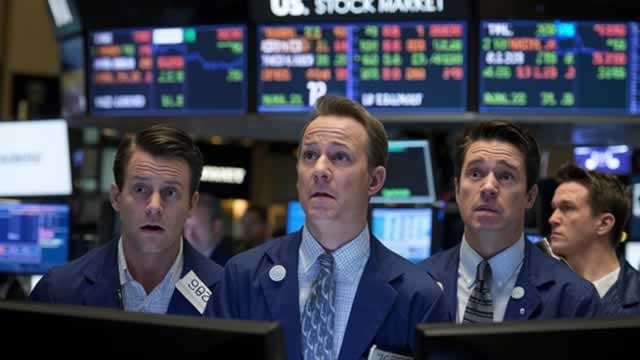
The European Union is poised to halt the ratification process of its trade deal with the US as it awaits more details on the new tariff program from President Donald Trump's administration. Kasia Klimasinska reports on Bloomberg Television.
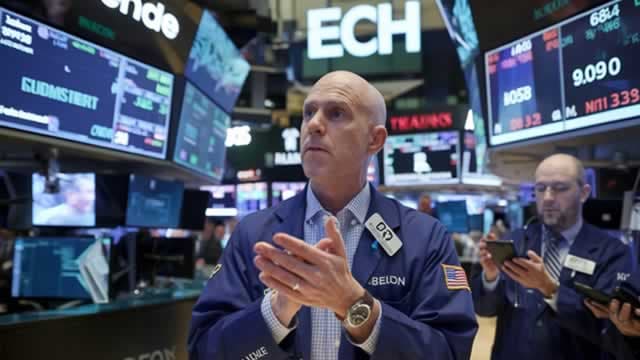
US equities were little changed on Monday after President Donald Trump announced an increase in global tariffs to 15%, following a Supreme Court ruling that struck down his earlier “reciprocal” tariff framework. The S&P 500 hovered around the flatline during the session, while the Dow Jones Industrial Average and the Nasdaq Composite also traded with minimal movement.
Recent SaaS-driven selloff has pushed BDC sector valuations to deep discounts, with a median P/NAV of 0.77x. Current BDC fundamentals remain robust, with no material uptick in non-accruals or SaaS-driven portfolio markdowns reported in Q4 results.