
加载中...
共找到 17,855 条相关资讯
The data would have to change a lot for Bangko Sentral ng Pilipinas to consider another cut, Eli Remolona says.


Hedge funds last week bought the biggest tech stocks as well as those considered vulnerable to advances in artificial intelligence, said a note to clients from JPMorgan seen by Reuters on Tuesday.

Dennis Hranitzky, Partner at law firm Quinn Emanuel, tells CNBC the path to tariff refunds is far less protracted than the U.S. government is making it seem, in the wake of Friday's Supreme Court decision. Hranitzky says his firm has received a flood of enquiries from businesses into how they can claim tariff-related repayments.

The CNN Fear and Greed index showed an increase in the overall fear level, while the index remained in the “Fear” zone on Monday.
Job security has long been treated as the cornerstone of financial stability, yet new data suggest that security without mobility can narrow economic choices rather than expand them.

Wall Street suffers another A.I.-fueled sell-off with enterprise software and private capital leading losses.
Implied volatilities diverged across asset classes last week on the back of rising geopolitical tensions in the Middle East, changing tariff policy, and lingering AI worries. Despite the decline in the VIX index last week, the implied volatility risk premium increased as realized volatility fell even more.
Bitcoin falls; Treasury yields and dollar rise gently
Anna Edwards, Guy Johnson, Tom Mackenzie and Mark Cudmore break down today's key themes for analysts and investors on "Bloomberg: The Opening Trade." Chapters: 00:00:00 - MLIV 00:00:25 - US vs Global 00:01:17 - Asia's Chipmakers 00:02:24 - Yen Extends Decline -------- More on Bloomberg Television and Markets Like this video?
European stocks are expected to open flat to higher on Tuesday as investors assess the new global trading landscape after President Donald Trump's tariffs move.

Nearly 90% of all the trading in leveraged single-stock ETFs in the U.S. market can be traced to transactions by individual investors, according to a new study co-authored by Direxion, a provider of those ETFs, together with two analytical firms, Vanda Research and The Compound Insights.

Alexis Crow of PWC U.S. says one of the implications of the new tariffs is its' impact on the USMCA, and She also sees investors reducing their allocations to the U.S. in the long term. She says tariffs impact on inflation so far has been limited, but that an extended Iran conflict may present a risk factor.
Learning Resources CEO Rick Woldenberg and MGA Entertainment CEO Isaac Larian discuss President Donald Trump's global tariff strategy and the Supreme Court's ruling on 'The Claman Countdown.' #fox #media #breakingnews #us #usa #new #news #breaking #foxbusiness #theclamancountdown #trump #donaldtrump #scotus #supremecourt #tariffs #trade #economy #business #politics #political #politicalnews #government #global #china #markets #leadership #manufacturing #import #export
AI won't wipe out all software, but it is likely to drive dispersion. Seat-based applications with shallow workflow integration and weak data moats face the greatest disruption risk.

First Trust Advisors chief economist Brian Wesbury discusses the Federal Reserve's political actions and the economic impact of AI on 'Making Money.'

Bloomberg Television brings you the latest news and analysis leading up to the final minutes and seconds before and after the closing bell on Wall Street. Today's guests are Invesco's Alessio de Longis, Nevada's Aaron Ford, Jefferies' Brian Tanquilut, RXO's Drew Wilkerson, Citizens Private Wealth's Michael Hans, Bracewell's Joshua Zive, American Bankers Association's Kenneth Kelly, Sagard's Paul Desmarais III, and Coach's Todd Kahn.

President Donald Trump's decision to reimplement tariffs after the Supreme Court struck some down only served to aggravate global trade tensions. As uncertainties rise, foreign governments and big businesses are likely to adopt more cautious stances on investments as well as imports and exports, particularly on deals that involve the U.S. — an outcome that's likely to hurt the U.S. economy.

CNBC's Jim Cramer explains why the stock market is so fragile right now. Cramer pointed to "many worries about the power of Anthropic and OpenAI.
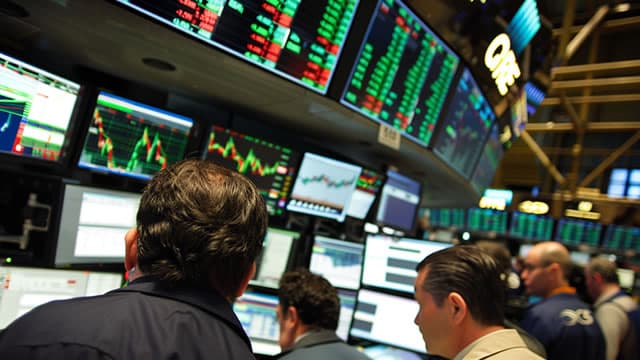
Last week, tech was finally up, only trailing the returns of industrials and communication services. That said, I'm staying sidelined, building cash, and preparing for a potential correction in the S&P 500 in the first half of the year.
The Supreme Court on Friday threw a wrench in the gears of President Donald Trump's efforts to reshape global trade, and ratcheted up uncertainty on Wall Street.