
加载中...
共找到 17,857 条相关资讯

Consumer staples, long seen as a safety play when tech stocks sell off, are now among the riskier bets on Wall Street.


This is a follow-up to The Cold War Collapse: Why the Fourth Turning Ends With Capital, Not War. The Cold War Collapse argued that the Fourth Turning would not end in war but in the destruction of capital.
An interesting trend is taking shape in the world of ETFs. Institutional investors vs.

The Great Rotation is moving capital from tech to value, defensives, and emerging markets. Strong gains in consumer staples signal a defensive shift, not necessarily a recession call.
The Citrini Research report sparked market fears of severe AI-driven disruption, projecting unemployment over 10% and a sharp S&P 500 decline by 2028. AI is already impacting stocks—IBM fell 13% on Anthropic's new AI tool, and software/cybersecurity sectors are under pressure from automation risks.

Paul Christopher, Wells Fargo head of global market strategy, joins 'The Exchange' to discuss the recent deal between AMD and Meta, his outlook for markets and much more.

Wall Street strategists have lifted their outlook for the S&P 500, projecting the benchmark will climb past 7,000 in the coming months.
The S&P 500, Dow, and Nasdaq all rose on Tuesday after posting sharp drops on Monday. Monday's selloff was driven by AI disruption fears and renewed tariff uncertainty.

U.S. tariffs and uncertainty have weighed on global economic growth, but many parts of the economy have proved more resilient than expected, Swiss National Bank Chairman Martin Schlegel said on Tuesday.
The past week or so, the market has had a lot of news to absorb. President Trump's appointment of Kevin Warsh to Fed Chair sparked volatility in the US dollar, rates, and precious metals. In addition, a rash of technology-related news caused a large selloff in software and broader tech shares. Today we sift through this tumult and share our views on where the market may be headed.

The S&P 500 is rated Hold due to balanced headwinds and tailwinds through the 2026 midterm cycle. Historical patterns and Monte Carlo simulations suggest a likely correction before the 2026 election, but a strong post-election rebound.

A rotation into value stocks might make the market look cheaper. History suggests it could also bring weaker returns and more volatility.
The most important financial document this week is not an earnings report or a Fed statement. It is a speculative macro memo written as though it's June 2028.

The Scalable Homeland Innovative Enterprise Layered Defense (SHIELD) contract is the $151 billion backbone of the Pentagon's Golden Dome initiative.

Senator Elizabeth Warren discusses the Supreme Court tariff decision saying, "When you take money from people illegally, you gotta give it back."
Tariffs unaffected by President Trump's Supreme Court loss are adding costs for many U.S. manufacturers that use steel, limiting exports and jeopardizing jobs.
U.S. Senator Elizabeth Warren joins 'Squawk on the Street' to discuss Friday's Supreme Court decision on tariffs, the Federal Reserve, and more.
Suzanne Clark, U.S. Chamber of Commerce president and CEO, discusses her thoughts on the Supreme Court tariff ruling.
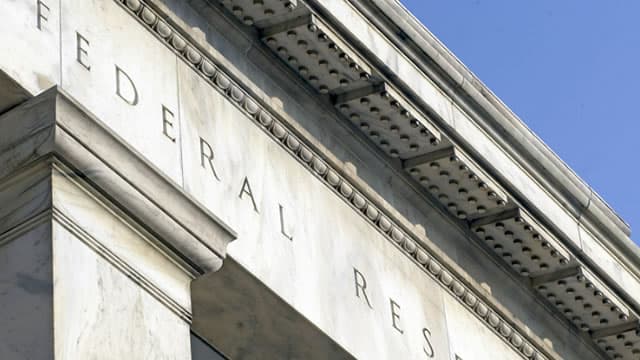
On Friday, President Trump announced his pick for FOMC chair after a closely watched series of interviews with candidates.
Broad Market Leadership Opens 2026 Despite early volatility driven by global bond market stress, tariff-related tensions, renewed inflation concerns, and uncertainty surrounding Federal Reserve leadership, equities finished January higher, with the S&P 500 reaching new all-time highs.