
加载中...
共找到 18,117 条相关资讯
The Dow tumbled more than 1,000 points on Tuesday after gasoline prices spiked overnight and oil rocketed above $83 a barrel as the widening conflict in Iran began to disrupt global energy supplies.

The Opening Trade team delivers special coverage of UK Chancellor Rachel Reeves' Spring Statement. Anna Edwards and Tom Mackenzie anchor the program, joined by UK Correspondent Lizzy Burden and Bloomberg Head of Economics and Government Stephanie Flanders.
Speaking at a financial conference in Washington, the New York Fed President outlined a forecast of steady economic conditions this year, with moderate economic growth and declining unemployment and inflation.

Barry Knapp, Ironsides Macroeconomics managing partner, joins 'Squawk Box' to discuss the latest market trends, state of the economy, impact of Iran conflict on energy prices, the Fed's rate path outlook, and more.

Widespread selling at the open Wall Street has opened sharply lower, with heavy selling across the board in early trade. The Dow Jones is down over 1,000 points or 2.3% at 47,843, while the Nasdaq has dropped 2.2% and the S&P 500 has fallen 2.1%.
American consumers and businesses are taking most of the hit from President Donald Trump's tariffs, New York Fed President John Williams said in remarks that counter White House claims. A study Williams cited on the issue has generated a fair amount of controversy over the past few weeks, with White House economist Kevin Hassett saying the authors should be "disciplined.
The U.S. Commodity Futures Trading Commission has sent a rulemaking plan for prediction markets to the President's Office of Management and Budget, kicking off the process to write new rules for the controversial, but fast-growing markets.
The expectations which impact our investment realities deal in large part with numbers. Numbers, like prices or earnings per share, are precise but mean different things to different people at different times.
I maintain a constructive outlook on the S&P 500, targeting 7,700-8,000 by year-end 2026 despite near-term volatility. Geopolitical tensions, particularly Iran-related risks, may drive short-term corrections of 5-8%, with a 20-25% probability of a deeper 10% pullback.
The U.S. and Israeli attacks on Iran add yet more question marks around a U.S. economy already buffeted by on-and-off tariffs, weak hiring, and lingering inflationary pressures.The war has already raised oil prices and could lift prices at the pump as early as this week, but the ultimate impact on the economy and inflation will depend on the length and severity of the conflict, economists say. Should it wind down in a week or two, its economic effects would be minor and short-lived.Yet a longer war that pushed oil past $100 a barrel for an extended period would worsen inflation, at least temporarily, while slowing growth and intensifying Americans' unhappiness with the cost of essentials.
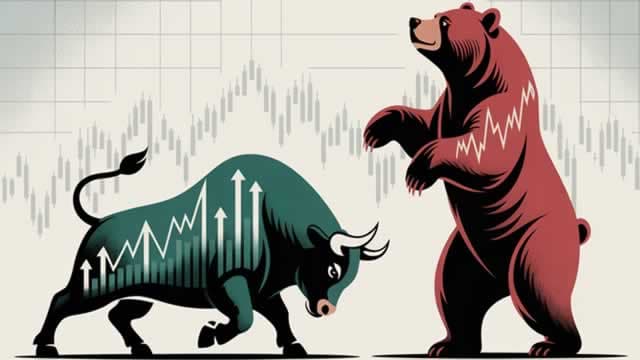
Geopolitical shocks caused initial market volatility, but equities recovered as investors bought the dip despite surging oil prices. Rising oil prices, now at $71/barrel, are set to push gasoline costs higher, threatening consumer sentiment and potentially impacting the upcoming election.

Luxury stocks fell heavily following the weekend attacks on Iran by the U.S. and Israel. The Middle East has been one of the few bright spots in a sector that is struggling to get sales back on track.
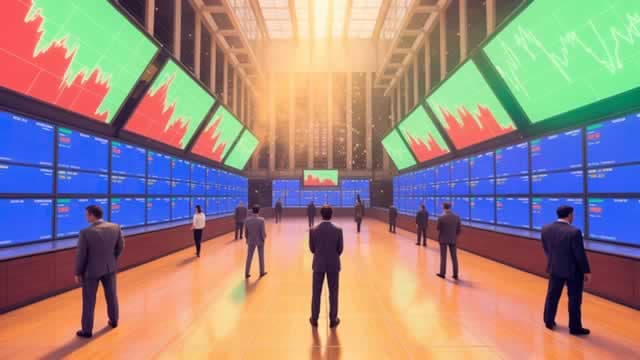
Moses Ventures Founder Danny Moses, immortalized in The Big Short, joins Bloomberg Businessweek Daily to discuss the state of US markets as the Iran conflict introduces a new set of headwinds. Moses also weighs in on the state of private credit, saying that today's private credit worries "rhyme with previous cycles" of market pessimism, in particular the lead-up to the 2008 Great Financial Crisis.
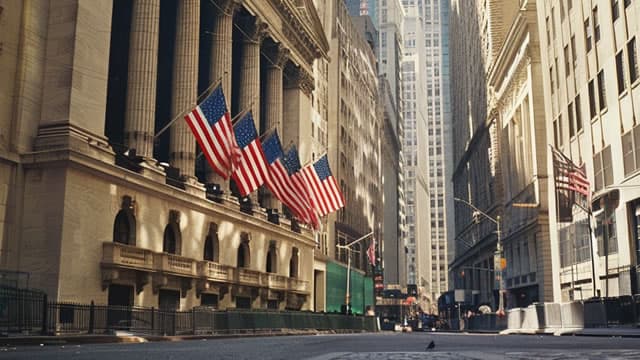
The prospect of a drawn-out war in the Middle East sparked a broad and brutal selloff on Tuesday, and one of the best trades of 2026 got hammered.
Markets expect a “Venezuela II” scenario in which the bad guy falls, order returns and oil drifts lower.

FTSE 100 on track for its worst day in 11 months, while Japan's Nikkei and South Korea's Kospi also fall
U.S. government bonds began losing their safe-haven status long before the attack on Iran.

If advisors were hoping that 2026's macroeconomic uncertainty would go away soon, recent headlines have likely dashed those aspirations. Worries over the direction of inflation have resurfaced yet again, after the January PPI report came in far higher than many were expecting it to.

Micron, Sandisk, and Corning were among the S&P 500's worst performers ahead of Tuesday's opening bell.
7.25am: Nasdaq set to lead sharp fall as markets take Iran conflict more seriously Wall Street equity investors looked more rattled ahead of Tuesday's session, as global markets moved firmly into risk-off mode as the conflict widened in the Middle East. Tech stocks were set to take the brunt of selling, after shugging off the US and Israel's strikes on Iran at the start of the week.