
加载中...
共找到 18,131 条相关资讯

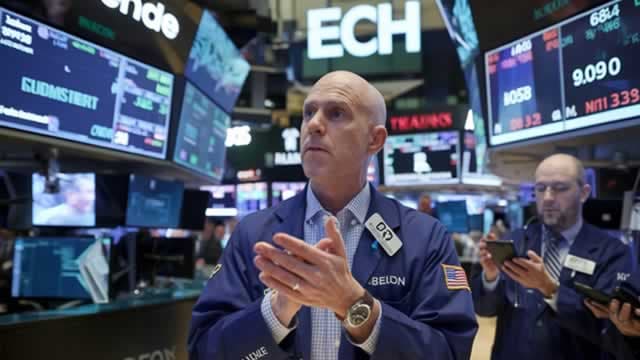
Stocks swung violently Tuesday as investors tried again to assess the potential impact of the escalating military strife in the Middle East, sparked by U.S. and Israeli strikes that resulted in the killing of Iran's Supreme Leader Ali Khamenei over the weekend.


The Iran war risks escalating into a prolonged conflict with significant oil and gas infrastructure at stake. I think this is not yet priced by markets.

Higher oil prices won't cause inflation, unless the Federal Reserve blunders.

With every passing day, the conflict in the Middle East expands to new fronts, but that's not scaring off investors.

Markets are experiencing a volatility-driven sell-off due to the Iran conflict, but structural fundamentals remain intact. Historical precedent shows wars trigger short-term volatility, yet equities typically recover as uncertainty fades and earnings drivers persist.

Bloomberg's Caroline Hyde and Ed Ludlow discuss the market selloff as concerns about the Middle East conflict hit equities and bonds. Plus, a look at the math of military projectiles as the US uses costly missiles to combat cheap Iranian drones.

Oil prices jumped before reversing course after President Trump assured safe passage for tankers crossing the Strait of Hormuz.

Investors are starting to brace for a prolonged Middle East conflict that could stoke fresh inflation fears, threaten economic growth and undermine the case for interest-rate cuts in coming months.

As I write on Tuesday afternoon, the market is staging a comeback. Earlier today, fear gripped Wall Street due to escalating tensions in the Middle East. All three major indexes were down more than 2% in a classic “sell first, ask questions later” session.

The functional closure of the Strait of Hormuz by Iran is driving heightened market volatility and global sell-offs, especially in oil-dependent economies. Iran's ability to sustain the strait's closure, rather than merely threaten it, is the key market risk and will determine the trend's duration.

Wider credit spreads mean the market is becoming more uncertain about company profits.
Comprehensive cross-platform coverage of the U.S. market close on Bloomberg Television, Bloomberg Radio, and YouTube with Romaine Bostick, Katie Greifeld, Bailey Lipschultz and Michael Ball. -------- More on Bloomberg Television and Markets Like this video?

Tom Lee, Fundstrat, joins 'Closing Bell' to discuss the issues investors need to keep their eyes on, what Lee needs to see to call an equity bottom and much more.

Minneapolis Fed president, citing cost shock that followed Russia's full-scale invasion of Ukraine, says he wants to avoid “Transitory 2.0.”

Former Goldman Sachs CEO Lloyd Blankfein has warned that the growing private credit market could lead to a financial crisis similar to the one in 2008, potentially affecting retail investors and the broader economy. In an interview on Bloomberg's “Big Take” podcast, the renowned moneyman said the $1.
Operator: Good morning, and welcome to the Alamo Group Inc. Fourth Quarter and Full Year 2025 Earnings Conference Call. All participants will be in listen-only mode. Should you need assistance, after today's presentation, there will be an opportunity to ask questions. Please note this event is being recorded. I would now like to turn the conference over to Edward T. Rizzuti, Executive Vice President, Corporate Development and Investor Relations. Please go ahead. Edward T. Rizzuti: Thank you. By now, you should have all received a copy of the press release. However, if anyone is missing a copy and would like to receive one, please contact us at (212) 827-3746 and we will send you a release and make sure you are on the company's distribution list. There will be a replay of the call, which will begin one hour after the call and run for one week. The replay can be accessed by dialing +1 (855) 669-9658 with the passcode 4809758. Additionally, the call is being webcast on the company's website at www.alamo-group.com, and a replay will be available for 60 days. On the line with me today are Robert Hureau, President and Chief Executive Officer, and Agnieszka K. Kamps, Executive Vice President and Chief Financial Officer. Management will make some opening remarks and then we will open up the line for your questions. During the call today, management may reference certain non-GAAP numbers in their remarks. Reconciliations of these non-GAAP results to applicable GAAP numbers are included in the attachments to our earnings release. Before turning the call over to Robert, I would like to make a few comments about forward-looking statements. We will be making forward-looking statements today that are made pursuant to the safe harbor provisions of the Private Securities Litigation Reform Act of 1995. Forward-looking statements involve known and unknown risks and uncertainties which may cause the company's results in future periods to differ materially from forecasted results. Among those factors which could cause actual results to differ materially are the following: adverse economic conditions which could lead to a reduction in overall demand, supply chain disruption, labor constraints, competition, weather, seasonality, currency-related issues, geopolitical events, and other risk factors listed from time to time in the company's SEC reports. The company does not undertake any obligation to update the information contained herein which speaks only as of this date. I would now like to introduce Robert Hureau. Robert, please go ahead. Robert Hureau: Thank you, Ed. I would like to thank everyone for joining our fourth quarter earnings conference call. We appreciate your continued interest in Alamo Group Inc. Before we get started, I would like to share a few thoughts. As you know, the fourth quarter was the first full quarter during which I have been at the helm at Alamo Group Inc. During this time, I have had an opportunity to visit some of our manufacturing facilities, speak with our customers, suppliers, partners, investors, and interact with our employees. Input from everyone has been incredibly valuable. In addition, during this period, the leadership team and I have been working together to develop a set of strategic initiatives designed to grow the business and a framework by which we will operate. As I reflect on the Alamo Group Inc. business, its products, markets, financial profile, and all the opportunities in front of us, I can say that I am more confident and excited today about where we expect to take this company over the next three to five years than I was when I joined just a short time ago. I will turn the call over to Agnes to review our financial results in detail. When she is finished, I will come back and discuss the performance for each of our divisions, highlight some of the key initiatives which are underway, and summarize a few of our long-term goals. Agnes? Agnieszka K. Kamps: Thank you, Robert. Net sales for 2025 were $373,700,000, down 3% compared to 2024. Gross profit for 2025 was $85,000,000 compared to $91,800,000 for 2024. Gross margin for 2025 was 22.7%, down 110 basis points compared to 2024. The degradation in gross margin was due to a few reasons, including inverse leverage on the lower Vegetation Management division volumes, charges related to inventory reserves taken during the quarter on certain Vegetation Management division product lines that we intend to divest or discontinue, and the impact from tariff costs, partially offset by pricing and disciplined margin management in our Industrial Equipment division. Selling, general and administrative expense, or SG&A expense, for 2025 was $58,300,000, up 9.3% from 2024. SG&A expense in 2025 included approximately $3,200,000 related to the acquisition and integration costs, restructuring costs, and the addition of Ring-O-Matic. Net interest expense for 2025 was $2,500,000 compared to $2,700,000 in 2024. For the full fiscal year 2025, our effective income tax rate was 25.6%, which was higher than the effective income tax rate for the full year 2024. However, the 2025 effective tax rate is in line with our current and longer-term expectations. During 2025, we recognized expenses related to acquisition and integration activities of $1,600,000. Most of these costs were related to the acquisition of Petersen Industries. In addition, we recognized $7,300,000 in restructuring expenses. Both acquisition and integration expenses and the restructuring expenses are being treated as adjustments for certain non-GAAP measures as shown in the press release. Adjusted EBITDA for 2025 was $44,800,000, or 12% of net sales, compared to adjusted EBITDA of $51,800,000, or 13.4% of net sales, for 2024. Adjusted earnings per share on a fully diluted basis for 2025 was $1.70 compared to $2.39 for 2024. Now, I will share some comments regarding the results for each of the divisions. Net sales in the Industrial Equipment division for 2025 were $234,900,000, an increase of 4.2% compared to 2024. Adjusted EBITDA for the Industrial Equipment division for 2025 was $41,500,000, or 17.7% of net sales, compared to $35,500,000, or 15.7% of net sales, for 2024. We are pleased with the continued strong performance, particularly with the adjusted EBITDA margins in the Industrial Equipment division. The performance in this division demonstrates the attractiveness of our vocational truck-related end markets in which we have great leadership positions. Net sales for the Vegetation Management division for 2025 were $138,700,000, a decrease of 13.2% compared to 2024. The decrease in net sales reflects weakness in certain end markets, particularly tree care and municipal mowing. Adjusted EBITDA for the Vegetation Management division for 2025 was $3,200,000, or 2.3% of net sales, compared to $16,300,000, or 10.2% of net sales, for 2024. The adjusted EBITDA margins in the Vegetation Management division were low this quarter due to inverse leverage on both fixed manufacturing costs and SG&A expenses from the lower volumes. Moving on to the balance sheet and cash flow. Cash provided by operating activities for fiscal year 2025 was $177,500,000 compared to $209,800,000 for fiscal year 2024. The operating cash flow of $177,500,000 reflects disciplined management of accounts receivable and accounts payable, where we made improvements on days sales outstanding and days payables outstanding. The operating cash flow also reflects uses of cash for inventory, which will be our intensified focus in 2026. Our free cash flow conversion for the full fiscal year 2025 was robust at 142% of net income. Cash used in investing activities for fiscal year 2025 was $46,200,000 and reflects cash used for the acquisition of Ring-O-Matic and $30,600,000 used for capital expenditures. The increase in capital expenditures compared to the same period in the prior year was due to expansion of our manufacturing facility in the Industrial Equipment division. We are excited about opening this new facility as it enabled growth and improved operations in Western Europe. Cash used in financing activities for fiscal year 2025 was $30,800,000, reflecting repayments of principal on our long-term debt and dividends paid. As of 12/31/2025, our gross debt was $205,700,000. In addition, as of 12/31/2025, we had $309,700,000 in cash on the balance sheet. In January 2026, we closed on the acquisition of Petersen Industries. We funded this acquisition with a $120,000,000 draw on our revolver and approximately $50,000,000 cash on hand. Subsequent to the closing of the acquisition, total availability under our credit facility was $477,000,000 including Coriant, and pro forma net leverage remains quite low. We are excited about the acquisition of Petersen given its leadership position, attractive margins, and commercial synergies. To conclude, I would like to emphasize our commitment to delivering long-term value to our shareholders. We are pleased that our Board has approved $0.04 per share, or a 13.3% increase, to our quarterly dividend to $0.34 per share. As we move forward, we remain focused on driving growth and optimization of our operations. Thank you. I will turn it back over to Robert. Robert Hureau: Thank you, Agnes. Let me start by providing more color on the operating performance for each of our divisions. First, the Industrial Equipment division. As Agnes mentioned, net sales in the Industrial Equipment division increased by 4% during the quarter. The increase in net sales during the quarter was due to several factors, including favorable pricing, net sales from the acquired Ring-O-Matic business, which closed in the second quarter of the year, and continued market share gains in several of our businesses, partially offset by a decrease in sales in our snow business. The decrease in net sales in our snow business reflects a comparison to an unusually strong fourth quarter of 2024 where we recognized one large single order in the Canadian market. While the snow business can be lumpy from quarter to quarter, there is real positive momentum in many aspects of this business, which we are excited about. Net sales in both our excavator and vacuum business and our sweeper and safety business performed well during the quarter. These businesses continued to deliver double-digit year-over-year net sales growth. In addition, in the Industrial Equipment division, the Industrial Equipment division expanded adjusted EBITDA margins in both the fourth quarter and the full year. The book-to-bill in the Industrial Equipment division for 2025 was 0.85x. Net orders during 2025 were up 21% compared to the prior year. Net orders in the excavator and vacuum business, sweepers and safety business, and snow business were all up year over year. Lead times in all the businesses within the Industrial Equipment division are in a good competitive position. Today, our Industrial Equipment division represents 59% of our total net sales. As a reminder, the products in the Industrial Equipment division serve end markets including public works, utilities, infrastructure, and construction. These are attractive long-cycle markets. As I mentioned during our last call, net sales in this division and its end markets have been very robust over the past few years, fueled in part by various government-driven investments. Looking forward, we expect the rate of growth in these end markets to slow as the near-term effect of those prior external investments slows down. Overall, 2025 was a very strong year for our Industrial division, and we are looking forward to continuing to grow this business both organically and inorganically. Now, the Vegetation Management division. Net sales in the Vegetation Management division declined by 13% due to several factors, including a decline in certain end markets, and not ramping production volumes quickly enough in a few businesses that underwent the manufacturing consolidation activity, partially offset by favorable pricing. The end market weakness was most notable in our tree care and recycling business. Recall that a portion of our tree care and recycling business involves the manufacture and sale of very large and very expensive equipment used in land-clearing operations and is partially tied to housing starts, which remain suppressed. On the other hand, and importantly, net sales in our U.S. Agriculture business increased year over year in the fourth quarter. This was the first quarter in ages where net sales in this business turned positive, a very encouraging sign looking forward. Regarding the production inefficiencies in the two facilities that underwent consolidation, we are making progress. We see the progress in the various underlying KPIs but not yet in the financial results. We currently expect the work to continue through the remainder of the first quarter and into the second quarter before the facilities are running as designed and better aligned to the end market demand. The book-to-bill in the Vegetation Management division for 2025 was 1.1x. Net orders for the total division during 2025 were down 3% compared to the prior year. Net orders in the U.S. and European agriculture businesses were up year over year, while net orders in the other businesses were down year over year. Today, the Vegetation Management division represents 41% of total net sales. As a reminder, the products in the Vegetation Management division serve end markets including tree care and recycling, agriculture, public works, and land maintenance. As I mentioned on our last call, net sales in this division and its end markets have declined over the past few years, rolling over a period of significant growth that occurred between 2021 and 2023. Looking forward, we expect the rate of decline in the end markets to improve and stabilize before returning to growth. In addition, inventory in the channel remains healthy. We are seeing pockets of increased quoting activity in the first quarter in certain businesses within the Vegetation Management division. This is also a positive sign potentially pointing to a more stable 2026. Overall, we have much more work to do in the Vegetation Management division. We are confident we will improve the manufacturing inefficiencies and drive margin improvement as originally planned. I would now like to share some comments regarding the broad framework of our long-term strategy. As mentioned before, there are four pillars of the strategy on which we will focus and devote resources: one, people and culture; two, commercial excellence; three, operational excellence; and four, capital deployment. Examples of the types of steps we are taking related to one or more of these four strategic pillars I just mentioned include the following: First, we finalized construction of our manufacturing facility expansion project in France, nearly doubling the size of the facility. The increase in the manufacturing footprint will allow us to continue to grow sales in Western Europe in the attractive vocational truck space. Net orders, by the way, in France were up 32% year over year in 2025. We completed the consolidation of additional facilities in our snow and sweeper and safety businesses within the Industrial Equipment division. Production is up and running smoothly in both facilities in which the manufacturing lines were consolidated. These consolidations will allow us to continue to remove fixed costs and expand gross margins. We launched our global procurement and supply chain initiative. This initiative will allow us to expand margins and optimize carrying levels of inventories over the next several years. In our tree care and recycling business, within our Vegetation Management division, we signed several new independent dealers in critical parts of the United States where we had longstanding gaps. These commercial efforts will help improve sales and market share. We recruited and elevated several very experienced and talented senior leaders in a few businesses within the Vegetation Management division. We are looking forward to positive outcomes from these industry veterans in 2026. As Agnes mentioned, we signed and recently closed on the acquisition of Peterson Industries, a market leader in the manufacture of equipment serving the bulky waste end market. This acquisition is a great example of the type of tuck-in acquisitions we are targeting. The M&A pipeline is robust, and we are excited to build on this momentum in 2026. We continue to centralize certain functional departments like IT, finance, procurement, and HR. These actions will help unlock previously constrained value and will lay the foundation for a more modern technology-driven organization, all while maintaining that local entrepreneurial brand spirit we love. In terms of product innovation, we are in final stages of testing our next-generation hybrid sweeper, which uses a proprietary electric sweeping architecture compared to third-party hydraulic systems in our competitors' products. This new electric sweeping architecture can run on diesel, CNG, or electric chassis globally and deliver superior efficiency, safety, and performance. This is a great example of how Alamo Group Inc.'s product innovation engine is beginning to shift from fast follower to first mover. Lastly, we performed a review of the portfolio of the businesses we operate. As a result, we identified and aligned around divesting or discontinuing a few product lines that do not fit our go-forward strategy and are not and have not been profitable. These actions will unfold over the course of 2026 and, while small, we expect will also contribute to our margin expansion story. These are all great examples of the key initiatives underway that we believe will help deliver on our long-term goals. Before I conclude, I would like to highlight again a few of our financial targets. It is very important to understand these are long-term through-the-cycle targets. First, sales growth of 10% including the effects of acquisitions. Second, adjusted operating margins of around 15%. Third, adjusted EBITDA margins of around 18% to 20%. And finally, fourth, free cash flow as a percentage of net income of 100%. In summary, as we worked through the transition during the latter part of 2025, I would like to express my thanks and appreciation to our employees who continue to demonstrate a strong passion for helping solve the needs of our customers. I also want to thank our customers and shareholders, many of whom I have had the opportunity to meet. All of you are helping to further shape the future of Alamo Group Inc. and to deliver sustainable superior performance. This concludes our prepared remarks. Operator, please open the lines for questions. Operator: We will now begin the question and answer session. The first question is from Michael Shlisky with D.A. Davidson. Please go ahead. Michael Shlisky: Good morning. Thanks for taking my questions. I want to get a final point on a couple of different details from your prepared remarks there. First of all, on the industrial side, you mentioned that growth rates might slow down, if I caught that correctly. Does that mean you will usually see a decline in top line in 2026 or just maybe perhaps not quite a double-digit growth but still positive in 2026? Robert Hureau: Yes, Mike. Good morning. In short, I would say more the latter. So as we have mentioned, the Industrial division has seen strong end market demand over the last eight quarters, really strong robust double-digit growth. All things being equal, we expect the end markets to slow in 2026. I think as we look out over the course of the year, that likely means something in the order of magnitude of flattish to maybe low- to mid-single-digit end market growth. I think it is important when you think about that and the impact on our business, recall that roughly 25% of that Industrial division business is snow. Something a little bit different going on with snow. Within snow, in the past, we would historically chase every last dollar of sales regardless of the margin profile. We are not going to do that. We are changing direction with snow. With respect to the snow business, it is all about the quality of earnings and the margins. And therefore, on a year-over-year basis, you are likely to see a little bit downward pressure in snow, but the remaining businesses would align with that end market demand that I just talked about. So that was a long-winded answer. But in short, kind of flattish to low- to mid-single-digit end market demand in the majority of those Industrial divisions businesses. Does that get to your question, Mike? Michael Shlisky: Yes. Just to clarify, your comments do or do not include the effect of Peterson and other acquired businesses? Robert Hureau: Excluding Peterson. Michael Shlisky: Okay. Thank you. And then the other fine point I wanted to ask about was actually on Peterson. Just tell us, can you tell us a little bit about whether that is a growing business in 2026? Is it going to be accretive, etcetera? All the usual stuff that we might want to hear about just from a directional standpoint for the next twelve months. Robert Hureau: Yes. So we are really excited about the Peterson acquisition. First thing I would say is it really is a great example of the type of tuck-in deals that we are looking at. It is a business whose end markets, whose sales channels, whose product categories are very similar or close to our core. It is accretive from a margin perspective. We got it at a fair price. We think it is a growth end market. It is a leader in its space. It has a talented management team that is staying with the business. So many, many positive attributes about that business. As we think about it in 2026, I believe in the press release we articulated the purchase price, the multiple, and what the 2025 sales were going to be. One thing to highlight as you think about 2026 is we acquired it in January. So you will see eleven-twelfths of sales in 2026, of course. I think the growth will be a little bit slow in 2026, but overall a good long-term end market to be in. In terms of the margin profile, it is above what the Alamo Group Inc. averages are in terms of adjusted operating margins and adjusted EBITDA margins. We are going to make some investments early in this business to drive some of those synergies, particularly in the area of operations and some commercial folks. So you might see a little bit of degradation in the margin profile early on relative to its history, but nothing that would drive it below the Alamo Group Inc. average. Overall, really, really positive news with respect to Peterson in 2026. Michael Shlisky: Outstanding. Maybe one last one for me. This week is the big CONEXPO show. Of products on display, can you maybe share with us if you have anything new rolling out at the show, expectations for what you think might take place here? Could others you think we could hear placing orders, just checking out the product, etcetera? Just some thoughts around what you have got planned for the show and maybe even for new products across the businesses for 2026? Robert Hureau: Yes. So we are super excited about CONEXPO. For the first time the entire Alamo Group Inc. portfolio, or the majority of the portfolio, will be there in one booth, if you will. So we will be there as a team showcasing a lot of our products. We will have some new things. I do not want to share right now what those are. We have got a lot of new products in the works. I highlighted one in the prepared remarks that we are super excited about. We think in many cases, these product innovations really demonstrate the shift that we are trying to push here at Alamo Group Inc. from fast follower to first mover. That is an important principle that we are adopting here at Alamo Group Inc. We are not going to showcase all of those at the show. Some of them are still in the final stages, but will be rolled out later in 2026. I would expect we would take orders. I would expect the show to drive positive results for us. It will be my first time there, so I am looking forward to meeting folks at the show. Michael Shlisky: Thank you very much. Operator: The next question is from Mitch Dobre with Baird. Please go ahead. Peter Kalamcarian: Hey guys, this is Peter Kalenkaryian on for Mig this morning. Thanks for taking my questions. I have a couple here. Let me start with vegetation margin. I appreciated the color on what happened this quarter. Is there any way to help us get a sense for how you expect margin to progress through '26? What would be an appropriate starting point here in the first quarter? And then just directionally from there, how should we think about margin progression in this segment? Yes. So let me start, maybe provide a little bit more color with respect to the fourth quarter results in the Vegetation division. And then I will go and address maybe the first quarter and beyond there. And Peter, if I go a little long, just remind me in terms of what your specific questions are if I get off track a little bit here. So starting with the fourth quarter, there really were three things that drove the margin compression in the fourth quarter. The first was lower volumes, and the lower volumes had inverse leverage on our fixed manufacturing costs and our SG&A costs, as Agnes said. That was the primary driver of the margin progression in the quarter. The reason the volumes were lower is we saw end market demand slow meaningfully in two of our businesses, in tree care, and in government mowing or municipal mowing. In the tree care business, recall that the majority of this business serves the large industrial sector, which is tied to land-clearing operations, which is tied to housing. And many of these products are very, very expensive. They are north of $1,000,000. And so what we saw was dealers hesitant to place orders in the fourth quarter. That was different from the preceding quarters during 2025. In many ways, similarly, in government mowing, here we are selling through dealers, but many of our end customers are state DOT offices, Department of Transportation offices. In the third and fourth quarter, and more pronounced in the fourth quarter, the DOT offices are wrestling with the impact from the One Big Beautiful Bill. Under the One Big Beautiful Bill, federal government is shifting burdens to the state for certain costs and expenses and actually rescind certain funding tied to highways and access and things of that nature. And so in the fourth quarter, you saw certain large state DOTs that we do business with hesitant to place orders. I do not think either of these things are long term in nature. They are shorter term. But that drove the end markets down, which compressed margins. That is the first thing. In addition, reflecting on that softer end markets, we ended up taking some charges and reserves around some slow-moving inventory in these particular businesses that I just referenced. That is the second thing. And then the third thing was we talked about the consolidation activity in two facilities in the Vegetation division. We made good progress from the third to the fourth in terms of driving those efficiencies. We can see in the underlying KPIs things are getting better. It will take another quarter or thereabouts, but it is improving. But nonetheless, we left a little bit of backlog on the table in the quarter. Those are the three drivers of the margin degradation in the fourth quarter, in order of prominence, if you will. Now as we shift from the fourth to the first, within the Vegetation Management division, we would expect to see top-line improvement. We would expect to see margin improvement, adjusted operating and adjusted EBITDA margin fourth to first improvement. From the fourth to first, if you compare 2026 relative to where we were in the first quarter of 2025, we are likely to get close to that level, maybe a little bit south of that level. But recall, we are coming off of eight quarters of down 13%, 14%, 15%. In terms of profitability in the first quarter in the Vegetation Management division, again, we will see sequential good improvement, but probably not all the way back to the level of first quarter 2025. So good progress. We are encouraged. We are starting to see green shoots in many of these places. Even in tree care, we saw good green shoots in the quoting activity early on in 2026. Longer term, the goal is to get back, at least initially longer term in 2026, back initially to at least where we were in 2020, back in that 8% adjusted operating margin level. Longer term, through the cycle, the goal is to get to that 15% OI, 18% adjusted EBITDA levels. We think we can do that. But the primary thing that needs to happen is we need the end markets and the volumes to stabilize. From there, we can start building, if you will. We think that will start happening in 2026. Does that help? Got it. That was awesome, Robert. Thanks for that color. Last one for me here, just on M&A. I understand that Peterson is still in the early days of being integrated here. But just wondering what your deal pipeline looks like, and is there any detail you could give on which current verticals you might be looking to add to or potential adjacencies that you might be looking to add to your current—you know, that could be M&A targets in the future? Yeah. Robert Hureau: Yes. So M&A is an important lever within our capital deployment framework. Super excited about it. Ed and the team are doing a wonderful job building the pipeline. We are engaged with a number of folks. Nothing is imminent. But we are excited about the trajectory that we are on. As we have said in a couple of instances, we are primarily focused on tuck-in acquisitions. That does not mean we will not do a large deal, but the sweet spot is going to be on tuck-in acquisitions. These are probably $10,000,000 to $20,000,000 of EBITDA, give or take, something in that order of magnitude. We would like to stay close to the core, meaning sales channels that we are familiar with where we can drive commercial synergies, product categories that we are familiar with, end markets that we are familiar with. Again, that does not mean we will not go a little bit to the right or a little bit to the left like we did with Peterson, entering into the waste management and grapple space. But we feel like that is close enough to the core. One thing I would say is probably in the near term, we will probably lean a little bit more industrial in nature, long cycle in nature, rather than shorter cycle in nature. We love both divisions here at Alamo Group Inc., and there are opportunities for M&A in both divisions. But near term, probably leaning just a smidge more towards the industrial space. Does that help? Peter Kalamcarian: Got it. Thanks, Robert. Really appreciate the detail. Operator: The next question is from Christopher Paul Moore with CJS Securities. Please go ahead. Christopher Paul Moore: Hey, good morning, guys. Maybe just one follow-up on the vegetation margins, I will start with. I want to make sure I heard correctly. So in terms of Q1, Robert, did you say that the margins can approach the 8.1% that you did in Q1 2025? I thought there is still some consolidation going on in the Vegetation division. Did I hear that correctly? Robert Hureau: No. And maybe I was not clear or it is getting a little long-winded here. So let me try again. As we move from 2025 into 2026, we should expect to see good progression on the top line and good progression on the adjusted operating and adjusted EBITDA margin from the fourth to the first. And when we compare 2026 to 2025, we will approach where we were a year ago, but we will not get all the way back to that level. But we are making good progress towards it. We think there is good progression. We see the efficiencies. We will not get all the way back to where we were in terms of the margin in 2025. Christopher Paul Moore: Got it. Okay. You will approach the 8.1%. You will not get there. That makes sense. In terms of just the backlog at the end of—book-to-bill was on the industrial, I think, was 0.8-something. The backlog at the end of December was—what was that? Robert Hureau: The backlog in the Industrial division was roughly $400,000,000, and the backlog in the Vegetation division was about $198,000,000. I think, importantly, when we think about that backlog, we are also looking at the order pattern. The order pattern, a couple of things: quite strong in the Industrial division across all three businesses, really, really robust in our snow group. Excited about the things that we can do there. Again, I do think it is important just to stress when we look at the snow business and its impact on the division billing forward, we are going to be a little light on sales as we are not chasing that last dollar at low margins. We are being a little bit more disciplined around the types of business that we go after. But really good order pattern. The backlogs overall, the lead times are in good shape. We do not feel like we are too extended. Snow is probably six to nine months, which is better than our competitors. We are picking up share because of that. In the Vegetation Management division, again, from an order pattern perspective, we saw really good order strength in the first quarter in our U.S. Ag business and our European Ag businesses, which is really remarkable. We think that signals potentially a good, more stable environment in 2026. The other businesses, tree care and government mowing—now municipal mowing—they too were double digits, but down double digits. What I will say is in tree care and government mowing, it feels like that was a fourth quarter, end-of-year hesitance to place orders. Specifically in tree care because we can see in the first quarter the level of quoting activity actually increased. So we are encouraged that it was a temporary pause. Still more to learn there. On the government mowing, we see that weakness continue into the first quarter a little bit in the early days. Overall, I think that is going to be in a good spot as Congress works through their renewal or extension of the Infrastructure Investment Act. But we will see short-term weakness there in government mowing. I think maybe the other thing to add, Chris, is the ending inventories in the channel in both divisions are in a reasonably good spot, particularly within U.S. Ag. They have been depleted over the last several years. So that is not a headwind for us going into 2026. If anything, it might be a little bit of a tailwind. Christopher Paul Moore: Got it. And just in terms of the longer-term 15% operating margin, I know that is initially—I thought it was fiscal 2028—but it is more through the cycle. And you talked about different pieces, lean manufacturing, procurement, supply chain. Are you looking at that—I am trying to envision that. Is that kind of smooth improvement over the next two, three, four years? Is it more kind of back-half loaded when we get some normalization from a volume perspective? Just trying to understand kind of how we get from here to that 15%. Robert Hureau: Yes. I can understand that. The first thing, and it is the most important, is we need end market stability. As I mentioned, we have seen eight quarters now of consecutive down 13%, 14%, 15% in the end markets. That is a really challenging environment to operate in. I think the team has done a nice job taking out cost and adjusting to right-size to that level of demand. We still have more work to do. But the first thing that we need is stabilization in those end markets. And the way we think about that is, obviously, the fourth quarter was not what we all wanted or expect going forward. We have to get back to where we were in 2025 in the Vegetation division, and that is when you look at the average between the first and the second quarter, we were around 8% adjusted operating margin. So that is what we are chasing. We have to get back to there. Stable volumes, right-size the manufacturing facilities to the end market demand level, we get to 8%. From there, we are on our way. With a little bit of tailwind, with a little bit of volume growth, we will then push to 10%. Then we will begin our journey on the 300 basis points that I talked about in the last call: a point from procurement, a point from parts and service, a point from continued manufacturing efficiencies. I expect if the markets stabilize, you will see good progression certainly back half 2025 to full year 2026 in terms of that operating margin, and then it is slow and steady on our way from there. Does that color help? Christopher Paul Moore: It does. It does. I will leave it there. I appreciate it. Robert Hureau: You bet. Thank you. Operator: The next question is from Gregory Burns with Sidoti and Company. Please go ahead. Gregory Burns: Good morning. Did you mention what side of the business or more specifically where the product divestitures were coming from? Robert Hureau: In the Vegetation Management division, and these are product lines. They are not brands or businesses. They are product lines that really do not fit where we are going long term. So we will look to divest those at some point over the course of 2026. Gregory Burns: Okay. And then the orders on the Vegetation Management side of the business in the fourth quarter, I know you mentioned Ag was up and tree care and government mowing were down. Is there any way you could quantify maybe how much Ag was up, how much tree care was down, just to get a sense of where those two businesses are from a demand perspective? Robert Hureau: Yes. Definitely. So the U.S. Ag business and the European Ag business, they were both up double digits. The U.S. Ag business, even a little bit stronger. So good performance. And by the way, we see that continuing into the first quarter. So really positive sign that those end markets are moving in the right direction. Now, again, whether or not in 2026 they get all the way to flat or growth, coming off of eight quarters of down 15%, still to be determined, but it is a very positive sign. In tree care and in government mowing, or now municipal mowing, they too were double digits, but down double digits. What I will say is in tree care and government mowing, it feels like that was a fourth quarter end-of-year hesitance to place orders. Specifically in tree care, because we can see in the first quarter the level of quoting activity actually increased. So we are encouraged that it was a temporary pause. Still more to learn there. On government mowing, we see that weakness continue into the first quarter a little bit in the early days. Overall, I think that is going to be in a good spot as Congress kind of works through their renewal or extension of the Infrastructure Investment Act. But we will see short-term weakness there in government mowing. Does that color help? Gregory Burns: Yep. No. That is great. Thank you. Operator: This concludes our question and answer session. I would also like to turn the conference back over to management for any closing remarks. Robert Hureau: We appreciate the interest in Alamo Group Inc. and look forward to speaking with you again on our next call. Thank you. Operator: The conference has now concluded. Thank you for attending today's presentation. You may now disconnect.

Operator: Good afternoon, and welcome to Cryoport's Fourth Quarter and Full Year 2025 Earnings Conference Call. [Operator Instructions] As a reminder, this call is being recorded. I will now turn the call over to your host, Todd Fromer, from KCSA Strategic Communications. Please go ahead. Todd Fromer: Thank you, operator. Before we begin today, I would like to remind everyone that this conference call contains certain forward-looking statements. All statements that address our operating performance, events or developments that we expect or anticipate occurring in the future are forward-looking statements. These forward-looking statements are based on management's beliefs and assumptions and not on information currently available to our management team. Our management team believes that these forward-looking statements are reasonable as and when made. However, you should not place undue reliance on any such forward-looking statements because such statements speak only as of the date when made. We do not undertake any obligation to publicly update or revise any forward-looking statements, whether as a result of new information or future events or otherwise, except as required by law. In addition, forward-looking statements are subject to certain risks and uncertainties that could cause actual results, events and developments to differ materially from our historical experience and our present expectations or projections. These risks and uncertainties include, but are not limited to, those described in Item 1A, Risk Factors and elsewhere in our annual report on Form 10-K to be filed with the Securities and Exchange Commission, and those described from time to time in the other reports, which we file with the Securities and Exchange Commission. As a reminder, Cryoport has uploaded their fourth quarter and full year 2025 in review document to the main page of the Cryoport, Inc. website. This document provides a review of Cryoport's financial and operational performance and a general business outlook. Before I turn the call over to Jerry, please note that because of the strategic partnership that has been established with DHL and the related sale of CRYOPDP to DHL, CRYOPDP's financials, which were previously a part of Cryoport's Life Sciences Services reportable segment are now presented as discontinued operations. Cryoport previously provided quarterly historical information on this basis for fiscal year 2024 and our first quarter 2025 in review document, which remains available on the Cryoport, Inc. website. This information is intended to support the financial modeling efforts of those needing this type of information. Please note that unless otherwise indicated, all revenue figures discussed today will refer to continuing operations. This includes Cryoport's fiscal year 2025 revenue guidance. It is now my pleasure to turn the call over to Mr. Jerrell Shelton, Chief Executive Officer of Cryoport. Jerry, the floor is yours. Jerrell Shelton: Thank you, Todd. We have a great report for you today, ladies and gentlemen. But before we begin, with us this afternoon is our Chief Financial Officer, Robert Stefanovich; our Chief Scientific Officer, Dr. Mark Sawicki; and our Vice President of Corporate Development and Investor Relations, Thomas Heinzen. Today, we reported our full year results for 2025, which was a year of strong progress for Cryoport. We delivered full year revenue from continuing operations of $176.2 million, exceeding the high end of our prior guidance and reflecting continued momentum across our core markets. In the fourth quarter, we again achieved double-digit revenue growth driven by expanding commercial cell and gene therapy activity and revenue from the support of commercial cell and gene therapy increasing 29% year-over-year to a record $33.4 million for the year. Commercial cell and gene therapy revenue in the fourth quarter represented 20% of our overall revenue, while clinical trial revenue remained solid, growing 14% year-over-year to $47.1 million. We concluded 2025, supporting a record 760 clinical trials and 20 commercial therapies worldwide. Our clinical trial support showed a net increase of 59 over the previous year and represented approximately 70% of total trials for the cell and gene therapy industry. Looking ahead to 2026, based on the information that we have, we anticipate another 13 BLA or MMA (sic) [ MAA ] application filings, including 2 of which have already been filed, 9 new therapy approvals and an additional 2 approvals for label or geographic expansion. In the near term, Cryoport has 3 customers that are anticipating new therapy approval decisions in March and April of this year. We believe our clinical trial pipeline is spring loaded with 86 clinical trials in Phase III and 361 clinical trials in Phase II. Remember, most of the cell therapies that were approved today were from Phase II. In our opinion, this market-leading base will drive the growth of our commercial revenue in the near and the long-term. We continue to execute on our mission of expanding services to the life sciences by broadening our revenue streams and capturing more revenue per client. For 2025, revenue from our Life Sciences Services segment increased 18% year-over-year, including 22% growth in BioStorage/BioServices revenue. Our performance reflects the expanding scale and scope of the clinical and commercial programs we support and the trust our customers place in our comprehensive end-to-end supply chain solutions. While our primary focus remains on accelerating revenue growth and strengthening our market position, we continue to enhance our operational discipline along -- across the organization, as we advance on our pathway to profitability. In 2025, our cost reduction initiatives contributed to our gross margin of 47%, accompanied by a $12 million year-over-year improvement in adjusted EBITDA. With our progress to date, we anticipate achieving positive adjusted EBITDA in the second half of 2026. Turning to our Life Sciences Products segment. Revenue grew 7% year-over-year in 2025. MVE Biological Solutions focused on execution and innovation and continues to further enhance its position as the global leader in the production of high-quality cryogenic systems. Recently, MVE launched its integrated condition monitoring solutions for its dry vapor shippers. These novel condition monitoring solutions are integrated with each door, combining MVE's trusted cryogenic systems with advanced real-time conditioning monitoring technology supplied by Tec4Med, another Cryoport company. This system communicates with MVE's new Cryoverse, a cloud-based data capture and shipment management system. More recently, MVE launched its Fusion 800 Series, a revolutionary self-sustaining cryogenic freezer that can fit through a single door, which opens up substantial market opportunities. These revolutionary cryogenic freezers eliminate the need for continuous liquid nitrogen supply, delivering exceptional reliability, safety, and sustainability in a compact footprint that is designed for settings where there is limited space and no readily available sources of liquid nitrogen. At Cryoport Systems, we increased our internal investments to support the traction that we are seeing across our broad portfolio of cell and gene therapy clients. These strategic investments include the completion of our Global Supply Chain Center in Paris, France, the expansion of our Belgian operations to accommodate a key commercial client, and continuing the build-out of a Global Supply Chain Center in Santa Ana, California, which consolidates 3 existing facilities into a single expanded campus and enhances our service capabilities. Of course, one topic of the day is AI, and it is certainly a tool we are embracing. As a part of our overall digital strategy, we are actively leveraging generative AI to enhance internal workflows and day-to-day operations. Our focus is on enabling employees to use secure enterprise-approved generative AI tools to reduce manual tasks, accelerate execution, and improve accuracy and consistency of outcomes. These focused efforts emphasize practical adoption through education, hands-on support, and real production use cases tied directly to current business needs. There's no doubt that AI is reshaping our business and will play a significant role in our future. In 2025, we reported a strategic partnership with the DHL Group, which included DHL's acquisition of CRYOPDP. This action was completed in the second quarter of 2025 and provided Cryoport with a substantial capital infusion. Over time, we expect this relationship to enhance our position in APAC and EMEA regions and strengthen our competitive industry profile by leveraging the global scale and capabilities of this key strategic partner. As a part of our continuing strategic initiatives to embed our market-leading solutions in the cell and gene therapy ecosystem and improve our growth trajectory, we expanded our global partnerships by entering into strategic collaborations with Cardinal Health and Parexel. Both companies are leveraging Cryoport Systems' supply chain solutions in support of their complementary offerings in the cell and gene therapy space. These partnerships reinforce our position as a market leader in this space and the industry's drive to standardize. As we enter 2026 and consider global macro puts and takes, we believe that our full year revenue guidance of $190 million to $194 million is an appropriate starting point for the year. On a second point, we anticipate achieving positive adjusted EBITDA in the second half of 2026. There's a lot coming into focus for us, and we are very excited about our prospects for 2026 and intend to capitalize on our current momentum, leadership position as the only pure-play temperature-controlled supply chain integrated platform supporting the life sciences industry's largest portfolio of clinical and commercial cell and gene therapies. This concludes my remarks, and I now will turn the call over to the operator to open the lines for your questions and our discussion. Operator: [Operator Instructions] Your first question comes from the line of Puneet Souda from Leerink Partners. Puneet Souda: So first one, Jerry, or maybe for Robert. The guide that you have high single-digit, nearly 9% at the midpoint for the year -- could you elaborate a bit more on that? And in terms of the segments, how should we think about the growth in biologics and the services and the MVE? And given the commercial momentum, commercial therapy momentum that you're seeing, how should we think about that growth in -- for the full year? And I have a follow-up. Jerrell Shelton: Okay. So there are several questions in that request, Puneet. So I'd like to start to kind of parse those questions. So your question -- the first one is how we feel about -- that was your last point about how we feel about the growth of cell and gene therapy for 2026. Is that correct? Puneet Souda: Yes. Well, on the commercial side, I mean, what's your growth expectation for commercial therapies? And then also, if you can provide more color on the segments, each of the segments, the BioLogistics, BioStorage, and the MVE? Jerrell Shelton: Okay. So I'm going to start with the last question first, and I'm going to turn it over to Mark, okay, because he has a view on this. But we do expect continued progress with our existing customers, and we do expect to be bringing on other commercial therapies during the year. It does take time for them to ramp up, but they will have some impact. And some of those that we've already brought on will have a continuing impact. And Mark can name some of those names perhaps, but we do try to avoid commenting directly on customers' business. So in general -- let me turn it over to Mark and let him answer the rest of that. Mark W. Sawicki: Yes. So Puneet, obviously, we typically don't furnish guidance on composition by type. We did increase our commercial revenue by 29% in 2025, and it's now eclipsing 20% of our overall revenue. Looking at '26, we do expect to have another good year in '26, although we haven't disclosed the percentages associated with the commercial revenue at this point. Jerrell Shelton: Puneet, there's no doubt about it that commercial therapy will be the driver of our future. I mean, it is the fastest-growing market. And as I mentioned earlier, we're forecasting 9 new therapies in 2026, and we're -- furthermore, we're forecasting 11 BLA/MAA filings to take place. As I mentioned in my comments, we think we're spring-loaded. We have 86 trials in Phase III. And then we have that -- I think it was 391 in Phase II. So we're spring-loaded for a brilliant future. And even if half of those in Phase III are approved, it's a fantastic for us. So... Robert Stefanovich: Maybe just to add to it, we've grown in all of our service lines, and we've grown on our product side as well. We expect to continue to see growth really in all of our product lines and service lines. We always talked about services growing double-digit, obviously, commercial therapy being the strong grower within that. And then on the product side, single-digit growth, mid-single-digit growth, potentially high single-digit growth depending on how the demand is coming back. Jerrell Shelton: So on your second part of your question, Puneet, and if I've missed anything or we've missed anything, you can come back. But second part of your question on BioStorage/BioServices. BioStorage/BioServices grew by 22% for this past year. We're very pleased with that. And it will continue to grow. In fact, we think it will pick up growth. I'm certain about that. And of course, it is driven by cell therapy approval. So it's a bright future for BioStorage/BioServices. The third part of the question -- please go ahead, Puneet. Puneet Souda: Yes. On the -- just on the MVE segment too, I mean, you had 2% growth, I believe, in the quarter. And -- correct me if I'm wrong. And how should we think about that? Jerrell Shelton: Yes, we had -- we were up 7% for the year. And MVE is doing well. I mean, it's got -- we try to create these fountains of innovation throughout the company to make sure that we're moving ahead. MVE has introduced its -- the integrated monitoring systems that I mentioned during my comments, but more -- equally important are the things that will be introduced in this next quarter or in this quarter, as a matter of fact. So -- and we've introduced the Cryoverse. So you're going to see MVE also adding some services to the product that is producing. But remember that Fusion 800 opens up a vast new market for us. I mean, vast because there are many facilities on second floors in countries around the world that can't get a large freezer on that second floor that need a large cryogenic freezer. Hospital pharmacies will like this product as we move forward and as allogeneic therapies are developed. Puneet Souda: Super. And then just a quick clarification on Q1. Any color you can provide there would be helpful. Just -- and I wanted to know if there are any flight cancellations disruption from any of the geopolitical flight cancellations that you're expecting in Q1? Jerrell Shelton: There's nothing that we're expecting in terms of cancellations. And today, there's been minimal impact on us. So nothing to report there at this time. Puneet Souda: Got it. And then color on Q1? Robert Stefanovich: Yes, we've had a solid start to Q1, Puneet. We're not expecting a light one like some other life science companies are. Operator: Your next question comes from the line of Anna Snopkowski from KeyBanc Capital Markets. Anna Snopkowski: Congrats on a great quarter and a nice guide for '26. So maybe to start, you mentioned in your prepared remarks that total biopharma funding and CGT funding, in particular, saw the strongest funding month in December in the past 4 years, I believe. So I was wondering what the usual lag is between the funding environment and maybe your customer conversations or orders? And then a quick follow-up. Mark W. Sawicki: Yes. So obviously, funding is dependent on the client. But on average, you'll typically see that kick in after about a half a year time frame. Some may be a little bit quicker, some may be a little bit slower, but it's a good average for you to consider. Anna Snopkowski: Perfect. Then maybe just touching on the margin side of things. You mentioned that you expect positive adjusted EBITDA, I think, in the second half of '26. So could you just outline how you expect to get there and what operational or cost reduction milestones need to happen in order to achieve this? Robert Stefanovich: Yes. It's really less about cost reduction milestones. You may recall in '24, early '25, we did take some initiatives and operational initiatives to drive improvements, and that was quite successful where we improved adjusted EBITDA of about $12 million year-over-year. We are starting to invest in specific growth initiatives, and completing some of the initiatives that we commenced in 2025, in setting up our Global Supply Chain Center in Paris, and setting up our Global Supply Chain Center in California, which we're going to consolidate 3 locations and expand our footprint there to include BioService and IntegriCell. We obviously have a lot of insight with our client base. If you kind of step back and look at how we're positioned, it's really an unmatched positioning. We serve about 70% of clinical trials, have a record 670 clinical trials, and we support 20 commercially approved therapies for which a majority are cell therapies. So we have a lot of insight as to what's to come. We've been very successful in expanding our service offerings into BioServices, where we've seen strong growth. And so that expected growth, together with some of the efficiencies that we've identified will really drive the further margin improvement. Mark W. Sawicki: Yes. I just want to comment on the pushout of the adjusted EBITDA positive numbers out of the end of '25. Just want to -- so one of the key elements here is that we've seen specific client requests to accelerate certain business opportunities. And so our site in Belgium is a very good example of that where we had to build out in a very rapid time frame, GMP-compliant sterile kitting services for one of the very large volume commercial accounts. That is actually up and running. So we were able to do this in record time, commissioned the site in December, and it is now contributing revenue, which will ramp significantly over the next few years. So we do still have to remain a little bit opportunistic on these types of opportunities, because they'll benefit the organization in the long-term. Operator: Your next question comes from the line of Subbu Nambi from Guggenheim Securities. Subhalaxmi Nambi: Within the 2026 guidance, can you speak to what you expect from the macro environment or at the low end and the high end of your revenue guidance range? Robert Stefanovich: In terms of -- I mean, obviously, if you look at the macro environment, it's quite volatile. If you look at specifically the markets that we're addressing, those have been progressing very nicely in spite of some of the challenges within the regulatory agencies and the macro environment. If you look at clinical trials, we had a record increase year-over-year in clinical trials, and we see a lot of interest for the services that we're providing. So I think there's certainly an opportunity to beat the guidance that we're giving if we see some of the acceleration happening sooner. I think the downside risk is really the same thing as for all other companies. It's more of the unknown of what may happen. But we don't really have specific risks identified at this point in time, and we feel quite comfortable with the guidance that we're providing. Subhalaxmi Nambi: As a follow-up, you discussed the outlook for FDA approvals, but what is assumed in the guidance for animal health and reproductive health growth contributions? Mark W. Sawicki: Yes. We don't typically disclose our segmentation by product segment. So I'm not sure -- and that's not something we typically outline. Robert Stefanovich: Yes, it's moderate growth. I think the real growth drivers for us as a business is clearly the cell and gene therapy space on the services side. And then within that, in terms of growth drivers, it's really further advancing the commercial cell therapies. There's a number of activities, some happened in 2025, the removal of the REMS requirement, which really started to -- we started to see our clients accelerating their therapies into the outpatient setting. And that's a significant move, which portends to higher number of patients being treated, and that again translates into additional revenue to us. Operator: Your next question comes from the line of David Saxon from Needham. David Saxon: Just two for me. I wanted to follow-up on some of the comments earlier about product growth. I think last quarter, you were kind of feeling good about high single digits for '26. It sounds like you might be thinking more around mid-single-digit growth for the year. So can you just give an update on MVE, the pipeline, the outlook there? Like was there any incremental softening since last quarter? Is that just kind of conservatism baked in? Jerrell Shelton: David, I think that we pretty much addressed that we thought that we think our guidance is a good starting point for the year. There are a lot of macro risk out there, and we did assess those. And so our starting point for our guidance is that $190 million to $194 million, and we think it's a good starting point. MVE continues to work on a stabilized basis. It's got a great forecast to budget for 2026, and it has innovation coming out of it on a constant basis now. So we think MVE is in good condition, but we're not forecasting growth more than the higher single digits, 7% to 8%. David Saxon: Okay. And then I wanted to follow-up on some of the partnerships. Obviously, DHL, I guess, can you give an update there? Like is everything fully integrated and at a point where you can start to really see the benefits come through? And then you also mentioned Cardinal and Parexel. Can you just double-click there, like frame those and... Jerrell Shelton: Yes. Let me talk about DHL first. If you look, DHL is a lumbering -- big lumbering organization. And I've got -- I want to go back to one of your points, your question a little bit earlier or comment, but after I talk about this. But DHL is a large -- very large organization, 600,000 employees spread all over the world. It takes time for them to mobilize and to -- and they don't act -- they can't operate as agilely as we do. So it's going to take time for that relationship. That's why I said the promise of in terms of EMEA and Asia Pac and that impact. We are doing some things with them already. And we do have some cooperative endeavors underway. But for the full effect, it's going to take a while for that to roll out. I'm going to let Mark comment on Cardinal and Parexel. But before we do that, you were talking about MVE and the 7% growth and all that kind of stuff. Yes, I just want you to remember, the driver for this company is commercialized cell and gene therapies. And that -- as that happens, that will dwarf MVE. MVE is a crucial part of our business. It's a foundational business. It's an important company, and it's healthy and it has great cash flow. It has innovation. It's 70% of the market. It's the world leader. But it is -- it will not be as significant in terms of revenue proportionality in the future as it is today because cell and gene therapy will outgrow it. And now Mark can comment on those partnerships we have with the other 2 programs. Mark W. Sawicki: Yes. So obviously, what we're doing is focused on building out an ecosystem that supports the cell and gene therapy global environment. And one of the key elements of that strategy is to really define very strong partnerships with leading entities in the space that are complementary to what we do, but don't conflict with what we do. And Parexel and Cardinal Health are 2 very good examples of that. So Parexel is a large CRO that really focuses on clinical trial design, FDA advisory services and clinical engagement. And then Cardinal Health is obviously order to cash management, reimbursement, regulatory support and then patient and provider support. And so us working closely with them really allows our mutual client base to have a best-in-class product offering. Folks like Cardinal and Parexel have come to us because we are best-in-class from a supply chain services standpoint. These help drive the industry. And so we're focused on long-term partnerships that help drive standardization and efficiency of the industry over time. Operator: [Operator Instructions] Your next question comes from the line of Mac Etoch from Stephens. Steven Etoch: Maybe just one for me. I think you highlighted on your prepared remarks that a large portion of these therapies are getting approved out of Phase II already. And with the FDA officially moving towards like a default 1 pivotal trial, how do you anticipate this change impacting approvals and investments over the near term? Jerrell Shelton: Tom, why don't you take that question? Thomas Heinzen: I was going to let Mark do it. Jerrell Shelton: I heard you say. Thomas Heinzen: All right. Anything that's going to streamline the process, Mac, is a good thing in our view. It's about more patients getting treated on the commercial side. Commercial revenue is higher than clinical revenue because there's typically more addressable patients for a commercial therapy than a clinical trial, but I'll let Mark opine. Mark W. Sawicki: Yes. So obviously, I mean, if they follow through with a single pivotal and don't require a follow-up, that's beneficial to us. If they come back and require additional follow-up, then obviously, that may slow things down. But if you combine it with some of the other elements, in particular, the REMS requirement changes, that's going to be a huge driver for us because that really allows us to push into the community care setting and our client base. If you recall, the vast majority of the addressable patient population is still in the community care setting. And so it provides a significant opportunity for upside on the already existing commercial products as well as the new ones that are coming to market. Operator: Your last question comes from the line of David Larsen from BTIG. David Larsen: Congratulations on a good quarter. Can you talk about the MVE or product revenue growth in the fourth quarter? It looks like it was up 2% year-over-year. For the year, it was up 7% year-over-year. So it looks like it maybe slowed a little bit in the fourth quarter. Why was that? And what will sort of drive the reacceleration in growth in '26? Jerrell Shelton: David, you can't look at MVE systems on a quarterly basis and make too many judgments. I mean, the decisions for purchase of capital equipment that MVE manufactures is cryogenic systems is planned over a period of time. And many times, it's highly engineered in terms of the setting that it's going into the installation and its purpose. So it's difficult to look at it. You're better off to look at an annual growth rate or a moving 12 months if you want to look at it as moving 12 months. But MVE is solid. It's a solid company and the markets seem to be -- and we certainly are trying to help stabilize those markets and there's nothing more to add there other than if you have some comments, Robert. But I think that's the summary. Robert Stefanovich: Yes. And just to give you maybe a little bit more granular picture of 2025. When we looked at kind of the market growth and MVE starting to come back and demand starting to come back, we've seen that both -- on both sides of the product portfolio, the cryogenic freezers as well as the cryogenic transportation and cryogenic dewar portfolio. So -- and then from a regional perspective as well in the various quarters, we've seen really all 3 regions at certain times starting to see a pickup in demand. So certainly, it's a departure from what we've experienced in '22, '23. And then with that, our guidance does assume some moderate mid-single-digit type of growth rates for '26. Jerrell Shelton: David, I want to remind you of one other thing, and this is just a matter of explanation so that you're aware of it. I mean, MVE furnishes both Cryoport Systems and Cryogene with products, with cryogenic freezers as well as dewars. The number you're seeing, the 7% for the year, for example, is a net number. It doesn't include its sales internally. But -- so I just wanted to point that out. David Larsen: Okay. And then 5 years from now, what percentage of total revenue do you think could be coming from commercial? Jerrell Shelton: You'll have to -- we'll come back and talk with you about that. I can't tell you right off hand right now. And we don't -- I don't have a forecast for that. There's too many uncertainties right now for 5 years out; 5 years is a long time in this business. Mark W. Sawicki: Yes. We do model everything out, right? So -- but as the time frame goes out, there's more uncertainties that creep into the modeling, in particular, around the timing of new product launches and their adoption to the market. There's been products where the consensus from a market standpoint was this would be a very high-growth, high traction product and it disappointed, or vice versa. There have been a couple of sleeper surprises where folks didn't anticipate much out of the product, and then it came in a lot stronger than anticipated. The key here to think about is, again, the portfolio effect, right? And so our focus is around capturing the plurality of the clinical market and then holding it through commercial activity and a commercial launch. So we're currently supporting 20 commercial products. You've seen the positive benefit over the last 12 months of that commercial portfolio, where our commercial revenue has been extremely strong from a growth standpoint. And we have a very strong prognosis on portfolio clients. We've already talked about the potential of another 9 approvals this year as well as additional geographic and market expansions. As you look out further, that continues to expand out. And if you're looking at the support mechanism of those -- of our Phase II and Phase III programs, a significant percentage of those will have a decision from a regulatory standpoint over the next 3 to 4 years, which will really impact those numbers fairly dramatically, assuming that we get a reasonable return on commercial approvals. Then you have to also look at, obviously, the impact of the REMS and the community care engagement, which is going to be a huge factor as it relates to what that growth rate looks like. If our partners are successful in driving into the community care setting and the leader on that is really Janssen and CARVYKTI product where they've published data that shows that they're in the mid-30s now on a community care engagement standpoint. If they push that up to 50%, 60%, 70% and you have others that are doing the same, that's going to have a significant material impact, not only in the existing commercial products, but the new ones coming to market. Jerrell Shelton: David, just a couple of other comments. I mean, while to add to what Mark is saying. I think you can undoubtedly say that in the future that we -- that cell and gene therapy, commercial cell and gene therapy revenues will be the dominant factor. It will be the dominant factor in our revenue. It will be by far and because it drives not only the BioLogistics, it drives the BioStorage/BioServices. You saw in this last quarter, I think it was a quarter we grew about 23%. And what you're going to see over time is you're going to see as cell and gene therapy picks up, that is the commercial therapy approvals happen, you're going to see our growth rate come more in line with the growth of the industry because we -- the lower growth segments, which are foundational to what we do, will be less of a proportion. So it's an interesting question. I just don't -- we don't have a specific answer, but directionally, we know where we're going. You have something else to add, Mark? Mark W. Sawicki: Yes. I just want to point out, if you go to Slide 6 in our presentation deck, that will give you some market data that should give you a reasonable understanding of the opportunity associated with our commercial portfolio at this point. Operator: There are no further questions at this time. So I'm going to turn the call back to the management team for closing comments. Please go ahead. Jerrell Shelton: Okay. One second. I wasn't prepared for that. Okay. Well, thank you for your questions. Very good questions and good discussion, and we appreciate those questions. So in summary, we made some significant strides in 2025 with solid results showing full year revenue performance above guidance. Our Life Science Services business segment grew 18% year-over-year, including 22% increase in BioStorage/BioServices revenue and a 29% increase in revenue from commercial cell and gene therapy we support. We concluded 2025, supporting a record 760 clinical trials and 20 commercially approved cell and gene therapies worldwide. Of the 760 clinical trials we support, 86 are in Phase III and 361 in Phase II, creating what we believe is a spring-loaded position to future commercial cell and gene therapy revenue streams. In addition to our financial performance, we continue to advance targeted strategic initiatives, which are designed to strengthen our growth trajectory in 2026 and beyond. Based on our market position and industry insights, we are encouraged by the opportunities ahead, and we will continue to keep you updated on our progress. Thank you for joining us on today's call. We appreciate your continued interest and support and look forward to speaking with you again when we report our first quarter financial results for 2026. We wish you all a good evening. Operator? Operator: Ladies and gentlemen, this concludes today's conference call. Thank you very much for your participation. You may now disconnect.
Operator: Good day, everyone, and welcome to today's GitLab Fourth Quarter Fiscal Year 2026 Conference Call. [Operator Instructions] Please note, this call is being recorded. It is now my pleasure to turn the conference over to Yaoxian Chew. Yaoxian Chew: Good afternoon. We appreciate you joining us for GitLab's Fourth Quarter and Fiscal Year 2026 Financial Results Conference Call. With me are Bill Staples, our CEO; and Jessica Ross, our CFO. During this afternoon's call, we will provide an overview of the business, commentary on our fourth quarter and full year results and guidance for the first quarter and fiscal year 2027. Before we begin, I'll cover the safe harbor statement. I would like to direct you to the cautionary statement regarding forward-looking statements on Page 2 of our presentation and in our earnings release issued earlier today, both of which are available under the Investor Relations section of our website. The presentation and earnings release include a discussion of certain risks, uncertainties, assumptions and other factors that could cause our results to differ from those expressed in any forward-looking statements within the meaning of the Private Securities Litigation Reform Act. As is customary, the content of today's call and presentation will be governed by this language. In addition, during today's call, we will be discussing certain non-GAAP financial measures. These non-GAAP financial measures exclude certain unusual or non-recurring items that management believes impact the comparability of the periods referenced. Please refer to our earnings release and presentation materials for additional information regarding these non-GAAP financial measures and the reconciliations to the most directly comparable GAAP measure. I will now turn the call over to Bill. Bill? William Staples: Thank you, Yao, and good afternoon, everyone. Fiscal 2026 was a significant year for GitLab. ARR surpassed $1 billion. We generated $220 million in free cash flow, an increase of over 80% and nearly 7 percentage points of margin expansion year-over-year. FY '26 and Q4 delivered our highest absolute net new ARR year and quarter ever, and we intend to build on that momentum. I'm really proud of the work the team is driving. Given our deep technological and structural advantages and the growing TAM ahead, we believe we can do even better. I believe we have the right team in place to execute the opportunity, and the rest of my remarks will lay out our plan. Jessica will then walk through the financials. Let me address our FY '27 outlook directly. We aren't satisfied with our revenue growth guidance. Like many companies reaching $1 billion in revenue, our focus has been shifting to scaling our growth. We've identified 5 specific strategies where we see the greatest opportunity to improve our growth at scale in FY '27. The 5 are: #1, reaccelerating first orders to fuel long-term expansion; #2, scaling sales capacity with dedicated leadership and investment; #3, expanding product packaging to unlock new monetization vectors; #4, engaging price-sensitive customers with greater value and coverage; and #5, continuing to execute an AI strategy aligned with our core platform strengths. We've already begun acting on all 5. FY '27 is all about execution and proving our hypothesis with results. Let me walk through each one. In FY '26, we reversed a long period of first order deceleration. This is critically important because our customers often land small but extend steadily, a pattern that's held for over a decade. Sales-led first orders began reaccelerating in Q2 FY '26 right after Ian joined. On the product side, Manav has reinvigorated product-led growth. First order logos inflected in October, and we've seen 4 consecutive months of improvement. For FY '27, we now see a clear path to sustained acceleration in first orders, driven by continued sign-up momentum, new product-led on-ramps and a dedicated first order sales team with a new global leader, 4 regional leads in place and rapid hiring underway. In fact, the team has already closed their first deals in Q1. As a proof point, this quarter, we secured a landmark deal with one of the semiconductor industry's most strategic players, a cornerstone supplier in the AI super cycle. After a competitive evaluation against incumbent tooling and AI-powered alternatives, they chose GitLab Premium and Duo Enterprise for over 5,000 users, validating our unified platform and AI capabilities. With regard to sales capacity, we began increasing headcount in FY '26, and we're entering FY '27 with more capacity than we've ever had. And we have a path to even stronger ramped capacity beginning in Q3. With FY '27 kickoff, we've overhauled territory design to also better serve all segments and strengthen enablement. When it comes to innovation, GitLab has a long history of delivering ongoing value with 172 consecutive months of new releases. Customers who've consolidated repos and CI on GitLab consistently want to do more with us but have told us our pricing is too coarse grained. In FY '27, we plan multiple new monetization opportunities each quarter, built-in artifact management, software supply chain security, integrated secrets management and more. These will be opt-in a la carte offerings that provide intermediate options for both Premium and Ultimate customers who've been asking for ways to opt into more value at incremental price. Most of these are anticipated throughout the year. So we expect modest FY '27 contribution, but meaningful impact for FY '28 and beyond. Our 50% Premium price increase a few years ago also coincided with rising AI code experimentation and flattish SaaS budgets. Simultaneously, our upmarket shift reduced technical resources at the lower end of the market. Together, these have slowed Premium growth, particularly among price-sensitive customers, which we estimate at roughly 20% of our ARR, including the SMB weakness that we've been discussing recently. We're responding here on multiple fronts. We now have an AI product and platform in market since mid-January that helps accelerate the full software life cycle. And we're including compelling GitLab DAP promotional credits with Premium and Ultimate users to increase the value they see. We have adjusted coverage models as well for this cohort, and we're investing in onboarding, adoption and self-service experiences that will help all customers get value faster. GitLab sits at the heart of how enterprises build and deliver software. In January, we launched GitLab Duo Agent Platform and repositioned GitLab for the AI era. Our intelligent orchestration platform lets users deploy AI agents across the software life cycle using the same context, permissions and security model that they already have in place today. This platform rests on 3 core pillars: workflows, a unified place where teams and AI agents collaborate on tasks across the software life cycle. Context, rich semantic access to full SDLC data for high-quality and more efficient outcomes. Guardrails, with GitLab, you can deploy anywhere and have security and compliance embedded directly in your software factory. GitLab is positioned where AI systems are best leveraged, the point of execution. We bring together the missing context and take action where the code lives, where it's merged, built, deployed, where compliance is enforced and where corrective actions prevent downstream bugs, technical debt and security issues. Before AI, our platform reduced friction for developers. Now it can unlock step function productivity gains by reducing friction for agents and the humans managing them. Duo Agent Platform also introduces usage-based pricing alongside our seat model. Customers pay for agent work where every engineer can delegate tasks to multiple agents in parallel. As agents automate more across the software life cycle, revenue grows with the value we deliver. Take one of our airline customers with a 3,000-person technology organization. They're deploying Duo Agent Platform to automate vulnerability remediation, dependency updates and cloud migrations. Roughly 90% of their component updates now run autonomously, freeing developers for customer-facing feature work. We have an ambitious road map and plan to deliver new value every single month with focused go-to-market to accelerate adoption. As a reminder, nearly 70% of revenue comes from self-managed customers who require an upgrade to release 18.8 or better, and we typically see it taking 2 quarters for over 50% to adopt the new release. We're investing alongside our partners to accelerate upgrades wherever possible. FY '27 is about converting pilots to production, not significant revenue contribution. We'll share metrics as they become material. The software development market is undergoing a fundamental shift. AI is accelerating. It's increasing code volume, delivery complexity and the stakes of getting it wrong are just higher than ever. Security, compliance and governance aren't optional. They're existential. This is the environment GitLab was built for. The changes I've described, rebuilding our go-to-market capacity, creating new monetization vectors and positioning GitLab at the center of Agentic AI, these aren't separate initiatives. They're one integrated plan to capture a market that's moving in our direction. And our data confirms this. In Q4, we added the most $1 million customers in GitLab's history. Gross retention is consistent with historical trends and churn is at its lowest it's been in 4 years. Ultimate is now 56% of ARR and accounted for 9 of the top 10 deals. We see more than 60% year-over-year growth in Ultimate projects with security scanning and nearly 30% more security projects per seat. Indeed operates the world's #1 job site. They started with GitLab in 2015 for source control, expanded to Premium in 2020 to support CI/CD adoption and upgraded to Ultimate in 2024 for advanced security, compliance and governance capabilities across thousands of GitLab users and saw an 80% increase in pipelines with lower infrastructure costs. This quarter, they're deepening their strategic partnership with a move to GitLab dedicated as part of their infrastructure modernization journey. Mercedes-Benz's expansion this quarter also illustrates our compounding growth potential. Today's vehicles contain more software code than fighter jets, driving companies like Mercedes to hire thousands of engineers. Our relationship began years ago with source code management. Today, GitLab serves as a central platform powering their software-defined vehicle transformation, supporting thousands of developers across regions. Now investor uncertainty is understandably high. When every developer has access to the same models, code generation becomes a commodity. The bottleneck shifts to everything after the code, reviews, security, pipelines, compliance, deployment. That's precisely where we live. And that position gets harder to replicate as AI proliferates. Some of our customers already carry decades of technical debt, thousands of repositories and compliance obligations tied to policies written years ago. GitLab holds all of that context, history, ownership, risk, intent, it's all getting indexed and connected across the software life cycle. In the world of autonomous agents, context is the difference between useful action and a potentially catastrophic one. Every commit, every scan, every deployment makes our graph richer and our agents more accurate. The longer a customer runs on GitLab, the smarter the platform gets. That is a moat that widens over time. And with GitLab Duo Agent Platform, we're not just a tool that agents use, we're the environment where they run, the orchestration layer that governs what they do in what order and within which guardrails. We have the ingredients for a generational company, a growing market, trusted distribution at scale, deep customer relationships and platform capabilities that have been built up over years. We operate from a strong financial position with approximately $1.3 billion in cash and investments and are sustainably generating free cash flow. I'm pleased to share that our Board has authorized GitLab's first share repurchase program at $400 million, reflecting confidence in our fundamentals and the growth plan ahead. We believe GitLab shares represent attractive value and remain committed to disciplined capital allocation. FY '27 is about demonstrating that this foundation can deliver value to customers, momentum through consistent performance and progress quarter-by-quarter. With that, I'd now like to turn it over to Jessica to walk through the financial results. Jessica Ross: Thank you, Bill, and thank you to everyone for joining us today. This is my first earnings call as GitLab's CFO, and I'm excited to be here. I joined GitLab because I see an incredible business at the center of unprecedented industry transformation. The opportunity to help shape how AI transforms software development through intelligent orchestration is compelling. In my first few weeks, I've been impressed by the passionate customers and team members, the platform's technical depth and the leadership team Bill has assembled. My focus is on building the financial discipline and operational rigor to support our next chapter of growth. I look forward to getting to know many of you in the coming weeks. I'll start with our full year and fourth quarter results, then cover our capital allocation framework and FY '27 guidance. Fiscal 2026 was a strong year. Revenue grew 26% to $955 million. Non-GAAP operating margin reached 17%, up approximately 680 basis points year-over-year. Adjusted free cash flow grew 83% to $220 million with over 7 points of margin expansion. We now have 10,682 customers with ARR of at least $5,000, contributing over 95% of total ARR. Our $100,000-plus cohort grew 18% year-over-year to 1,456 customers, representing just over 75% of ARR. And as Bill mentioned, we added the largest number of $1 million-plus customers in GitLab's history in Q4, now more than 155, up 26% year-over-year. Now let me move to our fourth quarter results. Q4 revenue was $260 million, up 23% year-over-year, 3.5 points above guidance. Non-GAAP operating margin reached 20.5%, 5 points above guidance. The revenue beat was in part due to approximately $3 million of onetime items related to favorable foreign exchange and JiHu performance. First order bookings were healthy with particular strength in Asia Pacific. Enterprise win rates improved quarter-over-quarter and sales cycles remained consistent. We did see softer performance in the U.S. More broadly, we experienced a few large deals slipping from customers facing budget constraints and industry challenges. We also saw only a partial recovery in the public sector following the government reopening and continued weakness in the price-sensitive cohort Bill alluded to earlier. Dollar-based net retention was 118%. Gross retention remains well above 90% and consistent with historical trends. Our largest customers continue to expand, though we're seeing pressure in the mid-market and SMB segments that weighed on net retention. Total RPO grew 20% year-over-year to $1.1 billion. Current RPO grew 24% to $719.4 million. Non-GAAP gross margin was 89%. SaaS now represents approximately 32% of total revenue and grew 38% year-over-year, driven by continued strength in GitLab Dedicated and Duo. Q4 non-GAAP operating income was $53.4 million with operating margin of 20.5%, up approximately 280 basis points year-over-year. Q4 adjusted free cash flow was $41.8 million at a 16% margin. We ended the quarter with $1.3 billion in cash and investments. On JiHu, Q4 non-GAAP expenses were $3.9 million compared to $3.2 million in the prior year. Our goal remains to deconsolidate JiHu, though we cannot predict the likelihood or timing of when that may occur. Before turning to guidance, let me briefly cover our capital allocation framework. First, investing in growth. Capital goes first to high-return investments that accelerate our product road map and strengthen our go-to-market motion. scaling sales capacity, building our first order team, accelerating Duo Agent Platform and deepening security innovation. We're reallocating resources to the highest return initiatives while balancing growth with profitability and cash generation. Second, balance sheet resilience. We're maintaining a strong liquidity position with sustainable free cash flow and approximately $1.3 billion in cash, cash equivalents and short-term investments. We have the flexibility to invest in ourselves and inorganic growth through cycles without constraint. Third, share repurchases. Our Board has authorized GitLab's first $400 million share repurchase program, reflecting confidence in our fundamentals and a disciplined approach to capital allocation. We look at repurchases as a meaningful way to drive shareholder value and manage dilution, particularly around periods of share price dislocation. Now moving to our FY '27 guidance, guidance represents our clearest view of the business given the current operating environment. Let me frame the key assumptions before getting into the numbers. First, ratable model dynamics. In a ratable model, revenue reflects the cumulative effect of bookings activity over multiple prior periods. As Bill shared previously, we aren't satisfied with sustaining historical growth rates and are executing all 5 growth opportunities he identified. However, a significant portion of our FY '27 guide acknowledges that the bookings growth rate has not scaled with revenue over the past 3 years and that reality flows through mathematically. Second, nonrecurring FY '26 tailwinds. FY '26 benefited from several items we are not embedding in guidance for FY '27. In aggregate, approximately 300 basis points of growth. In order of magnitude, these include the Premium price increase from 3 years ago, positive FX dynamics and specific clauses in certain customer contracts. Third, segment caution. We expect better public sector performance in FY '27 but are not assuming a bounce back. We expect the price-sensitive cohort, approximately 20% of ARR to remain under pressure given the trends we observed in Q4. And finally, prudent assumptions on newer growth drivers. We are assuming minimal revenue contribution from GitLab Duo Agent Platform in FY '27 we launched 7 weeks ago and need time to convert pilots to production deployments. Additionally, approximately 70% of our revenue comes from self-managed customers, which dictates a measured adoption curve. With that context, for Q1 FY '27, we expect total revenue of $253 million to $255 million representing approximately 18% to 19% year over year growth. We expect non-GAAP operating income of $32 million to $34 million. We expect non-GAAP net income per share of $0.20 to $0.21 assuming a 173 million weighted average diluted shares outstanding. Note that Q4 has 3 more days than Q1, creating a sequential headwind. For full year FY '27, we expect total revenue of $1.099 billion to $1.118 billion, representing approximately 15% to 17% year-over-year growth. We expect non-GAAP operating income of $129 million to $137 million. We expect non-GAAP net income per share of $0.76 to $0.80, assuming 175 million weighted average diluted shares outstanding. A few additional modeling points. We assume stable year-on-year growth rates across Q2 through Q4. Full year gross margin of 85% to 87%, down from 89% in FY '26, reflecting increased mix of SaaS, Dedicated and GitLab Duo Agent Platform, which carry different cost structures. For FY '27 modeling purposes, we forecast approximately $15 million of expenses related to JiHu compared with $13 million last year. We are operating from a position of strength. Our TAM continues to grow. Customer retention remains best-in-class. Our largest customers continue to expand, and first orders have returned to growth. We are building new multi-year-growth drivers with GitLab Duo Agent Platform and hybrid pricing. Our FY '27 guidance reflects where we are today, early in a transformation with clear priorities, scaling sales capacity, stabilizing net retention, addressing the price-sensitive cohort and converting DAP pilots to production. As we make progress, we'll update you. Thank you for joining us. I'll now turn the call over to Yao to moderate Q&A. Yaoxian Chew: [Operator Instructions] Our first question comes from Koji Ikeda at Bank of America, followed by Matt Hedberg from RBC. Koji Ikeda: Jessica, great to meet you on the call. So I have a question on security. And security is a big driver of Ultimate upsells and presumably agentic Duo security usage in the future. And so with Claude Code Security making a lot of noise and with the chance that other foundational model vendors potentially releasing their own code security products, how should we be thinking about the differentiation GitLab brings with its security portfolio and why it should continue to drive Ultimate upsells and agentic usage in the future? William Staples: Thanks, Koji. I've been getting that question a lot. And it really comes down to the difference between suggestions and certification. Claude Code Security helps developers write better code at authoring time, and that's really valuable. But the tool that suggests secure code at authoring time can't be the same tool that certifies it's ready for production. And that's where GitLab comes in. GitLab is that independent system that answers a different question. It answers the question, is this project, is this source code ready to ship? A developer can ignore Claude's recommendations during authoring time. In fact, Anthropic's own page says developers always make the call. But with GitLab, they can't bypass the execution policy for the pipeline. They can't ignore the merge request approval rules. Companies ship what is secure and meets their engineering standards, and GitLab is the platform they rely to uphold those standards. So really, these are complementary. Claude improves source code at authoring time and GitLab governs whether the software is allowed to ship. Yaoxian Chew: Next question, Matt Hedberg from RBC, followed by Rob Owens from Piper Sandler. Matthew Hedberg: Bill, you started the call indicating you're not happy with current growth targets for the year. But I certainly do appreciate the 5 initiatives you outlined. It seems like you guys have a lot to -- that could benefit growth. Kind of thinking about some of the considerations that Jessica outlined around fiscal '27 guidance, I guess the question is, how should we think about timing of acceleration and kind of that path back to 20% or better growth, I'm sure you're aspiring to. William Staples: Yes. Fair question. As I think about those 5 growth initiatives and I think about what has the biggest immediate impact on FY '27, it really starts with the investment we're making in go-to-market, that increased capacity to both cover our existing customers better and win new logos at an accelerated rate. As I mentioned, we're entering the fiscal year with the highest capacity ever, and we expect a step function increase in ramp to capacity starting around Q3. So that's how I think about GitLab for FY '27 but really stepping back and thinking about long-term growth. Let's remind ourselves, we just delivered the highest new net ARR year and quarter ever. The core business is really healthy. Gross retention is at its best in the last 4 years. Every customer cohort since inception continues to expand. Win rates are stable. Engagement is growing. This is a business that's been decelerating based on bookings patterns and lapping mechanics over the last 3 years. It's not losing relevance. In fact, its relevance is only gaining momentum in the AI era. To address the value capture equation, that's why we're pursuing multiple new strategies. In addition to the increased capacity to go after the TAM, we're also introducing those new SKUs to provide additional adjacent value for customers to opt into. It's why we've also now launched Duo Agent Platform with a new hybrid pricing model that allows customers to get value and automate full life cycle tasks, and we get to charge based on work and value delivered, not just based on the seats. It's also why we're adjusting our coverage models and investing in included DAP credits for customers in that price-sensitive cohort to increase their value equation as well and their stickiness and growth. So long term, I believe this company has everything it needs to be a high-growth generational company, and it's ours to execute starting here in FY '27. Yaoxian Chew: Next question, Rob Owens from Piper Sandler, followed by Sanjit Singh from Morgan Stanley. Robbie Owens: Bill, I wanted to build on one of your comments there around gross retention being at its highest levels, but yet your net retention comes down. And I know that you had mentioned some weakness in the mid-market. Maybe on the front of the question, you can unpack that NRR number for us a little bit. And what's driven that overall? Obviously, there's some concern about seats out there and potential seat expansion at customers. So help us understand that dynamic. And I guess, #2, as we look forward and you're guiding to a total revenue less than where your retention rate is now, your expansion rate, I should say. Maybe some guardrails around where NRR could go over the coming year. William Staples: Yes, I'll take the first part, and then maybe Jessica can talk a little bit about where -- how to think about in FY '27. So yes, dollar-based net retention is not something that we guide to or focus on. We think of it as an output of the business. And as we look at the mix of [ dipping ] across segments, we see enterprise is really healthy. Our $100,000 cohort, as I shared, grew by 18% year-over-year, and it represents 75% of our ARR. The $1 million cohort grew even faster at 26% year-over-year. So our largest customers continue to expand, and that signal is really strong and consistent. The pressure that we see is concentrated in that price-sensitive cohort. We estimate it around 20% of ARR, which includes the 8% of the business that we've previously discussed, which is in SMB as well as parts of mid-market and Premium. And we're addressing that in FY '27 with now including DAP credits with every Premium seat. We've adjusted coverage models to give them better connection into GitLab, including technical services to accelerate value adoption and value realization. And we're investing in better time-to-value experiences. Jessica, do you want to talk a little bit about the number itself, where we expect it to go from here? Jessica Ross: Yes. As you indicated, as Bill indicated, it's not a number that we guide to, but I do want to reinforce this is a year of stabilization for GitLab. And so I would expect DBNR to trend down slightly before stabilizing. Yaoxian Chew: Next question, Sanjit Singh from Morgan Stanley, followed by Karl Keirstead from UBS. Sanjit, go ahead please. Sanjit Singh: Jessica, congratulations on the role. Bill, I had a question on essentially pricing. How do you sort of came to the pricing equation for DAP for Duo agents? And I guess the context that I'm thinking about is that the coding agents, the popular coding agents, a lot of them are still kind of seat-based pricing, right, whether it's $20 a month or higher, this is more -DAP seems to be priced more on a consumption-based model. So how you sort of arrived at the pricing mechanism for DAP? And then when you play this forward, how do you think about capturing more value in the GitLab platform? William Staples: Yes. Let me first start with that observation you made around competitors seems to have more of a seat-based price. That's actually not entirely true. They may have a seat-based entry cost, but then they either throttle usage or charge you for overages, which is actually a less efficient model than what GitLab offers, which is we offer customers the ability to start with included credits. Every Premium seat gets $12 in credits, every Ultimate seat gets $24 in credits. And that's because we want to win their hearts and minds with this phase of the platform. They can use it without having to sign new contracts or get new agreements. And if they're finding value, they can then choose to opt in to on-demand credits. And you can think of on-demand credits as effectively pay-as-you-go. We do a monthly bill based on actual usage at around $1 a credit. What this does then is it creates a demand model for our sales force, where they see the signal of customers using and getting value, and they're able to go have a conversation with the customer and offer additional discounts for committed credits as a monthly minimum. That then drives the flywheel of ratable revenue and ARR because those monthly minimum commitments turn into a subscription that we recognize ratably. This is a really powerful model that we think is better value for customers than having to pay on a per-seat basis for throttled usage or overages. It's more efficient. And I'll just offer this. The existing competitive tools are heavily subsidized by a venture capitalist. I don't think that's going to last forever. In fact, I would predict this year, you'll see many of the enterprise tools beginning to move to API-based charges instead of seat-based charges, which could raise bills for enterprises in the years to come. Yaoxian Chew: Next question, Karl Keirstead from UBS, followed by Shrenik Kothari from Baird. Karl Keirstead: Jessica, I wouldn't mind probing a little bit on the initial fiscal '27 non-GAAP margin guide of -- it looks like 12% at the high end, which would be a 5-point decel from the year you just put up. Can you unpack that a little bit and talk through some of the investments? I'm guessing sales capacity and perhaps even some DAP free credits could be weighing on that margin guidance, but I'd love to hear your views. And then just if we zoom out, understanding you're not going to give guidance, but how are you and Bill just conceptually thinking about the margin structure at GitLab? And if you think that this year could be the trough? And how important is it for you and Bill to get those non-GAAP EBIT margins up to, say, 20% plus? Jessica Ross: No, I appreciate the question, Karl. So our FY '27 margin guide reflects 3 discrete well-understood investments, one of which we committed to at the IPO, and we believe we have clear line of sight to expansion from there. At the midpoint, approximately 300 bps of the step down comes directly from the gross margin mix shift that we've discussed. So the SaaS mix transition, which we predisclosed at IPO and then the remaining compression reflects 2 very deliberate investments. First, we're rebuilding go-to-market capacity, as Bill just talked about, that has been underinvested for several years. And so we're scaling sales capacity, building our first order team and continuing to deepen partner coverage. Second, we are accelerating the Duo Agent Platform and deepening security and innovation. So our investment priority is clear. I highlighted in my remarks about the capital allocation framework, R&D first, then sales and marketing, then G&A. None of these are structural and each has a defined time line and a clear return as the business scales. So as we look to the future, this is really a year of investment, and we believe it's the right thing to do for long-term value creation. And we're going to be watching payoffs very closely and empowering the business with the right guardrails. That discipline has not changed. I think one of the reasons that I joined this business that has really demonstrated an ability to grow profitably and responsibly. The evidence is the 1,700 bps of margin expansion that we've delivered over the past 2 years. And in the long run, we're not managing to margin percentage. We're managing to gross profit dollar growth and the durable returns that come from scaling our platform. Yaoxian Chew: Next question, Shrenik Kothari from Baird, followed by Jason Ader from William Blair. Shrenik Kothari: Welcome aboard Jessica, looking forward to working with you. Bill, you mentioned that, of course, fiscal '27 is largely about converting to [Audio Gap] production and the financial contribution still remaining modest. I know you touched upon the time line a little bit in the previous question from the standpoint of scaling the sales and rebuilding go-to-market. But just per some early customer feedback and there's a customer you mentioned about, can you tell a little bit about just at a very high level, what are the potential gating factors on the customer side that you're seeing so far? Is it the trust in these AI-driven workflows? Is it more governance approvals? And what, in your view, helps successfully scale these into production environments? William Staples: Yes. Let me start with the early customer feedback on DAP and then remind investors what it is that will take to convert those early pieces of feedback and trials into revenue. The first is we're getting really clear signal on the feedback that customers appreciate a full life cycle approach to agentic AI. Customers want to use DAP to handle highly repetitive and mundane tasks that engineers do every single day as they manage code, manage builds and deployments and manage the security of their software. So for example, an airline, I think I shared some of this in the prepared remarks, they're using DAP already to automate security vulnerability remediation, dependency updates and cloud migrations. And they now have approximately 90% of component version updates now running autonomously. Think about what that means. Work that used to require a developer to contact switch and understand those component updates are now done completely through agents. Another example is an insurance company that used DAP to run an AI hackathon, and they saw measurable improvements across compliance violations, legacy modernization, developer onboarding time and their security posture. These are just some of the benefits that customers are finding as they evaluate and trial Duo Agent Platform. In order to convert and become a paid customer with committed contracts, our customers have to be running a version of GitLab that supports the Duo Agent Platform. About 70% of our revenue is supporting customers with self-managed deployments. It's not like a cloud-native multi-tenant SaaS service. GitLab is a very diverse portfolio with 70% running their own infrastructure and GitLab on their own premises, including many who have air-gapped environments that can't even connect to the cloud. Those customers typically take about 6 months for up to 50% of them to be running a version like the 18.8 release that we just announced Duo Agent Platform GA with. So that's the first kind of time line to keep in mind. Obviously, the 30% of customers that are running in our multi-tenant cloud can start adopting today, and we're seeing early adoption there, but the bulk of the revenue won't have access to Duo Agent Platform for another couple of quarters. And then secondarily, think about the fact that committed credits is really subscription revenue that we recognize ratably. So even if we are able to start converting the trials to production and committed credits in the back half of the year, that revenue won't be recognized until the following quarters going into FY '28. So that's the reason for -- that's the early feedback that we're hearing from customers, and that's the reason for the conservative projections on Duo Agent Platform revenue for FY '27. Yaoxian Chew: Next one comes from Jason Ader at William Blair, followed by Miller Jump at Truist. Jason Ader: My question for Bill. Has customer decision-making changed at all over the last few quarters in the face of kind of all this massive change? I guess what I'm asking is like have you seen sales cycles shift at all, more focused on the enterprise with this question, but maybe just talk about how customers are navigating all this onslaught of change. William Staples: Yes. In my customer conversations, they're navigating it like most of the rest of us, which is every day, every week, there seems to be new innovation, new and exciting opportunities with AI, and they're excited about the potential and they're trying to navigate the many challenges that come with it, starting with the privacy and security concerns with their business and also the increased costs and expense of investing in AI versus other traditional workloads. What's interesting is I think there's a ton of experimentation going. And obviously, early results are really promising within certain workloads, especially around code generation and software development. And we're excited to take that early promise of building software using agents and turn it into actual software innovation with Duo Agent Platform. I don't see customers' behaviors changing. Our win rates are consistent. As I shared earlier, our gross retention rate just hit the highest level it has in 4 years. Our competitive rates remain strong. And so really, this is about focusing our increased capacity, executing a product strategy with increased pricing and packaging granularity to go after that opportunity in FY '27 even stronger than we did in FY '26. Yaoxian Chew: Next question, Miller Jump from Truist, followed by Kingsley Crane from Canaccord Genuity. William Miller Jump: Bill, I think you mentioned you overhauled territory design. I guess I'm wondering, has the number of accounts per rep changed? And how do you ensure that those handoffs go smoothly? And then just for Jessica, have you baked in any conservatism to guidance for that? William Staples: Yes, it's a fair question. Every year, the territories end up getting re-sliced to some degree, and this year is no exception. But I believe it's going to pay off in the long run. We found we had more accounts than reps could effectively manage and our upmarket shift a few years ago left the lower end of the market underserved. So the overall territory design does reduce the number of customers the rep has to manage, which should result in better customer intimacy, accelerated adoption and value realization by the customer. We're also investing on the technical services side, so with increased overlay support in particular for all segments, but also around 2 areas, especially one around that price-sensitive cohort with additional technical services to support their evaluation adoption and around AI. Many companies are needing help to adapt their workflows to AI with Duo Agent Platform. There's a new set of technology and a new set of techniques to use with your software life cycle. And so our technical teams are getting highly trained on that to help customers unlock the value. And we're also going to begin investing in forward deployed engineers who can go in and support that customer adoption cycle. Jessica Ross: And then the short answer to your question is, yes, we've been very holistic in terms of how we're thinking about prudence as we evolve the go-to-market motion. Yaoxian Chew: Next question, Kingsley Crane from Canaccord, followed by Howard Ma from Guggenheim. William Kingsley Crane: Legacy code monetization has been in focus the past couple of weeks. But when you rewrite millions of lines of COBOL, for example, that's not in a vacuum, it's still going to need to be version controlled, run through CI/CD, reviewed and tested. Bill, you've been a developer for a long time. How much weight do you give to the idea that we're going to rewrite a lot of existing code versus creating that new code? And then how could this be expansionary for GitLab? William Staples: That's a great question, Kingsley. I think in theory, any software can be rewritten, and I see tons of really exciting experiments where developers are taking cogeneration tools, putting them into a closed loop and giving them instructions to iterate until the code emulates another existing piece of software. And I think there are certain places where that can be done. For example, the Discrete library or a simple application. For the scenario you described, for example, a legacy COBOL application, maybe that's running on a mainframe or a piece of enterprise software that integrates with multiple third-party SaaS back ends, maybe Salesforce or Zendesk or other systems, I think it's a lot harder. So much of the context for that code is in people's heads. It's not written down. It's not documented. It's been built up over many, many years. And it's very hard to discover those integrations and assumptions purely through the code. And so the way I look at sort of the future of software engineering, I think of it as kind of 3 modes that we're going to be in for quite a while. And there's parallels here to what we just lived through with the public cloud era. If you remember when we started kind of the public cloud era, there was a big question of are enterprises going to leave their on-premise data centers behind and lift and shift everything to the public cloud? Or are they going to build just new applications in the public cloud and leave everything where it is? Where we've ended is a similar place, I think, to where we're going with software. I think we're going to have 3 modes. The first mode is there will be a set of software that is so mission-critical for the business, maybe especially to financially regulated and public sector companies where agents are just not allowed to touch the code, either for security, privacy or just sensitivity reasons. That's a mode 1. Mode 2 is where we're at today, and that's what Duo Agent Platform supports, which is human and agent collaboration on brownfield code bases. And these are orchestration patterns that are emerging and being used today. And I think that they will continue, especially for brownfield code bases like the one you mentioned for some time to come. And then as we get better at orchestration and enable more closed-loop iteration on code, especially with new greenfield projects, those code bases can become increasingly fully automated through the intelligent orchestration platform that we're delivering. And there will be less involvement from humans in touching and managing that code other than steering agents and orchestrating from above the loop. I hope that answers your question. Yaoxian Chew: Great. Next question, Howard Ma from Guggenheim, followed by Ryan MacWilliams from Wells Fargo. Howard Ma: Bill, I wanted to ask you more about Duo Agent Platform. In some of our conversations with engineering leaders, there seems to be hesitance in adopting too many agents from multiple third-party software vendors out of the gate. And meanwhile, larger enterprises may also be debating between a build versus buy approach to agents. And then on the pricing side, you have the new usage-based pricing for DAP, but you also still have the seat-based pricing for Duo Pro and Duo Enterprise, which could cause some confusion for your customers. So how do you address these potential challenges? And are you exploring a further evolution of the model that combines the current seat-based and usage-based for Duo -- for DAP to make the pricing and packaging more seamless? William Staples: Yes. So to be clear, the Duo Pro and Duo Enterprise capabilities are already part of Duo Agent Platform. And Duo Agent Platform represents a massive superset on top of that. Think of it as like 100x kind of capability beyond what Duo Pro and Enterprise provided. Those packages are still in market mostly for continuity perspective, any customers who have already been planning or in the process of buying those, we didn't want to disrupt and force them to reevaluate the new platform before making their purchase decisions. And we'll be incentivizing both customers and our field to turn those contracts into Duo Agent Platform credits in the coming year ahead. So think of this as a transition period since Duo Agent Platform is just 7 weeks in market. And over the next couple of quarters, it will be clear customers will see Duo Agent Platform as our AI offering going forward. Yaoxian Chew: Next question, Ryan MacWilliams from Wells Fargo, followed by Nick Altmann from BTIG. Ryan MacWilliams: Two-part question. For Jessica, just nice to meet on the earnings call. And I'd just love to hear about how you built up to this guide on the top line side and any changes to the guidance philosophy there? And then for Bill, would love to hear about barriers to entry around CI/CD, why this is a strategic advantage for GitLab and why this will be difficult to replicate for enterprise customers like try to replicate CI/CD with AI. Jessica Ross: All right. Well, maybe I'll start with the guidance philosophy, especially with this being my first quarter here as GitLab's CFO. So I think there's a lot happening this year. In addition to me joining, there's a lot of moving parts. This is an investment and an execution year for GitLab. As we've talked about, we're moving from a seat to hybrid model. We are in a new product cycle with the DAP launch, and we're also scaling our go-to-market motion. So a lot of moving parts. The first thing, I want to be clear, our process has not changed internally, and it's as rigorous as ever. And I've spent my first few weeks getting into the details of the business, specifically so that I could stand behind the numbers with conviction. Additionally, when I joined, I ran an intentional listening campaign with investors, and the feedback was very clear. Investors want more insight and transparency into how we arrive at the numbers. And so we heard you, and I'm hoping that you all see that reflected in our prepared remarks, and I expect to carry that forward with my guidance philosophy. And then finally, I would just reiterate that this business is ratable, which gives us strong board visibility, and we apply that visibility into our approach so that when we give you a number, we have high confidence that we will achieve it. So then as it relates to the revenue guide buildup, I think we gave you all the building blocks within my prepared remarks, but I do want to reiterate, FY '26 and Q4 delivered the highest net new ARR year and quarter ever. And so because our model is ratable, a large part of the step down in our guide is mechanical. So it's not a change in the underlying health of the business. The guide reflects an honest view of where we are today, not where we hope to be. So I will just break down again, what's driving that step down from 26%. First, the mechanics. FY '26 benefited from approximately 300 bps of nonrecurring tailwinds, Premium price, favorable FX dynamics and specific contract clauses that won't repeat. Strip those out and then the comparable growth rate gets you closer to 23%. Beyond that, the ratable model means revenue today reflects bookings decisions made 3 years ago, and bookings growth has not kept pace with revenue growth over the past 3 years. So that mathematical reality flows through for FY '27 regardless of what we do operationally this year. Second, what's embedded in the guide. As we've discussed, our first order team is coming online now, but won't be fully ramped until the back half of the year. We've talked about the fact those investments take time to show up in bookings and bookings take time to show up in revenue. So we've embedded prudence there. And then we've also been very deliberately cautious on both PubSec and mid-market, where we saw softness in Q4 and aren't assuming an immediate bounce back. And then as we've also talked about DAP customer reception has been strong, but we're in the very early stages of the adoption cycle. And on a $1 billion business with a ratable revenue model, we're not embedding any meaningful revenue contribution from something that we just launched 7 weeks ago. William Staples: Thanks, Jessica. Let me try to answer the first part of your question, which I'll paraphrase as how does the core GitLab platform stack up in a world where agents are quickly iterating, growing, getting stronger and better. And I think this is a common confusion with investors. So let me try to use an analogy, and I hope this makes it more clear. You should think of the core DevOps platform that GitLab has as core infrastructure that both humans need to take action as well as agents need. So for example, there are many coding agents that can generate code, but that code needs to be stored. It needs to be version controlled. It needs to be tested. It needs to be reviewed. It needs to be secured and checked against all of the standards, the compliance frameworks and everything else the business is accountable for. That infrastructure is what GitLab has been building for over a decade. It's what businesses rely on to ensure the integrity of their software, and it's not going anywhere. What agents do is offer an artificial intelligence alternative to the human intelligence that's long gone into both writing the code and managing that software complexity. So you can think of Duo Agent Platform as that alternative for GitLab customers. They can now use Duo Agent Platform to automate tasks to do seamless handoffs between humans and agents and between agents and other agents to do all of the tasks that are required to move that software from planning all the way through deployment. Competitors can obviously offer alternative agents, but they don't offer a replacement for the infrastructure that is GitLab. Yaoxian Chew: Great. We're almost up on time. Nick, you're going to be wrapping up the call here with the last question. Go ahead, please. Nicholas Altmann: Awesome. Jessica, just on the net new ARR strength you alluded to in 4Q, it sounds like the public sector improved sequentially. I know you said there was some deal slippage this quarter, but can you just give us a sense as to how much of the strength this quarter was driven from some of the 3Q public sector weakness we saw and that kind of getting across the finish line in Q4? Jessica Ross: No, thanks for the question. Yes, as you alluded to, we delivered the highest net ARR quarter ever, but the reality is results were mixed. First order bookings were healthy with strength in Asia Pacific and enterprise win rates improved quarter-over-quarter and sales cycles held steady. So the softness was really concentrated in 3 areas. First, PubSec, which is about 12% of ARR. And I want to be clear here, the long-term thesis has not changed. We remain the preferred partner to the U.S. Government, and they continue to view us as mission critical. That being said, we only saw a partial recovery following the government reopening. Some business moved into FY '27 and visibility still isn't where we'd like it to be. I think the budget picture has been interesting. We've had increases in certain departments and a lot of uncertainty in others. So again, that's been built into our guide. The second piece is the price-sensitive cohort that Bill talked about. And as we shared, we've sized this at about roughly 20% of ARR. It does include some of the SMB weaknesses that we've been discussing as well as parts of mid-market premium and customers with less budget flexibility. But again, we feel like we sized this right. We're not seeing that in the rest of the business. I think that's been reinforced by our $100,000 customers growing 18% year-over-year and that $1 million cohort growing 26% and enterprise DBNR remains very healthy. And then you get into the U.S. performance and deal slippage that you were referring to, and this is very customer specific. We experienced a few large deals slipping from specific customers facing budget constraints and some industry-specific challenges. For example, there was one retailer that had some Q4 challenges and another large customer that faced some layoffs and restructuring. So these are real issues, and we're continuing to meet our customers where they are, but we found it to be something very specific, and that's all been embedded into our guide going forward. Yaoxian Chew: Great. Thank you. With that, that concludes our Q&A. We will be at the Morgan Stanley TMT Conference this week and look forward to meeting many of you in person. Thank you for attending GitLab's 4Q and fiscal '26 Earnings Call. Have a good evening.
Operator: Good day, everyone, and welcome to Cricut Fourth Quarter 2025 Earnings Conference Call. [Operator Instructions] Please note, this conference is being recorded. Now, it's my pleasure to turn the call over to the Senior Vice President and Head of Investor Relations, Jim Suva. Please proceed. Jim Suva: Thank you, operator, and good afternoon, everyone. Thank you for joining us on Cricut's Fourth Quarter 2025 Earnings Call. Please note that today's call is being webcast and recorded on the Investor Relations section of the company's website. A replay of the webcast will also be available following today's call. For your reference, accompanying slides used on today's call, along with a supplemental data sheet, have been posted to the Investor Relations section of the company's website, investor.cricut.com. Joining me on the call today are Ashish Arora, Chief Executive Officer; and Kimball Shill, Chief Financial Officer. Today's prepared remarks have been recorded, after which Ashish and Kimball will host live Q&A. Before we begin, we would like to remind everyone that our prepared remarks contain forward-looking statements, and management may make additional forward-looking statements, including statements regarding our strategies, business, expenses, tariffs, capital allocation and results of operations in response to your questions. These statements do not guarantee future performance, and therefore, undue reliance should not be placed upon them. These statements are based on current expectations of the company's management and involve inherent risks and uncertainties including those identified in the Risk Factors section of Cricut's most recently filed Form 10-K or Form 10-Q that we have filed with the Securities and Exchange Commission. Actual events or results could differ materially. This call also contains time-sensitive information that is accurate only as of the date of this broadcast, March 3, 2026. Cricut assumes no obligation to update any forward-looking projection that may be made in today's release or call. I will now turn the call over to Ashish. Ashish Arora: Thank you, Jim. While we are pleased with the increased profitability and growth in paid subscribers and global machine sell-out units, we are disappointed in the lack of total company sales growth for both Q4 and 2025. We are working with tremendous urgency and focus to drive a mass market experience, accelerate our development cycles and compete better. I would like to look back on 2025 on what went well, what we could do better and our priorities for 2026. Kimball will go through much of the financial details and how we look at 2026. We are pleased with our increased profitability and the over 4% increase in paid subscribers in 2025, along with positive machine sell-out units. This was our ninth consecutive year of positive net income as we generated $76.7 million of net income, which increased 22% or $13.9 million compared to 2024. In 2025, we launched 2 new cutting machines, a new mini heat press, several new materials, including greatly enhancing our Cricut value line and significant improvements in our software platform that includes compelling AI offerings and easy-to-use project guided flows. We are disappointed we did not post positive full year revenue growth. Total company sales decreased less than 1% for the full year and decreased 3% year-over-year in Q4. We believe Cricut is a growth business, and we are intent on proving it. Last year, I mentioned, we were fundamentally simplifying our user experience. We are delivering on this commitment with our new project guided flows, which are in the process of being rolled out to our entire user base. While it is still early, we are pleased with the initial results and feedback. We are relentlessly focused on increasing our speed of execution and are accelerating investments that will help drive future revenue growth. These accelerated investments are in hardware product development, materials and engagement. You can see the early fruits of these efforts from our 2025 launches that I summarized above. Thus far, in 2026, we have already launched 2 next-generation cutting machines, new heat presses, a new Direct-to-Film or DTF service, and I'm excited about our future road map. We will continue a similar cadence of marketing and promotional spend as the prior year. We are focused on 4 main priorities: new user acquisition, user engagement, subscriptions and accessories and materials. We continue to focus on new user acquisition and engagement growth on our platform, which ultimately drives our monetization flywheel. In Q4, we amplified our marketing reach by strengthening our visibility during this key shopping period. We continued with increased marketing investment and activated several high-profile partnerships, alongside new advertising opportunities. These efforts led to increased marketing engagement and an increase in Google searches for "What is Cricut," which we have historically watched as a leading indicator. We believe these efforts will continue to bear fruit in 2026. While we did not grow revenue in the quarter, we did see a continued improvement in sell-out of connected machines, which we believe is a result of our ongoing marketing efforts. Quarter-to-date in 2026, we continue to see positive connected machine sellout. In 2026, we are leaning even more into our bundle first strategy, with a cohesive out-of-box experience that includes tools and materials with the machine, along with a tightly integrated guided software flow. With that, we are excited to announce the introduction of 2 next-generation cutting machines, with all new architectures, Cricut Joy 2 and Cricut Explore 5. The overall consumer experience embedded in these new machine bundles represent the start of a new era at Cricut. Recall last year, I mentioned we would fundamentally simplify our user experience. We delivered on this commitment as we introduced guided project flows for our most popular use cases. These include Vinyl Decals, Iron-On T-Shirts, Folded Cards, Cardstock Cutouts, Insert Cards, and Stickers and Labels. While it is too early to see a material change in engagement from these improvements as they were only recently rolled out, we are pleased with early feedback, especially for onboarders. Engagement erosion continues to moderate as we held active users about flat for the year at just under 5.9 million active users. 90-day engaged users who cut during the quarter declined 3% year-on-year. Our ability to hold active users about flat is a result of multiple efforts. The performance and reliability of our platform continued to increase, which made this holiday making season a more frictionless experience for our users. We've introduced several improvements to the core functionality of our design experience. Our AI-driven features, both user-facing such as Create AI or behind the scenes such as search algorithms continue to drive positive impact. For example, Create AI lets users take their personal images, easily add complementary text and choose an output style to create unique designs ready to cut, draw or print. This dramatically improves the likelihood of user success. Create AI lets users generate ready to make images using credits as part of their subscription plan and is an acquisition driver to attract non-subscribers to sign-up for Cricut Access. We see the use of AI-assisted images and project creation as complementary to our growing image library from a contributing artist program, and our curated guided flows and associated templates for the most common project types. Beyond these continued improvements within our app, we have continued to improve our engagement marketing efforts to drive returning visits to design space. As a result of all our efforts, we have seen our Net Promoter Score improve meaningfully in the past 12 months. Despite the continued pressure on our engagement metrics, we are confident in our efforts to simplify our design experience by assisting users based on their project intent, selling more of our connected machines in bundles configured to work seamlessly with these new guided flows and continuing to grow the number of images, fonts, editable templates and AI features available to users. We look forward to 2026, which will be the first year of our cohesive consumer experience that integrates our bundle for strategy, coupled with our new simplified project workflows that leverage AI throughout the making experience. In Q4, our paid subscribers increased by over 4% year-on-year to just over 3.09 million. Paid subscribers continue to be a big positive for us and increased 132,000 year-on-year in Q4. We are also seeing positive trends on win-backs, where our promotional offers are driving increased sign-ups from prior subscribers. We believe our new platform enhancements, including new project guided flows, templates and Create AI enhancements will continue to provide benefits and value to our subscribers. We have a rich road map to continually increase the value proposition for subscribers. As I previously mentioned, we launched Create AI for our Cricut Access Subscribers, and we will continue to introduce more AI-driven features. Our goal is to make it incredibly compelling to be a subscriber to leverage our content and software tools. Accessories and Materials sales decreased 13% year-on-year in Q4 and declined 9% for the full year. We realized that over the last several years, we have lost ground in competition in material types where there are low barriers to entry. We continue to see competitive pressure increase, manifesting in white label brands and retailers as well as new entrants in online marketplaces and in retail. We have embraced the challenge of providing refreshed and cost-competitive materials and accessories offerings. As these offerings continue to rule out, we intend to reclaim market share and by doing so, enhance the making experience of our users. I'm pleased to report that, we have seen share improvements globally within online channels and at select large retailers across the category. For example, we see our Value line continue to accelerate in online marketplaces. We continue to regain share in heat presses, and we continue to make progress with driving costs out of our supply chain as we fight to counteract tariffs and address affordability for our consumers. In Q4, we launched a new EasyPress Mini LT that addresses affordability concern and is available in 4 attractive colors. During Q1, we launched our new heat press, Cricut EasyPress SE, which comes in 2 sizes and a variety of colors. These machines provide a professional quality heat transfer experience without the complexity or large size of an industrial press. They support a wide range of materials, including iron-on, Infusible Ink, sublimation and DTF. I am also excited to share that in Q1, we launched a DTF service. DTF lets users create in Design Space vibrant, full-color, personalized artwork that is printed onto a special film, coated with adhesive powder, and then pressed onto fabric or other substrates. DTF gives us the opportunity to leverage our Design Space platform and guided flows that we have been investing in over the past year. This is an example of new opportunities we are exploring to monetize our platform and content beyond cutting machines. As you can see, our team has been very busy with R&D, innovation and new products. We are not done, and we have a great line of new products on our future roadmap. We also continue in our relentless focus to drive costs out of this business. We are intensely focused on the overall customer experience. It's our fundamental belief that when we give people more reasons and inspiration to make things easily and affordably, we will see a lift in materials consumption. We are driven to continue to innovate while exhibiting both long-term focus and current discipline. With that, I will turn the call over to Kimball. Kimball Shill: Thank you, Ashish, and welcome everyone. In the fourth quarter, we delivered revenue of $203.6 million, a 3% decline compared to the prior year. Full year 2025 revenue was $708.8 million, less than a 1% decline from 2024. We generated $7.8 million in net income or 3.8% of total sales in Q4, and $76.7 million or 10.8% of total sales for the year. Breaking revenue down further, Q4 2025 revenue from Platform was $83.9 million, up 6% year-on-year. We ended the year with just over 3.09 million paid subscribers, which is up 132,000 or more than 4% year-on-year and up 87,000 or 3% from Q3. For the full year, Platform revenue was up 5% and ARPU increased 5% to $55.77 from $53.12 a year ago. Platform revenue was up slightly more than paid subscribers primarily due to the benefit of foreign exchange. Q4 revenue from Products was $119.7 million, down 8% year-on-year. Connected machines revenue decreased 4% year-on-year in Q4, driven primarily by lower average selling prices as we were more promotional preparing for new product launches in Q1. Accessories and Materials decreased 13% in Q4. For the full year, revenue from Products decreased 5%, driven mostly by the 9% decrease in accessories and materials while connected machines revenue was about flat. As Ashish mentioned, machine sell-out units were positive for the year and continue to be up quarter to date. As a reminder, we don't have perfect coverage for sell-out data in all channels, so treat this as directional. As we shift to our bundle-first strategy, where we will only sell next-generation connected machines bundled with materials, we will no longer provide the supplemental revenue breakdown of Connected Machines and Accessories and materials in our SEC filings and data sheet. We will continue to report Platform and Products revenues and costs as we currently do in our consolidated statement of operations and comprehensive income. In terms of geographic breakdown, international sales were positive at $57.8 million, an increase of 9%, compared to Q4 2024. As a percentage of total revenue, international was 28% in Q4 2025, compared with 25% of total revenue in Q4 2024. For the full year, 2025 international sales increased 8% and represented 24% of total company revenues compared to 22% in 2024. Foreign exchange benefited international sales by 6% for Q4 and by 4% for the full year. Our Australian business stabilized through enhanced pricing and marketing programs in the second half. Europe showed solid growth, thanks to increased marketing investment and store expansion for the peak season. Our emerging markets also demonstrated strong performance, especially in our fledgling Japan and India markets. We continue to make progress in increasing brand awareness in international markets, which we expect to have a positive impact on member acquisition in 2026. We ended the quarter with just over 3.09 million paid subscribers, up over 4% from Q4 2024 and up sequentially. This continues to be a bright spot for us, and Ashish detailed our efforts that are getting traction in this area. But I do want to mention, as discussed in earlier calls, there is some natural subscriber attrition, so subscriber growth may be challenging until we increase the pace of machine sales and new user acquisition. Recall, this could result in a seasonal pattern of quarter-on-quarter paid subscriber growth in Q1 and Q4, but flat to declining quarter-on-quarter subscriber growth rates in Q2 and Q3. Moving to gross margin. Total gross margin in Q4 was 47.4%, an increase from 44.9% in Q4 2024. For the full year, total gross margin was 55.1%, also an increase compared to 49.5% for 2024. The full year improvement reflects higher product gross margins and a higher amount of subscription revenue as a percentage of total revenue. Breaking gross margin down further, gross margin from platform in Q4 was 88.6%, an increase compared to 87.9% a year ago. For the full year, gross margin from platform was 89%, which increased from 88.1% in 2024. The increase in platform gross margin for the quarter and full year was primarily related to lower amortization of software development costs. We are excited about our AI investments. Recall, as we previously mentioned, there may be some gross margin pressure as we continue to ramp our AI features. Gross margin from products was 18.4% compared to 18.7% in Q4 a year ago. For the full year, products gross margin was 26% in 2025, which increased from 19.3% in 2024. The increase in gross margin for the full year was primarily due to selling previously reserved inventory and reduction in inventory impairments. Total operating expenses for the quarter were $82.5 million and included $7 million in stock-based compensation. Total operating expenses increased less than 3% from $80.1 million in Q4 2024. For the full year, total operating expenses in 2025 of $294.4 million increased just over 6% from 2024. As Ashish mentioned, we are focused on increasing our speed of execution and are accelerating investments that will help drive future revenue growth for hardware product development, materials, engagement and marketing. Operating income for the quarter was $13.9 million or 6.8% of revenue compared to $13.9 million or 6.6% of revenue in Q4 last year. For the full year, operating income increased to $96 million, up 26% compared to $76.1 million in 2024. As a percentage of sales, full year operating income was 13.5% in 2025 compared to 10.7% in 2024. Our tax rate in Q4 2025 was 51% due to the full year true-up associated with our higher profitability, bringing the full year tax rate to 28.9%, in line with our expectations. For the quarter, net income was $7.8 million or $0.04 per diluted share compared to $11.9 million or $0.06 per diluted share in Q4 2024. For the full year, we generated $76.7 million of net income and diluted earnings per share of $0.35, up from $62.8 million in net income and $0.29 diluted earnings per share in 2024. Turning now to balance sheet and cash flow. We continue to generate healthy cash flow on an annual basis, which funds inventory needs and investments for long-term growth. In 2025, we generated $200 million in cash from operations compared to $265 million in 2024. We ended 2025 with cash and cash equivalents of $276 million. We remain debt-free. Inventory decreased by $13 million from a year ago to $103 million at the end of the year. During Q4, we used $5.6 million of cash to repurchase 1.1 million shares of our stock. For the full year, we used $24.6 million to repurchase approximately 4.6 million shares. As a result, $41.3 million remain in our approved $50 million stock repurchase program, which the Board replenished in May 2025. During the year, we paid $202.1 million in dividends. After the close of Q4, we paid approximately $21 million for the declared $0.10 per share semiannual dividend on January 20, 2026. Recall, we do not give detailed quarterly or annual guidance, but we do want to offer some color on our outlook for 2026. We are focused on bringing excitement to our category. We are doing this by accelerating our investments in R&D, new product launches and marketing, including international markets and continuing our promotional strategy to drive affordability. Thus far in 2026, we have already launched 2 next-generation cutting machines, 2 new heat presses and a Direct-to-Film service, but these have only been available a short time. We expect to see the benefit in 2026 and beyond. Previously, we talked about the headwinds that tariffs presented to our business. Given the recent Supreme Court ruling overturning IEEPA tariffs and associated dynamics, we are not providing any guidance on margin impact. We expect to be profitable each quarter and generate cash flow from operations for full year 2026. We also expect to continue to be active with our authorized $50 million stock repurchase program, which has $41.3 million remaining. While tariff uncertainty is a reality of today's world, our team continues to be proactive and nimble with how we execute our strategy as we continue our investments to position the company for growth. With that, I'll turn the call over to the operator for questions. Operator: [Operator Instructions] It comes from Erik Woodring with Morgan Stanley. Erik Woodring: I have 2, if I may. Just first, Ashish, if we look back on 2025, if we exclude accessories and materials, the business grew year-over-year, revenue grew year-over-year. And then if I go back to the last time you shared connected machine versus accessories and materials gross margins, they were relatively similar margin rates. And so my question is, strategically, given the challenges that face the accessories and materials market, why do you need that business? I'd just love your thoughts on how it is value enhancing for you and how you see it going forward? And then a quick follow-up, please. Ashish Arora: Erik, thanks for the question. So I think, first of all, as we recently announced, we've launched our bundle strategy, which really simplifies the experience for the user, right, where they have all the materials that they need on day 1 to start the project. We also believe that, while we have competition and some copycats from various brands, including private brands, our machines ultimately have to satisfy the overall holistic experience. So I think it's important from an experience standpoint that we offer these materials, test the compatibility, take control of any -- whenever a customer uses our materials, we see from our research that they have peace of mind. They know it just works. It's high quality. So I think just from an overall experience, it's really important -- it's an important business to us. The second is we believe that as we are successful on our engagement initiatives, while we want to be cost competitive, while we want to compete in this, it's still a very lucrative business. And we believe that with the Value line, with EasyPress, we are on the path of execution, and we think we'll be able to turn this corner and turn the business around. But you're absolutely right. If you look at the high-quality aspects, if you look at connected machines and sell-through, you look at subscriptions, those are the leading indicators, and it's our job to then monetize that flywheel, with accessories and materials and subscriptions. So we think that it's an execution opportunity and an overall opportunity to provide a better experience to our members. Erik Woodring: Okay. Very fair. I appreciate the cadence. And then just as a quick follow-up. Just as we think about either 1Q or 2026, are there any guardrails that you guys can provide behind even directionally user growth, revenue growth, margins, operating expenses, anything that just helps us understand how you're thinking about the year? Is this -- just maybe I'll leave it at that. Would love any color that you can maybe provide and help us with. Kimball Shill: Yes, Erik, this is Kimball. Thanks for the question. We're really optimistic about the year overall, even as we see some challenges in the first half. So let me kind of break that down a little bit. We're very confident in platform growth for the year, even as we expect some seasonal softness in Q2 and Q3 as we highlighted in our prepared remarks and as we've seen in the last couple of years. But overall, we're confident that we'll grow platform for full year. When it comes to products, there are some challenges in first half because remember, last year, we had some opportunity to pull forward some accessories and materials demand, especially in Q2 around uncertainty related to tariffs, and that sets up kind of a difficult comp. We've also launched some new machines this Q1 that are lapping cutting machines that we launched a year ago. But the year ago machines had generally higher prices than the machines that we're launching this Q1. And so that presents a little bit of a challenge. But that said, we're really excited about our road map. We've been investing heavily, and there's more goodness to come in the quarters ahead. And so as we look to the back half of the year, in particular, we think we will hit our stride, and we're really optimistic for full year. Ashish Arora: And Erik, let me just add to that. So I think about a few quarters ago, we talked about how we are accelerating our innovation across the board. So first and foremost, we just launched 2 new machines just a few days ago. We're very pleased with the launches. They are part of our holistic bundle strategy, coupled with the platform. So we will continue to launch new products in our existing category. The second thing I'll mention is that leveraging the platform, we also plan to launch new services in our existing category. And this is where the true benefits of the platform come to life. And finally, new products in new categories. So I think you'll start to see that materialize as we go through the year and into next year, all the engineering and innovation efforts that we've been investing in will come to bear. And I think this is -- underlies what Kimball shared in his comments overall. Operator: Our next question comes from Adrienne Yih with Barclays. Angus Kelleher-Ferguson: This is Angus Kelleher on for Adrienne Yih. With the shift toward bundles, are retailers needing to make any changes to shelf space or in-store merchandising? And I guess just more broadly, how are retailers responding to your bundle offering? Kimball Shill: Angus, thanks for the question. Okay. Angus, thanks for the question. We're really excited about this bundle-first strategy. And it really is, as Ashish mentioned in his prepared remarks, a new era for Cricut users. And it kind of breaks down into 2 pieces. One is let's talk about ease of use for consumers, right? Because with these new bundles, we're going to have a tightly integrated user experience, and that starts with the new guided user flows that we've talked about and that we've spent the last couple of years investing in and creating. And so it makes it simpler, faster, easier for users to make what they want to make. And these new bundles are designed to match those guided flows. So the out-of-box experience, a new user has everything she needs to succeed at the start. And then on the affordability side, we know that affordability has been one of the biggest concerns that someone researching the brand has is what is this activity going to cost them when they take it on. And so as we move into this next generation of machines, everything will come in a bundle. Now, we'll have a range of bundle sizes so that we can have compelling opening price points, but also larger overall bundles that drive more value for consumers, but each of these bundles will provide that much better experience for consumers in a cohesive, integrated way that they haven't had in the past. And so we're really excited about it. Our retail partners understand the strategy, and we get positive feedback from them on it as well. And so -- and the guided flows have only been available for a short time as we've been rolling them out. But initial results that we've seen this year, especially with onboarders, is very positive response. Ashish Arora: And I'll just add specifically just to further embellish what Kimball said from a retailer standpoint. We haven't seen any big impact of our bundles on the placement strategy or whether they've reduced our shelf space or things like that. If anything, as we have shared and demonstrated with our retailers, what -- these are not just like random materials that are thrown into the bundle, right? They're very -- over the last 12 months, we've done a number of user studies, carefully curated and orchestrated these materials to give that out-of-the-box experience. And so I think it's -- I would say, without kind of speaking on their behalf, as they've seen our research, as they've listened to the user feedback, we believe that a good out-of-the-box experience will ultimately drive higher engagement, more trips back to the store and ultimately, people buy more materials. So I think overall, both consumers and retailers have received this positively. We have not seen any impact to their merchandising or shelf strategy. And it's -- as we said, our initial feedback from the guided flows has been positive. And even as we launch these 2 new products, we've gotten a lot of positive feedback on how many things we are including and how well orchestrated those things are. So we're pretty pleased with it overall. Angus Kelleher-Ferguson: Great. Great. And then just one quick follow-up on DTF. It feels like a new monetization lever beyond your kind of classic offering or kind of adjacent to your classic offering. How should we think about its role longer term? Is it primarily incremental usage from existing users? Or is it a way to attract new consumers to the platform? Kimball Shill: Angus, thanks for the follow-up. So we're excited about our directed film offering, and it's really enabled by the infrastructure we've built around the guided flows, as Ashish mentioned in his earlier comments. And it's an example of where we're experimenting with ways to monetize our platform without the need to use a cutting machine. And so today, it's focused on our existing users as we learn and primarily focused in North America to start. And today is only available on desktop. But as we learn, we'll expand the audience and we'll expand the geography over time. And you'll see other things like this where we are looking for opportunities to monetize the platform outside of just our traditional cutting machines. Ashish Arora: Yes. So again, just reinforcing the point that Kimball made, we -- this is -- initially, we've launched this product for our existing members. So as they come into design space, as they want to do these full color fidelity, high fidelity projects, this is a way to monetize that user need. Second, just double-click on what Kimball said, this is a really good example where we have leveraged our T-shirt guided flow that we had already built for our machines to basically provide another use case, right? So the same guided flow that we use for making a T-shirt with a Cricut is the guided flow that was used as a basis to create a T-shirt flow. And you'll see -- you'll continue to see us expand into those types of services. We've just started rolling out. It's still only on desktop. So I think it's too early to tell, but we are pretty excited about it, and we feel that we'll continue to invest in the service. Operator: Our next question comes from the line of Eric Sheridan with Goldman Sachs. Emma Huang: This is Emma Huang on for Eric Sheridan. Just on the topic of your product road map and kind of AI offerings. Can you talk about some of the key learnings so far as you continue to roll out these AI-driven features and products and how they're kind of informing your priorities for go-to-market strategy? Kimball Shill: Yes. So we're really excited about AI. We think it fits very well with our content strategy and is very complementary to it. And just a reminder that one of the primary reasons subscribers subscribe is for the content that it brings to their projects. And so while we have a large image library and we use -- we leverage AI to drive search algorithms to serve that content, we also have a generative AI offering that we call Create AI, which if a user can't find something that she wants to make already in the existing library, she can easily generate an image and then modify it quickly into a project that she wants to make. And so we continue to invest heavily in that over time and expect that to continue. We also expect as we drive adoption over time that, that might introduce some pressure in platform margins. But we also see with the early data that it also is a great acquisition tool for attracting new subscribers. And so we see it as an important aspect of continuing to improve our overall customer experience, but very complementary to what we're doing today. Operator: And this concludes the Q&A session. I will turn it back to Cricut for final comments. Jim Suva: Thank you, operator. We will be meeting with investors at the Morgan Stanley Technology, Media and Telecom Conference tomorrow, Wednesday, March 4, 2026, in San Francisco, California, and we hope to see you there. If you have additional questions, please e-mail me at jsuva@cricut.com. This now concludes this earnings call, and you may now disconnect. Thank you. Operator: This concludes our conference. Thank you for participating. You may now disconnect.
Operator: Good afternoon, and welcome to the Ross Stores Fourth Quarter and Fiscal 2025 Earnings Release Conference Call. [Operator Instructions] Before we get started, on behalf of Ross Stores, I would like to note that the comments made on this call will contain forward-looking statements regarding expectations about future growth and financial results, including sales and earnings forecasts, new store openings and other matters that are based on the company's current forecast of aspects of its future business. These forward-looking statements are subject to risks and uncertainties that could cause actual results to differ materially from historical performance or current expectations. Risk factors are included in today's press release and the company's fiscal 2024 Form 10-K and fiscal 2025 Form 10-Qs and 8-Ks on file with the SEC. And now I'd like to turn the call over to Jim Conroy, Chief Executive Officer. James Conroy: Thank you, John, and good afternoon, everyone. Joining me on our call today are Michael Hartshorn, Group President and Chief Operating Officer; Bill Sheehan, Executive Vice President and Chief Financial Officer, and Connie Kao, Senior Vice President, Investor Relations. Before I review our performance for the quarter and the year, I wanted to acknowledge all of the associates throughout the Ross organization. The results we achieved in 2025 are a direct reflection of your dedication and hard work throughout the year. The strong collaboration across the company in all functional areas was essential to our success. I want to thank all of you for your great work. Now turning to our quarterly results. As noted in today's press release, we are pleased to report that our business momentum accelerated further in the fourth quarter, with both sales and earnings significantly surpassing our expectations. Throughout the holiday season, we delivered compelling merchandise assortments to our stores, benefited from higher customer engagement through our new marketing campaigns and executed in-store initiatives that enhance the customer experience. These efforts, combined with healthy growth in new stores, contributed to a 12% growth in total sales for the quarter. Turning to comparable store sales growth. We delivered a robust 9% increase despite a 1 percentage point erosion in comps from weather, primarily the January storms that impacted many parts of the country. We were quite pleased with the health of the comp growth as it was driven mainly by an increase in transactions and customers with a modest increase in basket. We saw broad-based strength across both departments and geographies. Every major merchandise category showed solid positive sales growth with shoes and cosmetics performing the best. Similarly, every region of the country was positive, with the Midwest and Mountain regions the strongest. dd's DISCOUNTS also posted healthy sales gains as the chain value and passion offerings continue to resonate with shoppers. Similar to Ross, the growth was broad-based across both merchandise categories and regions. Moving to inventory. Consolidated inventories were up 8% and packaway represented 37% of total inventory compared with 41% last year. We are pleased with our inventory position at year-end. Regarding our store expansion program, 2025 is an exciting year of continued growth as we expanded into new markets while deepening our footprint in existing ones. During the year, we added 80 new Ross Dress for Less stores and 10 dd's DISCOUNTS stores. Importantly, we expanded into several new markets for Ross, including our first stores in the New York Metro area and Puerto Rico. Inclusive of 9 closures, we ended the year with 2,267 stores, consisting of 1,904 Ross Dress for Less and 363 dd's DISCOUNTS locations. Before I turn the call over to Bill, I'd like to briefly review initiatives underway that position us well for incremental sales and profit growth as we enter 2026. First, with merchandising. We are pleased with the strength of our assortments across the store, where we have delivered more brands at the right value for our customers. Our buying organization has done an incredible job navigating through tariffs and strengthening our vendor relationships to deliver merchandise that is resonating with our customers. It is encouraging to see the strength in the Ladies business as well as the solid growth and continued sequential improvement with our home category, which faced heavy pressure from tariffs throughout the year. Looking forward, we are pleased with our inventory levels and are seeing ample availability in the marketplace to support our business trend going forward. On the marketing front, we are pleased with our holiday campaign as we continue to refine our brand messaging and believe it is connecting with today's shopper. We are encouraged by the higher levels of customer awareness and engagement we are seeing. We are also quite pleased with the increase in customer traffic and believe that this positions us well for continued growth as we look ahead. In our stores, we have made meaningful merchandising and operational improvements which we believe also contributed to the outsized sales growth. The stores team did a great job of managing the holiday surge in the business. Additionally, the supply chain organization executed extremely well during the peak season, which enabled us to drive exceptional sales growth through fresh receipts and fast turning inventory. Overall, we are encouraged by the positive impact these initiatives have had on our recent performance, and we see opportunities to build on these learnings to support our growth plans in 2026 and beyond. As we enter the new year, we are seeing a very strong start to the first quarter, which gives us confidence that our focus on improving our connection with the customer is taking hold. Turning to store expansion. Many of the changes we implemented that helped drive comp store sales growth also had a positive impact on new store productivity, which further bolsters our confidence in accelerating our store opening plans going forward. As a result, we are planning to open 110 new locations this year, which represents 5% growth. Part of that growth reflects the reacceleration of dd's DISCOUNTS with plans to open 25 stores in 2026. For Ross, we see an opportunity to open 85 new stores this year, slightly above last year. As we continue to identify attractive real estate opportunities across our markets, we remain confident in the long-term potential to grow Ross and dd's chains to 2,900 and 700 stores, respectively, and expand our reach to even more customers over time. Now Bill will provide further details on our fourth quarter and fiscal year results and additional color on our outlook for fiscal 2026. William Sheehan: Thank you, Jim. Turning to our financial results. Starting with the fourth quarter. Total sales for the quarter grew 12% to $6.6 billion. Comparable store sales grew a robust 9% primarily driven by an increase in the number of transactions. Fourth quarter 2025 operating margin was 12.3% compared to last year's 12.4%, which included a 105 basis point benefit from the sale of a packaway facility. Excluding the benefit last year, operating margin increased 95 basis points. Cost of goods sold was 65 basis points lower in the quarter. Occupancy leveraged by 30 basis points on strong sales results, while distribution and domestic freight costs declined by 20 and 15 basis points, respectively. Merchandise margin improved by 10 basis points. Partially offsetting these benefits were buying costs that rose by 10 basis points mainly due to higher incentives given the earnings outperformance. SG&A for the period rose 75 basis points, primarily due to last year's packaway facility sale. Excluding the sale, SG&A was 30 basis points lower. Fourth quarter net income was $646 million, and earnings per share for the fourth quarter was $2. This compares to net income of $587 million and $1.79 in earnings per share in the prior year, which included the previously mentioned benefit of approximately $0.14 per share related to the sale of a packaway facility. Excluding the benefit, earnings per share for the quarter grew 21%. Now turning to results for the full year. Total sales for the year increased 8% to a record $22.8 billion, up from $21.1 billion last year. Comparable store sales grew 5% on top of a solid 3% gain in fiscal 2024. Net income for fiscal 2025 was $2.1 billion, similar to last year. Earnings per share were $6.61, up from $6.32 in the prior year. Excluding the previously mentioned $0.14 gain from the facility sale last year and the approximate $0.16 per share impact from tariff-related costs this year, earnings per share grew 10%. Now to our shareholder return activity. As noted in today's release, we repurchased 1.5 million shares during the quarter, completing the 2-year $2.1 billion program announced in March 2024, in line with our plans. Our Board of Directors recently approved a new 2-year $2.55 billion stock repurchase authorization or approximately $1.275 billion each year for fiscal year 2026 and 2027. This new plan represents a 21% increase over the recently completed repurchase program. In addition, the Board also approved a 10% increase in our quarterly cash dividend to $0.445 per share. The increase to our stock repurchase and dividend programs reflect our continued commitment to return excess cash to our shareholders after funding growth and other capital needs of our business. Now let's discuss our outlook for fiscal 2026, starting with the first quarter. As Jim noted earlier, we ended the quarter with solid momentum. And while early, we are encouraged by the continued strength in the business as the spring season begins. As a result, we are projecting comparable store sales for the 13 weeks ending May 2, 2026, to be up 7% to 8% and earnings per share of $1.60 to $1.67. The operating statement assumptions that support our first quarter guidance include total sales are projected to increase 10% to 12% versus last year. If same-store sales perform in line with our forecast, operating margin for the first quarter is expected to be in the range of 11.8% to 12.1% compared to 12.2% last year. The expected decrease reflects higher DC costs from the opening of a new distribution center in the second quarter of last year and unfavorable timing of packaway-related expenses. In addition, we project higher incentive costs versus 2025 when we underperformed our plan. Partially offsetting these higher costs is our expectation of an increase in merchandise margin. We plan to add 17 new stores, consisting of 13 Ross and 4 dd's DISCOUNTS during the period. Net interest income is estimated to be $27 million. Our tax rate is expected to be approximately 23% to 24%, and weighted average diluted shares outstanding are forecasted to be about 322 million. Turning to our full year guidance assumptions for 2026. For the 52 weeks ended January 30, 2027, we are forecasting same-store sales to be up 3% to 4%, and earnings per share to be $7.02 to $7.36 compared to $6.61 for fiscal 2025. Total sales are projected to be up 5% to 7% for the year. If same-store sales performed in line with our forecast, operating margin for the full year is expected to be in the range of 12% to 12.3% compared to 11.9% in 2025. This plan reflects higher merchandise margin and lower distribution costs for the year. As Jim mentioned earlier, we expect to grow our store base by 5%, reflecting approximately 110 new locations comprised of about 85 Ross and 25 dd's DISCOUNTS. These openings do not include our plans to close or relocate about 10 to 15 older stores. Net interest income is estimated to be $92 million. Depreciation and amortization expense inclusive of stock-based amortization is forecasted to be about $740 million for the year. The tax rate is projected to be about 24% to 25% and weighted average diluted shares outstanding are expected to be about 319 million. In addition, capital expenditures for 2026 are projected to be approximately $1.1 billion. There are several key investments included in our 2026 plans. First, as previously mentioned, we are reaccelerating our store opening plans. At dd's, we are opening 25 stores this year compared to 10 last year. In addition, we plan to open 85 new Ross stores this year compared to 80 last year. Next, we plan to make further investments in our supply chain, including the continued buildout of our next distribution center as well as the initial outlay for another DC. Lastly, we are investing in our existing store base to drive an improved customer experience. Now I will turn the call back to Jim for closing comments. James Conroy: Thank you, Bill. As I reflect on my first year as CEO, I'm extremely grateful for the support and dedication of the entire team. The year had its early challenges with tariffs and uncertainty in the macro environment, but we remain resilient and focused on executing our strategies. Looking ahead, we are optimistic about the strength of our business and the initiatives planned for 2026. At this point, we would like to open the call and respond to any questions that you might have. John? Operator: [Operator Instructions] And the first question comes from the line of Matthew Boss with JPMorgan. Matthew Boss: Congrats on a great quarter. So Jim, could you elaborate on the inflection to 8% traffic-led comps in the back half of the year? Or I guess, how would you bridge the more than 600 basis points of comp improvements relative to low single digits over the last 4 quarters? And on the 7% to 8% comp guide, you know I had to ask you on this. I mean this comes from a conservative company and a conservative guy historically. Could you elaborate on the further improvement you saw to start the quarter, maybe confirm the moderation that you're embedding for the remainder of the quarter. And did you embed any potential lift from tax refunds or stimulus during the quarter? James Conroy: Sure. Happy to answer both of those questions. In terms of the inflection point, it was really broad-based across essentially all merchandise categories, all regions of the country. You were talking about the sequential improvement from sort of the first half to the second half of the year. And if we look at the second half in total, there's a lot of great things that are coming together. We've had a lot of conversation on past calls about the Ladies business. We mentioned on Q3 that the Ladies business had returned to strength and was slightly stronger than the company. And then on the fourth quarter, the Ladies business continued to be very strong, more in line with the overall business. Men's continues to be strong. We've seen probably the most sequential improvement in the quadrant of the store that we would call center core. So we called out cosmetics and shoes specifically. Those were 2 very nicely growing businesses for us in both Q3 and Q4 and really nice sequential improvement throughout the year. And then finally, not to leave Gurmeet and the home business and the home team out, the home business in the beginning of the year was kind of difficult for us, and it was a business that was most under attack with tariffs, but they have done a really nice job of turning around that business across the board within home. On our last call, we spoke specifically about toys being important and we finished up the holiday quarter with very strong business in toys. In terms of the comp guide, I would turn to Bill or to Michael, I would preface it with -- we, of course, are excited about a 7% to 8% comp guide, but we haven't changed the conservative nature of our guide. So it's not like we're putting out some high-flying number to get headlines, we still feel pretty good about it. I don't know if either of you would like to add to that. Michael Hartshorn: No. Matt, I would say, one, it is a reflection of the initiatives we have in place and the momentum we have coming out of the fourth quarter, the merchants did a tremendous job transitioning into the first quarter that we can see in the business. We're in the inverse position we were last year where we started off very, very weak. So we feel good about how we started the year. You had a question on tax refunds. We haven't built anything in for the tax refunds. It's still early. Obviously, in the tax refund season, the significant refunds just began to flow last week. And from what we can see from the treasury, they're up about 7% thus far. But with roughly 2/3 of the refunds left to come, we'll have to wait and see the impact over the entire quarter. Matthew Boss: And then just one follow-up, Jim, on new stores, productivity that you're seeing in the Northeast, how does that inform your opportunity to expand the unit growth opportunity over time? Michael Hartshorn: Matt, it's Michael again. We wouldn't get into the specifics of the Northeast other than it's been very strong and it gives us a lot of confidence that we can grow there. I would say, but not only in the Northeast and you can see it in the difference between comp and total sales growth. We had one of our best years in a while in terms of new store productivity, which also gives us confidence that we can grow in our existing markets. Operator: And the next question comes from the line of Paul Lejuez with Citigroup. Tracy Kogan: It's Tracy Kogan, filling in for Paul. I had two questions. The first is on your merchandise margin improvements in 4Q, how much of it was driven by better IMU from buying better versus how much was driven by lower markdowns? And what are you expecting in F '26? And then I have a follow-up. William Sheehan: For the merchandise margin, that 10 basis points improvement, I think we feel good about it. It was driven mostly by better buying and our merchants just making good decisions as they always do around how to deliver value at the same time flowing some benefit through to us. Michael Hartshorn: And on '26, it's again, it's mainly driven by the better buying. To some extent, we get some benefit from recapturing some of the tariff pressure early in the year. Tracy Kogan: Great. And then on the flow-through in 1Q, I know you mentioned higher incentive comp and timing of packaway. Can you size either of those headwinds and which one is bigger? William Sheehan: Could you repeat the question for me one more time? Tracy Kogan: Yes, sure. I think on the 7% to 8% comp, we would have expected maybe more flow-through to the EPS line. And I think you mentioned that you had a higher incentive comp in there as well as timing of packaway. And I was just wondering if you could frame how big either of those are in terms of basis points of pressure for the quarter. Michael Hartshorn: Tracy, it's Michael. As you can see on the full year guidance, at a 3% to 4% comp, we leveraged EBIT by 10 to 30. So that's actually above what our normal kind of long-range algorithm, always timing quarter-to-quarter. In the first quarter, we have a couple of things driving the deleverage. The first of which is we haven't yet lapped the distribution center opening from last year. So we'll begin to lap that in the second quarter, but that has a bigger impact in the first quarter. Number two, we have built into our forecast, let's see how it plays out, some pressure on the packaway impact, the packaway expense. And then finally, we had a pretty disappointing first quarter for us last year, which means the incentive comp base will be lower from last year, but pressure this year. Among those, they're pretty evenly split. Operator: And the next question comes from the line of Lorraine Hutchinson with Bank of America. Lorraine Maikis: What are the key factors driving the acceleration in the ladies business? And what's your outlook for the category as we move through the year? James Conroy: The acceleration in the ladies business is rooted back with the brand strategy. The company had put that in place maybe 2 years ago now, and that team has really done a great job of resetting that vendor base and the assortment there, finding a really nice balance of bringing in branded bargains across good, better and best. We've seen some nice strength in the Juniors business specifically. So that's been a part of the growth there. In terms of the outlook going forward, right now, a lot of things are performing quite well. And I would imagine we're going to see continued strength in that business going forward, certainly in the first half of 2026. Did I get all of your questions there, Lorraine? Lorraine Maikis: Yes. It seems like you brought more inventory into the stores during the holiday season. Is this a change in strategy? And would you expect to move more from the distribution centers into the stores as you did for the 4Q? Michael Hartshorn: Lorraine, on inventory, we did mention in our remarks that inventory grew 8%. Obviously, that's 1 point in the quarter, but that's lower than our overall sales growth. We did see opportunities to increase our inventory position in front of the customer. And we believe that supported our growth and ability to chase sales in Q4 while also better transitioning into Q1, all of that while maintaining solid margins and inventory turns. So I think we do have more opportunity, but we feel good about the levels coming into the first quarter. Operator: The next question comes from the line of Chuck Grom with Gordon Haskett. Charles Grom: Jim, you talked a lot about the changes made in marketing and social media campaigns have been highly successful. I guess I'm curious how you continue to evolve the marketing strategy in '26? And do you expect marketing expenses as a percentage of sales to start to move higher over the next couple of years? Or do they stay consistent? James Conroy: Great question. We're really pleased with the marketing team, the new campaigns and the agency that was put in place at the beginning of 2025. Their work started to hit the market, so to speak, for back-to-school. So I would say we're really pleased with -- amongst a number of other factors the change in marketing was one of the things that helped the business have an inflection point positive. So the change in marketing, some in-store changes, of course, the assortments being really great. You put all that together and just make for a really good Q3 and Q4. In terms of marketing spend, we've had questions as to whether we're going to spend or invest more in marketing. We're pretty pleased with the results in Q3 and Q4. And as a rate of sales, we haven't changed our marketing spend. It certainly seems like it could be a lever for us to use going forward. So we might experiment with some slight increase there. But we don't feel like we need to make any major investments in new marketing to drive traffic because the demand generation part of the business right now seems so strong. Charles Grom: That's great. And then just to double click on the second part of your answer on the store experience. Can you dive in there? What's worked? What can you expand? How much is left on the opportunity set within the storage themselves? Because clearly, NSP, to your point earlier, was very strong for the second quarter in a row along with a good comp. Michael Hartshorn: It's Michael. On the store front, similar to marketing, we haven't made major investments there. But we do have a pretty strong test and learn capability in our store organization. And what we did during the back half of the year is we targeted payroll investments to improve both store recovery and registered throughput, really focusing on high-volume activity in the store. And we clearly saw some early successes that we can build on those learnings in 2026. The other thing that you'll see in '26, as we've discussed in the past, we've been piloting self-checkout actually for some time now, and we plan to expand to more stores given the positive results we've seen thus far. Operator: And the next question comes from the line of Brooke Roach with Goldman Sachs. Brooke Roach: Jim, I wanted to follow up on your marketing comments. As you assess the higher piece of traffic that's coming into the store, are you seeing any shifts in the age or household income demographic of your customer base? Is this a reactivation of lapsed customers? Or are these new younger customers coming into the store that can repeat? James Conroy: It's a great question. Starting at the top side, we're very encouraged that we are seeing nice customer count growth, right? And it's hard to determine sometimes whether that's a "brand new customer" or a lapsed customer returning, but it's really exciting for us to have comp sales growth driven not only by transactions, but by customers finding Ross and we're really investing in the Ross brand. In terms of how those customers split by income and age, et cetera, once you push down to that level, the data becomes a little bit more complicated to read. We're very comfortable saying that we've seen growth very broad-based across income demographics, age demographics, including 18- to 34-year-old customers. We're pleased with our Juniors business. We're pleased with our young men's business. So we feel good about the younger portion of the customer base, but overall, we're just quite encouraged to start to see some really nice acceleration in customer count. Brooke Roach: And then as a follow-up, can you share your latest view on the earnings algorithm for Ross on a multiyear basis? Is there anything that's structural preventing you from returning to a 14% operating margin over time? Michael Hartshorn: Sure, Brooke. The algorithm hasn't changed dramatically. New store growth, we have at 5%. And obviously, that would suggest -- this year, we're at 5% that we'd continue to grow both banners, and we think we can do that over time to maintain the new store growth there. Productivity, Jim mentioned that we've seen heightened productivity built into our guidance this year is about 70% to 75% new store productivity of an average store. So that gets you to 3% to 4% growth. The EBIT margin, we've said historically, will get leverage between 3 to 4. Occupancy is about 4%, SG&A is 3% to 4%. And then the stock repurchase is about 2%. It gets you to the about 8% to 10% long-term earnings growth. Operator: And the next question comes from the line of Michael Binetti with Evercore. Michael Binetti: Great quarter. So first quarter has been a source of underperformance on a multiyear basis. You thought there was an opportunity to maybe come out of the holiday, Jim, and transition to a little more aggressively into the transition inventory. Can you help us understand within the context of the 7% to 8% comp then with the margins compressing on some of the biggest comps. Can you just walk us through, is there something unique in the first quarter that you're kind of going forward to get to that 7% to 8% comp that isn't as much of an opportunity as you get out to the rest of the year? And is it something that you have to invest in to get there as we look at the margin? And then on the margins, if I look at 2025, that's coming in at 11.9% for the year, excluding tariffs, that was probably in the low 12s. This year, you're guiding 12.1% to 12.3% on the best comp guidance we've seen in a while and that's lapping some of the duplicative executive costs, the distribution center costs that wrap around for just 1 quarter, and then there's some reticketing last year. Can you just talk about what's conservative there if there's a change to the to the long-term language of 15 basis points of expansion above the 2 to 3 points of comp or anything like that we should think about? Michael Hartshorn: I'm happy to walk through this. So I would separate the EBIT margin. I would separate the EBIT margin in the first quarter from the comp because I think there's distinct things that I walked through with -- we haven't lapped the DC. We have packaway pressure in the first quarter. And also, we had a lousy start last year. So we're working off a lower incentive base from last year. Those are really the things that are impacting EBIT margin in the first quarter. In terms of the 7% to 8% guidance, it's a reflection of certainly the momentum coming out of the fourth quarter, but also we're up against pretty weak compares, not only last year, as you mentioned, but over the last couple of years. And we think the initiatives we have in place, including, as I mentioned earlier, with inventory levels are having an impact in the first quarter and are sustaining. In terms of the back half of the year, nothing has really changed in our earnings algorithm for every point of comp over the guidance, it's worth about 10 to 15 basis points of EBIT margin. James Conroy: And just to add, there's been questions for the last year about are we investing more in marketing or investing more in store labor as a rate of sales, both marketing and for labor are very much in line with last year. We don't intend to sort of buy the comp in Q1 or for the year going forward. I think Michael answered the flow-through question better than I could have. If and when we decide at some point to overinvest in part of the business, hoping for an ROI on it, we will signal that. But at the moment, we're getting some really nice growth without making artificial investments. Operator: And the next question comes from the line of Mark Altschwager with Baird. Mark Altschwager: Could you expand on the higher new store productivity you're seeing? Is that a function of the markets you're entering that are perhaps higher rent, but structurally higher sales per square foot? Is it a reflection of the operational improvements you cited in the prepared remarks? Just what are the key factors there? Michael Hartshorn: First, I'd say overall, it's not just the new markets. We're seeing it across the regions, even some of our tried and true regions in California, Florida and Texas. And I think it is a reflection of some of the things we're doing in existing stores being more aggressive out of the gate in new stores and seeing it pay off. That said, to your point, we are entering more populated higher rent markets, and we're very pleased with our entry and are seeing great performance there. Mark Altschwager: And then following up on the branded strategy and the success in ladies apparel. Can you talk about the road map for replicating that success in other categories? What's the next area of focus? Michael Hartshorn: Well, the brand strategy cuts across the whole store, it's probably most prominent within the ladies business. But as we talked a bit in the prepared remarks, the growth for the quarter, actually for each of the last few quarters was very broad-based. And as I look at comps by merchandise category between men's, ladies, kids, the whole center core set of businesses, cosmetics and shoes, all very strong. Home has really regained its ground. It's slightly comp eroding. But given where it started at the beginning of the year, it's very much in play for helping us drive a very strong fourth quarter comp. So it's not really a sequential rollout between Ladies and the other businesses. And I think it's kind of now in our DNA. Now we're just kind of looking forward as to how we grow our business going forward quarter-to-quarter. But again, nearly every piece of our business, actually, every major merchandising category was solidly positive with a very strong business in outerwear, which was a bigger business for us this quarter than it's been in the past. So it's very broad-based. Operator: The next question comes from the line of Simeon Siegel with Guggenheim. Simeon Siegel: Really nice job. Jim, just following up on the last one. When thinking about the branded effort, any way to frame how AUR has been looking at a category level. So before accounting for any category shifts, just within the categories that you're working after, how AUR looks? And then, did you guys quantify the new store versus maintenance CapEx within next year's guide? James Conroy: On the AUR piece, our AUR increase was pretty modest in the quarter. I think we've called out a modest increase in the basket, but most of the comp coming from transactions. The UPT was flattish versus last year. So you could surmise that AUR was just a modest increase as well. It was a little disproportionate to the part of the business that got hit hardest by tariffs, which was home. So home was up. The other businesses didn't see that much of an AUR increase. I think if we had a learning coming out of the quarter is that we probably have the ability to push for some either higher-priced goods or potentially taking some retails up. But what's made us successful for years and years is having the best bargains in retail and always maintaining our umbrella relative to mainstream retail. So we're going to focus on that for sure. But we probably have gained some confidence in shifting our assortment to, again, slightly higher-priced goods, new goods, not like-for-like in higher prices and maybe in certain targeted places, if we feel like we have merchandise categories that are margin eroding, increasing AUR a little bit to recapture some of that. So we feel just really well positioned as we start 2026. We're excited about the current growth, but they're seemingly another dozen levers that we can pull for additional growth going forward. William Sheehan: And then regarding capital, right, the best way to probably think about it for us is maybe think about 1/3 each for DCs and new stores and maybe 25% for store maintenance and the balance for technology enhancements to merchandising tools and initiatives and other things that are going to support long-term growth. Operator: And the next question comes from the line of Ike Boruchow with Wells Fargo. Juliana Duque: This is Juliana Duque, on for Ike. I wanted to ask if you've seen any changes in the type of consumer shopping you've been seeing across both the brands whether that's between the good, better, best towards branded or any other commentary to get there? James Conroy: The quick answer, I would say is no. The composition of our customer base seems to be very much intact. We've seen growth across essentially all pieces of it in terms of income levels, age, different ethnicities. So to tease out any minor differences, it would be kind of unnecessary. It's been an overarching rising tide, I think, for essentially all customers. Operator: And the next question comes from the line of Dana Telsey with the Telsey Group. Dana Telsey: Congratulations on the very nice results. As you talked about expanding dd's, I believe, going from 10 new store openings in '25 to 25 in '26. Is it the same strategies that give you confidence in dd's and that you're seeing the results on and is there any changes either to cost of stores, size of store in dd's that you're seeing? And the good, better, best strategy, how it is applied to dd's. And just lastly, new store openings cadence this year? How do they flow through? And what percentage of the stores will be in the Northeast this year? James Conroy: Dana, on dd's, what really gives us confidence is the underlying merchandising strategies that we've been working on in the last couple of years and certainly the overall performance of dd's, which has, like Ross has had very, very strong trends. On the reacceleration, no change in store size. Like Ross, we're seeing very strong new store performance, which also gives us confidence. This year's new stores are primarily in some of their older markets. We were able to take advantage of some Rite Aid bankruptcy deal that helped shore up the pipeline for this year. In terms of cadence, I think, it will be more weighted to the summer and fall opening groups. I think those are going to be pretty even with about, I think, we said 17 new stores in the first opening window. Operator: And the next question comes from the line of Marni Shapiro with Retail Tracker. Marni Shapiro: I just want to follow up on Dana's comments on dd's. I was curious, did you see the same trends there as well. It was driven by traffic in our basket. And have you taken over the last year due to tariffs any price increases at dd's? And then just one last follow-up on dd's. Do you have much of a home business there compared to Ross? Or is it smaller? Michael Hartshorn: On the trends for dd's, I'd say they're very similar for us, including basket and modest price increase. James Conroy: And they have a very vibrant home business at dd's in line with the percent of total store that process. The categories are slightly different. The mix of categories within home are slightly different. But it's a very strong part of that business as well. Marni Shapiro: And I remember when you guys were first tinkering with dd's and over the years as you played with dd's, you've had a larger kids business. Is that still true? Or is it more balanced today? Is it more like Ross? James Conroy: I'm not sure I know the answer to that off the top of my head, but they also have a decent kids business, and we tend to not want to disclose sort of with such specificity the size of each of our businesses. Marni Shapiro: Fair enough. Actually, don't disclose it, keep it to yourself. Thank you, guys. Best of luck in the first quarter. I rescind my question. No one needs to know the answers. Good luck with the first quarter. Operator: And the next question comes from the line of Aneesha Sherman with Bernstein. Aneesha Sherman: Great quarter. So you talked about capturing additional market share. Jim, you used the word inflection that you saw during back-to-school. You're obviously guiding for a step down in comp in the second half. You're facing some tougher compares. Can you talk about how you're thinking about how sustainable this accelerated level of comp is. Do you see it as you lap a year and then you go back to algo? Or do you see this as more sustainable as you're winning over new customers who can be a more permanent fixture in the comp growth going forward? James Conroy: I'll take a crack at it, and then my partner will probably give a more conservative view. Look, we came out of a nice third quarter and we feel excited about our fourth quarter. We're clearly exiting Q4 with strength and putting up a -- we think, a nice guide for Q1. I don't think it's overly aggressive given where the business is. There are 2 schools of thought in retail. One is, as soon as you start lapping these numbers, everybody looking at 2-year, you can put great numbers on top of great numbers. I think sometimes that's true. It's much too early as we sit here in the very beginning of March to prognosticate the back half of the year, and we have a guide that we just put out there. But there's another school of thought that says we're inviting new customers into the brand, the assortment and in-store experience is converting them into shoppers. The in-store experience is better, they're returning more quickly, word of mouth begins to spread, bringing even more customers in. As comp store sales increases you naturally get more marketing dollars as we do it as a rate of sales. So you naturally get more labor, so the stores look better and you can start spinning that proverbial flywheel or virtuous cycle or whatever. That's the school of thought that I come from. And the one that we're trying to sort of embed in the culture here, a growth orientation, getting all of the functional areas in alignment. And when we look at the back half of the year, certainly this early, we want to remain conservative, but I see tremendous opportunity for us to continue to grow the business in a somewhat outsized way. Aneesha Sherman: Helpful. Is it fair to say that your guidance encompasses the first school of thought where you're looking at the 2-year stacks or CAGRs and normalizing for that, but then you internally are pushing your bias to the second school of thought, where it's more sustainable? James Conroy: Perhaps that's part of it. The other part of it is it's just so early. And we've had 2 nice quarters, but the 2-quarter part that weren't so great. And clearly, there's a lot going on in the macro environment right now. So we just felt it would have been irresponsible to be more aggressive for the balance of the year. And let's face it, it's I think, one of the stronger full year comps we've put out as a company in a while. So we thought that was -- should have been an indication of positive momentum. Operator: And the next question comes from the line of Jay Sole with UBS. Jay Sole: I want to ask about market share in a different way. Jim, do you think you're taking market share from other off-price retailers? Or do you think it's coming more from traditional retailers? How do you see that? James Conroy: Well, it's a giant retail market out there, of course. And I think the bigger forfeiture of market share is coming from mainstream retail. One of our other off-price competitors just posted a very solid quarter as well and they're a bigger business than us. So it would be foolhardy to say we're taking a lot of share from them. I think the share shift is more from mainstream retail, department stores, and other places like that to off-price in general. And we would just like to get our fair share or of course, more than our fair share from that shift. Operator: The next question comes from the line of Krisztina Katai with Deutsche Bank. Krisztina Katai: Congrats on a great quarter. You credited the branded strategy with sequential comp improvement. Can you just help contextualize for us how it's helping evolve your vendor base and strengthen the existing vendor relationships and then secondly, when thinking about the new cluster acquisition, just how do you see their behavior in terms of spend or frequency of trips that take the existing shoppers? Or just any early reads in terms of how you think about the stickiness of the newer customers that have been coming to you. James Conroy: Yes. On the branded strategy, that's been in place for a while now, and we sort of anniversaried it a couple of quarters ago. So I think that team particularly in Ladies -- maybe across the wholesale, but particularly in Ladies, has really started to build some nice momentum there, and the underpinning of it was the branded strategy. But the rest of the business, though, there's been a whole bunch of different changes made to the assortment, some modest increase in inventory selection in the store. So it's not specifically the branded strategy in every particular business. I would say the sequential improvement in comps was much broader than just the branded strategy and included marketing changes, in-store merchandising and operational changes, bringing the store experience up a couple of levels. So a shopper would feel like the store was tidier and that you get in and out more quickly, et cetera. In terms of the customer count and customer frequency behavior, we simply just don't have enough good data to say are our current customer shopping more frequently? Or is it all new customers? Or is it lapsed customers. In some of the same sets of data that you all receive from the credit card tracking companies. We get some pretty specific data on customer cards and card numbers, and then we have to sort of make sense of all of that. But it's hard to then say, is that the same customer shopping with a different card or is it new customer or a lapsed customer or a different card, et cetera. When you zoom out a little bit and open aperture a little bit, it is clear to us that we're starting to build customer count growth, and that's exciting for us. Did that answer your question? We may have lost her. I think that's the end of the queue. John, are you there? Operator: Yes. Our final question comes from the line of John Carden with William Blair. Dylan Carden: Jim, you alluded to this thought that there was going to be this big or increase in marketing, increase in store investment and you're proving kind of comp acceleration with leverage if you look at kind of the fourth quarter. You mentioned some of the things that are blocking out the first quarter. But I'm curious on what the right way to think about marketing and store investment go forward. Is it that there's a more flexible nature of marketing, more variable nature to marketing that you can kind of be more nimble in any given period and the store investment is just minute or simple in nature and kind of tails off or you'll be more focused on keeping it fresh go forward. Sort of what is the right way to think about this. James Conroy: Happy to answer that. I'm not sure what I said that led you to that conclusion. I thought I said almost the exact opposite of that, which is we have not made investments -- outsized investments in marketing or outsized investments in store labor. And we've gotten the comp growth that we've gotten within the confines of the operating model and coming out of Q4, which is a really nice leverage based on the fact that we haven't made those investments. I do think going forward, we might experiment a little bit, but still within the confines of the operating model of should we pick up marketing slightly, not meaningfully, but slightly. We're always doing targeted investments to -- Michael talks a lot about test and learn. If we do certain things in a store with store labor, either some additional hours or reallocating hours, what's the benefit to the way the store looks or how fast we move through the queue line. So we'll be experimenting going forward. But I would hope that the takeaway from the call is we've been achieving some really nice, I'd say, outsized comp sales growth in Q3, Q4 and our guide for Q1 without having to do any unnecessary or artificial investment in either marketing store labor or CapEx. I think those levers exist out there for us, and we might -- if we can find ROI on them, we might start playing with those, but it was funny. It was on this call last year where we said we're going to look to try to do all of these things expense neutral. And I think we've achieved that 12 months later. As we go forward, I'm in my second year, the team has really come together nicely, the 2 chief merchants that have now been in their roles for a year are both doing unbelievably well. And we're sort of just hitting our stride in building momentum going forward. So for 2026, a lot more opportunities going forward. As Michael teases me all the time, the best is yet to come. Operator: This now concludes the question-and-answer session. I would like to turn the floor back over to Jim Conroy for any closing comments. James Conroy: So thank you, everyone, for joining us on today's call, and we look forward to speaking with you on our next earnings call. Take care. Operator: Thank you, ladies and gentlemen, that does conclude today's conference call. We thank you for your participation. Please disconnect your lines, and have a wonderful day.