
加载中...
共找到 18,269 条相关资讯

Emerging market equity funds have posted steep declines this month as investors cut exposure to risk assets amid the escalating Iran conflict, making them among the worst performers across asset classes.


Oil markets have been on edge since the U.S. and Israel launched strikes throughout Iran Saturday, with the conflict spilling out into other regional oil-exporting countries. Traders have been focused on disruption in the Strait of Hormuz, a shipping lane that 20% of the world's oil consumption passes through daily, according to the U.S. Energy Information Administration.

This market is volatile, but the S&P 500 is still up around 18% over the past 52 weeks.
Soaring oil. Slumping jobs.

Mohamed El-Erian, Allianz chief economic adviser, is pointing to widening cracks in private credit markets. He said the signs mirror JPMorgan Chase & Co. (NYSE: JPM) CEO Jamie Dimon‘s earlier “cockroach” warning — and more “bugs” are now in plain sight.
Labor Secretary Lori Chavez-DeRemer joins 'Varney & Co.' to address February's weak jobs report and rising unemployment. 0:00 Oil Prices & Market Warning 0:22 February Jobs Report: The Raw Numbers 2:04 Labor Secretary Laurie Chavez Interview 3:42 Foreign-Born vs.

Crude oil prices had their biggest weekly gain since 2022. The Dow Jones and S&P 500 led stock market declines as the Nasdaq fell modestly.
This morning is sending a nasty look for markets, as oil continues to explode higher amid Middle East tensions. At the same time, US labor data keeps showing volatility, this time to the downside.

Businesses have raised concerns about what they expect to be a months- or years-long process to get refunds.

San Francisco Federal Reserve President Mary Daly said Friday the weak February jobs report adds to a difficult policymaking environment.

This morning, the Employment Situation report for February from the U.S. Bureau of Labor Statistics (BLS) came out at a disappointing headline figure of -92K, well below the +50K analysts had been expecting, and an even bigger drop from the downwardly revised +126K for January.
After crude oil's parabolic rally this week, Neal Dingmann turns to the energy sector and explains how the massive move is small when you compare it to the one-year chart. He highlights stocks to watch and ways to position your portfolio as Iran volatility rattles markets.

'Mornings with Maria' panel reacts to shocking February jobs miss as payrolls fall 92,000 and oil prices surge. 0:00 – Breaking: February Jobs Report Numbers & Market Reaction 1:18 – The AI Productivity Boom: US vs.

Escalating conflict involving Iran has quickly become one of the most influential factors on global energy markets. War in the Middle East has historically had a major influence on oil prices because the region produces a sizable share of the world's crude oil supply.
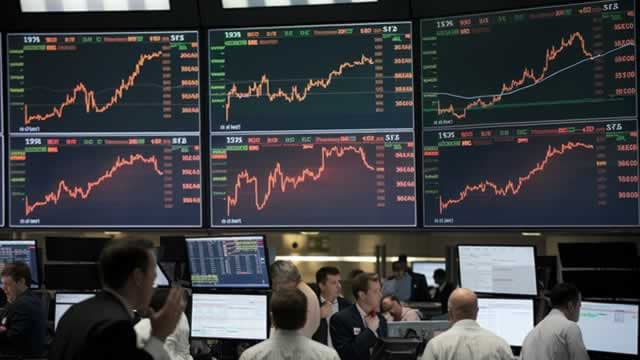
U.S. Customs and Border Protection told a Court of International Trade judge it cannot comply with his order to begin refunding reciprocal tariffs imposed by President Donald Trump. The Supreme Court ruled recently that Trump's so-called IEEPA tariffs were illegal.
War has erupted again in the Middle East, raising major questions for energy markets, inflation, and the global economy. Anas Alhajji, managing partner at Energy Outlook Advisors, explains why the current conflict could have far-reaching consequences for oil, natural gas, fertilizer supply chains, and global shipping through the Strait of Hormuz.

The US labor market shrunk by 92,000 non-farm payroll jobs in February, as reported by the Bureau of Labor Statistics (BLS), well below economist estimates of an addition of 55,000. The unemployment rate rose to 4.4% while average hourly wages grew by 0.4% month-over-month and 3.8% year-over-year.
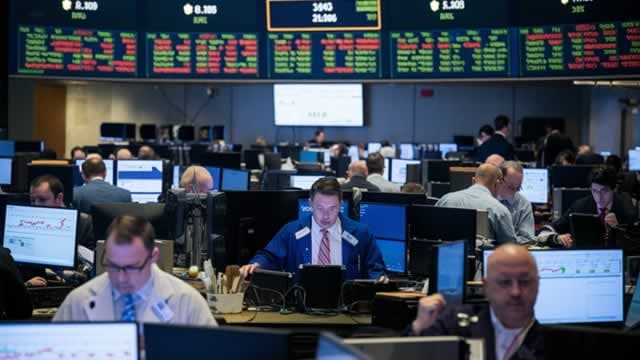
How much further oil prices increase by. Saad al-Kaabi, Qatar's energy minister, told the Financial Times that crude prices may reach $150 per barrel if tankers are unable to pass through the Strait of Hormuz, through which more than 20% of the world's daily oil flows, potentially “[bringing] down the economies of the world.

The Federal Reserve is still widely expected to hold interest rates steady when its officials next meet on March 17-18.

Federal Reserve Bank of Chicago President Austan Goolsbee reacts to the latest US employment report and warns the economic shocks like the recent surge in oil prices can lead in a stagflationary direction. He speaks with Mike McKee on "Bloomberg Open Interest.