
加载中...
共找到 18,326 条相关资讯

Comprehensive cross-platform coverage of the U.S. market close on Bloomberg Television, Bloomberg Radio, and YouTube with Romaine Bostick, Katie Greifeld, Carol Massar and Tim Stenovec. -------- More on Bloomberg Television and Markets Like this video?


US stock indices reversed sharply into the green on Monday after President Donald Trump told CBS News senior White House correspondent that the US-Israel war against Iran is effectively over. The Dow Jones Industrial Average, which had plunged as many as 945 points in the morning session, rebounded sharply and closed nearly 240 points up at 47,740.74.

Big U.S. exchanges are working on plans to offer digital tokens that mimic shares and trade 24/7.

I reiterate my buy recommendation on assets tracking the main American indices, despite heightened conflict in Iran. Historical data shows U.S. stocks remain resilient during geopolitical crises, with seasonality favoring post-March recoveries.

Energy markets face historic disruption as the Strait of Hormuz closure drives Brent crude to $100, with extreme backwardation signaling market uncertainty. Assumptions of a quick resolution are misplaced; structural and leadership challenges in Iran make a near-term ceasefire highly unlikely.
Operator: Good morning, and welcome to the Heritage Insurance Holdings, Inc. Fourth Quarter and Full Year 2025 Earnings Conference Call. Please note today's event is being recorded. I would now like to turn the conference over to Kirk Howard Lusk, Chief Financial Officer for the company. Please go ahead, sir. Kirk Howard Lusk: Good morning, and thank you for joining us today. We invite you to visit the Investors section of our website, investors.heritage.com, where the earnings release and our earnings call will be archived. Materials are available for replay or review at your convenience. Today's call may contain forward-looking statements within the meaning of the Private Securities Litigation Reform Act of 1995. These statements are based upon management's current expectations and subject to uncertainty and changes in circumstances. In our earnings press release and our SEC filings, we detail material risks that may cause our future results to differ from our expectations. Our statements are as of today, and we have no obligation to update any forward-looking statements we may make. For a description of the forward-looking statements and the risks that could cause our results to differ materially from those described in the forward-looking statements, please refer to our Annual Report on Form 10-K, earnings release, and other SEC filings. Our comments today will also include non-GAAP financial measures. The reconciliations of and other information regarding these measures can be found in our press release. With me on the call today is Ernesto Jose Garateix, our Chief Executive Officer. I will now turn the call over to Ernesto Jose Garateix. Ernesto Jose Garateix: Thank you, Kirk. Good morning, everyone. And thank you for joining us today. On this morning's call, I am going to review the successful execution of our strategic initiatives in 2025 and our full year results. Review the competitive advantages that Heritage Insurance Holdings, Inc. has built over the years, which positions us for success looking out over the medium term, and conclude our strategic priorities for the year ahead. Kirk will then discuss our fourth quarter results, and we will open the call for your questions. As we have been discussing over the past several years, we have been intentional and disciplined in reshaping the foundation of our business. As an organization, we set out to transform our business with the goal of developing a model that delivers consistent earnings and sustainable shareholder value, even in a challenging and dynamic market. To do that, we anchored our strategy around three initiatives that continue to guide every major decision that we make. First, we committed to generating true underwriting profit, not through reliance on market cycles, but through rate adequacy and more selective disciplined underwriting, as well as a solid distribution network. We have made hard choices, re-underwriting our book where necessary, ensuring that every policy we write meets our profitability standards, and aligning ourselves with the profitable and professional agents. Second, we focused on strategically allocating capital towards the products and geographies that offer the strongest returns, while being deliberate about where we pause, where we reinvest, and where we expand. This capital discipline has positioned us for thoughtful, measured growth with a focus on underwriting discipline and risk management. And third, we prioritized targeting a balanced and diversified portfolio. By expanding across multiple states and product lines, we strengthened the stability of our earnings, reduced our exposure to regional volatility, and fortified the company against the risks that define our industry. I am proud to say that in 2025, we executed on these initiatives with precision and measurable success. We reopened profitable geographies, deploying capital in a thoughtful way designed to sustain long-term profitability. We maintained persistent underwriting discipline, supported by an ongoing focus on achieving and maintaining rate adequacy. We deepened our use of data-driven analytics, further strengthening the quality of our decision-making. We enhanced our customer service and claim capabilities, ensuring that the experience we deliver continues to improve. And importantly, we leveraged our infrastructure and operational capabilities, building a scalable platform that positions us for responsible profitable growth in the years ahead. These initiatives and the consistent execution behind them are what continue to strengthen Heritage Insurance Holdings, Inc.'s earnings power, which can further be seen in our full year 2025 results, where we delivered net income of $195,600,000, or $6.32 per share, representing a strong increase from the full year 2024's net income of $61,500,000, or $2.01 per share. Of note, our full year results included $31,800,000 of net pretax losses and loss adjustment expenses related to the California wildfires in 2025, which further highlights the significant earnings power within Heritage Insurance Holdings, Inc. in which we remain focused on growing further. We also grew our tangible book value per share 72.5% to $16.39 at 12/31/2025, from $9.50 at 12/31/2024, while achieving an ROE of 49% for the year ending 12/31/2025. As we look ahead to 2026, our strategy continues to build on the strong foundation that we have created. First and foremost, we have achieved rate adequacy in more than 90% of the geographies where we operate, and they are currently open for new business. In fact, new business premium production increased over 60% in the fourth quarter as compared to the fourth quarter last year. We have continued to evaluate new geographies and products that will advance our diversification and expansion efforts. As a result of that rigorous evaluation process, I would like to mention that we plan to enter Texas later this year on an excess and surplus (E&S) lines basis. Our production will focus predominantly on tier one and some tier two geographies, and will leverage our existing relationships as well as some new distribution partners. As we have done in California, which is also E&S, we will have underwriting and marketing employees in the state of Texas to stay abreast of the changing market needs and issues. As expected, we will maintain our focus on underwriting discipline, exposure management, and rate adequacy in our existing and new geographies. We have a long runway ahead to profitably grow our business and deliver value to our shareholders. A major emphasis in 2026 will also be the continued enhancement of our data-driven analytics, including deeper integration of AI and advanced technology tools. These capabilities will sharpen our risk selection, improve operational efficiency, and help us identify opportunities across regions with greater precision while being compliant with regulatory requirements for AI use. At the same time, we remain committed to refining our customer service and claim capabilities, building on the improvements already underway to deliver a more streamlined, transparent experience for agents and policyholders. And throughout 2026, we will continue leveraging the scale and flexibility of our infrastructure, our systems, processes, and regional operating model, to support sustainable future growth. Fortunately, we have ample room to grow our business and can choose to be selective across our geographic footprint. Lastly, reinsurance remains a critical component of our business, and we have maintained a stable indemnity-based reinsurance program at manageable costs with an excellent panel of highly rated and collateralized reinsurers. We regularly meet with our reinsurance and ILS partners who continue to support our growth, and whom we anticipate will offer incremental capacity as we look to our June 1 renewal. Additionally, we continue to see the benefits of tort reform as industry loss expectations for Hurricane Milton have been steadily coming down, largely due to reduced litigation, which benefits not only us, but our panel of reinsurers. Given the improved litigation environment in Florida, the lack of catastrophe losses, and the reinsurance capacity entering the traditional and ILS markets, we are optimistic that reinsurance pricing will improve in 2026. We also believe that favorable reinsurance will benefit the consumer in terms of cost of insurance. To conclude, we have strong momentum as we enter 2026, with a positive outlook for both our growth and profitability. That said, we are not complacent with our results and strive to improve our organization and operations. I would also like to reiterate our dedication to navigating the complexities of our market with a strategic focus that prioritizes long-term profitability, shareholder value, and customer service driven by our dedicated workforce, who I would like to personally thank for their efforts over the last year. Kirk, over to you. Kirk Howard Lusk: Thank you, Ernesto. Good morning. Turning to our financial highlights, we reported net income of $66,700,000, or $2.15 per diluted share in the fourth quarter, compared with net income of $20,300,000, or $0.66 per diluted share in the fourth quarter of the prior year. The period-over-period increase primarily reflected higher net premiums earned and net investment income, lower losses and loss adjustment expense, and lower policy acquisition costs. In-force premiums of $1,432,000,000, a decrease of 0.1% from $1,433,000,000 in the prior-year quarter, primarily driven by competitive market conditions reducing our commercial residential business while our personal lines business increased. Although we think many opportunities for controlled growth exist, we will not write policies that we believe are underpriced or do not meet our underwriting standards. Gross premiums earned were $361,700,000, up 0.4% from $360,400,000 in the prior-year quarter, reflecting higher gross premiums written over the last year. We continue to focus on new business initiatives across existing and new geographies, subject to market conditions and our underwriting and pricing discipline. Ceded premiums decreased by $2,100,000, predominantly reflecting a catastrophe excess-of-loss premium reduction true-up as well as reinstatement premium during 2024 that did not recur in 2025. Net premiums earned were $202,700,000, up 1.7% from $199,300,000, reflecting the reduction in ceded premiums. Net investment income for the quarter was $9,800,000, up $1,300,000, or 15.9% from $8,500,000 in the prior-year quarter, reflecting higher invested asset balances coupled with actions to align the investments with the yield curve. The average duration of the fixed income portfolio is 3.2 years as the company has extended duration from the prior year to take advantage of higher yields further out on the yield curve, while still maintaining a short-duration, high credit quality portfolio. Our total revenues for the quarter were $215,300,000, up 2.4% from 2024. As discussed, we expect our revenue growth to accelerate through 2026 as we ramp up our new business efforts. The net loss ratio was 31.3% for the quarter compared to 54.7% in the prior-year quarter, reflecting lower net losses and loss adjustment expense. Both attritional and weather-related losses were lower than in the prior-year quarter. Net weather-related losses for the quarter were $7,700,000, compared to $45,600,000 in the prior-year quarter. There were no catastrophe losses in the current quarter compared with $40,000,000 in the prior-year quarter. The decrease in weather-related losses was accompanied by lower attritional losses and a reduction in unfavorable reserve development versus the prior-year quarter. Our attritional losses have been trending favorable, which we believe is associated with the underwriting strategy over the last several years. The net expense ratio for the quarter was 30.7% compared to 35.0% in the prior-year quarter. The change primarily reflected higher ceding commission income, relatively flat general and administrative expenses, and higher net premiums earned. Policy acquisition costs were lower primarily due to higher ceding commission income associated with both a larger amount of premiums ceded under the net quota share program and a higher ceded commission rate due to favorable loss experience within that program. The net combined ratio for the quarter was 62.0%, an improvement of 27.7 points from 89.7% in the prior-year quarter, driven by the lower net loss ratio and the lower net expense ratio. Turning to the balance sheet, we ended the quarter with total assets of $2,200,000,000 and shareholders' equity of $505,300,000. Book value per share was $16.39 at 12/31/2025, up 72% from 2024 and up 125% from 2023. The increase from December 2024 primarily reflected net income for the year and an $18,000,000 net-of-tax reduction in unrealized losses on the company's fixed income securities portfolio. Unrealized losses related to a decline in interest rates during the year. Non-regulated cash at quarter end was $57,900,000. In addition, combined statutory surplus of our insurance company affiliates at quarter end was $392,600,000, an increase of $106,900,000 from year-end 2024. The increase in statutory surplus provides for additional growth capacity as open and new territories get up to full capacity for new business. As the earnings power of the company has grown, we have built capital. We have prioritized the use of capital for organic growth and share repurchases when we believe our shares are undervalued. Considering our financial performance, demonstrated earnings resilience, and future earnings potential, we believe our stock is undervalued. Under our $10,000,000 share repurchase plan, we repurchased 106,135 shares in 2025 at a cost of $2,300,000. In November 2025, our Board of Directors established a new $25,000,000 share repurchase plan that will expire on 12/31/2026. We will continue to be opportunistic with share repurchases and purchased 112,858 shares at a cost of $3,000,000 during 2026. Looking ahead, we remain focused on executing our strategic initiatives aimed at driving long-term shareholder value and providing our policyholders and agents with the service they deserve and expect. We believe that our diversified portfolio and distribution capabilities, along with our overall proactive management approach to exposures, rate adequacy, and investing in technology and infrastructure, will position us well for continued success. Thank you for your time today. Operator, we are now ready for questions. Operator: We will now begin the question and answer session. To ask a question, you may press star then 1 on your touch-tone phone. If you are using a speakerphone, please pick up your handset before pressing the keys. If at any time your question has been addressed and you would like to withdraw your question, please press star then 2. At this time, we will pause momentarily to assemble our roster. Our first question today comes from Mark Douglas Hughes with Truist. Please go ahead. Mark Douglas Hughes: Yes, thanks. Good morning. The top line growth outlook you talked about, this impact of commercial residential being a headwind, your underlying residential book is growing. That dynamic, is it already worked through your P&L? Is there a little bit more headwind to go? Kirk Howard Lusk: So we are seeing we have seen some more in commercial residential in Florida. So we will see what 2026 brings, but that is also we have pivoted to commercial residential as well out of New York, New Jersey, as well as Hawaii. But we think we have seen most of that competition in 2025. Okay. Mark Douglas Hughes: And then when you look at the profitability in the business, can you give us a sense of kind of Florida, Northeast, other markets? As you grow, you know, maybe in the markets that you see more opportunity. Is that going to mean anything for the P&L? Or for the overall loss ratio? Ernesto Jose Garateix: Sure. Great question. So as we have said, we are rate adequate in 90% of our geography. So if you take the Southeast, Florida, the book with the tort reform, and what we are seeing, right, without, you know, minimal CATs this year. Florida is very profitable. The Northeast has taken rates, so we are seeing profitability up in the Northeast. We go all the way out to Zephyr Insurance that they have taken rate, and we are seeing an uptake there from the profitability side. So we will continue to get the remaining, let us just say, 5% to 10% of the geographies rate adequate, but we are really excited about 90% of rate adequacy throughout geographies, which opens up all business and those areas will be opened up throughout 2026. Very good. Mark Douglas Hughes: Kirk, the $392,393,000,000 in surplus. Is that sufficient for 2026? Do you think you will have to add any more? Kirk Howard Lusk: No. No. We think that that actually is pretty adequate. I mean, it is up about $106,000,000 from last year, so really nice increase in the statutory surplus. Really positions us well for the growth we are anticipating. Particularly given the combined ratios we have been running, you know, that actually has been adding the capital also. So we are in good shape there. Mark Douglas Hughes: Yeah. And assuming you maintain decent profitability, that $25,000,000 share repurchase authorization seems low. I mean, just relative to your net income this quarter, for instance, that is $25,000,000 seems low. Could there be more action on that front in the near term? Picking that up a little bit perhaps? Kirk Howard Lusk: Yeah. I mean, our board, you know, would authorize. You know, we can go back to them at any point for a reauthorization on that. And, again, we did buy a little bit back in the first quarter. And so, you know, we will be looking at that going forward. Mark Douglas Hughes: Yeah. Is there any target kind of a run-rate combined ratio that you have in mind when you think about the overall book? You know, where should it settle in? Kirk Howard Lusk: Well, I mean, I think that, you know, right now, we have some pretty good headwinds. Looking at even, you know, into next year, particularly, I think that we are looking at some reinsurance rate decreases, which is going to be favorably impacting that. So I think it is going to continue to be, you know, rather favorable for the next couple years. And I think that, you know, over a longer period of time, I think that, you know, it could start tweaking up a little bit simply from the standpoint of, you know, as rates start stabilizing. I think it could start going up. But I think for the next couple of years, it could be, you know, comparable to where we are. Mark Douglas Hughes: So combined ratio absent the storms on an underlying basis, you would say? Reasonably steady the next couple of years. Health care reinsurance, and then maybe some normalization in rates starts to move that up a little bit. Ernesto Jose Garateix: Correct. Yeah. Mark Douglas Hughes: Yeah. Okay. Alright. Thank you very much. Ernesto Jose Garateix: Thank you, Mark. Operator: The next question comes from Jon Paul Newsome with Piper Sandler. Please go ahead. Jon Paul Newsome: Yeah. Good morning. I was wondering if maybe unpack a little bit of the gross premium parts and outlook and, you know, the results to date. A little bit more color on what is going on with commercial residential, and how that is, you know, is it the relative decline just the commercial auto, or are there other pieces there that we should be thinking about when we are thinking about the gross written premium outlook. Ernesto Jose Garateix: Yeah. So on the commercial residential, as we mentioned, we saw some increased competition coming in. But that being said, from a P&L and the profitability, it is still very profitable. Again, there is some competition where we decided to walk away just because the rate was not there. But overall, we are still very satisfied from the profitability standpoint on commercial residential. But we do expect to grow that in 2026. Kirk, I do not know if you want to add a little bit more on overall. Kirk Howard Lusk: And I think, Paul, it is, yeah, we did see a lot of competition there. But, I mean, one thing to keep in mind, I mean, we have a dedicated team, dedicated president, dedicated underwriters, dedicated claims family folks to those. So that really gives us a little bit of competitive advantages when you think about that commercial business. And I would think that we are able to kind of work through the market inflows and outflows. And so I think that you are going to see that stabilize, possibly increase this year. Ernesto Jose Garateix: Great. Jon Paul Newsome: Not a huge number, but can you talk a little bit about the reserve development? Kirk Howard Lusk: Oh, yeah. Absolutely. Yeah. That really stems from, you know, when we look back at, you know, overall, we have had a fair amount of favorable development this year for the full year. When we look back at the storms that are still outstanding, there are a few lingering claims out there. And what we did is we just felt that it was prudent to then boost the reserves to make sure that those are, you know, adequate for anything that we could foresee on those last few remaining claims. Jon Paul Newsome: So all the development would be in the CAT, but under the CAT category. Ernesto Jose Garateix: Correct. That is correct. Jon Paul Newsome: Okay. Thanks. I appreciate the help, as always. Ernesto Jose Garateix: Alright. Thank you. Thanks, Paul. Operator: The next question comes from Karol Krzysztof Chmiel with Citizens. Please go ahead. Karol Krzysztof Chmiel: Thank you. Good morning. Just a follow-up on the top line questions and specifically Florida. Can you just comment on the Florida residential market and if there is stop-and-go going around? Ernesto Jose Garateix: So on the Florida residential market, a lot of the new that you are seeing is still going through basically the assumption process, the takeout process. So we would probably anticipate more of the voluntary competition coming in at the later half of 2026, more into 2027, since their initial focus is mostly on the takeout business. Alright. Thank you, Karol. Operator: We have a follow-up from Mark Douglas Hughes with Truist. Please go ahead. Mark Douglas Hughes: Yeah. Thanks. Kirk, anything on the policy front in terms of just the ratio, is that going to move up a little bit as you pursue new business? Yeah. And then net investment income, nothing unusual. Looks like it was just up a bit sequentially. Do you think that will keep moving up? Just something in new money yield, the duration, is that still on an upward trajectory? Kirk Howard Lusk: It will up slightly. Also, we did have the net quota share program at NBIC, and we are looking, we reduced that at year end. When we look at the ceding commission that we were getting from that program, that will reduce a little bit. So therefore, our acquisition costs will go up a little bit, but then also, so will our net earned premium by reducing that net quota share. Yeah. Yeah. Despite kind of the drop in interest rates, I mean, we have been actually able to, because we were so short before, we were able to move out on the yield curve, which gives us a little bit more yield there. And then also because of the increasing cash flow, we are anticipating that that is going to actually, you know, give us a little bit of boost on the investment. Mark Douglas Hughes: Very good. Thank you. Operator: Ladies and gentlemen, this concludes our question and answer session. I would like to turn the conference back over to the management team for any final remarks. Ernesto Jose Garateix: Thank you for joining us today. I would like to thank our employees for all their efforts, and we wish everyone a great week. Operator: The conference has now concluded. Thank you for attending today's presentation. You may now disconnect.

Operator: Ladies and gentlemen, thank you for standing by. Welcome to the Eltek LTB 2025 Annual and Fourth Quarter Financial Results Conference Call. [Operator Instructions] As a reminder, this conference is being recorded. Before I turn over the call to Mr. Eli Yaffe, Chief Executive Officer; and Ron Freund, Chief Financial Officer. I'd like to remind you that they will be referring to forward-looking information in today's presentation and in the Q&A. By its nature, this information contains forecasts, assumptions and expectations about future outcomes, which are subject to the risks and uncertainties outlined here and discussed more fully in Eltek's public disclosure filings. These forward-looking statements are projections and reflect the current beliefs and expectations of the company. Actual events or results may differ materially. We'll also be referring to non-GAAP measures. Eltek undertakes no obligation to publicly release revisions to such forward-looking statements to reflect events or circumstances occurring substitute to this date. I will now turn the call over to Mr. Eli Yaffe. Mr. Yaffe, please go ahead. Eli Yaffe: Thank you. Good morning. Thank you for joining us for our 2025 annual earnings call. With me is Ron Freund, our Chief Financial Officer. We will begin by providing you with an overview of our business and summary of the principal factors that affected the results during 2025. After our prepared remarks, we'll be happy to answer any of your questions. By now, everyone should have access to our press release, which was released earlier today. The release was also available on our website. . Revenue for 2025 totaled $51.8 million, representing an 11% increase compared to 2024. This growth reflects the strategic accelerate investment program, which is the beginning of our also not yet its full potential. It will be a little bit on this shortly. I will elaborate on this shortly. During the year, we faced several operational challenges, including the reallocation of the machinery and production lines within the facility to prepare for the installation of the new plating lines. Difficulties in recording employees, challenges in retaining highly experienced personnel and a significant depreciation of U.S. dollar exchange rate, which adversely affect the dollar donate profitability we reported by approximately $2.2 million compared to 2024 profitability. I will now address each of these areas in more detail. As noted, we concluded the year with revenue approaching $52 million. At the time, we approved the accelerated investment plan, Eltek was generating average annual revenue of approximately $77 million. The subsequent increase in revenue reflects strong demand for the company products alongside the substantial investment made in the machinery and equipment over the recent years. As previously communicated, we are targeting annual revenue installed capacity in the current plan of $60 million to $65 million at current market prices. During the year, we encouraged significant operational constraint that affected our ability to meet customers' delivery schedule. This situation, combined with the demand level exceeding domestic production capacity in Israel led to increased competition from overseas players seeking to capture a share of the local demand. We continue to observe strong demand for our products, including from international customers, driven by limited manufacturing capability in the Western countries. We are steadily improving delivery performance for our domestic customers recognize that we -- that many in Western countries, including Israel, aim to preserve local manufacturing capability. At the same time, we are actively expanding our presence in overseas market, particularly in the United States to increase order volume from these regions. Turning to operations, we are making steady progress on our investment program. The core component is expected to drive meaningful improvement in output and quality are the 2 new plating lines. While they do not represent the majority of the accelerated investment budget in financial terms, their impact on production is highly significant. The first line arrived to the facility at the beginning of 2026, and it is currently in the assembly phase, which was interrupted by the core intention situation in Israel. We remain hopeful that the ongoing conflict will not result further delay in the completing the installation. Following the installation and extensive qualification process will be required to certify the lines across the full range of our product portfolio. Throughout this, we also address the need to recruit additional employees, particularly engineers to support the extended base of the machinery and equipment as well to manage the operational complexities created by reallocation for that lines and the resulting impact of ongoing manufacturing. In addition, we experienced the departure of several highly knowledge employees, including retirements. These operational challenges weighted on overall efficiency. We continue to make progress in advancing the process of bringing foreign workers from the Board in order to support our workforce needed as the company expands. Finally, the depreciation of the U.S. dollar resulted in the increase of approximately $2.2 million is reported in the NAS dominate expenses compared to '24 adversely affecting both growth and operational profits. It was nothing that part of our core backlog was priced based on higher exchange rate. Therefore, margin on these orders will remain below the level originally anticipating the same and the time of the quotations. Despite these challenges, we remain confident in the company's business and in our ability to return to healthy profitability levels upon completion of the investment program, installation of the new plating lines and stabilization of the production. In line with this long-term commitment, we extended the lease agreement for our manufacturing facility through the end of the year 2039. As part of this extension. We received a payment tended to partially offset the company investment in the facility. This amount will be amortized over the lease terms and will modestly reduce annual rental expenses. I will now turn the call over to Ron Freund, our CFO, to discuss our financial results. Ron Freund: Thank you, Eli. I would like to draw your attention to the financial statements for the year ended December 31, 2025, and for the fourth quarter of 2025. During this call, I will also discuss certain non-GAAP financial measures. EBITDA is a non-GAAP financial performance measurement. Please see our earnings release for its definition and the reasons for its use. I will now go over the highlights of 2025, all numbers mentioned are in U.S. dollars. Revenues for the year ended December 31, 2025, totaled $51.8 million compared to $46.6 million in 2024. Gross profit was $8 million compared to $10.3 million in 2024. Gross margin was 15% compared to 22% in 2024. . The decline in gross profit and gross margin was primarily attributed to higher net denominated expenses resulting from the depreciation of the U.S. dollar in 2025 as well as reduced production efficiency. Operating profit amounted to $2.3 million in 2025 compared to $4.4 million in 2024. In 2025, we recorded financial expenses of $1.3 million compared to financial income of $0.7 million in 2024. This change was primarily due to the depreciation of the U.S. dollar against [indiscernible]. Net profit was $0.8 million or $0.12 per share in 2025, compared to a net profit of $4.2 million or $0.63 per share in 2024. EBITDA was $4.5 million in 2025 compared to $5.9 million in 2024. During 2025, we generated positive cash flow from variating activities of $0.6 million compared to $4.5 million in 2024. As of December 31, 2025, we had cash and cash equivalents and short-term bank deposits in the total amount of $12.1 million. I will now go over the highlights of the fourth quarter of 2025 compared with the fourth quarter of 2024. Revenues for the fourth quarter of 2025 were $13.2 million compared to $10.8 million in the fourth quarter of 2024. Gross profit amounted to $1.2 million in the first quarter of 2025 compared to $1.9 million in the fourth quarter of 2024. Net loss in the fourth quarter of 2025 was $0.3 million or $0.05 per share compared to a net profit of $23,000 in the fourth quarter of 2024. EBITDA was $0.7 million in the fourth quarter of 2025 compared to $0.8 million in the fourth quarter of 2024. We are now ready to take your questions. Operator: [Operator Instructions] The first question is on Mark Sharogradsky of Kepler Capital. Mark Sharogradsky: The first question I have, the gross margin for this quarter really low, like 9%, if say, I could collect correctly. So when you expect to see some improvements of this result because revenue was pretty okay, but the gross margin was really low. So how do you see the situation? Eli Yaffe: Mark, as we previously reported, we expected to complete the integration and installation of the new plating line, which arrived at the beginning by mid-'26. The line is expected to streamline the core manufacturing processes and extend the production capacity. Following the completion of the installation, we will begin qualification process and is expected to continue through the remainder of 2026. During this period, we plan to qualify products and families and gradually basis, enabling the phased transition of the production to the new line until fully comply and full qualification for all company products is completed. We expected the time our production process will be stabilized, which should contribute to the improvement of the gross margin. And as we noted in the past, each additional dollar of revenue contributed meaningful to the gross profit. And of course, to the net income. Therefore, the answer to your question, is increasing our sales volume is expected to significant positive impact on the profitability and improve the gross margin. Mark Sharogradsky: Yes. But I'm trying to understand that even before you had the gross margins of 27% to 29%. And now I understand the dollar situation and never see, but why such sharp drop on the margin even now, even before those lines are installed? Ron Freund: Mark, this is Ron. So on the first quarter, depreciation of the U.S. dollar continued -- and this caused us significant additional is report mic-denominated expenses to be dollar reported amounts to be to increase. In addition, the same as was in prior quarters, we have used this efficiency in production. And we expect that as laid previously once we will achieve increased sales volume, gross margin will return to its positive prior margins. Mark Sharogradsky: Okay. And can you guys speak a little bit about the pricing dynamic because everyone is so depreciation, but I was also today on PCB case, and they said they are raising prices now to adjust this depreciation to work on normal gross margin. So how do you see the pricing dynamic going forward? Eli Yaffe: The pricing dynamic is that we immediately update our pricing system to reflect the new depreciation and the new exchange rate of the dollar. But as I mentioned before, we have quotations underway that was based on long-term proposals. It was based on dollar to lease ratio that is higher than today, and we will Yes, this proposal. We will get this purchase orders, and we will have some of our basket in the future. It's going to be below the expected volume our proposals today. Ron Freund: And Mark, it is not just quotation. We have actually orders that we even received in higher dollar rate. So this -- in these orders, we expect a lower margin than anticipated for new orders to be received in the next months. Mark Sharogradsky: Of course, I understand because if -- so if you will adjust those orders to the new exchange rates, then we expect to see some improvement of this adjustment in the next quarter, or in Q2? Ron Freund: As we told before, usually, we have a 1 to 2 quarter -- and we didn't until this call. We already updated our pricing system. So we expect to see it within, I don't know, 4 to 5 months to see some increase. Mark Sharogradsky: No, because I assume that you also updated it before because the problems began already in Q3 . Ron Freund: You're right, but as in the fourth quarter, the depreciation continued we had to update it again. . Operator: [Operator Instructions] There are no further questions at this time. Before I ask Mr. Yaffe to go ahead with his closing statements, I would like to remind the participants that a leader of this call will be available tomorrow on our website. . Eli Yaffe: As we conclude I would like to thank our investors for their support and confidence in the company. Our view long term will present the belief in our strategy enables us to continue investing in our capability and pursing foreseeing our growth objectives. I also want to recognize the commitment of our employees. Their professionalism, adaptability and the indications throughout the period have been critical to maintaining our operations and advancing our strategic initiatives. Thank you for joining us today. Operator: This concludes the Eltek LTB 2025 Financial Results Conference Call. Thank you for your participation. You may go ahead and disconnect.
Operator: Welcome, and thank you for standing by. Good morning, and welcome to the Global Business Travel Group, Inc. Fourth Quarter and Full Year 2025 Earnings Conference Call. As a reminder, please note today's call is being recorded. I will turn the call over to the Vice President of Investor Relations, Jennifer Thorington. Please go ahead. Jennifer Thorington: Hello, and good morning, everyone. Thank you for joining us for our fourth quarter and full year 2025 earnings conference call. This morning, we issued an earnings press release, which is available on sec.gov and our website at investors.amexglobalbusinesstravel.com. A slide presentation, which accompanies today's prepared remarks, was also available on the Global Business Travel Group, Inc. Investor Relations webpage. We would like to advise you that our comments contain forward-looking statements that represent our beliefs or expectations about future events, including industry and macroeconomic trends, cost savings, and acquisition synergies, among others. All forward-looking statements involve risks and uncertainties that may cause results to differ materially from the statements made on today's conference call. More information on these and other risks and uncertainties is contained in our earnings release issued this morning and our other SEC filings. Throughout today's call, we will also be presenting certain non-GAAP financial measures such as adjusted gross profit, adjusted gross profit margin, EBITDA, adjusted EBITDA, adjusted EBITDA margin, adjusted operating expenses, free cash flow, and net debt. All references during today's call to such non-GAAP financial measures have been adjusted to exclude certain items. Definitions of these terms and the most directly comparable GAAP measures and reconciliations for non-GAAP measures are available in the supplemental materials of this presentation and in the earnings release. Participating with me today are Paul Abbott, our Chief Executive Officer, Evan Kaumizer, our Chief Product and Strategy Officer, and Karen Williams, our Chief Financial Officer. Also joining for the Q&A session today is Eric Bock, our Chief Legal Officer and Global Head of M&A. With that, I will now turn the call over to Paul. Paul? Paul Abbott: Thank you, Jennifer. Welcome, everyone, and thank you for joining us this morning. In 2025, we delivered strong results and expect even stronger momentum in 2026. We are executing on our growth strategy. We continue to gain share and maintain an impressive customer retention rate. Product innovation is accelerating. Our strategic partnership with SAP Concur is well underway as we roll out Complete, a new flagship solution for travel and expense. We are launching next-gen Egencia in April, with a new AI-powered user experience and full integration into Concur Expense. And we closed on the acquisition of CWT in September 2025. We are now at a very exciting inflection point where AI is delivering real revenue and cost benefits, and we are leveraging our platform to power the future of agentic AI in business travel. More on that shortly. Finally, we doubled our share repurchase authorization to $600 million, supported by our strong balance sheet and robust cash flow. Given the current share price and our conviction in our long-term growth trajectory, we believe this represents a compelling driver of shareholder value. Before I talk in more detail about the value that we are delivering with AI, let me quickly review our strong 2025 performance. Here are the highlights. Total transaction value, or TTV, grew 17%. Revenue growth accelerated to 12%. Adjusted gross profit margin was 60%. Adjusted EBITDA grew 11%, and we generated $104 million of free cash flow. Finally here, excluding CWT, new wins value accelerated to $3.3 billion, and we maintained a very strong customer retention rate of 96%. So Global Business Travel Group, Inc. continues to grow and continues to gain share. Our new wins performance, increased demand from our premium customer base, high customer retention rate, and the acquisition of CWT resulted in impressive top line performance. And our focus on operational efficiency and cost synergies enabled us to drive strong adjusted gross profit and adjusted EBITDA margin performance. I now want to address market sentiment related to AI. Let me start by being clear on this. We have proven that automation is a tailwind for our business, a tailwind that is being accelerated by AI. We have already proven that digital adoption drives higher margins and drives higher profits. Over the last five years, we have increased our mix of digital transactions from approximately 60% to over 80%, with over 60% of those digital transactions on our own technology platforms. Over the same period, our adjusted EBITDA margin has gone from 17% to 20% driven directly by increased automation. And AI is accelerating this positive trend. Our broader AI strategy is focused on three key priorities. Revolutionizing the customer experience, powering the agentic transformation of B2B travel, and reducing operating expenses. Why are we so confident that AI will supercharge value creation for our customers and our shareholders? Because we are already seeing it happen today, and here are some examples. AI is increasing self-service, and even for issues that still require a live agent, our agents are using AI tools to reduce handling times, giving a better experience for the customer and reducing operating costs. AI is also delivering higher revenue conversion in our products through enhanced personalization. Our tech teams are using AI to design and build products, improving both speed and quality. Agentic AI is a decision-making and execution layer with the potential to reshape channels and workflows. The opportunity that we have in managed travel is to integrate agentic AI with all of our other services, including the supply inventory, company data, traveler data, duty of care processes, disruption management, and the end-to-end workflow to deliver the control and the experience that our customers demand. And we can deliver this consistently and securely on a global basis. Our platform is being used today to power agentic AI experiences, both proprietary and through integration with third parties. In all these cases, Global Business Travel Group, Inc. is providing the essential assets required to power the agentic AI experience at scale. And now I would like to introduce Evan Kaumizer, our Chief Product and Strategy Officer, to share some specific examples of how we are executing on our AI strategy. Evan, over to you. Evan Kaumizer: Thank you, Paul. As Paul said, we have deep conviction that AI is a clear tailwind in transforming our business by enhancing both the customer value proposition and our profitability. Our central role in building and operating a platform that integrates enterprise workflows into the very real and dynamic world of travel represents a clear competitive advantage for us to lead in the AI transformation in corporate travel. To maximize this opportunity, we are investing for AI-powered growth and value creation across three key priorities. The first is revolutionizing the customer experience. Incorporating AI and agent capabilities into the way we service and support our customers and their travelers by delivering personalization, contextualization, and user delight. The second is taking our platforms to power the agentic transformation of B2B travel. Global Business Travel Group, Inc.'s platforms have been designed to execute travel at scale globally, and such a platform is an essential foundation to enable the agentic AI tools that companies are launching for many use cases today. Finally, AI is a generational opportunity to redefine our operating model and cost base, allowing us to expand margins and create more capacity to invest in one and two. I want to highlight one example of how we are looking at revolutionizing customer experience with AI. We know travelers want to conduct business from the channels that they are already using daily, and we know that both companies and their travelers want integration into existing business workflows with immediate personalized responses and proactive actions to solve their needs. Next month, we expect to launch Egencia AI, a tool that allows travelers to search, book, and change travel by responding to natural language interactions, all while adhering to company policy, personal preferences, and context, and, of course, sourcing from the comprehensive and competitive inventory in the Global Business Travel Group, Inc. marketplace. This foundation is anticipated to grow to more proactive actions over time, including fully agented capabilities. Already on Egencia, we have an average booking time of under three minutes, which is expected to go down even more with these new tools. As AI agents complete more of the workload, we are able to source the majority of hotels within the top five options based on many years of training our models, making these experiences better. We are having success increasing self-service, and the new Egencia AI experience is projected to further accelerate that progress. And in short order, this will be available in a multitude of channels: the web, Egencia mobile, as well as the major enterprise collaboration tools that most of our customers are using today. And we have similar solutions arriving on Complete, our joint solution with SAP Concur, as well as Neo. With our service promise, there is always a live agent for travelers to access if the AI does not deliver what they need or if they simply prefer some human interaction. This is only one example of how AI is helping us dramatically advance the customer and traveler experience, enhancing our ability to retain and win customers, and importantly, reduce bookings made outside the program by giving travelers tools that make it much easier and faster to book travel from Global Business Travel Group, Inc. We believe our platform is central to transforming B2B travel with AI. We are expecting AI agents to do a lot of the heavy lift in business travel, but those AI agents will need access to the data, global inventory, workflows, and orchestration that has authority to fulfill travel bookings, manage approvals and payments, issue invoices, file expenses, and reconcile data. Unlike consumer travel, business travel requires data and trusted transaction authority from both travelers and companies, including data ranging from personal loyalty preferences and history all the way to company policy and approval rights. Global Business Travel Group, Inc. can already do this at scale globally, and we are architecting an agent-to-agent framework to deliver these capabilities. AI agents will also need access to the best marketplace in travel that sources content from all over the globe, negotiates bespoke content for savings, wires in company-negotiated content, and aggregates it all seamlessly. Using our centralized inventory is significantly more advantageous and cost-effective than agents doing independent scraping themselves. Finally, AI agents are only as good as the data they are trained on, and in our industry, our proprietary data is the gold standard. It includes, in part, millions of enterprise policy rules, hundreds of ecosystem partners, hundreds of supplier connections, and millions of transactions, emails, and hours of call recordings. Today, we are working in several ways to already bring this to life. Let me provide three examples. First, we are currently collaborating with a major technology company customer and integrating into their proprietary agentic platform to ensure managed travel experiences can be available seamlessly through existing and new enterprise channels. Even major technology customers are acknowledging the value Global Business Travel Group, Inc. provides by bringing capabilities like expert-driven cost savings, 24/7 duty of care, and policy compliance, fully baked into their new AI workflows. Second, as previously announced, we are collaborating with SAP Concur to bring our platform to full use across our joint customer base. In the flagship solution Complete, by SAP Concur and Global Business Travel Group, Inc., we are combining SAP's AI solution, Juul, with our travel capabilities to streamline travel and expense management through natural language conversations. So this is an example of a leading enterprise application software player collaborating with Global Business Travel Group, Inc. and AI for travel. Finally, we are working to partner with AI-native players to bring new experiences to our customers. One example, we integrated an AI product for a large customer to create a new agentic channel. In summary, we have both proprietary and partner agentic experiences powered by the Global Business Travel Group, Inc. platform. These partners include a major technology company, one of the largest European software companies, and an AI-native venture-funded new entrant. And in all of these cases, Global Business Travel Group, Inc. is providing extreme value with orchestration, workflows, and the marketplace, as well as acting as the trusted transaction authority on behalf of the company and its travelers. This is how we expect B2B travel to work in an increasingly agentic world, and we are fully prepared. Finally, I want to highlight the significant cost reduction opportunity that AI presents. We have two primary levers for reducing operating cost. The first is reducing the need for human intervention. The progress we have made on digital self-service to date, coupled with the current path on AI solutions, gives us a clear roadmap to serve more travelers in digital channels, creating a better experience and reducing costs. We have already seen this in how our Egencia product is able to handle more self-service needs, and we are building these features into Complete and Neo now. The second lever is ensuring our amazing travel counselors are as productive as possible in delivering exceptional service. To that end, we are building an AI agent assistance tool that will supercharge the ability of our travel counselors to serve travelers in a personalized, contextual, efficient way. This is a win for both our travelers and Global Business Travel Group, Inc. We believe the successful formula for managed travel is both high-tech and high-touch, and while AI agents are increasingly capable, marrying that with experienced travel counselors remains core to our servicing strategy. Human agents will interact with fewer transactions over time, but when they do, it will be critical to revenue retention and growth. Even the savviest digital traveler cannot predict when any given trip may require some human help, and we are seeing this play out in real time as our travel counselors work tirelessly to repatriate travelers from the Middle East. AI-driven efficiency gains are not just an idea. They are having real-time meaningful effects on our P&L, and AI is a primary driver for long-term operating leverage and margin expansion. We expect adjusted gross profit margin to increase by 150 to 200 basis points per annum over the next five years, reaching the high sixties by 2030, which represents material margin expansion versus where we are today. In summary, our strategy is very clear. We are developing AI to revolutionize the customer experience, our platform to power the agentic future in B2B travel, and using AI to accelerate cost reduction and margin expansion. Now I would like to pass it on to Karen for the financial overview. Karen Williams: Thank you, Evan, and hello, everyone. Before we get into the specifics for the quarter, I want to reflect on the incredible progress we made in 2025. We delivered strong financial results, closed on the acquisition of CWT, and are continuing to make outstanding progress in terms of the integration of CWT into our business. The strength of our balance sheet provides us with opportunities to deploy capital in a disciplined, value-accretive manner. We generated over $100 million in free cash flow, refinanced our debt, and doubled our share repurchase authorization. We continue to deliver on our commitment and are confident in our outlook and the continued momentum in the business. So now let us turn back to the fourth quarter and the financial highlights, which show strong underlying growth and the addition of CWT into our results. The corporate travel demand environment continued to accelerate in the fourth quarter, despite a short-term negative impact from the U.S. government shutdown. TTV, which reflects both volume and price, grew 45% to reach $10 billion. Transaction growth was 37%, driven by the contribution from CWT and growth in our core business as we continue to drive share gains and impressive customer retention. Revenue was up 34% to reach $792 million, and within this, travel revenue increased 36% in line with the transaction growth. Product and professional services revenue increased 27%, primarily driven by the acquisition of CWT and strong growth from our dedicated client revenues as well as Meetings & Events. Excluding CWT, revenue grew 8% in the quarter. And finally, adjusted EBITDA grew 17% to reach $130 million, driven by the top line performance and continued focus on driving productivity, operating leverage, and cost optimization. Let us now turn to margins. Last quarter, we introduced adjusted gross profit margin as a key metric which we believe helps measure the success of our automation and AI initiative. Adjusted gross profit margin was 60% for the full year. Now, excluding CWT, full year adjusted EBITDA margin of 21% was up 144 basis points year over year and benefited from our continued focus on cost transformation. Our reported full year adjusted EBITDA margin of 20% and fourth quarter margins were down modestly. Whilst the core business continued to deliver on productivity initiatives, the year-over-year reduction in margins is simply driven by the consolidation of CWT into our numbers, which, pre-synergies, operates at lower margins. Importantly, we project material expansion in both the adjusted gross profit margin and adjusted EBITDA margin over the medium term as we deliver on the CWT synergies and AI-powered cost transformation. Free cash flow for the full year totaled $104 million, which, when normalized for the CWT and M&A expenses, results in 40% free cash flow conversion as a percentage of adjusted EBITDA. Free cash flow in the fourth quarter declined year over year, again due to seasonality of working capital outflow and cash restructuring costs related to the CWT synergies. And finally, I am incredibly proud of the strength of our balance sheet. Our leverage ratio, or net debt divided by last twelve-month adjusted EBITDA, is 1.9x and remains below the midpoint of our target leverage ratio range even after funding the cash portion of the CWT acquisition. As a reminder, with the CWT acquisition, we have a clear path to a bottom-line synergy opportunity of $155 million, entirely driven by what we can control, which is cost. I am pleased to share we are tracking in line with the expectations we have previously shared. We expect to deliver $55 million of in-year synergies in 2026. To date, we have actioned $45 million of these and have confidence in realizing the full-year number. The actions taken to date primarily include workforce reduction, real estate consolidation, and vendor savings. So now, moving to our outlook, we are reiterating our guidance for the full year 2026. We are guiding to full year 2026 revenue of $3.235 billion to $3.295 billion, which reflects 19% to 21% year-over-year growth, and adjusted EBITDA of $615 million to $645 million, which reflects 16% to 21% growth. And as a reminder, there will be a temporary impact on our margins related to CWT. On a pro forma basis, including the full projected CWT synergies of $155 million, we would expect adjusted EBITDA of $715 million to $745 million. Looking at free cash flow, we expect to generate $125 million to $155 million. Excluding the cash impact of restructuring and CWT integration, we would expect to generate $235 million to $265 million of underlying free cash flow, which represents a conversion rate similar to 2025 of approximately 40% of adjusted EBITDA at the midpoint. We expect an acceleration in our free cash flow conversion beyond this year as we drive growth, roll over the one-time items, and realize the CWT synergies. Now it is important to draw your attention to the expected shape of our performance in 2026 and cadence of our revenue and adjusted EBITDA outlook. Year-over-year growth rates will start out higher due to CWT until the acquisition anniversary during Q3 at September. The seasonality of the combined business looks different in 2026 versus prior years due to CWT. We expect to generate approximately 51% of full year 2026 revenue in the first half of the year, with approximately 25% in Q1. We also expect to generate approximately 53% of full year 2026 adjusted EBITDA in the first half of the year, with approximately 24% in Q1, and this is driven by the phasing of the synergies benefits that ramp post-Q1. From a free cash flow perspective, we expect Q1 free cash flow to be largely breakeven but to accelerate in Q2 due to the phasing of the cost and net working capital. We have provided more detail in the appendix on free cash flow and quarterly seasonality to help you guide your models. Now it is important to note that our guidance does not include a prolonged impact from the Middle East conflict, as it is too early to establish any facts, but for context, the region represents around 5% of revenue. Crisis management is a critical component to our value proposition, and I am incredibly proud of how our team is handling frontline servicing. Now I wanted to end by reiterating our capital allocation priorities and what we are doing to drive shareholder value. We are continuing to generate cash, which enables us to execute against our capital allocation priorities. Our first capital allocation priority is maintaining a strong balance sheet, with a target leverage ratio of 1.5x to 2.5x. In January, we successfully refinanced our debt and achieved a 50 basis points reduction in our borrowing rate. Second, because of the productivity gains, we can invest in sustainable growth within our medium-term target CapEx envelope of approximately 4% of revenue. We are focused on discipline in our AI spend to drive profitable growth, and I would encourage you to think about this beyond the CapEx envelope as we think about the AI opportunity being a mix of build, partner, and buy. This leads nicely to our third priority, which is to pursue accretive, highly synergistic M&A. Because the CWT acquisition financing was primarily stock, we maintain a strong balance sheet to pursue additional M&A. And finally, given our leverage and cash position, we are in a position of strength to execute accretive share buybacks. Doubling our share buyback authorization from $300 million to $600 million in February reflects our confidence in the underlying strength of the business and our commitment to driving long-term shareholder value. In total, we have returned $103 million to shareholders under the share buyback program to date, with $73 million in 2025 and an additional $30 million year to date through 03/05/2026. In summary, we delivered strong results to close out 2025 and expect even further momentum into 2026 and beyond. We look forward to sharing more at an Investor Day later this year. We will now open for questions. Operator, please go ahead and open the line. Operator: Thank you. If you would like to ask a question, please press star followed by one. When preparing to ask your question, please ensure your device is unmuted locally. Our first question comes from Stephen Ju with UBS. Your line is open. Please go ahead. Stephen Ju: Hey, thank you. So, Evan, I wanted to dig in a little bit more on underlying data you have disclosed on page nine of the deck, particularly as it comes to how good AI has gotten and how quickly things may be improving for Egencia. So 57% of chats are resolved without humans being involved. So can we get some idea of the slope of the improvement that you were driving here throughout 2025? And stepping back and looking at things from a bigger picture perspective, and I apologize, Paul, for asking you a question about running before walking, but how can we think about the benefits of what you are already seeing from a service perspective that is already being demonstrated for Egencia being rolled out to CWT also? Thank you. Evan Kaumizer: Great. Thanks so much for the question, Stephen. Happy to take that. This is Evan. So the 57% on deflection away from chat is largely based on non-transactional inquiries that we have had over the last year or two as we have deployed more tech into that channel. This year, with the full agentic launch of full transactions on hotel and air, and later rail and ground, we are really bullish that that number is going to go up pretty significantly. We also know the denominator will go up a lot as well as we get more customers and more travelers coming into this channel on all the different channels that we are going to expose this to. So I think that both numerator and denominator are going to change, but in ways that will start really showing up in metrics across the business versus more of a help desk style approach that we have had thus far. So I think we are at a pivot point, and we will be excited to share progress as that launch happens and we continue to evolve that channel. Paul Abbott: Stephen, maybe just to add a couple of comments to the second part of your question. You are absolutely right. Egencia is the most advanced platform in terms of the AI capabilities and the self-serve capabilities, and so that sets the pace, and our objective is to get Complete and Neo up to the same levels of performance, and we have plans in place to do exactly that, including, of course, the CWT customers as they move across onto those solutions. I think in terms of the metrics to keep an eye on, you asked about how you can expect this to trend going forward. If you look at our gross margin, it is up 100 basis points over the last twelve months, and, obviously, a lot of our AI and automation initiatives are driving that improvement in gross margin. Also, if you look at the percentage of self-serve, we have taken that up 300 basis points over the last twelve months. So we were at about 80% of our transactions coming through digital channels; that has gone up to 83%. And so these are some of the key metrics that we track to make sure that we are not just making progress, but also that progress is flowing through to deliverable impact in the P&L. Operator: We now turn to Duane Pfennigwerth with Evercore ISI. Your line is open. Please go ahead. Jake Cunningham: Hey, good morning. This is Jake in for Duane. Just first, are there any regional and or industry highlights you could share for the fourth quarter and early 2026? And any improvement in the government business as well? Paul Abbott: Yes. Obviously, for Q4, we did see an impact on not just the government business, but more broadly in the U.S. from the U.S. government shutdown, but we were able to mitigate that impact and still deliver on our expectations for Q4 and full year. And so, yes, we have seen an improvement now that the government shutdown mostly resolved, so those volumes have improved into the first quarter. Obviously, the big regional trend, stating the obvious, is the situation in the Middle East. If you look at our demand through January and February, it was actually pretty solid across all regions, and for both months, very much tracking in line with our plan. Obviously, over the last week, we have seen an impact to volumes in the Middle East, as, of course, you would expect. Initially for us, that impact creates more demand because we have a lot of customers that are disrupted, a lot of changes and cancellations. So in the short term, it actually results in an increase in transaction volumes. But, obviously, depending on how long the situation lasts, we are going to see some impact to forward bookings in the region, and that is why Karen, in her prepared remarks, sized the Middle East at approximately 5% of our revenues. Obviously, at this point, it is far too early to be able to assess how long the situation may continue, but we are trying to be helpful in sizing the travel where the Middle East is the point of origin or the final destination, which represents 5% of our revenues. Jake Cunningham: Okay. That is very helpful. And then just on the SAP Complete partnership, are there any early stats or anecdotes you could speak to to indicate any early successes? Evan Kaumizer: Yes. We are having great progress on rolling out our joint customers onto Complete. We have a rollout plan that started in the fourth quarter and continues at pace, and we are expecting to have 90% to 95% plus of all of our joint customers using Complete this year. Early feedback has been positive, and you are going to hear some new updates on our product launches at the SAP Concur Fusion conference next week in New Orleans. We are going to be talking about the next step of our product joint release. So overall, the momentum is in full swing, and we are really excited to see that progress this year. Jake Cunningham: Great. Thank you. Operator: We now turn to Greg Parrish with Morgan Stanley. Your line is open. Please go ahead. Greg Parrish: Hi, good morning, everyone. Thanks for taking our question. I want to ask about the 150 to 200 basis points annually of gross profit margin expansion through 2030. It is quite robust. I know, Paul, you mentioned having done that over the last twelve months. I just want to unpack the drivers. It sounds like, at least from the slide, this is primarily AI efficiency savings, if you could confirm that. And then should we expect this to start in 2027? I know 2026 is a little noisy here with the acquisition. And then, from a philosophical standpoint, do you expect clients will perhaps want to share in some of these AI savings, or do you think you are in a really good position to have the benefits accrue to you? Thanks. Karen Williams: Okay. So in terms of gross margin, we are incredibly excited about the runway ahead of us. Evan spoke to some of it, but ultimately, as you look at the cost of revenues and from a servicing perspective, we expect an opportunity from the demand deflection that he spoke about, but also from an agent productivity perspective. And so we feel great in terms of the momentum and that pathway as we look out over the short and medium term to delivering against that. In terms of 2026 in particular, you do see the combination of the two organizations together. In terms of the underlying, we are continuing to see that progress and feel really good about it. Paul Abbott: Maybe I will pick up on the last part of the question. I think one of the really positive things about our business model is that we already have a structure that incentivizes self-serve. We already have pricing structures with customers that are lower for a 100% digital transaction, a 100% touchless transaction. And if you look back over the last four or five years, we have taken our digital penetration from 60% to 83%, and that is one of the main tailwinds that has been driving our profit growth and our gross margin and our adjusted EBITDA margin expansion. And so we are very confident that the pricing structure that we have in place, because we have proven it over the last few years, does pass back savings to customers for self-serve transactions, but our operating costs are even lower. So that automation tailwind improves our profits and improves our margins, and, frankly, AI is just going to supercharge that trend. So we see it as being very, very positive for us. Greg Parrish: Okay. Great. Thanks for the color there. Maybe just a follow-up. Could we unpack the 8% growth excluding CWT in the quarter? Pretty strong number. I think FX was a little bit of a tailwind. Can you break that down? Anything else to call out—air travel, G&M—what was strong versus light in the quarter? Karen Williams: We saw strong growth both in the SME and in the global multinational from a sales perspective, so we saw that continuation in the fourth quarter. Yes, there is probably a point from FX, but also, you will recall during the Q3 earnings call, we encouraged everyone to look at Q3 and Q4 together. We do typically see in the fourth quarter, just from a supplier perspective, some of the timing, so we see the yields were much more akin to what we saw in Q2 at a higher level. That is also playing into it. But we are really confident in terms of the momentum that we saw in the underlying business, not only from the top line, but also then the continuation in terms of that margin story and 210 basis points expansion. Greg Parrish: Okay. Thanks. I just wanted to confirm. You said FX was only 100 basis points? Karen Williams: At one point, yes. Greg Parrish: Okay. I will follow up with you there. Okay. Thanks. Operator: We have no further questions. I will hand back to Paul Abbott, CEO, for any final remarks. Paul Abbott: Great. Well, thank you very much to everyone for joining us, and thank you to all of our teams around the world that contributed to such a successful year in 2025. Thanks very much. Operator: Ladies and gentlemen, today's call has now concluded. We would like to thank you for your participation. You may now disconnect your lines.
Operator: Hello, and thank you for standing by. My name is Tiffany, and I will be your conference operator today. At this time, I would like to welcome everyone to the FuelCell Energy, Inc. first quarter of fiscal 2026 financial results conference call. All lines have been placed on mute to prevent any background noise. After the speakers' remarks, there will be a question-and-answer session. If you would like to ask a question during that time, please press star then the number one on your telephone keypad. I would now like to turn the call over to Michael Bishop, Chief Financial Officer. Michael, please go ahead. Thank you, operator. Michael Bishop: Good morning, everyone, and thank you for joining us on the call today. This morning, FuelCell Energy, Inc. released our financial results for 2026, and our earnings press release is available on the Investors section of our website at www.fuelcellenergy.com. In addition to this call and our earnings press release, we have posted a slide presentation on our website. The webcast is being recorded and will be available for replay on our website approximately two hours after we conclude. Before we begin, please note that some information you will hear or be provided with today consists of forward-looking statements within the meaning of the Securities Exchange Act of 1934. Such statements express our expectations, beliefs, and intentions regarding the future and include statements concerning our anticipated financial results, plans and expectations regarding the continuing development, commercialization, and financing of our fuel cell technology, our anticipated market opportunities, and our business plans and strategies. Our actual future results could differ materially from those described or implied by such forward-looking statements because of a number of risks and uncertainties. More information regarding such risks and uncertainties is available in the safe harbor statement in the slide presentation and in our filings with the SEC, particularly the risk section of our most recent Form 10-K and any subsequently filed quarterly reports on Form 10-Q. During this call, we will be discussing certain non-GAAP financial measures, and we refer you to our website, our earnings press release, and the appendix of the slide presentation for the reconciliation of those measures to GAAP financial measures. Our earnings press release and a copy of today's webcast presentation are available on our website under the Investor Relations tab. For this call, I am joined by Jason Few, our President and Chief Executive Officer. Following our prepared remarks, the leadership team will be available to take your questions. I will now hand the call over to Jason for opening remarks. Jason? Jason Few: Good morning, everyone, and thank you, Mike. I appreciate everyone joining us today. Before we begin, I want to acknowledge the events unfolding in the Middle East. Our thoughts are with the civilians affected across the region, and we are grateful for the courage and service of the American men and women in uniform and those of our allies working to protect stability and safeguard lives. We hope for the safety of all innocent people and for a path toward peace. With that said, I would like to turn to FuelCell Energy, Inc.'s results and the progress our team continues to make. Let me set the stage before we dive into the quarter. FuelCell Energy, Inc. delivers continuous, scalable power for critical applications and grid resilience. Our mission remains unchanged. However, the world around us is changing rapidly. The explosive growth of AI, digital infrastructure, and compute-intensive workloads collides with a power system that cannot scale quickly enough. Interconnection timelines now take years instead of months, and customers simply cannot wait that long. This environment demands solutions that are proven, scalable, and ready to deploy immediately. And that is where FuelCell Energy, Inc. excels. We do not need to prove the need for distributed baseload power with our solutions. We have already demonstrated it over decades in utility-scale, real-world, and demanding environments. Please turn to slide four. I will focus today's discussion on a few key themes. First, commercially. Data centers are driving demand for power that does not depend on grid timing in the commercial sector. Our DC-native continuous platform is a ready backbone for data centers. We are seeing this shift reflected not just in conversations, but in the types of projects actively entering our pipeline. Second, operationally. Our momentum in South Korea is demonstrated by servicing the largest fuel cell plant in the world at nearly 60 megawatts and our collaboration under a 100 megawatt data center MOU. Additionally, we are moving carbon capture from concept to deployment. At the ExxonMobil Esso refinery in Rotterdam, we will demonstrate what our platform can do: capture carbon from an external point source while simultaneously generating power, delivering usable thermal energy, and producing hydrogen. One integrated system, multiple revenue streams, and zero wasted energy. We are also implementing the initial phases of our U.S. manufacturing scale-up to meet growing power demand. Third, financially. Our strong liquidity position enables us to pursue this opportunity with discipline, prioritizing execution, proof, and long-term value creation. Across all three, we emphasize proof over promise. Let me begin with a commercial update by turning to slide six. Our value proposition rests on five fundamentals: accelerated time to power, scalability, capital preservation, native DC power efficiency, and accelerated returns. Accelerated time to power. We design our solutions to power up sites quickly, giving customers reliable energy and enabling revenue generation in a much shorter time frame. This speedy deployment, without requiring grid connection, eliminates typical delays so operations and monetization start faster. Infrastructure-grade scalability. Our technology allows seamless growth from initial megawatt-scale projects to hundreds of megawatts, ensuring infrastructure-grade reliability. As demand rises, our proven solution makes expansion efficient at scale. Capital preservation. And regulatory resilience, flexible, phased capital deployment means customers invest as they grow, minimizing risk. Our ultra-low emissions profile reduces permitting hurdles, making regulatory navigation easier. AI-native architecture. DC-native power backbone aligns perfectly with the requirements of AI and high-density compute workloads, eliminating inefficient AC-to-DC conversions. This compatibility supports next-generation data center design and maximizes system efficiency. Revenue and return acceleration. We are able to deliver faster returns by providing rapid time to power, greater usable capacity, and flexible capital deployment without relying on grid timing. Next, we will go one layer deeper on two of these areas, AI-native architecture and efficiency through thermal integration, by turning to slide seven. As AI workloads redefine power requirements, we help customers rethink power delivery inside their facilities. Our ability to deliver native DC output stands out. While most data centers operate internally on DC, most generation systems still require multiple AC-to-DC conversions before power reaches the rack. Each conversion adds cost, complexity, energy loss, heat, and potential failure points. By producing native DC power, our platform reduces conversions, simplifies electrical architecture, and improves system efficiency and reliability, especially at the scale and density that AI demands. This shift is not theoretical. It is being articulated publicly by industry leaders. At the 2025 GPU Technology Conference, or GTC 2025 as it is known, in an interview with Data Center Dynamics, Jensen Huang, CEO of NVIDIA, stated, we are moving from tens of kilowatts per rack to hundreds of kilowatts and ultimately toward megawatt-class racks. Power and cooling are now the fundamental constraints of AI infrastructure. Similarly, Giordano Albertazzi, CEO, Vertiv, has publicly noted that rack densities are nearing one megawatt. As rack density approaches the megawatt class, infrastructure must scale in kind. Our 1.25 megawatt modular block delivers native DC output and aligns directly with a one megawatt rack architecture, enabling a more direct, efficient path from generation to compute. Time to power and power efficiency are no longer secondary considerations. They are gating factors for deployment. This is not just a future concept. DC ecosystems already thrive across EVs, renewables, and storage. Now data center operators are actively asking a logical question: Should power generation align more directly with the way power is consumed? Turning to slide eight. It may sound counterintuitive for a power generation company to reduce electric demand. But this is exactly what our platform enables. In reality, it is a capital efficiency discussion. Cooling can represent approximately 25% to 30% of a data center’s total electricity consumption, and that percentage is rising as AI workloads increase rack density and thermal intensity. Cooling is essential, but it does not generate revenue. Every megawatt allocated to cooling is a megawatt not allocated to compute. Power Usage Effectiveness, or PUE, measures how much energy reaches IT equipment versus how much is consumed by supporting infrastructure. As density rises, managing PUE becomes a greater factor in data center economics. Our platform technology provides a differentiated solution. We produce high-quality thermal energy as part of combined heat and power. When paired with absorption chilling, that heat, which would otherwise be rejected, is converted into chilled water to support cooling requirements. The result is an integrated power, heat, and cooling configuration that reduces electric cooling load, improves PUE, and will shift more available power to revenue-generating compute. In constrained power environments, this is not incremental efficiency. It is a structural advantage. This quarter, we advanced our strategic collaboration with Sustainable Development Capital (SDCL). Together, we have identified up to 450 megawatts of discrete data center and distributed generation opportunities globally. FuelCell Energy, Inc. will provide the power platform and long-term operating and service capability. SDCL brings institutional capital, structuring expertise, and infrastructure asset management. Our collaboration is designed to address what matters most to customers: proven technology and dependable execution at scale. We are advancing these opportunities with discipline, focusing on development milestones, managing risk deliberately, and we will structure each project to create durable value for customers, partners, and shareholders alike. Please turn to slide 10. In the first quarter, we submitted more than 1.5 gigawatts of proposals, with data centers now making up over 80% of our pipeline. This reflects a structural shift in how customers are thinking about power: reliability, speed to deployment, and long-term risk mitigation. Our platform is well aligned with that demand. Our priority is disciplined conversion. We are focused on turning high-quality opportunities in our pipeline into contracted projects, building backlog with the right counterparties and financing structures, and progressing contracted projects to commercial operation. We will continue to emphasize durability over velocity, allocating capital and resources where risk-adjusted returns and execution certainty are strongest. Now let us turn to operations. South Korea remains an important operational and commercial market for us and a clear proof point of scale. Module deliveries at Goonga Green Energy Company Ltd. (GGE) and China General Nuclear (CGN) drove our product revenue in the quarter. Revenue would have been approximately $6 million higher had two modules been commissioned just days earlier. Those two modules are now online and contributing to Q2 2026 revenue. Importantly, our projects in South Korea demonstrate what few platforms can: utility-scale deployments of multiple 20 megawatt plants and 58.8 megawatts operating reliably for an average of ten years in market. The operating history matters. It is a tangible validation of scale, bankability, and execution, attributes increasingly required by data center customers globally. In addition, in connection with our collaboration under our MOU with InuVerse supporting the AI Daegu data center in South Korea, InuVerse recently announced a meaningful step: the execution of a land purchase agreement with Daegu University for the development of an AI Daegu data center. The message is consistent. Customers are selecting platforms with demonstrated performance at scale and long-term operating credibility. We are moving carbon capture from development to deployment. In April, we expect to ship two carbon capture modules to the ExxonMobil Rotterdam integrated manufacturing site. This project will mark the first demonstration of carbonate fuel cells capturing carbon directly from an external emission source while simultaneously producing power, hydrogen, and usable thermal energy. That capability is not theoretical, and it is not replicated elsewhere. Our molten carbonate platform is uniquely able to capture carbon at the source while maintaining power density and generating multiple revenue, or operational expense savings, streams from the same asset. That integration has the potential to materially lower the net cost of capture. Later this year, we believe that differentiation will be on full display in Rotterdam. Captured CO2 can ultimately integrate into the Porthos infrastructure, a large-scale, open-access transport and storage network under development in the North Sea. We view this project not as a demonstration alone, but as a catalyst for commercialization. Carbon capture represents a second distinct growth factor for FuelCell Energy, Inc., differentiated from distributed generation and complementary to it. It positions us in markets where customers require practical decarbonization solutions with economic durability. This is a capability that will place our platform in a different category. Carbon capture is core to our carbonate platform, creating a fundamentally different long-term pathway for customers facing tightening emission standards. We take a disciplined approach to manufacturing scale. At our Torrington, Connecticut facility, we are making the initial investments to advance from 100 megawatts per year of maximum annualized capacity today toward 350 megawatts, more than a threefold increase within our existing footprint. This capacity expansion leverages a predominantly U.S.-based supply chain, proven electrochemistry, no reliance on rare earth materials, and over 23 years of manufacturing and operating experience at utility scale. Importantly, we have demonstrated our ability to scale before. We have produced fuel cell stacks in Torrington and shipped them to South Korea for final assembly and conditioning, enabling localized value creation and logistics synergies. We applied the same model in Germany, manufacturing stacks domestically and supporting final assembly and deployment into the European market. We know how to expand capacity through modular replication and distributed assembly without building entirely new factories. Scale is not theoretical for us. It is execution we have already delivered. We expect to invest $20 million to $30 million in fiscal year 2026 to support this optimization. Beyond that, expansion will be demand driven. We will build capacity in alignment with contracted volume and structured partner capital, not ahead of it. Advanced manufacturing techniques, including automation and modular replication, give us a clear pathway to scale efficiently toward one gigawatt and beyond. But we will do so deliberately, matching capital deployment to durable, financeable demand and maintaining stewardship of stockholder capital. I will now turn the call over to CFO, Michael Bishop, to discuss our Q1 financial performance. Michael Bishop: Thank you, Jason, and good morning to everyone on the call today. I will cover our first quarter financial results and backlog on slides 16 and 17 and then close with the liquidity and utilization discussion on slide 18. In 2026, we reported total revenues of $30.5 million compared to revenues of $19.0 million in the prior-year quarter, an increase of approximately 61%. This increase was primarily driven by module deliveries to GGE and CGN under long-term service agreements. We reported a loss from operations in the quarter of $26.3 million compared to $32.9 million in 2025, an improvement of approximately 20%. The net loss attributable to common stockholders in the quarter was $23.7 million, or $0.49 per share, compared to $29.1 million, or $1.42 per share, in the prior-year period. The improvement in net loss per share reflects both the reduction in net loss attributable to common stockholders and a higher weighted average share count due to equity issuances since 01/31/2025. Net loss was $26.1 million in 2026 compared to a net loss of $32.4 million in 2025. On a non-GAAP basis, adjusted EBITDA totaled negative $17.0 million in 2026 compared to negative $21.1 million in 2025. Please refer to the appendix of the earnings release, which provides a reconciliation of the non-GAAP financial measures. Turning now to slide 17, I will walk through the mix and key drivers of revenue, which was $30.5 million. Product revenues were $12.0 million, reflecting the delivery and commissioning of a total of four modules, two for GGE and two for CGN, under long-term service agreements. Revenue for the quarter was approximately $6.0 million lower than planned, driven by the timing of commissioning for two delivered and installed modules that entered service shortly after quarter end, which was previously planned to take place within the first quarter. Service agreement revenue increased to $3.2 million for the three months ended 01/31/2026 compared to $1.8 million in the prior-year quarter, reflecting higher service activity under the GGE long-term service agreement. Generation revenues decreased slightly to $11.0 million from $11.3 million, reflecting lower output from plants in the company's generation operating portfolio. Advanced technology contract revenues decreased to $4.3 million from $5.7 million. Revenue in the quarter included $1.7 million related to our joint development agreement with ExxonMobil Technology and Engineering Company (EMTEC) and $1.9 million related to the purchase order received from Esso Netherlands B.V., an affiliate of EMTEC and ExxonMobil Corporation, related to the Rotterdam project. There was also about $0.7 million of revenue recognized under government and other contracts for the three months ended 01/31/2026. Looking at the right-hand side of the slide, gross loss for 2026 totaled $5.9 million compared to $5.2 million in the comparable prior-year quarter, primarily related to increased gross loss from manufacturing variances and lower gross profit from advanced technology contracts, partially offset by higher gross profit for service agreement revenues and lower gross loss from generation revenues. Operating expenses for 2026 decreased to $20.4 million from $27.6 million in 2025, primarily due to a $4.1 million decrease in research and development expenses, a decrease of $1.5 million in administrative and selling expenses, and the lack of any restructuring expense recorded in 2026 compared to $1.5 million of restructuring expenses included in 2025. Finally, on the bottom right of the slide, you will see that backlog decreased approximately 10.8% to $1.17 billion year over year, primarily as a result of revenue recognized over the period from 01/31/2025 through 01/31/2026, partially offset by new contract backlog. Now turning to slide 18. Our liquidity remains a strength. As of 01/31/2026, we had cash, restricted cash, and cash equivalents of $379.6 million. During the three months ended 01/31/2026, we sold approximately 6.4 million shares of the company's common stock under the amended open market sale agreement at an average sale price of $8.82 per share, resulting in net proceeds of approximately $54.9 million. Subsequent to the end of the quarter, we sold an additional 3.0 million shares at an average price of $7.67 per share, generating net proceeds of approximately $2.5 million. During the quarter, we also closed a new round of debt financing with the Export-Import Bank of the United States, resulting in approximately $25.0 million of gross proceeds. We view this as continued support for exporting our differentiated U.S. energy technology while expanding delivery of utility-scale power in international markets such as South Korea through long-term service agreements. In closing, we remain disciplined in working to strengthen our financial foundation while sharpening commercial execution. We are seeing accelerating momentum in the data center market where evolving power requirements are creating meaningful near- and medium-term opportunities. Our priority is converting this pipeline of opportunities and driving operational leverage through higher utilization of our Torrington facility. As previously outlined, we are targeting future achievement of positive adjusted EBITDA once our Torrington facility reaches an annualized production rate of 100 megawatts per year. At the same time, we are maintaining balance sheet strength through capital-efficient financing structures, including our arrangement with EXIM and our collaboration with SDCL. I will now turn the call over to the operator to begin Q&A. Operator: We will now open for questions. At this time, if you would like to ask a question, press star, then the number one on your telephone keypad. To withdraw your question, simply press star one again. We kindly ask that you limit your questions to one and one follow-up for today's call. We will pause for just a moment to compile the Q&A roster. Your first question comes from the line of Dushyant Ailani with Jefferies. Please go ahead. Dushyant Ailani: Hi. Yes. Good morning. Thanks for taking my question. Guys, just wanted to touch on that 1.5 gigawatts of proposals that you submitted. Could you walk us through what the next steps would look like before we can see a project being added to the backlog? Jason Few: Yes, Dushyant. Thank you very much for that question. As it relates to backlog, just to clarify our position on that, everything that is in our backlog are firm, committed orders before it goes into backlog. So even upon a project award, we would not move it to backlog until such time that we have finalized all of the contracts. So from the submittals that we have made, what the team is doing now is going through technical details, working through initial considerations around the contract, and trying to work with those customers to advance it to full contract negotiation and ultimately contract closure. We think that the opportunity that we have around that set of projects really starts to materialize over the coming quarters, but the team is in active negotiations on all of those as we speak. Dushyant Ailani: Understood. That is helpful. And then maybe also, kind of touching on the MOU with InuVerse. Can you talk about the key milestones there to think about that as well on how that kind of converts to a definitive agreement? Jason Few: Sure. So as we discussed, one of the key milestones was actually them solidifying and lining up the land. So that is now done. And so now the next phase of that is really working through the off-takers and who is going to be part of that site in Korea. So for us, we will begin to be part of designing architecture and planning around the power delivery for that site, working collaboratively with InuVerse. Dushyant Ailani: Understood. Thank you. Jason Few: Thank you. Operator: Your next question comes from the line of Jason Tilchin with Canaccord Genuity. Please go ahead. Jason Tilchin: In the prepared remarks, you talked about the percentage of sales pipeline from data centers doubling over the past year. Specifically, as it relates to the partnership with SDCL, can you talk to the experience they bring to the table, how that changes the math in terms of the types of projects you are exploring, and potentially the timelines for when those could move forward? Jason Few: Yes. For sure. Jason, thank you. So if you think about SDCL, SDCL as a private equity firm, or really an infrastructure fund, you can think about them that way. Today, they own multiple gigawatts of projects that they run and operate as a provider for that. SDCL believes very strongly in delivering sustainable power generation projects on a distributed basis. So what they bring is not only the opportunity from a financial investment standpoint, but also just their experience in delivering large-scale infrastructure projects and being part of running and maintaining those. And so as we think about our way in which we deliver projects, our ability to run and maintain remotely, provide service wrappers around that, we think the combination between us and SDCL is very strong, and we are aligned in terms of what we want to be able to deliver to customers. Jason Tilchin: Okay. Great. That is very helpful. And then just as a quick follow-up, the run rate at Torrington was a bit lower in Q1 than it was in Q4. Could you just speak to some of the puts and takes there? And how should we be thinking about the gating factors and timeline getting closer to that 100 megawatt target? Michael Bishop: Sure. Good morning, Jason, and thanks for joining the call. So really just seasonal around Q1. It was a little bit lower than where we were in Q4. Today, we are targeting a current run rate in the 40–41 megawatt range. But as Jason described, as we get traction on new commercial, we will look to increase that run rate, and as I discussed in my remarks, we are still targeting positive adjusted EBITDA when that run rate achieves 100 megawatts. Jason Tilchin: Great. Jason Few: Thank you very much. Operator: Your next question comes from the line of Manav Gupta with UBS. Please go ahead. Manav Gupta: Good morning. I actually had just one question. Can you talk about the benefits of absorption chillers? How it makes the fuel cell offering more competitive, what it does to the overall efficiency of the system if you can combine your fuel cells with absorption chillers, versus a simple-cycle gas turbine or a combined-cycle gas turbine. If you could talk around those dynamics, I will be very grateful. Thank you. Jason Few: Thank you very much for the question. If you go back to page eight in our presentation, what we tried to do there is really lay out a very straightforward example of the benefits of leveraging absorption chilling. When you think about power usage being 20% to 30% going toward cooling, our ability to deliver absorption chilling by leveraging the thermal properties of our platform, which is the ability to deliver high-grade steam and integrating with steam-efficient absorption chilling, adds to the efficiency of actually delivering a cooling solution. You can pick up not only additional cooling capabilities but reduce the power required, effectively increasing the PUE of that data center. And just taking a simple example, if you think about a 100 megawatt data center today, where maybe 69.5 megawatts are going toward IT load, by leveraging chilling, you can increase the amount of power going to the IT load. And if you think about the offset between delivering absorption chilling, the CapEx required around that, but the operational efficiencies and pickup and reduction of power, the example that we are showing here, you pick up about $127 million in incremental value over that 20-year period. So we think that is a really strong value proposition. And the capability to do that is inherent in the platform. So I think as power density and heat continue to increase, and a bigger focus on delivering more compute power to the racks, absorption chilling becomes a very compelling opportunity for data center customers. And as a company, we have demonstrated our ability to do that. We have delivered absorption chilling solutions. And if you just think about the core capability that we need to have there, that is actually the recovery and delivery of that heat. So if you go beyond just even looking at what we have done in terms of absorption chilling, if you look at our solutions today where we are delivering district heating, or where we are delivering steam to an entire steam loop, providing steam across an industrial complex, really showing our capabilities in this area. And so we think that we have a unique advantage to really deliver a strong value proposition via absorption chilling. Manav Gupta: Thank you. Jason Few: Thank you. Operator: Your next question comes from the line of Ryan Pfingst with B. Riley. Please go ahead. Ryan Pfingst: For the 1.5 gigawatts of proposals delivered in 1Q, could you break that down a bit by geography or perhaps average project size? Jason Few: Yes. So the vast majority of those projects are weighted toward the U.S. market. And they range across customer types from hyperscalers to colocation developers, infrastructure players, also real estate developers and power land developers, if you think across the whole set of opportunities that we are talking about. And the average sizes for these typically are in the 50 to 300 megawatt range when you think about that as a per facility. So you might have larger sites, but when you think about really powering a number of sites at a particular location, and as those data centers scale their capacity, we are seeing the building block sizes match very nicely to our scalability. Ryan Pfingst: Got it. Appreciate that, Jason. And then with the two carbon capture modules expected to ship next month, can you talk about the next milestone to look out for there? Jason Few: Yes. So we will ship the modules to Rotterdam, and ExxonMobil is completing the work that they need to do on their end at the Esso refinery there. And so the team will go through an integration process. We are actually setting up the platform to be able to capture the flue gas directly from the Esso refinery. And, ultimately, upon completion of that work, we will be demonstrating our ability to directly capture carbon from the point source while simultaneously producing power, hydrogen, and thermal energy. And we think the combination of being able to deliver those three incremental value streams, and certainly the efficiency that comes from being able to capture directly at the point source, gives us an opportunity to deliver what we ultimately believe will be a very compelling low cost of capture. In addition to the fact that one of the other things that this demonstration will show is something that is very difficult for other carbon capture technologies to do, and that is to actually capture carbon from lower CO2 concentration streams. So when you start to get to 6%, 8%, 12% streams of carbon, it becomes a lot harder to capture that CO2. We are going to demonstrate how efficiently and effectively we can do that. So this demonstration will show those two things, we think, quite well: the simultaneous production of three revenue streams and the ability to capture CO2 in a low CO2 concentration stream. Ryan Pfingst: Got it. Jason Few: Appreciate it, guys. Thank you. Operator: Your next question comes from the line of Colin Rusch with Oppenheimer. Please go ahead. Colin Rusch: Thanks so much, guys. Can you talk a little bit about the modular design you are working with on some of these data centers, the building blocks that we can think about, and how leverageable this first award will ultimately be in terms of being able to drive a template for other customers to use for building out similar-type facilities? Jason Few: Colin, thank you for your question. So our building block size is a 1.25 megawatt building block size. And as we look to deploy larger sites, we pair those, and you can think about it in a two-by-two configuration. So we are delivering 2.5 megawatt blocks essentially to customers. And so if you think about what a data center is ultimately trying to do, they want to match not only the power they need for compute, but the power they need for the overall facility. And as we just talked about, if they leverage our absorption chilling capabilities, they will actually need less power. And then as that data center scales, our ability to scale in lockstep with that data center customer, we think, gives us an advantage. So if you think about a 100 megawatt data center, the next block of power they need is probably not another 100 megawatts. Maybe it is more like 20 or 50. And so our modularity gives us the ability to match exactly to the power needs that that data center customer has. In addition to that, as we think about the value proposition that we offer overall, not only in terms of accelerated time to power—we have demonstrated our ability to deliver infrastructure-grade scalability across our deployments that we have today—but we think that we also offer two additional really compelling things. Ultimately, the ability for that customer to transition to DC when the market moves that direction. And the fact that our building block is 1.25 megawatts and rack sizes are going to a megawatt, that is a perfect alignment with our building block. And the whole goal there is actually to reduce the number of products needed, the number of connection points, the number of piping and wiring, and other things that are required to make that data center operate. So that matchability with our platform at 1.25 megawatts is really compelling. And then the other piece is just around our ability to really provide not only that capital preservation, but regulatory resilience. So as you think about a changing regulatory environment, our low emissions profile, our lack of SOx, NOx, and other particulates, the fact that we operate near-silent, and our platforms are deployed carbon capture-ready, the ability to ultimately take advantage of that and deliver that to a customer when they are ready, we think, puts us in a really nice position. And in terms of leveraging, we think the initial commercial win successfully deploying and delivering power to that data center customer will serve just as yet another proof point of our ability to deliver utility-scale distributed power generation. And now we will have a reference, if you will, of a data center customer, and we think that is ultimately really leverageable by our sales team and the other customers that they are working with to close transactions. Colin Rusch: Thanks so much. And then just turning to the operational side, it looks like you guys are set up for a pretty substantial amount of operating leverage as you scale revenue. Could you just talk about what other elements you need for the organization to really meet the opportunity that you see coming on the data center side? Michael Bishop: Good morning, Colin. Thanks for joining. So, yes, as you mentioned, we are set up for scale. And as I said in my remarks, as we get closer to 100 megawatts of production volume, we get to adjusted EBITDA positive. But also, as Jason talked about in his remarks, as you look at how we scale beyond 100 megawatts, we have plans in place to expand Torrington to at least 350, and then plans beyond that. And we have allocated a range of capital this year to begin that with long-lead items. So, as an example, we are installing a high-capacity tape caster. So that is an example of what is going into the factory today. But also what we have talked about is essentially a hub-and-spoke model to really optimize Torrington, to bring final assembly and conditioning facilities closer to where our customers are, and we will gain a lot of leverage from that by having lower operating costs and lower transportation costs to the company or to the customers, and then also being able to localize certain activities. This is a model that we followed in the past with the activity that we have done in Korea and Germany. So those are a few examples that I would point to. Colin Rusch: Thanks so much, guys. Jason Few: Thank you. Operator: Your next question comes from the line of Noel Parks with Tuohy Brothers. Please go ahead. Noel Parks: Hi. Good morning. Just had a couple. And I was wondering if you could maybe talk about what you are seeing in your contract negotiations overall since you said so much of your pipeline is the data center business. I was wondering, in particular, if there are any differences on service terms with this customer base compared to historically, either in terms of how willing they are to go into the service agreements with you, whether they balk at all on pricing, or whether they are sensitive to duration. Anything like that would be really interesting. Jason Few: Thank you for the question. So as we have the conversations with data center customers, if we just focus on that for a moment, we are not seeing resistance to service agreements. I mean, if you think about their core business, they want to deliver data center compute to their customers. They are not necessarily looking to be in the business of managing generation assets. And one of the benefits of our platform is the fact that we can and we do run and operate the platform remotely. And our service wrapper includes all of the service and maintenance as well as the repowering of those modules as part of our service agreement. So we are not seeing any resistance to that. We are having conversations with customers around duration, as customers really try to balance between how they lay out their full architecture and continue to think about when grid connections might be available, and then how that ultimately plays into the architecture that gets deployed. So in a pure behind-the-meter scenario where a grid connection may be five years out or more, they really like to think about, okay, what does that mean in terms of the power need once that grid connection becomes available, and if that grid connection would even be to the level of power that they would need for the data center anyway. So the conversation we are having is about how does the grid come along, we operate in a parallel way, they look at the grid as a way to get incremental power or even perhaps serving as part of the backup architecture for the data center. It is more of an integration conversation as opposed to an either/or conversation that we are having with our customers. Noel Parks: Great. Thanks. And you are talking about sort of the horizon of a 100 megawatt capacity at Torrington and ultimately seeing a path to 350 megawatt capacity. And with the data center market so strong, it sort of feels like there is an inevitability or maybe an unusual degree of visibility to very strong growth trends. I just wonder, is there any interest on your part or from parties approaching you on the financing side about maybe securing that financing? I mean, maybe not pulling the trigger on it in terms of execution, but, for example, an infrastructure fund or something like that being willing to come in at this point and say it is really likely your demand is going to bring you to that capacity, and can we set up what that might look like now, even if only conditionally? So I just wondered about that because, like I said, the visibility seems pretty good. Michael Bishop: Hi, Noel. This is Mike, and thanks for that question. Yes. So as we have laid out, we have a very strong commercial pipeline around data center opportunities. We talked about a gigawatt and a half of recent proposals. The company is doing a lot of planning around these opportunities. I talked about the expansion in Torrington to 350 megawatts, and then Jason's remarks talked about additional potential expansion, 500 megawatts to a gigawatt, beyond the Torrington factory. So as part of our planning, we are planning for financing for this as well. As Jason said in his remarks, as we get closer to final investment decisions, we will have more to say around capacity expansion and potentially financing that goes along with that. Noel Parks: Okay. Great. Thanks a lot. Jason Few: Thank you. Operator: That concludes our question-and-answer session. I will now turn the call back over to Jason Few for closing remarks. Jason Few: Thank you, Tiffany. Thank you, everyone, for joining today's call. In summary, the first quarter reflects progress in several key areas: robust revenue growth, strengthened operating discipline, improved liquidity, and continued advancement in commercial and operational priorities. More importantly, these results reinforce a broader point. We have already proven distributed baseload power works. What is changing is who needs it, how urgently, and at what scale. We remain committed to disciplined execution, converting the pipeline thoughtfully, advancing vital programs like Rotterdam, and continuing to scale our platform for the long term. Before we conclude, I want to thank our team members, customers, partners, and shareholders for their continued support. The team at FuelCell Energy, Inc. remains focused on executing our strategy, advancing our technology, and delivering reliable, resilient power solutions that strengthen energy infrastructure around the world. Thank you again for your time today, and we look forward to updating you on our progress next quarter. Operator: Ladies and gentlemen, this concludes today's call. Thank you all for joining. You may now disconnect.
Operator: Ladies and gentlemen, thank you for standing by, and welcome to the Korn Ferry Third Quarter Fiscal Year 2026 Conference Call. [Operator Instructions] As a reminder, this conference call is being recorded for replay purposes. We have also made available in the Investor Relations section of our website at kornferry.com, a copy of the financial presentation that we will be reviewing with you today. Before I turn the call over to your host, Mr. Gary Burnison, let me first read a cautionary statement to investors. Certain statements made in the call today, such as those relating to future performance, plans and goals constitute forward-looking statements within the meaning of the Private Securities Litigation Reform Act of 1995. Although the company believes and that the expectations reflected in such forward-looking statements are based on reasonable assumptions, investors are cautioned not to place undue reliance on such statements. Actual results in future periods may differ materially from those currently expected or desired because of a number of risks and uncertainties, which are beyond the company's control. Additional information concerning such risks and uncertainties can be found in the release relating to this presentation and in the periodic and other reports filed by the company with the SEC, including the company's annual report for fiscal year 2025 and in the company's soon to be filed quarterly report for the quarter ended January 31, 2026. Also, some of the comments today may reference non-GAAP financial measures such as constant currency amounts, EBITDA and adjusted EBITDA. Additional information concerning these measures, including reconciliations to the most directly comparable GAAP financial measures is contained in the financial presentation and earnings release relating to this call. both of which are posted in the Investor Relations section of the company's website at www.kornferry.com. With that, I'll turn the call over to Mr. Burnison. Please go ahead, Mr. Burnison. Gary Burnison: Okay. Thank you, Regina, and thank you, everybody, for joining us. Our outstanding performance during the quarter reflects the ongoing evolution of our firm from One Korn Ferry to We Are Korn Ferry. Fundamentally, our purpose is to enable people and organizations to be more [indiscernible]. As I reflect on all the recent conversations surrounding AI and disintermediation, it strikes me that the question isn't simply will AI take away jobs? The fact is there won't be enough workers. The prism we need to look through is of a stark and balance in labor supply. So while there may be fewer jobs compared to the last couple of decades, there will also be a lot less people in the labor force and let's be clear on what this means. It's not simply that AI will take away your job, it's that those not embracing technology in AI will be left out. Today, the world is enveloped by unprecedented levels of change ripple effects from the pandemic, aging demographics and technological advancement from something out of Star Wars, all of which is converging to exert greater impact on the way people live, work and consume. For example, birth rates in the U.S. have been falling since the late 1960s. They've essentially been cut by more than half in each year. 10,000 baby boomers are retiring every day. That's $4 million a year for the next several years. Over the next 10 years, labor force participation is forecasted to decline further. And today, it's already lower than pre-COVID levels. As the labor force gets smaller, technology or immigration will need to fill the gap between supply and demand to maintain economic growth and AI will absolutely play a critical role. And at Korn Ferry, we're at the forefront of working directly with global decision-makers who are grappling with these issues as they seek answers to creating and sustaining a high-performing workforce. The outliers of achievement and performance are going to be more in demand, not less in demand. The need for highly skilled, agile talent will only increase. It will be more critical than ever to identify the 20% doing the 80%. Companies must identify, hire, develop and retain the scarce, experienced professionals needed to lead this transformation, which invariably means doing more with less. And when we look at our own business, and our clients, it supports this macroeconomic thesis. Internally, we have become far more efficient and productive. Over the last 3 years, revenue is up and costs are down. Our revenue per head count has increased by almost 1/3. As a result, we are more profitable and we've grown our margins by more than 300 basis points. And we're continuing to drive a major transformation from One Korn Ferry to We Are Korn Ferry. What does it mean? Well, it means that we're not 5 businesses. We're one business with 5 solutions and 9,000 colleagues all with a unified mindset and it begins with client centricity, deepening our solutions with our existing clients to unlock growth. We've got more than 10,000 clients around the world but 4,500 of those represent 90% of our revenue. And when I look at that set of clients, our penetration is only 1.5 or 2 solutions per client for 2/3 of the 4,500 clients. That means there's a lot of runway to deepen the relationship. So with We Are Korn Ferry, we are taking a top-down and bottom-up systematic process to tap this growth opportunity. Our margin [indiscernible] again outperform the portfolio, up 9%, contributing 40% of our overall total revenue. Our cross business referrals are now at a near high of 27% of our business. And at the top of the house, our work has never been more impactful. Recently, a well-known TV broadcast highlighted 7 major CEO transitions over the last few months. And we were involved in 6 of them, further reflecting our client centricity, we've won several significant transformation engagements across the globe. A major aerospace and defense company is one of our first end-to-end Talent Suite customers, utilizing our proprietary data to make better talent decisions across 40,000-plus employees. This is a multiyear Talent Suite engagement. For me, Talent Suite isn't a product. It's [ moneyball ] for business based on data beyond compare. It gives clients decades of insight of what separates great from good. And it powers the entire firm. As one of the top financial institutions in the world with nearly 100,000 employees, we're supporting a new enterprise-wide talent excellence program, incorporating our world-class assessment capability and leadership accelerator programs. And finally, we're proud to be a founding partner of the LA '28 Olympic and Paralympic games, powering the people who power the games. We're not only building their C-suite but also helping them design the organization and hiring the nearly 5,000 people who will perform on the world's most inspiring stage. With that, I will turn it over to Bob Rozek. Bob, go ahead. Robert Rozek: Great. Thanks, Gary, and good afternoon or good morning. We're very pleased with our third quarter results. This is our fifth consecutive quarter of accelerating year-over-year fee revenue growth, and we continue to deliver earnings growth, driving strong profitability and free cash flow. Our go-to-market approach continues to be intentional and focused on opportunities where we can build broader relationships with clients by selling larger integrated solutions that support their evolving talent issues. Now what's really impressive is we are doing this in an environment where business conditions and labor markets remain challenged. It is very clear that our strategy is working and our results demonstrate that we have built a company that is different from others in the industry. We performed differently because we are different. Now turning to overall company results comparing Q3 of FY '26 to Q3 of FY '25. Our consolidated fee revenue grew 7% to $717 million, again, our fifth consecutive quarter of accelerating year-over-year growth. Earnings continued to grow in line with fee revenue and profitability remains strong. Adjusted EBITDA grew $9 million or 7.5% to $123 million. Our adjusted EBITDA margin was 17.2%, up 10 basis points and adjusted diluted earnings per share grew $0.09 or 8% to $1.28. Total company new business, excluding RPO, grew 11%, with both consulting and digital reaching all-time quarterly highs. RPO delivered $54 million of new business in the quarter with 78% coming from new logos and 22% from renewals. Estimated remaining fees under existing contracts at the end of the quarter were $1.85 billion. It's up 11% year-over-year and we estimate that approximately 60% or about $1.1 billion will be recognized within the next year with the remaining 40% or about $734 million estimated to be recognized beyond the next 4 quarters. And finally, our capital allocation during the quarter remained balanced. Through the end of the third quarter, we have returned about $113 million to shareholders through combined share repurchases and dividends, and we've invested $64 million back into capital expenditures, focused on Talent Suite, productivity tools and other solution and product enhancements. In a separate announcement last week, our Board has approved a 15% increase in our quarterly cash dividend to $0.55 per share, and that's our seventh dividend increase in the last 6 years. Our cash flow remains strong, and we are confident in the outlook for our business. In addition to the detailed results found in our posted earnings presentation, here are a few company-wide in solution-specific highlights for the third quarter. You saw fee revenue growth was very broad-based across all solutions. The interim portion of our PS&I solution grew 4%, continuing to benefit from new business referrals, which were a key factor driving our outperformance in an industry that has been challenged for more than 36 months. Our new business referrals and Marquee & Diamond Accounts program continue to be contributors of growth enabled by our We Are Korn Ferry go-to-market initiative. As Gary mentioned, new business referrals accounted for 27.2% of our consolidated fee revenue, that's up 200 basis points year-over-year and the Marquee & Diamond Accounts continued to be strong at 40% of our total fee revenue. Also in the third quarter, subscription and licensed new business grew 30% year-over-year and accounted for 43% of Digital's total new business. Additionally, in the third quarter, subscription and license fee revenue grew 8%. And finally, our average hourly bill rates for consulting and interim grew by 2% and 15%, respectively, again, demonstrating the high value our clients place on these solutions. Now turning to our regions. Fee revenue in the Americas was up 6%, led by growth in Executive Search and RPO. EMEA fee revenue continued to be strong, growing 13% with double-digit growth in Executive Search, Consulting, Digital and PS&I and APAC fee revenue declined slightly at 2% with growth in Executive Search being offset by modest weakness in other solutions. Now turning to our outlook for the fourth quarter of fiscal '26. Assuming no material negative impact from the recent Middle East conflict and no further changes in worldwide geopolitical conditions, economic conditions, financial markets, and foreign exchange rates, we expect fee revenue in the fourth quarter to range from $730 million to $750 million. Our adjusted EBITDA margin to range from 17.1% to 17.3% and our consolidated adjusted diluted earnings per share as well as our GAAP diluted earnings per share to range from $1.34 to $1.40. Now in closing, our financial results over the last 5 quarters demonstrate that our unique combination of foundational assets, expertise and capabilities truly matter to our clients. Looking to the future, I'm very excited about our opportunities to drive continued top line growth. You heard Gary talk about our top 4,500 clients. With the rollout of Talent Suite and our We are Korn Ferry, we continue to see significant opportunity to expand those relationships in what we call the green space that is horizontal expansion where we bring additional solutions to our clients, vertical expansion where we leverage our strong C-suite relationships and provide solutions at scale to what we call the [indiscernible], and that's down into an organization's professional ranks. We have a great playbook to run from our Marquee & Diamond Accounts where we have a strong track record of successfully expanding those relationships. I also see further opportunities in our joint go-to-market activities particularly between consulting and digital. And as I've said many times before on these calls, I am more convinced than ever that our best is yet to come. With that, we would be glad to answer any questions you may have. Operator: [Operator Instructions] Our first question will come from the line of Tobey Sommer with Truist Securities. Tobey Sommer: So markets are certainly reacting to a number of potential outcomes as a result of AI. How do you see AI impacting Korn Ferry? Gary Burnison: Well, I think it's going to -- at the end of the day, it's going to allow us to drive more efficiency as we've done over the last 3 years, number one. And number two, where we play, we're playing at the high end -- at the high end of the labor force. I mean take the United States, there's only 25,000 companies that have 1,000 employees or more. And so when I look at the U.S. labor force today of 171 million, and really look through the categories of talent, Korn Ferry and its clients are very much at the high end. And so I don't really see that high-end labor talent being disintermediated. And so I believe, long term, but it's actually going to create more opportunity for us, not just an efficiency in how we deliver services, but also in terms of our client solutions and delivery. I mean we've got a number of engagements where we're using what we have is proprietary AI-ready leadership assessment tool. And we're using that through the Talent Suite to help companies transform their workforce. So I -- look, I just look at the numbers in the labor force. And over the last 20 years, the U.S. labor force has created something like 20 million to 25 million jobs. Over the next 10 years, it's estimated to be 5 million. And last year, we produced as a country very, very few jobs. And so I think you've got this huge imbalance between the demand and supply of labor that either has to get filled through immigration or technology. And I would say it's going to be heavily on technologies. So for me, it's not -- it's not a simple question that AI will take away jobs. It's the people that don't embrace AI, they're going to be left out. So I -- look, this is early days. And most -- when we talk to most clients, truthfully, they haven't fully figured out how to use AI to drive efficiency. But when I look at the demographic trends, it's quite clear that companies are going to have to do more with less. It's mathematics around demographics. Tobey Sommer: In that context, I want to just double click, if we had a higher -- or an increase in unemployment, do you think the company can grow in that kind of environment that typically used to be characterized or would reflect an economic recession and maybe it would or maybe it won't in this -- if AI goes to the [indiscernible] degree as some are thinking? Gary Burnison: Well, we're trying -- I mean, this is my 95th earnings call -- quarterly earnings call. And many years ago, the company was dependent on one solution, which was Executive Search, and that was directly tied not only to the stock market with a high correlation but to unemployment and what was happening in the labor force. Today, you've got a much more diversified business with 5 different solutions. And I think we've demonstrated over the last 36 months, which I consider a labor recession that there's quarters that one solution is up and another is down. And the thing that's very interesting is when you look at the Executive Search solution, and you think about the labor market over the last 36 months, you would have expected based on historical data going back many years, that the Executive Search solution would actually be down. When in fact, it's the opposite. And so I think that tells you part of the story there is around demographics. I mean, clearly, it's around the strategy. There's no doubt about that. But it's also reflective of demographics. It's reflected of post-COVID life and it's reflective of boards looking at leadership teams and saying, hey, what got you here isn't going to get you there. I mean people are making choices about opting out of the labor force because most of those people in the C-suite were leading businesses during COVID. And so maybe it's worked life balance. But there is something going on here that's interesting. And I look at it and say, our clients, the people that are making decisions around us are truly the outliers of achievement. And I just don't -- I don't look at it and think, oh, my god, out of 171 million people in the labor force, 20 million are in management roles. I just don't see that they're going to be wiped out here. We have not disintermediated humanity. Tobey Sommer: If I could ask one more, and I'll get back in the queue. With respect to Talent Suite, do you think that is more likely to have the biggest impact deepening existing relationships, making them stickier somehow? Or is it more about expanding into new customer relationships? And I'm sure there's an element of both. But if you had to choose which way would you go? Gary Burnison: I think it's the former. The thing where there is incredible and we've been working now for it's 12 months on We are Korn Ferry. And the crux of it when you look at it, there's 4,500 clients that represent 90% of our revenue. And when you look at that client base, what you're going to find is that you look at 2/3 of them, and we're only doing 1.5 or 2 solutions. So I look at Talent Suite as not a digital solution play. I look at it as empowering the entire firm. And ultimately, the goal is to try to infuse Korn Ferry's language of talent in the companies, how they hire, how they design an organization, how they retain, how they pay, how they develop. So I look at it much broader, but the goal absolutely is a little bit like a Trojan horse to embed the language of client. And then when it comes to the digital solution and Talent Suite, the reality is you've got -- we've probably got about 6,000 clients on Talent Suite, something like that. And when you look at that, what you're going to find is that 70% of them are only using one product within Talent Suite. And so there's enormous opportunity there. So for me, it comes down to having a systematic approach on the go-to-market side and having client service teams that are targeting and servicing the world's biggest companies. Operator: Our next question will come from the line of Trevor Romeo with William Blair. Trevor Romeo: Maybe I'll just follow up on the Talent Suite discussion. Because it look like your fees under contract were up double digits for both consulting and digital, I think your subscription and license fee revenue and the new business also accelerated. So would you attribute any of that to, I guess, very early returns from Talent Suite? Is it already having an impact? Or if not, maybe you could speak to what drove that? Because it seems like a pretty meaningful acceleration for both of those solutions. Gary Burnison: Yes. We had a killer -- we had a killer a couple of months in the quarter of new business. We -- again, the strategy is trying to deepen the relationships, driving client centricity. And I would say that the talent suite had a little impact, but not much because we did a soft launch in November. And the harder launch was in January, we converted all of the clients seamlessly. We didn't have any problems. And now we're embarking on a journey to get all of our 2,000 front-of-the-house colleagues to be able to talk to our clients about our -- what I think our data is beyond compare. I really do. And so I look at it and say it's kind of moneyball for business. And we've got 50-plus years knowing how you separate great from good. And I think in an environment going forward where companies are going to have to do more with less, I think this could play a big role in our future. But I don't simply look at it as a digital solution play, it's really connected to everything we do, our RPO solution, Executive Search solution, Professional Search solution. It's a foundation for the firm. We've never in the past taken all of our IP and put it in a seamless warehouse where you can go in and do benchmarking on your workforce and all that. So look, it's early days, and we rolled out the technology and now it's getting our front of the house colleagues on a very targeted basis to take this to our client base. Trevor Romeo: That's encouraging. And then maybe one other Talent Suite question. Now that you have it in place up and running in addition to your other sort of tech and AI investments, how do you view Korn Ferry's technology spending, I guess, in total in the next few years, whether that's CapEx or OpEx? Is the ongoing run rate here, do you think going to be higher or lower than you may have seen in the past or the same, I guess? Gary Burnison: Well, I think Bob can probably address that more. I would just say that when you look back, we've had a fairly balanced approach to capital deployment. And call it, the last trailing 15 months or so, I think the bet has been more towards Talent Suite and CapEx and obviously, dividend, look, we just raised the dividend again. I think it's our seventh raise in 6 years. I think you may see us lean a little bit more heavily in the stock buybacks over the next few months. So there could be a slight change versus call it, the first 9 months of this fiscal year because it was heavily tilted towards technology spend. Robert Rozek: Yes, I think that's right, Gary. I think if you -- Trevor, if you look at our CapEx spend, we're probably around the $80 million to $85 million run rate currently, and we had anticipated that coming back down to what you would have seen more historically is, say, $60 million, $65 million run rate, and we'll probably see that drop going into our fiscal '27. So we're in the process of doing our planning for next year right now. And as Gary indicated, it's one of the things that we look at and think about quite a bit is how we allocate capital. And I would say you'll see the CapEx probably drop a bit, but maybe lean more heavily as Gary indicated into buybacks, certainly, where -- when you see the market dislocated like it is today. Trevor Romeo: Yes. Okay. If I could maybe just ask one more on your interim business. I think you talked about the cross referrals driving outperformance there. Obviously, the [indiscernible] space has been very tough the last several years, as you pointed out. So maybe just what kind of demand trends are you seeing there independent of your cross referrals? Are you seeing maybe a little pickup in conversations in the last few months? And then on the bill rate jumping up to almost 150, anything you'd call out from a mix perspective there? Gary Burnison: Yes. It's the Korn Ferry [indiscernible]. I mean, we're trying to -- we want to compete there at the very high end of talent because of the questions that have been raised around AI and the like. So we want to be focused on the outliers of achievement. And yes, you look at what I've seen in the industry, people have reported, they saw slight uptick sequentially late November, saw that in December, sawing it flow through to January, somewhat flat in February because of the shorter number of days. But yes, that we've seen absolutely that go up. It's up -- it was up 4% in the quarter. That's just the interim part of the business and the bill rates have gone up. And so the temp penetration rate is still at historic lows, you know that better than I. I look back over the last 25 years, and generally, in the workforce, there's been about, in the United States, 2.5 million temp workers. Obviously, the penetration rate has been significantly higher than it has today. I don't think that's going to go away. In fact, you could make the argument that companies are going to need more flex arrangements to deal with one-off projects and the like. So we're very, very happy with how that solution has done. And the opportunity there quite candidly, is not only the United States for us, but Europe. And we made an investment in an interim solution and an executive interim solution in Europe going back probably 15, 16 months ago. And that has absolutely outperformed. And one of the reasons why it's outperformed is because how we have integrated not only because there's talented people but we've also been very, very purposeful on We Are Korn Ferry go-to-market strategy. Operator: Our next question will come from the line of George Tong with Goldman Sachs. Unknown Analyst: This is Alex on for George. I wanted to see if you could provide an update on what you're seeing with sales cycles and how client spending behavior may be differing across segments and whether there's been any impact from macro sensitivity? Gary Burnison: I haven't seen any. The reality is more of the same. I mean the BLS numbers in the United States were obviously not great. They weren't great because of health care. But if you just look back over many months, the jobs have been created were in the health care government. So I mean, to me, it's more of the same. Now what I can't comment on is the last 10 days or so. And I don't think anybody can. We have not factored that into our guidance. 10 days in, we just -- you just don't know. But I can just tell you the direction of travel for this firm is unbelievable. And I've been here with dot-com crisis, long-term credit crisis, Great Recession, COVID, all of that, Russia, Ukraine, I can go on and on and on, the changes in China and the extended lockdowns there. I can go on and on and on, but the reality is when you look at the direction of travel, this firm is outstanding. Robert Rozek: The other thing I would add to that, too, is if you look at the new business in the third quarter, Gary mentioned we had a couple of really good months. The thing I found very interesting usually October and March are high watermarks for new business. And then December is usually one of the slowest months because of the year-end holidays and so on. And we hit an all-time high in new business in October, and we eclipsed that in December this past year. And we saw some very large engagements being signed. In fact, 44% of the consulting new business in the quarter were engagements over $0.5 million. So as Gary mentioned before, we're playing top of the house, people really value what we bring, and they're struggling to work their way through the somewhat chaotic world that we live in today, and they're only going to do that through their talent, and that's exactly where we come in. Unknown Analyst: Yes. Got it. That's very helpful. And then I want to ask on the digital side, which saw some improvement sequentially, but was flat year-over-year on a constant currency basis. So can you touch on what drove this and how the pivot toward enterprise-oriented sales is progressing? Gary Burnison: Yes. I mean that's something we have to do. We have to continue to look at our own talent, and we have to ensure that all 2,000 of our consultants can have a more enterprise-wide conversation for sure. And when you look at the digital solution only, you're going to find that it's just an increasing percentage is longer term kind of software as a service deal. So I don't sit there and look at simply revenue. I look at the entire firm and what is it doing in terms of our win loss rate, which we also carefully monitor and study. And is the backlog -- what is the backlog doing? So I sit there and say, in this environment, am I totally satisfied? No, not satisfied. But we've only been at this with this IP in a common warehouse for a couple of months. I mean this has not been very long at all. Operator: Our next question will come from the line of Josh Chan with UBS. Joshua Chan: I guess on your consulting side of business, this is usually a business that is stronger when the economy is more [indiscernible], I guess. And so could you just talk to the recent strengths in this consulting new business and what are some of the common threats that you're getting from sort of the 0.5 million-plus engagements that kind of Bob kind of alluded to earlier? Gary Burnison: It's around transformation. It's around org strategy and transformation. That would be the big ticket theme for those larger engagements. And I read something last night, there was a report that consulting firms in calendar 2025, grew something like 5% or 5.5%. You have to kind of question that a little bit. But I look at our overall firm over the past, call it, 12 months, and I'm saying, hey, we're in line or better recognizing that part of our business deals with the labor markets, which haven't been exactly fantastic. Robert Rozek: Josh, the other thing I would say, too, is if you look at in the consulting business right now, Gary talked about transformation. A lot of companies are looking at their talent. Now are they ready to be productive in an AI world, and we have solutions that look at AI-ready leaders, AI-ready talent, and that's where you see the assessment and succession having strong year-over-year growth in that quarter as well. Joshua Chan: Okay. Okay. That's great color. And then maybe a quick question on margin. So if Korn Ferry continues to grow at the similar revenue growth rate that you're kind of guiding to, what's the right way to think about kind of margin expansion for the company as a whole kind of going forward? Gary Burnison: I mean in this investment, the investment horizon we have right now, we've -- I think what we've said is 16% to 18%. Part of it depends on the M&A execution. And for example, how much -- if there's more opportunities, which I think there are around the interim market in the interim solution, that obviously -- that mix change has a big impact on that question. But we also have to make sure that we are making the right investments as a firm, particularly around talent. So I think for now, that over this investment horizon, that's reasonable. But if you look back over the last kind of 3 years or 4 years, something like that, this is after the [ great resignation ] which probably ended somewhere late '22, early mid-'23. The reality is our head count per colleague is up almost like 35%. So we've got a track record of being able to drive client impact the top line but also be more profitable. Joshua Chan: Congrats on the good results. Operator: Our next question will come from the line of Mark Marcon with Baird. Mark Marcon: I just wanted to follow up on the last series of questions. Gary, when you're talking about the investment horizon, how long are you thinking in terms of that 16% to 18%? Because I can't help but notice you're increasing your revenue. And then if we go through all the charts, it's like the number of consultants on staff has actually been flat to down, most frequently down. And so I'm trying to think through like when you think long term and you think about like, hey, we've got 2,000 front-facing consultants, 9,000 colleagues in total, and we're probably in the early stages in terms of implementing AI. I'm just wondering like how -- when you really think about longer term, how efficient can you be? And I know you've got to make some investments in terms of people, but how are you thinking about that longer term? Gary Burnison: Clients have asked me that question, Mark, as they're looking at their organization. And I'm not -- this comment is not specifically to Korn Ferry. And this is clearly an estimate. But I think if you were to say look out over 5 to 7 years and given the demographic trends that were -- that we've talked about on this call, and the "shrinking labor force, not as many people coming into the labor force, not only in the United States but other countries as well. And then the promise -- then the question is, well, how do you fill all that gap? Will you either do it through immigration or technology. So given the mathematics around labor force participation and the promise of AI, what I've told clients is if you look out that kind of 5 years, median of the bell curve, I would expect your labor force to be smaller by, say, 15% for sure. Now I'm not talking about every company, every industry, every sector. But just generally speaking, the theme would have to be as it is for the country of the United States, it would have to be more with less. So that wouldn't -- that's the advice that I've been giving to clients. Mark Marcon: Great. And I mean, where would you say you are in terms of harnessing AI in terms of increasing the efficiency? Are you -- is it the first inning? Are we seeing the national anthem? Or are we in the third inning? Gary Burnison: We've taken the field. Look, the reality with all this talk, I think that many, many, many companies are in the first inning here. But there's enough there, there where you say, okay, I get it. Technology can definitely make you more efficient. And then the question is behavioral change. So the real question is people don't change unless there's a reason to change. And the question for leadership of companies is how do you create that change? How do you get people to truly embrace the ever-evolving technology that's out there. That's really the question. And I think, look, the reality is, I think most people are in the first inning, Mark. Mark Marcon: Okay. Great. And then with regards to Talent Suite, can you talk a little bit about like when you're doing these big deals, and you mentioned the aerospace company with 40,000 employees, when you're pricing this and you're pricing it for complete access to Talent Suite, how do you price it? How should we think about that sort of lift? [indiscernible] in terms of [indiscernible] revenue. Gary Burnison: Yes, yes, size of company and number -- size of company and number of seats. I mean, that's generally how we do it. And is it an existing client of Korn Ferry. So what we've seen is that, for example, people we'll ask the questions. CEOs will ask the question. Is my labor force "AI-ready", which a lot of that will come down to agility in dealing with ambiguity. So then what you would do is go in and assess 5,000, 10,000 people, and we produce an MRI that would say, okay, this is what the thinking style, leadership style of the organization looks like. Based on our research, this is what a future-ready workforce would look like. And here are the -- here's how you stack up. Here's the gaps and here's a plan towards remediation. And it also depends, too, is what level of consulting is wrapped around that. Mark Marcon: Got it. And then a question for Bob. Maybe with regards to consulting in the third quarter, you had a 5% lift in terms of revenue, but the margins went down by 70 basis points year-over-year and the head count is down. What's the underlying reason for those margins to be down? And this is in the context of a great quarter so just kind of understand [indiscernible] Robert Rozek: Yes, it is Mark. And one of the things is our fee revenues were well above our guidance range, they attract more bonus dollars. So we had an opportunity to get caught up there on the bonus that we provide for folks that put a little bit of downward pressure on the margin in the quarter. Mark Marcon: Got it. Okay. That's great. And then, Gary, one last one for you, if you'll take it. And I know you were only 10 days in, but generally speaking, like after all of the various things that you've gone through, what's your expectation in terms of like how long this would have to continue before plans would change or that you'd actually see a meaningful difference just in terms of client behavior? Gary Burnison: Well, this is just one person -- I mean, one person's view. It's -- I don't think anybody really knows the answer to that. I mean in the United States, transportation and transportation costs, including gas are 17% to 20% of consumer spending. And so elevated oil prices are not good for consumer spending, which you're already dealing with the K-shaped economy, there's a cost of living crisis. So that's clearly a negative. And to what extent have we opened [indiscernible] the least qualified person to answer that question, but that's certainly one. Our colleagues in the Middle East, which we have an incredible, incredible business -- our colleagues are continuing under very difficult circumstances, much like our colleagues in Ukraine have done throughout this time. They're working from home, taking safety precautions. As of last week, it hasn't materially impacted our delivery of services. But I think you go out -- I think it will be another 90 days or so before you really get line of sight on what all this means beyond oil [indiscernible] mean beyond oil, what does this really mean? Operator: And it appears there are no further questions at this time. Mr. Burnison? Gary Burnison: Okay. Thank you all for the questions. I'm incredibly proud of this organization and to be a founding partner, which may seem a ways away of LA 28, but it's not. And I think that will highlight just the power of our organization for sure. We're excited about that. So with that, thank you for your questions, and we'll talk to you next time. Bye-bye. Operator: Ladies and gentlemen, this conference call will be available for replay for one week starting today running through the end of the day, March 16, 2026 and again midnight. You may access the Echo replay service by dialing (800) 770-2030 and entering the access code 3268315, followed by the pound key. Additionally, the replay will be available for playback at the company's website, www.kornferry.com in the Investor Relations section. This concludes today's call. Thank you all for joining. You may now disconnect.

US stock benchmarks have significantly gapped lower from weekend angst but are attempting a rebound. Participants are now pricing a prolonged US-Israel-Iran war and more disruptive effects from the conflict.

The explosive boom in artificial intelligence is creating enormous wealth and technological breakthroughs—but it may also leave a trail of casualties.

I anticipate a prolonged Middle East conflict, likely lasting several months, with oil supply disruptions and the potential for prices to exceed $200. Markets are underestimating the duration and severity of the crisis, as seen in oil futures backwardation and resilient US equities.
Are prediction markets poised to win over big institutional players? Robinhood CEO Vlad Tenev joins Tracy Alloway and Joe Weisenthal on the Odd Lots podcast to discuss where the company stands in the prediction market space, how he thinks betting markets will grow and what he thinks about the alien disclosure contract.

Are prediction markets poised to win over big institutional players? Robinhood CEO Vlad Tenev joins Tracy Alloway and Joe Weisenthal on the Odd Lots podcast to discuss where the company stands in the prediction market space, how he thinks betting markets will grow and what he thinks about the alien disclosure contract.

Stock-market jitters are back. But some experts think investors aren't jittery enough.
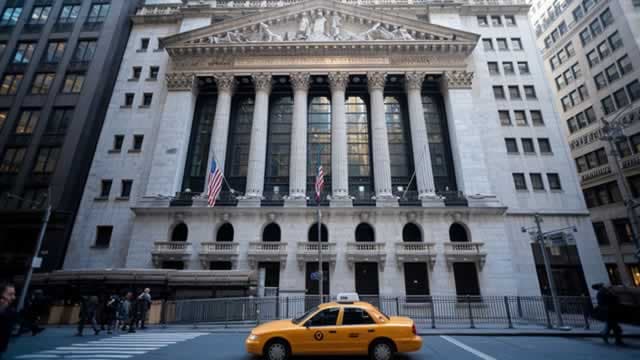
Selloffs in South Korea, Japan, and Taiwan highlight supply-chain and energy risks that could eventually spill into U.S. markets as the Iran conflict escalates.

Oil's surge toward $120 per barrel is rattling energy markets and fueling inflation fears. But for one corner of the market, the spike could be a tailwind.

During the fourth quarter of 2025, U.S. financial markets extended their advance while navigating a narrowing margin for error across policy, valuation, and economic data. The period was defined by a complex mix of moderating inflation, softening labor conditions, fiscal uncertainty, and the continued, but increasingly scrutinized, buildout of artificial intelligence infrastructure.
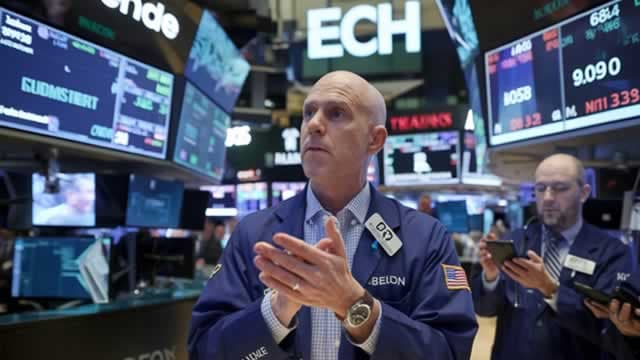
Defense giants are emerging as relative winners from the Iran war and the oil shock roiling global markets, with investors flocking to the largest U.S. primes as hedges against escalating conflict and inflation risk.