
加载中...
共找到 18,441 条相关资讯
The Schwab Trading Activity Index, or STAX for short, experienced a near-record increase in February. The AAII survey is a prime example, as bullish sentiment fell to 31.9% this week.

Geopolitical tensions in Iran are pressuring the S&P 500 (SPX), but markets haven't capitulated. Sonali Basak joins Sam Vadas to explain why investors may want to buy selectively, not panic, as oil volatility and higher rates strain consumers and private credit redemptions test firms like Blue Owl (OBDC), Morgan Stanley (MS), and Deutsche Bank (DB).
Investors are coming to grips with the potential for a longer war in Iran—and its impact on the U.S. economy.

The CBOE Volatility Index surged roughly 13% on Thursday before settling to 24.92 by the close.

The Hormuz crisis is pushing Europe and Japan toward a more hawkish policy stance as higher oil prices threaten to reignite inflation. In Europe, ECB officials are signaling they could react if the oil shock starts feeding into broader inflation, with the bank having already stopped cutting in June 2025.
CNBC's Jim Cramer issues a crucial warning as the stock market sinks and oil prices spike due to conflict overseas. "Believe me, you'll be kicking yourself if you sell everything and then you have to watch this market rebound without you," Cramer said Thursday.

Chinese lenders plan to steer more money toward technology and innovation-oriented firms, bankers say, responding to Beijing's pledge to aggressively adopt artificial intelligence throughout the economy and dominate emerging sectors.

Geopolitical turmoil in the Persian Gulf has spiked oil prices and shipping rates, but historical patterns suggest the disruption will be brief. Shipping companies are immediate beneficiaries, locking in record freight rates regardless of conflict duration, while energy and commodities remain well supported.

A toxic brew of climbing bond yields and a broadening panic about the stability of private-credit lenders has helped push the S&P 500 financial-services sector to its lowest level since last May.

This week, the U.S. housing market has taken center stage with a flurry of data releases and a critical earnings report from homebuilder Lennar. Investors are closely watching the intersection of low inventory, shifting inflation dynamics, and a geopolitical shock that threatens to rewrite the 2026 economic playbook.

The Dow Jones Industrial Average tumbled more than 700 points Thursday, as oil prices surged above $100 a barrel amid the ongoing U.S.-Iran conflict.
US drone defense capabilities lag in small UAVs and USVs, prompting urgent investment as asymmetric threats escalate. Leidos and L3Harris offer diversified, lower-risk exposure, while AeroVironment leads pure-play drone names by maturity and product breadth.

Investors asked to cash out 14% of Cliffwater's $33 billion fund while Morgan Stanley capped withdrawals.

Iran's new Supreme Leader Mojtaba Khamenei vowed to continue blocking off the Strait of Hormuz, through which crude oil, natural gas, fertilizer, sugar, aluminum, basic plastics, and helium all move.
Trump pressures Fed Chair Jerome Powell to cut rates “immediately" ahead of the March 17 meeting, escalating tensions over the central bank's independence.
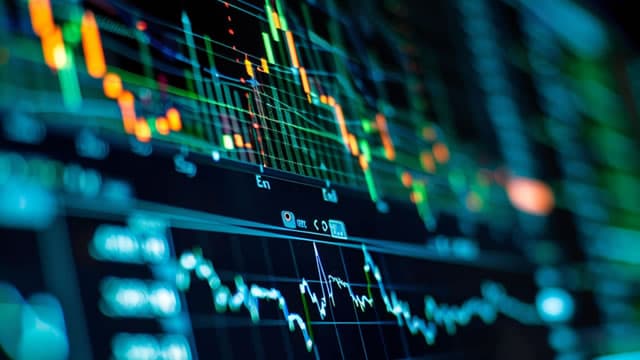
Oil is experiencing a rally driven by geopolitical disruptions, not structural supply-demand imbalances. Technical signals, including overbought RSI and bearish candlestick patterns, suggest a potential shorting setup similar to the recent silver top.

Analysts at J.P. Morgan offer insight into how noninstitutional investors are trading amid the Iran war.

Lucid Group (LCID) pushes into autonomous ride-hailing with its Lunar robotaxi concept and plans to tap Uber's (UBER) network, but investors question the strategy as losses widen. Netflix (NFLX) signals a major AI shift with a reported $600 million bet on filmmaking startup Interpositive.
Worries mount that the conflict could pose a serious threat to global growth.
Bloomberg's Caroline Hyde and Ed Ludlow discuss the fall in tech stocks as oil prices spike again, stoking fears the war in Iran will further crimp energy supplies and fuel inflation. Plus, Dell CEO Michael Dell and the US Energy Department Under Secretary for Science discuss their partnership and work to develop supercomputers.