
加载中...
共找到 18,597 条相关资讯

The S&P 500 opened higher but the rally fizzed as investors braced for a longer war in Iran.


Jim Cramer says the recent sell-off in tech is being driven by fear, not fundamentals. He cautioned investors to stay disciplined, arguing these dislocations are buying opportunities rather than reasons to sell high-quality stocks.

I reiterate a buy recommendation for assets tracking the main American indices, especially the S&P 500. The Iran War is already over a month old, and its impact on the stock market is already greater than expected.

Indexes finish mixed Monday amid continuing war woes and rising oil prices. Small caps underperformed while aluminum stocks surged.

The U.S.-Israel war on Iran persists, in spite of Trump's signals of potential resolution to which the market has grown thicker-skinned. The supply shock that this creates, and could expand with the closure of the Bab al-Mandeb Strait, has yet to take its full force, and markets are beginning to digest that.

Advance or retreat? That's the question on investors' minds as the war in Iran enters its fifth week.

Markets flip to rate-hike odds for the first time this cycle

Fed Chair Jerome Powell signals a wait‑and‑see stance on rates as oil prices rise and Middle East tensions build. Energy-driven supply disruptions lift Alcoa (AA) and Century Aluminum (CENX), while China stocks show resilience.

Charles Kantor, Neuberger Berman, joins 'Closing Bell Overtime' to talk recent comments from Fed Chair Jerome Powell, the impact of oil inflation on the markets and economy, and more.

CNBC's Steve Liesman joins 'Closing Bell Overtime' with the latest comments from New York Fed President John Williams.

US stocks ended mostly lower on Monday as rising oil prices and escalating geopolitical tensions in the Middle East weighed on investor sentiment, offsetting optimism around diplomatic signals from Washington. The S&P 500 fell about 0.4%, moving closer to correction territory and extending its decline to roughly 9.3% from its recent peak.
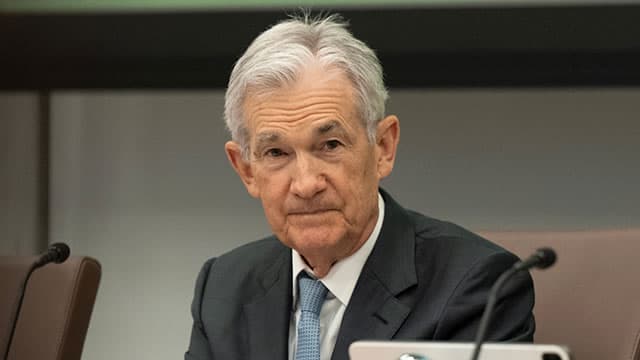
Federal Reserve Chair Jerome Powell said during a Harvard University event Monday that policymakers should look past rising energy prices amid the war in Iran – adding that there is no need to hike interest rates now.

The Iran war will likely push inflation higher in coming months, a senior Federal Reserve official said Monday, but he signaled the central bank's current interest-rate setting gives it room to wait and see if those pressures last.

While equities are struggling to pick a direction as of midday, the weakness at the end of last week has marked fresh lows for the broad market and some of the most influential names: the Magnificent Seven. While it is not yet a bear market, this is now the most severe drawdown since the tariff tantrum last spring and the 2022 bear market before that.

So far, I haven't seen a real capitulation in the broader markets. I am not buying the dip, and I'm planning to raise even more cash this week.
Operator: Good afternoon, and welcome to Fathom Holdings Fourth Quarter and Full Year 2025 Conference Call. Joining us today are the company's CEO, Marco Fregenal; and Senior Vice President of Finance, Daniel Weinmann. [Operator Instructions] Please note this conference is being recorded. Before I turn it over to management, I want to remind listeners that today's call may include forward-looking statements within the meaning of the Private Securities Litigation Reform Act of 1995. Such forward-looking statements are subject to numerous conditions, many of which are beyond the company's control, including those outlined in the Risk Factors section of the company's Form 10-K year ended December 31, 2025, and other company filings made with the SEC. Copies of which are available on the SEC's website at www.sec.gov. As a result of those forward-looking statements, actual results could differ materially. Fathom undertakes no obligation to update any forward-looking statement after today's call, except as required by law. Please note that during this call, management will be discussing adjusted EBITDA, which is non-GAAP financial measure as defined by the SEC Regulation G. A reconciliation of this non-GAAP financial measure to the most directly comparable GAAP measure is included in today's press release, which is now posted on Fathom's website. With that, I will turn the call over to Fathom's President and CEO, Marco Fregenal. Please go ahead, sir. Marco Fregenal: Good afternoon, everyone, and thank you for joining us today. Before Daniel walks us through the financial results, I want to take a few minutes to step back and talk about the progress we made during the fourth quarter and throughout 2025. This past several years have been challenging for the housing market. Higher interest rates and affordability constraints have significantly reduced transaction activity across the industry. Despite those headwinds, we continue to execute on our long-term strategy and strengthen the foundation of the Fathom platform. That progress is reflected in our results. For the full year 2025, we generated $420 million in revenue, representing a 25% year-over-year growth, and our total transactions increased nearly 15%, driven in part by the addition of My Home Group and the continued addition of strong agents to our network. For the full year 2025, gross profit increased 20.8% to $34.2 million compared to $28.3 million in 2024. And adjusted EBITDA improved by $1.7 million or a loss of $4 million compared to a loss of $5.7 million in 2024. Beyond the financials, we made meaningful strategic progress. We expanded our ancillary businesses, launch new programs and partnerships, strengthen our leadership team and sharpen our focus on the core Fathom ecosystem. It also merits noting that in our fourth quarter, transaction volumes continue to reflect broader market trends. In December, for example, the industry saw a significant number of contract cancellations in some markets, including Atlanta, Jacksonville, and San Antonio, cancellation rates exceeded 20%. Even in this environment, we are encouraged by the strengthening quality of our business. These conditions reinforce why we proactively restructure our economics to reduce reliance on transaction volume and build a more durable, diversified profit model across our platform, positioning us well for our long-term growth and meaningful acceleration when conditions improve. With that context, let me shift to the 4 areas that are central to where we're going as a company, margin expansion, agent experience, customer experience and AI-driven technology. Let me start with margin expansion. In the fourth quarter of 2025, we continue to build Elevate, our concierge level offering by adding more than 100 agents and implemented START, our first-time buyer concierge program through an acquisition. So far in 2026, we have expanded START into 5 states, and we expect by operating 10 states by the end of the year. Looking ahead, our goal is for these 2 programs to represent at least 10% of our total transaction volume by year-end and increase to over 15% by the end of 2027. That's important because both Elevate and START carry significantly higher gross profit margins, typically ranging from 20% to 50%. As these programs scale, we expect them to have a meaningful positive impact on overall margins and further improve the profitability profile of the business. In addition, we are seeing continued progress across our ancillary businesses. Our mortgage business delivered strong performance with revenues increasing 70% in the fourth quarter of 2025 compared to the fourth quarter 2024 while maintaining gross profit margins of approximately 35%. Momentum has continued into the first quarter of 2026, where we have seen file starts increased by over 150% compared to the first quarter of 2025. Our title business also performed well, with revenue growing 38% in the fourth quarter compared to the fourth quarter of 2024, and it continues to be a strong contributor to gross profit margins of approximately 58%. Taken together, both our mortgage and title businesses are scaling nicely and expected to be meaningful contributors to improved margins and overall profitability in 2026. We're also implementing several initiatives to improve profitability and strengthen unit economics across the platform. Let me take a minute to explain our new commission plan named Edge and why matters. Under Edge, new agents will pay a $75 monthly fee. Previously, we charged a $700 annual fee collected on the agent's first transaction of each anniversary year. The challenge was that approximately 35% of our agents never closed the transaction, which made it more difficult to collect the annual fee. By moving to a monthly fee of $75, the total annual amount increases from $700 to $900, a 28.6% increase, which we should now be able to collect from the significant majority of our agents who join Fathom. Moving to our monthly structure increases consistency and predictability in our revenue align us with our industry standards and supports a more engaged agent base, which we believe will drive higher transaction activity over time. To put this in perspective, we believe this change could add to over $1 million in additional gross profit over a full year. With Edge, we are moving away from a flat fee transaction fee and introducing a 7% split while maintaining our $9,000 annual cap, which we set at the agent's anniversary. This is a strategic evolution. The flat fee model works well in a static environment, but a split model allow our economics to scale with home prices. As values increase, our gross profit per transaction increases as well. In other words, we participate more directly in the upside of the market. And even with that change, we expect to remain extremely competitive. A 7% split is well below brokerages, which typically charge from 20% to 30% or even more. While this change will increase our average gross profit per transaction by more than $200, we remain firmly positioned as a value leader. We are not repositioning as the traditional brokerage. We are strengthening our position as the highest value brokers in the industry. In addition, we have introduced a new transaction fee of $250, applied to every transaction in Fathom Realty. On our previous Fathom One and Fathom Max plan, this fee alone will increase our per transaction gross profit by between 45% and 54% on transactions that have not yet reached the annual cap. To put that in perspective, on just 10,000 transactions, that represents an additional $2.5 million in gross profit. On our new Edge plan, which includes both a higher commission split of 7% and the separate $250 fee, the combined effect represents on average a 116% increase in gross profit on a pre-cap transaction over our Fathom One plan, which is the plan under which the majority of our agents operate. It is important to understand our identity has never been tied up to a specific pricing structure. Whether it's flat fee or split, those are simply tools. Our identity is and always has been delivering the greatest value to our agents. Even with these changes, including the additional commission split under Edge and now the new $250 transaction fee, we believe we remain among the most competitively priced brokerages in the country. We continue to deliver significantly more in tools, technology, training and operational support than virtually any competitor while still pricing well below the vast majority of brokerages nationwide. This is something which we're very proud. Taken together, these structural changes are significant as these changes could add a significant incremental gross profit before any benefit from a market recovery. And finally, on implementation. All existing agents are being grandfathered into their current plan. Edge applies to new agents joining the platform. Over time, as natural attrition occurs and new agents join, the mix will shift towards Edge organically. We view this as a controlled low disruption transition that allows us to improve unit economics while maintaining stability across our existing agent base. In addition, we are now applying a monthly fee to agents who have historically closed 0 transactions with Fathom. We fully expect some of these agents to leave the platform, and we are comfortable with that outcome. These agents do not generate revenue or contribute to EBITDA. To date, we have already removed approximately 1,100 of these agents, and we expect a similar number to follow as we implement the monthly fees. Removing these agents will have 0 negative impact on our net income or EBITDA. As these initiatives scale, we believe they will play a meaningful role in driving overall margin expansion. Now to agent experience. Agent success is at the core of our platform. We recognize that agents have different goals and operate at different stages of their careers, and we are committed to delivering a seamless experience that supports them at every step. That includes enhancing training, stronger lead generation and new tools like our marketing platform, [ MAXA ]. Across our Elevate and START programs, we're now generating more than 4,000 leads per month, creating over 200 active customer opportunities for our agents. We expect that number to scale to more than 20,000 leads per month by year-end as we continue expanding these programs and roll out additional initiatives, including our partnership with ByOwner.com. We're also seeing encouraging traction with Fathom Business Services, our coaching program designed to improve collaboration between agents and ELG loan officers. While still early, more than 500 agents have completed the training and over 10 million in mortgage transactions are currently in process. Taken together, these initiatives are strengthening our value proposition, helping us attract and retain high-quality agents, increasing attachment across services and driving incremental margin improvement while reinforcing our position as a technology-first platform. The customer experience is just as important to our platform. We focus on delivering a simple and transparent process that builds trust and confidence from search through closing and beyond. In Q2, we plan to launch an integrated consumer portal that will provide buyers and sellers with greater visibility throughout and after the transaction. We're also investing in programs like HOMESTAR, which helps consumers improve their credit. Although we are in the early stages of the rollout, over 600 potential buyers have enrolled, and we have seen approximately 40% of the participants graduating towards beginning the homeownership process. In addition, partnerships such as Move Concierge help streamline decisions around Internet, cable and utilities while our START Concierge program supports first-time buyers as they navigate the complexity of home-buying process. These efforts not only drive satisfaction, repeat business and referrals but also strengthen our network to contribute to greater efficiency and improved unit economics over time. Finally, we continue to enhance intelliAgent, our proprietary technology platform as we lean further into AI-driven initiatives to modernize our offering and to improve overall efficiency. As a technology-first real estate platform, innovation is central to how we operate. We are leveraging AI and automation to streamline agent workflows, enhance the customer experience and scale the business more efficiently than traditional models. These investments are already enabling smarter automation, better insights and more efficient operations across recruiting, training, lead management and transaction support. Over time, we believe this will help us attract and retain high-quality agents, further differentiate the platform and stay ahead of our competitors that are slower to adopt to these technologies. Ultimately, each of these initiatives is designed to improve productivity across the platform, increase revenue per transaction and drive stronger profitability. Taken together, they reflect how we are evolving the model, expanding margins, increasing agent productivity, enhancing customer experience and building a more scalable technology-driven platform. Now let me take a few minutes to discuss some of the leadership changes of the past few months. Samantha Giuggio, who has been with the company for more than 14 years, made a decision to step down as President of Fathom Realty. I have had the privilege of working with Samantha for many years through both the challenges and opportunities our industry has faced. I am deeply grateful for her leadership and the many contributions she made to the growth and success of Fathom. We wish her nothing but the best moving forward. At the same time, I'm excited to welcome Lori Muller, who joined us in February as the new President of Fathom Realty. Lori brings more than 30 years of industry experience, most recently serving as President of EXIT Realty, where she oversaw a network of more than 25,000 agents. She is a proven leader with deep operational expertise, and I'm confident she will play a key role in driving the next phase of growth for Fathom Realty. I have already had the opportunity to work closely with Lori, and I'm excited about the energy, perspective and leadership she brings to the organization. With that, let me turn the call over to Daniel to review the financial results for the fourth quarter and full year. Daniel? Daniel Weinmann: Thank you, Marco. I'll begin reviewing our financial results for the fourth quarter and full year 2025 and then provide a breakdown of performance across our business segments, starting with revenue. Fourth quarter revenue totaled $90.6 million, a 1.2% decrease year-over-year compared to $91.7 million in the prior year period. The modest decline was primarily driven by a 3.2% decrease in brokerage revenue, reflecting softer real estate transaction activity during the quarter. This was partially offset by strong performance in our ancillary businesses, which grew an average of 54.2% year-over-year, driven by increased attach rates and continued expansions of our mortgage and title operations. For the full year 2025, total revenue increased 25.4% to $420.5 million compared to $335.2 million in 2024. The growth was primarily driven by the addition of My Home Group in November 2024 as well as continued momentum in our ancillary businesses, which increased an average of 27.6% year-over-year. This reflects our ongoing focus on driving higher attach rates across our integrated platform and expanding revenue per transaction. Gross profit for the fourth quarter of 2025 increased to $7.1 million compared to $6.7 million in the fourth quarter of 2024. The increase was primarily driven by stronger contributions from higher-margin ancillary businesses, including mortgage and title. The continued expansion of our Elevate program also contributed to improved revenue per transaction and stronger unit economics. Gross profit margin for the fourth quarter of 2025 increased to 8.1% compared to 7.2% in the fourth quarter of 2024. The improvement was primarily driven by a more favorable revenue mix with greater contribution from higher-margin ancillary services as well as improved operating efficiency. For the full year 2025, gross profit increased 20.8% to $34.2 million compared to $28.3 million in 2024. The increase was primarily driven by growth in mortgage and title and the continued expansion of the Elevate program, which helped increase revenue per transaction and overall gross profit contribution. Gross profit margin for the full year 2025 decreased moderately to 8.1% compared to 8.4% in 2024 as the benefits from growth in higher-margin ancillary businesses were offset by revenue mix changes, including the addition of My Home Group and continued investments in growth initiatives. Our technology and development expenses were approximately $1.7 million for the fourth quarter of 2025 compared to $1.8 million in the prior year period. For the full year 2025, technology and development expenses increased to $7.3 million from $6.6 million in 2024. The approximately $700,000 increase was primarily driven by continued investments in our technology platforms, including the expansion of new features within intelliAgent. General and administrative expenses totaled $8.2 million for the fourth quarter of 2025 compared to $8.4 million in the prior year period. For the full year 2025, general and administrative expenses decreased to $33.1 million from $33.6 million in 2024, primarily reflecting the impact of cost reduction initiatives implemented throughout the year. Our marketing expenses totaled $1.4 million for the fourth quarter of 2025 compared to $1.9 million in the prior year period. For the full year 2025 marketing expenses decreased to $5.2 million from $5.8 million in 2024. The decrease was primarily driven by continued expense discipline and increased efficiency across marketing initiatives. Our GAAP net loss for the fourth quarter of 2025 totaled $6.7 million or $0.21 per share compared with a net loss of $6.2 million or $0.29 per share for the fourth quarter of 2024. The year-over-year increase in net loss was primarily driven by a lower income tax benefit of approximately $20,000 in 2025 compared to $1.1 million in the prior year period as well as the recognition of approximately $900,000 loss on the sale of business. For the full year 2025, GAAP net loss was $20.3 million or $0.72 per share compared with a GAAP net loss of $21.6 million or $1.07 per share for 2024. The year-over-year improvement was primarily driven by higher revenue and expense reduction initiatives. These improvements were partially offset by the recognition of a $900,000 loss on the sale of a business and approximately $2 million in accrued legal expenses. Our adjusted EBITDA loss, a non-GAAP measure for the fourth quarter of 2025 improved to $2.6 million compared to $2.9 million in the fourth quarter of 2024. For the full year 2025, adjusted EBITDA loss was $4 million compared to $5.7 million for 2024, representing an improvement of approximately 29.8% year-over-year. The improvement was primarily driven by higher revenue, particularly from the addition of My Home Group and growth in our ancillary businesses as well as continued expense reduction initiatives, including lower marketing and general administrative expenses. These improvements were partially offset by increased investment in technology and development to support long-term platform growth. I will now provide a more detailed review of performance across our individual business segments. Starting with our brokerage segment. We closed approximately 8,501 real estate transactions during the fourth quarter, a decrease of 14.2% compared to 9,903 transactions in the fourth quarter of 2024. The decline was primarily driven by continued softness in the residential real estate market, including elevated mortgage interest rates, affordability constraints and limited housing inventory, which impacted overall transaction volumes. Notably, U.S. home purchase agreements canceled in December represented approximately 16.3% of homes that went under contract during the month, the highest December level recorded since tracking again in 2017, highlighting the ongoing volatility and pressure in the housing market. For the full year, we closed approximately 42,405 real estate transactions, representing a 14.6% increase compared to the prior year, primarily driven by the addition of My Home Group in November 2024. We ended the fourth quarter with approximately 14,135 agent licenses, a decrease of 1.2% compared to 14,300 agent licenses at the end of the prior year. The modest decline was primarily driven by continued softness in the real estate market, which impacted agent recruiting and retention as well as a continued focus on improving agent productivity and overall network quality. Revenue for the real estate division was approximately $84.9 million in the fourth quarter compared to $87.7 million in the prior year period, representing a 3.2% decrease. The decline was primarily attributable to softer housing market conditions, including reduced transaction volumes during the quarter. For the full year 2025, revenue increased 26.8% to $399 million compared to $314.7 million in 2024. The increase was primarily driven by the addition of My Home Group in November 2024. Gross profit margin for our real estate division remained consistent at 5.4% for the fourth quarter of 2025 compared to the fourth quarter of 2024 as improvements from higher agent productivity and increased contribution from Elevate were largely offset by softer transaction volumes and revenue mix during the period. For the full year 2025, gross profit margin improved to 6.1% compared to 5.8% in the prior year. The increase was primarily driven by the continued expansion of our Elevate program, which enhances revenue per transaction as well as a broader initiative focused on improving unit economics, including pricing discipline and increased contribution from higher-margin transactions. Adjusted EBITDA loss in the brokerage division was approximately $200,000 in the fourth quarter of 2025 compared to adjusted EBITDA income of $40,000 in the fourth quarter of 2024. The year-over-year decline was primarily driven by lower transaction volumes in the softer housing market, which reduced revenue and operating leverage in the quarter, partially offset by continued expense discipline. For the full year 2025 adjusted EBITDA income in the brokerage division increased to $5 million compared to $3.2 million in 2024. The improvement was primarily driven by higher transaction volumes from the addition of My Home Group as well as improved unit economics, including increased revenue per transaction and ongoing cost optimization initiatives. Next, I will turn to our mortgage segment. Our mortgage business generated revenue of $3.4 million in the fourth quarter of 2025 compared to $2 million in the fourth quarter of 2024, representing an increase of approximately 70%. The growth was primarily driven by higher loan origination volumes and improved attach rates from our brokerage channel. Mortgage adjusted EBITDA loss for the fourth quarter of 2025 improved to approximately $200,000 compared to a loss of $600,000 in the prior year period, reflecting improved operating leverage on higher volume as well as continued expense discipline. For the full year 2025, revenue increased 17.4% to $12.8 million compared to $10.9 million in 2024. Adjusted EBITDA loss improved to approximately $500,000 compared to a loss of $1.5 million in the prior year, representing an improvement of approximately 67%. The improvement was primarily driven by higher revenue, improved attach rates and continued strategic cost reduction initiatives as well as increased efficiency across the platform. Turning now to our title segment. Our title business generated revenue of $1.8 million in the fourth quarter of 2025 compared to $1.3 million in the fourth quarter of 2024, representing an increase of approximately 38.5%. The growth was primarily driven by organic expansion and increased transaction volume from internal referrals. Those title adjusted EBITDA loss for the fourth quarter of 2025 was approximately $300,000, consistent with the prior year period as higher revenue was offset by continued investment in personnel and infrastructure to support future growth. For the full year 2025, revenue increased 37.8% to $6.2 million compared to $4.5 million in 2024. Adjusted EBITDA loss for 2025 increased to approximately $1.2 million compared to a loss of $500,000 in the prior year. The increase in loss was primarily driven by continued investment in scaling the title platform, including hiring, market expansion and infrastructure build-out, which outpaced revenue growth during the year. These investments are intended to support increased attach rates and improve profitability over time. That concludes our segment review. Turning to our balance sheet and liquidity. We continue to maintain a disciplined focus on our balance sheet given the dynamic real estate market environment. We ended the quarter with a cash position of $5.7 million, reflecting our ongoing focus on liquidity management, expense control and operational efficiency. We did not repurchase any shares during the fourth quarter under our existing stock repurchase program. On March 18, 2026, the company entered into a $2 million financing arrangement, which provides additional liquidity and financial flexibility as we continue to execute our strategic initiatives and navigate current market conditions. That concludes my remarks on the financial results. I'll now hand it back to Marco to share more on our strategic initiatives and outlook. Marco Fregenal: Thank you, Daniel. Before we open the call for questions, I want to spend a few minutes talking about how we see the opportunity ahead as we move to 2026. What I want to emphasize is that the structural changes we have made to our business are designed to deliver meaningfully stronger results regardless of what the broader housing market does. We are not counting on a market recovery to drive our improvement. The pricing and fee changes I described a few minutes ago are already going into effect, and they fundamentally improve our unit economics at any level of transaction volume. At the same time, the long-term fundamentals for housing demand in the U.S. remain very strong. Regardless of when transaction volumes recover, Fathom is well positioned. And more importantly, we are entering the next phase of the business, which we believe will be very positive. Over the past several years, we have invested in building a scalable platform, expanding our agent network and developing our technology and building our ancillary services across mortgage, title and lead generation. During 2025, we took important steps to improve the economics of the model, including changes to our commission structure, the introduction of recurring fees and the continued expansion of higher-margin services. As a result, we believe our business today is stronger, more efficient and more diversified than it has been in the past. So even without a market recovery, we expect to deliver better margins and greater operating leverage. And if the housing market does begin to normalize or improve, which we believe they will, over time, that becomes more meaningful additional upside. And that brings me back to our four priorities we outlined earlier, which will guide our execution in 2026. We are focused on pursuing margin expansion, seeking to improve revenue per transaction and looking to increase the contribution from our higher-margin businesses. We intend to continue enhancing the agent experience with the goal of helping our agents close more transactions and grow their businesses. We also expect to explore new tools, new services and partnerships aimed at improving the customer experience and simplifying the transaction process. And we anticipate continuing to invest in technologies and AI, which we believe will be a key driver of efficiency and scalability across the platform. Together, these initiatives position Fathom to capture growth opportunities as the housing market recovers and to deliver stronger financial performance over time. Before we conclude, I want to take a moment to thank our employees, our agents and our leadership team across the organization. The past several years have been a challenging period for the real estate industry, and I'm incredibly proud of how our team has continued to execute, innovate and support our agents and clients throughout that time. Their work has positioned Fathom for what we believe is the next phase of growth. As we move to 2026, our focus remains on executing these initiatives because we believe they'll deliver materially improved financial results with or without a market recovery. To summarize, there are three points I would highlight from today's call. First, we made meaningful progress from strengthening the foundation of the business during 2025, growing revenue and expanding the platform despite a difficult market. Second, the structural pricing changes we have made, including the new $250 transaction fee and the shift to a monthly recurring fee and more than 100% increase in gross profit for pre-cap Edge transaction are designed to meaningfully improve our unit economics and any transaction volume. And third, our business is more scalable and more profitable per transaction than it has ever been. When the housing market recovers, we are positioned to capture the upside with significantly better margins. Operator, we're now ready to open the line for questions. Operator: [Operator Instructions] Our first question is from Tom Hayes with ROTH Capital Partners. Thomas Hayes: Marco, I guess a couple of things. And again, I appreciate all the details. Really two things. One on the Elevate program, could you just reiterate what you said as far as your target to bring on new Elevate partners in '26? Marco Fregenal: Sure. So Elevate, think of Elevate as a platform, right? And there'll be different kinds of agents to use Elevate in different ways. So you have our regular starting program those Elevate, then we created the START program that leverages some of it, the functionality and the benefits into lead generation that Elevate offer. So Elevate, it will evolve into 2 or 3 different kinds of offerings under the Elevate platform. Our goal by the end of the year is to have about 1,000 agents on Elevate. And I think combined right now, we're about 260, 275. We think that by the end of the year, will be at around 1,000 agents on the entire Elevate platform, which, again, is going to consist of agents on just the basic Elevate program on START, Elevate and a couple of other versions of Elevate that will create over the year. Thomas Hayes: Okay. I appreciate that. And then on the new Edge program, just wondering what some of the feedback from the agents has been. That went into effect Jan 1, and can you just remind me that should be a margin contributor for the START, correct? Marco Fregenal: Yes. So actually that went live -- it's going to go live on April 1 this week. We'll be working on it for several months. I think a lot of our agents like the program in a sense that it compares this team incredibly well against other companies that charging 20% and 30%. Again, keep in mind that our current base is grandfathered, so they can continue to stay on our previous plans, whether it was Fathom Max or Fathom Share. They don't have to move to Fathom Edge. Having said that, we already heard from a variety of agents saying they want to move to Fathom Edge for a variety of reasons in terms of the cap and some of the benefits of Fathom Edge. So I think there'll be a percentage of our regular agents that move to Fathom Edge, but all new agents starting on April 1 will go into Fathom Edge. And again, over time, as we have regular attrition in the business, right, the percentage of Fathom Edge agents will continue to grow and be a bigger percentage of the total agent base. But the new program, Fathom Edge starts on April 1 as well as the $250 brokerage fee. Thomas Hayes: I appreciate that. And maybe just lastly, I know you and I spoke about it last time, but certainly, the agents are key to the Fathom story. But I was just wondering about your strategic partner with ByOwner because I think certainly, the for-sale ByOwner is a significant market piece as well. So just maybe any updates on that partnership as well. Marco Fregenal: Yes, absolutely. So our goal is to leverage a significant percent of individuals who want to sell their house by themselves. Actually, at some point, do hire a real estate agent and the number is over 90%, right? So our partnership with ByOwner is really focused on that, right? It's how do we introduce the agent network to those sellers who want to take advantage of really working with an agent and getting the benefits of everything an agent can do that, right? And so our partnership is really focused on that. Our partnership is not focused -- they have another partner that handles -- when a seller wants to sell the house by themselves, again, the focus of our partnership is that. And we already are in the beginning of the partnership. We already are connected with them. We're already getting leads from them. They are about to announce several partnerships that will be announced soon, which will be the real estate partner for them. And so the ByOwner platform is going to be a meaningful platform for us as we get into Q2 and beyond this year. And the positive thing about that relationship is that's focused on listings, right? And so we're going to get a lot of listings from that relationship. I think I mentioned this before that they currently get about 500,000 visitors a month, right? And so they have a significant audience, and we're certainly going to be able to help ByOwner and our agents monetize and help those clients who want to get the benefit of the full service or agent. Operator: There are no further questions at this time. I would like to turn the conference back over to Marco for closing remarks. Marco Fregenal: Well, I just want to thank everybody for joining us today. I know this is a long call, but there was a lot to update about our business and some of the key initiatives that we are already implementing for 2026. We look forward to a great year. We're very excited about the changes that we're implementing to our business that we believe are going to have meaningful results to our profitability and our growth for 2026. I want to thank everybody for joining us and look forward to talking to you soon. Have a great week. Operator: Thank you. This will conclude today's conference. You may disconnect at this time and thank you for your participation.

Operator: Good afternoon, and welcome to the Sangamo Therapeutics Fourth Quarter and Full Year 2025 Teleconference Call. Please be advised that today's conference is being recorded. I would now like to turn the conference over to your speaker today, Louise Wilkie, Head of Investor Relations and Corporate Communications. Please go ahead. Louise Wilkie: Thank you. Good afternoon, everyone. Thank you for joining us on the call today. On this call are several members of the Sangamo executive leadership team, including Sandy Macrae, Chief Executive Officer; Nathalie Dubois-Stringfellow, Chief Development Officer; Nikunj Jain, Interim Chief Financial Officer; and Greg Davis, Head of Research and Technology. Slides from our corporate presentation can be found on our website, sangamo.com, and under the Presentations page of the Investors and Media section. This call includes forward-looking statements regarding Sangamo's current expectations. These statements include, but are not limited to, statements related to Sangamo's cash runway, Sangamo's plans to obtain additional capital and its ability to continue to operate as a going concern, the therapeutic and commercial potential and value of Sangamo's product candidates and technologies; Sangamo's ability to establish and maintain collaborations and strategic partnerships, including for its Fabry disease program, the anticipated plans of Sangamo and its collaborators for clinical trials, regulatory submissions and regulatory approvals and other statements that are not historical fact. Actual results may differ materially from what we discuss today. These statements are subject to certain risks and uncertainties that are discussed in our filings with the SEC, specifically in our annual report on Form 10-K for the fiscal year ended December 31, 2025, and subsequent filings and reports that Sangamo makes from time to time with the SEC. The forward-looking statements stated today are made as of today, and we undertake no duty to update such information, except as required by law. Please note that all forward-looking statements about our future plans and expectations are subject to our ability to secure adequate additional funding. Now I'll turn the call over to our CEO, Sandy Macrae. Alexander Macrae: Thank you, Louise, and good afternoon to everyone joining the call today. Sangamo continued to make significant pipeline progress in 2025 and into the first quarter of '26. Set against a backdrop of regulatory and market uncertainty and with limited cash resources. In June, we announced positive top line results from the registrational STAAR study in Fabry disease, including a positive mean annualized estimated glomerular filtration rate or eGFR slope at 52 weeks across all those patients in the study, which is the U.S. FDA reiterated in October 2025 may serve as the primary basis of approval under an accelerated approval pathway. The rolling submission of a biologics license agreement or BLA, to the FDA is in progress, seeking ST-920 approval, Sangamo's first-ever wholly owned BLA submission. We transitioned to become a clinical stage neurology company with 6 clinical sites activated in the Phase I/II STAND study in chronic neuropathic pain. In April, we continue to demonstrate that we're a collaborator of choice for neurotropic capsids with the announcements of a third neurology capsid license agreement this time with Eli Lilly to deliver genomic medicines for up to 5 central nervous system disease targets. And we have raised over $130 million in funding since the start of 2025 through nondilutive license fees and milestone payments as well as equity financing. These are important achievements, and I would like to sincerely thank everyone at Sangamo for their hard work, dedication and continued focus on our mission to help patients in need. I would now like to hand directly over to Nathalie Dubois-Stringfellow, our Chief Development Officer, to provide recent business updates from our prioritized pipeline. I will then close the call by summarizing the key broader business takeaways from this quarter. Nathalie? Nathalie Dubois-Stringfellow: Thank you, Sandy. First, I am pleased to share updates from our registrational Phase I/II STAAR study evaluating Isaralgagene Civaparvovec or ST-920, our investigational gene therapy for the treatment of adults with Fabry disease. In December, we were happy to initiate the rolling submission of a BLA to the U.S. FDA seeking approval of ST-920 under an accelerated approval pathway. Rolling submission allows for completed module of the BLA to be submitted and reviewed by the FDA on an ongoing basis rather than waiting for the entire BLA to be submitted at once. We have now submitted both the nonclinical and the clinical modules to the FDA. In addition, the antibody assay companion diagnostic, which is designed to screen patients for eligibility with ST-920 has been submitted to and accepted by the FDA Center for Devices and Radiological Health, or CDRH, seeking premarket approval. These are significant milestones for Sangamo and for Fabry patient in knee. I would like to sincerely thank everyone at Sangamo involved for their significant efforts in getting us to this point. The next key milestone is completion of the chemistry, manufacturing and controls or CMC module. We are very pleased to have completed manufacturing and testing of the process validation lots with acceptable results achieved and to have completed method validation. We are also excited to have manufactured our first commercial lot. We are working hard to advance the remaining required activities and anticipate completing submission of the BLA as early as this summer, subject to our ability to secure adequate additional funding. In February, we presented detailed clinical data via 4 platform and poster presentation in the 22nd Annual WORLDSymposium that took place in San Diego, California. We believe this encouraging data continue to demonstrate the potential for the endogenous production of alpha-Gal A activity following ST-920 administration to transform the Fabry treatment landscape. With a positive mean annualized eGFR slope at 1 year across all those patients in the study and at 2 years for 19 patients, we continue to see improved kidney function, which marks a notable departure from the historical renal decline characteristic of the disease. The stabilization in cardiac function, including stability of cardiac structure and cardiac biomarkers is also especially encouraging, given that cardiovascular disease is the most common cause of death in Fabry disease patients. And we were pleased to give a platform presentation dedicated entirely to this important topic, showcasing new cardiac-specific data. In addition to a well-tolerated safety profile, the ability to withdraw from enzyme replacement therapy and a range of other clinical benefits, the data continue to demonstrate how ST-920 shows potential as a onetime durable treatment option for Fabry disease that could fundamentally shift the current treatment paradigm. At WORLD, we also presented platform presentation on pharmacology and immunogenicity outcomes from the STAAR study alongside a fertility, embryofetal development, AAV integration and germline transmission risk study in mice. All 4 presentations are available on the Sangamo website. Next, I'd like to focus on our prioritized neurology pipeline. As in December, we were thrilled to receive Fast Track designation for ST-503, our investigational epigenetic regulator for Fabry with -- for patients, sorry, with intractable pain due to small fiber neuropathy or SFN. As a reminder, Fast Track designation aims to facilitate the development and expedite the review of new therapeutics that are intended to treat serious or life-threatening conditions and that demonstrate the potential to address unmet medical needs. Company granted this designation are given the opportunity for more frequent interaction with the FDA. This clinical program may also be eligible to apply for accelerated approval and priority review if relevant criteria are met. SFN is a debilitating chronic pain disorder with limited effective current treatment options. So this designation underscores the high unmet patient need in SFN and the urgency to develop safe and effective non-opioid treatment alternatives. Since the last update, we have activated an additional 4 clinical sites in the Phase I/II STAND study evaluating ST-503 to achieve a total of 6 active sites. These sites are working on identifying patients. Last week, we were also pleased to have a manuscript published in Science Translational Medicine, detailing the preclinical safety and pharmacology of ST-503 in human neurons, mice and nonhuman primates. These promising results provide the preclinical foundation for our Phase I/II STAND study. Finally, moving to ST-506, our epigenetic regulator for the treatment of preowned disease to be delivered intravenously using our neurotropic STAC-BBB capsid. This quarter, we continue to advance clinical trial application or CTA-enabling activities. The good laboratory practice or GLP toxicology study has been completed and analysis is ongoing. I would like to hand back to Sandy to provide a broader business and financial update. Sandy? Alexander Macrae: Thank you, Nathalie. In closing, in times of regulatory change and careful financial management, we are pleased with the pipeline progress we have made since the start of 2025. A positive top line readout in our Fabry disease program alongside continued productive engagement with the FDA have resulted in a rolling submission of the BLA for ST-920 with the first 2 modules submitted. We became a clinical stage neurology company with the initiation of the Phase I/II STAND study in SFN, and we received Fast Track designation from the FDA for this program. And we have continued to show Sangamo as a collaborator of choice for neurotropic capsids with the announcements of our third STAC-BBB license agreement. These are important advancements. However, we will not be satisfied until we solve our long-term cash runway. Securing a commercial partner for Fabry remains our #1 focus, and we continue to engage in Fabry business development discussions with multiple potential partners. Like me, I know many of you feel frustrated that this process is taking so long. Discussions of this nature are complex and facilitating the extensive due diligence required by potential partners takes time as they assess the regulatory environment for gene therapies. We also continue to seek ways to raise additional capital, including an assessment of all strategic options for each of our assets and are in discussions with multiple potential partners, including alongside our focused efforts to secure a Fabry commercialization partner. We will share more information as soon as we are able. Operator, please open the line for questions. Operator: [Operator Instructions]. Our first question comes from Maury Raycroft with Jefferies. James Stamos: This is James on for Maury. Just to start off, can you provide more color on the revised timing for the Fabry BLA submission? What PPQ and other CMC-related activities are the primary gating factors here? And separately, I know you just touched on the Sandy, but can you comment on the status of the Fabry partnership discussions, whether the same counterparties previously engaged remain in dialogue with Sangamo and whether recent leadership changes at [ CBER ] have had any impact on those discussions? Alexander Macrae: Thank you, Maury. An important set of questions. So when we were given guidance that we could file for accelerated approval with a single study, the clinical data time lines were very clear because the patients were already in the study. We then had to hustle to complete the CMC activity that would normally be performed over Phase II and Phase III. And so the CMC has always been the piece that has been on the critical path for our filing. We've also had a number of very, very helpful interactions with the CMC group at the FDA. And most recently, they've given us very clear detailed pages of guidance on what was needed to complete the submission and maximize its chance of success. And of course, we are following those to the letter and making sure that we do all the right things for CMC, which is often the piece that is most challenging for cell and gene therapies. And then there's a third bit that we haven't spoken about as much, which is we are managing our cash very carefully. We're managing our spending, and we want to ensure that our runway gives us the best possible time to fulfill a Fabry partnership. And that wise prudent spending compared -- combined with the agency's requirement has just led to the time line for the CMC being a little longer than it previously was. You asked about the partnerships. We have been talking to people for 18 months, a variety of people. Most of the ones we spoke to last year have now gone. And many of the times, it was because of regulatory uncertainty. We are now speaking to multiple partners and are having good conversations with them. But these are -- these 3 are new to the discussions, and so we need to go through the process of due diligence, management presentations and then negotiations. And Maury, trust me, the team are doing everything possible to find the right partner and get this to patients when we are so close to a filing of a medicine that is going to fundamentally change the way Fabry patients are treated. Operator: [Operator Instructions]. Our next question comes from Patrick Trucchio with H.C. Wainwright. Luis Santos: This is Luis Santos in for Patrick. I was wondering if you have had any additional interactions with the FDA recently or have any additional FDA interactions planned, specifically relating to the acceptance of the eGFR slope as a primary endpoint? And if anything has changed given the recent FDA changes? Alexander Macrae: Thank you, Luis. So we spoke to the agency last October of last year and feel that they reiterated that the eGFR at 1 year could be used to file for accelerated approval. We haven't gone back to them. It's always a question of fulfilling what they've asked and submitting it, and we're now halfway through the rolling submission for -- we've submitted the clinical module and the preclinical module. We've submitted the companion diagnostic. The CMC is in process, and then there's a final piece that kind of pulls it all together and gives the full summary. So we haven't -- we don't plan to go to the agency again because we're already partway through the process. If the agency changes or their way of dealing with gene therapy changes, we would, of course, address that. But at the moment, we feel we have enough guidance from them to move ahead. Operator: I'm showing no further questions at this time. We do have a question from Luca Issi. Unknown Analyst: This is [ Kathy ] for Luca. On [ prime ] disease, maybe quickly, you mentioned that this is your first in-human trial for STAC-BBB capsid. Does that time line also account for your partnered programs that BBB's clinical proof of concept will be -- the prime one will be the first and your partners' entrants into clinic are behind that? And related to it, when we look at which programs has the STAC-BBB capsid, is there an aspect of the approach that makes it more suitable for some indication versus others or the decision to use the intrathecal AAV9 for neuropathic pain, for example, is just a matter of timing. Alexander Macrae: So I'm not sure I understood -- I heard all the parts of that, but let me try and answer what I think you were asking. I think you asked why did we use AAV9 for neuropathic pain. And that program was started 4 or 5 years ago before the STAC-BBB capsid was known and AAV9 is very effective when given intrathecally at dosing the dorsal root ganglion. So it would be the logical choice. And AAV9 has been used and been seen to be safe and effective. Our STAC-BBB, we are very pleased, and we're very pleased to have such eminent neurological companies choosing STAC-BBB and taking it forward. They are fortunate to have great resources, and we are working with each one of them to help them to understand the capsid and take it forward. And we are -- we feel we have good relationships with all of the 3, and we're encouraged by their enthusiasm to move their programs forward. Operator: And I'm showing no further questions at this time. I would now like to turn the call back to Louise Wilkie for closing remarks. Louise Wilkie: Thank you once again for joining us today and for your questions. As a reminder, you can access our presentation on the Investor Relations section of the Sangamo website. We look forward to keeping you updated on our future developments. Operator: This concludes today's conference call. Thank you for participating. You may now disconnect.
Operator: Dear investors, analysts and friends from the media, good afternoon. Welcome to the 2025 Annual results release of the Bank of China. I'm Liu Chenggang, Vice President and Secretary of the Board of BOC. Today's press conference is co-hosted by Ms. [Ko Margaret], spokesperson of BOC and myself. This event is being live streamed online, and we also extend a warm welcome to all participants who are joining us online. First of all, let me introduce to you the leaders attending today's conference. Mr.Zhang Hui, Vice Chairman, President and also Chief Compliance Officer; Mr. Hui Zhang, Vice President; Mr. Liu Chenggang, Vice President; and Mr. Yang [indiscernible], Vice President; Ms. Wang [indiscernible] Ling, member of the Party Committee and Vice President. In addition, some directors participating online. The bank's 2025 annual results have been announced to the public today. The performance presentation slides are now available for download on the bank's official website or can be viewed at the bottom of the live stream page. All financial figures presented today are prepared in accordance with IFRS, unless otherwise specified. Today's conference consists of 2 sessions, a performance overview and a Q&A session. First of all, let's give the floor to Mr. Zhang Hui to deliver the speech. Hui Zhang: Dear investors and guests -- good afternoon. And first of all, a big welcome to all of you to our annual results release. I want to thank all of you for your longer trust, attention and support for our bank. I will first provide a brief overview of our 2025 operating performance and outlook for the next stage. After that, I will join the senior management present here to have an in-depth exchange on issues that you care about. 2025 was the final year of the 14th 5-year plan period, facing a complex environment. Our bank rigorously implemented the decisions of the Party Central Committee and the State Council. We accelerated transformation under a low interest rate environment, achieved steady and improving operational results, improved quality as we progressed and met our expectations and delivered stable and satisfactory returns to our shareholders. First, operating efficiency steadily improved. Operating income reached about RMB 659.9 billion, an increase of 4.28% year-on-year. In the past 3 years, the cumulative year-on-year growth over 11 quarters ranked among the top in the main peer groups and financial efficiency improved marginally with preprovincial profit growth increasing 2.62 ppt compared with 2024. Net profit and net profit attributable to shareholders grew by 2.06% and 2.18%, respectively, with growth improving quarter-by-quarter. NIM stood at 1.26%, remaining stable quarter-by-quarter since mid-2025. The cost-to-income ratio fell 0.93 ppt year-on-year and operating efficiency further improved. Second, resilience of development significantly enhanced. We have consistently promoted high-quality transformation under a low interest rate environment and achieved noticeable results. Net interest income improved quarter-by-quarter and a single quarter year-on-year growth in the second half of this year turned positive. Noninterest income increased 19.21% year-on-year and maintained a high proportion of 33.21% of operating income, up by 4.16 ppt year-on-year. Income sources were further broadened with rapid growth in wealth management settlement and clearing custom financial market trading of [indiscernible] and integrated operation, which strongly supported overall performance. 3, balanced asset and liability growth. Group total assets reached RMB 38.36 trillion, up by 9.4% from last year. The proportion of high-yield assets such as loans and investment increased 0.93 ppt. Total liability reached about RMB 35.15 trillion, up by 9.47%, while RMB deposits increased by RMB 1.37 trillion and foreign currency deposits grew by 15%, further consolidating our leading advantage. Fourth, asset quality remained stable and excellent NPL ratio stood at 1.23%, down by 0.02 ppt from last year-end, maintaining the best level among peers. The watch list ratio remained 1.47%, which is very stable. Provincial coverage ratio was about 2.37%, maintaining a reasonable adequate level. NPL balances and ratio for overseas institutions both declined. We completed the first batch of capital replenishment of RMB 165 billion, and CAR reached 18.85%, the highest year-end level historically with continuous improvement in risk buffer capabilities. Sixth, our market recognition and shareholder returns remained high. Our unique operational advantage and business development have been widely recognized by the market. S&P, Moody's and Fitch all red BOC at the highest level among Chinese peers in 2025. We formulated and implemented market value management measures and the value enhancement and quality return plan, striving to convert steady performance into substantial returns for investors, we efficiently completed both the 2024 year-end and 2025 midterm dividend distributions with a per share dividend of RMB 0.2310 and our payout ratio maintained at 30%. For 4 consecutive years, we have delivered double-digit store investment returns to shareholders. Over the past 1 year, we have been persistent in our positioning, and we have also been fully integrated into national strategy in serving the real economy, preventing financial risks and deepening our innovation has further enhanced our high-quality development. First, firmly supporting high-quality development of the real economy, domestic RMB loans increased by RMB 1.81 trillion, up by 9.9%, intensified support for major national strategies, key sectors and weak links, including technology, innovation, technical upgrades, inclusive finance, elderly care, et cetera. And we have also made great efforts in developing the 5 key areas of finance. We also increased about 18.78% in our technology loan balances, leading the peers. Green loan balance grew by 27.83% and green bond underwriting led Chinese peers. Inclusive finance expanded in scale and quality, inclusive small and micro enterprise loan balances and account numbers increased by 21.32% and 22.86% year-on-year, respectively. We built the BOC Silver Age Pension Financial brand enterprise annuity individual accounts ranked high in the market and the pension industry loans achieved double-digit growth. We promoted breakthrough in digital industrialization and deep transformation of industrial digitalization with digital economy industry loan balances exceeding RMB 880 billion. We supported consumption recovery through the RMB 10,000 billion benefit in the people initiative, effectively implementing physical interest subsidy policies. Domestic personal consumption loan balances increased by 28.35% by contributing to stabilizing the real estate market with personal housing loans exceeding RMB 500 billion. Secondly, firmly expanding global advantage and supporting high-level opening up. Our global operations advantage continued to consolidate with global deployment and international competitiveness further strengthened. Overseas pretax profit contribution increased to 27.99%. We actively supported stable foreign trade and investment. Domestic institution handled international settlement of USD 4.45 trillion, up by 9.56%. Cross-border e-commerce settlement reached USD 1.18 trillion, up by 45.07%. We established the first Chinese global custody bank, the custody network covered over 100 countries and regions, maintaining the top scale among Chinese peers. We actively served going out and bring in initiatives. We tracked over 1,400 Belt and Road corporate credit projects with cumulatively credit support exceeding USD 4.39 billion. We closely followed key foreign invested projects, providing loans, [panda] bonds, cash management and supply chain financing services. We became one of the first bond connect Northbound repo market makers, bond trading volumes with foreign investors consistently exceeding trillions over the past 3 years. We launched cross-border payment channels for Mainland Hong Kong transfers becoming the preferred channel for routine small value remittances. We supported offshore tax refund services covering the widest regions with the number of cases for foreign investors increasing more than 150%. We vigorously supported RMB internationalization. Our London and Colombo branches were successfully qualified as RMB clearing banks, bringing the total number of clearing banks to 18. Cross-border RMB corporate loans continue to grow with cross-border RMB settlement of panel banks and offshore RMB bonds maintaining market leadership. We conducted various multinational central bank digital currency bridge transactions exceeding RMB 350 billion. And for 3 consecutive years, we acted as a main participating bank, enabling efficient cross-border capital flows. Third, firmly consolidate the client end base and enhance competitiveness in key businesses. We classified corporate clients and implemented targeted strategies, increasing corporate clients by 13.88%. We built a comprehensive financial service ecosystem for government, military, education, health care, insurance, securities and infrastructure clients, forming well-integrated collaboration in government, military, school, hospital, insurance, securities and infrastructure sectors. We developed a digital service system for individual clients. Total personal clients approached 554 million, and mobile banking monthly active users exceeded 100 million. We continuously improve the quality and efficiency of wealth management services. Agency sales of personal wealth management products and public mutual funds increased by 11.8% and 12.73%, respectively. We provided full life cycle and full process comprehensive products and service for clients. Link financing projects increased 25% year-on-year. Comprehensive operating profit contribution has increased for 3 consecutive years, maintaining leading position among main domestic peers. Fourthly, firmly coordinated development and safety, safeguard risk and compliance. We continued to deepen the comprehensive risk management system and proactively prepare for various risk prevention. We adhered to the [indiscernible] approach of strict control of new NPLs and strict management of write-offs, ensuring the entry gate and exit gate of asset quality was strictly managed to maintain steadily in asset quality and adequate risk buffer capability, we strengthened overseas risk management, assisted clients in coping with external environment changes to ensure the safety of their overseas funds and assets. We responded prudently to market volatilities with liquidity risk and market risk maintained at a controllable level. Internal control and compliance management were strengthened and compliance operation improved effectively. Fifthly, firmly promote digital transformation and deepen intelligent environment. We accelerated the transformation and upgrading of technology architecture. The total number of cloud service exceeded 51,000. We implemented AI+ initiative and formulated AI+ construction plan, deploying over 400 intelligent assistants across credit operations, risk and client services for deep empowerment. Enterprise-level RPA covered over 3,600 scenarios, expanding the effectiveness of digital tools to reduce workload and empower frontline teams. Sixth, firmly practice in sustainable development and fulfill social responsibility. We officially released our first sustainability report, reviewing the significant achievement of BSC in serving social development, improving people's livelihood and contributing to ecological and environmental protection with world carbon emission measures for high carbon clients within credit portfolios, oddly reducing portfolio carbon intensity. For 26 consecutive years, we have provided national student loans benefiting more than 2 million students. We actively supported employment stability and livelihood loans to maintain and expand jobs increased over 63%. 2026 is the first year of the 15th 5-year plan period. We will implement the deployment of the State Council and also to focus on our main businesses and also hold fast to our risk bottom line and continue to build ourselves into a very strong financial institution. In accelerating China's effort to build a strong power of finance, we are going to make our contribution to high-quality development. We will mainly focus in the following 5 areas. First, high-quality support for the real economy, deepen the 5 key areas of finance, intensify support for technology, innovation, strategic emerging industries, manufacturing, SMEs and other key sectors and follow the national strategy to expand domestic demand, promote consumption potential and optimize investment structure. Second, high-quality support for opening up, deepen the one access point global response service model, build a financial platform for Chinese enterprises to go global and increase support for Chinese enterprises going global and foreign invested companies bringing in enhanced RMB internationalization services and accelerate integrated company operations. Thirdly, promote high-quality value creation, strengthen proactive lean management and pricing capabilities, consolidated income structure advantages continuously improve noninterest income contribution, optimize application of EBA and RWA in resource allocation, promote cost reduction and efficiency enhancement and enhance sustainable development capability. Fourth, high-quality digital and intelligent empowerment will be improved. We'll apply smart contracts, blockchain and AI in cross-border payments, wealth management, client operations and internal management. We will also enhance online and offline, domestic and overseas integrated services and improve total factor productivity. Fifthly, high-quality foundation for development. will strengthen monitoring and management of key industries and clients, control credit and compliance costs effectively, enhance risk prevention and resolution capacity and ensure stable and safe financial services. Dear friends, in 2026, BOC will also celebrate the 20th anniversary of A+H share listing. Since listing, our total assets have increased 6.2x and cumulative dividends have exceeded RMB 970 billion, providing substantial returns to the country and shareholders. Standing at a new starting point and position, all BOC employees will unite, act pragmatically and continue to work hard to deliver steadily improving operating performance, repaying the trust and support of clients, investors and all walks of life of society. Thank you. Chengwen Zhuo: Thank you, President Zhang. Now we move on to the Q&A session in order for more friends to have a chance to raise questions. Each person only can ask 1 question. Before that, please identify yourself and your organization first. Chengwen Zhuo: [Operator Instructions]. First row on the right hand side, in the middle, gentlman, please. Unknown Analyst: I'm [indiscernible] from Citi Securities. Congratulations on the excellent performance. I have a question regarding strategic planning and business strategy. It is a top level -- a top-down question. So 2026 marks the first year of the 15th 5-year plan. We would like to ask the management to share BOC's overall layout for the new development stage of the 15th 5-year plan period as well as its business philosophy and goals for 2026. Chengwen Zhuo: Thank you. It is a very comprehensive question. I'd like to invite President Zhang to answer the question. Hui Zhang: Thank you for your question. As I introduced at the results released just now in 2025, facing the complex and volatile external situation, BOC forged the head under pressure and pursued progress while maintaining stability and successfully concluded the 14th 5-year plan with good results. laying a solid foundation for the development of the 15th 5-year plan period. Looking ahead to the 15th 5-year plan period, in terms of the overall strategic goal, BOC will align with the strategic deployment for building a strong country -- country strong in finance, aimed to develop into a powerful financial institution and continue to act as a door in implementing the decisions and arrangements of the Party Central Committee, a major force in serving the real economy [indiscernible] supporting high-level opening up a practitioner in enhancing the strength of the large-scale large state-owned financial institutions and the balance for maintaining financial stability, thus promoting its own quality development while serving the high-quality development of the economy and society. This strategic position and goal is a solemn commitment made by the Party Committee of BOC to the party and to the country, to all customers and investors and all countries and employees of the bank in 2024, which has effectively guided and promoted the achievement of all the bank's business goals during the 15th 5-year plan period. That is about the overall strategic goals. And in terms of the business practices during the 15th 5-year plan period, we will adhere to the consistent implementation of the overall plan and continue to effectively carry out its strategic goal and positioning from the perspective of operational management. During this new period, BOC will focus on its core responsibilities and main business, mainly 6 capability improvements and 2 transformation promotions. About the 6 capabilities. First, we build a strong capability to serve the real economy, adhere to taking financial services for the real economy as the fundamental purpose closely focus on major strategic tasks and projects such as the construction of China's modern industrial system and coordinated regional development during the 15th FYP period, optimize financial supply and improve service quality and efficiency. We will solidly carry out the 5 key tasks of the financial sector, place high-tech finance in a prominent position in the group's overall development and build a service model that empowers the innovative development of industries. Second, build a strong global layout capability and international competitiveness. We will resolutely take globalization as a core development strategy and top priority, continuously consolidate the advantages in key regions such as Hong Kong and Macau, accelerate the strategic layout in key emerging markets and create new growth drivers for profit contribution. We will play the main role of BOC in facilitating international use of the RMB and supporting the construction of the 2 international rich financial centers of Shanghai and Hong Kong. Third, we'll build a strong comprehensive customer service capability. We will adhere to customer centricity, give full place to the characteristics of comprehensive operation, improve the ecological construction of circles, chains and groups, optimize the comprehensive financial services of equity, loan bond insurance and lease, continuously enhance ecological and integrated service capabilities to drive the improvement and strengthening of medium-sized credit customers and take multiple measures to improve the quality and efficiency of customer service. Fourth, build a strong risk resistance capability, optimize the comprehensive risk management system, strengthen asset quality control, improve the quality and efficiency of recovery and resolution, ensure the basic stability of the group's asset quality keeps the NPL ratio at a low level among peers and firmly hold the bottom line of preventing systematic financial risks. Fifth, build a strong integrated operation capability. We will strengthen the organic integration of business data and technology and enhance the agile and collaborative channel operation capability, intensive and shared operational support capability and data empowerment. Digitally empowered management and sharing capability. Sixth, we'll build a strong team of financial talents. We will adhere to high political standing, excellent work style and strong professional capability, clearly establish a correct orientation for talent selection and improvement and employment improve the talent system mechanism, encourage countries and employees to take on responsibilities and strive to cultivate a team of countries and talents with global competitiveness. Regarding the 2 transformations, first, accelerate digital intelligent transformation. We will increase tech investment in digital intelligent business, build an AI+ finance ecosystem, strengthen tech empowerment in key areas such as key business, channel construction and risk management, build differentiated market competitiveness and create a power engine for high-quality development. Second, accelerate the transformation of sustainable business development. Last year, NIM was 1.26%, greatly shortening the gap with our peers. We are confident that in terms of the net interest income fundamentals, we'll be able to make more contributions. We'll optimize the asset liability structure and firmly hold the basic foundation of net interest income. We'll promote the high-quality development of noninterest business and increase efforts to expand noninterest income, which account for a large proportion of our income. We will also strengthen refined management and promote cost reduction and efficiency improvement. And here, we also continue to adhere to light asset intensive development, strive to alleviate the pressure of the tight balance of capital and funds and effectively respond to the low interest rate environment. So that is our overall strategy and for the 15th 5-Year Plan period, 2026 is the first year of the 15th 5-Year Plan period. The bank will firmly establish and practice a corrective view of performance, serve national strategies and the development of the real economy, adhere to focusing on main business, improving governance and achieving differentiated development, maintain a good development momentum and go all out to ensure a good start for the 15th 5-year plan period. Our business philosophy and goals for 2026 can be summarized as the 6 orientations. The first orientation is adhere to innovation-oriented development, serve the overall national interest and increase support for the development of new product -- new quality productive forces. We will continuously improve the product and service system, highly adapted to new product -- new quality productive forces, boost and empower the construction of the modern industrial system and help smooth the innovation chain, supply chain, industrial chain and capital chain increase -- will also increase support for the construction of a strong domestic market, serve the expansion of domestic demand and boost consumption, implement the policies of 2 major categories of projects and 2 new types of infrastructure and help improve the transmission efficiency of fiscal and financial policies. We will also increase support for areas such as upgrading traditional industries, cultivating and expanding emerging industries and future industries, expanding capacity, improving the quality of the service industry and creating a new form of intelligent economy so as to improve the quality and efficiency of comprehensive financial services. Second orientation adhere to the advant-oriented development, consolidate advantageous features and provide all-around services for high-level opening up. We will continuously improve the global layout and financial service system and maintain a high level of overseas profit contribution. We will vigorously expand the international use of the RMB and maintain rapid growth of RMB assets and liabilities of overseas institutions. We'll also serve the going global of Chinese-funded enterprises and the layout of the global industrial chain and build a benchmark brand for supporting the overseas development of Chinese-funded enterprises. We will also improve and expand global custody products and services and the proprietary custody network and provide higher quality global custody services for various cross-border investment and financing customers. Third, we will adhere to the value-oriented development focused on value creation and effectively respond to the challenges of the low interest rate environment. We will strengthen refined management and drive the steady improvement of net profit to a level comparable with peers. We will enhance the capability of overall allocation of domestic and overseas funds, strengthen the forward-looking management of net interest margin and drive the stabilization and recovery of net interest income. We will increase efforts to expand intermediary business, steadily raise the scale of settlement and clearing, deepen wealth management business and optimize comprehensive financial services. We will expand the scale of customer-driven transactions and promote the development of other net interest rate -- net interest businesses. We also strengthen cost reduction and efficiency improvement. Fourth, adhere to the foundation-oriented development. We'll strive to consolidate the fundamentals and improve the quality and efficiency of key business products and services. We will closely focus on customer needs, give full play to the advantages and characteristics of globalization and comprehensive operation and continuously improve the full life cycle and full process comprehensive service system will enhance the market competitiveness of the key business segments, continue to focus on key products such as salary payment agency, express payments, third-party custody and cash management and actively expand the sources of low-cost liabilities. Also the fifth orientation is adhere to the stability-oriented management development. We'll build a solid risk defense line and better balance development and security. We will effectively respond to internal and external risks and challenges and adhere to prudent and compliant operation. We will also strengthen asset quality control focused on the 2 main lines of strictly controlling newly generated nonperforming assets and increasing substantive recovery, continuously save credit costs and keep the group's nonperforming loan ratio stable. And sixth, we will adhere to the intelligence-oriented development, strengthen digital intelligent empowerment and accelerate the improvement of tech operation efficiency. We will accelerate the implementation of the AI+ plan, optimize the high-efficiency technology supply system, promote the value transformation of data assets and create AI application paradigms, focusing on scenario needs of key areas such as credit marketing and operation. That's all for my answer, thank you for the question. Chengwen Zhuo: Thank you, President Zhang. Now we move on to the next question. Second row, lady in the middle, please. Juan Shen: I'm Shen Juan from Huatai Securities. First of all, congratulations on the excellent performance of BOC. I have a question related to deposits. Since the beginning of the year, the market is highly concerned about the large-scale maturity and repricing of time deposits in the banking industry. How does the management of BOC view the growth trend, structural changes and room for cost improvement of deposits in 2026? At the same time, we can see that the market has noticed the fierce competition, be it competition among peers or the flow of deposits to other areas. So what measures has the bank taken in active liability management in the face of fierce deposit competition? Chengwen Zhuo: I would like to ask Vice President Zhang to answer the question. Hui Zhang: Thank you for your question. I would like to answer from 2 perspectives. One is our view on the growth trend of deposits. And second is how to promote the high-quality development of liability business. First of all, our view on the growth trend of deposits. In terms of total volume in recent years, M2 has maintained steady growth. Over the past 3 years, average growth rate was 8.5%. It is estimated that this year, this trend will be sustained. About the customers' deposits, they have shown a steady and sound momentum. In 2025, domestic RMB deposits achieved a year-on-year increase in increment. Regarding the issue of the maturity of bank time deposits concerned by the market, the scale of the bank's maturing time deposits has indeed increased since the second half of 2025. For these maturing time deposits, we have honestly done a good job in deposit retention services. And if you look at the actual results, most of the deposits are still retained in the form of deposits. With a high rollover ratio of time deposits. It is expected that the maturity of time deposits will have a limited impact on the bank's deposit growth this year and the momentum will continue. The interest rate is lower than the time deposit interest rate 3 years ago. The repricing of the above deposits will drive down the deposit interest payout rate, bringing a positive impact on stabilizing the bank's interest margin level. In terms of structure, it is estimated that social funds will continue to gather towards individuals and nonbank institutions. However, with the implementation and effectiveness of the package of policies for physical and financial coordination to boost the domestic demand, which supports the sustained sound development of economy and improves corporate liquidity the growth of corporate deposits will improve. And this will create a good foundation for the bank to consolidate the liability base and support the development of the real economy. Secondly, how to promote the high-quality development of liability business. Customer deposits are the core business for improving liability quality and an important guarantee for banks to maintain the steady growth of assets. The bank has always adhered to the customer centricity driven by the dual wheels of wealth management and asset management, allocating products and services around customer needs and improve the efficiency of deposit precipitation by providing customers with full process services first, consolidate the customer base and improve liability quality. For corporate customers, establish hierarchy and classified service system actively give play to the traditional advantage cross-border business and further expand the customer base by providing customers with international trade and cross-border RMB settlement services, relying on digital platforms such as corporate online banking, mobile banking and WeChat work to improve the coverage and the convenience of customer services carry out targeted marketing for various customer groups such as [indiscernible] enterprises, multinational corporations, listed companies, micro and small enterprises, industry leaders and continuous to improve customer service capabilities. For individual customers, continues to optimize the hierarchical operation strategy, steadily promote the 3-level customer management model and provide precise services for customers at different levels, strive to improve customers' transaction. Secondly, improve the product and service system and enhance the quality and efficiency of customer service. We adhere to win-win value creation concepts for both banks, and we have also provided the diversified professional products services so as to drive the steady growth of deposits. For instance, in 2025, the bank optimized global cash management system and realized 724 real-time receipts of multicurrency funds on the basis of security leading the industry, give play to the capability advantages of BOC Wealth Management and Bank of China Hong Kong to provide customers with rich and high-quality selection of products adapted to the wealth management needs of multi-asset, multi-strategy and multi-region, build the group's exclusive pension product system, BOC Silver age long-lasting care, provide exclusive wealth management services for pension preparation and elderly care. Thirdly, promote ecological operation and facilitate the closed-loop retention of funds, focus on the policy orientation of investment in physical assets and human capital, follow up the capital flow of finance, social securities, housing, major projects, construction, technological transformation and industrial and supply chains, build a finance plus nonfinance service network for customers and integrate financial services into customers' ecological operation scenario through the in-depth integration with customers' capital flow, information and logistics flow, promote closed loop management of customers' funds, drive deposit precipitation and improve stability of deposits. Fourthly, optimize active liability management and enhance resilience of operation and management with the continuous decline of interest rates center, banks can obtain stable funds with relatively controllable costs. We are going to seize favorable market opportunities, issue bonds and interbank certificates of deposit at the right time, enrich the source channels of liabilities and also achieve cross-cycle high-quality development by supplementing capital and improving the total loss absorbing capacity. Thank you so much. Chengwen Zhuo: Thank you so much. Now we can invite more questions. Okay. The lady who are sitting on the second row on the left-hand side. Unknown Analyst: I'm [indiscernible] from Guotai Haitong Securities. I have a question about NIM. Faced with the challenge of low interest rate environment. Can you introduce us on the specifics? Looking ahead of 2026, what is the trend of NIM and what are the main pressures and the supporting factors, respectively? Chengwen Zhuo: I'm going to answer your question. Actually, according to Mr. Zhang, you already mentioned that it's a very important task for us to maintain our good development and performance in the low interest rate environment. As for Bank of China, we have our own advantages. So we will make good use of both domestic and overseas markets coordinate both RMB and foreign currencies. And we already achieved good results in 2025. And our net interest margin was 1.26%, a decrease of 14 basis points over the previous year. Since the second half of the year, the group's foreign currency net interest margin has stabilized and rebounded. The group's net interest margin was the same as that in the first half of the year and the net interest income achieved positive year-on-year and month-on-month growth. Specifically speaking, first, we increased asset investment and improved efficiency of asset allocation and strengthened our self-disciplinary management of loan interest rate. In 2025, the bank's domestic RMB loans increased by about RMB 1.8 trillion. Credit supply maintained steady and balanced growth, adhered to the principle of risk pricing and reasonably determined the interest rate level of newly issued loans according to operating costs. We also actively seized domestic and overseas market opportunities. The proportion of the bond investment in interest earning assets increased by 21 percentage points year-on-year, of which the growth rate of foreign currency bond investment exceeded 20%, flexibly arranged the term of bond investment. Secondly, continuously optimized liability structure and effectively reduce liability costs. maintain the rapid growth of domestic RMB deposits, appropriately absorb interbank nonbank demand deposits, solidly promote the self-disciplinary management of deposits, drive the group's liability interest payout rate down by 37 basis points with the improvement amplitude hitting a new high in recent years. Third, give play to the advantage of global business and improve efficiency of foreign currency fund utilization. The asset scale of overseas institutions has grown steadily and the proportion of core assets in total assets has increased by 0.9 percentage points. And looking ahead to 2026, it is expected that the year-on-year decline of bank's net interest margin will narrow significantly and the net interest income will achieve positive growth. Currency was faced with a lot of uncertainties, as you may know, that now the geopolitics landscape has actually shrink -- has already give pressure to the interest rate decline of many currencies. We have confidence that we will seize the market opportunities brought by implementation of the package of incremental policies give full play to the advantage of globalization and the characteristics of comprehensive operations solidly achieved the comprehensive balance of volume price risk and efficiency for the 2026, we will do great efforts in the following aspects. First, optimize the basic foundation of asset and liability business and effectively control the decline of interest margin of RMB business. In terms of assets in the first year of 15th 5-year plan period, the bank will grasp with the more proactive macro policies to act ahead of schedule and reasonably arrange the pace of credit supply and bond investment. And also in liability, we will strengthen technological empowerment focused on key scenario and products, remote digital operation of corporate non-loan customers, settlement accounts and individual long-tail customers and facilitate precipitation of demand deposit funds. Meanwhile, we will also actively seize the favorable opportunities of the gradual maturity of time deposits to effectively hedge against the downward pressure of asset income. And besides, secondly, we will strengthen the global service system and maintain the overall stability of interest margin on foreign currency basis. Business, the bank will continue to steadily expand the customer base of going global, promote sustainable growth. Meanwhile, the rapid growth of low-cost domestic deposits has provided competitive capital support. Currently, the expectation of U.S. dollar interest rate cut has weakened significantly. If the U.S. dollar interest rate is cut, it will have basically no adverse impact on the bank. If the Hong Kong dollar interest rate declines, it will bring certain pressure on our income. We will strengthen interest rate sensitivity management and take multiple measures to elevate the adverse impact. Thirdly, refine the requirements for interest rate pricing management and consolidate the foundation for steady development. We will follow closely policy development, adhere to the bottom line of compliant interest rate operation and improve efficiency and effectiveness of pricing management through institutionalized and standardized management methods. And we will also set the reasonable deposit and loan interest rate. Thank you so much. And today, we have a lot of friends who are with us today, especially some share investors who are also joining us online. So now we will invite the friends who are online to raise questions. [Operator Instructions]. Richard Xu: I'm Xu Ran from Morgan Stanley. I have a question regarding the growth of the commission rate. Well, the ratio of the noninterest income is also quite high. So I want to ask a question about the reasons and also whether in 2026, will it continue to grow? And what are the driving factors? Chengwen Zhuo: And we will invite Vice President, to take this question. Hui Zhang: Thank you so much for your question. Bank of China has played its advantage of globalization and comprehensive business and actively promote the source of noninterest income effectively tackle the market. And Also, we have the total noninterest income of RMB 219.2 billion, a year-on-year increase of 19.2%, while the net fee and commission income was RMB 82.2 billion, a year-on-year increase of 7.4%. And also, this is the historical high in terms of the contribution ratio of noninterest income, mainly in 3 areas. First, gas the development trend of transformation and upgrading of resident asset location and enhanced wealth management capabilities. We continuously built a full market plus for improved product shelf improved product selection and management capabilities with more than 7,500 on sale and agency sold public funds and wealth management products, benefiting from the recovery of the capital market in 2025, the investment assets of domestic individual customers increased by 15%. The customer-driven stock trading volume of Bank of China, Hong Kong increased by 85% and the management scale of BOC fund increased by 12.8%, driving the group's agency fees up by 26.67%. At the same time, accelerate the construction of global custody capabilities. The group's custody asset scale increased by 21%, driving the growth of relevant fees by 7.74%. Secondly, optimize comprehensive finance and continues to provide high-quality payment and settlement services. Bank of China has solidly expanded customer and account base. The total number of corporate customers and corporate settlement accounts have both achieved double-digit growth and international settlement volume has increased by 9.56%, driving the group settlement and clearing fees up by 2.03%, achieving positive growth for 5 years in a row. The corporate domestic settlement fees achieved remarkable performance with a year-on-year increase of 7.2%. The development foundation was further consolidated and the leading advantage in international settlement was further expanded. Thirdly, they play to the advantage of a global market business and steadily expand trading and investment business. As you may know that in 2025, the global financial market experienced a large fluctuations, relying on the global 24-hour [indiscernible] service network, we served the global customers' need for [indiscernible] and value preservation and the customer-driven trading business achieved a steady growth. Gas was the trend of RMB and foreign currency bond markets, dynamically optimized the investment portfolio and realize effective growth in financial investment income. Looking ahead in 2026, the domestic economy has a good start. The transformation of old and new growth drivers are accelerating and the demand for transaction banking, wealth management, investment banking business will further grow. We will take customer as the first as a [indiscernible], taking service customers through the entire chain as its mission and strive to maintain the steady and healthy development of noninterest business. In terms of wealth management, and we will continue to coordinate the management and to build a full spectrum product system and achieve a win-win situation for both customers and bank in terms of values. In terms of settlement business, we will seize the incremental business space brought by expanding domestic demand and boosting consumption, consolidate the foundation of traditional business such as payment and settlement and cross-border settlement and deeply embed settlement services into industrial chain scenarios. In terms of financial market business, we will further give play to the advantages of global layout and continuously enhance the competitiveness of financial market business. We'll also fully play out the role of the main channel to facilitate the international use of the RMB. Against the background of complex and volatile geopolitics will serve customers' needs for exchange rate risk management and cross-border investment and financing in response to their needs for risk aversion, value preservation and appreciation. We also enriched the global custody product system and provide customers with reliable global custody services. We also strengthened the research and judgment of macroeconomy and the market, make good arrangement for RMB and foreign currency investment and effectively balance risk returns. In a word, the in-depth advancement of China's high-quality economic development has provided many structural opportunities for the bank's noninterest business development. BOC will see the opportunities to achieve better development. Chengwen Zhuo: Thank you, VP Zhang, for your answer. Now we move on to the next question online. Yen Madam Yen. Unknown Analyst: Thank you, VP Liu for the opportunity to raise a question. And I congratulate BOC for such excellent performance in the complex environment. I have a question related to asset quality. In 2025, BOC's asset quality remained generally stable and robust, but the market has also noticed that risks in the banking industry as a whole continue to emerge in certain areas. We would like to ask the management about its outlook, the senior management outlook on the bank's asset quality performance this year and what pressures the corporate and retail business are facing, respectively. Chengwen Zhuo: Thank you, Madam Yen. I would like to invite VP Liu Chenggang, to answer the question. Unknown Executive: Thank you for your question. In 2025, facing the profound and complex changes in both domestic and international situations, China's economy forged ahead under pressure, developed towards innovation and improvement, successfully completed the socioeconomic goals and concluded the 14th 5-Year Plan with remarkable achievements. At the same time, BOC has continuously strengthened the active management of credit risks, taken more proactive and effective measures, further improved the level of refined management, constantly raised the quality and efficiency of recovery and disposal, achieved a good result in risk control throughout the year, made new progress in risk prevention and control in key areas and maintained stable asset quality. As President Zhang has mentioned, by the end of 2025, the group's NPL ratio was 1.23%, a decrease of 0.02 PBT from the end of previous year, continuing to maintain the lowest level among comparable peers. The provision coverage ratio was 200.37% with a reasonably adequate risk mitigation capacity. Going forward, in 2026, we are confident in maintaining the stability of the group's asset quality. Domestically, the NPL ratio of corporate loans has maintained a downward trend for 7 consecutive years. The asset quality of key industries such as manufacturing sector has continued to improve and the business structure has been further optimized. About the newly generated NPL personal loans have improved quarter-by-quarter since the second half of 2025. Overseas, the asset quality control is effective. The nonperforming balance and NPL ratio achieved a double decline in 2025 and the globalization advantages are continuously consolidated. These have provided confidence and strength for us to further improve asset quality control in the following -- in the coming -- forthcoming period. And of course, we'll also focus on the following aspects. First, the real estate market is in a period of transformation from the old model to the new one. Some indicators fluctuated in 2025, but the phased adjustment has been reflected in the asset quality data. With the release of risks, we estimate that the real estate market will operate steadily. Second, the personal loan business still faces certain pressure against the background of the macroeconomic cycle and the adjustment of employment structure. Third, the repeated changes of U.S. tariff policies, frequent geopolitical conflicts and the downturn of commercial real estate in some overseas regions have brought potential challenges to asset quality control. Although the impact of changes in the external environment is deepening, the supporting conditions and basic trend of China's economy for long-term sound development have not changed. The bank will continue to balance development and security, pay close attention to the new trends and characteristics of risk resolution at all times, strengthen the forward-looking research and judgment and effectively respond to risks and firmly hold the bottom line of preventing systematic risks. By taking the following measures, it is expected that the impact of the above challenges on BOC's asset quality will be relatively limited. First, solidly carry out the 5 key tasks of the financial sector, further optimize the credit structure, improve the credit business in the field of a strong domestic market, modern industrial system, green transformation and development, high-quality opening up and rural revitalization and strengthen the risk management of structural problems in real estate, local debt and key industries. Second, hold the bottom line of asset quality firmly, resolve potential risks in key areas, adhere to the 2-way refined control strategy of newly generated nonperforming assets and recovery and disposal and conduct coordinated control of asset quality from both the inflow and outflow aspects. Third, we will restructure and upgrade the group's comprehensive risk control system, improve the level of risk governance, enhance global risk management capabilities, strengthen the control of high-risk products and make forward-looking risk prevention and control in nontraditional fields. Fourth, we will deepen the digital and intelligent transformation of risk control, consolidate system functions, build a solid risk support, create standardized full process management capabilities and improve the level of digital and intelligent risk control driven by data and supported by new technologies. Thank you. Chengwen Zhuo: Now let's go back to on site and take another question from another analyst. First from left, gentlemen, please. Yingqi Lin: I'm Lin Yingqi from CICC. So looking ahead to 2026 and the 15th 5-year plan period, what development opportunities and challenges does the management believe BOC's global operation is facing? And what is the outlook for the relevant financial performance and risk trends? Chengwen Zhuo: Thank you, Mr. Lin. Globalization is a big feature of BOC and as the market would like to know the investment value of BOC. I would like to ask President Zhang to answer the question. Hui Zhang: First of all, thank you for your attention to BOC's globalization strategies implementation. Globalization is the inherent gene and the heritage of the past century of operations of BOC, I mean, 114 years. It is also the biggest differentiated development advantage compared with other Chinese funded banks. This strategy has not been changed. We established overseas institutions that have sustained operations for close to 100 years. So globalization, as I have mentioned just now, is the inherent gene and the heritage of BOC's past 114 years of operations. It is also the biggest differentiating factor and advantage for us. So it provides very effective support for our operations management and performance for the whole bank. In terms of globalization, overseas institutions pretax profit contribution ratio is close to 28%. I mean, overseas institutions contribution, 28% very high. DOC will deem globalization as an important component of the development strategy and differentiating element of BOC and implement it very well. You mentioned the question about opportunities and challenges. I think we can -- about the opportunities, first of all, we are highly aligned with the national development plan. And for example, the National 15th 5-year plan. The National 15th FYP clearly proposes to adhere to open cooperation and mutual benefit and win-win results, expand high-level opening up and make specific arrangements from aspects such as promoting the innovative development of trade and the high-quality Belt and Road initiative cooperation. So this is a very good opportunity in terms of the overall national opening up for BOC to promote its own high-quality development. Second, the accelerated flow of foreign investment and foreign trade releases policy dividends. The 3 national brands of buy in China, export from China and investing in China continue to exert their strength, building an important bridge for the global flow of factors and market integration. BOC's traditional advantages in trade finance, payment, facilitation and other fields have a broad stage for us to play. Third opportunity is the changes in the world economy and trade also greet development opportunities. Last year, the world's economic and trade landscape has witnessed great changes. China's import and export volume in terms -- with ASEAN, with Europe, with Africa has all increased by a large margin, very quick increase. And BOC has made a lot of important deployments and enjoy a very solid foundation with good potentials for very promising growth. And Fourthly, RMB internationalization is being accelerated. Now RMB has become China's largest settlement currency for external payments and receipt and the world's third largest trade finance and payment currency and enterprises' willingness to use RMB for transactions has increased significantly. And BOC's business growth in cross-border RMB payment, RMB financing and bonds and other aspects has shut in a very important window of time. And fifthly, the overseas development of Chinese-funded enterprises also spawns cross-border financial needs. With the in-depth adjustment and optimization of China's industrial structure, the pace of Chinese-funded enterprises going global has been continuously accelerated and the demand for diversified financial services such as cross-border financing, global cash management and interest rate and exchange rate risk management is also increasing day by day. BOC's International services meet these diversified financial needs. And the sixth opportunity is the global demand for asset security also give first to a blue ocean for custody business. The complex and volatile international situation has increased the enterprises demand for asset risk aversion. BOC has strived to promote the construction of global custody capabilities and we have become the first Chinese funded global custody bank and can provide safe and efficient asset custody solutions for Chinese enterprises and global customers. So that is the opportunities for our globalization strategy in BOC. Of course, we're also facing some challenges in terms of globalization, mainly 2 challenges. First, the external environment is full of uncertainties and global economic growth is slowing down, and there are changes in -- sharp changes in geopolitical situations and trade policies are also unstable in many countries. This has brought challenges to risk control and compliance. Second, frequent regional conflicts and tensions threaten the safety of some overseas branches to a certain extent, and the disruption of industrial and supply chains also have affected the safe development of Chinese enterprise customers. However, facing the opportunities and challenges under the -- in the century as the only Chinese funded bank with a century of global operation, BOC has the responsibility, confidence and ability to build the global Golden brand into a performance pillar. We have our comparative advantages. First, mainly 5 aspects. First, our institutional network covers the whole world. BOC's overseas institutions cover 64 countries and regions, out of which 45 are Belt and Road countries or regions with institutions in all major international financial centers, and having a significant first-mover advantages in the international financial centers of Shanghai and Hong Kong. And they cover a proprietary overseas institutions ranked second in world and first in China. Secondly, the customer base is solid and stable. Our banks overseas institutions of about 28,000 Chinese founded going global customers and more than 330,000 fully invested enterprises in China. The service coverage ratio of Fortune 500 foreign enterprises in China exceeded 90%. And this has also provided a very solid foundation for our globalization. Thirdly, cross-border business leads the industry. In terms of international sentiment and foreign exchange purchase and sales we have very obvious competitive advantage with nearly 410,000 cross-border settlement customers and maintained steady growth. Our major cross-border Renminbi business ranked first in the world and our SIP business accounts for more than half of the entire market. By 2025, our bank has been awarded the best RMB clearing bank in the Asia Pacific region award 12x. Fourthly, overseas risk control is steady effective. Over the past century, we have faced with many historical processes such as changes in the international situation and the restructuring of the global economic and trade network relying on firm strategic results reach development experience and a solid effective risk control capabilities, we have never had a major risk incident and the nonperforming asset balance and the nonperforming loan ratio have always been maintained at a reasonable level. And also since [indiscernible], we have never encountered any major risk incident. And we do know that the overseas risk control needs very long-term and a solid foundation, and that's also one strengths of BOC. Fifthly, our talent team has maintained very strong strength. We have very sufficient reserve for global talent with 25,000 employees overseas. And has built an overseas talent pool of more than 8,000 people reserving professional talents in multiple minority languages. There is a galaxy of talent in fields such as international settlement, foreign exchange trading and risk compliance, which is our greatest confidence in seizing opportunities and coping with challenges. Of course, we could not be very over complacent. And in these 5 advantages, we shall continuously improve our capabilities of operation and the management for the next step, we will mainly focus on the following 4 areas. First, adhere to globalization development strategy and continues to enhance our global layout capabilities and international competitiveness that can strengthen forward-looking research and judgment and effective response to risks, pay close attention to the new trend and the characteristics of the evolution of international market risks, improved monitoring and early warning system and ensure the safety of overseas assets. Thirdly, increased efforts in the construction of regional headquarters continuously enhance through several layout capabilities and competitiveness. And then fourthly, improves overseas digital and intelligence level, accelerate application of new technologies such as smart contracts and blockchain, increased intensity of intensive construction and continues to improve operational efficiency. The client also asked me to look ahead to 2026 regarding our strategies and also the risk trend. First of all, I want to say that we are confident in promoting the continued sound development momentum of our global businesses. And also to maintain great momentum of our international business. Our goal is that the contribution of overseas institutions in profit will remain at a high level and also, the asset of our overseas institutions will also be very good and stable. Thank you so much for your question. Chengwen Zhuo: Thank you so much, President. Zhang, in the interest of time, that will be the end of the Q&A session of investors and analysts but if you have further questions, feel free to contact our Investor Relations team. Now we will give the floor to Ms. Erica to moderate the Q&A session of the journalists. Yu Ke: Thank you so much. Hello, everyone. I'm Yu Ke. I'm the spokesperson of BOC. First of all, I want to give a big welcome to all the friends from the media. Over the past 1 year, you have reported the story of BOC in integrating in our national strategy and carry out our historical responsibilities. Now we are going to the Q&A session. [Operator Instructions] Unknown Attendee: Congratulations. I'm [indiscernible] from CCTV. My question is that the five-year plan proposed to accelerate the high levels of scientific and technological self-reliance and self-improvement lead the development of new productive forces. Would you please share with us your experiences in developing fintech? Yu Ke: Thank you so much the report from CCTV. We will invite Mr. Zhang Hui to answer your question. Hui Zhang: First of all, I want to thank you for your interest in our work in fintech. In recent years, we have continuously increased efforts to serve high level scientific and technological self-reliance and improvement and has formed a new differentiated business advantage in sci-tech and fintech, becoming a new engine driving the high-quality development of the bank, mainly we have the following full features. First, the structural advantage continues to stand out. By the end of 2025, the balance of Bank of China's sci-tech loans exceeded RMB 4.8 trillion, accounting for more than 1/3 of our corporate loans, ranking first among our comparable peers. Second, the customer base is continuously consolidated. The total number of credit, good customers exceeds 170,000, among which the credit coverage rate and the customer increment of sci-tech enterprises are at the leading level in the market. Thirdly, the effect of comprehensive services is remarkable. The cumulative comprehensive financial supply, including investment, bonds, insurance and leasing has reached about RMB 900 billion, building a full life cycle and a full process comprehensive service system for sci-tech enterprises. Fourthly, the asset quality remains sound in the recent years, the NPL balance of sci-tech loans has remained stable and the NPL ratio has been continuously lower than the overall NPL rate of the group. Overall, our sci-tech finance business has achieved remarkable improvement and has become the new advantage driving our competitiveness in the market. I want to thank you for your attention and support. Specifically speaking, in the 4 areas, we will continue our efforts. First, pursue innovation-oriented development in service models and systematically build our sci-tech finance ecosystem. The needs of sci-tech enterprises are diversified. They need not only credit funds, but also a series of comprehensive financial support, including equity investment, debt financing, insurance protection and listing services with commercial banking as the hub, we connect various financial resources for enterprises. We have further promoted the BOC Sci-tech Innovation Ecosystem Partner Program, building an efficient platform for sci-tech enterprises to connect with technology, industry, capital and talents. It has already attracted about 7,500 enterprises and over 800 investment institutions. At the end of 2025, we further launched the BOC Sci-tech Innovation End-to-End Customer Cultivation program, fully coordination and the comprehensive operation resources within the group building an equity loan relay financial support plan for the next 3 to 5 years for key core technology enterprises, such as high technology enterprises and creating a sci-tech finance model of coordinated investment lending, risk sharing and benefit sharing. And this has realized a more continuous and predictable comprehensive equity loan financial support for high-tech companies. In the 3 months since the launching pilot projects have been carried out in 8 regions, including Beijing, Shanghai and Shenzhen. About 28 projects have entered this channel. Secondly, promote the in-depth development in industrial layout and continuously enrich the supply of sci-tech financial resources, we have made precise layout and key breakthrough and continuously increased its layout in the field of AI. In 2025, we took the lead in issuing the action plan for supporting the development of AI, industrial chain, proposing to provide special comprehensive financial support of no less than RMB 1 trillion for AI industry chain within the next 5 years and also launched the innovative product, Computing Power Loan to provide credit supply for enterprises with computing power needs. Through one year's effort, we have established cooperation with nearly 405,000 core enterprises and with a new increase of over RMB 150 billion in credit balance and a growth rate of 39% and provided comprehensive financial services such as equity bond insurance et cetera. Last Friday, we together with China Academy of Information and Communications Technology and the China Securities Index Corporation, officially launched the research on AI industry index and our subsidiary BOC fund simultaneously released the BOC Double Innovation AI index fund, providing more reference guidelines for financial support to the AI industry. Thirdly, align with precision-oriented in policy implementation and continues to enhance momentum of the sci-tech finance development facing the opportunities brought by the package of incremental policies and the physical and financial coordinated policy to boost domestic demand issued by the state. We have actively responded and promoted the conversion of policy dividend into the quality and efficiency. By the end of 2025, the balance of loans for scientific and technological innovation and equipment renewal exceeded USD 190 billion and the relending balance ranked fast among comparable peers. Focusing on product innovation, we have actively responded to the new pilot policy for M&A loans and through the integrated for chain, extended service of M&A loans and M&A consulting and equity investment. We have helped scientific tech companies strengthen and supplement industrial chains. And also provided financial support for M&A transaction exceeding RMB 190 billion. Follow the leader pilot test. We also provided the support of these companies and launched the pilot test insurance finance, and we already worked with 190 national and ministerial-level pilot test platforms with a coverage rate of nearly 80%. Focusing on patient capital, we optimized the AIC Equity Investment Fund and the BOC Sci-tech Innovation Fund with a total subscribed scale exceeding RMB 40 billion. It has launched landmark equity projects in fields such as commercial aerospace, biomedicine, AI and integrated circuits and actively participated in the establishment of the Beijing-Tianjin-Hebei Venture Capital Guidance Fund. Fourthly, make pragmatic efforts in mechanism and optimization to effectively consolidate the foundation for sci-tech finance development. In response to the features of sci-tech innovation, enterprises such as high investment and light assets, we have continuously promoted mechanism innovation and actively addressed the blocking pain points and difficulties in financial services. To improve professional service capabilities. We have continuously improved. The 3-dimensional sci-tech finance organizational structure of head office, branch, sub-branch and configured the exclusive sci-tech finance credit model for growing sci-tech enterprises solving the credit bottlenecks in the process of transforming from micro and small inclusive customers to large enterprises. And we have also launched the construction of an external expert database, introduced the cloud review model to provide empowerment for efficient credit approval to improve precise service, we have innovatively developed BOC sci-tech innovation quantum system and used digital technology to integrate multiple factors such as enterprise innovation capabilities, operating conditions to form a multidimensional evaluation system. Now we have already used this system to serve more than 10,000 businesses to support international cooperation, relying on the one-point access global response service mechanism, which supports sci-tech enterprises to go global and innovative resources to be brought in. In the next step, we will give full play to our globalization advantage and strengthen the level of opening up and cooperation. Looking ahead, we will continue to improve the system compatible with scientific and technological innovation, promote in-depth integration and mutual promotion of globalization advantage, comprehensive characteristics and sci-tech finance business development and form a high-level cycle of technology industry finance and contribute more strength to supporting high-level scientific and technological service reliance and the improvement and help the development of new productive forces. Yu Ke: Thank you so much. Now we want to invite the gentleman in the second row on the right-hand side. Unknown Attendee: Xinhua News Agency. I'm [indiscernible]. My question is that in 2025, consumption continued to play the role of the main engine of economic development. Could you elaborate on the measures taken by BOC to actively cooperate with implementation of the special action and what efforts will you make? Yu Ke: Thank you for your question. This is a question related to boosting domestic consumption. I would like to invite VP, Zhao Cai to answer the question. Zhao Cai: Thank you for your question. In this year's government work report striving to build a strong domestic market is placed at the first of this year's work tasks and implementing a special action to boost consumption is placed in a prominent position. This is the second consecutive year that the government work report has taken expanding domestic demand as the top priority. BOC has actively responded to the national strategy deployment. We have taken boosting consumption and expanding domestic demand as a key task of our whole bank systematically arranged to improve the quality and efficiency of financial services, made coordinated efforts from both the supply and demand sides, not only strengthening financial supply in the consumption field, but also consolidating the foundation of residents' income and consumer confidence, that is to enable people to make money and spend the money well. In 2025, BOC launched on Wan Qian Bai Yi 10,000 -- 1,000, 10,000, 100 million consumer benefit campaign with 10 major gift packages, injected more than RMB 20 trillion in credit funds into key consumption areas, created more than RMB 250 billion in property income for customers and provided over RMB 10 billion in consumption subsidies and fee reductions benefiting hundreds of millions of people and helping to warm our consumption with real financial support. First, we help the residents increase their income to make consumption more confident. We strengthened professional wealth management services, enrich the diversified product shelf. We have also improved the pre-investment and post-investment customer experience through full process wealth management companionship. We have also promoted people's livelihood and inclusiveness of wealth management services. We help customers share the dividends of the capital market and increased residents' property income. By the end of 2025, the scale of financial assets of the group's total personal customers exceeded RMB 170 trillion. We issued more than RMB 560 billion in entrepreneurial guaranteed loans and special loans for employment, stabilization and expansion providing financial support for stabilizing employment and promoting entrepreneurship. Second, we served consumption upgrading to make consumption more high quality. In 2025, the consumption volume of credit card national subsidy trading increased by more than 100% year-on-year, and the balance of personal consumption loans increased by 28%. BOC promptly implemented the fiscal interest, the subsidy policy for consumption loans, benefiting a total of more than 600,000 -- 700,000 customers. In terms of service consumption and focus on supporting industries such as accommodation and catering, cultural tourism and pension. In 2025, the loan growth rate in key areas of service consumption was about 20%. It launched inclusive products such as famous, special, high quality and new loans and issued more than RMB 660 billion in operating loans to individual industrial and commercial loans to individual industrial and commercial hospitals allowing financial flows to benefit thousands of stores. In terms of new consumption covered with the payment platforms to carry out preferential activities such as instant consumption discounts. The annual express payment and marketing activities drove transaction volume of more than RMB 80 trillion. Third, smooth cross-border services to make consumption more efficient. We have addressed blocking the choking points in inbound consumption services with 100% coverage of foreign car cash withdraw at ATMs and the foreign card acceptance and foreign currency exchange business remained at the forefront of the market. By the end of 2025, the agency tax refund service covered 21 provincial regions ranking first among peers. The number of tax refund transactions for overseas stores coming to China increased by more than 150% year-on-year in 2025. We also launched the Laihua Tong app, an exclusive platform for overseas personnel coming to China, providing one-stop services for food, accommodation, transport, travel and shopping. Going forward, in 2026, BOC will continue to give full play to its globalization advantages and comprehensive characteristics, we will continue to carry out the Wan Qian Bai Yi consumer benefit campaign, optimize and implement financial services in the consumption field, serve the overall national interest with financial strength, fully meet the diversified consumer financial needs of residents and contribute BOC strengths to a good start of the 15th Five-year plan period. First, will help entrepreneurship and increase income to enhance consumption capacity. We will make every effort to optimize wealth management business, improve professional levels such as product selection, asset allocation and customer companionship. We'll also improve product full life cycle management capabilities, help residents manage their money bags and broaden the income channels of urban residents. We will support the production and operation of enterprises that stabilize and expand employment, strength and passion financial services, optimized products and services for groups such as new citizens and college graduates, help improve the multi-level social security system and contribute and release consumption potential from the source. Second, we'll focus on key areas to support consumption upgrading. We will implement the action to improve the quality and benefit of service consumption, optimize labor services based on specific consumption scenarios, refined cultural tourism experiences and expand characteristic brands such as BOC Hui Chu You and we'll also implement policies such as relending for service consumption and pension and fiscal interest subsidies and promote the direct transmission of policy dividends to the terminal. We'll continue to carry out the special national subsidy that is the trading activity, strengthen cooperation with new energy vehicle enterprises, key merchants and leading platforms and launch activities such as renewal, installments and full payment discounts to promote the expansion and upgrading of commodity consumption. Third, optimize the consumption environment to improve consumption experience. Thank you. Yu Ke: Let's move on to another question. The lady in the middle. Unknown Attendee: Dear management team, for the opportunity to ask a question. I'm from Shanghai Securities, [indiscernible]. In 2025, BOC completed the supplementary capital, the capital replacement of RMB 165 billion for common equity Tier 1 capital. Next what are the BOC's arrangements for loans supply in terms of total volume structure and direction and how will it combine the globalization and comprehensive advantages to accurately allocate the capital of a platform to key areas of the real economy and national strategic tracks? Yu Ke: Thank you. I invite VP, Liu to answer the question. Unknown Executive: Thank you for your question. We in 2025 successfully realized capital replacement for the BOC to serve the real economy. By the end of 2025, our group's loan balance reached RMB 235 trillion, an increase of RMB 19 trillion or 8.6% compared with the beginning of the year. Our group's bond investment balance reached RMB 93 trillion, an increase of RMB 30 trillion or 15.7% compared with the beginning of the year. The growth rate of corporate and consumer loans both exceeded the average level of the whole society. In terms of corporate banking more than half of the newly issued loans were invested in industries such as manufacturing, energy and transportation. At the same time, key support was given to fields such as green credit and sci-tech finance. The balance of private enterprise loans exceeded RMB 50 trillion. The growth rates of inclusive green and strategic emerging industry loans all exceeded 20%, and there were more than 300 comprehensive operation-linked financial projects. In terms of retail banking, it expanded consumption scenarios and the balance of personal consumption loans increased by 28%. At the same time, we supported the implementation of a more proactive fiscal policy, the investment scale of national bonds and local bonds increased steadily and continue to increase bond investments in key areas such as sci-tech innovation bonds, green bonds and private enterprise bonds leading the marketing, in green bond investment scale. Overseas, the globalization advantages continue to be consolidated. In 2025, China's total import and export exceeded RMB 450 trillion, a record high and outward direct investment increased by 7.1% year-on-year ranking among the top in the world. Foreign trade has shown strong resilience and vitality. And these positive results have been achieved in international use of the RMB. All these have endowed BOC's globalization development with new missions and tasks and provided broader business development space. First, expand the scope of customer services. We will fully serve enterprise going global, help the cross-border layout of industrial and supply chains. Loans are not only investing in traditional industries, but also expanding to emerging fields. We will also increase the marketing and renewal efforts of personal mortgage business. Second, we'll broaden the currency scope. We actively help the international use of the RMB, tailor RMB financing solutions for customers overseas. RMB loans have maintained a double-digit growth rate for 3 consecutive years, significantly higher than the overall overseas loan growth rate. Third, we have enriched the cross-border financial product system. We issued service plans to support the facilitation of cross-border trade and proactively help realize foreign trade and foreign investment. We also launched a new generation of BOC Smart Treasury Management System. As you have mentioned, capital is a valuable resource for banks to achieve high-quality development. In the process credit supply, we also pay great attention to capital conservation and refined management of RWA. The risk density further decreased in 2025. In 2026, the bank will adhere to the requirements of high-quality development, continue to give play to the guiding rule of capital in the allocation of credit resources and connect reasonable credit supply. We'll do well in the following. First, maintain a steady and balanced growth of total credit volume. The group's loan growth rate will remain stable compared with the previous year. The domestic RMB loan growth rate will outperform the market and overseas commercial bank loans will maintain steady growth among which overseas RMB loans will grow faster. In the first 2 months of this year, BOC's RMB credit balance has shown a good growth momentum, laying a solid foundation for achieving the annual credit supply target. Second, the BOC's credit structure will continue to be optimized. We will further carry out the 5 key tasks of the financial sector in depth. Sci-tech Finance will solidly promote the service connection section of the end-to-end customer cultivation program. In terms of green finance, we will further support fields such as key energy, energy conservation and envision reduction and ecological protection. In terms of inclusive finance, we'll focus on customer groups such as sci-tech, innovation, international settlement, cross-border e-commerce and industrial chain, upstream and downstream. In terms of pension finance, we increased support for high-quality projects in fields such as elderly care, elderly products and smart pension. In terms of digital finance, we'll actively integrate into digital economy ecosystem in solutions and meet the full life cycle financial needs of enterprises. We also fully support expanding the demand and boosting consumption, support the expansion of effective investment, make forward-looking reserves of national major strategic projects during the 15th FYP period, cease the opportunities of supporting financing business of new policy based, the financial tools and actively connect with key local projects. We will steadily expand personal housing loans and non-housing consumer loans business, promote the coordinated development of products, customer groups and scenarios and build complete scenario consumption ecosystem. Thirdly, we will adhere to the core position of the globalization strategy. We will vigorously improve the quality and efficiency of services for business going global, closely attract the active regions of China's foreign investment, focus on industrial needs of intelligent manufacturing, new energy, new material balancing, et cetera. We will also help enterprises explore the global market and improve the industrial chain layout, we'll also actively provide financial services for foreign-invested enterprises and provide comprehensive financial service support for Fortune 500 foreign invested enterprises and local leading enterprises in their global operations and investment and operation in China. Fourth, we will implement the package of policies for fiscal financial coordination to boost the domestic demand. In the first 2 months of this year, the BOC deployed in advance and took the lead in the amount of newly issued loans related to SMBs and equipment renewal ranked among the top in the industry. We will also fully utilize structural monetary policy tools, solidly carry out credit supply fields such as sci-tech, innovation and transformation and carbon emission reductions to benefit more enterprises and projects. Yu Ke: Now next question. First row, left side, second lady. Unknown Attendee: I'm from Phoenix TV, we can see currently the status and influence of the RMB in global payments, reserves and pricing continue to rise. How does the management evaluate the new stage of this process. As the main channel bank for cross-border RMB services, what explorations and innovations has BOC made in the field -- in this field? Yu Ke: Thank you, Phoenix TV journalist, promoting RMB's international use is a very potent effort of BOC to build China into a stronger country. VP Yang, please answer this question. Yang Jun: Thank you for your question. The continuous rise of the RMB status and influence is supported by a solid economic foundation. First, China's economy is playing an increasingly important role in global economic and trade activities, laying a solid foundation for the international use of the RMB. China is the world's second largest economy and the largest trading nation. It is also the main trading partner of more than 160 countries and regions around the world. In 2025, China's total import and export value of goods trade reached about RMB 454.7 trillion, achieving growth for 9 consecutive years and has been the world's second largest import market for 17 years in a row. RMB has become the world's second largest trade finance currency. Secondly, RMB has a stable value and reliable credit. More and more countries and market entities are willing to accept and use RMB. Based on the full caliber calculation, RMB has become the world's third largest payment currency. Presently, central banks or monetary authorities of more than 80 countries and regions have included RMB in their foreign exchange reserves, making RMB a new safe and reliable choice. Thirdly, infrastructure for the international use of RMB is increasingly improved, providing an important guarantee for expanding the international use of RMB. BOC, Bank of China has authorized the establishment of RMB clearing banks in 34 countries and regions, basically covering countries and regions with close trade times with China. SIPs has more than 190 direct participants and over 1,500 indirect participants covering more than 120 countries and regions. Fourthly, the scenario for the international use of RMB are becoming more and more abundant. Products and services continues to innovate, upgraded. The multi-natural central bank digital currency bridge budget has provided a new solution that balances efficiency and security for cross-border payments. The cross-border QR code payment has further expanded international use of RMB to the retail industry. The cross-border payment connect project, provide efficient, convenient and safe cross-border the payment services for mainland residents and overseas residents. As the main channel bank for cross-border RMB services for a long time, BOC has actually promoted various business areas and achieved a series of positive progress. First, continuously expand the service network and build a global ecosystem for the international use of the RMB. Just now, President Zhang also mentioned that we covered about 64 countries and regions overseas and carried out RMB businesses in 58 countries and regions and 46 served as direct CIPS participants, serving more than 760 indirect participants. It has opened more than 1,600 RMB clearing accounts for overseas participating banks, and the cross-border RMB clearing volume has grown rapidly. We can also support the overseas investment opportunities and investors to join our capital market. Secondly, continuously improve the efficiency and convenience of cross-border RMB payment and the settlement. In 2025, BOC's domestic branches handled cross-border RMB settlement volume of about RMB 180 trillion, accounting for over 25% of the entire market, and the cross-border RMB settlement under goods trade accounted for more than 30%. The service coverage rate of leading cross-border e-commerce customers exceeded 80%. The RMB settlement volume exceeded RMB 10 trillion, accounting for over 90%. We successfully implemented China-Indonesia cross-border QR code payment project, and was appointed as the sole pilot clearing bank for digital RMB in Laos. Thirdly, support more market entities to issue RMB bonds. In 2025, we helped more than 30 overseas entities issue panda bonds in China with an underwriting scale of nearly RMB 38 billion, ranking first among panda bond underwriters for 12 years in a row. We also assisted Hungary in issuing RMB 5 billion of panda bonds, setting a record for the largest issuance and scale by a sovereign institution. We helped more than 80 entities issue offshore RMB bonds with an underwriting scale of over RMB 110 billion ranking first among offshore bank underwrites for the third consecutive years. We also assisted mutual finance in issuing the first green sovereign bond. Fourthly, seize on market opportunities to provide cross-border RMB loans for enterprises. By the end of 2025, the balance of cross-border RMB corporate loans and trade finance provided to enterprises was about RMB 400 billion. We took the lead in arranging an RMB syndicated loan valued at RMB 14.2 billion for Fortescue Metals Group, the world's leading iron ore producer, which is the largest RMB international syndicated loan to date. We also provided a five-year RMB 3 billion loan to Turkish Airlines, which is the largest single RMB loan in the Turkish market. Fifthly, we actively promote the scenario and advantage of the international use of the RMB to the market and customers. Actively played the role of the Chinese leading unit in multilateral and bilateral trade and investment promotion mechanism and chambers of commerce association. We have 23 overseas institutions serving the present units of overseas Chinese-funded enterprises, chambers of commerce associations, and we also hold RMB internationalization forum in Shanghai and Hong Kong many times and carried out 19 high standard RMB roadshows overseas in 2025, covering key regions such as Asia, Pacific, Europe, Africa, and Latin America. In the future, we will further highlight our globalization advantage, continuously improve our product and service capabilities, continuously improve the basic conditions, and serve Chinese enterprises going global and foreign companies bringing in China, and act as the main channel of cross-border business, the main force for offshore market development, and a leader in business innovation, and better serve high-level opening up. Thank you. Yu Ke: Thank you, VP Yang. We have the last question to be asked, so please raise your hand. Second row left, third lady, please. Unknown Attendee: Thank you management. Good afternoon. I'm from China Business Daily. Thank you for the opportunity to ask the last question. I have a question related to digital finance. What are the breakthroughs that BOC has made in digital finance? And going forward, how will BOC further improve customer experience or personal efficiency through digital finance? Yu Ke: Thank you for the question. Now I would like to invite VP Cai Zhao to answer the question. Zhao Cai: In 2025, BOC resolutely implemented the decisions and arrangements of the Party Central Committee, balanced the development security, strived to do a good job in the five key tasks, further implemented regulatory requirements such as the implementation plan for the high-quality development of digital finance in banking and insurance industry, and has made the following aspects. First, consolidate the foundation for digital finance development. We optimized the computing power layout and accelerated the construction of independent, controllable, safe and efficient financial infrastructure. We deepened data governance and completed the data brand-new storage project and accumulated 94,000 data tablets connected to the group's data lake. We promoted the full application of AI, formulated the AI+ construction plan, focused on the work idea of building platforms, aggregating data, promoting applications preventing risk -- mechanism. We built a large model platform, deployed more than 10 mainstream large models and empowered the entire bank with APIs, agents, education paradigm, et cetera, achieving 3 coverages. First, covering all levels; second, covering all institutions; and third, covering middle, front and back offices. We also focused on promoting the application and popularization in fields such as marketing, operation and customer service. The intelligent marketing assistant has covered customer managers at all levels. The intelligent Q&A assistant has benefited all network branches and the remote customer service system has covered 90% of business scenarios. We fully used AI for document recognition and review supporting a total of more than 270 types of document recognition and with a daily average call value volume of 1.5 million times, effectively improving operational quality and efficiency. We replaced the repetitive work through automated means covering more than 3,600 scenario applications with an average of nearly 300,000 tasks executed per month. Sci-tech R&D has achieved intelligent transformation with the number of R&D assistant users exceeded 10,000. Digital and intelligent empowerment for the group's globalization development, relying on overseas information centers to build a global AI empowerment system and effectively improved the regulatory compliance and risk prevention. Second, we empowered the improvement of quality and efficiency of financial services. We continuously upgraded the experience of corporate online service channels. Domestic corporate online banking has added products such as electronic invoices and shipping express services. Overseas corporate online banking covers 56 countries and regions, providing services in 14 languages. The monthly active users of personal mobile banking exceeded 100 million, a year-on-year increase of 7.11%. Overseas personal mobile banking covers 31 countries and regions around the world, providing services in 12 languages. We have actively promoted the use of digital RMB with a cumulative consumption amount of RMB 27.762 billion and a cumulative number of effective merchants of 13.69 million households in the year. We have also created the cross-border e-commerce settlement product, BOC Cross-border E-commerce Connect with annual transaction volume exceeding the RMB 1 trillion mark for the first time. We promoted overseas institutions to connect with local clearance systems and directly participate in 96 overseas local clearance systems in 2025. We basically built a global custody service network and took the lead among Chinese funded peers in building a centralized clearing business model for global capital pools and 724 operation guarantee mechanisms realizing real-time receipt of overseas fund transfers. Third, we established an intelligent risk prevention and control system. We established an integrated mechanism of intelligent risk control for head office branches and subbranches and strengthened the control of unified credit system. We have also built a concentration risk review risk view display to provide digital support for concentration risk management and asset quality management. We created a group comprehensive risk management portal with a daily average call volume of more than 200,000 times providing intelligent tools for comprehensive risk management. We have also built an intelligent risk control 1+N model system and optimize the digital intelligent transformation mechanism. Going forward, BOC will fully implement the direction of the national 15th FYP, the spirit of the Central Financial Work Conference and the overall strategic deployment of the Group 13th FYP, promote the high-quality implementation of the FYP-related plans for digital finance and fintech take data plus technology as a dual drivers focus on the full process digital transformation of financial services, continuously deepen the integration of business data and technology and fully empower the 5 key tasks. First, fully implement the AI+ initiative, drive the digital and intelligent transformation of the entire bank. And we have established agile and reliable AI governance mechanism and created AI application paradigm focusing on the needs of core business scenarios. Secondly, we have deeply participated in the Data Factor X initiative in the financial field to deepen large-scale application of data in fields such as operation, risk control and decision-making and fully release the value of data factors. Third, we will actively integrate into the digital economy ecosystem, improving industrial digitalization and digital public service capabilities promote the construction of open banking and slightly develop digital RMB to better serve the economic and trade development of China. Thank you. Yu Ke: Due to the time constraints, that's all for the Q&A session for our media. If you have further questions, please contact us at a time convenient for you. This is the first year for the 15th Five-Year plan. BOC will continue to work hard and undertake our responsibilities for the implementation of the plan. Please also pay attention to our efforts in serving real economy and high-quality opening up and our results in doing so. We are more than ready to tell the stories of the new journey together with you. That's all for today's press conference. Thank you.
Operator: Good evening, ladies and gentlemen, and welcome to the Phreesia, Inc. fourth quarter 2026 earnings conference call. At this time, all participants are in a listen-only mode. We will provide instructions for the question-and-answer session to follow. First, I would like to introduce Balaji Gandhi, Chief Financial Officer. Mr. Gandhi, you may begin. Balaji Gandhi: Thank you, Operator. Good evening, and welcome to Phreesia, Inc.'s earnings conference call for fiscal year 2026, which ended on 01/31/2026. Joining me on today's call is Chaim Indig, our Chief Executive Officer. A more complete discussion of our results can be found in our earnings press release and in our related Form 8-K submission to the SEC, including our quarterly stakeholder letter, both issued after the markets closed today. These documents are available on the Investor Relations website at ir.phreesia.com. As a reminder, today's call is being recorded, and a replay will be available on our investor website at ir.phreesia.com following the conclusion of the call. During today's call, we may make forward-looking statements, including statements regarding trends, growth, our strategies, predictions about our industry, and the anticipated performance of our business, including our outlook regarding future financial results. Forward-looking statements are subject to various risks, uncertainties, and other factors that may cause our actual results, performance, or achievements to differ materially from those described in our forward-looking statements. Such risks are described more fully in our earnings press release, our stakeholder letter, and our Risk Factors included in our SEC filings, including in our Annual Report on Form 10-K that will be filed with the SEC tomorrow. The forward-looking statements made on this call will be based on our current views and expectations and speak only as of the date on which the statements are made. We undertake no obligation to update and expressly disclaim the obligation to update these forward-looking statements to reflect events or circumstances after the date of this call or to reflect new information or the occurrence of unanticipated events. We may also refer to certain financial measures not in accordance with generally accepted accounting principles, such as Adjusted EBITDA and free cash flow, in order to provide additional information to investors. These non-GAAP measures should be considered in addition to, and not as a substitute for or in isolation from, our GAAP results. A reconciliation of GAAP to non-GAAP results may be found in our earnings release and stakeholder letter, which were furnished with our Form 8-Ks filed after the market closed today with the SEC, and may also be found on our Investor Relations website at ir.phreesia.com. I will now turn the call over to our CEO, Chaim Indig. Chaim Indig: Thank you for joining our fourth quarter and fiscal year 2026 earnings call. Fiscal year 2026 was a pivotal year in Phreesia, Inc.'s journey defined by deliberate choices and disciplined execution. The decisions we made this year are the ones we made on our own terms, and we believe they will compound in our favor over the next several years and beyond. I want to start by recognizing the Phreesia, Inc. team. Key product launches, client success stories, our largest acquisition, and our achievement of key financial milestones are among the accomplishments the team contributed throughout the year. I want to thank everyone on the team for their dedication to Phreesia, Inc.'s mission, vision, and values. This year, we crossed several critical financial milestones. We hit our internal targets, surpassed $100,000,000 in Adjusted EBITDA, crossed $50,000,000 in free cash flow, and for the first time in our history as a publicly traded company, we delivered positive GAAP net income for our full fiscal year. Each of these is a meaningful milestone on its own. Together, they reflect a company that has made calculated bets, executed against them, and is now scaling from a position of genuine financial strength. I want to take a moment to reflect on two growth initiatives we discussed on our last call—provider financing and HCP marketing—because both made meaningful progress this year. On provider financing, the acquisition of AccessOne has been central to our strategy. We have now been operating the business for several months, and our investment thesis has only been reinforced. Patient financial responsibility continues to rise in this country. Providers need tools to convert patient receivables into predictable cash flow. AccessOne gives us a market-leading solution to address that need at scale. AccessOne is performing in line with our expectations, and we are actively working to expand our access to capital for securitization programs so we can bring AccessOne solutions to a greater portion of our provider network. We are excited about the long runway ahead. On HCP marketing, in early March, we announced the launch of ProviderConnect, a first-of-its-kind offering for healthcare provider marketers. This is a natural extension of what we have built with PatientConnect, one of the most trusted and effective point-of-care media offerings in the industry. ProviderConnect brings the same proven playbook—real care encounters, patient-level relevance, and privacy at the center—to the provider side of the equation. We believe our ability to align both sides of the care conversation is something no one else in the market can do as comprehensively as Phreesia, Inc., and we are excited to build on this foundation in fiscal 2027. We entered fiscal 2027 having built the financial profile we intended to build—one that gives us the flexibility to pursue opportunities on offense and the resilience to absorb challenges without altering our course. AccessOne and HCP are two of the opportunities we have discussed, and we look forward to sharing more of them, as well as other opportunities for growth and market extension. I also want to put our results in context. We are growing in a tough market. The healthcare industry is facing adversity. We are seeing challenges in FDA guidelines, insurance coverage, patient utilization, and provider reimbursement. We believe our emphasis on building products that address access, affordability, and outcomes, with revenue generation tilted toward financial services and consent-driven patient engagement, positions us to be an enduring platform. Segments of the life sciences industry are facing challenges, and we are seeing this reflected in our shorter visibility into spending commitments from certain pharmaceutical manufacturers in our Network Solutions business. This is an external dynamic, not a reflection of Phreesia, Inc.'s competitive position or the underlying demand for what we offer. While we do not believe this reflects a structural shift in demand for what Phreesia, Inc. offers, it is creating more variability in our financial forecast, and we are reflecting that in our updated fiscal 2027 outlook that Balaji will walk through. AI is also playing an increasingly important role in how we operate. We are using AI not just in the products we deliver to clients, but internally to automate manual processes, reduce our reliance on outsourced resources, and drive greater efficiency across the business. This is a meaningful contributor to our margin expansion and one we expect to continue to benefit from as we scale. We believe we are building the right company for this moment—one positioned to grow on its own terms as intelligence becomes embedded in how healthcare operates. Before handing it over to Balaji, I want to stress that our company is stronger than ever because of the decisions we have made, sometimes difficult ones. Our financial profile is strong, and we have a great team of leaders and significant bench strength behind them. We entered this fiscal year with several key priorities: positioning AccessOne for growth, scaling our HCP marketing offering, and continuing to infuse AI into the Phreesia, Inc. operating model. We believe these initiatives, combined with the discipline that has defined our recent performance, put us in a very strong position to take advantage of the multiple growth opportunities that lie ahead. A more modest revenue growth year does not change our trajectory. It reflects a specific external dynamic in one part of our business. We believe the underlying platform is stronger than it has ever been. I will now turn it over to Balaji to walk through the Q4 results and our fiscal 2027 outlook. Balaji Gandhi: Thank you, Chaim. Let me start with a few highlights from our fourth quarter and fiscal year 2026 results, and then I will move into our outlook for fiscal 2027. For the fourth quarter of 2026, revenue was $127,100,000, up 16% year over year, with growth led by Payment Solutions following the acquisition of AccessOne. Excluding the AccessOne acquisition, revenue was up 7% year over year. Adjusted EBITDA was $29,400,000 compared to $16,400,000 in the same period in the prior year, representing an Adjusted EBITDA margin of 23%. Fourth-quarter average healthcare services clients, or AHSCs, reached 4,658, an increase of 138 from the prior quarter. Eighty of these AHSCs contributed through the AccessOne acquisition. These results were in line with our expectations. Fourth-quarter total revenue per AHSC was $27,279, up 8% year over year. There are several important financial milestones and developments included in our stakeholder letter, earnings release, and 10-K filing that are worth highlighting. 2026 was an important year for Phreesia, Inc.'s evolution as a profitable company. For the first year ever, we achieved positive net income and earnings per share. Over the past several years, we have made very intentional decisions around capital allocation to accelerate our path to GAAP profitability because we have believed it will become increasingly important to the investment community. Cash flow continues to improve. In the fourth quarter, net cash provided by operating activities was $33,700,000, up $17,400,000 year over year. Free cash flow was $28,500,000, up $19,300,000 year over year, our strongest quarterly free cash flow to date. The year-over-year improvements in operating cash flow and free cash flow were driven primarily by changes in working capital and operating cash flows provided by AccessOne. Cash and cash equivalents as of 01/31/2026 were $73,800,000 compared to $84,200,000 at 01/31/2025. Finally, before moving into our fiscal year 2027 outlook, let me review our recently completed refinancing subsequent to the end of fiscal year 2026. On 03/13/2026, we completed a refinancing of our bridge loan. We repaid all outstanding indebtedness under the bridge loan using $92,000,000 of borrowings from a new five-year $275,000,000 senior secured revolving credit facility with Capital One, maturing on 03/13/2031. This replaces both the bridge loan and the prior ABL facility. The unused borrowing capacity is available for working capital, capital expenditures, permitted acquisitions, and general corporate purposes. With the refinancing complete, we intend to prioritize allocation of capital to areas that we believe can enhance long-term shareholder value, which may include the paydown of long-term debt, investment to support revenue growth acceleration, and share repurchases as appropriate. Now transitioning to our financial outlook for fiscal year 2027. We have had several developments in recent weeks that drove our updated financial outlook for fiscal year 2027, which I will review and provide the reasons behind them. We are lowering our revenue outlook for fiscal year 2027. We now expect revenue to be in the range of $510,000,000 to $520,000,000 compared to our prior range of $545,000,000 to $559,000,000. As we discussed in December, we are experiencing shorter visibility into spending commitments by certain pharmaceutical manufacturers. Over the past several weeks, we have seen even lower levels of dollars committed by certain Network Solutions clients for the second half of the fiscal year. As I mentioned, we do not believe these developments are signaling a structural shift in demand for Phreesia, Inc.'s solutions. However, there is now more variability in our Network Solutions revenue forecasting, particularly in the second half of each year. Our visibility into revenue across other parts of the business is generally consistent with our views in December 2025. Our new revenue range assumes no additional revenue from potential future acquisitions completed between now and 01/31/2027. We are maintaining our Adjusted EBITDA outlook of $125,000,000 to $135,000,000 for fiscal year 2027. It is worth noting that we are holding our Adjusted EBITDA outlook even as we reduce our revenue range, a reflection of the operating leverage we have built and our ability to respond quickly with further efficiency gains. In addition to our continued confidence in the operating leverage embedded in our model, we have more recently identified significant opportunities to reduce our reliance on manual processes across Phreesia, Inc. through the adoption of artificial intelligence. Initially, we expect to see efficiencies in our utilization of outsourced resources. We are maintaining our expectation for AHSC growth in the mid-single-digit percentage range in fiscal 2027. We are updating our outlook for total revenue per AHSC to a low single-digit percentage range compared to our low double-digit range previously, reflecting the Network Solutions headwinds I just described. Operator, I think we can now open the lines for the Q&A session. Operator: Thank you. We will now begin the question-and-answer session. If you have dialed in and would like to ask a question, please press star one on your telephone keypad to raise your hand and join the queue. If you would like to withdraw your question, simply press star one a second time. If you are called upon to ask your question and are listening via speakerphone on your device, please pick up your handset and ensure that your phone is not on mute when asking your question. To be able to take as many questions as possible, we ask that you please limit yourself to one question. You may rejoin the queue with follow-up questions, which we will take if time permits. Again, it is star one to join the queue. And our first question comes from the line of Sean Dodge with BMO Capital Markets. Your line is open. Sean Dodge: Yeah, thanks. Good afternoon. Maybe just starting with the dynamics in the Network Solutions end market and just kind of clarify the change in the guidance. Balaji, having less visibility into what clients are going to spend, I guess, is this across all clients there, or is it just a subset of them? And then I also like, how well-based do you think those budgets are or their intentions are at this point? Is there a chance that they come back in a few months and increase their second-half spending commitments, or are those pretty firm at this point? Balaji Gandhi: Yes. Sean, this is Balaji. Thanks for the question. So I will answer your second one first. It is very fluid, and I think that is one of the things we are trying to establish here. It is very early in the fiscal year, and we wanted to share this development with you now. But there is lots of activity that is happening in here. In fact, just getting updates in real time, things are going well in the fiscal first quarter. But we just think these shifting dynamics put us in a position where we think we want to be transparent and give you updates as the year goes on. So now pivoting to the first part of your question, it is not broad-based. It is in specific brands and therapeutic areas. I will give you just a couple of examples of things we are seeing that warrant this change. Vaccines—I do not think that should be a surprise to anyone on the call—but clearly vaccine spending and targeted marketing around that has pulled back. So that has been one area. Just generally public health with agencies in the federal government were also an area of growth for us in the past that we have written about in some of our letters, and that has also been an area. So it is just two examples. There are certainly a couple of others. But this is not broad-based, and I think as Chaim said in his opening remarks, it is not something that is happening specifically to Phreesia, Inc., but happening on a macro basis in a couple of different areas. Operator: And our next question comes from the line of Ryan Daniels with William Blair. Your line is open. Ryan Daniels: Yes, thanks for taking the questions. I will continue down the Network Solutions path. Can you talk a little bit more about what you are assuming this year for ProviderConnect? I am just curious if you think that is going to be a contributor as you look towards more HCP marketing versus traditional B2C and potentially how weak the guidance could have been if you did not have a novel product offering to offset some of that weakness? Balaji Gandhi: Yeah, sure, Ryan. Very little. Very early days. Still something we are very excited about. But this change in our revenue outlook has nothing to do with anything that is going on with something very small. In fact, again, that is obviously a very small base. The launch went well, and we do see some upside there. But for this conversation, it is very small. Operator: Our next question comes from the line of Jeff Garro with Stephens. Your line is open. Jeff Garro: Yeah, good afternoon. Thanks for taking the question. I will continue on Network Solutions. Balaji, you did not mention price negotiations, your most favored nation pricing, or through some of the legislation, certain high-volume drugs getting their prices renegotiated with Medicare, so I want to check in on that factor and how that is impacting your pharma clients' budgeting and your outlook in turn? Thanks. Balaji Gandhi: Yeah. I mean, we did not mention that, and that is not really what we are tying into. I think on the earlier question around different therapeutic areas and some regulatory activity, that is what we pointed to. But, you know, Jeff, it probably is not helping, those other topics. Operator: Our next question comes from the line of Jailendra Singh with Truist Securities. Your line is open. Jailendra Singh: Thank you. Thanks for taking my questions. So I want to focus on EBITDA guidance. I mean, you talked about AI efficiency gains, but can you be more specific outside of that? What kind of cost actions are you implementing, which is resulting in your EBITDA target still being unchanged, especially with revenue down $35,000,000 to $39,000,000 and majority of that cut coming into your higher-margin business? Trying to better understand how much of the cost reduction is temporary in nature versus structural in nature. Give us a little bit more color on the cost initiatives. Balaji Gandhi: Yeah. Thanks, Jailendra. So here is one way to think about this topic. If you have just followed us, which I know you have, over the past several years, we certainly put a lot of capital investment into the business, and our view has always been that we should become more efficient and drive more margin expansion in the business. And I think that continues. That is what affords us to be able to continue to have the outlook for Adjusted EBITDA that we do here. Separately, I think the comments around AI are, I mean, again, probably not a secret to anyone on this call, but there have been some pretty big releases and developments that we are seeing as revolutionary in terms of how they can impact our business operationally. I think we did talk about manual processes, and I think we mentioned in the letter also specifically that some areas around outsourcing and manual processing that we think we can drive a lot of efficiency through initially. But, again, I will just point you back to the numbers in the last three, really almost four years, that we have always looked for ways to drive margin in the business. Operator: Our next question comes from the line of Brian Tanquilut with Jefferies. Your line is open. Brian Tanquilut: Hi, thanks for taking the question. This is Cameron on for Brian. I wanted to dig more into that EBITDA guidance a little further. When you are thinking about sales and marketing, and R&D spend, are you expecting those to be up year over year still, or is that part of that EBITDA margin improvement as well? Balaji Gandhi: Yeah. I mean, we have not given very specific guidance around those specific lines. But I think, again, we have talked historically about our expense base and there being a lot of room for margin expansion. I think what we have said over the past year is the progression of that—you saw gross margin improve, then you saw G&A improve, then you saw sales and marketing improve as a percentage of revenue—and we said R&D should probably be a bigger contributor to margin expansion or expense ratio improvement in fiscal 2027. The others should also improve, but not as much as R&D. Operator: Our next question comes from the line of Jessica Tassan with Piper Sandler. Your line is open. Jessica Tassan: Hi. Thanks for taking the question. Can you maybe help us understand just on payment side, the payment facilitator percent and volume variability in FY 2026, just what is going on to cause the payment facilitator volume to go from 82% in the first half to 85% in Q3, 84% in Q4? And then just do you expect payment processing revenue to grow outside of AccessOne in FY 2027? Thank you. Balaji Gandhi: Yeah. Jessica, I think on the payment facilitator percentage, there is certainly some client activity there where we have had some better attach rate. I do not think there is anything particularly noteworthy there. I think consistent with what we said for a few years, we have tried to focus on payback and adding new clients where we can benefit from all the different products we can offer them. And then on payments, nothing different from what we talked about in December. We expect it to grow year over year exclusive of AccessOne and that contribution. And I do not think we have given a specific number, but I think it should grow in the single digits. Operator: And our next question comes from the line of Ryan MacDonald with Needham & Company. Your line is open. Ryan MacDonald: Hi, thanks for taking my question. In terms of AccessOne, you talked about your investment thesis has been reinforced over the past several months, and positioning AccessOne for growth is obviously a key for fiscal 2027. Can you talk a bit more about your priorities there as you are looking to drive growth? Is it more focused on a tighter integration and cross-selling opportunities between AccessOne and core Phreesia, Inc., or more looking for ways to augment AccessOne as a standalone business unit? And how dependent is expanding your current access to capital for AccessOne to driving growth in that business in fiscal 2027? Thanks. Balaji Gandhi: Yeah. Thanks, Ryan. So first of all, this is a very established franchise in the space, which is the reason we made the acquisition. So we expect to grow the products that we acquired based on that track record, etc. Obviously, we are going to put more resources around it within Phreesia, Inc. We already have. As far as the importance of expanding the capital base to bring it to our base, that is also super important. And if you think about just the progression, we closed the acquisition in November. First order of business was we wanted to move quickly on financing it. We had the bridge loan. We went in and refinanced that. Now we have a good long-term credit facility, and we have paid down the bridge, and we will continue to pay down debt. The next order very quickly behind it, which we have been very active on, is expanding the capital base to bring this to the Phreesia, Inc. base. So stay tuned for that. That will be another milestone to keep track of. Operator: And our next question comes from the line of Richard Close with Canaccord Genuity. Your line is open. Richard Close: Yes, thanks for the question. On subscription pricing, in the letter, you talk about optimizing client retention and also adoption. Just curious how much of that is really focused in on retention and if you are seeing any increased pressures of current clients looking to change? Balaji Gandhi: Yeah, Richard. I think this has also been a pretty consistent theme for us. I think Chaim, a lot of times, will talk in investor meetings about better, faster, cheaper in terms of what our products need to do. So I would say it is very offensive on our part—making sure that we are improving our existing product, giving our clients more product. But we are completely comfortable and have conviction that we should be providing more value. And that is why we think we will drive more revenue growth in the other two revenue lines. But I would say it is more proactive and offensive on our part. We think it gives us a competitive advantage. Operator: Our next question comes from the line of Stan Berenstain with Wells Fargo Securities. Stan Berenstain: So back to Network, if we think about the revenue that remains within the guidance that you have updated, are there any brands that are driving an outsized contribution to the revenue expectations? I am just trying to think about, you know, revenue concentration, if there is anything to call out there. Thank you. Balaji Gandhi: Yes. Stan, I think what you asked was about the revenue that is built into our existing revenue outlook. Nothing particularly noteworthy there in terms of concentration. And, again, going back, I think, to the original question of this call, what we want to do is be able to update you as we go through the year as we have more visibility. So by no means are we trying to suggest that the year is done and this is how we see revenue, but we think this is the right way to communicate for the rest of the year. Operator: And our next question comes from the line of Joe Vruwink with Baird. Your line is open. Joe Vruwink: Thank you. I wanted to ask about how you see AI changing the competitive landscape within the software business. I think patient intake is one of those categories where it is actually fairly common to use a specialist provider like Phreesia, Inc. alongside maybe your EHR or practice solution. Do you see AI capabilities—and you alluded to how Phreesia, Inc. is benefiting itself from AI capabilities—as a big kind of platform company is able to do that as well and maybe change the competitive dynamic? Chaim Indig: We actually think that it is allowing us to increase the breadth of offerings we can offer our clients. What we have seen in the market dynamics is really the scope of the value we could provide is increasing at, frankly, such a rapid pace that our clients are more than excited about what we are able to offer. So I think that, look, healthcare has a lot of room for continuous improvement and value for the patients and providers. And we think that we are well suited, given the contextual information that we have and our long history of providing value to the patient and the provider, and we think that there is a lot more value that we can continue to provide to our clients beyond where we traditionally have played. Operator: And our next question comes from the line of Steven Valiquette with Mizuho Securities. Your line is open. Steven Valiquette: Thanks. Yeah, good afternoon. I guess, also, I have a question here on the Network Solutions. Your comments around the vaccines were helpful. I guess I am curious also from a therapeutic perspective, if possible, curious to hear more on just GLP-1 drugs as a category, especially with some big FDA approvals on oral formulations in the first half of the year. I guess the question is really from a high level, are oral GLP-1s more in the good-guy camp for you for your fiscal 2027 relative to your prior expectations? Are they kind of a bad guy relative to the prior, or no change? Just curious on that class in particular, since it is kind of a big driver of variability for this year. Thanks. Balaji Gandhi: Steve, thanks for the question. On the margin, they are in the good-guy category, as you would characterize it, and amongst the other issues with vaccines and public health that we mentioned earlier. Operator: Our next question comes from the line of Scott Schoenhaus with KeyBanc. Your line is open. Scott Schoenhaus: I think in your prepared remarks, you mentioned that the visibility or the commitments from pharma worsened in the last few weeks. Wondering if you can provide any more color there. I know your ProviderConnect is fairly new, but are you seeing the same levels of that sort of erosion in commitments on the ProviderConnect side as the PatientConnect? And then in general, do you expect to see more or less or equal visibility from pharma's budgets on ProviderConnect versus PatientConnect? Thanks. Balaji Gandhi: Yeah, thanks, Scott. So first of all, the commentary about recent updates has been all around PatientConnect. I think as we mentioned earlier, ProviderConnect is still very, very early. In fact, if anything, the news has been more positive fiscal year-to-date, and we have had a lot of good news coming out of clients. And we are all very excited about it. But, again, it is inconsequential in terms of the magnitude of the numbers still and has some room for upside. So I cannot—I am not sure, Scott, if I remember the rest of your questions, so maybe you can jump back in the queue. Operator: And our next question comes from the line of Daniel Grosslight with Citigroup. Your line is open. Daniel Grosslight: Hi, guys. Thanks for taking the question. If you allocate the entire guidance reduction to Network Solutions, it seems like we are looking at kind of a high-single-digit, low-double-digit year-over-year reduction in revenue. I am just—I just want to make sure I am thinking about that correctly for Network Solutions. And then from a cadence perspective, it is kind of like Q1 was actually pretty strong relative to your expectations. So if you could just walk us through how we should think about the sort of cadence of Network Solutions, or at least how it is contemplated in your guidance? And then lastly, you have previously ranked the growth of these three segments. I think you have previously said it is kind of Network Solutions first, then organic payments, and then subscription. I am just curious if once we get around all of this disruption, how we should be thinking about the growth rate of the three segments longer term. Balaji Gandhi: Sure. So we do continue to believe that is how you should stack rank the contribution just on a normalized basis, but this year is clearly so far shaping up to be a little bit different. I think as far as the year-over-year comparisons you did—again, without giving specific line-item outlooks here—I think you should take away that the low end of the total revenue range implies it is going to be down a few points, and the high end would imply it is about flat. Operator: And our next question comes from the line of Brian Halstead with RBC Capital Markets. Your line is open. Brian Halstead: Thanks. Thanks for taking my question. Maybe just to follow up on the AccessOne questions. So you have obviously been having a lot of progress in scaling the business. I guess how should we think about the next phases of scaling AccessOne, and are you expanding within your footprint and identifying where you currently maybe have some existing competencies, or are you broadening into new footprints? And then, how should we think about that in terms of maybe start-up costs or other types of incremental costs to really further scale this? Balaji Gandhi: Yeah. It is both, first of all. So think about it as the capital base as we expand it will allow us to bring more of those solutions to Phreesia, Inc.'s existing clients. We also see opportunities that are completely greenfield outside of the areas we play today in the broader healthcare provider ecosystem. So it is both. And I think that was the only question. Trying to write these as we go here. Operator: Our next question comes from the line of Clark Wright with D.A. Davidson. Your line is open. Clark Wright: Hi there. You made a comment during the remarks about the visibility into other revenue segments being consistent with December 2025. In the comments you made then, could you maybe just provide additional details on what is going on in the payments business in terms of AccessOne as we look through the financials of how you grow that with the additional credit facility that you have had? And where do you see the potential opportunities, primarily through new logos, or is it cross-selling into the existing base? Balaji Gandhi: So, and again, we assumed nothing in terms of growth in our fiscal 2027 outlook when we laid it out back in December, and that continues today. In terms of the opportunities, there are net-new opportunities, there is expansion opportunities within AccessOne's legacy client base, which are part of Phreesia, Inc. And then I think last, which is where this soon-to-be expanded capital base that we are working on will allow us to bring this to other Phreesia, Inc. clients— Operator: And our next question comes from the line of John Ransom with Raymond James. Your line is open. John Ransom: If I think about the strategy over the past couple of years, it was to drive growth among providers that had higher prescription dispensing rates in order to drive Network Solutions? Is that strategy being rethought, or do you think this is just a speed bump? Balaji Gandhi: Yeah, John. Speed bump is sort of a short answer. We still have a lot of conviction there. We think we have a very differentiated value proposition in terms of being able to provide valuable content to patients. So nothing has changed there. And increasingly providers, by the— Operator: And our next question comes from the line of Gene Mannheimer with Freedom Capital Markets. Gene Mannheimer: Hey, thanks for taking the question. Just thinking about your prepared remarks—you are holding the EBITDA guidance steady despite the revenue reduction. And I understand about the continuing margin expansion and efficiencies that you are driving. But, I mean, why not bias your EBITDA guidance toward the lower end of the range unless you have such confidence in meeting or exceeding that range? Balaji Gandhi: Yeah. I mean, Gene, I think we have been public for almost seven years, and we have tried to provide information as we know it and where we have conviction. So I think you should just take that as how we feel about that. Operator: And as a reminder, it is star one if you would like to join the queue. And we do have a follow-up question from Jailendra Singh with Truist Securities. Your line is open. Jailendra Singh: I just want to see if you can follow up—if you can kind of give some more color on why you think that oral GLP-1 launching is a bad guy for your Network Solutions year? Just want to clarify that comment, Balaji. Balaji Gandhi: Yeah. I did not hear anything about orals specifically. I thought it was more of a broader comment around some FDA activity and the general category. So there is nothing about the response that was specific to oral. Operator: And we have a follow-up question from Ryan MacDonald with Needham & Company. Your line is open. Ryan MacDonald: Hi, thanks for the time on the second one. Balaji, maybe if you could just clarify as we think about the flow of Network Solutions throughout the year. Is Network Solutions starting off at a lower base than what you expected in 2027? Because you also said, I guess, you said Q1 is going better than expected. Or are we looking at really, like, sort of the lack of visibility means that Network Solutions revenues are sort of down in second half relative to first half and sort of little impact to the first-half expectation? Thanks. Balaji Gandhi: That is generally—you should take away the latter part of what you said, Ryan. But here is the thing. I think we have tried to explain this to you. It is very complex. There are a lot of different moving parts and data that goes into our ability to reach the right patient with the right message. So there is a lot of pacing involved too. But generally speaking, our view here is it is around the second half of the year, not the first half. Operator: And with no further questions, I will now turn the conference back over to Mr. Chaim Indig for closing remarks. Chaim Indig: I would like to thank everyone for joining us for the fiscal Q4 2026 earnings call. And I want to thank my teammates for a really strong year, and I look forward to the year ahead. And everyone, I hope, enjoys spring. Talk to you again in a couple of months. Operator: Ladies and gentlemen, this concludes today's call, and we thank you for your participation. You may now disconnect.
Operator: Good afternoon. And welcome to Lulu's Fashion Lounge Holdings, Inc. Fourth Quarter 2025 Earnings Conference Call. Today's call is being recorded. At this time, I would like to turn the conference over to Lulu's Fashion Lounge Holdings, Inc. General Counsel and Corporate Secretary, Naomi Beckman-Straus. Thank you. You may begin. Naomi Beckman-Straus: Good afternoon, everyone, and thank you for joining us to discuss Lulu's Fashion Lounge Holdings, Inc. fourth quarter and fiscal year 2025 results. Before we begin, we would like to remind you that this conference call will include forward-looking statements within the meaning of the Private Securities Litigation Reform Act of 1995. All statements made on this call that do not relate to matters of historical fact should be considered forward-looking statements, including, but not limited to, statements regarding management's expectations, plans, strategies, goals, objectives, and their implementation. These forward-looking statements are subject to various risks, uncertainties, assumptions, and other important factors which could cause our actual results, performance, or achievements to differ materially from results, performance, or achievements expressed or implied by these forward-looking statements. These risks, uncertainties, and assumptions are detailed in this afternoon's press release, as well as our filings with the SEC, including our Annual Report on Form 10-K for the fiscal year ended 12/28/2025, which can be found on our website at investors.lulu.com. During our call today, we will also reference certain non-GAAP financial information, including adjusted EBITDA, adjusted EBITDA margin, net debt, and free cash flow. Our non-GAAP measures may be different from non-GAAP measures used by other companies. Reconciliations of GAAP to non-GAAP measures, as well as the description, limitations, and rationale for using each measure, can be found in this afternoon's press release and in our SEC filings. We also use certain key operating metrics, including gross margin, average order value, and total orders placed. The description of these metrics can also be found in this afternoon's press release and in our SEC filings. Joining me on the call today are our CEO, Crystal Landsem, our CFO, Heidi Crane, and our President and CIO, Mark Vos. With that, I will turn the call over to Crystal. Crystal Landsem: Thank you, Naomi, and good afternoon, everyone. We appreciate you joining us today. 2025 was a transformational year for Lulu's Fashion Lounge Holdings, Inc. We made meaningful progress strengthening our financial foundation, driving operational efficiencies, and leaning into our strengths in event, resulting in gross margin expansion, a significant reduction in operating expenses, and three consecutive quarters of positive adjusted EBITDA performance. We believe our stronger, leaner, and more resilient operating model, combined with our consistently improving profitability, positions us well to return to growth as consumer and category pressures begin to stabilize. We believe our focus on event-driven categories continues to differentiate us. Bridesmaid and special occasion dressing remained strong throughout the year, with sustained demand and multiyear category growth reinforcing our leadership position in this segment. We also saw exceptional momentum in our wholesale business in 2025, delivering triple-digit year-over-year growth as we expanded into major retail partners, further extending the reach of the Lulu's Fashion Lounge Holdings, Inc. brand across channels. Operationally, we executed well on major initiatives designed to simplify and modernize the business, including completing our distribution center consolidation, streamlining operations, driving sequential improvements in inventory and assortment optimization, and steady reduction in return rates. Together, these accomplishments drove significantly improved EBITDA performance over the course of the year. With these foundational changes largely in place, we are entering 2026 with greater strategic focus, a healthier cost structure, and an assortment more aligned to our core customer and brand identity. We also continue to strengthen our financial position, with net debt expected to be between $7.5 million and $8 million at the end of Q1. While work remains, particularly in repositioning our casual and footwear category, we are confident that our disciplined execution and sharpened assortment strategy position us for continued progress as we move through the year. We believe we have entered the new year well positioned to further accelerate our strategic priorities, lean into the strength of our core business, continue to focus on the turnaround of the casual and footwear businesses, drive and enhance customer engagement, and unlock sustainable long-term growth. As part of this effort, we are sharpening our strategic focus on the initiatives we believe will drive the most impact. This includes strengthening our casual and footwear categories to improve order economics, expanding our wholesale presence to broaden reach, and leveraging technology to deepen engagement, enhance efficiency, and support our growth. Mark will discuss each of these in more detail shortly. Turning to our fourth quarter performance. We are seeing encouraging momentum across the business reflecting the impact of our disciplined execution and strategic focus. Special occasion and event wear continues to outperform, led by strong growth in new occasionwear and both new and reorder cocktail categories, which drove healthy year-over-year net sales growth. Strength in event dressing reinforces our conviction in both the assortment strategy and value proposition and further validates our position as a leading destination for getting dressed up. Thanks to the strong contribution from our occasion categories and healthier average order value, in the fourth quarter, we saw our most meaningful sequential quarterly improvement in net revenue comparisons at an approximately 5% decline. This is an improvement from a 17% decline in the first quarter 2025. Product margins improved for the fifth consecutive quarter, a 240 basis point increase in the fourth quarter compared to the prior-year period and the highest product margin for the fourth quarter in four years. The improvement reflects sustained consumer demand for our higher margin categories, supported by our pricing and margin enhancement initiatives, and continued discipline in markdown strategy. We will continue to prioritize these initiatives to support ongoing margin gains in the year ahead. Gross margins expanded 640 basis points to 44.3% over the prior-year period, our highest fourth quarter gross margin since 2021. The consistent progress we are seeing reflects our commitment to margin-accretive growth. We plan to build on this momentum by further refining our assortment, strengthening sourcing, and managing pricing and cost efficiencies. Return rates improved 80 basis points from the third quarter, another quarter of sequential declines. We are proud of the enhancements we have made around customer experience in regard to improved fit and quality, as well as thoughtful adjustments to our return policy and customer abuse prevention deployed throughout the year. Brand momentum is accelerating, supported by ongoing visibility efforts to broaden Lulu's Fashion Lounge Holdings, Inc. exposure, reach, and relevance. We drove meaningful gains in brand awareness and engagement in the fourth quarter through a broader and higher-quality media footprint spanning earned media, cultural moments, editorial features, broadcast placements, and expanded studio stylist and talent relationships, while leaning into key holiday and event-driven moments. As a result, our brand equity score maintained its strong position, underscoring the resonance and relevance of the Lulu's Fashion Lounge Holdings, Inc. brand. Our wholesale business continues to gain significant traction, shown by strong interest from prospective partners and the addition of several major retailers in the fourth quarter. These additions expand our in-store and online presence to nine major retail partners. To date, this has translated into triple-digit, seven-figure growth in wholesale revenue. Importantly, in February, we announced our expansion into all Nordstrom stores nationwide, reflecting accelerating demand in brick and mortar and increased retailer confidence, reinforcing Lulu's Fashion Lounge Holdings, Inc. ability to scale beyond its direct-to-consumer roots while staying deeply connected to its customers. Furthermore, earlier this month, we broadened our reach with the launch of our Amazon storefront, offering a curated, primarily exclusive assortment enabling us to maintain full control of brand storytelling while leveraging Amazon's reach and convenience. As we grow with existing partners and add brand-accretive majors and boutiques, including the expansion into additional brands within our current major partners, as well as Victoria's Secret in the first quarter this year, we continue to expand access to Lulu's Fashion Lounge Holdings, Inc. in a thoughtful, strategic way to drive profitable wholesale volume and bring our products to more customers nationwide. Rather than taking a one-size-fits-all approach, each partnership features a channel-specific assortment aligned with how different customers shop and engage with our brand. We believe these partnerships further position Lulu's Fashion Lounge Holdings, Inc. as a digitally fluent brand with growing influence across the contemporary fashion and retail landscape. As 2026 progresses, we are further encouraged by our wholesale customers' request for more year-round assortment, which will help to rebuild our brand awareness in our casualwear assortments across all sales channels. Finally, we delivered our third consecutive quarter of positive adjusted EBITDA. Our tighter cost structure and stronger product margins lifted our performance again this quarter, underscoring the disciplined operational focus that continues to support our bottom line. Our performance over the last several quarters reflects the significant strides we are making in strengthening our core business and the opportunities we see ahead of us to continue driving results. On that note, we are making steady progress resetting our footwear and casual apparel businesses, which have pressured top-line performance over the last several quarters. We continue to drive the reset of casual apparel and footwear this quarter by narrowing our assortment, tightening inventory receipts to improve turn, and shifting to more elevated event-adjacent and dress-forward styles that better match customer preferences and where margins are strongest. We believe these steps will support the stabilization of these categories and set a stronger foundation for future growth. As we progress through this transition, we continue to expect the pressure on top-line contribution from these categories to ease towards the end of the second quarter, positioning us for a healthier revenue trajectory in the back half of the year. Looking ahead, we are intentionally prioritizing profitability and the quality of our assortment over short-term revenue growth. By resetting our casual and footwear businesses to more brand-aligned and event-adjacent assortments, and working down less productive inventory in the first half of the year, we are laying the groundwork for a stronger, more disciplined foundation that supports higher-quality and more durable performance. Turning now to our cost reduction initiatives. Our work has continued to pay off as evidenced by our third consecutive quarter of positive adjusted EBITDA performance. The improvement was driven in part by a 12% year-over-year decline in operating expenses in the fourth quarter, including a 13% reduction in fixed costs. We continue to build momentum off our streamlined cost structure and expect continued gains as we drive additional operational efficiencies and focus on returning to sustained profitable growth. As it relates to our SKU rationalization efforts, we are making meaningful progress around streamlining our assortment and reducing underperforming inventory to drive improved margins and greater operational efficiencies. As of this earnings call, in footwear and casual apparel, the SKU count owned and inventory on hand is down approximately 17% and 39%, respectively, compared to the prior year. While there is still work to be done, we believe the progress the team has made to date will set us up nicely for improved performance in the second half of this year. These actions are also enhancing our financial profile by promoting cash generation and fortifying our balance sheet. As it relates to tariffs, the environment remains highly uncertain, including potential changes in scope, timing, and rates. While we are closely monitoring developments, our strategy does not rely on any single external outcome. Instead, we are focused on actions within our control. These include advancing resourcing initiatives, strengthening long-time vendor partnerships, optimizing product costs, and applying disciplined pricing and assortment strategies. We also recognize that the broader environment, including potential tariff impacts, freight volatility, and a still cautious consumer, may continue to create variability in demand. Our approach is to remain agile, protect profitability, and adjust thoughtfully as conditions evolve. Taken together, we believe these actions position us to navigate near-term volatility while continuing to strengthen our long-term margin structure. Before I turn it over to Mark, I would like to highlight a couple of additional updates. First, we made an important leadership update last month. After joining us as fractional CFO in the third quarter, Heidi Crane was appointed as Lulu's Fashion Lounge Holdings, Inc. permanent CFO in February, a natural next step through this process. Working together over the last several months, it is clear that Heidi brings exceptional financial discipline, sharp strategic insight, and a deep understanding of our business, which will greatly support our efforts to achieve long-term sustainable growth and drive value creation. Second, our board recently approved an amendment to our certificate of incorporation to decrease the number of authorized shares of our common stock from 250,000,000 to 15,000,000 and the number of authorized shares of our preferred stock from 10,000,000 to 500,000, contingent on stockholder approval at our 2026 annual meeting. With that, I would like to turn the call over to Mark Vos, our President and Chief Information Officer. Mark will provide updates around progress we are seeing against strategic priorities. Mark? Mark Vos: Thank you, Crystal. As Crystal highlighted earlier, we have refined our areas of strategic focus to concentrate on the highest impact drivers of the business. I will spend a few minutes today with more detail on the progress we are making across these three key areas: one, enhancing our casual and footwear categories to improve order economics; two, expanding wholesale; and three, leveraging technology to drive engagement and efficiency. Starting with strengthening our casual and footwear categories to drive improved order economics. Fashion and footwear are lower return rate categories, which contributes to a more favorable overall return rate profile. Additionally, casualwear drives repeat purchase frequency, which in turn improves marketing efficiencies. Let me unpack these dynamics. As we discussed on prior calls, Lulu's Fashion Lounge Holdings, Inc. has demonstrated measurable strength in eventwear over the past several years. At the same time, we have seen non-eventwear product classes decline in both unit sales and revenue. As a result, eventwear as a percentage of revenue has grown from approximately 48% in Q4 2022, to 56% in Q4 2024, and further to 61% in Q4 2025. The increasing concentration of eventwear as a percentage of total revenue creates upward pressure on our overall return rate. However, the core return rate within eventwear, measured on non-markdown sales and adjusted for volume in 2025, has decreased by more than 5% year over year as a result of our continued investments in product quality and anti-buy-wear return measures, more than offsetting that upward pressure. In Q4 2025, and into Q1 2026, working closely with our vendor partners we strategically trimmed our new casual and footwear assortment buys, limiting introductions to products we have high confidence will resonate with our customer, while also improving the shopping experience across the website and strengthening our brand image. As a result, new product introductions in casual and footwear were 28% lower in Q4 2025 compared to Q4 2024 and are tracking to 50% lower in Q1 2026 compared to Q1 2025. And currently, we are focusing our new buys for the latter part of Q2 and Q3 2026. With our renewed merchandising focus, given the fewer but higher-quality product launches in casual and footwear, we expect the eventwear mix to continue increasing in 2026 relative to 2025, and, therefore, no immediate improvement in return rate percentage is anticipated in the first half this year. However, as we move into Q3 and Q4 2026, we expect our casual and footwear launches, featuring better resonating products, to normalize and begin to return to growth. As a result, casual and footwear revenue as a percentage of total revenue is expected to increase beyond normal seasonal trends and above last year, which should translate to favorable overall return rate comparisons in the second half of this year and better overall order economics and customer retention metrics. Importantly, we are already seeing clear early signals of this turnaround. In Q4 2025, units transacted per new product launched increased 21% year over year, and in Q1 2026, the units transacted per new product launched is tracking toward a 50% improvement over Q1 2025, a very encouraging trend. We are pleased with the strong position we have built in eventwear and the growth opportunity ahead of us. Strengthening our casual and footwear categories in the event-adjacent space is expected to also serve as a catalyst for re-growing customer repeat purchase frequency. Eventwear customer purchases tend to be more seasonal and episodic in nature, whereas casual and footwear lend themselves to year-round purchasing, which, in addition to driving repeat purchases, also supports new customer acquisition. Fashion and footwear as a share of new customer acquisition was approximately 41% in Q4 2022, declining to 31% in Q4 2024, and holding at 31% in Q4 2025. This underscores the opportunity ahead of us, and an improved casual and footwear assortment that aligns well with our core offerings in eventwear can materially contribute to new customer acquisition. Given the deliberate pullback in new casual and footwear product launches in 2026 in order to more aggressively reset the assortment, we expect the new customer acquisition contribution from these categories to remain pressured before beginning to improve and build momentum in Q3 2026. We will be monitoring repeat order frequency closely and look forward to reporting on our progress in future quarters. Turning to wholesale expansion. As Crystal mentioned, our wholesale channel continues to deliver steady growth. To provide more color around this wholesale expansion, I will share the following statistics. In 2024, we shipped to four major accounts; in 2025, that expanded to nine major accounts; and we expect to add several more in 2026. In 2025, our overall wholesale revenue increased by 143% and our same-majors revenue was up 62% compared to 2024. We believe this is a clear indicator of brand strength at existing retailers as well as expansion into new retailers. This growth is a validation that Lulu's Fashion Lounge Holdings, Inc. brand resonates in in-store retail where our customer is also shopping. Lulu's Fashion Lounge Holdings, Inc. wholesale expansion complements and amplifies our direct-to-consumer business model. Our customers find the Lulu's Fashion Lounge Holdings, Inc. brand where she shops, whether online, in the Lulu's Fashion Lounge Holdings, Inc. app, or in the store. The in-store experience, where our customers can feel the quality and fit of our products and be pleasantly surprised by the accessible price points of our products, builds trust and connection with our customers for years to come across channels. Finally, let me walk through how we are leveraging technology to drive engagement and efficiency. In previous calls, I have spoken about various AI initiatives, go-lives, and usage in product recommendations and search, demand and trend forecasting, marketing and marketing creative, as well as merchandising. This time, I would like to also highlight some initiatives that are not predominantly AI-driven, yet have real, tangible, and positive impacts on enhancing the customer experience, driving stronger engagement, greater ease of use, and ultimately, higher customer retention and repeat purchases. Return feedback optimization. We have redesigned our return initiation flow to make it seamless for customers to provide detailed product feedback. This gives us significantly deeper insight into return drivers, including fit experience and individual fit needs. This data forms the foundation for AI- and non-AI-driven improvements in product selection, fit specifications, and truly personalized fit and product recommendations. We believe we have a significant opportunity in front of us to reduce return rates, improve product curation, and create more successful and enjoyable shopping experiences, leading to customer delight, higher repeat purchases, increased word-of-mouth, and better order economics. Happy Returns integration. We are currently implementing Happy Returns as a return shipping solution, scheduled to go live in 2026. We believe this will improve the return experience for eligible customers through expanded drop-off locations and the elimination of printed return shipping labels. Additionally, the consolidated nature of return shipping will reduce return shipping costs, which have been steadily increasing year over year. Enhanced product descriptions. We are actively testing on-site product descriptions that improve the clarity and value of product detail information, reducing customer friction and increasing purchase confidence. Beyond streamlining the customer decision-making process, enhancements also better support AI data consumption and interpretation to facilitate feasibility in AI and agentic shopping experiences. Simplified account creation. We have improved the account creation process by enabling alternative login methods through various third-party authentication providers. Early results are very encouraging, showing significant adoption of these new login methods alongside notable increases in account creations, demonstrating reduced friction at a critical point in the shopping journey. AI-powered review summaries. Lastly, we are testing AI-generated customer product review summaries that help our customers navigate the extensive and often detailed reviews our customer community provides. By making these confidence-building social signals easier to digest, we are aiding our customers in their purchase decisions and helping them find the right products, continuing to deliver the Lulu's Fashion Lounge Holdings, Inc. brand hug and reinforcing our position as the shopping destination for all of life's moments. Taken together, these strategic focus areas reflect our deliberate and targeted approach to accelerating our path to growth in the year ahead. By strengthening our underperforming but strategically important categories, expanding our presence through wholesale, and removing friction across the customer journey with targeted technology investments, we are addressing both near-term execution and the long-term durability of the model. I am excited about the momentum we are building. Our teams continue to bring energy, discipline, and customer focus to their work, and I thank the Lulu's Fashion Lounge Holdings, Inc. team for their dedication and care for our customers. Next up is Heidi Crane, Lulu's Fashion Lounge Holdings, Inc. CFO, and she will walk you through the numbers. Heidi Crane: Thank you, Mark. I am excited to have joined the team in a permanent capacity last month, and I look forward to continuing to advance our strategy for profitable growth and strengthening operational and financial discipline across the organization. Now to our results. In the fourth quarter, net revenue was $63.0 million, a decrease of 5% year over year, driven by an 11% decrease in total orders placed, partially offset by a 6% increase in average order value. For the full year, net revenue totaled $282.3 million, a decrease of 11% versus 2024 due to a 15% decrease in total orders placed, partially offset by a 2% increase in average order value. Gross margin for the quarter was 44.3%, up 640 basis points year over year due to a higher mix of full-price sales and higher-margin product categories, as well as improved outbound shipping costs, which resulted in over $700,000 of cost savings. For the full year, gross margin increased 200 basis points to 43.2% when compared to 2024. On the expense side, Q4 selling and marketing expenses totaled $11.8 million, down $0.9 million year over year due to lower marketing costs and merchant processing fees. For the full year, selling and marketing expenses were $66.6 million, a decrease of $6.3 million versus 2024. General and administrative expenses decreased $2.8 million to $16.1 million in Q4, a 15% decline year over year, primarily due to our ongoing cost control initiatives, including lower fixed labor and benefit costs driven by reduced fixed overhead, a decrease in equity-based compensation expense, a decrease in variable labor and benefits from a combination of lower sales volume and increased productivity, a decrease in liability insurance, legal, and professional fees, and a decrease in software, occupancy, depreciation, and amortization expenses. For the full year, general and administrative expenses were $68.0 million, down $13.3 million, or 16%, from $81.3 million in 2024. Our net loss for Q4 improved $28.4 million from a $31.9 million loss in the same period last year, for a net loss of $3.5 million, excluding a non-cash goodwill impairment charge of $28.4 million in the same period last year. For the full year, our net loss is $13.7 million compared to $55.3 million in 2024, or a net loss of $26.9 million excluding the non-cash goodwill impairment charge. It should be noted that during the fourth quarter, we refined our methodology for estimating breakage related to store credits to better reflect changes in customer redemption patterns. This refinement increased breakage reported for the fourth quarter and full year beyond historical levels. As we continue to evaluate redemption patterns, adjustments to the breakage estimate may be recorded from time to time. Q4 adjusted EBITDA was positive $2.6 million compared to a $3.3 million loss in Q4 2024, a $5.9 million improvement year over year, and the adjusted EBITDA margin was positive 4.2% versus negative 5% in the prior-year period. For the full year, adjusted EBITDA was negative $1.2 million compared to negative $9.7 million, with a full-year adjusted EBITDA margin of negative 0.4% versus negative 3.1% in 2024. Interest expense in Q4 totaled $487,000 versus $313,000 in Q4 2024. For the full year, interest expense totaled $2.5 million compared to $1.3 million in 2024. The increase is primarily attributable to higher average borrowings along with a $900,000 write-off of loan amendment fees related to the prior credit agreement with Bank of America. Diluted loss per share for the quarter was $0.14 compared to diluted loss per share of $11.44 in Q4 2024. For the full year, our diluted loss per share was $4.90, which was $15.10 better than 2024 after adjusting for the 1-for-15 reverse stock split, which was effective as of 07/07/2025. For the fourth quarter, net cash used in operating activities was $3.8 million compared to $2.5 million of cash used in the same period last year. For the full year, net cash provided by operating activities was $1.4 million compared to $2.6 million in 2024. Our inventory balance at quarter end was $32.4 million, a decrease of $1.6 million, or 4.7% year over year. With a decline in 2025 sales, this inventory reduction reflects our disciplined approach to inventory management as we work to reposition our casualwear and continue our focus on curating a higher-margin assortment for our high-demand categories. Free cash flow used in the fourth quarter was $4.3 million compared to free cash flow used of $3.0 million in the same period last year. Free cash flow used for the year was $0.8 million compared to free cash flow used of $0.3 million in 2024. We ended the year with total debt of $14.4 million, an increase of $1.3 million, and net debt of $11.7 million, an increase of $3.1 million compared to 2024. The outstanding debt along with a $300,000 letter of credit is secured under our new credit agreement with White Oak Commercial Finance. As a reminder, we entered into this agreement in August 2025, which consists of an asset-based revolving credit facility with a $20.0 million commitment, a $5.0 million uncommitted accordion, and a $1.0 million sublimit for letters of credit. As we enter 2026, our focus is on driving profitability while continuing to strengthen the business. We are prioritizing higher-quality demand and disciplined order economics while more aggressively resetting the assortment of our casual apparel and footwear categories. While the first quarter of the fiscal year is typically our seasonally low selling period, we made it a priority to use this quarter to specifically work through slower-moving inventory. In addition, we capitalized on the end-of-year clearance sale which occurred in 2026 versus the last week of the fiscal year 2024. The seasonal impact of these actions to sales and margins, along with the impact of the annual audit fees and ramping up performance marketing spend in March to kick off the spring season, lead us to expect adjusted EBITDA to be negative for the first quarter, but significantly improved year over year. We believe these early actions will better align our assortment with customer demand, position the business for improved profitability during our peak selling periods, which typically occur in Q2 and Q3, and deliver stronger cash flows for the full year as well as an improvement in adjusted EBITDA year over year. For the full year of fiscal 2026, we expect adjusted EBITDA to inflect to positive compared to negative $1.2 million in 2025, and the net revenue growth trend to improve year over year compared to negative 11% in 2025. We expect capital expenditures to be between $2.0 million and $2.5 million, inclusive of capitalized software, which is comparable to 2025. And now I will turn it back over to Crystal for closing remarks. Crystal Landsem: Thank you, Heidi. Our fourth quarter capped a year of steady improvement and rising momentum for Lulu's Fashion Lounge Holdings, Inc. The progress we have made reflects the strengths of our strategy, the power of our brand, and the discipline of our team. We have entered 2026 with a stronger foundation, and we are energized by the opportunities ahead. We remain committed to delivering a more focused, connected, and resilient business while driving enduring profitable growth. As always, I want to thank the Lulu's Fashion Lounge Holdings, Inc. team for their continued effort, trust, and passion for our brand, and love for our customer, and thank our stockholders for their ongoing support. Operator: Ladies and gentlemen, thank you for your participation. This concludes today's conference. Please disconnect your lines. Have a wonderful day.