
加载中...
共找到 18,472 条相关资讯

The stock market notched hearty weekly gains despite a volatile session Thursday after President Donald Trump issued a warning to Iran. Some inflation readings and the Fed minutes are now due.


The S&P 500 Index is in a downtrend and has broken multiple support levels. It finally closed below its –4σ “modified Bollinger band,” which eventually set up a McMillan volatility band buy signal (green “B” on the SPX chart below).

Federal Reserve Bank of New York President John Williams discusses market impacts of the Iran War, inflation outlook and more on ‘The Claman Countdown.'

Marley Kayden and Sam Vadas cap a short trading week filled with volatility by turning to headlines investors likely missed on Thursday's session. They explain the sell-off in travel stocks caused by the most recent crude oil spike and highlight why tariffs are back in Wall Street's spotlight.

The president's pledge to hit Iran ‘extremely hard' sends the U.S. oil benchmark flying into holiday weekend.

Comprehensive cross-platform coverage of the U.S. market close on Bloomberg Television, Bloomberg Radio, and YouTube with Scarlet Fu, Katie Greifeld, Carol Massar and Tim Stenovec. -------- More on Bloomberg Television and Markets Like this video?

S&P 500 earnings are expected to climb 13.2% year over year in the first quarter, a FactSet report Friday said. That would make it the sixth consecutive quarter of double-digit growth.

Investors headed into the long holiday weekend on edge about a global oil shock that could get worse, after President Donald Trump's televised address offered no clear path to a resolution with Iran.

US stocks closed slightly mixed on Thursday after paring deeper losses, as diplomatic signals from the Middle East helped calm markets rattled earlier by President Donald Trump's threats of tougher action against Iran ahead of the long holiday weekend. Investor sentiment steadied in the afternoon after Iran's foreign ministry said it was drafting a protocol with Oman to manage traffic through the Strait of Hormuz, while Britain noted that dozens of countries were discussing ways to end the crisis.

Ed Yardeni, Yardeni Research, joins 'Closing Bell' to talk why he believes the market bottom is in and why he is sticking to his thesis even with Thursday's volatility.

The 3-Month Treasury Bill Yield to Junk Bond Spread ratio has reliably predicted every recession since 1997 without false positives. This indicator recently broke below its 100-period weekly moving average and rebounded, signaling a potential recession in the coming months.
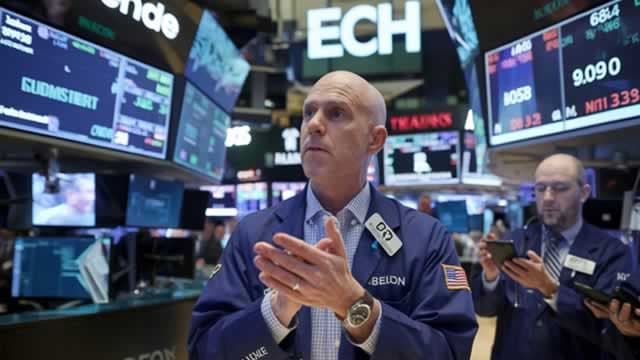
Markets are closed Friday, but we'll still get the March jobs report in the morning. Nicole Bachaud and John Blank both agree that "30,000 is the new zero" when it comes to job improvement, believing persistent inflation raises the bar for employment.
Operator: Welcome to the Precipio Q4 2025 and Year-End Shareholder Update Conference Call. [Operator Instructions]. Please note that the conference is being recorded. Statements made during this call contain forward-looking statements about our business. You should not place undue reliance on forward-looking statements as these statements are based upon our current expectations, forecasts and assumptions and are subject to significant risks and uncertainties. These statements may be identified by words such as may, will, should, could, expect, intend, plan, anticipate, believe, estimate, predict, potential, forecast, continue or the negative of these terms or other words or terms of similar meaning. Risks and uncertainties that could cause our actual results to differ materially from those set forth in any forward-looking statements include, but are not limited to, the matters listed under Risk Factors in our annual report on Form 10-K for the year ended December 31, 2025, which is on file with the Securities and Exchange Commission as well as other risks detailed in our subsequent filings with the Securities and Exchange Commission. These reports are available at www.sec.gov. Statements and information, including forward-looking statements, speak only to the date they are provided unless an earlier date is indicated, and we do not undertake any obligation to publicly update any statements or information, including forward-looking statements, whether as a result of new information, future events or otherwise, except as required by law. Now let me hand the call over to Ilan Danieli, Precipio's CEO. Please go ahead. Ilan Danieli: Good afternoon, and thank you for joining our 2025 fourth quarter and year-end shareholder call. I'd like to thank everyone who submitted questions ahead of time. We will do our best to address them during the call. But before we begin our financial review and for those of our shareholders that are relatively new to Precipio, I'd like to take a moment to reflect on the impact our work has on patients every day. Behind every diagnostic test we run is a patient waiting for answers often during one of the most difficult moments of their lives. Our test helps physicians determine the most appropriate treatment options for their patients battling cancer, and those answers must be provided quickly and accurately. While today's discussion will focus primarily on financial performance and operational progress, it's important to remember that these results ultimately represent something that is beyond dollars and cents. It represents our contribution to helping patients and their families navigate their battle against cancer. Now let's turn to a review of our performance in 2025. 2025 was a year of financial and strategic inflection. At the beginning of last year, we set out to achieve an important objective for Precipio, transition from a cash-using company to a self-sustaining business with positive cash flow. I'm pleased to report that in 2025, we achieved that inflection point. During the year, we also achieved several other important milestones, continued revenue growth, improved gross margin and operational leverage, the exercise of all remaining financial warrants, removing any related overhang and the completion of the repayment of Change Healthcare loan, allowing the company to move towards a clean balance sheet. For many years, like most emerging diagnostic companies, we had to manage the business with a constant constraint of conserving capital and extending our runway. That discipline shaped our company into the highly efficient organization that we are today, but it also meant that many decisions had to be made with shorter capital preservation in mind. Today, we enter a new phase of the company's development. The discipline remains, but we are now increasingly able to deploy resources towards growth initiatives and long-term value creation. The company is moving from focusing primarily on stabilization to one increasingly centered on growth and execution. And during the call, we'll highlight several examples of that shift. Now let me turn to our financial results for the year. For fiscal year 2025, Precipio delivered $24 million in revenue, representing a 30% increase year-over-year compared to 2024. This level of growth reflects the continued expansion primarily in our Pathology Services division as well as strengthening demand for our specialized cancer diagnostic services and molecular testing technologies. Equally important, this growth demonstrates the operational leverage embedded in our business model. A large portion of our cost structure, including laboratory infrastructure, scientific personnel and operational systems is already in place as a fixed cost. As a result, incremental revenue can be absorbed efficiently without requiring proportional increases in operation costs. Therefore, more dollars can go directly to the bottom line. In other words, revenue growth increasingly translates into improved margins and stronger cash flow. This operational leverage has been a key driver of the improvement in our financial performance throughout the year. While I'm pleased with the progress we made in 2025, I want to emphasize that we believe we are still in the early stages of realizing the full financial potential of this model. Let's begin with our Pathology Services division, which continues to serve as the operational and financial backbone of the company. Throughout the year, we experienced strong organic growth in this division, driven by both acquisition of new customers and increased testing volume from existing customers. One of the most encouraging aspects of this growth is that it has been achieved without requiring significant additional capital expenditures or laboratory staffing increases. Our laboratory infrastructure remains well below its maximum capacity, meaning the incremental case volume flows efficiently through the system and contributes directly to the improved margins and cash generation. Beyond revenue generation, the Pathology division also provides a unique strategic advantage for Precipio as it relates to our Products division. Because we operate a full clinical laboratory, we have direct access to incoming patient samples and a real-world testing environment. This allows us to develop, validate and refine diagnostic products rapidly and efficiently before we introduce them to the market. Few diagnostic companies possess this dual with the capability of operating both a clinical laboratory and the product development platform under the same roof. And we believe this integrated model provides Precipio with a meaningful competitive advantage. Looking ahead, our objective for the division remains straightforward, continue growing organically while allowing it to serve as a stable cash-generating foundation for the company. Now let's turn to the Products division, which we believe represents the company's greatest long-term opportunity. First of all, it's important to acknowledge that the Products division revenues did not grow as expected this year. There are a few reasons for this. And on this call, I'd like to talk about 2 main causes. First, we experienced several customer operational fluctuations. While we did add new customers during the year, we also had pauses from several other customers due to their internal factors ranging from machine downtime to lab tech maternity relief. This caused temporary loss of revenues and subsequent fluctuations, which essentially canceled out some of the growth from new customers. The good news is we learned from all these situations, and we implemented additional business continuity measures that are intended to reduce these fluctuations in the future. For example, as part of our process when we now onboard a new customer, we may establish at the customer selection, our lab as a backup testing facility to be used if the customer experiences a temporary operational interruption. If activated, our clinical laboratory is then used as the customer send-out lab. This means that if they are down for any reason, the samples get sent to our lab in accordance with the customers' instructions, which helps support continuity of patient testing during those service interruptions. This provides continuous, consistent service to their clinicians, something that's always important to any laboratory, and it provides continuity of revenues to us. The second reason for the lack of substantial growth was the limited commercial team we had in place. We had one senior executive spending part of their time on product sales plus another junior sales rep person. This team proved to be insufficient for the growth we were targeting. But at the start of 2024, that's all we could afford. That's an example of the company playing defense. But with the shift towards our cash position came a change in the form of now playing offense. Towards the end of 2025, as we saw our business swing to profitability, we focused on strengthening the project commercial team. In January 2026, we hired an industry veteran experienced Chief Commercial Officer, plus 2 seasoned experienced business development officer professionals full time. So we went from barely 1 person working on the commercial growth of the product division to 3 dedicated full-time and experienced team member. This team will focus on both direct sales as well as developing the relationships we need with our distributors to get into tougher to access customers. I'm confident that with this team, we will be making a lot of progress. Having said that, during 2025, we saw encouraging progress in this division. Product revenues were impacted by several factors, including the relapse and subsequent return of several customers to full operational volume, the acquisition of new customers and organic growth from existing customers expanding their test menu by adopting additional HemeScreen and Bloodhound panels. We expect to see the impact of all those factors during 2026. One important characteristic that our platform continues to demonstrate is the following: once laboratories adopt our technology, they tend not only to stay with it, but also expand their usage over time. We also continued strengthening our distributor partnerships, which represent an important pillar of our long-term growth strategy. Distribution relationships will eventually allow us to reach a significantly larger number of laboratories than we could through direct sales alone, providing more scalable pathway for expanding the adoption of our technology. As many of you know, onboarding a new customer -- new laboratory customer in the diagnostic industry involves several steps, including validation studies, workflow integration, IT and regulatory review. These processes can occasionally delay the start of revenue. However, we continue to see a growing pipeline of laboratories progressing through the onboarding process, each representing potentially substantial recurring revenue as they move into full clinical expansion. Now turning briefly to margins. Overall gross margin improved year-over-year from 41% in 2024 to 45% in 2025, primarily driven by higher case volumes in our Pathology Services division, a more favorable case mix towards higher-margin tests and continued improvement of operational efficiency. In the Products division, margins were temporarily impacted by strategic investments made during the year, including expansion into a larger facility and additional manufacturing in Q3 resulting in gross margins of 30%. However, in Q4, we saw a leap to 90% gross margin for our products. Now I know this is a surprising number, especially leaping from 30% in the previous quarter. Let me take a moment to explain this operationally. First of all, as a reminder, historically, we were consistently at around 40% to 50% gross margins. And in Q3, we dropped to 30% because of the additional expenses that were burdened into the manufacturing costs. So I'd like to treat the 50% margin number as our baseline given our covered production volume. Here's why Q4 margins dropped to 90%. As part of our production planning in Q4 2025 and looking to Q1 2026, we anticipated 2 disruptions to our production schedule. The first was downtime due to year-end holidays and staff taking time off. The second was equipment maintenance expected in Q1 of 2026, where our production machines would be down for approximately 2 to 4 weeks. Therefore, in order to ensure we had adequate inventory for our customers, in addition to the scheduled production runs to fulfill orders in Q4, we produced significantly more inventory to cover expected Q1 2026 demand. Keep in mind, when we produce these products, they are intended for sale to our product customers as well as consumed in our own clinical lab. As a result of this larger, more concentrated production run, we inadvertently achieved a much higher margin of 90%. While this was unusually high due to manufacturing circumstances, this is an illustration of the scalability of our products manufacturing capabilities and the impact to margin we can expect to achieve in the Products division as we scale up. As volumes grow, we expect division to demonstrate the strong margin profile typical of successful diagnostic product companies. Beyond financial performance, 2025 included several important operational and commercial achievements. I'd like to share a few of them with you. We continued the expansion of the HemeScreen and Bloodhound molecular platform. We published an exciting joint academic study with one of the leading cancer centers in the country, Memorial Sloan Kettering Cancer Center in New York, demonstrating the novel clinical value of our Bloodhound BCR-ABL product. We presented a poster at the AMP conference, the Association of Molecular Pathology in collaboration with Wayne State University, showcasing the clinical value of our HemeScreen cytopenia panel. We made improvements in customer onboarding processes. We expanded our manufacturing capacity, and we strengthened the company's financial position through debt repayment. We believe that each of these milestones contributes to building a more scalable and durable business. Moving now to market interaction. In 2025, we also began to interact more with the public markets. In 2024 and before, we remain relatively silent and didn't really engage with investors. And if an investor reached out to us requesting a call with management, we typically politely declined and responded that management is not currently speaking directly with investors. But as our story developed and our performance improved, in 2025, we began responding to those inquiries and engaging with investors, both in one-on-one meetings as well as in various public forums and conferences. During 2025, we had more than 50 unique interactions with investors, family offices, institutional funds and analysts. I believe that while the 300% share price appreciation we saw in 2025 was primarily due to the company's business and financial performance, it's also due to the increased engagement with investors. We plan to continue to engage with the market this year. Looking ahead to 2026, our focus is on growing the products business. With our new dedicated and experienced product sales team as well as process improvements we've implemented, we will focus on accelerating the adoption of our HemeScreen and Bloodhound products, converting our pipeline of laboratories into active revenue-generating customers and expanding the number of institutions utilizing our platform. We expect to see continued growth in the pathology service side of the business as well, further generating cash that will be reinvested primarily into the products business growth. One example of an opportunity for us is in AML or acute myeloid leukemia testing, particularly where most hospital laboratories currently rely on external reference testing and where turnaround time of testing results can have a direct critical impact on patient lives. Today, most hospital laboratories across the country do not perform AML testing internally and instead send the patient samples to external reference laboratories. For AML testing, these reference labs typically deliver results to the clinician in 7 to 10 days. And this is despite the AML guidelines requiring results delivered within 5 days. With several targeted therapies tied to specific mutations tested, receiving immediate results is a critical life and death decision. The problem is there is a severe mismatch between the clinical situation facing the doctors and their patients and the diagnostic options available to meet most of these situations. Therefore, we see an unmet need for testing workflows that can better support timely clinician decision-making. By using the combined strength of our pathology services division and our blood AML assay, we will be launching a service that combines rapid molecular testing. And when I say rapid, I mean next-day results, followed up by a comprehensive analysis 5 days later. We believe this further -- this service could further differentiate our platform and expand both our services opportunity as well as introduce laboratories to the products we offer. This is just one example of the superior service our technology enables us to provide. Further details will be announced as we launch this offering. We see significant opportunities to expand the share of our Products division within an estimated $500 million addressable market annually in the U.S. As we execute on that strategy over the next 3 to 5 years, we expect the company's revenue mix to move from its current approximate 90-10 weighting towards pathology service to a more balanced revenue mix between pathology services and products. In summary, while there is still work ahead, we believe the foundation we have built is strong and the opportunities ahead of us significant. In 2026, our focus will be on growth execution, commercial momentum, increased market share and ensuring that our progress is communicated clearly to the market. I'd like to thank our employees, customers, partners and shareholders for their continued support and trust. We look forward to updating you again next quarter as we continue executing on our strategy and building long-term value for our shareholders. Thank you, and have a great evening. Operator: The conference has now concluded. Thank you for attending today's presentation. You may now disconnect.

Operator: Good day, everyone, and welcome to the Algorhythm Holdings Full Year 2025 Financial Results Earnings Call. My name is Elvis, and I'll be your operator today. As a reminder, this call is being recorded. We have a brief safe harbor statement, and then we'll begin. This call contains forward-looking statements under U.S. federal securities laws. These statements are subject to risks and uncertainties that could cause actual results to differ materially from historical experience or present expectations. A description of some of these risks and uncertainties can be found in the reports filed with the Securities and Exchange Commission, including the cautionary statement provided in our current and periodic filings. Now I'll turn the call over to your host, Gary Atkinson, Company CEO. Please go ahead, Gary. Gary Atkinson: Thank you. Good morning, ladies and gentlemen, and thank you for joining our 2025 year-end earnings call. My name is Gary Atkinson, CEO of Algorhythm Holdings, and I'm joined this morning by our CFO and General Counsel, Alex Andre. We're excited to share the momentum behind SemiCab, our AI-powered logistics platform and the significant traction that we've gained this year. Over the past 6 weeks, we've seen an extraordinary surge in attention, both from the media and from within the logistics industry, all around our technology and its potential to solve one of freight's most persistent and costly problems today, which is empty miles. This wave of exposure has accelerated our commercial sales pipeline, attracted industry veterans to our company and expanded our reach to key enterprise decision-makers at a scale that we had never anticipated. Before diving into updates, I want to briefly reframe the core problem that we've been setting out to solve and why we believe SemiCab is positioned to lead the next wave and freight technology. Firstly, the global truckload market is the backbone of the world's economy. It is estimated to be a $3 trillion a year industry. However, it's still very deeply inefficient. Today, roughly 1 in every 3 miles that a truck drives is driven empty, resulting in close to $1 trillion in avoidable waste and inefficiency every year. The SemiCab platform is purpose-built to address this problem. Our collaborative AI platform continuously optimizes freight movement across multiple enterprises using our core planning, predicting and execution engine to build continuous movements or as we call, round trips to reduce waste. And finally, we've been seeing the results -- in real-world production environment, we've shown that we can reduce empty miles by more than 70%, and we have the capability to handle 4x the freight volume without adding any additional headcount when compared to traditional freight brokers. Put simply, we're building a platform that can reshape how $3 trillion of freight flows globally, eliminating up to $700 billion in inefficiency. It's very rare to find a solution that simultaneously helps shippers save money, improves fleet utilization for carriers and can reduce carbon emission for the environment. This is the kind of systemic change that SemiCab can enable. And I believe we're on the verge of a larger shift that is starting to take place a movement towards freight as an orchestrated network as opposed to the current environment of freight as a series of independent transactions. I will talk briefly about some of the growth and some of the full year highlights and then turn the call over to Alex, who will then discuss the financial results. In 2025, we secured 4 new Fortune 500 clients in India and converted 5 pilot programs into multimillion-dollar contract expansions. That momentum has pushed our annualized revenue run rate to nearly $10 million by year-end, and it is already meaningfully higher in the first quarter of 2026. In addition to that, during the first quarter of '26, we have already achieved 2 new customers, MTR Foods and Coca-Cola India, plus an additional contract expansion in India. To date, every single one of our pilot customers that has joined our network has come back to us looking for an expansion, whether it's a geographic expansion through more lanes or more volume. These expansions are driven by real recurring demand from globally recognized shippers. The shift from pilot to scale is accelerating, and we expect this trend to continue. With that, I'll now turn the call over to Alex, who will now walk you through some of the results for the 2025 year. Go ahead, Alex. Alex Andre: Thank you, Gary. Hello, everyone. The annual report that we filed with the SEC earlier this morning presented our financial results for the years ended December 31, 2025, and '24. Our 2025 financial results were heavily impacted by 2 major transactions that we completed this year. First, on May 2, we acquired SMCB Solutions Private Limited, which owns and operates our SemiCab India business segment. The financial results of SMCB are reflected in our financial statements for the period of May 2, 2025 through December 31 of '25. Second, on August 1, we sold our legacy consumer electronics business. Under applicable GAAP provisions, we reflected all financial results attributed to the consumer electronics business as discontinued operations in our financial statements. As a result, our balance sheet, income statement and statement cash flows only reflect the financial results of our continuing operations, including the operations of SemiCab. The financial results of the consumer electronics business for all periods reported in our financial statements are reflected in select line items referencing discontinued operations. Moving on to our 2025 financial results. Sales for the year ended 2025 increased 1,370% to $4.4 million from $300,000 last year, primarily due to the acquisition of SemiCab's Indian subsidiary, SMCB on May 2. During the 8 months that we owned it during 2025, SMC -- SemiCab delivered $4.4 million of revenue. SemiCab's legacy U.S. business was responsible for $300,000 of revenue that we generated during 2024. We recently announced that SemiCab's annualized revenue run rate had increased almost $10 million during December '25. During the next 12 months, we expect our revenue to increase substantially with SemiCab's annualized revenue run rate expected to increase to between $15 million and $20 million by the end of 2026. This will be largely attributable to growth in our SemiCab Indian managed services business, but will also reflect some revenue that we expect to begin generating from SemiCab's new SaaS business that we announced this past fall. Gary will discuss each of these business segments further later during this call. Gross loss for 2025 was $1.3 million compared to $194,000 last year. Gross loss is a function of the revenue that SemiCab generates from the managed services that it provides in India and the freight handling and servicing costs that comprise its cost of sales that it incurs in connection with the provision of those services. Under the managed services model, SemiCab pays for access to trucks and generates revenue by using these trucks to complete shipments for its customers. It enters into contracts for access to trucks when it enters new territories in India, then begins generating revenue in these territories as it acquires customers there and is awarded more routes. It takes time for SemiCab to acquire customers and expand its routes to fully utilized trucks that has under contract. During this time, SemiCab incurs cost for the trucks that it has under contract, while its revenue scales more gradually as it begins to acquire customers. Consequently, gross margins are negative. As it obtains customers in these territories and is awarded more routes from its customers, SemiCab more fully utilizes the trucks it has in their contract. As the truck utilization rate increases, a greater amount of revenues generated by the trucks, spreading a larger revenue base over the relatively same cost of the trucks it is using in these territories. As the network matures in each region and the truck utilization rate improves, the growth in revenue begins to outpace the increases in trucking costs. This drives a sharp improvement in gross margins. We view this initial ramp-up period as a necessary investment in long-term scale and profitability. We expect gross loss as a percentage of revenue to decrease over the next 12 months as the growth in revenue that SemiCab generates from obtaining new customers and routes exceeds the increase in cost of sales that it incurs as it enters into contracts for access to additional trucks. Operating expenses for 2025 decreased almost 20% to $6.6 million from $8.2 million last year. The decrease was due primarily to a decrease of $3.6 million for impairment of goodwill that we recorded during 2024, partially offset by an increase of $2 million in general and administrative expenses. We expect general and administrative expenses to increase over the next 12 months as we continue to invest in the growth and development of our SemiCab business. Net loss from continuing operations for 2025 decreased $3.7 million to $15.2 million from $18.9 million last year. Of these amounts, $6.5 million of our 2025 net loss and $8.9 million of our 2024 net loss consisted of onetime noncash charges for warrants that we previously issued and capital raising transactions. The decrease in net loss from continuing operations was due primarily to an increase of $5.2 million for cost of sales, partially offset by an increase of $4.1 million for revenue and a decrease in other expenses. We expect our net loss from consuming operations to decrease over the next 12 months due to the previously described increase in revenue that we anticipate to generate and our expectation that we will not incur any future losses related to warrant issuances. However, we expect this decrease to be partially offset by increases in the expenses we will incur in connection with the growth and development of our SemiCab business. Finally, we are pleased to report that our balance sheet has strengthened significantly over the past 12 months. We had cash on hand of $6.1 million at December 31, '25 d had $10.9 million of cash on hand as of March 25, 2026, putting us in a strong cash position to support the growth and development of our business for the remainder of 2026. Additionally, we reduced our liabilities by almost 50% between December 31 of '24 and December 31 of '25 through a reduction of our outstanding liabilities. This reduction in our liabilities substantially improved our ratio of liabilities to total assets on our balance sheet. That concludes my overview of our 2025 financial results. Gary? Gary Atkinson: Thank you, Alex. Before I open it up for questions, I want to draw a distinction between our 2 complementary business models. Firstly, we have our managed services business in India and secondly, we have our recently announced Apex platform, which is our global SaaS offering. Our managed services business in India, as Alex mentioned, is generating all of our revenue today. There, we work with the India business segments of notable enterprise shippers such as Procter & Gamble, Unilever, Kellogg's and recently announced Coca-Cola. In this managed services model, we don't own any of the trucks or employ any of the drivers. We act as a virtual carrier, sourcing trucks and directing their continuous movements through our platform. Contrast that with the new SemiCab Apex platform. We're bringing the same multi-enterprise network model directly to shippers and to 3PLs worldwide through a scalable technology-first subscription model. Apex differs from managed services in the sense that it is high margin and asset light. It delivers recurring SaaS revenue with strong gross margins. It's also very easily globally deployable. It's relevant wherever empty miles are a problem, which is everywhere. It's also very easy to implement, and this is an extremely important point. We are not a TMS system. The SemiCab platform sits adjacent to existing TMS systems and can be integrated simply without a heavy IT lift. I believe Apex represents our future. It's a platform capable of powering millions of loads while saving shippers money, keeping carriers' trucks fully utilized and reducing unnecessary fuel consumption and reducing CO2 emission. We're laying the groundwork to generate recurring platform fees on every optimized truck movement across every geography. We're excited for what lies ahead, and we're grateful for all of your continued support. And with that now, I'd like to turn the call over for any questions. Operator: [Operator Instructions] Our first question today comes from Theodore O'Neill of Litchfield Hills Research. Theodore O'Neill: Okay. Gary, so on the SaaS business, can you give us some high-level overview of what the pipeline into that looks like, inquiries? And if you've got a -- if you're building a dedicated sales team to support that product? Gary Atkinson: Yes. Thanks, Theodore. I appreciate that question. So clearly, with all of the recent media attention that we received over the last 1.5 months or so, it's been really transformative for the business. And not just from a visibility perspective, but we're now talking to some of the largest logistics service providers in the world. I mean these are some of everyday household brands that are delivering packages to everybody's front door. And speaking with key C-level decision-makers that, I think, quite frankly, probably wouldn't have been talking to us months ago. So the attention has been profound to what it is able to do for our SemiCab Apex platform. And that's really what makes me the most excited. So we have a very strong pipeline now of commercial sales opportunities with some of these largest LSPs. Now that being said, these guys, they don't move quickly, right? These are not the types of companies that will be turning around and jumping into commercial agreements that quickly. So these are sort of medium-term opportunities that are in the pipeline, but those are the types of deals and agreements that I think will be just transformative, particularly as we're talking about the Apex SaaS platform with all of these guys. And the margin profile, I think you -- that was part of your question, is definitely materially different from what we see in managed services. With Apex, we're looking at closer to the traditional 90% SaaS margin, and it can scale very quickly. So hopefully, that answered your question, Theodore. Theodore O'Neill: And what about a dedicated sales team for this? Gary Atkinson: Yes. So that's the other advantage that we've seen here over the last few weeks is we've actually had quite a strong inbound flow of communication from some industry executives that had seen all of the media attention. And these are guys that have been inside the industry long enough where they've been -- they've seen how inefficient this empty mile problem is. And I know a lot of different technology companies over the last 10 to 15 years, they've been trying to solve this problem. And I think for a lot of these guys, it's been sort of a passion project. And when they saw what we've been doing and having conversations with Ajesh and Vivek, the founder and co-founder of SemiCab and had a chance to do a demo of the platform, we've been able to attract some really high-caliber talent to the company to help lead up some of the sales efforts. So again, these things take time, but we're very, very optimistic about where the Apex platform can go here in the near-term future. Theodore O'Neill: Okay. And my other question -- the question I have for you is on the restricted cash, what's the -- what are the restrictions there? And how do you access that? Gary Atkinson: Yes. Do you want to tackle that, Alex? Alex Andre: Sure. The restricted cash consists of some of the cash that we received from Streeterville, and it's being held in a reserve account until such time as they are able to purchase securities from us. And as that occurs, these funds get released to us. So they have been releasing those funds to us over time since we first engaged in that transaction back in November. Operator: From Chardan Capital Markets, we have Jim McIlree. James McIlree: You mentioned that it will take some time to roll out Apex. And I'm curious about 2 things. One, if you can put a range around how much time you think it will take for customers to roll it out? And then secondly, maybe more importantly, what are the obstacles or objections that the customers have? Are they -- do they require to test it for some short or extended period of time? Can it only work on certain vehicles. Do they -- are they concerned about service and support? Are they concerned about your balance sheet? Just general things like that, what are the customers -- the pipeline customers worried about before they... Gary Atkinson: Yes. No, that's a great question. I appreciate that, Jim. So I think -- and I want to clarify something because I know that there's been a bit of a misconception, too. In terms of the Apex platform, it's already rolled out. It's already developed. It's -- the product itself is available today for customers to utilize. As I mentioned in my prepared remarks earlier, there -- it's not a heavy -- it's not a TMS system. So we're not talking about a long multi-month expensive integration cycle to get the platform up and working. It's a relatively light TMS adjacent platform that's cloud-based that customers can basically connect to through some simple APIs. So it's not a -- this is not a technology restraint in terms of having customers use it. It's really more of a commercial agreement cycle that has to happen. I will say that we've had strong engagement and strong response. I think part of what our sales cycle looks like as we -- when we engage with prospective customers, we ask them for real historical shipping data, whether it's 6 months or a year of data. And then we basically take that data and we have our SemiCab AI optimizer engine that just ingests all of that low data into it. And then it's able to spit out and say, look, if this customer had given us all of their shipping loads over that period of time, we could have saved x million number of miles. We could have driven down their freight spend by x millions of dollars over that period. And so we basically bundle all of that data back up and we give it back to the customer. And that's really been, I think, a very profound selling tactic that it's hard. It's hard for a shipper to ignore those types of cost savings that could be accessible to them without any loss of service. It's not like they would see any degradation in service in terms of pickups or deliveries. It's the same quality of service that they would be used to seeing but just done more efficiently. So it's been, I think -- I'm not going to say an easy sell, but it's becoming easier. One thing I will say, though, that has been, I think, probably the best takeaway from all of this media attention is, I remember, I went to a conference back in January. It was a large logistics conference, and we were there pitching and doing demos of our SemiCab platform. And when we would engage with customers and we'd start talking about multi-network or multi-enterprise collaborative shipping networks, I could just see their eyes glaze over. There wasn't a lot of sort of it was almost dismissed as being too theoretical. And I think now what we're seeing after all the recent media attention is people are really now -- and people within the industry are now looking at our platform and saying, yes, like we think that the multi-enterprise network is kind of the next key change. It's the next step-up in where freight technology is going. And so there's kind of been a broader kind of acceptance and adoption around what we're doing, whereas before it was just perceived as maybe being too theoretical. So it certainly helped just the industry-wide perception as to what we're doing. So hopefully, that answers some of your questions, Jim. James McIlree: Yes, it does. Can I just press you a little bit on timing in terms of what you think the customers might require for their testing before they roll out? Because I'm assuming they're going to test it first. So they would test it for a month, 6 months? Or is that discussion taking place yet? Gary Atkinson: Well, yes. I mean I think it's hard to give a broad -- like it's not a one-size-fits-all response. I think every customer, depending on how large or small they are, will have different appetites. I mean, certainly, when you're dealing with, let's say, a top 5 logistics service provider in the world that's multi-billions of dollars of market cap, they're going to be a little bit more cautious. They're going to take a little bit more time. They're going to test. And the nice thing about our platform is we can enable sort of this concept of a private cloud network and a public cloud network. So if we're dealing with a large enterprise shipper that has their own dedicated fleet where they own their own assets, we can basically open up a private cloud for them. They can put all of their own assets on that network and it's completely private. It's not open to what anybody else can see. And what we've seen there is that you'd be shocked or at least I've been shocked at just how much inefficiency can happen within a large Fortune 500 shipper that's moving consumer goods all over the country. There's a tremendous amount of opportunities to make them more efficient. So it's really hard for me to give you kind of an exact time line just because we don't have anybody that's sitting there pen in hand ready to sign contracts today. But there are many, many conversations that are ongoing. They're all, I think, very optimistic. And I think every customer is going to have a different approach as to how quickly they want to jump in. So it's just -- it's hard to give a date. Operator: And next, you'll hear from Brian [indiscernible]. Unknown Analyst: Gary, good morning. you've really addressed my initial question. So just, I guess, sort of a follow up on a few things you said. Obviously, there's been significant media attention, which is great. And you've also seen the dramatic increase in your cash position. As you think about the next 12 to 24 months or so, what are maybe 1 or 2 key drivers that you believe could have the biggest impact on future revenue growth? Gary Atkinson: Well, yes, that's a great question, Brian. I appreciate that. So I think, obviously, from what we've -- a lot of the questions that I've touched on here is sort of the SaaS model and how quickly we can turn on that high-margin business. So I think internally, that's the thing that I know we're all excited about. That's the SemiCab team is excited about. That's where we're investing into sales channels and pipelines and hiring people to support those types of SaaS opportunities and partnerships. So that's the one thing that I think I would encourage everybody to be looking out for, and that's where we're going to be driving most of our attention is let's start landing some SaaS contracts. That's what we're trying to do here. And that's going to be what I believe to be transformative to the financial profile of the business, right? I mean that's recurring revenue, much higher multiple, and it's sticky. I believe that when a customer starts utilizing this, I think when they fully understand. I mean, when we say to a customer, we can reduce their empty miles by upwards of 70%, I mean, that's -- for anybody inside the industry, that's like jaw-dropping type of numbers. I mean we've seen it now where we've had some lanes where empty miles have been 10% or less. So when you take that type of technology and you get it into an enterprise customer that has huge, huge scale, I mean, the amount of efficiency opportunities and savings is just really -- it's mind blowing. And I think the platform has a lot of blue sky to capture all that. And there's, I think, a tremendous amount of value that can get unlocked here. So that's -- we're still in the early stages. We're probably in the first or second inning. But I'm just -- again, I think there's just a lot of excitement and enthusiasm around what this technology can unlock. Operator: And that concludes our question-and-answer session. Gary, back over to you for any additional or closing comments. Gary Atkinson: Okay. Perfect. Well, again, I want to thank everybody for taking the time today to learn more about Algorhythm Holdings and doing a deeper dive into our 2025 year-end financial results. Also particularly appreciate all the good questions today. So we've just recently concluded our first quarter ended March 31, and we'll be looking forward to sharing all of those results with you all next month. So take care, everybody. Thank you, and we'll talk again soon. Operator: That concludes our meeting today. You may now disconnect.
Operator: Good afternoon. This is the Chorus Call conference operator. Welcome, and thank you for joining the INWIT Full Year 2025 Financial Results Conference Call. [Operator Instructions]. At this time, I would like to turn the conference over to Mr. Luigi Minerva, Strategy, M&A and Investor Relations Director of INWIT. Please go ahead, sir. Luigi Minerva: Good afternoon, everyone, and thank you for joining us. With me today, I have Diego Galli, INWIT's General Manager; and Emilia Trudu, Chief Financial Officer. Before we begin, please allow me to draw your attention to the safe harbor statement on Page 2. Following a brief presentation of the full year 2025 results, we will open the floor to questions. Over to you, Diego. Diego Galli: Thank you. Good afternoon, everyone, and welcome to our third analyst call in 2 weeks. Today, no surprises. So in a way, no news is good news. And after this, we all deserve a good long weekend. In today's session, we share a solid set of fiscal year 2025 results with revenues up by 4% and EBITDA by 4.8%, confirming our dividend per share of EUR 0.55. A reminder of our 2026 guidance and medium-term baseline outlook as already communicated on March 19, a recap of our key strategic points of strength even in the current phase of tension with our customers. The telco sector in Italy continues to go through a challenging moment and neutral players can help, leveraging on sharing economics to deliver investments in digitalization in the most efficient way. The MSAs are structured in a way that creates value for both INWIT and its customers, thanks to the consolidation of the infrastructure and the unlocking of sharing synergies to the benefit of all parties. Our anchor Fast Broadband [ TIM ] sent us early termination notices. We have been clear that both heads have laid the ground and fall outside the legal framework of the MSAs. Legal certainty is fundamental not only for INWIT, but more generally for the industry in order to safeguard the ability to attract capital and execute the critical and strategic infrastructure investments that the country requires. Despite this challenging backdrop, we have delivered our 2025 guidance and our shareholders will receive a dividend per share of EUR 0.55, which at current levels implies an attractive dividend of 7.7%. We continue to expand our asset base and another solid set of industrial KPIs in the full year. We built about 800 new sites in the year, bringing the total to about 26,000. We added 2,800 new PoPs, tenancy ratio improving further to an industry-leading level of 2.4x. We delivered 1,600 real estate transactions, which continue to drive our efficiency gains. EBITDA was up by almost 5%, with margin up by 0.5 percentage point to 73%, supported by the lease cost efficiency plan. Recurring free cash flow was up by 2% year-on-year at EUR 634 million. Year-on-year growth reflects also higher cash leases and financial charges, partially offset by lower cash taxes. Leverage ratio stands at 5.2x, well within our target corridor. This reflects extraordinary shareholder remuneration of EUR 500 million, EUR 300 million share buyback and EUR 200 million special dividends on top of the EUR 500 million ordinary dividend. 2025 remained intense from a commercial perspective. We developed further the indoor coverage connectivity markets through DAS technology in a number of verticals. We continued with major projects like Roma Smart City. In summary, in the context of transition for the industry, INWIT continues to display a resilient growth trajectory and grow the asset base, affirming its leadership. We continue to support clients in their effort to improve the mobile network and stand ready to capture additional growth opportunities. However, Q4 showed the signs of a slowing market with anchors pulling from non-committed projects. Let's now skip a few pages to Slide 11. In this page, we show the industrial and financial progress of INWIT over the past few years. We had more than EUR 300 million in revenues, growing high single digit. Smart Infrastructure revenues up more than 4.5x. Cash flow was up in the double digits, nearly 3,500 new towers, tenancy ratio moving from 1.9x to 2.4x, land ownership tripled. All of this translated in a growing return on capital employed now exceeding 8%, confirming the soundness of INWIT business model with visible impact on our investments already in terms of cash flow generation and return on capital. Let me now hand it over to Emilia for a recap of our 2026 guidance. Emilia Trudu: Thank you, Diego. We reiterate our 2026 targets as communicated already on March 19. Revenues in the range of EUR 1.050 billion to EUR 1.09 billion, EBITDA margin of approximately 90%, EBITDA after leases margin above 72%, recurring free cash flow in the range of EUR 550 million to EUR 590 million, dividend per share at least in line with 2025 confirmed to EUR 0.55 per share. Leverage ratio at 5.5x, consistent with the structural target range of 5 to 6x. This reflects the current challenging market environment and ongoing complexities in anchor tenant relations. CapEx in 2026 remain elevated at around EUR 270 million due to the phasing of next-generation EU cash CapEx recognition plus investment for Smart City Roma plus land acquisitions and energy programs. The normalized 2025 total revenue space takes into account the lack of project-based noncommitted revenue components, which we have developed over time with operators capturing their discretionary flexible budget. Such discretionary budgets have been put on hold at this stage given the current context of limited budgets and conflictual relationships. Taking into account this one-off step-downs, in 2026, we expect low single-digit revenue growth driven from the following components: inflation CPI linked based on 2025 average index at 1.4%, anchor commitment, new towers, new PoPs and [ DAS ] in line with MSA commitments, well growth with steady pace with other MNOs and IoT. Smart Infra growth refers to DAS indoor across premium locations and projects in the smart city verticals. We have an efficient debt profile, 85% fixed, 15% floating with a current average cost of almost 3% and average bond maturity of 4.5 years. The first relevant maturity is in 2027 related to the EUR 500 million sustainability-linked term loan. This week, the agencies confirmed our ratings with updated outlook. Fitch ratings at BBB- investment grade in credit watch negative versus previously stable outlook. Standard & Poor's Global Ratings at BB+ with stable outlook versus previously credit watch positive. I will now hand it back to Diego for the final section of the presentation, including the medium-term outlook. Diego Galli: Thank you. Our medium-term baseline outlook, as communicated on March 19 consists of low single-digit annual revenue growth of around 3%. Half of it is inflation. Continued EBITDA margin expansion driven primarily by land acquisition, which could translate into an annual EBITDA growth of about 4% and all-in annual CapEx envelope of around EUR 200 million, including land acquisition, slightly more than 1/3 of the total. Of this, about EUR 20 million would be maintenance of CapEx and therefore, go into the recurring free cash flow definition. Dividend per share of at least EUR 0.55 at the current level, a financial structural leverage ratio target between 5 and 6x. In other words, even in the unrealistic scenario in which the market remains stuck over the medium term, we would still be able to have a decent organic growth, an attractive dividend and a solid balance sheet. The baseline outlook does not include the following potential upside: normalization of the industry dynamics, densification, both outdoor and indoor, opportunities to expand across digital infrastructure. At the same time, the baseline outlook does not include the downside risk of MSA's termination as we don't believe this is a likely or realistic outcome. The technological context for digital infrastructure assets continue to evolve. The traffic in Italy is growing at double-digit rates until 2030 or more than 2.5x from today's level. Towers are and will remain central in this evolution, part of the digital ecosystem that goes from passive [ infraive, ] small cell, thus IoT and edge computing. There is need for more investments in the network to close the gap. Mobile network investments cannot be postponed indefinitely. For towers or macro sites, we estimate a market potential between 7,000 to 12,000 new towers in Italy by 2030, and we plan on maintaining a leading market share on towers. Let me now reiterate a few important points that we discussed deeply during our ad hoc call last week following the receipt of MSA termination. We have been clear in our communication to the market that both acts have no legal ground and fall upside the legal framework of the MSAs. Our network of about 26,000 sites is the result of 40 years of work of TIM, Vodafone and INWIT, where we could take the benefit of the first-mover advantage to build top quality sites in the best available locations. About 75% of our network is not replicable. And when it comes to tower prices, it's important to compare apples with apples. It's not correct to compare fees related to the sales and leaseback transactions with pure hosting fees. MSA fees are intrinsically linked to the structure of the sales and leaseback transaction. Pure hosting fees are the result of normal demand supply competitive dynamics. In other terms, there is a captive segment of hosting that stems from the sales and leaseback transactions, which is not contestable for the entire period required to return investment. Preserving the captive segment protects the foundation of the industry, preventing potential opportunistic behavior that would destroy value across the entire value chain. As already shared, all our prices are in line with the market. With regard to the change of control clause, that's clear in the MSA, the clause was included in order to protect all 3 parties. The only relevant change in control event is the resolution in August 2022 of the shareholder agreement between TIM and Vodafone. TIM and Vodafone were up to the point jointly controlling INWIT. When TIM sold its stake in Daphne to Ardian in August 2022, joint control ceased with the dissolution of the shareholder agreement. TIM triggered the change of control clause and INWIT promptly notified it to TIM and Vodafone, locking in all parties for further 16 years until 2038. Out of clarity, the Vodafone events in 2020 consisted in intragroup transfers of the INWIT stake between entities fully owned by the Vodafone Group. Those events had no impact on the joint control of INWIT. Therefore, they are not relevant with regards to the change of control clause. As a matter of fact, if this share transfer would have been relevant with regards to the change of control of INWIT to the control of INWIT, the relevant party should have launched a mandatory tender offer. This didn't happen, obviously. We have clear and consistent legal opinions from the best law firms in the country on this. Let me now conclude. The towers business model is based on long-term contracts that create value for all parties, thanks to the sharing economics and network efficiency. The Italian telco market continues to be under pressure with low prices and subpar returns. Telcos are offloading challenges on the infra players, and this is -- and this was already visible in the final quarter of 2025. Still, we delivered the 2025 guidance, including the EUR 0.55 dividend per share, which implies an attractive dividend yield. Our 2026 guidance and the medium-term baseline outlook reflect the current challenging market conditions. Even in the unrealistic scenario in which the market remains stuck over the medium term, our baseline medium-term outlook means that we would still be able to have a decent organic growth, an attractive dividend and a solid balance sheet. The baseline outlook does not include the following potential upside, normalization of the industry dynamics, densification opportunities to expand across digital infrastructure. At the same time, as just said, the baseline outlook does not include the downside risk of MSA termination as we don't believe this is a likely or realistic outcome. We confirm that we continue to be open to constructive conversation with our clients. From our perspective, it's key to protect the integrity of the MSA as a long-term contract. We are open to optimize further the terms for new investments, and we aim to achieve a win-win outcome in terms of positive net present value and business development. With this, we thank you for your attention, and we aim to provide you with an updated business plan likely enough to as visibility allows it. We will now open the floor to Q&A. Operator: This is the Chorus Call conference operator. We will now begin the question and answer session. [Operator Instructions]. The first question is from Roshan Ranjit, Deutsche Bank. Roshan Ranjit: My question is quite simple. We've seen quite a lot of news flow over the last 1.5 weeks. And Diego, you mentioned this constructive dialogue. So since we've had the filings for the court hearing from yourself and from Swisscom, have you had dialogue with Swisscom on the MSA negotiation since. So over the last, I guess, week, have you been in discussions with them? Diego Galli: Yes. Thanks for the question. No, we are not having dialogue at this stage. Operator: The next question is from Rohit Modi of Citi. Rohit Modi: I have just one question, and apologies if you already replied to this in previous calls, but this is regarding the migration phase. Hypothetically, if both the [ MSAs ] managed to terminate the contract, are there any rights that INWIT has in the migration phase given that they'll continue to use the remaining towers as a part of migration period for foreseeable future or INWIT does have a right to terminate the contract and ask them to vacate the sites? Diego Galli: Thanks. On the migration plan, the framework is about a plan which has to be agreed between parties. The time is not shorter than 3 years. And all this will be in the spirit and logic and content of the all or nothing close. Let me also take the opportunity to highlight which -- the fact that we stress, which is about the lack of alternatives to our network and the fact that we have the majority of our sites, which are actually not... Operator: [Operator Instructions]. The next question is from [indiscernible]. Unknown Analyst: One question concerning 2026 guidance. Here, I would like to, let's say, just have a little bit of color concerning the discretionary spending that you're assuming on 2026 level of revenues. Diego Galli: Thank you. So on 2026, the base case is actually consistently with the overall baseline case is basically that the anchor tenants invest only on the committed contractualized initiatives. And we have a continued steady growth with the other customers, with the [indiscernible] with the other MNOs, and we continue gradually to develop and grow [indiscernible] in coverage to DAS and dedicated projects. Unknown Analyst: Okay. And the discretionary revenues that will have a negative contribution in 2026. What's -- I mean, this level of revenues in 2026, I mean, is that derisking for 100%? Or is it something still there? Diego Galli: Yes, the discretionary revenues is -- there is no discretionary revenues basically with the anchor tenants or all. So yes, it's actually the [indiscernible]. Operator: The next question is from Mathieu Robilliard, Barclays. Mathieu Robilliard: I had a question. I'm looking at Slide 14, and you show some growth driven by anchor commitment and all growth. I don't know if you can quantify that in terms of sites, how much that represents? And also, are the anchor commitments fully part of the MSA, the existing MSA? Or is it on top of it, it's a different contract that could go whatever happens with the legal decision? Diego Galli: Yes. Thanks for the question. In terms of towers, we are talking about a few hundred significantly lower than the last year where actually we deployed at about 800 towers per year. In terms of revenues, we are talking here about the MSA committed revenues. So contractualized contracted committed revenues where there is no dispute about. So it's -- I can say it's clean and certain and committed and in progress. Mathieu Robilliard: And if I could follow up. I mean, I think you had also some contracts with Open Fiber or maybe FiberCop in terms of growth or in terms of deployment of site for FWA. That's the topic #4 on your slide deck, right, all our growth? Diego Galli: Yes. Basically, the OLO growth is mainly the other MNOs such as Iliad, some of Wind3, as well as some fixed wireless access for Open Fiber. The main component is basically the MNOs component. In terms of revenues, it's the main component, as I said, is the other MNOs component. Mathieu Robilliard: Okay. And that is basically increasing tenancy rather than building sites. Sorry, very basic question, but... Diego Galli: It's basically secondary tenants is co-location on existing sites. Operator: The next question is from Giorgio Tavolini, Intermonte. Giorgio Tavolini: The first one is on the ground leases saving of EUR 10 million in Q4. I was wondering if it's related to a specific transaction. And back to [ Milo's ] question on discretionary revenues, how much was the exact amount in 2025 since I see the block in the presentation in the bridge for the full year 2026 guidance bridge? Diego Galli: Yes. On the discretionary revenues is on the few [indiscernible] range. And with regards to the lease cost, lease costs are continuously optimized through the program of land buyout as well as renegotiation of lease contracts and that is able to offset the impact of increasing asset base and inflation. Giorgio Tavolini: Okay. And for the discretionary revenues in 2025? Diego Galli: A few tens of millions. Giorgio Tavolini: A few tens of millions... Operator: The next question is from Ondrej Cabejsek, UBS. Ondrej Cabejšek: I have 2 questions, please. One is on the CapEx. If you can kind of walk us through the new level of roughly EUR 200 million as going back to the previous strategy update, the guidance was for CapEx to be closer to EUR 240 million over the midterm and higher in the near term. So I guess this is obviously the step down would be related to what's going on with the anchor tenants and therefore, lower growth on the top line. But maybe if you can give us a bit more detail around which of the envelopes from the full year '24 strategy update you are not cutting on and which envelopes of CapEx you are actually cutting on? And maybe the second question, if I may, are you a party to the, I guess, consultation process around the spectrum renewal, which I believe is going to be kind of finalized in the coming months or in the summer and then potentially making it into the budget in kind of late 2025? And if you are, how is the kind of reception of the regulators or authorities around the fact that maybe part of the investment that would -- or rather the fact that if there is a discount given to the anchors part of that capital that they are saved and they're supposed to be rolling out into new networks, they would potentially be directing towards duplicating infrastructure that is already there that you are providing. So are there already kind of some signals that this is not something that the authorities would be looking favorably at? Diego Galli: Thanks for the questions. With regards to the CapEx split, actually, the very relevant component will remain to be the land, land acquisition, which will account broadly 35% of the total. Then there is, let me say, half of the total envelope, which is related to growth, including CapEx for towers, for the smart infra [ so gas ] and special projects and the energy project. Then we have broadly 10% related to maintenance. Compared to the previous guidance, we have embedded in the current baseline outlook a lower number of towers, a significantly lower number of towers, and this is the main difference compared to the previous plan. With regards to the frequency renewals, that's an interesting topic. We clearly -- the industry, as we said, is under dramatic pressure. So we think it's relevant and it's important to have the frequency renewals which support the industry. Clearly, we think it's important that the support to the industry is to the whole value chain to the whole -- to the -- all operators, both the, let me say, the service cost as well as the infra cost. And so that's important in order to not only support the new investment, but also to preserve the existing infrastructure and the investments which have already been done. Clearly, in this context, but in general, as we said, we don't think that the duplication of infrastructure is an efficient way and creates efficiency and value in the industry. Actually, we think that consolidation of infra is the way to build efficiency within the industry. So continuous scale and optimization and consolidation will drive as did in the past, will continue -- is the way to continue to drive efficiency in the overall industry to the benefit of all parties. In terms of visibility, we think that there will be more visibility on the process in the second part of the fiscal year. Operator: [Operator Instructions]. Diego Galli: If there are no other questions... Operator: We do have a last question from [indiscernible]. Unknown Analyst: I just had one follow-up. So you were asked about the dialogue with Swisscom to which there hasn't been any. I just wondered if there have been any dialogue with Telecom Italia. And I guess maybe following up on that, is the lack of dialogue because you are simply dealing with this in a legal fashion and it's for them to negotiate? Or any color would be helpful. Diego Galli: Yes. I think that we received the termination notice between last, I think, Wednesday and Sunday or Monday, whatever. So just a few days ago. And clearly, we have been busy on filing responses and activating all the relevant legal steps. And now there is Easter, that's welcome. I think there is time for everything. For the time being, the dialogue has not been activated yet. But clearly, we are always open. Operator: Gentlemen, there are no more questions registered at this time. I turn the conference back to you for any closing remarks. Diego Galli: Thank you very much. So let me just thank you all of you for your attention and remark that we are confident that a realistic win-win outcome is actually achievable with our anchors. And with that, we wish you all happy Easter. Thank you, and happy Easter again. Operator: Ladies and gentlemen, thank you for joining. The conference is now over, and you may disconnect your telephones.
Operator: Good morning, and welcome to the Acuity Fiscal 2026 Second Quarter Earnings Call. [Operator Instructions] Please be advised that today's conference is being recorded. I would now like to hand the conference over to Charlotte McLaughlin, Vice President of Investor Relations. Charlotte, please go ahead. Charlotte McLaughlin: Thank you, operator. Good morning, and welcome to the Acuity Fiscal 2026 Second Quarter Earnings Call. On the call with me this morning are Neil Ashe, our Chairman, President and Chief Executive Officer; and Karen Holcom, our Senior Vice President and Chief Financial Officer. Today's call will include updates on our strategic progress and our fiscal 2026 second quarter performance. There will be an opportunity for Q&A at the end of the call. As a reminder, some of our comments today may be forward-looking statements. We intend these forward-looking statements to be covered by the safe harbor provisions of the Private Securities Litigation Reform Act of 1995, as detailed on Slide 2 of the accompanying presentation. Reconciliations of certain non-GAAP financial metrics with their corresponding GAAP measures are available in our 2026 second quarter earnings release and supplemental presentation. both of which are available on our Investor Relations website at www.investors.acuityinc.com. Thank you for your interest in Acuity. I will now turn the call over to Neil Ashe. Neil Ashe: Thank you, Charlotte, and thank you all for joining us today. We demonstrated strong execution in our second quarter of fiscal 2026. We grew net sales, we expanded our adjusted operating profit and adjusted operating profit margin, and we increased our adjusted diluted earnings per share. We generated strong cash flow and allocated capital effectively. In Acuity Brands Lighting, we are managing our business aggressively in a soft lighting environment. We are aligning our cost structure to current market dynamics while continuing to serve customers effectively. Over the last 5 years, we've made meaningful progress accelerating our strategy of increasing product vitality, elevating service levels using technology to improve and differentiate both our products and how we operate the business and driving productivity. These efforts have expanded capacity in our manufacturing network and given us greater flexibility to evaluate our production costs. As a result, this quarter, we took certain actions, including targeted labor cost reductions, which Karen will discuss later in the call. We are managing gross profit margin through the combination of strategic pricing and product and productivity improvements. This enables us to deliver in this market environment and positions us well for the future. Now I want to spend a moment on our growth algorithm, which is designed to ensure that we outgrow the lighting market. We enter new verticals, we take share, and we grow with the market. Last year, we strengthened our floodlight portfolio with the acquisition of M3 Innovation. These solutions are used in education, municipalities and infrastructure and are designed to reduce total installation costs and enhance the user experience. We have won several notable projects that include retrofit and new construction across verticals, including parks and rec and education. One of our larger projects was an installation at Baldwinsville High School in New York. This project retrofitted an existing football field and installed our solution at a new athletics field. Combined with our lighting controls, we created dynamic control capabilities for a high-impact gameday environment across both facilities, all managed from a single control device. The industry continues to recognize the strength of our products and the value they bring our customers. This quarter, several products in our portfolio were awarded the Architecture MasterPrize by the Farmani Group, including the Eureka Junction, a made-to-order luminaire that can be configured to create custom installations that are compatible with our nLight controls for use in large shared interior spaces such as lobbies, atriums, reception areas and event venues. Multiple products were also awarded Product Innovation Awards by Architectural Products magazine, including the Juno Trac Linear Ambient family in our Design Select portfolio, that offers architects, lighting designers and installers versatile options for combining accent and ambient illumination within a single system, simplifying specification and expanding creative possibilities. Now switching to Acuity Intelligence Spaces, which continued to deliver strong sales and margin performance. Atrius and Distech control the management of the space, and QSC manages the experiences in the space. And over time, we will use data from both to enhance productivity outcomes through data interoperability. Taken together, this is how we can make spaces autonomous. Both Distech and QSC performed well this quarter. Within Distech controls, our Eclipse portfolio is a strategic differentiator. It is a comprehensive building automation platform that unifies hardware and software into a cohesive ecosystem for intelligent building management. The portfolio includes hardware devices and software used to manage how a building operates, including HVAC control, lighting and refrigeration. During the quarter, we released the ECLYPSE retrofit solution. a building controls upgrade designed for use in buildings with legacy wiring and control architectures. This solution allows newer ECLYPSE-based control capabilities to be deployed, providing IP-based performance, embedded edge intelligence and modern user interfaces without the associated cost or disruption of completely rewiring the space. We are also expanding our addressable market at QSC. Q-SYS is building the industry's most innovative full-stack AV platform that unifies data, devices and a cloud-first architecture to deliver real-time action, experiences and insights. Historically, the Q-SYS solutions were developed for use in large rooms and spaces. This quarter, we expanded our Q-SYS solution into smaller and medium-sized collaboration spaces with the introduction of the room suite modular system. This gives customers the option to increase their room capabilities using audio, video and integrated networking, all supported by Q-SYS Reflect. AIS continues to gain industry recognition. Earlier this quarter, the Q-SYS Room Suite modular system won the Best of Show Award at the ISE 2026 in Europe, the largest AV trade show in the world. While Q-SYS Loud speakers won in both the NAM Best of Show Award and in the NAM TEC awards. Distech Controls received the 2025 Global Company of the Year for excellence and integrated smart building solutions by Frost & Sullivan and won the smart HVAC Product of the Year category at the U.K. HVR Awards for our move. Now moving to our outlook. Acuity Brands Lighting remains the best-performing lighting company in the world. Given our performance year-to-date and our expectations for the lighting market for the remainder of the year, we now expect our full year ABL sales performance will be flat to down low single digits year-over-year. We will continue to control what we can control. We are focused on product vitality, elevating service levels, using technology to improve and differentiate both our products and how we operate the business and driving productivity. We are executing on our growth algorithm. We are managing gross profit margin through the combination of strategic pricing and product and productivity improvements. This positions us well for today and for the future. Acuity Intelligence Space is strategically differentiated. We have unique and disruptive technologies that are driving productivity for people experiencing spaces and for the people providing those spaces. Our focus will continue to be on growth. and we have the opportunity to expand margins over time. We are confident in the long-term performance of both the lighting and spaces businesses. We have demonstrated that we have dexterity in how we operate, enabling us to continue to execute in dynamic market conditions. Now I'll turn the call over to Karen, who will update you on our second quarter performance. Karen Holcom: Thank you, Neil, and good morning, everyone. Our strong execution delivered solid performance in the second quarter of fiscal 2026. We grew net sales, improved adjusted operating profit and adjusted operating profit margin and increased our adjusted diluted earnings per share. For total Acuity, we generated net sales of $1.1 billion which was $49 million or 5% above the prior year. This was driven by growth in AIS, which included an additional month of QSC sales, partially offset by revenue declines at ABL. During the quarter, our adjusted operating profit was $176 million, an increase of $13 million or 8% from last year. Adjusted operating profit margin during the quarter was 16.7%, an increase of 50 basis points from the prior year, with margin improvement at both ABL and AIS. Our adjusted diluted earnings per share was $4.14, which was an increase of $0.41 or 11% compared to the prior year. primarily reflecting higher profitability and to a lesser extent, lower diluted shares outstanding. ABL sales of $817 million decreased $23 million or 3% versus the prior year driven by declines in the direct sales channel. This was due in part to several large projects in the same period last year that did not repeat. Despite the sales declines, ABL delivered gross profit margin of 45.7%, an increase of 70 basis points compared to the prior year, driven largely by strategic pricing and product and productivity improvements. Adjusted operating profit increased $1 million to $142 million, and we delivered adjusted operating profit margin of 17.3%, which was an improvement of 50 basis points compared to the prior year. This is a result of the improvement in gross profit margin. As Neil mentioned earlier, this quarter, as a result of our productivity improvements, we took certain actions, including the reduction of labor. This resulted in a $6 million special charge. Now moving to Acuity Intelligence Spaces. Sales for the second quarter were $248 million, an increase of $77 million driven by strong growth in Distech and QSC, and as a result of the inclusion of an additional 1 month of QSC compared to last year. AIS delivered adjusted gross profit margin of 59.1%, an increase of 60 basis points compared to the prior year. Adjusted operating profit in Intelligent Spaces was $48 million, with an adjusted operating profit margin of 19.3%, which was up 60 basis points compared to the prior year. Now turning to our cash flow performance. In the first half of fiscal 2026, we generated $230 million of cash flow from operations which was $38 million higher than the same period in fiscal 2025, primarily due to higher profitability. During the quarter, we repaid another $100 million of our term loan, bringing the total repaid this year to $200 million. We now have $200 million of the debt remaining from the financing of the QSC acquisition. We increased our quarterly dividend during our January shareholder meeting by 18% to $0.20 per share, and we allocated $106 million to repurchase 318,000 shares. In summary, our execution remains strong. ABL is driving margin improvement in the current market environment and AIS continues to perform. We continue to generate strong cash flow and allocate capital effectively, aggressively taking advantage of market dislocations. Thank you for joining us today. I will now pass you over to the operator to take your questions. Operator: Our first question comes from Joe O'Dea at Wells Fargo. Joseph O'Dea: Can we just start on demand trends? And so when you think about what you've observed in ABL year-to-date and the prior outlook for up low single digits, you're now seeing kind of flat to down low single digits. Just additional color on these demand trends and in particular, what you're seeing in independent sales network, where things have trended softer regionally by end market? And then on the direct sales network side of things, the project business that didn't recur, whether you had line of sight to that or if that was a surprise? And then long-winded question, but just what you're seeing on market share trends with respect to kind of the softer market you see versus peers. I guess some questions out there, whether price has any impact on demand trends for you. Neil Ashe: Joe, anything else you want to add before we get started? Joseph O'Dea: I got a follow-up too. Neil Ashe: We'll save that for after we started. So let's first talk about general demand trends and I'd highlight really 2 things that we think are going on. The first, we've been highly consistent about, which is we believe that the market is looking for consistency or at least consistent direction around policy, around tariffs, around rates, et cetera. . The second is the impact of data centers and their flow-through on everything else. So they're creating a bit of a crowding out, both from a labor perspective, and I'm sure we'll talk about memory at some point in the call, but their impact on the market is being felt. The way that manifests is that we -- on the lighting side is there are a significant number of projects that or in queue and either our independent sales network or our direct sales network which are releasing at slower paces than they have historically. So our conversion rates are about the same, but the time to release is increasing. So we've talked about this in other quarters where we think there's sort of a gumming up that's going on in the marketplace. And that's really what we're seeing from a demand perspective. Second, yes, on the direct sales network, we expected this. We had large projects last year, as Karen mentioned in the prepared remarks, which did not repeat. There are -- and there are large projects in the future, which will come along. So those are largely infrastructure projects. We do think that those were at least mildly impacted. So this is not -- this obviously does not affect year-over-year, but they were mildly impacted by the government shutdown because basically, decisions, permitting and funding were stalled for a while. So there's a little bit of ripple effect that's going through that. And I believe your third question was around market share and price. So we have no indication that we are down in market share. And as we've talked about in strategic pricing, what strategic pricing means for us generally is that we price our products to the value that they deliver to the market. number one. Number 2 is we don't have necessarily a universal pricing strategy. In other words, at places in the market where we choose to be very competitive, we will be very competitive, and other places where we choose to take price, we will take price. The net of which is we're managing the relationship between top line and profitability while maintaining our market leadership position. So I think those were the 3 questions. Did I miss anything? Joseph O'Dea: No, you got all 3 parts, so I appreciate the color there. And then just a separate topic on the tariff side of things. Some news last night on potential for a presidential proclamation that finished products made with imported steel and aluminum could be tariffed at 25% instead of 50% on just the steel and aluminum content. I'm sure things that are in process in terms of working through but how you're thinking about that? It seems like something that would not have USMCA compliance protection. There's perhaps a 15% threshold below which you'd be exempt. So just big picture, how you're thinking about this development, any potential impact, are most of your products below that 15% steel and aluminum content? Neil Ashe: Yes. Obviously, we're reading about this at the same time everyone else is, and we haven't seen whatever the order would be. So this would be speculation. But let me take a step back and talk about tariffs generally because I think it's a topic worth diving in a little bit about. We have, in our opinion, the most dynamic, well-executed supply chain in the industry. So our ability to manage through the tariffs has largely been attributed to, a, strategy, b, hard work and c, kind of location and direction. So we've been able to manage through the process so far, largely through qualifying new suppliers, identifying appropriate location, reengineering products. In short, a tremendous amount of work by our team here. And as a result, I think we're in a really strong position versus our opportunity. So when things like this change, we adapt to whatever that change is. And what we've demonstrated is that we can adapt very, very quickly. Big picture, most of our steel and aluminum 232 does go through USMCA. So that would continue. And a large portion of our products are unaffected -- so because of the thresholds you described. Having said that, we haven't seen it yet. So that remains up for potential change if we see the order and it's somehow different than we expect. Operator: Our next question comes from Chris Snyder with Morgan Stanley. Christopher Snyder: I wanted to ask on ABL gross margin. I don't think anyone would have expected ABL gross margins to be up 70 basis points year-on-year despite volume declines and a lot of the very clear tariff pressure in the market. So can you maybe unpack a little bit the drivers there. I would imagine it's a combination of productivity and price cost. Kind of how is the company achieving that in an industry that's known to be so competitive, and then I guess just looking forward, what gives you confidence that ABL gross margin can continue to grow after all the expansion we've seen already in the last 3 years? Neil Ashe: Yes, Chris, I'll start, Karen, dive in if I leave anything out. So big picture, kind of this time last year, around this time last year, we talked about the impact of tariffs and our need to basically take a year to work through the productivity necessary to regain kind of where we were. So the quick summary, Chris, is that we're working through the productivity as we described to catch up the year of tariff impact on our gross profit margin. So sort of similar to the tariff answer I gave a second ago, it's a lot of hard work around product and productivity improvements. So that is the redesigning of products, that's the redesigning of our manufacturing footprint, that's the inclusion of some automation, it's a combination of things which are driving that. So as we look forward then around our product and productivity improvements, we're confident in our ability to continue down this path. So -- and it's not magic. It's hard work, but there's a lot that goes into that. So it's the impact of some of the technology investments that we're making in the line, it's the better smarter, faster operating system and how we reengineer basically everything that we do. So as we look forward, the combination of product changes of productivity in our facilities, of our material productivity will continue to drive the increases in gross profit margin. Christopher Snyder: I appreciate that. And I want to follow up on, I guess, it's been going on for a while, this intersection of kind of technology and industrials and it's -- I think it's intensifying now with AI and what that can mean. And I wanted to just ask you, Neil, just given your background, what does this intersection of AI and I guess, specifically building controls, what does it mean for Acuity? Do you view it as more opportunity than risk? And ultimately, why do you think Acuity is positioned to win as AI more increasingly penetrates the building? Neil Ashe: Yes, thanks for that question. I think I'll take a big picture perspective on this and then dive into the impact on both AIS and ABL. So as you mentioned, I've been through these transformations before, and they rhyme if they're not always completely consistent. And you've heard the truism that the impact in the short term is generally overestimated and the impact of the long term is underestimated. And my view is that, that will be true in spades in AI. I would say I and we are AI maximalist. We are incredibly positive on the impact it's going to have on our business. that I do believe, though, that with AI, it will be -- the benefits will be spread across everyone, so everyone will get some benefit and declare victory. There will be a subset, though, that have tremendous benefit. And those are the companies and organizations that have the scale, the resources and, most importantly, the ability to use technology to change their businesses. And the hard part is changing the business, and that's what we're really good at. So I think that, that positions us extremely well. Then the impact of that technology manifests itself really in 2 ways. It manifests itself in the products that we present to our customers and end users and in how we operate the business. So specifically to your question around AIS, that would be a good example of where the AI inserts into the products and services that we present to customers and end users. That will drive the data integration between Atrius, Distech and QSC. It will drive the data integration among the different components of each of Distech and QSC, for example. And we're well underway with that process now. Second, around ABL. This gives us a new tool to your -- the first half of your question to continue to drive the impact on the business through the reengineering of the processes which are core to the execution of the business. And that's a process we're underway with now, we're at the beginning stages of as well. So if you take the 2 together, then we have the opportunity to impact the -- both the products that -- and services that we provide to customers and users as well as driving the productivity in our business. So we're net very, very positive. I think the negative cases that are talked about generally, at least as it relates to kind of where we live in the market, put software aside for a second, are built on the premise that AI can do anything. And while that may be true, just because you can doesn't mean you should or you will. And so if we think about where our end users and customers are going to devote their resources, it's probably not going to be figuring out how to dim lights or connect cameras and displays in their corporate conference rooms or in their entertainment parks or in their NFL stadiums. So we feel really, really good about where we sit, number one, about our ability to capitalize on AI number 2 and number three, the ultimate defensibility of both of those. Operator: Our next question comes from Ryan Merkel with William Blair. Ryan Merkel: Neil or Karen, can you comment on if you're seeing any cost pressures? And are you considering raising prices in the second half of the year? Karen Holcom: Yes, Ryan, let me start with what Neil was talking about with the impact of data centers first. So with the impact of data centers, obviously, that's had some impact on labor availability, which is impacting demand, but it's also impacting memory availability. So when we think about that, we think about it as a supply shock, just like others that we've had in the past. And here's what we're focused on, similar to what we've done around tariffs. First, we want to make sure we have the right availability of components for our customers. And then second, we will make sure we cover the dollar impact of any of those increases. And then finally, over time, we'll make sure to address any margin impact just like we've done and Neil described with the tariff situation. So that's really where we're seeing a little bit of the pressure right now, but we will manage through it as we've done before. Ryan Merkel: All right. Got it. And then my second question is on AIS. Can you just comment on if the outlook has changed and what kind of demand signals you're seeing right now? Neil Ashe: Yes, I'll take that one, Ryan. The short answer is no. But the longer answer is we feel really good about how this business is coming together. So we are now anniversarying QSC as part of our organization. So it's kind of hard to believe it's only been a year. But they are fully integrated now as part of AIS. They are -- we are seeing the benefits. They are seeing the benefits of being part of Acuity. We are seeing the benefits of putting Atrius, Distech and QSC together. So we feel really, really good about where they stand. In terms of kind of long-term opportunity, both in the building space -- well, in the building space, in the integrated AV space and then in the consolidated space, we feel exactly the same as we have before. So the short answer is we feel really good about where we are. If we take the first half they're spot on from a top line perspective where we expect them to be, and we feel good about where they're positioned for the future. Operator: Our next question comes from Christopher Glynn with Oppenheimer. Christopher Glynn: A lot of interest in ground covered here today. I had a question on the ABL outlook for kind of flat to down now. That arguably suggests the second half shows a little more resilience in the year-over-year versus the second quarter or probably no worse. But it might be intuitive that the data center draw on the rest of the market might be intensifying. So just wanted to put some qualitative on that kind of top line indication you gave for ABL. Neil Ashe: Yes, I'll take that one and then Karen, if I leave anything off. So first, I'd say, basically, for the first half of the year, ABL is basically down about 1%, and we have really tough comps from all of the order ahead from this time last year, now that we're starting to anniversary. So that's the synopsis basically of what's going on at ABL. I think going into the year, it's fair to say we had expectations that then became hopes, which now we don't count on anymore that the market would start to normalize and free up a little bit. So you know everything that's happened between when we made that plan and where we are from a global macro perspective at this point. So that's largely what's going on. And then we're executing through that. I'd tell you an anecdote to explain kind of the impact of data center. So I was talking to one contractor who is actually a Distech supplier, a mechanical contractor who does a lot of data center work. And what he said to me was, I think, 3 things, which I found really interesting. The first is that they could devote 100% of their capacity to data centers, and they have twice the margin on data centers that they have on anything else. The second thing he said was they're not going to do that, though, because he recognizes that data centers won't last forever, and he doesn't want to alienate all his existing customers for the next stage. So people are starting to see or to balance for that. And then finally, he said, basically, all of his controls people, their business at this point is to rip everything else out and replace it with Distech because they think Distech performed so well. And the reference project he gave me was the at Atlanta Hartsfield. So it's the first time in 25 years, anything other than the legacy provider has been in Hartsfield and now Distech is. So that's a quick synopsis and the color of like the texture of how this is playing out on the ground. Christopher Glynn: Nice anecdote on Distech there. And then I just wanted to follow up on capital allocation. With the stock going down, it might have guessed you buy back more shares. You see really intent on eliminating the Distech debt, but optically, at least the leverage is negligible. So just curious how you're thinking about that. And then the third component that I didn't mention would be the pipeline. Neil Ashe: Yes. So spot on. When -- as Karen indicated in her prepared remarks, when we see an opportunity, we attempt to realize it on the share repurchase perspective. So yes, we're -- we've obviously blown through what we had set as our original expectations. And obviously, we will continue to do that as we see the stock where we think it's kind of at attractive levels. The second on the pay down of debt, that simply is a function of we have that much cash. So there's no reason to have a negative carry while we're there. We would be completely comfortable operating with leverage where we do find the appropriate use for that leverage, which gets me to the third point, which is acquisition pipeline. So we continue to have strong pipeline opportunities. Our focus continues to be on expanding AIS and making it a continuingly large part of the business. So our priorities remain the same. We'll invest to grow the current businesses. And that kind of through things like CapEx, made me through things like OpEx if we want to accelerate organic product development, number one. Number two, as you saw, we increased the dividend in January for the year. Number three, we have a strong pipeline for acquisitions. And then number four, when we see ourselves in situations like this where the multiple compresses so dramatically, we see an opportunity to repurchase and we do. Operator: Our next question comes from Brian Lee with Goldman Sachs. Tyler Bisset: This is Tyler Bisset on for Brian. I guess just first, can you provide any additional commentary on the cross-selling opportunity with QSC? And I guess, what has been the early customer feedback so far? And how are you envisioning the continued rollout of this product? Neil Ashe: Yes. So let me start first and foundationally, they are the leading full stack AV provider in the world. So we highlighted the ISE Best & Show Award because that literally the global center of the industry, which basically says they're -- that's the industry saying they're the best in the industry. So there's a strong foundational opportunity to continue to grow what they currently have. The opportunity for cross-sell is then kind of the cherry on top, if you will. So that is coming through in examples we highlighted in the last call, where, for example, we integrated some Distech products, the recent move with Q-SYS and the broader Q-SYS kit to provide a unique office solution in India. So second, we have, interestingly, a large overlap of customer base. So I like to -- I used to like to say about Distech and now I can say the same thing about Q-SYS which is that the smartest customers buy our products. So our end-user councils end up being a lot of the same folks. Interestingly, though, even in those, it's not necessarily the same individuals who are making those decisions. So we believe that the cross-sell opportunity ultimately is end user driven where the companies start to realize the benefit at a more senior level than these individual products have historically been evaluated. And that's what we mean when we talk about driving productivity for the people in the spaces and the people who are providing those spaces. So that's -- we see good traction on that. And then finally, we also see some traction around AIS and ABL cross-sells, which will be a topic for a later conversation. Operator: Our next question comes from Jeffrey Sprague with Vertical Research Partners. Jeffrey Sprague: I wonder if you could just kind of come back to the question of memory, and certainly, the color on data center crowding out contracting is certainly very interesting. I'm kind of more curious just on the kind of core supply side of memory, sort of the nature of memory that you yourself need for your business and whether or not you actually do have a secure source of supply here as things get much tighter. Neil Ashe: Yes. Thanks for the question, Jeff. As Karen mentioned, this is a supply shock, and we're starting to see a continuing cadence of supply shock. So I guess pretty soon, we're not going to have to call the shocks anymore, but we'll call them supply something else. In this case, and our playbook for dealing with this is, first, to ensure that we have availability, second, to cover the dollar cost impact through multiple ways. That's productivity and price. And then finally, regain the margin, and you kind of watched us do that with ABL. We're doing the same thing here. So yes, we've started by ensuring that we have availability. It's a dynamic market. This is a market that's changing on a monthly basis. But we are generally very well positioned for availability. And that's obviously the primary thing that we're going to be focused on. So our long-term view, I don't know that we have a different long-term view or any greater insight than what you've heard from the general market. I would say that our general view is that while it's really, really tight right now, it is still very fluid. So it is -- we expect it to be bumpy. So we've done things like extend some purchasing in advance, funding in advance so that we make sure that we have availability. And we're going to ride out a little bit to see where availability and price goes over the next kind of 6 to 12 months. Jeffrey Sprague: Is the reduction in your top line forecast specifically tied to not having as much memory as you would have needed to make that other forecast? Neil Ashe: No, there's no impact. Most of the memory would be at AIS, not at ABL. Jeffrey Sprague: Okay. Great. And then I was just wondering if you could maybe elaborate a little bit more on the restructuring actions. Is this another one of many that might be coming? Or should we view this as sort of a one-off action here? And what kind of payback do you see on the actions that you took here in the quarter? Neil Ashe: I'll start, Karen, you clean up. So big picture, I want to emphasize that we've done a lot -- this is all ABL related. We've done a lot over the last 6 years to increase our productivity. That increase in productivity has increased our -- as a result, has increased our capacity. So we have significant capacity. That positions us well for 2 things. One is to realize some short-term benefits when the market presents us with the need to, and then the second is to meet whatever opportunity is there is going forward. So specifically this time, we started to reduce some of the labor in our manufacturing facilities as a result of this productivity improvements and the current demand levels. That's the primary piece of what we did. Second, we changed a little bit of how we're operating the sum of parts of the go-to-market as well. which was more minor. So those are -- this was not an isolated action. So we will continue to view how our manufacturing network and our supply chain are positioned given this increase in productivity. But that will take us years, not quarters. Operator: Our next question comes from Robert Schultz with Baird. Robert Schultz: I'm on for Tim this morning. Neil, earlier in the call, you referred to the gap between quoting activity and releases. What do you think we really need to see for that gap to close? And just how would you frame current sentiment from agents within your independent sales network today? Neil Ashe: So I want to contextualize this and then I'll answer your specific question. So contextually, our conversion rate is basically the same that it's always been. So that's a 15-year observation, not a 2-quarter observation. So having said that, the time between quote and release of the projects is -- has gotten longer through this period than it has been in the past. So if you deconstruct that, that says, effectively, there's still a lot of projects in the pipeline and they're releasing at a slower rate. Our hypothesis is that this is related to things like labor and crowding out that we talked about earlier and maybe some uncertainties around the policies, tariffs, et cetera. So that's the nuts and bolts of how it happens or how it is happening. In terms of the independent sales network, their view is generally relatively positive. So we survey them regularly. We talk to them even more regularly. They are still in hiring mode, so they're adding headcount, which they are -- remember, they're independent small-, medium-sized businesses. So that comes out of their pocket. So I would say that their general view is that we will -- this will improve over time. Robert Schultz: Got it. And then just as it relates to the ABL guide and the revision in sales there. Is there any changes to what you guys are thinking about SG&A spend in the back half of the year? Neil Ashe: Well, obviously, we've already taken some actions around SG&A. And as we indicated, as Karen indicated in our prepared remarks, we are managing SG&A really aggressively through this period. So Karen, would you add anything to that? Karen Holcom: Yes. No, I think that's fair. As Neil mentioned, the charges that we took this quarter at ABL will impact a little bit of the SG&A spend as well, and we just continue to manage aggressively in this market. Neil Ashe: We also, though, will continue our investment in technology. So just to finish that point, Rob, we will continue our investment in technology. Obviously, I covered that pretty extensively earlier, but we will continue that investment. Operator: Our next question comes from Joe O'Dea with Wells Fargo. Joseph O'Dea: This one is a quick one. But just on the guide, you talked about ABL. Just in terms of AIS revenue, are you still looking for low to mid-teens growth there for the year? And then any change to the EPS guidance range? Karen Holcom: Yes, Joe, thanks for asking. Yes, no change to AIS growth still low to mid-teens and no change in EPS as well. Operator: And I'm showing no further questions in queue at this time. I'd like to turn the call back to Neil Ashe for any closing remarks. Neil Ashe: Great. Well, thank you all for joining us this morning. I would say that I am pleased and proud of the execution that our company is showing through this dynamic market environment. At ABL, we are clearly the market leader. We are managing gross profit margin despite lower sales. At AIS, we are differentiated and we continue to grow and change the industry. So I feel really good about where we are going forward, and we look forward to talking to you again in another quarter. Operator: This concludes today's conference call. Thank you for participating. You may now disconnect.
Operator: Good day, and welcome to the Lindsay Corporation Fiscal Second Quarter 2026 Earnings Conference Call. [Operator Instructions] Please note this event is being recorded. I would now like to turn the conference over to Mr. Randy Wood, President and CEO. Please go ahead, sir. Randy Wood: Thank you, and good morning, everyone. Welcome to our fiscal 2026 second quarter earnings call. With me today is Sam Hinrichsen, our Chief Financial Officer. Before commenting on our quarterly results, I'd like to address recent developments related to the conflict in the Middle East. We are closely monitoring the situation with our top priority remaining the safety of our employees and partners in the region. The MENA market has been a strong source of growth for our International irrigation business and deliveries tied to our most recent project are meaningful to our revenue. The project remains on schedule, and our supply chains are currently operating without disruption. Any future risk will depend on the duration of the conflict and the potential for broader geographic impact. At this time, we remain well positioned to continue supporting our customers and dealers across the region. Turning to our second quarter results. I'm very proud of our team's execution. Despite continued external headwinds in the agriculture industry, including trade uncertainty, higher input costs and weakening sentiment, our team demonstrated strong operational discipline. We remain focused on the levers within our control, particularly pricing, cost management and operational efficiency while continuing to invest strategically to position the business for long-term growth. In North America, our irrigation business customers continued to delay large capital purchases given current farm economics, which, as expected, resulted in lower unit sales volumes in the quarter. Demand remained soft, consistent with what we outlined last quarter. In our international business, revenues were flat to slightly down year-over-year, driven by lower sales volumes in Brazil and the timing of project revenue in the MENA region. In Brazil, high interest rates and limited access to credit continue to constrain growers' ability to finance capital equipment purchases. Additionally, local market feedback suggests the 2026 crop plan expected to be released in July will include lower financing rates than the prior year. As a result, many customers are taking a wait-and-see approach. Our Infrastructure segment performance reflects the expected impact of a difficult comparison to the prior year, which included the delivery of a $20 million Road Zipper project, which we did not expect to repeat. Excluding the Road Zipper project, our infrastructure business grew 6%, led by higher sales in road safety products. Turning to market outlook. As we mentioned last quarter, we expect softer market conditions to persist in the near term in North America. While customer quotations are down slightly versus prior year, we are not seeing the traditional pickup in spring order volume. Current market indicators, including input costs and overall farm profitability suggest the current trough environment will continue until there's greater clarity around trade impacts, profitability and resolution in the Middle East. In our international markets, we remain encouraged by the overall outlook for future growth, particularly in regions focused on improving food security and water resource management. Near-term recovery in Brazil will depend on grower response to the new crop plan and the availability of attractive financing. While we will closely monitor customer sentiment at the Agri Show later this month, we do not expect any meaningful market recovery until the new crop plan is released in July. We remain optimistic in Brazil and continue to see a compelling long-term secular growth opportunity in that market. Within our Infrastructure segment, we continue to see opportunities develop across the portfolio and the Road Zipper sales funnel remains strong. We do see opportunities for continued growth in road safety products, which has provided solid support to our results this year. During the quarter, we introduced 2 new products at the American Traffic Safety Services Association Trade Show. The AlphaGuard channeling device delivers speed, strength and flexibility, allowing it to be used in both emergency applications as well as everyday use. The Road Runner is a breakthrough truck-mounted attenuator that prioritizes speed of deployment and unmatched durability. The introduction of these new road safety solutions highlights our investment in innovation and the growing demand for efficient and safe roadway solutions. I'd like to now turn the call over to Sam to discuss our fiscal second quarter financial results. Sam? Samuel Hinrichsen: Thank you, Randy, and good morning, everyone. Total revenues for the second quarter of fiscal 2026 were $157.7 million, a decrease of 16% compared to $187.1 million in the prior year. The decline in our consolidated top line was driven by lower revenues in both of our segments. The year-over-year decrease in the infrastructure business reflects the absence of the $20 million Road Zipper project that was delivered in the prior year, which, as Randy mentioned, we did not expect to repeat. Operating income for the second quarter was $13 million compared to $32.1 million in the prior year, and operating margin was 8.3% of sales compared to 17.2% of sales last year. The decrease in operating income was driven by lower revenues, with the most significant driver being the previously mentioned lower Road Zipper project revenues. Net earnings for the quarter were $12.0 million or $1.15 per diluted share compared to $26.6 million or $2.44 per diluted share in the prior year. The year-over-year decrease in net earnings reflected the impact of lower operating income and a higher effective tax rate. Turning to operating segment results. Irrigation segment revenues for the second quarter, were $141.2 million, a decrease of 5% compared to the $148.1 million in the prior year. Results were largely in line with our expectations against the backdrop of a continued challenging agricultural environment. North America irrigation revenues were $71 million, down 8% from the previous year, as lower unit sales volume was partially offset by higher average selling prices. Demand in North America continued to be impacted by low commodity prices and overall tempered farmer sentiment. International irrigation revenues were $70.2 million compared to $71 million in the prior year. The marginal decrease was driven by lower sales volume in Brazil and MENA project timing which was partially offset by growth in other international markets. Irrigation segment operating income for the quarter was $19.5 million compared to $27.4 million in the prior year, and operating margin represented 13.8% of sales compared to 18.5% of sales last year. The compression in operating income was mainly a result of lower sales volume in North America, unfavorable regional mix and the impact of fixed cost deleverage. In our Infrastructure segment, revenues for the second quarter were $16.5 million compared to $38.9 million in the prior year. As expected, the year-over-year decrease was attributable to the absence of the $20 million Road Zipper project that was delivered in the prior year period. Excluding the Road Zipper project, revenues were up 6%, driven by continued growth in road safety products. Infrastructure operating income for the quarter was $1.2 million, down compared to $13.3 million in the prior year, and operating margin was 7.1% of sales compared to 34.1% of sales in the prior year. The decrease in operating income and margin was mainly driven by lower Road Zipper project revenues, which resulted in less favorable mix. Turning to the balance sheet and liquidity. At the end of the second quarter, our total available liquidity was $236.1 million, which includes $186.1 million in cash and cash equivalents and $50 million available under our current revolving credit facility. During the quarter, we continued to execute against our capital allocation priorities, returned cash to shareholders by completing $25 million of share repurchases and made progress on key strategic investments. We remain confident in the strength of our balance sheet and our ability to continue investing in the business to support future growth and drive productivity while returning capital to shareholders. This concludes my remarks. And at this time, I will turn the call over to the operator to take your questions. Operator: [Operator Instructions] And our first question for today will come from Nathan Jones with Stifel. Nathan Jones: I guess I'll just start with margins. The irrigation margins were a bit low even on the volume that we had there, I think. The incrementals were over 100%, not a big number on the revenue change. Can you just talk about what the inputs there, maybe some more color on the soft margin in irrigation, if you're seeing any increased pricing pressure from competitors? Or just what's going on there, please? Samuel Hinrichsen: Sure, Nathan. So if you think about the volume drop, particularly North America year-over-year, coming from an even lower base from last year, that will continue to drive fixed cost deleverage. So that's the main driver of that margin compression. Regional mix was slightly unfavorable due to the fact that we ship more internationally. But I would also just say the margin pressure from the overall competitive environment from input price inflation really globally has impacted margins. So it's really a combination of those factors. Nathan Jones: You mentioned the competitive environment there. Are you seeing more intense price competition from competitors as the volume is fairly low here? Randy Wood: Nathan, this is Randy. I'll take that one. And I think what you generally see in these soft markets, there's more propensity maybe from the smaller privately held family businesses, whether it's in North America, Western Europe, you certainly see a more competitive environment kind of ratchets up the pricing intensity. We would still say a rational pricing environment in general, and our approach is very strategic. So we might want to identify specific customer relationships that we know we have to protect. We're not going to use pricing as a method to drive market share increases. We certainly want to preserve the quality of the business. But for us, it's a strategic approach. But certainly, when volumes are tight, you do see that competitiveness ratchet up. Nathan Jones: And just one on the MENA project. I think you manufactured that in Turkey. You said that it's on schedule at the moment. Do you expect it to stay that way? Or do you -- does it stretch out? Does the war in Iran kind of delay any potential contract awards in that area as people wait and see how things are going to play out there? Just any comments you can give us on that? Randy Wood: Yes. You have hit on a couple of things. And we would say, certainly, there could be short-term delays in some of the other business in the region, whether it's project business or just regular retail business. I think everybody in the region is kind of on the edge of their seats waiting to see what happened. And specific to the MENA project, we're delivering now a lot depends on the length of the conflict. And if this is another 3 to 4 weeks, 5 to 6 weeks, and our view would be everything looks to be on track. We've confirmed with our logistics providers. We've confirmed with our supply chain on the inbound side. For us, it looks safe. And as predicted and as projected, provided this is not a prolonged conflict. If this goes months or several quarters, then we may have a different answer for you. But right now, based on what we see and the communication we've had with all of our suppliers, things look to be on track and proceeding as planned. Operator: Your next question will come from Ryan Connors with Northcoast Research. Ryan Connors: I wanted to actually go back and revisit the topic on pricing, because if I'm reading in the press release, you actually mentioned higher average selling prices as an offsetting tailwind to some of the headwinds in irrigation. So I'm reading that the pricing was actually positive. So I just wanted to kind of see -- should I interpret then the comments a minute ago, to say that you're holding up on your price and maybe walking away from some business where you feel it's not business you feel is priced appropriately? Randy Wood: I would say, yes, we certainly have a walkaway plan on anything, Ryan, whether it's a project sale or just a retail sale. But I think there's always two parts of the equation. I think pricing year-over-year was favorable, but you have to factor cost into it as well. And cost, in our view, exceeded the pricing opportunities we were able to get in the market, and that's resulting in the margin compression that you're seeing, a portion of it. Ryan Connors: Got it. Okay. Got it. And then one more on irrigation and then a quick one on infrastructure. There's been a lot of talk about significant shifting of acreage from corn to soybeans in North America given the economics. Does that impact you at all? Or are you sort of indifferent between those two? Randy Wood: I think we're largely indifferent in terms of what it means for direct machine sales, whether a customer grows one or the other in our regions. It's -- and there's a need for irrigation. It really doesn't matter. We'll apply both in the same way. But the bigger macro market impact could start to shift acres, could start to impact price, could start to impact farmer profitability. So I think right now, you see a small decrease in corn, a slight increase in soybeans. If you look historically, I mean, the June report is going to give us better data. Generally, we see corn acres increase between now and June and then soybean acres decrease. So I think a lot of the customers that we've talked to are kind of locked in on their inputs and their planting intentions. I don't know that there'll be a lot of significant shifts between now and when they get into the fields. But either way, from a direct sales perspective, no impact, but we will watch how it impacts the macro and the pricing on those commodities -- that could start to move the needle one way or the other. Ryan Connors: Got it. Very helpful. And then lastly, on infrastructure. It did seem that to us, the deleveraging on the margins did kind of catch us by surprise in infrastructure. Is there anything special that's dragging that down in the quarter? Or is that -- is this sort of the margin run rate that we should think about when we don't have the Road Zipper project of scale flowing through? Samuel Hinrichsen: So if you think about the Road Zipper, that, of course, just the sheer magnitude is the biggest single driver for the margin compression. And frankly, cost absorption, deleverage is a big chunk of this. So you're taking that significant product out of the results compared to last year. If you think about the Road Safety Products business, that's doing really well. That business is the smaller piece, of course, of our overall infrastructure business. So even that growth is a partial offset, but it can't offset the full impact from the Road Zipper project. So if you think about the other components in infrastructure, there are what I would call non-Road Zipper project components. They will continue to impact results. So there are more components than just road safety products and Road Zipper. So as you think of margin profile, of course, in the essence of a big project, it's going to be closer to what we've seen right now. Ryan Connors: Got it. Okay. And then I sneak one more in. On the -- any update quickly on the Nebraska capital investments, where we're at there and what the kind of margin impacts for not only '26, but as we move to FY '27? Randy Wood: Yes. I can say from a time line perspective, the weather was very cooperative in support of this winter. So our tube mill is up and running and turned over to full production. Construction of the new galvanizing facility is on track, on plan, and we would expect that to come online near the end of the calendar year, sometime in the first portion of our fiscal 2027 year. In terms of the depreciation impact, the efficiency gains, I think we've been pretty consistent that initially, it does appear that a lot of those efficiency gains we're going to have are going to be eaten up by the incremental depreciation that we're going to see on that investment and really for us to get the leverage and growth and profitability out of that investment, we are going to have to see some market recovery to support that. So to me, the similar answers we provided over previous quarters and no significant shifts in project timing. Operator: Your next question will come from Trevor Sahr with William Blair. And we'll move on. Our next question will come from Brett Kearney with American Rebirth Opportunity. Brett Kearney: I think you've done a good job discussing status of your Middle East, North Africa project in the context of the current environment. Obviously, you guys are on top of risks that could materialize there. But I wanted to talk about potentially on the opportunity side. About 4 years ago, today, when we saw -- the Russia-Ukraine conflict materialize. Subsequent to that was when you guys ultimately were able to experience a number of these international food security projects. Now this one has a different texture. It's not in the global grain production region, primarily centered on fertilizers. But as you look 12, 24 months from now, how are you seeing potential additional waves of food security projects in, call it, Africa, Central, South and Southeast Asia and your ability to potentially capture opportunities that might arise there? Randy Wood: Yes. I think it's an interesting observation, Brett. And you're right. If you go back to 2022, when the Russia-Ukraine conflict hit, we did see a surge in energy prices. We saw a corresponding surge in commodity prices. And I think you hit on one big difference this time around is that Iran is not a big grain producer. They're not a big exporter of grains. And I think that's one thing that probably changes the model going forward just a little bit. Certainly, the fuel cost, the fertilizer costs going through the Strait of Hormuz, that certainly has some short-term impact. Long term, it really depends how long this thing goes. And if we're still talking about it, and we're still dealing with the conflict 12 to 24 months from now, I think a lot of things can change. But in the near term, I don't know that this changes our long-term view of this market. We are still going to see some of the same countries interested in investing in food security, investing in GDP diversification for their local economies. So again, it comes back to duration. And right now, our plan would be faster resolution over the next several weeks, not something that's going to last several quarters for us. And we're still active in the region, still able to run the facility, keep our people safe. And I guess that bodes well for us competitively in the region as well. Operator: Next question will come from Trevor Sahr with William Blair. Trevor Sahr: Could you guys hear me? Randy Wood: We got you. Trevor Sahr: Okay. Sorry about that. I just wanted to ask quickly on Brazil, maybe just some more thoughts there, how the outlook might have changed throughout the quarter? And Randy, you mentioned that the upcoming crop plan in July, I believe you said it is expected to have lower interest rates for ag equipment. Is that something that's just expected? Or is that a hard kind of guarantee? Like how can we think about Brazil in the second half of your fiscal year here? Randy Wood: Sure. And I'll maybe start by saying long-term Brazil is still a very attractive market. Low penetration in terms of irrigation. Three crops a year really accelerates the payback. So we're still very, very bullish on Brazil. And what we're dealing with in the near term is credit, and that's been the narrative for the past several quarters. The feedback that we've got locally, I would say in Brazil, nothing is guaranteed. This is an election year, which can sometimes change and shift timing on some of the things that are shared verbally in the markets. But that crop plan last year was about 12.5%. And this year, the projections are it's going to be well under that. And how far under that, no guarantees until the plan is released. We are seeing some market movement in interest rates there. I think the Selic rate nationally was just lowered by 0.25 point just within the last couple of weeks. So there is indications locally that financing rates are going to come down. And when customers see that, they kind of wait and customers might think I could use a pivot today. But you know what, I can put a pivot on my next crop. If I can get a better interest rate, my payback is going to be much better. So the environment we're in, there's no certainty, but the prevailing attitude locally is rates are going to get better, and that's got customers kind of sitting on the sidelines. We did mention in our prepared comments, the Agri Show is the end of this month, and that generally is the largest show. It's a selling show where dealers and customers are working on designs, putting quotations together. So we're very anxious to see what customer sentiment is like at that show. I suspect we could come out of that with some very good feedback on customers ready to reenter the market. But until that crop plan is released and that money and funding is available in July, we could be in the same position through our third quarter that we've been in our second quarter. Trevor Sahr: That's great. Very helpful there. Finally, I just wanted to ask quickly on gross margin. I wanted to see if there was anything you wanted to call out besides weaker top line performance that resulted in the margin hit this quarter. And then additionally, any more clarity you can provide on margin for the latest international irrigation project would be helpful as well. Samuel Hinrichsen: As far as overall gross margins are concerned, again, the fixed cost deleverage at these current demand levels, that is a key driver. You think about the international mix, we don't expect that mix to fundamentally change in the second half compared to where we were in Q2. And of course, there's risk from an input price perspective and the timing of pricing actions. You think about the Iran situation, that is a fluid situation. If it drags on, if it has continued impact from an input price perspective, there could be challenges there. But I think those are the key drivers there. And -- sorry, what was your second question, the outlook for the second half? Trevor Sahr: Yes. Any comment on the second half? And then maybe if there's any update or more clarity on the margin of the MENA international project? Samuel Hinrichsen: Yes. Again, for the second half based on what Randy discussed, the overall outlook for specifically North America and Brazil is not a big change versus Q2. So we'd expect, especially the cost deleverage to continue. From a MENA project perspective, again, we're executing the project according to plan. Those margins are comparable to the previous year project. Of course, there are timing differences as we ramp up the project. But there's really no change there compared to what we had discussed before. Operator: Your next question will come from Jon Braatz with Kansas City Capital. Jon Braatz: Randy, just want to return to the capital investments you've been making. Back in 2024, you initiated Project Fortify spending $50 million on, I guess, in the Nebraska facility. And I guess I would have maybe expected a little bit of better margins in this downturn. And I guess my question is, how far along are you in beginning to accrue those a return on that investment? And are we near the -- are we going to begin to see those -- that return on investment shortly? Randy Wood: Yes. I think as I said earlier, Jon, we have now turned over the tube mills specifically, and that was the first tranche of the big investments. And it was designed to improve safety for our operators, improve efficiency and throughput but also to reduce our reliance on labor. And as you know, in Lindsay, Nebraska, if we had to bring in another 100 labors to respond to some upside in demand, that would be tough, that would be a stretch. So our plan was automate the equipment so that when we do have to respond to an upswing in the market or downswing in the market, we're not taking our labor headcount up and down as we maybe have in previous history when we had more labor-intensive labor practices. So right now, I think I said earlier in the call, we do need to see some market recovery to get the volume leverage on that investment. That will sustain itself as we launch the new galvanizing facility in early 2027. At current volumes, it's going to be tough to generate and see those incremental margins and those returns just because of the deleverage on a big investment and the depreciation that we'll see. Now when we get into the next up cycle as we grow and reach the peak of the market, I think that's when we're really going to be able to capitalize on it and identify it. But in the near term here, I think most of those savings are going to get diluted by the incremental impact of the depreciation. Jon Braatz: Okay. So basically, what remains is the galvanizing facility for 2027? Randy Wood: You got it. And that one won't be turned over in this fiscal year, so we won't see that incremental depreciation until we get into Q1 of '27. Operator: And this will conclude our question-and-answer session. I would like to turn the conference back over to Mr. Randy Wood for any closing remarks. Please go ahead. Randy Wood: Thank you. Overall, near-term market conditions remain challenging, but we are confident in our ability to execute and position the business for long-term growth. We will continue delivering the large MENA project throughout the third and fourth quarters, while advancing planned investments in our Lindsay, Nebraska facility, including the new galvanizing operation expected to come online in early 2027. Our leadership teams remain disciplined and experienced in managing through the cycles, and we will continue to closely manage spending while aligning investments with our strategic growth priorities. In addition, we see continued opportunity in our road safety business, and we remain focused on introducing new products into attractive end markets. We remain committed to creating long-term value for shareholders and look forward to updating you on our third quarter earnings call. Thanks for joining us. Operator: The conference has now concluded. Thank you for attending today's presentation. You may now disconnect.
Operator: Good day, and welcome to the Cheche Group Second Half and Full Year 2025 Earnings Conference Call. [Operator Instructions] Please note this event is being recorded. I would now like to turn the conference over to Crocker Coulson, Investor Relations. Please go ahead. Crocker Coulson: Thank you, Betsy. Hello, everyone. Thank you for joining us to review Cheche's second half and full year 2025 results. This morning, Cheche posted both the earnings release and a related updated investor presentation to our website, which you can find at ir.chechegroup.com. I'm very pleased to say that with us on the call today, we have Lei Zhang, Cheche's Founder and CEO; and also Sandra Ji, Cheche's CFO. After the prepared remarks are concluded, we're going to open up the call for your questions, and I'll be happy to address them. But before we begin, I'd like to remind you that some statements in this teleconference will be forward-looking within the meaning of the federal securities laws. Although we believe these statements are reasonable, we can provide no assurance that they will prove to be accurate because they're prospective in nature. Actual results could differ materially from those we discuss today. So we encourage you to review the most recent filings with the SEC for risk factors that could materially impact our future results. As I mentioned, the earnings release is available for you at ir.chechegroup.com. And again, we also encourage you to review the reconciliations of certain non-GAAP financial measures contained within that we're going to discuss on the call today. With that, it's my great pleasure to turn the call over to Lei Zhang, Cheche's Chief Executive Officer. Lei, over to you. Lei Zhang: Thank you, Crocker. Greetings, everyone. Thank you for joining us today to review Cheche's second half and full year 2025 results. 2025 was a defining year for Cheche Group, one that validated both the resilience of our business model and the power of the strategy transformation we have been executing despite ongoing fee rate compression driven by rapid growth of NEV premiums within our revenue mix. We delivered gross profit growth, dramatically reduced the operating losses and for the first time, achieved adjusted net profitability on a full year basis. They are not incremental results. They marked an inflection point on our evolution from a transactional insurance platform to an AI-powered intelligent insurance ecosystem. Let me begin with that I believe is the most meaningful headline from this period. Cheche Group achieved adjusted operating profitability for the full year 2025 and delivered positive net income in the second half of 2025. Our adjusted net income reached RMB 11.6 million or USD 1.7 million for the full year compared to an adjusted net loss of RMB 24.8 million in the prior year. That is a swing of more than RMB 35 million achieved while we focus on new capabilities and adopt a meaningful structural change on our revenue mix. This reflects disciplined cost management across every line of operating expenses, which we reduced in total by more than 19% year-over-year, even as we grew total written premiums placed by 11% and the total policies insured by 3 million. We demonstrated that scale and efficiency can do and work together [ at Cheche ] and we intend to continue building that foundation in 2026. The profitability story also has a structural dimension. NEV premiums, which carry a lower service fee risk than traditional auto insurance now represent 23% of our total written premiums for the full year, up from the 13% in the prior year. This shift initially creates revenue headwinds as we are mentioning, but it also drives higher gross margins as our AI-powered tools allow us to capture higher take rates in the NEV insurance market and deploy capabilities that command premium pricing. We expect the margin profile to continue improving. I also want to highlight the significant process -- progress we have made in translating our AI strategy into operational capability. We are actively deploying AI pricing model in the collaboration with several of China's leading insurance companies as well as through the data partnerships with intelligent connected vehicle manufacturers. Our insurance anti-fraud and risk control model, which was recognized in the prestigious Top 100 AI product of the 2024 last year is one example that integrates big data, artificial intelligence and the biometrics enabling insurers to identify fraud early, price risk more precisely and process claims with greater efficiency. This partnership position us to expand our footprint in the renewal insurance market. Beyond our insurer-facing tools, we are developing and testing AI agent to the fundamental change we engage with the car owners at the point of renewal. With AI agent, we can standardize scale and improve the dialogue with the car owners, deploying consistent intelligent real-time outreach that is more effective than traditional method and significant more cost efficiency. On the R&D side, our team leverage AI tools and LLM to accelerate product development and [ short development CIRCLES ]. AI tools are expanding our capability road map without proportional increase in the headcount and spending. Looking further ahead, we intend to extend the operational and analytical capability across the full auto insurance value chain from pre-policy risk assessment and pricing through in the policy risk monitoring and intervention to claims survey and loss assessment. Combined with our growing advantage in the driving behavior data from NEV ecosystem, we believe that position us to move the industry from the static pricing towards dynamic risk management and to build data-driven competitive mode and strength over time. The quality of our OEM partnership continue to deepen. We currently have a partnership with 16 NEV manufacturers. And as our business and relationships mature, our strategy focus on shifting from adding new relations to the deepening existing ones. That means expanding the [indiscernible] and the models we serve within the partnership and in the dealer channel progress and maximizing renewal premiums captured across installed base vehicles we already service. Our work with Volkswagen reflects our ability to partner with both domestic champions and the global automakers operating in China's intelligent connected vehicles market. We are building the full life cycle relationships with these partners, not transactional arrangements and the depth of those relationships is what creates the durable and recurring value for the CCG and our shareholders. Looking ahead, we expect to share additional partnership news in coming months that we believe will further demonstrate the strength of our position within China's most intelligent [ connected vehicles ] system. We are also preparing to announce a significant advance in our AI-driven auto pricing capabilities, a development that reflects our capabilities with data science and risk model and that we believe significantly expand our addressable market in the renewable reinsurance segment. We look forward to sharing more details in the near term. Let's turn to the progress we are making internationally, which represents one of our most important long-term growth vectors. Chinese automakers now export over 8 million vehicles annually. And as expanded globally, the demand for intelligent driving insurance and financial services infrastructure follows. Cheche Group is uniquely positioned to meet that demand, bringing the digital insurance capabilities and the financial technology capabilities we have built in China's most demanding market to automotive ecosystem around the world. We are also advancing our international road map across the border, Asia Pacific and Latin American markets, leveraging our fintech solution for automakers abroad, a toolkit our digital insurance and finance services infrastructure designed to support the Chinese automakers and their global partners as they build out new market operations. To summarize, 2025 demonstrated what the Cheche Group is capable of. We achieved adjusted profitability, deepen our AI capabilities, formed a landmark partnership with a global automotive leader and took our first meaningful step into the international markets. We entered 2026 with clear priorities, continue growing renewal insurance penetration through the AI-powered tools, expand our platform relationships with Huawei, Volkswagen and other NEV partners and invest selectively in the international expansion where we see the clearest path to profitability. We are confident in the trajectory of the business and grateful for the support of our investors and partners. I will now turn the call over to our CFO, Sandra Ji. Thank you. Wenting Ji: Thank you, Lei. I'd like to begin by touching on our second half and full year 2025 operational and financial highlights before taking any questions. First, as our operational update. Our total written premium placed for the second half 2025 increased 16.9% year-over-year to RMB 15.5 billion or USD 2.2 billion. For the full year 2025, the total written premium increased 11% to RMB 27 billion or USD 3.9 billion. The total number of policies issued increased from 9.3 million in the prior year period to 12 million in the second half 2025. For the full year, total policies issued grew from 17.3 million to 20.3 million. On the NEV side, our 16 partnerships generated 1.2 million embedded policies and RMB 3.7 billion in corresponding written premiums in the second half 2025, representing year-over-year growth of 61.8% and 63.9%, respectively. For the full year 2025, NEV embedded policies reached 2.0 million and corresponding premium reached RMB 6.3 billion, growing 85.3% and 91.0%, respectively. Our NEV premiums represented 24.1% of total written premium placed in the second half of 2025, up from 17.2% in the prior year period and 23.4% for the full year 2025, up from 13.6% in the prior year. Next is our financial results. The total -- the net revenues for the second half 2025 were RMB 1.7 billion or USD 237.5 million, representing a 9.4% year-over-year decrease. As Lei just mentioned, this decline reflects the higher proportion of NEV premiums within our mix, which carry lower service fee rates. We are actively managing this structural transition through AI enhanced pricing capabilities and the renewal market penetration. For the full year 2025, net revenues were RMB 3.0 billion or USD 430.4 million, a decrease of 13.3% year-over-year, driven by the same NEV mix dynamics. For the second half 2025, cost of revenues decreased 10% year-over-year to RMB 1.6 billion or USD 224.0 million, driven by lower net revenues and continued improvement in our gross margin profile. For the full year 2025, cost of revenues decreased 14% year-over-year to RMB 2.8 billion or USD 407.5 million from the prior year. The gross profit in the second half increased 0.5% to RMB 94.6 million or USD 13.5 million despite the lower net revenues, which is a direct result of our improved business structure. This is an important signal like even as revenue compresses through the fee rate transition, our gross profit is still growing. Gross margin expanded as the higher-margin NEV business represents an increased share of the mix. For the full year, the gross profit increased 1% to RMB 160.4 million or USD 22.9 million, with gross margin expanding as NEV business grew as a proportion of the mix. For second half 2025, the selling and marketing expenses decreased 18.1% to RMB 31.0 million or USD 4.4 million. General and administrative expenses decreased 16.5% to RMB 38.5 million or USD 5.5 million. Research and development expenses decreased 2.5% to RMB 18.9 million or USD 2.7 million. The total operating expenses decreased 14.4% to RMB 88.4 million or USD 12.6 million, while the adjusted total operating expenses decreased by 22.2% to RMB 77.1 million, which is USD 11.0 million. The total operating expenses for the full year decreased 19.6% to RMB 181.2 million or USD 25.9 million, while adjusted total operating expenses decreased 17.0% to RMB 156.9 million or USD 22.4 million. Operating income for the second half 2025 was RMB 6.1 million or USD 0.9 million compared to an operating loss of RMB 9.3 million in the prior year period. Adjusted operating income was RMB 18.5 million or USD 2.6 million compared to an adjusted operating loss of RMB 1.5 million in the prior year period. Operating loss for the full year 2025 narrowed dramatically by 68.6% to RMB 20.9 million or USD 3.0 million. The full year adjusted operating income was RMB 5.6 million or USD 0.8 million compared to adjusted operating loss of RMB 28.2 million in the prior year. Net income for second half 2025 was RMB 7.8 million or USD 1.1 million compared to a net loss of RMB 6.4 million in the prior year period. Adjusted net income was RMB 22.2 million or USD 3.2 million compared to adjusted net loss of RMB 0.3 million in the prior year period. Net loss for the full year 2025 was RMB 17.8 million, representing an improvement of 71.0% from RMB 61.2 million in the prior year. Adjusted net income was RMB 11.6 million or USD 1.7 million compared to an adjusted net loss of RMB 24.8 million in the prior year. This marks the first full year adjusted profitability in Cheche's history as a public company. Let's turning to our balance sheet. We reported RMB 160.8 million (sic) [ RMB 170.8 million ] or USD 24.4 million in cash, cash equivalents, restricted cash and short-term investments as of December 31, 2025. Looking ahead to the full year of 2026, we are anticipating an approximate range of RMB 3.0 billion to RMB 3.2 billion for net revenues, a range of RMB 28.0 billion to RMB 30.0 billion for total written premiums, a range of RMB 10.5 billion to RMB 12.0 billion for NEV written premiums. And we also expect adjusted net income to multiply several fold compared to the full year of 2025. I think that concludes our remarks. Next, we'll be happy to take any of your questions. Thank you. Operator: [Operator Instructions] Wenting Ji: Hello, operator, please go ahead. Operator: The first question comes from [indiscernible]. Unknown Analyst: [Foreign Language] Operator: It appears we've lost that questioner. The next question comes from Allen Klee with Maxim Group. Allen Klee: Congratulations on your progress and advances with NEV's and moving to profitability. In your guidance, you said that you're projecting 2026 NEV premiums increased between 66.7% to 90.5% year-over-year. Can you just highlight what in your offerings is going to result in such strong adoption, maybe highlighting how you're helping with pricing, risk and fraud? Lei Zhang: Okay. Thank you, Allen. This question, first, we think AI as a key tool for upgrading the company's innovation and operational capabilities. First at the R&D level, AI is being integrated across the entire workflow from requirements analysis and development testing and delivery, significantly improving our overall infancy and stability of outcomes. The second, at the business application level, our company will continue to promote the coordinated use of multiple AI tools and further leverage our advantage in the driving behavior data within the NEV ecosystem. This will gradually extend AI capabilities across the full insurance value chain from the pre-underwriting risk assessment and pricing to in-policy risk monitoring and intervention and intelligent claims inspection and loss assessment. Through this initiative, we aim to drive transformation of auto insurance from static pricing to the dynamic risk management while continuously strengthening our long-term competitive advantage. Allen Klee: Thank you very much. You also said on the call that internationally, there's a large demand, and you said you're going to advance across Asia and Latin America with fintech solutions. Could you explain what you mean -- what your fintech solutions are? Lei Zhang: Okay. In terms of global expansion, company has formed a strategic partnership with several automotive brands that focus on international growth. We have already established a solid presence in markets such as Australia, New Zealand, Latin America and the Middle East have successfully launched business operations in the collaboration with partners, including Guangzhou Auto Company and Chery and BYD and Great Wall Motor. By supporting Chinese automakers in their overseas expansion, we leverage our mature digital insurance capabilities and the financial technology capabilities to bring our technology to the international markets as a China solution, helping build a global financial and insurance ecosystem in such countries. Allen Klee: I just can comment. I was talking to somebody from Australia yesterday, and they said the demand for Chinese electric vehicle cars is dramatic, the waiting list, especially with what's going on with oil prices. Crocker Coulson: Lei, do you want to tell, Allen, where you're joining us from? Lei Zhang: Yes. Because the oil price has increased. Crocker Coulson: So Lei is actually in Australia today. Lei Zhang: Yes. Yes. I traveled to Australia for the Grad Wall Motor and Chery Auto into Australia. Operator: The next question comes from [indiscernible] with CITIC. Unknown Analyst: I'm curious about your ability to leverage AI internally to reduce operating costs. I'd also appreciate an update on how AI solutions are supporting internal operations. And any comments on plans for international expansion? Lei Zhang: [Foreign Language]. Operator: This concludes our question-and-answer session. I would like to turn the conference back over for any closing remarks. Crocker Coulson: Well, we'd like to thank everyone for joining us today. If you didn't have a chance to ask your questions or if you'd like to have a follow-up call with management, please feel free to reach out to me or the Cheche Investor Relations team, and we'll be more than happy to arrange a Zoom call at mutual convenience. Thanks, everyone, for joining us, and I look forward to coming back to you with future updates. Thank you, operator. Operator: The conference has now concluded. Thank you for attending today's presentation. You may now disconnect.
Operator: Greetings. Welcome to the Newsmax Fourth Quarter and Fiscal Year 2025 Earnings Conference Call. [Operator Instructions] Please note, this conference is being recorded. I will now turn the conference over to your host, Chris Odeh, Riveron Investor Relations. Chris, you may begin. Chris Odeh: Good afternoon, and welcome to Newsmax's Fourth Quarter 2025 Earnings Conference Call. I'm joined today by Chris Ruddy, Chief Executive Officer; and Darryle Burnham, Chief Financial Officer. On this call, Chris and Darryle will provide some prepared remarks on the most recent quarter and full year results, and then we will take some questions from the investment community. A recording of this conference call will be available on our Investor Relations website shortly after the call has ended. Please note that this call may include forward-looking statements regarding Newsmax's financial performance and operating results. These statements are based on management's current expectations, and actual results could differ from what is stated due to certain factors identified on today's call and in the company's SEC filings. Additionally, this call will include certain non-GAAP financial measures. Reconciliations of non-GAAP financial measures are included in the earnings release and our SEC filings, which are available in the Investor Relations section of our website. I will now turn the call over to Chris Ruddy, Chief Executive Officer of Newsmax. Chris? Christopher Ruddy: Thank you, Chris, and welcome, everyone, to our fourth quarter and full year 2025 earnings call. Fiscal year 2025 was a defining year for Newsmax and marked our first year as a public company. While many legacy television companies faced challenges in a nonelection year when audience levels, engagement and advertising demand typically normalize across the industry, Newsmax delivered strong growth and performed at the high end of our guidance range. This performance reflects the strength of our brand, the loyalty of our audience and the momentum of our multi-platform strategy. During the year, we expanded our distribution and reinforced our position as the fourth highest-rated cable news network while finishing #6 among all cable channels in total day ratings across the hundreds measured by Nielsen. We also exited the year with a strong debt-free balance sheet, providing a solid foundation to invest behind accelerated growth in 2026. For the full year, revenue increased 10.7% to $189.3 million, and broadcast revenue, which is key for us, grew 17.3%, driven by growth across advertising, affiliate fees, subscriptions and licensing. Affiliate fees specifically were up a solid 14.9%. This performance highlights the strength of our diversified revenue model and the sustained demand for independent values-driven journalism across all our platforms. We continue to see Newsmax as a high-growth company. At a time when many media businesses are contracting, our growth stands out, and we expect that momentum to continue into 2026. This performance is driven by our differentiated multi-platform model. We're not just a cable channel. We're not just a streaming FAST channel. We're not just a streaming plus service. We're not just a web digital company. We're all of these things and much more. We figured out how to integrate the digital media with the legacy TV media and how to move our brand across several platforms and do so synergistically, creating a scalable ecosystem poised for growth. This approach allows us to meet audiences wherever they are and leveraging our expanded distribution to further monetize engagement across multiple channels. While this model differs from traditional media businesses and may not always be fully reflected in how companies in our sector are evaluated, we believe continued execution and consistent growth will increasingly demonstrate the strength and durability of our unique multi-platform model. To put these results in context, it is helpful to revisit the priorities that guided us throughout 2025 and the progress we made against them. First, we expanded our cable and TV distribution footprint significantly. This year, we deepened domestic MVPD carriage agreements and relationships while accelerating international growth with Newsmax available in more than 100 countries by end of year. We expect this international licensing growth to continue throughout the year. In the fourth quarter of last year alone, we announced a slate of new international agreements, including launches in France, Israel and Cyprus as well as a brand license agreement to launch Newsmax Ukraine in the first half of 2026, which is currently underway. We also launched on Hulu TV and renewed our multiyear agreement with YouTube TV. Maintaining Newsmax in its base package and expanding Newsmax+ distribution through YouTube prime time channels beginning in 2026. Second, we scaled our audience and engagement across our various platforms. Newsmax, our cable channel, reached more than 58 million total viewers in 2025 according to Nielsen data. And we reach 50 million Americans regularly across all our platforms. We clearly are a top U.S. media property. We remain the fourth highest-rated cable news channel in the country, driven by consistent programming and a loyal diverse audience. That strong ratings performance fuels advertising demand and reinforces our distribution relationships. As our reach and ratings continue to grow, affiliate contracts are renewing at higher rates, another key driver of long-term growth. As our cable channel keeps getting stronger, we have seen encouraging growth on our streaming side with Newsmax2, our dedicated FAST channel. This channel is carried free on our app, on TV and on OTT streaming platforms such as Xumo, Pluto, Samsung Plus and almost all major platforms. Newsmax2 is also carried over the air as a Diginet channel in 64 markets across the U.S. We expanded into 18 additional markets in 2025 and are now present in 14 of the top 20 U.S. markets. We continue to invest in our programming, adding top-tier news talent, expanding broadcast hours and deploying other key resources with the goal of becoming the #1 news streaming channel. Legacy broadcasters lack both the capital and strategic focus to invest meaningfully in streaming news, positioning us in a very good position to capture this growing audience. Then there is our plus service, Newsmax+, our paid on-demand offering, which ended the year with more than 260,000 paid subscribers. This plus service not only benefits from our Newsmax and our Newsmax2 shows and talent, but also the addition of over 200 hours of new on-demand programming. This programming includes documentaries, films and family-friendly content, and we believe there is real space in the market for news and family-friendly entertainment app. Lastly, there is also our broader digital ecosystem with our social media following now surpassing 24 million, growing more than 17% year-over-year. Our third priority in 2025 was positioning Newsmax for long-term success as a public company. While the IPO process required significant time and resources, we completed it successfully while continuing strong operational growth. During the year, we also resolved a key legal settlement that removed a substantial overhang and absorbed much of the upfront costs associated with our transition to public ownership. These milestones give us improved visibility into our underlying cost structure. Combined with a strong cash position, they provide a solid foundation to invest and grow in 2026 and beyond. Looking ahead, we see meaningful opportunities in today's evolving media landscape. There remains significant white space for independent reliable journalism that resonates with audiences who have lost trust in Legacy Media. Our engagement metrics demonstrate that Newsmax has become a trusted alternative, gaining share and building a highly loyal audience. That loyalty reinforces our ratings, strengthens our distribution relationships and supports monetization across affiliate, advertising and subscription revenue streams. Newsmax has a proven track record of expanding its audience and growing revenue across both strong and more challenging market environments. While doing so with a more efficient cost structure than many of our peers. While traditional cable remains a vital part of our business and an important driver of audience growth across our ecosystem, we recognize that the future of news consumption is evolving rapidly. Viewers are increasingly turning to streaming and on-demand platforms, and Newsmax is uniquely positioned to lead in that environment. As mentioned, we were born as a digital media company, and that digital backbone continues to be one of our greatest competitive advantages. It was really key to us becoming a major cable property when others entered and failed. As the media landscape continues to shift, we will remain nimble and find and meet audiences where they are, delivering trusted values-driven journalism on all platforms for all people. Although we are encouraged by the growth of our free streaming platforms and digital presence, Newsmax+ remains a strategic focus as we work to unlock its full potential. We are not satisfied with our current subscription trajectory. However, we felt it need better content from our channels and more on-demand video content, and we have been moving those pieces into position. While we view the current pace of subscriber additions as a short-term headwind rather than a structural issue, we are taking deliberate steps to improve engagement, strengthen retention and translate expanded premium content into accelerated subscription growth. Investments in exclusive programming, product and tech enhancements are helping with expanded distribution and are central to this effort. Despite near-term subscription softness, we expect 2026 to mark a year of accelerated revenue growth for Newsmax. Notably, this acceleration is driven by underlying business fundamentals rather than political cycles. As we move beyond the transition year and gain improved cost visibility, we also anticipate stronger operating leverage and better alignment between revenue growth and our investment strategy. Our long-term vision is to establish Newsmax as one of the most trusted and influential news brands in America and around the world. We are building a multi-platform media company that started in digital, grew successfully into cable, the only company to do so and now engages massive audiences across streaming, mobile apps, social media, publishing and international markets. We entered 2026 from a position of strength with financial flexibility, improved cost transparency and a disciplined growth strategy. We are confident in the foundation we have built and in our ability to execute in the years ahead because, frankly, we have incredible support from our readers, our viewers, our advertisers and you, our shareholders. We are thankful to you and to them. I now turn it over to Darryle to walk through the financial performance. Darryle Burnham: Thank you, Chris, and thank you, everyone, for joining us today. As Chris highlighted, we delivered full year revenue at the high end of our guidance range and closed 2025 with solid momentum. Importantly, we exited the year with $131 million (sic) [ $131.3 million ] in cash and short-term investments and no debt, providing meaningful financial flexibility. With the majority of IPO-related and other onetime costs now behind us, we have improved visibility into our underlying operating structure. That clarity, combined with continued strength across affiliate revenues, supports our expectation for accelerated growth in 2026 and positions us to deploy capital with confidence. Turning to our full year results. In fiscal year 2025, we delivered $189.3 million in total revenues, representing a 10.7% increase year-over-year. Turning to our reportable segments. Total broadcasting revenues grew 17.3% year-over-year to $153.3 million in fiscal year 2025. Growth in broadcasting was driven by an increase in advertising revenue due to increased demand and pricing, expanded distribution, increasing reach across our streaming platforms, continued affiliate fee growth from new and renewed agreements with higher rates and incremental contribution from Newsmax+ subscriptions. Total digital revenues decreased 10.9% year-over-year to $35.9 million in fiscal year 2025. The decreases in advertising and subscription revenue are largely due to a more challenging prior year election comparison, partially offset by growth in product sales. As a reminder, our digital segment generates revenue from a mix of online advertising, including display, e-mail, other online placements and print, subscription products such as our health and financial newsletters, Newsmax magazine and membership programs and e-commerce primarily through the sale of nutraceuticals and books. Now turning to our revenue by component. Total advertising revenues increased to $120.3 million, a 10.2% year-over-year gain by higher linear television advertising resulting from increased demand and pricing, supported by expanded audience reach, partially offset by lower digital advertising following the election cycle. Affiliate revenues increased 14.9% year-over-year to $30.6 million due to new contractual relationships as well as rate increases to existing ones. Subscription revenues of $27.5 million were up 2.6% year-over-year with increases to Newsmax+, offset by reductions in digital publication subscriptions. Product sale revenues increased 20.7% year-over-year to $7.3 million, primarily driven by increased book sales, reflecting stronger performance across key titles within the company's publishing business. Other revenues, which largely represent licensing was $3.6 million, up from $2.3 million from the prior year, primarily driven by new international license deals. We reported a net loss of $99.5 million for the full year 2025, a 37.8% decline compared to a net loss of $72.2 million in the prior year, primarily reflecting $78.6 million in legal settlement expenses, along with stock-based compensation costs, noncash derivative and warrant liability adjustments and higher production and programming investments, partially offset by higher revenues and affiliate and licensing fee growth. Full year adjusted EBITDA was a loss of $6.5 million compared to a positive adjusted EBITDA of $10.2 million last year, reflecting continued strategic investments in content, talent, technology and public company infrastructure. We ended the year with $20.4 million in cash and cash equivalents and $110.9 million in investments, bringing our total cash and investment position to approximately $131.3 million. This compares to $82.4 million at the end of 2024 and reflects the strength of our balance sheet following our initial public offering and related financing activities. Now turning to our fourth quarter results. We delivered $52.2 million in total revenues, representing a 9.6% increase year-over-year. Breaking this down by revenue stream for the quarter, first, starting with our reportable segments. Total broadcasting revenues grew 12.6% year-over-year to $42.5 million in the fourth quarter of 2025, underscoring continued growth even in a nonelection year. Our growth in broadcasting was driven by affiliate fee revenue growth, increased demand and pricing for broadcasting ad revenue and licensing growth. Total digital revenues declined 2% year-over-year to $9.7 million in the fourth quarter of 2025. Growth in product sales was more than offset by declines in advertising and subscription revenue. Now turning to our revenue by component. Advertising revenues increased to $33.9 million, a 5.9% year-over-year gain, mainly due to an increase in our audience reach as we expanded our MVPD partnerships, offsetting a lower digital advertising coming out of an election year. Affiliate revenues increased 17.9% year-over-year to $7.8 million, driven by new contractual relationships as well as rate increases that went into effect earlier this year. Subscription revenues of $6.6 million were down 7% year-over-year, driven primarily by the post-election cycle normalization. Product sale revenues increased 64.2% year-over-year to $2.6 million, primarily driven by increased book sales. Other revenues was $1.2 million, up from $400,000 in 2024, attributed to expanded international licensing deals compared to the prior period. We reported a quarterly net loss of $3 million, a 56.5% improvement compared to a net loss of $6.9 million in the prior year quarter. This improvement in net loss was driven primarily by higher strategic investments in headcount, programming and production capabilities to support the ongoing expansion and enhancement of our content offering, stock-based compensation costs, offset by higher broadcasting advertising, affiliate fees, book sales and licensing revenue. Our quarterly adjusted EBITDA was $1.3 million loss, a decrease of $3.8 million from the amount reported in the same quarter last year, reflecting higher production and programming expense, increased personnel, legal, consulting and public company costs. Turning to our fiscal year 2026 full year guidance. We expect full year 2026 revenue to be between $212 million to $216 million, representing 13% growth year-over-year at the midpoint of the range, an acceleration on the growth we realized in 2025. It is important to note that we anticipate this growth to be structural and not cyclical. We do not anticipate political advertising to be a meaningful contributor to our outlook. Instead, growth is expected to be primarily driven by structural momentum, including affiliate fee expansion, reflecting rate increases and new distribution channels. At the same time, we will continue investing in premium content and digital monetization initiatives to support further upside across our platforms. From a profitability standpoint, we anticipate an improved operating profile driven by reduced legal and public company transition expenses. In closing, we are proud of the progress we've made in our first year as a public company and the strong finish to 2025. As we enter the new year, we remain focused on disciplined execution, thoughtful investment and driving long-term shareholder value. With our diversified revenue streams, scalable multi-platform strategy and enhanced access to capital, we believe Newsmax is well positioned to build on this momentum and deliver sustainable growth in the years ahead. Thank you for your time today. We look forward to updating you on our continued progress during the next quarter's earnings call. Now we would like to open the line for analyst questions. Operator? Operator: [Operator Instructions] And the first question today is coming from Thomas Forte from Maxim Group. Thomas Forte: So Chris and Darryle, congrats on a strong quarter and year. I have one question and one follow-up question. So my first question is, Chris, when you look at the current media environment, what gives you confidence you can continue to take market share and grow ratings? Christopher Ruddy: Tom, thank you for that question. If you look at this country and the media landscape right now, the country is clearly divided politically. We see it in the polling numbers of President Trump and major issues impacting the country. It's almost a 50-50 divide. On the left side of that divide, you see a lot of media organizations all competing for that audience. On the right side of that divide, especially in the television media world, the cable world, there's really only 2 competitors, Fox News and Newsmax, and it's a huge market. It's half the country. And so we think that there's huge market share for us to gain Fox is a very powerful player in that market. It was an early on started 30 years ago, over 30 years ago. The founder of Fox famously said, people said I was a genius, Roger Ailes. He said people said I was a genius. I said there should be a media organization that serves half the country. And Newsmax's view is that there can be more than one competitor in that field and we've proven it, and we continue to grow. So I think there's a lot of reasons that we're growing. But the fact that there's not blue ocean, but pretty darn close to blue ocean for us to grow in is really very positive for us. Thomas Forte: Excellent. And then for my follow-up, Darryle touched upon this in his comments on the outlook. But at a high level, how should we think about your operating performance in a year where there's midterm elections? Darryle Burnham: Well, any time there's elections in this country, there's a lot of engagement. The presidential, we always call the Super Bowl of elections that happens every 4 years. But remember, it's really already started in some ways. It used to start a few months before the primary period. Now it's almost continuous, but we're going to really see a ramp-up of the presidential. And the congressionals are going to be a huge battle. There's already indications. The Democrats are doing pretty good in the polls. The Republicans have a lot of work to do, but that's going to translate into a lot of dollars at both the local level, and we think some money will come into the national level. But we benefit not so much by the amount of money that comes in because of political advertising. A lot of that in the congressional election, frankly, goes into the state and local media. But we benefit by the huge amount of engagement that happens across the country because we're covering all of the elections in 50 states. So we think it will be a big, big benefit for us. Operator: And the next question will be from Michael Kupinski from NOBLE Capital Markets. Michael Kupinski: Congrats for a great finish for the year. Just a couple of questions here. In terms of your revenue guide for 2026, I know that you mentioned affiliate fee growth. I was wondering if you could just give us a sense of how much of the revenue growth is being driven by affiliate fee versus advertising revenues? And just maybe add some color in terms of the biggest delta affecting the revenue growth guide there. And then if you could just talk a little bit about your renegotiation cycles for your affiliate fees and maybe give us a sense of how many subscribers are coming up for renewals in 2026? Christopher Ruddy: I'm going to let Darryle answer that, but I will just say that most cable companies, cable channels get 70% to 80% of the revenues from affiliate fees and a very smaller share from advertising, some even do less than 20% in advertising. Newsmax has built our whole channel, our whole network almost entirely on advertising in the first 10 years of the company's history. It's only in recent years that we started getting cable fees. People said we would not get any cable fees. Every cable operator want every major system and everyone pays us a cable license fee. And those fees continue to grow. So we believe there's a lot of room for us to continue to grow, and Darryle can give a little more insight into that. But it's a very positive trend for us. Darryle Burnham: Thank you, Chris. Thank you, Michael, for the question. Yes, as Chris said, we actually believe that affiliate fees is a very positive contributor to us, especially for our guidance for 2026. The momentum in affiliate fee revenue is going to be coming from a lot of the renewals that we've been working with that really is kind of showing with our investment over the last several years. Now one of the things that I think is key is when you look at the affiliate fee momentum, it's clearly the biggest driver that we're looking at for 2026. As we've talked about in the past, a lot of our contracts dated back to when we first started having affiliate fees in 2023, and that gives us the opportunity for multiyear repricing when they come up for renewal, even in the declining ecosystem. Live news is still a very important component of the MVPDs trying to retain their subscriber base, and that is also something that works to Newsmax's advantage when we're going through the negotiations on the renewal of these affiliate fees. Now there is delays in monetization due to launch timing and subscriber availability and adoption. But overall, affiliate fees is definitely one of the major drivers for 2026 guidance. But we also think that there's going to be more than one revenue stream that's going to provide benefits to 2026. We think that continued growth in advertising is going to be important, as Chris said, that even though we're not going to get a huge expectation for political advertising for midterms, it does drive an overall increase in engagement in the news, and that should increase overall demand. And then we are seeing some opportunities with licensing as well. Michael Kupinski: Got you. And then I know that, obviously, your investment in programming has obviously been paying off. Obviously, your ratings have improved, your audience engagement has gone up. I was just wondering if you could just talk a little bit about the trajectory of programming and programming costs over the next 12 to 18 months. I know that you have interest in expanding field offices and going after some higher profile content and so forth. I was just wondering if you could just talk a little bit about your thoughts of the programming cost as you go into 2026. Christopher Ruddy: Well, we're not completely sold on the idea that if you pay somebody a huge contract that might be famous, they're suddenly going to bring a large audience. And there's very few individuals out there that are of the type and level that can bring audience. I think even Bill O'Reilly, who left Fox had a premium value at the time he left Fox and he his declined quite a bit since then. He sort of had some health issues and semi retired. So there's not many people like him. But if you look back at the founding of Fox, Bill O'Reilly was not a national name. He had been on a TV syndicated program, but he was not known, certainly in the news in the hard news genre of cable. Sean Hannity had never even been on television before. And many of the people at Fox were known names. In fact, the most famous person of Fox had the lowest rating was Paula Zahn and she only lasted about a year. So there's -- it's a funny thing where people are looking for really exceptional content now, we believe. Exciting personalities are looking for fresh personalities, and we are constantly on the look for those where we've been changing our lineup, taking some of our own talent and promoting them. Carl Higbie has been vying for #1 on our network. He starts at 6:00. He's a former Navy Seal, extremely popular in social media. Rod Schmidt is still #1 in our Nightly program. He was not famous before he came to Newsmax. Now he's very famous. So we feel like growing our own talent organically and matching them with people that are veteran journalists like Greta Van Susteren, who leads our 4:00 evening news program or after late afternoon news program is the best way for us to continue growing that. You're going to see more moves on our streaming channel, Newsmax2, we see a lot of potential growth for that channel. We also have a talent lineup there. So we're excited about it, but we're not necessarily buying into the concept that you just pay a big contract and you get an immediate audience. Darryle Burnham: And I might add a little bit Michael, but, I'm sorry, go ahead. Michael Kupinski: No, go ahead. I'm sorry. Darryle Burnham: I was going to say I might add a little bit that we do view 2026 as continued investment in programming and content. As Chris has detailed, and I think really as our results have detailed, the investment in the programming really pays off in a number of different areas. So we've talked in the past about how investment in programming on our N1 channel has a number of benefits across multiple revenue streams, right? It helps in terms of building the overall ratings and demand for the channel, which is going to increase advertising dollars. It helps because then the product that we're putting out for Newsmax+ is a higher quality product, and that would be something that people are also interested in. And we've talked a number of times about continuing to investment in N2, right, because N2 has a long-term strategic value to the company with FAST channels, and we continue to see investment in that. So Newsmax1 we get the benefit of not only the demand for advertising and the Newsmax+ subscription potential to make that a better value-driven product, but it also helps because then the higher ratings help with any kind of affiliate fee renewal negotiations. And then investment in Newsmax2 is obviously a long-term strategic objective for the company. And as Chris said, for Newsmax+ want to be the leading streaming platform on the national news level, and we've added over 200 hours of programming to that. So we do view continued investment in 2026 is important to the overall strategy of the company. And I think that some of the results that we've had in 2025 kind of bear out the fact that those investments are strategically important to the long-term future of the company. Christopher Ruddy: I would add that if you look at the investment of Newsmax into talent so far, we've been pretty darn good. Considering last year, as I mentioned in my introductory remarks, we were #6 of cable in total day. There's hundreds of cable channels rated by Nielsen. We were #6. We did not spend the billions of dollars that other cable channels did to build out their ecosystem. We spent a fraction of what Fox spent in its initial years. So I think we're on the right path, and we've shown and demonstrated by the ratings independent of us that we're doing the right thing, which is focusing on quality talent that resonates with the audience. We're going to do the same thing, as Darryle said, in our Newsmax+ service and the Newsmax2 channel, continuing finding talent that resonates with the audience. Michael Kupinski: It's certainly remarkable. Just if I may, just 2 quick questions. I was just wondering if just to chat a little bit about the litigation with Fox. And I know that you might not be able to comment specifically on the litigation. But I was just wondering if in terms of the litigation itself, if there were ancillary benefits to the litigation that maybe it shined a light on some of the industry practices that have happened in the industry and maybe that has helped you a little bit in your negotiations with affiliate fees and so forth. Christopher Ruddy: Well, I'm not sure it's helped with affiliate negotiations that we've had, but we've had a situation where we know that Fox was so fearful of us. They put in their agreements with other cable and MVPDs that they couldn't put Newsmax into their basic tier. And if they did, they had to pull down a lot of other Fox channels like Fox Business that have very little ratings and pay high fees. So -- and we know that was true in a number of these, especially the virtual MVPDs, companies like Sling and Hulu and others that they apparently have these agreements called drag-down rights, which were blocking mechanisms to -- if a company like Sling took us down in their basic tier, they'd have to spend $20 million or $30 million in fees to Fox to take all these channels that people didn't watch. And so they were very clever on how they did it. They didn't do it with all the operators, but they did it with some of the virtual MVPDs and we'll find out where else as we go through the litigation. We think it's extremely important to let Fox know that these bullying tactics won't work, that we're not afraid. We will take them on, and we want to ensure that in the future, we will be protected. We are seeking very significant damages as we prove that they had engaged in these practices, we believe are anticompetitive. And I might mention that if we do -- if we are found to be vindicated in the court proceedings, they will -- Fox will have to pay triple damages trouble damages to us. So we do see and we have a very respected law firm, Kellogg, one of the leaders in the antitrust area that's leading the litigation. So we think it's important for a number of reasons, including the future that we're not blocked, but also to make sure that we get reparations for any of the dealings that they did over the past 10 years to try to stop us. Michael Kupinski: One last question. You indicated you expanded to over 100 countries. I was just wondering what's the monetization strategy internationally? And when do you think international becomes a meaningful revenue contributor to the company? Christopher Ruddy: Well, the -- we have a two-pronged approach to licensing. One is we take our American channel, Newsmax and allow other cable and other operators and distributors around the world to run it. And in return, they would give us a share of their advertising or fees. So every deal is different and every country is different situation. The second option for us is people like the Newsmax brand, and there are countries where they want to have a Newsmax channel in local language. And we started this in Serbia with United Cable and it's morphed into Telecom. Serbia bought the license, which is the largest telecom company in the Balkans. And they have a channel that's the #1 rated, as I understand it, cable news channel in the Balkans is Newsmax Balkans. And we are very excited about the growth and potential there of additional licenses. We get much higher fees for the use of our name, and we cooperate with them on news, especially international news and other help. And we are looking forward to growing the number of those type of branded licenses in 2026. And we have a number of things in the works, obviously, but we do think that it will continue to grow. I mentioned in my introductory remarks, it's an area where we see a lot of activity right now, and I'm hoping to report to investors soon on some developments there that will be very positive. Operator: Thank you. This does conclude today's Q&A session, and it is also concludes today's conference. You may disconnect your lines at this time. Thank you for your participation.
Operator: Good day, and thank you for standing by. Welcome to the Bassett Furniture Industries First Quarter 2026 Earnings Call. [Operator Instructions] Please be advised that today's conference is being recorded. I would now like to hand the conference over to your first speaker today, Mike Daniel. Please go ahead. John Daniel: Thank you so much, Latanya, for the introduction. Welcome to Bassett Furniture Industries Earnings Call for the First Quarter of fiscal 2026, which ended February 28, 2026. Joining me today is our Chairman and CEO, Rob Spilman. We issued our news release and Form 10-Q yesterday after the market closed, and it's available on our website. After today's remarks, Rob and I will be open for questions. We will also post a transcript of this call on Bassett Investor Relations website following the call. During this call, certain statements we make may be considered forward-looking statements and inherently involve risks and uncertainties that could cause actual results to differ materially from management's present view. These statements are made pursuant to the safe harbor provision of the Private Securities Litigation Reform Act of 1995. The company cannot guarantee the accuracy of any forecast or estimate nor does it undertake any obligation to update such forward-looking statements. Other filings with the SEC describing risks related to our business are available on our corporate website under the Investors tab. Now I'll turn things over to Rob. Rob? Robert Spilman: Okay. Thanks, Mike. Good morning, everyone. First, I'll provide some perspective on the quarter and then lay out our initiatives going forward to grow the Bassett business. After a solid start to the first 7 weeks of fiscal 2026, the pace of business slowed abruptly in mid-January. As a result, consolidated sales declined by 2.2% due to a variety of factors. Against the backdrop of ongoing weak residential housing activity, severe weather interrupted both wholesale and retail sales as well as product distribution flow due to warehouse closures. We rely heavily on retail traffic during weekends. More than 50% of the retail fleet was closed due to weather through one weekend in January, followed by more than 25% of our locations being closed the following weekend. On the positive side, we benefited from changes to our marketing strategy this year, which expanded our President's Day promotional event to 3 weeks. This helped us drive retail sales up for the back half of February. While written sales were essentially flat for the first quarter, we had a double-digit increase in written orders for the back half of February. These sales will be delivered in the second quarter. We had margin pressure on our retail business from our decision to eat the tariff impact until midway through the quarter. In fact, retail gross margins were down 170 basis points because we did not pass this along on goods sold in the fourth quarter that were delivered in the first quarter. With the tariff costs now included in the retail pricing, we expect to see improved retail margins going forward. Wholesale margins decreased slightly primarily due to lower volume in our domestic upholstery operation. Mike will cover the details on the financials shortly. We've been conservative in designing our plan, but SG&A for the quarter remained higher than we like for the revenue we delivered, and we're addressing this. We're operating in a macro environment of challenging housing, higher political tensions, which continue as headwinds for our top line. To combat this, we have several initiatives in the works that are projected to save between $1.5 million and $2 million annually starting late in the second quarter. Looking ahead, we have organized our strategic thinking around 5 key initiatives to grow the Bassett business. The first is to generate comp store growth. We have a strong brand in Bassett. We feel good about the product offerings we have in place, and we're excited about what we have coming. Consumer response to our updated case goods collections has been good. We've also had good reception to the recent introductions of the Z4 Sleeper and the HideAway dining programs. Customers continue to love our true custom upholstery program, the most significant piece of our business, which showed a 6% increase in retail written sales in the first quarter. At the upcoming April High Point Market, Bassett will introduce new opening price point upholstery collections that offer excellent value with customized options for the consumer. As we shared previously, the Bassett Outdoor line has been absorbed into the Lane Venture brand to further leverage the strong reception and rich history behind Lane Venture, which is now more than 50 years old. Since we acquired Lane Venture in 2017, Bassett invested in domestic manufacturing infrastructure to offer custom options and to improve lead times. In addition to our teak and wicker offerings, our domestic aluminum product now represents 45% of our outdoor sales. Second, we expect further growth to come from investing to open additional retail store locations, both corporate and licensed. As we announced, we will open corporate stores in Cincinnati and Orlando this year and we will relocate a store on Long Island. The Cincinnati store is under construction, and we will begin work on our new Orlando location next week. Given the escalation of retail rents and construction costs since COVID, we will meticulously research the sales potential of future locations before we commit to a new store. Both the Cincinnati and Orlando locations have taken almost 2 years to come online by the time they open later this year. Also, we have opportunities to convert some current licensed location to corporate stores as owners retire and exit the business. We have just finished this kind of conversion in the greater Philadelphia market. The retirement of independent furniture operators with no succession plan is a trend that has picked up steam in the past several years, and Bassett licensed stores are not an exception. Under the right circumstances, this trend represents an opportunity for us to continue growing in existing markets by leveraging customer relationships and our brand. Third, we are investing to increase e-commerce sales and build a successfully integrated omnichannel experience. Retail customers are responding well to the enhancement in our e-commerce site, allowing them to see the full breadth of our offerings. The investments we've made in presentation and functionality allow us to reach many more markets where we don't have physical locations. And late last year, we began national home delivery to previously unserved geography. While overall traffic was down in the first quarter, more customers are generating more -- frequent transactions. Conversion was up 130% for the quarter, resulting in a 28% increase in orders. Our goal is to use our website to reach younger, higher income demographics to represent a strong growth opportunity. Fourth, we are enhancing the model for Bassett Design Centers, which remain a critical part of our wholesale growth strategy. With a footprint of 3,000 to 5,000 square feet, the BDC is the best representation of our brand outside of a Bassett Home Furnishing store. During the first quarter, we added 2 Bassett Design Centers and currently seek to improve the visual merchandising standards and marketing programs for the BDC fleet this year. The little sister Bassett Custom Studio concept at 1,000 feet serves as a wholesale gateway for us as we have opened 60 studios in the 2 years since its inception. The custom studio product offering focuses exclusively on the merits of our true custom upholstery program. No inventory is required and the turnaround time is short. The studio model is a great way for the open market to test the Bassett brand. We aim to convert the best customers under the Studio into full Bassett Design Centers and recently completed 3 such conversions. Fifth, we are focusing on building the interior design channel. We believe that the styling of our assortment and our ability to customize our products beautifully fit the needs of today's interior designer. We are enhancing our technology platform to cater to designers, and we are working with our independent wholesale sales force to equip them with the tools and mindset to adapt to the current world of design. To showcase our brand in a more design-centric fashion, this summer, we plan to relocate our wholesale showroom to better target this growing channel in time for the October fall market. Demolition is now progressing and extensive renovations are already taking place. This new consolidated showroom will include the Lane Venture brand, which historically has had showroom space separate from Bassett. In concert with the design effort, we are developing the hospitality and commercial channel by leveraging the quality and brand equity behind the Bassett name. The launch of the Bassett Hospitality division is underway, and we will go after contract business across various commercial areas from hotels to senior living. We have put the team in place, but this will take time to gain traction. This 5-point strategy articulates the blueprint that our management team is employing to ensure a bright future for Bassett. The challenging macro environment that we have experienced since the COVID boom makes for a difficult balance between investing to grow while controlling or cutting operating expenses. In short, we are doing both, reshaping our organization and technology to compete in a changing world and deliver improved shareholder returns. With that, I'll turn things over to Mike for details on the first quarter results. John Daniel: Thank you, Rob. In my commentary, the comparisons I'll discuss will be the first quarter of fiscal 2026 compared to the first quarter of fiscal 2025, unless otherwise noted. Total consolidated revenue was $80.3 million, a decrease of $1.8 million or 2.2%, this consisted of a $700,000 decrease in revenue from our retail stores and a $1.1 million decrease to our external wholesale customers, primarily due to the impacts of winter weather on store operations and retail and wholesale logistics. Gross margin at 56.2% represented an 80 basis point decrease when compared to the prior year, primarily driven by lower margins in both the retail and wholesale business. Selling, general and administrative expenses, excluding new store preopening costs were 54.7% of sales, 70 basis points higher than the prior year, reflecting reduced leverage of fixed costs due to lower sales levels. Operating income was $1.2 million or 1.4% of sales as compared to income of $2.5 million or 3% of sales in the prior period. Diluted earnings per share were $0.13 versus $0.21. Now let me cover more details on our wholesale operations. Net sales were $53 million, essentially flat to last year. Net sales were impacted by a 0.6% increase in shipments to our [indiscernible] network and a 2.6% increase in Lane Venture shipments to wholesale customers, partially offset by a 5.3% decrease in shipments to the open market. As previously discussed, we introduced the Lane Venture brand in the Bassett Home Furnishing stores during the first quarter of 2026 and have included those shipments in the above change in the 0.6% increase for the retail stores. Including those shipments in the total Lane Venture brand, shipments of that brand increased 32%. Shipments were negatively impacted by winter weather because our major distribution centers were closed for multiple days during the quarter. Gross margins decreased 50 basis points from prior period as margin decreases in custom upholstery operations due to reduced leverage of fixed costs that were partially offset by improved margins in the Bassett Casegoods operations due to improved pricing strategies. SG&A expenses as a percent of sales were essentially flat compared with the prior year period. Now moving on to our retail store operations. Net sales of $52.5 million represented an $800,000 or a 1.4% decrease, again, primarily due to the impacts of the winter weather. Written sales, the value of sales orders taken but not delivered decreased 0.2%. Gross margin at 51.5% represented a decline of 170 basis points due to lower margins on in-line goods as we did not institute a price increase related to the increased tariff cost until mid-January. Total SG&A expenses as a percent of sales increased 20 basis points, primarily due to the preopening costs associated with the new stores in Cincinnati and Orlando and reduced leverage of fixed costs due to lower sales levels, partially offset by improved efficiency in the warehouse and delivery operation. Prior to opening a new store, we incur such expenses as rent, training costs and other payroll-related costs. These costs generally range between $200,000 to $400,000 per store depending on the overall rent cost for the location and the period between the time when we take physical possession of the store space and the time of the store opening. These costs should be higher in the second quarter. Now let me address our liquidity position. Our liquidity remains solid with $51 million of cash in short-term investments. With the first quarter historically being the lowest in cash generation, operating cash flow was a negative $5.5 million, which also included certain negative working capital changes, which were expected. As we previously mentioned, we plan to open 2 new stores, relocate another store and move our existing High Point showroom during the year, which will result in additional capital spending for tenant improvements. As a result, we expect total capital expenditures to be between $8 million and $12 million for 2026, considerably more than the $4.5 million we spent last year. We continue to pay our quarterly dividend and repurchase shares opportunistically. We spent $1.7 million on dividends and $147,000 on share buybacks in the quarter. We remain committed to delivering shareholder returns through dividends and when appropriate, share buybacks. Our Board also approved a $0.20 dividend to be paid May 29. Now we'll open up the line for questions. Latanya, please provide instructions to do so. Operator: Certainly. [Operator Instructions] And our first question will be coming from the line of Anthony Lebiedzinski of Sidoti. Anthony Lebiedzinski: So just thinking about the retail margins, can you help us better understand the impact of the delayed price increases that you took in mid-January and how that should impact the second quarter? Robert Spilman: Well, that's unfolding as we speak, Anthony, but we have seen since we implemented that. The tariff thing last year was difficult for the whole industry to deal with, and everybody had their own take on it. And of course, we've got a wholesale consideration and a retail consideration. So I'm giving you a little bit of the logic behind our decision. So we increased wholesale and retail prices in July. And then there were some further adjustments to the tariffs. And at that point in the fall, we said, given the environment, we don't want to put on another price increase within 60 days of what we just did. So we elected to go with it. And as we've mentioned already and you're asking about, we had that 170 basis point decline. But I can't predict exactly how these margins will come through in the quarter, but they will be closer to what we had last year than what we just reported. And so I can't give you any more insight than that. Mike, maybe you can help. I don't know if we'll get all the way back up to 170 basis points, but we are seeing improved margins so far this quarter since we have implemented the increase. Anthony Lebiedzinski: And so given the recent spike in fuel prices, are you thinking about potential additional pricing actions and/or surcharges to offset the higher delivery and shipping costs? Just wondering how you guys are thinking about what's been going on since your quarter ended. Robert Spilman: Well, in our -- on our retail side, we have a captive freight situation with J.B. Hunt, and we're receiving surcharges weekly on that depending which fluctuates with diesel prices. So yes, that's already happening. And we're also getting increases from petroleum derivative products such as foam and poly and that kind of thing. And those are fairly significant, and we will have to pass those along in the next -- they actually have not been implemented yet, but there is a -- the various dates in the next few weeks that these things will take effect. And we will have to adjust for those increases. John Daniel: And Anthony, yes, on the freight surcharge -- fuel surcharge side, we do turn-in and build back from a wholesale perspective, the freight -- or the freight surcharge that we are charged from our freight partner. So yes, that fluctuates along -- that surcharge that we bill out fluctuates with what we're getting charged from our partner. Anthony Lebiedzinski: Got you. Got it. Okay. And then just wondering if you can comment on the trends that you've seen in the business since the end of your quarter, which coincides with the start of the conflict in Iran, whether you've seen any noticeable differences in trends. I know your target customer is generally a higher income consumer, so maybe not as much impacted by fuel prices as lower income consumers. But obviously, we've seen a stock market react negatively since then. So just wondering if you could talk at a high level as to what you've seen so far the first few weeks of the -- of your current quarter. Robert Spilman: Pretty much more of the same, I would say, Anthony. We haven't had a tremendous decline, but we haven't had an uptick either. So it's still grinding it out pretty much the way I would describe it. We -- obviously, this is Easter weekend, and we're closed on Sunday and the week around Easter is always a tough week. So we're going to deal with that. But more of the same is what we're seeing. Not a lot up or down. Operator: And our next question will be coming from the line of Doug Lane of Water Tower Research. Douglas Lane: Staying on the conflict in the Middle East, are you seeing any -- are you expecting price increases? You mentioned foam and some of the plastic derivatives. What about accessibility? Do you have any -- are you worried about accessibility to some components, maybe even aluminum, a lot of aluminum goes through that part of the world. Just what's the outlook for accessibility to your materials in the near future? Robert Spilman: Doug, the only thing that really goes through that area and the Hormuz over there is product from India. And for us, and we really haven't had a noticeable issue on this, and we haven't seen container prices spike. I think that's just because of overall tepid demand across our industry and other consumer goods since all this stuff has started. But at the moment, I haven't seen an accessibility issue. Douglas Lane: Okay. Fair enough. Then switching over to the retail margins, segment margins down about $1 million. Second quarter, I guess, we benefit from better pricing, but we still have new store openings. Can you give us a feel for just directionally where we're going? Are we going to continue to have some losses on the retail side until the back half of the year, maybe even the fourth quarter when those stores come online and start producing sales and profits? How does that look? Robert Spilman: That's probably accurate. I think we can do better than we did this quarter with the better margins, and that will help quite a bit. But we've only baked in one of the store opening costs so far, and now we're going to have 2 coming this quarter. And then in our model, we don't have things on the shelf. The -- we have -- 80% of the time, we have to go make the furniture when they buy it. And so that takes another 4 weeks or 5 weeks to turn into revenue. So yes, we'll be dealing with that the rest of the year, but we're certainly not budgeting to have the margin that we just had in the first quarter. John Daniel: Right. And just to clarify what Rob said, so what happens, store opens, we'll have a couple of 3 months of losses, as Rob said, kind of filling that pipeline before we get to a steady state. So that's just the nature of the beast the way our model is. Douglas Lane: Got it. And have you talked about the potential for any tariff refunds with the Supreme Court decision, how did that decision impact the tariff landscape for 2026? Robert Spilman: I would say we don't know. Yes, we've had some conversations on that, but I don't have anything definitive to answer that question, Doug. Douglas Lane: Okay. Fair enough. Then you mentioned weather. And just help me understand, I get that the weekends is bad timing and you had 2 weekends in a row, you were impacted. But are those actually lost sales or just deferred sales? Robert Spilman: We certainly hope they're deferred, but they seem to be lost. And I've talked to a couple of guys on our Board who have been in retail and we were kind of crying in our beer about that. But yes, I mean, look, December is our weakest month of the year for written business. People don't buy a lot of Bassett Furniture or other furniture in the month of December around the holidays. So January becomes a very important month and February as well. That really starts the year off, and we're going to -- we need it. And so we started the year off pretty well until we got this. So we did mention that we had a nice increase in February. I can't really say that it was making up for what happened in those last 2 weeks of January. It's hard to point to that. But I mean, it hurt us and also hurt our deliveries quite a bit in the quarter. So I -- it feel like they're lost. I hope they're deferred, but they feel like they're lost. Douglas Lane: Okay. Fair enough. John Daniel: A little bit more -- to give that a little bit more color. So for that first 7 weeks, we were up retail written mid-single digits -- low to mid-single digits. And then after that 2-week period, for that 9-week period, we went from up low to mid-single digits to down almost double digits for that 9-week period. So that 2-week period that we had the weather pretty dramatic on retail written sales and wholesale orders. Douglas Lane: No, that was impactful. No kidding. Just one more for me. On the e-commerce sales, they're up 28%, continues to be a strong channel for you. What -- how much does e-commerce represent of your sales? And is this something you would consider breaking out separately when you report in the future? Robert Spilman: We haven't done that in the past and we'd have to think about doing it. It's still a small number, but we've had -- I think, 6 quarters now, 5 or 6 of nice double-digit growth in this. And so we're excited about it, and we continue to work on all the little nuances to improve the navigation of the site. But we haven't to date expected to break that out. Operator: And I'm showing no further questions at this time. I would now like to turn the conference back to Rob for closing remarks. Robert Spilman: Well, thank you for attending today, and I hope everybody has a good holiday weekend, and we will talk to you again in late June. So thank you very much. Operator: And this concludes today's program. Thank you for participating. You may now disconnect. Have a good day.