
加载中...
共找到 17,953 条相关资讯

CNBC's Jim Cramer said the stock market was largely unfazed by recent headlines about Iran closing the Strait of Hormuz again. He pointed to four reasons why investors keep shrugging off the Iran war.


Mentalist Oz Pearlman joins the 'Fast Money' desk to blow away the traders ahead of his appearance at the White House Correspondents' Dinner.

Despite posting losses, both the Nasdaq and the S&P 500 score their second highest closing highs on Monday's stock market.

We view AI as a supercharged mega force as buildout spending is rising from already-historic levels, supporting our overweight U.S. and EM stocks. Oil fell as Iran pledged to open the Strait of Hormuz during the Lebanon ceasefire.

Physical oil prices are at $112/barrel, much higher than paper oil, and signaling acute supply stress from the ongoing U.S.–Iran conflict. The closure of the Strait of Hormuz has created an unprecedented breakdown in the global energy supply chain, driving a persistent $17 premium in physical oil.

TSMC, big banks, and why being “right” isn't working right now.

Warsh and Bessent should be comfortable with such a banking maneuver from their days on Wall Street.

Wall Street was expecting a lot of first-quarter earnings. A week in, it's going even better than expected.

The S&P 500 lost 0.2%, while Brent crude climbed back above $95 a barrel. Stocks tied to the so-called real economy rallied.
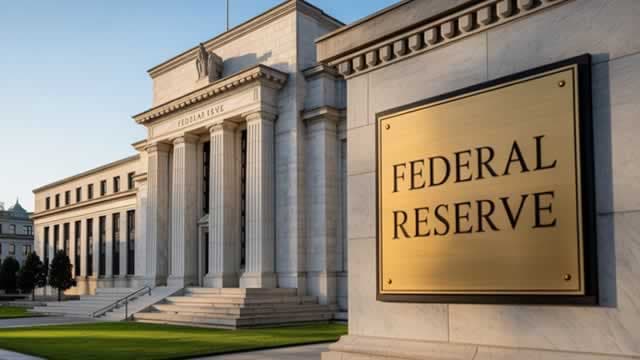
Kevin Warsh, President Trump's pick to lead the Fed, is expected to face a heated grilling in a Senate hearing Tuesday over his commitment to independence and whether he plans to slash interest rates.

The prevailing Wall Street narrative around space — that ever-cheaper rides to orbit will unlock everything from megaconstellations to orbital data centers — is colliding with reality on the launch pad.
Operator: Good day, and welcome to the Dynex Capital, Inc. First Quarter Earnings Conference Call. Today's conference is being recorded. At this time, I would like to turn the conference over to Ms. Alison Griffin, Vice President of Investor Relations. Please go ahead. Alison Griffin: Thank you, operator, and good morning, everyone. The press release associated with today's call was issued and filed with the SEC this morning, April 20, 2026. You may view the press release on the homepage of the Dynex website at dynexcapital.com as well as on the SEC's website at sec.gov. Before we begin, we wish to remind you that this conference call may contain forward-looking statements within the meaning of the Private Securities Litigation Reform Act of 1995. The words believe, expect, forecast, anticipate, estimate, project, plan and similar expressions identify forward-looking statements that are inherently subject to risks and uncertainties, some of which cannot be predicted or quantified. The company's actual results and timing of certain events could differ considerably from those projected or contemplated by those forward-looking statements as a result of unforeseen external factors or risks. For additional information on these factors or risks, please refer to our disclosures filed with the SEC which may be found on the Dynex website under Investor, as well as on the SEC's website. This conference call is being broadcast live over the Internet with a streaming slide presentation, which can be found through the webcast link on the website. The slide presentation may also be referenced on the Investors page. Joining me on the call today are Smriti Popenoe, Co-Chief Executive Officer and President; Byron Boston, Chairman and Co-Chief Executive Officer; Mike Sartori, Chief Financial Officer; and T.J. Connelly, Chief Investment Officer. I now have the pleasure to turn the call over to Smriti. Smriti Popenoe: Thank you, Alison, and good morning, everyone. We continue to build our company at the intersection of two powerful demographic tailwinds: the need for income and the need for housing. Dynex Capital, Inc. continues to deliver differentiated, top-tier performance. Our track record, combined with the significant growth in our capital base over the last 15 months, propels value creation by delivering scale and resilience to our shareholders. The team is focused on methodically building durability across investments, finance, technology, risk, and operations. Growing an enduring platform reinforces the value of our business meaningfully beyond the valuation of our balance sheet, further driving long-term shareholder returns. Turning now to the global macroeconomic environment, government policy is squarely in the driver's seat, defining and driving outcomes. Scenario planning for us has evolved to mapping policy pathways: what policymakers could do next, how markets may transmit those decisions, and how we position ourselves for those moves. More than ever, mindset and preparedness are the key factors for successful decision-making because the policy paths are not always foreseeable. Flexibility and openness in our team's mindset—something we actively teach and practice—are now essential parts of navigating the investment landscape. In the first quarter, we added value by executing our plan. We managed the portfolio through a short burst of volatility, which we used to opportunistically raise and deploy capital. We grew the total capital base by 18%, deploying the funds during the quarter as MBS spreads widened. Since quarter end, MBS spreads have tightened and book value is higher. Mike and T.J. will now review the detailed quarterly results and our outlook. Mike Sartori: Thank you, and good morning, everyone joining us today. I would like to begin by welcoming Caitlin Mowicz, who joined Dynex Capital, Inc. today to lead capital markets and investor relations. Kate brings deep industry experience across both functions, and her background will support the continued growth of our capital and investor base while deepening the engagement with our existing investors. We are excited to add her capabilities to our strong and growing Dynex team. Turning now to our financial results for the quarter, book value ended the quarter at $12.60 per share, and economic return was negative 2.5% for the quarter, consisting of $0.51 per share of common dividends and an $0.85 per share decrease in book value. We ended the quarter with leverage at 8.6 times versus total equity. The majority of the increase was attributable to the growth in our investment portfolio of $6 billion, reflecting the deployment of capital raised during the quarter of $442 million. Our liquidity position remained very strong, with $1.3 billion in cash and unencumbered securities at the end of the quarter, representing over 46% of total equity. We continue to evaluate growth through the lens of market opportunity, investment returns, and long-term accretion to drive shareholder value. Net interest income for the quarter rose from $0.28 per share to $0.40 per share, primarily due to declining financing costs, which fell 33 basis points due to the impact of the Federal Reserve's rate cuts in the fourth quarter. With respect to expenses, G&A increased quarter over quarter, driven primarily by one-time items. As we noted in the prior first quarter earnings, we expect overall expenses to normalize in the second quarter, with the full-year expense ratio anticipated to be flat or modestly lower versus year end as we grow our capital base. Importantly, we remain disciplined in managing costs and our expense structure. With that, I will turn it over to T.J. to provide additional detail on portfolio strategy and the outlook. T.J. Connelly: Thanks, Mike. We entered the quarter with policy attention focused squarely on housing affordability and the mortgage market, particularly housing and the availability of mortgage credit, a transition we believe could support tighter mortgage spreads over time. Early in the quarter, mortgage markets benefited from a strong technical tailwind. Government policy, long one of our most important inputs, had turned supportive, with policymakers emphasizing GSE mortgage buying to tighten spreads and improve affordability. As volatility rose later in the quarter, agency mortgages traded like much riskier assets, creating potential opportunities. Because we operate with strong liquidity, we navigated that volatility constructively and selectively added assets as spreads widened to more attractive levels. Fundamentals and technicals remain highly supportive, and we believe the long-term path toward tighter equilibrium spreads remains highly likely, boosted by policy, supply-demand dynamics, and yield carry. Net supply is light, and demand remains broad and robust across banks, REITs, money managers, and foreign investors. Last quarter, I noted that we expected net supply to be $200 billion this year. So far in 2026, it appears supply could come in even lower. Returning to the demand side, the potential bids from the Fannie Mae and Freddie Mac retained portfolios improves downside liquidity, stabilizes spreads during periods of volatility, and supports broader investor participation. The GSEs have been actively buying mortgages. They are selective on valuation. They regularly retain pools they have previously been selling through their cash window programs. And with respect to potential hedging, they are mostly hedging using interest rate swaps. In parallel, proposed changes tied to the Basel III endgame could lower the capital cost banks face to hold mortgages, both in loan and securitized form, and to intermediate financing more efficiently. Financing costs are declining amid the light regulatory regime. Repo markets functioned smoothly, spreads were stable, and funding was readily available even during periods of heightened volatility. MBS repo spread to SOFR remained in the 13 to 17 basis point range, three to five basis points below last year's averages. Structural improvements in the short-term funding markets alongside elevated money market balances, standing Fed backstops, and more efficient balance sheet intermediation continue to support financing for high-quality mortgage assets like those Dynex Capital, Inc. owns. We have seen agency MBS spreads to seven-year interest rate swaps begin to trend tighter again. After moving from the high 120s to nearly 170 basis points in March, spreads were in the low 160s at quarter end and moved back toward the 150 area late last week. As geopolitical events evolve and policymakers refocus on domestic issues like housing, we believe spreads can trade towards 120 again, with scope for long-term equilibrium spreads closer to 100 basis points. Static ROEs for current coupon mortgages hedged with interest rate swaps are in the mid- to high-teens, and the spread outlook I just outlined provides a further tailwind to forward returns. Moreover, the opportunity to add alpha through security selection is exceptional given the environment. Borrower prepayment behavior is increasingly heterogeneous and technology-driven, creating meaningful dispersion across pools. Over the last year, we have strategically reduced our exposure to the most callable agency MBS—those in what we call the TBA market—and we continued to do that in the first quarter. TBAs declined from over 16% of our portfolio at year end to approximately 7% at the end of the quarter. The first quarter reflects the strength of the Dynex model along two dimensions. First, disciplined risk management—supported by significant financing liquidity, strategic security selection, and a focus on market structure in the context of the macro headlines—allowed us to manage through elevated volatility. Second, that same volatility created the opportunity to raise and deploy capital at more attractive valuations, which we acted on during the quarter. Byron Boston: Thank you, T.J. We are now combining our demonstrated ability to earn solid returns with the benefits of scale. Growing our company in this attractive investment environment is an important element of value creation; it distributes fixed costs, deepens liquidity, and strengthens the company, especially in periods of volatility like we saw last quarter. Beyond the resilience that a bigger balance sheet provides, larger companies have also typically enjoyed higher, more stable valuations. We have grown rapidly to be the third-largest agency-focused mortgage REIT, and we believe the market has not yet fully recognized the value we are establishing through scale. As we continue to execute our plan with discipline, we are excited about the potential for shareholders to benefit from a more scalable platform, creating meaningful upside over the medium and long term. As we look ahead, we remain centered on opportunistic capital growth alongside disciplined management of our existing portfolio and building operating resilience. Our management team is invested alongside shareholders, our interests are aligned with yours, and we are committed to stewarding your capital with integrity, transparency, and care. We will now open the call for questions. Operator: Thank you. If you are dialed in via the telephone and would like to ask a question, please signal by pressing star 1 on your telephone keypad. If you are using a speakerphone, please make sure your mute function is turned off to allow your signal. If you are in the event via the web interface and would like to ask a question, simply type your question in the ask a question box and click send. Once again, press star 1 to ask a question. We will go first to Bose George with KBW. Bose George: Hey, everyone. Good morning. Can we get an update on book value quarter to date? Mike Sartori: Hi, Bose. Good morning. As of Friday's close, the estimated book value was $13.31 per share, net of the accrued common dividend, and that is up 5.6% versus quarter end. Bose George: Perfect. Great, thank you. And then you gave your outlook for spreads potentially going back down to 120 basis points. Is that across the curve or on a specific point on the curve? T.J. Connelly: We are quoting those spreads against the seven-year swap point, which is consistent with the chart we have in our presentation. Operator: We will take our next question from Trevor Cranston with Citizens JMP. Trevor Cranston: Morning. Follow-up on your commentary about spreads potentially tightening to 120 or even 100 basis points as a long-term equilibrium. Can you talk about how high you would be willing to take leverage given that outlook for tightening, and how much the potential for short-term bouts of volatility weighs against that? Thanks. T.J. Connelly: Thank you. There are several components to thinking about our leverage. Our leverage, as Mike mentioned, did increase to 8.6 times. Roughly two-thirds of that increase was actively positioning to own more mortgages given that backdrop. Mortgages really were kind of tail of the dog for several weeks in March. The yield spread, or mortgage basis as we refer to it, traded with risky assets. The basis was very correlated to things like the S&P 500. We are doing a lot of scenario analysis around that to think about just how much leverage we can comfortably manage, and it was a very comfortable position for us coming into the quarter-end period. Looking ahead, we will remain very opportunistic. We are resolute in our view on those spreads moving down to as much as 100 basis points. Given the GSE backdrop, we think we are on the verge of a significant regime change. So we are going to actively be opportunistic in keeping our exposures so investors can capitalize on this opportunity. Trevor Cranston: Got it. Okay. And then just looking at the portfolio this quarter, it looked like the allocation to TBAs went down. Can you talk about how you are thinking about the values of spec pools versus TBAs with incremental dollars? T.J. Connelly: The TBA market, by definition—the to-be-announced market—is the cheapest-to-deliver segment of the mortgage market. That is to say, the pools or the loans that are most callable and potentially have the most duration uncertainty typically will get delivered into a TBA transaction. We want to avoid those. We think those get cheaper and cheaper. They have a tremendous amount of uncertainty around their cash flows. They are very refinanceable, callable on even the slightest move in mortgage rates. So we are trying to avoid those. As I mentioned in my prepared remarks, we have been positioning for owning significantly more pools. We have a long history of security selection. This is a tremendous source of alpha for us, and it is unique to this model. It is very hard for investors to go out and find mortgage pools and do the deep dive that we do; you have to be in the institutional world. It is a great opportunity for retail investors, for instance, to be able to access security selection like we can offer them. Trevor Cranston: Makes sense. Thank you. Operator: We will go next to Jason Weaver with Jones Trading. Jason Weaver: Hi. Good morning, guys. I was wondering if you could speak to the phasing of capital deployment over the quarter and beyond. Byron Boston: In terms of the capital, and I will let Smriti comment a little bit, it is very opportunistic and methodical. We are thinking a lot about multiple components that go into that optimization for our shareholders. One of the things I think the market often misses is total shareholder return is driven by the portfolio returns and the valuation. One thing is very clear: larger companies receive a larger valuation in this sector, and that is a very important part of our calculus as we think about phasing up the capital raising. It was a significant quarter for us. I will turn it over to Smriti, who will comment a little bit more. Smriti Popenoe: Hi, Jason. One of the things that we think about actively is what the agency MBS market and the moves are telling us about the inherent risk in that particular sector. One of the things that happened in the first quarter is that agency MBS widened, but it was not because there was something wrong with agency MBS per se. It was not a fundamental reason. They widened because risk assets in general were weaker, and we view those types of opportunities to be really significant in terms of the ability to raise and deploy capital. So when we see that type of move, that is a signal to us to put accretive capital that we are raising to work. That is really the opportunistic nature of what we are talking about. In general, when we see those types of opportunities, you will see us probably raise bigger blocks of capital, put the money to work, and then over time, the criterion that we have always abided by—making sure that the cost of capital is lower than the return on the capital that we are deploying—remains the gold standard in terms of our willingness to raise and deploy capital over time. Jason Weaver: Got it. That is helpful. And just so I have this correct, obviously forward ROE is going to be the biggest consideration here. But is there a downside sort of multiple in valuation that you want to avoid, or you would underwrite to price above, like your book value multiple? Smriti Popenoe: We are always going to want the shares to trade at a premium to book value. I think as a business we have now proven two things. One is the ability to deliver strong returns in some of the more challenging environments that the market has had in the last 10 years. The second is this idea that as we grow, we are delivering significant benefits of scale to our shareholders. At this point, we feel like the markets have not necessarily taken that into account. Having now firmly placed ourselves as the third-largest company that is doing what we are doing, I think that part is not yet fully reflected in the share price. For us to continue to tell that story, that is the goal here. But all else being equal, not only do we think the shares deserve to trade above book, we actually believe they deserve to trade at a significant premium. Jason Weaver: Alright. I appreciate that. Thanks again for the answers, and congrats on the quarter. Smriti Popenoe: Thanks, Jason. Operator: We will go next to Analyst with UBS. Analyst: Good morning, and thank you for taking my questions today. Could you speak to swap spread dynamics over the quarter and how that impacted performance? And did you adjust the mix between Treasury futures and swaps during the stress period? T.J. Connelly: Thanks for the question, Marissa. Swap spreads—so the interest rate swap rate relative to Treasuries—is what most people are quoting there, and that does tend to correlate with risky assets, much as I mentioned about the basis. When stocks trade lower, for instance, the swap spread will trade more negative, and vice versa when risky assets are doing well, the swap spread will trade less negative. We have said for several quarters now—pushing up on two years—that we expect to be able to earn the additional yield spread that interest rate swap hedges offer relative to Treasuries. There is more yield spread available when hedging mortgages with interest rate swaps than there is when we hedge with Treasuries. As a result, I have mentioned on the last couple calls, we expected 60% to 80% of the portfolio hedged with interest rate swaps. We were right around 70% on a DV01 basis at quarter end, and I expect that to be roughly where we are comfortable in terms of the liquidity of hedges and being able to stay nimble with futures that trade practically 24/7, at least 24/6. There is a little bit of scope to get closer to 80% if the opportunity presents itself, but that is a really compelling spread for us to continue to earn over time, and it has worked fairly well. Analyst: Appreciate that. And just moving to the GSEs, you talked about the directive as resetting the spread regime tighter. How has the pace of their buying met your expectations? And did the March spread widening test that backstop thesis in a meaningful way? T.J. Connelly: Yes, it did to some extent test the backstop. They have proven to be very value-based, so I would not say it is time-based so much, which is really important for understanding the backstop. At wider spreads, they will be more aggressive, and all indications suggest they were more aggressive at wider spreads. They are fairly methodical in terms of their pool selection, so they are buying—or retaining rather—more pools than they have in the past relative to the cash windows. Overall, it is playing out roughly as we expected. There are periods of volatility; they wait, they put their hands up and say, “We will see where value shakes out,” and then they step in, much as they did when Smriti, Byron, and I sat at the Freddie Mac portfolios 25 years ago. They are operating in a very similar manner at this point. Analyst: Got it. Thanks so much for taking my questions. T.J. Connelly: Pleasure. Operator: We will take our next from Analyst with Compass Point. Analyst: Thank you. A follow-up on the previous question: how have your expectations for inflation influenced the tenor of your interest rate swaps, noting that you moved more into three- and five-year, and does that reflect your expectations for a steeper 2s/10s? T.J. Connelly: Great question. Over the course of the quarter, the market waffled a lot—especially with the war in Iran—the market narrative shifted very quickly at points from one focused on inflation to one focused on growth. We do not know the answer. We do not predict; we prepare. We are preparing and building this portfolio to be robust to both of those regimes. That is really important. You saw the swap book shorten up a little bit in that three- to five-year tenor. Most of that is just aging of the swap book. We are very comfortable with how this is positioned because the view we have here—and the risk exposures that we think are the most compelling for our shareholders to earn over time—is that mortgage spread relative to the interest rate curve. We are trying to position this to achieve the yield spread and hold our book value as steady as possible. Given the way the portfolio is constructed currently for this regime, it is appropriate. Our highest conviction is that mortgage yield spread is what we are here to earn, and we are hedging across the curve for that reason. Analyst: And to follow up on the asset side, it seems like you added more in the current and lower coupons and avoided higher coupons, assuming that follows on with CPR expectations? T.J. Connelly: It is a great question because there were some really good opportunities in the initial days. It feels like a long time ago now, but in mid-January, after the administration’s announcement that the GSEs would be more active in buying, certain coupons really outperformed. You will see in our press release that the 4% coupon is significantly lower than it was at year end, and that was because we took advantage of that alpha. There was significant outperformance in those coupons, and we moved away from those coupons as they outperformed to diversify the book up and down the stack. We added some Fannie 2s, even, and then some of the higher coupons. Again, this market is increasingly about pool selection even more than coupon selection. When you have these quick moves, we are watching very closely to say, “This is out of line.” The Fannie 4s, for instance, got significantly richer. We were able to sell into that and buy pools in other coupons that offered much more compelling cash flows for us. Analyst: That is a great answer. Thank you very much. Operator: We will take our next question from Eric Hagen with BTIG. Eric Hagen: Hey, thanks. Good morning, guys. Following up a little bit on this conversation around capital raising, looking at the timing of the capital raising and the broader philosophy around raising capital, is there anything fundamental that you would identify in the current environment which maybe changed the level at which you are prepared to raise capital relative to where you have raised in the past? And by level, I mean the level of your stock, your valuation. Smriti Popenoe: As you know, Eric, we disclosed that the bulk of the capital that was raised was raised early in the quarter, when valuations were more supportive toward issuing capital versus investing, and then the investing environment played itself out over the quarter as everyone saw with spreads wider as the war in Iran progressed. In general, I do not think the principles have changed. When it is a good idea for us to raise, we raise. When it is a good idea to invest, we invest. The raising and deploying do not necessarily have to be simultaneous in nature. Sometimes they are, and sometimes they are not. The real principle—I have said this for three-plus years—is this idea of whether the cost of capital is lower than the return that we can earn on that capital over time. That is what makes this investment environment so unique: (a) that it has lasted as long as it has, and (b) that the forward returns in agency MBS still continue to support active raising and deploying of capital because, over time, we believe the return on the capital we are raising right now is going to be higher than the marginal cost. That has always been our operating principle. As we see the share price go up relative to book—we talked about price-to-book a fair amount today—I think we are more conscious about the idea of delivering total shareholder return to our shareholders. T.J. talked about TSR being comprised of two things: the actual return on our portfolio and the price-to-book. We know those are two different components, and there is a trade-off between the two, but that also is a factor in how much we raise and how much we deploy. A lot of what we are thinking through right now is, number one, performance. Performance is the beginning, ending, and final arbiter of everything that we do. That is always number one. Number two is delivering value through these other ways. Those are all factors in how we think about the pace of capital raising and deploying. Eric Hagen: That is really helpful. Thank you. If I could sneak in one more here: what is your perspective on the prepayment environment as community banks are given more incentives to come back into the market? Do you see that driving a lot of competition among originators? T.J. Connelly: Certainly, competition drives refinanceability. That is a very important construct. More than anything, though, as we have talked about for many quarters now, it is all about the technology. That is making it easier and easier to refinance the marginal borrower, and I think that will be the dominant force over time. To the extent that you have certain incentives, you are bringing it back to something we have talked about for a long time—that is policy. To the extent policy shifts incentives for the players in the mortgage market, that is something we are watching very closely. Operator: At this time, there are no further questions. I would now like to turn the call back to Smriti Popenoe for any additional or closing remarks. Smriti Popenoe: I thank you all for your attention, and we look forward to updating you on our quarterly results in the second quarter. [inaudible] Operator: This does conclude today's conference. We thank you for your participation.

Operator: Good morning, ladies and gentlemen. My name is Kevin, and I'm your conference facilitator today. I'd like to welcome everyone to Cleveland-Cliffs First Quarter 2026 Earnings Conference Call. All lines have been placed on mute to prevent any background noise. After the speaker's prepared remarks, there will be a question-and-answer session. The company reminds you that certain comments made on today's call will include predictive statements that are intended to be made as forward-looking within the safe harbor protections of the Private Securities Litigation Reform Act of 1995. Although the company believes that its forward-looking statements are based on reasonable assumptions. Such statements are subject to risks and uncertainties that could cause actual results to differ materially. Important factors that could cause results to differ materially are set forth in reports on Form 10-K and 10-Q and news releases filed with the SEC, which are available on the company website. Today's conference call is also available and being broadcast at clevelandcliffs.com. At the conclusion of the call, it will be archived on the website and available for replay. The company will also discuss results excluding certain special items. Reconciliation for Regulation G purposes can be found in the earnings release, which was published this morning. At this time, I'd like to introduce Lorenzo Goncalves, Chairman, President and Chief Executive Officer. Lourenco Goncalves: Thank you, Kevin, and good morning, everyone. The first quarter of 2026 was the beginning of a sustained improvement progression that will continue through the rest of the year. While Q1 results could be better and they would be better. if not for a couple of one-timers, we can see the clear signs of a positive trend for me. Among these one-timers, the impact of the spiking on energy cost was the most relevant to Q1 results. Now to the good news. Our order book is full and the automotive OEMs are booking more and more steel from Cliffs. Production schedules are tight and lead times have moved out. Historically, Pricing changes took about a month to flow through our realized numbers. Today, the lag is closer to 2 months. In practical terms, -- that means the pricing strength visible in the market today will increasingly show up in our results as we move through the year, quarter by quarter. That combination, strong backlogs, disciplined production and visibility is what a healthy steel market looks like. The extended lead times allow us to optimize production schedules in our mills, improving our overall efficiency, productivity and costs. This market strength is driven by what is happening on the trade front, steel imports into the United States are at their lowest levels, since 2009. By now, it's clear that Section 232 works, the melted and poured mandate works and the enforcement works. Along those lines, we are very encouraged by the recent changes in how derivative product tariffs are being enforced. Distribution transformers were added, which is exactly the right outcome. The Trump administration has given the domestic steel industry what we needed and have been asking for. Union jobs are being protected. -- domestic supply chains are more resilient and mills are running at higher utilization with real predictability. The 1 piece still missing is Canada. There's a robust domestic market in Canada for our Canadian subsidiary, Stelco to sell steel into, but the Canadian market is still oversupplied with steel from countries that are no longer able to dump their excess capacity into the United States. Because of that, they dump steel in Canada. That said, we are confident that Canada will ultimately get to the right place and enhance its own national security defenses against the negative impact of foreign steel causing the destruction of Canadian companies. We truly believe the Canadian government is honest about defending Canadian jobs in Canadian steel workers. We fully expect that Fortress North America can be and will be implemented by Canada because that's totally within their own power. Canada does not depend on anyone else to do so and Canadian jobs are the ones at stake. The national security base for steel tariffs is being validated in real time. The war activity in Iran has disrupted global freight lanes, driven up energy prices and destabilized metal supply chains. Imported steel is now not only subject to tariffs, it is structurally more expensive due to transportation costs, energy volatility and geopolitical risk. And while this global uncertainty is exposing weaknesses elsewhere, it is strengthening the position of domestic steel producers like Cleveland-Cliffs. Nowhere is that more evident than in aluminum. The aluminum industry has been hit repeatedly, fares power shortages, curtailments, geopolitical disruption and customers have taken notice of all that. Automotive OEMs are prioritizing supply certainty, total cost and safety. Our Cliffs Steel delivers all of that without the fragility embedded in aluminum supply chains. In my long career in this business, I have never seen so much momentum and substituting aluminum with steel. And automotive is not the only place, where the shift from aluminum to steel is occurring. Building products, appliances and truck trailer sectors have been recently gravitating toward more steel use as well. As we advance the use of our Cliffs steel, being formed in equipment previously utilized exclusive for aluminum, Cliffs has demonstrated to our clients with real-life results, the most potential benefit to market share gains from aluminum. We are also pleased to inform all of our stakeholders that in February, Cleveland-Cliffs received from our clients, Toyota, the Toyota Quality Excellence Award. Toyota does not hand out quality excellence awards lightly. Their standards are amongst the strictest in the world winning that award is confirmation that our processes, consistency, execution and our overall quality are at the highest level for Toyota's high standards. That strength has drawn attention from companies outside the United States. When we last spoke, we expected to achieve during the second quarter, a mutually satisfactory transaction with POSCO in accordance with the memorandum of understanding signed by both companies last year. This goal remains achievable, but the currency disruption in the Middle East and its impact in the country of South Korea have not helped accelerates the conclusion of our ongoing discussions. That said, our engagement with Post is active, and we still believe a deal can be completed within this time frame or slight later. Our Department of Energy-funded projects, we -- on this side, we continue to make solid progress. The Butler Works electrical steel expansion project is moving along as planned and remains on schedule for 2028 completion. Similarly, our Middletown Works project has received a clear affirmation that the project will proceed once the updated scope is finally approved, and we are now in the final stages of completing that work. The revised scope of the project reflects a modern blast furnace configuration that position in Middletown among the most energy efficient in the world. Taken together, the Butler and Middleton projects underscore our disciplined approach to modernization, investing in critical infrastructure in a way that strength domestic still making improves efficiency and supports long-term competitiveness. At the same time, we are continuing the footprint optimization actions we began last year. At Burns Harbor, we are idling our smaller plate mill as we have successfully been able to consolidate all capabilities of the 110-inch mill into the 160-inch mill. This removes an inefficient line, improved utilization at the efficient 160-inch mill and strengthen our cost performance without sacrificing any capability. We are also idling the Gary plate finishing line, which is no longer needed. There will be no loss in overall steel production or layoffs, as we will backfill those roles in areas where we have seen rate attrition. We expect that these operational changes, coupled with the positive momentum, we have been currently seen in the plate market should enhance our earnings from the plate business. On rare earth, we continue to analyze our potential on these critical minerals. That said, economics hedge on domestic refinement capability. And today, that infrastructure is extremely limited in the United States. Refinement is capital-intensive and not something we intend to pursue ourselves. If and when, viable domestic refinement infrastructure becomes available either through government-supported projects or third-party investments, we see ourselves well positioned to take advantage of the opportunity. We have also partnered with a leading and prominent AI provider to help us take a meaningful step forward in how we run the interface between operations and commercial, particularly by embedding AI into our production planning and order entry processes. Their platform allows us to use machine learning models across our internal data to anticipate constraints optimizing sequencing and making better decisions in real time rather than after the fact. Our people are good, but it's impossible to perfect these processes with humans running Excel spreadsheets. This initiative will ultimately move us from human experience-driven planning toward a new and enhanced AI-assisted decision-making system that scales with the complexity of our operations. We expect to make a full announcement on our AI initiative, including the name of our partner in the next few weeks. One important milestone we will navigate in the coming months is the renegotiation of our labor agreement with United Steelworkers. Our employers are the backbone of this company and their skills, commitment and pride in what they produce are critical to our success. In our evolving and increasing in capital-intensive industry, we must ensure that the structure of our labor agreement supports competitiveness, flexibility and long-term sustainability. We approach these discussions with respect and realism with the goal of reaching an agreement that rewards our workforce, while strengthening the company's ability to invest growth and remain a strong employer for the kings to come. This process represents a meaningful opportunity for both Cleveland-Cliffs management team and our union workforce to demonstrate the depth and the strength of our partnership and we will not disappoint anyone. With that, I'll turn it over to our CFO, Celso Gonsalves, to go over our financial results. Celso Goncalves: Thank you. Good morning, everyone. Our adjusted EBITDA in the quarter was $95 million, a $274 million increase from a year ago due primarily to increased pricing. Starting with the top line. First quarter shipments totaled just over 4.1 million tons, which represents a recovery of more than 300,000 tons sequentially. That improvement was driven by better demand conditions across spot and trade channels and by a more stable operating cadence coming out of the fourth quarter. We were still impacted by weather-related disruptions, but volume strengthened as the quarter progressed. Shipments should increase further into Q2 as this trend continues. That volume recovery is critical because of the fixed cost nature of our business. Every incremental ton we produce and ship has a disproportionate impact on margins. The operating leverage embedded in integrated steelmaking remains substantial. Pricing also moved in the right direction. Average selling prices increased by $68 per ton from a year ago and sequentially by $55 per ton during the quarter, reflecting improving market conditions and better automotive pool. This came in slightly below our original estimate as contractual lags were longer than anticipated based on customers ordering at MAX levels. As mentioned earlier by Lorenzo, what used to be roughly a 1-month realization lag has effectively extended to closer to 2 months as our order book has filled and schedules have stretched. That means price strength visible today will show up more fully in Q2 and Q3 results. In the U.S., about 45% of our sales are linked to the commodity HRC price. The remainder are under fixed price arrangements like in automotive or linked to other indices like we have with plate. In Canada, effectively all shipments are sold on a spot price basis, but that price has completely disconnected with the U.S. price. Historically, pricing in Canada was effectively in line with pricing in the U.S. But in today's market, the Canadian selling price is at a 40% discount to U.S. pricing. This is still margin positive for Stelco, but well below what this entity would have generated historically in this type of pricing environment. On the cost side, the most visible pressure in the quarter came from energy and the impact of the extreme cold weather we felt here in the Midwest during the winter. We lock in most of our natural gas purchases for the following month, 3 days before the start of each month. The day that gas was locked for the month of February was the highest price in 3 years and it very shortly thereafter came back down to historical levels. This piece of the energy spike was known at the time of our last call and was partially offset by hedges, but we also felt an immense impact from the run-up in electricity and industrial gases. We have 3 EAF facilities and 2 integrated facilities in the unregulated states of Ohio and Pennsylvania. And when prices jump like they did during the cold weather months, we feel a direct impact. All factors considered, the energy spike drove an $80 million negative impact to EBITDA in Q1 relative to historical expectations. Since then, natural gas and electricity prices have normalized, but we've seen other cost pressures emerge. The cost of fuel, for example, has impacted mining costs at our iron ore pelletizing operations, and scrap has continued to grind higher as well. Combining these with the impacts of some scheduled outages in Q2, our Q2 cost should tick up another $15 per ton higher before falling meaningfully in the back half of the year. We will update our cost expectations on a quarterly basis. All of our other full year expectations, including volume, CapEx and SG&A remain in line with prior guidance. SG&A has been a clear area of success for us, while earnings have been under pressure. Even after acquiring Stelco in the fourth quarter of 2024, which naturally added to SG&A, we've been operating at essentially an all-time low on a quarterly basis since becoming a steel company after factoring in noncash amortization that is added back to EBITDA. This is good evidence of our cost discipline even after absorbing the impact of acquisitions and normal inflationary pressures. The result is a leaner overhead cost base that positions us well as operating conditions improve and underscores our ability to trim fat and capture synergies. Turning to cash flow. First quarter free cash flow was negative as expected, primarily due to working capital timing. Our first and third quarters are always heavier cash use periods due to the coupon schedule of our high-yield bonds. Accounts receivable increased during the quarter as shipments accelerated into March. This along with higher pricing compared to the prior quarter is a recipe for a large receivable build, but the evidence is clearly there for a major cash collection quarter in Q2. Combining this higher collection with higher EBITDA, sets us up for a return to meaningful positive free cash flow in Q2. From both an EBITDA and cash flow standpoint, Q2 should be our best quarter in nearly 2 years. And that is -- and that will be the quarter where we have a number of outages across the footprint. Because of this, our full shipment and cost potential will not be on full display until Q3, which is an outage light quarter. Q3 will give us maximum operating leverage on volumes and pricing and is where you should expect to see the earnings power of this business become much more apparent. If the steel price curve holds constant, the improvement from Q2 to Q3 will be even better than the sequential improvement from Q1 to Q2. Our job right now is to run reliable operations and let the strong market we're in, take care of the rest. Our outlook on improving leverage position remains firmly supported by the expectations for strong free cash flow generation over the balance of the year, along with the completion of multiple real estate transactions currently in process. Our $425 million cash received expectation from idle property sales remains on target, with 2 more properties going under contract since we last spoke. As we translate earnings into cash, and close on these asset sales, we expect to further strengthen the balance sheet and continue making progress towards our longer-term leverage objectives while maintaining the flexibility to operate the business from a position of strength. We're also pleased to have come out of the most cash-intensive use periods at Cliffs, still with liquidity above $3 billion. I will now turn it back to Lorenzo for his closing remarks. Lourenco Goncalves: Thanks, Celso. In closing, -- what's fundamentally different today is that trade enforcement is working. Our customers are engaged and our order book is full. This company spent the last couple of years fixing what needed to be fixed. That work is largely behind us. The footprint has been rightsized and we finally have the platform to perform and deliver. From here, the focus is on execution, running reliable operations, serving customers at the highest level, generating cash and allowing the strength of this market to flow through the income statement. With that, I will turn it over to Kevin for questions. Operator: [Operator Instructions] Our first question today is coming from Carlos De Alba from Morgan Stanley. Carlos de Alba: The first 1 is maybe. Celso, could you comment what are the price expectations in terms of changes quarter-on-quarter for the first -- for the second quarter Obviously, with the lag moving, maybe this has changed versus what we had expected. So any quarter would be great. And then in the release, you mentioned that you stopped -- you finally ended the shipping material on the Metal slab contract in the first quarter. Can you give us a color as to how many tons did you ship in the first quarter for that contract? And/or what is the impact on EBITDA that you calculate you suffer from steel basically shipping a few months after officially the agreement was ended? Lourenco Goncalves: Carlos, that's Lorenzo here. Let me answer the slab first and then Celso address the previous portion of your question. We had a tale of shipments on these labs. That is not tonnage-wise, is not really meaningful, but it's still a drag. It was 175,000 tons of slabs that are still in the tail end of shipments. But it's over. It's done. And now they do not have any labs from us. ArcelorMittal covered is on their own devices and gaming led from other sources other than Cleveland-Cliffs. Celso, please take the... Celso Goncalves: Sure. Carlos. Yes, let me give you some general guidance on Q2. As I mentioned, Costs are going to tick up a little bit from Q1 to Q2. But the way to think about it is Q1 was much better than Q4. Q2 is going to be much better than Q1 and Q3 should be much better than Q2. From a shipment standpoint, Q2 shipments are expected to improve from Q1 and remain above that 4.1 million tonne mark. The trends that we're seeing here in Q1 are expected to continue into Q2. Automotive shipments are expected to increase after reaching the highest level in almost 2 years during Q1, and that's going to get even better in Q2. Selling prices are expected to be up about $60 a ton from Q1 to Q2. We expect to see the same kind of benefits we saw in Q1 related to pricing. The monthly quarterly and spot pricing are all up Canadian pricing is improving. As we mentioned, the final slab shipments to cover are not on -- we posted a slide deck in our presentation. You can see sort of the updated contract mix -- so right now, it's about 43% on a fixed full year price with the resets throughout the year. 23% is linked to month like indexes. 7% is on a quarter lag indices. 12% is U.S. spot and 15% is Stelco spot. So that should give you a view on mix. We talked about pricing. We talked about costs and we talk about shipments. So I think with that, you should have enough for Q2 and then Q3 should get even better from there. Operator: next question today is coming from Nick Giles from B. Riley Securities. . Nick Giles: Yes. Thank you, operator. So you built working capital in 1Q that's somewhat expected. But to what extent could we see that unwind in 2Q? And can you just describe if or how you'll need to further build just to meet the increasing demand, higher shipments later in the year? Celso Goncalves: Nick. Yes. So the Q1 build of working capital, about $130 million was primarily driven by AR as pricing continued to rise in March. Shipments were strong and it was offset by a reduction in inventory. As we look towards Q2, you should see a slight release in working capital as we further reduce inventory. That's the way to think about it. Nick Giles: Got it. And then just on POSCO, at this point of the negotiations, do you feel that there are certain aspects of any deal that are already decided? Or is there really still active dialogue around different structures? Any color there would be great. Lourenco Goncalves: Let me take that one, Nick. I think what -- the biggest change that happened between when we first start talking to POSCO and now is the outside of the negotiation between us and POSCO, the world surrounding us changed a lot. Remember, when we were first approached by POSCO, we were in a price environment that was a lot weaker demand was a lot weaker in the United States. And POSCO was coming with a proposal of bringing businesses from Korean companies to be reestablished or established from the first place in the United States in the short term because the the [ new ], the Hyundai [ milk ] in Louisiana is a long-term proposition at best. It's not a short-term thing that can resolve things right away. So we would be their lifelines. That said, the situation in South Korea changed a lot. Even though I'm not by any stretch in possession of any information -- internal information about South Korea, it's clear that things are a lot more complicated for all Asian countries, including South Korea right now, than they were 2 or 3 years ago. And that's the lag. On the other hand, from our side here in the United States, markets be prices are stronger. Automotive OEMs are producing more cars in the United States, and they rely on Cliffs to build those cars in the United States. It's not like they want us to supply steel to Mexico because they will use our steel to produce parts in Mexico and then bring back to the United States. They want to do it in the United States. And we do have the capacity right now, idle available, not so much it anymore because we're getting more and more and more orders from the auto OEMs. So our situation is getting better. And that is changing our perception on how this deal should be taken care of. We are still engaged, we're still talking. We still like each other. We still want to deal that is accretive for our shareholders. And I assume that they want the same thing for their site. Let's see what happened next. But we are -- by any stretch, we are no longer in a hurry. We are not before. We are a lot less in a hurry now. I hope I gave you the overall picture. If not, please go ahead and ask a follow-up question, Nick. Nick Giles: And that's great. I really appreciate that perspective and give you best of luck. Operator: Next question is coming from Martin Englert from Seaport Research Partners. Martin Englert: Hello. Good morning, everyone. question on unit cash costs, if you could touch on your exposure to diesel through the upstream mining operations and implications on unit cash costs. And if there's any hedging activity that we should take into consideration there. Celso Goncalves: Yes. Martin, yes, we're seeing some impact. Diesel is a meaningful cost component of the mining operations. We don't hedge diesel anymore. We hedge natural gas, primarily 50% of our exposure, but since we became a steel company, we don't hedge diesel anymore. So the impact -- the annual impact on kind of truck and rail services overall is about a $50 million annual impact on mining costs, which is about $6 per ton. Martin Englert: Okay. And then net... Celso Goncalves: Consume about 25 million gallons per year of diesel. Martin Englert: And the natural gas component in the mining operations, that's around like 8%, 10% of overall natural gas for the company? Celso Goncalves: The natural gas associated with mining specifically is about 20%. Martin Englert: Okay. And then within auto, can you touch on the degree that you're seeing a shift back towards steel from aluminum, if any yet? And if it's meaningful volume, when this might be occurring is this something that might be happening after summer shutdowns in automotive or anything like that? I'd be curious on more color if you have any to share. Lourenco Goncalves: Yes. It's happening as we speak. And it's -- I don't have tonnage from the top of my head here, but it's meaningful for the fact that once you break the dam it goes because lets us [ to a car ] that we are now in this -- I can't give you, of course, names or details. But we are supplying the tenders that used to be aluminum vendors and now our steel vendors. Then they need to rethink a bunch of riveting operations and the type of welding and things like that. That's a difficult part, and we are beyond that part. So now instead of not having aluminum, they have steel -- so the engineering departments of these OEMs. And by the way, I'm not talking about any 1 specific, but it's happening across the -- the board in terms of all OEMs we serve and we serve them all. They now see how feasible it is to step still even using the previous equipment that they had to stamp aluminum. And it's easy to assemble the changes are not meaningful and they do have the material instead of not having the material. So it's happening. It's growing -- and we are already seeing the opportunity to run lines that we are not running before. We brought back the EGL line -- the electrogalvanizing line at new Carlile. There was do for a long time. So we are seeing all that happening as we speak. So it will be an ongoing process as the year progresses. Martin Englert: And presumably with gravitation back towards that might move your auto mix a little bit and to more favorable mix/margin overall for the steelmaking business. Is a fair assumption? Lourenco Goncalves: Well, the automotive business continues to be a profitable business for us. The fixed prices are not by any stretch detrimental to our profitability. So we just need to get more tons, and that's exactly what not only just the substitution of aluminum [ distis ] bringing. But the fact that the clients are a lot less excited about cost, cost, cost and then they are seeing the the beauty about reliability, quality, the material that they can count on and things like that. So it's back to basics. Back to the important factors that were in place before every single OEM decided that they would be like Tesla and they would produce only electric vehicles. And that ship has say then left a very bad experience with all OEMs -- at that point, everybody was focused on costs. And that's when the less prepared competitors started to participate in automotive more than they should -- and that's being fixed and that is being corrected. So that's what we're seeing right now. Operator: Our next question is coming from Nick Cash from Goldman Sachs. Nicklaus Cash: Lorenzo and also I guess my first question is on the slab contract. Last quarter, we were talking about, I think, about a $500 million increase in EBITDA when prices were at around $90 million. with prices where they are today, I think back of the envelope math gets you about $100 million in revenue higher. Is that all operating leverage and are conversion costs sticky? Or is that not the way to think about? Celso Goncalves: Yes. Sorry, it was a little hard to hear your audio, but I think we captured your question around the slab math. But yes, it sounds like your math is reasonable. There are some offsets on scrap pricing, energy costs and things of the like. But I think your assumptions are in line. Nicklaus Cash: Awesome. I appreciate that. And then just 1 quick follow-up, hopefully, you can hear me. got it for another 15% increase per ton in cost in 2Q due to higher scrap and fuel for, I think, a drop-off in 3Q, '26. What gives you confidence in that drop off? And I guess where does that kind of put you for full year guidance on cost increase or decrease per ton, if you can give that color. Celso Goncalves: Yes. So you got to remember that Q2 is a big outage quarter. So pricing -- I'm sorry, costs naturally would tick up on a per ton basis due to the outages. And then Q3 is a very outage light quarter. So inventory from the high-cost period has sort of worked down into the subsequent quarters. And then we're continuing to see automotive volume ramping. Every unit is running at higher utilization. So as that materializes into Q3, that's when you're going to see the benefit of the cost dilution. Operator: Your next question is coming from Albert Realini from Jefferies. Albert Realini: Would you be able to just walk us through some of the break costs or just any broader economics if a scenario where the possible opportunity were or not materialize? I just -- I know you had mentioned previously some of the larger-scale asset sales like Toledo and certain FPT assets would be off the table while discussions with POSCO were ongoing. So just kind of wondering how you think about Wayne continued discussions with POSCO versus the ability to go out to the market with some of these higher valued assets in the current strong steel price environment? Lourenco Goncalves: Yes. Look, we can't try to create hypothetical scenarios here to the costs come home. But I don't think it's productive because, for example, right now, yes, you're right. The HBI sale, I'm not considering anymore. And it started because -- at least for now. It started because of the discussions with POSCO. But right now, HBI stretched my ability to produce hot metal and helps me increase production. You saw that shipments were higher, production was higher and Q2 shipments will be higher and production will be higher. And HBI is helping us get there. because we loaded the HBI in blast furnaces, for example. And we also use them in our EAFs. We still have 3, EAFs. So it's not like it's a burden. It's a positive. And we are discussing here cash flow, and we are going to continue to generate cash flow grow cash flow, you're going to start seeing that happen in Q2. So that's why I don't like playing a hypothetical scenarios. Things continue to be the way they are shaping up right now, and shipments continue to go more toward the 16.5 million to 17 million tons for the year. We're going to need the HBI to get there. And that will be very, very accretive to the company. So we like cash flow generated by operations. and we will continue to pursue that. All the rest is hypothetical that there is no real meaning on trying to speculate. Operator: Next question is coming from Lawson Winder from Bank of America Securities. Lawson Winder: Thank you, operator, good morning, Lourenco and also, it's nice to hear from you both. And it's nice to see the solid Q-over-Q EBITDA improvement. If I could just drill down a little bit on some of the discussion we've already had on the unit cost guidance for -- so just thinking through the different moving parts, we're adding back $80 million from the onetime energy spike. That's about $1,950 per ton at 4.1 million tons. And then there's an additional $15 million. So net, we're getting about a $35 million gross increase in cost Q2 to Q1. I mean pushback, if you think that's the wrong way of thinking about it. But if you could just kind of walk me through what the different pieces are, I think you mentioned $6 per ton for diesel, but there's obviously some other pieces there. Could you just help us think through those components? Celso Goncalves: Yes. Sure. Lawson, I appreciate the comments. So let me drill down here. We saw these production issues in Q1 from kind of onetime extreme weather and energy-related issues. And some of that, there's a little bit of carryover from that high energy cost via just the inventory carryover. And then further to that, into Q2, you also have a richer product mix as we continue to improve on automotive. So we're seeing some impact -- there's carryover impact from Q1 to Q2. You have the outages in Q2 and you have a richer mix in Q2. And then we're starting to see some of the impact from the kind of the war-related costs related to diesel and freight and things like that. So that sort of explains why Q2 costs are ticking up a little bit higher by $15 a ton. And then when you get to Q3, the cost benefit a lot from improved utilization, lower outages, lower energy costs, continued asset optimization, lower coal pricing, and a lot of reduced repair and maintenance costs. So while Q2 ticks up from Q1, Q2 -- Q3 should tick down meaningfully from Q2. So that's the cadence of the sequence of events as we look forward for the next couple of quarters. Lawson Winder: Okay. Yes, that helps. And is that the correct assumption that you're effectively also getting a Q2 quarter-over-quarter $80 million tailwind in EBITDA from the reduction of those onetime energy costs, so something like $1,950 per short ton benefit? Celso Goncalves: Yes. I mean it's not really 1 to 1. It's not like -- like I said, some of that carries over and gets carried through the inventory costs. So it's not like -- I can't tell you that you just remove that entirely quarter-over-quarter? Lourenco Goncalves: But you should remove for Q1 -- you should remove for Q1. That's what you should do because that should not happen, would not have happened without the external factors, and that's real. We use our procedure to buy the stock that we buy in the market, hedging the same way we always hedge it. We did everything by the book and we are unlucky things happen. And I'm sure we are not the only 1 that we're unlucky. Let's see how others will report as we go. But the fact of the matter is that it hurt and it hurt badly. Q1 was supposed to be better without that. That's why we point out because it's a real number that we can pinpoint and show. But going forward, yes, there is inventory impact and things like that. But on the other hand, we're going to get a lot more value-added material from automotive. We are acting on other things that we will offset. So it's very difficult to identify like that, but it was very easy to identify Q1. That's why we point out in our press release. Lawson Winder: Okay. That's very helpful. And then if I could just ask very quickly on the land sales. I appreciate that predicting the precise timing of those can't be easy. But are they still all expected to close in 2026? Lourenco Goncalves: Yes. Yes, we are very confident that the counterparts are acting to get their problems solved and their financing in place. We continue to sign enforceable contracts. So we have 2 more in the quarter. So all going -- all these deals are going very well. Operator: Our next question today is a follow-up from Carlos De Alba from Morgan Stanley. Carlos de Alba: Yes. It's basically a follow-on precisely on the last question, Lawson. So you have received $70 million already this year on asset sales. So should we expect you have any color on the cadence of the remaining, what is it, EUR 350 million in proceeds throughout the year or just this year is the expectation, but no further details from that. Lourenco Goncalves: Let's put $50 million in Q2 and $100 million in Q3, with the remainder in Q4. Operator: Our next question today is coming from Timna Tanners from Wells Fargo. Timna Tanners: I wanted to ask a little bit about the mix, if I could. Have plate market is really strong. And I just wanted to get a little more color on why the actions you took in -- if -- just talk about how that keeps your capability similar despite some of the closures? And then similarly, Stanson Electrical down year-over-year? And I thought Electrical was sold out for a couple of years. So just a bit more color on those products would be great.p Lourenco Goncalves: On plate, we shut down a bill that was basically taking care of 1 client and associated with the Q&T line that is inside Garyworks that doesn't belong to Cliffs. So the logistics was not very enticing. So all the rest remains the same. So what you said about the plate market is right. But we are talking about 1 specific client that was used in the 110 and the Q&T line at Garworks. So that's that -- so we could reconsolidate that and do another way. So there is nothing wrong with that because the 160 is now -- the 160-inch mill is now fully utilized. So that's all good we played. As far as electrical still we got to differentiate grain-oriented electrical steels that there is only 1 company that produced in the United States that's Cliffs, and oriented electrical steel that we have ourselves and a cup of Bs that are not producing very good material, but they are trying. But on the other hand, the biggest utilization of non-oriented electrical steel is electric vehicles. So good luck with that for the ones that made investments to produce non-oriented electrical steels. As far as grain-oriented electrical steels, we are the ones not only the ones that produce but the ones that are growing production with our project in Butler. I hope I answered your question, Tim. Operator: We ran have our question-and-answer session. I'd like to turn the floor back over for any further or closing comments. Lourenco Goncalves: Thank you very much. Have a great day. Bye now. Operator: Thank you. That does conclude today's teleconference and webcast. You may disconnect your lines at this time, and have a wonderful day. We thank you for your participation today.
Operator: Welcome, everyone, to SmartFinancial, Inc. First Quarter 2026 Earnings Release and Conference Call. We will begin shortly. In the meantime, if you would like to preregister to ask a question, please press star followed by one on your telephone keypad. If you change your mind, please press star followed by two. Hello, everyone, and thank you for joining the SmartFinancial, Inc. First Quarter 2026 Earnings Release and Conference Call. My name is Claire, and I will be coordinating your call today. During the presentation, you can register a question by pressing star followed by one on your telephone keypad. If you change your mind, please press star followed by two on your telephone keypad. I will now hand over to Nathan Strall, Director of Investor Relations, to begin. Please go ahead. Nathan Strall: Thanks, Claire, and good morning, everyone, and thank you for joining us for SmartFinancial, Inc.’s First Quarter 2026 Earnings Call. During today's call, we will reference the slides and press release that are available in the Investor Relations section on our website, smartbank.com. William Carroll, our President and Chief Executive Officer, will begin our call, followed by Ronald Gorczynski, Chief Financial Officer, who will provide some additional commentary. We will be available to answer your questions at the end of our call. Our comments include forward-looking statements. These statements are subject to risks and uncertainties, and actual results could vary materially. We list the factors that might cause these results to differ materially in our press release and in our SEC filings, which are available on our website. We do not assume any obligation to update any forward-looking statements because of new information, early developments, or otherwise, except as may be required by law. During the call, we will reference non-GAAP financial measures related to the company's performance. You may see the reconciliation of these measures in the appendices of the earnings release and investor presentation filed on April 20, 2026 with the SEC. I will now turn it over to William Carroll to open our call. William Carroll: Thanks, Nate, and good morning, everyone. Great to be with you, and thank you for joining us today and for your interest in SmartFinancial, Inc. As usual, I will open up our call with some commentary and hand it over to Ron to walk through some numbers in greater detail. After our prepared comments, we will open it up with Ron, Nate, Brett Miller, and myself available for Q&A. It was a great start to the year for our company with another very busy quarter as we continue to execute on our strategy of leveraging the great foundation we have built over the last several years. Our team's focus on this execution continues to be outstanding, and 2026 was yet another example of that. So let me jump right into some of our highlights. First, and in my opinion, one of the most important metrics, we continue to increase the tangible book value of our company, which is now up to $27.33 per share, up from $26.86 at year-end. For the quarter, we posted operating earnings of $13.7 million, or $0.81 per diluted share, with total operating revenue coming in at $53.8 million, higher than the $53.3 million in the prior quarter even with two fewer days. We continue to execute on outstanding growth on both sides of the sheet, posting 14% annualized growth in loans and 7% annualized growth in core deposits. Our history of strong credit continues with only 25 basis points in nonperforming assets. I am very pleased with our credit performance and our extremely low level of NPAs. Operating noninterest expenses also came in on target at $32.9 million as we continue to exhibit expense discipline. Looking at the first few pages in the deck, you will see our continuation of some very nice trends. We are building our return metrics and, most importantly, growing total revenue, EPS, and tangible book value. All of those charts are great graphics to illustrate our execution. I am looking forward to and expecting these trends to continue. A couple of additional high level comments from me on growth: Our balance sheet expansion is a direct result of the focus of our sales teams. Our continued evolution as an outstanding organic growth company is one of the things I have been most proud of and I believe something that sets us apart from many other banks. We have hired well, and we have built an outstanding process on prospecting and bringing in new clients. I would argue that we are in a small top-of-class group when it comes to pure organic growth. As I stated, we grew our loan book 14% annualized quarter over quarter as sales momentum stayed strong and balanced across all of our regions. Our average portfolio yield, including fees and accretion, held up well at 6.02%. Regarding deposits, core deposits were up 7% annualized excluding brokered CD payoffs. Plus we absorbed a large seasonal withdrawal early in the year, so all in all, a very nice deposit quarter. It is important to recognize how we are building this bank with core relationships, as we have intense focus on both sides of the balance sheet. A couple of other highlights noted in our release included an allowance for credit loss model change that bumped provisioning during the quarter. So we accomplished these results while adding an outsized provision adjustment with the new ACL model that better suits our company. Ron is going to discuss this a little bit more in a moment. We also had a senior team addition with a new director of private banking and wealth management from an in-market regional bank that I believe is going to elevate the work that we are doing in this area even further. We do not talk a lot about our wealth and investments platform, but this business line has steadily grown over the last several years as we have added some outstanding private bankers and new financial advisers. This focus on assisting high net worth clientele is becoming a great business driver for us, and with our strategy, we can go toe to toe with any regional or national player. So all in all, a very nice way to start 2026. I am going to stop there, hand it over to Ron, and let him dive into some details. Ron? Ronald Gorczynski: Thanks, Billy, and good morning, everyone. I will start by highlighting some key deposit results. During the quarter, our momentum remained strong, with nonbrokered deposits increasing by $95 million, driven by two factors: new deposit generation at a cost of 2.82%, which was 22 basis points higher than the previous quarter, and seasonal inflows. Given the strength in core funding, we took the opportunity to pay down the remaining $52 million in brokered deposits, which carried an average rate of 4.35%. As we noted on the last call, our year-end totals included some transitory noninterest-bearing deposits. As those deposits rolled off and clients put some excess liquidity to work, noninterest-bearing deposits were over 18% of total deposits at quarter end. Overall, interest-bearing deposits declined by 19 basis points to 2.60% and were 2.58% in March. We continue to maintain a robust liquidity profile demonstrated by our loan-to-deposit ratio of 87%. Net interest income for the quarter was $45.9 million, which was $782,000 higher than the previous quarter, even though this quarter had two fewer days. Our net interest margin also improved by 10 basis points to 3.48%. This increase was mainly driven by an 18 basis point reduction in funding costs, which more than offset a three basis point decline in asset yields. The reduction in funding costs resulted from the full-quarter effects of the prior quarter’s federal rate cuts, the previously mentioned paydowns of higher-cost brokered funding, and new deposit generation and CD renewals at lower rates. The decline in asset yields was caused by a six basis point reduction in loan yields mainly due to the impact of the rate cuts mentioned above and the paydowns and payoffs of higher-rate loans. This reduction was slightly offset by our strategic utilization of balance sheet cash. The rate-average yield on new loan production for the quarter was 6.4%, and 6.45% for March. Looking forward, we anticipate that our margin will stabilize and remain relatively flat for the second quarter before increasing slightly in the second half of the year. Turning to credit, our provision expense for the quarter was $4.1 million, which includes $926,000 attributable to an increase in our unfunded commitments liability. As mentioned during the last earnings call, we have updated our CECL allowance model, enabling broader capabilities such as economic forecasting tailored to loan segments and stronger qualitative adjustments. Details about this model update will be included in our first quarter 10-Q filing. Due to the changes in our modeling approach and quarterly activities, the allowance for credit losses increased to $44 million, representing 0.97% of total loans compared to 0.94% in the previous quarter, and our liability for unfunded commitments totaled $4.5 million, up from $3.6 million. Looking forward, we anticipate that the allowance will remain within the 97 to 98 basis point range, contingent on prevailing market credit conditions. Furthermore, our asset quality metrics remain robust, with nonperforming assets accounting for just 0.25% of total assets, and net charge-offs were limited to two basis points. Operating noninterest income was $7.9 million, down slightly from the last quarter but exceeding expectations. Higher investment services fees offset lower mortgage banking and capital markets revenue, which was lower primarily due to seasonality. Other income sources met or modestly surpassed expectations. Operating noninterest expenses for the quarter increased slightly to $32.9 million, which was modestly below our guidance. Salary and benefit expenses were higher mainly due to variable compensation on stronger-than-anticipated production as well as our annual merit increase adjustments that started in March. We also reduced our FDIC insurance accrual $275,000 this quarter but expect this expense to return to normal levels in future periods. Our operating efficiency ratio for the first quarter remained around the 60% plus level, showing our continued focus on improving margins and controlling costs. For the second quarter, noninterest income is projected to be approximately $7.8 million and noninterest expense is expected to be in the range of $34 million to $34.5 million. Salary and benefit expenses are anticipated to range from $20.5 million to [inaudible] million, slightly elevated from the prior quarter due to the full-quarter effects of our merit increases and new hires. Our accruals for incentive-based compensation will fluctuate based on performance and may vary throughout the year. I will conclude with capital. The company's consolidated TCE ratio increased to 8%, and our total risk-based capital ratio remained well above regulatory well-capitalized standards at 12.7%. Overall, I believe our capital levels remain optimally balanced to continue to support growth while maximizing returns on equity. With that said, I will turn it back over to Billy. William Carroll: Thanks, Ron. As you can tell from Ron's comments, our trends continue to have a nice trajectory. We are successfully executing on the leveraging phase of growth for our company. And on our return metrics, we feel very confident in our ability now to move through the 112% ROA and ROE thresholds as we look into 2026. I mentioned on our last quarter call an internal four-by-four challenge of hitting a $4 EPS run rate by 2026. So, basically, hitting $1 per share in EPS by Q4 of this year. We rolled that initiative out internally during the quarter, and our team embraced it. We have got a little bit of work to do, but we have had a nice start to the year, and we are going to continue to push to hit that EPS target. I like our chances on accomplishing this goal. We believe we are one of the brightest banking stories in the Southeast—outstanding growth markets paired with strong, experienced bankers and a very focused executive team. Our primary effort will be on generating more operating leverage throughout 2026 with our focus on doubling down on our organic strategy and getting deeper in our markets. As I mentioned, pipelines are solid, and I think we can continue growing at this high single-digits-plus pace. Talent acquisition continues to be a high priority for our company. I really like what I have seen during the first part of this year. We have continued to add select revenue producers in several markets and have several more committed to come on board soon. We are constant recruiters, and I like our position as we continue seeing market disruption in the South. Just an anecdotal comment on that: I was at a client event in Alabama last week and had a new SmartFinancial, Inc. client that one of our new bankers had brought over to us come up to me and say how much he enjoyed working with us, saying you guys could do everything the regionals can do, but you are better and more nimble. That sums up our business strategy and our recruiting, and we are having great success with both. So we will continue to look for these organic growth opportunities and remain very focused on recruiting. To summarize, we kicked off a very solid 2026, and we are positioned very well. Operator: We will now open the call for questions. Brett Rabatin: Hey. Good morning, everyone. Hey, good morning. I wanted to start on the growth outlook from here. Obviously, you guys continue to execute really well on growth, and there have been rumblings of some competitors in Tennessee in particular being very aggressive with rate. I just wanted to see if you were seeing any of that and then the pace of growth in 1Q—if that is sustainable, particularly on loan growth for the rest of the year. William Carroll: Yeah, Brett, I will start, and Rhett, you chime in from what you are seeing in pipelines as well. We had a really solid first quarter. Our pipeline is still good. As I have said in my comments, I think we can continue at or around that 10% plus/minus. Might be a little more, might be a little bit less, but I like our pace. Competition is—I'll tell you, we were talking about this the other day—we could have had a lot more. We are turning away some deals, some good deals, just because we are seeing some unreasonable rate competition, and that is okay. One of the things that I think you have heard me comment on in past calls is we have really got a nice disciplined approach around our pricing model. Growing both sides of the balance sheet is really important for us. Not that we will not make an exception here or there for the right types of situations, but for the most part, we really hold to making sure that we are hitting our return on risk-adjusted capital targets. We are seeing some competition that is a little bit crazier. We are letting some of those deals go. We are involved in them; sometimes we just think the pricing is too thin. Rhett, you might talk a little bit about pipelines and how you feel about this high single-digits-plus pace. Rhett Jordan: No, Billy, you kind of stole my thunder because I was going to say the same thing—that, despite the growth we saw a while ago, we actually could have produced more had we not been as disciplined as we were on our return profile. The pipeline itself continues to backfill at a pretty consistent pace. As we have monitored this growth cycle we have had for the past several quarters, we have seen the pipeline just continue to backfill at each quarter-end. We look at what we have got coming for the balance of the next couple or three quarters. All indicators are that the market pace is still good. There is a lot of opportunity out there, and we are certainly getting our pressure. Brett, I would also add it is not just Tennessee. It is all across our footprint. Alabama and the Panhandle have been very strong as well. Brett Rabatin: That is very clear, guys. Appreciate all that. And then I just wanted to ask on the balance sheet management. Your loan-to-deposit ratio increased last year, and you talked about paying down some brokered CDs this quarter. I just wanted to hear your thoughts on managing the balance sheet and the loan-to-deposit ratio—if there is an upper limit that you might have on that—and then just funding the growth, where you think that comes from in terms of product and how you are going to do that. William Carroll: Ron, you want to take that? Ronald Gorczynski: Sure. We have been hovering around the 86% to 87% loan-to-deposit ratio. We are not afraid to go up to 90%, 90% plus, but at this point we do not see the need. Our deposit generation has been strong throughout our footprint. As you can see for Q1, a lot of it has been money market generated. We are weaning off on the CD side. We feel the relationship building of that money market category has been pretty special for us going forward. Other than that, relationship building, and we have a lot of positive opportunities in our footprint. Brett Rabatin: Great. Appreciate the color, guys. Rhett Jordan: Thank you. Operator: Our next question comes from Russell Gunther from Stephens. Please go ahead. Russell Gunther: Good morning. I wanted to ask on deposit costs. You did a great job dropping those this quarter. Within the margin update you guys provided, how are you thinking about the ability to lower deposit costs from here if the Fed does remain on pause? Do you have some incremental room, or should we be thinking about potentially some upward pressure on deposit costs going forward? William Carroll: Ron, do you want to take that? I think from what Russ was saying, with rates being up a little bit, we probably have a little bit more pressure on that, but do you want to discuss thoughts around deposit costs moving forward? Ronald Gorczynski: Yeah, I am pretty neutral at this point in time. Our flatness is really due to—we have seen some mix shift in our deposit portfolio. Our team has done a great job of expanding our margin over the last several quarters, but we are coming into a period of seasonality. Second quarter for us is traditionally a heavy cash quarter for clients for tax payments and other uses. Even though we have seen competition through our footprint—as we will probably get a question on that—our team has done a great job of bringing in deposits and keeping the rates down. In essence, I think we will still see a little bit of rate movement upward, but we are only looking at very few basis points quarter over quarter from here on, so pretty neutral at this point. Russell Gunther: That is very helpful. And then, you led the witness here a little bit; let me follow up on your deposit cost competition, and it is also a follow-up to Brett's very good question. The Southeast is always a competitive place to operate. Maybe just high level, how would you describe the environment this quarter—has that high level of competition increased? It sounds like on the loan side, but perhaps the deposit side too. William Carroll: I will grab that one, Russell. It has. I think competition is ramping up. I do not think there is any doubt about that. You have a lot of banks that are out there looking for growth. We have been fortunate. Again, I go back to our process; it has really been good, and I think that is what has allowed us to drive growth and continue to do it at rate levels that we are comfortable at. But it is on both sides. Brett talked about loan pricing; it is the same on deposit pricing. Especially with thoughts around maybe a flatter rate environment in 2026, I think it is fueling a little bit of fire to keep deposit rates higher. We will contend with that. But again, our deposit growth is not always rate sensitive. I know I have talked about it on prior calls: the treasury management team that we have in our company, and they are doing such a great job with their commercial bankers. We are bringing in some really good core operating business outside of just where prevailing money market rates are. I like the way we are growing the deposit side. I think we can continue to do it. Like Ron said, we will probably have a little bit of mix shift this quarter that might give us a little bit of short-term pressure, but all in all, I still think we can continue to do it at the same levels that we have been doing. Russell Gunther: Great. Thanks, Billy. And then, last one for me: follow-up in terms of—very helpful to get production yields for the quarter, the 6.40% and the 6.45% in March, and I always go right to that repricing slide on number 14. How are those kinds of yields holding relative to what is coming on in the pipeline? Is that at similar levels, or do you see some pressure there? William Carroll: I think it is close to the same. Maybe a little bit of additional pressure on those, Russell. But all in all, we are getting some nice yield pickup. We are trying to be strategic and trying to be out in front of these rate resets and maturities well in advance. We are watching it closely. Maybe a little bit of additional pressure, just like new production today, but still to the positive. Ron, anything to add? Ronald Gorczynski: Yeah. The renewals and the repricing have been a tailwind for us. We are renewing 88% of the loans that are coming up for repricing or renewal, and they are coming in about 120 basis points higher. They are very similar to rates for today, maybe 10 basis points lighter, but still very strong in that area. Russell Gunther: That is great color, guys. Thanks for taking all my questions. William Carroll: Thanks, Russell. Operator: Our next question comes from Catherine Mealor from KBW. Please go ahead. Catherine Mealor: Good morning. One follow-up on the margin: In your guidance for the margin to be flat this quarter and then expand slightly in the back half of the year, what are your rate forecasts under that scenario? William Carroll: We are flat—not assuming up or down at this point in time. Catherine Mealor: Okay, so no more rate cuts. We are just in a flat rate environment; we are kind of stable to maybe up as we get better loan repricing in the back half of the year. William Carroll: Correct. Even if deposit costs had a chance to trend up a little bit. Catherine Mealor: Correct. That is great. Thank you for that clarification. And then on the expense guide, it is helpful to see next quarter's expense guide, which is still kind of shaking out to about that 5% annual growth rate. But just curious if you still feel like that 5% full-year expense growth guide is appropriate. Is there anything with the recruiting you have talked about or anything else that you think we should be aware of to model in the back half of the year? William Carroll: High level for me, Catherine: The recruiting side—we think we can handle it. We do not go out and do really, really large adds; we are just selectively adding the right producing team members when they come on board. We should be able to absorb that with the increased production. Ron can talk about guidance, but I do not think we have a lot of really heavy expense lift in the forecast going forward. Most of that is already built in. Ron, any color on that? Ronald Gorczynski: Yeah, Catherine. We are projecting pretty much for the rest of the year, quarter over quarter, to stay within a tight band between $34.5 million to $35 million—not expecting any creep unless something strategic comes along. We are still looking to get our efficiency ratio to trend down to that target 60% level by year-end. The only other item is the variable comp piece that could change some of this if we do get extended production, and then variable comp will kick in. But no, we look like we can keep within that band. Catherine Mealor: Okay, great. Very helpful. Great quarter, guys. Thank you. William Carroll: Thanks, Catherine. Operator: Our next question comes from Stephen Scouten from Piper Sandler. Please go ahead. Stephen Scouten: Thanks, guys. Going back to NIM for one second, I am kind of curious what you see as the biggest risk to the continued positive trajectory on the NIM in that back half of 2026. What could cause that to be different than expected currently? William Carroll: Ron, I will let you take a stab at it. Mine is going to be competitive pressure on money market rates and funding rates—probably a big driver in the second half is just not knowing exactly where rates are going to be or what kind of pressures we are going to get. Stephen, I still think, if rates hold steady, we can do a pretty nice job on the loan yield front. I think it is going to be more funding cost pressures potentially. Ron, anything else you would add? Ronald Gorczynski: No, exactly. It is all going to be in the funding cost if we do have trending more of our mix shift out of noninterest-bearing. Those are the only other items. Stephen Scouten: Okay. And then I know you guys noted that more of the growth came from money market and savings. Were there any specials on the money market rates—anything unusual that led to that kind of material pickup there from a mix shift? William Carroll: I do not think so. I do not think we really did anything. No—we did it with hard work. We prefer selling money markets than CDs. We did not have any rate promos or anything out of the norm, Stephen. Stephen Scouten: Okay, great. And then just last for me, you noted the director of private banking and some wealth management hires there in Nashville. How do you feel about your Nashville presence today? Is that something we should continue to see you focus on expanding given the current opportunity set? And if so, what could that look like over the next couple of years? William Carroll: Yeah, it is. As I have said, we are really leaning into all of our zones. We have just got such great ability to grow share in so many of our markets. Obviously, Nashville is a big market. We are really starting to build some nice momentum. I was over there with some clients a couple of weeks ago, and we have got really good energy over there. We have got some nice team members that we have added over the course of the last couple of years, and we have got more that we want to add over there. I think that is a market that is going to be important to us as we go forward. We have a lot of other zones where we are growing share too, but Nashville is going to be one that I think has got a heck of an upside for us. Stephen Scouten: Great. Appreciate it. Congrats on all the continued progress here. Rhett Jordan: Thank you. Operator: Our next question comes from Steve Moss from Raymond James. Your line is now open. Please go ahead. Steve Moss: Good morning, guys. A nice quarter here. Most of my questions have been asked and answered. Just kind of curious in terms of the pipeline mix—is it focusing to be more construction, non-owner-occupied CRE, or how are you thinking about dealing with that underlying mix? William Carroll: I will let Rhett weigh in on the pipeline since he is seeing more of that. We have been able to keep it pretty balanced and pretty agnostic to whatever group. I still think we will be able to hold. Rhett, any additional color on how you see the loan composition looking over the next few quarters? Rhett Jordan: No, Billy. You nailed it with regard to our focus. I look at the graphic on page nine of the deck that outlines our loan composition. You might have a slight move here or there—one percentage point or two one quarter to the next—but overall, as you can see, it is maintaining a pretty steady pace as it relates to the mix of the portfolio. When you look at our first quarter production, it really ties in almost exactly to those same metrics for the quarter. It is a continued solid, strong mix across the different segments of the book. We are focused on doing that. We have our banker teams set where they have targets and specializations here and there, and each one of them—across the geographies and across our different markets—are carrying their own weight. So far, it has been a very consistent mix. Steve Moss: Appreciate that. And then maybe in terms of expansion—you just talked about the Nashville area. As you hire teams or people selectively, should we think about any de novo expansion around that market? And any thoughts on M&A these days? I know you are seeking to leverage your existing base, but just kind of update the thoughts there. William Carroll: On your first question on de novo expansion—no, not really. Last quarter, we talked about being excited to get Columbus, Georgia started. I am really excited about what our team is starting to build down there and building really quickly. I have been happy with that. Outside of that, nothing really. We will look to add another Nashville area office sometime here in the foreseeable future—maybe a couple of other small offices to support some of our markets as we look over the next couple of years. Nothing really big on that front, Steve. We will focus on that de novo Columbus zone and really focus on growing Nashville—maybe add a branch there and maybe another one in another market or two over the next couple of years. Miller Welborn: Do not feel the firm now, and just the company and the work ethic—it just, yeah. What we are doing now is working. William Carroll: On M&A—M&A, Miller and I start laughing. We have been successful in M&A over the years, but with the pivot we made a few years ago and the leadership we have put in on the sales side, the organic growth—and I think you see it in the results and what it has done to revenue growth and EPS growth—I said it would take a unicorn to probably get us to move. What we are doing now is working. So we are probably a little light on prioritizing that, Steve, but I love where we are sitting. Steve Moss: Appreciate that, and definitely appreciate all the color here. Thank you very much, guys. William Carroll: Thank you. Operator: As a reminder, if you would like to ask a question—We currently have no further questions and therefore conclude the Q&A session. I would now like to hand back to Miller Welborn, Chairman of the Board, for any closing remarks. Miller Welborn: Thanks, Claire, and I appreciate everybody joining us today. It is great to be with you all. As Billy said, it is an exciting time to be part of this bank. We are constant recruiters, and we have great team members all across the bank footprint and great clients. We just appreciate you all being part of it. Thank you, and have a great day. Operator: This now concludes today's call. You may now disconnect your line.
Operator: Good day. Thank you for standing by. Welcome to the Bank of Hawaii Corporation first quarter 2026 Earnings Conference Call. At this time, participants are in a listen-only mode. After the speakers' presentation, there will be a question and answer session. To ask a question during the session, you will need to press 11 on your telephone. You will then hear an automated message advising your hand is raised. To withdraw your question, please press star 11 again. Please be advised that today's conference is being recorded. I would now like to hand the conference over to your speaker today, Chang Park, Executive Vice President, Investor Relations. Please go ahead. Good morning and good afternoon. Chang Park: Thank you for joining us today for our first quarter 2026 earnings conference call. Joining me today is our President and CEO, [inaudible], CFO, Bradley S. Satenberg, and Chief Risk Officer, Bradley Shairson. Before we get started, I want to remind you that today's conference call contains some forward-looking statements. And while we believe our assumptions are reasonable, the actual results may differ materially from those projected. During the call today, we will be referencing a slide presentation as well as the earnings release. Both of these are available on our website, boh.com under the investor relations link. And now I would like to turn the call over to [inaudible]. Unknown Speaker: Thanks, Chang. Good morning and good afternoon, everyone. Thank you for joining us today. Before I get into the quarter, as this is my first earnings call as CEO, I want to say a few words about my predecessor, Peter S. Ho. Peter built something truly special here. A franchise defined by discipline, consistency, and a genuine commitment to the people of our island communities. With 16 years as CEO, he left this institution much stronger in every way that matters. I am grateful for his confidence in me, and I am honored to carry this forward. Now on to the quarter. Bank of Hawaii Corporation delivered another solid set of results to open 2026. Net interest income and our net interest margin expanded for the eighth consecutive quarter driven by continued fixed asset repricing and a meaningful decline in total deposit costs. NIM increased 13 basis points as our fixed asset repricing engine continues to perform as expected. During the quarter, we remixed $643 million in fixed rate loans and investments from a roll-off yield of approximately 4% to a roll-on yield of 5.6%, continuing to lift the overall yield on earning assets. We remain on track toward our stated goal of approaching 2.9% NIM by the end of the year and we feel good about that trajectory even against an uncertain rate backdrop. Deposit trends continue to be encouraging, as our average cost of total deposits declined 17 basis points, achieving a beta of 36%. Normalizing for nonrecurring expenses and noninterest income, our EPS came in at $1.39, reflecting the steady underlying earnings power of the franchise. We maintained strong capital and excellent credit quality while continuing to build on our leading deposit market share position here in Hawaii. The strategic formula has not changed. Bank of Hawaii Corporation operates in one of the most distinctive banking markets in the country. Concentrated and relationship driven where four locally headquartered banks hold more than 90% of FDIC-reported deposits. In that environment, brand and trust are our structural advantages. They allow us to price deposits attractively, manage funding costs actively, and generate superior risk-adjusted returns across cycles. Turning to our home market, Hawaii's economy entered 2026 on solid footing: near record low unemployment, strong visitor spending, and an active construction pipeline anchored by significant military and public infrastructure investment. That said, we are watching the environment carefully. Tensions in the Middle East, rising energy costs, and the potential for sustained inflation are headwinds that could affect consumer confidence and travel demand as the year progresses. Our credit portfolio continues to reflect the underwriting discipline this bank has maintained through many cycles. I want to briefly address the recent Kona low storm in Hawaii and Typhoon Sinlaku in the West Pacific. First and foremost, Bank of Hawaii Corporation remains focused on supporting our employees, customers, and communities impacted by these events. We are in the early stages of assessing the potential impact of Typhoon Sinlaku and it will take several weeks to gain clearer insight. Bradley Shairson will cover the potential impact of the Kona low storm as well as our overall credit profile in more detail shortly. I also want to highlight the progress we are making in wealth management, an area I expect will become an increasingly important part of the franchise's story. Through Bankoh Advisors and our partnership with Cetera, we continue to expand investment capabilities for our retail and private banking clients. Simultaneously, we are deepening coordination between our commercial and private banking teams around our high net worth client relationships. Importantly, we recently opened the Center for Family Business and Entrepreneurs, where we provide dedicated planning resources to Hawaii's family-owned businesses encompassing financial and estate planning, succession planning, business valuation, and M&A advisory capabilities. For many of these families whose wealth is largely concentrated in their company, these are among the most consequential decisions they will face. It is a capability uniquely suited to Bank of Hawaii Corporation's depth of relationships and trusted role in this market. I will close with this. We remain focused on the strategy, the culture, and the values that have made Bank of Hawaii Corporation successful. I fully intend to carry forward the intensity of execution, the continued investment in our people and technology, and an unwavering commitment to the island communities that have trusted this institution for 128 years. I am proud to be in this role, and I look forward to the work ahead. With that, I will turn the call over to Bradley Shairson to discuss credit, after which Bradley S. Satenberg will walk through the financials in detail. We will then be pleased to take your questions. Bradley Shairson: Thanks. I will begin with an overview of our credit portfolio and conclude with asset quality metrics. And as you will see, our performance has remained strong, consistent with prior quarters. Turning to our lending philosophy, Bank of Hawaii Corporation is dedicated to serving our local communities, lending primarily within our core markets where our expertise allows us to make informed and disciplined credit decisions. Our portfolio is built on long-tenured relationships, with approximately 60% of both our commercial and consumer clients having been with the bank for more than 10 years. Geographically, our loan book is concentrated in markets we know well. Approximately 93% of loans are based in Hawaii, with 4% in the Western Pacific and just 3% on the Mainland, primarily supporting existing clients who operate both locally and on the Mainland. Our loan portfolio remains well balanced between consumer and commercial exposure. Consumer loans represent 56% of total loans, or approximately $8 billion. Within the consumer portfolio, 86% consist of residential mortgage and home equity loans with a weighted average LTV of 48% and weighted average FICO score of 798. The remaining 14% of consumer loans are comprised of auto and personal lending. Credit quality in these segments also remains strong, with average FICO scores of 729 for auto loans and 760 for personal loans. Turning to commercial lending, the portfolio totals $6.2 billion, representing 44% of total loans. 73% is secured by real estate, with a weighted average LTV of 55%. This reflects our ongoing emphasis on collateral protection. CRE remains the largest component of the commercial book, totaling $4.3 billion or 31% of total loans. And in Oahu, the state's largest CRE market, a combination of consistently low vacancy rates and flat inventory levels continues to support a stable real estate market. Across industrial, office, retail, and multifamily property types, vacancy rates remain below or close to their 10-year averages. Total office space on Oahu has declined by approximately 10% over the past decade, driven primarily by conversions to multifamily residential and lodging. This structural reduction in supply combined with the return-to-office trend has brought vacancy rates closer to long-term averages and well below national levels. Our CRE portfolio remains well diversified with no single property type exceeding 9% of total loans. Conservative underwriting practices continue to be applied consistently, with weighted average LTVs below 60% across all CRE categories. In addition, diversification within each segment remains strong, supported by modest average loan sizes. Scheduled maturities are also well balanced, with more than 60% of CRE loans maturing in 2030 or later, reducing any near-term refinancing risk. Looking at the distribution of LTVs, there is not much tail risk in our CRE portfolio. Less than 3% of CRE loans have greater than 80% LTV. C&I accounts for 11% of total loans, totaling $1.6 billion. This portfolio is diversified across industries, characterized by modest average loan sizes, and there is very little leveraged lending. Turning to asset quality. Credit metrics continue to perform exceptionally well. Net charge-offs totaled $1.1 million, or just 3 basis points annualized, down 9 basis points from linked quarter and 10 basis points lower year over year. Three basis points is abnormally low. This was driven by a small net recovery in commercial as well as a slight decline in consumer net charge-offs. Nonperforming assets declined to 9 basis points, down 1 basis point from linked quarter and 3 basis points year over year. Delinquencies increased to 40 basis points, up 4 basis points from linked quarter and up 10 basis points year over year. And criticized loans remained flat to the linked quarter at 2.12% of total loans. That is up 4 basis points year over year. Notably, 84% of criticized assets are real estate secured, with a weighted average LTV of 53%. And as an update on the allowance for credit losses on loans and leases, the ACL ended the quarter at $147 million, up $200,000 from linked quarter. The ratio of our ACL to outstandings remained flat at 1.04%. This ACL coverage does include a $3.2 million qualitative overlay specifically related to the recent 15 to 20 properties in our portfolio net of anticipated insurance recoveries. We are monitoring these exposures closely, but can already see that the potential loss would not deviate greatly from the amount we have reserved. And in light of recent industry discussions around private credit, I want to provide clear assurance that we do not lend to private credit funds or providers. Our exposure to nonbank financial intermediaries is negligible, totaling about $80 million or 0.6% of total loans, with the vast majority of this tied to diversified publicly traded equity REITs. This concludes my remarks. I will now turn the call over to Bradley S. Satenberg for a discussion of our financial performance. Bradley S. Satenberg: Thanks, Brad. For the quarter, we reported net income of $57.4 million and EPS of $1.30, a decrease of $3.5 million and $0.09 per share as compared to the linked quarter. These declines were primarily the result of elevated noninterest expense as compared to the fourth quarter. Q1 included the annual bump in seasonal payroll taxes and benefits, as well as a nonrecurring compensation-related charge incurred in connection with the accelerated vesting of restricted stock awards under the retirement provision of the company's share-based compensation plan. As it relates to NII and NIM, we continue to see a positive, expanding trend in both. This is the second quarter in a row that we achieved a double-digit increase in NIM with a 13 basis point pickup this quarter and an aggregate 28 basis points over the past six months. And despite two fewer days this quarter, NII grew by $5.6 million. Consistent with the previous quarter, NII and NIM benefited from the combination of our fixed asset repricing, the continued repricing of our deposits following the Fed rate cuts, as well as the deposit mix shift, which was a positive $94 million this quarter. Compared to the linked quarter, average noninterest-bearing deposits are up by $84 million. During the quarter, the yield on our interest-earning assets declined by 4 basis points as the effect of the rate cuts at the end of last year were fully recognized during the current quarter. This impact was partially offset by our fixed asset repricing, which contributed $2.6 million to our NII. Our cost of interest-bearing liabilities improved by 21 basis points during the quarter, as our deposits continued to reprice down following the rate cuts. The cost of deposits declined to 1.26%, representing a 17 basis point reduction as compared to the linked quarter. The spot rate on our deposits was 1.5% at the end of Q1, and as mentioned in earlier comments, our deposit beta improved to 36%, which exceeds our prior target of 35%. While I still anticipate that we will see some modest improvements in cost of deposits going forward, any material changes will likely be contingent upon future Fed rate adjustments. At the moment, we are currently forecasting no rate cuts in 2026. Contributing to our declining deposit costs was the continued repricing of our CD book. During the quarter, the average cost of CDs declined by 29 basis points to 2.89%, and at the end of the quarter, the spot CD rate was 2.8%. Over 50% of our CDs will mature within the next three months at an average rate of 2.91%. The majority of these CDs are expected to renew at rates ranging from 2.25% to 3%. During the quarter, we terminated $400 million of our active swaps. We finished the quarter with an active pay-fixed, receive-float portfolio of $1.2 billion at a weighted average fixed rate of 3.3% and an average life of 1.5 years. $900 million of these swaps are hedging our loan portfolio while $300 million are hedging our securities. In addition, we have $400 million of forward-starting swaps with a weighted average fixed rate of 3.1% and an average life of 2.4 years. $200 million of these forward swaps became active in April, while the remaining $200 million become effective during the third quarter. We finished the quarter with a fixed-to-float ratio of 59%, which keeps us well positioned for any changes in the rate environment. Noninterest income was $41.3 million during the quarter compared to $44.3 million during the linked quarter. This quarter includes a $200,000 charge related to a Visa B conversion ratio change, while the fourth quarter included a similar Visa B charge of $770,000 as well as a $1.3 million net gain in connection with the combined impact from our merchant services portfolio sale and an AFS securities repositioning. Adjusting for these normalizing items, noninterest income was down $2.3 million. This decline was primarily caused by lower loan and deposit fee income as well as a dip in earnings within our wealth management division due to less-than-favorable market conditions. My expectation is that second quarter noninterest income will be $42 million. Noninterest expense was $116.1 million compared to $109.5 million during the linked quarter. The first quarter tends to be the highest expense quarter of the year, and as discussed earlier, this quarter included a seasonal payroll tax and benefit charge of $2.8 million and a nonrecurring charge related to the accelerated vesting of restricted stock awards of $3.5 million. In addition, the quarter also contained an unrelated severance charge of $750,000. The linked quarter had a $1.4 million reduction in our FDIC special assessment and a nonrecurring $1.1 million donation for our Bank of Hawaii Foundation. Compared to my previous forecast, reported (non-normalized) noninterest expense was lower than expected, mainly due to a reduction in our quarterly FDIC insurance assessment. Going forward, I expect that this assessment will be approximately $3.2 million, or $0.5 million less per quarter than our recent run rate. As a result, I am lowering my forecasted range for annual growth in overhead to between 2.5% and 3%, or 0.5% lower than my previous forecast. Second quarter normalized noninterest expense is expected to be approximately $112 million. As a reminder, the second quarter expense will include the annual merit increases of approximately $1.2 million per quarter. During the quarter, we also recorded a provision for credit losses of $1.8 million, resulting in an unchanged coverage ratio of 1.04%. Further, we reported a provision for taxes of $17.1 million during the quarter, resulting in an effective tax rate of 22.9%. Our capital ratios remained above the well-capitalized regulatory thresholds during the quarter, with Tier 1 capital and total risk-based capital ratios of 14.4% and 15.4%, respectively. And consistent with the linked quarter, we paid dividends of $28 million on our common stock and $5.3 million on our preferreds. During the quarter, we repurchased approximately $15 million of common shares at an average price of $77 per share. I am currently planning to repurchase an additional $15 million to $20 million of stock during the second quarter, and at the end of the first quarter, $106 million remained available under our current repurchase plan. Finally, our Board declared a dividend of $0.70 per common share that will be paid during the second quarter. Now I will turn the call back over to [inaudible]. Unknown Speaker: Thanks. We would now be happy to answer any questions that you may have. Operator: Thank you. As a reminder, to ask a question, please press 11. To withdraw your question, please press 11 again. Our first question comes from the line of Jeffrey Allen Rulis with D.A. Davidson. Jeffrey, your line is now open. Jeffrey Allen Rulis: Thanks. Good morning. Maybe just on that last expense mentioned, I just want to catch that real quick. The expense guide, does that include the stock expense and severance? I mean, are you carving that out for this, or is that included in the full-year growth expectation? Bradley S. Satenberg: No. That is inclusive of that. So we are saying approximately $112 million, all-inclusive of every expense that we are aware of today. Jeffrey Allen Rulis: Got it. Okay. Thanks. And then I guess on maybe just a broader growth question. It looks like the consumer book has been either growth or more moderate runoff. I guess, looking forward, that has kind of been an area that maybe has not been adding to net production. Are you any closer to comfort there of that sort of flattening out that maybe a look at your full-year growth numbers possibly has some upside to kind of the low single-digit guide, or still waiting to see more confidence before inching that up? Unknown Speaker: Yeah. Hey, Jeffrey Allen Rulis, this is [inaudible]. The way I look at it is, resi has been coming along okay. We had a good quarter for resi in Q4. It was a decent quarter in Q1, just given that it was all purchase activity. And we see some continued strength in the resi side going forward. I think our challenge has really been on the home equity line and the indirect books. So we have got a number of different initiatives we are pursuing in both of those in an attempt to kind of stabilize those books. I think the reality is—and you hit it on the head in the last part of your comment—I think we need a little bit more certainty in the overall environment. A little bit of rate relief would be helpful. Not sure we will get that. So in the meantime, with respect to home equity line, we have got a number of different direct mailing activities that we are doing, looking at some special programs to try and retain some of the balances that are coming off of, say, fixed rates. And then in the indirect space, we have implemented digital contracting, and we are trying to speed up funding time frames. We are hoping that those can give us a little boost on that side. But I think until we get better clarity in the overall environment, from a loan perspective, we are still in that low single-digit growth outlook. Jeffrey Allen Rulis: Thanks, and if I could squeeze just one last one on the capital side. I appreciate the guide on the buyback for the second quarter. It seems like pretty steady activity. I guess as earnings continue to ramp here, and the dividend payout, I guess, could potentially dip below 50%. Is there—just revisiting the dividend side and your conversations with the Board—is that something you look at in terms of the overall capital return, might want to inch that up as you have kind of broken out on earnings over the last few quarters? Unknown Speaker: It is certainly something that we talk about, but it is not something we are considering at the moment. I think we are comfortable with where our dividend is today. Anything that we are returning back to shareholders beyond that would probably come through the buyback. Jeffrey Allen Rulis: Fair enough. Thank you. Operator: Thanks, Jeffrey. Our next question comes from the line of Robert Andrew Terrell with Stephens. Your line is now open. Robert Andrew Terrell: Good morning. Unknown Speaker: How are you, Robert Andrew Terrell? Robert Andrew Terrell: I am good. How are you guys? Unknown Speaker: Good. Robert Andrew Terrell: I wanted to ask on the—thank you for the CD color, the time deposit color you gave. I think you said 2.80% on the spot cost at end of the period. Do you have the comparable figure for either total deposit costs or interest-bearing deposit costs? And then I wanted to get a sense on, you know, it sounds like there is a still pretty decent opportunity to reprice some of the time deposit portfolio over the balance of the year. Was hoping you could just talk to kind of the competitive landscape for deposits you are seeing in the market right now. Bradley S. Satenberg: Yeah. I mean, our total deposit cost is 2.89% for the quarter. The spot rate, again, you mentioned, was 2.8%. The competitive landscape is reasonable and rational, and we still think there is an opportunity to continue to reprice our CD book. The majority of our CDs are in our three-month portion of our portfolio. We think the majority of that will continue to roll off and reprice into—and renew into—new three-month CDs, and probably, again, at rates between 2.25% to 3%, depending on which CD they go into. But I still think there is an opportunity there, and we will continue to see benefits from that CD repricing. Robert Andrew Terrell: Okay. And I was hoping just to ask on wealth management, maybe just refresh us on kind of where you are at in terms of efforts there? And is it something we should expect—I know you gave the fee income guide for the second quarter. How should we think about growth potential in the wealth business and then overall fees throughout the year? Unknown Speaker: Yeah. I think there are two components to it. The early one that we will begin to see some benefit from is really coming from the Bankoh Advisors side, our former broker-dealer. As you may recall, we spent most of the fourth quarter repapering that business, so activity was pretty low. January, we came out of that, and we began to see some early positive results in February and March. So I think we can continue to see that rise as we work through the end of the year. On the broader wealth management effort, this is really a longer-term effort for us. We are spending a lot of time building out the infrastructure and the capability set, really introducing the concept of business planning and family dynamics planning, succession planning to our client base, and spending a lot of time internally just educating folks and bringing people together to build momentum. We have clearly seen great activity around that. We have got a lot of growth in the valuations pipeline and some M&A activity I think that we will see earlier returns on. But the bigger effort, you are probably not going to see meaningful results until we get into 2027, would be my look. Robert Andrew Terrell: Great. Okay. Thank you for taking the questions. Unknown Speaker: Yeah. Thank you. Operator: Our next question comes from the line of Kelly Ann Motta with KBW. Kelly Ann Motta: Hi, good morning. Thanks for the question. Maybe I would like to circle back to the question of capital. Clearly, you guys are incrementally repurchasing shares and have given color around that. Just wondering if you guys have looked at the proposed capital changes and, given your higher percentage of resi, if you have done any sensitivity around that and if—how that—if relevant, would change potentially your capital outlook. Thank you. Unknown Speaker: Maybe I will start and then Brad can clean up. I think we are comfortable with the way we are looking at dividends and the way we are looking at stock buybacks. We have started to look at the potential impacts of the regulatory changes. We have such a weighting towards risk-weighted already. There will be some favorable movements in it, but I still think it is early, and I think we are really still trying to assess how that would change our posture around what to do with our capital. Bradley S. Satenberg: Yeah, and Kelly, I would just add to that. Obviously, it is just a proposal right now; it is not final. But we have done some early assessments, and it will be positive for us. I anticipate that our regulatory capital ratios will see a 50 to 100 basis point improvement based on the way the current proposal is structured. Kelly Ann Motta: That is really helpful. I appreciate the color. I would like to also circle back to the question of margin. You guys reiterated that 2.9% outlook to exit the year. You had a fantastic first quarter for NIM expansion. And I am just wondering, as you look ahead, clearly there are a lot of variables here in terms of the margin, but it seems like the asset repricing story continues. Wondering if you could provide any commentary or color as to how you guys are thinking about the normalized margin as well as kind of the cadence from here and—would seem to imply somewhat of a slowing versus 1Q—so how we should be thinking about the inputs here. Thank you. Unknown Speaker: Yeah. So again, maybe I will start, and then Brad can clean up. The fixed asset repricing, I think we have shared this before, basically adds about 5 basis points a quarter, or 20 basis points a year. So as we close out this year heading towards that 2.90% number, if the question is really around terminal NIM, we can see that in the 3.25% to 3.50% range based on no rate cuts and just kind of the current outlook that we have. There is upside to that if we do see rate cuts, but we feel confident that that fixed asset pricing engine is pretty mechanical at that 20 basis points a year, given a 10-year in the 4.25% range. Kelly Ann Motta: That is really helpful color. Thank you so much, and I will step back. Unknown Speaker: Thanks, Kelly. Our next question comes from the line of Jared Shaw with Barclays. Your line is now open. Unknown Speaker: Morning, Jared. Operator: Jared, your line is open. Please check your mute button. Jared Shaw: Sorry about that. Thanks for taking the question. I guess maybe just looking at some of the tourism trends, are you seeing any impact on the outlook there just given the sort of the pace of tech layoffs and some of the layoffs that we are seeing on the West Coast? Or is it still sort of marching steadily forward? Unknown Speaker: Yeah. I think it is probably too early to tell. The reality is we started off the year on really strong footing. Visitor counts were relatively flat, but spending was strong relative to previous years, really driven by West and East Coast travelers. I think we are going to need to see a little more data coming out. March will probably be a little messy just because we have the Kona low storm, so I am not sure that will be a clear print. But what we have become more and more aware of is that the market is really being driven by that K-shaped consumer and that top-end consumer, which is why we continue to see the spend increase. So we are optimistic that that trend will continue through the year. But, as we all know, there is lots of noise out there, so we continue to monitor the length of the conflict involving Iran, what that ultimately means for energy prices, how that translates into airfares, and its ultimate impact on tourism. For right now, I think the outlook would be stable, and then we will get a better sense as some of those other items become more clear. Jared Shaw: Okay. Thanks. And then on the expense side, I guess, sort of two parts. One, when we look at that growth guide for the year, is there any assumption that there is some buildout in the wealth management side in that number? And if not, is that something that, longer term, we should be building in? And I guess the second part, how are you looking at AI investments? And is there an opportunity on the tech side at all to maybe make some investments in the near term that could generate some positive operating leverage going forward? Unknown Speaker: Yes. So maybe to the first question, I think the guidance is reasonable guidance based on our current outlook in the wealth management space. As we get further out, you can probably begin to think about greater growth on the fee side. I think previously we have talked about wealth management being in the $60 million annual fee range and the potential to get into double-digit growth on that particular fee item. So that is kind of how I look at that. The AI side, we have spent a lot of time building out our governance and our risk management practices. We have a number of different AI use cases that we are working on right now to implement—some related to wealth management and the discovery process, opportunities within the call center, and a number of others—really with the goal of getting right to your point: how do we create more operating leverage in the organization by creating efficiencies across the company. Still a little early to read on that one, but that is our focus, and we are big believers that it has the opportunity to have a meaningful impact on the expense side. Thank you. Operator: Our next question comes from the line of Matthew Clark with Piper Sandler. Your line is now open. Matthew Clark: Hey. Good morning, everyone. Wanted to circle back to the loan growth commentary. I think in the prior quarter, there was some optimism around approaching mid-single-digit loan growth as we march through the year, if not achieve mid-single-digit loan growth for the year. But I wanted to double check whether or not that low single-digit growth expectation was just for the consumer book or was that for the overall portfolio? Unknown Speaker: It was for the overall portfolio. I think that guidance was given before we started the situation involving Iran, which created a lot greater uncertainty. I think we are really comfortable in that low to mid-single-digit number. I think we are going to need a little more certainty in the environment before we can get comfortable guiding up to the mid-single-digit space. Matthew Clark: Okay. And then how about the loan pipeline, coming out of the quarter relative to year-end? Unknown Speaker: The loan pipe, both on the consumer—at least the resi side—and on the commercial side, have remained strong. They are solid. I think we saw the benefits of that on the commercial side in Q1. And I was reasonably pleased, in a purchase-only environment, without any projects in Q1, that resi did what it did. We have some projects that will be closing out in Q2, which will aid the resi side. And commercial, I doubt we will be able to repeat the strong quarter that we had in Q1, but I am still optimistic that we will see growth to keep us in line with the guide that we shared. Matthew Clark: Okay. And then on the deposit side, your NIB on average was up in the quarter, but in the period, though, NIB and overall deposits were down about 4% annualized. In last year's first quarter, you showed some good growth, but then the year prior, you saw kind of a similar decline. So just wanted to get a sense—was anything unusual in the quarter? Would you chalk it to seasonality, or was there something else going on that we should think about? Unknown Speaker: There are probably a couple things in Q1. Maybe I will back up a bit. We had a really strong deposit quarter in Q4 and a really strong deposit quarter in Q1. If you just go back and look at where we were relative to, say, 9/30, on both the average and the spot, particularly on the NIB, we are still up like 5%. We feel pretty good where we are at, even at the close of the quarter. There were a couple things within Q1 that occurred to bring the deposits down. One was we opted out of some high-cost public monies—we just did not see the need to pay for that—and we let that run off, and that was a pretty meaningful number. And then we had some escrow monies related to some projects that closed out during the quarter that brought NIB down. We still feel good about where we are at. Noting how strong Q4 and Q1 have been, we are probably looking at more flat as we get into Q2 on both the top end and, as we have talked about in the past, low single-digits on low-yield deposits/NIB. Overall, we feel good. I think Q2 is typically a seasonally low period for us. So we think, given how we have grown, if we can maintain a flat top line and a flat NIB, it will be a good quarter for us. Matthew Clark: Okay. Great. Thank you. Operator: Thank you. We have a follow-up question from the line of Robert Andrew Terrell with Stephens. Your line is now open. Robert Andrew Terrell: Hey, thank you for the follow-up. I just wanted to go back to the commentary on margin. You talked about structural, longer-term 3.25% to 3.5% on the margin. Can you just remind us—is that kind of in the current rate environment? Do you feel like rate cuts would help on that? And can you provide a better sense of time frame to get back to that level? Unknown Speaker: Well, if we are at roughly, say, 2.90% at the end of this year and we are growing on the fixed asset repricing at 20 basis points per year, that would put us in that zone at the end of 2028. If we get some rate cuts—as you have been able to see in both Q4 and Q1—if we get rate cuts, we are really able to capitalize on those, so that would accelerate the time frame around that. Does that help? Robert Andrew Terrell: Very helpful. Yeah. No, that is great. I appreciate it. Thank you. Chang Park: Thank you, everyone, for joining us today and your continued interest in Bank of Hawaii Corporation. As always, please feel free to reach out to me if you have any additional questions. Thank you. Operator: This concludes today's conference. Thank you for your participation. You may now disconnect.
Operator: Good morning, ladies and gentlemen, and welcome to the Groupe Dynamite Fourth Quarter and Fiscal 2025 Results Conference Call. [Operator Instructions] The conference is being recorded. [Operator Instructions] And I would like to turn the conference over to Alex Limosani, Manager, Investor Relations and Corporate Finance at Groupe Dynamite. Please go ahead. Alex Limosani: Thank you, and good morning, everyone. Joining me on the call are Andrew Lutfy, Chief Executive Officer and Chair of the Board; Stacie Beaver, President and Chief Operating Officer; and JP Lachance, Chief Financial Officer. This morning, Groupe Dynamite released its financial results for the 13- and 52-week periods ended January 31, 2026. The press release and related disclosure documents are available in the Investors section of our corporate website at groupedynamite.com and on SEDAR+. We will begin the call with short remarks by management, followed by a question-and-answer period with financial analysts only. A replay of this webcast will be available shortly after the conclusion of the call. Before we begin, I would like to refer you to Slide 2 of our Q4 2025 investor presentation, also available in the Investors section of our website for a full statement on forward-looking information and to the presentation's appendix for your reconciliation of non-IFRS to IFRS financial measures. I will now turn the call over to Andrew. Andrew Lutfy: Thanks, Alex, and good morning. I'd like to welcome you, our valued participants. We know your time is precious, so thank you for prioritizing us in your busy schedules. As most of you know, Q4 marks a strong finish to what has been a defining year for Groupe Dynamite. Fiscal '25's performance was nothing short of exceptional. Notwithstanding a great number of challenges, most of which were outside our control, our performance truly exceeded expectations. As we often say, first who, then what. Well, our agile GDI family, living our shared values, proved to be the right whos delivering incredible results, proactively mitigating risk and often enough, turning them into opportunities. As for the numbers, they speak for themselves. This was both a record Q4 and fiscal year, putting us in a class of our own. Q4's comparable brick-and-mortar sales were up 30.4% and 26.7% for the year. Q4's adjusted EBITDA margin was 36.6%, up a staggering 740 basis points and for the year, 36.5%, up 490 basis points. Q4's gross margin was a healthy 63%, up 400 basis points and 63.8% for the year, up a remarkable 100 basis points. One metric which is near and dear to our hearts, inventory turns, reached an astonishing 9.9x. It's the singular metric that speaks volumes to taking the fashion risk out of fashion. Staying with numbers, we're also pleased to report 8 weeks into Q1, comparable brick-and-mortar sales are up 28%, same-store sales. But enough of the quantitative in these tumultuous times, what is clear is we are delivering on emotion. The brand heat is real. Alex and Rachel are happy. And speaking of happy, pleased to report our 2 best store openings in GDI's history were recorded most recently with the opening of GARAGE Bluewater and our GARAGE flagship on Oxford Street. These 2 stores joined the U.K. e-commerce platform, which has been live since the beginning of February. It's very early days, but incredibly encouraging to see how obsessed this U.K. Alex is for her GARAGE. And allow me to make a big shout out to the teams who brought this all to life. Congratulations. You should be proud. You guys crushed it. [Foreign Language] So that was what I would call a political message. So now back to our regular programming. So let's talk about ownership culture. Proud to report all employees are shareholders through our shared success program with many also participating in our generous share purchase plan. That equity not only drives engagement, but creates an important alignment of business interest. Effectively, we're all rowing in the same direction. Still on the people front, once again, we've been recognized as one of Canada's top employers for young people and one of Montreal's top employers, 2 distinct awards. From an investment standpoint, this was another record year of capital investment. Whether the opening of new stores or upgrading and relocating existing ones, we have stayed true to our strategy of investing in top-tier assets while staying disciplined in closing stores, which did not elevate the brand. It's worth noting the vast majority of stores we do close are, in fact, profitable. They're just not profitable enough, and they create burdens on our teams and inventories. As we look ahead, we remain disciplined and relentless in execution while accelerating innovation at scale, including the continued strategic deployment of AI to drive performance, efficiency and maintain our competitive advantage. We are confident in our ability to sustain clear measurable leadership across the metrics that define performance, which are revenue growth, adjusted EBITDA, return on assets and best-in-class inventory turns, outperforming both our direct and most luxury peers. With that, let me hand it over to Stacie. Stacie Beaver: Thank you, Andrew, and good morning, everyone. Fiscal 2025 was a strong year for the business and one we're really proud of. We entered the fiscal year focused on elevating how the brand shows up across every touch point, and we're seeing that translate into the performance across both GARAGE and Dynamite. We stayed focused in our approach, aligning product, storytelling and the customer experience across digital and stores. When those elements combined together, we see a clear response from the customer, and that's what drove the business this year. Before getting into each part of the business, I want to highlight the strength of our operating model. As you know, one of our key strengths is the agility of our supply chain, which allows us to read the business in real time and react quickly to buy closer to demand and to adjust our inventory in season. That flexibility allows us to reduce risk, stay relevant and move with the customer as trends evolve. You see that reflected in our results with inventory turns reaching 9.85x this year. Now turning to our stores. Our store network continues to be the primary engine of new customer acquisition and growth. For the full year, we achieved $952 in sales per square foot. This productivity reflects our disciplined real estate strategy as we continue to prioritize higher-quality locations where footfall is stronger and our brands sit alongside premium and luxury peers. The U.S. remains a key growth driver for us with 20 stores opened this year in high-quality locations that maximize our visibility, examples including Somerset Collection in Troy, Michigan, which opened in May; and Oakbrook Center in Chicago, which opened in December. At the same time, we renovated and relocated 13 stores within existing malls, upgrading them into higher-quality spaces. This included a relocated GARAGE and a new Dynamite 3.0 concept at West Edmonton Mall in Alberta, along with 2 additional Dynamite 3.0 locations at Promenade St. Bruno and Carrefour Laval here in Quebec. On the digital side, we're pleased to see e-commerce grow 44.2% in fiscal 2025 with penetration reaching nearly 19%. This performance was supported by continued investments in our platform and capabilities, including the rollout of our headless architecture on mobile app, a new refresh navigation on web and progress on personalization across multiple touch points, all improving speed, flexibility and the overall customer experience. At the same time, we see meaningful opportunities ahead as we continue to scale. This includes continuing leveraging AI to drive more personalized experience and conversion, further integrating the community and socials into this experience and building on the early momentum we're seeing from our U.K. store launch. Over the long term, we remain focused on increasing e-commerce penetration towards 25% of total sales as digital continues to play a central role in how we tell our brand story and engage with our customers. Another key fiscal 2025 initiative to highlight is our U.S. distribution center. We continue to ramp up in line with our plans, strengthening service levels for our U.S. customers while also adding important redundancy to our supply chain. From a brand perspective, we truly raised the bar this year in generating what we call brand heat. More specifically, we stayed close to culture and our community to create hyper-relevant products and campaigns. This includes our Sour Cherry color drop in July and Perky Plum drop in August, which featured influencer Hallie Batchelder, among others throughout the year. This resulted in us more than doubling our media impressions for the full year. This momentum translated into strong customer growth with our total active customer base up meaningfully to last year, driven by both strong new customers and returning customers both in frequency and in spend, increasing double digits year-over-year. Now a couple of words on Q4 performance specifically before JP dives into the numbers. Customer demand remains strong, supported by relevant product and clear brand messaging. We saw continued AUR growth with stable unit per transaction, reflecting both product relevance and disciplined pricing. In stores, comparable store sales were up 30.4%, driven by growth in both AUR and traffic with price contributing a slightly larger share. On digital, sales grew 63.3% in Q4, with penetration reaching 25.5%, driven by higher traffic and conversion as we continue to enhance the customer experience. Furthermore, the heat behind our brands continued to build. For GARAGE, our community-led storytelling reached new heights with the Midnight Blue, Teal Tease and Mint Julep color drops. These drops and brand moments drove significant top-of-funnel reach and reinforcing our fleece category as a top volume driver. For Dynamite, Q4 was driven by the strength of our Hotel Dynamite holiday campaign featuring Elsa Hosk, which firmly positioned the brand as a destination for holiday dressing, particularly in dresses. This campaign resonated strongly with customers, reinforcing our authority in social life wear and contributing to strong engagement and sell-through. The growth in our brands reflects the discipline and focus across our teams. We exit the year with a proven and improved playbook and the confidence to continue scaling our impact and deepening our customer relationships. As we look ahead to 2026, we're focused on execution and continued elevation of our brands across every touch point. As Andrew mentioned, the dedication of our teams grounded in our core values is what drives these results. I want to echo his gratitude to our 6,000-plus field associates and our head office teams for their agility and passion. They are the embodiment of our culture and their commitment is our greatest competitive edge. With the foundation we've built, we are poised to take our performance even higher. With that, I'll turn it over to JP to walk through the financials. Jean-Philippe Lachance: Thank you, Stacie, and good morning, everyone. Total revenue for Q4 2025 increased by 45% to $394.2 million, driven by strong retail performance, including comparable store sales growth of 30.4% alongside contributions from new store openings. For the full year, comparable store sales growth landed at 26.7%, consistent with our prior guidance. Staying on top line, we were very pleased to see online revenue increased 63.3% to $100.6 million with penetration expanding by 280 basis points year-over-year in Q4 to 25.5%. We remain focused on advancing our digital initiatives to support sustained growth and progress towards our medium- to long-term target of 25% online penetration while maintaining or improving the profitability of the e-comm channel. Gross profit for Q4 increased by 54.9% to $248.3 million with gross margin expanding 400 basis points to a record 63% for the fourth quarter. This performance reflects the strength of our pricing strategy, disciplined inventory management and lower markdowns. Turning to expenses. SG&A for Q4 2025 increased by 21.6% to $105.8 million, primarily driven by the company's growing scale and activities as well as increased marketing investments to support brand awareness. Administrative expenses declined year-over-year, benefiting from lower IPO-related costs and stock-based compensation versus last year. As a percentage of sales, adjusted SG&A decreased by 340 basis points to 26.2%, reflecting strong operating leverage. Moving down the P&L. Operating income increased by 128.8% to $116 million. Adjusted EBITDA grew by 81.6% to $144.4 million, representing a margin of 36.6%, up 740 basis points year-over-year, driven by both gross margin expansion and SG&A leverage, underscoring the scalability of our luxury-inspired business model and placing our margins in line with some of the world's leading luxury houses. For the full year, adjusted EBITDA margin landed at 36.5%, also consistent with our most recent guidance. Net earnings increased significantly, supported by higher revenue and profitability with adjusted net earnings up more than 120% year-over-year to reach $81.6 million. Turning to cash flow. We generated strong free cash flow of $101.5 million in Q4, nearly doubling year-over-year, reflecting higher earnings, partially offset by increased capital expenditures. For the full year, we generated free cash flow of $335.2 million, more than doubling year-over-year, while CapEx totaled $85.5 million, also in line with our most recent guidance range. From a balance sheet perspective, net leverage improved to 0.83 turns, reflecting strong EBITDA growth. We ended the year with over $82 million in cash and $312 million available under our credit facilities, providing significant financial flexibility. We also continue to deliver strong capital efficiency. Return on assets reached 36.2%, up from 26% last year, reflecting improved profitability and more effective use of our asset base. Return on capital employed increased to an impressive 70.3% compared to 47.4% in the prior year, driven by strong growth in operating income relative to the more measured increase in capital employed. Together, these metrics highlight the strength of our model and our disciplined approach to deploying capital. Turning to capital allocation. During fiscal 2025, we repurchased approximately 883,000 shares at an average price of $39.28 for a total of $34.7 million. We continue to view share repurchases as an efficient use of capital to return cash to shareholders, and we remain bullish on the underlying fundamentals of GRGD as we continue to execute our strategy with discipline. As of this morning, we have repurchased over 1.2 million shares under the NCIB, representing approximately 94% completion of our 2025-2026 program. Looking ahead to fiscal 2026, we are introducing guidance reflecting continued strong momentum across the business. From a real estate perspective, we expect to open 24 to 26 gross new stores, including 5 locations in the U.K., representing 10 to 12 net new openings as we expect to close approximately 14 stores during the year. Most of these openings will be under the GARAGE banner in the U.S., where we continue to see significant runway for growth. We continue to target approximately 350 stores by fiscal 2028 with potential upside as we see strong performance across all regions in which we operate. We expect comparable store sales growth of 11% to 14% and total revenue growth of 22% to 25%. Our comparable store sales outlook reflects strong year-to-date performance, coupled with our strategy of growing AUR at approximately twice the rate of inflation as well as positive traffic trends driven by the continued premiumization of our store portfolio as we believe higher quality real estate will continue to concentrate footfall. In addition, we expect online revenue to continue outpacing brick-and-mortar growth, while contributions from new store openings further support total revenue growth. From a margin perspective, we expect adjusted EBITDA margin expansion, leading to a range of 37.75% to 39.25%. As a reminder, the first half of fiscal 2025 was impacted by elevated tariff rates of 145% on imports from China. These major headwinds have fully flowed through our P&L, and given our best-in-class inventory turns which amounted to 9.85 turns for fiscal '25, were no longer impacting our business as of Q3 2025. As a result, the first half of fiscal 2026 presents a more favorable comparison period, supporting our outlook for margin expansion year-over-year. In addition, as our U.S. distribution center ramps towards full capacity, we expect incremental efficiencies to further support margins. Turning to capital expenditures. We expect CapEx of $100 million to $110 million in fiscal 2026. CapEx remains our top capital allocation priority with most of this envelope directed towards growth initiatives, including new store openings, store optimization and continued investment in our digital platforms. Fiscal 2026 is off to a strong start, and we are confident in our positioning within the consumer discretionary spectrum, supported by an operating model built to navigate uncertainty, anchored in our open-to-buy, chase-driven approach with over 50% of inventory dollars left open to read and react and disciplined inventory management. We remain focused on advancing our brand elevation initiatives supported by disciplined execution and continued investment in our platform. With that, I'll pass it over to Andrew for closing remarks. Andrew Lutfy: Thank you, both Stacie and JP. Well, enough of us. Let's turn it back to the operator as we are ready to take questions from the financial analysts. Operator: Thank you, Sir. [Operator Instructions] First question will be from Irene Nattel at RBC. Irene Nattel: Congratulations on a very strong end and a very strong beginning. So -- and leveraging sort of jumping off of that, we seem to be at yet another period of heightened uncertainty and a lot of discussion around deterioration potentially in the macro backdrop. Andrew, in your opening remarks, you talked about proactively mitigating risks, Stacie talked about adaptability. Can you walk us through how you're thinking about F '26? And as you frame the guidance for this year, how you're thinking about potential scenarios around consumer spending and economic activity? Andrew Lutfy: Thanks for the question. Listen, I mean, we can only control what we control. And I'll take a step back and as we think about what we're -- the segment we're in, we're in the consumer discretionary segment. Consumer discretionary is a big catchall. And at one extreme, you've got consumer discretionary that requires debt like a motor home or a car or a basement renovation or something like that, and furniture. And then at the other end of the spectrum, it's things that kind of like make you happy, instant gratification, whether it's the red lipstick effect or whether it is a martini or whatever, a cute top at GARAGE or Dynamite, it falls within that realm. So fortunately, we are in the easier, I guess, department, if you will, within consumer discretionary, where really our job and what we ultimately control is emotion. And so to the extent that we keep doubling down on delivering amazing emotion through the brand, through the marketing, through the product, through the collections, through the social engagement, then ultimately, I think we're going to fare well altogether. So again, so I mean, long answer, short question, but I think ultimately, that's what it comes down to. Operator: Next question will be from Stephen MacLeod at BMO Capital Markets. Stephen MacLeod: Just looking at the store network, you're sort of increasing or you're bumping up the net new store adds in 2026. So I'm just wondering if you can give some color around just maybe the thought process behind the acceleration and the timing of store openings through the year, including the U.K. Jean-Philippe Lachance: Steve, thank you for the question. More than happy to do so. So if we break that down a little bit, let's start with North America. So our guidance for North American store openings is 19 to 21 stores in fiscal 2026, which is quite consistent with what we've delivered in fiscal 2025. Please do note that all 19 to 21 stores, those leases are actually signed. Happy to report they're all Tier 1, 2 and 3 locations, and the vast majority are GARAGE locations in the U.S. So we feel really good about that. And then in addition, which might explain the year-over-year increase in the number, to your point, is 5 U.K. store openings that are planned and included in the fiscal 2026 guidance. Those 5 leases are also all signed, and they're all Tier 1 and Tier 2 locations. So we are certainly very excited about the pipeline here, and that's why you're seeing a year-over-year increase. And when it comes to the pacing part of your question, I would continue to expect the bulk of store openings to be delivered between Q2 and Q3, although there will be some in Q1 and Q4. Operator: Next question will be from Martin Landry at Stifel. Martin Landry: Congrats on your results. I would like to dig into your comparable sales guidance of 11% to 14% growth for this year. It is impressive given you're lapping a strong year. So 2-part question. First, what is your assumption for price increases this year? Is it still twice inflation? And if that's the case, then it implies pretty strong volume growth. So just trying to get a little bit of an understanding of what's -- what kind of growth comes from your relocated stores in that guidance? Jean-Philippe Lachance: Thank you, Martin, for the question. So you are right. Our outlook for comps this year is a range of 11% to 14%. So a few things I would say around that. First of all, and that's aligned with Andrew's opening remarks, 8 weeks into Q1, we're currently sitting at plus 28% on same-store sales. So we certainly need to account for that in the outlook for the full year. And then to answer the price component of your question, we continue to see AURs raising at approximately twice the rate of inflation. So that certainly explains part of the guidance of 11% to 14%. And then on the last piece, we continue to believe in positive transaction growth, positive traffic growth year-over-year as a result of the optimization of our real estate network as we continue to open high-quality locations and close certain locations that are, yes, profitable, but not profitable enough. This premiumization of our network really does attract and concentrate footfall, which has to translate into positive comps. So when you add all of these buckets together, that leads us to a guidance for the full year between 11% and 14%. Operator: Next question will be from Mauricio Serna at UBS. Mauricio Serna Vega: Just on the online business. Seemed pretty strong and it kind of the guidance continues to call out for outperformance versus brick-and-mortar. What is the company doing here to really drive an acceleration of that business? Like what should continue to be the drivers as we look into '26? And just quickly on the Middle East situation, I mean, I know you don't have exposure to that region. But just in terms of like how could that impact things like your supply chain agility and the margin front, given the rise of oil impacting freight and some of your other costs that are depending on that? Andrew Lutfy: Listen, I'll take the second part, which is, let's say, the Middle East part. Listen, so far, we're seeing certain costs going up, namely at this point, really transport more than anything else as the price of fuel has gone up and also shipping routes have been kind of like dislodged as a result of what's happening in Strait of Hormuz and through the Middle East. So really, it's one big global network shipping. So there's an impact there as well. Listen, at this point, it's really nominal, and we're totally in a position to address it. And I'm not saying absorb it. I'm saying address it. And insofar -- but listen, I mean, the longer this Middle East situation, war, I'll call it a war, the longer this Middle East war persists, obviously, the greater the impact is going to be. But at this point, again, we're agile. I think you kind of lived our saga through Liberation Day and tariffs and so on and so forth last year, and we were quite resilient. So this is actually far more manageable situation. And I'm very confident in leadership team -- leadership team in being able to mitigate and deal with it. Regarding e-commerce, Stacie, do you want to take that? Stacie Beaver: Yes. Thank you, Mauricio, and we want to thank you for initiating coverage on us. So I guess we'll let you have 2 questions. But the first one on e-com is, yes, e-com is outpacing brick-and-mortar. That is our expectation go forward. We have put a lot of investment in around the platform capabilities that we've included headless in our architects on the app. We've refreshed the navigation in the web, and we're working on personalization across all touch points. All of our efforts are focused on improving speed, flexibility and most importantly, the customer experience. So we're excited to go into '26 to really leverage AI and see what we can do with that customer with our long term, as we've mentioned to you guys to try to get to that 25% penetration. As strong as the comps are, we should expect and we do continue to see e-comm outpace that brick-and-mortar number. Operator: Next question will be from Brian Morrison at TD Cowen. Brian Morrison: Can you hear me? Andrew Lutfy: Yes. Brian Morrison: Andrew, I'm standing right in front of 321 Oxford right now. And the store traffic, it looks incredible. It looks like a potential fire hazard. Can you just walk through the steps that you took to seed this market? And I know it's early days, but what that might suggest to you about other European markets? Andrew Lutfy: That's hysterical. And having just been there over the weekend or last weekend for the opening, I could well imagine what you're seeing. Yes, it's -- listen, the store open -- well, I mean, we opened 2 stores, as you guys know, in the U.K., we opened Bluewater Mall, which is a suburban -- great suburban asset, I would say, slightly northeast from Piccadilly Circus in London as well as 321 Oxford, which is between New Bond Street and Regent, a fantastic location. Listen, these 2 stores are the 2 best store openings in GRGD's history. Like that's a lot of stores that we've opened and closed and opened. I mean, I could probably count a 1,000 store openings over time. These 2 are the 2 best. So really, really excited about that. Both Oxford and Bluewater, similar yet different kind of customer. One is more urban, one is more suburban. We've always said that, that customer reminds us of a Northeast U.S.A. customer, but just happens to be in the U.K. And I think we've been proven right. The demand is really, really, really strong for the brand, for our products. Reception has been amazing. And I think it's a great proxy for the U.K. I'm not used to, I would say, instant success. Usually, we suffer in all our endeavors. We're just tenacious, and we grind our way through and achieve success. Ultimately, this one feels a little unexpected. And -- but listen, I think it's great for the U.K. But listen, there's a lot of other markets that are similar to the U.K., and the world is a much smaller place today. Everyone is getting their information, their fashion cues and whatnot from similar communities and perhaps even people. And so yes, the world is a really small place. So it will be -- for sure, this is a great proxy for further global growth. But I think it's early days to figure out where we go. And the nice thing about an Oxford Street is it is a bit of a melting pot of the world, and we're going to come to appreciate where we over-index and with what customers we will over-index with and it might be a good little proxy. And thanks for visiting. I am sure there's a lineup for the fitting rooms going all the way up to stairs. I could almost see it. Operator: Next question will be from Vishal Shreedhar at National Bank. Vishal Shreedhar: Following on along a question that's been asked earlier, just on the economic backdrop and the difficulty on setting guidance given all the uncertainty. I was wondering if you could just walk us through your thinking on when you set the guidance and what would be the difference between, call it, the top end and the low end? And what would the major factors be in your mind? Andrew Lutfy: Yes. Listen, thanks for the question. Always wonderful chatting with you. I would say you opened with like given the difficulties in the macro environment and how that connects to providing guidance, actually, there is no connected tissue between those 2. I'll be just very frank. Again, we're within that consumer discretionary realm where as long as interest rates are slightly higher where they are today and inflation seems to be reasonably real and there's angst in this world, we actually do better. So I mean, that's actually a good tailwind for us. And so I mean, that's kind of like the way we see it. And we don't -- so -- and we don't -- and again, these are things that are really beyond our control. So we don't even -- we really don't weigh on that as we think of our plan. And listen, I'll pass it to JP to get a little deeper in this. Jean-Philippe Lachance: Yes. Thanks, Andrew. Vishal. So further to what Andrew just said, obviously, if you're referring to the EBITDA margin guidance, there is a range of, say, 150 basis points, but we need to appreciate that a full year is a long period of time, 12 months. And also, obviously, the sales are a very important factor. So as we start with this initial guidance for fiscal '26, I think it's reasonable to have a bit of a range, especially on comps and total revenue growth, and that will certainly impact your range for adjusted EBITDA margin. So that's nothing different than the approach we would have taken last year. And with passage of time this year, you can expect us to refine our guidance as we know more when Q1 and Q2 become actuals and so on and so forth. Operator: Next question is from Michael Glen at Raymond James. Michael Glen: I'm just hoping that you can maybe parse the expansion you're expecting on both your gross margin line and SG&A leverage. Obviously, last year was a massive year for SG&A leverage. Are you expecting that to slow down this year? I'm just trying to figure out what you're contemplating for the guide. Jean-Philippe Lachance: Mike, thanks for the question. So starting illustratively with the midpoint of the range, which would be for an EBITDA -- adjusted EBITDA margin of 38.5%, that effectively means a 200 basis points year-over-year improvement as we've landed at 36.5% this year. So if you take the midpoint, that again, gives you an increase of 200 basis points. I would say high level and illustratively, I would probably split that half and half between gross margin and SG&A. So let's look at those 2 in details. On the gross margin side for that "100 basis points improvement," I think we continue to see a path for healthier IMUs year-over-year. Certainly, the high tariffs early last year, that is tailwind for us this year as that is no longer the case. And of course, there's also the whole supply chain and USDC ramping up. And those 3 benefits are somewhat offset by the whole oil and freight situation. So for us, those are the key drivers. The biggest 2, again, probably room for IMU expansion and the lack of significant tariffs this year versus last year. On the SG&A side of things, so call that the other 100 basis points improvement or so, there's really a lot of opportunity for operating leverage. When you guide towards revenue growth of 22% to 25%, that is very healthy. And I think there's a very real path for us to leverage on some of these fixed costs. So yes, of course, we do have productivity initiatives, but the bulk of that, say, 100 basis points is really operating leverage. I hope that answers the question properly. Operator: Next question is from Chris Li at Desjardins. Christopher Li: Congrats on a strong quarter. I know you already have a very strong inventory system -- management system already, but can you share with us what other initiatives you might be working on to further enhance the inventory productivity to continue to support your strong comp store sales outlook? Stacie Beaver: I mean, Chris, we turned it 10x last year, so I think we're pretty efficient on that. But I would say the teams are very agile and all the conversations coming up of we control what we can control. I think you guys should feel comfort in that we are working with as much diligence as we have to deliver the results in 2025. And because of our operating model and how close we are in, even if we hit a hiccup, be it the tariff, be it the war, be it transportation, it's very near and dear. So it's very close. So typically, by the time we're placing the order, we know what we're up against. Meaning right now, I haven't placed all of my goods for even Q2, but I know if there's going to be a freight delay or an increase due to oil, all the questions that you've asked, I'm not -- probably like most of my peers, already sitting on order that is going to be hit with the extra cost. I'm going to face it like right at the beginning when I'm still negotiating. So I think even hiccups or hurdles that we have because of our operating model and because of our chase structure, we're buying so close in, we hit those things right away, and we're able to adjust with the strategy probably better than our peers. But as far as more inventory efficiency, I'm going to try to hold this at the 10. I would question -- Andrew hates inventory, which is how we get here. But at some point, you're missing opportunity of sales if we're turning too much faster than that 10. Andrew Lutfy: I would just add to that, Chris. I would add to that. Part of it is also just math, right? As we keep closing Tier 5 stores or, let's say, low productivity stores and keep opening and investing in high productivity stores, just mathematically, the numbers kind of get better. And that's part of the bridge. I can't tell you what part of the bridge, but that's part of the bridge as to how we move from where we were last year in terms of turns to this year's 9.985 or something like that or 9.85. So part of it is just, honestly, extrapolation in the math. And I made that comment in my comments, in my remarks that, listen, we're closing -- I'd say like call me a liar for a store or to, but all stores that we close are profitable, but they're just not profitable enough, and they're not -- they're hoarding assets, inventory assets, right? Like those -- the stock turns in those stores are much worse than what we're investing into. So just pure mathematical extrapolation supports the higher -- directionally supports the higher stock turns, the better stock turns. Operator: Next question will be from Adrienne Yih at Barclays. Adrienne Yih-Tennant: Absolutely stellar performance. So I want to just say great start to the year. My question is on brand awareness. As you open stores often, we see sort of the digital lift in the kind of 5-mile radius, 10-mile radius. So can you talk to us about the progression from a year ago or more than a year ago at IPO? What do brand awareness look like in the U.S.? And as you've opened these store assets, how much better has that gotten? And then when you launched in U.K., what do you do to seed the market, if anything? Or is it sort of you're just in this very virtuous cycle of opening stores, generate brand awareness and then drive the comp? Stacie Beaver: Yes. Thank you for the question. A loaded one there, so I'll just make sure I cover all of it. But I'll actually start with the U.K. because your latest part of the question was seeding. And as we've called out, those were our 2 best store openings ever. There was a lot of focus on how we're entering that market. I will shoutout our PR firm and our landlords for such support in our entry into the market. Also, our marketing team did an excellent job. I think we know who we were specifically targeting and giving the right girls in each location from nano influencers all the way up to macro influencers. We started in the country about a month before Bluewater opened, which was like mid-Feb. We had our first in-real life moment where the consumer could come in and have a feel of the brand. We had what we were calling a refresh station on London Fashion Week. So they could come in, get a power shot, get an IV drip, whatever, but more importantly, it was around coming in to interact with the contents, the fabrics, see the brand in real life, meet some of our ambassadors and our marketing team, and it was open to the press. So it was very strong. And then that built up over the month with a heavy seeding of product. We are very proud of a TikTok that went viral. The girl literally was like all I keep seeing is GARAGE, which was kind of our mandate to that team. So we're excited when we opened Bluewater, which is a mall, as Andrew mentioned, in suburb. We had people in line the night before at 7 p.m. to shop the opening the next day at 10 a.m. So you might ask why wouldn't you just go online, but it was the brand excitement and it was great to be a part of. It was an electric environment, and it lasted all weekend. We had a line in both stores the full weekend that we were open from Friday to Sunday. So we know the brand excitement is there, and we're hoping to capitalize on it. We're also going to hindsight what we did there because true to form, we don't actually do that much of an intensive deep dive into a U.S. store opening. I think we take for granted that we're down there. So is there opportunity there. But both the U.K. and U.S. openings are led by social first. Our social team is really doing a great job of getting the word out there. And when we ask people online how have you heard about the brand, it's typically social leaning heavy into TikTok there. So excited about what we have in both 3 more openings in the U.K. and the U.S. openings to come this year. I think there's some strong brand heat to drive the momentum of those openings to try to see if we can emulate what we just did at Bluewater and Oxford. I hope that answers your question. Operator: Next question will be from Mark Petrie at CIBC. Mark Petrie: I actually wanted to continue on that same topic of marketing, and you guys have talked about some of the investments and adjustments that you made in 2025. And obviously, you're getting extraordinary payoffs from those. And clearly, the U.K. is off to an excellent start. I'm just curious how you're sort of thinking about that into '26? Adjustments, tweaks, if you think you're still at the right level? Again, obviously, you're getting excellent returns. So is there an opportunity to even potentially accelerate the marketing investment further in order to support the stellar top line? Stacie Beaver: Yes. I think our challenge, first and foremost, is typically to optimize. So we still have some opportunity to shift buckets. As I just said, social is working really well, influencer really working very well, our ambassador program is working very well. So some of the traditional like paid formats are slowing down for us. So shifting and optimizing buckets, we're trying to maintain a healthy budgeted percent of sales, and we're looking at every ROAS that comes in across everything we're doing and being agile in shifting those buckets just as close in as we do the product. So I would say the win for marketing going into 2026 is it's even tighter aligned to the product teams. So showing up with a more 360 storytelling and launch, that will give us more creams and a stronger ROAS into '26, but excited about the future of the marketing team. Mark Petrie: Does that adjust at all just based on the content that comes from the stores? Like do you expect that to be a bigger part of what you're doing or smaller? Sorry, I'm squeaking in a follow-up. Stacie Beaver: I caught that. It's okay. I would say probably growing. But in general, I think our biggest excitement for '26 is how we're going to use that customer journey and start personalizing more. So if we can get AI up and running on more fronts, get the UGC customer content more useful, that's where we're trying to leverage. But I will, since you snuck in a question, I'll give you another stat, that frequency is up, and our AOV is up. So just know that she's shopping more, and the AUR, we could say, is being driven in the AOV, but our UPT is flat. So overall, we're driving a very healthy lifetime value customer. So that's our initiative from the product team, the marketing team is to keep the heat on and keep her wanting to come back for more. Operator: Next question will be from Luke Hannan at Canaccord Genuity. Luke Hannan: I wanted to ask a question just on longer-term square footage growth. I appreciate it's very, very, very early days in the U.K., but it sounds like everything is very much tracking ahead of expectations there, and you're on track to open 5 more stores this year. What can you share, if anything, on the pipeline for fiscal '27 and how that's filling out? And then secondarily, when we think about Dynamite, it sounds like the conversions are going well there. When should we expect to hear a little bit more on what the strategy could look like there? Andrew Lutfy: Listen, so regarding the U.K. in '27, I don't want to -- I'd rather not get into it. I mean, listen, suffice it to say, we look at the U.K. as a really wonderful opportunity. It's larger than Canada, feels like Canada, smells like Canada, smells like the Northeast U.S.A. in a good way, maybe better. So there's lots of opportunity, and we're -- listen, we're talking to a lot of people, but there's nothing, I think, that we're prepared to talk to really disclose of and on at this point. And insofar as Dynamite, I would say the same thing. I mean, listen, we're -- the vast majority of the business is GARAGE, right? Like we got to keep our eyes on this one, right? And so I would say there is a -- I won't say disproportionate, but there is a commensurate amount of energy, emphasis and if you will, going into GARAGE right here right now because that's where we're getting the better bang for the buck. That much being said, we're very happy with the Dynamite performance. It is up. We don't segment, but it's growing. And yes, I mean, we're still bullish on it. The stores look great. I think the stores look great. The marketing is looking better than ever. The customer seems to be really happy, but we're not really prepared to talk about anything in '27 and beyond. Operator: Next question is from Jon Keypour at Goldman Sachs. Jonathan Keypour: Mine is on the '26 comp guide being 11% to 14%. I think after 3Q, you guys gave us a kind of rough sketch of what '26 -- 2026 might look like. I think you guys, correct me if I'm wrong, guided to a comp of high single digit. So obviously, that's a step-up to some degree. I'm just wondering, is that improvement in the guide driven by what you've seen quarter-to-date in 1Q? Is it driven by expectations for the back half? Or I guess, just exactly what is generating that upside? Jean-Philippe Lachance: Sure. Thank you for the question. Certainly, the vast majority of the difference has to do with the Q1 to-date performance at plus 28%. When we provided the high single-digit color back in December, truthfully, we were not expecting to do 28% comp for Feb and March or at least the first 8 weeks into Q1. So that definitely had an impact, which is the bulk of the increase from the high single digit to the current range of 11% to 14%. And I don't know that we've changed anything massively for the rest of the year. So that really is the bulk of it. Operator: Next question will be from John Zamparo at Scotiabank. John Zamparo: I wanted to ask about the real estate side of the business. And as you see continued strength in same-store sales and higher average volumes from recent openings, is the quality of opportunities in the pipeline roughly the same as what it's been? And are some sites that maybe were even previously unattainable, are those now becoming potential stores you could open? Andrew Lutfy: I would say, listen, it's -- the macro trends, right, that we've observed for the last 8 years still persist, meaning flight to quality. So you're really seeing those better assets, what we call in "GRGD language, investment-grade assets," which represents maybe 10% of the shopping center universe. We're seeing these assets still growing, still taking market share, gaining revenue and so on and so forth, and we still are very long in that. And so we're still investing in those assets. Listen, I mean, we're not the only ones who figured that one out. So there is a lot of competition, a lot of competition on any opportunity that ever becomes available. So rarely are we the only player out there knocking on that landlord's door for that particular premises. There's probably 10 or 20 other players knocking on our door. Now -- so it's as challenging as ever before. One of the big benefits, I guess, of GRGD where we are here today is our sales performance is such that we are what the landlords often call a top quartile performer. And if they've got a piece of -- if they've got a location that is currently being occupied by a bottom quartile performer and their lease is up and they can remerchandise or they can take the premises back, well, their preference would be to actually lease it to a top quartile. So there might be 20 people knocking on their door. Not all of them are top quartile performers. As a matter of fact, not that many are. So that certainly is a big advantage, right, for us. So our -- so despite the fact that times are really challenging, our performance and our brand heat and the traffic that we drive into their asset make it such that we become a desirable option for that landlord. So we're still seeing opportunities. We're still seeing deals being public and having public -- it's so funny. We -- now we're dealing with a new landlord community that we don't really know. In Europe, for example, in the U.K., so many of them don't really know us. And so we provided a one-page cheat sheet. And we benchmark ourselves in some of the key critical metrics. I mentioned that actually in my opening remarks, whether it's revenue, adjusted EBITDA, ROA or inventory turns, we are literally the best performer in each of those 4 metrics of all our peers. And so much so that I said -- because we keep saying we've got a luxury business operating model. I said, well, why don't we benchmark ourselves to the luxury players. And we're literally -- we beat all the luxury players, saving except for Hermes, in adjusted EBITDA. So with that information, those landlords -- that really is meaningful for those landlords, and that helps us often enough get across the finish line and secure that real estate. I hope that answers your question, but... John Zamparo: It does. Operator: At this time, we have no other questions registered. Please proceed. Andrew Lutfy: Perfect. Well, thank you so much, everyone, and I wish you all a wonderful day, and we're super excited for the year to come. The brand is hot. There's great enthusiasm. The teams -- I mean, we didn't really talk about people and teams so much, but let me tell you, our teams are all fired up. As you know, they are all shareholders. We're all rolling in the same direction. It makes JP, Stacie and my life a little bit easier. And that's it. Thank you, and have a wonderful week. Jean-Philippe Lachance: Thank you. Stacie Beaver: Thank you, everyone. Andrew Lutfy: Happy Easter for those of you who are Passover. Operator: Ladies and gentlemen, this does indeed conclude your conference call for today. Once again, thank you for attending. And at this time, we ask that you please disconnect your lines. Enjoy the rest of your day.
Operator: Greetings, and welcome to Zions Bancorp's First Quarter Earnings Conference Call. [Operator Instructions]. Please note that this conference is being recorded. It is now my pleasure to turn the conference over to Andrea Christoffersen. Thank you. You may begin. Andrea Christoffersen: Thank you, Julian, and good evening, everyone. Welcome to our conference call to discuss Zions Bancorporation's First Quarter 2026 Results. My name is Andrea Christoffersen, Director of Investor Relations. Before we begin, I would like to remind you that during this call, we will make forward-looking statements. Actual results may differ materially. We encourage you to review the forward-looking statements and non-GAAP disclosures in our press release and on Slide 2 of today's presentation, which apply equally to statements made during this call. A copy of the earnings release and presentation are available at zionsbancorporation.com. For our agenda today, Chairman and Chief Executive Officer, Harris Simmons, will provide opening remarks. Following Harris' comments, Chief Financial Officer, Ryan Richards, will review our financial results and outlook. Also with us today are Scott McLean, President and Chief Operating Officer; Derek Steward, Chief Credit Officer; and Chris Kyriakakis, Chief Risk Officer. After our prepared remarks, we will hold a question-and-answer session. This call is scheduled for 1 hour. I will now turn the time over to Harris. Harris Simmons: Thanks very much, Andrea, and good evening, everyone. We are reasonably pleased with our performance and financial results for the first quarter, which reflect meaningful year-over-year improvement and continued progress against our long-term strategic priorities. Our Capital Markets division continues to be an important driver of fee income growth. Since launching the business in 2020, we have invested heavily in talent, technology and product capabilities, expanding our presence across investment banking, sales and trading and real estate capital markets. In late March, we announced an agreement with Basis Investment Group to acquire their Fannie and Freddie lending programs. Related mortgage servicing rights and an experienced team supporting those platforms. Subject to regulatory and customary closing approvals, we expect this transaction will meaningfully enhance our ability to serve commercial real estate clients across the Western United States and beyond and to further strengthen our capital markets franchise. We continue to invest in our consumer and small business franchises. Following the launch of our new gold account consumer deposit product in the second half of 2025, we recently introduced its companion offering for small business customers, branded as "beyond the business." We began piloting the product in Colorado and Arizona late in the quarter, and it's expected to roll out more broadly across our affiliate banks later this quarter. This tiered checking solution is designed to support clients as they grow from basic banking needs to more complex cash flow and money movement capabilities. Our focus on small business is also reflected in continued momentum in SBA lending, where we now rank 11th nationally in SBA 7(a) loan approvals during the first half of the SBA's fiscal year. Shifting now to the financial results for the quarter, slide 3 presents certain first quarter results versus the prior quarter and prior year. First quarter results reflected typical seasonal expense patterns, while revenue and profitability improved meaningfully relative to the prior year period. Net earnings were $232 million or $1.56 per diluted share, up 37% from a year ago, driven by revenue growth, a lower provision for credit losses and a lower effective tax rate. Compared to the fourth quarter of 2025, earnings declined 11%, primarily reflecting lower revenue, including the impact of 2 fewer days in the period and significantly lower securities gains as well as seasonal compensation expenses. The net interest margin was 3.27%, down 4 basis points from the prior quarter, reflecting lower earning asset yields and the decline in average demand deposits partially offset by improved funding costs. Average loans grew 2.4% on an annualized basis, led by commercial lending. While average customer deposits showed a modest seasonal decline, period end customer deposits grew $1.3 billion or 1.8% from year-end. Credit losses were very modest at 3 basis points annualized of average loans. On Slide 4, diluted earnings per share were $1.56, down from $1.76 in the prior quarter and up from $1.13 a year ago. As a reminder, the year-ago quarter included an $0.11 per share headwind related to the revaluation of deferred tax assets due to newly enacted state tax legislation. There were no notable items in the first quarter with an impact greater than $0.05 per share. As shown on Slide 5, adjusted preprovision net revenue was $301 million, declined 9% from the prior quarter, reflecting some of the items noted earlier, including a slightly lower day count adjusted tax equivalent net interest income. Pre-provision net revenue increased 13% versus the year ago quarter on improved revenue and positive operating leverage. With that overview, I'll turn the call over to our Chief Financial Officer, Ryan Richards, to walk through the quarter in more detail and to walk through our outlook. Ryan? R. Richards: Thank you, Harris, and good evening, everyone. Beginning on Slide 6, you can see the 5-quarter trend for net interest income and net interest margin. Taxable equivalent net interest income was $662 million, down $21 million or 3% from the prior quarter and up $38 million, or 6% from the year ago quarter. Earning asset yields fell faster than funding costs during the quarter, most notably in January, and loan repricing reflected the impact of the December rate cuts. Term deposit costs also moved lower, but with a lag over the quarter. Net interest margin was 3.27%, down 4 basis points linked quarter and up 17 basis points year-over-year. Slide 7 provides additional detail on the drivers of net interest margin. The linked quarter walks reflect the lower asset yields mentioned previously as well as a lower contribution from average demand deposit balances. These factors were partially offset by improved deposit costs. Year-over-year, the improvement in margin primarily reflects deposit and borrowing repricing and our continued focus on optimizing the balance sheet. For the first quarter of 2027, our outlook for net interest income is moderately increasing given the uncertain path of benchmark rates. The forward curve as of March 31 assumed no rate changes over the next 12 months. As that plays out, we estimate net interest income growth of about 7% to 8%, which would exceed our guide. Moving to noninterest income on Slide 8. Customer related noninterest income was $172 million compared to $177 million in the prior quarter and $158 million a year ago. Excluding net credit valuation adjustment, adjusted customer-related noninterest income was $174 million compared with $175 million in the prior quarter, and up $16 million or 10% from the year ago quarter. We are particularly pleased with the broad-based growth achieved during the quarter relative to the last year, which reflects higher residential mortgage loan sales activity and growth in retail and business banking, commercial account and wealth management fees. We continue to see attractive opportunities in capital markets and have strong pipelines going into the second quarter. For the first quarter of 2027, our outlook for adjusted customer-related fee income is moderately increasing versus the first quarter 2026 results of $174 million, with broad-based growth and capital markets continue to contribute in an outsized way. We currently expect results towards the top end of that range. Turning to Slide 9. Adjusted noninterest expense was $558 million. Expenses increased versus the prior quarter, driven primarily by seasonal compensation and were higher year-over-year, reflecting increased marketing, technology costs, professional and outsourced services, and higher incentive compensation. We will continue to manage expenses prudently, while investing to support growth. Our first quarter 2027 outlook for adjusted noninterest expense is moderately increasing versus the first quarter of 2026. Based on first quarter performance and full year expectations, we continue to expect positive operating leverage for full year 2026 in the range of 100 to 150 basis points. Slide 10 presents trends in average loans and deposits. Average loans grew 2.4% annualized during the quarter, primarily within the commercial and industrial portfolio and increased 2.5% year-over-year. Loan yields declined sequentially as benchmark rate cuts in the latter part of 2025 were reflected in variable rate repricing. Average deposits were modestly lower than the prior quarter by $540 million. Approximately 1/2 of the decline was due to average broker deposits while the remainder can be attributed to seasonal runoff across business operating accounts early in the quarter. Importantly, period-end customer deposits increased by $1.3 billion or 1.8% from year-end. The cost of total deposits declined sequentially, benefiting from both repricing and a more favorable mix within interest-bearing deposits. Slide 11 presents the 5-quarter trend of our average and ending funding sources. Our total funding costs declined 8 basis points linked quarter to 1.68%, largely as a result of the aforementioned deposit repricing. Period end customer deposits grew $1.3 billion and short-term borrowings declined significantly as we continue to replace higher cost wholesale funding with customer deposit growth and securities cash flows while also remixing into senior debt. Turning to Slide 12. The investment securities portfolio continues to serve as an important source of on-balance sheet liquidity and a tool to balance interest rate risk through deep access to the repo markets. During the quarter, principal and prepayment-related cash flows from investment securities of $493 million were partially offset by reinvestment of $299 million. The continued paydown of lower yielding mortgage-backed securities supports earning asset remix or reduction in wholesale funds. The estimated price sensitivity of the portfolio, inclusive of hedging activity was 3.7 years. Credit quality remained strong, as shown on Slide 13. Net charge-offs were 3 basis points annualized of average loans and the nonperforming assets ratio declined to 48 basis points. Classified and criticized balances also declined during the quarter. The allowance for credit losses ended the quarter at 1.16% and remains well positioned relative to our risk profile with a 239% coverage of nonaccrual loans. Slide 14 provides an overview of our $13.7 billion commercial real estate portfolio, which represents approximately 22% of total loans. The portfolio remains granular and well diversified by property type and geography with conservative loan-to-value characteristics. Credit metrics remain favorable, including low levels of nonaccruals and delinquencies. Our capital position remains strong, as shown on Slide 15. The Common Equity Tier 1 ratio was 11.5%, flat during the quarter as earnings growth was somewhat offset by the $77 million in common shares repurchased and dividends paid in addition to the growth in risk-weighted assets. We continue to expect net capital generation through earnings and continued improvement in AOCI. Tangible book value per share increased 19% versus the prior year, reflecting earnings generation and continued balance sheet normalization. Slide 16 summarizes the outlook we've discussed across loans, net interest income, fee income and expenses. This outlook reflects our best estimate based on current information and is subject to the risks and uncertainties discussed in our forward-looking statements. Andrea Christoffersen: This concludes our prepared remarks. [Operator Instructions] Julian, please open the line for questions. Operator: [Operator Instructions] And our first question comes from the line of John Pancari from Evercore ISI. John Pancari: On the -- just on the margin side, I know you -- your loan yield compressed about 14 basis points linked quarter. I think you had mentioned that it was largely a function of the rate cuts and variable rate repricing. I guess that linked quarter change, was that all the benchmark rate change? Any other impact to loan yields in the quarter? And maybe if you can give us your new money loan yields, just to give us an idea of where originations are coming on the books. R. Richards: Thanks, John. Really appreciate that. Yes. So listen, I think you picked up on the main thrust of it. So we would have had some benchmark repricing and expectation of the rate cut that came in the middle of December, and some of that trailed thereafter. And where we remain just skewing a little bit more on the asset-sensitive side that, that was the biggest contributor. In terms of the repricing characteristics, of course, we've got the nice material in our appendix that I know you're familiar with, but I think maybe the question that you're getting at on front book versus back book for the loan portfolio is really the most meaningful part of that as we sort of think about trajectory moving forward is for those fixed rate loan portfolios, or things that have yet to reprice through. And there, we're seeing a 72 basis point spread on the front book vis-a-vis the back book. John Pancari: Okay. All right. And then I guess, in terms of your positive operating leverage expectation of 100 to 150 basis points, that is -- that's for the year. And so what rate assumption does that imply? I know you mentioned if there's no rate changes consistent with the forward curve, your next 12-month NII outlook could come in at 7% to 8% above the range. Does that 100 to 150 basis points expectation imply the forward curve? And maybe if you can give us a little bit more detail in terms of that NII expectation. Harris Simmons: Yes. Thank you for that, John. Listen, we -- in the past, we've brought a view of kind of latent emergent. It's less interesting this quarter since we -- there's not much to talk about in the forward curve in terms of rate changes that were implied at least as of the quarter end. So those are kind of right on top of each other. So we were able to firm up our guide for the full year. As you sort of think about the trajectory of that, where we normally guide on a 1-year, 4-quarter basis. We believe you'll see there is a much more powerful positive operating leverage, probably not unlike what we've seen this quarter relative to last quarter, where and Harris' quoted in his remarks, you will see positive operating leverage of 270 basis points. So we think that as our repricing plays through from the investment securities into loans, as we have less of those headwinds associated with our terminated swaps. Some of the other things play through, we do see really good prospects for 1 year fourth quarter. Later when we were with you, we were anticipating as part of our sensitivity in our guidance that we could have had great cuts. I think we were anticipating in June and September. And based upon the forward curve, those are now off the table. So that having no cuts is embedded into our full year positive operating leverage guide. Operator: And our next question comes from the line of Manan Gosalia with Morgan Stanley. Manan Gosalia: On the deposit cost side, deposit costs, I guess, they came down quarter-on-quarter, but they were pretty flat relative to the spot rate as of December 31. And it looks like the spot rate as of March 31 has moved lower again. So can you just help us connect the dots on the trajectory there? Maybe give us an update on deposit pricing and competition and also what you're expecting in terms of CD rolls coming up? Harris Simmons: And I'll try to unpack that in a few places and invite my colleagues to jump in as well. Listen, I think -- and I've seen the questions coming in other calls in this earnings cycle about where deposit costs go if rates kind of stay static here for the remainder of the year. There's still some trailing activities, some repricing down on term deposits, thinking about customer time deposits that yet to play through. So that would definitely be an element of this. You will have heard us talking increasingly quarter-over-quarter. And when you catch us at conferences about some of our strategic initiatives. We think that those are going to be really valuable to us and driving deposit balances as well. So you heard Harris talk about in his prepared remarks, the gold account, the business beyond, there's a lot that we've talked about with SBA lending that brings deposits with us. We think that's useful. There's some other work we've been doing around wholesale deposits with customers relative to other sources of wholesale funding that we think can defray deposit costs moving forward. So while we don't have explicit deposit guidance, then we don't explicitly guide towards deposit costs. All of that would be embedded into our , I believe, to be very constructive for your NII guidance. I think there's a deposit proposition comment on that too. Scott McLean: Yes. Manan, this is Scott McLean. And I would just add to that, that this deposit campaign we've had going on to bring some of our off-balance sheet deposits back on balance sheet. We've had anywhere from $7 billion to $12 billion in off-balance sheet deposits and it's really just a client decision as to where they want to sit. But we've been successful at bringing more of those back on balance sheet at rates that are attractive, they're accretive versus broker deposits and overnight cost of borrowings. At various points in time, we focused on that. And so we've been very successful at bringing those deposits back on. And all of it is I would say 25 to 30, 35 basis points accretive to brokered deposits. You'll see us continue to do that. And in terms of deposit costs in general, it's I'm not sure I've ever seen a time when it wasn't real competitive other than maybe 2020 and 2021. So -- but we -- all of these -- almost all of this, our relationship deposits that we're bringing on, and it's not just coming from off balance sheet. Quite a bit is coming from new clients or existing clients that we didn't have their deposits to begin with. Manan Gosalia: Got it. I appreciate the color there. And then maybe on the buyback side, buybacks were up this quarter, but the CET1 ratio is still relatively flat as you accrete more capital through earnings. So maybe if you can talk about the level of buybacks that you think you can do for the rest of the year, especially as you narrow the gap with peers in that CET1 including AOCI ratio? R. Richards: Manan, thank you. I think you said that very well because our nominal CET1 ratio has been kind of hanging in there and as we said before, we see the path for AOCI coming in is becoming unreasonably predictably over time and something that's really contributed to our kind of outperformance on tangible book value add year-over-year. So I think those all things are encouraging. We've also taken note of the Basel III end game proposal. As others have noted in this earnings cycle. There are some good things in that proposal for us and others, in terms of what it would imply about RWA moving forward. So I never like to get in front of our Board, Head of our Board. It's usually a pretty poor practice for management. But it looks like that we could be in a position to talk about share repurchases moving forward responsibly as our Board will allow and as regulators sign off. As Harris mentioned during his remarks, we're really, really excited about the acquisition of the multifamily agency program that's still pending, it's pending regulatory approvals. Should that see all the way through as we expect, not knowing the time line for all that, not trying to predict any of that, that would be a source of consuming capital. But there's some other things that are happening in the environment, including things like these exchanges that could be considered by our team as well. So that's a long-winded way of saying, I think the prospect of share repurchases are still on the table, subject to Board approval. Operator: And our next question comes from the line of Dave Rochester from Cantor Fitzgerald. David Rochester: On the guidance, I know we shifted back to the 1 year ahead quarter-over-quarter look, but I was curious how you feel about the annual guide for '26 you gave last time. It seems like given everything that you're saying together, you would still feel pretty good about that and maybe with a little bit of upside. Is that fair? R. Richards: Yes. Dave, I think it's a reasonable observation, particularly given my earlier comments here about having those two rate cuts off the table that we would have been talking about last quarter. So definitely -- I mean, we don't make a practice of doing this all the way through the year, but firming up that the things that we talked about last quarter were better. David Rochester: Yes. Yes. Sounds good. Maybe just as a follow-up on the loan outlook. I was wondering how things were shaping up in 2Q at this point. How does the pipeline look overall heading into the quarter versus where you started at the beginning of the last quarter? And what are you seeing on the C&I front that has you excited? And maybe if you could talk about a little bit of a pullback on the consumer side, that would be great. Derek Steward: Sure. Thanks, Dave. This is Derek. The pipelines looking healthy actually at this point. We're seeing lots of activity in small business, middle market, corporate banking syndications. Just general C&I, we're just seeing lots of activity. Another thing that's coming back is we're seeing increased CRE activity. We're cautious there, but we are seeing increased activity as some of the markets have reached more stabilization. And so I think we'll continue to see growth coming from those areas. R. Richards: So probably pricing pressure on CRE. I mean, I hear our people talking about the you're seeing as much pricing pressure in CRE as they've seen for some time. Scott McLean: I would -- Dave, I would just add also, and I made this comment at the RBC conference back in early March that I think investors increasingly really need to peel back the onion on the type of loan growth that banks are producing. The NBFI kind of issue that has sprung up has just -- I mean, there are massive differences in bank's reliance on NBFI growth. It should be a good asset class for many, many reasons, managed responsibly, as you know, for us, as we report, it's about $2 billion of our portfolio outstandings and has not grown in 5 years. And you can see that our peers and banks smaller and larger are pretty much gulping down these loans just as there has been a difference in CRE growth. And so I think what investors if they'll really peel back the onion will find that if they're worried about NBFI, if they're worried about rapid CRE growth, if they're worried about personal unsecured lending, that's not us. So again, I think it just requires a little more investigation of the topic. Operator: And our next question comes from the line of Bernard Von Gizycki with Deutsche Bank. Bernard Von Gizycki: I know we're talking about deposit balances earlier. You had a nice pickup in the noninterest-bearing deposits of about $1.3 billion versus 4Q. I believe the migration of the legacy gold accounts was done last quarter. But Harris, you mentioned the rolling out of the companion offering for small business customers beyond the business. Just what drove the sequential increase? And any color you can share on customer acquisitions on the goal and the beyond the business accounts for the quarter? Harris Simmons: Yes. So first of all, I have -- I'm dyslexic with this product. It's actually a business beyond is what we feel the product is called. And I can't read my own words here on the front page. But the business beyond, this product suite, it's too new to have had any impact in the first quarter and won't have much in the second. We rolled it out in Arizona and Colorado beginning on March '26. But the early reaction to it with a very limited sample of -- it's the first really new product offering we've had for small businesses for quite some time, and it's been really well received. And so I'm excited about the prospects for it. But we'll be rolling it out across the rest of the organization in -- later in May. And it will be kind of in the third and fourth quarter before we start to understand what the impact might be. On the Gold Account, the first quarter, I mean we -- again, we started rolling this out in the second half of last year and really the full impact started to come kind of in the fourth quarter. We've -- in terms of new account activity, we opened about 4,000 new accounts in the first quarter. And I'm hopeful that we'll see that kind of ramp up to kind of 20,000 new accounts for the year. What we're seeing is over time, the total relationship balances are somewhere around $100,000. And it's not immediate, but it's kind of -- we're seeing accounts build up to that. And so anyway, we think that this is a really great opportunity for us, and we have a lot of energy, and we'll be devoting a lot of marketing to it. So it's still early innings, but I'm hopeful that, that will really contribute to not only a well-priced deposit base, but one that's granular and really sturdy with the kinds of customers that we can do a lot of business with. Bernard Von Gizycki: Great. And just on capital markets fees, the $28 million, slightly higher year-over-year, but down $9 million versus a strong 4Q. Just anything to call out during the quarter and Ryan, I think you called out the strong pipelines in capital markets going into 2Q. So if you could just unpack the quarter and trends you're seeing right now? Scott McLean: Yes. This is Scott. I'd be happy to do that. we had a -- it was a tough quarter to compare against last year because of a really large M&A transaction fee that we reported on. So we were delighted with the quarter as it ended and really all of the businesses continue to show good opportunity. In the first quarter, we saw real strength with our syndications and our interest rate hedging businesses and also with a new commodity hedging, oil and gas hedging practice that we started in the third, fourth quarter of last year. We think it has the potential to generate, I don't know, $7 million to $10 million a year in revenue, and we're just getting started there. But it's -- basically, that business is positioned against about 80 of our energy reserve-based lending clients. We've already had about 30 of those, 35 transact with us on this interest rate -- this oil and gas hedging activity. And so I think between syndications interest rate hedging, our foreign exchange business, commodity hedging. Our real estate capital markets business, it was a soft quarter for them. And -- but the second quarter that can kind of ebb and flow, they're still very confident they're going to have a real solid second, third and fourth quarter. In our M&A business, again, which is sporadic, we've invested quite a bit in new colleagues there and deal flow looks good. So we -- it's been a high-growth business for us. We've made a lot of investments there, and we don't anticipate it will disappoint this year. Operator: And our next question comes from the line of David Chiaverini with Jefferies LLC. David Chiaverini: Wanted to go back to -- you alluded to the Basel III end game benefit of a -- it sounded like a modest net benefit. But are you able to quantify what that benefit could be for Zions? R. Richards: Thanks for the question, David. I'm happy to provide some color there. Listen, we're still working all the way through the process, but our scoping on the standardized approach would suggest some RWA relief as others have reported. Right now, we would size that between 9% to 10% of RWA relief, would I contribute all else being equal, about 93 basis points to common equity Tier 1. We are still studying the ERBA just to understand the puts and takes there with the risk sensitivity compared to the operational risk RWA. So probably more to be said there in future quarters. As you know, we've been sort of talking capital, both nominally and including AOCI and by formalizing AOCI into the standard moving forward, albeit with a pretty lengthy phase-in. Of course, that cuts the other way, but we've already been operating as though AOCI is something that we're cognizant of in setting our capital glide path. So hopefully, that helps. David Chiaverini: Yes, very helpful. And then you alluded to pricing pressure on the CRE side, could you talk about the C&I pricing environment? Derek Steward: Sure. This is Derek again. Yes. I mean we're -- while the activity levels are healthy and it certainly is a competitive market out there today. So we're seeing some price competition. But it's not significant, but it's something that we're definitely very aware of. Operator: And our next question comes from the line of David Smith with Truist Securities. David Smith: Can you please talk a little bit about where you're spending the most time managing credit today? Obviously, it was a really strong quarter with just 3 basis points of net charge-offs and criticized, nonaccruals, pretty much all the forward indicators all trending down versus the fourth quarter. But to the extent that you're seeing problem or areas of concern in the portfolio, where those might be and what trends you're seeing specifically for those subportfolios. Derek Steward: Yes. Thanks for the question. Overall, we're seeing -- continuing to see improvement in commercial real estate and as you can see from the number of criticized and classified and nonaccruals continue to decrease there. If anything, we're focused on the commercial and industrial space, it's over -- actually, year-over-year, our criticized and classifieds have improved there, saw a slight increase this quarter. But that's the area where we're -- our attention -- where we're paying the most attention. We are not seeing a lot of impact from tariffs or from the events in the Middle East at this point, but watching really just focused on some just increases to expenses in certain areas such as restaurants and consumer-focused businesses that seems to be what we're watching the most these days. David Smith: Do you have a sense of how long oil prices might have to be elevated before that plays through more broadly with some of your industrial client base? Derek Steward: Yes. It's a great question. The forward curve on oil right now is going out a year at a little higher level, but it starts to drop actually pretty fast. And by next year, it's back to a lower level. So we'll just have to watch and see where the curve goes. Operator: And our next question comes from the line of Ken Usdin with Autonomous Research. Kenneth Usdin: Ryan, can I just ask a follow up on the NII comments. When you mentioned the 7% to 8% growth with no rate cuts, were you referring to the full year 2026 commentary? Or were you referring to the 1Q '27 over 1Q '26? R. Richards: Yes. For our NII guide, that's the shorter view is how we guide that. So certainly at the upper end of moderately increasing and we think the ability to overachieve if rates hang in for us. Kenneth Usdin: Okay. Got it. And then I just wanted to make sure because it was a little bit back and forth between talking about like the full year versus the standard guide. So it's on the standard guide. Okay. And then on the -- as you go forward, the earning asset base has been pretty steady for the last couple of quarters. And as you kind of have reworked the mix of the balance sheet from here, do we start to see more AEA growth? Or is the benefit that you get from NII going to come more from the margin expansion from here? R. Richards: It's a very fair question, Ken, because you're right. I mean, if you look year-over-year, average earning assets are kind of hanging in around the same levels. And so the loan growth that we're seeing has sort of been offset by the average investment securities and money market funds. Listen, one of the things that we're probably getting closer to, I talked about in my prepared remarks, the reinvestment that's occurring for investment securities, where we've still been allowing a decent amount of that to flow over to paying for loans or paying down wholesale funding. We're getting close to the point in time when we would think about reinvesting fully, just to make sure we keep the same comfortable headroom on our liquidity measures and the like. But if you see in our guide, we certainly expect for loans to build from here. And you all, I think, are very attuned to where we expect to see that. One of the things that maybe it could be potentially a little bit lost in the message this quarter is we had a really nice loan fee result. You'll see that and that was on the back of some of the things that we said we were going to do. Part of our strategy was saying, hey, going forward, we want to do more held-for-sale activity around residential mortgage loans. And that showed up in this quarter. So we had a pool in excess of $500 million that we sold out of the book that would have otherwise been part of our story for loan growth. Another thing that we haven't yet featured on this call, but would be in the earnings release, is we did roll out an accounting change this quarter moving forward on the netting of derivative assets and derivative liabilities and cash collateral things associated with that. And that would also have sort of a knock-on effect on some netting down of some loan balances to the tune of about $100 million difference. So I acknowledge that our loan growth looks modest. But there were some other pieces in there that were they in our base results would have looked like a stronger loan growth story. So moving forward, it's going to be both, long-winded answer. It's definitely going to be a margin expansion and growth in average earning assets. Harris Simmons: I'd just add that the consumer book, the 1 to 4 family residential jumbo arms, I'd expect that, that will remain flat to kind of drifting down over time. We're just trying to remove some of the risk in a world where higher rates may be the norm and so some of the convexity risk there. So really trying to focus more on a held for sale and turning that activity into more fee-based activity. So that will be a little bit of a drag, but we think that we'll see moderate loan growth despite that. Operator: And our next question comes from the line of Peter Winter with the D.A. Davidson. Peter Winter: I was wondering, with the outlook of fee income coming in at the upper end of your range and you continue to make these investments, which are clearly working. Would you expect expenses to also come in at the upper end of that range of moderately increasing? R. Richards: And I'm sure the others will have something to say here but my spoken remarks, I purposely kind of guided towards the upper end of the range and NII and fee income. I'm glad you picked up on that. I didn't do that for expense so we'll see. But from where I sit here today, I think it's a reasonable guide just as it is. I wouldn't guide on the operator or the lower end. I just leave the degrees of freedom within that. Scott McLean: I would just add that most of the broad-based growth we're seeing in fees now is -- I mean, capital markets, we clearly have invested a lot. The others we're not having to -- the incremental investment is not that significant. We're just -- I think we're seeing a lot of our sales practices flowing through. I think we're seeing our call programs are stronger. And we're just -- this is the best broad-based growth we've seen in a long time. Peter Winter: I just thought with the growth in the fee income, also maybe higher incentive comp as well. That's why I was thinking about it. Scott McLean: Well, that's true. That's true, and you can see that a little bit in the first quarter. Harris Simmons: But it's in the context of a $2.1 billion expense number. So it's not going to move it materially. Peter Winter: Okay. And then just if I can ask a separate question but with these growth initiatives under way, is there anything tangible that you can point to that the investments that you made in the FutureCore to modernize the core systems. Has that been additive to your growth or helping attract more customers, just given -- we're seeing some nice organic growth from you guys. And I'm just wondering if the FutureCore is playing into that? Harris Simmons: Yes, although it's -- I think it's hard to quantify exactly, but it's helping us just get things done faster. I mean customers don't choose a bank because of your core systems, especially the lending side. They're looking for execution and price and relationship, et cetera. But it's giving us -- I mean, I go back in time. We did an exceptional job during old PPP thing and that's ancient history now, we couldn't have done it without this new core. We are quickly doing the real land office business in PPP with a great process. So that's just an example of how it's allowing us to get things done faster. Scott McLean: Well, the other couple of other points that I would add is the real-time data and the fact that all of our loans and deposits are on one data system, again, that doesn't send tingles through clients' minds. But in a data-driven world, it's absolutely critical that it'd be accurate. And we -- it also, we're -- we said on our last call that we were close to closing a transaction with TCS to bring their Quartz -- to have a product called Quartz that is a tokenized deposit, stable coin application. And because we're on their platform, the ability to start innovating with tokenized deposits or stablecoin is infinitely cheaper than anybody else trying to do this. And so we think it's going to be an interesting way to compete way beyond our size in that arena should we choose to. We've not announced that we are, and we just -- we've got a platform that we would not have had if it not been our core conversion. Operator: And our next question comes from the line of Janet Lee with TD Cowen. Sun Young Lee: Just to go back on -- just to go back on your 7% to 8% NII growth, assuming no rate cuts. Is it fair to say that, that assumption is baking in moderately increasing loan growth, so call it mid-single digit or so. But that would also imply a pretty meaningful step up in net interest margin expansion throughout the course of 1Q '26 to 1Q '27 in order to get to the 7% to 8%? R. Richards: Yes. Listen, I think you're right about that. In terms of allowing for loan growth to be embedded in that figure and margin expansion. We don't guide -- it hasn't been our practice to guide on margin. But we see ample opportunity to expand the margin throughout the course from this point in time to that point in time in the years, hence -- so both of those are encompassed within our guide. And I can rehearse all those different contributing factors, if you like. But I gave you the short form answer. Sun Young Lee: I would take that. R. Richards: So yes, listen, I think there's different things that are playing through and you've heard us probably talk a little bit about this before. We do have the latent effect of those fixed asset repricing that has yet played through. There's still some sizable books that have longer repricing cutoff patterns. So if you think about things like muni, if you think about owner occupied, if you think about some 1 to 4 family resi. So all that, together with things like less -- these headwinds for those terminated swaps, this quarter, we had about a $10 million headwind through the fourth quarter this year, it goes down to about $5 million. We've got some disclosures in our 10-K that talked about that. All those things blend to an improvement in earning asset yields kind of 1 year in and along the way. We've sort of sized that about 2 to 3 basis points improvement in earning asset yields. We are doing some roll-off of our investment securities portfolio to other gainful places like loan growth and paying down wholesale sources of funding. We sized that as a 1 basis point kind of accretive earning assets. So it's that together with some -- a little bit of a taper of things yet to play through and repricing down of term deposits are all things that contribute to a better NIM story moving forward. Sun Young Lee: Got it. That's very helpful. And your 150 basis points POL for 2026, you seem very comfortable achieving it in a no rate cut scenario. I would -- is it fair to assume that's still the case if we were to get a change in -- if we do end up getting a rate cut? Or does it get more challenging? R. Richards: So we were prepared with something analogous to that last quarter where we were seeing 2 rate cuts. So I wouldn't necessarily back away from that. I would just say, as with all things, it will all depend on our success in driving through those lower-cost bonds and our deposit growth through the course of the year. That's our biggest variable and not knowing day-to-day, week-to-week, what the forward markets are going to tell us. I just feel like we're at least as good or better place than we were last quarter. Operator: And our question comes from the line of Anthony Elian with JPMorgan. Anthony Elian: On M&A, last month, you announced the acquisition of the agency lending business from Basis. right? Last year, you acquired 4 branches in the Coachella Valley. Harris, are these the types of acquisitions we should expect going forward? Or would you cast a wider net at some point, inclusive of bank acquisitions for what you'd look at? Harris Simmons: Well, the first thing I'd say is it's not so much that we're casting a net. We're waiting for fish to swim into the pond that we are comfortable with. We're not out looking to try to -- it's not an objective to do M&A to grow. I've been pretty consistent about that. But I -- but as we see opportunities, we ask ourselves the question, is it a good fit strategically? Is it something that strengthens the franchise and it's all about price at the end of the day, too. And so we'd be opportunistic about it. I think both of these kind of hit that. These agency relationships, the Fannie, Freddie business, we've been talking about here. That is something we have been looking to do. We live in a part of the country where you have a combination of a reasonably young population, a high-cost housing affordability. All of that creates demand for more multifamily over time. It's about -- where about 80% of the population of the nation is taking place. through the Mountain West, the Southwest, et cetera. And so being able to be a one-stop shop for developers of multifamily product fits really nicely into the capital market strategy we have. And fits nicely with the real estate talent we have in-house to originate that kind of product. So I would expect that anything we do would have kind of a story to it in terms of how it fits with the strategy of becoming a stronger presence in the Western United States. Anthony Elian: Okay. And then my follow-up on deregulation. So Harris, you addressed this in your annual letter. We had the capital proposals a few weeks ago. I know we have the comment period now, but I'd like to get your thoughts on if you think those proposals are largely sufficient or what more you'd like to see from those proposals? Harris Simmons: No, I think we're pretty pleased with what -- I -- one of the things -- what I said in the shareholders letter is, the pendulum -- what happens is you get a crisis and a reaction. And that's the history of bank regulation. And the statutes that are passed to turn that into law. And the -- what happened in the wake of the passage of Dodd-Frank was there were a lot of things that I think that with the benefit now of looking back over the last 1.5 decade, regulator sensible people looking at this would say, okay, some of that was actually really useful and needed necessary. And some of it is overkill. And from my perspective, I think the current cast in place and the agencies is doing a really nice job of trying to say, let's focus on the basics because the risk is you get so involved in the thick of thin things that you missed the main event. And I think that's one of the things that happened with the bank failures 3 years ago, things that are kind of hiding in plain sight. It wasn't about some of the -- I mean, everybody -- the industry is actually pretty good at self-regulating. I mean after you've been through the great financial crisis, you don't need to be told a lot about how you adjust your portfolio to make sure that doesn't happen again. And yet that's kind of where the system tends to pile on. And so a lot of things were done in terms of ability to repay qualified mortgages and everything that it's part of the housing affordability problem we have today. It's just more expensive to get a mortgage, for example. I think they're trying to be sensible about how do we get back to kind of the center point. And so I'm actually quite pleased with what we're seeing. Operator: And our next question comes from the line of Jon Arfstrom with RBC Capital Markets. Jon Arfstrom: I wanted to ask you about the agency businesses, but you -- I think you cleared those up, Harris, but that's just a P&L. It's not really use of balance sheet on those businesses. Is that correct? Harris Simmons: Yes. Yes. That -- it shouldn't -- I mean we use the balance sheet for the origination of the deal, the construction, the stabilization, but without fail, our customers who are developing this kind of product, they need a long-term takeout. And so it just allows us to be in the stream for that. R. Richards: One way of maybe stitching together, Harris' a very good response on the regulatory environment. And if there was anything on the wish list, going back to Basel III end game, getting some more risk sensitivity on the commercial loan side of the business would be helpful. It looks like they may have MSRs and scope of things to at least nominally reconsider getting away from the dollar -- for dollar exclusion above certain levels and maybe rethinking of the risk weighting. For this type of business, it's agency multifamily business, there will be some MSR generation that would come from it. So we'll have to see where that falls out. Jon Arfstrom: Yes. I know there are rare licenses and very valuable, so that will be good. Scott, maybe just to go back on lending, energy and lending appetite. Just curious how you're approaching the business with so much volatility. And then can you touch a little bit on the Texas or Amegy C&I growth and what's driving that? Scott McLean: Sure, Jon. Let me -- on the Amegy side, they had -- I'll take the second one first. They had really strong loan growth last year, really broad-based C&I growth and their CRE is holding in there. Energy really did not grow much last year for them. They are seeing better growth in smaller businesses. Principally, they've played more in the middle market, the kind of middle of the middle market and the upper end of it. But just good progress there. Their call programs are great. The bank in the metroplex, their activities in the Dallas-Fort Worth metroplex and in San Antonio are doing well. And so they just have a lot of momentum that they brought into this year, and I know they feel very optimistic about leading the way in terms of loan growth for the company this year, too. On the energy side, holy cow, we've been sitting at $2 billion in outstanding for a long time. And we would love to see that grow, the credit metrics, the pricing metrics have never been better as probably 40% of the banks that play in the reserve-based lending, what I would call middle market of energy lending, about 40% of the banks that used to have exited. And a lot of this business is originated by private equity firms that we know extremely well and have decades of experience with. And so -- and the way we do it, we have about 75 reserve-based loans. So these are highly secured, they modulate based on pricing. And the -- that has done very well through many cycles. What didn't do well was financing oilfield service companies. We have long since reduced our engagement with those companies dramatically. It's about 12% of the book now. It was as high as 35%, 40% at one time. So that was decades it was 15 to 18 years ago. So anyway, I think we've got the portfolio structured right. The midstream side of the portfolio is very good. And we have a great energy lending team. They're widely recognized across the industry as being pros. And adding this oil and gas commodity hedging activity, it just has been terrific, and we'll see a lot of strength from that because our clients want to do business with us. So anyway, I'm optimistic about it. And if that business grew 10% a year for 3 or 4 years, we'd be really happy with it. We had outstandings of $3 billion some years ago. So it's the level that we're not afraid to the level. We just need to see the activity. Operator: Thank you. And our next question comes from the line of Chris McGratty from KBW. Christopher McGratty: Great. Harris, on AI, could you speak to perhaps the near-term opportunity for the company, but maybe over time, any risks that you see out there on the revenue side? Harris Simmons: Sure. I mean we have a variety of things going on with where we're using AI. I don't suspect we're particularly different than most peers this way other than the fact that I think we have -- going back the core replacement project over the last decade, I mean it forced us to do something that I think few others were forced to do. And that is to dramatically focus on the quality of data and its organization. So I felt -- we cleaned the house before we moved into a new house. We threw away a lot of the junk. We organize things. And that's proving to be -- I think that's going to really prove to be useful, in terms of speeding up our -- the delivery of solutions. The kinds of things we're using it for -- I mean just examples, we're using it for things like appraisal review all kinds of document review, contract review, we're using it in our credit exam or credit review function to expand the population of deals that we're looking at and to basically, instead of having people finding needles in the haystacks. They're now -- people are now looking at the needles that we find with other tools. And so the -- I mean, the use cases go on. People are looking for savings through technology. I came across something earlier today. I was looking -- I came across just our headcount back in 2008, that was 18 years ago, there's nothing magic about the year, except that our headcount is down 20% and our -- back then, we were about $54 billion company, you have to inflation adjust that. But even with that, I mean, it's about a 25% improvement in productivity per dollar of real assets. And AI is becoming a part of that. So my view is AI isn't -- it's a new shiny object, but a lot of different technologies have led to improvement in productivity over the years. I think this has the promise of accelerating it somewhat. I mean, we'll be looking at it in -- we -- I touched on the surface of a few things, but we've got a variety of projects going on. As to the threat from AI, there's certainly, there's a concern about agentic AI on margins, et cetera. But I also think that some of these things get overplayed. I think that's probably going to be the case in some places. But a lot of the balances we have -- a lot of the free balance we have actually aren't free balances, they're paying for services. A lot of it's analyzed. And in a world where if you see more agentic AI optimizing, you'll see -- I mean the economies, I'm a great believer that the magic of our free enterprise economy is it's really resilient and responsive to change. And so you'll see things priced that maybe are free today that maybe get charged for. Everybody will kind of figure out their way. And I think back to -- I've been around long enough. I remember when Reg Q was removed. And if you told me that 4 years later, we have more in way of noninterest-bearing demand deposits as a percentage of total deposits and we had in 19 -- in the early 1980s, I'd have said that's impossible. And yet that's the case. And so I think the -- you have to take with a grain of salt, sort of the sky is going to fall because companies adjust, pricing adjust, et cetera. So I think the important thing is to make sure that you're not -- you don't have your head in the sand, you're keeping focused on what customers want that you're supplying solutions and that's where it is right now is kind of how do we develop and participate in solutions that actually help customers and improve the relationships we have with them. I think as long as we're doing that, it's going to work out fine. Operator: Okay. And with that, it looks like that's all the questions we have. I would like to now turn the floor back over to Andrea Christoffersen for closing remarks. Andrea Christoffersen: Thank you, Julian, and thank you to all for joining us today. We appreciate your interest in Zions Bancorporation. If you have additional questions, please contact us at the e-mail or phone number listed on our website. We look forward to connecting with you throughout the coming months. This concludes today's call. Operator: Thank you. And with that, this does conclude today's teleconference. We thank you for your participation. You may disconnect your lines at this time, and have a wonderful rest of your day.
Operator: Ladies and gentlemen, thank you for standing by. I am Gelly, your Chorus Call operator. Welcome, and thank you for joining the Ellaktor Group conference call and live webcast to present and discuss the Ellaktor's Group full year 2025 results. [Operator Instructions] The conference is being recorded. [Operator Instructions] At this time, I would like to turn the conference over to Mr. Efthymios Bouloutas, CEO Ellaktor Group; and Mr. Dimosthenis Revelas, CFO Ellaktor Group. Mr. Revelas, you may now proceed. Dimosthenis Revelas: Thank you. Good afternoon, and welcome to Ellaktor's conference call for 2025 results. Our annual report for 2025, the press release announcing Ellaktor's financial and operating results for the year as well as a presentation were issued last Friday, all are available on the IR section of our website. In our call today, we will share with you a business update and a review of our financial results and ESG performance. A Q&A session will then follow. Allow me now to turn over the floor to Mr. Bouloutas. Efthymios Bouloutas: Thank you very much, Dimo. It's my turn to thank you for participating in Ellaktor's 2025 Annual Results Analysis and Presentation. I will follow the presentation that has been uploaded on Friday in our site. And I will cover the group business update and the basic financial results for 2025. Now 2025 was a pivotal year for Ellaktor that marked our transformation from a predominantly construction, [ DAS Energy, DAS Concessions ] and Waste Management Group to a real estate infrastructure group with significantly less dependence and reliance on public sector. We managed to complete all of the transactions that we have earmarked, i.e., we completed the sale of Helector to Motor Oil in January 2025, following the SPA that has been signed in July '24 for a consideration of EUR 114 million. On the real estate, we completed the Gournes sale to DIMAND in September '25 and the Cambas sale to DIMAND again in February 2026. In total, the 2 transactions totaled for approximately EUR 86 million. Now as you know, we have signed an SPA with Aktor Group in April 2025 for the sale of Aktor Concessions for an enterprise value of approximately EUR 367 million. Following the approval by the Hellenic Capital Market Commission, the financial closing was completed in September '25 with a final equity consideration of EUR 252 million. Now all this has brought a tremendous balance sheet transformation and the possibility with the cash that we had available for significant shareholder returns. So all in all, we managed to return in December 2025 and March '25 in total a total dividend, actually, it was a capital return, of EUR 470 million, approximately the size of our current market capitalization. Since July 2024, i.e., in less than 24 months, we have returned back a total of EUR 646 million, which amounts to EUR 136 million of our current market cap. That has left it -- we are still -- we still have an active group liquidity of approximately EUR 307 million as of December 2025 and a very solid capital structure, repaid almost all of our loans. Now in terms of new businesses, we have expanded in the hospitality sector through a 25-year lease of the Fiction Athens, which is a new hotel, 40 key upside -- upscale city hotel on Kifissias Ave, starting -- which opened in March '26. We acquired in late 2024, in December 2024, 10 yielding assets, the Hestia Apartments comprising of serviced apartments targeting short to midterm stays, strengthening the recurring income visibility. So 2025 has been our first full year of integration of this in our platform. And finally, in March '26, we acquired from Prodea Investments, a fully leased office building of 8,500 square meters in Vasilisis Sofias Ave for EUR 44 million, enhancing our exposure to prime real estate. Finally, our landmark project, which is Alimos Marina. The development is underway. We have filed all the required paperwork and relevant feasibility studies and expect the final licensing of both the seaside and the land part in the coming months. We expect to commence construction during 2026 with an approximate 24- to 30-month completion time line. Moving on to Page #6, which presents the financial highlights for the year. Here, I'd like to point out that group revenues for the full year amount to EUR 89 million, out of which approximately EUR 19 million derived from the continuous operations compared with EUR 354 million in 2024. So we have seen a decrease of approximately 75%. However, all of that is due to the transformation that I just mentioned. Net profit after tax amounted to EUR 152 million compared with EUR 57.4 million in 2024, and that includes, obviously, capital gains of EUR 187.3 million from the completed transaction. Group EBITDA amounted to losses of EUR 11.6 million compared with profits of EUR 170 million in 2024. We discussed the cash and cash equivalents, which stood at EUR 307 million approximately compared with EUR 293 million as of 31st of December of 2024. Now total equity amounted to approximately EUR 487 million compared to approximately EUR 777 million in the end of 2024, while equity attributable to majority shareholders amount to EUR 438 million, which amounts to approximately EUR 1.26 per share. The decrease is mainly due to the capital returns of EUR 0.85 per share in March '25 as well as the distribution of the interim dividend for '25 amounting to approximately EUR 0.50 per share in December 2026. Finally, our total borrowings as a group, excluding the lease liabilities amount to less than EUR 26 million, effectively fully deleveraged the group. And with this overview, I'd like to turn on the call to Mr. Dimosthenis Revelas, CFO of our group, to give you more details about our consolidated P&Ls, the balance sheet and the cash flows. Dimosthenis Revelas: Thank you, Efthymios. Let us go through briefly over the next slides as the main financial items have already been mentioned. Moving on to Page 8. We present a snapshot of our P&L broken down into continuing and discontinued operations in a more extended form. Operating level, losses of EUR 46 million in continuing operations were partly offset by an EBITDA of EUR 34.4 million in discontinued operations, thus yielding a consolidated operating loss of EUR 11.6 million. The bottom line, though, was positively impacted by significant EUR 187 million capital gain emanating, as already mentioned, from the sale transactions of Aktor Concessions and Helector. On the next slide, I mean, the 2 main comments are that following the shareholder rewards totaling EUR 470 million in 2025, i.e., the capital return of EUR 296 million plus the interim dividend of EUR 174 million, the total equity attributable to shareholders as at year-end amounted to EUR 438 million. This is EUR 1.26 per share. The group remains practically unlevered, which coupled with a solid liquidity position provides increased flexibility in assessing various investment initiatives. The group's net cash is presented in the next slide. While in the appendix, you can also discover in more detail the breakdown of the group's net debt or net cash position on a segmental basis -- on segment by segment. On Page 11 -- on Slide 11, we highlight the key flows of the year, which again are mostly linked on one hand to the inflows realized from the executed transactions and on the other to the payouts to shareholders. Allow me now to present an overview of our ESG performance and credentials, which demonstrates the group's steady progress in integrating ESG principles across its operations, supported by the strong performance and continuous improvement. On Slide 13, ESG KPIs and starting with the environment pillar, total greenhouse gas emissions amounted to 1,000 tonnes of CO2 equivalent with 62% corresponding to Scope 1 and 38% to Scope 2. Total energy consumption reached out 4,000 megawatt hours of which 23% originated from renewable sources. From a social perspective, women are represented at a rate of 39%. No incidents of human rights violations were recorded, underscoring our commitment to ethical conduct and respect for human rights. With regard to governance, no cases of data breaches, GDPR noncompliance or incidents of corruption or bribery were recorded. On the next slide, that is Slide 14, we highlight some key achievements that were important to -- that are important to note in the course of 2025. The group achieved a 95% ESG Transparency Score from the Athens Exchange and maintained an A ESG score from Synesgy for the second consecutive year. The group was also recognized among the 50 most sustainable companies in Greece. Our climate near-term targets were validated by the science-based targets initiative, while we received a B rating from CDP for climate disclosure. On the social side, we implemented a group-wide human rights training program and strengthened employee engagement through various internal initiatives. We also continue to support environmental education in public schools through the GREEN FUTURE program. On the rating slide that on the next slide, Slide 16, the group continues to perform strongly across major international agencies. Bloomberg ESG disclosure score reached 98.8 in 2025, showing significant improvement in recent years. LSEG ranks the group 16th out of 338 companies in its sector, while Sustainalytics places it -- places us, Ellaktor, in 77 (sic) [ 57th ] spot out of 353. Our S&P Global ESG score has improved to 55, significantly above the industry average. And FTSE Russell assigns a score of 4.3 out of 5, placing us in the 97th percentile globally. On Page 16, EU taxonomy 20% of our consolidated revenues are aligned, while with a larger share eligible but not yet aligned. While OpEx alignment remains limited, CapEx shows strong performance with 44% already aligned. This highlights our strategic focus on directing investments towards sustainable activities. This concludes our presentation for 2025, and I would now like to open the floor for any questions you may have. Thank you. Operator: [Operator Instructions] The first question is from the line of Katsios Nestoras with Optima Bank. Nestor Katsios: Just a couple of questions from my side. The first one has to do with the outlook for 2026. I can understand that the contribution from the hotel will commence from this year. So is it fair to assume that you will be breakeven at profitability, perhaps EBITDA or bottom line this year with the contribution from the hotel? And the second question on the dividend. We didn't hear anything -- any comments for the remaining dividend. Could you please give some color on your intention for the final dividend? Efthymios Bouloutas: Thank you very much. Answering the second question, the dividend proposal, obviously, it's a Board of Directors' decision, which will be directed to the general assembly of the company that will happen sometime in the next couple of months. So we cannot preempt the Board and their decisions. Regarding the hotel and the financial results of the company, I think it's too early in the year in order to make forecast for the full year. I think it would be fair to let at least the first semester pass by, and then we can update you on that. Operator: [Operator Instructions] Ladies and gentlemen, there are no further questions at this time. I will now turn the conference over to management for any closing comments. Thank you. Efthymios Bouloutas: Okay. Well, once again, thank you very much for your participation in the conference call in Ellaktor's conference call discussing the full year 2025 results. As answered in the question posed, I think it's really early in the year to make definitive statements and remarks on the full year progress. Thus, as there are no further questions, I would like to pause now, and thank you all for your participation. Thank you very much. Operator: Ladies and gentlemen, the conference has now concluded, and you may disconnect your telephone. Thank you for calling, and have a pleasant evening.
Operator: Ladies and gentlemen, thank you for standing by. Welcome to the Nano-X Fourth Quarter 2025 Earnings Call. [Operator Instructions] Please be advised that today's conference is being recorded. I would like now to turn the conference over to Mike Cavanaugh, Investor Relations. Please go ahead. Mike Cavanaugh: Good morning, and welcome to the Nano-X Imaging Fourth Quarter 2025 Investor Call. Earlier today, Nano-X Imaging Ltd. released financial results for the quarter ending December 31, 2025. The release is currently available on the Investors section of the company's website. With me today are Erez Meltzer, Chief Executive Officer and acting Chairman; and Ran Daniel, Chief Financial Officer. Before we get started, I would like to remind everyone that management will be making statements during this call that include forward-looking statements regarding the company's financial results, research and development, manufacturing and commercialization activities, regulatory process and clinical activities, among other matters. These statements are subject to risks, uncertainties and assumptions that are based on management's current expectations as of today and may not be updated in the future. Therefore, these statements should not be relied upon as representing the company's views as of any subsequent date. Factors that may cause such a difference include, but are not limited to, those described in the company's filings with the Securities and Exchange Commission. We will also refer to certain non-GAAP financial measures to provide additional information to investors. A reconciliation of the non-GAAP to GAAP measures is provided with our press release with the primary differences being non-GAAP net loss attributable to ordinary shares, non-GAAP cost of revenue, non-GAAP gross profit, non-GAAP gross profit margin, non-GAAP research and development expenses, non-GAAP sales and marketing expenses, non-GAAP general and administrative expenses and non-GAAP gross loss per share. With that, I'd now like to turn the call over to Erez Meltzer. Erez Meltzer: Thank you, Mike, and thank you all for joining us today. In the fourth quarter of 2025, we continued to move the business forward across multiple fronts. While our primary focus remains on expanding our commercial presence, given the current geopolitical situation, we spent a lot of efforts during the quarter and the beginning of 2026 to secure our supply chain and strengthen our financial positions as well. On top of that, we made good progress advancing the capabilities of Nanox platform and strengthening the operational infrastructure needed to support our long-term growth. I'm happy to report that we recently entered into an agreement with Howard Technology Solutions, a division of Howard Industries, which has a national reach and an established presence in health care and public sector market, providing us with a scalable framework for expanding Nanox.ARC deployment. This agreement reflects our confidence in the commercial demand for the Nanox.ARC and our ability to engage partners that can support sustained growth in system placement across the U.S. Under the framework of this agreement, Howard is expected to deploy 300 Nanox.ARC systems over a 3 years period, of which 60 are indicated to be deployed in the first year. We also recently announced multiple commercial agreement, which together accumulates to roughly 360 systems over a 2 to 3 years' period. These partnerships expand our reach across imaging centers and specialty care setting where point-of-care imaging is integral to clinical workflow and patient management. This represents a fundamental shift in how we are poised to scale our business from providing our technology to the deploying it in a meaningful volume, shifting toward a growing CapEx portion. This is what we see as getting us closer to our indicated revenue of 2026. The framework has the potential to become a meaningful contributor over time and gives us confidence in our ability to convert our robust pipeline into revenue as we move forward. We view this as continued momentum and see ourselves moving closer to an inflection point. We observed a clear shift in the market perception at major radiology conferences, including RSNA in the U.S. and ECR in Europe, where engagement and inbound interest increased meaningfully. We've also taken important steps to strengthen our operational foundation. A key component of this initiative is the restructuring of certain activities in our Korean manufacturing facility in order to reduce our Korean operation's OpEx and cash burn and improve efficiency while maintaining our supply of Nanox.ARC system component. We are very pleased with the progress we have made recently, but it is clear that the pace of deployment continues to be influenced by various external processes, including import licenses, construction time line, and regulatory requirements in certain markets. These steps take time to complete. And while we are not satisfied with the pace and would like to see deployments move faster, this reflects the current operating reality across multiple markets. We expect that many of these processes will streamlined as additional sites move through the pipeline. Introducing new technology of any kind into a medical environment is always complex process. It requires alignment across clinical workflow, regulatory framework, and operational infrastructure as well as changing behaviors which all takes time to achieve it. While this can slow down the early stages of deployment, it is also a natural part of introducing innovative technology into the health care systems. Turning to revenues. We continue to target $35 million in revenue for the full year of 2026 based on the execution of our current plans. Today, as part of the above mentioned, we have signed commercial agreement, which we believe could result in present and future placements up to about 400 systems globally over the next 2, 3 years. Of this, approximately 38 systems are currently at various stages of deployment, including demonstration, commercial installation and systems pending construction and/or regulatory approval. In addition, there are approximately 15 systems that are expected to be installed over the next few months as part of our Nanox Imaging network. That said, it is important to emphasize that our current revenue base remain at an early stage and part of this deployed base is not generating revenues and the pace of ramp up will depend primarily on the timing of system activation, their transition into a revenue-generating operation and the impact of the deployment by the business partners. As more systems move into operation and utilization increases, we expect revenue to build accordingly. However, the exact timing of this trend may vary and always depending on the deployment process and progress and other factors. I will now provide some additional color on the Korea restructuring that I referenced in my opening remarks. Recently, we adopted a restructuring plan designed to better align our manufacturing cost structure with our long-term financial model, support our path toward improved gross margin and align our manufacturing capabilities with the company's strategic priorities. As part of this plan and our broader cost reduction efforts, we are closing our chip manufacturing line in South Korea, downsizing our fabrication facilities and shifting production to established international manufacturing partners, including CSEM, a Switzerland-based manufacturing partner. We currently hold substantial emitter inventory, which we plan to work through as we transition to a more efficient outsourced production model better aligned with current and projected demand. With these actions, we expect to reduce structural and overhead costs, lower our cash burn and enhance overall operation efficiency. With that overview, let's now take a detailed look at our various business segments, starting with the U.S. deployment. Beyond the Howard agreement, we also recently announced a distribution agreement with Imperial Imaging Technology, a U.S.-based provider of diagnostic imaging solution, to support rollout across the Southeast, particularly in orthopedic-focused environment where there is strong demand for a point-of-care imaging. In addition, we signed agreements with distributors such as: Integrity Imaging, a U.S.-based provider of medical imaging solution with established relationships across imaging centers and health care providers; Elite Surgical, which serves surgical and specialty care environments; Digital X-Ray Imaging, a leading diagnostic imaging provider with deep regional presence across Arkansas; and most recently, a collaboration with [indiscernible], an imaging solution provider focused on expanding access to diagnostic imaging and radiology oncology system to support -- all to support the deployment of Nanox.ARC systems. These collaborations aim to strengthen our distribution capability by adding sales resources and on the ground presence, expands our geographic coverage, and we believe it has the potential to become a meaningful contributor to revenues over time. In parallel, we remain in active discussion with additional partners, reflecting continued interest from medical equipment providers and likely further expansion of our U.S. pipeline. Alongside our channel strategy, our U.S. direct sales team on the ground continues to make progress in targeted clinical segments. For example, we recently signed an agreement with [ Regional Sports Medicine in Orthopedic Group ], our first orthopedic practice customer in the United States. This represents an important step into a segment where imaging plays a central role in diagnostic and treatment decisions and where providers benefit from having imaging available on site. Orthopedics remain a high volume and imaging-driven specialty with strong incentives to retain imaging in-house. Additionally, we are advancing the Nanox Imaging Network, a focused initiative designed to build a network-based imaging services model in the U.S. This initiative target segments such as the workers' compensation and specialized care where reimbursement dynamics may support higher per scan pricing. We are currently deploying already systems across a number of sites in the U.S. Under this model, Nanox supports Nanox.ARC system deployment, maintenance and connectivity, while our partners manage site operation and local engagement. While still in the very early stage, we believe this initiative can become an important component of our long-term commercial strategy as the utilization increases and the model is further validated. To provide additional context around this shift in engagement, we participated in 2 major industry events during the period. At RSNA, the world's largest annual radiology conference held in the U.S., our booth featuring live demonstration of the Nanox.ARC system saw strong interest throughout the event. At the European Congress of Radiology, ECR, the largest radiology conference in Europe, we showcased the Nanox.ARC live in Europe for the first time and presented new clinical and AI data. Engagement levels were high, reflecting growing awareness of the system's clinical value and its potential role in routine imaging workflow. We were also proud to receive the Red Dot Award for Product Design 2026 for the Nanox.ARC X, a prestigious international recognition that reflects the maturity, usability and clinical readiness of our platform. Let's now turn to work outside of the U.S. As I mentioned earlier regarding ECR, we were also honored to receive the Newcomer award at ECR 2026, reflecting the growing recognition of Nanox within the European radiology community. In February, Nanox announced an exclusive distribution agreement with Intec SRL, a leading medical distributor in Argentina with more than 35 years of experience. Under this agreement, Intec will oversee marketing, distribution, installation and support for the Nanox.ARC system and related services across the country. The collaboration intended to support commercial expansion of Nanox's 3D digital tomosynthesis technology in Argentina and strengthened the company's presence in Latin America, leveraging Intec's established relationship with the health care providers and nationwide service capabilities. Commercialization will be subject to obtaining the required regulatory approval. In Latin America, we were expected for a significant presentation at the International Congress of Radiology, the ICR in Cartagena, Colombia. The presentation will support clinical discussion around digital tomosynthesis and contribute to engagement with regional clinicians and industry stakeholders. In Europe, we continue to build momentum through partners and additional regional distributors. As a reminder, over the past few quarters, we have announced multiple European collaborations, including France, Romania, Czech Republic, Serbia alongside additional engagement in other European markets. These collaborations support our ability to navigate local regulatory environment and advanced commercialization across multiple countries. Switching gears, we continue to advance regulatory work that supports our commercial initiatives by expanding the use cases for our solution and making them accessible in more markets. We have advanced key milestones, including TAP2D clearance in the United States. As a reminder, TAP2D is the 2D view image output for the Nanox.ARC system, a practical tool for radiologists to enhance their diagnostic confidence as they become more experienced evaluating digital tomosynthesis images in part of our broader vision to alleviate adjunctive-use limitation over time. We also updated the AMAR approval for Nanox.ARC in Israel based on our existing CE Mark, enabling use of the system without adjunct limitation. Removal of the adjunctive-use limitation in the U.S. remain a key regulatory priority. We believe this is an important step that can expand our addressable market and support broader adoption. We are also working to finalize our CE Mark submission for the Nanox.ARC in Europe, which is currently anticipated in 2026, subject to change based on regulatory priorities. Turning to our AI business. We continue to strengthen our position as a comprehensive platform for the interpretation of medical images. I'm happy to report that Cedars-Sinai Medical Center in Los Angeles is joining a trial studying the benefit of Nanox.AI aortic valve calcification measurement solution, which is currently under development. We have recently conducted an on-site revaluation of the model across approximately 600 retrospective cases. The result exceeded our expectations with 6 cases of severe classification identified and approximately 100 cases showing clinical relevant findings. The Cedars-Sinai team has also expressed interest in collaboration on scientific publications based on these results. We are very pleased to be partnering with Cedars-Sinai, one of the nation's premier medical institutions. Overall, we are seeing growth in Nanox.AI business driven by new customers, expansion of existing agreements and the integration of Nanox Health IT. During the quarter, we completed the strategic acquisition of VasoHealthcare IT, now Nanox Health IT, a health care IT provider serving hospitals and health care systems across the United States with expertise in health care IT implementation. Since completing the acquisition, we have been progressing with integration and alignment while also signing several new customer agreements. We are seeing growth driven by new customers, expansion of existing agreements and the integration of our health IT capabilities and we expect this business to contribute to revenue from day 1. In addition to increasing our footprint in AI, the Health IT platform enhance our ability to integrate into clinical workflow, expand customer cases access and support cross engagement across our ecosystems. Moreover, the rest of the organization is leveraging the Health IT team's expertise and market presence, particularly as it pertains to lead generation for the USARAD Nanox.AI and Nanox.ARC. Similar to our regulatory work, clinical validation remains central to our strategy and support our commercial efforts in generating evidence across multiple applications and supporting the use of Nanox solution. As already mentioned, the Cedars-Sinai Medical Center is joining a trial of Nanox.AI aortic valve calcification measurement solution and we've accomplished much more recently. In an exciting update from our collaboration with MDS wellness, an independent provider of wellness screening programs located in Michigan, we secured our first institutional review Board approval for a clinical trial within the U.S. The trial will focus on a lung cancer screening of high-risk patients and the applicability of Nanox.ARC technology as it relates to patient population of Nanox MDS. As I stated earlier, we attended the European Conference (sic) [ Congress ] of Radiology, the ECR, where we were able to present several scientific achievements and I'd like to share some highlights now. Dr. Nogah Shabshin, ARC's Chief Medical Officer, presented our scientific work on lung cancer screening using the Nanox.ARC in the work with our collaboration in what was shown that is the majority of patients, the screening outcomes based on the lung-RADS category, the standard lung cancer screening calcification system was similar when analyzing the CT and digital tomosynthesis. This further strengthens the applicability of the DTS as a potential addition to screening activities ramping up globally. Dr. Orit Wimpfheimer, senior medical and clinical adviser presented the proven value of our opportunistic screening for CT images using Nanox.AI 3 FDA-cleared algorithm enabling earlier detection of chronic disease. Our latest imaging addition, tomosynthesis augmented projection, known as TAP2D was also featured in several scientific posters showing value of TAP2D image as a supplemental image to DTS in lieu of the traditional 2D X-ray imaging with no additional dose or acquisition time inflicted on the patient. And in addition, at the recently concluded world conference of osteoporosis, Nanox.AI bone solution were featured, including updates from our ADOPT trial conducted across 4 NHS Trust and led by the University of Oxford as well as initial observation from our collaboration with the Greek Air Force. The data will show once more the clinical and economic benefits of AI-based opportunistic screening for routine CT exams. The validation abstract comparing the accuracy of the CCS 2.2 compared with cardiology expert reader as part of the AI INFORM trial was accepted as the poster at the Society of Cardiovascular Computed Tomography Annual Scientific Meeting in the coming July. Outside the U.S., we are excited about our recent collaboration with Meir Medical Center in Israel, which is part of the Clalit, the Israel largest health services organization, where we have an exciting relationship. The Nanox.ARC has been deployed in the emergency department and will be utilized by orthopedic staff as part of the clinical workflow to help establish the digital tomography as an effective tool with lower dose and more efficient workflow than today's CT-based workflow. This is the first time that Nanox.ARC is installed within an emergency department in a major hospital and represent the confidence our collaboration has in Nanox solution. I'll now provide an update on our robust OEM relationship. Nanox continued to advance its technology pipeline with ongoing development of next-generation field emission X-ray sources and tube architecture. Recent progress includes improvement in an emitter design and fabrication processes aimed to expanding chip lifetime and enhancing performance, development of micro focus and multi-zone emitter configuration for applications such as semiconductor inspection and [indiscernible] XRF and continued advancement of the Nanox.MDX, the multisource tube platform, enabling new system architecture for 3D imaging. The company is also progressing a multiple OEM collaboration and pilot projects across industrial, semiconductor and security market, supporting the expansion of Nanox's technology into new applications. We recently received a purchase order from a leading semiconductor equipment manufacturer for the developmental emitters, supporting advance inspection applications at the leading edge of next-generation IT technologies. With Oak Ridge National Laboratory, the U.S. government agency, a second round of prototype is currently in progress, and in process with preparations underway as required materials become available. In parallel, one global imaging component supplier has agreed to evaluate our micro-focus emitter technology and is preparing dedicated test infrastructure to support that work. Another major OEM continues to advance prototype development based on our emitter design with validation activities ongoing. Overall, these engagements reflect continued momentum across multiple development track as we work to validate our technology with established industry partners. Before I move on, I'd like to briefly note that despite the current geopolitical situation in the Middle East, we have not experienced any material disruption to our operation, and our business continues to operate as planned. With that, I will turn the call over to Ran to review our financials. Ran, over to you. Ran Daniel: Thank you, Erez. We reported a GAAP net loss for the fourth quarter of 2025 of $33.4 million, which is the reported period, compared with a net loss of $14.1 million in the fourth quarter of 2024, which is the comparable period. The increase was largely due to an impairment of long-lived assets in the amount of $17.5 million which was recorded during the reported period as a result of the company's restructuring plan that is intended to better align the company's manufacturing activities. The increase was also due to an increase of $0.7 million in the gross loss, increase of $1.1 million in the sales and marketing expenses and increase of $1.4 million in other expenses. Revenue for the reported period was $3.7 million compared to revenue of $3.0 million in the comparable period. The increase of $0.7 million, increase of 23% in the revenues stems from an increase of $0.3 million in our revenue from the teleradiology services and an increase of $0.4 million in our revenue due to the consolidation of Nanox Health IT Inc. since the completion of its acquisition on November 19, 2025. Gross loss for the quarter period was $3.6 million on a GAAP basis compared to a gross loss of $2.9 million in the comparable period on a GAAP basis. Non-GAAP gross loss for the reported period was $1.2 million as compared to a gross loss of $0.3 million in the comparable period which represents a gross loss margin of approximately 32% on a non-GAAP basis for the reported period as compared to a gross loss margin of 9% on a non-GAAP basis in the comparable period. Revenue from the teleradiology services for the reported period was $3.1 million compared to revenue of $2.8 million in the comparable period. The company's GAAP gross profit from the teleradiology services for the reported period was $0.9 million, gross profit margins of approximately 27%, compared to $0.6 million, gross profit margin of approximately 21% in the comparable period. Non-GAAP gross profit of the company's teleradiology services for the reported period was $1.5 million, gross profit margins of approximately 48%, compared to a non-GAAP gross profit of $1.1 million, gross profit margin of approximately 41%, in the comparable period. The increase in the company's revenue and gross profit from the teleradiology services was mainly attributable to customer retention, increased rates and increased volume of the company's reading services. During the reported period, the company generated revenue for the sales and deployment of its imaging systems, which amounted to $49,000 for the reported period with a gross loss of $2.6 million on a GAAP and non-GAAP basis compared to revenue of $136,000 with a gross loss of $1.5 million on a GAAP and non-GAAP basis in the comparable period. The revenue stems from the deployment of our Nanox.ARC systems and the sales of our OEM services in the U.S. The company's revenue from its AI and software solutions for the reported period was $0.5 million on a GAAP and non-GAAP basis compared to revenue of $0.1 million on a GAAP and non-GAAP basis in the comparable period. Included in the reported period were revenue of $0.4 million, which was generated by Nanox Health IT Inc. since the completion of its acquisition on November 19, 2025. The company's gross loss from its AI and software solutions for the reported period was $1.9 million on a GAAP basis compared to a gross loss of $2.0 million on a GAAP basis in the comparable period. Non-GAAP gross profit of the company's AI and software solutions for the reported period was $0.1 million compared to $6,000 in the comparable period. Research and development expenses net for the reported period were $4.8 million compared to $5.4 million in the comparable period, which represents a decrease of $0.6 million. The decrease was mainly due to a decrease of $0.2 million in share-based compensation, $0.6 million in grants received net and $0.4 million in expenses related to our research and development activities to maintain our current and future products. The decrease was mitigated by an increase of $0.5 million in salaries and wages. Sales and marketing expenses for the reported period were $2.0 million compared to $0.9 million in the comparable period, which represents an increase of $1.1 million, mainly due to an increase of $0.7 million in salaries and wages due to our increased efforts to commercialization -- of the commercialization of our products in the U.S. market and $0.4 million in sales and marketing activities mainly due to expenses that are related to the RSNA conference, which took place during the fourth quarter of 2025. General and administrative expenses for the reported period was $6.0 million compared to $5.8 million in the comparable period, that the increase of $0.2 million was mainly due to expenses that are related to the acquisitions of Nanox Health IT Inc. Other expenses net for the reported period were $1.4 million, largely due to the noncash settlement with the shareholder. Recently, we initiated a restructuring plan that is intended to better align our manufacturing and overhead cost structure and to support gross profit margin improvement to the company's long-term financial model and the company's strategic priorities. As part of this restructuring plan, the company will shift its manufacturing operations from the company-owned facilities into a fully outsourced model. The plan will reduce structuring and overhead cost by downsizing the manufacturing facilities located in the company's fab in South Korea and transfer the production to other international manufacturers such as the Swiss chip maker, CSEM. The restructuring plan is expected to be largely completed in fiscal year 2026 and resulted with the company recording a noncash impairment of its long-lived assets of approximately $17.5 million in fiscal year of 2025, a cost that is related to the impairment of its machinery and equipment of the company's chip manufacturing line. We continue to evaluate the overall composition of the restructuring-related charges, including potential additional cash components. The remaining restructuring-related costs, if any, are expected to be incurred over the course of the implementation of the restructuring plan that estimates of the total charges and the timing thereof are subject to a number of assumptions and uncertainties and actual results may differ materially. Non-GAAP net loss attributable to ordinary shares for the reported period was $11.2 million compared to $10 million in the comparable period. The increase of $1.2 million in the non-GAAP net loss attributable to ordinary shares was mainly due to an increase of $0.9 million in the non-GAAP gross loss and an increase of $1.4 million in the non-GAAP operating expenses. Please refer to the non-GAAP adjustments, which were included in the financial portion of the PR that we have issued today. Turning to our balance sheet. As of December 31, 2025, we had cash, cash equivalents and marketable securities of approximately $60 million compared to $55.5 million as of September 30, 2025. We also had a $3.1 million short-term loan from a bank as of December 31, 2025. We ended the quarter with a property and equipment net of $29.7 million compared to $45.4 million as of December 31, 2024. The decrease was mainly attributable to an impairment of approximately $17.5 million that was recorded in the reported period as a result of the above-mentioned impairment related to the machinery and equipment of the company's Korean fab. We had approximately 69.6 million and 63.8 million shares outstanding as of December 31, 2025, and December 31, 2024, respectively. During the fourth quarter of 2025, the company sold approximately 4.2 million ordinary shares, which generated net proceeds of approximately $15.5 million, net of issuance expenses. With that, I will hand the call back over to Erez. Erez Meltzer: Thank you, Ran. Before closing, I'd like to address the leadership update. After 5 years with the company, our great Chief Financial Officer, Ran Daniel, decided to step down from his role to explore other opportunities. During his tenure, Ran played an important role in strengthening our financial discipline, supporting our transition to a public company, in building the financial and reporting infrastructure needed to support our long-term strategy. He also led successful capital raises that strengthened our balance sheet. In addition to leading our finance organization, Ran also oversaw our Investor Relations activity and worked closely with investors and analysts throughout his tenure. We are grateful for his many contributions and wish him continued success in his future endeavors. Ran will remain with the company to support a smooth transition period. As we look ahead, we are pleased to announce that Guy Nathanzon will be joining Nanox as Chief Financial Officer. Guy brings extensive financial leadership experience with the U.S. publicly traded companies, including several senior CFO and CEO roles in the med-tech companies as well as his deep experience supporting growth, scale and global operations. His background includes capital raising, capital markets, both sell-side and buy-side M&A and global financial operations. Guy also brings deep medical technology leadership experience with senior CFO and COO roles at multiple med-tech companies during periods of commercialization, scale-up, and global expansion. Guy also brings medical technology experience, having served in senior leadership roles during periods of commercialization and expansion. He has previously served as the CFO of Scopio Labs medical technology company developing AI-based diagnostic platform and most recently was CFO of Valens Semiconductor, a New York Stock Exchange listed company. We are pleased to welcome Guy to the leadership team. He will join the company and will assume the role of Chief Financial Officer as of August 1. As we look back to this quarter and ahead to the rest of 2026, I want to leave you with a few takeaways that underscore the momentum we are building at Nanox. First, our commercial progress in the United States has been good. We have established a strong foundation with various partners expected to place systems over the next 2 to 3 years, including significant agreements with Howard Industries, Imperial Imaging, Integrity Imaging and others. This represents a fundamental shift in how we are poised to scale our business. From providing our technology to deploying in a meaningful volume, shifting towards a growing CapEx portion, this is what we believe will get us closer to our indicated revenues of 2026. Second, our strategic acquisition of VasoHealthcare IT, now operating as Nanox Health IT, has immediately strengthened our capabilities and revenue base. The recognition we received at RSNA and ECR, including the Newcomer award at ECR, reflect the broader truth. Nanox is now recognized as a credible player contributing to conversation around the future standard of care in the medical imaging. That perception shift in translating into deeper market engagement and robust pipeline. The foundation we have built positions us well to convert our pipeline into revenues and deliver on our growth objectives. We are excited about what lies ahead and remain committed to executing on our vision of democratizing medical imaging globally. Thank you all for your continued support, and we look forward to updating you on our progress in the quarters ahead. Operators, please open the call for questions. Operator: [Operator Instructions] And the first question comes from Jeffrey Cohen with Ladenburg Thalmann & Company. Jeffrey Cohen: Just a couple of questions. I'd like you to dive in a little further. So could you talk a little bit about your footprint and commercial organization, mainly related in the U.S. as far as teams that are direct sales organizations and talk a little bit about how that works with your distribution channels in the U.S. Erez Meltzer: Okay. So we have in the U.S., what we call Nanox Impact. We have 5 direct salespeople with the Director of Sales, the national sales that is coming from one of the biggest distributors in the country with a lot of experience. In addition, we have which we call the clinical education specialists where their role and assignment is to go to the places that we have the systems installed, train the people, trying to get a better understanding of the referring physician who works with this site. So their job is to build awareness around the site and what's the clinical value that can be added for other referring physicians that will do there. We are -- we have a few administration and operational responsibilities, including tech people who are doing the part of the installation. And in addition, we have people who are doing the STR, like building the deal flow. We are in the process of adding another 2 people who would be responsible for the channel management. But right now, since we have almost 10 business partners, one of them, as mentioned today, is huge. This will require a lot of coordination, a lot of support. We have an onboarding process for each one of them, which is very methodological that we do in the process to -- when we sign an agreement, the training process, the demo unit, for example, we have a few of the business partners that we lately signed, we have tens of meetings that already were arranged with the potential customers in order to expand and to fulfill what they are committed to in this agreement. Jeffrey Cohen: Okay. Got it. And then as a follow-up, could you talk a little bit about the South Korean facility and the impairment, what should we expect for 2026, you anticipate further restructuring and impairment? And will that be in the front half of the year versus the back half of the year? And could you guesstimate for us if that will be cash and noncash? Ran Daniel: Besides the impairment expenses we recorded in 2025, which was the impairment of mainly whatever is related to the chip line in Korean fab which was amounted to $17.5 million in the noncash expense, we do anticipate relatively minor expenses which are related to more efficiency steps that we're going to enact. It won't be -- we don't anticipate that it will be a significant amount of dollars. So that's actually going probably to be a cash expense. But as I said, it's not going to be material. Erez Meltzer: Bear in mind that this fab was built during COVID when semiconductors were not necessarily available. So right now, we are rationalizing the situation where we have a sustainable supplier with a much lower cost of the chips that we do. The fab in Korea will be converted to more of R&D center for the ceramic tubes that we are developing there and might be even another product which is going to come out from this region. Operator: [Operator Instructions] Our next question will come from Scott Henry with AGP. Scott Henry: First, Ran, it was a pleasure working with you. I wish you the best in your future endeavors. Ran Daniel: But don't give me yet. I have another one earnings call. Scott Henry: Excellent. And then, I guess, the first question. When we look at the guidance for 2026, the $35 million, which is strong growth. Can you talk about the cadence throughout the year? Q1 is over. So when will we see that inflection point to reach those impressive numbers? Ran Daniel: I think that you will see most of it in the second half -- towards the second half of 2026. I don't think that they should expect a big ramp in the revenue in Q1. But I think once we will be able to materialize all the opportunities in terms of distribution agreements that we just announced, you will see -- you may see a ramp-up in the second half of 2026. Erez Meltzer: Scott, most of the agreements were signed beginning of about a month or 2 after the RSNA and part of them also after the ECR. And most of them -- most of the business partners agreements, which are going to shift our revenues to be more coming from more from CapEx rather than only the MSaaS has been signed in the last few weeks, let's say, a month. So right now, what we will do, we will start the onboarding the process and the ramp-up will be, hopefully, exponential towards, as Ran said, towards the second part of the year. Scott Henry: Okay. I appreciate that color. And just from a modeling perspective, the teleradiology services, which at this point is still your largest revenue driver. For 2026, should we be thinking about kind of low double-digit growth? Is it still on that trajectory? Ran Daniel: I don't think that we refer to the specific segment in our guidance. So I don't want to make any specific attribution to any specific line of business or segments, but generally saying I think that your assumption would be... Erez Meltzer: Not far from real. Ran Daniel: Not far from real, yes. Scott Henry: And then when we look at spending for Q4 removing the onetime items, it was a little elevated from Q3. With the restructuring, do you -- would you think that it should start declining from Q4 levels going forward? How should we think about those trends in spending? Ran Daniel: Well, what happened in the -- you mean, if you look at the non-GAAP, of course, which adds on the impairment expenses and the expense -- the other expenses, that's mainly related to the settlement with the shareholder, you've seen an increase in G&A, which is, I would call it a seasonal increase mainly because of audit and all kind of other year-end items and expenses that were related to the acquisition of VasoHealthcare, which is onetime in nature. On the other hand, you also see an increase in the sales and marketing, which are -- some of it is related to the commercialization efforts in the U.S. market. So that's actually something that is not onetime item in nature, but on the other hand, and if we will participate again in RSNA conference, that will depend on the questions. We participated in the RSNA in the fourth quarter, as you remember, that cost money, unfortunately. But if we participate again, so then it will be recurring. If we won't, it won't. Operator: Thank you. And this does conclude today's conference call. Thank you for your participation, and you may now disconnect.
Operator: Ladies and gentlemen, thank you for standing by. I am Gelly, your Chorus Call operator. Welcome, and thank you for joining the Ellaktor Group conference call and live webcast to present and discuss the Ellaktor's Group full year 2025 results. [Operator Instructions] The conference is being recorded. [Operator Instructions] At this time, I would like to turn the conference over to Mr. Efthymios Bouloutas, CEO Ellaktor Group; and Mr. Dimosthenis Revelas, CFO Ellaktor Group. Mr. Revelas, you may now proceed. Dimosthenis Revelas: Thank you. Good afternoon, and welcome to Ellaktor's conference call for 2025 results. Our annual report for 2025, the press release announcing Ellaktor's financial and operating results for the year as well as a presentation were issued last Friday, all are available on the IR section of our website. In our call today, we will share with you a business update and a review of our financial results and ESG performance. A Q&A session will then follow. Allow me now to turn over the floor to Mr. Bouloutas. Efthymios Bouloutas: Thank you very much, Dimo. It's my turn to thank you for participating in Ellaktor's 2025 Annual Results Analysis and Presentation. I will follow the presentation that has been uploaded on Friday in our site. And I will cover the group business update and the basic financial results for 2025. Now 2025 was a pivotal year for Ellaktor that marked our transformation from a predominantly construction, [ DAS Energy, DAS Concessions ] and Waste Management Group to a real estate infrastructure group with significantly less dependence and reliance on public sector. We managed to complete all of the transactions that we have earmarked, i.e., we completed the sale of Helector to Motor Oil in January 2025, following the SPA that has been signed in July '24 for a consideration of EUR 114 million. On the real estate, we completed the Gournes sale to DIMAND in September '25 and the Cambas sale to DIMAND again in February 2026. In total, the 2 transactions totaled for approximately EUR 86 million. Now as you know, we have signed an SPA with Aktor Group in April 2025 for the sale of Aktor Concessions for an enterprise value of approximately EUR 367 million. Following the approval by the Hellenic Capital Market Commission, the financial closing was completed in September '25 with a final equity consideration of EUR 252 million. Now all this has brought a tremendous balance sheet transformation and the possibility with the cash that we had available for significant shareholder returns. So all in all, we managed to return in December 2025 and March '25 in total a total dividend, actually, it was a capital return, of EUR 470 million, approximately the size of our current market capitalization. Since July 2024, i.e., in less than 24 months, we have returned back a total of EUR 646 million, which amounts to EUR 136 million of our current market cap. That has left it -- we are still -- we still have an active group liquidity of approximately EUR 307 million as of December 2025 and a very solid capital structure, repaid almost all of our loans. Now in terms of new businesses, we have expanded in the hospitality sector through a 25-year lease of the Fiction Athens, which is a new hotel, 40 key upside -- upscale city hotel on Kifissias Ave, starting -- which opened in March '26. We acquired in late 2024, in December 2024, 10 yielding assets, the Hestia Apartments comprising of serviced apartments targeting short to midterm stays, strengthening the recurring income visibility. So 2025 has been our first full year of integration of this in our platform. And finally, in March '26, we acquired from Prodea Investments, a fully leased office building of 8,500 square meters in Vasilisis Sofias Ave for EUR 44 million, enhancing our exposure to prime real estate. Finally, our landmark project, which is Alimos Marina. The development is underway. We have filed all the required paperwork and relevant feasibility studies and expect the final licensing of both the seaside and the land part in the coming months. We expect to commence construction during 2026 with an approximate 24- to 30-month completion time line. Moving on to Page #6, which presents the financial highlights for the year. Here, I'd like to point out that group revenues for the full year amount to EUR 89 million, out of which approximately EUR 19 million derived from the continuous operations compared with EUR 354 million in 2024. So we have seen a decrease of approximately 75%. However, all of that is due to the transformation that I just mentioned. Net profit after tax amounted to EUR 152 million compared with EUR 57.4 million in 2024, and that includes, obviously, capital gains of EUR 187.3 million from the completed transaction. Group EBITDA amounted to losses of EUR 11.6 million compared with profits of EUR 170 million in 2024. We discussed the cash and cash equivalents, which stood at EUR 307 million approximately compared with EUR 293 million as of 31st of December of 2024. Now total equity amounted to approximately EUR 487 million compared to approximately EUR 777 million in the end of 2024, while equity attributable to majority shareholders amount to EUR 438 million, which amounts to approximately EUR 1.26 per share. The decrease is mainly due to the capital returns of EUR 0.85 per share in March '25 as well as the distribution of the interim dividend for '25 amounting to approximately EUR 0.50 per share in December 2026. Finally, our total borrowings as a group, excluding the lease liabilities amount to less than EUR 26 million, effectively fully deleveraged the group. And with this overview, I'd like to turn on the call to Mr. Dimosthenis Revelas, CFO of our group, to give you more details about our consolidated P&Ls, the balance sheet and the cash flows. Dimosthenis Revelas: Thank you, Efthymios. Let us go through briefly over the next slides as the main financial items have already been mentioned. Moving on to Page 8. We present a snapshot of our P&L broken down into continuing and discontinued operations in a more extended form. Operating level, losses of EUR 46 million in continuing operations were partly offset by an EBITDA of EUR 34.4 million in discontinued operations, thus yielding a consolidated operating loss of EUR 11.6 million. The bottom line, though, was positively impacted by significant EUR 187 million capital gain emanating, as already mentioned, from the sale transactions of Aktor Concessions and Helector. On the next slide, I mean, the 2 main comments are that following the shareholder rewards totaling EUR 470 million in 2025, i.e., the capital return of EUR 296 million plus the interim dividend of EUR 174 million, the total equity attributable to shareholders as at year-end amounted to EUR 438 million. This is EUR 1.26 per share. The group remains practically unlevered, which coupled with a solid liquidity position provides increased flexibility in assessing various investment initiatives. The group's net cash is presented in the next slide. While in the appendix, you can also discover in more detail the breakdown of the group's net debt or net cash position on a segmental basis -- on segment by segment. On Page 11 -- on Slide 11, we highlight the key flows of the year, which again are mostly linked on one hand to the inflows realized from the executed transactions and on the other to the payouts to shareholders. Allow me now to present an overview of our ESG performance and credentials, which demonstrates the group's steady progress in integrating ESG principles across its operations, supported by the strong performance and continuous improvement. On Slide 13, ESG KPIs and starting with the environment pillar, total greenhouse gas emissions amounted to 1,000 tonnes of CO2 equivalent with 62% corresponding to Scope 1 and 38% to Scope 2. Total energy consumption reached out 4,000 megawatt hours of which 23% originated from renewable sources. From a social perspective, women are represented at a rate of 39%. No incidents of human rights violations were recorded, underscoring our commitment to ethical conduct and respect for human rights. With regard to governance, no cases of data breaches, GDPR noncompliance or incidents of corruption or bribery were recorded. On the next slide, that is Slide 14, we highlight some key achievements that were important to -- that are important to note in the course of 2025. The group achieved a 95% ESG Transparency Score from the Athens Exchange and maintained an A ESG score from Synesgy for the second consecutive year. The group was also recognized among the 50 most sustainable companies in Greece. Our climate near-term targets were validated by the science-based targets initiative, while we received a B rating from CDP for climate disclosure. On the social side, we implemented a group-wide human rights training program and strengthened employee engagement through various internal initiatives. We also continue to support environmental education in public schools through the GREEN FUTURE program. On the rating slide that on the next slide, Slide 16, the group continues to perform strongly across major international agencies. Bloomberg ESG disclosure score reached 98.8 in 2025, showing significant improvement in recent years. LSEG ranks the group 16th out of 338 companies in its sector, while Sustainalytics places it -- places us, Ellaktor, in 77 (sic) [ 57th ] spot out of 353. Our S&P Global ESG score has improved to 55, significantly above the industry average. And FTSE Russell assigns a score of 4.3 out of 5, placing us in the 97th percentile globally. On Page 16, EU taxonomy 20% of our consolidated revenues are aligned, while with a larger share eligible but not yet aligned. While OpEx alignment remains limited, CapEx shows strong performance with 44% already aligned. This highlights our strategic focus on directing investments towards sustainable activities. This concludes our presentation for 2025, and I would now like to open the floor for any questions you may have. Thank you. Operator: [Operator Instructions] The first question is from the line of Katsios Nestoras with Optima Bank. Nestor Katsios: Just a couple of questions from my side. The first one has to do with the outlook for 2026. I can understand that the contribution from the hotel will commence from this year. So is it fair to assume that you will be breakeven at profitability, perhaps EBITDA or bottom line this year with the contribution from the hotel? And the second question on the dividend. We didn't hear anything -- any comments for the remaining dividend. Could you please give some color on your intention for the final dividend? Efthymios Bouloutas: Thank you very much. Answering the second question, the dividend proposal, obviously, it's a Board of Directors' decision, which will be directed to the general assembly of the company that will happen sometime in the next couple of months. So we cannot preempt the Board and their decisions. Regarding the hotel and the financial results of the company, I think it's too early in the year in order to make forecast for the full year. I think it would be fair to let at least the first semester pass by, and then we can update you on that. Operator: [Operator Instructions] Ladies and gentlemen, there are no further questions at this time. I will now turn the conference over to management for any closing comments. Thank you. Efthymios Bouloutas: Okay. Well, once again, thank you very much for your participation in the conference call in Ellaktor's conference call discussing the full year 2025 results. As answered in the question posed, I think it's really early in the year to make definitive statements and remarks on the full year progress. Thus, as there are no further questions, I would like to pause now, and thank you all for your participation. Thank you very much. Operator: Ladies and gentlemen, the conference has now concluded, and you may disconnect your telephone. Thank you for calling, and have a pleasant evening.