
加载中...
共找到 17,511 条相关资讯

Semiconductor stocks surged as cloud providers doubled down on infrastructure spending.


'Mad Money' host Jim Cramer talks the impact of data center stocks on the overall market.

British discretionary retail like-for-like sales slid 1.6% year-on-year in April, their weakest April performance in a decade outside the pandemic, data from accountancy and business advisory firm BDO showed on Friday.

CNBC's Jim Cramer said the market can be broken down into essentially two sectors: the data center stocks and everything else. He emphasized that the boom has expanded far beyond tech, fueling gains across industrials, infrastructure, and even unexpected sectors.

The UAE's exit from OPEC and potential US swap lines signal escalating geopolitical and economic risks in the Gulf region. US swap lines to Gulf allies aim to preserve petrodollar dominance amid threats from the yuan and BRICS, especially as oil exports halt.

“I think there's a point where standing up to Trump moves into poking the bear with a sharp stick,” one analyst says.

At a U.S Army training facility in Germany on Thursday, some senior officers highlighted the benefits of American presence in the country, a day after U.S. President Donald Trump said he was reviewing whether to reduce troop numbers in the country.

Fresh data showed the economy expanded at a 2% annualized pace in the first quarter while core inflation rose 3.2% year-over-year in March.
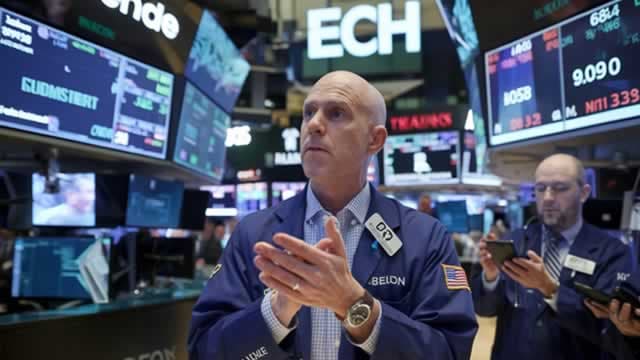
The S&P 500 and Nasdaq composite just tallied their best month in six years, surprising the bears focused on oil prices.

U.S. stock indexes rise on Thursday, with the Nasdaq composite closing at a record high.

On February 28, 2026, the U.S. and Israel launched a joint strike against Iran. Targets included Iranian military sites and nuclear facilities.

Consumer spending remained solid in the first quarter, but slower wage growth, falling savings, and higher prices are starting to weigh on households.

President Donald Trump said he would be removing some whiskey tariffs following a visit from King Charles III during remarks to reporters at the White House. -------- More on Bloomberg Television and Markets Like this video?

The Nasdaq Composite wrapped its best month since April 2020, climbing over 15%. Strong earnings reports across big tech have helped fuel the rally.

First quarter GDP grew at 2%, slightly below the expected 2.3%, as equipment investment in AI and computers along with consumer spending led growth.

Stocks surged in April, with the S&P 500 Index up 10% and the Nasdaq 100 up 15%, led by tech and semiconductors. Information Technology posted a 19% monthly gain, its best in over 20 years, while Real Estate rallied despite rising Treasury yields.
Operator: Good day, and thank you for standing by. Welcome to the CCC Intelligent Solutions First Quarter Fiscal 2026 Earnings Call. [Operator Instructions] Please be advised today's conference is being recorded. I would now like to hand the conference over to your speaker today, Bill Warmington, Vice President of Investor Relations. Please go ahead. William Warmington: Thank you, operator. Good morning, and thank you all for joining us today to review CCC's first quarter 2026 financial results, which we announced in the press release issued earlier this morning. Joining me on the call are Githesh Ramamurthy, CCC's Chairman and CEO; Brian Herb, CCC's CFO; and Tim Welsh, CCC's President. The forward-looking statements that we make today about the company's results and plans are subject to risks and uncertainties that may cause the actual results and the implementation of the company's plans to vary materially. These risks are discussed in the earnings releases available on our Investor Relations website and under the heading Risk Factors in our 2025 annual report on Form 10-K filed with the SEC. Further, these comments and the Q&A that follows are copyrighted today by CCC Intelligent Solutions Holdings Inc. Any recording, retransmission or reproduction or other use of the same for profit or otherwise without prior consent of CCC is prohibited and a violation of the United States copyright and other laws. Additionally, while we will provide a transcript of portions of this call, and we've approved the publishing of a transcript of this call by a third party, we take no responsibility for inaccuracies that may appear in the transcripts. Please note that the discussion on today's call includes certain non-GAAP financial measures as defined by the SEC. The company believes these non-GAAP financial measures provide useful information to management and investors regarding certain financial and business trends relating to the company's financial condition and the results of operations. A reconciliation of GAAP to non-GAAP measures is available in our earnings release that is available on our Investor Relations website. Thank you. And now I'll turn the call over to Githesh. Githesh Ramamurthy: Thank you, Bill, and thanks to all of you for joining us today. We had a strong start to 2026 driven by continued customer demand and adoption. The first quarter total revenue grew 12% to $281 million, above the high end of our guidance. Adjusted EBITDA was $120 million, also above the high end of our guidance and adjusted EBITDA margin expanded approximately 300 basis points year-over-year to 43%. We are now more than a year past the acquisition of EvolutionIQ, and we continue to see strong momentum across the combined business. Today, I want to focus on 3 themes that frame both our near-term momentum and our long-term opportunity. First, why CCC is positioned to thrive in an AI-driven world; second, how the positioning is translating into strong tangible revenue momentum with several of the biggest companies in the world increasing their commitments to both our core and AI solutions; and third, while solving the problems caused by rising complexity for our customers, in the insurance economy is a durable long-term growth driver for CCC. Let me start with why CCC's position to thrive in an AI-driven world, we can do this by first understanding the work our customers need to get done. The insurance economy spans many thousands of companies conducting hundreds of billions of dollars in commerce across tens of millions of unique claim events every year. They operate in a complex, highly regulated industry and may interact with dozens of other companies for any given claim. And the work they need CCC to help them get done are the things that directly drive the operating performance of their business. Take auto insurers, for example, who, on average, pay out about 75% of their revenues on claims. They use the decision engines built into our solutions uniquely configured for their specific needs to help them pay what they owe. They use the CCC network to activate the tens of thousands of companies they need to integrate with to get consumers back to their lives and they use the CCC platform to manage that work end to end. And in fact, they rely on CCC to manage the most complex mission-critical and consequential work they do. This is true not only across our auto insurance customers, but also each of the more than 35,000 businesses we work with. That translates to CCC's economic model. We price our products on the measurable value we provide typically on a 5:1 ROI basis. We have cumulatively invested billions of dollars in our platform and have deep industry-leading functionality, but customers buy our technology because of the real-world outcomes they're able to achieve only by using our solutions to impact the hundreds of billions of dollars we help them process annually. CCC's data is unique in its combination of scale, depth and recency. We have over $2 trillion of historical data that simply does not exist anywhere else. The data is broad, deep and continuously updated in real-time, allowing us to provide benchmarks customers use to assess their operations and to provide hyper-local up to the minute inputs that inform hundreds of billions of dollars in individual payouts and repairs. We also take special pride in the trust our customers, placing us as partners in their business. Our role connecting the ecosystem has been built on decades of consistent, high-quality execution where each participant can feel confident in being able to deliver the best outcome for them and the consumer. Importantly, the outputs generated using our solutions are already accepted and embedded in the core operations of their trading partners. It is, therefore, no surprise that customers are increasingly looking to accelerate their AI ambitions by leveraging the CCC Intelligent Experience Cloud. Our AI solutions have been the fastest-growing part of our portfolio for some time, with the scale that has few equals in vertical software. In Q1, our AI-based solutions drove approximately 1/3 of our overall year-over-year growth, growing at roughly 3.5x the total company growth rate. AI solutions are now approximately 10% of revenue or about $120 million in run rate. These solutions are entirely incremental to our core products with discrete value propositions and ROI that customers validate through intense piloting and testing, demonstrating both the durability of our core solutions and the rapid adoption of our AI tools. While we are tremendously excited about the growth in our AI products, the benefits of marrying AI with deterministic software are becoming increasingly evident to customers. It's not an either/or. It is an end. Governance and trust, our bedrock principles in our industry and the efficiency of the CCC platform is particularly well suited to helping customers manage AI at scale. Our systems efficiently process almost 6 billion transactions per day, giving customers a battle-tested platform that flexibly handles volume spikes and constant adjustments to their operating rules. To summarize our first theme, CCC is positioned to thrive in an AI-driven world because we combine unique, real-time data, embedded workflows and a trusted scale platform that allows customers to deploy AI safely, govern it effectively and realize measurable economic value. My second theme is the strong tangible revenue momentum across the business as several of the biggest companies in the world increased their commitments to both our traditional and AI products. CCC's customer base includes 27 of the top 30 auto insurers in the U.S. by 2024 Direct Written Premium as well as multibillion-dollar repair facility chains. These are some of the largest and most discerning companies in the world with incredible access to leading-edge technology capabilities. We are thrilled that 1 of the top 5 auto insurers in the U.S. by Direct Written Premium renewed and extended its partnership with CCC through a new multiyear enterprise agreement. This agreement covers our entire auto physical damage suite as well as our entire portfolio of AI solutions related to auto physical damage following an extensive 2-year test of those capabilities. The insurer consolidated its APD business on to CCC several years ago, and this new agreement, both renews the core software relationship and adds the full AI layer, resulting in a meaningful step-up in the value of the partnership. Our largest and most sophisticated customers are also deepening their commitment to the CCC platform by expanding the scope of their relationship into casualty. Casualty remains one of the largest growth opportunities for CCC. Our acquisition of EvolutionIQ expanded our capabilities in this area through the creation of MedHub for auto casualty and AI documents insight solution now embedded within the CCC platform. MedHub adds meaningful new functionality that is helping customers manage complex casualty workflows and is helping to advance our pipeline. Last quarter, we announced that Liberty Mutual, the sixth largest auto insurer in the United States and one of the largest P&C insurers globally selected us. They have since begun deploying a significant portion of their casualty business on the CCC platform. In April, we signed a multiyear agreement with Allstate for their third-party casualty business. All of these wins are validation of large customers increasingly recognizing that CCC's platform and comprehensive suite of solutions represent their best path to embracing an AI-driven future. This dynamic is playing out across our entire business, including on the repair facility side. Adoption of our core and AI solutions in the market continues to grow with more than 6,500 repair facilities now using our AI estimating capability. At our industry conference next month, we plan to introduce even more exciting innovations for the repair facilities. In summary, we are seeing this differentiated positioning translate into tangible revenue momentum as some of the largest insurers and repair organizations in the world, deepen and expand their relationships with CCC across both our core software and AI solutions. My third theme is how solving for rising complexity is expanding CCC's value proposition and driving long-term growth. The most important structural trend in the insurance economy is rising complexity. Vehicles are most sophisticated; medical and casualty claims are more involved. Regulatory requirements continue to increase. Every claim requires more decisions, more coordination and more judgment all the time. We see advancing vehicle technology as a significant tailwind for CCC over time with many new product possibilities on the horizon. The multi-decade trend in advancing vehicle safety technology has shown a repeated pattern of frequency reductions being more than offset by increases in severity to fix these systems when they're damaged. That causes claim dollars and complexity to rise, which grows the industry and creates additional growth opportunities for CCC. Over the past decade, personal auto claim counts declined by less than 1% annually while average dollars per claim grew approximately 6% per year, driving about 5% annual growth in total claims dollars paid. We believe that going forward, claims cost growth is going to outpace claim frequency moderation, and our insurance customers will be managing an increasing level of total claims spent. That means our software and AI capabilities remain mission-critical as customers manage growing claim complexity and spend over time. The rising complexity inherent in our industry, combined with the growing appetite across our customer base to adopt both our core and AI solutions, gives us confidence in our long-term growth outlook. Stepping back, the common trend across all 3 themes is rising complexity. As claims become more complex, and customer appetite for AI increases, CCC's platform data and workflows become even more essential giving us confidence in our long-term growth opportunity. To help us navigate towards that future, we have added another experienced technology leader to our Board of Directors, John Schweitzer. John brings more than 3 decades of leadership experience across enterprise technology and global go-to-market organizations, including senior roles at Salesforce, Informatica, SAP and Oracle. With the addition of John, Neil de Crescenzo and Barak Eilam over the last 18 months, we have deliberately strengthened our Board to support platform strength, AI innovation and durable value creation while preserving neutrality across the ecosystem we serve. We are pleased with our strong start to the year and continue to be incredibly excited by our near-term momentum and the long-term opportunity in front of us. With that, I'll turn the call over to Brian, who will walk you through our results in more detail. Brian Herb: Thanks, Githesh. As Githesh outlined, Q1 was a strong start to the year with revenue growth and profitability ahead of expectations, increasing adoption of our AI solutions across our largest and most sophisticated clients and continued execution on our capital allocation priorities, including return of capital to shareholders. Now let's turn to the numbers. I'll review our first quarter 2026 results and then provide guidance for the second quarter and the full year. Total revenue in the first quarter was $281 million, up 12% from the prior year period and above the high end of our revenue range. Please note that all of this growth is organic. Of the 12% growth, 9% was driven by cross-sell, upsell and the adoption of solutions across our existing client base, approximately 3 points of growth came from new logos. Within this position, we did see more than 1 point of impact from a combination of timing and onetime items, including true-ups on subscription contracts and transactional strength in casualty. In the quarter, emerging solutions contributed about 4 points of growth, primarily driven by EvolutionIQ, our AI-based APD solutions, diagnostics and build sheets. Emerging solutions continue to represent an important and expanding part of the portfolio, accounting for approximately 11% of the total revenue in the first quarter of 2026 and growing approximately 50% year-over-year with the largest contribution from our AI solutions. Turning to our key metrics of software gross dollar retention, or GDR, and software net dollar retention or NDR. GDR captures the amount of revenue retained from our client base compared to the prior year period. In Q1 2026, our GDR was 98%, down from 99% last quarter. Please note that since we started reporting this metric, GDR has been between 98% and 99% and is either rounded up or down primarily by repair shop industry churn. We believe the consistency is evidence of the value we deliver and the benefit of participating in the CCC network. Our strong GDR is a core tenet of our predictable and resilient revenue model. Net dollar retention captures the amount of cross-sell and upsell from our existing client base compared to the prior year period as well as volume movements in our auto physical damage client base. In Q1 2026, our NDR was 107%, up compared to our full year NDR in 2025 of 106%. Now I'd like to turn to the income statement in more detail. As a reminder, unless otherwise noted, all metrics are non-GAAP. We provide a reconciliation of GAAP to non-GAAP metrics in our press release. Adjusted gross profit was $216 million for the quarter with an adjusted gross profit margin of 77%, which is up sequentially from 76% and flat year-over-year. The underlying economics of the business continue to demonstrate leverage and scalability, and we remain confident in our ability to progress towards our long-term target of approximately 80% as our newer solutions revenue scale and offsets the impact of higher depreciation from recent investments. In terms of expenses, adjusted operating expense in Q1 2026 was $109 million, which is up 2% year-over-year, reflecting strong cost discipline, nearly flat year-over-year headcount and some phasing benefits of costs that moved into Q2. Adjusted EBITDA for the quarter was $120 million, up 20% year-over-year with an adjusted EBITDA margin of 43%. This was above the high end of the range, reflecting cost efficiencies, some phasing benefits and the flow-through from revenue overperformance in the quarter. Q1 adjusted EBITDA margin expanded over 300 basis points year-over-year. Stock-based compensation as a percent of revenue was 11% in Q1 of 2026. That's consistent with Q4 2025. We expect full-year stock-based compensation in 2026 to be approximately 13% of revenue with a path to single digits as we move into 2027. Now let's turn to the balance sheet and cash flow. We ended the quarter with $37 million in cash and cash equivalents and $1.3 billion of debt. At the end of the quarter, net leverage was 2.7x adjusted EBITDA. We continue to deliver strong free cash flow generation and return the capital to shareholders through share repurchases. Free cash flow in Q1 was $42 million compared to $44 million in the prior year period. Free cash flow on a trailing 12-month basis was $252 million, which is up 7% year-over-year and a trailing 12-month free cash flow margin as of Q1 2026 was 23%, down modestly from 24% as of Q1 2025. We are committed to a disciplined capital allocation framework, which balances investment in the business and capital return to shareholders to deliver long-term shareholder value. In December 2025, we announced a $500 million share repurchase authorization and a $300 million accelerated share repurchase program under that authorization. During Q1, we completed the ASR under which we purchased a total of approximately 43 million shares. Following the completion of the ASR, we repurchased an additional $100 million of stock in the open market during Q1. At the end of Q1, we have returned more than $1 billion to shareholders through repurchases over the last 2.5 years and have $100 million remaining available under the current $500 million Board authorization. I'll now turn to guidance. For Q2 2026, we expect revenue between $283 million to $285 million, representing 9% year-over-year growth at the midpoint. We expect adjusted EBITDA of $111 million to $113 million, a 39% adjusted EBITDA margin at the midpoint. For the full year 2026, we expect total revenue of $1.155 billion to $1.163 billion, which represents approximately 10% year-over-year growth at the midpoint. For adjusted EBITDA, we expect between $484 million to $490 million, which implies a 42% adjusted EBITDA margin at the midpoint. So 3 points to keep in mind as you think about the Q2 and full year guide. First, we have raised the full year revenue guidance from $8.5 million to $9.5 million to now 9% to 10% growth on the back of Q1 strong results and the momentum that we're seeing across the business. Second, in terms of the cascade of revenue growth through 2026, Q1 included more than 1 point of impact from a combination of onetime items and transactional strength in casualty. In addition, in the second half, we're expecting approximately a 1 point revenue headwind as an insurance carrier transitions away their legacy first-party casualty business from us. Third, we remain confident in our ability to drive margin expansion in 2026, consistent with our demonstrated track record. As we've stated on our Q4 call, we expected adjusted EBITDA margin to decline sequentially in Q2 due to phasing of spend and then resume year-over-year margin expansion in the second half of the year. We manage our adjusted EBITDA margin on an annual basis, and the progression is driven by continued cost discipline and the operating leverage in the business. The high end of the guide reflects approximately 100 basis points of margin expansion in both the first and second half of the year. In closing, we feel very good about the financial position of the business and the durability of our operating model. We delivered strong revenue growth, margin expansion and free cash flow, enabling meaningful capital return to shareholders through repurchases, while maintaining a prudent leverage profile. Our capital allocation framework remains disciplined, prioritizing organic investment, balance sheet strength and return of excess capital to shareholders, while remaining highly selective on M&A. Taken together, our predictable operating model, strong cash generation and margin discipline positions us well as we move through 2026. I'll now turn the call back over to Githesh for some additional comments before we begin with Q&A. Thanks. Githesh Ramamurthy: Before we move into Q&A, I'd like to share one update. As you saw this morning from our announcement, Brian Herb, after more than 6 years with the company, has decided to pursue another opportunity outside of CCC and will be stepping down as our CFO at the end of May. We will certainly miss Brian. And as you know, during his tenure, Brian played a critical role in our evolution, including helping take the company public and serving as a key leader through a period of significant growth and transformation. His leadership helped scale our organization and especially as we advance the commercialization of our AI capabilities, positioning us really well for the future. So on behalf of our Board and the entire CCC team, I want to thank Brian for his many contributions and wish him continued success. I know I speak for Brian as well when I say that he remains a strong believer in the business, a shareholder and a close friend. Rod Christo, Senior Vice President of Finance and Chief Accounting Officer and a 30-year veteran of CCC will become Interim CFO upon Brian's departure. To ensure a smooth transition, Brian will also continue to support the company as an adviser following his departure. And on today's Q&A, we are joined by our President, Tim Welsh. As you will remember, Tim joined about a year ago and his positive impact on our go-to-market execution is evident in the momentum we're seeing across the business today. Operator, we are now ready to take questions. Thank you. Operator: [Operator Instructions] Our first question comes from Saket Kalia with Barclays. Alyssa Lee: This is Alyssa on for Saket. Great start to the year and congratulations, Brian. We'll miss working with you. Githesh, maybe for you. You called out some nice casualty wins. Can you dig into that business a little bit and talk about who you're replacing here? Githesh Ramamurthy: Yes. I would say the thing that I can talk about is what we do exceptionally well, which is that our third-party solution replaced an incumbent that they had -- that the customer was using. And we have been working very deeply and closely with the customer and the impact and the investments that we've been talking about for the last several years are truly coming through on the differentiation of our product and our solutions. And after a fair amount of testing, the customer has moved forward with us, and we're truly excited about it. Tim, I don't know if you wanted to add anything to that. Timothy Welsh: Yes. I would just add a couple of things. First of all, this is an area of long-term strategic focus for us. As Githesh just alluded to, we've been making investments in the casualty business broadly and specifically the third-party business for some time. And we've been paying very close attention to customer needs. And so we've just -- given that strategic focus over a long period, the combination of our tools with the EIQ tools and the consistent listening to customers and adopting our products accordingly has really helped us have this continued success. We're excited about what we've seen so far and look forward to more continued momentum. Alyssa Lee: Very helpful. And maybe, Brian, my follow-up for you. Just to stay on the theme of casualty here. You mentioned there was some element of volume-based benefit. Can you remind us how the pricing there works and maybe refresh us on how big that business is as a percentage of total? Brian Herb: Yes, happy to. So casualty represents about 10% of total revenue. It's important to note, it is one of the fastest-growing parts of the portfolio as we've talked about the investment that we've put in that product and also just the momentum that's building. As far as the revenue mix, it is a combination of subscription deals, but we also have some deals that are transactional and some deals will have true-ups as well. So what we saw in Q1 on some parts of the transactional business, we saw strength that we highlighted. From a pricing perspective, it's similar to our other products that we do price on an ROI basis and show the value of the client -- show value to clients as we roll those products out. Operator: Our next question comes from Dylan Becker with William Blair. Dylan Becker: Appreciated really nice job here. Maybe, Githesh, I appreciate all the color on kind of the industry drivers and the secular drivers supporting kind of the long-term growth outlook. But I was wondering if you could maybe delineate a little bit further. I mean, what's driving kind of the outsized adoption from the larger carriers relative to maybe their preference and need and seeing everything that's going on with AI and needing a viable solution, maybe paired with your maturity of the platform and kind of conviction in your solution delivering value and resonating alongside maybe even the final factor of the industry not being able to lean in the price and the lever of kind of claims efficiency and supporting profitability. Maybe all 3 kind of coming together as one, but would love your take there as well. Githesh Ramamurthy: Sure, Dylan. Thank you. I would say, first and foremost, as you know, we have been working on building our AI capabilities for well over a decade. And what this has done is allowed us to really deeply build highly accurate models, which are only possible when you have $2 trillion of historical data. And the other thing, as you know, our customers -- the customers that we've announced today are some of the largest and the most sophisticated customers in the world, and they are the largest buyers of technology in the world. And so in other words, they've also had access to all of the LLMs and all of the tools. And what they are seeing is that over the last few years, they've also worked very closely with us in seeing the accuracy, the performance and specifically the ROI of our solutions. And the differentiation we have is that not only are these highly accurate AI solutions, but they're deeply embedded into the existing workflows where literally thousands of decisions are made by thousands of people, and then those workflows extend across the network. So this combination of world-class AI that works with very sophisticated data and also think about the feedback loop, right? On a daily basis, we're able to manage drift and the accuracy based on the feedback that we get on a real-time basis as we touch 20 million cars a year. And then connecting that into embedded workflows in a very regulatory -- regulated environment. And also, a lot of this has to be hyperlocal decisions. That means a national average number or a solution is not going to work. It's got to be very specific to ZIP codes and geography. So I would say the combination of all of these things has helped. But the single most important thing I would say is after 2, 3 years, in some instances, of work, after people have tested, evaluated and then made the decisions to go forward on a multiyear basis. So I would say that is the single most important thing is the testing, the evaluations. It has taken a little longer than we thought, but that's why we saw the momentum in Q4, and then we saw increased momentum in Q1. Dylan Becker: That's very helpful. And then maybe, Brian, one for you, too. I think you kind of called it out at the end, but it's very clear that momentum, to Githesh's point, is resonating. On the casualty side, I know we saw some kind of true-ups in the first quarter, but I think you also called out a first-party 1-point headwind throughout the balance of the year. So maybe the core slightly being masked by that. But can you kind of dive into the segmentation between kind of third-party, first party, maybe a little bit of kind of the puts and takes there as well? Brian Herb: Yes. We haven't broken out the -- from a revenue mix perspective, third-party and first party. I think as Githesh has highlighted, we've talked about third party where we put a lot of investment in. We're seeing a lot of momentum, not only the Allstate win that we had in the quarter. Last time, we talked about Liberty Mutual coming on board. So we're seeing really good momentum. We continue to invest in first-party as well and feel good about that product position. So yes, we're feeling really good overall on the momentum we're seeing in casualty and the growth, not only in the quarter, but how it's setting up for the balance of the year and going forward from there. Dylan Becker: Very helpful. Congrats, Brian. Brian Herb: Appreciate it. Operator: Our next question comes from Tyler Radke with Citi. Tyler Radke: Brian. It's been a pleasure working with you. Best of luck going forward. I wanted to just dive in a little bit on some of the true-ups dynamics that you saw in Q1, and I appreciate the clarification on the financial impact. But can you just remind us like the sort of contracting dynamics that drive that? Was it sort of outsized renewals? And did customers kind of undercommit on volumes or products that drove that? And just help us understand if there's anything to read through in terms of folks signing up and expanding post that true-up event? Brian Herb: Yes. Thanks for the kind words, Tyler, as well. So just as a reminder, 85% of our revenue is subscription, so largely subscription-based. In some of our subscriptions, and again, they will vary the deals. But in some subscriptions, they will commit to a certain level of volume. And if they trip that level of volume, we will true them up and take that true-up in the period. And so what we saw in the dynamic that played through in Q1 is they exceeded the minimum of the contract. They had some additional volumes and we trued that up. That doesn't necessarily mean it's a new contract as they go into the next part of their year or they go to the next year, that level of commitment will reset. So we highlighted the phasing and the impact in the quarter because it played through the 12%, but it is kind of a natural point of how the deals are structured. And as I said, this is kind of a specific deal. We have other flavors of subscription deals, but this one led to the true-up in the quarter. Tyler Radke: Got it. And Githesh, I believe you talked about a pretty large top 5 insurer renewal that took a step-up kind of adding -- I don't know if it was a full suite of AI, but it sounds like they took on a lot of the AI capabilities. Can you just talk about sort of what that did to that contract in terms of the expansion? And is that something that you think you can replicate as you look across your other major renewals coming up? Githesh Ramamurthy: Yes. The short answer to the last part of your question is we absolutely believe we will see this going forward, this approach. Again, as a reminder, this customer not only renewed all of our core suite, which is all our traditional core products, but they've also been deeply testing over the last couple of years in all our different AI solutions. And what was really unique about this was that they felt that getting an enterprise license across the board for a full suite of AI that then sits in addition to the core was really important because there was an ROI for the core solutions, and there was an incremental significant additional ROI for the AI solutions. And both of these work really well together. And that's what they saw and tested. And we believe this is an indication of how we are starting to see customers move forward. And then... Timothy Welsh: Yes. Just to build on, Githesh, your comments there that this -- what we're seeing across the organizations, our customers is that they are trying to adopt AI as quickly as possible in lots of different venues. And as Githesh alluded to, they have been working closely with us for years to help develop and test these solutions. And so we are certainly optimistic that the enthusiasm we're seeing in this particular case that you highlighted will continue across because we've been working with many of our customers in a similar kind of manner. Tyler Radke: And sorry, just to clarify, like can you frame just what type of expansion that drove in the APD as they adopted the AI solutions? Brian Herb: Yes, Tyler, it's back to Brian. We don't talk about specific deal dynamics, but we have said in the past as a rule of thumb to think about our AI solutions within APD that it would add on about 50% of what they're paying us incrementally for the core software. So think about it as a 50% uplift on pricing. Operator: Our next question comes from Kirk Materne with Evercore ISI. S. Kirk Materne: I was wondering, actually, if I could just build on that last question from Tyler. Tim, in your comments, I'm sure every single one of your customers is getting inundated by new call -- phone calls from AI native companies and maybe the large labs. Has any of just the groundswell of interest in AI slowed any of the pilots down? Or are they getting distracted at all? Or do you feel like things are moving ahead at a cadence? I mean, it seems like at least in that case, it is. But I was just kind of curious on a more holistic basis, if any of just sort of the AI noise and frankly, the progression of the labs has sort of slowed things down or helped. I would just love just a broader view on that, too. Timothy Welsh: Yes, Kirk, thanks so much for the question. And what we're seeing is that customers are, in fact, the news about AI, the AI native companies, all of that sort of thing is just creating lots and lots of questions and enthusiasm and interest, as you alluded to, right? So that's what's happening in the market. What we have, and I just want to go back to something Githesh hit on, we have years of relationships and trust built up with these folks. So while everybody is interested in new innovations, you also want new innovations from someone that you've worked with for decades that is deeply embedded in your workflow, has helped you achieve all of your regulatory and compliance requirements. That really -- that years of credibility really helps us in this. So the fact that we have terrific AI solutions, coupled with a long period of working closely with these carriers, building enormous trust, that positions us really, really well. I hope that's helpful, Kirk. S. Kirk Materne: That is. And then just, Brian, maybe on the -- one for you. Just on the new casualty wins, when you guys announced sort of a new win with some of these bigger carriers, what's the phasing of sort of bringing on or starting the revenue? I assume these projects take a little while to get ramped up. So how should we think about sort of an announcement relative to when that announcement or win starts to impact you guys from a top line perspective? Brian Herb: Yes. No, it's a really good point, and you picked it up right. I mean this will phase in as we go through the year. So once we sign it and close it, it doesn't just turn into run rate out of the gate. It will -- they'll transition into it and they'll build up on volume as well. So it will build as we go through the year and get to full run rate kind of in the second half of the year. S. Kirk Materne: And Brian, congrats on the new endeavor. Brian Herb: Yes, Kirk. Thanks. It's been great working with you. Operator: Our next question comes from Josh Baer with Morgan Stanley. Josh Baer: And Brian, congrats on the opportunity. I wanted to ask one on the pricing model and sort of this idea of it tied to value that you deliver. I mean, with increasing complexity, higher cost of claims, you're in a position to provide more value to your customers. So I'm wondering how this plays out in reality? Like how do you capture the value? Is it -- are we talking about your ability to sell new products and monetize additional products? Or is it even like in the time of a contract renewal that you can actually renegotiate pricing and capture pricing at renewal, if you could walk through how that plays out? Githesh Ramamurthy: Josh, let me just start out with structurally how to think about the business, and then Brian will actually go into the math a little bit more. So when you look at it on a structural basis, over the years, we have an auto physical damage suite. We keep adding enhancements, functionality to the auto physical damage suite. So that has an ongoing ROI that people are managing, renewing. Then on top of that, there is a full layer of AI solutions that range from the front end of the claim where we are starting with our photo AI capabilities and along all the way through different steps in the claims process. That's true both for the insurance market. It's also true for the repair market, where we have a broad suite of AI solutions that go across on top of the core. That has its own ROI, which is incremental to the core, and that is another structural component. Then independent of that, we have solutions like subrogation, which apply even more broadly, and those are new products and completely separate from auto fiscal damage and the AI on top. And then casualty is yet another component. So does that structurally -- and same thing on the automotive side as we add solutions like Diagnostics, Build Sheets and others, those go into additional packages. So that's how to think about it on a structural basis. And then, Brian, if you want to add. Brian Herb: Yes. The only thing incrementally I'd add to what Githesh said is you're right, we sell on ROI. Typically, we think about a 5:1 ROI, and that's kind of how the products are priced. Your question on does that happen through new solutions being embedded into the bundle, it absolutely does. So as we bring new solutions out, prove the ROI with those new solutions, we're selling them on an ROI basis. Your other part of the question, does it allow opportunities through renewals? It can as well. We provide a tremendous amount of value as clients scale and roll out our software, the AI, but also our core solutions. So it does allow opportunities through renewal depending on where that client is priced at to have price impact through renewals. Operator: Our next question comes from Adam Hotchkiss with Goldman Sachs. Adam Hotchkiss: Githesh, you've alluded quite a bit to the evaluation customers do ahead of taking on the emerging solutions. And I'm sure you've learned a lot based on the path by which some of these deals have converted recently. How should we think about from a magnitude perspective, what portion of your base are testing with high intent today, especially across AI? Is that the entire base? Or is that segmented to a certain portion of your base? Any color there would be helpful. Githesh Ramamurthy: Sure. So first, I would start off with that our most complex and our largest and most sophisticated customers, they have a lot of edge cases, right? They're operating in every jurisdiction, every area, and they have a lot of edge cases. So there's a lot more complexity. And so there is a fair amount of testing. And the beauty for us is that we benefit from having just amazing customers who have this level of complexity, and it allows us to really tune, hone, get all the edge cases right, get the AI right, get all the nuances, the drift, the accuracy, all of that right. And this is also -- and I know I've had the benefit of seeing this over the last 2, 3 decades that once these solutions are truly working at that scale, then for the entire industry, this becomes easier and easier and easier to adopt and scale. And so that is really how this thing really starts to move through. And we've learned an awful lot in this process. But the references we get are phenomenal out of this. And Tim, if you want to add to this? Timothy Welsh: Yes. I just would build on Githesh, what you said, which is we really do work very intensively, as Githesh alluded to, with those largest clients. And what we're now seeing is that because the solutions are well tested in many different places, we're seeing a rapid interest in lots of discussions about these across the board from a whole range of clients. And so while you can never exactly predict how fast adoption will occur, we're certainly seeing a very wide range of discussions because of the long testing that we've been doing with these products. Adam Hotchkiss: Okay. Great. That's really helpful. And then, Brian, echoing well wishes to you going forward. I think you mentioned emerging solutions generated 4 points of growth. How did that contribution come in versus your expectations? I think the beat was a bit of a surprise in the quarter, and I understand there's some onetime dynamics, but even backing those out, it does feel like things were better than you had expected. How should we think about that 4% through the rest of the year and going forward? Brian Herb: Yes. Thanks, Adam, for the kind words. Yes, we were really happy in the quarter overall. We're happy with the 12% growth. We are happy with the beat. Emerging delivered 4 points of growth, and we're seeing a lot of momentum as we've been highlighting in the call. About 1 point in the emerging solutions was the impact of EvolutionIQ. So that was in there. We continue to see emerging as a category as one of our biggest areas of growth opportunities. So we do continue to expect that to grow in line and potentially have further opportunities as we go forward, both in this year and over the long term. So we're feeling really good on the momentum as we talked about the AI solutions and the pace that they're growing as well. Operator: [Operator Instructions] Our next question comes from Alexei Gogolev with JPMorgan. Alexei Gogolev: Githesh, if I may ask about the recent strong appointments that you made to Chief Product Officer. If you think about some of the road map targets that Josh will focus on, can you maybe talk about those? Is it going to be helping customers deploy more AI at scale or more like expanding into adjacent markets of casualty? Githesh Ramamurthy: Yes. Let's say, first and foremost, we're really excited to have Josh on board. He has come up to speed very quickly, which is fantastic. And so we are really looking at the work we're doing in really 2 dimensions. So dimension #1 is that as we've AI-enabled every part of our product segment, like all the different flows within our insurance solutions, the solutions that we deliver to repair facilities to parts providers, OEMs. So there's a deepening of the product suite and additional components of the area that we can address. So that is one area. And that's -- and in that same -- think of that as a 1A, a 1B would be the additional expansions like a subrogation, and there are several other products and things that are in the road map that we'll be sharing with our customers at the upcoming NX customer conference. The second dimension, which is extraordinarily important that we are focused on and Josh, in particular, is focused on, is that we have an incredibly unique ecosystem of customers where the decisions and information flowing out of insurance going into a repair facility, going into a parts provider, going to a tower, going to a salvage yard, the ability to connect IX Cloud and the AI capabilities with an event management framework that goes across all of these things where the AI really drives the decision engines across all of the ecosystem. Our customers are coming back and telling us that is like -- that is super exciting. And so those are the 2 dimensions in which we are very focused. Alexei Gogolev: Brian, thank you very much for all the years. I appreciate and I enjoyed working with you. If I may ask a quick question about international demand. Very often in vertical SaaS, we see international expansion being driven by customers themselves. Is this something that you're seeing among your clients? How does that inform your international expansion appetite maybe in Europe? Githesh Ramamurthy: Yes. I'll take the first part of that, and then I will have Tim jump in for the second part because, as you know, Tim has served this industry on a global basis for many decades. And so I would say, first and foremost, we're seeing tremendous opportunity in terms of the TAM expansion that we have seen. So the TAM expansion in our core, our AI solutions, solutions like subrogation, casualty, disability, workers' comp, where -- even in workers' compensation through the acquisition of EIQ, we've landed some of the largest private employers in the country for some of the EIQ solutions. So we are not seeing any shortage of opportunity across the country, and many of our customers tend to be here. But the opportunity internationally is substantial, and we will get to it at some point. And Tim, maybe you could share some perspective. Tim has a global perspective. Timothy Welsh: A couple of thoughts on this. First, I would just highlight, Githesh, or underscore what you just said, which is there's enormous TAM expansion in the U.S. So that's a huge opportunity. And second, Alexei, as you're aware, many are -- many of the companies we serve, the insurers and the repair facilities are primarily U.S. companies. They may have small operations outside the U.S., but that is primarily our U.S. companies. And so as we think about international, it would be thinking about what is the TAM and then where would be companies that may be interested in our solutions, but don't necessarily have a domestic U.S. presence just given that that's the nature of the industry. So you want to think about the industry structure as well as the total TAM. I hope that helps a little bit. Operator: And I'm not showing any further questions at this time. I'd like to turn the call back over to Githesh for any further remarks. Githesh Ramamurthy: Well, thanks, everybody, and really appreciate the thoughtful questions. I would say that we are truly encouraged by the strong operating momentum across the business, and we saw this first at the end of 2025. And what we're really excited about is that this momentum continues to carry into the first quarter of 2026 and beyond. And as complexity continues to increase in the insurance economy, we are truly, truly grateful that our customers are truly turning to CCC to manage mission-critical workflows, apply AI that are trusted and scalable. And we think our unique data, the embedded workflows we have, the depth and breadth of our network really positions us well to support our customers and continue -- and we believe that will translate into sustained growth at some of the largest insurers, repairs and other parts of our customer base. And we're excited to deepen those relationships. And again, very focused on very disciplined execution. And I'd like to take this opportunity to thank our employees, our customers and our shareholders for the deep trust everybody places in us. And we'll wrap up by saying a huge thank you, Brian, to you for all the years and the amazing partner that you've been. Brian Herb: Thanks, Githesh. It's been a true pleasure. Operator: Thank you. Ladies and gentlemen, this does conclude today's presentation. You may now disconnect, and have a wonderful day.

Operator: Good day, and thank you for standing by. Welcome to the Indivior Pharmaceuticals Q1 2026 Financial Results Conference Call and Webcast. [Operator Instructions] Please be advised that this conference is being recorded. I would now like to hand the conference over to our first speaker today, Jason Thompson. Please go ahead. Jason Thompson: Thanks, Nadia, and welcome to Indivior's First Quarter 2026 Results Conference Call. I'm joined today by Joe Ciaffoni, Chief Executive Officer; Pat Barry, Chief Commercial Officer; Ryan Preblick, Chief Financial Officer; and Christian Heidbreder, our Chief Scientific Officer. Before we begin, I need to remind everyone that on today's call, we may make forward-looking statements that are subject to risks and uncertainties, and that actual results may differ materially. We list the factors that may cause our results to be materially different here on Slide 2 of this presentation. We also may refer to non-GAAP measures, the reconciliations for which may also be found in the appendix of this presentation that is now posted on our website at indivior.com. I'll now turn the call over to Joe Ciaffoni, our CEO. Joseph Ciaffoni: Thanks, Jason. Good morning, and thank you for joining us on today's call to review our first quarter results. I will begin with an overview of our performance and summarize our progress against Phase II - Accelerate of the Indivior Action Agenda. Pat will discuss SUBLOCADE performance, Christian will provide an update on the pipeline, and Ryan will review the financials. In the first quarter, we made significant progress in Phase II of the Indivior Action Agenda and executed key elements of our capital deployment strategy. Specifically in the quarter, we grew total net revenue 19% year-over-year to $317 million, primarily driven by strong U.S. SUBLOCADE performance. We grew total SUBLOCADE net revenue 32% year-over-year to $232 million, reflecting strong year-over-year dispense unit growth of 20%. The acceleration in SUBLOCADE dispense unit growth was driven by improved commercial execution and the early impact that our new consumer campaign, Move Forward in Recovery, is having on patient activation. Importantly, SUBLOCADE category share was stable in the quarter, and we had record new patient starts. We delivered adjusted EBITDA of $164 million, up 112% year-over-year, and margin improvement of 23 percentage points. We successfully executed our capital deployment strategy, improving our debt profile through the issuance of $500 million of convertible notes and returned value to our shareholders by repurchasing $125 million of our shares at an average price of $31.45. Our strong first quarter performance and the underlying strength of SUBLOCADE across key metrics, along with a more favorable outlook for SUBOXONE, enabled us to meaningfully raise our 2026 financial guidance. I want to thank the Indivior team for their contributions to our progress against the Indivior Action Agenda and for their commitment to making a positive difference in the lives of people living with opioid use disorder and the communities we serve. In Phase II - Accelerate, we are focused on accelerating U.S. SUBLOCADE dispense unit growth and net revenue throughout 2026 and growing adjusted EBITDA and cash flow at an even faster rate. In the first quarter, we achieved a major milestone. Over 500,000 patients in the U.S. have been prescribed SUBLOCADE since its launch in 2018. Nearly 1/4 of those patients were added in the last 5 quarters, underscoring SUBLOCADE's strong growth trajectory. SUBLOCADE is the first and #1 prescribed long-acting injectable for the treatment of moderate-to-severe opioid use disorder. It is the only monthly long-acting injectable with an indication for rapid initiation. Looking forward, we believe continuous improvement in commercial execution and our commitment to significant and sustained investment in our new direct-to-consumer campaign will accelerate U.S. SUBLOCADE dispense unit growth to the mid-teens in 2026, up from 7% in 2025. We now expect total SUBLOCADE net revenue to grow 13% year-over-year to $970 million at the midpoint of our guidance. As expected, our new operating model established in Phase I - Generate Momentum of the Indivior Action Agenda is accelerating the growth of adjusted EBITDA and cash flow at a significantly faster rate than net revenue. We now expect to generate $640 million of adjusted EBITDA in 2026 at the midpoint of our guidance, up 50% versus the previous year, which equates to a 51% margin, up 16 percentage points versus 2025. Our increased cash flow and improved financial flexibility position us to strategically deploy capital to create value for our shareholders. With the completion of our debt refinancing, our capital deployment priorities are focused on opportunistically utilizing the remaining $270 million of our share repurchase program and evaluating commercial stage business development opportunities to enhance and diversify Indivior's growth profile. We are on track to enter Phase III of the Indivior Action Agenda - Breakout in the second half of this year. Next, I want to briefly touch on the decisions we made on the INDV-6001 and INDV-2000 programs. We do not intend to pursue Phase III development of INDV-6001 and have amended our license agreement with Alar Pharmaceuticals. Pursuant to these amendments, Alar will regain development rights to the asset and commercialization rights outside of the U.S. Indivior will maintain commercial rights in the U.S. Regarding INDV-2000, it did not meet the primary endpoint in the Phase II trial, and additional work is needed to further explore the initial signals we observed. We will not be progressing the program internally for opioid use disorder, and we will pursue external business development opportunities for this asset. Christian will provide more detail. I want to recognize and thank our R&D colleagues for leading with science and for the hard work they put into the INDV-6001 and INDV-2000 programs. Their efforts greatly advanced our understanding of these assets and their work was high quality and conducted with integrity. To conclude, we are encouraged by our progress so far in 2026. Our results strongly position us to achieve our financial and operational objectives in Phase II - Accelerate and to enter Phase III - Breakout in the second half of 2026. I'll now turn the call over to Pat. Patrick Barry: Thanks, Joe. Our commercial teams are executing well against Phase II of the Indivior Action Agenda - Accelerate. This acceleration is being driven by our commercial execution initiatives and our consumer activation investments, notably our successful DTC campaign, Move Forward in Recovery. We achieved record new patient starts in the first quarter of approximately 31,800, a year-over-year increase of 29%. This brought our total U.S. SUBLOCADE patients treated over the last 12 months to 191,600 at the end of the first quarter. Dispense unit growth in the first quarter was up 20% versus the prior year, reflecting acceleration in U.S. SUBLOCADE versus 2025. Total category share of LAIs in the U.S. for SUBLOCADE remained stable at 76%. We continued our track record of growing the number of SUBLOCADE prescribers, which is an important leading indicator for overall LAI category and SUBLOCADE growth. We exited the first quarter with a record number of active SUBLOCADE prescribers, and those treating 5 or more patients. Total active SUBLOCADE prescribers grew 19% year-over-year, and HCPs treating 5 or more patients grew 20% year-over-year. While we are encouraged by the progress in U.S. SUBLOCADE, we see continued opportunity to drive further acceleration through our commercial improvement, consumer activation, and public policy initiatives. First, SUBLOCADE is the only monthly long-acting injectable with an indication for rapid initiation on day 1 and a second dosing as early as day 8. Our focus on delivering the second dose as early as day 8 is driving increased adoption. Providers' recognition of SUBLOCADE's differentiated label continues to grow, particularly as synthetic opioids remain prevalent in the U.S. Approximately 9% of new patients are receiving the accelerated second dose and 23% of active HCPs have begun prescribing a second dose in line with the expanded SUBLOCADE label. Second, our commercial channel productivity initiative is generating results. We executed 5 enhanced service agreements with key specialty pharmacies and have started to see steady improvement in commercial dispense yields. Third, consumer activation remains strong. We continue to invest behind SUBLOCADE through our DTC campaign, Move Forward in Recovery. Patient engagement stayed elevated throughout the quarter, with more than 1,200 new CRM enrollments each month, bringing total engaged consumers to over 8,300 since launch. Paid search volumes remain above pre-campaign levels, with category-leading share of voice across core search terms. Additionally, over 30,000 people searched for a SUBLOCADE provider with the Find a SUBLOCADE Treatment Provider tool on the SUBLOCADE website in the first quarter. To close, we are encouraged by our start to 2026. We believe that our improved commercial execution focused on sharpened message delivery with higher utilization of SUBLOCADE's core promotional materials on every call, along with our efforts directed at improving specialty pharmacy performance and consumer activation, are having impact on new patient starts, mix, and acceleration in SUBLOCADE dispense units. We are confident that as we continue to get better, SUBLOCADE will do better, and that we are on track to achieve our raised 2026 guidance for SUBLOCADE. I will now turn the call over to Christian. Christian Heidbreder: Thank you, Pat. I will now provide an update on our R&D pipeline, starting with INDV-6001. INDV-6001 delivered meaningful scientific and regulatory progress during the year, achieving its principal Phase II objectives, including a supportive safety profile, predictable pharmacokinetics consistent with modeling, and constructive engagement with the FDA. As part of our portfolio review, we evaluated INDV-6001 in the context of the evolving long-acting injectable buprenorphine landscape. In our view, SUBLOCADE is the only once-monthly long-acting injectable buprenorphine with a rapid initiation pathway in the approved label, continues to set the clinical and commercial standard in this category. SUBLOCADE's ability to achieve and maintain differentiated plasma concentrations without a complex induction regimen represents an important benchmark for future products. While INDV-6001 successfully demonstrated extended dosing intervals, including exploration of dosing up to three months, further analysis identified challenges, specifically achieving clinically meaningful plasma concentration profiles, particularly in a treatment environment shaped by high potency synthetic opioids, was anticipated to require a more complex induction protocol relative to SUBLOCADE's established approach, introducing additional development and implementation considerations. In addition, a comprehensive review of late-stage development and commercialization factors highlighted some remaining challenges, including: one, manufacturing scalability; and two, limited anticipated clinical and commercial differentiation in the payer and prescriber landscape, and the resulting impact on pricing and reimbursement dynamics. As a result, we have decided not to advance INDV-6001 into Phase III clinical development and have amended our license agreement with Alar Pharmaceuticals. Pursuant to these amendments, Alar will regain development rights to the asset and commercialization rights outside of the U.S. Indivior will maintain commercial rights in the U.S. Turning to INDV-2000. In a Phase II proof-of-concept study, our selective orexin-1 receptor antagonist under evaluation as a novel nonopioid treatment for opioid use disorder did not meet the prespecified primary endpoint of no treatment failure over 12 weeks when evaluated across the full dose range, 100, 200, and 400 milligram versus placebo. Interpretation of the overall dose response was confounded by unanticipated underperformance at the 400 milligram dose and a higher-than-anticipated placebo response. While this Phase II study does not support advancing INDV-2000 internally in opioid use disorder, we are encouraged by the broader body of data that emerged from the trial. Importantly, prospectively planned sensitivity analysis, together with converging supportive findings, identified a credible and biologically coherent signal at the 200 milligram dose. At that dose, we observed a higher abstinence rates over time versus placebo across cocaine and broader polysubstance use, including cocaine, methamphetamine, amphetamine, benzodiazepine, and opioid in combination. While these findings are exploratory, they are directionally consistent with the underlying orexin-1 mechanism and its potential role in cue-driven drug seeking, stress reactivity, and relapse vulnerability. We also saw supportive directional improvements in anxiety symptoms as well as exploratory functional MRI findings that aligned with the clinical observations and further supported the biological activity of INDV-2000. Taken together, these results strengthen our confidence that the molecule is engaging relevant relapse-related pathways. Importantly, INDV-2000 demonstrated a favorable safety and tolerability profile with no major drug-related safety signal identified. So while we do not plan to pursue development internally in opioid use disorder, we believe these findings support continued evaluation of 200 milligrams as the lead dose and position INDV-2000 as a credible business development opportunity while we continue to strengthen the data package through additional analysis, including exposure response work and further evaluation of supportive clinical and mechanistic findings. These decisions are expected to have a significant impact on the R&D organization. However, it does not reflect the quality of the underlying science or the team's execution. We are grateful for the rigor, dedication, and high-quality work of our R&D team, whose efforts advanced these programs and generated valuable scientific and regulatory insights that will inform future innovation. I will now turn the call over to Ryan. Ryan Preblick: Thanks, Christian. We are encouraged by our overall financial performance this quarter, which includes strong year-over-year total SUBLOCADE net revenue growth and even stronger adjusted EBITDA growth. Looking at our results in more detail, starting with the top line. Total net revenue of $317 million for the first quarter increased 19% versus the prior year period. The increase was driven by strong SUBLOCADE net revenue growth in the U.S. Total SUBLOCADE net revenue of $232 million for the quarter increased 32% versus the prior year period. U.S. SUBLOCADE net revenue increased 33% versus the prior year to $218 million. Q1 net revenue growth was primarily driven by dispense unit volume growth of 20% and favorable price/mix. The first quarter included a gross-to-net benefit of $14 million. Turning to SUBOXONE Film net revenue. In the first quarter, we benefited from continued generic price stability in the U.S., moderated share decline, and favorable gross-to-net adjustments. As we said in February, we expect gross-to-net adjustments to serve as a headwind in 2026 for both SUBLOCADE and SUBOXONE. Total non-GAAP operating expenses were $116 million for the first quarter, down 21% versus the prior year. The decrease was primarily driven by reductions in headcount, the restructuring of the R&D and medical affairs organizations, and footprint consolidations as part of Phase I of the Indivior Action Agenda -- Generate Momentum. Looking at the bottom line, we generated record adjusted EBITDA of $164 million, an increase of 112% year-over-year, representing margin improvement of 23 percentage points. Our strong first quarter results and performance trends year-to-date led us to raise our 2026 financial guidance. We now expect total net revenue in the range of $1.215 billion to $1.285 billion, an increase of 1% compared to 2025 at the midpoint of our guidance range. This is primarily driven by stronger SUBLOCADE net revenue, which we now expect to be in the range of $950 million to $990 million, up 13% year-over-year at the midpoint. The increase in SUBLOCADE guidance reflects an improved outlook from an acceleration in dispense units based on strong trends year-to-date and favorable mix related to our progress on increasing commercial dispense yields. Our total net revenue guidance also reflects higher U.S. SUBOXONE Film net revenue based on year-to-date results, where we saw stable pricing and moderation in share decline. Our outlook for operating expenses remains unchanged at $430 million to $450 million. We now expect adjusted EBITDA for 2026 to be in the range of $620 million to $660 million, a year-over-year increase of 50% at the midpoint. This would represent an improvement of 16 percentage points in our adjusted EBITDA margin to 51% compared to 2025. We ended the quarter with gross cash and investments of $201 million, and we are projecting forward leverage of 0.8x based on the midpoint of our 2026 adjusted EBITDA guidance. In 2026, we expect to generate approximately $340 million in cash flow from operations, enabling us to strategically deploy capital. Our capital deployment priorities include managing our debt, returning value to shareholders through opportunistic share repurchases, and evaluating business development opportunities as we earn our way to Phase III of the Indivior Action Agenda - Breakout. In the first quarter, we managed our debt by completing an upsized $500 million senior convertible notes offering due in 2031. Most of the proceeds were used to repay the remaining $333 million balance on the previous term loan. This both increases our financial flexibility and significantly reduces our interest rate to 0.625% from 9.5%. We also returned capital to our shareholders through opportunistic share repurchases in the first quarter. We repurchased 4 million shares at an average price of $31.45 for a total of $125 million. We have $275 million remaining on the $400 million program through mid-2027. In total, over the past 5 years, we have bought back $525 million of our shares at an average price of $16.74. As we earn our way to Phase III - Breakout, we will evaluate business development opportunities, specifically focused on commercial stage assets that have the potential to enhance and diversify our growth profile. I'll now turn the call back to Joe for concluding remarks. Joseph Ciaffoni: Thanks, Ryan. The first quarter reflects our significant progress against Phase II of the Indivior Action Agenda - Accelerate. We delivered strong top and bottom line growth driven by SUBLOCADE's performance in the U.S. and leverage from our simplified operating model, enabling us to meaningfully raise our 2026 financial guidance. We also executed on our capital deployment strategy by successfully managing our debt and opportunistically utilizing our share repurchase program. We are on track to accelerate SUBLOCADE throughout 2026 and adjusted EBITDA and cash flow at an even faster rate as we earn our way to Phase III of the Indivior Action - Breakout in the second half of 2026. We will now open the call for questions. Operator? Operator: [Operator Instructions] And now we're going to take our first question, and it comes from the line of David Amsellem, Piper Sandler. David Amsellem: So I have a few. First, on the gross margins, there's some improvement here. And with the manufacturing transition, should we take that to mean that you could see manufacturing at even better gross margins going forward? So help us just understand how to think about gross margins going forward. That's number one. Number two, business development and M&A, I know, Joe, you've talked about a beachhead in another therapeutic category. I was wondering if you could elaborate on that and what therapeutic categories, broadly speaking, are of interest. And then lastly, on the accelerated second dosing, can you talk about how getting patients to receive that accelerated second dose is correlated with this overall persistence and how important that is? And if you had color on that earlier in your prepared remarks, sorry, I missed that. But would love to get your thoughts on how that accelerated second dose plays a role in patient persistence. Joseph Ciaffoni: Thanks, David. We'll let Ryan kick it off with the gross margins. Ryan Preblick: Hey, David. Good morning. Thanks for the question. So for the gross margins, I would still guide you to the full mid-80% guide. Q1 did benefit from a couple of things. One, we had the prior year releases; and two, we had positive manufacturing variances built in there as well. And then in regards to the plant, the primary focus on the manufacturing facility is to secure product security. So again, I would guide you to the mid-80s for margins for the year. Joseph Ciaffoni: Okay. And Pat, on the accelerated second dose? Patrick Barry: Yes. Thank you for the question, David. On the accelerated second dose, that's an important differentiator for us because we are the only LAI with that accelerated second dose. The benefit there is, is that you're achieving peak plasma levels early, as early as day 8. And so that's an important component to be able to get the patient doing well in the very early treatment. And so peak plasma levels is particularly important in the era of synthetic opioids. And so if they're doing better early and they're stabilized early, we believe that over time, that could help with persistency. But that's certainly something we'll continue to look at. Joseph Ciaffoni: And then from a BD perspective, David, as we earn our way to the breakout phase, which we believe we're on track to do in the second half of this year, we're I would say, therapeutically agnostic, although there are certainly areas we don't think we would go into, for example, like oncology, and we're more focused on the fundamentals of what we would acquire. So we are focused on commercial stage only. We're looking for assets that have greater than $200 million peak sales potential. We think that's relevant relative to the size of our revenue base as we seek to enhance and diversify our growth profile. Differentiated assets are important from our perspective, both from a patient value perspective and importantly, from a reimbursement perspective, which we think is critical to commercial success. And then the final thing I would highlight, because I think it's one of the real strong parts of the Indivior story, is that with SUBLOCADE, we have a durable growth driver. And so the third thing that will be important in anything we acquire is that those assets also have runway. From there, post-integration of an acquisition, we then would be looking to identify individual products that could leverage the new commercial infrastructure that we have in place. Operator: Now we're going to take our next question, and it comes from the line of Chase Knickerbocker from Craig-Hallum. Chase Knickerbocker: Congrats on another nice quarter here. Maybe just first for Ryan. There's been some continued gross-to-net benefit on a year-over-year basis. Maybe just focusing on SUBLOCADE. Can you just give us a sense for how you -- can you characterize that gross-to-net benefit a little bit more and then give us a sense for how you expect it to kind of roll off through the year? Ryan Preblick: Yes, Chase, good morning. Thanks for the question. Yes, in Q1, we did book $14 million of a prior year release as we continue to true up our accruals. But as we mentioned earlier, in totality, we still expect the prior year releases to serve as a headwind for the balance of 2026. And the plan is to continue to provide you an update each quarter. Chase Knickerbocker: Could you just maybe give us a sense for the cadence of that headwind through the year? And if there's any benefit you expect in Q2 as well? And then just a second from me, guys, maybe just taking a step back for Joe. If you look at INDV-6001 here, again, maybe just taking a step back, with the potential for Brixadi generics before SUBLOCADE LOE, how do you see this market, I guess, developing? And how are you thinking about franchise expansion and life cycle management as you think about your long-acting buprenorphine franchise, and just how you see the market developing, Joe? Ryan Preblick: Sure. Chase, so at this point, there will be adjustments for the balance of the year. I don't know the phasing at this point, but I will continue to tell you, in the aggregate, the prior year releases will serve as a headwind in 2026. Joseph Ciaffoni: And Chase, with regards to your question around the evolution of the marketplace, look, we're very confident in SUBLOCADE's differentiated profile. Importantly, when you look at SUBLOCADE, the 300 milligram dose continues to grow. It's now 63% of overall SUBLOCADE utilization. So we're very confident that SUBLOCADE has a durable growth profile, and it's an asset that we're committed to for the long term. As it pertains to further opportunity within this space, we're obviously always looking and are aware of what's out there. There's nothing candidly that we're interested in that we don't have. And to the degree that Alar is successful in the development and manufacturing of INDV-6001 to a level that meets what we believe would make it commercially viable, we retain 100% of the commercial rights to that asset in the U.S. So we certainly wish them well in their pursuit. Operator: Now we're going to take our next question, and the question comes from the line of Dennis Ding from Jefferies. Yuchen Ding: Congrats on a very good quarter. So if I can ask on Lilly's brenipatide, they sound fairly excited about it and its potential in substance use disorders, and they started Phase II in OUD on a background of buprenorphine, which I'm assuming is SUBOXONE. But I'm curious how you're thinking about the design of that study, the read out in 2028. And importantly, if that impacts durability of SUBLOCADE's growth through the long term, which I'm assuming goes off patent in the 2035 to 2038 time frame. Joseph Ciaffoni: So Dennis, before I hand it off to Christian to comment, the one thing I want to emphasize is we very strongly believe that SUBLOCADE has a long and durable runway in front of it with 12 Orange Book-listed patents that go from 2031 to 2038. We also are in the process of trying to pull through additional patent applications that have the potential to extend out to 2044 to 2046. And Christian, any comments? Christian Heidbreder: Yes, certainly. So there are several trials that are currently ongoing using GLP-1 for substance use disorder. The one that you mentioned in opioid use disorder, this is actually as an add-on therapy to transmucosal buprenorphine. There are a couple of other trials in alcohol use disorder. I must say that so far, the evidence has been primarily anecdotal. So it's the first time that there will be more formal clinical trials, and we shall see what the outcome is. But please do remember that these trials so far for opioid use disorder have been designed as add-on therapy to buprenorphine. Yuchen Ding: And if I can ask a follow-up on DTC. So the campaign is, obviously driving increased category growth, which we're seeing in the numbers. But I'm also surprised that SUBLOCADE's share continues to be generally stable. So my question is, do you expect to pick up incremental share this year as DTC continues? And if there's any leading indicators that you can disclose around initial share capture? Joseph Ciaffoni: Yes. So Dennis, I'll take that one. I appreciate the question. As we've been clear, our focus is on net revenue, new patient starts, and driving long-acting injectable market growth. We're very proud of the fact that share is stable at 76%. Whether it goes up a little bit, down a little bit in terms of the overall performance of SUBLOCADE, both in this year and as we go forward, in our view, is really not material. It's more about just the competitiveness within the space. So we're very confident in our commercial team. We're very confident in the differentiated profile that SUBLOCADE brings to the market as the first and #1 prescribed long-acting injectable. Operator: Now we're going to take our next question, and the question comes from the line of Christian Glennie from Stifel. Christian Glennie: Just starting then, I guess, on the outlook for SUBLOCADE and particularly on the dispense growth. So you did 20% in the first quarter, but the guidance for the full year seems to be still around the mid-teens level. So just trying to understand initially around that. Is it just a prudence thing? Or is there some reason why that dispense growth might imply a slowdown through the rest of the year? That's my first question. Joseph Ciaffoni: Yes. So Christian, thanks for the question. Remember, in the first quarter of 2025, that serves as a really low bar from a comparable perspective. So what we're confident in is on a full-year basis that we're going to be able to achieve mid-teen dispense unit growth, which is double what it is that we achieved in 2025. Importantly, and what I would focus you to, is the 13% increase in revenue, which is driven by the strong dispense unit growth, but also now the favorable outlook that we have in terms of mix. And what I mean by that is the percent that commercial will account for versus what we planned. And realize even incremental movement on a brand of this size, one point improvement of commercial mix relative to what we had planned is worth about $8 million. And that's certainly a key driver of the positive outlook that we have moving forward. And we've put a lot of effort, which is a real tribute to Pat and his team, Susan Neff, who heads up trade and our work with specialty pharmacy in trying to improve the dispense yield, in particular, with the SPs that skew to commercial. Christian Glennie: Second would be just any comment around the overall growth in LAI category overall and the share of LAI as a percentage of the overall buprenorphine market? Patrick Barry: Yes, thanks for the question. We saw really nice growth, slightly above 20% -- approaching 23% on LAI category. So we feel like our efforts from a direct-to-consumer perspective are fueling that. And again, we continue to maintain that category share dominance at plus 76%. Joseph Ciaffoni: And Christian, the only thing that I would add, and I think it's another interesting thing that gets to the impact that we believe the consumer campaign is having, in the first quarter, the oral buprenorphine market grew significantly relative to the rate it had consistently been growing. And the reason that's important is the start point of long-acting injectable patients are predominantly people that transition from a transmucosal buprenorphine. So from a big picture, as a company that has a long-term commitment to this space that, first and foremost, is focused on patients getting treatment to improve the outcome and their recovery journey, we're very encouraged by that. And that also is a positive over time, in our view, to long-acting injectable utilization. Christian Glennie: Sorry, just on the percentage -- the rough percentage share of LAIs overall as a percentage of orals. Patrick Barry: Yes, we're right at about 8.5% from an overall LAI category share perspective. Sorry, I missed on that. Christian Glennie: No worries. And then, sorry, finally, just on guidance on OpEx, unchanged there, but at the same time, not progressing the 2 Phase II assets. I think previously you had implied that the guidance assumed those roll on. So just trying to understand on OpEx and whether there's something I'm missing there, why potentially the OpEx wouldn't be a bit lower given you implied a bit of restructuring of R&D and the impact that, that would have. Joseph Ciaffoni: Yes, so I'll take that one. I appreciate the question. Look, we're focused and have been clear on making every possible investment to maximize the SUBLOCADE opportunity in the U.S. market. The way to think of our guidance in 2026 is as we derive savings from the restructuring in R&D and as we continue to relentlessly focus on making sure we're only investing in things that are essential, if there are opportunities for us to invest in SUBLOCADE that would have impact this year or in 2027, we would make those investments and come in at the high end of the guidance range to the degree that there aren't areas for us to invest those resources, we would let them drop to the bottom line. The other point I want to emphasize is as you think about the exciting phase we're in of the acceleration of SUBLOCADE, we're also leveraging, not growing, our cost structure on a going-forward basis. So when you think about it moving forward, you should expect to see us staying under that $450 million level, which will result in additional margin improvement. Operator: Now we're going to take our next question, and the question comes from the line of Brandon Folkes from H.C. Wainwright. Brandon Folkes: Congrats on the quarter. Maybe just following up on business development. Can you just talk about the size of the transaction you would consider? Sharing your criteria earlier around minimum peak sales, that sets one end of the range. But just trying to think about how large of a transaction you feel comfortable with. Can you just talk about where you feel comfortable taking leverage up to? And then along the same lines, you talked about a commercial asset, but would you also consider a commercial-ready asset or company which also has a pipeline. Can you just talk about your willingness to bring in or minimize development risk altogether here in business development? Joseph Ciaffoni: Thanks, Brandon. I'll let Ryan take the first question, and I'll take the second. Ryan Preblick: Yes, thanks for the question. So when it comes to the amount of leverage that we would feel comfortable with, with our strong balance sheet, we would be okay going up to 3x, but that is assuming that we are going after a commercial stage asset. Joseph Ciaffoni: And then, Brandon, when you think about our focus from an M&A perspective, we're clearly focused on commercial stage. We want to enhance and diversify the growth profile of the company. We are not anti-pipeline. In fact, we believe the financial strength of the company would enable us -- if we acquire a company that has pipeline that we believe is worth investing in, we would be positioned to do so. But that is not the primary focus as we're assessing opportunities. And then when we ultimately get to Phase III - Breakout and start to try to action around them. Operator: Thank you. Dear speakers, there are no further questions for today. I would now like to hand the conference over to your speaker, Joe Ciaffoni, for any closing remarks. Joseph Ciaffoni: Thank you, operator. And thank you to everyone for joining the call today. We look forward to updating you on our progress as we execute the Indivior Action Agenda. Have a great day. Operator: This concludes today's conference call. Thank you for participating. You may now all disconnect.
Operator: Good afternoon. My name is Krista, and I will be your conference operator today. At this time, I would like to welcome everyone to Reddit's First Quarter 2026 Earnings Call. [Operator Instructions] I would now like to turn the call over to Jesse Rose, Head of Investor Relations. Jesse, you may begin your conference. George Josh Beck: Thanks, Krista. Hi, everyone. Welcome to Reddit's First Quarter 2026 Earnings Call. Joining me are Steve Huffman, Reddit's Co-Founder and CEO; Jen Wong, Reddit's COO; and Andrew Vollero, Reddit's CFO. I'd like to remind you that our remarks today will include forward-looking statements, and actual results may vary. Information concerning risks and other factors that could cause these results to vary is included in our SEC filings. These forward-looking statements represent our outlook only as of the date of this call. And we undertake no obligation to update any forward-looking statements. During this call, we will discuss both GAAP and non-GAAP financials. Reconciliation of GAAP to non-GAAP financials can be found in our letter to shareholders. Our first quarter letter to shareholders and earnings press release are available on our Investor Relations website and Investor Relations subreddit. And now I'll turn the call over to Steve. Steven Huffman: Thanks, Jesse. Hi, everyone, and thank you for joining us today. We're excited to start the year off with a strong first quarter. As we've been building Reddit over the years, I have often reflected on and been inspired by the unique opportunity in front of us and the fact that Reddit is truly a one-of-one company. That idea came up again and again during Q1 with one of the most tangible proof points in our strong commercial results. This marks our seventh consecutive quarter with revenue growth over 60% and with industry-leading gross margins over 90% and adjusted EBITDA margin of 40% and record cash flow of more than $300 million. At the same time, our capital expenditures remained low as $1 million, underscoring the advantage of Reddit's capital-light model. When you look across the more than 300 publicly traded tech companies, there's only one that combines this type of growth, profitability and efficiency, and that's Reddit. Our commercial success is differentiated because our community product is differentiated. But powers these results are Reddit's raw materials. First, we have deeply engaged users who come to Reddit it for high-intent uses, authentic recommendations and answers to questions like, what should I watch next and what type of stroller is best for 2 kids. Second, we have an ads business that is built on contact, interest and commercial intent. Around 40% of conversations on Reddit are commercial in nature, where people are actively discussing products, services and purchase decisions. And these conversations are uniquely influential. 84% of shoppers say they feel more confident in their decisions after researching on Reddit. When you combine these two things, engage communities and commercial intent you create a powerful environment for advertisers. We see this in the outcomes we're delivering and in the continued scaling of our ads business and ARPU growth. Another reason Reddit stands out today is our position in the AI landscape. Reddit is built on more than 2 decades of human conversation. Over 25 billion posts and comments and every month, our communities generate the equivalent of Wikipedia's entire content library in new content. As AI becomes more prevalent, people increasingly seek out real human perspectives and in turn, AI models rely on these perspectives to train and power their products. Scarce assets tend to become more valuable over time and authentic human conversation at scale is becoming increasingly rare. Reddit's conversations are like oil for the modern Internet, a foundational resources powering the next generation of technology. On the user side, we are making steady progress, but we still have work to do to increase frequency and accelerate growth toward the levels we see on leading platforms. We believe Reddit it has the potential to be one of a handful of scaled global platforms on the Internet. We already have tremendous reach today with nearly 500 million weekly users globally and 200 million in the United States. Now it's about driving both greater reach and greater frequency. In particular, we're focused on growing our daily user base in the U.S. to a size closer to that of the largest platforms. Our goal is to reach 100 million daily U.S. users and are actively executing a strategy to get us there. One thing that has become clear is that product quality leads to growth. I believe our previous ways of working yielded the best results we were capable of, but not the results we aspire to. So to get to the next level, we first had to improve ourselves. Over the last year, we've made and continue to make a number of foundational changes to both our talent and infrastructure that we believe will unlock significantly greater headroom for Reddit's growth. We strengthened our teams with more people who have successfully grown other major platforms, we've added critical machine learning talent to build the capabilities required for today's Internet, and we've improved our processes for data, experiments and shipping more quickly while still improving quality so we can realize our vision. We made advancements across several product areas this quarter that we're encouraged by, including bot verification, improvements in core user engagement, performance gains across the stack and continued success with machine translation. Looking ahead to the remainder of 2026, our priorities include broadening the top of funnel, improving new user retention and making Reddit faster across the board, which remains a meaningful opportunity and can lead to an outsized impact. Our mission to empower communities and make their knowledge accessible to everyone is ambitious, and it won't be achieved in a single quarter, but we're making steady progress, and we won't rest until we get there. As always, thank you for being on this journey with us. With that, I'll hand it over to Jen. Jennifer Wong: Thank you, Steve. Hello, everyone. It was a strong quarter and an excellent start to the year for Reddit. There are a number of encouraging factors contributing to our commercial success and we're also seeing favorable secular trends that support Reddit's it's long-term opportunity. Beyond the raw materials Reddit has for an advertising platform, Reddit is playing a bigger role in the consumer decision journey. While people are using AI summarized information, people are also increasingly wanting to see and incorporate a breadth of perspectives from other people into their decision-making. The value of authentic human perspective is increasing as more information is generated and summarized by models. That's where Reddit stands apart. People are looking for real opinions, real experiences and real product usage from other people. For example, people are coming to Reddit to validate what they read and hear elsewhere, including the responses they get from LLMs. This adds to our billions of conversations and perspectives that help people evaluate products, services and ideas through the lens of genuine human experience. This search for human perspective is embedded in how people make decisions, especially purchase decisions. And as a result, Reddit is becoming more integral to that journey. At the same time, our advertising platform is becoming increasingly effective at converting that growing intent into meaningful business outcomes. Now moving to our results. In Q1, total revenue grew 69% year-over-year to $663 million, and advertising revenue grew 74% year-over-year to $625 million as we saw broad-based strength across the business. Revenue growth in Q1 was driven by a combination of both impressions and pricing growth reflecting the scale of our platform and our investments in the ad stack to deliver strong outcomes and make every impression more valuable. Our investments in the ad stack, including machine learning for signal optimization and ad formats, combined with our go-to-market strategy are delivering meaningful outcomes for advertisers and driving strong growth in new advertisers. In Q1, conversion-driven lower funnel revenue remained an area of strength growing triple digits year-over-year. Performance-oriented revenue represents over 60% of total ad revenue and is well balanced across industry verticals, creating durability and resilience while still leaving significant headroom for growth. In Q1, we saw strength across most of our top verticals, particularly retail CPG, tech and media and entertainment, while the number of active advertisers on the platform grew more than 75% year-over-year. Now I'll discuss the progress in our ad stack and road map where our investments are measurable and our strategy is to make all businesses successful on Reddit by delivering market competitive outcomes across objectives. We're executing this strategy across 3 areas: number one, scaling automation through our ads platform in Reddit Max; number two, delivering advertiser value across all objectives; number three, expanding the Reddit for Business ecosystem. Now starting with automation. Our strategy is to integrate more automation and AI into our ad stack to enable faster adoption of new features, make sure advertisers are set up to get the best performance from Reddit ads and increase the productivity and impact of our sales team. Reddit Max launched to beta in early Q1, and we're seeing strong adoption and performance outcomes for converting mid- and lower funnel advertisers. On average, advertisers are seeing a 17% reduction in cost per action and 25% more conversion outcomes when running Max campaigns. Advertisers are also increasingly adopting AI in their campaign setups with about 50% of Max campaign advertisers using AI-powered creative features to unlock even stronger performance. For example, modern furniture and rug company, Cozy, launched a Max campaign utilizing AI-driven targeting, automated bidding and creative rotation to scale customer acquisition with fewer manual inputs. Max quickly became one of their most efficient levers for acquiring new customers, delivering 35% higher ROAS and 28% lower CPA, while saving the team approximately 2 to 3 hours per week on setup and optimization. Now moving to our progress across all marketing objectives. With our reach of nearly 0.5 billion weekly users, Reddit delivers strong outcomes for brand advertisers. In the upper funnel, brand auto bidding is now available to all advertisers, which dynamically adjust bids enabling advertisers to spend more efficiently and simplifying campaign management. Our tests show an average 16% pricing improvement when advertisers adopt auto bidding. And in the lower funnel, our investments in machine learning signals and optimization are continuing to deliver performance and efficiency for advertisers. In Q1, we doubled the number of conversions delivered for advertisers across the platform versus last year, which means advertisers benefit from more conversions on their ad spend at lower cost per action, reflecting the efficiency and performance of our ads platform. As I mentioned earlier, Reddit is deeply ingrained in the consumer shopping experience and we saw the momentum continue with 40% year-over-year growth in high-intent shopping conversations last year. Our shopping products help businesses capture that intent more effectively. And with dynamic product ads or DPA, we're improving relevance in ad formats to drive stronger performance and advertiser value. Recent investments in DPA delivered more than 90% higher ROAS year-over-year on average and brands, including the health and wellness company, Liquid I.V., saw Reddit's DPAs outperformed their conversion -- other conversion campaigns by 40%. We're building on the progress with new shopping app formats designed to improve discovery and conversion including collection ads and Reddit-unique overlays such as Redditor's Top Pick that capture the perspectives of Reddit's communities for specific products. And lastly, I'll touch on our strategy to build an ecosystem of partners around Reddit. At Shoptalk in March, we announced an integration with Shopify, that strengthens our retail and e-commerce partnership ecosystem. The integration expands our reach to advertisers and makes it easier for them to set up and scale lower funnel campaigns on Reddit. The integration is early and in the process of ramping, we're excited about how this can build a deeper presence with mid-market and SMBs. As we scale performance advertising on Reddit, third-party measurement partners are important for validating our impact. In its latest retail commerce study, Fospha found that Reddit improved cost per purchase by 34%, while increasing ROAS and helping advertisers scale spend by 2.5x year-over-year. We have seen growing adoption of Reddit Pro since expanding access to all publishers, giving them self-serve tools through auto import articles receive AI-powered community recommendations on where to share them and measure the reach and engagement of their content on Reddit. Publishers ranging from global outlets to local press like Fortune Media to the SF Chronicle and Dallas Morning News and sports brands like Arsenal FC are now using Reddit Pro. Overall, there's a lot to be excited about this year. And every day, we see more businesses coming to Reddit it to connect with their audience and grow their business. And as the pace of change in the market grows, Reddit's fundamental assets and value proposition built on authenticity, trust and high intent keep us exceptionally well positioned. Thank you for joining us and for your continued support. Now I'll turn the call over to Drew. Andrew Vollero: Thank you, Jen, and good afternoon, everyone. The financial headlines for Q1 was that Reddit's results stand alone in a very positive way. Reddit continues to scale quickly, generating cash flow and profitability results that few companies can match at this scale. Specifically, Reddit's Q1 47% free cash flow margin was a powerful proof point to superior cash flow generation. While Reddit's earnings power was evident in 2 financial milestone achievements. On a GAAP basis, EPS reached triple digits in Q1 at $1.01 a share, up more than 7x from last year. And on a non-GAAP basis, Reddit achieved a 40% adjusted EBITDA margin in Q1, up almost 1,100 basis points from last year, a similar signal of strength and differentiation. This strong starts encouraging, particularly since historically, seasonality has contributed to making Q1 our slowest quarter of the year. I'll now provide more color on our Q1 results. Q1 revenues of $663 million grew 69% year-over-year, driven by a ramp in ad revenue, which grew 74% year-over-year to $625 million as we saw strong advertising demand across the funnel. It's our seventh consecutive quarter by growing more than 60%. Other revenue, which included revenue from our Content Licensing business reached $39 million, up 15% year-over-year. U.S. revenues were up 67%. International revenues were up 76%. Average revenue per user ARPU grew 44% year-over-year to $5.23. Moving to expenses. Our Q1 total adjusted costs, which included both adjusted cost of revenue and adjusted OpEx were $397 million in Q1, up 43% year-over-year, but sequentially lower than Q4. Working our way down the income statement, gross margins were 91.5%, up 97 basis points year-over-year, our seventh consecutive quarter over 90%. Incremental revenues and hosting efficiencies helped to offset increases in cost of revenue, which was $56 million in the quarter, up 52% year-over-year. Those cost of revenue increases reflect volume growth and users and ads served more ML usage and more international investments in speed and reliability. Operating expenses remain a bigger piece of our expense composition, which on an adjusted basis were $341 million in Q1 or about 51% of revenue, down from 61% of revenue last year as we gain operating leverage across the business. For Q1, adjusted operating expenses were about flat sequentially, but did grow 42% year-over-year, slightly elevated from last quarter. These year-over-year increases continue to be driven by investments in 2 key areas: hiring and marketing. On hiring, we added about 32 net people in Q1, up 12% from last year and up about 1% sequentially from Q4. We're selectively hiring talent in key revenue and consumer functions like sales, ad tech and ML engineering. The returns from our investments in these areas are measurable and multiples of the cost within a short period of time. Second, on marketing, our spend was primarily in the U.S., where we prioritize both paid and brand strategies to expand awareness and drive traffic. Total marketing costs in Q1 were in the mid-single digits as a percentage of revenue, but were lower nominally and as a percentage of revenue from Q4 as we benefited from lower seasonal ad pricing in Q1. Overall, user retention remains an opportunity and an important unlocker to improving investment returns and marketing. Our third major cost is stock compensation and dilution, which remains a positive story. Stock-based compensation and related tax expense was $79 million or 12% of revenue in Q1 and down sequentially from Q4. Similarly, dilution remains modest. Total fully diluted shares outstanding was $206.4 million, up 0.1% sequentially and up 0.2% year-over-year. The modest share growth in the quarter reflects the continued tight management of our equity spend. For Q1, there was a slight tailwind for dilution for share repurchase activity, although share repurchase activity was modest in the quarter, about 35,000 shares and about $995 million remains on our $1 billion authorization from February. A few more financial points of interest. The business remains capital-light. CapEx was $1 million, 0.2% of revenue. Net income was $204 million, $1.07 per basic share and $1.01 per diluted share, up more than 7x to $0.14 and $0.13 last year, respectively. We ended Q1 with $2.8 billion in cash and investments and we're well positioned to deploy capital across our 3 priorities, including investing in the core business, M&A and share repurchases. Now turning to the outlook. We'll share our internal thoughts on revenue adjusted EBITDA for the second quarter. In the second quarter of 2026, we estimate revenue in the range of $715 million to $725 million, representing 43% to 45% year-over-year revenue growth with a midpoint of about 44%. Our Q2 revenue guide considers the strong growth and momentum in the business as we exited Q1 and takes into account the lapping of a particularly strong growth period in Q2 2025 where total revenues grew 78% and ad revenue grew 84%. Moving to adjusted EBITDA. We expect Q2 adjusted EBITDA to be in the range of $285 million to $295 million, representing approximately 71% to 77% year-over-year growth and an adjusted EBITDA margin of 40% at the midpoint. The Q2 guide assumes a total adjusted cost basis of $430 million, which implies a growth rate of approximately 29% year-over-year, which is lower than prior quarters as we begin to lap our investments in sales and marketing, which started in Q2 of 2025. I'd also like to make a couple of other points. We anticipate our Q2 stock-based compensation-related tax expense to be sequentially higher than Q1, driven by increased hiring and the timing of our annual stock refresh grant which happens mid-second quarter. That said, for the quarter, we expect to see good cost leverage on SBC expenses with our internal estimates showing that year-over-year stock-based comp expenses could grow about half the rate of revenue for the quarter. Also, as we mentioned on our Q4 call, 2026 will be the last period we disclosed logged in and logged out DAUq metrics. Beginning in Q3 2026 our user disclosures will continue to include U.S. and international DAUq and WAUq as we've done historically. So to summarize, strong fundamentals matter and Reddit's financial model is scaling in a very positive way. Reddit is becoming a leader, a leader in growth, a leader in profitability and a leader in cash flow margin. We're off to a strong financial start in 2026. Reddit's raw materials position us well for growth and our advantaged financial model is turning top line gains into meaningful increases in cash and profitability. That concludes my comments. So let me turn the call back over to the operator. Operator: [Operator Instructions] First question comes from Doug Anmuth with JPMorgan. Douglas Anmuth: One for Steve and one for Jen. Steve, can you just talk about the work you have to do on the user side to increase frequency and accelerate growth and what you think will be most impactful over the next several quarters? And then, Jen, on DPAs, you announced a number of shopping tools to enhance DPAs. Can you just help us understand you're thinking about current adoption and the progress you're seeing with that format? Steven Huffman: Sure. Thanks, Chuck. Okay. On the user side, we've seen some progress in the quarter that we're happy with improvements in onboarding. We had a couple of experiments do well, ramped up to 100%, some contribution from feeds as well. I think as we look over the rest of the year, the biggest drivers will probably be performance. So just the kind of pure speed of both iOS and Android, I still think there's a lot to do on onboarding. And I think the biggest driver long term will be the feed. And so hence, the kind of focus on ML talent for us right now. So I think all of this is in alignment with what we've talked about for a long time, which is make the core product work better. I will say over there, we've seen nice progress on search as well, which is itself a driver. Search WAUqs are up 30% year-over-year. So I think solid progress there as well. The big picture story here is we've been really focused on the team, the processes, the tech, upgrading all of those things over the last year. So I feel the foundation is better than what we've seen in the past to achieve these outcomes. Jennifer Wong: I think the second one on DPA. Look, we launched DPA a year ago. And this is -- in the world of that, I'd say shopping is probably one of the more complicated products. And obviously, folks have been offering DPA for longer than we have. So there's a lot of headroom there to, I think, improve our models and the onboarding process, et cetera. But I think the team has done a really good job in giving, I think, great ROAS improvements to our customers. With the Shopify and WooCommerce partnerships, I think that's an opportunity for us to acquire more sort of mid-market and SMB customers into DPA. So we're excited about that. Again, very early, but we're excited about that opportunity. And because right now, there's still thousands of advertisers that can adopt DPA that haven't adopted yet. I will say, we're still early. We're very focused on retail and retail catalogs in the future that's still ahead of us. Folks use DPA for travel, for auto, for other categories that we haven't even focused on to date. So I think there's a long road map of opportunity here for us. Operator: Your next question comes from the line of Josh Beck with Raymond James. George Josh Beck: Yes. I wanted to maybe double-click on the ML talent, Steve. And maybe if you could kind of give us the short list of maybe some of the projects that the team is working on, what was most important this year? And then also with respect to top of funnel, obviously, that's a goal for you all. I'm just kind of curious what have been maybe some of the most successful strategies and kind of how you're thinking about driving more top of funnel as you move through the year? Steven Huffman: Sure. Thanks, Josh. So Josh, on machine translation -- excuse me, machine learning, so the feed, look, it's basically everything. So it's both collecting more signals. It's also being more judicious about the weighting of those signals. It is updating our models faster. So designing a new model, getting into production, I think that can be quite a lot faster. It's pretty much the entire stack. This reminds me of kind of our journey in the -- on the ad side, where when we look ahead, we feel confident basically everything we do will work because it has worked for other platforms. And we're just on the early side of this journey. We've been bringing in a lot of talent from platforms that have billions of users who have worked on this problem before. So it's really the entire stack. And quite honestly, it's all of our processes around it. Our goal is to go from where we are today, about 50 million U.S. users to 100 million U.S. users. Since we have 200 million U.S. weeklies on the platform already, we believe investing in the feed here will improve retention and increase frequency and get us there. But really, my answer is everything. Jennifer Wong: Yes, I can talk about the top of funnel. So let me start with our existing top of funnel, which is really significant, and that's some of the traffic that we get from search. And there's an effort to think about how do we convert that traffic from that search use case to the core Reddit use case, which is a combination of search, enjoying different communities and enjoying the feed. So that's an opportunity for us, and that's core to our road map strategy. The second is increasing the top of funnel, which is the work that we do with marketing. And it's different by different territories. So if you think of a mature market like the U.S., that's an area where we go after specific audiences where we have a great content foundation in parenting or in football, like NFL. And we're just trying to help with people know that there's great content for parents and for football fans on Reddit. And so we've done some of that brand and lead generation work to sort of prime the market to increase that awareness. Then we have work outside of the U.S. where we also have more brand foundational work. For example, people might know ready through search, but they may not have the broader understanding of the differentiators of Reddit that we're the most human place on the Internet that we have this network of communities. And so we're building, investing in some of the more broader brand foundations that, again, will allow us to prime a new top of funnel and add to the top of funnel that exists today. So -- and both, I think we're very early in that journey and that for many years, Reddit, for most of its life has not invested in marketing. So that remains, I think, fertile ground for us. Operator: Your next question comes from the line of Ron Josey with Citi. Ronald Josey: Steve, I want to sort of understand a little bit more your points on the progress around verification processes and bot labeling here, particularly as a sign-up and log-in process evolves and the feed evolves as well. So help us understand a little bit more about the process around verification and the successor progress with bot labeling? And then, Jen, with Reddit Max in the first quarter, clearly seeing a lot of progress and momentum here. Just talk to us about some of the key learnings that you're looking to take to this next level of Reddit Max and next version as we continue to see greater adoption? Steven Huffman: Thanks, Ron. So Yes. You asked about verification and bot labeling, and there's also a third dimension to this, which is user log-in in general. These things are actually all overlapping. So I'll start with the easiest one, bot verification. So we have what we call good bots on Reddit, which are basically programs that mostly moderators have written to help run communities on Reddit. We're porting those over to our developer platform. And that will both result in them being labeled on Reddit more transparently and also allow us to batten down the hatches more on unauthorized spot usage. So this is both transparency for users and also part of the human verification and defense of Reddit. On the verification and login side, one of the key technologies there is something like Passkeys. So Passkeys is a general technology that includes things like Facetime, Touch ID, UB keys, it's basically a log-in system that requires a person to do something, look at your phone or touch something. This is both a more secure way of logging in, an easier way of locking in, which will help us just grow login users in general and then also serves as probably the lightest weight and most privacy and user acceptable way doing human verification as well. So all of these things kind of tie together to add more transparency to Reddit, improve bot defenses for Reddit and increase login for Reddit. All of this work is underway on all 3 of those dimensions. So we shipped a few things in Q1. We've got a few more coming in this quarter as well. Jennifer Wong: Okay. Regarding Reddit MAX, I've been really pleased with the adoption of Max. I think customers have been really willing to make the conversion. We've been focused on existing customers and converting existing customers. They're very pleased with the CPA benefits that they're seeing out of the gate, which is great. And I think what this opens the door for us to do is to have faster adoption of our new performance features. And we see this because some of that benefit is coming from the fact that they hadn't adopted maybe one or two features that they auto adopted when they move to Reddit Max and immediately, they are seeing the performance benefit of that. And so this will shorten the time line by which we can roll out performance features to customers what we're really excited about and sort of take the operational friction there out. The other thing is they really love the insight. So we invested not only in delivering the performance, we invested in giving insights on, okay, well, what did the automation sign that was unique on Reddit that makes you learn about what you're creative -- how your creative match to what community on Reddit? And we're getting an incredible like positive response from our customers in that it doesn't feel black boxy to them. They're actually learning from using Reddit Max, and that's an area that we'll continue to invest in. And we really started with converting existing advertisers. But given the adoption and the positive response, we're now moving toward onboarding new customers directly into it. So feeling really, really positive about what we've seen so far. Operator: Your next question comes from the line of Jason Holstein with Oppenheimer. Jason Helfstein: Maybe like one DAU-related question with two parts. So one, we get a lot of questions from investors just about DAU and how important it is. And obviously, from a long-term perspective, it's important. But right now, it's not a huge focus of the company given it's more about monetization. But I guess, Steve, maybe just talk about like, again, how important is it to you to see stable to improving DAU growth and the ways that you can kind of control that in the short term. And then as we think about the discussions around AI and the third-party agents leveraging your data, how potentially you can get credit for, call it, DAU that's generated on third parties and perhaps that's a part of the larger discussions around AI licensing. Steven Huffman: Okay. So contrary to that, DAU is the primary focus of the company because revenue is doing very, very well. So DAU is both our mission, communities for everybody and also fuel for the business. So DAU is the top priority. We have a particular focus right now on the U.S. DAU. So how do we go from 50 million daily to 100 million daily. As I mentioned before, the opportunity is on our doorstep because you look at our weekly number, there are 200 million Americans on Reddit every week. So, we think about how do we increase that frequency from maybe once a week to, for example, every day. There are -- there's a lot on the list here. Our focus the last couple of quarters has been onboarding. We're seeing progress there. We've moved new user retention in the quarter. Feeds will be a major driver looking forward. I think we're at the relative beginning of our journey there. Search has been a consistent driver. So carrying most of the weight the last couple of quarters has been machine translation were translated in the 30 languages today. We've been able to lower the cost there, which is nice. It allows us to scale even more there. And then performance is another big driver. And we look at gaps between iOS and Android and what we -- the expected delta should be, which is basically 0. So I think a lot of opportunity there as well. So I'll just reiterate, DAU is actually the top focus of Reddit and in particular, U.S. DAU. You had a second part of your question about AI and some third-party agents. Look, this is an ecosystem we live in. We have important partnerships with both Google and OpenAI. Those are very meaningful to us. And I think it's mutual. We continue to value those. We continue to look for other top of funnel opportunities in the way to make our products mutually help each other, but nothing new to share on those specific relationships at this time. Operator: Your next question comes from the line of Rich Greenfield with LightShed Partners. Richard Greenfield: I got a couple. First, I just want to circle back on this ambitious 100 million DAU goal. Is there a time frame for how you're thinking about achieving that? And if I look at weeklies versus dailies, weeklies are actually growing even faster than daily. So engagement on that metric is going down. I'm curious what's driving that? And how does that play into getting to this ambitious 100 million goal, Steve? And then sort of a big picture question that ties to the quote you had in the letter. If you're the oil powering the modern Internet, $50 million to $60 million a year from Google and OpenAI seems like a pimple, I guess. How are the conversations changing heading into 2027 renewals given the state of where AI is today? Steven Huffman: Thanks, Rich. Okay, 100 million. Look, when I came back to the company about 10 years ago, we were 12 million DAU. And over the last 10 years, we've 10x that to over 120 million DAU. Now we've got our sights set on 1 billion global DAU and 100 million in the U.S. specifically. I don't know the time line, but we are, I think, relentless in our work to get there. As I mentioned in my script, the strategy is the same, which is build the best version of Reddit. And we've been focused on the last year. I thought we built the best version that our company was capable of, but that's not the best version that we needed. So we've done a lot of work on the team, on the processes, on the technology to get there. We'd like to get there as quickly as possible, but it's going to come through with very consistent product improvements. I've added a lot of the things on the list there, but it's all sensible things if you've used Reddit. And look, I will note your comments on the pricing for AI deals and include you in our conversations with our partners. Look, the world can see that Reddit's data is valuable, both our existing partners and potential ones. Look, at the end of the day, there is no artificial intelligence without actual intelligence, and that comes from Reddit. I think one of the dynamics we're seeing in the modern Internet is the more it becomes sanitized and summarized and optimized for attention by AI, the more that people crave the human, the human information that's both AI that crave it and also the Internet consumer or people in general that crave it. And that's our business is those human connection and conversations. Richard Greenfield: Is there ever a value to an exclusive deal with one company versus opening up to everyone? Steven Huffman: No comment on that, Rich. Operator: Your next question comes from the line of Mark Shmulik with Bernstein. Mark Shmulik: Steve, I kind of hate to belabor this point a little bit. But kind of in your opening remarks about the foundational changes to talent and infrastructure. Is that really just focused on engagement and the product? And if so, kind of when did you realize that you were kind of hitting a ceiling? And so kind of how far are we into kind of some of these material changes? And I guess kind of following on Rich's point, when could we start to see a reflection in the KPIs of some of the efforts of these new changes? And then secondly, Jen, you mentioned you've seen kind of strong performance in both price and ad impressions ad load. How do you kind of think about the tolerance of users for kind of increased ad load and kind of as you also think about balancing kind of the engagement question or ask it another way, is there any risk of kind of pushing the revenue lever too far that may have adverse effects on engagement? Steven Huffman: Thanks, Mark. Look, we've been, I think, upgrading the company top to bottom, the people, the processes, the tech, we're in the middle of that now. I think we've made some important changes with new leadership on product and engineering. We're also bringing in a lot of experienced talent into the company as we speak. But I think there's more work to do there. There will probably always be more work to do there, but we are really in the middle of it. That said, we are working now. And so we've made changes to onboarding to the feeds, to search that have all started to drive growth. We've seen some improvements in user retention, which is the number we care the most about. So I'd like to see our progress here accelerate. There's a lot, I think, below the surface just in terms of how quickly can we get code into production, how sophisticated our experiment readouts, how quick is our decision-making around these things. But I look at all of these holistically as getting Reddit to the next level. And I think we're partway there. I know we can get there. I think there's another couple of levels for us. And so we've been hard at it. But we do expect to see improvements in the results immediately, and we've seen some in this quarter. Jennifer Wong: I think the one on ad loads. So our ad load overall is still quite low compared to peers, especially if you look at it just on a feed-to-feed basis, it's still substantially lower and overall on Reddit, we actually don't even have ads in certain high growing surfaces like search, for example. So overall, I actually feel comfortable on an absolute basis of the ad experiences, there actually is not a high ad load. But that aside, we test this all the time, and I think we're very thoughtful about it. As you increase the ad relevancy, which we do through our ML work and we increased the diversity of advertisers in our marketplace, which we're doing. We said we're growing active advertisers, 75% year-over-year. That actually helps with enabling, if you were to move the ad load lever like giving you the diversity to still maintain performance. So just know that there are other levers that we focus on more than a lot, like our strategy is not to increase ad load. Our strategy is to grow users, all the things that Steve talked about, where we think we have a 10x opportunity there and to make the value of every impression more valuable through more competition and diversity, through stronger optimization and hard marketing outcomes, more clicks, more conversions, more installs per impression so that the marketer -- we increased our inventory of outcomes versus our inventory of impressions. Obviously, impressions will grow, especially with that underlying user growth, but we're very focused on the value that you get from the impression. Operator: Your next question comes from the line of Tom Champion with Piper Sandler. Thomas Champion: Just curious if you could talk about the monetization trends between U.S. logged in and logged out users. Just curious if those are converging at all? And then maybe for Jen, just any thoughts on the ad market? Anything looking wonky from the high oil prices or travel interruptions overseas? Just curious any general comments there. Jennifer Wong: Sure. So for logged in and logged out, which we spent a lot of time on it. I think the way we think about it is the value of an impression. And so the value of impressions is actually pretty consistent across our 2 main surfaces, the speed and our conversation page. And the only reason why logged-in users, you'd say have a higher ARPU than a logged out user is just because they spend more time and they see more impressions. But the -- because of the time spent and the engagement, but the impressions are actually pretty equal in terms of their value. So there's no differential in our ability to monetize any impression against those users. There's no difference. And we do monetize both types of users, we have great contextual signal on all our users. And then obviously, for -- and obviously, we have history on logged-out users and even more in terms of logged-in users because they subscribe to communities, et cetera. In terms of the ad market, look, it's -- we've seen this before. There's volatility in the backdrop, geopolitical. I would say we haven't seen anything acute in any vertical. What we have heard from our partners is that some are planning on shorter cycles. They're planning month-to-month. They don't have as much visibility, no material change in their commitments and their outlook and what they're working on, but just that it might be shorter time line as they sort of assess the market. And we're staying close to our customers, helping them through it with insights from Reddit. That's actually been very helpful in this moment. But overall, the market seems pretty stable, just maybe a little bit more month-to-month with lower visibility. Operator: Your next question comes from the line of Mark Mahaney with Evercore. Mark Stephen Mahaney: Okay. I'll try two questions. I think when we focus on this DAU over weekly users were just trying to get a sense of engagement. I imagine there's a series of metrics that you track internally that track engagement. Can you just talk about those at least qualitatively, like maybe it's -- maybe hours per session or minutes per session or something else, something that that touches on the quality of engagement. Could you just talk about whether there's some trends there that we can't really see from the disclosures that we have? And then just on Reddit Max. And Jen, I know you talked about this earlier, but where are we in terms of the adoption of Reddit Max? And how do you increase that adoption across your advertiser base? Steven Huffman: Sure, Mark. Thank you. Okay. So on engagement metrics, there are a couple of key ones we look at. One is new user retention. So does the user come back after 7 days, after 30 days, after 90 days. That's our core measure of kind of product quality and stickiness. The second we look at is frequency. So how many days per week do users come to Reddit. We have a lot of users. But if you were to do a histogram of days per week, the 2 tallest bars will be 1 day and 7 days. And I think this aligns with our intuition on Reddit. Once we've got you, we've really got you. And then we have a lot of people bouncing off us from search or trying Reddit out. So converting more of those 1 days to 7 days, I think it's a big opportunity. We're starting to mature our thinking around sessions, so sessions per day. That's relatively, I think, a new way of looking at it for us. But again, that will be a measure of the feed quality and general retention. So I think all of these things are important. The most consistent and I think most valuable long term will be new user retention. We don't report it, though you can peak at it through some third-party measurement, which I think will show kind of where we are in maybe relative to other folks. And again, the strategy on all of these things is quality, it's performance, it's relevance, all of the basics. I think there's a lot of opportunity on each of these things. Jennifer Wong: Just on Reddit Max. So it's a top priority for our sales team in adoption this year. They started with converting advertisers. There's thousands of advertisers on Max already, but there's many more to convert still and we do want to move toward new advertisers onboarding directly into Max. We're working on putting Max in the API as well, so that partners who transact that way have access to MAX. So look, it's still early. I just was launched in January. So it's still early. This is a multiyear journey in adoption that those before us with PMax and Advantage+ have been at for many years. But I'm very pleased with the adoption rate and the interest and the benefits that people are getting -- customers are getting, so that's very, very encouraging, but we are less than half a year into this. Operator: Your next question comes from John Colantoni, with Jefferies. John Colantuoni: I wanted to ask about international users. Can you talk through how engagement has trended across markets that have undergone a machine translation and if you've seen any notable shift in logging and adoption or localized content creation once availability of the local language expands? And second, following up on the logged in versus logged out users, is there any component of monetization for the logged in related to personalization since you have more data on their usage trends and interest just sort of outside of the impressions themselves? Steven Huffman: Sure. Thanks, John. So on international, what we've learned is every market is different. Machine translation is a great starting point for building the content base. But for the long term, what's most important is getting more native communities, like communities created in country with content consumed locally in country. And so we've seen the effects of that be different in different markets. And what we've learned there is we need to have a focus on basically, what we call community success. So how easy is it to create and grow a community on Reddit and this includes in the U.S. And so that's one of the dimensions to our product work is making it easier to create and grow subreddits. I think there's a lot of headroom here as well, and that will affect Reddit in all markets. On logged in and logged out, it's exactly as you would expect, as Jen was saying earlier, logged in users spend more time on Reddit and that's because, as you imply in your question, we know them better. And so we can -- we know their interests. We can do personalization and that, of course, just improves retention and time spent. So seeing more users in the app, more users logging in, more users getting the personalization faster drives engagement and then, therefore, monetization. Again, all roads lead to basically the same strategy, which is help users find content that's relevant to them and come back to the app more often. Operator: Your next question comes from the line of Justin Post with Bank of America. Justin Post: A couple of questions. Just wondering if you can update us on how the generative AI engines are using your data? And is that increasing since the deal started over 2 years ago? Any changes or evolution in the partnership on how they're using your data and the outputs we're providing? And then second, I think Google made some algorithm changes in April. Maybe there's a question for Drew, but any impacts on usage retention or time spend or anything like that? Steven Huffman: Okay. Look, Reddit has been for a while and continues to be the most cited source in AI citations across all platforms. We have also for quite some time then in the word Reddit has been one of the most searched words on Google. It's been in the top 10, I think, for a couple of years now. So both AIs and Internet consumers love Reddit content. This is because that basically human verification of what AI is telling people is really important. At the end of the day, you can get a surface level answer from AI, but you need the context. For many questions, there isn't an answer. There are multiple perspectives describing that answer and multiple reasons why different parts of that answer might be relevant to you or not. For example, take a simple question. What movie should I watch tonight? Well, it depends what you're into, how old you are, all these things. So Reddit is the best at providing those answers and we've seen basically across the Internet, people increasingly crave the human perspective that Reddit provides. Google algorithm change, these things are business as usual for us. There are always puts and takes. So we see these things. Sometimes they help, sometimes they hurt. They almost never stand out on our traffic long term. So we saw some changes in the quarter, but nothing further to comment on. Operator: Your next question comes from the line of Benjamin Black with Deutsche Bank. Benjamin Black: So Steve, you mentioned that authentic human connection and that content is your key differentiator. So can you maybe talk about the contribution rates on the platform. How those have been trending? What are you doing to support growth there? And then secondly, maybe a slightly different take on a data licensing question. What criteria are you looking for sort of other than dollars to perhaps go from 2 partners to maybe 3 to 4 data licensing partners? Steven Huffman: Sure. Thanks, Ben. So, we've touched on the call, actually the 3 pillars of our product strategy. So we spent most of our time in these contexts talking about the onboarding and performance and retention, but we had a question about basically the community ecosystem and how important that is for both international and domestic growth. And then your question is on basically the content ecosystem. So communities attract users, users create content. That's one flywheel. And the second is the users create content, content attracts users. That's another area of a lot of opportunity on Reddit. So things we look at there are post success rate. So what percent of posts successfully survive on Reddit, so they don't get removed by a moderator, that sort of thing. That's been a focus of ours. So things like post guidance, which is an LLM that basically helps the user navigate the rules of Reddit have been a big driver there. We're making improvements to post creation in this quarter. And so I think there's a lot of opportunity there as well. And then some maybe -- you need to Reddit, things like the age and Karma limits. So a lot of communities don't let new users submit, which makes it hard to grow new users. So working our way out of age and Karma limits with better AI-powered spam protection to help protect communities from bad new users like spammers, but be welcoming to good new users. So there's a lot there as well. Maybe next quarter, we can spend more time on the community and content contribution because those are both important aspects of credit that we don't usually get into on these calls. And second, on data licensing, things other than dollars. But, obviously, it's citations, it's mind share. It's just general partnership. Like these companies have the data centers, the foundational models. And so our partnerships with all of these companies are multifaceted. And so there's a lot we can do in terms of beyond just the dollars. It's how can these relationships help Reddit achieve its mission. So bringing in new users, advancing our own AI technology. So things like the machine translation, the LLM powered onboarding, all of the safety things, all of these things are kind of part of what we get through these relationships, which is why they're so meaningful to us beyond just the core dev relationship or the business relationship. Operator: We have time for one more question, and that question comes from Naved Khan with B. Riley Securities. Naved Khan: Two-part question. One on the rollout of AnswerPlus search that you did in the U.S. Curious if it helped in increasing the session time or what are the benefits you may be seeing there or not maybe? That's one. The second question I had is just on the international markets. And I think usually, you do not start to monetize markets until they reach a certain scale in terms of reach and usage. So of the markets that you are in currently, how many are you starting to monetize, give us your thoughts there. Steven Huffman: Sure. So on search, search, we've seen great performance. Search DAU, search WAU, search queries, all up meaningfully year-over-year. Search is a great driver of retention. Search has also been a driver of DAU. The search team is, quite frankly, I think, doing a great job. If you use Reddit answers, you can see it better integrated into the product. It itself has more agentic behavior behind the scenes. So things like you can now ask it to compare 2 things, should I watch movie A or movie B. And we're now integrating the product search catalog. So when you get answers from Reddit about, let's say, what's the best headphone actually getting the links to the products as well. So search is one of the kind of main new use cases of Reddit. And across the board is a contributor to basically all of the things we care about in addition to search itself. Jennifer Wong: Regarding the international markets. So we have direct sales footprint across all channels in the U.S., Canada, U.K., covering Continental Europe as well as Australia through -- with a little bit of the APAC sweep from Singapore. That's where we have direct sales across actually both large customers and our scale channel, which includes SMB and mid-market. We then have channel partners that cover other areas, other regions where we're able to bring in active advertisers who might want cross-border export through a partner as those markets continue to grow audience. So we're very thoughtful. We reevaluate this periodically in terms of our coverage model, but it's really based on how the users are growing in different areas and then we'll decide our coverage model. Operator: Thank you. I would now like to turn the call back over to Steve Huffman, Founder and CEO, for closing comments. Steven Huffman: Thanks all. Appreciate the questions. Operator: This concludes Reddit's First Quarter 2026 Earnings Call. You may now disconnect.
Operator: Good day, and welcome to the SPS Commerce, Inc. Q1 2026 Earnings Conference Call. All participants will be in listen-only mode. Should you need assistance, please signal a conference specialist by pressing the star key followed by zero. To ask a question, you may press star then 1 on a touch tone phone. To withdraw your question, please press star then 2. Please note this event is being recorded. I would now like to turn the call over to Irmina Blaszczyk. Please go ahead. Irmina Blaszczyk: Thank you. Good afternoon, everyone, and thank you for joining us on the SPS Commerce, Inc. first quarter 2026 conference call. We will make certain statements today, including with respect to our expected financial results, go-to-market strategy, and efforts designed to increase our traction and penetration with retailers and other customers. These statements are forward-looking and involve a number of risks and uncertainties that could cause actual results to differ materially. Please note that these forward-looking statements reflect our opinions only as of the date of this call, and we undertake no obligation to publicly update or revise any forward-looking statements whether as a result of new information, future events, or otherwise. Please refer to our SEC filings, specifically our Form 10-K, as well as our financial results press release for a more detailed description of the risk factors that may affect our results. These documents are available at our website, spscommerce.com, and the SEC’s website, sec.gov. In addition, we are providing a historical data sheet for easy reference on the Investor Relations section of our website, spscommerce.com. During the call today, we will discuss adjusted EBITDA financial measures and non-GAAP income per share. In our press release and our filings with the SEC, each of which is posted on our website, you will find additional disclosures regarding these non-GAAP financial measures, including reconciliations of these measures with comparable GAAP measures. I will now turn the call over to Chad. Chad Collins: Thanks, Irmina, and good afternoon, everyone. Thank you for joining us today. SPS Commerce, Inc. delivered a solid first quarter. Q1 revenue grew 6% to $192.1 million. Recurring revenue grew 7%, driven by Fulfillment growth of 8%. Amid rapidly evolving global supply networks, SPS Commerce, Inc. innovations are critical in addressing trading partner needs across the supply chains of manufacturers, retailers, logistics providers, and brands. Tariffs, geopolitics, and risk mitigation are fundamentally restructuring global trade. In this environment, supply chain partners need real-time coordination to respond to disruptions, demand shifts, and capacity constraints, and SPS Commerce, Inc. is uniquely positioned to deliver the AI automation trading partners need at scale. Before I provide an update on how customers are leveraging our AI-enabled solutions, I will review current business dynamics across our product portfolio. First, with respect to our revenue recovery business, we continue to manage the headwinds from Amazon’s policy changes. For example, to better align pricing with the value we deliver to our 3P take-rate customers, we are introducing a subscription platform fee. Joe will be providing further detail. Second, we are pleased with our cross-selling momentum among 1P customers, and I will share some examples of that shortly. Third, our business without revenue recovery is performing in line with our expectations, with early indications that the invoice scrutiny we observed last year as a result of tariff and macro headwinds is subsiding. We continue to expect these transitory headwinds will be largely behind us by the end of the second quarter as we remain focused on delivering the solutions our customers need to succeed in a dynamic trade environment. A great example of how suppliers are realizing value from the SPS Commerce, Inc. portfolio is Siete Foods, a customer since 2018. Over the past year, Siete made the transition from a high-growth emerging brand into an enterprise-scale operation, driven by their acquisition by PepsiCo and rapid expansion across mass retailers like Walmart, Target, Whole Foods, and Costco. As their scale increased, so did the complexity of their supply chain. We worked closely with Siete to modernize their operations and support their goal of full supplier compliance, while integrating tightly with their ERP to ensure they are able to handle higher volumes and evolving retail requirements with greater data consistency across orders, shipments, and invoicing workflows. Recently, Siete became an early adopter of MAX, SPS Commerce, Inc.’s AI agent, embedding our proprietary network intelligence directly in day-to-day operations. Their team is using MAX to quickly diagnose issues that previously required manual investigation, such as identifying why shipments failed or invoices were rejected, before those issues impact their retail partners. MAX is also helping Siete surface broader operational patterns across thousands of transactions to address root causes of inefficiencies, enabling them to scale and handle greater order volume with stronger compliance without adding operational overhead. This customer engagement demonstrates how an SPS Commerce, Inc. partnership evolves beyond trading partner connectivity and compliance to become a core intelligence layer within our customers’ supply chains. Siete Foods is one of many brands participating in the MAX beta release, providing valuable insight into how agentic capabilities are being applied and where customers are realizing value across their workflows. For Siete, by catching undetected inventory failures, MAX is projected to protect up to 8% of revenue that would otherwise be lost to stockouts. Based on feedback from more than 400 MAX beta customers, the biggest impact AI can have on trading partner collaboration is identifying issues early before they cause disruptions. MAX is already demonstrating its ability to do exactly that. SPS Commerce, Inc. is also leveraging agents to improve operational efficiency. Early applications within our agentic network are already driving measurable gains in customer treatment strategies, reinforcing our competitive moat through proprietary network data and intelligence, and reducing onboarding and setup time from weeks to days. In parallel, product engineering has advanced significantly, with much of our software development now agent-driven, accelerating innovation cycles and improving productivity. In sales, our data-powered growth strategy is using demand signals from customer activity across our network to identify upsell and cross-sell opportunities. As we continue to advance our network-led go-to-market motion, cross-selling momentum continues to build across our customer base. For example, Fulfillment customers are expanding into revenue recovery, while revenue recovery customers are adopting Fulfillment, reinforcing the strength of our network and the value of our integrated solutions. Explore Scientific, a precision optics company that designs and manufactures telescopes, binoculars, and other scientific instruments, was a SupplyPike revenue recovery customer. After spending over a year with a different EDI provider during their NetSuite ERP implementation, they faced ongoing usability challenges, unreliable workflows, and incomplete automation, at times requiring manual order processing just to keep pace. More importantly, these inefficiencies created a downstream financial impact, with inconsistent data and limited visibility leading to shipment failures, invoice rejections, delayed payments, and revenue loss through deductions and write-offs. By transitioning to SPS Commerce, Inc., Explore Scientific reestablished a reliable operational foundation. With a fully functioning ERP integration and standardized workflows across orders, shipments, and invoices, they gained consistent, accurate data flowing across their business. This shift enabled their team to move from reactive problem solving to proactive management, identifying issues earlier, understanding root causes, and preventing disruptions before they impact financial outcomes. As their operations stabilized, Explore Scientific expanded their use of SPS Commerce, Inc. solutions, adding analytics and system automation to operate with greater confidence and control. What began as a need to fix operational gaps has evolved into a broader transformation, positioning Explore Scientific not just to process transactions more efficiently, but to actively protect and recover revenue. Explore Scientific’s experience highlights how customers are realizing meaningful value on the SPS Commerce, Inc. network by restoring operational stability and visibility. In addition to cross-selling our products, we are unlocking incremental growth opportunities by unifying them. For example, Walmart suppliers using SPS Commerce, Inc. Fulfillment can now recover overages directly in the SPS Commerce, Inc. solution. This underscores the value of the platform approach and enables trading partners to collaborate better along the entire value chain. In closing, SPS Commerce, Inc. is well positioned to capitalize on significant growth opportunities ahead. Our product portfolio continues to advance with AI-driven solutions for both suppliers and retailers, powered by proprietary data that improves efficiency and unlocks meaningful value across supply chains. As a result, SPS Commerce, Inc. is the leading intelligent supply chain network, embedded in the daily flow of commerce, driving automation, insights, and increasingly AI-powered optimization. Lastly, over the past 16 months, we have added seasoned SaaS leaders to the SPS Commerce, Inc. team who bring the operational rigor necessary to scale our product and go-to-market strategy. Today, I am pleased to formally introduce our new CFO. He joined us on March 16, and we are excited to have his expertise on board as we enter this next phase of our journey. Welcome. Unknown Speaker: Thank you, Chad, for the warm welcome. This is my first earnings call as SPS Commerce, Inc. CFO. I would like to take the opportunity to express my excitement and share my reasons for joining SPS Commerce, Inc. at such a pivotal time. First, I believe SPS Commerce, Inc. is uniquely positioned to capitalize on the dynamics that are driving a growing need for supply chain optimization. Second, with a large global market opportunity, disciplined capital allocation, and a clear path to scale, SPS Commerce, Inc. is well equipped to deliver durable growth, margin expansion, and long-term shareholder value creation. Lastly, and most importantly, having engaged with the management team and many SPS Commerce, Inc. employees, I am truly impressed by the strength of the organization’s culture. I look forward to being part of such an energetic, driven, and highly collaborative team. I share the organization’s strong sense of momentum and enthusiasm for the opportunities that lie ahead. Now let us review our Q1 results. We reported a solid Q1 2026. The core business is strong and continued to show momentum throughout the quarter. However, as Chad called out, we continue to see headwinds in the Amazon portion of our revenue recovery business. Revenue was $192.1 million, a 6% increase over Q1 of last year. Recurring revenue grew 7% year over year. The total number of recurring revenue customers in Q1 was approximately 54,200. Consistent with our expectations, the number of 1P customers was flat sequentially while the number of 3P customers declined by 400. ARPU was approximately $13,550. As Chad mentioned earlier, we are generating cross-selling momentum across our network, and we remain strategically focused on servicing and expanding the 1P customer base, where we see the greatest cross-selling potential for our products. To improve profitability across our smaller customer cohorts, we are in the process of introducing a subscription platform fee to our 3P take-rate customers to better align pricing with the value delivered, while helping offset servicing and infrastructure costs associated with these accounts. We expect this change to increase churn within this cohort, with a projected decline of up to 4,000 3P suppliers in 2026. We do not anticipate this action to result in a material impact to revenue. Adjusted EBITDA increased to $57.9 million, and we ended the quarter with total cash and cash equivalents of $154 million. In Q1 2026, we deployed nearly 100% of free cash flow to repurchase $47.1 million of SPS Commerce, Inc. shares. Now turning to guidance. For Q2 2026, we expect revenue to be in the range of $194.5 million to $196.5 million, which represents approximately 4% year-over-year growth at the midpoint of the guided range. We expect adjusted EBITDA to be in the range of $60.9 million to $62.4 million. We expect fully diluted earnings per share to be in the range of $0.53 to $0.56 with fully diluted weighted average shares outstanding of approximately 37.3 million shares. We expect non-GAAP diluted income per share to be in a range of $1.06 to $1.09, with stock-based compensation expense of approximately $19 million, depreciation expense of approximately $5.2 million, and amortization expense of approximately $9.4 million. As we look to the rest of the year, three dynamics are shaping our outlook: First, we continue to expect headwinds impacting the Amazon revenue recovery business. Second, excluding Amazon, we expect the revenue recovery business to continue to outpace overall company growth. Third, we expect our business without revenue recovery to continue to perform in line with our expectations. For the full year 2026, we expect revenue to be in the range of $796 million to $802 million, representing approximately 6% growth over 2025 at the midpoint of the guided range. We expect adjusted EBITDA to be in the range of $262.8 million to $267.3 million, representing growth of approximately 14% to 16% over 2025. We expect fully diluted earnings per share to be in the range of $2.66 to $2.69 with fully diluted weighted average shares outstanding of approximately 37.3 million shares. We expect non-GAAP diluted income per share to be in the range of $4.73 to $4.76, with stock-based compensation expense of approximately $69.8 million, depreciation expense of approximately $23 million, and amortization expense for the year of approximately $37.4 million. For the remainder of the year, on a quarterly basis, investors should model approximately a 30% effective tax rate calculated on GAAP pre-tax net earnings. To wrap up, I am encouraged by our momentum entering the year. I am excited to be part of this driven team, and I am committed to maintaining the rigor and discipline necessary to scale our success and fully capitalize on the market opportunity in front of us. With that, I would like to open the call to questions. Operator: We will now open the call for questions. Please limit yourself to one question and one follow-up. To ask a question, you may press star then 1 on your touch tone phone. If you are using a speakerphone, please pick up your handset before pressing the keys. If you would like to withdraw your question, please press star then 2. Our first question comes from Scott Randolph Berg with Needham & Company. Please go ahead. Ian Black: Hi. This is Ian Black on for Scott Randolph Berg. When should we expect to see the 3P revenue recovery business start to trough? Unknown Speaker: I can take that question, Ian. I think on the 3P—the way we are explaining it a little bit more is the Amazon revenue recovery side of the business. Right now, that continues on a negative trajectory. It probably troughs somewhere in the middle of this year towards the end of this year. As we enter into 2027, we would probably see a little bit more momentum in that business. But right now, we still see a lot of headwinds in 2026 as it relates to that business. Ian Black: Thank you. And then you reported some delayed enablement campaigns exiting 2025. What is the progress of those campaigns? Chad Collins: Yes. Overall, our pipeline and activity on the retail relationship management campaigns is quite strong. Some of the specific campaigns that we cited in Q4 that were going to carry into 2026 have now either closed or are near closure, so that momentum has continued. As these programs affect customer count, keep in mind there is some delay to actually run the program and get the suppliers on and initiate the invoicing with those suppliers. We do expect that to affect customer count and be more impactful in the second half of the year versus the first half of the year. Operator: Our next question comes from Parker Lane with Stifel. Please go ahead. Parker Lane: Hey, guys. Good afternoon. Thanks for taking the question. Chad, I think you said tariff and macro headwinds that you started to see in the middle of last year should start to dissipate as we lap them this year. Obviously, we have seen more conflict in the Middle East and some talk about what that could mean for global supply chains. Any thoughts on what your customers could be facing or are facing as a result of that? And is there any belief that, as you look through the year, that could have any follow-through effect that maybe knocks that recovery timeline off of the 2Q that you outlined? Chad Collins: Absolutely. We are seeing the contract scrutiny driven by the cost pressures from the tariffs begin to dissipate. You will remember that most of that took effect beginning the latter half of Q2 last year. We are cautious in watching how we run through the final renewals that may be more susceptible to that on the annual renewal part of our business. As it relates to the broader global situation, we have not yet seen any indicators on that. As I reflect on this situation versus the tariff situation, we were hearing from our customers more directly that the tariffs were a bit more acute to their business with immediate impact on their cost of goods sold, and we are not hearing that type of thing from our customers at this point in time given some of the more global situations that we have right now. Parker Lane: Understood. And maybe one for you as well on the 3P churn you referenced—about 4,000 third-party customers could churn off the platform as a result of the changes you are making. Comparing that to the roughly 7,300 today, what is it about those—are these the smallest of them in nature and most sensitive to cost, or is there something else you would characterize amongst that base that puts them in the category of likely to churn? Chad Collins: Yes. These are the very smallest of our 3P take-rate-only Amazon customers. One, they do not have a high volume of recovery opportunities for us, so they are very low revenue customers. When we introduce this subscription fee, which is quite modest at $19.99 a month, we could find ourselves in some situations where they periodically process a recovery but do not feel there is enough volume to pay a $19.99 per month subscription fee. That is how we arrived at our churn numbers. They are very small revenue customers. In fact, we have a cost to service those customers—platform, monitoring, all those things—so we think there is some benefit to us from a cost perspective to not service those very low revenue customers if they do churn as a result of this platform fee. Operator: Our next question comes from Dylan Tyler Becker with William Blair. Please go ahead. Dylan Tyler Becker: Hey, gentlemen. I appreciate it. Maybe, Chad, starting with you on early takeaways from the MAX program and how customers are implementing it and seeing value across the network. Any incremental color you can provide? I know you had a couple of ROI case studies. Also, the opportunity outside of the prebuilt agents you are spinning up and offering to clients—what about clients building their own agents over time? How do you think about custom-built versus prebuilt deployment over time? Chad Collins: Great question, Dylan. In the MAX beta, we have 400 customers now, and the feedback has been particularly strong. What is interesting is where they are finding value—combining their data in our network with the proprietary databases we have on major retailers’ and distributors’ supply chain expectations for their suppliers. For example, the differences in rules for shipping an order to Target versus Walmart or Costco. When you combine those nuances with a customer’s specific data, it allows you to answer questions like the difference in time to acknowledge an order from Target versus Walmart and how that affects workflow. A good example is Siete Foods, where MAX helped them determine they had less inventory than they believed due to transactions with a supply chain partner involving detailed lot codes and expiration dates. MAX helped them identify and correct their inventory position so they could make more commitments to sales—hard ROI where MAX helped with inventory and generated sales. On customers building agents versus using agents in the tool, our approach is with the MAX Connect product we have launched, which is an MCP endpoint that gives customers access to their network data as well as our proprietary databases around retailer supply chain expectations. Some customers will utilize it within the product itself, but others will want agent-to-agent interaction, and that is where MAX Connect fits in and can handle agent-to-agent communication. Dylan Tyler Becker: Fantastic. Thank you, Chad. And maybe for you on margins—understand the third-party dynamics, but the core business continues to track relative to plan. Historically, we talked about gross margin as a big lever, but it sounds like you have other initiatives underway to improve unit economics of the third-party piece. How reliant is the 200 basis points target on growth, and how many levers do you have to sustain that trajectory as we navigate these idiosyncratic dynamics? Unknown Speaker: Thanks, Dylan. Some of the savings on the 3P side are a pretty small impact on EBITDA and our ability to drive the 200 basis points. A couple of levers you already saw in Q1 with the ability to overperform guidance. We are seeing initial success on time to onboard customers and how much more efficient we can be using AI internally. There are efficiencies on the product engineering side—our ability to iterate much faster. You will see levers across sales and marketing, R&D, and G&A throughout the year. I am working closely with IT on where AI can add the most value internally. There will be more to come on future calls on where we are leveraging AI to drive margin. Operator: Our next question comes from Christopher Quintero with Morgan Stanley. Please go ahead. Christopher Quintero: Hey, Chad and team. On the medium-term targets—historically at least high single digits—you are guiding Q2 to 4% to 5%. I understand the Amazon headwinds. Is high single digits still the right framework, and how should we think about the path back to that growth rate? Chad Collins: Yes, we believe high single digits over the mid to long term is the appropriate growth rate for the business. The headwind is very specifically from the Amazon revenue recovery piece. The other portions of our business—revenue recovery without Amazon—is growing faster than the overall business, and the business excluding all revenue recovery is executing per our expectations. If you take out that headwind, you are back in that high single-digit range, which is consistent with our mid to long term expectation. Unknown Speaker: I will add a couple more data points. On Q2 year-over-year, there is a comp dynamic: Q2 this year has the first full-year comp for Carbon6. That growth rate is probably not directionally where we are headed. If you look at our full-year guide and do the implied growth rates for Q3 and Q4, you see pretty strong reacceleration. Lastly, if you remove Amazon revenue recovery from Q1, the rest of the business is already growing high single digits. There is a huge part of our business growing high single digits; you just cannot see it because of the Amazon revenue recovery headwinds. Christopher Quintero: Got it, that is helpful. As a follow-up on MAX Connect: businesses are choosing vendors based on API strategy and interoperability with broader agents and third-party agents. How are you thinking about the openness of MAX Connect and monetization as agents leverage your network and data? Chad Collins: We have been very open and API-friendly in our product strategy. Many of the ways our network connects to retailers, especially on ecommerce and marketplaces, is through APIs. Customers have always been able to access our network through APIs. Specific to agentic APIs or an MCP approach, we think this is very important. Agent-to-agent workflows are the future—we are already seeing that internally. The data we have—both transactional and, importantly, our databases of retailer and distributor supply chain expectations—are very robust and built over 20 years. Our customers tell us they cannot find this information anywhere else. Exposing the combination of network data and these proprietary supply chain databases will be powerful for agent-to-agent communication via MAX Connect. We will monetize those interactions over time once we get through the beta period. Operator: Our next question comes from Analyst with Citi. Please go ahead. Analyst: Thanks for taking the questions. On approach to guidance: we have seen revenue come in towards the lower end of the range a few quarters in a row. Any learnings or shift in approach toward embedding more conservatism? It sounds like spend scrutiny is improving—has that been baked in or could it be a source of upside? Unknown Speaker: There is no major change in guidance philosophy. On the annual guide, the Amazon revenue recovery business is posing a strong headwind, and we wanted to make sure we were factoring all the risk we are seeing in that part of the business. If you take that out, the rest of the business is in line with expectations. We saw momentum coming out of Q1 into Q2. On EBITDA, there is likely to be upside—we raised the full-year guide and are exploring other AI use cases internally. Overall, no major change in guidance philosophy. Analyst: Got it. And on the Amazon revenue recovery pricing changes—can you give details on the timing of the rollout and how churn from the subscription fee translates through the metrics so we can get a sense of that 4,000-customer number? Unknown Speaker: We will begin rolling that program out into Q2, and the rollout will go into Q3 a little bit. The churn may happen over time, so even though we are rolling it out in Q2 and early Q3, the churn may come throughout the year. Operator: Our next question comes from Lachlan Brown with Rothschild & Co and Redburn. Please go ahead. Lachlan Brown: Appreciate that we are cycling off the second quarter of 2025 where we began to see lower document volumes within Fulfillment. How have these trends been as we exit the first quarter, and what is your confidence we will see strong year-on-year growth in the volume-based component as we head into the coming quarters? Chad Collins: We have seen a dissipation of the headwind related to contract scrutiny, which had customers looking at their document plans and any trading partners they could reduce from their contracts. As we have moved into 2026, we have not seen the same level of pressure as in 2025. As we engage with customers who have renewals through the year, that gives us more confidence about that dynamic in 2026 versus what was a challenge in 2025. Lachlan Brown: And with those 400 customers on MAX, how has consumption/usage been through the beta stage—over or under expectations? Has usage been helpful in formulating the monetization strategy for MAX? Chad Collins: The 400 number was above our internal targets, which speaks to the communication to customers and their ability to see benefits even in beta. As with anything, some customers have heavy use cases and others are smaller with less volume. All of that is informing how we plan to monetize. Our current thinking—although not final—is that we will try to include MAX in a lot of our base subscriptions to get customers using the feature, with usage throttled somehow, and then have an uptick in subscription based on incremental usage. Operator: Our next question comes from Joseph Vruwink with Baird. Please go ahead. Joseph Vruwink: On AI increasing development velocity—you spoke to that inside the company. What are you seeing outside—competitors wielding that capability as well? To what extent is AI making automation easier to build such that suppliers who historically looked to SPS Commerce, Inc. might now consider doing it internally? Chad Collins: There is still a fundamental difference between a do-it-yourself approach and being in a proactively managed network like SPS Commerce, Inc. The majority of competitors facilitate DIY connections—good tooling and now AI tooling to help manage maps—but you still need to manage it yourself. We do not believe most customers, especially small to medium, will get the efficiencies from DIY that they would in a managed approach. In a managed network, one change a retailer makes can immediately cascade to all our customers, which is more efficient. Also, our average revenue per customer is about $13,000 per year; if a customer is dedicated to rebuilding their enterprise IT stack, they will likely prioritize bigger spend applications before a $13,000-per-year connection to the SPS Commerce, Inc. network, which gives us some protection. Joseph Vruwink: Thanks. A clarification on the subscription change in Amazon 3P. You said it will yield logo churn but not a material revenue impact. Yet the revenue guide is coming down and relates to revenue recovery. Are the headwinds absorbed in the Q1-to-Q2 timeframe, and is that the source of change? Chad Collins: These are two different topics. Specific to the subscription fee and churn, while the count seems high at 4,000, the revenue from those is quite modest. For those that remain and absorb the platform fee—again, modest—there is potential for even a small revenue uplift. Netting those effects out, the platform fee and related churn are not material to revenue. The reduction in the guide is related to overall headwinds from the Amazon space tied to policy changes Amazon has made that reduce the amount we can recover for customers. That is separate from the introduction of the platform fee. Operator: Our next question comes from Matthew VanVliet with Cantor Fitzgerald. Please go ahead. Matthew VanVliet: Thanks, and welcome aboard. On the product roadmap, how has the ability to get product to market faster using AI tooling pulled forward items that were “nice to have” but not high enough priority before? Do you think you will roll out functionality that helps expand that $13,000 per-year average customer spend? Chad Collins: Absolutely. A few key areas drive higher ARPU. In revenue recovery, we continue to execute our strategy to build out to more retailers—the more retailers we cover, the more market that opens up. We are making enhancements to our Analytics product and underlying technology to provide more data access and AI capabilities, which we are optimistic about. We are also advancing strategies around ERP connections—for example, our longstanding partnership with NetSuite, where we are investing in technology so customers using NetSuite together with the SPS Commerce, Inc. network can get more full features. These are examples underway in our product roadmap that have benefited from the velocity we are experiencing using agentic engineering. Matthew VanVliet: On M&A appetite—how has AI raised the bar on targets, and what outcomes and potential synergies are you looking for? Also, initial viewpoints on how the M&A strategy might evolve? Unknown Speaker: Overall, we are focused on running the business and buying back stock. We bought $47 million in Q1, and the board has authorized up to $300 million in total. That is our major focus right now—run the business and buy back shares. Chad Collins: The most efficient use of our capital today is buying back shares. Over the long term, we view M&A as part of our strategy in three areas. First, further consolidating in the EDI market—there remain players, and every time we add an EDI company, customers benefit by moving to the SPS Commerce, Inc. network, and those have been efficient transactions. Second, broadening our product solutions for supplier customers—as we drive more cross-selling and build the discipline into our go-to-market teams, we will gain more confidence over time to add to the product portfolio for cross-sell opportunities. Third, activity outside the U.S. has been strong, and as those businesses scale, there could be longer-term opportunities to gain more scale with acquisitions outside the U.S. Operator: Our next question comes from Jeff Van Rhee with Craig-Hallum Capital Group. Please go ahead. Daniel: This is Daniel on for Jeff Van Rhee. Regarding the pricing increase for 3P customers, what was the timetable for deciding on that, and to what degree had it already been anticipated in guidance? Chad Collins: Strategically, if you look at revenue recovery, going back to SupplyPike—SupplyPike was a 100% subscription business with broad retailer coverage, a lot in Walmart, not much in Amazon. We saw an opportunity to quickly gain the world’s two largest retailers, Amazon and Walmart, by acquiring Carbon6. Carbon6’s revenue model was more of a take-rate, where we took a portion of what we recovered for customers. We have always had two revenue models, and we believed portions of the 100% take-rate business could convert to a more predictable subscription model or hybrid over time. That has always been part of our thesis. We decided to start with the very small 3P customers, particularly those that, because they are small in revenue, had cost-to-serve questions relative to the revenue we were getting from them. Unknown Speaker: On guidance, as briefly mentioned earlier, it is revenue-neutral. We believe there will be some churn and these customers are low value, but that will be offset by customers that accept the fee. From a guidance standpoint, assume a net zero impact to revenue for the rest of the year. Daniel: And as you are coming on board, what opportunities drew you to SPS Commerce, Inc., and what are your top priorities stepping into the role? Unknown Speaker: My focus areas: first, ramping on the business and industry quickly so I can help drive strategic decisions. Second, keep driving EBITDA—there is a strong track record, and I want to ensure we stay on that course. Third, there is real opportunity on the AI front internally to drive leverage, and I will be laser focused there. At the highest level, the network we have built between retailers and suppliers and our ability to use that data—plus our proprietary data—and apply AI is a huge opportunity. We are early with MAX, but there is a lot of upside as we introduce AI into the product set. Operator: Our next question comes from Mark William Schappel with Loop Capital Markets. Please go ahead. Mark William Schappel: Thanks for taking my question. There is a new Chief Commercial Officer on board for a little over a quarter. With the recent expansion of your product portfolio into revenue recovery and AI, how is the commercial team streamlining the cross-sell motion to ensure these products are effectively adopted by your current client base? Chad Collins: Historically, our go-to-market motion focused on acquiring new customers. As we established our market-leading position and moved further into our TAM, there is still opportunity for new customers, but the larger driver of growth is expanding ARPU with existing customers—first by expanding their total usage of the network, especially for Fulfillment customers where there is opportunity to add more connections and features, then cross-selling revenue recovery and Analytics, and, as we move into monetizing MAX, cross-selling MAX. In response, we have focused sales and marketing on engagement with customers and full lifecycle relationships, making investments in treatment strategies to retain and grow customers. There is a new operational rigor that our Chief Commercial Officer and our new Chief Marketing Officer have brought to expansion within existing customers while simultaneously maintaining a strong motion, especially on the retail side, to continue adding new customers. Operator: Our next question comes from Nehal Sushil Chokshi with Northland Capital Markets. Please go ahead. Nehal Sushil Chokshi: Thank you for the reminder. Good to see that the guidance implies an inflection of overall revenue growth in the back half of 2026. Given the core business, excluding Amazon 3P, is already growing high single digits, what is the driver for the inflection implicitly projected here? Chad Collins: The right way to think about the dynamics is in three parts. First, the Amazon revenue recovery portion has strong headwinds based on policy changes Amazon has made, which reduce the amount we are able to recover—this drove coming in at the lower end of our range this quarter and the reduction in guidance. Second, all of our revenue recovery business excluding Amazon—for retailers like Walmart, Target, Lowe’s, Home Depot, and others—is growing very nicely with great cross-selling momentum and is growing faster than the overall company. Third, our business without revenue recovery is growing consistent with expectations, and we are seeing improvement compared to 2025—downsells and contract scrutiny are not at the same level, and our forward visibility for 2026 is positive. Nehal Sushil Chokshi: So the core business is inflecting up because you are anniversarying the scrutiny in Q2 2026? Chad Collins: Yes, that is a large effect. We are lapping some of the negative effects from 2025, which appear more one-time in nature, leading to a reacceleration in the back half of 2026. Nehal Sushil Chokshi: If the business excluding Amazon 3P is already at high single digits, does that imply it could move further up beyond high single digits in 2026? Unknown Speaker: We are sticking with the annual guide we gave you. If that changes throughout the year, we will update you, but for now we remain within the guidance provided. Operator: At this time, there are no more questions. This concludes our question and answer session. Thank you for attending today’s presentation. The conference has now concluded. You may now disconnect.