
加载中...
共找到 17,269 条相关资讯
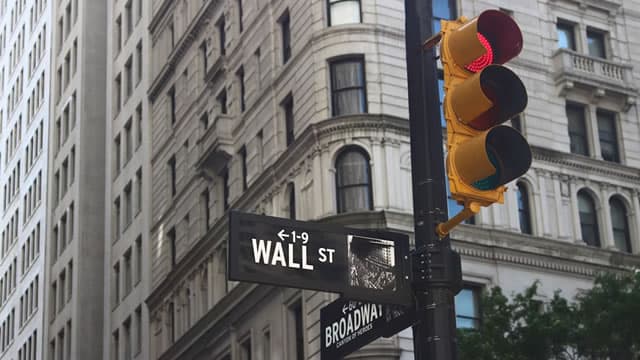
For the better part of two decades, Wall Street operated under a simple assumption: when markets wobble, the Federal Reserve eventually steps in.

Exxon Mobil Corp. and Chevron Corp. posted stronger-than-expected earnings for the first quarter as higher oil and natural gas prices outweighed production outages from the Iran war. Bloomberg Opinion Energy and Commodities Columnist joins David Gura and Christina Ruffini on Bloomberg This Weekend to discuss.
Berkshire Hathaway CEO Greg Abel presides over the 2026 Berkshire Hathaway annual meeting.
Berkshire Hathaway CEO Greg Abel presides over the 2026 Berkshire Hathaway annual meeting.
Jack Janasiewicz jumps on Morning Movers in the wake of several Mag 7 companies continued capex expansion for AI use. Jack says these massive spends from Alphabet (GOOGL), Amazon (AMZN), Meta Platforms (META) and Microsoft (MSFT) might act as a powerful tailwind for the broader tech sector.

extent and timing of additional adjustments" is the phrase dividing the Federal Reserve. The Federal Reserve decided to hold interest rates steady on Wednesday, marking Jerome Powell's final meeting as the chair of the US central bank.
Berkshire Hathaway CEO Greg Abel presides over the 2026 Berkshire Hathaway annual meeting.
s May A Good Month For The Stock Market? Well, it got off to a good start. A five-week advance left both the Nasdaq and S&P 500 at record levels on Friday. The rebound marked the largest-ever five-week point gain for both indexes, according to Dow Jones Market Data.
High tariffs, stubborn inflation, government shutdowns, war with Iran, rising oil prices — nothing in the turbulent past year has poked a hole in a seemingly unsinkable U.S. economy.
Investors are questioning the staying power of medical technology (medtech) stocks, which have fallen from grace since the COVID-19 pandemic. The starting point is to distinguish between medtech and other healthcare industries.
Soft-data surveys point to a weak April labor market report due to higher inflation; that's a stagflationary environment. However, high-frequency labor market data points to a strong April labor market report; thus, there is uncertainty as to what the actual data will show.
The ISM Manufacturing Index was unchanged at a four-year high of 84.6, with 13 industries reporting growth versus only three experiencing contraction. Two-year Treasury yields jumped 10 bps this week to 3.88%, with 10-year yields up seven bps to 4.37%.

The Federal Reserve held its latest policy meeting this week with inflation still elevated, the war in Iran still rattling energy markets, and a new Chair waiting to be confirmed by the Senate. Former economic adviser to President Bush and Columbia Business School dean Glenn Hubbard breaks down what the Fed's decision signals about the economy and what Kevin Warsh's incoming leadership could mean for the institution's purpose, strategy, and independence.

Toto is “aiming to achieve a toilet that never needs cleaning.” It's also supplying electrostatic chucks — a semiconductor-manufacturing component critical to the memory-chip boom.
Axel Merk has a read on Kevin Warsh that cuts against the political caricature, and it matters for how investors should think about the rate path now that the

Financial markets have once again proven their resiliency in the face of geopolitical uncertainty and disruption. The S&P 500 completely erased March's sell-off and in the process reached a new all-time high during the month of April.
Global equity markets have staged a sharp rebound in recent weeks, delivering their strongest monthly performance in several years. That markets have adhered so closely to historical precedent, despite the most severe oil supply disruption on record, is striking.
The Federal Reserve kept borrowing costs unchanged on Wednesday, holding the federal funds rate in the 3.50% to 3.75% range for a third straight meeting. But this was no routine pause.
The Fed remains on hold and continues a wait-and-see approach as Jerome Powell's term comes to an end. S&P ends the week at all-time highs, but earnings season points to higher dispersion.
Global markets are entering May 2026 under a cloud of uncertainty, with multiple macro and geopolitical triggers converging at once. From surging oil prices and the ongoing Middle East conflict to key economic data and central bank decisions, traders are facing a complex environment.