
加载中...
共找到 17,076 条相关资讯

The value of imports rose by 2.3% while exports increased 2% in March from the prior month. The trade gap now stands at $60.3 billion.


Wall Street's top regulator is crafting regulations to undo a dormant Biden-era rule intended to help investors gauge companies' climate-related spending and risks, according to a notice on the U.S. budget office website.
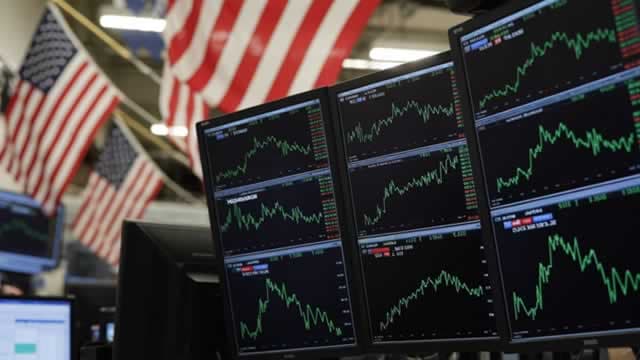
History leans toward resilience for equities after rate surges. Forward 1- and 2-year returns skew positive across many yield spike scenarios.

Wall Street's main indexes recovered on Tuesday, as easing oil prices provided relief to equity markets despite renewed tensions in the Middle East that continue to cloud the global outlook. Dow Jones Industrial Average rose 198 points, or 0.41%, while the S&P 500 gained 0.63% and the Nasdaq Composite climbed 0.87%.
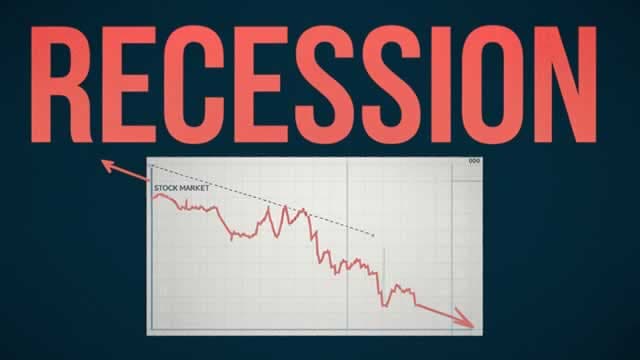
Global central banks are grappling with the oil price shock caused by the war in the Middle East. Investors now anticipate rate-setters to increase borrowing costs in a bid to combat runaway inflation.

Despite escalating Middle East tensions and rising oil prices, equity markets remain resilient, with investors focused on Q1 earnings and upward revisions. Elevated oil prices are expected to persist through year-end, increasing input costs and threatening consumer spending and GDP growth in coming months.

Both exports and imports rose after the Supreme Court struck down many of the president's highest levies in February.

Stocks pulled back from all-time highs Monday but are rebounding in Tuesday's premarket session as investors weigh escalating tensions between the U.S. and Iran. Kevin Green breaks down what a potential ceasefire breakdown could mean for energy markets—and how the current setup compares to the oil price spike seen in 2022 after the Russian attack on Ukraine.

Stock futures are higher this morning as the market rebounds from losses yesterday caused by uncertainty over developments in the Middle East; shares of Palantir are slipping despite a strong earnings report from the software maker; chipmaker AMD is due to release its quarterly numbers after the closing bell; Pinterest shares are rallying after the social media company's results and outlook topped Wall Street expectations; and reports on the labor market and home sales will kick off a busy week of economic data. Here's what you need to know.

AI is poised to transform biopharma by reducing drug development time, cost, and risk, recalibrating the industry's core valuation drivers. AI-enabled assets show a dramatic improvement in risk-adjusted net present value, with my modeled example shifting from negative $238.5M to positive $356.5M.

Banco Sabadell CEO César González-Bueno spoke to CNBC's Ritika Gupta about credit risk, war uncertainty and interest rates

Oil futures are starting to price an infinite oil price shock - Hormuz might never return to the pre-war conditions. Inflation expectations are in the process of de-anchoring, while the market is starting to price Fed hikes.
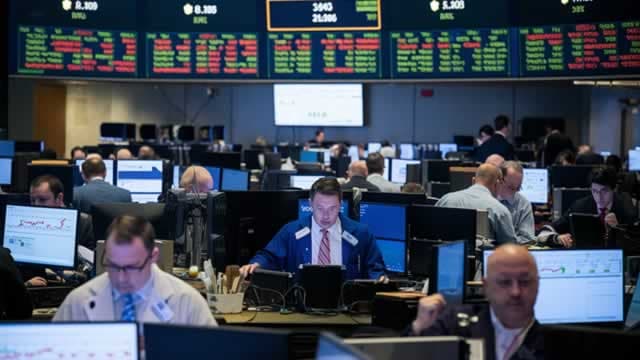
I reiterate my buy rating on assets tracking the S&P 500, targeting 7,778 by end-2026. Current fears—war escalation, a new Fed chair, and oil above $100—are overstated given the economy's resilience and robust net income margins.

Schaeffler expects its humanoid robotics business to build an order book in the hundreds of millions of euros by 2030, the chief executive of the German machine and car parts maker said on Tuesday.

Positioning, earnings, momentum and historical evidence suggests large caps are set up to outperform small-cap stocks in the near term, says a team of strategists.

Despite the Iran conflict-related energy shock, it would be wrong for central bankers to hike rates in a bid to stave off inflation, says Julian Howard, chief multi-asset investment strategist at GAM Investments.
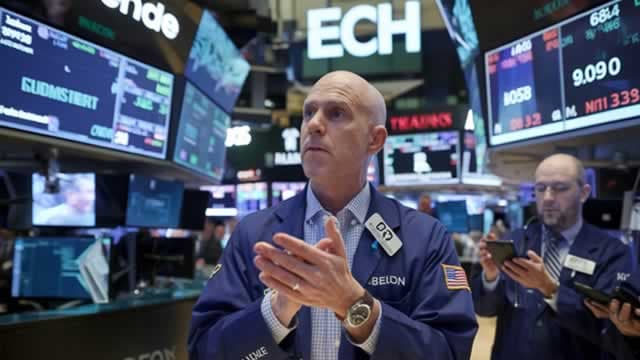
The DeepSeek AI Shock was the bigger market-shaking event. Because 30 March 2026 turned out to be the bottom of the Iran War geopolitical event as measured by stock prices.

U.S. stocks looked poised for gains Tuesday as investors looked past the latest round of headlines tied to the war with Iran, a worrying rise in oil prices, and Treasury yields that suggested mounting inflation concerns. The tech sector continues to drive markets higher despite escalating tensions in the Gulf.

Stocks started the week on the back foot amid rising tensions in the largely closed Strait of Hormuz, but futures are pointing to small gains at the open today. Iran warned the U.S. about “being dragged back into quagmire.”

US equity futures edged higher on Tuesday morning as oil prices retreated from the prior session's sharp gains, offering some relief to markets rattled by the latest flare-up in the Persian Gulf. Iran launched missiles and drones at the UAE and attacked US naval vessels guiding commercial ships through the Strait of Hormuz on Monday, sending Brent crude up nearly 6%.